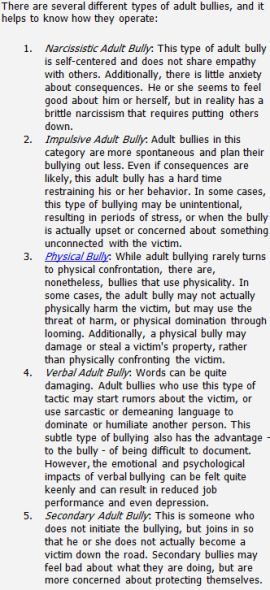
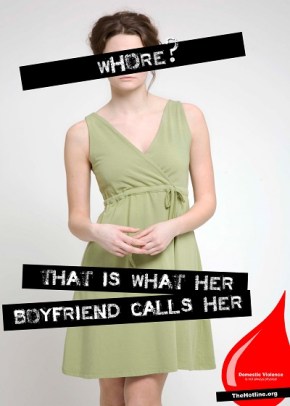
The Enemy of Restraining Order Reform Is Not the System but Political Expectations

People who are outraged by how protective order applications are vetted and how hearings are conducted often voice disbelief that laws and basic rules of civil procedure can be casually violated.

Makes sense.

It’s certainly true that wild schisms exist in how courts process cases, for example, between the codified words that we read in law and in canons of ethics and the way judges dispose of dockets.

Expectations influence performance.

The thing to understand is that law is not dissimilar to language. If you want to know the definition of a word, there are books called dictionaries that are supposed to reliably tell you what the word’s hard-and-fast meaning is. The truth, however, is that language is a labile thing; it’s controlled by usage. The word effete means worn out, but because it sounds like the word effeminate and has been used wrongly over and over by people who should know better, one of its “alternative” definitions is unmanly. Even how words are pronounced is influenced by usage. The double-c sound in the word flaccid, which means limp, is the same double-c sound in success, access, and occidental. But flaccid is typically pronounced by literate people as though it rhymed with acid. So that’s acknowledged as an “acceptable” pronunciation: because it is favored.

The tide of human expectation informs language, and it informs laws and how they’re applied. Judges are made aware of the expectations of the law, but what they are finally answerable to are the expectations of politics. Outside pressures are the invisible dictator.

Restraining order hearings are perfunctory 10- or 20-minute charades; judges enjoy almost unlimited latitude in “formulating” their decisions; and those decisions are seldom appealed. So the adult courts aren’t particularly cognizant of what the baby courts do, and injustices go unattended.

“What can be done?” is an exasperated cry I often read from people who’ve been steamrolled in one kangaroo court or another. The answer is simple and impossibly hard: You have to change public perceptions and expectations.

As long as restraining orders are popularly perceived as necessary-tools-to-protect-women-and-children-at-risk that are essential to the common good, all rumblings about misuses might as well be directed down a manhole.

Copyright © 2022 RestrainingOrderAbuse.com

If Restraining Orders CAN Be Abused, then the PROCESS Is Abusive—and Should Be Repealed

This post addresses a block its writer has noted even in the commentaries of those profoundly injured by unjust or false accusations. That block typically runs something like this: “I’m totally for restraining orders when they protect the violently abused, but….” This perspective is blind, and this post will explain why.

“The road to hell is paved with good intentions.”

—Proverb

“You know, the very powerful and the very stupid have one thing in common: They don’t alter their views to fit the facts; they alter the facts to fit the views. Which can be uncomfortable if you happen to be one of the facts that needs altering.”

Dr. Who

I was accused of a number of unsavory things in the spring of 2006 by a disturbed and very married woman who had hung around outside of my house in the dark for a few months the previous fall. She filed multiple police reports then complained to a judge in my presence that my request for “an explanation of sorts” had caused her grave upset and interfered with her work. (Also, she was concerned she might be “attacked”…and her husband might be…and her friends might be…and her mother might be…and….)

Michael Honeycutt TCEQ, Michael Honeycutt EPA, Michael Honeycutt PhD, TCEQ, EPA Science Advisory Board, Texas Commission on Environmental Quality, Environmental Protection Agency

This man, Dr. Michael Honeycutt, Ph.D., testified to the Superior Court of Arizona in 2013 (by phone) that the government department he heads (in another state) had instituted special security measures to protect a woman from me whom I hadn’t seen or contacted in seven years. When I found this self-styled damsel in distress standing outside of my residence in 2005, I was a practicing children’s humorist who fed birds and had a pup who wore a pink collar. The same woman who would accuse me of stalking and violent intentions had come to my door one night seeking a defender against men she feared were stalking her and had violent intentions. This established a relationship that included her plying me with conversation about her breasts and underwear and trying to follow me into my house after midnight (minus her wedding ring).

That was 12 years ago, and this woman has dramatically and broadly misrepresented me ever since. She’s also induced others to join her in her hoax.

I tried to find you in our system,” I was told in my initial police interview many years ago (when I still had plans and dreams of my own), “but there was nothing. At all. That’s really rare.

Over the four years I’ve maintained this blog, begun five years after my interviews with the cop, I’ve heard repeatedly from others who allege they were falsely accused and who report they had had no prior acquaintance with police precincts or courthouses, either.

Consider how this jibes with the assertion that restraining orders protect victims of violent abusers. It plainly doesn’t, and only “the very powerful and the very stupid” would say otherwise.

Public sentiment has been coerced by “the very powerful and the very stupid” to the extent that even those who know the procedure is a travesty feel compelled to allow that there are cases when restraining orders are necessary.

Changing the minds of “the very powerful and the very stupid” has to start with changing the minds of people who are neither powerful nor stupid, and who know better. There is no justification for bad law. It should be repealed.

What victims of that bad law mean when they say “there are cases when restraining orders are necessary” is that they acknowledge there are people in abusive relationships or imminent danger who need relief. They should appreciate, though, that it isn’t restraining orders that are necessary; something is. Rejecting bad law doesn’t obligate its critic to propose what that something should be. Clearly, however, what that something should be should never have innocent casualties. A law that’s supposed to protect the innocent but may destroy them is both wildly flawed and dangerous.

These are facts: Restraining orders deny defendants their constitutional right to due process; justice rendered in drive-thru procedures that may deprive defendants of employment, security, home, and family can only ever be dubious at best; and being misrepresented in a court of law, scourged by a biased judge, and gibbeted on grounds that may be trumped up or cunningly fraudulent is hurtful and possibly ruinous, and shouldn’t be possible…ever.

If you acknowledge these facts, then you must be against restraining orders, and you must be against them categorically—no ifs, ands, or buts. They’re not the answer. They were a stopgap that has become an institution. That doesn’t mean their engineering was ever sound.

Sure, it may be correct to say that you’re certain not all petitioners lie and that some desperately need protection and deserve it. It’s politically correct to say so, certainly, and it’s sympathetic to say so, too. And, sure, it may be correct to say that sometimes justice does prevail.

But if you own that rulings can be manipulated and that pitfalls are built into the process itself, then you cannot be for restraining orders under any circumstances, because the very same procedure that sometimes assuredly works good also assuredly works evil (and more easily).

Lives are at stake. A process that’s inherently corrupt is inherently wrong, regardless of whether its intentions are good and regardless of whether rulings may be righteous.

Put simply, you can’t make chicken salad out of chicken shit.

Copyright © 2018 RestrainingOrderAbuse.com

Sexual Solicitation, Assault Alleged by Texas Officials Michael Honeycutt and Tiffany Bredfeldt in Contradictory Testimony to the Arizona Superior Court, Implicating a Tucson Man Who’s Been Falsely Accused for 11 Years: ILLEGAL GAG ORDER GUTTED; “WOMEN’S LAW,” TCEQ DISCREDITED

This post, published on the first day of the year, was updated on July 9, 2018 (reflected in the new title), and content that had been unlawfully censored by the court has been restored. A recent respondent to this blog commented, “I think these injunctions violate the Constitution.” Despite the baggy parameters dictated by the law, it’s certain that many are impeachable as unconstitutional. The saga that follows relates the story of such an injunction. Readers merely interested in learning what unscrupulous plaintiffs can get away with (again and again for years) may skip the preamble and gain a clear picture by contrasting various sworn and unsworn statements by two such plaintiffs, who are quoted verbatim. Other quotations show how a witness, Michael Honeycutt, was induced to give misleading testimony, besides how willing attorneys may be to steer the court amiss…for the right price.
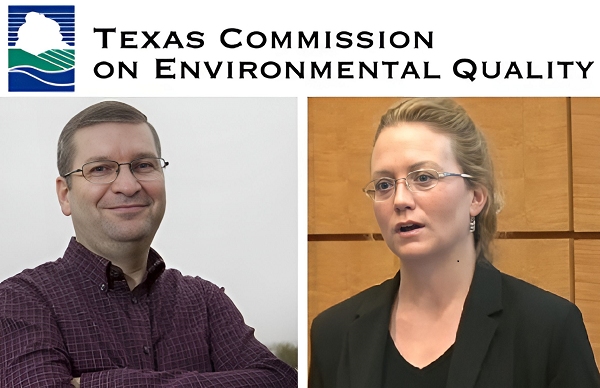

Michael Honeycutt TCEQ, Michael Honeycutt PhD, Michael Honeycutt EPA, Tiffany Bredfeldt TCEQ, Tiffany Bredfeldt PhD, Tiffany Bredfeldt EPA, Bredfeldt TG, Texas Commission on Environmental Quality, TCEQ, EPA, Environmental Protection Agency, EPA Science Advisory Board, SAB, EPA Chemical Assessment Advisory Committee

Texas state toxicologists and newly appointed EPA reps Michael Honeycutt and Tiffany Bredfeldt gave testimony before an Arizona Superior Court judge in 2013 that succeeded in persuading the judge to issue an unconstitutional speech injunction against the writer. The court was told the writer had “propositioned” Bredfeldt (a married woman) in 2005, “wouldn’t take no for an answer,” and “had been harassing her ever since.” Honeycutt, who has never met the writer, recited this secondhand story with the same smug complacency that marks his expression above. Based on the fiction’s effectiveness, four additional legal actions were brought against the writer in 2016, two of which menaced him with the threat of incarceration for exercising his freedom of speech. One of the actions was aborted; two were dismissed. Despite an appeal in 2017, the 2013 gag order, which the writer was alleged in 2016 to have “continuously and contemptuously violated,” remained in effect until July 2018, when it was gutted. All charges brought against the writer in the past decade have been invalidated.

Numerous accounts related on this blog since its launch six years ago have contrasted what he said with what she said in testimony given under penalty of perjury. The account this post relates doesn’t have to. It contrasts what she said here with what she said there—and with what her statured witness said she said. Statements that should harmonize, conflict.

A lesson of what this post unfolds, valuable for anybody to learn who has been wronged by a judge and isn’t sure if s/he’s “allowed” to talk about it, is that when people get away with something in a courtroom, which is a public forum, that in no way immunizes them from being exposed for it in a different public forum (for example, Facebook, Twitter, a personal blog, or one sponsored by The Washington Post). The only legal surety against criticism in this country is square conduct. While a court can lawfully issue a restraining order that prohibits unwanted speech to someone (like phone calls or emails), it cannot lawfully prohibit unwanted speech about anyone. Critical speech directed to the world at large, however objectionable it may be to those it names, whether private individuals, public officials, or judges, is protected speech as long as it isn’t false or threatening (and opinions are sacrosanct); the Constitution doesn’t favor any citizen over another, nor does it distinguish between bloggers, pamphleteers, or picketers and the institutional press. The aegis of the First Amendment doesn’t even require that criticism be deserved. In this instance, however, blamelessness is a nonissue.
Eugene Volokh, First Amendment, freedom of speech, The Volokh ConspiracyThis post discredits a widely championed arena of law, as well as how it’s administered. Linked audio clips of one trial judge will make a seasoned courtroom veteran flinch; those of another, a presiding municipal court magistrate, acknowledge frankly that restraining orders “are abused,” no question, and that “people come in and…say things that are just blatantly false” but are “never…charge[d],” let alone prosecuted.

The post also discredits accusations made by a woman (women, in fact) against a man. To some, this will be its most compelling virtue. Men have traditionally been the butt of abused and abusive procedures, and by far continue to be their most populous feedstock. Assertions that men are “presumed guilty” and unfairly “demonized” are not exaggerations and never have been, contrary to the pajama punditry of demagogues like David Futrelle, Mari Brighe, Amanda Marcotte, and Lindy West, who would smother even the most righteous motives for male contempt beneath the blanket label “misogynist.”

Fixation on gender politics, though, has obscured from view that injustice has been legislated into the law and fortified by decades of accustomed application (albeit that politics is the reason why). Today women—straight, gay, or otherwise—enjoy no greater safety from accusation and arbitrary violations of their civil rights than men do (in drive-thru procedures promoted as “female-empowering”), and women too may be accused by women (including their own mothers, sisters, daughters, and neighbors—which is a predictable consequence when accusation is tolerated as a recreational sport). Law that mocks due process and facilitates and rewards its own abuse is iniquitous, period. What this post reveals, importantly and inescapably, is that how many people choose to understand accusation, court process, and their repercussions is deplorably simplistic. Among these many are most politicians, academics, journalists, and social justice activists.
Eugene Volokh, First Amendment, freedom of speech, The Volokh ConspiracyThe Tucson man in the title of the post is also its author, and there was a time, within his memory, when to allege sexual impropriety without urgent grounds would have stirred outrage, because such an accusation is always damaging. In the climate that has prevailed since the advent of the Violence Against Women Act, however, the female plaintiff who doesn’t allege sexual violation, or at least trespass, squanders invaluable leverage. To a potently shrill sector of the community, this represents social progress. It has made pollution de rigueur.

Inaugurating the task of restoring a site inspired by the tenacity of false accusations like those exposed below, this post breaks a year-and-a-half-long silence coerced from the site’s owner by a series of lawsuits, which included two that demanded that he be jailed for exercising his First Amendment rights. The principal complainant, Tiffany Bredfeldt, an official at the Texas Commission on Environmental Quality (TCEQ), has repeatedly alleged to the Arizona Superior Court that the writer’s criticisms of her honesty, ethics, and character are untrue. Bredfeldt told the court in 2016 that the “ongoing fear, stress, and associated physical impacts” the writer’s criticisms had caused her “have been a decision factor as to whether or not [she has] children.” She also reported she has “talked to more people at police departments, sheriffs’ departments, and federal and state agencies than [she] can count,” and urged the court to impose “significant consequences” to bring her relief from a “continual rollercoaster of fear.”

Judge Richard Gordon, Pima County Superior Court

I am not going to hold him in contempt for talking about his case,” Pima County Superior Court Judge Richard Gordon pronounced in response to a 2016 complaint that demanded the writer be jailed for doing exactly that. Also commendably, the judge granted the writer a court-appointed attorney without reservation. Disagreeing, however, that the law authorized him to revise or dissolve an illegal prior restraint entered against the writer in 2013, the judge instead delimited its vague and overbroad proscriptions. The writer continued to be (1) forbidden from publishing images of the plaintiffs on this site; (2) forbidden from using “[meta] tags” with their names to label images or contents of posts, supposedly elevating them in Google’s returns for certain search terms thereby; (3) forbidden from “repeating” three “specific statements” that, absent a jury opinion, the 2013 court deemed “defamatory”—only two of which the writer may have made, both concerning honesty; and (4) forbidden from contacting the plaintiffs, Tiffany and Phil Bredfeldt, the former’s employers at the Texas Commission on Environmental Quality, or “their friends, their acquaintances, or their family.” The writer’s own friends and family are among Tiffany Bredfeldt’s acquaintances, and who else may be is impossible for the writer to know, which underscores the recklessness of the 2013 order Judge Gordon construed rather than vacated. That order’s prohibitions, which were substantially narrowed in July of this year, could have been interpreted very differently by another judge at any time for the rest of the writer’s life.

Bredfeldt sued the writer in 2013, neither for the first time nor the last. Michael Honeycutt, to whom the writer had communicated his criticisms of Bredfeldt’s conduct by letter two years before, served her as a witness—telephonically, from the comfort of his desk chair in Texas. Honeycutt is Bredfeldt’s boss at the TCEQ and an old hand at testifying; his bio [deleted from the Internet since this publication] boasts that he has testified before Congress. His role in accusing the writer, who in 2013 had already grappled with crippling allegations for seven years, was to ensure that he would live with them indefinitely—and it’s unlikely that Honeycutt acted without the full approval and support of the TCEQ’s administration.

The upshot of the 2013 prosecution, in which the writer represented himself, was that Bredfeldt was granted an unconstitutional restraining order that prohibited the writer from publishing anything about her “to anybody, in any way, oral, written or web-based” by the judge whose words appear a few times in the transcript excerpts that follow. That Pima County Superior Court judge, Carmine Cornelio, is a judge no longer. In June of 2016, 84% of an Arizona Commission on Judicial Performance Review panel concluded he did not meet standards. The judge declined to face voters that fall, and his tenure on the bench terminated two months later.

(The no-confidence rating returned against Judge Cornelio in 2016 followed reprimands by the Arizona Supreme Court in 2010 and 2013 for the judge’s saying “fuck you” to an attorney during a settlement conference, causing a 19-year-old girl to cry during a different one, and gesturing accusatorily at a female court employee in public, among other alleged acts of “abusive conduct.” In a guest column in the Arizona Daily Star, Judge Cornelio wrote, “I leave with head held high….” He told the same paper in an interview that he “intends to go into private practice in alternative dispute resolution.” Judges of the Arizona Superior Court are paid $145,000 a year, and a proposal has been tabled to raise their salaries to $160,000.)

The speech injunction Judge Cornelio imposed on this writer in 2013, which the judge made permanent without bothering with a trial, was affirmed in 2016 by a second Pima County Superior Court judge, Richard Gordon, despite Judge Gordon’s having acknowledged in open court that the conduct of the 2013 proceedings was “not legal” and that the prior restraint that issued from them offended the Constitution. “There are obviously some parts that are just too broad and then don’t make a whole lot of sense,” Judge Gordon conceded in court in July. In his subsequent Sept. 2016 ruling, little trace of this acknowledgment survives. The writer’s father died a month after the ruling was returned. More than a year has transpired since (and, as the U.S. Supreme Court has held, “[t]he loss of First Amendment freedoms, for even minimal periods of time, unquestionably constitutes irreparable injury”).

An appeal of the 2016 ruling to the Arizona Court of Appeals’ Second Division was denied in December (five months after it was filed). The court—consisting of Judge Philip Espinosa, Judge Christopher Staring, and Judge Sean Brearcliffedeclined to address the prior restraint’s unconstitutionality and sidestepped use of the phrase prior restraint entirely:

[T]he issue before us is not whether the injunction is constitutionally permissible, but whether the [2016] trial court properly refused to modify or dissolve it.

The appeals court, whose decision may have been influenced by a case narrative that this post will show is false, did acknowledge that “[a]t least one provision of the [2013] injunction would appear clearly unconstitutional, ordering that ‘[t]he defendant…immediately cease and desist all future publications on his website or otherwise.’” The word publication means any act of public speech. This provision, which was dissolved in July of this year, accordingly prohibited the writer from, for example, finishing a Ph.D., addressing the city council, marketing a book, or defending himself in a courtroom, all of which require publication. Also accordingly, courts have consistently found prior restraints facially invalid, even ones far less vague and overbroad than the one issued against the writer, and such orders have been vacated as much as 30 years later, which the writer’s attorney informed the appellate judges by brief and in oral argument. This was unremarked in their Dec. 18, 2017 ruling.

Eugene Volokh, free speech, First Amendment

UCLA Law Prof. Eugene Volokh, addressing the U.S. Senate Judiciary Committee on June 20

Unlike in 2013 (and previously), the writer wasn’t alone in court in 2016 or 2017. His defense was aided by two gifted lawyers representing the Pima County Legal Defender: Kristine Alger, who drafted and orally augmented a faultless appeal, and Kent F. Davis, whose zealous advocacy made an appeal possible in the first place. Their arguments were what’s more reinforced by no lesser light than Eugene Volokh, who’s distinguished as one of the country’s foremost authorities on First Amendment law and who, in conjunction with the Electronic Frontier Foundation (EFF) and Phoenix attorney Eric M. Fraser, graciously submitted an amicus brief to the court on the writer’s behalf. Alison Boaz of the UCLA School of Law, who assisted Prof. Volokh, is also due credit. A win in the appellate court would have been much more theirs than this writer’s, and they have the writer’s thanks for their Herculean exertions.

(It’s conceivable that a legal critique of the matter may one day appear on The Volokh Conspiracy, which is listed by the ABA Journal in its “Blawg 100 Hall of Fame.”)

Exemplifying the importance of the First Amendment, this post will illuminate how trial courts are manipulated into forming bad conclusions by lowering its beam into the crevices to rest on those who do the manipulating.

A byproduct of the writer’s representation in 2016 and 2017 was access to courtroom transcripts, so the post won’t offer much in the way of opinion. Commentary can be denied. Testimony given under oath…cannot be.
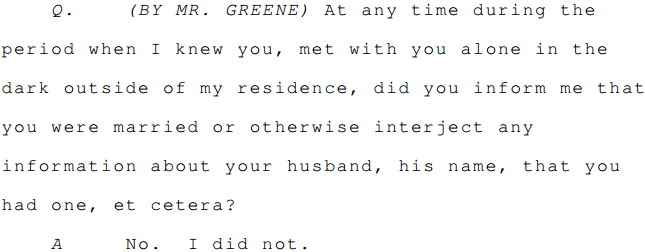

Dr. Tiffany Bredfeldt, on cross-examination by the writer in 2013

Dr. Michael Honeycutt, on cross-examination by the writer in 2013

Based on nothing more than the two statements quoted above, a precocious child would wrinkle her nose. Yet such obvious contradictions have inspired no judge to arch an eyebrow nor any Ph.D. to scruple. In over 11 years.

Calling someone a liar risks being sued, and trial judges interpret whatever they want however they want. They’re acutely aware, moreover, of which direction their criteria are supposed to skew when abuse is alleged. This remark cannot be called defamatory: Although this post isn’t about air or water pollution, as would befit one that quotes environmental scientists, it does concern filth.

Cheryl Lyn Walker PhD, Cheryl Walker PhD, MD Anderson Cancer Center, Texas A&M University Health Science Center, TAMHSC, Institute of Biosciences and Technology

Director of the Texas A&M Health Science Center Institute of Biosciences and Technology Cheryl Lyn Walker, remarks by whom were used in evidence against the writer in 2013 and 2016

It relates sworn testimony to the Arizona Superior Court by two representatives of the Texas Commission on Environmental Quality (TCEQ), reportedly the second largest agency of its kind after the EPA. Those public sector scientists are Michael Honeycutt, Ph.D., the TCEQ’s toxicology director and an adjunct professor at Texas A&M University, who was recently entrusted with a role in forming national health policy, and one of Honeycutt’s protégés, senior toxicologist Tiffany Bredfeldt, who’s also a Ph.D. and who had already been entrusted with a role in forming national health policy. On April 4, 2017, the TCEQ tweeted its congratulations to Bredfeldt for her being selected to serve on the Chemical Assessment Advisory Committee of the EPA’s Science Advisory Board, which her boss now chairs. The bio of Bredfeldt’s associated with her appointment highlights her experience as an “expert witness.” This merits note, as does Honeycutt’s superior claim to the same distinction.

A second Texas A&M professor, Dr. Cheryl Lyn Walker, Ph.D., who was Bredfeldt’s postdoc adviser at M. D. Anderson Cancer Center, has been aware of the conduct of Bredfeldt’s detailed in this post for a decade. Appeals by this writer to Walker’s conscience and integrity only inspired her to tell Bredfeldt in a 2008 email: “I am very concerned about your safety.” Bredfeldt entered Walker’s email in evidence against the writer in 2013 and also quoted it to the court in 2016.

Authorial intrusions in the survey of statements to follow will be terse. Bredfeldt and her witnesses will do the preponderant storytelling.

Tiffany Bredfeldt, romancing the camera in 2005

Some orienting details are required. The writer encountered Bredfeldt, then a doctoral student in the University of Arizona College of Pharmacy, at his home in late summer 2005 and met with her there routinely over the ensuing months, mostly after dark. Bredfeldt, otherwise a stranger, declined to mention to the writer that she was married while, for example, taunting him for not inviting her in at midnight: “Where I come from, it’s considered rude not to at least invite a person onto your porch.” Then she disappeared, providing no explanation. A few months after that, when the writer sought one, Bredfeldt variously reported to the police and numerous courts—in statements that remain public in perpetuity and that are not deemed defamatory—that the writer had made unwelcome sexual advances toward her, despite being repeatedly “rebuff[ed]” and “rebuked”; that he posed a violent danger to her and to assorted others she was concerned the writer would talk to about her conduct at his home (among them her mother, who lived 1,200 miles away); that he should be prohibited from possessing firearms; and that he had stalked her, a woman the writer had only ever met hanging around his yard like a stray cat.

Here’s Bredfeldt’s account in her own words to Judge Jack Peyton on April 10, 2006:

Okay, I’ll begin by defining my relationship, um, with Mr. Greene. I met Mr. Greene in about September or October of 2005 when I was boarding a horse that I own at a boarding facility owned by his family. At that time, uh, we were acquaintances, and we spent time talking and — at his family barn. And that’s about the nature of our — our interaction. During that time, I think, um, he developed maybe romantic feelings for me that — that made me uncomfortable, and I generally would rebuff his advances, asking him to stop.

Mrs. Bredfeldt, whom the writer knew for three months and with whom he has had no contact since March 2006, has along with one of two or three girlfriends of hers who were also routinely around the writer’s residence in 2005 sued the writer some six times. Four legal actions were brought against the writer in 2016 alone, two of which sought his incarceration and all of which endeavored to suppress what this post relates. In a “Victim’s Impact Statement” Bredfeldt submitted to the court in 2016, she owned that she had accused the writer “to the Court multiple times [and] to multiple police departments, detectives, federal agencies, and other officials in several states”—including the Arizona Dept. of Public Safety and the FBI—and it’s this writer’s belief that only with the blind support of loyalists like Mike Honeycutt would Bredfeldt have been so emboldened.
attorney Beth E. Maultsby, attorney Kathryn Flowers Samler, high-conflict litigants, high-conflict people, high-conflict litigation, false testimony, lying in courtThe legal onslaught has spanned (and consumed) almost 12 years, despite the writer’s appealing to dozens of people to look between the lines, including Honeycutt, who’s notably a husband with two college-aged sons. Honeycutt is besides a distinguished scientist, cited for his rigorous investigative standards, whose testimony quoted immediately below includes the statements, “I didn’t ask for details” and “I didn’t clarify that.” As a departmental director of the TCEQ, Honeycutt is paid $137,000 per. The writer, in contrast, has for the past decade earned a subsistence wage doing manual jobs that allow him to keep an insomniac’s hours and be left alone—formerly in the company of his dog, his dearest friend, who died suddenly in 2015 while the writer was still daily distracted with trying to clear his name and recover time and opportunities that had been stolen from them. (Here is a letter the writer hired an attorney to prepare in 2009. Bredfeldt represented it to the court in 2013 as evidence of harassment, and testified she believed her “psychiatric prognosis” would improve if such speech were restrained. “One of the most difficult parts of dealing with something, since this is profoundly stressful,” she told the court, “is that the stress doesn’t go away.”) The writer had aspired to be a commercial author of humor for kids, as Bredfeldt knew, and had labored toward realizing his ambition for many years before encountering her and her cronies on his doorstep. His manuscripts have since only gathered dust.

(A further counterpoint: The first public official the writer notified of Bredfeldt’s conduct, who also took no heed, was University of Arizona Dean of Pharmacy J. Lyle Bootman, Ph.D. A decade later, Bootman was charged with raping and beating an unconscious woman in his home. For almost two years following his indictment in 2015, while free on his own recognizance, Bootman faced trial—a fundamental due process right this writer was denied in 2013. Despite having been placed on administrative leave, Bootman continued to draw a faculty salary of over $250,000 from the U of A, the writer’s alma mater and former place of employ. As a graduate teaching assistant in the English Dept. in the late ’90s, the writer cleared about $200 a week. While he awaited a ruling in Greene v. Bredfeldt, the appeal of the last of the lawsuits brought against him during the same period of time by Bredfeldt and a cohort of hers, the five felony charges against Bootman were dropped. A tort case based on the same facts continues. Bootman’s attorneys filed for a protective order in December to bar public access to records.)
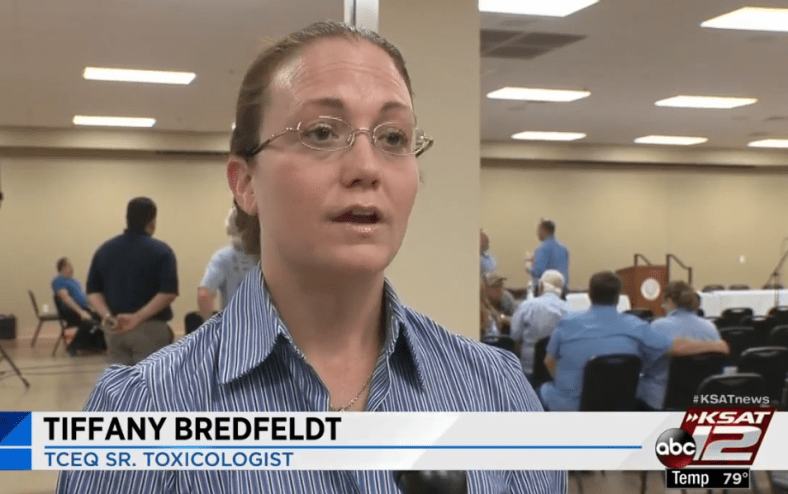
In an interview that aired in 2017, Tiffany Bredfeldt, the writer’s accuser, reassured the audience of ABC News that it could place its trust in the TCEQ. Bredfeldt made a similar pitch before the National Research Council of the National Academies of Sciences, Engineering, and Medicine in 2013. Bredfeldt, who the court was told in 2013 and 2016 is not a public official, has repeatedly appeared as the face of the Texas Commission on Environmental Quality. Her attorneys have argued that since she isn’t a public official, she isn’t obligated by law to prove her allegation that objectionable statements by this writer are false and therefore unprotected speech. Her boss, Michael Honeycutt, told the court in 2013: “Tiffany is just like the other 14 employees that I have.” If no other assertions by the TCEQ cause Texans concern, that one should.

This post’s presentation is simple: It juxtaposes contradictory statements that span seven years (2006–2013), most of them made under oath and all of them made by state scientists. (Those in small print may be enlarged in a new tab by clicking on them, or magnification of the entire post may be increased by pressing [CTRL] or [COMMAND, the cloverleaf-shaped key on Macs] + [+]. Zoom may be reversed similarly: [CTRL] or [COMMAND] + [-].) Scrutiny of the quotations below may lead the reader to conclude they’re evidence of false reporting, perjury, subornation of perjury, stalking, harassment, mobbing (including attorney-complicit abuse of process and civil conspiracy), defamation, bureaucratic negligence, professional incompetence, mental derangement, and/or general depravity.

The writer will let the facts speak for themselves.

MICHAEL HONEYCUTT, on cross-examination by the writer on May 20, 2013:
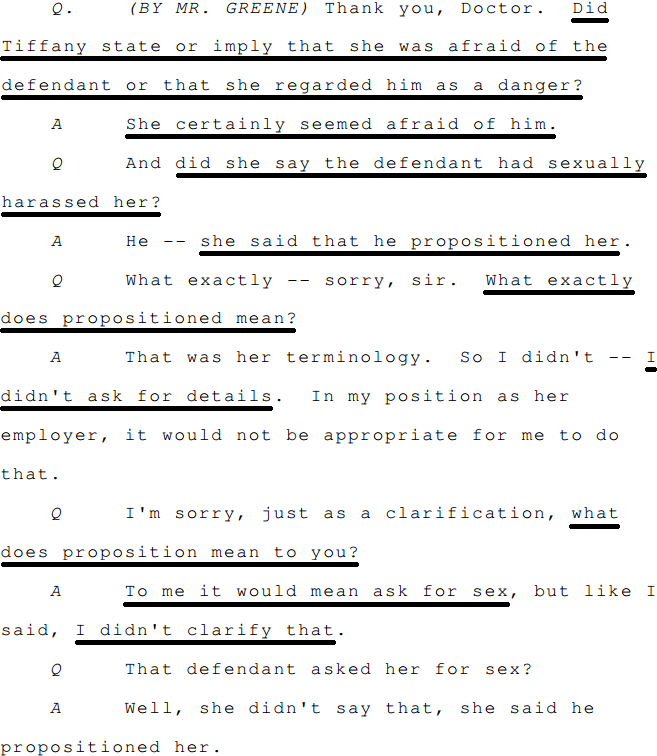
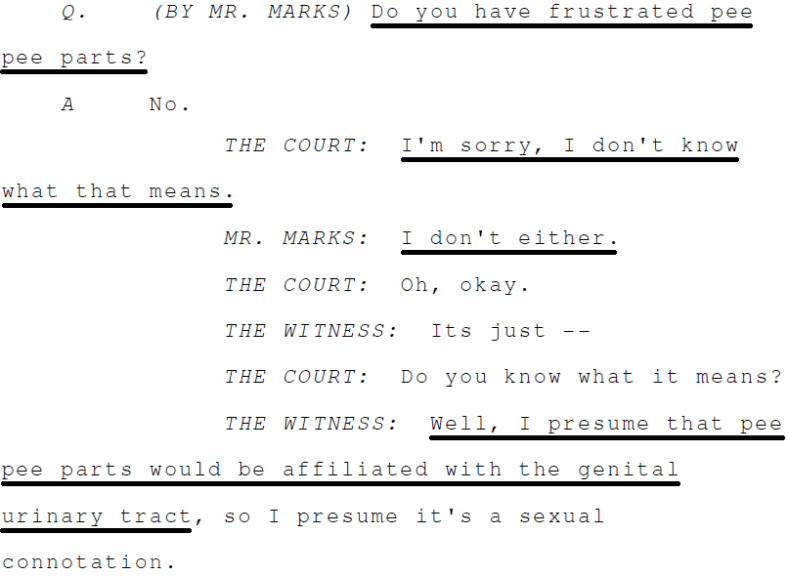
Honeycutt testifies in 2013 that Bredfeldt told him the writer “propositioned” her in 2005, which to him, he says, “would mean ask[ed] for sex.”

Bredfeldt’s attorney, Jeffrey Marks, would follow up on Honeycutt’s testimony by beginning his cross-examination of the writer with a jab instead of a question: “She says you propositioned her.” The writer replied, “What does that mean?” Marks chirped, “That you offered her sex.” Bredfeldt, while gazing around the room at her audience, nodded solemnly.

TIFFANY BREDFELDT, in an email to the writer sent Friday, March 17, 2006, that she entered into evidence three days later (Monday, March 20, 2006) along with her petition for restraining order number one:
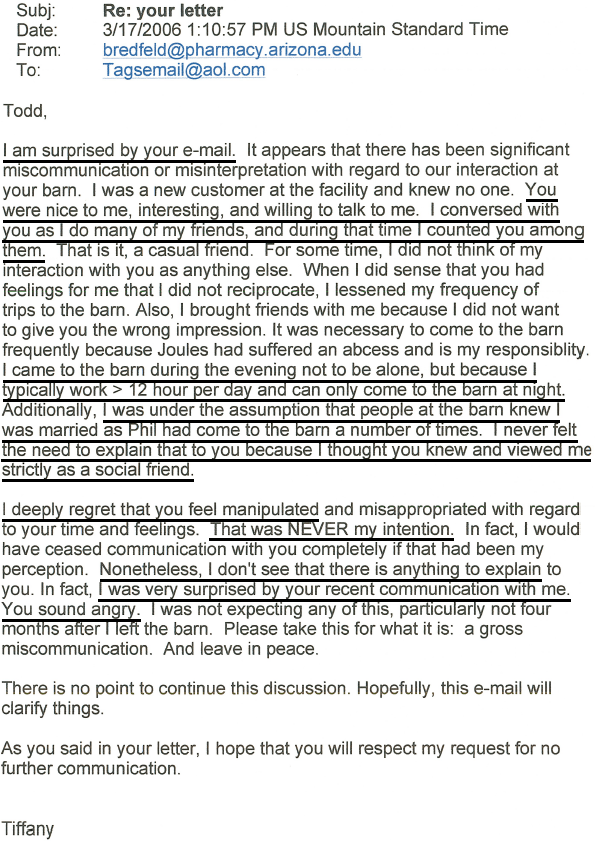
Bredfeldt states in this self-contradictory email, which she would submit days later in evidence to the court in the 2006 procedure that began the controversy, that the writer had been “nice” to her and that she had never felt the need” to “explain” to him she was married, because her husband had come to the writer’s place of residence “a number of times,” and she thought the writer already knew and besidesviewed [her] strictly as a social friend.” Contrast Honeycutt’s 2013 testimony: “[S]he said that he propositioned her.

On April 10, 2006, not a month after Bredfeldt sent this email, she would testify before a judge (in her husband’s presence) that she had had to repeatedly “rebuff…advances” by the writer in 2005. The writer was identified to the court not as a considerate “friend” but as an “acquaintance” with whom Bredfeldt had “interact[ed].” Ten years later, the husband the writer was supposed to have known about, a geoscientist today employed by Weston Solutions as a project manager, would be asked in court on direct examination by his lawyer, “Do you know the defendant, Todd Greene?” Philip Bredfeldt’s answer: “I never met him….” Then Mr. Bredfeldt would clarify to the 2016 court that he “first came to know about the [writer] in early 2006,” that is, the same week his wife sent this email, during which the writer was alleged to have sent her a “series of disturbing emails” and “packages,” a fiction that by itself would take another entire post to unweave. Significantly, Phil Bredfeldt had no idea the writer existed until 2006 and, according to his 2016 testimony, was not informed by his wife of any sexual aggression toward her in 2005—nor was anybody else, for example, the writer’s mother, who was daily at the property where the writer lives from morning till dusk, and whom Bredfeldt knew and spoke with routinely. (The writer’s mother was then in treatment for cancer, a fact Bredfeldt exploited to flaunt her knowledge of the disease, which was a subject of her dissertation research.) Where Phil Bredfeldt was while his wife was outside of the writer’s residence at 1 a.m.—and with whom—has never been clarified.

Honeycutt, in a 2013 quotation below, will testify in further contrast to Bredfeldt’s statements in this email that he was told the writer’s behavior in 2005 was “erratic and bizarre” and that he “wouldn’t take no for an answer.”

TIFFANY BREDFELDT, in a statement to the University of Arizona Police Dept. given on March 18, 2006 (the next day):
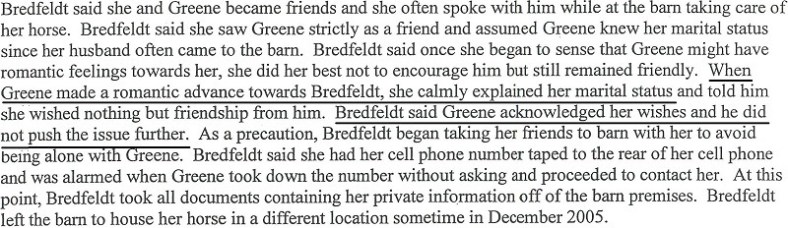
Bredfeldt, in contrast to her emailed statements to the writer 24 hours prior (and in contrast to her subsequent testimony to the court in 2006 and both hers and Honeycutt’s in 2013), reports to the police that the writer had made “a romantic advance” toward her in 2005, inspiring her to admit to him she was married, after which he desisted. Bredfeldt then says the writer seized her cell phone, copied down her number, and contacted her. Bredfeldt’s work and home addresses and telephone numbers were publicly listed, and the writer never spoke with Bredfeldt on the phone. There was no need; she could be found outside of his residence most nights, as often as not in a red tank top.

On the single occasion the writer had handled Bredfeldt’s cell phone, borrowing it because his phone had been destroyed by a power surge, Bredfeldt had insisted on typing the numbers for him before sliding the phone into his palm and caressing his fingers (repeatedly). That was in late Nov. 2005 after she and a friend of hers had invited themselves into the writer’s house. Bredfeldt’s “chaperone,” a stranger then calling herself Jenn Oas, began conversation by telling the writer she had just returned from India where she “mostly” hadn’t worn a bra. Bredfeldt chimed in with a quip about “granny panties” (after having excused herself and returned wearing freshly applied eye makeup, complaining that she had “misplaced” her glasses). A couple of weeks later, Bredfeldt would vanish.

(Flash-forward: The policewoman who instructed Bredfeldt how to obtain a court-ordered injunction, Bethany Wilson, is today a librarian in charge of kid lit—what the writer had aspired in 2006 to make his profession.)

TIFFANY (AND PHIL) BREDFELDT, in a sworn affidavit to Judge Roger Duncan (then a pro tem) filed on March 20, 2006 (two days later):
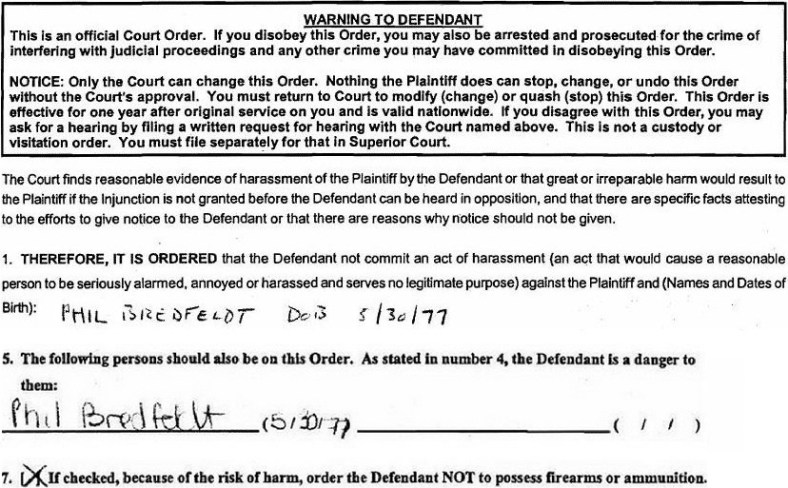
Bredfeldt urgently petitions a protective order tailored to prohibit the writer (three days earlier called a “friend” who had been “nice” to her) from having any contact with her husband, Phil, a stranger, who is alleged to be in violent “danger.”

Later the same day, the writer would be sent an email, ostensibly by Phil Bredfeldt, that begins, “STAY THE HELL AWAY FROM MY WIFE, YOU SICK FUCK,” and ends, “THIS IS THE LAST TIME YOU WILL BE TOLD.

(The Bredfeldts simultaneously sent the email to UAPD Officer Bethany Wilson, with whom she later told the writer they had been on the phone at the time. Officer Wilson, who had met both of them, opined during a 2006 interview with the writer that Mrs. Bredfeldt “wore the pants.”)

Judge Jack Peyton, JP, Justice of the Peace, Pima County Justice Court

Judge Jack Peyton

The evidence of harassment Tiffany Bredfeldt presented to the court was five emails she and the writer had exchanged over a weekend (March 16–20): two from her, three from him in reply. The March 17 email of hers shown above was shuffled to the back of the sheaf, out of chronological order, causing the judge who presided over the writer’s April 10, 2006 hearing, Pima County Justice of the Peace Jack Peyton, to remark, “I don’t think I have a copy,” and then to ask, “Am I missing one [of the emails]?” Bredfeldt had to include the contradictory email among her evidence, which was never anyhow scrutinized, because it contained one of the only two requests she had ever made to the writer not to contact her: “I hope that you will respect my request for no further communication.” The other request was in an email she had sent him 20 hours earlier, in which Bredfeldt had represented the writer to himself as a stalker after he had gently tried to learn the motives for her behaviors at his home and her concealment from him that she was married. Judge Peyton confirmed with Bredfeldt that the minimum qualification demanded by the law, namely, two requests for no contact, had been met. The writer need not have been present.

Alleged on March 20 to be in danger of violent assault, Phil Bredfeldt had to be repeatedly reprimanded for displays of temper in open court three weeks later. Judge Peyton finally told him, after ordering his name stricken from his wife’s protective order:

I won’t think twice about asking you to leave the courtroom, because you’re not a party. You are welcome to be here. This is a public forum. But I won’t have you interrupting, and I will not have you making me uncomfortable about what your next action might be.

The judge, reputed to be the go-to JP for women alleging abuse by men, nevertheless cemented the protective order against the writer, explaining: “I do not get the impression that [Mr. Bredfeldt] was placed on that order by design.

(The following year, Judge Peyton was appointed to head a county domestic violence specialty court, which was financed by a $350,000 gubernatorial grant that included no budgetary allowance for defense attorneys. The judge, a onetime Maryland labor lawyer d/b/a J. Craig Peyton, underwent a “five-day domestic violence training session” in preparation. Reportedly operating only two days a week, his court has since processed well upwards of 25,000 cases.)

TIFFANY BREDFELDT, on cross-examination by the writer on May 20, 2013 (seven years later):
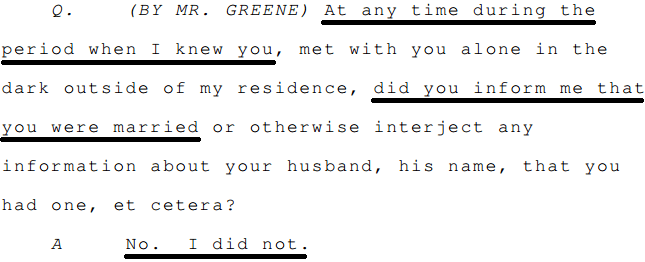
In contrast to her statements to the police in 2006, Bredfeldt testifies in 2013 that she never told the writer she was married. What Bredfeldt told the writer in 2005 was that she lived with a dog. The writer asked if it was alone at night while she was with him. Bredfeldt answered, “Yes.” The writer urged her to bring the dog with her so it wasn’t by itself and gave her a toy to take home.

TIFFANY BREDFELDT, on cross-examination by the writer on May 20, 2013 (the same afternoon):
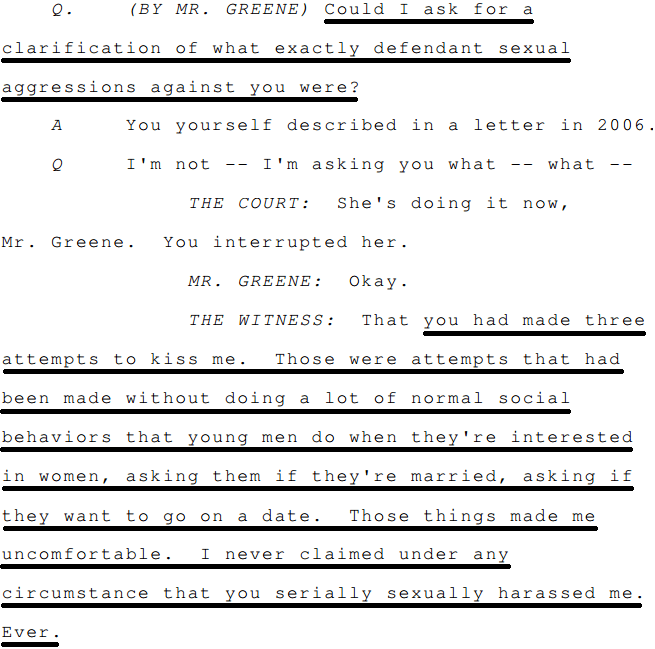
Also contradicting her statements to the police in 2006 (besides controverting what her first witness, Honeycutt, told the court in 2013 that she had told him), Bredfeldt testifies (in the presence of her husband) that the writer made “three attempts to kiss [her]” in 2005—which made her “uncomfortable” but not so uncomfortable as to prompt her to tell the writer she was married (or to tell her husband that another man had repeatedly tried to kiss her). Then Bredfeldt denies she has “ever” accused the writer of sexual harassment.

TIFFANY BREDFELDT, in a memorandum to Superior Court Judge Charles Harrington filed July 30, 2006:

In a “Statement of Factsto the court, contradicting her statements to the police (besides to the writer himself, which emailed statements she submitted to the court in 2006, 2013, and 2016), Bredfeldt alleges the writer made “several physical, romantic advances toward [her],” despite being “rebuked,” and that she was forced to flee[w]hen such advances continued.”

There were no physical advances. Bredfeldt was invited to have Thanksgiving dinner with the writer’s family in 2005. Instead of telling the writer she had a husband to get home to, she said she was suffering from a migraine. The writer put his hand on her shoulder and said he hoped she felt better. All other physical contacts between Bredfeldt and the writer, clasps and caresses, were initiated by her, typically during conversations in which she pointedly referred to breasts, bras, or panties, her naked body, striptease, or the like. At the conclusion of an earlier meeting in November, Bredfeldt had thrust her face in the writer’s and wagged it back and forth as if to tease a kiss. The writer didn’t respond, because there was nothing romantic about it. That was on the night Bredfeldt returned after attending an out-of-state wedding—her sister-in-law’s (Sara Bredfeldt’s), a detail she omitted mentioning.

A month later, on the evening before Bredfeldt “left the horse boarding facility” (in 2005 not 2006), the writer encountered her loitering in the dark outside of his house—alone. Bredfeldt returned a coffeemaker she had borrowed from him to prepare poultices for her horse’s abscessed leg. During the transfer, Bredfeldt tried to brush the writer’s hands with hers. Bredfeldt and the writer spoke as usual—he remembers talking to her about shooting stars—and the writer’s mother briefly joined them and invited Bredfeldt to a Christmas party. Bredfeldt removed her horse the next day while the writer was at work.

TIFFANY BREDFELDT, during cross-examination by the writer on May 20, 2013:
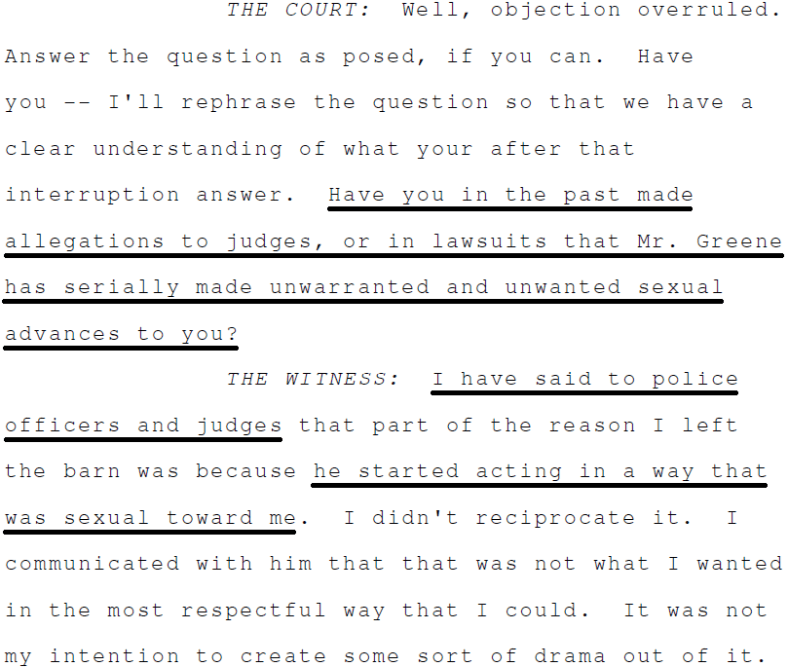
Bredfeldt testifies on examination by the judge that she has only ever told police officers and judges that the writer “act[ed] in a way that was sexual toward [her].” She “communicated with him that that was not what [she] wanted in the most respectful way that [she] could,” she says, which did not include either informing the writer she was married or wearing her wedding ring.

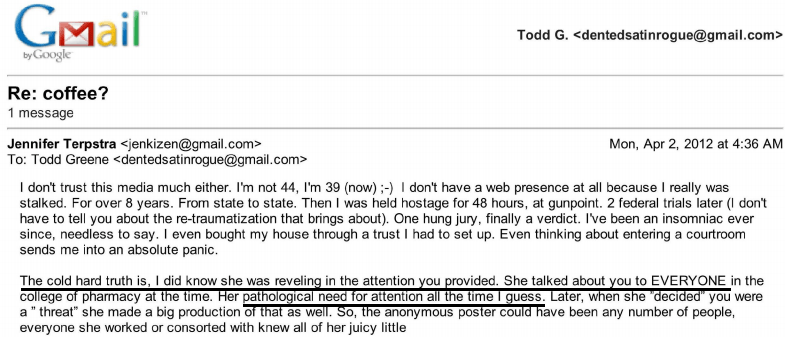
JENNIFER (OAS-)TERPSTRA, Bredfeldt’s other witness in 2013, a former colleague of hers from her University of Arizona days who went by Jenn Oas when the writer was introduced to her in 2005, in an email to the writer sent April 2, 2012 (a year earlier):
Jennifer Terpstra, Jen J. Terpstra, Terpstra JJ, Jennifer Oas-Terpstra, Jenn Oas, South Texas College, STC

This and the rest of Terpstra’s some two dozen emails to the writer in 2012 have been submitted to the court in multiple cases and are public documents accessible to anyone. Whether the emails have ever been scrutinized by a judge is uncertain. No trial has been conducted since the writer was granted a 20-minute audience before a judge in 2006. The 2013 proceeding from which the focal testimony in this post is drawn was a two-hour “preliminary” hearing. Judge Carmine Cornelio, though he drew the case out for half a year and returned several scalding rulings, found a two-hour hearing to be a sufficient basis for indefinitely depriving the writer of his First Amendment privileges. (When the writer had begun to object in open court to an order that was flagrantly unlawful, the judge threatened to summon security. Among the Arizona Court of Appeals’ stated reasons for denying the writer’s 2017 appeal of the order was that the writer had not “challenged” the judge’s ruling at the time.)

In this email, Terpstra tells the writer she was “stalked [f]or over 8 years [f]rom state to state.” Both Bredfeldt and Terpstra have claimed to be victims of multiple stalkers—including this writer. Bredfeldt, who the writer would be informed four years later has held a black belt in tae kwon do since her teens, came to the writer’s door in 2005 seeking his protection from some “men in a van” who she said had been “stalking” her while she was alone in the dark outside of his residence. Narratives of the “event,” which was unwitnessed and may have had no basis in reality, were circulated by Bredfeldt among other horse boarders on the property where the writer lives. The writer bought a wireless doorbell and installed it by the gate to his yard so that Bredfeldt could summon him quickly in case of a “recurrence.” When he showed it to her, she smiled.

A few months subsequent, when Bredfeldt’s accusations against the writer began, she was reported to have told colleagues that she thought she had seen him around her residence—and at workday’s end would ask to be escorted to her car. In testimony to the court quoted in a postscript to this exposé, Honeycutt, Bredfeldt’s first witness in 2013, says the TCEQ rewarded similar expressions of fear from her by providing her with a private office (“with hard walls and with a door that has a lock on it” in Texas).

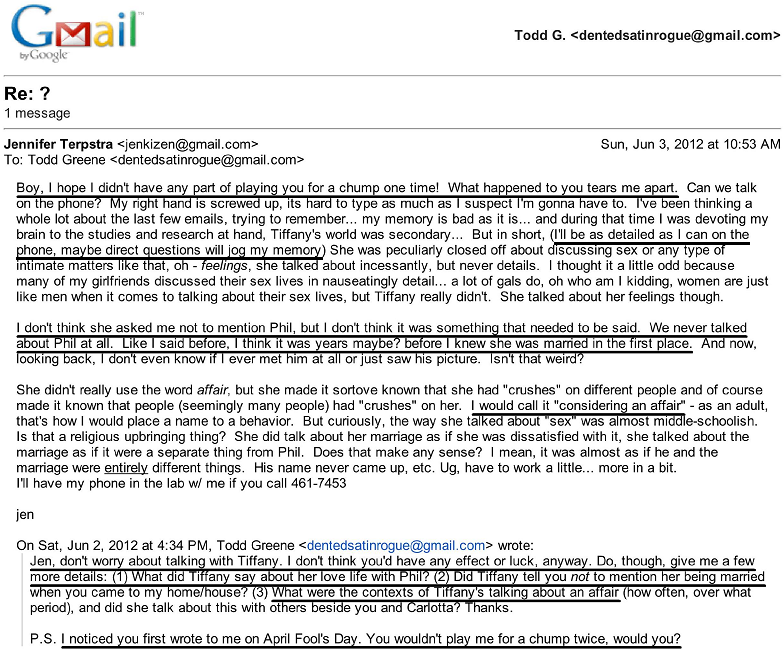
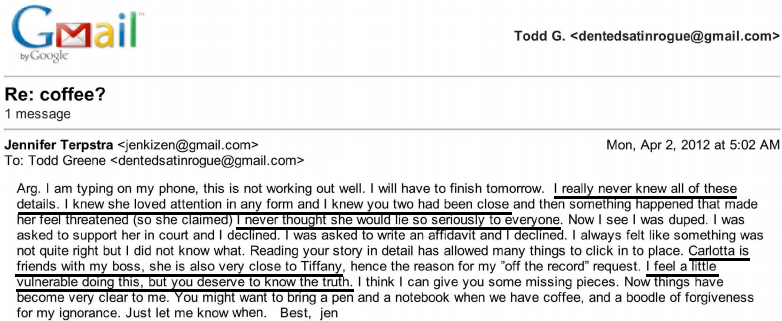
JENNIFER TERPSTRA, in an email to the writer sent April 2, 2012:
Jennifer Terpstra, Jen J. Terpstra, Terpstra JJ, Jennifer Oas-Terpstra, Jenn Oas, South Texas College, STC, Carlotta Groves PhD, Carlotta Groves DVM

In this email, sent a year before Terpstra would join Bredfeldt in testifying against the writer, Terpstra says that she “never thought [Bredfeldt] would lie so seriously to everyone” and that she knew Bredfeldt and the writer had been “close,” which remark alone contradicts everything Bredfeldt has told the court in the past decade. Terpstra also says she feels professionally “vulnerable” confiding in the writer but that he “deserve[s] to know the truth.” She suggests the writer “bring a pen and a notebook” to a meeting she proposed so that he doesn’t forget anything.

JENNIFER TERPSTRA, in an email to the writer sent June 3, 2012 (a month and a half after the two met for coffee):

Jennifer Terpstra, Jen J. Terpstra, Terpstra JJ, Jennifer Oas-Terpstra, Jenn Oas, South Texas College, STC

Terpstra told the writer over coffee in mid-April 2012 (when his father and his best friend were still alive, and a settlement could have reversed their decline) that Bredfeldt’s spouse, Phil, was known in their circle as “the phantom husband” and that Bredfeldt had urged her friends to go to the writer’s home to “check [him] out”—besides routinely talked about the writer to an audience of “25 or 30 people” at the University of Arizona College of Pharmacy.

Terpstra says in this email that Bredfeldt never talked about her husband and that she (Terpstra) wasn’t sure she had ever seen the man in person or only seen what she had described to the writer over coffee as a laminated newspaper clipping with a picture of him that was tacked to Bredfeldt’s refrigerator. Terpstra says that based on Bredfeldt’s behaviors in 2005, she judged she had been “considering an affair” with the writer, which wildly contradicts any account Bredfeldt has ever related to anybody.

In the first of the emails Terpstra sent him in 2012, she explained her six-year delay in confiding this to the writer by saying, “I don’t lie or bend the truth [but] I do avoid conflict.”

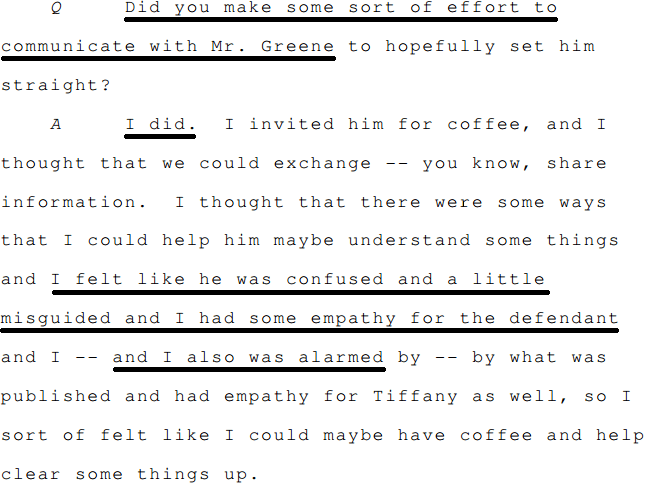
JENNIFER TERPSTRA, on direct examination by Bredfeldt’s attorney, Jeffrey Marks, on May 20, 2013 (less than a year later):
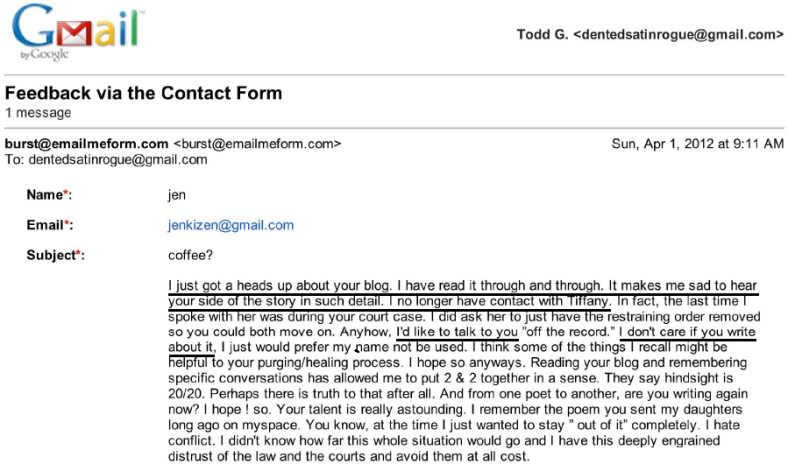
JENNIFER TERPSTRA, in an email to the writer sent April 1, 2012:
Jennifer Terpstra, Jen J. Terpstra, Terpstra JJ, Jennifer Oas-Terpstra, Jenn Oas, South Texas College, STC

In this email, Terpstra tells the writer she had asked Bredfeldt “to just have the restraining order removed” in 2006. (Terpstra would tell the writer the same thing over coffee a couple of weeks later, saying Bredfeldt had answered, “‘No.’ Just…‘no.’”) In contrast to Terpstra’s statements in this email and the others she sent him in 2012, besides in contrast to an email she sent him in 2007, Terpstra would report to Officer Nicole Britt of the Tucson Police Dept. in 2015 that “in 2005 she and her friend [Tiffany Bredfeldt] met [Todd Greene]. He then became fixated on the two of them and began stalking them.” (According to the same interview notes, Terpstra said this blog was “set up in honor” of her and “dedicated” to her.) A couple of months later (early 2016), Terpstra would report to TPD Det. Todd Schladweiler, who is assigned to the Tucson Police Mental Health Support Team, that she “now carries a handgun due to her concern that [Greene] is a threat to her safety.” Det. Schladweiler also recorded that Terpstra “said she communicated with [Greene] a few times [in 2012] and then he became very sexual in nature” and that Terpstra denied contacting the writer after they met for coffee in mid-April 2012, following which meeting she had insisted the writer give her a hug and then emailed and phoned him for a quarter of a year.
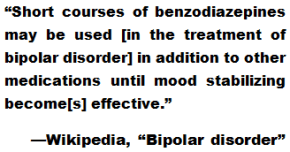
Then students in the University of Arizona College of Pharmacy, Terpstra and Bredfeldt told the writer in 2005, after inviting themselves into his house, that they took “benzos” to relieve stress. The writer asked where they got the drugs. Terpstra (who would marry a former bartender with a cocaine conviction not long afterwards and be charged with DUI in 2011) answered, “From work.” Bredfeldt echoed, “From work.”

Terpstra, who is reportedly diagnosed with bipolar disorder, told Det. Schladweiler she believed the writer was mentally ill. Although Det. Schladweiler was provided with Terpstra’s emails when he arrested the writer on Jan. 5, 2016, the subsequent synopsis of their interview gives no indication the detective spared the emails a glance.

Less than four months after her second police report, in which Terpstra alleged she feared for her safety and was carrying a gun, she would have her home address forwarded to the writer by email in the first of a spate of “copyright infringement” claims that represented her third legal action against him in 2016 and that succeeded in having this blog temporarily suspended by its host. The writer contested the claims, alleging perjury and fraud, and Terpstra declined to litigate them in court.

Terpstra, who has coauthored with Dr. Michael J. Frank, Ph.D., professor of cognitive, linguistic, and psychological sciences at Brown University, is the daughter of feminist painter Joan Bemel Iron Moccasin (Oas) and was employed as a research specialist in the University of Arizona College of Medicine under psychiatrist Francisco Moreno until 2016, when, after making her sundry false allegations, she left the jurisdiction.

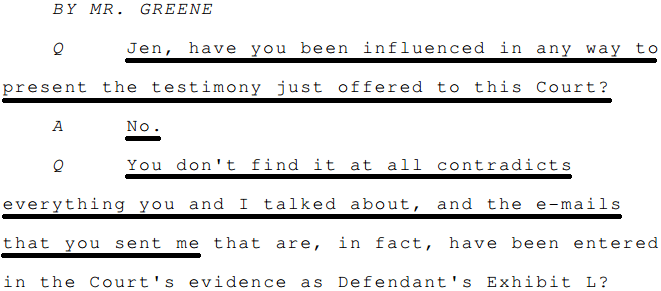
JENNIFER TERPSTRA, on cross-examination by the writer on May 20, 2013:
Jennifer Terpstra, Jen J. Terpstra, Terpstra JJ, Jennifer Oas-Terpstra, Jenn Oas, South Texas College, STC

Over coffee with the writer in 2012, Terpstra complained of financial problems. She also remarked, “Tiffany’s dad has a lot of money.” Tiffany and Phil Bredfeldt’s was a mutually prosperous union of two wealthy, fundamentalist Christian families. Phil Bredfeldt’s father was his best man in 2001; his sister Sara was a bridesmaid; and Tiffany Bredfeldt’s brother, Jon Hargis, was a groomsman. Four years later, Sara Bredfeldt was married to a medical student, Roberto “Bobby” Rojas, who is today an M.D. (Aurora St. Luke’s Medical Center in Milwaukee).

Ray Bredfeldt MD, Raymond Bredfeldt MD, Dr. Ray Bredfeldt, Arkansas Blue Cross and Blue Shield, ABCBSTiffany Bredfeldt’s father, Timothy “Tim” Hargis, is or was a bank vice president (First Security of Arkansas), as was his father before him. Phil Bredfeldt’s father, Raymond “Ray” Bredfeldt, is a family physician who practiced privately and besides rented his credentials to Arkansas Blue Cross and Blue Shield for some dozen years. The starting salary for an ABCBS regional medical director is today around $180,000. Dr. Ray Bredfeldt, M.D., had volunteered to join Terpstra in giving witness testimony in 2016 that was meant to induce the court to jail the writer while the writer’s own father, who didn’t graduate from high school, lay dying—in a home in foreclosure. Ray and Ruth Bredfeldt and Tim and GaLyn Hargis have known of what this post details from the start and have temporized for over a decade rather than acknowledge any liability for their families’ ways. “It’s what people like that do,” Terpstra commented to the writer in 2012. (Testifying in 2016, while his father was nearby, Phil Bredfeldt acknowledged on the stand that he was very aware of Terpstra’s 2012 emails. He quoted a post about them. Construing his statements to the court, the only thing that disturbed him about the emails was their contents’ being public.)

The court was told on Dec. 21, 2016, that Terpstra, who was sued to have her evicted from her house the year before, had moved from Arizona to Texas, where Tiffany and Phil Bredfeldt have resided since 2006 (in a house Terpstra told the writer that Tiffany Bredfeldt’s father had bought for them)—and the writer would be surprised if Terpstra’s legal representation in 2016 and 2017 cost her a penny.

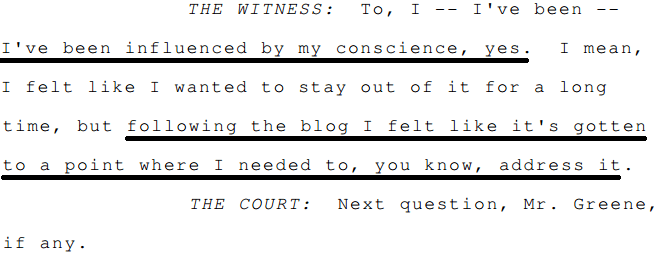
JENNIFER TERPSTRA, on cross-examination by the writer on May 20, 2013:
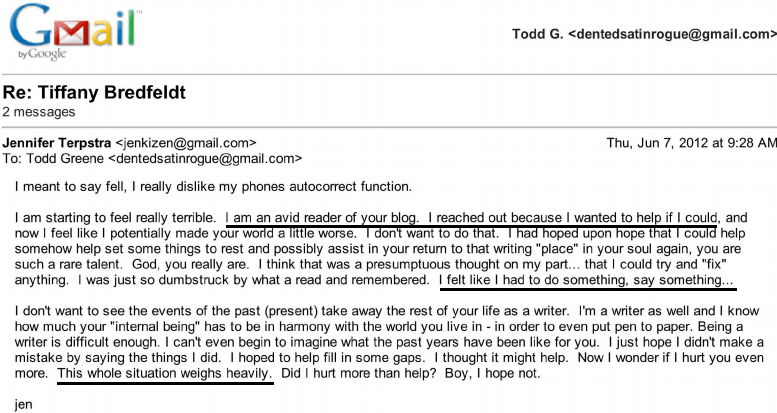
JENNIFER TERPSTRA, in an email to the writer sent June 7, 2012:
Jennifer Terpstra, Jen J. Terpstra, Terpstra JJ, Jennifer Oas-Terpstra, Jenn Oas, South Texas College, STC

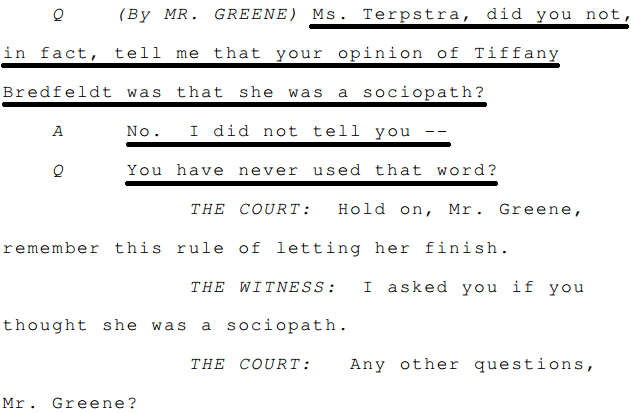
JENNIFER TERPSTRA, on cross-examination by the writer on May 20, 2013:
Jennifer Terpstra, Jen J. Terpstra, Terpstra JJ, Jennifer Oas-Terpstra, Jenn Oas, South Texas College, STC

JENNIFER TERPSTRA, in an email to the writer sent June 3, 2012:
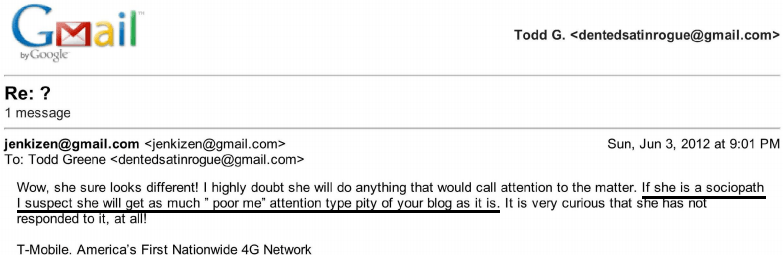
Jennifer Terpstra, Jen J. Terpstra, Terpstra JJ, Jennifer Oas-Terpstra, Jenn Oas, South Texas College, STC

Jennifer Oas-Terpstra, whom the writer has met three times in his life and only once in the past decade (and with whom he has had no contact since 2012), brought three legal actions against him in 2016 that each sought to suppress the emails quoted above—emails that today implicate both Bredfeldt and her (and criminal statutes of limitation, like those for false reporting and forswearing, stop running when perpetrators are outside of the state’s boundaries). Terpstra’s actions included a criminal prosecution, dismissed seven months later, in which Bredfeldt was also named a plaintiff, and a restraining order identical to the one Bredfeldt petitioned in 2006, which had inspired this blog and inspired Terpstra to tell the writer in 2012: “I can’t even begin to imagine what the past years have been like for you.” Terpstra’s restraining order was dismissed 20 months later.

Here are the allegations Terpstra made in her affidavit. These ex parte allegations remain a public record indefinitely. Here, in contrast, is how “vindication” from them appears. The writer was told that this handwritten dismissal, which required eight months of appeals to obtain, exists as a piece of paper only and won’t be reflected in the digitized record. Judge Antonio Riojas, who granted the Aug. 25, 2017 dismissal, accordingly recommended that the writer “carry [it] with [him].” His clerk provided the writer with the yellow copy of the triplicate form, the one meant for the plaintiff, who never appeared in court and will never be criminally accountable for her false allegations to the police in 2015 and 2016.

I’ve been doing this for 20 years,” Judge Riojas told the writer, “and I’ve never known a police [officer] or a prosecutor to charge someone for…false reports, no matter how blatant….” He added: “I wish they would, because I think people come in, and they say things that are just blatantly false—and lying.” A false or vexatious complainant “can keep filing as much as [s/he] wants,” Judge Riojas said (costing an attorney-represented defendant thousands of dollars a pop and his or her accuser nothing; application is free to all comers). “There is no mechanism to stop someone from filing these orders.” What may be worse, even a dismissed order, the judge explained, “can’t be expunged” (and anything may be alleged on a fill-in-the-blank civil injunction form, for example, rape, conspiracy to commit murder, or cross-dressing; whether heinous or merely humiliating, allegations that may be irrelevant to the approval of a keep-away order and/or that may never be litigated in court, let alone substantiated, will still be preserved indefinitely in the public record above a judge’s signature). Significantly, Judge Riojas, who is the presiding magistrate of the Tucson municipal court (and a member of the Arizona Judicial Council and the Task Force on Fair Justice for All), agreed that restraining orders were “abused”. Of that, he said, “[t]here’s no doubt.”

(In a given year, there are reportedly 5,000 active restraining orders in Tucson City Court, which recently added an annex dedicated to their administration exclusively—and the municipal court is just one of three courts in Tucson that issue such orders.)
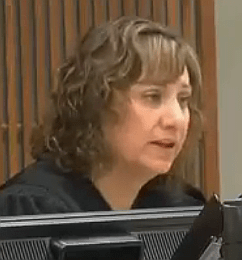
Judge Wendy Million, Tucson City Court

Judge Wendy Million

The reason Judge Riojas had to dismiss the order against the writer, nine months after he requested his day in court, was that the writer had been denied his statutory right to a hearing by Judge Wendy Million, necessitating a lengthy appeal and her admonishment by Superior Court Judge Catherine Woods for abuse of discretion. (Among approximately 15 judges to have been exposed to some aspect of this matter, Judge Woods was the first to return a ruling clearly untainted by political motives, for which she has this defendant’s highest respect.) Judge Million, who twice continued the writer’s hearing until the injunction expired and then nominated the case a “dead file,” notably coordinates Tucson’s domestic violence court and is acknowledged as an editor of Arizona’s Domestic Violence and Protective Order Bench Book. Dismissal of the case was further delayed by Judge Cynthia Kuhn, who was first assigned to the writer’s superior court appeal. Judge Kuhn sua sponte (that is, without being asked) granted Terpstra’s attorney additional time to respond to the writer’s appellate memorandum—and then abruptly recused herself, citing an unspecified “conflict of interest” as the reason.

Terpstra, in the first of the 22 emails she sent him in 2012, had told the writer: “I have this deeply engrained distrust of the law and the courts and avoid them at all cost.” Besides witnessing against him in May 2013, accusing him to the police in Nov. 2015, petitioning a civil injunction and instigating a criminal prosecution a month after that, filing a second police report in Jan. 2016, and threatening to sue him in federal court for copyright infringement 14 weeks later, Terpstra was poised to witness against the writer all over again that summer in the lawsuit brought by Bredfeldt and her husband that demanded the writer be jailed for contempt of the 2013 prior restraint. In between, in 2014, Terpstra prosecuted her husband, alleging domestic violence. A relative of his, who afterwards wept, told the writer in 2016 that she believed the man was relentlessly provoked, which the writer finds more than credible. In a voicemail Terpstra left him in 2012 (in which she tacitly identifies Bredfeldt as a “crazy person” from the writer’s “life book”), Terpstra told the writer someone had “threatened to call the police on [her].” Later, by phone, she clarified that this was another man she had been corresponding with that year—who blamed her for a woman’s suicide.

Tucson attorney Chris Scileppi, attorney Christopher Scileppi

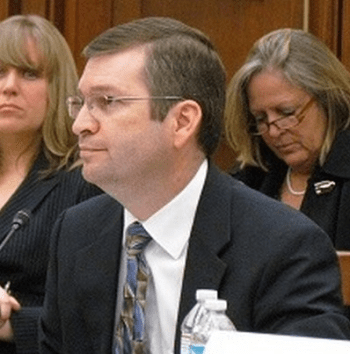
Attorney Christopher Scileppi

Bredfeldt and Terpstra, (carrion) birds of a feather, were represented by the same (criminal) attorney in 2016 and 2017, Christopher “Chris” Scileppi, whose plumage is no different from theirs. Scileppi attained minor notoriety in 2008 for having been given a hug by his “very close friend” the mayor in front of jurors at a rape trial in which Scileppi represented one of the alleged rapists of a 15-year-old girl. Scileppi remarked to the outraged judge: “Courtrooms are open to the public, and I don’t think it is inappropriate when high-profile people come in and show support for somebody who is on trial.” Scileppi’s client was cut free, but the mayor later did a stint in prison for public corruption despite Scileppi’s representation.

Showing the same unscrupulousness during hearings in the 2016 civil case, Bredfeldt v. Greene, Scileppi threatened in open court to prosecute the writer for purported felony crimes (“extortion” and “aggravated harassment,” specifically) to intimidate him into capitulating to Bredfeldt’s censorship demands, then offered to drop the lawsuit if the writer agreed to leave this site invisible to the public and accessible by request only (apparently because his clients’ fear would be eased if they didn’t know what was on the writer’s mind), and finally, as a Parthian shot, directed the judge to jail the writer for the nonpayment of a $350 sanction from 2013 (explained below): “Put him in contempt,” Scileppi said, “and somebody can post a bond and pay that and then he will be released as soon as that bond is posted….

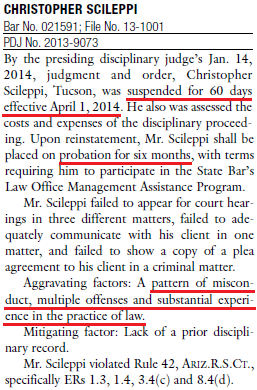
Tucson attorney Chris Scileppi, attorney Christopher ScileppiScileppi, who was suspended for 60 days and placed on six months’ probation in 2014 for violating various ethical rules (ERs), endeavored to convince the 2016 court that the writer had “terrorize[d], demonize[d], harass[ed], and defame[d]” the Bredfeldts, in particular through the use of “[meta] tags” on this blog, that is, keywords that describe its contents. These terms, which haven’t been used by any major search engine in eight years, were alleged to have hijacked the Bredfeldts’ public images on Google and to have “contact[ed]” anyone whose name appeared among them. Because a Google Alert Phil Bredfeldt had “set up” had allegedly been triggered by tags on the blog (in publications to the world at large), that was said to represent illicit “communication [and] contactby the writer with Mr. Bredfeldt and his wife. Scileppi enlisted an information technology expert, “part-time professor” and (criminal) attorney Brian Chase, to loosely substantiate this theory on the stand. Lamely objecting to an eminent constitutional scholar’s weighing in as an amicus curiae (Latin for “friend of the court”), Scileppi also defended the 2013 prior restraint last year before the Arizona Court of Appeals. He told the court that the writer was the liar.

Jeffrey “25% OFF ALL MONTH LONG” Marks, the low-rent opportunist who represented Tiffany Bredfeldt in 2010 and 2013, and is quoted below, represented her in 2016, also, but was hastily replaced after the writer was granted a court-appointed lawyer of his own. Marks, like his replacement, Scileppi, attempted to induce the court to stifle even third-party criticism of Bredfeldt, for example, that of Georgia entrepreneur Matthew Chan, who (aided by Prof. Eugene Volokh) successfully appealed a prior restraint in 2015 in his state’s supreme court and who introduced the writer to the finer points of First Amendment law.

To explain away Terpstra’s emails to the writer in 2012 and the contradictory testimony she gave a year later, Scileppi told Judge Catherine Woods in 2017 that “[i]n the midst of Greene’s harassment of Dr. Bredfeldt, [Terpstra] reached out to Greene and met with him. Through meeting with Greene, Terpstra became privy to his harassment of Dr. Bredfeldt.” In contrast to Scileppi’s claims, which Judge Woods shrewdly disregarded, Terpstra had offered to help the writer settle the conflict with Bredfeldt in 2012 (three months after Terpstra “reached out to [the writer] and met with him”). In an email Terpstra sent the writer on July 18 of that year (the first of four she sent that day), she wrote: “Maybe I can be a go between if the pastor [Jeremy Cheezum, a brother-in-law of Phil Bredfeldt’s] will not. I told Tiffany we met for coffee.” The email ended, “Hoping for the best.” That was the last day the writer heard from Terpstra, who is notably the mother of two college-aged daughters. Desperate to raise money to secure a surgery for his dog to enable her to run and jump again—something else Terpstra had said she was eager to help him accomplish—the writer scarcely gave Terpstra another thought until she appeared as a surprise witness 10 months later and deceived the court for Bredfeldt.

The other friend of Bredfeldt’s the writer met at his home in 2005, Dr. Carlotta Groves, a reported recipient of $740,000 in scientific research grants who uses the alias “Jahchannah” and identifies herself as a “Black Hebrew Israelite” and “servant of Yah,” lives in Arizona but apparently couldn’t be persuaded to give witness testimony for Bredfeldt in either 2013 or 2016. Like Terpstra did in the first of her emails to the writer in 2012, Groves told him in a blog comment around the same time that her own brother had been falsely accused. Terpstra said her brother had been falsely accused of rape and that it had “truly ruined his life.” For 12 years, Groves has done what Terpstra did for six: spectate. Groves, a DVM and a Ph.D. (who “love[s] to read and support aspiring authors!”), works at a low-cost veterinary clinic in Tucson.
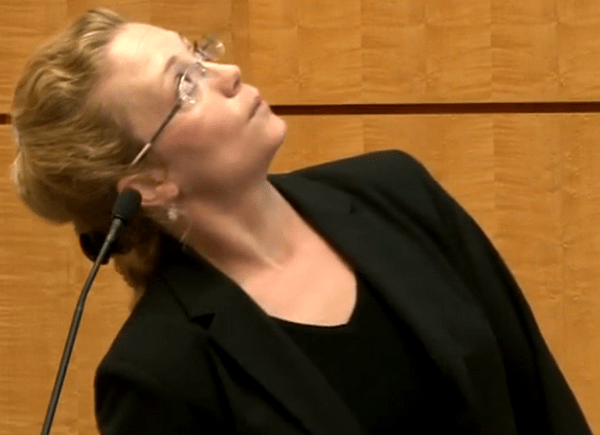

Tiffany Bredfeldt TCEQ, Tiffany Bredfeldt PhD, Tiffany Bredfeldt EPA, TCEQ, Texas Commission on Environmental Quality, EPA, Environmental Protection Agency, EPA Chemical Assessment Advisory Committee


TIFFANY BREDFELDT, on cross-examination by the writer on May 20, 2013:

TIFFANY BREDFELDT, on cross-examination by the writer on May 20, 2013:
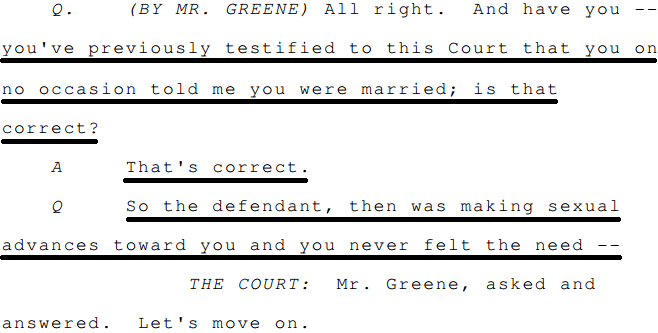
JEFFREY MARKS, Bredfeldt’s attorney, speaking for her in a memorandum to the court filed July 10, 2013:

The difference between Bredfeldt’s attorney’s offhand estimation, “2005 or 2006,” was a year of this writer’s life (and his friends’ and his family’s). The year after the “genesis of this case” was one the writer spent every waking moment conscious he could be arrested without a warrant based on a further contrived allegation by Bredfeldt (in which case the writer’s dog, who was part Rottweiler and vigorously barked at any approaching stranger, could easily have been shot and killed).

Contrary to Marks’s claim, Bredfeldt employed others to tend to her horse’s daily hygiene in 2005. Within six or seven weeks of her installing her horse 30′ from the writer’s residence, it became lame and could not even be ridden, after which Bredfeldt increased the frequency of her nighttime visits.
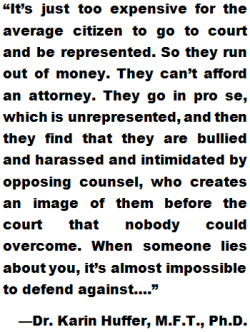
Karin Huffer PhD, Legal Abuse Syndrome, legal abuse, LASMarks, who boasts of having served as a superior court judge himself, also tells the court in this memorandum, which was captioned, “Plaintiffs’ Response to Defendant’s ‘Chronology of Tiffany Bredfeldt’s 2006 Frauds,’” that “[e]ven assuming arguendo that Plaintiff Tiffany Bredfeldt is a chronic liar, her veracity is totally irrelevant to the necessity to restrain Defendant’s [speech] conduct.” Marks moved the 2013 court to strike the writer’s “scandalous” chronology from the record so that it couldn’t be accessed by the public. The judge, Carmine Cornelio, complied, rebuked the writer, and sanctioned him $350 for filing the brief, despite having invited him to: “Mr. Greene,” the judge had said in open court, “you can file anything you want.” Then the judge permanently prohibited the writer from telling anyone else what that chronology related—including by word of mouth. Bredfeldt’s handmaidens, Honeycutt and Terpstra, said exactly what they knew they should to inspire the illegal injunction. The judge permanently prohibited the writer from talking about them, also, including by reporting the testimony they gave in a public proceeding in the United States of America.

(Last year, two days before the writer’s attorney would file an appeal reminding an American court that citizens of this country enjoy freedom of speech, The New York Times published an editorial on censorship in China adapted from an essay by iconic artist and agitator Ai Weiwei. In it, Ai argues that censorship, an essential tool of oppression, does the opposite of pacify: It stimulates “behavior [that] can become wild, abnormal and violent.” Having to live with lies, as Ai told NPR in an interview in 2013, “is suffocating. It’s like bad air all the time.”)

MICHAEL HONEYCUTT, on cross-examination by the writer on May 20, 2013:
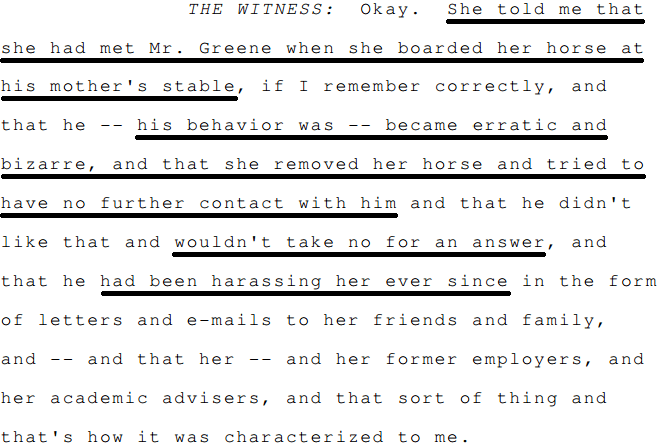
MICHAEL HONEYCUTT, on direct examination by Bredfeldt’s attorney, Jeffrey Marks, on May 20, 2013:

The testimony of “Where’s my mike?” Honeycutt exemplifies how the Texas Commission on Environmental Quality responds to “pretty significant allegations” of ethical misconduct by its scientists: It ignores the allegations…and abets the misconduct.

Under Arizona law, a “false sworn statement in regard to a material issue” is perjury, a felony crime. Honeycutt influentially testified in 2013 that the writer had called Bredfeldt a “fraudulent scientist.” Here, in contrast, is what the writer told Honeycutt in 2011, in a letter that is today a public document.
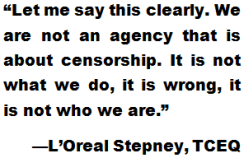
L'Oreal Stepney, TCEQ, Texas Commission on Environmental Quality, censorshipIn the Texas Observer the summer before last, Naveena Sadasivam reported that “Honeycutt sent at least 100 emails to state air pollution regulators, university professors and industry representatives and lawyers asking them to send the EPA a letter supporting his nomination to the Clean Air Science Advisory Committee….” Probably none of them sought to have him silenced on pain of imprisonment for requesting support. In a further instance of incandescent hypocrisy, Honeycutt is quoted in the story as pronouncing: “Ideology is different from science and data.” The reader is invited to consider which master Honeycutt was serving when he testified against this writer four and a half years ago.

After a hearing held on July 15, 2016, during which her husband had testified he was “frighten[ed],” Tiffany Bredfeldt swore in court, “God damn it,” because instead of ordering that the writer be jailed, the judge had stayed the proceedings pending further briefings from the attorneys on the First Amendment. Then, less than a year after the writer had buried his best friend and a few months before the writer’s father would succumb to cancer by starving to death, Bredfeldt laughed. She said Honeycutt had joked that her prosecution of the writer was “good experience” for when she gave expert witness testimony. “That’s something we have to do,” Bredfeldt explained to her entourage.

Copyright © 2018 RestrainingOrderAbuse.com

DR. MICHAEL HONEYCUTT, PH.D.:
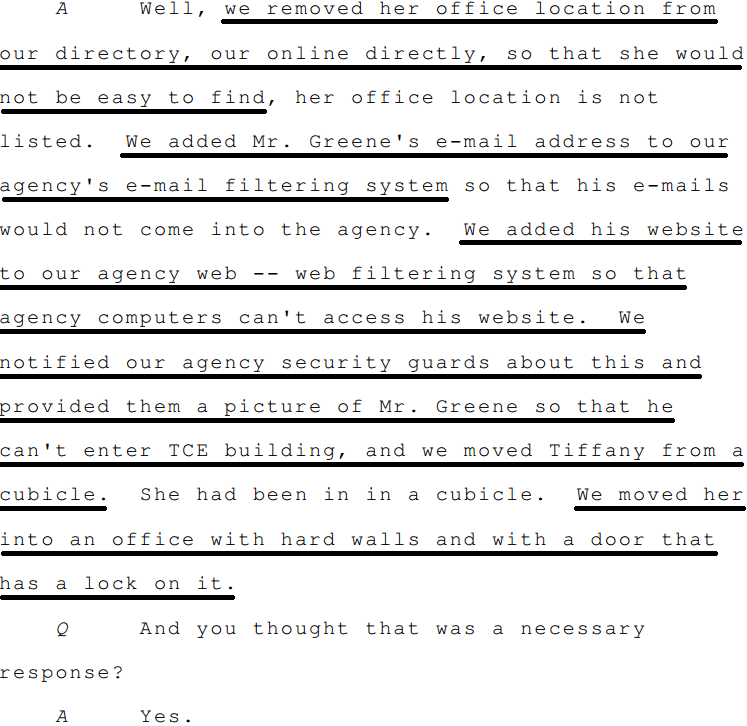
DR. TIFFANY BREDFELDT, PH.D.:

How to Reform Corrupt “Abuse” Laws: VOTE THEIR SUPPORTERS OUT

Various ways to effect change present themselves to earnest, reasonable, civic-minded people who’ve been savaged by abuses of family court, domestic violence, and/or restraining order procedures but still expect sense to prevail over madness.

Here are some of those ways:

  • Start a petition (one started by the writer was censored by its host the moment his back was turned);
  • Attend “men’s rights” or “parents’ rights” meetings (both roundly mocked in the mainstream press);
  • Initiate a class action against the government (hugely expensive; little sustained interest);
  • Expose violations by writing about them on the Internet (also frequently subject to censorship);
  • Write to lawmakers and demand that they act (rarely answered).

They’re good thoughts all, but they don’t work. They don’t work. Victims of bad laws are demoralized, and they’re distrustful and should be. There is no solidarity base to tap nor is there a sympathetic audience in power. The only way to realize change is to change who is in power.

The answer is simple but distasteful to many: Vote out the opposition. “Abuse” laws are liberal feminist products that generate billions of dollars in revenue for their beneficiaries. That makes them very resistant to change. Lawmakers who in the past have rejected renewal of the Violence Against Women Act, for example, have been publicly shamed for it irrespective of their motives.

Maybe the reader who has had his or her life derailed by a corrupt legal process disagrees with conservative climate or energy policies, or values Obamacare, or lives for “Science Friday” on NPR. It’s a matter of priorities: You pays your money, and you takes your choice.

Generations of judges have been trained according to tailored social science and had it all but mandated how they should rule, and politicians in the minority know that rejection of “abuse” laws is career suicide. The course to realize reform is to provoke a values reset.

That’s easy. The number of people whose lives have been irreparably damaged by those “abuse” laws is today a broad swathe of the voting public (in the tens of millions). All it has to do is vote down supporters of those laws—with their feet, their wallets or pocketbooks, and their ballots.

How?

In retention elections, vote against every judge on the ballot. In every election, vote against any politician with “D” (Democrat) beside his or her name. Don’t donate to NPR, and don’t subscribe to newspapers that ridicule your suffering. If you think their news and commentary are mostly smart, listen for free and read at the library. Female victims of procedural abuse may be attracted to feminist magazines and websites. Don’t be fooled: They are the first and loudest to deny that so-called “women’s law” is abused. You know better.

Don’t, in short, reward your torturers and critics.

Erode the solidarity base and revenue streams of those who’ve diminished your life, and put government on notice. This is within your power. Remember: If liberal politicians valued you or your vote, you wouldn’t be in constant pain—and ignored. Write to libertarian and conservative candidates you vote for instead and say you chose them because you want to see legal reform and believe they are the people to make it happen.

When a consensus in government exists that will listen to you, you can then start a petition to promote free healthcare or tell politicians that you believe oil-drilling in Alaska needs to be curbed or that a Great Wall of China across the southern border is excessive.

It’s a lot easier to educate those who will listen to you than to reeducate those who consider you worthless.

Copyright © 2017 RestrainingOrderAbuse.com

An Aggressive Approach to Restraining Order Policy Reform: Threaten to Sue the State Courts Administrator in Federal Court

Restraining orders are public records, and recent posts have concerned or commented on their publicity and the unavailability of having their traces expunged even if orders are dismissed by their petitioners or otherwise vacated. This post highlights the pioneering efforts of one Missouri civil rights lawyer to upset the imbalance by threatening to file a federal lawsuit.


“Unless expunged, criminal case records remain online, even if prosecutors drop the charges. Civil lawsuits [which include restraining orders] stay on Case.net even if a judge dismisses the claims, [Kansas City media attorney Jean Maneke] noted.

“‘Openness is generally a better way to clean up concerns about inaccuracy than attempting to put everything back in a box,’ Maneke said.”

—“Pending Protection Orders Yanked from Public View

Everyone is entitled to his or her opinion. “Bullshit” is this writer’s opinion of the one quoted above. If you’ve been wrongly implicated in an abuse of process (or several), you probably disagree with views like Ms. Maneke’s, too, and believe that lies should never have been taken out of the box in the first place let alone engraved in databases and preserved indefinitely for public scrutiny.

Here are among what views like Ms. Maneke’s ignore:

  1. Restraining orders aren’t criminal cases, so they can never be expunged. Even if a judge dismisses (“tosses”) the allegations, only Tennessee has legislation that affords a wronged defendant the opportunity to have the case against him or her erased from the public record. Many orders, moreover, are finalized despite being grounded on fraud.
  2. Restraining orders aren’t criminal cases, but they’re not strictly civil cases, either. Acts imputed to defendants are often, if not typically, criminal (e.g., harassment, sexual harassment, stalking, terroristic threats, assault, battery, child abuse, sexual violence, or domestic violence).
  3. Unlike in other kinds of civil cases, a restraining order judgment may be wordless and formed in mere minutes, and the defendant may never be heard from at all. (An order can be obtained in a county or state other than the one a defendant resides in, so s/he may have no practicable opportunity to defend.) Also, an order may be awarded even though some of what may be many allegations are never considered by the court or are determined to be baseless. An approved order is an approved order. There aren’t necessarily any qualifications from the court on the recorded instrument to indicate which claims it regarded to be real and urgent, which suspect, or which baseless. To a third-party reader of the order, then, the accusations that appear on it are taken at face value.
  4. The mere title of an order may be prejudicial all by itself, regardless of the facts litigated in court.

The story the epigraph was excerpted from begins like this:

The client couldn’t stand it.

He typed his name into Case.net and up popped an ugly classification: “Protection Order: Adult Abuse Stalking.”

Who needs any more than those five words to form a conclusion about the person they were applied to? The case was dropped by the woman who made the accusation, but those five words nevertheless remained on the Internet.

The man was naturally concerned about the affect those words could have on his business and asked his lawyer to intervene.

[Bevis] Schock, a St. Louis attorney, [drafted] a federal equal protection lawsuit against the Office of State Courts Administrator. He never filed it, because four months later a Missouri Supreme Court committee decided privacy concerns trumped the public nature of this type of electronic court records.

Now pending orders of protection don’t appear on Case.net until judges grant full orders of protection.

The policy shift isn’t unopposed, but today “if the judge denies a petition or the filing party drops her request, it won’t ever appear online [and the] rule change is retroactive; OSCA scrubbed any previous ex parte orders from Case.net, including those involving Schock’s client.”

Schock said he spent 40 to 50 unpaid hours drafting an 18-page federal lawsuit against Greg Linhares, state courts administrator. Among other arguments, the lawsuit claimed the prior public records rule treats respondents differently than petitioners, because respondents are named online but petitioners are not.

The federal 2005 Violence Against Women Act prohibits states from publishing online any identifying information about people seeking protection.

Remarkable is that it takes the threat of a federal lawsuit to alert the courts to an obvious inequity. (Note, too, that finalized orders remain online, even though they may have been based on false allegations, and that even dismissed orders are preserved and can be accessed at the courthouse.)

The story is recommended reading. It notes in passing several facts about the process that are rarely observed, for example, that plaintiffs may file “seven or eight orders of protection” only to have them dismissed.

Under Missouri’s former policy, all of these dismissed petitions would have been visible online.

Unsurprisingly, a staff attorney with the Domestic Violence Unit at Legal Services of Southern Missouri is quoted as expressing the conviction that a “history” like this is indicative of true victimhood.

It can also be indicative of persecution by a venal and vindictive ex, vexatious neighbor, or fixated nutcase.

Copyright © 2016 RestrainingOrderAbuse.com

Introducing the “Indefinite Temporary Restraining Order”

No, this isn’t satire, and Joseph Heller, author of Catch-22, didn’t coin the phrase “indefinite temporary.” It’s a capsular commentary on the state of our courts, however, that actual judges can actually use a phrase like this in actual rulings that affect actual people.

That these judges can actually get away with it says a lot about the state of our press, too.

The injunctive process is rife with oxymorons. Among this writer’s favorites is “speedy justice” (a phrase used by his own most recent judge to excuse carelessness). Restraining order courts are home to findings like “vegetarian stalker” and “handicapped batterer.” Trials in this arena operate in a vacuum (as law professor and former ACLU staff attorney Aaron Caplan observes); there is no oversight or accountability, and “meritorious” grounds for appeal are few, so judgments seldom receive scrutiny by the higher courts at all, and published rulings are scant. (Appellate courts don’t rehear cases; they only rule on the conduct of judges. Patent absurdities and abject fraud may be winked at…and legally.)
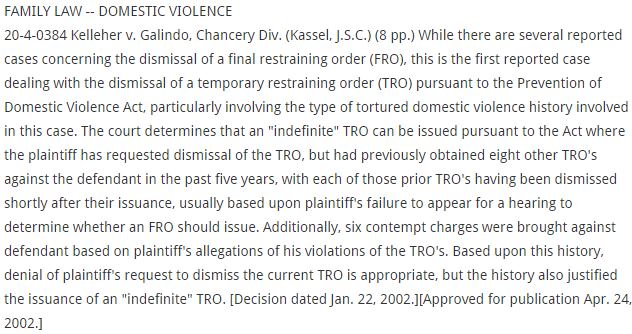
This post concerns a New Jersey family court ruling in the case of Kelleher v. Galindo. The case is 13 years old. That’s how asleep at the wheel our popular press is.

Follow the link to the case above, and the first sentence you’ll see in the ruling is this: “No appearance by Plaintiff. No appearance by Defendant.” That’s right, no one actually appeared in court, but a restraining order was issued anyway…an “indefinite temporary” one.

The plaintiff in the case petitioned nine restraining orders against the defendant between the years of 1996 and 2002, and in each and every instance, the order was dismissed, in most cases because “plaintiff [the person who petitioned the order] failed to appear at the hearing”; in a couple of cases, because she requested a dismissal.

The reasoning of the latest judge’s ruling runs thus (emphases added) and should be heard in the voice of a character from Alice in Wonderland:

This court has no doubt that if it were to grant plaintiff’s request to dismiss this most recent TRO [temporary restraining order], it would not be very long before plaintiff was back in the Cherry Hill Municipal Court seeking a tenth TRO against defendant.

[…]

It is this court’s opinion that, despite plaintiff’s telephonic request to dismiss this most recent TRO, the plaintiff’s past history of obtaining eight TROs against defendant in a five year period, all of which were dismissed prior to an FRO hearing [final restraining order hearing], along with six prior contempt charges filed against defendant based upon plaintiff’s allegation of violations of those TROs, all of which were likewise dismissed prior to an adjudication, justifies this court’s denial of plaintiff’s request to dismiss the TRO and instead justifies the issuance of an indefinite TRO.

There was no determined basis for an order and no basis for a ruling (in the absence of the litigants in the case). “Therefore” the judge, Michael J. Kassel, ruled that the latest temporary order be indefinitely sustained.

In the interest of economy, that is, the court determined itself justified in issuing an order contrary to the plaintiff’s express wishes and without any trial at all.

Copyright © 2015 RestrainingOrderAbuse.com

*The judge’s legal contortionism is illuminating. Because the judge couldn’t “justify” entering a “final ruling” in the absence of the parties but plainly wanted to, he circumvented the rules of civil procedure and made a “temporary” order permanent (instead of, for example, sanctioning the petitioner of the nine orders for “squandering judicial and law enforcement resources and diverting attention from urgent and meritorious domestic violence matters”). This provides other judges with a precedent to cite to justify violating other defendants’ due process rights, limited as they already are in this process.

“Somebody Do Something to End This Madness!”: One Commenter’s Appeal for Restraining Order Reform

A comment Wednesday resonated with the author’s experiences of legal abuse and many others’. It said its writer’s life was trashed because he showed compassion for another. He exhausted his savings to help his ex-wife out of a fix, flying out to California from Colorado on a day’s notice. Five years later, having lived with the aftereffects of legal madness every day of the interim—which included appeals in another state, postponements, and a five-year restraining order extension—he says he feels his life is “over.” Of particular note is that the apparent instigator of the fraudulent restraining order petitioned against him was his ex-wife’s son; the son allegedly threatened to turn his back on his mother and evict her from his home if she didn’t comply with his wishes.

The commenter’s account:

[In] 2010, she calls me in Denver [Colorado], where I had a two-bedroom apartment, crying the blues that she had a big fight with her boyfriend, and requested to stay with me for a little while. I gave in as we were married for 23 years and had remained friends.

I fly out to San Jose [California] the next day, and we drive directly from the airport to U-Haul, pick up a truck, and are on the road in a couple of hours. Five days later, I move her into her own bedroom and put her furniture in storage.

Things went fine until she wanted this dog up in Wyoming that had some issues.

We drive up to get the dog and then after getting it home, I find out the issues—the dog would just pee on the carpet at random. I told her the dog had to go. She’s not happy, but we surrendered it to the local shelter.

Next thing I know, there is a knock on the door with her son ready to drive her back to San Jose.

Not a problem until two weeks later when the sheriff delivered the TRO [temporary restraining order] that stated I had to give up my guns and appear in San Jose at a hearing in seven days. “Why?” I asked. “Don’t we have laws in Colorado? Shouldn’t the case be tried in Denver?” Apparently not. I lost that argument.

I went to San Jose, had a 10-minute hearing in front of—what else?—a woman judge. My ex had a lawyer [thanks to] the good old folks at VAWA providing the funding. I [checked with] over 30 attorneys, and no one would touch the case pro bono (she took any spare money I had moving her).

Then we found out that she can talk to me; I just can’t talk to her (great system).

We found a way to communicate…through the Internet on one of those game shows. We would pass notes back and forth. She did not have a problem with that. The son found out and over his IPhone requested an extension on the court order.

Turns out, truth be told, that the son was the one who wanted her to get the RO. She never had any intention of doing such a thing. The son apparently was angry because he asked me what happened between his mother and me. I responded by asking him if he was sure that he really wanted to know the truth about his mom. Well, I told him the truth. I told him that his mother was screwing around on me every chance that she had.

That did not sit well with him. So here we are…RO. Every lie in that first and second complaint was written by him. He forced his mother to go along with it by threatening that he would not want her to be around him anymore and that she would have to move out of his house.

With all the postponements, when we finally got a ruling on the attempt to continue the first RO, which only had two weeks left on it, the judge, a new woman judge, ruled against me. She would not even let me speak.

So, long story short, after all the delays in between the appearances, I now received an additional five-year RO causing my total RO to be about 7 years.

I don’t give a shit whether I ever see her again, but I thought that this was a country of laws. There was never any violence between us. Yet this judge violated my Second Amendment rights once again.

So…lesson learned: Never even raise your voice to your significant (???) other. When she finds out how much money she can get out of all the federal funding, inclusive of cars, a place to stay, educational programs, etc., etc., she will come after you without a second thought.

The entire law is wrong. It violates [the First, Second, and Sixth Amendments, and probably others]. And the worse part of it is that any woman you want to date is going to plug your name into the Internet before she considers going out with you. Or her son or daughter or girlfriend will…just because they want to make sure she’s not going out with a “bum.”

My life is over. I have no social life [and] no place to turn. Not one lawyer will help. Not one congressman or senator will go against all the women who started all of this in 1994. And why? The only reason that I can come up with is that they don’t want to get “cut off.” They have no balls and couldn’t care less about what is right or wrong.

This is a bad law. I think if I remember the VAWA statute correctly, the phrase man or men is mentioned one time. I am for anyone who has any ideas on how to overturn this law and at least give us our “rights” back. I can understand it if you are a wife-beater or something like that, but the word harassment is so ambiguous. How can any judge make an honest decision?

Please, everyone, chime in. This could happen to you! If your wife gets an RO on you, you are in “the system.” You no longer will have a job, friends will shy away from you, and even your own family will distance themselves from you.

SOMEBODY DO SOMETHING TO END THIS MADNESS!

Please.

Copyright © 2015 RestrainingOrderAbuse.com

*The anonymous commenter’s remarks began: “I will be more than happy to pay any attorney to get my Santa Clara County, California RO taken off of the Internet!”

If a Man Who Complains of Procedural Abuse is an “MRA,” What Do You Call a Woman Who Complains of Procedural Abuse?

It isn’t just the men disparaged as “MRAs” (men’s rights activists) who denounce the injustice of feminist-inspired “women’s law.” Women also lose their homes, their families, their dignity, and their lives to misapplications of restraining order and domestic violence statutes. Unlike the men whose lot they share, these women aren’t distinguished with a label.

I propose the acronym “BRA,” which could stand for any of the following:

  • Beleaguered rights activist;
  • Baffled, boggled, buffaloed, or bewildered rights activist; or
  • Buggered rights activist.

The latter of these, especially, would evoke the same mockery shown the men’s rights activist to whom “MRA” is applied like a markdown sticker.

Make no mistake: Women who complain of procedural abuses are no less ignored than the men who do. They’re not saying anything anyone wants to hear—not the ACLU nor the Southern Poverty Law Center nor battered women’s advocates nor feminists in general. They’re misfits, and they’re accordingly denied status. No one dares contradict them, because that might sound misogynist. So they’re just disregarded.

Here are some different proposals for what BRA might represent: bypassed rights activist, betrayed rights activist…or balanced rights activist.

You want the straight dope about false accusation and the need for procedural reform? Ask the ex-wife who’s had her child taken from her, ask the disabled girl who’s been accused of domestic violence and cries herself to sleep every night, ask the mom who can’t attend her child’s school functions or keep a job, ask the ex-girlfriend who was nearly parked on the curb, or ask the professional woman who’s been denied protection against a brute and then framed.

But only ask if you can tolerate an inconvenient truth.

Copyright © 2015 RestrainingOrderAbuse.com

*A woman is the best rights activist, and more women’s voices should be heard in coordinated public protest.

You Don’t Want to “Be a Part of It”: Commentary on New York’s Protection Order Biz

I corresponded with a man last year, a man in a homosexual relationship, who was assaulted by his partner severely enough to require the ministrations of a surgeon. His boyfriend was issued a restraining order coincident to his being charged with assault. That’s how it typically works in New York: A protection order is issued following a criminal complaint.

The man who wrote reported that he contacted the violent partner while the order was in effect to impress upon him how badly he had been hurt. The boyfriend used the contact to have the assault charge reduced and to obtain a protection order of his own, which he then abused serially to drive the man he had assaulted from his job and eventually from the state. This only required that he repeatedly claim he felt threatened, which is what he did. (According to the man, “The DA did not even try to substantiate my ex’s allegations and pursued the case to the utmost of his ability.”) The law licenses “mandatory arrest” under such circumstances. Arresting officers told the man all they needed was his accuser’s statement. (It didn’t matter who the actual victim was.)

The man was badly traumatized, at least as much by the lies and legal abuse as by the violence. Though he can’t look in the mirror without being reminded of it—one of its mementos is a scar under his eye—the effects of the violence subsided; the lies and legal abuse eventuated in his public disgrace, alienation from his friends, his being arrested at his place of work, and his being asked to leave by his employer after his business dried up and he had accrued massive debts, including from legal fees and medical treatment for PTSD and depression. He says he developed “terrible agoraphobia” (“afraid I would inadvertently run into my ex and have him accuse me of anything just to have me arrested yet again”) and continues to suffer nightmares (“that cause great daily despair”) even now—in another state where he fled to the safety of his family and where he gets by on disability insurance while he plots a reemergence secure from the risk of further legal assaults.

His story, which has here been stripped of detail to preserve his confidentiality, should serve to inject some color into the black-and-white tutorial on New York protection orders that’s examined below.


I digested a page on protection orders recently that was prepped for the New York Court System by the very earnest Judge Penelope D. Clute. It obliquely highlights absurdities in the system that merit some remark.

According to the judge, there are two types of protection orders: “stay away” orders and “refrain from” orders.

The former are pretty straightforward in their prohibitions:

  • No physical contact of any kind.
  • Stay away from the home, school, business or place of employment of the person named in the Order.
  • No phone calls.
  • No letters, emails, or faxes.
  • No messages through other people.
  • No presents.
  • No contacting the person in any way at all, even if you are invited to talk or meet by that person.

Note the last line—and note that it is the last line.

It acknowledges that people who are nominated “victims” on protection orders may entice their “abusers” to contact them. The quotation marks around the words victims and abusers in the previous sentence are there to stress that the language used by the courts and inscribed in the law is suspect. The court itself recognizes that there are cases when “victims” invite “abusers” to chat or hang out (or move in). As the story that introduces this post shows, besides, there are instances when actual victims seek the understanding of abusers, and this may come with its own host of complications and horrors.

Attorneys like these know very well that allegations of abuse may be hyped or fraudulent.

Unstated in Judge Clute’s bullet list is that the burden of blame falls on the accused even if s/he’s invited to violate the court’s order. Unstated but implicit is that “victims” may not be victims, and “abusers” may not be abusers. Entirely unconscious is that telling people whom they are or are not “permitted” to send a message or gift to contravenes the basic principles of liberty we define ourselves by and pride ourselves on. Restraining orders obviate the chance of reconciliation between parties in conflict by criminalizing contact and making what may be strained relations wholly and possibly virulently antagonistic.

(But, I hear you counter, you sacrifice your freedom when you violate the law. The issuance of a restraining order may be in conjunction with a criminal case, as it commonly is in New York, or it may not bedoesn’t necessarily require proof conclusive of anything; isn’t itself a criminal judgment but an admonitory one; and may be grounded on cranky interpretations of perfectly lawful acts, on lies constituting fraud, or on mere finger-pointing and a few moments of the court’s attention only. The issuance of a restraining order is, however, regarded as a criminal judgment, even in the absence of a criminal charge, and a finding that the order was violated is a criminal judgment. Appreciate that a violation could be the “abuser’s” calling the “victim” and reporting, “Your dad phoned and says your mom’s been in an accident.” A restraining order makes that act criminal, and the court’s prohibitions aren’t negotiable. Restraining orders make perfectly lawful acts, even morally imperative acts, criminal ones, ones you may be arrested for, denied jobs and housing for, and/or deported for.)

These contradictions will likely be familiar to the repeat reader.

Fascinating to learn of was New York’s “refrain from” order. Its contradictions are less likely to be familiar. According to Judge Clute, if you’re issued a “refrain from” order, “you can live together and have contact, but you’re prohibited from harassing, intimidating, threatening, or otherwise interfering with the person protected by the Order.”

This means, evidently and bizarrely, that there are people dwelling under the same roof as their accusers who may be cited for criminal contempt if an accuser calls and reports them for “harassment” that occurred, for example, in the hallway or the kitchen. The implications, which are fairly stunning, bring to mind the phrase “sleeping with the enemy.” The law invests its complete faith in the virtuousness of accusers’ motives. What will be plain to anyone who’s been falsely accused is that an accuser who’s been granted a “refrain from” order and resides with his or her “abuser” holds the life of the accused in the palm of his or her hand.

A writer for the feminist house organ Jezebel might ask, “Why would anyone make a false accusation of harassment, intimidation, or threat? What could be gained by that?”

Since feminists aren’t actually obtuse, the question doesn’t require an answer. Pretending, though, that they are obtuse, here is one: A residence could be gained by making a false accusation. Property could be. Children could be. Revenge could be (see the introduction above). Attention could be. The list goes on.

Judge Clute wraps up her tutorial on protection orders with this advice on “How Defendants Can Avoid Problems,” which reinforces the earlier observations that “victims” may call their “abusers” or otherwise attempt to reconcile, and which notes, besides, how a court order may stir conflict and confrontation with “family or friends.”

  • Do not go to places where you know the other person goes.
  • Leave a building, restaurant, store, or other place if you realize that the other person is there.
  • Hang up the phone immediately if the person calls you. Record the call on your answering machine, if possible. Tell your lawyer about the call.
  • Do not send letters, emails, or faxes to the other person and do not respond if that person sends one to you. Give your lawyer any message you receive from the other person.
  • Do not get into arguments or confrontations with the person’s family or friends. Walk away. Try to avoid them completely.
  • Do not get together with the other person, even to apologize or to try to work things out unless the Judge has dropped the Order of Protection.

Everything that makes these bureaucratic intrusions and impositions ridiculous is right there on the page.

Remember: If you spot your accuser, run away and hide! If s/he calls, hang up immediately (and call your lawyer posthaste)! Alsono sending presents!

Should such a debasing and debased statutory process really be one embraced by an enlightened citizenry?

Copyright © 2015 RestrainingOrderAbuse.com

*The author of this post has listened to National Public Radio for about 20 years (and done The New York Times crossword for at least as long). If a cosmopolitan New York doyen(ne) of the art world, someone with the right background and the right associations, were saddled with a protection order based on false accusations (which are easily staged or concocted and may be heinous or a foot in the door for the commission of years of legal abuse), it might be treated on an NPR program (or in The Times) like a rare and inexplicable bird sighting, and the torments, indignities, and privations of the sensitive, cultivated victim of this “anomalous” miscarriage of justice likened to those suffered by a detainee in a Siberian gulag. It’s estimated that millions of restraining orders are issued in this country each year, and it’s posited that a majority are based on hyped or false claims. It’s further speculated by this author that only a tiny minority of the country’s privileged class are victims of such frauds.

STINKIEST: Most Restraining Orders Are Sought Impulsively, if Not Maliciously

stinkiest“The first question for a legislature is whether to enact a civil harassment law at all. One thing is certain: If a civil harassment statute is enacted, it will be used—a lot. In 2003, Oklahoma reimposed a relationship requirement on its civil harassment statute because metropolitan counties were ‘being overrun with requests for protective orders.’”

—Prof. Aaron Caplan, “Free Speech and Civil Harassment Orders” (2013)

“The measure [House Bill 1667]:

  • Limits VPOs [“victim protective orders”] for harassment to situations in which the victim is being harassed by a family or household member or a person with whom the victim has been involved in a dating relationship. This provision is meant to reduce the number of frivolous applications for VPOs;
  • Requires victims of stalking who are not family or household members or in a dating relationship with the alleged stalker to file a complaint against the defendant with the proper law enforcement agency prior to filing for a VPO. The victim must provide a copy of the complaint with the petition for the VPO. This is also being done in an effort to reduce the number of frivolous applications for VPOs […].”

Highlights of Legislation (49th Oklahoma Legislature, 2003)

As law professor and former ACLU staff attorney Aaron Caplan all but says, restraining orders are exploited. The 49th Oklahoma Legislature cited in Mr. Caplan’s law monograph explicitly implies the same thing. The purpose of its 2003 HB 1667 was to “reduce the number of frivolous applications.” This clearly wouldn’t have been a concern if there weren’t a great number of frivolous applications.

Frivolous means “having no sound basis.” Its vernacular synonym is bullshit.

The preceding two posts on this blog examine how many restraining orders are either rejected by the court (“tossed”) or withdrawn by petitioners after they succeed in securing them. Available news reports indicate most restraining orders are rejected outright or dismissed upon a “full hearing.” Most. Indications, too, are that a lot that aren’t rejected are later withdrawn by the people who petitioned them. A lot.

This alone is reason to suspect the motives of complainants and the merits of their complaints. Certainly it says judges do. As the epigraph reveals, legislators do, too.

Consternating to people whose lives have been derailed by false accusations is that the problem has been vigorously exposed and criticized for decades, and judges, lawmakers, and attorneys know those criticisms are more than hot air.

Yet little changes…including rhetoric that legislators know is misleading (stinky).

Look at the second quotation in the epigraph. First, note that the civil harassment orders that were repealed by HB 1667 were called “victim protective orders” (i.e., reflect on the absurdity of the phrase victim protective orders for harassment). Also note the acknowledgment that a significant proportion of petitions for “victim protective orders” are “frivolous.” Orders that may have nothing to do with violence are called “victim protective orders” and—and—they’re acknowledged to be used falsely, or at least wrongly (and to such an extent that legislative revision was urged).

stink6Applicants for orders that are acknowledged to be used frivolously, however, are nevertheless called “victims.” (As the previous post shows, journalists collude in this misrepresentation.)
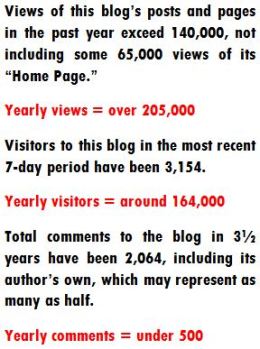


Recognized non-victims who clog court dockets with illegitimate claims are still called victims. Cases recognized as non-violent are still characterized as violent. When bias is this manifestly rooted, is it really that hard to believe that many or most orders that are approved and finalized may be malicious? The “fix” is obvious—it’s obvious—so how hard can “frames” or “set-ups” be to pull off?

Much ink has been spilled by opponents of the restraining order process desperate to arouse awareness to false allegations and prejudiced practices. People are issued restraining orders with fraudulent accusations that stick. They lose their jobs, homes, money, property, and good names. They lose access to their kids, who may come to hate them based on lies. Some may end up on the streets; some may even kill themselves in despair after being bullied and ground down, possibly for years.

False allegations that are rejected by the courts aren’t called false, yet false accusations that aren’t rejected by the courts are invariably called true (or “true enough”). The entire system reeks to high heaven.

How often false allegations succeed can’t be statistically established. Victims are left with having to lay out their cases in blogs and YouTube vids, or voicing four-letter epithets in Internet forums—or just quietly going mad.

This has inspired a great deal of rage and arguably more than a few deaths (suicides and murders), and that rage has inspired vehement denunciations from legions of special interest groups.

What all of this distracts from, though, is that explicitly manifest in judicial rulings and legislative reforms is that the court itself recognizes that false—or at least “frivolous” or “baseless”—claims are made more often than not.

Most restraining order petitions are rejected. Put more emphatically, theirs are considered to be bullshit claims.

What must be appreciated, finally, is that the restraining order process is a highly “accelerated” one (as Prof. Caplan, quoted in the epigraph, notes in his study). The conceptual justifications are that (1) applicants are “in danger” and need immediate relief, and (2) restraining orders are “no big deal.” The latter is refuted by rates of depression and suicide (or would be if they were they known), and the former is refuted by a preponderance of court rulings.

Unanticipated by lawmakers (apparently though inexplicably) is that an accelerated process rewards impulse, including malicious impulse. It’s exploited in heat, completed in moments, and usually free (and there’s no statutory limit imposed upon the number of times a single petitioner may exploit it).

Why do judges determine most restraining order petitioners’ claims are bullshit? That’s why.

Copyright © 2015 RestrainingOrderAbuse.com

If You’re Silent, You’re Guilty: Take a Page from the Feminist Playbook and Register Your Complaint

It was impressed upon me by a new mentor—who possesses a much more practical mind than mine—that I don’t want to still be writing about this stuff when I’m old and gray (and that, besides, if I keep trying to “make a difference” by myself, “old and gray” will be just around the corner).

What these statistics reflect is that (1) confusion about restraining orders, if not fraudulent abuse of restraining orders, is epidemic; and (2) complainants of procedural abuses are intimidated into silence. No one wants to own humiliating or demonizing accusations against him or her, even if they’re false. This is, perhaps ironically, why fraudulent abuse of process continues unabated: Too few people talk back, so no one in a position to reform the status quo realizes there’s a problem in need of urgent remedy.

In the week leading up to Friday the 13th, 2015, WordPress reports that over 3,000 people visited this site (a few of them probably the same people on different days, but nevertheless…). Of that 3,000-plus, maybe 20 left comments or responded to petitions this site links to.

Maybe.

To one of the people who did submit a comment, a woman who was charged with assaulting her husband because she inadvertently scratched his arm while she was appealing to him to be nicer to her (during a verbal attack), I remarked that more people need to speak up about what they’ve been put through.

This woman, Izabella, has a restraining order against her, based on “all sorts of allegations,” that she reports her husband got to dominate and control her (to bully her, plain and simple). She says he’s never been an “involved dad” but uses their children now to “blackmail” her, because she had the temerity to “stand up to him.” The kids are pawns in a petty power game.

This is the kind of thing feminists deny happens (and adamantly deny happens to men). They insist restraining orders are there to protect women like Izabella.

Feminists are often wrong but never uncertain.

Their rigid advocacy is actually what makes scenarios like this possible, and for that reason, among others, I seldom find cause to sing their praises (though I’m not closed to the idea). One of their constant refrains, however, that victims will only speak up if they feel confident they’ll be believed, is right (and it’s why restraining orders exist to begin with).

Victims of procedural abuses need to speak up so that others will.

Respondents to this blog don’t need to identify themselves; they don’t even have to provide their email addresses if they don’t want to, though that information isn’t made public and allows them to be notified of others’ responses to their comments. It also lets them have dialogues among themselves.

Provided everyone plays nice, this writer is glad to take a backseat. (He’s been informed that nothing anyone else says is his responsibility, anyway.)

“Outing” yourself isn’t necessary, per se, to motivate change. But the public only understands what it sees and hears. If it sees and hears nothing, then that’s exactly what it will understand.

Copyright © 2015 RestrainingOrderAbuse.com

Inciting Violence: If Lawmakers Require a Compelling Motive for Restraining Order Reform, How about This One?

I examined a case, recently, of a man’s committing murder hours after being accused to the police. My familiarity with the case was, admittedly, shallow; I only had what was reported to go on (and that from a single, “raw” source). I have, however, heard from scores of people who’ve been accused—or scorned for telling the truth—in drive-thru restraining order proceedings, and expressions of fury have been more than a few.

This week, I shared an email by a highly educated, professional woman and mother of three young children that expresses an “almost homicidal enmity” catalyzed by procedural abuses. Note the elevated diction she uses to describe an impulse to bash, throttle, and gouge. Does her vaulted language indicate she “doesn’t really mean it”? No, it indicates how alien rage is to her character. It indicates she’s someone who shouldn’t have cause to feel this way.

Consider: How is it the police and the courts recognize the propensity for violence that interpersonal conflicts mediated by the “justice system” may arouse, but lawmakers don’t? Are they that “in the dark”?

Yeah, pretty much.

If you get into a spat with your neighbor, and the police intervene, parties are separated into corners. In court, complainants even merely of “fear” may be shielded by law officers in anticipation of a judicial ruling. It’s understood that emotions run hot in this theater.

Why, then, is it not appreciated that when the basis for rulings is false, the risk of violence is not only higher but infinite?

We like our games, and we like our fictions about how people should be and should feel and should react even if you trash their lives maliciously. Hey, we’re disposed to remind, it’s the law.

All well and good until somebody gets an ax in the ear—an edgy remark, maybe; honesty often strikes us that way (i.e., like an ax in the ear).

The wonder is that more people who lie to the courts don’t meet premature ends—or at least sustain some anatomical remodeling. False accusations, which have inspired a great deal of sententious deliberation in recent months, don’t just “discomfort” people or make them “justifiably [and transiently] angry.” At the risk of being edgy again: People who haven’t been falsely accused in a legal procedure don’t know what the fuck they’re talking about. I was collegiately trained as a literary analyst—I’ve studied and taught Victorian literature—and I’m normally more disciplined in my remarks, but this subject rebukes gentility.

Liars maim. That they do it with words in no way mitigates the brutality of the act or its consequences.

One would think that as people mature and progress through life, that they would stop behaviors of their youth. Unfortunately, this is not always the case. Sadly, adults can be bullies, just as children and teenagers can be bullies. While adults are more likely to use verbal bullying as opposed to physical bullying, the fact of the matter is that adult bullying exists. The goal of an adult bully is to gain power over another person, and make himself or herself the dominant adult. They try to humiliate victims, and “show them who is boss” (BullyingStatistics.org, “Adult Bullying”).

StopBullying.gov defines bullying as including name-calling, taunting, threatening, spreading rumors about someone, and embarrassing someone in public. Falsely labeling someone a stalker, child abuser, violent danger, or sexual deviant in one or more public trials whose findings are impressed on the target’s permanent record and are accompanied by menacing threats (if not immediate punishment) plainly qualifies. Among identified effects of bullying are suicide (“bullycide”) and violence, including murder. “Extreme emotional disturbance” is a defense for murder in some states (a finding that doesn’t excuse the act but does lighten the sentence), and a related murder defense is “provocation.”

Sure, character assassination is bloodless. What of it? If I circulate lies about someone and s/he snaps, I’m a bully, and I had it coming. Few people would say otherwise.

Ah, but if I lie and use the law as my medium to insult, demean, badger, intimidate, or otherwise persecute—hey, that’s different. I’m the “good guy.”

So suck it. And keep on sucking it, because the public record says my lies are the truth. Neener-neener.

A system that represents its purpose to be the curtailment of violence shouldn’t be promoting it by pandering to bullies, even “unofficially,” and its officers shouldn’t be serving as those bullies’ lieutenants and enforcers. If the system makes it easy to lie about and humiliate people, doesn’t hold liars accountable, and furthermore punishes the falsely accused based on lies, then it’s promoting violence.

This shouldn’t require social science research to corroborate. It shouldn’t even require this analyst’s observation.

Copyright © 2015 RestrainingOrderAbuse.com

Not All Feminists Are Women, but All Feminists Are Responsible for Why False Accusations Are Rampant and Why They Work

Feminist lobbying is to blame for the injustice of restraining order and related laws and policies. There are no ifs, ands, or buts about it.

False accusations shouldn’t work, but they do—commonly, and not uncommonly to devastating effect.

That’s thanks to feminist crusaders, who may or may not represent Women, and who may or may not be women. This clarification isn’t intended for men who’ve been abused by court process; they don’t have any problem criticizing feminists, whatever form they come in.

Women, however, do—even women who’ve been abused by court process themselves. The clarification is for them.

Consider:

(1994) “Hi, Senator. This is Polly Wannacracker of COMA, the Consortium Opposing Male Aggression. I’m calling to share some startling statistics about violence, violence, and more violence. May I forward our research findings to your office?”

(1998) “Hi, Senator. This is Polly Wannacracker of COMA, the Consortium Opposing Male Aggression. I’m calling to share some more startling statistics about violence, violence, and more violence—also to tell you about the exciting progress we’ve made toward alerting the public to  the horrors of domestic abuse. Of course, nothing is ever enough when the stakes are this high!”

(2005) “Hi, Senator. This is Polly Wannacracker of COMA, the Consortium Opposing Male Aggression. How are you? How’s your wife? Oh, Bob, you kidder! We’ve so appreciated the support you’ve shown our cause over the years. Ha, you know me too well! Yes, I was of course calling to share some further startling statistics about violence, which, as you know, is epidemic, epidemic, epidemic….”

The allegory may be corny, but you get the point. This is how legislation is prompted, and support for it solidified and maintained. Names change; the message doesn’t.

Money has steadily aggregated to representatives of feminist causes over the decades, and this money has been used to secure public opinion through “information campaigns.” Too, it has inspired grant allocations to agencies of the justice system amounting to billions under the feminist motivated Violence Against Women Act (VAWA). Federal grants are also issued to promote and fund social science that validates these expenditures and laws related to violence against women, including restraining order laws. Both money and this tailored research are used to influence police policy and condition judicial priorities.

Women, defensively, may deny that members of their sex instigate malicious prosecutions more often than men or to greater effect. Who lies and why doesn’t matter, though. Judges should be vigilant against false claims, which should be detected, dismissed, and punished. Judges aren’t vigilant, false claims aren’t detected, and their claimants aren’t sanctioned. Why?

Thanks to dogged and vehement feminist politicking for the past 30 years or more, standards for substantiating claims of abuse made by restraining order petitioners are none, and penalties for lying are none. That’s because (women, please note) if the law made the standards too demanding or it threatened penalties for iffy testimony—so the dated argument runs—abused women might be afraid to come forward. They would just “suffer in silence” instead.

To ensure abused women aren’t afraid to come forward—again, so the dated argument runs—allegations must be taken on faith, and judges must have complete latitude to rule as they “think best” to protect the interests of people who can’t protect themselves.

If all this wiggle room means some people (or a lot of people) get falsely implicated…so what?

Law follows politics, and the political fix has been in for a long time. It stays in, because the architecture of laws has been concrete-reinforced. Feminist advocates continue to “monitor public policy” and to maintain their painstakingly erected social webwork. They have the money to do it. Oppositional voices are neither bankrolled nor have any political cachet. They’re not just the underdogs; they’re the usual suspects.

The above makes the below possible (comment submitted to this blog a few days ago by “Rhonda Lynn”):

I’m going to court in a few hours. I haven’t slept or eaten, and I’m a wreck. My life is over. Today.

I fled a [domestic violence] situation in another state and moved back to Washington. I bounced around a bit and finally ended up renting a room. (I’m disabled, on Social Security.) Yes, Craigslist.

I felt I asked all the right questions: Are you married? Do you live on the property? Do you own the home? Who else lives there? Both [man and woman] were surprised to learn [I was disabled, because] the other tenants renting the room across from me were disabled, as well. The man of the [tenant] couple was deaf, and I know American Sign Language.

Upon moving in, I began noticing the lies being told. The disabled couple was made to turn over their food cards. They tried with me when I signed the month-to-month agreement. I, of course, declined.

I helped with the deaf man and his developmentally disabled woman, because the female “owner” (also a lie) was overwhelmed and claimed she was sick. I cooked and cleaned (28 loads of laundry, using the washer and dryer I brought from my previous residence). I paid for Thanksgiving dinner.

Then Hell came. A friend of the female claimed the “husband” had been coming on to her…long story. The next day, it was me! […] First she tells me to move out; then she’s my friend.

The exploitation of the couple continues. The sister of the deaf man calls me [and] then calls Adult Protective Services. I make a call as well. There is an active investigation.

Ready?

sign-languageThe police knock on my bedroom door and give me 10 minutes to get some clothes. The “husband-owner” filed a restraining order on me!

I had a couple stay overnight for a movie marathon the night before, so I had a bit of help. The female officer verified I had a lock for my room. She advised the petitioner no one was to enter my room. She had me turn over the house key. I was in shock, crying.

As we pull away, the “husband” sends me a voice recording…saying, “See…who got [who] out of whose house? I got you out of my house! Neener Neener.”

I called the police. No good. I am not the victim. I’m the perpetrator. While on the phone…two more [messages] telling me I’m not getting any more of my stuff back, can’t come back to the house…even with an officer. “You’re burnt bitch! If the police ask where’s your stuff, I’m gonna say I don’t know.”

Then, there’s the “order.” A Domestic Violence Protection Order!

The allegations, all false…and very damning: stealing his mail, opening it and not giving it to him, going in his wallet, taking his [Social Security] card and old i.d., shoving him into a wall, causing a bruise on his back, yelling at all hours of the day and night, causing such stress on the disabled couple that they can’t eat or sleep and have PTSD episodes, calling members of the house vulgar names, texting and calling everyone while they sleep, [threatening] to burn the house down, [warning] him not to sleep, because I’d kill him. [He alleges] he is in fear of his life, afraid to take a shower or come home.

Then, lastly, the night before (when I had company), [he says] I came at him with a kitchen knife as he was getting ready for work [and that] he tried to call the cops, and I took his cell phone away. Then gave it back that morning.

Oh, my lord!

They both went on my Facebook [page]. He called me a hooker, said I would sleep with any man, and called me a horrible name. I didn’t respond, of course. Then he said I do meth, [which] he knows because I lived with him and he cleaned my room and found pipes and bags. Then she responds and says…and rigs and baggies. Now we know [they say] why she cleaned, and it explains her treatment of us. He [wrote] in another post: “I just want everyone to know she does methamphetamines.” (He is in outpatient treatment.)

[…]

I call the police…to get my stuff. I left my daughter’s ashes and pictures.

They say, “How can you prove you live there? If he doesn’t say you live there, we won’t bust down the door.”

I’M GOING TO JUMP OFF A BRIDGE.
(BUT DON’T DRIVE AND NO BUS FARE)
PLEASE. HELP ME.
RHONDA

The reader may choose to indict the male accuser in Rhonda’s story instead of the apparatus he exploited because he could, or the reader may choose to indict the apparatus itself and those who inspired it, defend it, keep it well lubricated, profit from it, and convincingly deny it’s abused.

Neither position will help Rhonda, who may be broken forever (or until she finds a bridge), but one of them may eventually make it illegal for a life to be so viciously demeaned as hers has been.

Copyright © 2015 RestrainingOrderAbuse.com

“You have bullsh*t; we have research”: The National Coalition Against Domestic Violence v. Daddy Justice (Or, Why False Allegations Are a Serious Problem)

A correspondent, friend, and fellow blogger who’s been relentlessly attacked through the courts by a disturbed neighbor (over a period now spanning years) sent a link to the YouTube vid “The Grand Poobah” last week. It’s a 2011 “interview” between men’s rights activist Ben Vonderheide (a.k.a. “Daddy Justice”) and Rita Smith, former executive director of the National Coalition Against Domestic Violence (NCADV), an influential Colorado-based nonprofit.

(Note: The word in the video’s title should be spelled “poohbah,” after a comic opera character whose name was probably formed from the interjections pooh + bah. Mr. Vonderheide’s spelling it “poobah” might have been an accident—or it might have been on purpose.)

The setting of the interview, which would more aptly be called an exchange of words, isn’t clear, but it seems to be a post-conference mix-and-mingle. Mr. Vonderheide takes issue with the NCADV’s feminine bias and the propagandist tenor of the factsheets it publishes, which aren’t uncommonly cited by feminist advocates.

As the quotation in this post’s title suggests, the questions he poses to Ms. Smith aren’t favorably received. Those questions regard the NCADV’s disinclination to acknowledge maternal child abuse (Ms. Smith: “It’s not our focus of work”), as well as its denial that false accusations of domestic violence are a serious problem, false accusations that Mr. Vonderheide alleges are “promoted by [the NCADV’s] budget.”

Daddy Justice’s interview style (à la Michael Moore) is obtrusive—he’s plainly crashed the party—but while Mr. Vonderheide is necessarily assertive, the worst you could say of his questions is that they’re confrontational. They’re nevertheless called “abusive” and “aggressive,” and he’s prodded to leave.

The grudging answers his questions prompt before he’s rebuffed don’t provide much informational grist for the mill, but to his allegation that more than 80% of restraining orders are based on false accusations, Ms. Smith significantly counters that her facts say it’s only “2% of the time” (and she urges Mr. Vonderheide to “stop lying”). Later she revises her estimate of the number of false accusations from 2% to “2 to 5%,” dismissively, despite the fact that if, say, 2,000,000 restraining orders are petitioned a year (and the total may be much higher), the extra 3% translates to the invasion, disruption, and possible dismantling of 60,000 innocent defendants’ lives, besides those of their children and others peripheral to the mischief.

A mere 5% false allegation rate means the victimization of 100,000 (or many more) innocent people per year (again, not including ambient casualties). Anecdotal reports, of course—including from judges and attorneys—put the false allegation rate 6 to 18 times higher than 5% (30 to 90%). It just depends who you’re asking.

Even a ridiculously conservative false allegation rate like the posited 5% plainly recommends legislative reform, because there’s absolutely no accountability in the restraining order process. False accusers aren’t punished, and damages from false allegations aren’t remediable by lawsuit. Additional false claims can what’s more be lodged almost immediately by the same accusers using the same process. There’s no statutory ceiling on the number of orders a single complainant may apply for. (Some victims of procedural abuse report spending tens of thousands of dollars to fend off one petition only to throw up their hands—and in cases forfeit their custody entitlements—when a second comes down the pike a few months later. See here for an example.)

It should be appreciated, too, that any audit-derived estimate of the number of false allegations can only be based on allegations that are recorded as false (by “somebody”). No official false allegation rate accounts for the number of times false allegations succeed or the number of times cases based on them are simply “dismissed” without comment.

In other words, false allegations may well be rampant or “epidemic” (a word favored by anti-domestic-violence advocates), and there would be no record that says so.

The nyah-nyah from the title—“We have research; you have bullshit”—deserves reflection, also. (It doesn’t come from Ms. Smith, incidentally, but from an unidentified confederate who can’t resist a Parthian shot at Mr. Vonderheide before she and the “Grand Poobah” turn their backs to him). The “research” that advocacy groups posit is survey-based, that is, it amounts to responses to questionnaires that are administered to sample groups and then extrapolated to the population as a whole. Even this survey data we must take on faith.

Appreciate that conducting “research” of this sort depends on means, which depend on money, which is only allocated to groups like the NCADV. Consider:

The NCADV’s reported income for 2011 was $643,797, down about $70,000 from the previous year. Ms. Smith’s salary was $74,586.

Among the programs toward which the NCADV’s 2011 budget was dedicated were “General Program – provides information to educate and inform the general public about domestic violence” ($240,991), “Public Policy – works in collaboration with other national organizations to affect societal response to domestic violence through public education and coalition building, monitors federal legislation, and contacts legislators regarding domestic violence issues” ($88,808), “Membership – publishes a newsletter and provides networking opportunities for individuals and organizations interested in the work to empower battered women and their children” ($67,607), “Child custody – provides resources, referrals and support to advocates working with victims of domestic violence involved in family court cases with their abusers also provides resources to victims, attorney, and family members when family court issues are present” ($97,402).

In contrast to the social largesse enjoyed by groups like the NCADV, no money is allocated for the administration of surveys to determine, for example, incident rates of depression, drug or alcohol abuse, stress-related injuries, or suicide proximal to being falsely accused; no surveys appraise the resulting lost earnings and assets; and no surveys attempt to measure the hits taken by health insurance providers as a result. Prognosis of the long-term consequences to the welfare and life prospects of injured children is, moreover, impossible. Worse, it’s not even considered, which casts rather a long shadow on the purported “mission” of groups like the NCADV to protect kids.

Clearly, that motive is context-specific.

Daddy Justice makes up for the lack of information his “interview” questions elicit with quotations interposed between snippets of footage. Here are some of them:

  • “Everyone knows restraining orders…are granted to virtually all who apply.” […] “In many cases, allegations of abuse are used for tactical advantage” (Elaine Epstein, former president of the Massachusetts Bar Association).
  • “Restraining orders are now considered part of the ‘gamesmanship of divorce’” (Illinois Bar Journal, 2005).
  • “In nonreciprocally violent relationships, women were the perpetrators in more than 70% of the cases” (American Journal of Public Health, May 2007).
  • “Women were slightly more likely than men to use one or more acts of physical aggression and to use such acts more frequently” (Psychological Bulletin, 26, No. 5, pp. 651-680).
  • “Leading sociologists have repeatedly found that men and women commit violence at similar rates” (Law Professor Linda Kelly, 2003).
  • “More women than men engage in controlling behavior in their current marriages” (Violence and Victims, 22, Issue 4, 2007).
  • “Of all persons who suffer injuries from partner aggression, 38% are male” (Dr. John Archer, Psychological Bulletin).
  • “There is no doubt that this law [Ohio’s domestic violence statute] has been abused” (Judge Nadine Allen of Hamilton County, Ohio).
  • “Standards for proving abuse have been so relaxed that any man who stands accused is considered guilty” (Cheryl Hanna, William and Mary Law Review).
  • “Women are nine times more likely to report domestic violence than male victims” (National Family Violence Survey).
  • “85% of temporary restraining orders are filed against men” (Cathy Young, “Domestic Violence: An In-Depth Analysis,” 2005).
  • “Many judges view restraining orders as ‘a rubber-stamping exercise,’ and subsequently hearings are ‘usually a sham’” (Attorney Arnold Rutkin, Family Advocate, Winter 1996).
  • “The mere allegation of domestic violence may shift the burden of proof to the defendant” (Massachusetts Law Weekly, 1995).

Notable is that cited remarks from legal experts that categorically define the restraining order process as prejudiced, if not an outright abomination against rudimentary civil rights and principles of law, may be a decade or decades old. Rhetorical stances like the NCADV’s aren’t fooling anybody in the know, and they haven’t for a long time. But they continue to dominate political debate. They’re heeded because they’re supposed to be. Not coincidentally, women’s advocates hold the keys to the treasury.

The value of Mr. Vonderheide’s video, finally, isn’t in the information it educes or even the information it asserts but the psychological study it offers of the women behind the dogma and the sway they exercise on public perception. His questions, only impeachable as indelicate, inspire predictable reactions: antagonism, levity, or disdain.

According to tried and true method (a method both practiced and preached), the “self-reliant” feminist women who are the targets of Mr. Vonderheide’s questions register alarm. These deniers of false allegations and undue hysteria…call the police.

Copyright © 2015 RestrainingOrderAbuse.com

*Daddy Justice’s videos can be found here.

Dust It Off: This Isn’t 1979, and It’s Time Restraining Order Laws Were Reconsidered

I remarked to a commenter the other day that when I became a vegetarian in the ’80s, I was still a kid, and my family took it as an affront, which was a common reaction then. Today, everyone’s a vegetarian or “tried vegetarianism” or has “thought about becoming a vegetarian.” Other subjects that were outré or taboo in my childhood like atheism, cross-dressing, and depression—they’re no longer stigmatized, either (in the main). Gay people, who were only whispered about then, can marry in a majority of states. When I was a kid, it was shaming for bra straps or underpants bands to be visible. Today they’re exposed on purpose.

It’s a brave new world.

While domestic violence is no more comfortable a topic of conversation now than it was then, it’s also hardly hush-hush. When restraining orders were conceived, it was unmentionable, and that was the problem. It was impossible for battered women to reliably get help. They faced alienation from their families and even ridicule from the police if they summoned the courage to ask for it. They were trapped.

Restraining orders cut through all of the red tape and made it possible for battered women to go straight to the courthouse to talk one-on-one with a judge and get immediate relief. The intention, at least, was good.

It’s probable, too, that when restraining orders were enacted way back when, their exploitation was minimal. It wouldn’t have occurred to many people to abuse them, just as it wouldn’t have occurred to lawmakers that anyone would take advantage.

This isn’t 1979. Times have changed and with them social perceptions and ethics. Reporting domestic violence isn’t an act of moral apostasy. It’s widely encouraged.

No one has gone back, however, and reconsidered the justice of a procedure of law that omits all safeguards against misuse. Restraining orders circumvent investigation by police and the vetting of accusations by district attorneys. They allow individuals to prosecute allegations all on their own, trusting that those individuals won’t lie about fear or abuse, despite the fact that there are any number of compelling motives to do so, including greed/profit, spite, victim-playing, revenge, mental illness, personality disorder, bullying, blame-shifting, cover-up, infidelity/adultery, blackmail, coercion, citizenship, stalking, and the mere desire for attention.

Restraining orders laws have steadily accreted even as the original (problematic) blueprint has remained unchanged. Claims no longer need to be of domestic violence (though its legal definition has grown so broad as to be virtually all-inclusive, anyway). They can be of harassment, “stalking,” threat, or just inspiring vague unease.

These aren’t claims that are hard to manufacture, and they don’t have to be proved (and there’s no ascertaining the truth of alleged “feelings” or “beliefs,” anyway, just as there’s no defense against them). Due to decades of feminist lobbying, moreover, judges are predisposed to issue restraining orders on little or no more basis than a petitioner’s saying s/he needs one.

What once upon a time made this a worthy compromise of defendants’ constitutionally guaranteed expectation of due process and equitable treatment under the law no longer does. The anticipation of rejection or ridicule that women who reported domestic violence in the ’70s and ’80s faced from police, and which recommended a workaround like the restraining order, is now anachronistic.

Prevailing reflex from authorities has swiveled 180 degrees. If anything, the conditioned reaction to claims of abuse is their eager investigation; it’s compulsory policy.

Laws that authorize restraining order judges, based exclusively on their discretion, to impose sanctions on defendants like registry in public databases that can permanently foul employment prospects, removal from their homes, and denial of access to their kids and property are out of date. Their license has expired.

Besides material privations, defendants against allegations made in brief trips to the courthouse are subjected to humiliation and abuse that’s lastingly traumatic. Making false claims is a simple matter, and offering damning misrepresentations that don’t even depend on lies is simpler yet.

What shouldn’t be possible happens. A lot. Almost as bad is that we make believe it doesn’t.

Just as it was wrong to avert our eyes from domestic violence 30 years ago, it’s wrong to pretend that attempts to curb it since haven’t fostered new forms of taunting, terrorism, and torment that use the state as their agent.

Copyright © 2015 RestrainingOrderAbuse.com

“Trapped”: Betty’s Story of Restraining Order Abuse

Betty Krachey says she only wishes she had superpowers. She has, nevertheless, been flexing her muscles pretty impressively for a former drugstore clerk.

Betty launched an e-petition not long ago to bring flaws in the administration of restraining orders and the need to hold false accusers accountable to the attention of lawmakers in her home state of Tennessee (and beyond). Betty emphasizes that restraining orders can be “taken out on innocent people based on false allegations so a vindictive person can gain control with the help of authorities.” She stresses, too, that “false accusers are being allowed to walk away and pay NO consequences for swearing to lies to get these orders.”

Betty’s charges shouldn’t be revelations; opponents of restraining order laws (and related laws inspired by violence against women) have been saying what Betty is for years. What makes her denunciations eye-opening is that they’re coming from an injured woman who refuses to take her licks and silently retreat into the shadows like she’s supposed to do. Besides that, the typical rebuttals to complaints like Betty’s, rebuttals that play to our sympathies for abused women, don’t apply.

Betty is an abused woman. She was nearly deprived of her home and consigned to the curb, for no reason, like yesterday’s trash (a situation others find themselves in every day). Betty’s story, as she tells it, corresponds moreover to those of women who are considered victims of emotional abuse (which state statutes may classify as “domestic violence”).

I used to be a very private person—till all this crap—and told very few people my business, so everyone thought everything was going good with me and [him]. They had no idea I was living with someone I felt trapped with. I could NEVER talk to him or even ask him a question without him blowing up. That’s not a very happy life to live with someone. Even though I never told others how bad things were at home, I NEVER made it a secret to [him] that I wanted to leave…! I never posted lies on Facebook or emailed my friends telling them lies about [him] like he did me to try to get people to feel sorry for me and think [he] was such a bad person. Now that I think about it, he’s always played the victim….

The counterclaim feminists inevitably reach for to bat away complaints of restraining order abuse like Betty has made is that invisible, voiceless legions of battered women never receive justice, so tough luck, Charlie Brown, if you’re not treated fairly. The argument appeals to pathos, but its influence on our laws and justice system is plainly corrupt. Remarking that there are starving children in India has never made and never will make broccoli taste like cheesecake. It’s not the place of our justice system to punish people for things they haven’t done, let alone to blame them for the imagined crimes of strangers.

The posited pains and privations of unnamed others don’t justify running an innocent person through the wringer, female or male. Publicly implicating people as batterers and creeps based on superficial claims scrawled on forms and mouthed in five-minute meetings with judges shouldn’t be possible in a developed society. On these grounds, citizens are cast out of their homes by agents of the state, as Betty almost was.

Our courts take no interest in the lives they invade and often derail or devastate. The people restraining order judges summarily condemn are just names on forms; judges may never even know what the owners of those names look like—forget about who they are.

Let’s meet one.

Betty’s story begins in 1992 when she moved from Florida to Tennessee with her boyfriend, and the two built a house and life together there.

The circumstances that led to Betty’s being falsely accused by her boyfriend decades later are cliché. He slimmed down in midlife, she says, and began “cheating on me with younger girls…. So he had to figure out a way to get my half of our house from me.”

A protection order fit the bill perfectly: no muss, no fuss, and no division of assets. The boyfriend would be granted sole entitlement to the house that Jack and Jill built. Jill, with a little shove, would tumble down the hill alone, and an empty bucket to collect handouts in is all she’d end up with.


His first plan was to bully and threaten me into signing over my half of the house by signing a quitclaim deed. He had told me he would give me $50K, which…I knew I’d never see, and he promised me this would be my best deal. And if I did not sign the house over to him, he let me know I would lose everything I had worked my ass off for. “You watch and see, I promise you that,” he would tell me over and over.

Betty says she was tempted to sign. One of her dearest companions, her Doberman Dragon, had died, and Betty reckoned she could provide for her remaining dog, Lacy, by herself. “One reason I stayed was for my dogs,” she admits. “I had been wanting to leave…for years.” She and her boyfriend had effectively separated, and Betty intuited her boyfriend “knew he wasn’t going to be able to trick me into staying and paying half the bills much longer,” and she planned to call it quits. But he beat her to the punch.

His next plan, with the advice from his awesome friend, was to get the police involved and then to file the order of protection on me to get me kicked out of the house! If it weren’t for my lawyer, I would have had to leave my home from Aug. 29th to the court date Sept. 12th! [He, the ex] knew and did NOT care one teeny tiny bit that I had NOWHERE TO GO! Plus I had Lacy to worry about. [He] had moved out of our house August 6th and wasn’t even living in the home at the time he did this. [He] has another house to live in that has everything he needs. I had NOTHING else and nowhere else to go!

Betty’s situation mirrors that of many others who are falsely accused by domestic partners. Those not so lucky to have (or to be able to afford) effective legal representation may find themselves abruptly homeless (besides jobless and penniless, in cases), sleeping in their cars, sheltering with strangers, or living on the street. These are people who the day before may have been living normal, comfortable middleclass or even upper-middleclass lives.

On our court date—Sept 12th—the order of protection was dropped. My lawyer told me I was right: “This is all about the house and YOUR money you have coming from your business you sold.” I knew it!! And [he, the ex] wanted ME to pay the court costs for this!

The best laid plans of lice and men go oft astray. Betty quips, “All I can say is [he] had a lot more to be concerned about than me causing him ‘bodily harm’!”

Betty’s been in touch with a Tennessee state representative who’s indicated to her that she has “a good chance at getting [the] law changed. But he said the soonest it will go into effect is July 2015, and he let me know that means it will NOT help me with what my ex did to me, because he filed his false report on me in August!”

Besides singlehandedly pressing for reform of one of the most intransigent legal mockeries ever conceived, she’s considering a lawsuit.

Happy New Year, Betty.

Copyright © 2015 RestrainingOrderAbuse.com

You Can’t Sue for Perjury: Why Targets of Restraining Order Fraud and Other Procedural Abuses Based on Lies Get Screwed and Stay Screwed

The postscript (P.S.) to a series of comments left on the blog this week by the stepmother of a man who was falsely accused of violence asks whether he could sue his ex-girlfriend for lying.

The details, as the stepmother reports them, are these:

  1. Man and woman, who aren’t married, were together for four years and have a one-year-old daughter.
  2. During the term of their relationship, no reports of any kind of domestic conflict were made to authorities.

  3. The woman has heart disease (diagnosed as “congestive heart failure”) and can only perform minimally stressful activities, so this had typified the couple’s daily life: The man “gets up [at] 5 a.m., feeds [the] daughter, changes [her] diaper, makes his lunch, and heads to work. [He] gets home around 4­–4:30, and she is still in bed [and the] baby is still in [the] same diaper from that morning. […] He cleans, cooks, [does the] dishes [and] laundry, bathes [the] child, and heads to bed—and [the woman] bitches ‘cause he rolls over and goes to sleep.”
  4. On or about December 13, 2014, the couple “got in an argument, and she moved out, taking [their] child with her. She then texted [the child’s father] saying she was taking [the] child and moving to Oregon and he [would] never see [his] daughter again.”
  5. The woman then returned home to retrieve her belongings, “and when she went downstairs, he went out [the] door with [the] child. She freaked out. [Two] days later she filed a protection order saying all these lies about him…and he had to give [the] daughter back.”
  6. The woman, with her dad’s help, then relocated to Oregon with the child.

Among the woman’s allegedly false statements, apparently made to the police before she prepared to abscond with the child, was that the man pushed her into a fish tank, which it’s reported she actually slammed with her fist in a fit of rage while the man’s back was turned. Since the woman’s knuckles were plainly lacerated from punching glass, no arrest ensued. According to the man’s stepmother, the woman lied similarly to procure a protection order a couple of days later.

The stepmom wants to know if her stepson can sue his girlfriend for lying under oath. The answer, which is no, exposes why lying to the court is so effective, besides being easy.

Quoting “The Rule against Civil Actions for Perjury in Administrative Agency Proceedings: A Hobgoblin of Little Minds” (University of Pennsylvania Law Review, 1983):

“No action lies to recover damages caused by perjury.” If A is injured by the false or misleading testimony of B in a judicial proceeding, A cannot maintain an action for damages against B; A can obtain relief only by a direct attack on the judgment. So it was at common law, and although some observers have called for its abandonment, courts today are unanimous in following that ancient rule.

Tennessean and fraud victim Betty Krachey has launched a petition to urge her state to punish lying.

Appreciate that a corollary of that “ancient rule” is that if someone who’s lied about in a judicial proceeding lapses into suicidal despondency and kills him- or herself, his or her loved ones have no legal recourse. If you publicly mislabel someone a stalker, child molester, or batterer, for instance, outside of court, and that person kills him- or herself, you can be sued. But if the same end results from false allegations you make in court, you get away scot free.

Perjury—that is, knowingly lying to the court about influential facts—is a “serious criminal offense,” as a law student from South Africa recently remarked in a comment about a case of restraining order fraud that emerged in her country’s popular press. In many if not most jurisdictions in the U.S., perjury is a felony.

Punishment for it, however, can only follow its prosecution by the district attorney’s office, which rarely initiates perjury proceedings and only does so in slam-dunk cases of prominent interest like misconduct by public officials. Private litigants can sue for damages caused by the commission of other crimes—murder, for example—and they can sue for slanders and libels made outside of court. They can’t, though, sue for damages caused by lies told in judicial proceedings, no matter how injurious those lies might be.

The reason why, basically, is that the system likes closure. Once it rules on something, it doesn’t want to think about it again.



Consider what would happen if Person A lied about Person B, and Person B were authorized to sue Person A for lying. This would open the door for Person A to turn around and claim Person B lied in the second proceeding and sue Person B back. Person B could then pursue another action that alleged Person A lied about Person B in the third proceeding, and on and on ad infinitum.

While this would force the court to pay more than a lick of attention to the facts and also motivate it to drop the hammer on liars, it’s messy and time-consuming. So it’s rejected in the name of economy—and damn the consequences to people who are lied about.

This policy is among the reasons why restraining orders should be repealed.

Temporary orders are issued upon a few minutes’ prejudicial deliberation (really none at all). A petitioner goes to the courthouse, fills out some paperwork, and has a chitty-chat. If the accused doesn’t appeal, the court’s entire application to the case will have been those few minutes (sandwiched between stifled yawns). Even when a defendant does appear in court to contest allegations against him or her, judicial “review” of the matter may be less than 30 minutes.

On the basis of this brief “review” (which is often merely theater), a person like the man in the story above can be branded a “domestic abuser,” have his or her name entered into state and national police databases (permanently), and be denied contact with his or her child (besides potentially being denied credit, leases, and jobs, and having to indefinitely endure the agony and humiliation of being re-judged for something s/he didn’t do). S/he can also be made to pay court costs for having his or her life torn apart by lies.

A person like him, who can be male or female, can attack the false judgment in a further appeal—provided s/he has the emotional and financial resource—but s/he can’t seek redress for fraudulent testimony given in evidence against him or her.

That would inconvenience the court.

Copyright © 2014 RestrainingOrderAbuse.com

Why It’s Valuable to Report Your Story of Restraining Order Abuse or Other Procedural Abuse on an E-Petition or Similar Medium

Government statistics used to train police officers and judges are derived significantly from surveys, as discussed in the previous post.

These surveys are represented as “science” but are in fact simply acts of collecting responses, responses that may be completely anecdotal (that is, unverified and most likely unverifiable). Interviewers ask questions, and volunteers answer. Some studies according to which policy is determined (for example, on college campuses) may not even be conducted person-to-person; they may be electronic.

Policy that indelibly impacts lives on a grand scale may be based, yes, on glorified questionnaires.

“Science” that influences research trends and legislation, and that consequently conditions police and judicial impulses, is derived by “randomly” eliciting responses from a sample population—and not a particularly large one at that.

When you hear a controversial statistic, the kind that appears in international headlines and in feminist blogs from one end of the Internet to the other, like one in five college women has been a victim of sexual assault (a statistic drawn from a Web survey administered at two American universities), that figure was based on survey data.

What is a petition?

It’s a survey (of personal experience and public sentiment).

Copyright © 2014 RestrainingOrderAbuse.com

A Story of Female Sterilization That Should Stress to Those Who’ve Been Violated by Fraudulent Abuse of Legal Process Why Reporting Judicial Tyranny and False Accusers Is by Itself Pointless (You Must Demand Change)

The point of sharing the explication below is to emphasize how forlorn prospective recourses for redressing rights violations stemming from false restraining order and similar prosecutions are. Accountability is zero, across the board.

If you’ve ever wondered why a judge may be censured for rude conduct but not for ignoring lies or misrepresenting evidence, here’s why.

Quoted from “The Plumb Line: So What Else is New?” (Murray N. Rothbard, Libertarian Review, 1978), reprinted on LewRockwell.com as “The Tyranny of the Bench”:

The United States Supreme Court ruled, in 1872, that judges were immune from any damage suits for any “judicial acts” that they had performed—regardless of how wrong, evil, or unconstitutional those acts may have been. When clothed in judicial authority, judges can do no wrong. Period. Recently a case of an errant judge has come up again—because his action as a judge was considered generally to be monstrous and illegal. In 1971, Mrs. Ora Spitler McFarlin petitioned Judge Harold D. Stump of the DeKalb County, Indiana, Circuit Court to engage in a covert, compulsory sterilization of her 15-year-old daughter, Linda Kay Spitler. Although Linda was promoted each year with her class, Mrs. McFarlin opined that she was “somewhat retarded” and had begun to stay out overnight with older youths. And we all know what that can lead to.

Judge Stump quickly signed the order, and the judge and mamma hustled Linda into a hospital, telling her it was for an appendicitis operation. Linda was then sterilized without her knowledge. Two years later, Linda married a Leo Sparkman and discovered that she had been sterilized without her knowledge. The Sparkmans proceeded to sue mamma, mamma’s attorney, the doctors, the hospital, and Judge Stump, alleging a half-dozen constitutional violations.

All of these people, in truth, had grossly violated Linda’s rights and aggressed against her. All should have been made to pay, and pay dearly, for their monstrous offense. But the federal district court ruled otherwise. First, it ruled that mamma, her lawyer, and the various members of the “healing professions” were all immune because everything they did had received the sanction of a certified judge. And second, Judge Stump was also absolutely immune, because he had acted in his capacity as a judge, even though, the district court acknowledged, he had had “an erroneous view of the law.” So, not only is a judge immune, but he can confer his immunity in a king-like fashion even onto lowly civilians who surround him.

The U.S. Court of Appeals, Seventh Circuit, unaccountably didn’t understand the program, and so it reversed the district court, claiming that Judge Stump had forfeited his immunity “because of his failure to comply with elementary principles of due process,” and had therefore in a sense “not acted within his jurisdiction.” To allow Stump’s action to stand, said the appeals court, would be to sanction “tyranny from the bench.”

Now this was pretty flimsy stuff, and besides it opened an entertaining wedge toward holding judges accountable to the law and to the protection of rights like everyone else. But this would have shaken the foundations of our monopoly archist legal system. And so the U.S. Supreme Court, on March 28, set the matter straight. In a 5–3 decision in this illuminating case of Stump v. Sparkman, Justice Byron R. (“Whizzer”) White, speaking for the majority, sternly reminded the appellate court of the meaning of the 1872 ruling:

A judge will not be deprived of immunity because the action he took was in error, was done maliciously, or was in excess of his authority. Rather, he will be subject to liability only when he has acted in the “clear absence of all jurisdiction.”

Justice White conceded that no state law or court ruling anywhere could be said to have authorized Judge Stump’s action; but the important point, he went on, is that there was no statute or ruling which prohibited such an action by the judge.

Those interested in reading more are urged to click the link to Mr. Rothbard’s article at the top of the post.

What all of this should make clear is that for redress of rights violations stemming from false allegations made in restraining order and related prosecutions to be possible, the laws themselves must be rectified—and legislative reform will only be urged when more people loudly demand it.

For rights abuses to be capable of remedy by process of law, they must be illegal, which means the processes that authorize those abuses must be revamped or repealed by lawmakers (your state representatives). So long as the standard applied to restraining orders is merely a discretionary one, judges can rule however they want (that’s the statutory latitude they’ve been given), and they’re accountable for those rulings to no one.

Copyright © 2014 RestrainingOrderAbuse.com

What Journalists Need to Understand about What Restraining Orders Are: A Tutorial for Investigators, Part 2

“Orders for protection represent a legislative attempt to incorporate distinct features from both civil law and criminal law. On the one hand, a private litigant can initiate judicial proceedings to seek redress against another private individual. On the other hand, criminal penalties, such as fines and incarceration, will attach if a protection order is violated. Unlike both civil and criminal proceedings, protection order actions involve a great deal of informality, with the end result being an order for protection that is often issued on an ex parte basis without the benefit of a full evidentiary hearing.

“Many aspects of Nevada law in this area can best be described as ‘murky,’ with virtually no critical or scholarly study available to assist Nevada’s courts. Moreover, statistical information about protection orders in Nevada is almost non-existent.”

—Staff attorney Joe Tommasino, Las Vegas Justice Court

The first thing reporters need to grasp about restraining orders is that they’re a kluge (a Frankenstein’s monster crudely stitched together from dubiously compatible parts). For plaintiffs (accusers), they merge the most favorable aspects of civil and criminal prosecutions; for defendants, the least favorable.

The scales of justice are tipped from the start.

Restraining orders allow a “private litigant [to] initiate judicial proceedings to seek redress against another private individual” just as civil lawsuits do (though restraining order applications by contrast are typically processed free of charge). They’re also adjudicated according to the lowest civil standard of proof (“preponderance of the evidence”). State standards vary rhetorically, but the criterion for rulings is basically the same: whatever judges fancy is just (and there are only two choices—thumbs up or thumbs down).

On this basis, citizens can be rousted from their homes and kicked to the curb (and some are left destitute). On this basis, also, they may be entered into domestic violence registries (indefinitely), besides state and federal law enforcement databases (indefinitely), and denied security clearances, loans, leases, and even employment in certain fields (just like convicted felons).

Notwithstanding that restraining order allegations are introduced in civil court and aren’t subject to the criminal standard of evidence (“proof beyond a reasonable doubt”), “criminal penalties, such as fines and incarceration, will attach if a protection order is violated”—or is simply alleged to have been violated: arresting officers need only have a reasonable suspicion that a violation occurred, which they need not have witnessed.

The savvy observer will note that suspicion is the motive determiner of liability at all levels. Suspicion informs judicial disposition, subsequent police response to claims of violation, and of course interpretation by third parties, including employers (judges trust accusers, and everyone else trusts judges). Emphatically worthy of remark is that billions of dollars of federal monies have been invested over the past 20 years toward conditioning judicial and police suspicion.

This may incline the savvy observer to suspect the fix is in.

He or she should appreciate further that restraining orders are most commonly issued ex parte, which means accusers simply fill out a form and very briefly interview with a judge without defendants’ being present to contest the allegations and without their even being aware that they’ve been made. (Some courts even explicitly advise plaintiffs to rehearse their allegations so they can recite them as quickly as they would an order at a drive-thru.) Although most states mandate that a follow-up hearing be slated to give the accused an opportunity to controvert the allegations against them and receive an “unbiased” second opinion, follow-up hearings are held in the same court that prejudicially ruled against them in the first place: “We found you guilty. Go ahead and tell us why we screwed up. You have 15 minutes.” Because restraining order trials are civil proceedings, defendants aren’t provided with legal counsel. They’re nevertheless afforded only a few days (or a couple of weeks at the outside) to prepare a defense.

Returning to this post’s epigraph, here’s its author’s elaboration of the points it introduces (which apply irrespective of what a restraining order is called):

The concept of a “protection order” or a “TPO” is a curious one under the law. Unlike a criminal case, where the awesome power of the State is wielded against a private citizen, an action for a protection order allows one private citizen to invoke judicial authority directly against another private citizen.

The implications are staggering when one considers that a protection order allows individuals to trigger invisible force fields affecting the conduct, movement, speech, and legal rights of others.

Even more significant is the fact that Nevada law allows a person to obtain a protection order based upon only a brief ex parte application [as do most or all states’ laws].

From these concepts, questions immediately present themselves. Are protection orders being utilized in oppressive or unexpected ways? Are the factual scenarios involved similar to what the [legislature] envisioned them to be? Are courts utilizing protection order tools correctly? Are judges issuing ex parte orders that trample upon the rights of innocent people before a hearing is held to determine the validity of specific allegations? Is this area of the law an insufficiently regulated “wild frontier”?

Loyola Law School Prof. Aaron Caplan, in a 2013 law review article that cites the 2008 paper of Mr. Tommasino’s quoted in this post, says yes.

Many structural factors of civil harassment litigation lead to higher-than-usual risk of constitutional error. As with family law, civil harassment law has a way of encouraging some judges to dispense freewheeling, Solomonic justice according to their visions of proper behavior and the best interests of the parties. Judges’ legal instincts are not helped by the accelerated and abbreviated procedures required by the statutes. The parties are rarely represented by counsel, and ex parte orders are encouraged, which means courts may not hear the necessary facts and legal arguments. Very few civil harassment cases lead to appeals, let alone appeals with published opinions. As a result, civil harassment law tends to operate with a shortage of two things we ordinarily rely upon to ensure accurate decision-making by trial courts: the adversary system and appellate review.

The process essentially operates “in a vacuum”:

Harassment orders, when granted, are very rarely appealed. In the Justice Courts of Las Vegas in 2008, only three out of 2034 non-domestic violence petitions resulted in an appeal. No appellate court opinions interpret the Nevada statute—even though it was enacted in 1989 [that’s zero appellate court opinions in 20 years]. As a result, “the limited jurisdiction courts [of Nevada] have been operating in a vacuum and creating ad hoc, reactive solutions” to recurring problems.

The stagecoach, in other words, is steered without reins. The laxity of the statutes means judges of the lowest-tier courts call the shots, and there are no big brothers looking over their shoulders. They’re licensed to do what they want. (The quotations above refer to different types of restraining order, but the two types aren’t necessarily treated any differently. Whether a petitioned injunction is a protection order or a harassment order may only depend on which box was ticked on the application form. In most jurisdictions, what distinguishes one from the other is the nature of the relationship between the accuser and the accused. The allegations may be identical.)

The legislative insensitivity to constitutional principles and protections as well as the lack of judicial housekeeping in this area of law are beneath the perceptual threshold of the public. To the uninitiated, the absence of controversy originating from “legitimate” sectors suggests that everything’s working as it should: restraining orders are issued to dangerous people who need to be tethered.

While how commonly the process is exploited for ulterior motives is a matter of heated dispute, its availability for abuse is plain. The prevailing attitude toward allegations of rampant abuse is that if statistics can’t be adduced to support them, the complaint is irrelevant and should exercise no influence on policy reform. The absurdity of this attitude is likewise plain. The process is designed to favor accusers, judges are predisposed to credit accuser’s accounts (in part according to explicit instruction), those accounts need not be substantiated, the process is initiated and completed in hearings spanning minutes only, and (as the court attorney who wrote the epigraph notes) comprehensive statistical information about restraining orders is virtually non-existent.

The restraining order process is conducted in a black hole. There’s not only no transparency; there’s no light.

Copyright © 2014 RestrainingOrderAbuse.com

The Feminist Self-Contradiction: On the Flawed Conception of Restraining Orders and the Error of Preferring the Stick to the Carrot

Consider: At least a couple more restraining orders will have been issued in the time it takes you to read this post.

I pointed out recently that after 30 years and the issuance of millions or tens of millions of restraining orders, feminists and others continue to report that the incidence rate of domestic violence, which is the go-to rationale for restraining orders, is unchanged.

They report, in fact, that it’s “epidemic.”

Plainly restraining orders have put no dent in the problem. What’s more, it’s possible they’ve made it worse.

How this may be possible is simple. By authorizing gross and large-scale (epidemic) civil rights abuses for decades, the system has jaded the sentiment of a significant sector of the public. The punitive nature of both biased legal policies and the feminist rhetoric that has inspired them does nothing to change minds. It inspires resentment, outrage, and distrust, if not contempt.

Male victims of false restraining orders, in particular, who may well be a majority of recipients and number in the millions, can hardly be expected to sympathize with the feminist agenda. Worse yet, a goodly proportion of them may be far from sensitive to the interests of women generally, because feminism has associated itself with those interests inextricably.

Feminism doesn’t appeal to or cultivate sympathy; it largely strives to chastise and dominate, which can only foster misogyny.

Resentment toward feminist-influenced legal processes conduces to resentment toward feminists and consequently resentment toward women. Feminism works against its own mission statement and the interests of its nominated beneficiaries.

It’s certain that restraining orders have provided peace of mind to some petitioners. It’s certain, also, that they’ve compromised or devastated the lives of a significantly greater number of falsely accused defendants, who receive no compassion from feminist quarters.

On balance, the curative value of restraining orders is null if not negative. Per capita, that is, they do more harm than good. And the impact of each instance of abuse of power is chain-reactive, because every victim has relatives and friends who may be jarred by the reverberations.

Although it doesn’t occur to feminists, because they’re the darlings of the government and the media, their zeal to blame and punish is alienating instead of unifying.

The feminist m.o. is to win not win over…and nobody doesn’t hate a bully.

Thanks to kangaroo legal processes that are effectively products of their authorship, feminists’ potential supporters may number several fewer now than when you started reading this post.

Copyright © 2014 RestrainingOrderAbuse.com

The Relationship between False Allegations of Rape and Restraining Order Abuse

It’s not without regret for how they may affect victims of sexual violence that a number of journalistic reports that expose false rape allegations have been highlighted on this blog. Although the blog’s focus is restraining order abuse, the potency of restraining orders and the laxity applied to the allegations they’re based on derive from the specter of domestic and sexual violence, the shadow of which has infected and jaundiced the perceptions of our legislators and judges.

The volume of false rape allegations that have been brought to public attention this year—mostly in the U.K., which is less squeamish about acknowledging fraud of this sort—will probably make further mention excessive, because it threatens to distract from reports and explications more directly relevant to the blog’s primary concern, which is restraining order injustice (a redundant phrase). Several news stories were noted this month, and some of these stories are each but one of a series that trace the same saga of mischief.

Law Graduate Falsely Accused Boyfriend of Rape and Assault as Excuse, Jury Told” (Steven Morris, The Guardian, 2014)

Oxford Union ‘Rape Victim Knew Her Claim Was False’” (Oliver Duggan, Amelia Hamer, and James Rothwell, The Telegraph, 2014)

Woman Accused of Making Repeated False Rape Allegations(The Inquisitr, 2014)

Woman Sentenced after Falsely Accusing Two Men of Rape” (UPI, 2014) (see also commentary by attorney and former Houston Law Review editor Robert Franklin)

Woman Who Cut Herself with Razor and Claimed She’d Been Raped Is Jailed” (Michael Donnelly, Belfast Telegraph, 2014)

Victim of False Rape Accusation Seeks Compensation(The Northern Echo, 2014)

Man Wrongly Accused of Sexual Assault Sues Police” (Rachel Olding, Sydney Morning Herald, 2014)

The purpose of collecting these reports of false rape allegations hasn’t been to discount the claims of real victims or even to reveal that false allegations are made, which should be unsurprising in a sociopolitical climate that’s eager to credit allegations of violence against women; the purpose, rather, is to reveal the motives of false accusers and to emphasize that there’s no lie that a dedicated false accuser will balk at telling and holding fast to. It happens that when false accusers frame people for a crime society holds in the highest contempt, their motives become more noteworthy.

If accusers are willing to falsely allege even rape (and casually), there’s no estimating how many “lesser” false accusations are made routinely, particularly when no risk or serious investment is entailed. Civil restraining orders are had in hours if not minutes based on brief interviews with judges, and there are no repercussions to their plaintiffs if the allegations they’re based on are untrue. They can furthermore instantly gratify multiple motives for false allegations at the same time.

These motives are sorted by the Federal Bureau of Investigation (FBI) under five broad rubrics: mental illness (or aberrance), attention-seeking/sympathy, profit, alibi (blame-shifting or cover-up), and revenge (or spite).

A false restraining order litigant with a malicious yen may leave a courthouse shortly after entering it having gained sole entitlement to a residence, attendant properties, and children, possibly while displacing blame from him- or herself for misconduct, and having enjoyed the reward of an authority figure’s undivided attention won at the expense of his or her victim.

S/he may, besides, be crackerjacks.

The exposure of false allegations of rape shouldn’t be interpreted as denying the reality or brutality of sexual violence. What it should do, however, is serve as a rude awakening to those who believe (and promote the belief) that allegations of abuse should be accepted without suspicion. It should also stress that false allegations aren’t negligible, rare, or harmless.

They’re anything but.

Copyright © 2014 RestrainingOrderAbuse.com

Reporting Restraining Order Abuse to Elected Officials

“I am suffering from the effects of a fraudulent protection order in Colorado, which was filed by my female roommate and had me and my young daughter kicked out of our home.

“There appears to be no recourse for me, but I did contact 10 state representatives and senators, and I heard back from three of them. If more people report this abuse to their elected officials, maybe something will actually be done about this awful system.”

—Respondent to this blog

Writing to district and state representatives can be a lot like trying to communicate with judges. Expecting a human response isn’t unreasonable, but it’s often disappointed.

There’s nevertheless value in bringing systemic injustices to the attention of legislators (senators and congressmen and -women), because (1) they make, reform, and repeal laws, and (2) if they hear the same complaints over and over—and especially if they know other people of influence are hearing the same complaints and looking to them for action—there’s a chance some of them might step up.

The voices of women who’ve been abused by court process, particularly, need to be heard, because the procedures that are most often and easily abused are ones it’s presumed are protecting them.

Consult this site for the names and addresses/websites of elected officials with whom to register a complaint (state legislators should be first in order of importance):

Find Your Representatives

See also these tutorials:

Writing to Your Legislator

“How to Write a Letter to Your United States Senator

How to Write Letters to Congress

A petition that automatically forwards stories of abuses of domestic violence laws and restraining orders to legislators/administrators is here.

Copyright © 2014 RestrainingOrderAbuse.com

*See also: What to Do if You’ve Been Abused by a Judge

Restraining Orders Based on Fraud Falsely Imprison Defendants Whether They’re Incarcerated or Not

“Forensic psychiatrists and other mental health professionals must remember that although allegations are often genuine, there is an almost equal number of cases…in which they are not. Complete and objective assessment is always required, and especially so when accusations emerge in contexts such as the following:

  • Certain kinds of mental illness and character traits (particularly in allegations against clinicians). One should note poor doctor-patient relationships, whether real or perceived, patients with psychotic or delusional symptoms, certain hysterical and factitious disorders, some fragmenting or dissociative disorders, and those with substantial borderline, inadequate, and/or passive personality traits
  • Divorce proceedings
  • Child custody proceedings
  • Situations with the potential for substantial financial reward
  • Situations in which the accuser has an emotional or characterological reason to avoid discovery, prosecution, or confrontation with legal (or parental) authority (e.g., those with antisocial personality traits, some substance abusers)
  • A history of repeated past allegations, particularly if they have not been fully investigated
  • Unusual timing of the accusation or alleged event (e.g., alleged ‘date rape’ within an otherwise close and stable relationship, or accusations made only when some sort of secondary purpose or reward is evident).”

—“False Allegations: The Role of the Forensic Psychiatrist

The previous post called attention to an excerpt from a story featured in The Times of Malta this month that concluded that incidences of false allegations weren’t “one-offs,” meaning they’re not singular occurrences but more common than the public imagines.

The lawyers quoted by reporter, what’s more, refer to criminal cases in which sexual abuse is alleged and, consequently, in which the accused are afforded attorney representation.
By contrast, civil restraining order hearings are mere minutes long, defendants aren’t afforded counsel, and fraud is typically ignored by the court even if it’s perceived. There is, therefore, no accurately determining the pervasiveness or degree of lying in such adjudications.

Many authoritative sources conclude it’s rampant, and anecdotal reports concur.

The application process for restraining orders is typically free, it’s concluded in an afternoon if not within minutes, and there are no consequences for lying. Why, then, shouldn’t the process be broadly and routinely abused?

To believe that such a process wouldn’t be abused would depend on an unshakably naïve conviction in the inherent goodness of people, and such a belief would determine the process unnecessary. Anyone who believes people are capable of beastly behavior and that restraining orders are necessary—take, for example, feminists—must believe people are capable of lying hurtfully to get them.

Exposing the flaws in the belief that anyone who points a finger must necessarily be telling the truth doesn’t take a professor of philosophy.

Consider, then, that allegations made in civil court may be identical to those introduced against defendants in criminal court—and can include rape, child molestation, or even murder. The only difference between civil and criminal rulings is legal consequence.

This is the source of the cognitive disconnect exemplified by judges and, largely, everyone else. Because civil restraining orders only threaten incarceration rather than mandate it, they’re considered “no biggie.”

The conceit is that though falsely accused restraining order defendants may be denied access to their homes, money, property, and children—besides facing other privations—they aren’t denied their freedom; it’s only curtailed somewhat (“Here are your shoes—you’re free to leave”).

Faith in the conceit that restraining orders are minor impingements on defendants’ lives depends on accepting that being falsely, publically, and permanently labeled a stalker or batterer, for example, shouldn’t interfere with a person’s comfort, equanimity, or ability to realize his or her dreams. Such faith is founded, in other words, on the fantastical belief that wrongful vilification won’t exercise a detrimental influence on a person’s mental state, won’t affect his or her familial and social relationships, won’t negatively impact his or her employment and employability, etc.

Clearly such faith is beyond unreasonable; it’s inane. Being forced to live with false allegations can be crippling—for painfully obvious reasons. Whether a person is forced to agonize in a cell or is permitted to agonize in his or her place of choice is of scant significance to the psycho-emotional well-being of the sufferer. Prison isn’t just an environment, and arresting someone doesn’t require handcuffs.

Copyright © 2014 RestrainingOrderAbuse.com

Eight Years of Hell: On the Toll of False Allegations of Abuse

“Bitter separation battles and unrequited love are among the reasons why people falsely accuse others of sexual abuse, according to legal professionals.

“Lawyers contacted by The Sunday Times of Malta came across several examples of cases when people, often women, made false claims that they or their children had been abused.

“Lawyer Roberto Montalto gave the example of one situation where a woman claimed her children were abused by her husband’s colleague.

“The case dragged on for eight years and the man was acquitted after the court found that the woman lied….”

—“False Abuse Accusations Not One-Offs, Say Lawyers

To read the rest of this story, published just a couple of weeks ago, you have to subscribe to The Times of Malta. I can guess the remainder’s content, as I know many men and women who’ve visited this site can.

This excerpt is highlighted, because even today most people are under the impression that instances of false allegations’ being made repeatedly in protracted legal assaults are rare and isolated occurrences.

As attorneys and others attest, they’re not. Only hearing about them is.

Among the reasons why restraining orders are criticized on this site and elsewhere is that they’re superlative and intoxicating gateway fixes for spiteful accusers bent on gratifying malicious impulses. They can be obtained in a few hours—even a few minutes—based on allegations that require no substantiation and that are subjected to a minimum of scrutiny, if any at all.

They’re easily exploited to establish claims that can then be parlayed into interminable attacks.

False criminal allegations suggestive of sexual or violent deviancy—e.g., stalking, sexual harassment or molestation, and domestic abuse—can be just as effective and for the same reasons. The hysteria promoted by the abuse industry and the political influence it has bent to its “cause” have conditioned police, municipal prosecutors, and judges to credit allegations of abuse automatically (especially ones from women).

Eight years—that’s the term in hell the man in the epigraph had to endure before it was apparently demonstrated that the whole ordeal was based on lies: eight years lost for nothing. Nothing. More horrible yet is that the only thing that makes this story exceptional is that the fraudulent accuser was eventually exposed and acknowledged as such.

Eight years is a Ph.D. Eight years is a career. Eight years is a son or daughter’s childhood.

Copyright © 2014 RestrainingOrderAbuse.com