
 “The first question for a legislature is whether to enact a civil harassment law at all. One thing is certain: If a civil harassment statute is enacted, it will be used—a lot. In 2003, Oklahoma reimposed a relationship requirement on its civil harassment statute because metropolitan counties were ‘being overrun with requests for protective orders.’”
—Prof. Aaron Caplan, “Free Speech and Civil Harassment Orders” (2013)
“The measure [House Bill 1667]:
- Limits VPOs [“victim protective orders”] for harassment to situations in which the victim is being harassed by a family or household member or a person with whom the victim has been involved in a dating relationship. This provision is meant to reduce the number of frivolous applications for VPOs;
- Requires victims of stalking who are not family or household members or in a dating relationship with the alleged stalker to file a complaint against the defendant with the proper law enforcement agency prior to filing for a VPO. The victim must provide a copy of the complaint with the petition for the VPO. This is also being done in an effort to reduce the number of frivolous applications for VPOs […].”
—Highlights of Legislation (49th Oklahoma Legislature, 2003)
As law professor and former ACLU staff attorney Aaron Caplan all but says, restraining orders are exploited. The 49th Oklahoma Legislature cited in Mr. Caplan’s law monograph explicitly implies the same thing. The purpose of its 2003 HB 1667 was to “reduce the number of frivolous applications.” This clearly wouldn’t have been a concern if there weren’t a great number of frivolous applications.
Frivolous means “having no sound basis.” Its vernacular synonym is bullshit.
The preceding two posts on this blog examine how many restraining orders are either rejected by the court (“tossed”) or withdrawn by petitioners after they succeed in securing them. Available news reports indicate most restraining orders are rejected outright or dismissed upon a “full hearing.” Most. Indications, too, are that a lot that aren’t rejected are later withdrawn by the people who petitioned them. A lot.
This alone is reason to suspect the motives of complainants and the merits of their complaints. Certainly it says judges do. As the epigraph reveals, legislators do, too.
Consternating to people whose lives have been derailed by false accusations is that the problem has been vigorously exposed and criticized for decades, and judges, lawmakers, and attorneys know those criticisms are more than hot air.
Yet little changes…including rhetoric that legislators know is misleading (stinky).
Look at the second quotation in the epigraph. First, note that the civil harassment orders that were repealed by HB 1667 were called “victim protective orders” (i.e., reflect on the absurdity of the phrase victim protective orders for harassment). Also note the acknowledgment that a significant proportion of petitions for “victim protective orders” are “frivolous.” Orders that may have nothing to do with violence are called “victim protective orders” and—and—they’re acknowledged to be used falsely, or at least wrongly (and to such an extent that legislative revision was urged).
 Applicants for orders that are acknowledged to be used frivolously, however, are nevertheless called “victims.” (As the previous post shows, journalists collude in this misrepresentation.)
Recognized non-victims who clog court dockets with illegitimate claims are still called victims. Cases recognized as non-violent are still characterized as violent. When bias is this manifestly rooted, is it really that hard to believe that many or most orders that are approved and finalized may be malicious? The “fix” is obvious—it’s obvious—so how hard can “frames” or “set-ups” be to pull off?
Much ink has been spilled by opponents of the restraining order process desperate to arouse awareness to false allegations and prejudiced practices. People are issued restraining orders with fraudulent accusations that stick. They lose their jobs, homes, money, property, and good names. They lose access to their kids, who may come to hate them based on lies. Some may end up on the streets; some may even kill themselves in despair after being bullied and ground down, possibly for years.
False allegations that are rejected by the courts aren’t called false, yet false accusations that aren’t rejected by the courts are invariably called true (or “true enough”). The entire system reeks to high heaven.
How often false allegations succeed can’t be statistically established. Victims are left with having to lay out their cases in blogs and YouTube vids, or voicing four-letter epithets in Internet forums—or just quietly going mad.
This has inspired a great deal of rage and arguably more than a few deaths (suicides and murders), and that rage has inspired vehement denunciations from legions of special interest groups.
What all of this distracts from, though, is that explicitly manifest in judicial rulings and legislative reforms is that the court itself recognizes that false—or at least “frivolous” or “baseless”—claims are made more often than not.
Most restraining order petitions are rejected. Put more emphatically, theirs are considered to be bullshit claims.
What must be appreciated, finally, is that the restraining order process is a highly “accelerated” one (as Prof. Caplan, quoted in the epigraph, notes in his study). The conceptual justifications are that (1) applicants are “in danger” and need immediate relief, and (2) restraining orders are “no big deal.” The latter is refuted by rates of depression and suicide (or would be if they were they known), and the former is refuted by a preponderance of court rulings.
Unanticipated by lawmakers (apparently though inexplicably) is that an accelerated process rewards impulse, including malicious impulse. It’s exploited in heat, completed in moments, and usually free (and there’s no statutory limit imposed upon the number of times a single petitioner may exploit it).
Why do judges determine most restraining order petitioners’ claims are bullshit? That’s why.
Copyright © 2015 RestrainingOrderAbuse.com


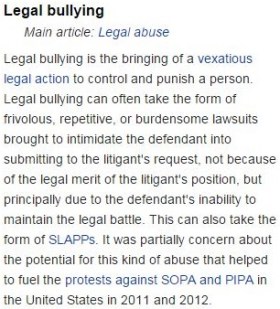
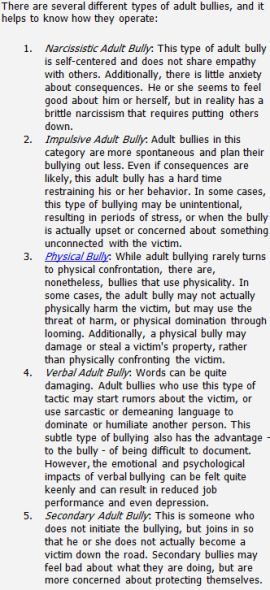
 Pols and corporations engage in flimflam to win votes and increase profit shares. Science, too, seeks acclaim and profit, and judicial motives aren’t so different. Judges know what’s expected of them, and they know how to interpret information to satisfy expectations.
 Since judges can rule however they want, and since they know that very well, they don’t even have to lie, per se, just massage the facts a little. It’s all about which facts are emphasized and which facts are suppressed, how select facts are interpreted, and whether “fear” can be reasonably inferred from those interpretations. A restraining order ruling can only be construed as “wrong” if it can be demonstrated that it violated statutory law (or the source that that law must answer to:
  Feminism’s foot soldiers in the blogosphere and on social media, finally, spread the “good word,” and John and Jane Doe believe what they’re told—unless or until they’re torturously disabused of their illusions. Stories like those you’ll find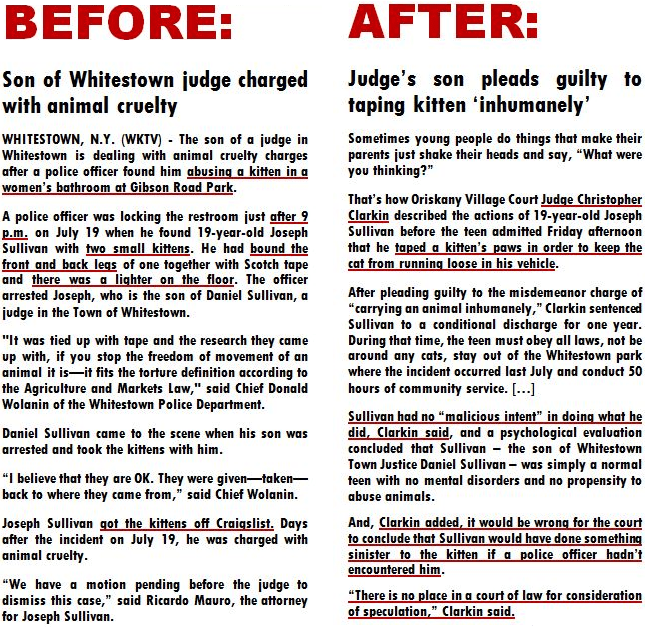

 People falsely alleged to be abusers on restraining order petitions, particularly men, are treated like brutes, sex offenders, and scum by officers of the court and its staff, besides by authorities and any number of others. Some report their own relatives remain suspicious—often based merely on finger-pointing that’s validated by some judge in a few-minute procedure (and that’s when relatives aren’t the ones making the false allegations).
 So…slanders and libels made by abuse of court process aren’t actionable, slanders and libels that completely sunder the lives of the wrongly accused, who can’t even get them expunged from their records to simply reset their fractured lives to zero.
 Under the Violence Against Women Act (VAWA), some
  All of this is to say that if you issue 60 restraining orders against nonviolent people to every one issued against a violent aggressor, violations of restraining orders resulting in injuries or death will be comparatively few respective to the total number of people “restrained.” It skews the odds in favor of positive perception.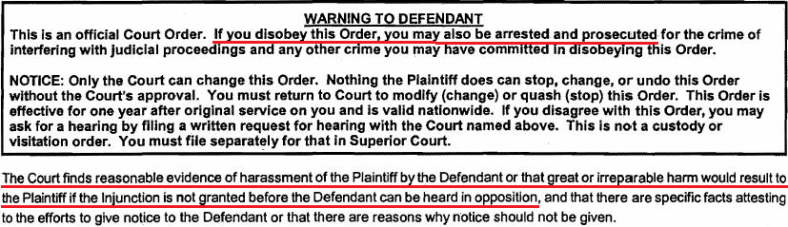
 Appreciate that the court’s basis for issuing the document capped with the “Warning” pictured above is nothing more than some allegations from the order’s plaintiff, allegations scrawled on a form and typically made orally to a judge in four or five minutes.

 “
“
 Plainly restraining orders have put no dent in the problem. What’s more, it’s possible they’ve made it worse.
 Feminism doesn’t appeal to or cultivate sympathy; it largely strives to chastise and dominate, which can only foster misogyny.
 On balance, the curative value of restraining orders is null if not negative. Per capita, that is, they do more harm than good. And the impact of each instance of abuse of power is chain-reactive, because every victim has relatives and friends who may be jarred by its reverberations.

 tenets of law, like impartiality, diligent deliberation, and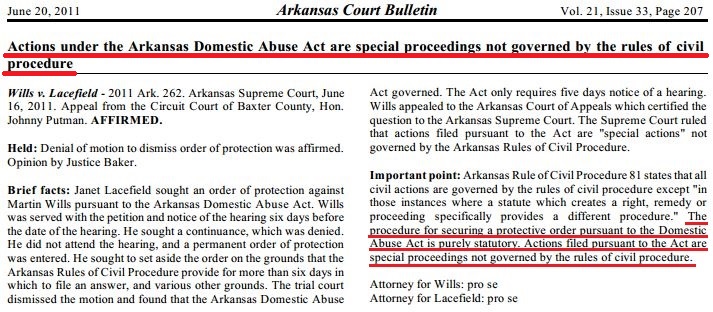
 Defendants’ being railroaded, of course, is nothing extraordinary. “Emergency” restraining orders may allow respondents only a weekend to prepare before having to appear in court to answer allegations—very possibly false allegations—that have the potential to permanently alter the course of their lives.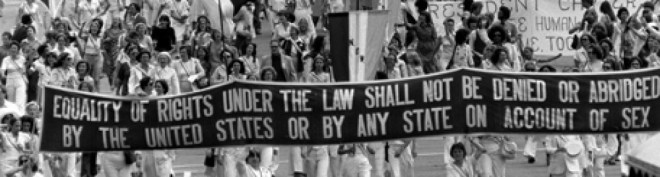
 Some feminists categorically can’t be reasoned with. They’re the equivalents of high-conflict courtroom litigants who reason with their feelings. But I don’t get the impression that the author of this blog is one such, and I think there are many self-styled feminists like her out there. She seems very much in earnest and without spiteful motive. Her intentions are well-meaning.

 It must be considered, for example, that the authority for the statistic “1 in 4 women will experience domestic violence in her lifetime” cited by this writer (and which is commonly cited) is a pamphlet: “
 What everyone must be brought to appreciate is that a great deal of what’s called “domestic violence” (and, for that matter, “stalking”) depends on subjective interpretation, that is, it’s all about how someone reports feeling (or what someone reports perceiving).
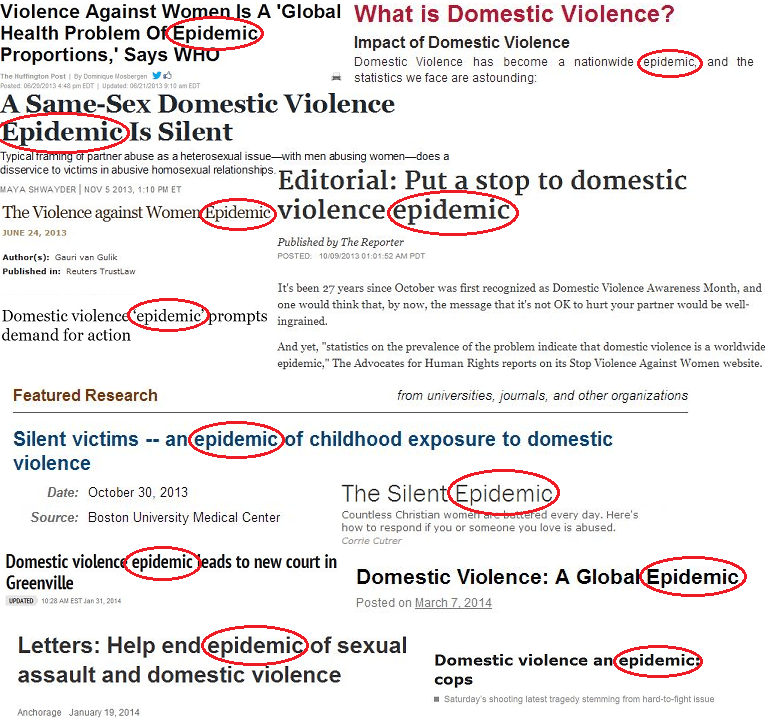
 The zealousness of the public and of the authorities and courts to acknowledge people, particularly women, who claim to be “victims” as victims has produced miscarriages of justice that are far more epidemic than domestic violence is commonly said to be. Discernment goes out the window, and lives are unraveled based on finger-pointing. Thanks to feminism’s greasing the gears and to judicial procedures that can be initiated or even completed in minutes, people in the throes of angry impulses can have those impulses gratified instantly. All parties involved—plaintiffs, police officers, and judges—are simply reacting, as they’ve been conditioned to.
 The idea that even one perpetrator of violence should escape justice is horrible, but the idea that anyone who’s alleged to have committed a violent offense or act of deviancy should be assumed guilty is far worse.
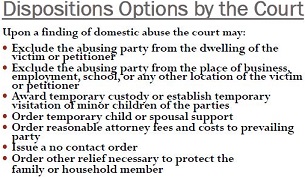
 This means defendants can be denied access to the family pet(s), besides.
 Those most dramatically impacted by restraining order abuse, its victims, are typically only heard to peep and grumble here and there.


 A recent respondent to this blog detailed his restraining order ordeal at the hands of a woman who he persuasively alleges is a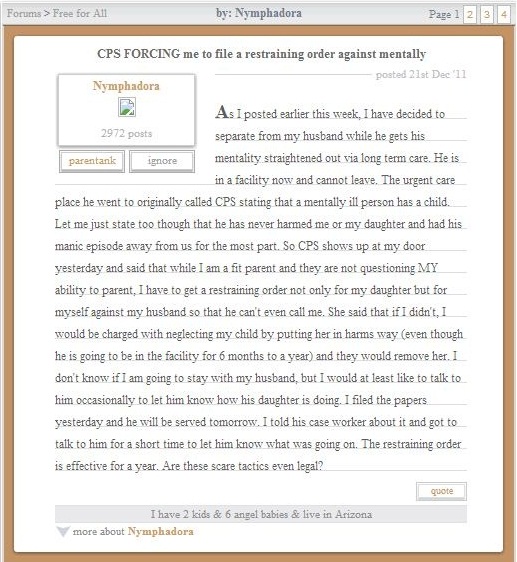


 The 148 search engine terms that appear below—at least one to two dozen of which concern false allegations—are ones that brought readers to this blog between the hours of 12 a.m. and 7:21 p.m. yesterday (and don’t include an additional 49 “unknown search terms”).
 Since restraining orders are “civil” instruments, however, their issuance doesn’t require proof beyond a reasonable doubt of anything at all. Approval of restraining orders is based instead on a “preponderance of evidence.” Because restraining orders are issued ex parte, the only evidence the court vets is that provided by the applicant. This evidence may be scant or none, and the applicant may be a sociopath. The “vetting process” his or her evidence is subjected to by a judge, moreover, may very literally comprise all of five minutes.
 TALKING BACK to restraining orders