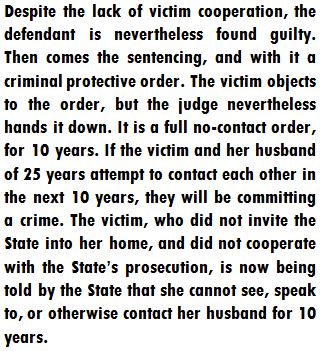
How an Innocent Woman May Be Accused of Molestation, Rape, or Murder and Have to Live with It

Consider the following allegations:

“She has repeatedly exposed herself to me.”

“She told me on multiple occasions that if I wouldn’t have sex with her again she would tell the police I raped her.”

“She has stalked me since I met her. I’ve kept a dated log of all of the instances when she appeared someplace where I was. I’ve told her to leave me alone but she won’t. She says I’m her ‘destiny.’”

“She grabbed my crotch. When I pushed her hand away and ran, she laughed and called me a ‘pussy.’”

“I loaned her money. She told me if I asked for it back one more time, she and a friend of hers would hurt me. She bragged that they had killed someone before.”

“She has sent me panties covered with blood, urine, and feces. I threw them away because they were disgusting.”

“She showed me a knife and said that if I didn’t leave my girlfriend she would ‘cut her good.’”

“She said she wanted to drink my blood.”

An affidavit on a protective order application could include any or all of these statements and any number of others, including, say, alleged confessions of any act conceivable by the imagination of the accuser.

An affidavit, that is, a statement of facts alleged and sworn to be true, can usually be of any length and could include detailed descriptions of the accused’s anatomy, commentaries on his or her hygiene, and judgments of any variety, besides including an account of “what happened.”

There are no rules, and the court cannot retroactively censor what is effectively a complainant’s testimony.

Note that none of the accusations listed above could ever be ascertained as true or false, and a judge, accordingly, has no particular investment in “the truth.” His or her job, as prescribed by the law, is to decide whether the accuser is convincing.

An even cruder fact is that a judge may never read a complainant’s affidavit at all but simply ask for a verbal accounting, that’s if s/he does anything more than make sure the paperwork is filled out correctly. Once validated by a judge’s signature, unless contested and successfully quashed during a hearing that may be afforded 30 minutes on a judge’s docket, the order is a binding instrument of law and an indefinitely preserved public document that can be quoted or published.

Restraining orders are typically issued ex parte. That means based on the accuser’s say-so only. The accused may know nothing about it until a law enforcement officer or agent of the court appears at his or her door, possibly in the presence of friends, family, and/or neighbors.

The whole application and approval process may take from a few minutes to a few hours.

The latitude granted to judges in this arena of law is virtually boundless, as the politicking behind so-called “women’s law” intended it to be. A single statement from the list that heads this post, delivered persuasively enough, could suffice to make any number of allegations “stick” (whether relevant or not). Or repeated emphatic claims of terror and violation could. Or the testimony of a crony witness. Or a real or faked series of text messages or emails. Or a real or spoofed series of calls on a phone (which, if real, could have been about anything).

As Ralph Nader said, “Power has to be insecure to be responsive.” To judges, this business is just quotidian paper-shuffling, and they have no liability for their rulings, which are issued without oversight (including by judges who aren’t even judges but merely seasonal temps). Grounds for appeal, furthermore, are almost none (and “lying” is not among the few).

A reasonable person would conclude that anyone who supported laws that would allow a woman to be falsely accused of molestation, rape, or murder would have to be a monster.

The left-leaning feminist humanists and self-styled social justice advocates who do militantly support these laws emphasize their virtue: bringing relief to women in abusive relationships. This is somewhat like explaining communism’s goal is the protection of the working class citizen—while ignoring that tens of millions of working class citizens have been killed in the name of an idealistic social experiment.

Perhaps social justice crusaders who promote “women’s law” would say they’ve only ever meant for it to treat men monstrously.

Copyright © 2022 RestrainingOrderAbuse.com

*In civil lawsuits that aren’t filed for free, as restraining order applications usually are, a defendant could move the court to strike inflammatory statements that weren’t relevant and that could only serve to damage (his or) her reputation and, for example, professional standing (and health, security, interpersonal relationships, etc.). Whether this would fare any chance of success in drive-thru procedures conceived to permanently document misdeeds is less than iffy. (It would require redacting, or “blacking out,” parts of the original order, which is contrary to its purpose.)
Tell Us a Story: Using Pennsylvania’s Laws to Expose Restraining Order Lawlessness

“The court determines a witness’s credibility and may infer fear based on the witness’s testimony describing the defendant’s actions.”

Karch v. Karch, 885 A.2d 535 (Pa. Super. 2005)

Complainants of false allegations and judicial bias in restraining order prosecutions express disbelief that lying in court or forming rulings based on lies can be legal. Some exclaim that their judges “didn’t know the law.”

There are a lot of things judges don’t know, but the law isn’t one of them. Restraining orders are a lawless arena, anyway, so there’s not much to know.


The quotation at the top of this post is law, and what it says is there is no law. It says the court can make up whatever it wants. That’s not a cynical interpretation; it’s a literal one.

The quotation is lifted from case law in Pennsylvania, birthplace of the Constitution, and it informs how judges rule on restraining orders in that state (called PFAs).

It says the court may choose whether an accuser is honest, and that it may “infer” from this choice that the accuser’s fear is real and valid. Some citizen tells a story “describing [another citizen’s alleged] actions,” and that’s the only basis the court requires to deny that other citizen basic civil liberties.

The court must be provided with a narrative to act upon, which the storyteller may make up. Everything else the court is authorized to make up itself.

Copyright © 2018 RestrainingOrderAbuse.com

Play Misty for Me: Feminine Psychodrama and Restraining Orders

“The first time ‘Misty’ broke into the backyard to pound and scream at the bedroom window, the police handcuffed her and said—her face pressed to the hood of the idling black-and-white—that she was not to return. I figured we would never see her again after that early morning in 2012. But the next night, around 1 a.m., I was in bed with my new boyfriend, ‘Scott,’ and we heard the bedroom door slowly crack open. Scott jumped up. ‘No! You can’t be here!’ he shouted, all high-pitched.”

—“This Restraining Order Expires on Tuesday

Here’s a fascinating look at the female drama behind restraining orders. Its author is a gifted writer, and it’s an engaging read.

The subject of the piece, who’s called “Misty,” actually responds to it in the comments section—repeatedly—and calls some of its details into question, including ones that suggest speculation by the author (which, while imaginative, is nevertheless scrupulous and plausible). The writer, Natasha, was Misty’s rival in a love triangle. She apparently replaced Misty before Misty was prepared to relinquish her man.

That first night, [Scott and I] stayed at my house, and after having an intimate conversation in bed, we noticed his phone had 41 missed calls from Misty.

Then came the texts. She was at his house.

12:03 AM: Where are you? I’m staying here

12:05 AM: Please come back. I’m not going to lose you. I’m not going to give up. Please come back I want to see you. I love you

12:06 AM: I’m too drunk to drive home, can I please stay?

12:10 AM: Ok I’m staying.

Scott turned off the phone. The next morning when we checked again there were 16 more:

6:41 AM: By the way the pup tore the shit out of the house, but don’t worry I cleaned it up. If you can’t take care of him then you need to put him up for adoption.

To judge from Misty’s not contradicting the meat of the story (see the comments that follow it), its more titillating details are substantially accurate—and include serial calls and text messages to a nonresponsive ex, camping out in his yard, and even entering his house uninvited.

Hollywood representations like this one are seldom mirrored in real life. True “fatal attractions” are rare. High-conflict people, though, aren’t as rare as most imagine, which would be better known were their spiteful urges literally murderous (or even significantly violent). Attacks are typically insidious in their effects rather than bloody.

I tried to relax in Scott’s bed and just as I did, Misty appeared in the doorway.

“No! You can’t be here!” Scott cried, as he scrambled out of the sheets.

“I just came to see about the dog!” Misty shouted, rushing towards Scott.

Scott managed to wrangle Misty backwards away from the bed but she broke through and, before I could get fully to my feet, her arm swung back and I felt a fleshy thud against the side of my head.

She looked me in the eye, her nose ring glinting in the lamplight. “That’s what you get, you fat c[—],” she said.

She swooshed around, threw open the door (she had broken in through the window), and ran away into the night.

There was another series of confrontations with Misty but most of them took place in a courtroom, or through the unregulated space of fake Facebook profiles and anonymous emails. In the days after our first six-month order expired in 2013, Scott’s phone buzzed at 1 a.m.

It was a text message from Misty that just read: “Hi.”

Misty’s claim that her rival engaged in some passive-aggressive payback after a restraining order was procured also sounds credible:

Did you tell the people reading this article that you sent me a blank text from your boyfriend’s new phone during the restraining order period? I responded asking “who is this?” Natasha then proceeded to call the cops and told them I had violated the order. The judge laughed at it.

I’m no more a psychologist than Natasha, who chronicles the escapade, and I don’t know that her diagnosis of borderline personality disorder (BPD) would be confirmed by a clinician, but I think there’s more than a hint of personality-disordered aggression in Misty’s conduct (that reported and that on display in the comments section beneath the story). Of the various personality disorders that typify high-conflict people, what’s more, BPD seems the best fit.

The individual with BPD demonstrates a wide range of impulsive behaviors, particularly those that are self destructive. BPD is characterized by wide mood swings, intense anger even at benign events, and idealization followed by devaluation. The BPD individual’s emotional life is a rollercoaster and his/her interpersonal relationships are particularly unstable. Typically, the individual with BPD has serious problems with boundaries. They become quickly involved in relationships with people, and then quickly become disappointed with them. They make great demands on other people, and easily become frightened of being abandoned by them.

Most suggestive of a disordered personality is the lack of shame or remorse in Misty’s responses. Her impulse is to blame, derogate, and punish:

One day I will laugh at her and said moron’s obese, ugly children and thank the lord they are not mine. I will defend myself to the end! A gigantic f[—] you to all is well deserved. I really can’t help the fact that she’s ugly. Jealousy is a horribly disease. I can’t really think of any other reason why she’d carry this drama on so long, they clearly talk about me. I’m flattered.

A high-conflict person may act impulsively—i.e., in hot blood—but having a personality disorder doesn’t mean someone is insane or psychotic. After an outburst of pique, rage may cool to mute hostility—which may nevertheless endure and continue to flare for years. (It’s perhaps telling, though, that wrathful women are often portrayed brandishing knives. It’s our go-to image for invoking vengeful malice.)

There’s a temptation to wonder whether all of this couldn’t have been resolved by talking things through. The reactions of the couple, like the behavior of Misty’s that motivated it, might be considered hysterical. On the other hand, had the man in the middle shown empathy and tried to assuage Misty’s feelings, he might have been the one who ended up on the receiving end of a restraining order.

This happens.

People like Misty are on both sides of restraining order and related prosecutions. Dare to imagine what Misty would be like as an accuser—the absence of conscience and the vengeful vehemence—and you’ll have an idea of what those who are falsely fingered as abusers are subject to. They’re menaced not by repeated home intrusions but by repeated abuses of process (false allegations to the police and court), which are at least as invasive and far more lasting and pernicious in their effects and consequences.

Something the story significantly highlights is feminine volatility. Feminism (itself often markedly hostile) would have us believe women are categorically passive, nurturing, and vulnerable. It’s men who are possessive, domineering, and dangerous.

The active agents in this story are the women; the guy (the “bone of contention”) is strictly peripheral.

Copyright © 2018 RestrainingOrderAbuse.com

*The author of RestrainingOrderBlog.com (now apparently defunct) alleged his accuser was a borderline personality.

There Are No “Sides” to a Story That’s BS: How Restraining Order Policy Turns Lies into Realities

A mathematician would dismissively tell you that you can’t describe one-half of zero. The project is absurd.

Yet civil courts, as a matter of policy, demand that defendants perform this nonsensical exercise every day.

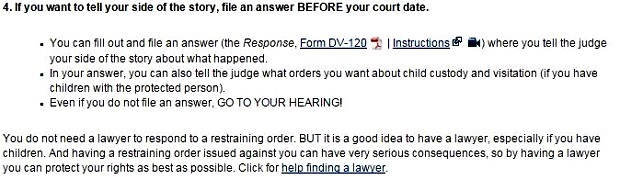
This advice about telling “your side of the story about what happened” is offered by the California Court System, and it presumes that something must have happened to inspire some accuser to petition a restraining order. No tips are included about what to do if “what happened” was that this accuser had a malicious impulse to lie or is crazy.

I’m not a mathematician; I was trained as a critic. While a mathematician would almost certainly pronounce that trying to articulate one-half of nothing is meaningless and a waste of time (and then wave you away), a critic, arching an eyebrow, would tell you that the act of trying to articulate one-half of nothing raises the expectation that nothing is something after all. The act of explaining, in other words, creates meaning; it exerts an influence. It says there is “a story.”

To describe “your side” of nothing gives substance and dimensions to zero; it turns zero (a lie or lies) into something real—and this is what the civil court forces defendants to do…then it faults them for the stories it makes them tell about what was BS to begin with.
This sorcery goes on routinely and n-n-n-duh-mbly. The presumption of civil courts that accusations are “facts” that have “sides” is a grave blindness. This prejudice can, and it regularly does, turn nothing into “something.”

A defendant could answer honestly: “Your Honor, it’s bullshit, wholly bullshit, and nothing but bullshit.” But the judge would reject that answer out of hand and would, besides, threaten the speaker with penalties for insulting the court’s “dignity.” The judge could even rule that a defendant is “guilty” of allegations that are bullshit to punish him or her for saying the allegations are bullshit.

Fun, huh? Lives are intruded upon by judges (who are paid lavishly to warm chair seats), and then these judges produce reams of records to make people blameworthy for nothing they’ve actually done.

The mindset of judges is that there must be something, which means they find something where there was nothing. They “find” something even if they have to make it up.

This is all (yet another) explanation of how civil process is (1) stupid, (2) corrupt, (3) stupid, (4) noxious, (106) absurd, and (5) reprehensible.

Copyright © 2018 RestrainingOrderAbuse.com

*People are daily deprived of their liberties, livelihoods, and even their reasons for living based on equations like this one: 0 = 22.

What Massachusetts Law Firm Dane Shulman Associates Says about Restraining Order Abuse and Divorce

Below is Massachusetts law firm Dane Shulman Associates writing about the game of false accusation. Lawyers know this happens. They know it very well.

Various feminist advocates doggedly assert that restraining order abuse, particularly to gain leverage in family court, is insignificant—or worse, that claims of it are merely men’s rights propaganda—and such assertions are made even by professors of law. Practitioners of law (the lawyers in the trenches, not the ivory tower) report otherwise.

Restraining Order Abuse in Divorce Cases” (emphases added):

Unfortunately, some people are abusing Massachusetts’ restraining order laws and using them as a divorce tactic. An individual involved in divorce proceedings may file a temporary restraining order against [his or her] spouse, alleging abuse of him or [her] or of the couple’s children. This would prevent the alleged abuser from having contact with his or her children during the 10-day temporary order, and if the allegations stick, the restraining order would last up to a year after the accusations were made. Often, such allegations are false, and only a way to put a wrench in the divorce proceedings and for the accusing spouse to gain custody of the children involved.

To prevent the restraining order from being extended, it is imperative that the alleged abuser present evidence [in] the second hearing that the allegations made against him or her are false. This is the first and only time an alleged abuser can present his or her case. If he or she fails to appear, chances are that the restraining order will be extended, and the accusing spouse will gain custody of the children.

A restraining order can have disastrous effects on the alleged abuser. The order is put on his or her criminal record, and any violation of the order results in criminal charges. The alleged abuser is also listed in the statewide Domestic Violence Registry, a record that never goes away. All of these actions greatly impact an alleged abuser’s ability to secure new employment, especially jobs for the government or jobs that involve working with children.

Massachusetts’ courts issue restraining orders to protect victims, not so the orders can be used as frivolous tactics to gain the upper hand in a divorce or a child custody matter. Restraining orders have serious consequences for the alleged abuser, and also for the relationship between the alleged abuser and his or her children, since the order could put strain on the parent-child relationship. A restraining order is something no one should consider obtaining without a serious, truthful cause.

Copyright © 2018 RestrainingOrderAbuse.com

*One of the most outspoken critics of restraining orders, attorney Gregory Hession, also practices in Massachusetts.

Most False Restraining Orders against Feminists Who Abuse Children Work

If you’re not sure what the title means, that’s the point.

It’s satirical and intended to emphasize that if you falsely accuse someone of abusing a child and the accusation sticks, there’s about a 100% probability that the restraining order will work to deter future abuse of that child by the falsely accused person who never abused the child in the first place.

As a feminist might reason, however, zero probability of abuse is good, and that zero probability recommends that all feminists be restrained by order of the court from abusing children…because how could that be a bad thing?

It’s certainly likely that there are feminist child abusers. If all feminists were put on notice, then, malefactors among them would be discouraged from committing further abuses.

Okay, sure, non-child-abusing feminists might resent the implication of a court order that prohibited them from abusing children. But so what? As a feminist might observe, the net effect of forbidding all feminists from abusing children would be enhanced protection of children. Unquestionably this would be worth some ruffled fur.

Now, do I mean the above as lampoon, or am I being serious? When it comes to the subject of restraining orders, both amount to the same thing.

These remarks and my choice of words in this post’s title were inspired by a 15-year-old “family violence special report” headlined, “Most restraining orders work.” It was written by Kristen Go for The Denver Post and published Sept. 12, 1999.

The headline’s assertion is the kind that makes people who’ve been falsely accused grate their teeth.

Imagine, just for argument’s sake, that most restraining order accusations are hyped or false. If that were the case, then naturally most restraining orders would “work” (to curb behavior that the accused never exhibited in the first place).

What Ms. Go’s report saliently relates is that three Colorado women who obtained restraining orders against “abusive husbands” were subsequently shot to death by those husbands.

While these recent high-profile cases in Grand Junction, Fort Collins and Colorado Springs make it appear that restraining orders don’t work, experts say that’s not the case. Enforcing a restraining order can be difficult but not impossible. And obtaining a restraining order is just one step toward leaving an abusive relationship and staying safe, experts say.

“The reality is that a restraining order is a piece of paper,” said John Poley, an assistant city attorney in Denver’s Domestic Violence Unit. “It’s not going to stop bullets. If you get a restraining order without a safety plan in a domestic situation, I think that’s almost asking for trouble.”

Translation: Restraining orders against violent people may not actually do a damn thing but make those violent people murderously angry, and those much-promoted pieces of paper may inspire a false sense of security in their applicants that gets them killed.

No one…keeps track of how many domestic-abuse homicide victims had restraining orders against their killers.

Translation: No one really cares what the consequences are so long as perception is predominantly positive.

Recent studies—which include data collected in Denver—are inconsistent about how often orders are violated. A 1994 study by the National Center for State Courts found that two-thirds of restraining orders are never violated. Yet a 1993 study by the Urban Institute reported that 60 percent of women said their abuser violated the order.

Translation: What the courts report contradicts what women report, and what women report contradicts what Ms. Go does (“Most restraining orders work”).

What the studies do agree on, however, is that about 70 percent of people who obtain restraining orders report feeling safer.

Translation: A majority of people who obtain restraining orders report “feeling” safer, and this means most restraining orders “work.”

The foregoing may be summarized thus: (1) Restraining orders against violent people may get their applicants killed; (2) no one takes a particular interest in how often this occurs; (3) most restraining orders “work”; (4) if most restraining orders are based on BS, it only stands to reason that they should; and (5) we know that three restraining orders obtained in Colorado in the late 90s were presumably legit…and ascertainably worthless.

Copyright © 2018 RestrainingOrderAbuse.com

*Ms. Go’s report also relates the following data: “In fiscal 1998, about 18,000 temporary and 3,300 permanent domestic-violence-related restraining orders were issued in Colorado counties.” If Ms. Go is correct, there’s no evidence in her reportage that she understands this means over 80% of domestic-violence-related restraining orders issued in Colorado counties in 1998 were dismissed. Of the approximately 18,000 petitions preliminarily approved by the court, that is, less than 20% (3,300) were affirmed (made “permanent”). Over 14,500 cases, then, may have been (tacitly) deemed frivolous, flimsy, or false by Colorado courts. Appreciate, besides, that a significant proportion of the 3,300 orders that were upheld may have had false grounds. Almost 20 more years of this charade have gone by since.

“I Reckon”: The Standard of Proof Applied by Judges to Restraining Order Cases

As the story goes, civil restraining orders are awarded to plaintiffs who demonstrate by a “preponderance of the evidence” that they need one. According to this story, a judge determines by actuarial science that there’s a 51% or greater probability that the petitioner’s need is valid, that is, that s/he’s representing some facts and his or her feelings about them more sincerely than not and that those facts and feelings fall into some legal definition of trespass (that’s typically as voluminous as interstellar space).

So concludes Harvard Law Prof. Louis Kaplow (who actually does the math).

The important thing is that the process sounds just.

Restraining order judges rule with mallets—and no subtler instruments. While they may be formulaic, their opinions (and they’re not called “opinions” for nothing) aren’t arrived at by the application of algebra. The phrase preponderance of the evidence is a rhetorical affectation used to lend those opinions an air of gravitas…because “I reckon” sounds a little squishy.

The suggestion that they’re the products of painstaking moral computation is supposed to make rulings sound dignified and conclusive. It’s not important that the defendants in what may be 10-minute “hearings” aren’t fooled.

It’s only important that everybody else is.

Copyright © 2016 RestrainingOrderAbuse.com

*The reader who retorts that judges rule with their minds—and their minds are subtler instruments than mallets—has never actually been before one in a restraining order “trial.”

If Restraining Order Cases Are Only about Narrative, How Do You Beat a Liar in Court?

pawn-triumphs

The next to last post stressed the importance of narrative in restraining order cases.

Stories complainants tell pursuant to obtaining a restraining order don’t particularly matter. “I’m afraid” may suffice.

In contrast, defendants’ narratives are critical.

Strategic defense is not about “telling the truth.” It’s about telling the better story. Competing narratives are universally regarded as “he-said/she-said” (so to speak: Restraining orders are not strictly procured by women against men). The only thing that counts is whose story a judge favors when the end-of-the-round bell dings. (Significantly, there’s only one round, and it’s often only a few minutes long.)

Fraudulent claims in restraining order affidavits are commonplace—and what restraining orders do, especially ones whose grounds include false allegations, is inspire those who’ve been accused to register betrayal, indignation, and outrage. Since opportunities to defend may come and go in a few days’ time, those emotions aren’t likely to settle (and may be compounded by many others: fear, bewilderment, uncertainty, vulnerability, etc.).

The urge of defendants will be to stress in court how they’ve been wronged: “It’s really [him or her] who’s the bad guy, Judge.” This urge must be resisted.

The judge couldn’t care any less if s/he were paid to—and s/he is paid to.

Defendants need to defuse whatever has been alleged against them. Merely relating a meandering history (or “history”) of mistreatment can work great for plaintiffs; it does nothing for defendants.

This may seem unfair. It is, and that doesn’t matter—and that’s what a defendant must focus on: what matters.

Sometimes what matters is the law. For example, many recent posts here concern allegations that writing about someone online is “harassment” or “stalking.” One-to-many speech (online or otherwise) is neither, and it’s protected by the First Amendment. To qualify as “harassment” or “stalking,” someone has to contact someone else, repeatedly, after being told not to. Contact must be one-to-one or through a middleman. No confrontation, emails, texts, phone calls, letters, or relayed messages means no contact, and that means no grounds for court interference. Cases in which a constitutional defense is strictly applicable, however, are rare.

(The author of this post is in such a case right now with a woman who he has been told has been diagnosed with a mental illness. The law is clear: The woman has admitted I’ve had no contact with her in years; therefore there were no grounds to authorize an injunction. Making the law clear to a municipal trial judge is a different story. Do I start by playing a voicemailU that this woman, who claims I’ve stalked her since I met her in 2005, left me in 2012, in which she urges me to call her? Maybe. That kind of evidence makes a good first impression. It says—without saying it—that she’s lying. It upsets her narrative. Do I start by saying, “She’s crazy”? No. That’s aggressive and makes a poor impression. It would only get the judge’s hackles up.)

What makes a good narrative? First, follow the creative writer’s maxim: Show, don’t tell. Sometimes defendants have contradictory evidence to present; sometimes there is none. If there is evidence, it must be framed with care (and defendants are recommended to read it aloud in court and not to depend upon a judge to “get it.”) Legal method proceeds from evidence to conclusion. Defendants shouldn’t start with the conclusion, for example, “He’s lying.” They should present a story that gives a convincing impression. Then they can say, “He’s lying.” Attorney Gregory Hession, a specialist in restraining order defense, would call this highlighting plaintiffs’ “ulterior motives” (their real reasons) for petitioning a restraining order. These may include malice, for example, or cover-up.

Defendants shouldn’t rile the judge. What riles a judge is defending by accusing the other guy. Defendants’ narratives should do that. Judges actually think it’s incomprehensible that defendants should be irate, even defendants who’ve been lied about. Expressions of anger by defendants inspire theirs. Misrepresented defendants must seem misrepresented. (No normal human reactions should be expected from judges, furthermore, and normal human reactions from judges should not be relied upon. Judges will often be very civil even as they insert the knife. Defendants should never be lulled into thinking judges are on their side until after the gavel falls in their favor.)

Narratives must be organized, coherent, and taut: no jangly pockets to upset the seams.

Obviously, they should be rehearsed.

Narratives, too, shouldn’t be one-sided. Defendants should cross-examine (ask questions of) their accusers with the aim of tripping them up, and they should anticipate accusers’ answers. If an accuser has made contradictory claims to the police, for example, a way to obviate an outright denial is to phrase a question like this: “Would it surprise you to know that Officer [A] recorded that you said [X] on [date], and Officer [B] recorded that you said [Y] on [later/earlier date]?” (Any defendant who has been accused to the police should obtain the complete file and scour it. It’s there for the asking.) The objective is not to show that plaintiffs are capable of lying but that they have lied about something material (that is, about something that would tend to influence the judge’s understanding and verdict). Exposed details or contradictions should be relevant and significant details or contradictions.

Defendants with documents that corroborate their narratives and contradict their accusers’ should bring them to court in triplicate. Trial judges are seldom sage; they’re just people doing a job. Anything that appears to be “evidence” should be exploited.

Restraining order trials are storytelling competitions. Whether or how defendants embellish the facts is a question for their consciences. In a criminal trial, a defense attorney will flatly deny anything that can’t be proved by the plaintiff, even if the attorney knows the denial isn’t “the truth.” The attorney’s job is to exculpate his or her client: “Can you prove my client even knows you?”

Being storytelling competitions, restraining order trials are not won by telling “truer” stories. They’re won by telling stories that are more appealing to the listener.

Copyright © 2016 RestrainingOrderAbuse.com

Restraining Order Cases Are about One Thing: NARRATIVE

narrative

The universal conviction is that the court involves itself in a citizen’s life because the citizen did something wrong. Even judges are inclined to believe this.

It’s wrong, and they’re wrong—and it’s very wrong of them to be wrong about something so important.

The court involves itself in a citizen’s life because someone (automatically designated a “victim”) told it a narrative, one that characterized the citizen as a miscreant. Someone told it a story.

That’s it. It would accordingly be swell if administrators, legislators, the judiciary, the general public, and the press recognized this.

If a story the court is told is true, there are consequences. If a story the court is told is untrue, there are consequences. The consequences, however, are always borne by the accused, that is, the person the story is about, irrespective of whether the story is true.

The accuser may be rewarded, or s/he may not be rewarded: “No harm, no foul.

This goes a long way toward explaining why the universal conviction is that the court involves itself in a citizen’s life because the citizen did something wrong: S/he’s the only one who’s ever implicated in wrongdoing (and, whatever the circumstances, s/he is never called a “victim”).

The inequity is obvious. This inequity is magnified in restraining order cases, because stories are subject to minimal or no scrutiny in procedures that may be mere minutes long.

The “standard of proof” is how trial judges feel, and that may actually be reflected in states’ statutes, which in cases explicitly authorize judges to do as they “deem appropriate.” (Who determines whether they actually do what they think is right? They do.)

This is why it’s impossible to answer questions like this: “Can someone get a restraining order on you for calling her a bitch?” The law says one thing (no); a judge may feel otherwise.

“Justice” in this arena is freewheeling, as First Amendment authority Aaron Caplan has remarked.

In other sorts of cases, defendants may appeal a judge’s decision. Not only are few able or inclined to do so in restraining order cases (which can cost a defendant $5,000 based on a three-minute fish tale that’s swallowed hook, line, and sinker—or force him or her to cross the country to answer charges in a 10-minute hearing); there may be no point. The standard applied by appellate judges, barring arguments like violation of civil rights, is “clear abuse of discretion.” Since trial judges’ discretion is without limit, satisfying the “clear abuse of discretion” standard isn’t strictly possible. Post-trial defense is almost always an exercise in futility.

A narrative that works…works. It doesn’t matter if it was false. That had to have been proved at trial, and it had to have made an impression on the judge, who isn’t obligated to dismiss a complaint that’s fraudulent. S/he doesn’t have to justify his or her decision. It’s indisputable.

A narrative that works…works.

Copyright © 2016 RestrainingOrderAbuse.com

*The process is derisible for many more reasons than this. Significant to take from this post is that restraining order cases are storytelling competitions. There is no justice or accountability. All a defendant can do is endeavor to tell the better story. To be continued….

What Does It Mean When a Defendant Is Enjoined by the Court from Making “Indirect Contact” with the Plaintiff?

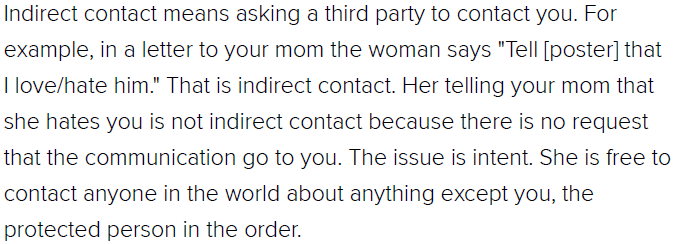
“If the writing does not request or direct a third party to contact you vicariously, and or request a third party to forward any communication to you, there is no indirect contact. Essentially, the restrained party is not prevented from communicating about you, but rather communicating with you… [emphases added].”

—California attorney Timothy Miranda

Mr. Miranda, who identifies himself as a domestic violence lawyer, puts it succinctly and correctly.

Indirect contact” is often prohibited on civil injunctions, and this prohibition is typically expressed this way: “no third-party contact.” This doesn’t mean the “restrained party” on a restraining order is prohibited from talking about the plaintiff with anyone (or the world at large); it means she can’t communicate with the plaintiff, either directly (e.g., by phone, email, text, or in person) or through another.

An example of violating a “no third-party contact” prohibition would be asking a mutual friend to convey a message from you to the “protected party” or so-called “victim.” (Worth parenthetical mention is that some courts may interpret attorney-mediated contact to be a violation, so grave care should be exercised even in that instance. A respondent to this blog reported he was jailed for merely asking his attorney to communicate a message. The attorney didn’t fulfill the request. The man was incarcerated, anyway, for his intent to indirectly contact the plaintiff, his ex-wife.)

Washington attorney Derek Michael Smith elucidates the distinction between lawful speech to a third party and unlawful “indirect contact” with a plaintiff on a restraining order.

That’s the clean-and-tidy stuff. Motives for restraining orders are often other than they appear, however. Often, preventing a defendant from talking about him or her is a plaintiff’s (ulterior) motive for petitioning a restraining order from the court, and it’s all too easy for a plaintiff to persuade a trial judge that speech about him or her to others is “harassment.”

Moreover, it’s not uncommon for plaintiffs to want a defendant jailed on any pretext. Spite and malice are not atypically (among) the reasons plaintiffs seek court injunctions in the first place.

Speech about someone that isn’t false or threatening is protected by the First Amendment, even if that person has a restraining order against you. S/he may object to that speech, but if it isn’t directed to him or her, no legal grounds exist for calling it harassment. Coercive, objectionable, and even emotionally upsetting speech about someone is protected. Opinions about and truthful criticism of others that don’t threaten and aren’t directed to them is not “harassment.” Such criticism may defame—saying someone “stinks” is hardly likely to burnish his or her reputation much—but legal liability for defamation requires that a statement be untrue, not merely unwanted, unpleasant, or unseemly.

That said, I’ve been prosecuted three times this year based exclusively on my writing about the plaintiffs (and all three actions were coordinated by the same people). Two of the procedures exposed me to immediate jail time (16 months total), and none of them was summarily dismissed for lacking meritorious grounds.

Writing about someone is easily represented today as “cyberstalking,” “harassment,” “threat,” etc. These words are nebulously defined and provoke knee-jerk reactions from prosecutors and trial judges. All a plaintiff need do is claim speech is “frightening” or “invasive.” No judge is likely to read and assess the speech, and police and judicial bias in favor of complainants who allege “fear” has been conditioned by billions of dollars over the past 20 years under the Violence Against Women Act (VAWA). Responses by agents of the justice system are all but automatic.

Too, it’s well-established that the law is two decades out of step with the times. To trial judges, the Internet is still newfangled and suspect.

As Judge Roger Titus clarified in U.S. v. Cassidy, the Internet is just an electronic “bulletin board” that someone may elect to look at or not. Publications on a blog, for instance, do not “contact” people, even if they’re indexed by Google. If someone you talk about on Facebook or Twitter chooses to read what you’ve said, that’s a decision s/he is responsible for not you. (An exception is “tagging” a comment in Facebook, which does cause the comment to appear in the tagged person’s Timeline. There’s a case of a New York woman’s being held in contempt of court for tagging her ex-boyfriend, who had a restraining order against her. She called him “sad” and “stupid,” so the guy tearfully ran to the courthouse and cried foul. Even such a case as this has been excepted. See, for example, David v. Textor, in which the Florida District Court of Appeals ruled that “where comments are made on an electronic medium to be read by others, they cannot be said to be directed to a particular person.” )

It’s the rare state trial judge who’s as enlightened as Judge Titus, though, and who knows to consider one-to-many speech on a website differently from one-to-one, interpersonal “contact.”

In my most recent superior court trial, for instance, it was alleged that I had “indirectly contacted” the plaintiffs by Google Alerts and by my use of keyword meta tags on this site. One of the plaintiffs requested that Google inform him of my posts. Google’s emails to him were represented as “contacts” from me. The claim is absurd, but there you go. Similarly, the keywords beneath posts here that catalog their topics were said to “contact” anyone whose name appeared among them. I wish I could say such arguments are met with derisive scoffs, but the judge in the case took notes. “Meta tags” were new to him—and sounded sinister enough.

This nonsense works. (A police detective told me in January that he believed I had “caused a contact” with one of the plaintiffs merely by using her name online or inspiring someone else to comment on her conduct.)

Probably a judge would not consider writing someone’s name on a bathroom stall a “contact,” but because the Internet is a public medium that anyone can access with a computer and a few key strokes, the distinction between speech and contact becomes muddled.

It’s further obscured by snivels and protestations of grievous violation by vindictive and attention-seeking plaintiffs, which trigger preconditioned judicial impulses.

Unless a defendant “gets in touch” with the plaintiff, it is NOT “contact.”

Copyright © 2016 RestrainingOrderAbuse.com

*See also the dictionary.

No One Is a VICTIM Just because S/he Says S/he Is: A Reminder for Reporters…and Other People Who Shouldn’t Need Reminding

I looked at a form I was handed a couple of weeks ago at a criminal arraignment I was ordered to attend. The form gives the impression I was supposed to sign it, which no one asked me to do. This would be disturbing if I were still capable of registering disturbance. I noticed with dim approval, though, that it said this:

alleged_victim

When accusations are made on “protective orders” or are of the type “protective orders” typically purport to concern (e.g., harassment, stalking, or domestic violence), journalists routinely call accusers “victims” automatically. They reason, apparently, that a person can’t be awarded a restraining order unless s/he has demonstrably been victimized. (More accurately, “reporters” don’t scruple overmuch about the facts or how the process works, because they know where their loyalties are supposed to lie.) Probably a majority of injunctions are awarded based on their petitioners’ say-so alone. To understand what that means, a “reporter” would have to investigate (instead of, say, quoting a pamphlet authored by the National Coalition Against Domestic Violence).

Prosecutors? They seem to call all accusers “victims” on reflex. Their job, after all, is to “prevail” in court. If they think they can win, they try to; it’s not about justice. That’s rosy rhetoric for the rubes…like journalists.

Whether intentionally or not, both journalists and prosecutors get it wrong. Legislators do, too. The statutes they enact may explicitly call accusers “victims” (due process be damned).

The (criminal) court at least got this much right: Allegations aren’t facts, and until some semblance of due process has been staged, an accuser is an “alleged victim,” not a “victim.”

Judges don’t always get this right, either, however.

I couldn’t say with complete assurance whether lapses in objectivity, ethics, and procedural propriety like this have always existed or whether they’re testaments to systemic bigotry conditioned since the mid-’90s by the Violence Against Women Act (VAWA)—whose megabuck grant contracts stipulate that alleged victims should be treated as victims in every instance.

I feel pretty confident, though, in my suspicions of corruption.

The lines can’t help but have become blurry since the advent of the restraining order, which authorizes the court to draw conclusions prior to a trial, based on a few minutes of testimony and what may be no ascertainable facts at all.

If “verdicts” can be formed without proof and possibly without any adversarial contest in which controverting evidence could be adduced, that would seem to make the distinction between “victim” and “alleged victim” merely academic.

Restraining order judgments aren’t uncommonly “default” judgments, because defendants either don’t show up in court or can’t. An “emergency” injunction can require a defendant to appear in court mere days after service, possibly after having been booted to the curb (and left without resource or a vehicle), and even a non-emergency injunction may require a defendant to appear in court within a week. There’s no time to secure legal representation, even if the means are available and even if the respondent appreciates the significance of the paperwork that’s been thrust in his or her hand, and injunctions can be issued against defendants in other counties or states. (Some defendants, moreover, may not be first-timers, and they may simply conclude: “F— it. What’s the point?”)

(What defendants are told: “Here’s your restraining order. Don’t violate it, or we’ll arrest you.” What they’re not told: “You have six days to learn enough law to extricate yourself from allegations of which you’ve already been found guilty.” At the time they’re told anything, chances are they won’t know what the word defendant means.)

When procedure is engineered to find anyone who has alleged victimhood to be a “victim,” maybe calling every accuser a victim to begin with is just economical. Maybe it’s also the closest thing to honest a person can expect from a manifestly crooked business.

Copyright © 2016 RestrainingOrderAbuse.com

*And make no mistake: It is a business.

How Restraining Order Fraud is Motivated and Concealed by VAWA and Its Advocates

The previous post, which highlights how fraudulent abuse of process is promoted and disguised, contains a link to a PDF prepared by the National Coalition Against Domestic Violence (NCADV) called “Comparison of VAWA 1994, VAWA 2000 and VAWA 2005 Reauthorization Bill.”

The acronym VAWA stands for the federal Violence Against Women Act, which was ratified over 20 years ago (and has been repeatedly renewed). State police and judicial bias toward allegations of abuse has accordingly been conditioned with billions of dollars over decades and is today well-cemented.

Even a non-cynical critic would call the “justice system” owned.

Parsing the entirety of the NCADV’s PDF would be overkill. This post will examine a few quotations that illustrate how police, judicial, and prosecutorial conduct have been bought with inducements that are called “grants.

Grants from the Office on Violence Against Women for “Court Training and Improvements” (i.e., “training” or “educating” judges and court staff) have been discontinued under current legislation, possibly because it occurred to someone that “instructing” the court how it should rule sounds very like coercing verdicts. Procedural bias, however, has already been firmly rooted, and money to influence court process has merely been relabeled Grants to Support Families in the Justice System.

High school civics teachers tell us our government was set up so that its administrative, legislative, and judicial branches act independently to ensure that “checks and balances” prevent any one branch from acting tyrannically, and that state governments enjoy autonomy from the central government. What the quotations below show is how checks and balances can be worked around with cash.

 (VAWA 2000): “Amends Pro-arrest grants to expressly include enforcement of protection orders, and is designed to help state and tribal courts improve interstate enforcement of protection orders.”

This quotation means that money from the federal government is issued to state police departments to urge them to arrest people, including anyone who has purportedly violated a restraining order. If the petitioner of a restraining order reports a violation (real or not)—including a violation s/he has “arranged” (“Susie, I’ve reconsidered. Please come over so we can talk about this!”)—officers have been “incentivized” to haul the defendant in (according to their “judgment,” which has been influenced and can hardly be called fair and objective).

 (VAWA 2000): “Clarifies that as a condition of funding, recipients of STOP and Pro-Arrest grants must ensure filing and service of protection orders at no extra cost to the victim.”

This quotation “clarifies” that unless states allow restraining order petitioners to accuse people for free, they won’t get any money.

(VAWA 2005): “Requires law enforcement agencies and courts to enforce these orders.”

(VAWA 2005): “Prevents courts from publishing survivor information on the internet.”

These quotations explicitly say that state police and court policy has been dictated (i.e., cops and courts have been told how they’re “required” to act). Either they comply, or the money tap gets shut off. This may reasonably be called extortion or coercion.

(VAWA 2005): “Encourages protocols and training to avoid dual arrest.”

This quotation means if there are two complainants in a domestic spat, for example, only one should be arrested (and since this stipulation is eagerly reported by the National Coalition Against Domestic Violence, guess which member of a hetero couple the police are supposed to arrest).

(VAWA 2005): “Criminalizes stalking by surveillance.”

(VAWA 2005): “Expands the accountable harm to include substantial emotional harm to the victim.”

(VAWA 2005): “Expands minimum penalties of stalking if it occurs in violation of a protection order.”

These quotations mean that pretty much any alleged misconduct is punishable and dictates how it should be punished (at a minimum) if it reportedly occurs while a restraining order is in effect.

(VAWA 2005): “Permits LAV-funded attorneys to support victims’ dealings with the criminal justice system; but, does not permit funding to pay for prosecutorial or defense functions.”

This quotation says accusers (“victims”) may be provided with free legal services but that the accused must not be.

The themes in these few quotations indicate the pattern of the web:

  • Punishable conduct has been broadened to include almost anything that can be described as offensive by a plaintiff and/or a judge. In practice, this means any alleged conduct that allegedly causes a complainant to feel afraid.
  • Police and judges have been urged to act and to act without deliberation and bigotedly.
  • Accusers’ accountability has been minimized (and accusers are nominated “victims” or even “survivors” on no more ascertainable grounds than that they accused someone of violating them), while the accused’s accountability has been maximized to include permanent registration in public/police databases, ones that may specifically label them “stalkers” or “violent abusers.”
  • Free attorney services are granted to accusers but must be denied to the accused.

This web has been constructed methodically with billions of taxpayer dollars, and this money has gone not only to the police and the courts but to law schools and nonprofits (like the NCADV), and the latter may reciprocate by producing research papers; websites; and pamphlets, brochures, and posters that further bias the system as well as the public and their representatives, for example, journalists. (Grants from the National Institute of Justice may also be awarded to generate feminist “social science that’s used to “train” judges.) The federal government’s investment in favored nonprofits furthermore legitimates and empowers those nonprofits and thereby increases the donations they receive from the public. The Kayden Jayce Foundation (KJF), a nonprofit that acknowledged false accusation and focused on providing legal aid to low-income (non-white) families, applied for grant monies, was denied, and has since had to shutter its windows. So, too, have nonprofits that defend men’s rights—i.e., equal rights—been spurned. They’re on their own. Consequently, they can’t pay for teams of professional writers and web designers, etc., and receive little or no public assistance. They don’t have the cachet that only money can buy.

If all of this weren’t enough, rulings that nominate people “stalkers,” “batterers,” “child abusers,” or even “rapists” can legally be formed in 10 minutes or even by “default” (i.e., without ever having heard from a defendant at all). In some states (Arizona and Indiana are examples), three-minute ex parte rulings are final unless defendants apply to the court for the opportunity to be heard. Men and women may be accused from another state and never afforded a practicable chance to defend themselves against allegations that may be arrant lies and exercise dire effects on their lives (including loss of employment).

When complainants of procedural abuses speak of “conspiracy,” this is what they’re talking about…and they’re not wrong.

Copyright © 2015 RestrainingOrderAbuse.com

*For further insight, see “‘You have bullsh*t; we have research’: The National Coalition Against Domestic Violence v. Daddy Justice (Or, Why False Allegations Are a Serious Problem).”

Legal Abuse and “Learned Helplessness” (Including Commentary on the Mythical Value of “Taking the High Road”)

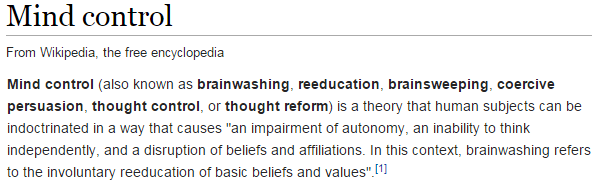
“Learned helplessness is behavior typical of an organism (human or animal) that has endured repeated painful or otherwise aversive stimuli which it was unable to escape or avoid. After such experience, the organism often fails to learn escape or avoidance in new situations where such behavior would be effective. In other words, the organism seems to have learned that it is helpless in aversive situations, that it has lost control, and so it gives up trying. Such an organism is said to have acquired learned helplessness. Learned helplessness theory is the view that clinical depression and related mental illnesses may result from such real or perceived absence of control over the outcome of a situation.”

Wikipedia

I introduced this psychological theory to a judge in 2010 when I filed a lawsuit against a woman who falsely accused me to the police and multiple courts in 2006. The accusations began in March, and before the close of July, she had defrauded at least four judges.

To be falsely accused is bewildering; it savages the mind. To then learn that efforts to expose the truth are met by judges not with keen interest and probing questions but variably with mute indifference, scornful derision, and offhand dismissal—that’s to have it firmly impressed upon you that resistance is futile. Worse, it’s to learn that resistance compounds the frustration and pain.

The system isn’t on your side, and bucking it for many is just an invitation to be scourged afresh.

After attempting some direct appeals to people who, I reasoned, might care more about the truth than the court did (2007), then writing about the business online (2008), then employing an attorney to mediate a resolution (2009), all of which efforts were met with stony silence, I filed a lawsuit (on my own).

That was in 2010. By then, unknown to me, the statutes of limitation on the civil torts I alleged—fraud, false light, defamation, and intentional infliction of emotional distress—had flown. My accuser’s attorney, with mock ingenuousness, wondered to the court why I hadn’t filed my suit in 2006, right after having had the court twice swat down my appeals.

learned_helplessnessI offered the explanation to the judge that people who go through this become conditioned to helplessness (or hopelessness), because process militates against the proposition that a claimant of abuse has engaged in deception. The righteous indignation and outrage of the wronged defendant gradually succumb to the inevitable conclusion that facts, truth, and reason are impotent against fraud and judicial bias. (The defendant lives besides under the constant menace of unwarranted arrest.)

I didn’t know I could prosecute a lawsuit on my own until a legal assistant told me so in 2009, which I also told the judge. I might have been motivated to find out sooner if I’d had the least faith that a judge would heed my testimony.

My accuser’s attorney disdained the explanation for my tardy filing as “self-diagnosis,” and the judge eagerly echoed his assessment and dismissed the case (the court’s interest is in economy, not truth or justice). What was another six months of my life? (Letters from a physician and a therapist, along with witness affidavits, including one from a former cop, made no difference.)

I wasn’t wrong, though. People who defy a rigged system—whether restraining order defendants, domestic violence defendants, or family court defendants—can be conditioned to helplessness, and many accordingly report experiencing posttraumatic stress (which fortifies their distrust and their aversion to further rude scrutiny and contemptuous treatment from the court).

A lesson to take from this is that the “high road” (i.e., trusting in facts, truth, and reason) is a detour to hell. If I had known in 2006 what I know today, I could have extricated myself from my accuser’s false accusations in five minutes by playing the game according to her rules, which were “whatever works.”

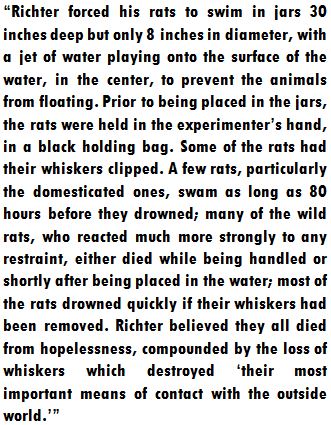
The studies from which the term “learned helplessness” emerged were studies of drowned rats and tortured dogs. Playing fair (or aspiring to saintliness by never uttering an ill word against your accuser) is noble, but nobly drowned is still drowned. If an accuser lies about you, denounce him or her as a liar. Similarly, if a process of law is bullshit, call it what it is.

Some respondents to this blog, even after they’ve been through the courthouse ringer, retain a beleaguered faith in ethics. They believe that if injustice is laid bare to a discerning audience by rhetorical appeals to reason and decency, this will spur change. “Our objective is to fix the problem, not the blame” was quoted in a recent comment.

The abstract and impersonal may be informative, but they don’t arouse curiosity, because they don’t inflame the passions; controversy does. Advocates of the “high road” eschew naming names, for example, because it’s aggressive. Avoidance of confrontation, however, accomplishes little and exemplifies “learned helplessness.” The “high road” is safe and tame, and it leads to a dead-end.

The reason restraining order abuse endures is that the abused are paralyzed by indecisiveness. They won’t knuckle down and demand that a flawed process be repealed.

Among people who’ve been damaged by fraudulent abuse of restraining orders and related civil court procedures that are supposed to protect the defenseless, you’ve got, for instance, your liberals who’ll defend the process on principle, because they insist it must be preserved to protect the vulnerable, and they’ll fence-sit just to spite conservatives who flatly denounce the process as a governmental intrusion that undermines family.

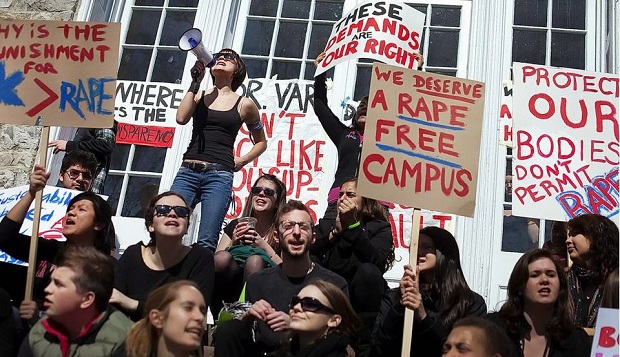
Liberals and women who identify with legitimately victimized women feel obligated to “negotiate the gray space” and acknowledge the pros and cons of “women’s law.”

Then you have people (of whatever political allegiance or none) who believe that if you eliminated procedural inequities and ensured that defendants’ due process rights were observed, the system would work fine.

Maybe they believe a process that allows a person in Nevada to mosey into a courthouse, fill out some forms, and accuse a person in Wyoming of “stalking” or “domestic violence,” necessitating that the person in Wyoming hustle him- or herself to Nevada to present a defense within the week, can be made fair, and maybe they don’t know that the same Nevadan can prosecute the same claim over and over against the same Wyomingite (three times, six times, a dozen times, or more).

Maybe they believe that appeals to public conscience will urge the passage of laws that require free legal counsel be provided to defendants.

This would mean that if, say, a million restraining orders are petitioned a year, and legal representation for each defendant in each case could be capped at $2,000 (which might translate to a feeble defense, anyway), state governments would be required to shell out $2,000,000,000 to make everything “fair and square.” But that’s not all. If government gave free representation to “abusers,” advocates for “victims” would demand the same for them. So your $2,000,000,000 would become $4,000,000,000.

That’s per annum. (Also, the hypothetical Wyomingite would still need to travel to Nevada, and who’s paying for that?)

Others believe that if lying (perjury) were prosecuted, that would straighten things out. The costs to prosecute what may be hundreds of thousands of liars a year might be less than $4,000,000,000…or it might not be. Too, how do you prove someone is lying about an emotional state, like “fear”? How do you prove an alleged event didn’t happen?

You can’t, not conclusively, which is what a criminal prosecution requires.

More say appeal to your senator, to the president, to the press…nicely and cogently. They follow a utopian faith that basic decency will prevail if “the problem” is exposed.

As a rhetorical stance, the position has its merits. It suggests calmness and rationality, and calmness and rationality should recommend attention from others. “We’re calm and rational,” proponents of the position imply, “so when we say there’s a problem in need of fixing, it’s calmness and rationality speaking, not anger.”

The limitation is that no one who needs to be convinced has a motive to listen. No one can be made to care about abstractions like equity and due process when in the other ear they’re being cited statistics about epidemic violence.

Everything to do with the law is adversarial. If you seek to revise it without being personal or confrontational, the soonest you can expect a just reward is in the afterlife.

Protesters march on a SlutWalk in Newcastle

Copyright © 2015 RestrainingOrderAbuse.com

*Splendid writers, particularly Cathy Young, have responsibly and lucidly exposed “the problem” for 20 years in major news outlets. The system has responded with statutes that are broader, laxer, and more punishing.

“There’s No Justice System; There’s Just a System”: A California Paralegal’s Advice on Defending Yourself against a Restraining Order Based on Fraud

The commentary and advice that follow are from a “paralegal at a top-tier criminal defense firm in Southern California.”

I will go on record saying we have some clients that were slapped with permanent restraining orders and some were also on probation for prior convictions while the restraining order injunction was issued. A number of our clients were arrested and put in jail multiple times by vindictive exes who used the RO in an abusive manner such as asking the restrained person to come over so they could reconcile and then calling the police as soon as the restrained person arrived. Another “protected person” in particular called the restrained person and claimed she was going to commit suicide. When the restrained person (our client) came over, she immediately called the cops, and he got hauled off to jail. We have another client who got locked up for responding to his ex via text message! Those are classic examples of “RO set-ups,” and it happens too often. Evil!

This topic hits close to home, because I too was the victim of a false/frivolous DV restraining order (or at least a failed attempt to get one placed on me) not too long ago. My ex-fiancée used a few e-mails I had written, admittedly in poor taste, of course, as evidence against me. The e-mails, though rather offensive, did not have any indications or inclinations of imminent danger towards my ex. No threats of physical harm towards my ex or her family at all. She even amended the protective order a couple of days after she originally filed it to include her brother, her mother, and the family dog!

I was shocked a temporary restraining order (TRO) was granted but later came to realize the courts tend to grant TROs quite easily with minimal evidence as a “safe measure” in case the petitioner is truly in immediate danger. Fortunately for me, my ex and her bro lacked basic legal knowledge and were not well-prepared for the hearing when the day came. I hired an attorney who specialized in domestic violence/criminal defense, and she was able to discredit/impeach my ex’s bro’s testimony and pretty much shoot down much of what my ex had to say with regard to my being a threat to her and her family. My ex did tell the judge she was fearful of me, and the judge did sympathize with her in that area. Long story short, the petition for a permanent restraining order was denied, and I hope I never see my ex or any members of her family ever again.

I’m sure this site has this info already, but I’d like to reiterate:

  1. When you get served with a temporary restraining order, regardless of how frivolous, OBEY THE TEMPORARY RESTRAINING ORDER. Make no effort in any way, shape, or form to communicate with the petitioner/protected person(s).
  2. If you have firearms, turn them in to a local firearms dealer for storage.
  3. Get an attorney who is reputable and skilled in domestic violence as well as criminal defense.
  4. If the hearing date is less than a week away, have your attorney request a continuance so you can better prepare for the hearing.
  5. Have your attorney file a formal response to the petition before the actual hearing, and make sure it gets served to the court and the petitioner.
  6. You and your attorney must go over your strategy in defending against the petitioner prior to the hearing.

I never lived with my ex nor did I have any history of domestic violence, but I still had to deal with the bullshit that came with a TRO. Even so, I stood my ground and fought the bogus petition.

Innocent people fight when they are wrongly accused rather than submit. Those who blatantly lie and lack reasonable evidence to support the lies will get shot down by competent defense counsel (as well as a confident and competent respondent/defendant).

  1. Maintain your composure at all times, especially during the hearing—dress nice, speak well, and discredit your accuser(s) in a cordial and professional manner, and you will prevail.
  2. If the judge feels the petition for the restraining order was completely unmerited, you can request that the judge order the petitioner to pay your attorney’s fees as well as any other expenses such as reimbursement for firearm storage fees.

The sad thing, though, is nine out of 10 times if the petitioner simply says s/he was truly in fear, the judge will say the TRO did have “some” merit.

Anyhow, my heart truly goes out to those of you falsely restrained and subjected to all the headaches that come along with it. Sometimes the system does truly suck.

Copyright © 2015 RestrainingOrderAbuse.com

“Defend Our Constitutional Rights”: Anne’s Proposal to Redress Restraining Order Injustice

Below is a proposition by a 74-year-old California woman, Anne Copeland, who’s earning a degree in criminal justice administration. Anne alleges that accusations against her made in a restraining order petition were trumped up, and has reported being taunted and terrorized by her accusers, who were her neighbors. She also reports she’s been prohibited from performing volunteer work as a consequence of the court’s order and that it has necessitated that she pack up and move away from her accusers to gain relief from their abuse, which the order against her in essence authorized.

She urges a course of remedial action.

Some prefatory remarks from the blog’s author: Restraining orders were enacted into law pre-Internet. No one considered in the ’80s that they could be abused. No one considered that “obscure court records” would soon be talked about from one end of the planet to the other; that they could be “scanned,” “uploaded,” and conveniently distributed by “email”; or that they would be accessed by employers. No one considered that there would be “public registries” (in cases that anyone with an “Internet connection” could consult). No one imagined that the very phrase restraining order would come to be associated with the savage imagery that “the Internet” is awash with. “Restraining orders” were supposed to stop wife-batterers. Today, they may be approved to quiet any complaint, however actually innocuous the alleged behavior is. Though reported figures are few, all indications are that the vast majority of restraining order petitions are rejected right off the bat. That means even the courts regard most complaints to be stinky. So if “plenty of cases ARE actually justified,” as Anne allows below, it’s only plenty of a small fraction of those the court doesn’t already summarily toss out. Since respondents to this site like Anne are typically people who’ve had  orders sworn against them that were grounded on hyped or false accusations but even so passed muster with a judge or two, the process is pretty much just stinky.


Hi, my name is Anne Copeland, and I have written before about the abuse of restraining orders, which I too have experienced. I am a 74-year-old senior studying criminal justice at a university online, and will receive my degree this coming year and go on to get my master’s so that I can work with juvenile delinquents.

Concerns about the decay in our government are not without foundation. I just read a wonderful article written by the Honorable Judge Harvie Wilkinson III, who serves as a judge for the U.S. Fourth Circuit Court of Appeals: “In Defense of American Criminal Justice.” It was an eye-opener for me, as I too have come to believe that our justice system is going to hell in a hay basket. I would say that it is very worthwhile reading; it was definitely pivotal in changing my thinking on the subject.

There is a particular case of a man named Clarence Earl Gideon of Bay Harbor, Florida, who in 1964 changed the acknowledgment of our rights under the Constitution. Previously, only cases that were pretty major in nature would enable a person to have a defense attorney provided by a particular state. In this case, the man was indigent, and his alleged “crimes” were mostly minor in nature. But he insisted on his right to have an attorney, and it was a turning point for indigent people facing criminal charges. There is a lot more that is well-discussed in the essay. I think every person who is interested in where our government is going needs to read this.

After reading this article, my next step in thinking was, “Why doesn’t someone who is facing a restraining order, which does have disastrous effects on human lives, request to have an attorney represent him or her and let it be known that his or her constitutional rights are being denied?” I am thinking of doing something along these lines in trying to appeal my case. The “witness” in the case was definitely not credible, nor were the charges that were brought against me. And the judge did not allow me to really defend myself at all but actually charged me, showing me that he considered me guilty before even hearing the case.

I have thought out all the issues, and I feel that each person who can do it needs to appeal the case against him or her on the grounds that his or her constitutional rights have been denied. If enough of us do this, one will get heard finally, and we can put a stop to this devastating and unlawful practice. Just because someone says it is the law doesn’t make it so. We do have the right to challenge the law as it exists now, just as women did to get it changed in their favor in the first place.

I am not saying there is no place for justified restraining orders. In today’s confused and conflicted world, I am quite sure there are plenty of actual cases that are justified, but we need to have the process reexamined and re-aligned with the principle of civil rights for all citizens, not just for those who file falsified restraining orders. The process has to allow the determination that there has been a true injustice done to a person, and then perhaps there needs to be a period of counseling on both sides, as well as a look at the behavioral histories of both sides. I honestly don’t know what, in the long run, would truly be the best procedure to work to the benefit of both parties fairly and for the courts as well, but this issue needs to be addressed so that there is something to recommend.

Remember that as citizens of the United States, we still do have rights guaranteed us by the Constitution, and while they might be tiresome to fight for and very unrewarding in the short distance, we need to exercise our rights the best we can. If we don’t do this, we have nothing to blame but our apathy and feelings of victimhood. Sometimes we need to get therapy to help us overcome the PTSD and stress, etc. from the events that were forced upon us, but then as soon as we can, we need to pull ourselves back up and instead of trying to fight the person or persons who are petitioning the falsified restraining orders (which is always going to be a losing battle), we need to stop thinking about them and not give them power by doing that. Instead we need to deal with the government itself, making our voices heard where we can potentially make an actual difference. Yes, just one person might not be able to do it, but if enough of us petition the government in the higher courts using constitutional grounds, I believe we can get things done. Clarence Earl Gideon was a common street person, not highly educated, and definitely not with any funds to help him. But he believed his rights were being denied, and he took it to the courts and would not give up. And Gideon forever changed the rights of indigent people to have equal representation in court.

I believe most visitors to this site have been injured emotionally, spiritually, and otherwise by falsified cases. So it is time for us to gather together as a body of people and stop wasting our time trying to get justice against those who act against us. Rather, let’s think of a way to get our voices heard in the higher courts to defend our constitutional rights. It is true that our justice system is very unjust at times, but if we do nothing about it, we have nothing to speak for us.

Just because these are civil cases doesn’t mean that we have no rights anymore. The fact is that they can be turned into criminal cases, and frequently are. So our rights are being abused, and we need to come together and form a strong voice to go to the higher courts to defend our constitutional rights.

Thank you most kindly.

Copyright © 2015 RestrainingOrderAbuse.com

No Paper Trail: How Restraining Order Injustice Has Stayed under the Radar

Whether according with careless procedural design or cunning, the details of restraining order decisions aren’t recorded anywhere. What go into the case file at the courthouse are some accusations and a petition with a judge’s signature on it. The rulings accompanying it may simply be “approved” or “denied” and then “affirmed” or “dismissed.”

Rulings in other court matters are articulated. They recapitulate what litigants have claimed and explain how the judge formed his or her ruling. They have, like, paragraphs and stuff. Restraining order trials and rulings may be preserved on audio, but published materials reveal nothing except what was claimed by the plaintiff. (In other words, even the record of a dismissed order is pretty much damning because there’s no worded rejection of individual accusations.)

Not publishing the verdicts of lower court judges, who may never have graduated from college, is savvy. It limits the court’s accountability for those rulings (because they can’t be scrutinized), and it precludes their being mined for quotations that other litigants could cite in court. Judgments are basically yea or nay.

Since relatively few restraining order verdicts are appealed to the higher courts, very little is published about the conduct of restraining order trials at all, a fact Prof. Aaron Caplan, former staff attorney for the American Civil Liberties Union (ACLU), has noted in his law journal monograph, “Free Speech and Civil Harassment Orders.”

The parties are rarely represented by counsel, and ex parte orders are encouraged, which means courts may not hear the necessary facts and legal arguments. Very few civil harassment cases lead to appeals, let alone appeals with published opinions. As a result, civil harassment law tends to operate with a shortage of two things we ordinarily rely upon to ensure accurate decision-making by trial courts: the adversary system and appellate review.

Restraining order law operates with immunity from exterior (e.g., journalistic) scrutiny, as well: Nobody don’t know nothin’.

So-called “creditworthy” commentary on the process largely conforms with feminist positions. Reports of abuse, discrimination, and injustice in general emerge almost exclusively in marginalized media like blogs and forum threads, so those reports are handily discounted.

It isn’t just that the free flow of information is staunched; no formal remarks are committed to paper for scrutiny in the first place.

Nobody don’t know nothin’…and that’s the way (uh-huh, uh-huh) we like it.

Copyright © 2015 RestrainingOrderAbuse.com

*The absence of judicial commentary licenses proponents of the restraining order process (e.g., feminists) to say of it whatever they prefer. There’s nothing in the record to contradict free interpretation, which may be represented as “fact” or even “science.”

A Consideration of Attorney Gregory Hession’s “How to Fight a False Allegation Restraining Order”

“In thousands of 10-minute hearings held all over the Commonwealth, judges are now able to do what the Marxists have only dreamed of doing before now, and could never hope to do before they were able to use the pretext of ‘domestic violence.’ However, the real violence is almost always to the rights of the defendant, and to the Constitution itself….”

—Attorney Gregory Hession

As a follow-up to the previous post, “Pointers for Contesting a Restraining Order,” this post analyzes (and recommends) attorney Gregory Hession’s tutorial “How to Fight a False Allegation Restraining Order.”

The title’s a little weird. An earlier version of the explication used the phrase “false restraining order.” Evidently Mr. Hession wanted to clarify that he means a restraining order that’s very real but based on an allegation that’s false—hence the phrase “false allegation restraining order.”

Massachusetts attorney Gregory Hession, who urges the wrongly implicated to expose their accusers’ false motives, identifies the above as “ulterior” reasons for the procurement of a restraining order.

The quotation of Mr. Hession’s that was lifted for the epigraph above highlights that violence is the pretext used to justify procedures that are constitutionally unconscionable. Often no violence is alleged. The word, however, emphatically appears everywhere in state statutes as a smokescreen. It makes any violation or abuse of the accused “okay.” The courts aren’t messing around with people’s lives for kicks; they’re protecting the vulnerable from “violence.”

Here, therefore, is what you, as the “defendant” or “respondent” (the accused), are up against:

In restraining order hearings, judges may ignore ALL traditional due process protections such as jury trials, the rules of evidence, the right to innocent until proven guilty, etc. They may also usurp several other dearly held rights, such as the right to be with one’s children, to occupy one’s own home and property, or travel where one pleases. No one has yet come up with so demonic a perversion of our legal system to match the breathtaking scope of the unconstitutional deprivations of this law.

What is the actual legal basis for getting an abuse restraining order? Many courts issue restraining orders without following the requirements of the law (which are already so flimsy as to be a mockery). If a person comes into court (called the “complainant” or “plaintiff”) and whines about feeling “fear,” a court will often issue an order, even though many times it is improper and illegal to do it.

Restraining orders—not just in Mr. Hession’s state of Massachusetts but in most if not all states—require that some intimation of “imminent physical harm” be suggested by the alleged conduct of the accused. Mr. Hession urges that this qualification be picked apart.

First the harm has to be “imminent,” [that is], immediate, right there, right now. Not a vague threat to do something someday. Not a phone call from a far location. Next, it has to be “serious.” The [Massachusetts] attorney general, on a ballot referendum to overturn some recent changes to the domestic violence laws, defined “serious bodily injury” as follows:

“Injury that results in a permanent disfigurement; long-term loss or impairment of a bodily function, arm, leg, or organ; or substantial risk of death.” [If you’re appealing an order in another state, you may investigate how your state defines “serious bodily injury.”]

Lastly, the fear has to be of “physical” harm, not emotional harm, psychic harm, hurt feelings, or any number of other non-physical issues that people commonly get orders for.

If courts went by this definition strictly, fewer frivolous orders would be issued. However, as you likely know, judges often issue an order if they feel it should be issued, regardless of the law’s requirements.

(Statutes are often mishmashes. Ridiculously, an injunction against harassment in the author’s state of Arizona reads, “The Court finds reasonable evidence of harassment of the Plaintiff by the Defendant or that great or irreparable harm would result….” There’s plainly a huge gulf between annoyance and “irreparable harm.” That’s how these statutes are designed: to apply to virtually any alleged conduct, however harmless, but to make it seem as though plaintiffs are being protected from violent assault…or murder. That’s how the laws are justified. The person who sends some angry text messages is equated with tomorrow’s serial killer.)

If you hope to appeal a restraining order, Mr. Hession stresses, you must appeal the initial order (which may issue from any of a number of courts). It is possible to contest an order through higher tiers of the court system if the first judge finds against you, but if you blow off your initial court appearance, “fuhgetaboutit.”

First, Mr. Hession says, get your “docket number” (your case number), go to the courthouse, and demand to see all of the allegations against you. (Sometimes the plaintiff’s affidavit, his or her sworn narrative statement, isn’t provided to the defendant when the order is served and must be requested.)

Second, he offers a number of strategies to attack the allegations against you, mainly by exposing falsehoods. For these, go to the source: “How to Fight a False Allegation Restraining Order.”

If you have no experience of court procedure, Mr. Hession’s tutorial is a challenging read. It’s also long, which can be off-putting. It is, however, definitely worthwhile, whatever state you may be in.

The point of this heads-up is to ensure that the substance of Mr. Hession’s advice isn’t discounted by the bewildered defendant who may think it only applies to the wrongfully accused in Massachusetts. Absorb the gist of the material, and it’s likely you’ll fare far better in an appeal than you would have otherwise.

Copyright © 2015 RestrainingOrderAbuse.com

Pointers for Contesting a Restraining Order

One of the earliest posts on this blog (from 2011) offers some procedural orientation to the falsely accused. The author hasn’t revisited the post except to update a link to attorney Gregory Hession’s blog, MassOutrage, which is recommended reading.

Much of the author’s early advice is important: show up early, dress well, be polite, organize your defense and rehearse it ahead of time, make three sets of whatever evidence and exhibits you intend to present, etc. It can also be boiled down to (1) mind your p’s and q’s, and (2) don’t “wing it.”

This post offers some more seasoned counsel to the defendant who can’t afford representation:

  1. Be direct. If something alleged against you is false, say it’s “false.” Be explicit. Don’t “defend yourself” by explaining how the accusations against you couldn’t be true. Say they aren’t true (and then offer what proofs you can). If allegations are “mostly” not true, if they’re hyped or skewed or exaggerated, they’re “false.” Say so right off the bat.
  2. The author suggested this statement as a “for example” to a recent commenter who wanted to know how to defend herself against false allegations. She reported her ex falsely alleged on a temporary restraining order petition that she had threatened to kill herself and her son. She said her ex took their son, refused to return him, and filed for a restraining order on bogus grounds so that he’d never have to return the boy or pay child support. Consider how a statement like this is much more effective than a long rehash of a relationship history that might only distract the judge from hearing what’s important.

    You’re the bad guy, so present an argument instead of an explanation. You won’t win over the judge by appealing to his or her sympathy.

  3. Be humble. Judges are vain, proud, and self-important, and some resent it if you sound like a smarty-pants. (Yes, a judge is capable of finding against you just because s/he thinks you’re haughty. The rules are whatever s/he wants them to be.)
  4. Keep it simple. These procedures are in-and-out. If your story is long and convoluted, change it. CHANGE IT. The truth that serves you is what’s important, not “facts.” Facts may not tell the truth. In these procedures, what counts are impressions.
  5. Be straightforward. Use brief, declarative sentences. Don’t backpedal. Some qualifiers are okay, like these: “I believe,” “I think,” or “Plain to me, Your Honor, is that….” Prefacing remarks like this expresses humility and honesty. Some qualifiers aren’t okay: “Well…,” “What I meant was…,” “Then again…,” “Perhaps….” They sound wimpy and uncertain, and they inspire suspicion; they say you’re guilty.
  6. Don’t leave anything up to a judge’s interpretation. Don’t submit an exhibit and expect the judge to see what you want him or her to see. Tell the judge what s/he should see (“What this shows, Your Honor, is…”). The judge doesn’t know anything, and s/he’s not on your side.
  7. Don’t mince. Use loaded words. Instead of saying something was “untoward,” for instance, say it was “sexual.” Graphic words make an impression. Careful ones don’t.
  8. Cross-examine (question) your accuser. Put him or her on the defensive. Some accusers are vehement fraudsters and will deny the truth and lie freely. If you can trip your accuser up, however, possibly by getting him or her to commit to a lie that you can disprove with evidence, this can be a winning move, as can be forcing your accuser to own an inconvenient truth because s/he knows you have proof of it.
  9. These procedures are contests between personalities, not just competing facts. The person who looks and sounds best, fares best. Aggressive defenses make an impression. Limp ones do, too, but not a favorable one.
  10. Expose lies to make an impression, but don’t depend on it that proving the plaintiff lied about something will impact the judge’s ruling. No one in these procedures is ever sanctioned or prosecuted for perjury. Presenting proof of lying can mean absolutely nothing; a restraining order petition will not be dismissed simply because a plaintiff demonstrably told a lie. Your accuser’s behavior is not what the judge is there to form an opinion on; yours is.
  11. You’re right; your accuser is wrong—that’s the impression you need to make. To win, you must convince the judge that the accusations against you are without merit.

Copyright © 2015 RestrainingOrderAbuse.com

Who Lies about Whom on Restraining Order Petitions?

Feminists would have the public believe that complaints of procedural abuse and courthouse fraud come from a single source: ex-husbands who’ve been left high and dry after a contentious divorce. The impression they promote is that criticism of feminist-inspired procedures of law is nothing more than the misogynistic ravings of bitter men who got what they deserved.

(The Southern Poverty Law Center and some leftist dweeb collective styling itself “RationalWiki” maintain lists of what they pejoratively term “MRA” websites, which they lavish with contempt, and the blog We Hunted the Mammoth is dedicated to mocking the men’s rights movement.)

No allowance is made that the claims of husbands and fathers could be true or even understated, claims, for example, of vicious frauds by false accusers and institutionalized discrimination. Obviously, no allowance can be made by the profiteers of the that discrimination; it would discredit their “cause.” Accordingly, the array of relationships accusers and the accused have is also concealed. That array is ugly to contemplate, and it ridicules the restraining order and domestic violence processes themselves.

Here are some of the scenarios the author of this blog has heard firsthand, all of them reportedly based on false or hyped allegations to the court:

This list is by no means comprehensive. Asterisks indicate how repeatedly the scenario has been reported here.

Copyright © 2015 RestrainingOrderAbuse.com

The Civil/No-Contact Agreement: An Alternative to the Protection Order That Won’t Spell the End of a Military, Police, Civil Service, or Other Career

  • A permanent protection order can have serious and potentially career-ending consequences.
  • In most cases, a permanent protection order may show up on a background check and may affect your ability to obtain a passport and travel or even get a job in certain lines of work.
  • It can even cause you to lose your job and affect your ability to obtain housing.

—The Drexler Law Group

The Colorado-based Drexler Law Group outlines some hazards of protection orders not previously known to this writer. Besides those enumerated above, it identifies these:

In some situations, the protected party realizes that if the restrained party loses his or her job as a result of the restraining order, the protected party is in jeopardy of losing household income or other benefits enjoyed by the family unit as a whole. Military members face the realization that a military retirement may no longer be available if the service member is discharged.

The law firm alternatively proposes consideration of a no-contact or civil agreement.

The benefits are obvious in that the restrained party can usually maintain employment free from the normal impacts of a full protection order. And, if the protected party feels comfortable moving forward with the enforceable No Contact Agreement, he or she can enjoy the other benefits provided such as reliable income.

In divorce or custody cases, it may be possible to dismiss the restraining order or protection orders proceedings in favor of entering a civil agreement, similar to a No Contact Agreement, which can be enforced by contempt proceedings in the civil court system. With particular language, some no contact agreements may be construed as being criminal enforceable.

Particularly emphasized is that a protection order can mean the loss of a career (and attendant benefits) to members of the military, and police officers and other civil servants.

Copyright © 2015 RestrainingOrderAbuse.com

Common Practices in Restraining Order Trials That the D.C. Court of Appeals Rejected Almost 20 Years Ago

“Rejecting the trial court’s concentration solely on the most recent event, we held it to be ‘essential that the court avoid an unduly narrow focus. One cannot determine whether [a CPO is appropriate] by simply examining the most recent episode. Rather, the judge must be apprised of the entire mosaic.’”

—District of Columbia Court of Appeals

The acronym CPO in the epigraph stands for “civil protection order.” Consider what the epigraph says. If it surprises you, that’s probably because you’ve been a restraining order defendant or known someone who was. Almost 20 years after the publication of this opinion by the court, judges continue to take little or no interest in the history of relationship conflict. “The most recent episode” (i.e., whatever a complainant happens to be complaining about) is all judges typically concern themselves with. (Allegations from the accused of chronic abuse by the complainant may be completely disregarded; trial judges prefer their facts in black-and-white.)

Bloggers and columnists like Jonathan Turley and Eugene Volokh, both of them legal scholars, are Johnny-on-the-spot when it comes to reporting groundbreaking court rulings.

Yet so occult are restraining order trials (i.e., hidden from view) that there’s no one who’s aware of merely significant findings in this arena of law. Nor is there anyone who monitors whether significant or even groundbreaking findings exercise any actual influence on everyday trial practice.

The restraining order process is unpoliced.

Law Prof. Aaron Caplan has remarked (2013):

As with family law, civil harassment law has a way of encouraging some judges to dispense freewheeling, Solomonic justice according to their visions of proper behavior and the best interests of the parties. Judges’ legal instincts are not helped by the accelerated and abbreviated procedures required by the statutes. The parties are rarely represented by counsel, and ex parte orders are encouraged, which means courts may not hear the necessary facts and legal arguments. Very few civil harassment cases lead to appeals, let alone appeals with published opinions. As a result, civil harassment law tends to operate with a shortage of two things we ordinarily rely upon to ensure accurate decision-making by trial courts: the adversary system and appellate review.

The areas of law in which rulings are commonly complained of as outrageous—domestic violence law, family law, and restraining order law—are essentially “backroom.” They’re unregulated.

The author of BuncyBlawg.com, a former trial attorney who is the best monitor this writer knows of, yesterday shared a link to a 1999 ruling out of the Capitol that underscores the disconnect between how the higher courts say restraining order trials should be conducted and how they’re actually conducted.

In Tyree v. Evans, the appellate judges rejected practices that are still common today, if not universally standard. Not only is it the case, as Prof. Caplan has asserted, that appellate review of restraining order rulings is lacking; the few appellate rulings that emerge may be ignored.

Here’s a summary of Tyree v. Evans:

In this case of alleged domestic violence involving an unmarried couple, the trial judge issued a one-year civil protection order (CPO) against the defendant, Bernard Tyree, without permitting Tyree’s attorney to cross-examine the complainant, Juanita Evans. Observing that unlike Mr. Tyree, Ms. Evans was not represented by counsel, the judge stated that Tyree “has no right to confront or cross-examine her. This is a civil proceeding.”

The District of Columbia Court of Appeals ruled to vacate the order (i.e., to “toss” it) on these bases: “Under American practice…adversarial cross-examination is a right of the party against whom a witness is offered”; “the judge may not preclude the opposing party from exercising the basic rights of a litigant.”

The defendant on the restraining order was denied the right to cross-examine the prosecuting witness (i.e., the plaintiff). The court judged this to be inconsistent with basic civil procedure, and it made this determination almost 20 years ago.

Nevertheless, it’s still common (if not standard) practice today to deny a defendant the right to cross-examine his or her accuser. Instead, the court may (may) allow a defendant to ask questions of the judge who may (may) relay those questions to the plaintiff.

Alternatively, a judge may simply refuse to listen to a defense that s/he feels is unworthy. There is no oversight of this arena of law; what trial judges say goes.

In Tyree v. Evans, the court determined that “interrogation by the judge is not a sufficient substitute for cross-examination….” Seven years after this ruling, when the writer of this post was in court, he was informed that he could not question his accuser but could only pose questions through the judge.

Even when bad practice is denounced by the court, nothing changes.

Copyright © 2015 RestrainingOrderAbuse.com

*Restraining order appellants who were denied the opportunity to cross-examine their accusers may cite conclusions of the court like those introduced in this post as grounds for dismissal of the orders against them.

Precautions to Take (Immediately) if You’ve Been Issued a Restraining Order

  • “TRO violation for inadvertent butt calls”
  • “I have a protective order against my husband to protect my children and myself. Can my children send a card to him?”
  • “Protection order—does it apply to her as well?”
  • “Can you say hello to someone with a restraining order?”
  • “Back with my wife, and she has an order of protection”
  • “My husband has a $50,000 bond for violating a restraining order twice. What can I do?”
  • “Can he come to my daughter’s game if there is a restraining order in place?”
  • “If someone has a restraining order but keeps talking”

—Search terms that recently led visitors to this blog

Violation of a restraining order is a crime: contempt of court. In some jurisdictions, this is a misdemeanor offense; in others, it can carry graver significance. Whatever your state’s laws, it can land you in jail.

With cell phones, accidentally calling someone is simple. It happens all the time. If you accidentally call someone you’ve been prohibited by an order of the court from contacting, this can be a big deal.

Email is also a problem. The plaintiff on the order may one of a number of correspondents you’re accustomed to emailing as a group. Service providers, like Google, may also automatically email regular correspondents of yours.

So may Facebook and related sites send messages automatically.

If you’ve been prohibited by court injunction from contacting someone, make sure that person and any minors covered by the order are deleted from your phone and email accounts, as well as your social media groups and any automated lists that would make you responsible for an inadvertent “contact.” Even some service that automatically sent an e-card or a fruit basket on a holiday or birthday could occasion your being dragged back into court. (If you pay for the plaintiff to get a “cigar of the month,” cancel the subscription.)

Perform a purge, and make sure the firewall has no holes.

You must also be wary of enticement, whether intentional or not. Typical advice is if the plaintiff on the order calls you, hang up immediately, log the contact, and if you have an attorney, let him or her know about it.

Any contact, no matter how harmless, can be grounds for further (possibly serious) legal consequences. Even a brief stint in jail can mean the loss of a job and/or a residence (if not a pet, a child, or a career).

Unless the order you’re under is a mutual no-contact order, the plaintiff’s actions are not restrained. S/he is not the one who will be held to blame for a violation of the order. You are. (Yes, that’s even if s/he calls and says, “I feel really terrible about all of this. Please come by and have a beer. I need to talk.”)

You can protest until you’re blue in the face that you were baited into violating the order, and chances are the prosecutor or judge is going to pronounce that you’re a big boy or girl and knew the consequences of your actions. Don’t expect an ounce of compassion. (If the plaintiff wants to renew relations with you, s/he can move the court to dismiss the order.)

Finally, for a thorough introduction to avoiding snares, see “A Temporary Restraining Order Has Been Filed Against Me. What Should I Do?” and “Restraining Order Abuse and Vexatious Litigation” on the blog Breaking the Glasses.

Copyright © 2015 RestrainingOrderAbuse.com

*Appearing among recent search terms surveyed for this post was this one: “Sex after a restraining order.” This writer’s thought? Dicey.

If a Man Who Complains of Procedural Abuse is an “MRA,” What Do You Call a Woman Who Complains of Procedural Abuse?

It isn’t just the men disparaged as “MRAs” (men’s rights activists) who denounce the injustice of feminist-inspired “women’s law.” Women also lose their homes, their families, their dignity, and their lives to misapplications of restraining order and domestic violence statutes. Unlike the men whose lot they share, these women aren’t distinguished with a label.

I propose the acronym “BRA,” which could stand for any of the following:

  • Beleaguered rights activist;
  • Baffled, boggled, buffaloed, or bewildered rights activist; or
  • Buggered rights activist.

The latter of these, especially, would evoke the same mockery shown the men’s rights activist to whom “MRA” is applied like a markdown sticker.

Make no mistake: Women who complain of procedural abuses are no less ignored than the men who do. They’re not saying anything anyone wants to hear—not the ACLU nor the Southern Poverty Law Center nor battered women’s advocates nor feminists in general. They’re misfits, and they’re accordingly denied status. No one dares contradict them, because that might sound misogynist. So they’re just disregarded.

Here are some different proposals for what BRA might represent: bypassed rights activist, betrayed rights activist…or balanced rights activist.

You want the straight dope about false accusation and the need for procedural reform? Ask the ex-wife who’s had her child taken from her, ask the disabled girl who’s been accused of domestic violence and cries herself to sleep every night, ask the mom who can’t attend her child’s school functions or keep a job, ask the ex-girlfriend who was nearly parked on the curb, or ask the professional woman who’s been denied protection against a brute and then framed.

But only ask if you can tolerate an inconvenient truth.

Copyright © 2015 RestrainingOrderAbuse.com

*A woman is the best rights activist, and more women’s voices should be heard in coordinated public protest.

What Makes Someone an “MRA”? Why Are Those Guys So ANGRY?

Both questions in the title have a common answer, which I’ll illustrate by allegory.

When I was about 20, I worked next to the residence of an aged woman who kept a Rottweiler on a chain in her yard. The dog lived on the tie-out all hours of the day and probably had all of his life.

After I’d observed his situation for months and saw it never changed, I determined to offer to fence in the woman’s property for her. Our business had some unused rolls of chain link that wouldn’t be missed.

I knocked on the woman’s door and explained my interest. She said she’d come out and talk to me. While I waited, the dog approached. I knelt down to greet him. He lunged at my face, tore my nose, and then clamped down on the arm I raised protectively, crushing my radial nerve. I kicked him off and drove myself to the emergency room. If he hadn’t been on a chain, it would have been an ambulance transporting me there. It would still be eight or 10 months before I recovered the use of my left hand, brief as the attack was.

The dog had been mistreated, and he was insane. When I returned to Tucson after leaving for a time to rehabilitate, I learned he’d mauled two little girls and was destroyed. (I passed the woman on the road not long after. She smiled and waggled her fingers at me, and then scowled when I stared at her coldly.)

Question: Who was to blame?

People are no different from dogs. If you force them to live with undeserved privations, whether cruelly or just irrationally, they lose it. This is the answer to the questions in the title.

Calling male victims of abuse, abuse that has its roots in gender dogma, “crazy”—as the man does whose writings I panned in the last post—isn’t necessarily wrong. But driving people crazy and then blaming them for it does kind of make you a monster.

If I then call you a monster, does that mean I’m insensitive? The conclusion is ridiculous.

Consider this story of female violence that was submitted to the blog yesterday:

Hi, I just wanted to share my story for all the other guys who have been victims of vengeful women. I have had two restraining orders placed on me now. The second one is pending…. The first one was dismissed because it was a lie. The girl used it to kick me out of our apartment and to punish me. That was in 2004.

It has caught up with me since then.

In 2010, a guy who was jealous and wanted my girl used his private investigator credentials to pull my records. He found the [dismissed] restraining order and told my girl, who promptly left me.

I am currently married to a woman who has been hitting me, shoving me, knocking me over, and physically keeping me trapped in my own apartment. After having enough, I told her that I wanted a divorce and to go live her life (but really I love her and don’t want to leave her).

She left the next day and then called me a few days later and said she was going to come home. We argued and I yelled that if she attacked me again, I’d call the police immediately. That night when I came home, there were three police cruisers there (mind you, this is three days after the incident). The police escorted her along with my parents to help her get her stuff from the apartment. […]

My mother is a drama queen and always has been. She gets in fights with people in public and was kicked out of her family for spreading lies about them. When my wife asked to be taken home (she was staying with my parents whom she promised never to talk to), my mother told her about the restraining order I had over 10 years ago. I’m sure my mother embellished as she always does. She frightened Diana, and my mother called the cops.

That Monday, my mother brought her to the courthouse to file the restraining order. Diana did not stop her, and Diana even called me, and I heard this new tone in her voice, a tone of righteousness, like she was talking to a child she was about to punish. […] The next day, the police were beating down my door and served me the notice (that’s today).

I have no doubt that I will win this case, but just as the last case caught up with me…how do I explain two cases? This may ruin my reputation for life. I mean surely if you’ve had two cases brought against you, you did something wrong. You must be guilty, right? But I’m not. The first case actually brought on the second case, and in both cases it was the women who were hitting me, not me hitting them or even threatening them. […]

This man says he was battered by two women who petitioned restraining orders against him as a further form of assault (a power play). “They do it because they’re emotional disasters and want to punish,” he offers. He’s right. The system panders to impulse (and often rewards it).

Now consider that the blogger, Tom Boggioni a.k.a.“TBOGG,” criticized in the last post for a 2014 commentary on “MRAs” published on RawStory.com, popped out a piece two days ago telling men they should never strike a woman—as if anyone who would strike a woman will have some sort of moral awakening because Tom pronounced he shouldn’t. Please. (If pieces like his do more than make their male authors look good to their female audience members, it’s lost on me. They pander, and feminists eat it up.)

A man like the one in the account above, who has tolerated violence from women without raising his hand even in self-defense, has been punished for his tolerance by having cops pound on his door and being dragged into court to stand accused. He’s been represented as an abuser—to compound the indignities of being battered—and the implications of the representation are alone enough to damage him…indefinitely. (The first order against the man, which cost him a relationship, was thrown out of court. Note: Even when the court acknowledges allegations are groundless…it doesn’t matter, because the damning implications are preserved. Only one state in the nation, Tennessee, has a law on the books that enables a dismissed restraining order to be expunged.)

Will the guy in the story become the “embittered, divorced white man with anger issues” that TBOGG and his fellows mock? Who knows?

But would you blame him if he did? More significantly, if you did blame him, who would the real monster be?

Copyright © 2015 RestrainingOrderAbuse.com

*What writers who contemn MRA rhetoric seem to miss is that it’s not violent. It may be unsavory—it may be downright nasty—but its aggressiveness is passive. If the authors of MRA rhetoric (or what’s held up as exemplifying MRA rhetoric) were actually the violent bullies that many of them have probably been represented to be in courtrooms, is this the form their anger would assume…words? Put another way, what form would their anger take if they weren’t the violent bullies that many of them have probably been represented to be? That’s right…words.

Restraining Orders Don’t Empower Anyone but Police Officers, Prosecutors, and Judges; “Victims” Are Relieved of Their Rights, Also

“I don’t know of any other provision in law in which people go to court and take out a civil action with the goal of handing over some of their power to a judge. When you get a restraining order, you relinquish your power to unilaterally consent to being contacted by the restrained party. As the ‘Notice to Restrained Person’ that the court gave me says, ‘If you violate this Order thinking that the Protected Person or anyone else has given you permission, you are wrong, and can be arrested and prosecuted. The terms of this Order cannot be changed by agreement of the parties. Only the court can change the order.’ The ‘Notice to Protected Person’ says ‘You cannot give the Restrained Person permission to change or ignore this Order in any way. Only the Court can change this Order.’”

—Blog respondent (July 2, 2015)

There’s an unexamined assumption that restraining orders “empower” those to whom they’re granted. Ask a feminist, and there’s a good chance this is exactly what she’ll say restraining orders do.

They don’t.

Restraining orders don’t empower anyone but police officers, judges, and prosecutors; they only take rights away. They prohibit normal, lawful conduct under penalty of punishment.

Those on the receiving end of an order are perceived to be the ones who are deprived of rights. But so, too, are those to whom orders are granted denied freedoms. Restraining order petitioners concede their power of choice, often unknowingly. Some petitioners of orders assume the value of an order is to give them the power of consent so they can choose or decline to associate with the defendant on the order according to their preference.

Petitioners have no discretionary rights. They forfeit their freedom of choice when they file allegations, and they do it voluntarily.

It isn’t “If I say yes, it’s yes; if I say no, it’s no.” It’s just no. A restraining order doesn’t bestow any entitlements; it erects a barrier.

An order of the court is an order, and that order can only be modified or revoked by the court. Observance of its prohibitions is never optional. Plaintiffs surrendered their say when they invited the state to play parent.

Returning to our imagined (straw) feminist, she might remark that restraining order plaintiffs don’t want anything to do with the people they petitioned orders against, so they haven’t been denied anything they cared about. But real life is seldom as black-and-white as a feminist’s imagination.

Some plaintiffs say they felt they were coerced into getting restraining orders and express resentment when they discover the consequences; others say they were ignorant of the import of orders. Some of the latter report that they renewed relations with the people they petitioned orders against and even moved in with them or had a child with them, assuming consent was theirs to give.

They desperately want to know what they can do when the people they petitioned orders against and then invited back into their lives are arrested and face jail time for contempt of court.

Similarly, domestic partners want to know how to communicate with the spouse or boy- or girlfriend they obtained an order against. They’re at a loss for how to deal with daily exigencies like home repairs and bills. They thought getting a court injunction was a measure to pacify conflict, not a complete severance of relations. They didn’t realize they were signing over their autonomy to the state.

Predictably, a significant proportion of petitioners (reportedly as many as half) subsequently return to court to request that orders be withdrawn. A judge may agree, or s/he may not, according to his or her legislated prerogative. Some petitioners know to ask; some don’t know moving the court to dismiss an order is an option and instead act in violation of a judicial ruling that only exists because they requested it in the first place.

In “Protecting Victims from Themselves, but not Necessarily from Abusers: Issuing a No-Contact Order over the Objection of the Victim-Spouse” (2010), attorney Robert F. Friedman considers the constitutional right to autonomy that the advent of restraining orders has legislated away.

It gets worse.

Orders may also be issued by judges on their own initiative (sua sponte) if someone in a household reports a domestic altercation. They can even be issued if a third party (like a bystander or a neighbor) reports what s/he thinks is an altercation.

It’s not about who “presses charges.” That’s a misconception derived from TV. The state “presses charges.” The apparent “victim” has nothing to do with it. S/he can refuse to cooperate. S/he can even protest…and it doesn’t matter.

An order that’s imposed by the court, called a criminal or mandatory order, isn’t electively petitioned, so the person who’s named “the victim” can’t just go to a judge later on and ask that the order be canceled. Typically only the district prosecutor’s office can do this, and it has no compelling reason to.

Once the state is invited to be the arbiter of conflict, the rights of the parties involved become its to dictate. The only one “empowered” is Uncle Sam.

Copyright © 2015 RestrainingOrderAbuse.com