Tiffany Bredfeldt, Lying Freak

To whom it may concern: It is the qualified conviction of this writer, who has been the target of violent stalking, that the subject of this post, Tiffany Bredfeldt, Ph.D., is a chronic, manipulative, and inveterate liar who has no business occupying a position of public trust or even one that depends on good faith relations among colleagues. Anyone involved in a transaction with this woman, social or professional, should conduct it with a trusted third party present and in a public setting—or with the office door propped wide open.

*Since the publication of this post, the state of Texas seems to have drawn the same conclusion. (Bredfeldt has gained fresh employ with the Kimberly-Clark Corporation, maker of feminine hygeine products and Depend adult diapers.)


Bredfeldt Tiffany, Tiffany Bredfeldt, Bredfeldt TG, Dr Tiffany Bredfeldt, Tiffany Hargis, Tiffany Bredfeldt PhD, Tiffany Bredfeldt EPA, Tiffany Bredfeldt TCEQ, Tiffany Bredfeldt Linkedin, Tiffany Bredfeldt University of Arizona, Tiffany Bredfeldt MD Anderson, GaLyn Hargis, Phil Bredfeldt, Philip Bredfeldt

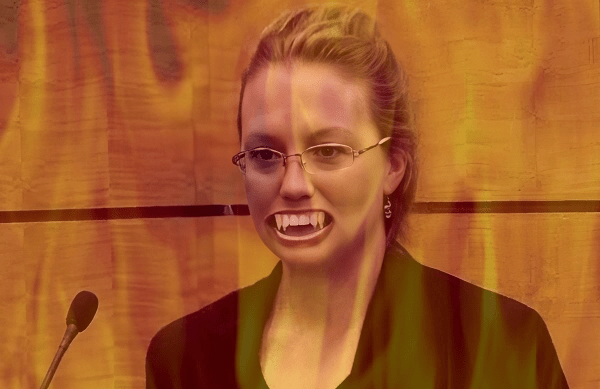
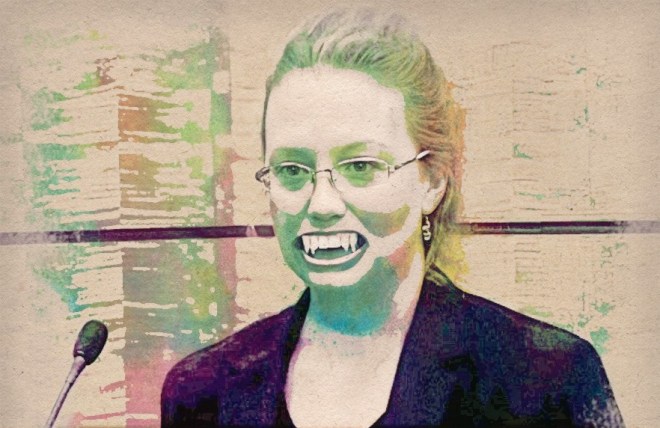
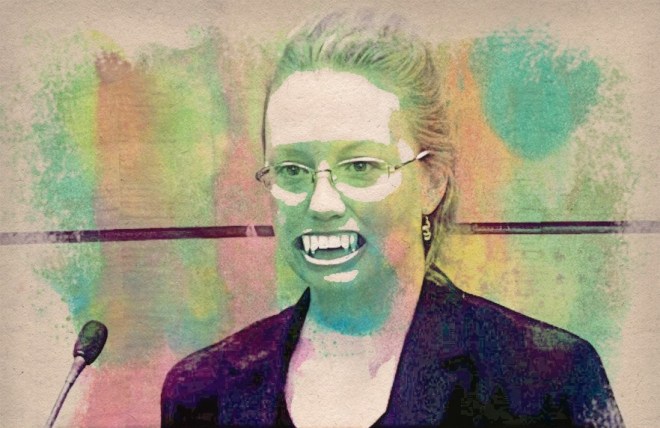
The photographs juxtaposed above (dated approximately 2005, 2016, and 2022) are of the same person, a serial deceiver who derailed the author’s life by hoaxing the police and courts for 12 years even as she herself worked in government as a senior public official. Underscoring the unscrupulous persistence of people like her, the woman evidently still maintains her fictions even as she seems to be trying to disassociate herself from reports of those fictions by literally trying to look like somebody else.

The writer has chronicled his experiences with Tiffany Bredfeldt, Ph.D., a cunning and committed con artist, in many prior posts. This post is prompted by fresh efforts on Bredfeldt’s part to suppress her negative press and remarket herself on LinkedIn.

Tiffany Bredfeldt, Tiffany Bredfeldt TCEQ, Tiffany Bredfeldt PhD, Bredfeldt TG

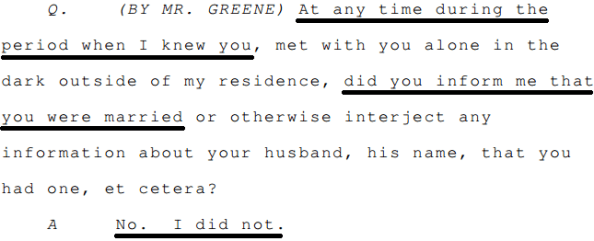
This is what I was called in an email from a married woman who had insinuated herself into the lives of my family and me, coerced favors and free labor, and contrived reasons to hold my hand and advertise her body while hanging around my house in the dark. She represented herself as single and never wore a wedding ring. The email was in response to a request for an explanation.

Maybe she’s looking for a different job. Or a new boyfriend. Her husband seems to have divorced her after the last time she took the writer to court, that time with the intent not just to scald him but to have him imprisoned.

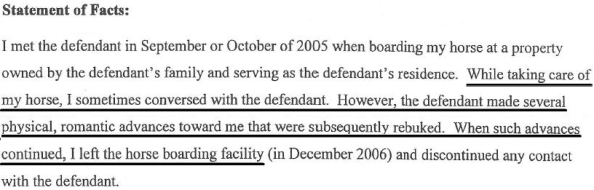
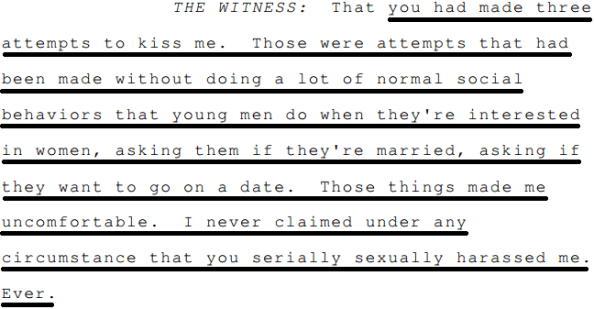
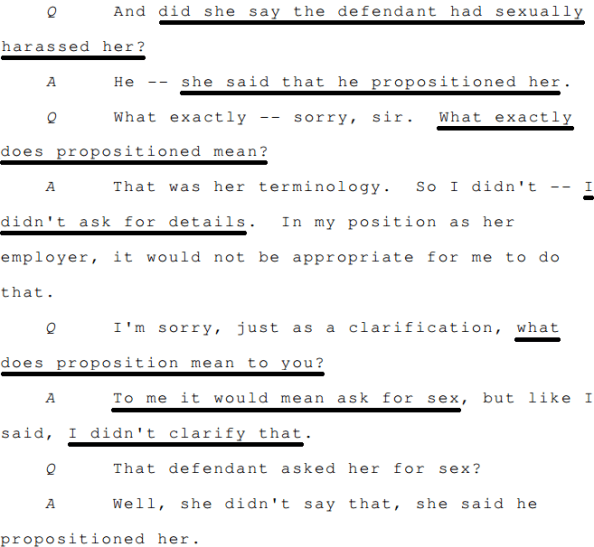
Below are statements from testimony and evidence provided by Tiffany Bredfeldt, a senior government scientist, to Arizona law enforcement officials and judges over a 10-year period in prosecutions that spanned fully 12 years (she has also admitted to giving similar statements to police and public officials in other states). The first statement is by Bredfeldt’s attorney, and the second-person statements that follow it are from emails from Bredfeldt to the writer that she entered into evidence herself, apparently with complete confidence that the contradictions would go unremarked. The setting is the author’s own home, which Bredfeldt frequented, typically at night, wearing a crocodile grin and no wedding ring, for three months.

In 16 years, the author’s home is the only place he has ever encountered Bredfeldt outside of a courthouse. Bredfeldt and the writer have not resided in the same state since shortly after her accusations began, and the writer has had no contact with her since that time (nor has he ever been to Texas, where Bredfeldt has been employed as a senior toxicologist for the Texas Commission on Environmental Quality, or TCEQ).

The only time the writer ever initiated physical contact with the woman was when she declined his mother’s invitation to join their family for Thanksgiving dinner. Bredfeldt didn’t say she had a husband who was expecting her; she said she had a migraine. The writer put his hand on her shoulder and told her he hoped she felt better.

While a little girl could perceive the inconsistencies in this senior government official’s statements, no sitting judge with jurisdiction to intervene has ever formally acknowledged them.


Here is a fuller version of one of the false accounts excerpted above, given by one of Bredfeldt’s witnesses, her boss, Michael Honeycutt, Ph.D., director of toxicology for the Texas Commission on Environmental Quality:


These finally are excerpted remarks from emails to the writer by a reportedly mentally ill woman, Jen J. Terpstra (or Jenn Oas when the writer first met her), who would apologize to the writer in 2012 and then be induced by Bredfeldt a few months afterwards to testify on Bredfeldt’s behalf:


See the cautionary note that prefaces this post.

Bredfeldt is presently under a court injunction barring her from reintroducing any of her copious prior claims against the writer, from surveilling the writer, and from having any direct contact with him or his family.

Copyright © 2022 RestrainingOrderAbuse.com

*One of the umpteen judges the writer had to appear before concerning Bredfeldt’s charges against him may or may not have offhandedly remarked that “crazy is what keeps us in business.”

**These brief 2024 YouTube videos (“Jeremy Cheezum, White Evangelical Family Values” and “Jeremy Cheezum, White Evangelical Family Stalking”) relate the story in an engaging way and from a broader perspective:


***Tiffany Bredfeldt, represented as the monster I know her to be:

Tiffany Bredfeldt, Tiffany Bredfeldt TCEQ, Tiffany Bredfeldt Phd, Jeremy Cheezum

Tiffany Bredfeldt TCEQ, Tiffany Bredfeldt, Jeremy Cheezum, Tiffany Bredfeldt Phd

Tiffany Bredfeldt

Tiffany Bredfeldt, Tiffany Hargis

Tiffany Bredfeldt PhD, Tiffany Hargis Tiffany Bredfeldt TCEQ, Tiffany Bredfeldt, Jeremy Cheezum

Tiffany Bredfeldt, Tiffany Bredfeldt TCEQ, Tiffany Bredfeldt Phd

Jeremy Cheezum, Tiffany Bredfeldt, Tiffany Bredfeldt PhD, Tiffany Bredfeldt TCEQ, Tiffany Hargis

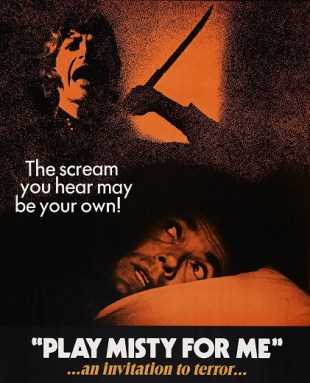
Play Misty for Me: Feminine Psychodrama and Restraining Orders

“The first time ‘Misty’ broke into the backyard to pound and scream at the bedroom window, the police handcuffed her and said—her face pressed to the hood of the idling black-and-white—that she was not to return. I figured we would never see her again after that early morning in 2012. But the next night, around 1 a.m., I was in bed with my new boyfriend, ‘Scott,’ and we heard the bedroom door slowly crack open. Scott jumped up. ‘No! You can’t be here!’ he shouted, all high-pitched.”

—“This Restraining Order Expires on Tuesday

Here’s a fascinating look at the female drama behind restraining orders. Its author is a gifted writer, and it’s an engaging read.

The subject of the piece, who’s called “Misty,” actually responds to it in the comments section—repeatedly—and calls some of its details into question, including ones that suggest speculation by the author (which, while imaginative, is nevertheless scrupulous and plausible). The writer, Natasha, was Misty’s rival in a love triangle. She apparently replaced Misty before Misty was prepared to relinquish her man.

That first night, [Scott and I] stayed at my house, and after having an intimate conversation in bed, we noticed his phone had 41 missed calls from Misty.

Then came the texts. She was at his house.

12:03 AM: Where are you? I’m staying here

12:05 AM: Please come back. I’m not going to lose you. I’m not going to give up. Please come back I want to see you. I love you

12:06 AM: I’m too drunk to drive home, can I please stay?

12:10 AM: Ok I’m staying.

Scott turned off the phone. The next morning when we checked again there were 16 more:

6:41 AM: By the way the pup tore the shit out of the house, but don’t worry I cleaned it up. If you can’t take care of him then you need to put him up for adoption.

To judge from Misty’s not contradicting the meat of the story (see the comments that follow it), its more titillating details are substantially accurate—and include serial calls and text messages to a nonresponsive ex, camping out in his yard, and even entering his house uninvited.

Hollywood representations like this one are seldom mirrored in real life. True “fatal attractions” are rare. High-conflict people, though, aren’t as rare as most imagine, which would be better known were their spiteful urges literally murderous (or even significantly violent). Attacks are typically insidious in their effects rather than bloody.

I tried to relax in Scott’s bed and just as I did, Misty appeared in the doorway.

“No! You can’t be here!” Scott cried, as he scrambled out of the sheets.

“I just came to see about the dog!” Misty shouted, rushing towards Scott.

Scott managed to wrangle Misty backwards away from the bed but she broke through and, before I could get fully to my feet, her arm swung back and I felt a fleshy thud against the side of my head.

She looked me in the eye, her nose ring glinting in the lamplight. “That’s what you get, you fat c[—],” she said.

She swooshed around, threw open the door (she had broken in through the window), and ran away into the night.

There was another series of confrontations with Misty but most of them took place in a courtroom, or through the unregulated space of fake Facebook profiles and anonymous emails. In the days after our first six-month order expired in 2013, Scott’s phone buzzed at 1 a.m.

It was a text message from Misty that just read: “Hi.”

Misty’s claim that her rival engaged in some passive-aggressive payback after a restraining order was procured also sounds credible:

Did you tell the people reading this article that you sent me a blank text from your boyfriend’s new phone during the restraining order period? I responded asking “who is this?” Natasha then proceeded to call the cops and told them I had violated the order. The judge laughed at it.

I’m no more a psychologist than Natasha, who chronicles the escapade, and I don’t know that her diagnosis of borderline personality disorder (BPD) would be confirmed by a clinician, but I think there’s more than a hint of personality-disordered aggression in Misty’s conduct (that reported and that on display in the comments section beneath the story). Of the various personality disorders that typify high-conflict people, what’s more, BPD seems the best fit.

The individual with BPD demonstrates a wide range of impulsive behaviors, particularly those that are self destructive. BPD is characterized by wide mood swings, intense anger even at benign events, and idealization followed by devaluation. The BPD individual’s emotional life is a rollercoaster and his/her interpersonal relationships are particularly unstable. Typically, the individual with BPD has serious problems with boundaries. They become quickly involved in relationships with people, and then quickly become disappointed with them. They make great demands on other people, and easily become frightened of being abandoned by them.

Most suggestive of a disordered personality is the lack of shame or remorse in Misty’s responses. Her impulse is to blame, derogate, and punish:

One day I will laugh at her and said moron’s obese, ugly children and thank the lord they are not mine. I will defend myself to the end! A gigantic f[—] you to all is well deserved. I really can’t help the fact that she’s ugly. Jealousy is a horribly disease. I can’t really think of any other reason why she’d carry this drama on so long, they clearly talk about me. I’m flattered.

A high-conflict person may act impulsively—i.e., in hot blood—but having a personality disorder doesn’t mean someone is insane or psychotic. After an outburst of pique, rage may cool to mute hostility—which may nevertheless endure and continue to flare for years. (It’s perhaps telling, though, that wrathful women are often portrayed brandishing knives. It’s our go-to image for invoking vengeful malice.)

There’s a temptation to wonder whether all of this couldn’t have been resolved by talking things through. The reactions of the couple, like the behavior of Misty’s that motivated it, might be considered hysterical. On the other hand, had the man in the middle shown empathy and tried to assuage Misty’s feelings, he might have been the one who ended up on the receiving end of a restraining order.

This happens.

People like Misty are on both sides of restraining order and related prosecutions. Dare to imagine what Misty would be like as an accuser—the absence of conscience and the vengeful vehemence—and you’ll have an idea of what those who are falsely fingered as abusers are subject to. They’re menaced not by repeated home intrusions but by repeated abuses of process (false allegations to the police and court), which are at least as invasive and far more lasting and pernicious in their effects and consequences.

Something the story significantly highlights is feminine volatility. Feminism (itself often markedly hostile) would have us believe women are categorically passive, nurturing, and vulnerable. It’s men who are possessive, domineering, and dangerous.

The active agents in this story are the women; the guy (the “bone of contention”) is strictly peripheral.

Copyright © 2018 RestrainingOrderAbuse.com

*The author of RestrainingOrderBlog.com (now apparently defunct) alleged his accuser was a borderline personality.

A New York Judge Rules That Emailing Someone at Work Doesn’t Meet the Criterion of “Stalking”

Sending emails to someone at his or her place of employment—even a whole bunch of them—doesn’t constitute “stalking” according to a July 14 ruling by a New York judge.

The ruling was reported Monday on the blog of attorney Oscar Michelen, who successfully represented writer, legal reform advocate, and entrepreneur Matthew Chan before the Georgia Supreme Court last year in his appeal of a draconian protection order (verdict returned March 27, 2015). It also concerned digital speech. Mr. Chan’s remarks weren’t transmitted to anyone; they were merely published online. But some common ground exists between the cases, in particular the question of what substantiates an allegation of “threat.”

Mr. Michelen summarizes the New York case (People v. Marian) thus:

The defendant sent over 200 different forms of communication including many emails to her former girlfriend’s work email address. She was then arrested and charged with three stalking misdemeanors.

Significantly, the judge ruled that “a section of the NY Stalking Law requiring that the stalking conduct occur at the complainant’s ‘place of business or employment’ is not satisfied by the sending of repeated emails [to] the complainant’s business email address.”

The gist of the quibble, as Mr. Michelen explains, was that the electronic “space” occupied by email isn’t a real one; email isn’t sent to a “place,” nor must someone be at their “place of business or employment” to receive email. Email can’t be considered “stalking conduct” as defined by the referenced New York statute, because it doesn’t “occur” anywhere definite.

Also significant, as Mr. Michelen points out, is that the ruling places a check on prosecutorial encroachments that seek to broaden the definition of stalking “so that fear of physical injury is not necessary.”

The emails weren’t threatening. According to Judge Steven M. Statsinger’s ruling: “Between January and April of 2015, defendant bombarded the complainant with text messages, Instagram messages, and emails, both to the complainant’s personal and work email addresses, all asserting her desire to be with the complainant.”

The female defendant was still found guilty of two additional counts of stalking her ex-girlfriend under different sections of New York’s criminal code based on alleged conduct that was physically confrontational.

As Mr. Michelen concludes, however:

The distinction could be important to prosecutors and defense counsel in cases where there was no fear of imminent physical injury and the work emails had some stated legitimate purpose as that behavior would not meet the language of any other part of the stalking law. The case also serves as an example of how law is shaped and made by litigators fighting over the definition and application of terms and phrases in the statutes. I am sure that this was not the first time anyone was charged for similar conduct under the same statute; it was just the first time anyone challenged it.

Copyright © 2015 RestrainingOrderAbuse.com

A Victory for Free Speech: Matthew Chan Prevails in His First Amendment Appeal of a Lifetime Restraining Order

Several posts on this blog in the past year have concerned the case of Matthew Chan, a Georgia entrepreneur who blogs and administers a forum for victims of “copyright extortion” (i.e., people who’ve been threatened with lawsuits for unsanctioned use of a copyright holder’s original material and may be intimidated into paying thousands to avoid being taken to court—this for posting a photo online, for example, or using a snippet of text without proper acknowledgment or without having paid a fee or otherwise obtained the author’s consent).

Matthew S. Chan

The blog has also featured a guest post by Mr. Chan.

This post reports that the Georgia Supreme Court returned a virtually unanimous ruling in his favor Friday, after many months of deliberation, that lifted a lifetime protection order prohibiting Mr. Chan from criticizing a woman he characterized as a “copyright troll.”

The basis of Mr. Chan’s appeal, prosecuted by New York attorney Oscar Michelen, was that the trial court that issued the order misconstrued and misapplied the law. Forcing a procrustean interpretation onto the facts, it determined Mr. Chan had harassed, intimidated, and “stalked” the plaintiff in the case, Linda Ellis. Accordingly, it imposed a “prior restraint” on Mr. Chan’s freedom of expression, barring him indefinitely from writing about her.

First Amendment authorities, Profs. Eugene Volokh and Aaron Caplan, submitted an amicus brief to the court in Mr. Chan’s favor, arguing that the First Amendment—with some exceptions—authorizes speech about a person, even if that speech isn’t polite or flattering.

Justice Keith Blackwell, writing for the Georgia Supreme Court, summarized the case in the court’s March 27 ruling:

Matthew Chan has a website on which he and others publish commentary critical of copyright enforcement practices that they consider predatory. Linda Ellis is a poet, and her efforts to enforce the copyright in her poetry have drawn the ire of Chan and his fellow commentators. On his website, they have published nearly 2,000 posts about Ellis, many of which are mean-spirited, some of which are distasteful and crude, and some of which publicize information about Ellis that she would prefer not to be so public. […] It is undisputed that Chan never caused any of these posts to be delivered to Ellis or otherwise brought to her attention. But it also is undisputed that Chan anticipated that Ellis might see the commentary on his website, and he may have even intended that she see certain of the posts, including the open letter to her.

Ellis eventually did learn of the posts, and she sued Chan for injunctive relief under the Georgia stalking law, OCGA § 16-5-90 et seq., alleging that the electronic publication of the posts was a violation of OCGA § 16-5-90 (a) (1), which forbids one to “contact” another for certain purposes without the consent of the other. Following an evidentiary hearing, the trial court agreed that the electronic publication of posts about Ellis amounted to stalking, and it entered a permanent injunction against Chan, directing him to, among other things, delete “all posts relating to Ms. Ellis” from his website. Chan appeals, contending that the evidence simply does not show that the publication of posts about Ellis on his website amounts to the sort of “contact” that is forbidden by OCGA § 16-5-90 (a) (1). With that contention, we agree, and we reverse the judgment of the trial court.

New York entertainment and intellectual property attorney Oscar Michelen, who represented Matthew Chan before the Georgia Supreme Court

To summarize the summary, Mr. Chan and members of his forum ventilated outrage toward what they perceived as legal terrorism (letters from Ms. Ellis’s attorney threatening civil prosecution for “copyright infringement” and reportedly offering to settle out of court for $7,500), and Ms. Ellis successfully represented the online remarks to the trial judge as tantamount to “stalking.” The statute, however, requires that an alleged “stalker” have actually contacted the “victim,” and no such contact was ever made.

For purposes of the statute, one “contacts another person” when he “communicates with another person” through any medium, including an electronic medium. See OCGA § 16-5-90 (a) (1).4 See also Johnson v. State, 264 Ga. 590, 591 (1) (449 SE2d 94) (1994) (as used in OCGA § 16-5-90, “[t]o ‘contact’ is readily understood by people of ordinary intelligence as meaning ‘to get in touch with; communicate with” (citation and punctuation omitted)). Although one may “contact” another for the purposes of the statute by communicating with the other person through any medium, it nevertheless is essential that the communication be directed specifically to that other person, as opposed to a communication that is only directed generally to the public.

There was no contact to satisfy the statutory definition of stalking.

Similarly, allegations of harassment and intimidation were deemed insufficient in the Georgia Supreme Court’s ruling, because no contact had been made with the plaintiff, so no contact had been made against her wishes.

The evidence shows that Ellis visited the website herself—it appears, in fact, that she registered herself as an authorized commentator on the website—and that she had others visit the website and report back to her about the commentary published there. Generally speaking, our stalking law forbids speech only to the extent that it is directed to an unwilling listener, and even if Ellis did not like what she heard, she cannot be fairly characterized as an unwilling listener. Ellis failed to prove that Chan “contacted” her without her consent, and the trial court erred when it concluded that Chan had stalked Ellis. See OCGA § 16-5-90 (a)(1).

Other commenters on this blog, who hadn’t the wherewithal to appeal their cases to the high courts, report having had similar judgments entered against them, typically subsequent to an earlier restraining order. This blog’s author is among them. He was issued a restraining order based on false claims in 2006 and was sued for libel and harassment fully seven years later by its petitioner, who had since moved to another state, after he criticized her publicly, this despite his having had no contact with the woman in the intervening period. The court imposed a lifetime restraining order upon him barring him from exposing the woman (a professional scientist) in anything he publishes.

Mr. Chan’s case highlights that lower-tier judges, presiding over abbreviated procedures spanning mere minutes and according to their personal lights, arbitrarily exercise the broad latitude they’ve been granted by lawmakers. It’s the rare restraining order case like Mr. Chan’s, one that ascends through the courts, that exposes the degree to which bottom-rung judges do what they want without regard to the letter of the law.

Mr. Chan’s victory is shared by all of those who’ve been wronged by the court—and if I know my friend Matthew, his advocacy is going to be all the louder for it.

Copyright © 2015 RestrainingOrderAbuse.com

RestrainingOrderAbuse.com Guest Post by Matthew S. Chan, the Appellant in a Restraining Order Case before Georgia’s Highest Court

Matthew S. Chan is the creator and administrator of ExtortionLetterInfo.com (ELI) and the appellant in the Georgia Supreme Court case Chan v. Ellis.

In my desire to give something back to RestrainingOrderAbuse.com (ROA) for the enormous help, contribution, and insights into my own protective order appeal case with the Georgia Supreme Court that it provided, I found myself a bit stumped as to what to write about that might be helpful and perhaps a bit different from the articles and commentaries I have read on ROA so far. So, if I make some wrong assumptions about ROA, please forgive me as I am a relative newcomer. As a disclaimer, I do not feel qualified to speak specifically on matters of domestic protective/restraining orders as they relate to divorces, custody fights, or other family disputes.  I feel those issues are highly volatile, and I don’t have the background to properly discuss them.

What I do feel qualified to speak on, however, are matters that pertain to the First Amendment, free speech, and that speech as it relates to online speech. Whether disputing parties are related or not, the First Amendment, backed by many significant rulings from the U.S. Supreme Court, makes it clear that everyone in the U.S. (including murderers, rapists, robbers, embezzlers, and any other type of criminal you can name) enjoys the right to free speech. That free speech comes with certain exceptions and restrictions as defined by the U.S. Supreme Court.

Some of them are:

  • Incitement
  • Defamation (including libel and slander)
  • Obscenities, such as child pornography
  • Fighting words

It is almost always legal to engage in speech about someone publicly or privately, unflattering or not. But it is not always acceptable to engage in speech to a person, especially if it is unwanted. In the context of the Internet, you should have the right to speak freely about anything or anyone as long as your speech doesn’t fall within the list of exceptions and restrictions.

And yet, I am hearing more about these underground restraining orders that instruct people to be absolutely silent regarding a certain person or party, i.e., that dictate you cannot speak publicly about that person or party to anyone. That is clearly unconstitutional.

This is an abuse of the protective/restraining order system that frequently happens in courts of local and smaller jurisdictions. It is no surprise that many of these cases involve “pro se” (self-represented) parties, who are more likely to be taken advantage of by an overzealous and overstepping judge. Up to this point, I have stated what most ROA readers already know.
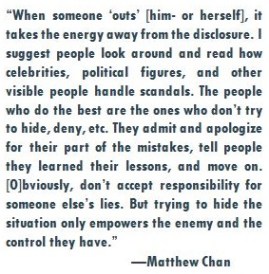
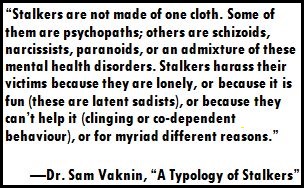
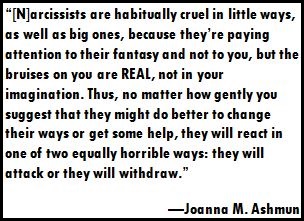
But what then can you do about it? The easy, copout answer is hire a good lawyer. But we all know “pro se” parties represent themselves because they either can’t find a good lawyer or they can’t afford a good lawyer.

Having lived with a protective order for nearly two years, I have found that it largely doesn’t impact my day-to-day existence. I have very little emotional baggage about it. Although my protective order is a matter of public record, it is not easily found, nor is it advertised. However, my accuser chooses to make mine public as a way to get revenge/payback and to embarrass and humiliate me.  I don’t feel embarrassed or humiliated at all anymore. I’ve had two years to let it sink in. She went to her local newspaper as well as a photography blog site to publicize my protective order. I am very certain she approached several other media sources, but she only managed to succeed in getting two to write her story. When she went public, I also went public, and I got way more coverage than she did because of the First Amendment issue.

It goes without saying that I became angry about her actions because the “facts” as told by her were incorrect. I was faced with one of two decisions:  either slink away silently and live in fear, shame, and embarrassment of the protective order…or speak out and fight back, and tell my story.

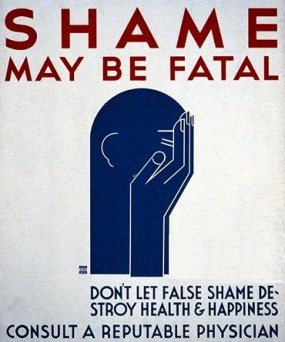
An issue I see is that people let little pieces of paper define them, such as high school diplomas, college degrees, technical and professional certifications, their financial statements, their marriage certificate, etc. A basic protective/restraining order is simply a piece of paper that formally instructs someone to stay away and not bother someone. It is a civil issue, not a criminal one.  But accusers like to try to criminalize the matter. My accuser loves to do the “stalkie-talkie” routine and likes to refer to me as her “stalker.” I have called her a copyright extortionist even longer. And yet, we have never met, spoken, emailed, text-messaged, snail-mailed, or even faxed. There has never been any contact. Still, she wants to say I am a “stalker” because she currently has a little piece of paper that says “stalking protective order.”
She is attempting to define who I am to whomever will listen. The problem she has is that I don’t buy into it; I have no guilt or shame over it, and I don’t hide from it.  And because I am pretty good at explaining the facts of my case and position, only the most gullible or uninformed believe her.

Too many people take things too literally. Too many people are legally ignorant. Too many people do not understand how the judicial system works. Too many people do not understand the realities of the judicial system.

For example, I live in a city where there are overcrowded jails. I don’t think that is unique to the city I live in. I also live in a city where the district attorney and prosecutor’s office has many cases to pursue and a tight budget to do it with. I live in a city where there is an abundance of physical and “harder” crimes such as burglaries, robberies, murders, drug crimes, rapes, etc. In that context, I see the matter of a protective/restraining order (a civil matter) as ranking low in the prosecutorial pecking order.

Generally speaking, protective/restraining orders are designed to prohibit unwanted physical contact and unwanted communications.  In my view, unless you have some huge emotional issues or obsessive tendencies towards your accuser, most orders are easy to follow, and they are not unconstitutional.

However, what if you have a restriction on your free speech where you can’t breathe a word about your accuser to anyone?  It is certainly problematic on the local level, but it is even more problematic at a state or national level. It is simply unconstitutional, which is my way of saying that it is, in a sense, “illegal.”  But some of you might say, what the order says goes. I don’t necessarily agree with that, because illegal contracts are not enforceable. For example, two people agree to do a drug deal. If one person decides to break the rules of the deal, it is unenforceable, because the deal was illegal to begin with. Likewise, an agreement broken by a John to pay a prostitute is unenforceable because it was illegal from the start. I similarly view it as illegal for my accuser to try to have me arrested or fined because I spoke or wrote about her (not to her) on my own website, and I think it would be embarrassing for any public official to dare to find me in violation of the law. That is my truth because I know what I know, but it may not be enough for you.

The sense of right and wrong has to be weighed against the costs of being a silent victim. The ability to overcome fear and ignorance, personal resourcefulness, the urgency to right a wrong, the fortitude to face conflict and risk—these are factors, and they are ones each person must self-assess.

It all begins with introspection and evaluation of whether the fight is “worth it.” In my case, if I had received a “stay away” order for one year, I would have been angry and unhappy, but I probably would never have appealed the order placed upon me. To me, it would have been an easy order to comply with, and I would not have seen it as devastating to my reputation, even if it were made public. The reason is that I know how to tell my story (and I have many times) in an open and authentic way.  Certainly, there are some less than flattering reports about me but none worse than what I have seen about others.
I have a larger view of myself in this world. I am not famous, and most people don’t care about me or what I do. I am largely unimportant (to them). I am not a celebrity; I am one of many. But for many, because it happens to them, they think the whole world is actually looking at them and their restraining orders. The truth of the matter is that most people simply don’t care.

In the larger view, famous people have committed all kinds of indiscretions, including having affairs, divorcing, getting into fights, committing DUI’s, doing drugs, getting arrested, soliciting prostitutes, etc. There is a huge list of all the embarrassing things people get themselves into. But the fact of the matter is most of that is small potatoes in the big scheme of things. You think people will shun and hate you, but the reality is, to most, it is trivial. You are just another person who allegedly committed an indiscretion.

You may ask, if I believe it is all small potatoes, why am I fighting so hard against my protective order?  There are actually multiple reasons for my current course of action.

My accuser inflamed me. For a woman who is so allegedly afraid of me and my alleged “stalking,” her actions betrayed that she really wasn’t that frightened of me or about whether I would actually cause her any physical harm or endanger her personal safety. She chose to flaunt, brag, and gloat over her “win,” and there was no good purpose in that.

The lawyer who represented her, Elizabeth W. McBride, engaged in unethical tactics like not providing me with a copy of her exhibits so I could examine them closely, while I, a non-lawyer, gave her the professional courtesy of providing an extra copy of mine. When the hearing was over, I both called and emailed the lawyer about getting a preview copy of the protective order. I also wanted to coordinate with her about both of us getting a copy of the courtroom transcript, because it was a shared resource that was agreed upon at the beginning of my hearing. I realized she treated me the way she did because I was not a lawyer and she was trying to cheat me. Because I was opposing counsel, she was required to interact with me on certain matters as she would with another lawyer. She chose not to, and I have remembered this the last two years. One day, I am confident it will come back to bite her.

But the biggest reason I fought back was the outrage that I and others felt that there was a flagrant disregard of the First Amendment as it related to online speech, a total disregard of the actual context of my speech, and a total disregard for Section 230 of the Communications Decency Act, which states that website owners are not responsible for content other users post. These were all points I clearly argued but the judge seemingly ignored.

I saw this as serious misbehavior by the judge and the local court system that could potentially have wide-ranging and long-term consequences to me and any other Georgia website owner. As a matter of disclosure, I do place a great importance on my Internet presence and online activities to my business and reputation. I am a self-employed entrepreneur and business owner who regards the Internet as a hugely important resource to both his personal and business life—probably much more so than the average person who works at a job 40 hours per week for an employer.

For all those reasons, I fought back. But I would be lying if I said there weren’t moments when I wavered. I had moments of weakness, but I also had my anger to prop me up. A lot of my impetus owes to the actions of my adversary and her lawyers.  By their actions, they practically taunted and drove me into appealing the case. Because of my anger and sense of injustice, I was galvanized into action.

I want to take the time to point out an important element of my fight-back. It is very helpful to find friends and supporters who understand you, your character, and the type of person you are. Getting moral support from people who will empower and encourage you is motivating.  Having “support” from people who are fearful, bashful, risk-averse, cynical, and unwilling is not.

In my life, I believe “like attracts like” and “birds of a feather flock together.” In my case, I have many people around me, people who are independent-minded, self-determined, believe in fighting for a cause (such as free speech) and not letting your enemies get the best of you. And believe it or not, most of my best support actually comes from those I have never met in “real life.”  My best support came from “strangers” I have met on the Internet. I have never met or spoken to Todd of ROA and yet, unbeknownst to him, his work on ROA has had a huge influence on my fight.

There are so many layers to the conversation of how to fight back against a wrongful restraining order restricting your right to free speech. There is no way I could get into all the stories, tactics, and strategies, or the mindset involved in my own journey. I will one day write a book on the subject. However, as a guest blogger on ROA, I thought I would share some insights into how my mind works and the mindset that drives me.

I consider myself a victim of protective/restraining order abuse, but I have also chosen to publicly fight back against my accuser and the lower court that allowed the unconstitutional order. Win, lose, or draw, I have no regrets, because my voice is loud and travels far. And I will never let my accuser, a judge, a court, or a piece of paper define who I am. Not as long as I live.

It is that attitude, which has resonated outwards, that I believe helped attract many supporters to my side, including the lawyers who have worked on my (and my position’s) behalf.

Matthew S. Chan is the creator and administrator of ExtortionLetterInfo.com (ELI) and the appellant in Chan v. Ellis, an appeal of a lifetime protection order presently under deliberation by the Georgia Supreme Court.

Copyright © 2015 RestrainingOrderAbuse.com and Matthew S. Chan

*Update: The Georgia Supreme Court returned a verdict in favor of Matthew Chan on March 27, 2015.


Dust It Off: This Isn’t 1979, and It’s Time Restraining Order Laws Were Reconsidered

I remarked to a commenter the other day that when I became a vegetarian in the ’80s, I was still a kid, and my family took it as an affront, which was a common reaction then. Today, everyone’s a vegetarian or “tried vegetarianism” or has “thought about becoming a vegetarian.” Other subjects that were outré or taboo in my childhood like atheism, cross-dressing, and depression—they’re no longer stigmatized, either (in the main). Gay people, who were only whispered about then, can marry in a majority of states. When I was a kid, it was shaming for bra straps or underpants bands to be visible. Today they’re exposed on purpose.

It’s a brave new world.

While domestic violence is no more comfortable a topic of conversation now than it was then, it’s also hardly hush-hush. When restraining orders were conceived, it was unmentionable, and that was the problem. It was impossible for battered women to reliably get help. They faced alienation from their families and even ridicule from the police if they summoned the courage to ask for it. They were trapped.

Restraining orders cut through all of the red tape and made it possible for battered women to go straight to the courthouse to talk one-on-one with a judge and get immediate relief. The intention, at least, was good.

It’s probable, too, that when restraining orders were enacted way back when, their exploitation was minimal. It wouldn’t have occurred to many people to abuse them, just as it wouldn’t have occurred to lawmakers that anyone would take advantage.

This isn’t 1979. Times have changed and with them social perceptions and ethics. Reporting domestic violence isn’t an act of moral apostasy. It’s widely encouraged.

No one has gone back, however, and reconsidered the justice of a procedure of law that omits all safeguards against misuse. Restraining orders circumvent investigation by police and the vetting of accusations by district attorneys. They allow individuals to prosecute allegations all on their own, trusting that those individuals won’t lie about fear or abuse, despite the fact that there are any number of compelling motives to do so, including greed/profit, spite, victim-playing, revenge, mental illness, personality disorder, bullying, blame-shifting, cover-up, infidelity/adultery, blackmail, coercion, citizenship, stalking, and the mere desire for attention.

Restraining orders laws have steadily accreted even as the original (problematic) blueprint has remained unchanged. Claims no longer need to be of domestic violence (though its legal definition has grown so broad as to be virtually all-inclusive, anyway). They can be of harassment, “stalking,” threat, or just inspiring vague unease.

These aren’t claims that are hard to manufacture, and they don’t have to be proved (and there’s no ascertaining the truth of alleged “feelings” or “beliefs,” anyway, just as there’s no defense against them). Due to decades of feminist lobbying, moreover, judges are predisposed to issue restraining orders on little or no more basis than a petitioner’s saying s/he needs one.

What once upon a time made this a worthy compromise of defendants’ constitutionally guaranteed expectation of due process and equitable treatment under the law no longer does. The anticipation of rejection or ridicule that women who reported domestic violence in the ’70s and ’80s faced from police, and which recommended a workaround like the restraining order, is now anachronistic.

Prevailing reflex from authorities has swiveled 180 degrees. If anything, the conditioned reaction to claims of abuse is their eager investigation; it’s compulsory policy.

Laws that authorize restraining order judges, based exclusively on their discretion, to impose sanctions on defendants like registry in public databases that can permanently foul employment prospects, removal from their homes, and denial of access to their kids and property are out of date. Their license has expired.

Besides material privations, defendants against allegations made in brief trips to the courthouse are subjected to humiliation and abuse that’s lastingly traumatic. Making false claims is a simple matter, and offering damning misrepresentations that don’t even depend on lies is simpler yet.

What shouldn’t be possible happens. A lot. Almost as bad is that we make believe it doesn’t.

Just as it was wrong to avert our eyes from domestic violence 30 years ago, it’s wrong to pretend that attempts to curb it since haven’t fostered new forms of taunting, terrorism, and torment that use the state as their agent.

Copyright © 2015 RestrainingOrderAbuse.com

Restraining Orders and the First Amendment: A Female Blogger’s Successful Appeal of a Restraining Order That Labeled Her a “Cyber-Stalker”

“The First Amendment is FIRST for a reason.”

Larry Smith, former attorney and indomitable muckraker

A recent post on this blog revisited the case of Matthew Chan, author of ExtortionLetterInfo.com (ELI), whose appeal of a lifetime restraining order is presently under consideration by the Georgia Supreme Court. A verdict is anticipated within the coming month or months.

Criticisms are handily represented as acts of terrorism to the courts, whose officers have been conditioned to pander to accusers. Anyone is a potential target of facile accusations, which are made in mere moments. Retirees and vegetarian soccer moms, for whom the cost of attorney representation is often prohibitive, report being implicated as violent menaces and tyrants.

This post reports a successful appeal waged by North Carolinian Cindie Harman, who was issued a no-contact order for allegedly “cyber-stalking” a mother and her minor daughter by publicly criticizing them in a blog. Mrs. Harman named the adult plaintiff’s daughter a “bully” of other children and opined that her behavior was influenced by her mother’s conduct.

According to the Associated Press, the mother, who owns or owned an Asheville-area water services company, was “sentenced to nearly three years in prison for faking thousands of tests designed to ensure that drinking water is safe” in 2012 (and also faced “conspiracy charges”), had “plead guilty in 2010 to mail fraud,” and “paid a fine and did community service after pleading guilty to misconduct by a public official after she was charged with embezzling more than $10,000 from Marshal when she served as town clerk there.” Mrs. Harman’s accuser, whose husband is a former magistrate, controverts the popular notion that restraining order applicants are innocent lambs seeking protection from marauding predators.

Mrs. Harman prevailed in her restraining order appeal, but the vindication of her character and her judgment of her accuser’s character didn’t come without a steep price—and that’s excluding attorney fees.

According to the blogger quoted in the epigraph, Larry Smith, a friend of Mrs. Harman’s and fellow comrade-in-arms:

During the long time this case was pending, I had been talking to Cindie on the telephone, trying to reassure her that she would win her case in the NC Court of Appeals. She was very nervous, inconsolable, dyspeptic, upset about it.

Being accused of stalking, let alone being accused of stalking a child, isn’t funny. It’s the kind of thing that breaks a person.

To be charged with stalking in North Carolina signifies you’ve caused someone “to suffer substantial emotional distress by placing that person in fear of death, bodily injury, or continued harassment.” (Note that the latter element of the statutory definition of stalking, “continued harassment,” is glaringly incongruous to the elements that precede it. The contrast between fear of “death [or] bodily injury” and fear of “continued harassment” underscores the slapdash, catch-all nature of stalking and related statutes that makes them not only objectionable but outrageous, and urges their legislative revision or repeal.)

The trial court that heard the restraining order case against Mrs. Harman, and whose backroom judgment was overturned by the North Carolina Court of Appeals, had ruled, “Defendant [Harman] has harassed plaintiffs within the meaning of [N.C. Gen. Stat. §] 50C-1(6) and (7) by knowingly publishing electronic or computerized transmissions directed at plaintiffs that torments, terrorizes, or terrifies plaintiffs and serves no legitimate purpose” (italics added).

Observe that even the court’s grammar was bad. The ruling should have read “transmissions…that torment, terrorize, or terrify.” Gaffes like this are hardly surprising considering how hastily and carelessly restraining order judgments are formed.

Mrs. Harman was said to have tormented, terrorized, or terrified the child plaintiff by referring to her as a “bully” (a “reason kids hate to go to school”) and tormented, terrorized, or terrified her mother by calling her a “crow,” an “idiot,” and a “wack” on a blog.

Terrifying indeed.

At the beginning of this year, Law Professor Jonathan Turley eagerly reported that the U.S. Court of Appeals for the Ninth Circuit ruled “Bloggers Have Same First Amendment Rights As Journalists” (cf. Robinson Meyer’s “U.S. Court: Bloggers Are Journalists,” published in The Atlantic, and “Reporters’ Privilege,” prepared by the Electronic Frontier Foundation). Judges in North Carolina seem not to have heard the news.

The decision came in a defamation lawsuit where the panel ordered a new trial in the case of Crystal L. Cox, a blogger from Eureka, Montana. Cox was sued for defamation by attorney Kevin Padrick and his company, Obsidian Finance Group LLC, after she wrote about what she viewed as fraud, corruption, money-laundering and other illegal activities.

The details may sound familiar.

In legal commentary presented in Chan v. Ellis, the appeal mentioned in the introduction to this post, Law Profs. Eugene Volokh and Aaron Caplan asserted to the Georgia Supreme Court:

The First Amendment protects the right to speak about people, so long as the speech does not fall into an established First Amendment exception (such as those for defamation or for true threats). This includes the right to speak about private figures, especially when they do something that others see—rightly or wrongly—as unethical.

Restraining orders and criminal stalking law may properly restrict unwanted speech to a person. But they may not restrict unwanted speech about a person, again unless the speech falls within a First Amendment exception. The trial court’s order thus violates the First Amendment.

This may also sound familiar.

Cindie Harman ultimately won the case against her, a case that should never have been entertained by the court in the first place, but a victory that should have reassured her that freedom of speech in our country is a revered and inviolate privilege has had the opposite effect.

Reportedly consequent to receiving threats against her person and having several of her pets poisoned, Mrs. Harman has removed her blogs. Even her Twitter feed is now “protected” and no longer accessible to a general audience. Mrs. Harman lives in the sticks and says if she weren’t armed, she’d be afraid to be alone.

She has been terrorized into silence.

Copyright © 2014 RestrainingOrderAbuse.com

*The author of this blog, too, has had a lifetime injunction imposed upon him by the court for communication “about a person” (communication that alleged misconduct, including criminal, by a public official). His 2013 trial, which was conducted in the Superior Court of Arizona and in which he represented himself, concluded less than four months before the Ninth Circuit Court of Appeals’ ruling in Cox v. Obsidian Finance Group. He hasn’t subsequently received any threats but has been monitored. His accuser, a married woman he encountered standing outside of his house one day in 2005 (and many nights thereafter), is believed to be among the first to read anything posted here.

Judicial Impression Management: What Makes False Allegations “True” and True Allegations “False” (and Drives Victims of Procedural Abuses to Despair)

“Politics, corporate bullshit—it’s all the same game of impression management.”

House of Lies

What do political spin-doctoring, corporate PR, government-sponsored science, and judicial rulings have in common?

Each is about impression management, the selective representation of facts to create a composite “truth” that suits a particular set of social, political, and/or economic imperatives.

Pols and corporations engage in flimflam to win votes and increase profit shares. Science, too, seeks acclaim and profit, and judicial motives aren’t so different. Judges know what’s expected of them, and they know how to interpret information to satisfy expectations.

The general context of discussions on this blog is the issuance of restraining orders, an arena of law that receives little scrutiny either from within the system or from the public; there is no oversight. Judges are moreover licensed to rule according to their discretion, so their latitude for impression management is broad. Any set of facts or plausible fictions can be rendered damning with a little rhetorical footwork, which needn’t be subtle—skewed rulings more often suggest clog dancing than ballet.

Nobody’s paying attention anyhow, except to make sure judges are fulfilling their mandate to make government look good and keep special interest groups mollified.

Since judges can rule however they want, and since they know that very well, they don’t even have to lie, per se, just massage the facts a little. It’s all about which facts are emphasized and which facts are suppressed, how select facts are interpreted, and whether “fear” can be reasonably inferred from those interpretations. A restraining order ruling can only be construed as “wrong” if it can be demonstrated that it violated statutory law (or the source that that law must answer to: the Constitution). There are no “mistakes,” only the very exceptional “over-reach.”

The restraining order process is the product of lobbying by special interest groups (collectively called “feminism”), which have secured government favor in recent decades, and this favor has conditioned how judges manage impressions. Favoring special interest groups has translated into the investment of billions, which has directed trends in social science research (including monetarily), swayed public opinion, and besides conditioned police and judicial impulses and priorities, thereby determining how allegations ranging from harassment to violent and/or sexual assault are credited and acted upon by officers of the justice system.

A crude evolutionary précis (not necessarily chronological) might look something like this:

  • Feminism gets the nod;
  • legislation is passed enacting restraining orders;
  • further legislation is passed making them more stringent and punitive;
  • additional legislation is passed: domestic violence acts and statutes, stalking statutes, etc.;
  • the definition of “domestic violence” is broadened to be inclusive of almost anything that can be construed as “abusive” according to judicial discretion;
  • the Violence Against Women Act (VAWA) is passed;
  • a special office of the Justice Department is established;
  • billions of dollars of federal monies are doled out in the form of grants to police departments and the courts to beef up arrest policies and “train” judges and police officers how to interpret allegations of violence or merely “fear”;
  • and the popular press is enlisted, knowingly or not, to flak the whole business.

Impression management marks the standard operating procedure from top to bottom.

Feminism’s foot soldiers in the blogosphere and on social media, finally, spread the “good word,” and John and Jane Doe believe what they’re told—unless or until they’re torturously disabused of their illusions. Stories like those you’ll find here are often the stories of average people who’ve been publicly maligned and have maddeningly discovered that “the truth” is whatever the system chooses to enter into the record.

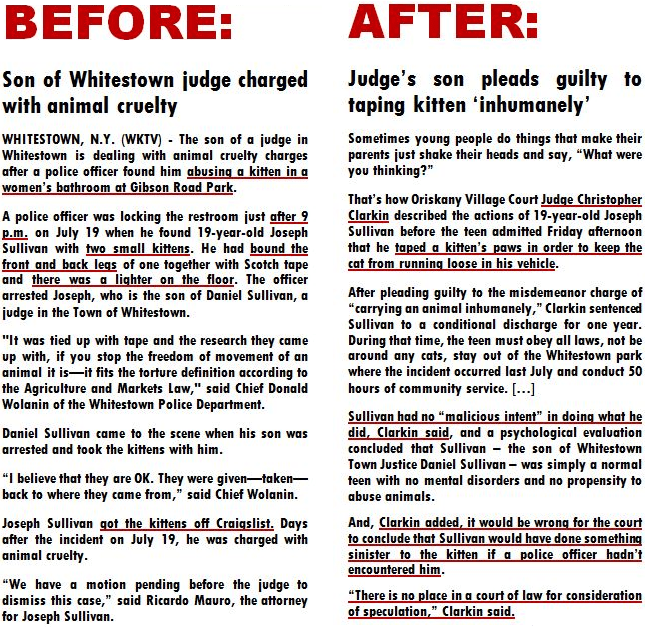
To conclude this abstract litany with a concrete illustration, consider these stories, published six months apart (“Son of Whitestown judge charged with animal cruelty” and “Judge’s son pleads guilty to taping kitten ‘inhumanely’”):

The difference you’ll detect between the two versions of the facts and how they’re interpreted exemplifies impression management.

Copyright © 2014 RestrainingOrderAbuse.com

Living in the Crosshairs: Crackpot Neighbors, False Reports, and Restraining Order Abuse

I bonded with a client recently while wrestling a tough job to conclusion. I’ll call him “Joe.” Joe and I were talking in his backyard, and he confided to me that his next-door neighbor was “crazy.” She’d reported him to the police “about a 100 times,” he said, including for listening to music after dark on his porch.

His neighbor had never been punished for her mischief, only indulged and rewarded. This is behavior the police and court have been conditioned to treat as urgent. The woman’s husband refused to participate in her sniping—but didn’t interfere with it, either. He had to live with her. Others in the vicinity just tried to stay off her radar.

The neighboring house was dim and still as Joe related the woman’s pranks, which spanned a period of years. “She’s probably listening to us now,” he remarked.

I commiserated but didn’t share with Joe that I wrote about such things and heard about them monthly from people whose lives were sometimes crippled by hyped allegations of fear and danger.

Joe told me, unsurprisingly, that his neighbor had twice sworn out restraining orders against him. The first was laughed out of court on appeal; the second he didn’t bother to contest. He gestured as if to say, “What would’ve been the point?” Maybe Joe intuited that high-conflict people like his neighbor live for strife and attention, and decided to deny her the satisfaction of a fight.

(Many respondents to this blog report they’ve had multiple false restraining orders petitioned against them. One e-petition respondent recently reported being the recipient of seven fraudulent restraining orders obtained by a “diagnosed narcissist.”)

Joe informed me, with a hint of sarcasm, that his neighbor was a professional psychic. Surveillance cameras nevertheless hung from the corners of her home’s roofline. I guess she couldn’t see everything coming.

(Among people who report being stalked or serially accused by neighbors through the courts, the presence of security cameras is commonly mentioned. The neighbors also tend to be of middle or advanced age and female—as are their victims, sometimes. One 60-year-old woman, chronically accused by a female neighbor, has reported having to abandon her house and flee to forestall further allegations. Men who are spies, peepers, and cranks are more likely to be the recipients of restraining orders than the petitioners of them: women accuse sooner than men do—and they do it more effectively.)

Joe didn’t get too explicit, but he told me he’d been photographed fooling around with his wife in the hot tub, which he’d since removed. In Arizona, at least, it’s apparently legal to monitor your neighbor over a bordering fence.

Joe said after he and his wife divorced, his neighbor told his ex-wife he was having an affair. He took in a male roommate. His neighbor photographed him, too—through the window adjacent to her backyard.

Joe shifted an arbor from one side of his patio to the other after getting approval (but no compensation) from the homeowners’ association. Two massive Tombstone rosebushes interwove to form a decent privacy screen.

I asked Joe whether he’d ever tried to get the woman off his back. He told me, unrepentant, that he’d once shot her with the garden hose while she was peeping. To this day, he says, she circulates it that he “assaulted her with a high-pressure hose.” He may have said this was the grounds for one of the restraining orders.

His neighbor has reported her other neighbors, too. The neighbor across the street knew of her particular “sensitivities” and informed her in advance that she was having a birthday party for her little girl at 2 in the afternoon on a weekend. The neighbor from hell reported it, anyway—on principle, I guess. The kids’ party was disrupted by cops.

Joe says his neighbor’s record is seven calls to the sheriff’s department in a single day (just on him). Deputies finally told her that if she called again, they’d cite her.

Joe works as a chef and didn’t appear to have any kids. With a few beers in him, he seemed to take the whole thing in stride.

I wonder if a feminist would be as tolerant.

Copyright © 2014 RestrainingOrderAbuse.com

Criminalizing Criticism: Restraining Orders, the First Amendment, and Chan v. Ellis

This search term brought a visitor here a day or two ago: “restraining order in ohio because a couple texts.”

It struck a chord with this author, because he himself was issued a restraining order on a similar basis (three emails over a weekend). There were accompanying allegations, but the court’s final ruling was based exclusively on the emails (i.e., speech). They weren’t even judged threatening, just unwanted (the contents, in fact, weren’t read by the court).

Some people are issued restraining orders on even more tenuous bases, like criticizing their plaintiffs on Facebook or in a blog or other online medium. If you’re such a person, you should be aware of a case before the Georgia Supreme Court that’s been the subject of a prior post on this blog: Chan v. Ellis.

The court was scheduled to hear opening arguments on October 7.

A summary of the case by UCLA Law Professor Eugene Volokh, along with his legal commentary in support of the appellant, Matthew Chan, is here.

The First Amendment protects the right to speak about people, so long as the speech does not fall into an established First Amendment exception (such as those for defamation or for true threats). This includes the right to speak about private figures, especially when they do something that others see—rightly or wrongly—as unethical.

Restraining orders and criminal stalking law may properly restrict unwanted speech to a person. But they may not restrict unwanted speech about a person, again unless the speech falls within a First Amendment exception. The trial court’s order thus violates the First Amendment.

If you’ve been issued an injunction from the court based exclusively on your speaking publicly about its plaintiff (and you didn’t threaten or lie about him or her), a verdict in favor of Mr. Chan could conceivably provide you with grounds for an appeal. FYI.

See Mr. Chan’s website, ExtortionLetterInfo.com, for trial updates. A ruling, he reports, should be returned between mid-January and mid-March.

The case stands to highlight judicial abuse of discretion and power and is one anybody who’s been put through the restraining order wringer will want to track.

Copyright © 2014 RestrainingOrderAbuse.com

*Update: The Georgia Supreme Court returned a verdict in favor of Matthew Chan on March 27, 2015.

“Women scare the sh— out of me”: When Restraining Orders Are Petitioned by Female Stalkers against Men Who Treat Them Sensitively

On 15 March 2009 at 11.07pm: Hi there! How are you? I am lying in my bed and thinking…I miss you and miss having you in my life and I would love to have you back in it…. I do have a lot of issues, I know, and I suppose I am a difficult woman at times…. In the same breath, I could have made the biggest tit out of myself now, because you might have met someone else…. Deep down inside I hope you miss me as much as I miss you! […] I don’t want you to feel that I am pressurising you….

On 21 April 2009: Hallo Col, you must think I am crazy…. I just read the mail I sent you on Sunday and it was a bit intense…. It feels like my life is falling apart….

On 13 July, 2009: Col, I don’t understand why you don’t answer my emails. Have you thought about what I said? I really think we’d be great together.

Later that day [Colin] replies:  Hi Danielle, I feel we keep going over this. I think you keep misreading my friendship. I like you as a person but am just not interested in going out with you. Please just accept this as you are making things awkward. Colin.

On 18 July, 2009, [Danielle] writes: You are obviously very angry with me and have decided not to contact me at all. I, on the other hand, am not a person of a few words, as you very well know and have decided to mail you, because I know you won’t even pick up the phone if I try to call you. I should probably just let you be, but…I have gotten used to spending time with you…. You always say I am needy. Perhaps, but it is because I feel like the outsider in your life, the one you keep at a distance….

You’re probably thinking I’m some sort of psycho chick and that I keep contacting you in all sorts of ways, but…I do mean well…. Hope to hear from you soon, Danielle x.

—from “Trivial Pursuit” (Noseweek magazine)

One of the parties in this “correspondence” got a protection order against the other. Which do you imagine it was?

A female respondent to the blog brought my attention to the three-year-old story out of Cape Town, South Africa from which the epigraph is excerpted. It’s about a man who was served with a domestic violence restraining order (later revised to a stalking protection order) petitioned by a woman he’d threatened to “un-friend” on Facebook and with whom he’d never had a domestic relationship (he says they had fatefully “kissed once or twice” during a “brief fling”). The order was apparently the tag-team brainchild of this woman, who would be called a stalker according to even the most forgiving standards, and another woman, an attorney the man had dated for six months.

Harmless, right? Tee-hee.

The man agreed to speak with reporters about the business in 2011 because, he said, “I’ve exhausted every avenue to clear my name” (a sentiment that may sound familiar).

The seedy “girl plot” evolved on Facebook and is too long to include in its entirety. It’s impressively sick (and tragic).

The story is one this writer can relate to and synchs with any number of accounts that have been shared with him over the past three years. (Feminists who contend that opposition to restraining orders originates exclusively from fathers’ rights groups—or FRGs, as they call them—are decidedly wrong.)

The restraining order against the man in the story (Colin) was eventually dismissed. Here’s the upshot:

“At this stage, one side of me is relieved, as the stalker girl is gone, but another part of me feels aggrieved. Firstly, I had incurred unnecessary legal costs—I had stopped counting at R20,000. Secondly, I was furious that an unsubstantiated order had been brought against me by ‘a woman scorned’ who lied to the court, and thirdly, I could not understand why [my ex-girlfriend] had become involved. I could not think of a single thing I had done against her. The only thing I was guilty of was doing good things for her and her family. In return, she branded me with the stigma of a domestic violence charge which never goes away. People just think that you go around beating up women.”

Two weeks ago, [Colin] asked a woman out. “She had heard this story that I threaten women. Cape Town is a small place.”

He can’t imagine having a normal life and a normal relationship. “To be honest, women scare the shit out of me at the moment. I have no plans to date any women for the foreseeable future.”

Harmless, right? Tee-hee.

Copyright © 2014 RestrainingOrderAbuse.com

*The female judge in the matter, who was interviewed by the magazine that aired the story, is quoted as explaining, “We are all trained and experienced magistrates, but we do not know whether somebody is lying under oath.” What this means is judges just approve restraining orders on faith. Harmless, right? Tee-hee.

Sex, Restraining Order Abuse, and the “Dark Triad”: Narcissism, Machiavellianism, and Psychopathy

“Socially aversive personality traits such as Psychopathy, Machiavellianism, and Narcissism have been studied intensively in clinical and social psychology. […] Although each of these three constructs may have some unique features not shared by the other two, they do appear to share some common elements such as exploitation, manipulativeness, and a grandiose sense of self-importance. Accordingly, Paulhus and Williams (2002) have called these three constructs the ‘Dark Triad’ of personality….”

Kibeom Lee and Michael C. Ashton

“Members of the Dark Triad tend to be especially untrustworthy in the mating context.”

Daniel N. Jones and Delroy L. Paulhus

Restraining orders are commonly used to sever relationships. The assumption is that the applicant of a restraining order has been the victim of mistreatment. Many who’ve been implicated as abusers, however, report mistreatment by manipulative personalities who then exploited court process to dominate them, garner attention, and/or deflect blame for their own conduct—typically by lying through their teeth.

It turns out there’s a sexy phrase for the collective personality traits exhibited by manipulators of this sort: the “Dark Triad.”
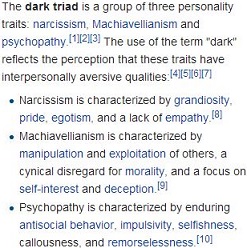
Several of the posts on this blog have discussed personality-disordered and high-conflict people (who may be personality-disordered), and such people are a central focus of the work of attorney, mediator, and therapist Bill Eddy and psychologist Tara Palmatier, whom I’ve frequently quoted and who’ve written volubly about abuses of legal process by predatory personalities. Narcissism and psychopathy, two of the constituents of the Dark Triad, also qualify as “Cluster B” personality disorders.

As should be evident to anyone who’s read up on these matters, there’s a high degree of overlap among attempts to define, differentiate, and distinguish the mentally kinked.

The context in which the phrase Dark Triad is applied is interpersonal relationships that are familiarly called “romantic.” This should be of interest to victims of court process, because their abusers are more often than not current or former spouses, boy- or girlfriends, or intimates.

The concept of the Dark Triad should also be of interest to them because clinical labels may only roughly match their abusers’ conduct, conduct like deception, inexplicable betrayals, irreconcilable (mixed) messages, etc. (behaviors that “don’t make sense”). People who fall within this (subclinical) delta of personality quirks represent their interest and intentions to be sincere, and reveal them, often abruptly, to have been shallow or even sinister.

From “How the Dark Triad Traits Predict Relationship Choices” (Jonason, Luevano, & Adams):

The Dark Triad traits should be associated with preferring casual relationships of one kind or another. Narcissism in particular should be associated with desiring a variety of relationships. Narcissism is the most social of the three, having an approach orientation towards friends (Foster & Trimm, 2008) and an externally validated ‘ego’ (Buffardi & Campbell, 2008). By preferring a range of relationships, narcissists are better suited to reinforce their sense of self. Therefore, although collectively the Dark Triad traits will be correlated with preferring different casual sex relationships, after controlling for the shared variability among the three traits, we expect that narcissism will correlate with preferences for one-night stands and friend[s]-with-benefits.

In contrast, psychopathy may be characterized by an opportunistic, exploitive mating strategy (Figueredo et al., 2006; Jonason et al., 2009b; Mealey, 1995). Booty-call relationships by their very name denote a degree of exploitation. That is, individuals use others—their booty-call partner[s]—for sex by a late night phone call with the expressed or implied purpose of sex (Jonason et al., 2009). Therefore, we expect that after controlling for the shared variability among the three traits, psychopathy will be correlated with preferences for booty-call relationships. Such a relationship may be consistent with their exploitive mating strategy. Last, although prior work has linked Machiavellianism with a short-term mating style (McHoskey, 2001), more sophisticated analyses controlling for the shared correlation with psychopathy has revealed that Machiavellianism might not be central to predicting short-term mating (Jonason et al., 2011). Therefore, we expect Machiavellianism to not be correlated with preferences for any relationships.

What we’re talking about, basically, are people who exploit others for sexual attention and/or satisfaction (that is, players). The common denominator is a disinclination toward or disinterest in what’s called a “meaningful” or “serious” relationship. The motive is noncommittal, urge-driven self-pleasure (assisted masturbation, as it were). Psychologists sometimes remark in writing about narcissists in other contexts that they entertain “romantic fantasies” but conclude that these fantasies are exclusively about personal feelings and not interpersonal anything.

What we’re talking about in the context of abuse of restraining orders are people who exploit others and then exploit legal process as a convenient means to discard them when they’re through (while whitewashing their own behaviors, procuring additional narcissistic supply in the forms of attention and special treatment, and possibly exacting a measure of revenge if they feel they’ve been criticized or contemned).

Since it’s only natural that people with normally constructed minds will struggle to comprehend the motives of those with Dark Triad traits, they conveniently set themselves up for allegations of harassment or stalking, which are easily established with nothing more than some emails or text messages (that may, for example, be pleas for an explanation—or demands for one). People abused by manipulators who then abuse legal process to compound their injuries typically report that they were “confused,” “angry,” and/or “wanted to understand.”

This is the Jonason & Webster “Dirty Dozen” scale for assessing Dark Triad candidacy:

  1. I tend to manipulate others to get my way.

  2. I tend to lack remorse.
  3. I tend to want others to admire me.
  4. I tend to be unconcerned with the morality of my actions.
  5. I have used deceit or lied to get my way.
  6. I tend to be callous or insensitive.
  7. I have used flattery to get my way.
  8. I tend to seek prestige or status.
  9. I tend to be cynical.
  10. I tend to exploit others toward my own end.
  11. I tend to expect special favors from others.
  12. I want others to pay attention to me.

Victims of restraining order abuse by manipulative lovers or “romantic” stalkers will note a number of correspondences with their accusers’ personalities, as well as discern motives for their lying to the police and courts, which elicits special treatment and attention from authority figures…and subsequently every other sucker with whom they share their “ordeal.”

Copyright © 2014 RestrainingOrderAbuse.com

*Some specialist monographs on this subject are here.

“Redeeming Feminism”: Making It about Equality and Not Victimhood

Since the publication of this post, the feminist blog it cites and criticizes has been made private.


When criticizing injustices wrought by prejudicial, feminist-motivated laws and court procedures like the restraining order process, restraint isn’t easy to pull off.

It’s nevertheless worthy of striving for, because the gender divide that fosters the perpetuation of these prejudicial laws and procedures needs to be bridged—for the sake not just of their male victims but of their female victims, too.

I came across a blog yesterday titled, Redeeming Feminism. It arrested my attention, because its banner reads, “Equality of rights under the law shall not be denied or abridged by the United States or by any state on account of sex.”

The dramatic irony is lost on the blog’s author, but this is, of course, the argument against feminism, whose “second wave” has done at least as much to promote and enforce sexual bigotry as it has to eliminate it. (First-wave feminists, who sought to dissolve gender discrimination instead of cement it, were those who pushed for the 1972 Equal Rights Amendment from which the quotation above derives.)

Some feminists categorically can’t be reasoned with. They’re the equivalents of high-conflict courtroom litigants who reason with their feelings. But I don’t get the impression that the author of this blog is one such, and I think there are many self-styled feminists like her out there. She seems very much in earnest and without spiteful motive. Her intentions are well-meaning.



To judge from the wattage of her smile in the photograph of her on her blog, however, she’s never been stalked by someone only to have that person publicly and persuasively accuse her of stalking, or had it falsely suggested to authorities and the courts, for example, that she’s violent or a danger to children.

To quote a falsely accused woman I’ve corresponded with for the past six months, a professional nurse and mother of three who’s been through years of hell, that sort of thing “changes a person on a cellular level.” Had the blog author been subjected to what my correspondent has been—or what most of the respondents to this blog and to other blogs and petitions it links to have been—her smile would be considerably more muted (which would be a shame, because it’s a good smile).

This is the shortcoming of most vigorous feminist advocacy out there: It tends to see only what it was looking for in the first place. Its argumentation is based in the abstract. I wouldn’t wish the real on anyone, but before taking up arms, advocates of one position or another have a moral obligation to look up, down, and sideways.

The post on the referenced blog that I read is called, “Anti-Feminist Memes pt.3: ‘Domestic abuse, Men are the real victims’.” It rebuts the rhetorical strategies of counter-feminist “memes” on the Internet.

This is a meme.

This type of meme is extremely popular. In looking for memes to write about for this blog project, this theme was one of the most prevalent. Memes like these send a lot of messages simultaneously. First, they suggest that feminism is rooted in hypocrisy. They want us to assume that feminists not only support negative gender restrictions on men, but that they also encourage policy that will oppress men. A lot of these memes have phrases in them like “according to feminists,” “feminists believe,” and “feminist logic.” It’s not enough for these memes to suggest that men are oppressed more than women claim to be, the meme must also suggest that feminism causes and supports violence against men, with the aim of total male oppression.

Her criticisms, though spirited, lack balance. The “memes” she refers to don’t actually “suggest feminism is rooted in hypocrisy” (though this is certainly true of today’s feminism) or posit that “men are oppressed more than women,” nor do they appear to want anyone to “assume” anything. What they do is point out and denounce a double standard, which is an endeavor every true feminist should commend. The author of the blog doesn’t address the double standard; she takes a defensive tack and asserts that women are victims of violence and that such “memes” insensitively ignore this urgent fact.

This line of (emotional) reasoning basically says never mind if there is a double standard, because women are victims. It’s a logical bait-and-switch—and one that betrays unawareness that women are also injured by the same double standard.

meme2

These, too, are memes.

Laws that have arisen and been fortified in the last three decades in response to demands for the curtailment of violence against women are applied unequally and unfairly (which is another way of saying they disregard the most basic tenets of our Constitution). The prevalence of violence in the world is completely beside the point. John Doe isn’t his brother’s keeper and can’t justly be held to account for the actions of others. The fact is whenever anyone makes a complaint of domestic violence today, whether a woman or a man, his or her allegation may be presumed valid, especially in civil court, and the reason why this is so owes to feminist lobbying, which has engendered prejudice against defendants (who, once upon a time, were only men). When allegations of abuse are exaggerated or false, the consequences are often the same as they would have been had the allegations been true. Innocent men and women are rubbed out every day by procedures that are virtually automated. They’re criminalized, exiled from their families, stripped of property and resource, and sometimes barred from employment and even left living out of their cars or homeless.

The blog writer, a young woman, is piqued by domestic violence, as should we all be. Matters peripheral to it, like legal inequities, are lost in the shadows cast by its specter—and shouldn’t be. Even the specter itself is seldom scrutinized.

It must be considered, for example, that the authority for the statistic “1 in 4 women will experience domestic violence in her lifetime” cited by this writer (and which is commonly cited) is a pamphlet: “Domestic Violence Facts.”
Consulting its footnotes, you’ll find that this stat is derived from something called the National Violence Against Women Survey. In other words, the figure’s based on what women report on questionnaires.

Last week, I was sitting outside of a Starbucks in a posh strip mall and observed a couple standing 20 feet distant from me in the company of two others. The woman repeatedly belted the man in the shoulder and chest with a closed fist, and then proceeded to pinch him a series of good ones. He laughed and cringed from the attack. “Did you fart?” she demanded. He giggled. She punched him a few more times—good, resonant thwacks like you’d hear if you slapped a ham. She was still punching and pinching him when I turned back to my laptop.

What someone like the author of the blog I’ve cited would never conceive is that had this man called the cops and alleged that his wife assaulted him, there’s a very excellent chance that horseplay like this could cost her everything she owns, including her identity. “Did she punch him?” an officer might ask of witnesses. “Well…yeah, but….” And that might be that (criminal restraining order to ensue). It happens. Sometimes even the reports of onlookers precipitate arrests.

What everyone must be brought to appreciate is that a great deal of what’s called “domestic violence” (and, for that matter, “stalking”) depends on subjective interpretation, that is, it’s all about how someone reports feeling (or what someone reports perceiving).

Important to recognize is that how someone reports feeling about being punched or pinched may depend a lot on how that person is feeling toward the puncher or pincher at the time (or at a later time). In other words, actions that are harmless can be represented however a person wants to represent them.

When the state gets involved in private, interpersonal matters, consequences can be severe. What the “memes” the referenced blog writer confronts are concerned with is public perception that translates into law. Fervent condemnations of domestic violence don’t simply inform general opinion; they inform legislation and the application of laws by police officers and judges.

Feminist predilections, both to blame men and to perceive “violence” everywhere, encourage and, consciously or not, endorse exaggerated, impulsive, and/or false allegations. Feminism’s basic message to women today is, “You’re a victim.”

Is there any person walking the face of the planet over the age of five who hasn’t been slapped, punched, kicked, spanked, pinched, poked, or threatened? That’s a rhetorical question. Everyone has been the “victim of violence” if not the “victim of domestic violence” sometime in his or her life. The difference is not everyone is going to characterize him- or herself as a “victim.”

When someone like the author of the blog I’ve referenced uses the phrase domestic violence, she means wanton physical abuse and household terrorism, which is what the phrase used to mean. That’s not, however, how domestic violence is any longer defined by the law. The same phrase may be applied to angry phone calls—even a single angry phone call (which may easily be misrepresented or not even real). This blogger’s outrage is sympathetic; she’s just unconscious—as most people are—that the messages she’s outraged by aren’t veiled arguments in defense of battery; they’re rejections of a feminist message that has jaundiced popular perceptions and corrupted our laws and how they’re applied.

The zealousness of the public and of the authorities and courts to acknowledge people, particularly women, who claim to be “victims” as victims has produced miscarriages of justice that are far more epidemic than domestic violence is commonly said to be. Discernment goes out the window, and lives are unraveled based on finger-pointing. Thanks to feminism’s greasing the gears and to judicial procedures that can be initiated or even completed in minutes, people in the throes of angry impulses can have those impulses gratified instantly. All parties involved—plaintiffs, police officers, and judges—are simply reacting, as they’ve been conditioned to.
When everyone’s simply reacting, nobody’s actually thinking.

The road to feminism’s redemption will only be paved when feminists begin making observations like this.

Copyright © 2014 RestrainingOrderAbuse.com

No Proof Necessary: Why Restraining Orders Are Abused and Why Restraining Orders Exist

Advocates of restraining orders consider this standard too demanding.

The previous post addressed American standards of evidence and observed that with a single exception, the standard that’s applied to restraining order adjudications, “preponderance of the evidence,” is the least demanding.

Both the award of restraining orders and their being made “permanent” are at a judge’s discretion. (One of the meanings of discretion is “freedom to choose.”)

Even in Maryland, the exception to the rule, where final decisions to approve restraining orders must meet the intermediate standard of “clear and convincing evidence,” issuance of restraining orders is discretionary.

In other words, it’s pretty much up to whether judges feel plaintiffs’ allegations are more probably true than not. (Some states call this “good cause” or “reasonable grounds.”)

As previously remarked, this means the legitimacy of restraining order claims is always iffy. This is beside the fact that issuance of restraining orders proceeds from brief, one-sided interviews between plaintiffs and judges, and hearings to finalize them, which may be held mere days later, may themselves be nearly as cursory. Prejudice in favor of complainants, furthermore, has been conditioned if not explicitly mandated, and is all but universal.

What must be emphasized is that in a significant number of cases, despite their bearing criminal imputations or implications, the word evidence isn’t actually applicable.

This is the standard according to which restraining order allegations are “vetted.”

The phrase standard of evidence is misleading, because we’re accustomed to equating the word evidence with proof.

A restraining order may be approved on no more ascertainable a basis than an accuser’s alleged emotional state, that is, the claim of fear may be sufficient. Even when “evidence” is adduced, it may of course be misrepresented—and easily. Doctoral candidates’ oral exams are far more rigorous than restraining order hearings.

Worthy of note is that their tolerance of an absence of proof is both the reason why restraining orders are criticized and the reason why restraining orders are defended.

The only “justification” for restraining orders is the absence of proof.

This isn’t as counterintuitive as it sounds. Crimes alleged on restraining orders are prohibited by criminal statute. Assault, for example, may of course be tried in criminal court.

In that case, however, satisfaction of the standard “proof beyond a reasonable doubt” is necessary.

Restraining orders are stopgaps. What do you do if someone’s threatening you or knocking you around, but you can’t prove it? You apply for a restraining order. It takes an hour—or at most an afternoon—and gratification is immediate. The provision of instant relief was one of the germinal motives of restraining order laws.

All well and good, and there’s no question that people are abused all the time in ways they could never prove in criminal court. But what if an accuser is neurotic, mentally ill, or maliciously lying to gratify an ulterior motive?

There’s no failsafe built into the system. Recognize this, and the limitless potential restraining orders have for abuse becomes obvious.

What restraining orders do is make it easy for the system to dispense with a great number of complaints in short order that would otherwise gum up the works. They also keep a number of special interests happy and a lot of people busy and flush.

This wouldn’t be a big deal if their consequences were minor and restraining orders left no traces once their terms expired. This, however, isn’t the case. Restraining orders, which are prejudicially presumed by the public to be issued to stalkers and batterers, are public records that are not only preserved in the databases of the courts that issued them but in those of state and federal police.

Maryland

This assertion, which originates from the Maryland governor’s office and which presumes only genuine victims apply for restraining orders, argues that allegations ranging from “serious bodily harm” to “rape or sexual offense” should be adjudicated according to the same standard as contract or insurance disputes (as they are in every other state).

Direct consequences to their recipients, besides harassment and public humiliation, may include eviction from their homes and denial of access to kids, money, and property; and proximal consequences may include loss of employment and employability—along with all of the psychological effects that ensue from such losses, among which may be loss of enjoyment of life. Victims of delusional or malicious accusers may moreover be subject to arrest and incarceration if additional allegations are filed.

Pretty big deals, all of them, especially when the precipitating allegations are trumped up. Lives are undone by less.

Few suggest that restraining orders should be abolished, because no one wants to be accused of indifference to victims of domestic violence. The justification for restraining orders, finally, is coercive (and maybe always was).

Restraining orders should be abolished—or radically reconceived.

It’s true that restraining orders help victims out of abusive situations, and this is huge; but in a nation founded on the principle that all people are equal, no group’s interests excuse injury to other people. Aid to those in abusive situations, including children, must not come at the expense of others whose entitlement under the law is the same.

This doesn’t mean those in abusive situations should be written off; it means the present “solution” needs to be revised, because it’s unconscionable.

Coercive influences on law related to violence against women have generated wild imbalances in how allegations of stalking and domestic violence are treated, and have besides promoted unreasonable expansions of statutory definitions (“domestic violence,” for example, can mean a single act, which may not even qualify as violent). Our laws have become rattletraps.

Adjudication of restraining orders, catchalls that bear the stigma of stalking and violence and which may include these allegations among an assortment of others, is particularly problematic, because criminal allegations as severe as rape may escape being answerable either to a jury or to the standard to which they should properly be subject.

That standard is “proof beyond a reasonable doubt.”

Copyright © 2014 RestrainingOrderAbuse.com

(Female) Stalkers, False Allegations, and Restraining Order Abuse

Restraining orders are maliciously abused—not sometimes, but often. Typically this is done in heat to hurt or hurt back, to shift blame for abusive misconduct, or to gain the upper hand in a conflict that may have far-reaching consequences.

There’s a cooler, more methodical style of abuse practiced by people who aren’t in intimate daily proximity to their victims, however, that’s alternatively called stalkingbullying, or mobbing. These words have distinct meanings but are nevertheless porous, because motives for the behaviors they represent are the same: coercion, punishment, domination, and control.

There’s a lot of crossover between them—as is there crossover between the various high-conflict personality types who engage in these behaviors, who contrary to popular perception may be women.

Journalists’, psychologists’, and bloggers’ representations of those with personality disorders that stem from sociopathy tend to use gendered language that implies most abusers (or the worst abusers) are male.  Possibly this is because many who write about sociopaths and narcissists are female, and their experiences are of abuse by men. Or possibly this is because making women out to be villains is ungallant. Or possibly it’s assumed that men can’t be victims of women, even sociopaths, because men have nerves of steel or because their general physical advantage carries over into all contexts. Neither of the latter beliefs is true, and when the context is abuse of legal process, it’s usually the case that the bigger you are, the harder you fall.

Consider these illustrated WikiHow tutorials on “How to Spot a Sociopath” and “How to Identify a Psychopath,” which are pretty good, except that the reader is likely to get the impression from the cartoons that all sociopaths are men.

They aren’t.

These “tips” from “How to Spot a Sociopath” are at least as applicable to women as men, and suggest why abuse of legal process, including restraining order abuse, is so attractive to the sociopathic mind—and why it comes easily to sociopaths or to those who manifest sociopathic traits.

  • “Most sociopaths can commit vile actions and not feel the least bit of remorse. Such actions may include physical abuse or public humiliation of others. If the person is a true sociopath, then he or she will feel no remorse about hurting others, lying, manipulating people, or just generally acting in an unacceptable way.”

    Sociopaths often know how to make others believe they are the victim while actually being the aggressor.

  • Sociopaths tend to blame the victim for their shortcomings. They can never admit to fault and instead attack the victim. Key factor in any DSM diagnosis.
  • This type of person will tell you things to get you to forgive them and then say they never told you. This is a tactic to play mind games.
  • If a person is “too good to be true,” they probably are. This is the case for any DSM diagnosis, including sociopathy, borderline [personality], and narcissism.
  • Most are aware of their need to hide cold traits, and are good actors (have adapted to being different)….
  • Some scientists believe that sociopaths suffer from damage to the prefrontal cortex which regulates emotions and morality, etc.
  • Sociopathic behavior is strongly inherited, so look at problems in the family as a clue to a person’s real personality.
  • Some experts say that a great number of sociopaths were also child abuse sufferers.

The same tutorial, despite its gendered cartoons, references a book published last year titled, Confessions of a Sociopath, which is by a female sociopath who uses the penname M. E. Thomas—and who’s an attorney and law professor, which shouldn’t be particularly surprising to anyone who’s been exposed to legal practitioners.

It may be that not all sociopaths are fairly typified as stalkers and bullies, but if you read this review of Confessions of a Sociopath, you’ll appreciate that motives for abusive conduct come readily enough to the sociopathic psyche.

Thinking of women as stalkers or bullies is just something we’re unaccustomed to or something we treat lightly.

In a series of hers titled, “Female Stalkers,” psychologist Tara Palmatier notes that “female stalking behaviors are portrayed as ‘funny’ or ‘cute.’” We’ve been conditioned—and “we” includes the police and judges—to think of women as both harmless and helpless. Women don’t hurt people.

They do, though.

Popular perceptions of “stalking,” domestic violence, and other abuses tend inordinately to inculpate men. The object of observing that women also act hurtfully isn’t to suggest that women more often act hurtfully than men but to controvert the popular notion that they don’t or can’t, which is both false and largely to blame for the absurd ease with which legal process is maliciously abused.

Accounts submitted to this blog by both men and women indicate that individuals of either gender may and do abuse legal process to torment others, horribly and sometimes for years on end. Either sex may engage in cyclic mind games, as well: manipulating another into trust and then punishing that trust (“It’s okay, I’m sorry, come here”…WHACK!). Repeatedly. One woman’s (mother’s) account of this, shared a few months ago, is numbing: affairs by her (probably borderline personality-disordered) boyfriend followed by apologies followed by recriminations (rinse, repeat) followed by false allegations to the police, to the court, to child protective services, to the military, and on and on.

Most group-stalking or -bullying (mobbing) acts reported to this blog, though, are orchestrated by women. These include combinations of behaviors like making false allegations, spreading false and ruinous rumors with the help of negative advocates (accomplices), using social media to taunt and intimidate from multiple directions, etc. These passive-aggressive forms of abuse to punish, frighten, and dominate—which, depending on the context, may alternatively be called bullying, harassment, or stalking—are usually viewed as less harmful than physical assault. This perception is facile, however, and wrong.

A recent male respondent to this blog, for example, reports encountering an ex while out with his kids and being lured over, complimented, etc. (“Here, boy! Come!”), following which the woman reported to the police that she was terribly alarmed by the encounter and, while brandishing a restraining order application she’d filled out, had the man charged with stalking. Though the meeting was recorded on store surveillance video and was unremarkable, the woman had no difficulty persuading a male officer that she responded to the man in a friendly manner because she was afraid of him (a single father out with his two little kids). The man also reports (desperately and apologetic for being a “bother”) that he and his children have been baited and threatened on Facebook, including by a female friend of his ex’s and by strangers.


Harassment by these means, which tends to be unrelenting but is just as bad when sporadic, creates anxiety and insecurity in its victims, and may well undo them not only psychologically but professionally, financially, and in every other possible way. False allegations (which alone gnaw and corrode) may lead to criminal charges, which may lead to incarceration, from which ensues traumatization of children and possibly loss of employment (from which ensues further traumatization of children…). Same thing with restraining orders, which may easily be obtained in an afternoon by spiteful fraud and which don’t go away—and may also lead not only to loss of employment but loss of employability in a given field.

When a restraining order is issued, it’s entered into state law enforcement databases as well as the FBI’s National Crime Information Center (NCIC) database. The pretense is that restraining orders are civil misdemeanors of no particular significance. Repeat: National Crime Information Center.

Records of restraining orders are public, besides, and accessible by anyone, and may moreover be recorded in public registries for easy access. Allegations on those records, no matter how scandalous and even if found to be exaggerated or maliciously false, aren’t censored.

Our perceptions of the consequences of public allegations, as well as the justice system’s perceptions of them, are completely schizoid. They’re neither actually “no big deal” nor actually treated as though they’re “no big deal.” And they’re certainly not “no big deal” to those falsely accused and everyone who depends on them. False allegations may range from stalking to sexual harassment to battery or worse.

The actuality is that allegations made on restraining orders, which may be utterly malicious fabrications, are presumed to be legitimate by everyone. Just the phrase restraining order instantly establishes the credibility of an accuser who may be a bully or stalker.

Applicants for restraining orders, it’s again presumed, are afraid of the people they’ve accused and want nothing to do with them. Accordingly, there are no limitations placed on the conduct of petitioners and no repercussions to them for their harassing the people they’ve alleged they’re afraid of. Restraining orders license abusers—bullies, stalkers, and their confederates—to act with impunity. Even when abuses are reported, the tendency of cops and court staff is to shrug.

Restraining orders, because they establish credibility with judges and police officers (based on no standard of evidence and on mere minutes-long “trials” that never approach conclusiveness), make further claims that bullies or stalkers allege, whether proximally or later on (even years later on), entirely plausible. Conflict can be rekindled and stoked endlessly and whimsically.

Lives are derailed this way: sanity compromised, careers sabotaged or sundered, savings exhausted, and on and on. Trials may lead to further trials without end.

And all of this may originate with sick games whose motives are dismissed as “harmless”—or even “cute.”

Copyright © 2014 RestrainingOrderAbuse.com

Rethinking “Stalking”: When Sociopathic Stalkers Apply for Restraining Orders

“Stalking acts are engaged in by a perpetrator for different reasons: to initiate a relationship (i.e., Some call it stalking; [he or] she calls it courtship); to persuade/coerce a former partner to reconcile; to punish, frighten, or control the victim; to feel a sense of personal power; to feel a ‘connection’ to the victim; or some combination of all of the above. Stalking is a form of abuse, and most abusers ultimately want control over their victims. Therefore, stalking is about controlling a love object, a hate object, or a love/hate object. Both love and hate can inspire obsession.

“Abusive personalities and stalkers often lack or have selective empathy for their victims. In fact, a characteristic of stalking is that the stalker objectifies [his or] her victim. If you don’t see your victim as another human being with feelings, needs, and rights, it becomes very easy to perpetrate any number of cruel, crazy, malicious, spiteful, and sick behaviors upon him or her. What about stalkers who believe they’re in love with their victims? Again, this is about possession and control; not love. They want to possess and control you regardless of what you want.”

Dr. Tara J. Palmatier, Psy.D.

Laws tend to define stalking as the exhibition of unwanted behaviors that alarm people.

What a broader yet nuanced definition of stalking like Dr. Palmatier’s reveals is that what makes someone a stalker isn’t how his or her target perceives him or her; it’s how s/he perceives his or her target: as an object (what stalking literally means is the stealthy pursuit of prey—that is, food).

Who perceives others as objects? The sociopath. Mention sociopath and restraining order in the same context, and the assumption will be that the victim of a coldblooded abuser will have sought the court’s protection from him or her.

The opposite, however, may as easily be the case.

Appreciate that stalking is about coercion, punishment, domination, and control of a target who’s viewed as an object, and it’s easy to see why the stalker in a relationship might be the petitioner of a restraining order, an instrument of coercion, punishment, domination, and control.

(“[T]o feel a sense of personal power,” furthermore, is a recognized reward motive for the commission of fraud. Pulling one over on other people, particularly those in authority, feels gooood.)

Appreciate, also, that a stalker’s motives for “courtship” (i.e., what s/he stands to gain from a relationship) may not be recognized by his or her target as abnormal at all. Nor, of course, will they be understood as abnormal by the stalker. What this means is, stalking isn’t always recognized as stalking (predator behavior), and correspondingly isn’t always repelled.

The Psychology of Stalking: Clinical and Forensic Perspectives notes that the majority of stalkers manifest Cluster B personality disorders, which I’ve talked about in the previous two posts, citing various authorities. People like this—borderlines, antisocials, narcissists, and histrionics—often pass as normal (“neurotypical”). They’re around us all the time…and invisible. Dr. Palmatier, a psychologist from whose writings the epigraph is drawn, has posited that Cluster B personality disorders “form a continuum” and “stem from sociopathy,” a trait of which is viewing others as objects, not subjects. Not only may others be unconscious of personality-disordered people’s motives; such people may be unconscious of their motives themselves.

(Out of respect for the author of the epigraph, I should note that my application of the word stalker in the context of this post departs from hers. The position of this post is that the person who pursues an objectified target and then displaces blame for aberrant behavior onto that target to “punish, frighten, or control” him or her is no less a stalker than the person who relentlessly seeks to possess his or her target. The topic of Dr. Palmatier’s exposition is attachment pathology of the latter sort.)

Contrary to the popular conception that stalkers are wallflower weirdos who obsessively trail dream lovers from a distance with the aid of telescopic lenses, stalkers may be socially aggressive and alluring—or at least sympathetic—and may exhibit no saliently weird qualities whatever.

Returning to Dr. Palmatier’s definition of stalking, what makes someone a stalker isn’t how s/he acts, per se, it’s why she acts the way s/he does. What makes an act an act of stalking is the motive of that act (the impulse behind it), which isn’t necessarily evident to a stalker’s quarry.

Placed in proper perspective, then, not all acts of stalkers are rejected or alarming, because their targets don’t perceive their motives as deviant or predatory. The overtures of stalkers, interpreted as normal courtship behaviors, may be invited or even welcomed by the unsuspecting.

The author of the blog Dating a Sociopath astutely limns the course of a relationship with a stalker (someone who views the other as a means, not an end with “feelings, needs, and rights”).

The sociopath wears a mask. But [s/he] will only wear that mask for as long as it is getting him [or her] what [s/he] wants. The sociopath is not emotionally connected, to you or anybody else. Whilst the sociopath might show connection, this would only be a disguise, to serve his [or her] own needs.

When the sociopath realises that [s/he] can have better supply elsewhere, or if [s/he] feels that supply with you is coming to an end, [s/he] will leave you without warning. The sociopath would have sourced a new victim for supply, but this would have been done behind your back and without your knowledge.

To do so, it is likely that the sociopath needed to play victim to the new source. Often [s/he] would have made complaints about you to gain sympathy and win support. Again, this will be something that you have absolutely no knowledge of, until later.

Consider her conclusion that a sociopath may “play victim” to acquire new narcissistic supply, and you’ll perceive how perfectly lies to the police and/or the courts (donning a new mask) may assist him or her in realizing his or her pathological wishes.

The blog post from which this quoted material is drawn concerns being abruptly discarded by a sociopath, which the writer notes may leave the sociopath’s quarry feeling:

  • Confused
  • Bewildered
  • Lost
  • Desperate for answers
  • A longing and neediness to understand
  • Wanting back the honeymoon stage
  • Unsure if the relationship is actually over or not?
  • Self-blame
  • Manipulated, conned, and deceived

Expressions of these feelings, whose motives are not those of stalkers but of normal people prompted by a need to understand the inexplicable, may take the form of telephone calls, emails, or attempts at direct confrontation—all of which lend themselves exquisitely to misrepresentation by stalkers as the behaviors of stalkers.

The personality-disordered answer primal urges, and among those urges is the will to blame others when their bizarre expectations aren’t satisfied—and they inevitably aren’t—or when others express natural expectations of their own that defy disordered personalities’ fantasized versions of how things are supposed to go.

The author of this blog, a formerly private man who had a restraining order petitioned against him characterizing him as a stalker (and who has been back to court three times since to respond to the same allegation, the least of several), has been monitored for eight years by a stranger he naïvely responded to whom he found standing outside of his house one day as he went to climb into his car.

I was a practicing writer for kids.

The first correspondent I had when I began this blog three years ago was a woman who’d been pursued and discarded by a pathological narcissist, who subsequently obtained a restraining order against her (by fraud), representing her as a stalker (cf. Dr. Palmatier’s “Presto, Change-o, DARVO: Deny, Attack, and Reverse Victim and Offender”).

She taught music to kids.

Last fall, I exchanged numerous emails with a woman who’d fallen for a man with borderline personality disorder, who abused her, including violently, then did the same thing after she sought a restraining order against him, which was denied.

She was a nurse who had three kids.

You’ll note that those labeled “stalkers” by the state in these cases—and they’re hardly exceptions—confound the popular stalker profile that’s promoted by restraining order advocates.

An irony of this already twisted business is that injuries done to people by their being misrepresented to the authorities and the courts by disordered personalities as stalkers ignite in them the need to clear their names, on which their livelihoods may depend (never mind their sanity); and their determination, which for obvious reasons may be obsessive, seemingly corroborates stalkers’ false allegations of stalking.


This in turn further feeds into the imperative of personality-disordered stalkers to divert blame from themselves and exert it on their targets. People like this fatten on drama and conflict, and legal abuses gratify their appetites like no other source, both because the residue of legal abuses never evaporates and because those abuses can be refreshed or repeated, setting off further chain reactions ad infinitum.

The agents of processes that were conceived to arrest social parasitism and check the conduct of stalkers are no less susceptible to believing the false faces and frauds of predatory people than their victims are.

Copyright © 2014 RestrainingOrderAbuse.com

Claiming Fear and Harassment to Terrorize and Harass: How to Deal with Serial Restraining Order Abuse

“Can anything be done when someone constantly gets TROs [temporary restraining orders] falsely…?”

—Search term leading to this blog

This conduct is properly labeled harassment and stalking, and (absurdly) deterrence of this conduct is properly achieved by applying to the court for a restraining order.

The court may be resistant to acknowledging that this sort of thing happens, but it’s in fact a wonder that it doesn’t happen on a larger scale. Restraining orders are free and easily got by claims of apprehension or by outright and calculated fraud, including false allegations of dismaying specificity or even manufactured evidence. (You can’t make this stuff up: I remember reading several years ago of a false accuser’s situating a chainsaw in her driveway and then summoning police to photograph the tableau, which she represented as a “warning” from an ex—vivid, indeed.)

Victims of serial restraining order petitioners must be assertive and present their cases reasonably. Harassment is, by definition, behavior that’s intended to disturb, disrupt, and wear down, and that’s repeated over time. As easy as it is for a crank or a sociopath to continuously obtain restraining orders, it nevertheless represents a very deliberate and sustained course of action that’s furthermore clearly evident of fixation (i.e., stalking).

Provided that a separate case is opened by the victim who alleges chronic harassment by restraining orders, the fact that his or her abuser applied for restraining orders against him or her first isn’t an obstacle.

Essential is showing a pattern of deviant and repetitively malicious misconduct.

Short of applying for a restraining order to arrest this misconduct, the value of which is to discredit false allegations a malicious accuser may make in the future, a victim’s only “easy” remedy is to relocate beyond a false accuser’s reach. Restraining orders may still be issued but cannot be served.

(Yes, dealing with these obscenities forces people to completely uproot their lives.)

Filing a lawsuit is always an option, but it’s never one easily realized, and a successful prosecution is very demanding and stressful, and is only reliably accomplished with the aid of an attorney, making it very expensive besides.

I live in the formerly Wild West. One brush with a nut who exploits the system this way makes you yearn for the lawless days when you could call someone into the street and settle a dispute with an expeditious showdown…and then grab a slice of pie at the diner while the undertaker tidied up.

Copyright © 2014 RestrainingOrderAbuse.com

Fantasists Fatales: More on Narcissistic Sociopaths and Restraining Order Abuse to Gratify Stalkers’ Anger and Jealousy

“Narcissistic people do fall in love, but they usually fall in love with being in love—and not with you. They crave the excitement of love, but are quickly disappointed when it becomes a relationship—and not just a trip into fantasy.”

Mark Banschick, M.D.

In a recent post, I surveyed some scientific literature about stalking and narcissism, probably to excess, because qualification by experts makes arguments more palatable to a certain audience. That post’s epigraph, by two distinguished researchers, concluded that the motives of stalkers could be reduced in sum to anger and jealousy, both of which emotions are ones to which the narcissistic personality is pathologically prone.

Narcissistic stalkers are anomalous in their abuse of restraining orders (as they are in most respects). Some stalkers use restraining orders serially or as part of a campaign of harassment and attention-seeking, and not always against a current or former romantic partner or love interest. The same qualifications of anger and jealousy apply to the woman who torments a former boyfriend’s or husband’s new girlfriend, fiancée, or wife with restraining orders. Only last week, one such victim wrote to report that as soon as she got one restraining order quashed, another was petitioned.

The narcissistic stalker, by contrast, may pour all of his or her venom into one consummate fraud. The point is to get revenge and discard the offending threat to his or her ego-stability once that person’s use value has been exhausted. A false restraining order may simply represent the final blow that shifts the narcissist’s pathological courtship behavior onto its target. The narcissist walks and leaves his or her victim splayed in the dust.

Essential to bear in mind is that a relationship with a narcissist is always a one-way relationship and always confusing. The only person actually trying to relate is the person the narcissist targeted or baited; the narcissist can’t relate. The narcissist’s intentions—not necessarily understood as such by the narcissist him- or herself—were never real in the first place but based on fantasy fueled by the solicited attention and interest of the other person. Once that other person ceases to mirror back to the narcissist what s/he wants to see, that person is expendable. Some psychologists suggest, moreover, that in his or her paranoia about being rejected/abandoned, s/he may be motivated to act preemptively, that is, to reject first and thereby preserve his or her ego from an imagined injury.

Something I neglected to explicitly observe in the recent post referenced in the introduction that may merit observation is that all narcissists are stalkers (whether latent or active) insofar as the objects of narcissists’ romance fantasies are always merely objects to them (psycho-emotional gas pumps); they’re never subjects. What distinguishes the narcissistic stalker is that s/he’s seldom recognized for what s/he is, so s/he’s seldom rejected for what s/he is. Realize that the difference between normal pursuit behavior and aberrant pursuit behavior may be nothing more than how the pursued feels about it. Narcissists choose targets they perceive as vulnerable (empathic, tolerant, and pliable).
Because narcissists are extroverted, confident, aggressive, and socially commanding, “stalking” is seldom applied to their conduct. Narcissistic pursuit is by allure, false promise, and emotional coercion. The narcissist preys on the expectations of the cognitively normal, which s/he understands intuitively and manipulates with horrible proficiency. S/he often isn’t recognized as a user with no sincere investment in the other’s feelings until it’s too late.

To compound the difficulty either of making categorical pronouncements about narcissistic motives or exposing them, they’re not always known to narcissists themselves. To read most diagnostic explications of their mentality, the uninitiated would come away with the impression that narcissists are sharks, cunning, predatory automatons with false smiles and devious intentions. Anyone who’s had intimate and sustained relations with a narcissist, though, will perceive that s/he’s following what to him or her seem normal, romantic impulses in the moment. The difference is the narcissist is able to disown the moment with reptilian facility when his or her fantasy conflicts with interests of more pressing concern to the narcissist’s ego-preservation—or the interests of the other conflict with the narcissist’s fantasy.

It’s often argued that narcissists aren’t crazy, that they know what they’re doing. But this isn’t strictly so. In the throes of fantasy, narcissistic consciousness may be schizoid. Narcissists may lead parallel lives, even multiple parallel lives, like polygamists with spouses in different cities. And they may indulge an impulse with abandonment…then coldly—oh, so coldly—return to business as usual and plot the necessary steps to erase traces of the lapse. The narcissist runs either hot or cold. There is no warm.

Once the other fails to satisfy the psycho-emotional needs of the narcissist, corrupts his or her fantasy, or by intimacy threatens the autonomy of the narcissist or the reality s/he’s primarily invested in, the narcissist’s pathology is such that s/he can instantly blame the other (whom the narcissist targeted in the first place) for his or her perceived “betrayal.”

It’s at this stage that the anger and jealousy, identified as the germinal motives of the stalker, rear their scaly heads. For the narcissist, a restraining order may not only satisfy his or her lust to scourge and cripple his or her target; it may also be a way to satisfy jealousy: “Now no one else will have you.”

Revenge for the narcissist, too, is an impassioned fantasy. The preternatural vehemence of the narcissist is dismaying to its target. In a sense, though, it’s just a redirection of ardor that provides a different source of narcissistic supply. The restraining order process accommodates the narcissist exquisitely, allowing him or her to summon police like a dignitary and ham it up for a judge or several of them. S/he owns the spotlight. And once in possession of a restraining order, the spotlight will follow him or her wherever s/he wants.

The monstrous caricature of the other s/he’s authorized to present to friends, family, and acquaintances current and future serves as the perfect surrogate for the other. It delivers all of the attention while being free of any of the expectations.

Copyright © 2014 RestrainingOrderAbuse.com

Targeted by a Narcissistic Sociopath: When a Stalker Obtains a Restraining Order to Dominate and Destroy

“Accumulated forensic, clinical, and social research strongly suggests that the two most prominent emotions of most stalkers are anger and jealousy…. Such feelings are often consciously felt and acknowledged by the stalker. Nevertheless, these feelings often serve to defend the stalker against more vulnerable feelings that are outside of the stalker’s awareness. Anger can mask feelings of shame and humiliation, the result of rejection by the once idealized object, and/or feelings of loneliness, isolation, and social incompetency.

“Anger may also fuel the pursuit, motivated by envy to damage or destroy that which cannot be possessed…or triggered by a desire to inflict pain on the one who has inflicted pain, the primitive impulse of lex talionis, an eye for an eye.

“Angry pursuit can also repair narcissistic wounds through a fantasized sense of omnipotence and control of the victim. Victim surveys, in fact, have noted that the most common victim perception of the stalker’s motivations is to achieve control….”

—J. Reid Meloy, Ph.D., and Helen Fisher, Ph.D.

This discussion’s epigraph is drawn from “Some Thoughts on the Neurobiology of Stalking” and touches on a number of the motives of restraining order abuse both by stalkers generally and, in particular, by those stalkers who are most vulnerable to narcissistic wounds, namely, pathological narcissists.

The narcissist is a living emotional pendulum. If [s/he] gets too close to someone emotionally, if [s/he] becomes intimate with someone, [s/he] fears ultimate and inevitable abandonment. [S/he], thus, immediately distances [him- or herself], acts cruelly, and brings about the very abandonment that [s/he] feared in the first place. This is called the ‘approach-avoidance repetition complex’ [Sam Vaknin, Ph.D., “Coping with Various Types of Stalkers: The Narcissist”].

While procurement of a restraining order is commonly perceived as the definitive act of rejection, possibly rejection of a stalker’s advances, it may in fact be an act of possession and control by a stalker (a perverse form of wish fulfillment). A restraining order indelibly stamps the presence of a stalker onto the public face of his or her target (“I own you”). It further disarms the target and mars his or her life, possibly to an extremity. Per Meloy and Fisher, a stalker achieves control and damages or destroys that which cannot be possessed. The “connection,” furthermore, can be repeatedly revisited and harm perpetually refreshed through exploitation of legal process.

The authors of the epigraph use the phrase attachment pathology. For a stalker who’s formed an unreciprocated attachment or an unauthorized one (as in the case of someone who’s married), a restraining order presents the treble satisfactions of counter-rejection (“I reject you back” or “I reject you back first”), revenge for not meeting the authoritarian expectations of the stalker, and possession/control. Procurement of a restraining order literally enables a false petitioner to revise the truth into one more favorable to his or her interests or wishes (cf. DARVO: Deny, Attack, and Reverse Victim and Offender). A judge is a rapt audience who only has the petitioner’s account on which to base his or her determination. The only “facts” that s/he’s privy to are the ones provided by the restraining order applicant.

In “Female Stalkers, Part 2: Checklist of Stalking and Harassment Behaviors,” psychologist Tara Palmatier identifies use of “the court and law enforcement to harass” as a female stalking tactic (“e.g., making false allegations, filing restraining orders, petitioning the court for frivolous changes in custody, etc.”), and this form of abuse likely is more typically employed by women against men (women tending “to be more ‘creatively aggressive’ in their stalking acts”). Anecdotal reports to this blog’s author, however, indicate that male stalkers (jilted or high-conflict exes and attention-seeking “admirers”) also engage in this form of punitive subversion against women. (Dr. Palmatier acknowledges as much but explains, “I tailor myself writing for a male audience.”)

Clinical terms for this kind of stalking—less stringent in their scope than legal definitions of stalking, which usually concern threat to personal safety—are “obsessive relational intrusion, intrusive contact, aberrant courtship behavior, obsessional pursuit, and unwanted pursuit behavior,” among others (Katherine S-L. Lau and Delroy L. Paulhus, “Profiling the Romantic Stalker”).

For someone with narcissistic personality disorder, someone, that is, who lives for attention (and is only capable of “aberrant courtship behavior”), a restraining order is a cornucopia, a source of infinitely renewing psychic nourishment, because it can’t fail to titillate an audience and excite drama.

(As noted in The Psychology of Stalking: Clinical and Forensic Perspectives, “Axis II personality disorders are…evident in a majority of stalkers, particularly Cluster B [which includes the narcissistic and borderline personality-disordered]”).

Per the DSM-IV, a narcissist evinces:

A. A pervasive pattern of grandiosity (in fantasy or behavior), need for admiration, and lack of empathy, beginning by early adulthood and present in a variety of contexts, as indicated by five (or more) of the following:

1. Has a grandiose sense of self-importance (e.g., exaggerates achievements and talents, expects to be recognized as superior without commensurate achievements).

2. Is preoccupied with fantasies of unlimited success, power, brilliance, beauty, or ideal love.

3. Believes that he or she is “special” and unique and can only be understood by, or should associate with, other special or high-status people (or institutions).

4. Requires excessive admiration.

5. Has a sense of entitlement, i.e., unreasonable expectations of especially favorable treatment or automatic compliance with his or her expectations.

6. Is interpersonally exploitative, i.e., takes advantage of others to achieve his or her own ends.

7. Lacks empathy: is unwilling to recognize or identify with the feelings and needs of others.

8. Is often envious of others or believes that others are envious of him or her.

9. Shows arrogant, haughty behaviors or attitudes.

Correspondences between this clinical definition and what might popularly be regarded as the traits of a stalker are uncanny (e.g., preoccupation with fantasies of “ideal love,” dependence on admiration not necessarily due, interpersonal exploitation, and an inability to identify with or a disregard for others’ feelings). It further suggests why a narcissist wouldn’t scruple about abusing legal process to realize malicious ends.

In “Threatened Egotism, Narcissism, Self-Esteem, and Direct and Displaced Aggression: Does Self-Love or Self-Hate Lead to Violence?”, psychologists Brad Bushman and Roy Baumeister observe that aggressively hurtful behavior is more likely to originate from narcissistic arrogance than from insecurity:

[I]t has been widely asserted that low self-esteem is a cause of violence (e.g., Kirschner, 1992; Long, 1990; Oates & Forrest, 1985; Schoenfeld, 1988; Wiehe, 1991). According to this theory, certain people are prompted by their inner self-doubts and self-dislike to lash out against other people, possibly as a way of gaining esteem or simply because they have nothing to lose.

A contrary view was proposed by Baumeister, Smart, and Boden (1996). On the basis of an interdisciplinary review of research findings regarding violent, aggressive behavior, they proposed that violence tends to result from very positive views of self that are impugned or threatened by others. In this analysis, hostile aggression was an expression of the self’s rejection of esteem-threatening evaluations received from other people.

The DSM-5 notes that for the narcissist, “positive views of self” are everything (and others’ feelings nothing). Diagnostic criteria are:

A. Significant impairments in personality functioning manifest by:

1. Impairments in self functioning (a or b):

a. Identity: Excessive reference to others for self-definition and self-esteem regulation; exaggerated self-appraisal may be inflated or deflated, or vacillate between extremes; emotional regulation mirrors fluctuations in self-esteem.

b. Self-direction: Goal-setting is based on gaining approval from others; personal standards are unreasonably high in order to see oneself as exceptional, or too low based on a sense of entitlement; often unaware of own motivations.

AND

2. Impairments in interpersonal functions (a or b):

a. Empathy: Impaired ability to recognize or identify with the feelings and needs of others; excessively attuned to reactions of others, but only if perceived as relevant to self; over- or underestimate of own effect on others.

b. Intimacy: Relationships largely superficial and exist to serve self-esteem regulation; mutuality constrained by little genuine interest in others’ experiences and predominance of a need for personal gain.

B. Pathological personality traits in the following domain:

1. Antagonism, characterized by:

a. Grandiosity: Feelings of entitlement, either overt or covert; self-centeredness; firmly holding to the belief that one is better than others; condescending toward others.

b. Attention seeking: Excessive attempts to attract and be the focus of the attention of others; admiration seeking.

The picture that emerges from clinical observations of the narcissistic personality is one of a person who has no capacity to identify with others’ feelings, a fantastical conception of love, and unreasonable expectations of others and an irrational antagonism toward those who disappoint his or her wishes.

It’s further commonly observed that narcissists’ antagonism toward anyone whom they perceive as critical of them—that is, as a threat to their “positive views of self”—is boundless. The object, then, of a narcissist’s attachment pathology who rejects him or her (disappointing his or her “magical fantasies”), who challenges his or her entitlement, or who manifests disdain or condescension toward the narcissist (even in the form of sympathy) becomes instead the object of the narcissist’s wrath. As psychologist Linda Martinez-Lewi notes, “For the narcissist, revenge is sweet. It’s where they live in their delusional, treacherous minds.”

Narcissists adopt a predictable cycle of Use, Abuse, Dispose. This pathological repetition can last a few weeks or decades…. With a narcissist, there is never an authentic relationship. He/she is a grandiose false self without conscience, empathy, or compassion. Narcissists are ruthless and exploitive to the core [Linda Martinez-Lewi, Ph.D., “Narcissistic Relationship Cycle: Use, Abuse, Dispose”].

The restraining order process, because it enables a petitioner to present a false self and caters to fraudulent representation, is a medium of vengeance ideally suited to a narcissistic stalker. Its exploitation plays to a narcissist’s strengths: social savvy, cunning, and persuasiveness. Its value as an instrument of abuse, furthermore, is unmatched, offering for a minimal investment of time and energy the rewards of public disparagement and alienation of his or her victim, as well as impairment of that victim’s future prospects.

There are sociopathic narcissists who will not be satisfied until their ‘enemy’ is completely vanquished—emotionally, psychologically, financially. They seek revenge, not for what has been done to them but [for] what they perceive in a highly deluded way…has been done to them [Linda Martinez-Lewi, Ph.D., “Sociopathic Narcissists—Relentlessly Cruel”].

Fraudulent abuse of legal process elevates the narcissistic stalker to prime mover and puppet-master over his or her prey and compensates his or her disappointment of “ideal love” with the commensurate satisfactions of “unlimited power” over his or her victim and an infinitely renewable source of ego-fueling attention. By his or her false representations to the court, the narcissist’s fantasies become “the truth.” S/he’s literally able to refashion reality to conform to the false conception s/he favors.

In conclusion, an observation by psychologist Stanton Samenow:

The narcissist may not commit an act that is illegal, but the damage [s/he] does may be devastating. In fact, because the narcissist appears to be law-abiding, others may not be suspicious of him [or her] leaving him [or her] freer to pursue his [or her] objectives, no matter at whose expense. I have found that the main difference between the narcissist and antisocial individual, in most instances, is that the former has been shrewd or slick enough not to get caught…breaking the law.

Copyright © 2014 RestrainingOrderAbuse.com

“Clear and Convincing” Evidence: Applying a Standard of Decency to Restraining Order Prosecutions

“This spring, the Maryland legislature killed a bill that would have brought Maryland’s restraining order policies into line with every other state in the union. Remarkably, in Maryland, a stalking victim seeking help is required to prove her case with ‘clear and convincing’ evidence, a higher standard than ‘preponderance of the evidence,’ which is the universal standard for civil dispute.

“There can be only one reason for this absurd requirement: that the Maryland legislators who voted for the bill…believe that women who testify that they’ve been abused are less credible than men who deny being abusers. That’s not a level playing field, and it’s an absolutely unacceptable attitude for a legislator to hold.”

Ms. Magazine Blog (May 19, 2010)

It really isn’t an unacceptable attitude.

“Credibility” is not the equivalent of fact. For that matter, requiring substantiation of allegations that can undo a person’s life is hardly unreasonable, let alone “absurd.” What’s absurd is that the author of this blog post assumes that sexism is “the only reason” legislators might find proof to be reasonable standard to apply to restraining order allegations.

Concluding that “‘clear and convincing’ evidence” is an unfair judicial demand betrays a misunderstanding of what fair means.

What the writer’s conclusions also betray are the suppositions that false allegations are never made, that allegations of stalking or domestic violence should be matters of indifference to defendants (no biggie), that restraining orders are only sought by women, and that women are never the victims of false allegations.

Wrong, on all counts.

The Ms. Magazine Blog post features a picture of a woman with bruises on her throat and is titled, “Abused Women in Maryland Aren’t Lying.” There’s little reason to doubt that many women who allege abuses in Maryland aren’t lying. Saying so and posting lurid graphics, however, doesn’t prove that all of them are telling the truth or that all who allege abuses in the future would be. Laws tend to stick around for a while.

Requiring clear and convincing evidence that public accusations are true isn’t absurd; it’s the hallmark of civilization.

The idea that even one perpetrator of violence should escape justice is horrible, but the idea that anyone who’s alleged to have committed a violent offense or act of deviancy should be assumed guilty is far worse.
I don’t fault the writer for her earnestness. I think, rather, that she overestimates what the phrase preponderance of the evidence may signify. Too often in civil prosecutions, this standard may equate to persuasiveness; and false accusers, who may be in the throes of bitter malice or may live for an audience, can be very persuasive…for all the wrong motives. Restraining orders are issued ex parte, which means that in the absence of a standard of proof, anything plaintiffs say during brief interviews with judges is taken at face value and immune from controverting evidence from defendants, who are only inked names on bureaucratic forms. Defendants are excluded from the application process entirely.

No one wants victims’ plaints to go disregarded, but there must be a failsafe in place to protect against false allegations and guarantee a measure of equity. An ex parte ruling is already a prejudicial one.

Expecting less than a standard of clear and convincing evidence is absurd.

Copyright © 2014 RestrainingOrderAbuse.com

Granting Restraining Orders to Stalkers: On How the Courts Are Abused to Abet or Conceal Stalking (or Label Conduct “Stalking” That Hardly Qualifies)

Restraining orders, which some have called blank checks to do malice, are marvelously versatile instruments. Consider, for example, that while they were conceived to deter stalkers from, say, hanging around other’s homes at night and propositioning them in the dark, they’re also easily obtained by stalkers to legitimate the same or similar conduct.

Because restraining orders place no limitations on the actions of their plaintiffs (that is, their applicants), stalkers who successfully petition for restraining orders (which are easily had by fraud) may follow their targets around; call, text, or email them; or show up at their homes or places of work with no fear of rejection or repercussion. In fact, any acts to drive them off may be represented to authorities as violations of those stalkers’ restraining orders. It’s very conceivable that a stalker could even assault his or her victim with complete impunity, representing the act of violence as self-defense (and at least one such victim of assault has been brought to this blog).

A stalker who petitions a restraining order against his or her target can toy with him or her like a cat might a mouse. Even if the target had solid grounds for some type of reciprocal or retributive legal action, the uncertainty and apprehension inspired by having received a restraining order would likely work a paralytic effect on him or her. No one who hasn’t had the state rapping on his or her door can appreciate the menace and uncertainty that linger after the echo has faded.

A reasonable person would expect there to be a readily available recourse in place to redress and remedy such a scenario. That reasonable person would find his expectation disappointed. Neither laws nor the courts officially recognize that abuses of restraining orders occur.

Granted, in most situations like this, the “stalker” is a girlfriend who impulsively procured a restraining order but still nurses amative feelings for the boyfriend she obtained it against—or a grudge. (Both defendants complaining of being stalked by those who’ve petitioned restraining orders against them and petitioners concerned to know whether they’re “in trouble” for violating their own orders are brought to this blog weekly.) This situation is less sinister than a source of constant anxiety for the target, who has no way of questioning or interpreting his or her stalker’s motives, or anticipating what further menace to expect.

A variant theme is represented by the person who becomes infatuated with or fixated on someone and later seeks to disown his or her feelings and conduct. For whatever reason—maybe the person is married—s/he professes apprehension of his or her target to the police and courts (and others) to generate a smokescreen. S/he flips the truth and alleges that the person s/he stalked stalked him or her. This is accomplished with particular ease by a woman, who can have every man she knows walking her to her car like a Secret Service entourage with a few hysterical attestations of terror.

There are in fact few more effective ways for stalkers to imprint themselves on the lives of objects of their (current or former) interest or obsession. For a stalker, a restraining order may even represent a token of love that its object is powerless to refuse.

Stalkers are driven by obsession. Realizing some consummated idyllic relationship with the objects of their fixations may not be their earnest goal at all. The source of gratification may be the stalking (the proximity, real or imagined: the connection).

Of course, a great deal of what’s called “stalking” isn’t, and the absurd over-application of this word is mocked by its use by one of a pair of acquaintances when they repeatedly bump into each other unexpectedly: “Are you stalking me?”

Restraining orders and the culture of hysteria that they nurture and reward, and which at the same time ensures their being both offhandedly approved by judges and reflexively credited as legit by everyone who’s informed of them, have invested the words stalking and stalker with talismanic foreboding: “Ooh, a stalker.” I can’t count the number of women I’ve been told have or have had a “stalker” or “stalkers” (and the veracity of the woman who most recently impressed upon me her “stalker ordeal”—and hugged me afterwards for my sympathetic responses—I’ve been given exorbitant reason to doubt). Their eagerness to share sometimes reminds me of the pride people used to derive from having full dance cards.

Just last month I caught a story about a former Baywatch babe who was issued a restraining order petitioned by a woman whom the TV actress had labeled her “stalker” and gotten a restraining order against years prior: a mom with a young son who’d brought the actress presents (gasp!). The recent restraining order case had something to do with the two encountering each other at a community swimming pool.

I can certainly appreciate the karmic turnabout (and do), but enough already.

Real harm is caused by hyped and fraudulent allegations used to set state machinery in motion, and our being conditioned to respond to hysterical trumpery as if it signified something more than its purveyor’s egotism and self-exaltation has clouded detection of genuine mischief.

When someone casually drops that s/he’s being or has been “stalked,” we should be at least as suspicious as sympathetic.

Copyright © 2013 RestrainingOrderAbuse.com

Infidelity and Restraining Order Abuse

Restraining orders are unparalleled tools for discrediting, intimidating, and silencing those they’ve been petitioned against. It’s presumed that those people (their defendants) are menaces of one sort or another. Why else would they be accused?

One answer, not to put too fine a point on it, is sex.

A couple of years ago, a story came to my attention about two British women who accompanied a guy home for a roisterous threesome. He probably thought it was his lucky day. The women later accused him of rape, because both had boyfriends they were concerned would discover they’d cheated.

Classy, huh?

Although their victim could easily have ended up imprisoned indefinitely, he was able to produce exculpatory evidence that saw him vindicated and them jailed instead. The beauty of a criminal prosecution is that evidence is key: no proof, no blame.

Petitions for restraining orders, by contrast, are civil prosecutions. The horror of a civil prosecution is that no evidence is required. False allegations of crimes, which may never even be contemplated or commented on by a judge, may be entered on restraining order applications without fear of recrimination. Even if those allegations are proven false later on when the defendant is allowed to respond, there are no consequences for making them, and the likely consequence of making them is success. Also, and this is a beaut, those false allegations remain on public view for all time and may reasonably be presumed true and valid by any third party who scrutinizes the record.

Whether an infidelity is emotional, sexual, or somewhere in between, a restraining order is a peerless tool not only for covering it up but for revising the truth into one favorable to an unfaithful partner. The cheat has the further gratification of displacing the blame s/he is due onto the (very possibly unsuspecting and unintentional) third wheel.

Ever wondered how to have your (beef/cheese)cake and eat it, too? Get a restraining order.

Memorable stories of restraining orders’ being used to conceal (or indulge) indiscretions or infidelities that have been shared with me since I began this blog over two years ago include a woman’s being accused of domestic violence by a former boyfriend she briefly renewed a (Platonic) friendship with who had a viciously jealous wife who put him up to it; a man’s being charged with domestic violence after catching his wife texting her lover and wrestling with her for possession of the phone for an hour (he was forced to abandon his house so his rival could move in); and a young , female attorney’s being seduced by an older, married colleague who never told her he was married and subsequently petitioned an emergency restraining order against her, both to shut her up and to minimize her opportunity to prepare a defense. I’ve even been apprised of people’s (women’s) having restraining orders petitioned against them by spouses (women) who resented being informed of their mates’ sleeping around.

Restraining orders not only enable cheating spouses to redeem themselves by characterizing people they’ve come on to, developed infatuations with, or bedded as stalkers or kooks; they enable the spouses who’ve been cheated on to exact a measure of vengeance on intruders into their relationships, intruders who either may have had no designs on compromising those relationships or may not have been told about them in the first place. Restraining orders reassure the “cheatees” or cuckolds that they’re still their spouses’ numero unos.

If I haven’t remarked it before, restraining orders cater to all manner of kinks.

Copyright © 2013 RestrainingOrderAbuse.com