
What Makes Someone an “MRA”? Why Are Those Guys So ANGRY?

Both questions in the title have a common answer, which I’ll illustrate by allegory.

When I was about 20, I worked next to the residence of an aged woman who kept a Rottweiler on a chain in her yard. The dog lived on the tie-out all hours of the day and probably had all of his life.

After I’d observed his situation for months and saw it never changed, I determined to offer to fence in the woman’s property for her. Our business had some unused rolls of chain link that wouldn’t be missed.

I knocked on the woman’s door and explained my interest. She said she’d come out and talk to me. While I waited, the dog approached. I knelt down to greet him. He lunged at my face, tore my nose, and then clamped down on the arm I raised protectively, crushing my radial nerve. I kicked him off and drove myself to the emergency room. If he hadn’t been on a chain, it would have been an ambulance transporting me there. It would still be eight or 10 months before I recovered the use of my left hand, brief as the attack was.

The dog had been mistreated, and he was insane. When I returned to Tucson after leaving for a time to rehabilitate, I learned he’d mauled two little girls and was destroyed. (I passed the woman on the road not long after. She smiled and waggled her fingers at me, and then scowled when I stared at her coldly.)

Question: Who was to blame?

People are no different from dogs. If you force them to live with undeserved privations, whether cruelly or just irrationally, they lose it. This is the answer to the questions in the title.

Calling male victims of abuse, abuse that has its roots in gender dogma, “crazy”—as the man does whose writings I panned in the last post—isn’t necessarily wrong. But driving people crazy and then blaming them for it does kind of make you a monster.

If I then call you a monster, does that mean I’m insensitive? The conclusion is ridiculous.

Consider this story of female violence that was submitted to the blog yesterday:

Hi, I just wanted to share my story for all the other guys who have been victims of vengeful women. I have had two restraining orders placed on me now. The second one is pending…. The first one was dismissed because it was a lie. The girl used it to kick me out of our apartment and to punish me. That was in 2004.

It has caught up with me since then.

In 2010, a guy who was jealous and wanted my girl used his private investigator credentials to pull my records. He found the [dismissed] restraining order and told my girl, who promptly left me.

I am currently married to a woman who has been hitting me, shoving me, knocking me over, and physically keeping me trapped in my own apartment. After having enough, I told her that I wanted a divorce and to go live her life (but really I love her and don’t want to leave her).

She left the next day and then called me a few days later and said she was going to come home. We argued and I yelled that if she attacked me again, I’d call the police immediately. That night when I came home, there were three police cruisers there (mind you, this is three days after the incident). The police escorted her along with my parents to help her get her stuff from the apartment. […]

My mother is a drama queen and always has been. She gets in fights with people in public and was kicked out of her family for spreading lies about them. When my wife asked to be taken home (she was staying with my parents whom she promised never to talk to), my mother told her about the restraining order I had over 10 years ago. I’m sure my mother embellished as she always does. She frightened Diana, and my mother called the cops.

That Monday, my mother brought her to the courthouse to file the restraining order. Diana did not stop her, and Diana even called me, and I heard this new tone in her voice, a tone of righteousness, like she was talking to a child she was about to punish. […] The next day, the police were beating down my door and served me the notice (that’s today).

I have no doubt that I will win this case, but just as the last case caught up with me…how do I explain two cases? This may ruin my reputation for life. I mean surely if you’ve had two cases brought against you, you did something wrong. You must be guilty, right? But I’m not. The first case actually brought on the second case, and in both cases it was the women who were hitting me, not me hitting them or even threatening them. […]

This man says he was battered by two women who petitioned restraining orders against him as a further form of assault (a power play). “They do it because they’re emotional disasters and want to punish,” he offers. He’s right. The system panders to impulse (and often rewards it).

Now consider that the blogger, Tom Boggioni a.k.a.“TBOGG,” criticized in the last post for a 2014 commentary on “MRAs” published on RawStory.com, popped out a piece two days ago telling men they should never strike a woman—as if anyone who would strike a woman will have some sort of moral awakening because Tom pronounced he shouldn’t. Please. (If pieces like his do more than make their male authors look good to their female audience members, it’s lost on me. They pander, and feminists eat it up.)

A man like the one in the account above, who has tolerated violence from women without raising his hand even in self-defense, has been punished for his tolerance by having cops pound on his door and being dragged into court to stand accused. He’s been represented as an abuser—to compound the indignities of being battered—and the implications of the representation are alone enough to damage him…indefinitely. (The first order against the man, which cost him a relationship, was thrown out of court. Note: Even when the court acknowledges allegations are groundless…it doesn’t matter, because the damning implications are preserved. Only one state in the nation, Tennessee, has a law on the books that enables a dismissed restraining order to be expunged.)

Will the guy in the story become the “embittered, divorced white man with anger issues” that TBOGG and his fellows mock? Who knows?

But would you blame him if he did? More significantly, if you did blame him, who would the real monster be?

Copyright © 2015 RestrainingOrderAbuse.com

*What writers who contemn MRA rhetoric seem to miss is that it’s not violent. It may be unsavory—it may be downright nasty—but its aggressiveness is passive. If the authors of MRA rhetoric (or what’s held up as exemplifying MRA rhetoric) were actually the violent bullies that many of them have probably been represented to be in courtrooms, is this the form their anger would assume…words? Put another way, what form would their anger take if they weren’t the violent bullies that many of them have probably been represented to be? That’s right…words.


Dust It Off: This Isn’t 1979, and It’s Time Restraining Order Laws Were Reconsidered

I remarked to a commenter the other day that when I became a vegetarian in the ’80s, I was still a kid, and my family took it as an affront, which was a common reaction then. Today, everyone’s a vegetarian or “tried vegetarianism” or has “thought about becoming a vegetarian.” Other subjects that were outré or taboo in my childhood like atheism, cross-dressing, and depression—they’re no longer stigmatized, either (in the main). Gay people, who were only whispered about then, can marry in a majority of states. When I was a kid, it was shaming for bra straps or underpants bands to be visible. Today they’re exposed on purpose.

It’s a brave new world.

While domestic violence is no more comfortable a topic of conversation now than it was then, it’s also hardly hush-hush. When restraining orders were conceived, it was unmentionable, and that was the problem. It was impossible for battered women to reliably get help. They faced alienation from their families and even ridicule from the police if they summoned the courage to ask for it. They were trapped.

Restraining orders cut through all of the red tape and made it possible for battered women to go straight to the courthouse to talk one-on-one with a judge and get immediate relief. The intention, at least, was good.

It’s probable, too, that when restraining orders were enacted way back when, their exploitation was minimal. It wouldn’t have occurred to many people to abuse them, just as it wouldn’t have occurred to lawmakers that anyone would take advantage.

This isn’t 1979. Times have changed and with them social perceptions and ethics. Reporting domestic violence isn’t an act of moral apostasy. It’s widely encouraged.

No one has gone back, however, and reconsidered the justice of a procedure of law that omits all safeguards against misuse. Restraining orders circumvent investigation by police and the vetting of accusations by district attorneys. They allow individuals to prosecute allegations all on their own, trusting that those individuals won’t lie about fear or abuse, despite the fact that there are any number of compelling motives to do so, including greed/profit, spite, victim-playing, revenge, mental illness, personality disorder, bullying, blame-shifting, cover-up, infidelity/adultery, blackmail, coercion, citizenship, stalking, and the mere desire for attention.

Restraining orders laws have steadily accreted even as the original (problematic) blueprint has remained unchanged. Claims no longer need to be of domestic violence (though its legal definition has grown so broad as to be virtually all-inclusive, anyway). They can be of harassment, “stalking,” threat, or just inspiring vague unease.

These aren’t claims that are hard to manufacture, and they don’t have to be proved (and there’s no ascertaining the truth of alleged “feelings” or “beliefs,” anyway, just as there’s no defense against them). Due to decades of feminist lobbying, moreover, judges are predisposed to issue restraining orders on little or no more basis than a petitioner’s saying s/he needs one.

What once upon a time made this a worthy compromise of defendants’ constitutionally guaranteed expectation of due process and equitable treatment under the law no longer does. The anticipation of rejection or ridicule that women who reported domestic violence in the ’70s and ’80s faced from police, and which recommended a workaround like the restraining order, is now anachronistic.
Prevailing reflex from authorities has swiveled 180 degrees. If anything, the conditioned reaction to claims of abuse is their eager investigation; it’s compulsory policy.

Laws that authorize restraining order judges, based exclusively on their discretion, to impose sanctions on defendants like registry in public databases that can permanently foul employment prospects, removal from their homes, and denial of access to their kids and property are out of date. Their license has expired.

Besides material privations, defendants against allegations made in brief trips to the courthouse are subjected to humiliation and abuse that’s lastingly traumatic. Making false claims is a simple matter, and offering damning misrepresentations that don’t even depend on lies is simpler yet.

What shouldn’t be possible happens. A lot. Almost as bad is that we make believe it doesn’t.

Just as it was wrong to avert our eyes from domestic violence 30 years ago, it’s wrong to pretend that attempts to curb it since haven’t fostered new forms of taunting, terrorism, and torment that use the state as their agent.

Copyright © 2015 RestrainingOrderAbuse.com

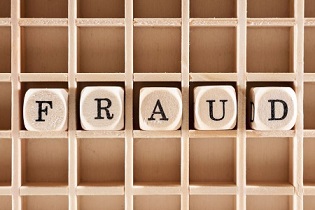
The Word for Restraining Order Abuse is FRAUD

So complacent toward lying have judges become that restraining order fraud goes over without raising an eyebrow. I’ve known one judge to scoff at the use of the word perjury on reflex, despite being ignorant of the facts he’d been called upon to adjudicate. And, though careless, he wasn’t a dim man.

Perjury, a felony crime, is the false (i.e., fraudulent) representation of a material fact to a judge (including on a sworn document like a restraining order application). A material fact is one that’s likely to influence a judicial decision. To falsely allege you’ve been sexually harassed or assaulted, for instance, is to commit perjury. Perjury is a word all defendants who’ve been falsely accused should know. Chances are they’re victims of more than one materially factual misrepresentation to the court.

The phrase restraining order fraud, too, needs to gain more popular currency, and I encourage anyone who’s been victimized by false allegations to employ it. Fraud in its most general sense is willful misrepresentation intended to mislead for the purpose of realizing some source of gratification. As fraud is generally understood in law, that gratification is monetary. It may, however, derive from any number of alternative sources, including attention and revenge, two common motives for restraining order abuse. The goal of fraud on the courts is success (toward gaining, for example, attention or revenge).

People who are victimized by the restraining order process are rarely students of law and often have had no prior exposure to legal procedure whatever. Words like perjury and fraud, while possibly familiar from having been heard in TV courtroom dramas or read in novels, are mostly alien concepts to the uninitiated. Restraining order recipients have mere days to prepare a defense—if they know they can contest an order of the court at all—and it’s unlikely that they’ll have concepts like these at their command. (I’m a student of words, and it took a lawyer’s familiarizing me with the significance of these two, among others, for me to gain a reasonably firm grasp of their meaning—and this was years after my own day in court. I was a practicing kids’ poet, and words like these weren’t ones I’d ever had call to use. And I’d prefer I were still ignorant of them today.)

Fraud isn’t commonly applied to restraining order abuse (itself an uncommonly used phrase), and it certainly should be, because the restraining order process is assuredly the most common motivator of frauds on the court. This process is usually employed impulsively, is free, and is completed in a matter of moments. Those motivated to use it maliciously—and they’re legion—typically do so in the throes of spiteful passion. They say whatever they believe they need to to achieve their desired ends.

However lacking their stories may be of scrupulous premeditation, though, they’re nevertheless frauds. And they nevertheless work.

The reason for the court’s failure to perceive restraining order fraud derives from its failure to perceive how damaging false allegations are to defendants. Judges aren’t likely to associate fraud with restraining order allegations, believing the term more aptly applied to cases that inflict “real” harm. Restraining order fraud, even when it doesn’t cost a defendant access to his or her home, property, and children, does real harm: anxiety, gnawing outrage, despondency, and depression, which may predictably lead to insomnia, deterioration of health, loss of productivity, and behavioral changes, and may conceivably induce drug or alcohol abuse and homicidal or suicidal ideation. Defendants may lose jobs or job opportunities. They may end up homeless. And these consequences ignore those inflicted on peripheral parties like children, who may also be lastingly traumatized.

The judicial disconnect between restraining order and harm is one defendants against false restraining orders must endeavor to bridge, because even a judge who’s nobody’s fool isn’t likely to get there on his or her own. The restraining order process is virtually automated. Judges know they don’t have to apply a great deal of diligent attention to particulars and consequently rarely do.

Use of the words perjury and fraud aren’t likely to avail restraining order defendants. Of probable value, though, is understanding them. And of definite value to arousing awareness of restraining order abuse and promoting reform of the restraining order process is leading others to understand them.

Copyright © 2013 RestrainingOrderAbuse.com

“Why Would Someone Get a False Restraining Order?”

This question pops up a lot.

Simply rephrasing it can dispel some of the wonderment: “What would someone have to gain by falsely accusing someone else of conduct society condemns?”

Satisfaction of a spiteful impulse might come to mind.

I remember looking at a book once by a guy named Hayduke. It was chock full of ingenious vengeance schemes—pretty much all of them criminal or bordering on it. Lying on a restraining order to sate a hurtful yen, while technically criminal, is never treated as such and may well succeed in criminalizing the target of that yen.

Common allegations on restraining orders are harassment, stalking, danger, and violence. Any of these—and especially the last—can doom a person’s employment or professional aspirations, tear relationships apart, and gnaw at and vex the innocently accused indefinitely (to his or her physical and psychological erosion). Allegations like this from a domestic partner can deprive the same victim of assets and access to loved ones. The use of fraudulent restraining orders to gain the upper hand in child custody battles is pretty much cliché.

And restraining orders don’t just vanish from public record when the expire. In some regions, there are even restraining order registries to make finding out who’s had a restraining order sworn out against him or her conveniently (and alluringly) accessible by the public. The political push is toward making such registries universal.

It’s possible that the question, “Why would someone get a false restraining order?” is prompted by a disbelief that a person could be so unethical. Such a disbelief betrays the questioner’s naivety.

People frame people for crimes or commit crimes to hurt others every day. Abusing restraining orders is just more fail-safe. Perjury (lying in court or on a sworn statement) is never prosecuted, and restraining orders are generally free for the asking. You get the state to exercise your malice for you, it costs you nothing, and everyone extends you their sympathies.

The worst that happens when someone lies to obtain a restraining order is that it’s overturned on appeal. And even if it’s quashed, the recipient of the fraudulent restraining order will have been put through hell (and possibly cost several thousands of dollars in attorney fees). In fact succeeding in having a restraining order vacated (canceled) doesn’t necessarily mean it disappears from public record. Even if a fraud loses, s/he wins.

Clearly then the answer to the question, “Why would someone get a false restraining order?” is “Why not?”

Copyright © 2013 RestrainingOrderAbuse.com