
One of the earliest posts on this blog (from 2011) offers some procedural orientation to the falsely accused. The author hasn’t revisited the post except to update a link to attorney Gregory Hession’s blog, MassOutrage, which is recommended reading.
Much of the author’s early advice is important: show up early, dress well, be polite, organize your defense and rehearse it ahead of time, make three sets of whatever evidence and exhibits you intend to present, etc. It can also be boiled down to (1) mind your p’s and q’s, and (2) don’t “wing it.”
This post offers some more seasoned counsel to the defendant who can’t afford representation:
- Be direct. If something alleged against you is false, say it’s “false.” Be explicit. Don’t “defend yourself” by explaining how the accusations against you couldn’t be true. Say they aren’t true (and then offer what proofs you can). If allegations are “mostly” not true, if they’re hyped or skewed or exaggerated, they’re “false.” Say so right off the bat.
-
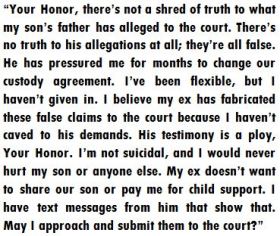
The author suggested this statement as a “for example” to a recent commenter who wanted to know how to defend herself against false allegations. She reported her ex falsely alleged on a temporary restraining order petition that she had threatened to kill herself and her son. She said her ex took their son, refused to return him, and filed for a restraining order on bogus grounds so that he’d never have to return the boy or pay child support. Consider how a statement like this is much more effective than a long rehash of a relationship history that might only distract the judge from hearing what’s important.
You’re the bad guy, so present an argument instead of an explanation. You won’t win over the judge by appealing to his or her sympathy.
- Be humble. Judges are vain, proud, and self-important, and some resent it if you sound like a smarty-pants. (Yes, a judge is capable of finding against you just because s/he thinks you’re haughty. The rules are whatever s/he wants them to be.)
- Keep it simple. These procedures are in-and-out. If your story is long and convoluted, change it. CHANGE IT. The truth that serves you is what’s important, not “facts.” Facts may not tell the truth. In these procedures, what counts are impressions.
- Be straightforward. Use brief, declarative sentences. Don’t backpedal. Some qualifiers are okay, like these: “I believe,” “I think,” or “Plain to me, Your Honor, is that….” Prefacing remarks like this expresses humility and honesty. Some qualifiers aren’t okay: “Well…,” “What I meant was…,” “Then again…,” “Perhaps….” They sound wimpy and uncertain, and they inspire suspicion; they say you’re guilty.
- Don’t leave anything up to a judge’s interpretation. Don’t submit an exhibit and expect the judge to see what you want him or her to see. Tell the judge what s/he should see (“What this shows, Your Honor, is…”). The judge doesn’t know anything, and s/he’s not on your side.
- Don’t mince. Use loaded words. Instead of saying something was “untoward,” for instance, say it was “sexual.” Graphic words make an impression. Careful ones don’t.
- Cross-examine (question) your accuser. Put him or her on the defensive. Some accusers are vehement fraudsters and will deny the truth and lie freely. If you can trip your accuser up, however, possibly by getting him or her to commit to a lie that you can disprove with evidence, this can be a winning move, as can be forcing your accuser to own an inconvenient truth because s/he knows you have proof of it.
- These procedures are contests between personalities, not just competing facts. The person who looks and sounds best, fares best. Aggressive defenses make an impression. Limp ones do, too, but not a favorable one.
- Expose lies to make an impression, but don’t depend on it that proving the plaintiff lied about something will impact the judge’s ruling. No one in these procedures is ever sanctioned or prosecuted for perjury. Presenting proof of lying can mean absolutely nothing; a restraining order petition will not be dismissed simply because a plaintiff demonstrably told a lie. Your accuser’s behavior is not what the judge is there to form an opinion on; yours is.
- You’re right; your accuser is wrong—that’s the impression you need to make. To win, you must convince the judge that the accusations against you are without merit.
Copyright © 2015 RestrainingOrderAbuse.com



 “TRO violation for inadvertent butt calls”
 Perform a purge, and make sure the firewall has no holes.



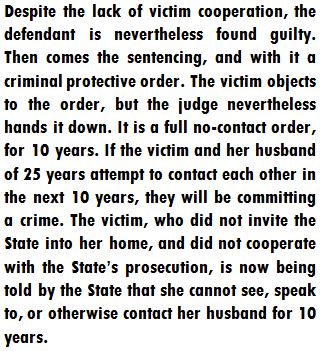

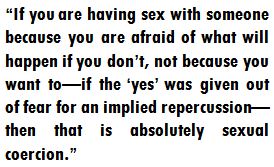
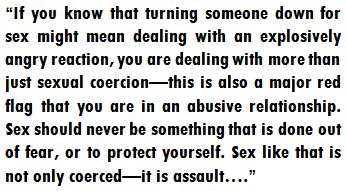


 This is how, whether you’re a man or a woman, you can be deemed a rapist without the court’s knowing a thing about you other than your name. (Yes, women, too, are accused of rape in civil court, that is, of having coerced an unwilling partner to have sex.)




 Feminists, of course, are not thinking about all this psychology going on behind the scenes.
 According to a



 I am a little league, travel ball, and high school umpire. I umpire because I love the game and to make some additional money on the side. I have been umpiring baseball for close to 25 years without any incident whatsoever, and most reviews of my performance have been complimentary.
 parenting and considers herself an expert in child-rearing. I had even caught her entering my house and administering medication to my daughter without our consent, which I firmly put a stop to.
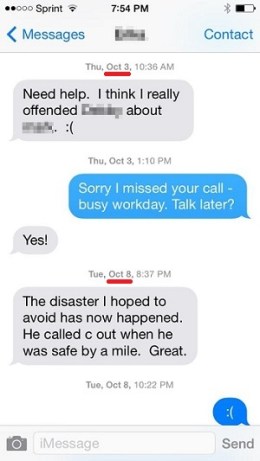 Well, because there was no good reason for my sister-in-law to be upset, and because the umpire company needed me to cover the game, I did. There was no issue with the game, and I received many compliments afterwards. I ended up working another one of my nephew’s games a couple of weeks later, again with no issues. The next week, I got a call from my umpire assignor reporting that my sister-in-law filed a complaint with the league saying her son was “uncomfortable” with my working behind the plate.
 After about a two-hour hearing, the judge ruled against me. He stated that because my wife informed me that her younger sister had told her to keep me away from her kid that I was put on notice…yet persisted in showing up at the fields to work. Never mind that I was told two months after their conversation (my wife didn’t tell me right away because she thought it was just her sister acting crazy). The judge then went on to say that a mother had the right to determine who got to be around her kids and didn’t need a good reason.
 We have filed a motion for a new trial with compelling evidence. It was denied by the same judge. We have also filed a motion to modify the order to allow me to attend my daughter’s school events since I am her primary caregiver while my wife is at work (I own my own business), and this too was denied, because the judge thought it would be too hard for the school and the police to enforce.







 A: Right (
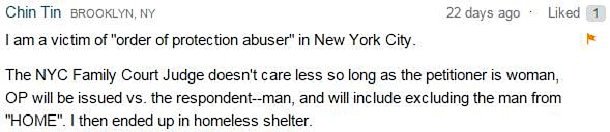
 I corresponded with a man last year, a man in a homosexual relationship, who was assaulted by his partner severely enough to require the ministrations of a surgeon. His boyfriend was issued a restraining order coincident to his being charged with assault. That’s how it typically works in New York: A protection order is issued following a criminal complaint.
 This means, evidently and bizarrely, that there are people dwelling under the same roof as their accusers who may be cited for criminal contempt if an accuser calls and reports them for “harassment” that occurred, for example, in the hallway or the kitchen. The implications, which are fairly stunning, bring to mind the phrase “sleeping with the enemy.” The law invests its
  A woman I’m in correspondence with and have written about was accused of abuse on a petition for a protection order last year by a scheming long-term domestic partner, a man who’d seemingly been thrilled by the prospect of publicly ruining her and having her tossed to the curb with nothing but the clothes on her back. He probably woke up each morning to find his pillow saturated with drool.
 Now her former boyfriend complains that the stir she’s caused by expressing her outrage in public media is affecting his business, and he reportedly wants to obtain a restraining order to shut her up…for exposing his last attempt to get a restraining order…which was based on fraud.

 I hope the outraged title of this piece reaches its attention, because the story below exemplifies a modern manifestation of racial bigotry and violence, and it’s one the Southern Poverty Law Center
  The following account is reported by North Carolinian Neil Shelton, a father denied access to his son and daughter for “three years now and counting.”
 Mr. Shelton’s allegations are abhorrent yet all too believable. Significantly, none of the criminal allegations introduced against him have held up in court.
 On May 29, 2012, which was shortly after I was kicked out of my house by my now ex-wife, I was arrested three times in one day.
 When my now ex-wife was made aware of my impending release, she took her sister-in-law, who was the director of Surry’s Stop Child Abuse Now (SCAN), and they went to the Surry County Sheriff’s Dept. and had me charged with criminal trespassing.
 “I’m dangerous broke, as y’all have shut down all my businesses, but I’m not dangerous with $5,000 and no restraining order against me?” With that, I told her I was finished. She said, “Yes, you are,” and we proceeded into the courtroom. I called her a few choice words, and her reply was, “Boy, am I gonna have fun playing with you.”
 Upon my release, I showed the judge the two failed commitment attempts, the six not-guilty verdicts for allegedly violating the restraining order, the dismissal of the letter charges, the phone number of the FBI agent who told me the FBI had never been involved and had never investigated the letter—which supposed investigation the other side had used to hold me in jail—and the handwriting analysis proving the lawyer, Zach Brintle, wrote the letter. But the judge still extended the restraining order for yet another year.


 This absurdly says that even if a person is repeatedly found to abuse process, the worst consequence s/he should face is having to ask special permission before doing it again. What makes the commission’s comments significant, however, is that they actually own that there are people who exploit court process to hurt others and that they may do it over and over.
 TALKING BACK to restraining orders