No One Is a VICTIM Just because S/he Says S/he Is: A Reminder for Reporters…and Other People Who Shouldn’t Need Reminding

I looked at a form I was handed a couple of weeks ago at a criminal arraignment I was ordered to attend. The form gives the impression I was supposed to sign it, which no one asked me to do. This would be disturbing if I were still capable of registering disturbance. I noticed with dim approval, though, that it said this:

alleged_victim

When accusations are made on “protective orders” or are of the type “protective orders” typically purport to concern (e.g., harassment, stalking, or domestic violence), journalists routinely call accusers “victims” automatically. They reason, apparently, that a person can’t be awarded a restraining order unless s/he has demonstrably been victimized. (More accurately, “reporters” don’t scruple overmuch about the facts or how the process works, because they know where their loyalties are supposed to lie.) Probably a majority of injunctions are awarded based on their petitioners’ say-so alone. To understand what that means, a “reporter” would have to investigate (instead of, say, quoting a pamphlet authored by the National Coalition Against Domestic Violence).

Prosecutors? They seem to call all accusers “victims” on reflex. Their job, after all, is to “prevail” in court. If they think they can win, they try to; it’s not about justice. That’s rosy rhetoric for the rubes…like journalists.

Whether intentionally or not, both journalists and prosecutors get it wrong. Legislators do, too. The statutes they enact may explicitly call accusers “victims” (due process be damned).

The (criminal) court at least got this much right: Allegations aren’t facts, and until some semblance of due process has been staged, an accuser is an “alleged victim,” not a “victim.”

Judges don’t always get this right, either, however.

I couldn’t say with complete assurance whether lapses in objectivity, ethics, and procedural propriety like this have always existed or whether they’re testaments to systemic bigotry conditioned since the mid-’90s by the Violence Against Women Act (VAWA)—whose megabuck grant contracts stipulate that alleged victims should be treated as victims in every instance.

I feel pretty confident, though, in my suspicions of corruption.

The lines can’t help but have become blurry since the advent of the restraining order, which authorizes the court to draw conclusions prior to a trial, based on a few minutes of testimony and what may be no ascertainable facts at all.

If “verdicts” can be formed without proof and possibly without any adversarial contest in which controverting evidence could be adduced, that would seem to make the distinction between “victim” and “alleged victim” merely academic.

Restraining order judgments aren’t uncommonly “default” judgments, because defendants either don’t show up in court or can’t. An “emergency” injunction can require a defendant to appear in court mere days after service, possibly after having been booted to the curb (and left without resource or a vehicle), and even a non-emergency injunction may require a defendant to appear in court within a week. There’s no time to secure legal representation, even if the means are available and even if the respondent appreciates the significance of the paperwork that’s been thrust in his or her hand, and injunctions can be issued against defendants in other counties or states. (Some defendants, moreover, may not be first-timers, and they may simply conclude: “F— it. What’s the point?”)

(What defendants are told: “Here’s your restraining order. Don’t violate it, or we’ll arrest you.” What they’re not told: “You have six days to learn enough law to extricate yourself from allegations of which you’ve already been found guilty.” At the time they’re told anything, chances are they won’t know what the word defendant means.)

When procedure is engineered to find anyone who has alleged victimhood to be a “victim,” maybe calling every accuser a victim to begin with is just economical. Maybe it’s also the closest thing to honest a person can expect from a manifestly crooked business.

Copyright © 2016 RestrainingOrderAbuse.com

*And make no mistake: It is a business.

What Journalists Need to Understand about What Restraining Orders Are: A Tutorial for Investigators, Part 2

“Orders for protection represent a legislative attempt to incorporate distinct features from both civil law and criminal law. On the one hand, a private litigant can initiate judicial proceedings to seek redress against another private individual. On the other hand, criminal penalties, such as fines and incarceration, will attach if a protection order is violated. Unlike both civil and criminal proceedings, protection order actions involve a great deal of informality, with the end result being an order for protection that is often issued on an ex parte basis without the benefit of a full evidentiary hearing.

“Many aspects of Nevada law in this area can best be described as ‘murky,’ with virtually no critical or scholarly study available to assist Nevada’s courts. Moreover, statistical information about protection orders in Nevada is almost non-existent.”

—Staff attorney Joe Tommasino, Las Vegas Justice Court

The first thing reporters need to grasp about restraining orders is that they’re a kluge (a Frankenstein’s monster crudely stitched together from dubiously compatible parts). For plaintiffs (accusers), they merge the most favorable aspects of civil and criminal prosecutions; for defendants, the least favorable.

The scales of justice are tipped from the start.

Restraining orders allow a “private litigant [to] initiate judicial proceedings to seek redress against another private individual” just as civil lawsuits do (though restraining order applications by contrast are typically processed free of charge). They’re also adjudicated according to the lowest civil standard of proof (“preponderance of the evidence”). State standards vary rhetorically, but the criterion for rulings is basically the same: whatever judges fancy is just (and there are only two choices—thumbs up or thumbs down).

On this basis, citizens can be rousted from their homes and kicked to the curb (and some are left destitute). On this basis, also, they may be entered into domestic violence registries (indefinitely), besides state and federal law enforcement databases (indefinitely), and denied security clearances, loans, leases, and even employment in certain fields (just like convicted felons).

Notwithstanding that restraining order allegations are introduced in civil court and aren’t subject to the criminal standard of evidence (“proof beyond a reasonable doubt”), “criminal penalties, such as fines and incarceration, will attach if a protection order is violated”—or is simply alleged to have been violated: arresting officers need only have a reasonable suspicion that a violation occurred, which they need not have witnessed.

The savvy observer will note that suspicion is the motive determiner of liability at all levels. Suspicion informs judicial disposition, subsequent police response to claims of violation, and of course interpretation by third parties, including employers (judges trust accusers, and everyone else trusts judges). Emphatically worthy of remark is that billions of dollars of federal monies have been invested over the past 20 years toward conditioning judicial and police suspicion.

This may incline the savvy observer to suspect the fix is in.

He or she should appreciate further that restraining orders are most commonly issued ex parte, which means accusers simply fill out a form and very briefly interview with a judge without defendants’ being present to contest the allegations and without their even being aware that they’ve been made. (Some courts even explicitly advise plaintiffs to rehearse their allegations so they can recite them as quickly as they would an order at a drive-thru.) Although most states mandate that a follow-up hearing be slated to give the accused an opportunity to controvert the allegations against them and receive an “unbiased” second opinion, follow-up hearings are held in the same court that prejudicially ruled against them in the first place: “We found you guilty. Go ahead and tell us why we screwed up. You have 15 minutes.” Because restraining order trials are civil proceedings, defendants aren’t provided with legal counsel. They’re nevertheless afforded only a few days (or a couple of weeks at the outside) to prepare a defense.

Returning to this post’s epigraph, here’s its author’s elaboration of the points it introduces (which apply irrespective of what a restraining order is called):

The concept of a “protection order” or a “TPO” is a curious one under the law. Unlike a criminal case, where the awesome power of the State is wielded against a private citizen, an action for a protection order allows one private citizen to invoke judicial authority directly against another private citizen.

The implications are staggering when one considers that a protection order allows individuals to trigger invisible force fields affecting the conduct, movement, speech, and legal rights of others.

Even more significant is the fact that Nevada law allows a person to obtain a protection order based upon only a brief ex parte application [as do most or all states’ laws].

From these concepts, questions immediately present themselves. Are protection orders being utilized in oppressive or unexpected ways? Are the factual scenarios involved similar to what the [legislature] envisioned them to be? Are courts utilizing protection order tools correctly? Are judges issuing ex parte orders that trample upon the rights of innocent people before a hearing is held to determine the validity of specific allegations? Is this area of the law an insufficiently regulated “wild frontier”?

Loyola Law School Prof. Aaron Caplan, in a 2013 law review article that cites the 2008 paper of Mr. Tommasino’s quoted in this post, says yes.

Many structural factors of civil harassment litigation lead to higher-than-usual risk of constitutional error. As with family law, civil harassment law has a way of encouraging some judges to dispense freewheeling, Solomonic justice according to their visions of proper behavior and the best interests of the parties. Judges’ legal instincts are not helped by the accelerated and abbreviated procedures required by the statutes. The parties are rarely represented by counsel, and ex parte orders are encouraged, which means courts may not hear the necessary facts and legal arguments. Very few civil harassment cases lead to appeals, let alone appeals with published opinions. As a result, civil harassment law tends to operate with a shortage of two things we ordinarily rely upon to ensure accurate decision-making by trial courts: the adversary system and appellate review.

The process essentially operates “in a vacuum”:

Harassment orders, when granted, are very rarely appealed. In the Justice Courts of Las Vegas in 2008, only three out of 2034 non-domestic violence petitions resulted in an appeal. No appellate court opinions interpret the Nevada statute—even though it was enacted in 1989 [that’s zero appellate court opinions in 20 years]. As a result, “the limited jurisdiction courts [of Nevada] have been operating in a vacuum and creating ad hoc, reactive solutions” to recurring problems.

The stagecoach, in other words, is steered without reins. The laxity of the statutes means judges of the lowest-tier courts call the shots, and there are no big brothers looking over their shoulders. They’re licensed to do what they want. (The quotations above refer to different types of restraining order, but the two types aren’t necessarily treated any differently. Whether a petitioned injunction is a protection order or a harassment order may only depend on which box was ticked on the application form. In most jurisdictions, what distinguishes one from the other is the nature of the relationship between the accuser and the accused. The allegations may be identical.)

The legislative insensitivity to constitutional principles and protections as well as the lack of judicial housekeeping in this area of law are beneath the perceptual threshold of the public. To the uninitiated, the absence of controversy originating from “legitimate” sectors suggests that everything’s working as it should: restraining orders are issued to dangerous people who need to be tethered.

While how commonly the process is exploited for ulterior motives is a matter of heated dispute, its availability for abuse is plain. The prevailing attitude toward allegations of rampant abuse is that if statistics can’t be adduced to support them, the complaint is irrelevant and should exercise no influence on policy reform. The absurdity of this attitude is likewise plain. The process is designed to favor accusers, judges are predisposed to credit accuser’s accounts (in part according to explicit instruction), those accounts need not be substantiated, the process is initiated and completed in hearings spanning minutes only, and (as the court attorney who wrote the epigraph notes) comprehensive statistical information about restraining orders is virtually non-existent.

The restraining order process is conducted in a black hole. There’s not only no transparency; there’s no light.

Copyright © 2014 RestrainingOrderAbuse.com

What Journalists Need to Understand about Restraining Orders and Their Abuse: A Tutorial for Investigators, Part 1

“Restraining orders give victims of domestic violence a tool to keep their abusers away or at least have them arrested if they come close. Anyone in a relationship with recent history of abuse can apply, and the order can be signed the same day.

“It gives victims the right to stay in the home and keep the kids. But the civil document relies on their abusers to respect the law.”

—“Are Restraining Orders False Security?(USA Today)

Reporters are often keen and eager detectives when there are two sides to a story, and they want to get to the bottom of things. When there aren’t clearly defined contestants with competing narratives, however, reporters are as prone as anyone else to swallow what they’re told.

The news story the epigraph was excerpted from was prompted by a recent murder in Oregon and explores the impotence of restraining orders, in particular to “stop bullets.” Just as shooting sprees inspire reporters to investigate gun legislation, murder victims who had applied for restraining orders that proved worthless inspire reporters to investigate restraining order policies. The presumption, always, is that the law failed.
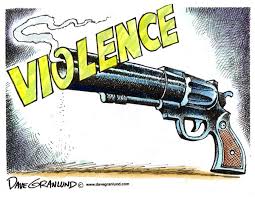

The solution suggested by the story—the same solution that’s always suggested by such stories—is to beef up protocols and give the statutes more teeth.

What’s inevitably lost in considerations like this is that for every person who’s attacked or killed in spite of a restraining order, thousands, tens of thousands, or even hundreds of thousands of people face grave indignities and privations consequent to orders’ being used exploitatively (including public revilement, chronic harassment, criminal profiling, social alienation, and loss of employment, health, and access to kids, home, and property). This is a fact it seems journalists would only be given cause to confront if more victims of procedural abuse killed themselves.

Preferable, certainly, would be if reporters could be depended on to sniff out and censure injustice without anyone’s having to die.

Toward this end, this post encourages reporters to recognize what the quoted paragraphs that introduce it actually say. This is revealed by removing the obfuscating rhetoric. Replace the phrase victims of domestic violence with accusers, and replace their abusers with the accused.

Now consider the implications of the same paragraphs, slightly revised:

“Restraining orders give accusers a tool to keep the accused away or at least have them arrested if they come close. Anyone in a relationship…can apply, and the order can be signed the same day.

“It gives accusers the right to stay in the home and keep the kids….”

The mere substitution of factually accurate, unbiased labels changes the meaning of these paragraphs significantly, and brings their implications to the fore.

Now dare to think the unthinkable (as every factual analyst should) and replace the word accusers with the word liars and the phrase the accused with the phrase those lied about, and pare away a few more words.

“Restraining orders give liars a tool to keep those lied about away or have them arrested. Anyone in a relationship can apply, and the order can be signed the same day.

“It gives liars the right to stay in the home and keep the kids.”

The same two paragraphs, reconceived, say that a restraining order can be got by lying to the court, can be used to have someone arrested without warrant based on the report of the liar, can be had in a single day (without the accused’s even being given prior notice of the proceedings), and can be used to gain immediate and sole entitlement to a place of residence and immediate and sole custody of children.

Appreciate that there are no (enforced) penalties for lying, and suddenly the motives and opportunity for fraud—particularly against a target of malice—become plain.

Appreciate further that allegations made by restraining order petitioners aren’t subject to the criminal standard (“proof beyond a reasonable doubt”). Restraining order trials are civil adjudications, not criminal ones. The “standard of proof” applied is “preponderance of the evidence,” which means no certain substantiation of allegations ranging from nuisance to sexual assault is required. Approval of a restraining order isn’t a (literal) finding of guilt, per se. No proof of anything must be established.

People, including journalists, only see what they hear.

The truth of how conveniently and urgently restraining orders avail themselves as tools of abuse is right under the noses of everyone who writes about them. It just gets obscured by loaded words (victims and abusers, for example) and the images they excite. Blindness to these words’ unexamined assumptions is further reinforced by the hysteria aroused by a (single) sensational act of violence.

Principal among these unexamined assumptions is that everyone who claims to be a victim is a victim (according to which belief everyone who claims to be a victim is treated as a victim by the court—which every false claimant dependably anticipates).

Observing this by using a story about a tragedy shouldn’t seem callous, because (1) it’s in the wake of tragedies like the one reported in the referenced story that hysteria runs highest and completely eclipses critical scrutiny, and (2) it’s tragedies like the one reported in the referenced story that show that restraining orders, besides being excellent tools to realize spiteful or avaricious intentions, aren’t any good at doing the one thing that’s said to justify them: averting violence.

On the contrary, the story reports:

“For some people it’s more dangerous [to get a restraining order],” said Kim Larson, director for Marion County District Attorney Victim Assistance Division. “Sometimes it makes people really angry, getting served with a restraining order.”

This is especially true if the order is false. (Besides inspiring violent people to commit further violence, restraining orders may drive nonviolent people to lash out or even kill in desperation, particularly if they’ve been falsely accused, publicly excoriated, and deprived of all that gave their lives meaning.)

This isn’t rocket science. People lie, and when people lie about abuse, they do egregious and often irrevocable harm to those they falsely blame—who only very rarely kill themselves. No one looks beneath the surface, because they faithfully cleave to popular conceptions and reasonably assume that there are safeguards in place (due process and such) to ensure that allegations of abuse are properly vetted and substantiated.

Investigators shouldn’t assume.

Copyright © 2014 RestrainingOrderAbuse.com