Women’s Use of Restraining Orders to Commit Rape

In the wake of several purported cases that gained widespread attention and then unraveled, free range feminist representations of rape, including how prevalent it is, have fallen under scrutiny and skepticism. Press response to the excesses of anti-rape rhetoric has been persistent—and in instances remonstrative, if not scathing.

A significant source of backlash has been claims of rampant sexual coercion and violation on college campuses.

Eden Strong of Bustle.com poses and responds to the question, “Is It Rape If You Say Yes?” (April 16, 2015).

One reason these claims have met with challenge is that the standard for qualifying what is and isn’t rape is wide open. It’s argued that in the absence of ongoing and deliberate tokens of consent, a sex act may be called rape. Accordingly, some have advocated that participants in intercourse repeatedly express to each other (in media res) that everything’s still okay. (One draws the impression that lovers are supposed to continually pause and inquire, “Are we good here?”)

The word rape, then, doesn’t exclusively mean what it did when I was a kid: some guy snatching a woman unawares and having his way with her in the bushes with a hand over her mouth. Today, rape means any nonconsensual act of sex, any act of sex, that is, in which one party is there without full, voluntary, and enthusiastic eagerness.

This post is to report that by this definition, women use restraining orders to rape.

A previous post considered this in the context of coercion generally: “BLACKMAIL: Using Restraining Orders to Extort and Punish.” It quotes a respondent to this blog:

My son’s girlfriend…filed a domestic abuse CPO [civil protection order] against my son, again telling him that he shouldn’t have left her. He hasn’t been served yet—they keep missing him. She calls my son constantly, stringing him along with the idea that she “might” let it go. He’s taking her out to eat, giving her money, staying the night with her. Hoping that she’ll let it go. All that and yet two hearing dates for him have come and gone with her showing up at both his hearings asking for a continuance because he hasn’t been served.

According to prevailing standards, the man referenced in this account is a victim of sexual coercion (of a particularly fiendish nature); he was induced to have sex with a woman he rejected. She made him fear the consequences if he didn’t comply, meanwhile continually refreshing the threat (and, no, this isn’t an isolated scenario, and why should it be?).

The ironies, if they need elucidation, are that a process of law that’s vehemently defended as a rape deterrent can be (and is) used to coerce sex, and advocates of the process who vociferously decry “rape enablement,” “rape denial,” and “victim-blaming” consequently may be said to practice the very things they denounce. The official victim in the story above is the rapist, and the rapist is a woman. (It’s these sorts of ironies that inspired the writer to characterize restraining order advocates as residents of la-la land in a recent post: They’re loyal to pet ideas—not principles, ideas—and they deny infelicitous realities.)

Arm-twisting doesn’t require a stronger arm, folks, just superior leverage.

Copyright © 2015 RestrainingOrderAbuse.com

*Eden Strong, quoted in this post, concludes her piece “Is It Rape If You Say Yes?” with this assistance to victims of sexual extortion: “If you’ve been pressured or coerced into sex, you can speak with a counselor at the Rape, Abuse, and Incest National Network at 1-800-656-HOPE.” One wonders how such a counselor would respond to the story of restraining order abuse cited above and whom s/he would recommend the man in the story turn to for relief.

“Rapist by Default”: Is This a Court Ruling That Should Be Possible in the Civilized World?

The question in the title of this post isn’t a hypothetical one.

People are nominated rapists by default (as well as “domestic abusers,” “stalkers,” or what have you). They’re accused by restraining order petitioners in civil court (sometimes without their knowledge) and don’t or can’t respond. So they’re found guilty…without a trial.

Let’s say you live in Rhode Island, and someone persuasively accuses you of rape in California in a five-minute recitation before a judge. Now, you either drop everything, hustle your butt to the opposite coast, and convince a judge otherwise…or, presto, you’re a rapist; a default ruling will be entered against you automatically. The ruling will be preserved, too, on your permanent public record.

No cop will have investigated the accusation, no prosecutor will have vetted it, no counsel will be appointed to defend you, and no special allowances will necessarily be made to ensure you have a practicable opportunity to defend yourself. If you fail to appear in court at the appointed time, tough luck.

This is how, whether you’re a man or a woman, you can be deemed a rapist without the court’s knowing a thing about you other than your name. (Yes, women, too, are accused of rape in civil court, that is, of having coerced an unwilling partner to have sex.)

While a default restraining order judgment just means you’re prohibited from contacting or approaching the petitioner of the order, your presumed guilt can be used as “factual evidence” against you in other governmental procedures. You may be represented as having a “history” of domestic or sexual violence (based on a default judgement on what may have been a completely false accusation).

A case that has inspired several recent posts, that of a Virginia man accused in Colorado of “domestic abuse, stalking, sexual assault, and physical assault,” exemplifies this horror.

This man, whose markedly troubled wife filed a string of unsubstantiated allegations against him before months later being institutionalized, taking her own life, and leaving behind a child she had told him she had miscarried, must respond to a “dependency and neglect petition” that represents him as an unfit parent.

This item appears among its arguments to the court:

[Mother] and Father have a history of domestic violence that includes, but may not be limited to, the issuance of temporary restraining orders in cases […] and the issuance of a permanent restraining order in case […] which was entered by default on January 16, 2015, placing the welfare of the Child at risk.

What this categorically states is that a “history of domestic violence” exists. Then it casually notes that this alleged history is based on a default ruling. The temporary orders mentioned were also ex parte, i.e., issued offhandedly in 10-minute procedures performed in the absence of the accused. In other words, no probative investigation of the claimed violence was made by a judge or anyone else. The so-called history is a handful of accusations rendered to various judges in minutes by a woman who would subsequently be committed for allegedly hearing voices prompting her to “hurt or kill” her child. The couple’s domestic relationship had “lasted 75 days total,” making the word history that much more inapt. The claimed violence and the judicial ruling validating it were made seven months after the man’s wife had moved out, and he didn’t travel from Virginia to Colorado to dispute the claim in court. There was no evidence, and there was no trial.

Based on a default judgment, he is represented as a “violent abuser” who’s a risk to the child he didn’t know he had, and consequently he may be denied any role in her life. If it serves the interest of the state, he can also be characterized as a rapist based on the same ruling, one entered automatically.

He is a “rapist by default.”

Copyright © 2015 RestrainingOrderAbuse.com

What Restraining Order Defendants Need to Know That No One Ever Tells Them: The Truth Doesn’t Matter

The ambition of this post, an intermission between considerations of graver subjects, is to dispel restraining order defendants’ faith in the value of “truth.” Defendants are led to believe that if they’re truthful in the defiance of lies or hyped allegations, all will turn out as it should. But truth is a false idol that answers no prayers.


If you haven’t yet had to swear this oath, you’ve heard it before on TV: “Do you swear to tell the truth, the whole truth, and nothing but the truth?” (Sometimes God and the word solemnly are thrown in for emphasis…maybe to suggest you’ll be struck by lightning if you distort the facts or omit any.)

The significance of this courtroom ritual is none, and taking it literally is for chumps.

Civil trials, especially the kind this blog concerns, do not weigh “truth”; they weigh testimony, along with evidence as it’s represented (in procedures that may span minutes only). The savvy defendant will think in terms of economics and marketing. “Truth” has no inherent value to a defense. Unless it conclusively proves something you want to prove, it’s totally worthless. Worse, it may distract and dilute the potency of what you’re trying to sell. Facts, besides, may not tell the truth. The word truth is a trap for the naïve.

What wins cases are successful representations, ones that work the desired effect (i.e., what wins is salesmanship not scrupulous reporting).

While the court asks for honesty, it doesn’t reward it. It’s what you say and how you say it that counts, not “the truth.” God isn’t the judge; a man or woman is, and his or her favor goes to the person who gives the most compelling presentation (i.e., sales pitch).

Why do lying plaintiffs win? They win because their representations were persuasive. Did they tell “the whole truth and nothing but”? They may have told none at all. (Restraining orders have reportedly been obtained by people using assumed names; they didn’t even tell the truth of who they were.)

What do cunning attorneys who represent lying clients (or any clients) do? They tell only those truths that support their stories…and no others. (They may lie, also—and vigorously.)

The fastidious defendant who finicks over every detail, who backpedals and carefully qualifies his statements (in the interest of complete and accurate disclosure), and who otherwise invests his or her trust in “the truth” grossly misperceives the nature of process.

Representations win court contests, not “the truth.” The truth doesn’t matter.

~ EPILOG ~

A few months ago, the writer spoke for an hour or so with a 30-something man who said he was an obsessive-compulsive. He had written that he was “starting to go downhill really fast” and needed help. “I will try to eventually explain,” he began, “but there’s such a long history of what happened.”

What he explained was that he’d been bullied by a woman many years prior, while they were in high school, and had been haunted and galled by the abuse ever since. He said she had tried to coerce him to have sex with a friend of hers, that he had refused, and that she had spitefully urged some guys to rough him up (one of them would later be convicted of murder, so this wasn’t bush league bullying). She had also greeted him with a sneer whenever they met after that, and flipped him the bird and yelled “Fuck you!” at him as he passed by. He had tried to reach an accord but had only been mocked. He said he never used to stand up for himself and was sick of turning the other cheek.

He impulsively ventilated rage that he had bottled for 20 years by calling the cell of the woman’s husband and leaving her a voicemail that called her a “rude, mean bitch” and that ended with a string of “Fuck you!”s. That was pretty much the extent of it, but he was handily represented as a stalker.

He wanted to know what pointers I could offer that might aid him in his defense against a restraining order petitioned by a woman who claimed to have no memory of the events he described and whose stepmother, he said, was a former lawyer who had prosecuted cases before the state supreme court and was, besides, the director of a “domestic abuse and physical violence organization.”

Yeah.

I repeatedly impressed upon him that reciting a history that spanned decades wasn’t likely to move a judge to anything but a yawn (or a rebuke) and that he should consider how to frame his story to put himself in the most favorable light, for example, by updating the context (and abandoning a rigidly chronological narrative).

Each time I interrupted, he said he understood and then recommenced his story, which stretched back to his anguished childhood. He was very earnest and conscientious, and continually paused and qualified his remarks with “Granted, I….” It was important to him, he said, to tell his “heart’s truth” (i.e., the “whole truth”). He wanted someone to sympathize, and I did. But I knew a judge would not.

I never heard from him again.

Copyright © 2015 RestrainingOrderAbuse.com

Borderline Personality Disorder, Procedural Abuse, and Feminism: A Victim’s Reckoning of Their Tolls

YY_mural

“I hate this world and almost everybody in it. People use each other. I find most of you disgusting. My brothers are disgusting. The people I used to work with are disgusting. You’re shallow, you’re two-faced and hypocritical, you’re judgmental, you cause me more pain than you could ever possibly know. You don’t want me around? Guess what? I don’t want to be around you ugly motherf[—]ers, either. You cause all of your own problems, heap them onto other people, and then blame those people for your problems. You bitch about the amount of pain you’re in, then tell other people to get over their pain.

“I am done with all of you. I am done with your lies and your shitty society, and most of all, I am done kissing your ass.”

—Mrs. Nathan Larson (May 9, 2014)

Virginian Nathan Larson has had a tumultuous year.

He married a woman he met online (April 23, 2014); then she moved out (June 21, 2014) and accused him, among other things, of rape (August 2014 through January 2015); then they divorced; then he learned he was a father when the news reached him that his ex-wife had committed suicide.

The quotation above is from an online post of his former wife’s published between their marriage and their separation. Below is an excerpt from a digital diary entry of hers written when she was a teen (which included a “hit list”):

I hate the students at […]. They are arrogant and foolish. My one dream, my passion is to achieve a machine gun or something and shoot every f[—]er in the school. I want to pump them full of metal, their blood splattered on the tiles. I want to make a massacre that becomes the worst in American history. There are only a few people who I would spare. Everyone else…I would love to see them writhing on the ground in pain, blood oozing out of a million holes in their body.

Nathan’s wife, who was an arguably troubled woman, abruptly terminated their relationship of “75 days total” and then informed him she had miscarried their child. In August 2014, she accused him of rape to the police, but he declined to talk with them and was never charged. In November 2014, she began to accuse him to the courts.

This wasn’t a trial run, either. The accusations brought against Nathan by his wife mirrored charges she had made against a previous partner, also to damning effect.

She petitioned three ex parte (temporary) restraining orders before successfully obtaining a permanent order against Nathan in January of this year (by default). Its alleged bases were “domestic abuse, stalking, sexual assault, and physical assault.” The order was petitioned in Colorado, and Nathan would have had to travel a significant distance to be heard in his defense. “Not wanting to invest money and emotional energy in fighting it, and knowing it would be hard for me to successfully contest it, I didn’t show up to the hearing,” he says. He elected to “move on.”

The two were divorced in April 2015, and that seemed to be an end on it.

Two months later, Nathan was told his (then) wife had given birth to a child in February, presumably the one she had told him she had miscarried. This information reached him along with the news that his former wife had killed herself following her commitment for “suicidal depression” and allegedly hearing voices compelling her “to hurt or kill the Child.”

Nathan must now contest a “dependency and neglect petition” in Colorado asserting he’s an unfit parent.

What follows are his reflections on his marriage to a woman who he alleges had untreated borderline personality disorder, on feminism, and on “abuse culture” and its damages.

Nathan Larson (with his new fiancée’s infant cousin)

Having the benefit of distance from the situation and more calmness about it (especially now that she’s dead), I would say that we both made a lot of mistakes during and after the relationship. There are some people who say that it’s a mistake to enter into a relationship with someone with untreated borderline personality, because it simply won’t work, no matter what you do. Unfortunately, once you get into a relationship like that, your sense of reality can get distorted because you’re so in love, and they’re so convincing, and they get so many other people to agree with them, that you too start to believe it if you don’t have enough of an understanding of BPD to realize what’s happening and why.

For example, suppose you used to argue with your BPD partner, and occasionally lost your temper and had to apologize for saying something unkind. Because they’re so sensitive to minor betrayals, they might claim that you horribly emotionally abused and bullied them to get your way, and then tried to be sweet to them and make up, just like in the classic model we’ve been taught of the cycle of abuse. If you’re still thinking this person is the most wonderful person in the world, then logically you might think that you really did emotionally abuse them, because why would such a wonderful person say it if it weren’t true? Plus, they are clearly very upset over how you treated them, and they broke up the relationship over it, and now they’ve told everyone in your circle of friends and family about it, and many of them are telling you they agree that the breakup was your fault because of your emotional abuse.

These are people you respect and trust, and therefore this could not possibly be happening unless you really were abusive!

You start to blame yourself and even tell people, “She left me because I was emotionally abusive” (which of course attracts more criticism, because who would admit that if it weren’t true?). Eventually, you run into someone who hears your account of what was actually said and done, and challenges your interpretation, saying you’re being too hard on yourself, and that this chick is not as great as you seem to think she is. (To which, of course, you may think, “He just doesn’t know and understand her and our deep and beautiful relationship! We were soulmates! What are the chances I will ever find another woman like that? I searched my whole life, and she was the only one like that I’ve ever met who loved and appreciated me so much.”)

If you have good friends, they’ll awaken you to the fact that someone who truly loved you that much would be willing to forgive and come back to you, or at least treat you decently, rather than holding a grudge and trying to make you suffer.

Also, there’s the fact to consider that people with borderline personality disorder idealize and devalue, and they view people as either completely good or completely bad. This means that once they’re faced with the inescapable reality that you’re not perfect, they have to view you as completely evil. They also have to deny any blame at all for the end of the relationship, lest they have to conclude that they too are flawed, which would cause them to view themselves as completely evil. They can’t handle any feelings of guilt; they have to deflect all blame, including the blame for their own emotionality.

Feminists, of course, are not thinking about all this psychology going on behind the scenes.

They’re busy calculating whether being skeptical of the claims of someone like that will make the public more likely to be skeptical of the claims of someone with legitimate, serious complaints, and make those victims more reluctant to come forward. So the innocent who was accused gets sacrificed for the greater good.

Some women with borderline personality disorder are attracted to the feminist movement and voraciously read all of their materials about abuse, patriarchy, rape culture, etc. because it helps them view themselves as a helpless victim of powerful sociopaths, and thus deflect blame.

They can find a community of people who will give them the benefit of the doubt by believing their stories, and confirm their interpretation of what happened. Borderlines also sometimes struggle to find a sense of identity, and the feminist movement can provide that as well. Their victimhood actually makes them useful to someone, since it’s a story they can tell and retell to those who need to be persuaded that political change is necessary to stop these abuses. (Feminists, like advocates for most other political movements, would bristle at any suggestion that their ideology attracts mentally ill people, since that would tend to discredit them.)

Yet what the feminist movement can never satisfactorily explain to them is why, despite all this training in recognizing red flags of abusers, and despite all the tools the system has provided for punishing abusers (e.g., restraining orders, prison sentences, etc.), they keep getting “abused” by partner after partner, while many other women seem to have successful, happy relationships.

The only possible answer is that it’s a combination of sociopaths’ finding them particularly attractive for some reason (maybe they sense they’ve been abused and think it’ll be easy to re-victimize them) combined with the fact that the patriarchy is still strong, abused women are still not being believed, and therefore we need to punish abusers more harshly and give the accusers even more benefit of the doubt.

Then, finally, when we have a world where all you need to do to get a man locked away for life is cry rape without any supporting evidence, rational men will finally stop raping. Except, even if such a system were put in place, these insecure women would still feel victimized by their partners, and they would attribute the “abuse” to these guys’ acting impulsively without regard to the certain punishment.

Copyright © 2015 RestrainingOrderAbuse.com

*An excellent explication of procedural abuse by “high-conflict” people (who are associated with personality disorders like BPD) and why court procedure is attractive to them is here.

Restraining Orders Are Not Solutions People Should Be Told They Can Stake Their Lives On

A couple of weeks ago, a correspondent of mine, whose brother is in the service, brought my attention to a National Review story that underlines the sort of political contradictions that are bound to drive any thinking person up the wall.

It’s about a 39-year-old hairdresser, Carol Browne, who “had become increasingly nervous about her ex-boyfriend. Convinced that he intended to do her physical harm, she took out a restraining order, had security cameras installed at her home, and purchased an alarm system.”

She also applied for a permit to buy a gun, which she should have received (or at least had some word about) within a month. About six weeks after her application, she was stabbed to death in her driveway.

Defending his tardiness, the local police chief explained that the application process usually takes more than two months, and that when Bowne died, his team was still waiting for her fingerprints to be processed. Perhaps so. But this should serve as no acceptable excuse. By state law, New Jersey is required to get back to permit petitioners within 30 days. It didn’t.

It almost never does. Instead, would-be gun owners report waiting for three, four, six, and even nine months for permission to exercise what the Second Amendment makes clear is an unalienable individual right. The rules do not apply to the government.

Sure, the story makes a good case for easing restrictive firearm policies (or at least making them no more restrictive than the law prescribes), but what it saliently stresses is that liberal/feminist perspectives and the public safety policies they coerce are incoherent. Easy access to restraining orders is fiercely defended, and domestic and sexual violence are promoted as “epidemic.” Complainants of “whatever” are emboldened to represent their situations as dire and seek state protections. It’s estimated that millions of these orders are dispensed every year, and violence is the justification—and violence is always implicit in judicial rulings in this arena of law.

At the same time, the most obvious deterrents to violence, guns, are denounced—also in accordance with party positions. Okay, but which is it? Are multitudes of people in immediate danger…or aren’t they? Are their needs desperately important…or aren’t they?

(What wonder if police officers exhibit a degree of cynicism?)

Corollary to millions of restraining orders’ being granted to people is that millions of restraining orders are issued to people, and those people are publicly represented as threats. If they’re not really regarded as threats, then this is wrong. If they are regarded as threats, then there are a lot of people at risk, and denying them the means to defend themselves is wrong.

What the story in this post emphasizes above all is that restraining orders aren’t armor; they can’t live up to their promises and may enrage violent aggressors to extremity.

The perspectives outlined above persist in spite of obvious and outrageous contradictions because the leftist ideologues who hold them don’t get falsely accused…or stabbed to death in their driveways on their way to restock their larders with croissants and cat litter.

Copyright © 2015 RestrainingOrderAbuse.com

That They’re Made in Civil Court, Too: A Response to Megan McArdle’s “What We Don’t Know about False Claims of Rape”

“Could the number be between 3 and 8 percent? Absolutely. But it could be substantially higher than 8 percent; it could even be that 40 percent of rape accusations or more are false, though I’d bet against that. It’s possible that less than 3 percent of rape accusations are false, though again, I would offer good odds against that. The point is that we don’t know, and the groups that claim to know are wrong together.”

—Columnist Megan McArdle (June 4, 2015)

Megan McArdle is one of a handful of professional journalists (preeminent among them Cathy Young) who objectively negotiate the chasmal discrepancy between statistics that say false claims of rape are almost none and those that say they’re abundant.

In her Bloomberg View column “What We Don’t Know about False Claims of Rape,” Ms. McArdle surveys complications that foil attempts to arrive at a hard-and-fast figure. Issues like consent, culpability, what qualifies as rape and what doesn’t, and who gets to adjudicate and how—these muddy estimations that are already suspect, because purveyors and proponents of statistics are typically biased by one ideological or political perspective or another. They promote numbers that support their views; they opine.

This writer agrees with Ms. McArdle’s conclusions quoted above, and he finds especially agreeable her honest assessment of the ambiguities and her willingness to acknowledge them in the first place, because this willingness is rare.

False claims of rape made in civil court are not registered anywhere or by anyone.

I’m not a journalist; I’m an analyst. I don’t know what the truth is. I can criticize interpretations that betray flaws, but I don’t find anything in Ms. McArdle’s “findings” to fault. I do, though, detect a blind spot, and it’s a blind spot that’s universal.

What no one appears to know about false claims of rape is that they can be made in civil court. There are no incidence rates for how often this occurs…and there can’t be. Civil rulings, e.g., in restraining order cases, are based on a “preponderance of the evidence” and not on the certainty of individual accusations. The dismissal of a restraining order petition that alleges rape is not recorded anywhere as a “false rape claim”—it’s just rejected—and a verdict in favor of a plaintiff who alleges rape signifies only that a judge was convinced that the heft of his or her claims, possibly numerous, more likely than not indicated a sound basis for the award of a restraining order—and it may not signify that. Orders are also granted if defendants simply default by not appearing to contest the accusations.

False rape claims in civil court may never be accompanied by criminal investigations nor ever conclusively adjudicated. They’re invisible. They are, however, made, and though they may be completely unsubstantiated, they exert a material influence on judicial rulings that have binding legal consequences, consequences that can be extreme.

My wife moved out of my Virginia home in June 2014, and then about a week later announced that she’d had a miscarriage. In August 2014, I got a visit from police detectives wanting to question me about a rape report she’d filed against me, but I declined to speak with them, and was never charged. Beginning in November 2014, she obtained three temporary restraining orders against me, and finally got a permanent restraining order imposed against me in Colorado in January 2015, based on a claim of domestic abuse, stalking, sexual assault, and physical assault. Not wanting to invest money and emotional energy in fighting it, and knowing it would be hard for me to successfully contest it, I didn’t show up to the hearing.

The man quoted above obtained a divorce from his wife, who he alleges had a history of mental illness, in April 2015. Two months later, he learned she had given birth to a daughter in February, who was “presumptively” his. His ex-wife had apparently lied about having a miscarriage.

The information that he was a father reached the man when he was told his ex-wife had killed herself following her commitment for “suicidal depression, and because someone had reported that she had been hearing voices telling her to hurt or kill the child.”

The man was also told there was a “dependency and neglect petition pending” against him for his abandonment of a child he hadn’t known existed.

In the petition, the county attorney notes, “Respondent […] and Father have a history of domestic violence that includes, but may not be limited to, the issuance of temporary restraining orders in cases […], and the issuance of a permanent restraining order in case […], which was entered by default on January 16, 2015, placing the welfare of the child at risk.” The Colorado Children’s Code says that the court shall consider a parent’s “History of violent behavior” in determining whether he’s an unfit parent.

The purported “history of domestic violence” was not established in court and was based solely on his late ex-wife’s restraining order allegations, which started five months after she had moved out, which were made in minutes in another state, which the man denies, and which he never traveled cross-country to attempt to controvert. He hadn’t known his (then) wife was pregnant with his child when her serial accusations to the court began and despaired of his chances of successfully challenging them. He had ignorantly opted to “move on.”

Now his daughter is in the custody of her maternal grandparents, and the likelihood of her father’s ever realizing a role in her life is scant.

This man’s case is highlighted because it was brought to my attention only last week and is still fresh in my mind. Instances of false claims of rape accompanying restraining order petitions, however—including claims against women—have been reported repeatedly here, in comments and in search terms that draw visitors to the blog.

Not even a tentative estimate could be formulated on how often false rape claims are asserted in civil court, but this source of false claims should at least be recognized as inclusive among the unnavigable uncertainties.

Copyright © 2015 RestrainingOrderAbuse.com

*An alternative means of falsely alleging rape in civil court is exemplified here. An extreme case of a fraudulent rape claim’s being alleged on a restraining order petition is here.

Low and Outside: An Umpire’s Story of Restraining Order Abuse (by an Underhand Screwball)

As the story in this post shows, the phrase “America’s Game” has taken on a new meaning.

The common assumption—one that’s been vigorously enforced by advocates of the “abuse industry”—is that restraining orders are used to protect “victims” from “abusers.” So-called abusers are represented as violent husbands or boyfriends, or as stalkers, representations that account for the ubiquity of restraining orders and the ease of their procurement.

The man whose story of restraining order abuse appears below reports that restraining orders can be obtained by drive-thru in his state (California), like milkshakes and onion rings.

The restraining order against this father and family man was petitioned by his sister-in-law on behalf of her son, his nephew. The man affronted his sister-in-law by umpiring two of her son’s games (his job), contrary to her wishes. That’s the basis of her complaint to the court.

Fighting that complaint has now cost the man and his family some $15,000 (besides money he would have earned as an umpire), and his life’s on hold while he awaits an appellate court ruling that won’t emerge for six to 24 months.

Here’s his story, as he tells it:

I am a victim of restraining order abuse.

At the age of 37, I married the love of my life. It wasn’t until after we were engaged that I found out that most of my wife’s family didn’t like me. This is the foundation of my story.

I am a little league, travel ball, and high school umpire. I umpire because I love the game and to make some additional money on the side. I have been umpiring baseball for close to 25 years without any incident whatsoever, and most reviews of my performance have been complimentary.

When my wife and I were married, we resided in Orange County, California. Our residence was far from the rest of her family, which limited our exposure to her parents and her sisters. My wife has two sisters, one older and one younger. Her elder sister is a lawyer, and her younger sister is a stay-at-home mom.

The eldest sister and her family and I have a great relationship. The problem is with the youngest sister, who is a control freak. She likes to control everything, including how many cups of coffee her husband has a day, and if she’s denied control, she will go to whatever lengths she has to to get it.

Two years or so ago, my wife was offered a job that would move us nearer to the younger sister. This was something that excited my wife, because she loves her family very much and wanted to be closer to her nieces and nephews. When she decided to take the job, she contacted her sister and told her the good news. Her sister was excited and worked with my wife to find a house that was near hers, and she found us a great one.

After moving in, we were visited quite frequently by my wife’s little sister and her family. Every time she visited, however, she pointedly let my wife know about her displeasure with the way we parented our eight-year-old little girl. As a stay-at-home mom whose entire existence revolves around her four kids, she has read every book on parenting and considers herself an expert in child-rearing. I had even caught her entering my house and administering medication to my daughter without our consent, which I firmly put a stop to.

Back to baseball.

After we moved, I enlisted with the local little league to umpire. I worked for a local umpire company that was very pleased with the service I provided to them. It considered me one of its better umpires. One day, I was assigned to umpire one of my wife’s younger sister’s kids’ games. I checked with the league to see if there was an issue and was told no and that it had people umpiring their relatives’ games all the time. Just be neutral, I was told, which I always am.

My wife’s younger sister found out that I was going to be umpiring her son’s game and called my wife to tell her to have me remove myself from the game. When asked why, she stated she just wanted to keep things separate. My wife didn’t understand why and told her to not worry, that I would not show any bias toward her kids and everything would be great. He sister repeated that she just wanted to keep things separate. My wife still didn’t understand why, because her son and I had a great relationship, with no problems at all. At this point, the woman became hysterical and said, “Keep your husband away from my son.” My wife got very upset and hung up on her. After that, we found out that the younger sister called the older sister and asked what she should do to repair things with my wife because she had upset her.

Well, because there was no good reason for my sister-in-law to be upset, and because the umpire company needed me to cover the game, I did. There was no issue with the game, and I received many compliments afterwards. I ended up working another one of my nephew’s games a couple of weeks later, again with no issues. The next week, I got a call from my umpire assignor reporting that my sister-in-law filed a complaint with the league saying her son was “uncomfortable” with my working behind the plate.

At that point, I banned her and her son from visiting my house. This really angered her and inspired her to get back at me.

Meanwhile, my assignor and I got together and agreed I should no longer work any of her kids’ games because she was clearly sick. So I was assigned to other games at the park that didn’t involve her kids.

This wasn’t acceptable to her. She didn’t want me at the fields at all. So she took pictures of me there on the days I was scheduled to work and created a story that involved my hunting and stalking her kids, and affecting their mental well-being.

She went to court and was granted an ex parte restraining order.

When I was served the restraining order, the deputy sheriff told me that he had read it and thought it was the funniest thing he had ever seen. He said he had no idea why it was issued and told me to just stay away from my sister-in-law.

When the time came for me to appear in court to fight the order, I had an attorney and she did not. The judge clearly stated that he would not give her preferential treatment, even so.

This turned out to be completely false.

My attorney laid out a solid case to have the order dismissed, presenting facts that showed there was no proof of any stalking or harassment, and that up until the time of my sister-in-law’s going crazy, her kids and I had had a great relationship.

After about a two-hour hearing, the judge ruled against me. He stated that because my wife informed me that her younger sister had told her to keep me away from her kid that I was put on notice…yet persisted in showing up at the fields to work. Never mind that I was told two months after their conversation (my wife didn’t tell me right away because she thought it was just her sister acting crazy). The judge then went on to say that a mother had the right to determine who got to be around her kids and didn’t need a good reason.

Now since the restraining order was made permanent, my sister-in-law has been using it to harass me and my family.

She went to the elementary school and instructed staff there that I was only to be allowed to pick up and drop off my daughter, and she warned them that if I dared to attend any of my child’s awards ceremonies, school performances, science fairs, or other school functions, she would call the police and have me arrested. She has also been sending letters with false claims about police reports and bullying to the little league administration that regulates all of the local little leagues, and has effectively had me removed from umpiring any games at any of the area little leagues, even ones in which her kids don’t participate.

Her family has been following me and my daughter to public parks and then approaching me to tell me I am in violation of the restraining order. Also, they have changed their walking routes to school so they walk by me and my daughter, or by me as I walk home after taking my daughter to school, to accuse me of “pushing the envelope.” They constantly photograph me when I am waiting at school, and make up stories about me doing things to harass them or their kids.

We have filed a motion for a new trial with compelling evidence. It was denied by the same judge. We have also filed a motion to modify the order to allow me to attend my daughter’s school events since I am her primary caregiver while my wife is at work (I own my own business), and this too was denied, because the judge thought it would be too hard for the school and the police to enforce.

We have filed an appeal, and briefs have been submitted. We are currently waiting for the appellate court to consider the briefs and issue a ruling. We were informed that it can take anywhere from six months to two years for this to happen. Now we are investigating whether we have proper grounds to file a motion asking for expedition to move our case closer to the front of the queue.

To show you just how crazy this restraining order is, the local police department asked, when we dropped off our guns, what clown would sign such a stupid restraining order? They said they would hold our guns for as long as needed to get this thing appealed.

This is my story, which has been my life for a year…and counting.

Copyright © 2015 RestrainingOrderAbuse.com

*From “High Conflict Family Law Matters and Personality Disorders” by attorneys Beth E. Maultsby and Kathryn Flowers Samler:

high_conflict_indicators

False Accusations and Procedural Abuse Hurt Pets…and May Be the Death of Them

This post is the first of a projected series that will explore the rollback of advances in women’s rights, civil rights, minority rights, gay and lesbian (GLBTQ) rights, children’s rights, and animal rights by bad procedural policy, bad procedural practice, and procedural abuse. The detriment to animal rights begins the series because dogs are dear to the blog’s author and many of its friends, including fraud victims and blog authors Betty Krachey (who maintains a Facebook page dedicated to Dobermans) and Larry Smith (who dotes on three toy poodles).

Consequences of legal abuse are often invisible, and its victims may die invisibly…whether by slow deterioration or in terror.

“Pets, mostly dogs and cats, can be used as pawns to threaten and coerce people to stay in abusive situations or keep quiet about them. Women are told if they leave the relationship, their beloved pet will be harmed or killed. Abused children may be threatened into silence because they fear their pet will be hurt, too.”

—Cathy M. Rosenthal, “Preventing pets from being used as pawns” (2013)

This is the scenario the public hears about, and it’s a reality, certainly, and a horrific one.

Consequently, protection order statutes to safeguard pets from domestic abusers exist in many states. (See this 2012 survey prepared by Phil Arkow of the National Link Coalition: “Pets in Protection Orders by State.”)

A reality that’s not publicized is that pets, no less so and possibly much more so than adults and children, may be victims of false accusations and procedural abuse, which aren’t uncommon when relationships stagnate or couples’ conflict reaches a crescendo. Procedural abusers are also hostage-takers…or may relish the prospect of a pet’s demise as the decisive blow in a malicious attack based on lies.

Millions of pets are abandoned each year and subsequently killed.

Legal abuse often aims for the heart. (The author of this blog was contacted by a friend of his false accuser in 2012, while his dog was crippled and in need of a surgery. His and his dog’s lives were daily a misery. The woman strung him along for months, insisting she was an ally and promising aid as his dog’s condition worsened. She then testified against him the following year in the fifth of a series of prosecutions over a seven-year span, all based on a hoax begun in 2006. The blog author’s dog has lived her entire life in the shadow of lies.)

Naval officer Theresa Donnelly, who calls her three boxers her “fur kids,” was inspired to write about “What to do with pets when getting divorced,” because she recognizes that the stresses of separation can lead to companion animals’ being abandoned. “If you’re facing a family separation, please explore every possible option before dropping the animal off at a shelter,” she urges.

How much more likely pet abandonment is in instances of bitter and vicious legal abuse is easily imagined. Some falsely accused are left homeless and unable to provide for themselves. Shelters, besides, may not admit pets. Victims of a malicious restraining order or false allegations of domestic violence can find themselves instantly on the curb and stripped of all resource.

The flipside to the scenario sketched in the epigraph is the misapplication of protection order statutes designed to protect pets from abusers. Nancy Peterson, an issues specialist with the Humane Society of the United States, has been quoted as saying, “[T]he pet may become a symbol of power and control.” Since “power and control” are common motives of procedural abusers, possession of pets may be part of the grand f*-you.

Also unacknowledged by earnest dogmatists who never consider the misuse of the laws they celebrate is that domestic abusers may also abuse process—to compound the abuse and to conceal it. The protection order process, which is handily manipulated by liars and usually costs them nothing to exploit, is perfectly suited to this purpose. Accordingly pets, like children, may be awarded to abusers by the court. “Protection” orders can be instrumental in child and pet abuse.

Then there are the cases when one person in a stagnant relationship rides it out, because s/he’s concerned for the welfare of his or her animal friend(s). Betty Krachey, whose legal ordeal has been chronicled on this blog, exemplifies such a person. Betty postponed calling it quits with her long-term boyfriend, concerned for her dogs, only to be falsely accused and nearly left indigent. She faced the choice of living on the streets until her court date or seeking residency in a shelter that didn’t admit pets.

Only about one in 10 dogs in this country ever finds a home in the first place, according to “11 Facts about Animal Homelessness,” which also approximates that 7.6 million dogs and cats are abandoned to shelters every year and that 2.7 million dogs and cats are killed.

How pets are killed is by lethal injection, suffocation in a decompression or gas chamber, or electrocution—among other methods. Their bodies are then cremated (atypically), rendered into reusable products, or buried in a landfill.

Do formerly cherished, exuberantly joyful, trusting members of families meet such an end because of impulsive lies and petty vindictiveness?

Unquestionably they do…every day.

Copyright © 2015 RestrainingOrderAbuse.com

*Government and agents of the press are more concerned with “service dog fraud” than they are with legal fraud and its consequences.

What “the Law” Means in the Restraining Order Arena and Why All Reasonable Expectations Defendants Have Are Wrong, Wrong, Wrong

  • “I put a restraining order on my ex-husband. Now he’s depressed and staying in his truck.”
  • “Can a restraining order result in suicide?”
  • “Get [a] restraining order lifted for job.”
  • “Can a restraining order be appealed if there isn’t evidence?”
  • “How will it affect my child custody if I filed a false order for protection?”
  • “What if my abuser files [a] restraining order against me?”
  • “My daughter falsely accused her stepmother of civil stalking.”
  • “Falsely accused of breaking a protection order.”
  • “A crazy person filed a restraining order on me.”
  • “Teacher falsely accused [in] Ohio.”
  • “Girlfriend filed a frivolous, retaliatory protection order against me.”
  • “I’m falsely accused. I need help. My ex has [a] protective order on me. I’m the victim, not him.”
  • “Suicide [and] false accusations.”
  • “I was served a domestic violence restraining order, but I don’t see any evidence.”

—Some recent search terms that led visitors here (punctuation added)

Victims of restraining order fraud often voice the conviction that restraining orders require evidence, because trials, we’ve been led to believe, must have an ascertainable basis; you can’t just summon a person to court for whatever. They also express the conviction that plaintiffs “can’t” lie. After all, accusers are made to swear an oath to tell “nothing but the truth.” They should be in trouble if they lie. They should go to jail.

These expectations are all reasonable ones…but they’re wrong.

Q: To get a restraining order, you have to have proof, right?

A: No. “Proof” is not the standard by which civil restraining order allegations are judged. Also, a person can’t “prove” s/he’s afraid; all s/he can do is say so, and his or her say-so is all that’s required.

Q: But if you have proof your accuser is lying, the restraining order has to be dismissed…doesn’t it?

A: No. This is the expectation of everyone summoned before a judge, for obvious reasons: Allegations aren’t facts, and only facts can mean someone is “guilty” of something. Restraining orders, however, don’t require evidence of anything or a determination of “guilt” of anything. What “provable” facts may exist are only as relevant as a judge elects to make them.

Q: A restraining order can be finalized even if a judge knows the plaintiff is lying?

A: Yes. Oath-swearing is just a ritual; lying doesn’t invalidate a petition. Restraining order statutes don’t have a “truth” standard. A person files a petition. If the alleged grounds satisfy the law according to a judge’s personal standards—and a judge’s personal standards are the legal standard—s/he’s authorized to approve the petition. In a subsequent hearing, even if the veracity of the plaintiff is controverted, the law doesn’t require that the order be dismissed. That’s up to the judge. Often if a judge can find a reason to “believe” the plaintiff has a reason to feel harassed or afraid, based on nothing but what the plaintiff says s/he feels, that’s sufficient (even if s/he has given false testimony). Glaringly false allegations may rile a judge, but the law doesn’t require him or her to dismiss a petition on those grounds (or on any others).

Q: So a judge can do whatever s/he wants on no grounds or even on bad ones?

A: Right (a judge who may not be a lawyer or even have a college degree). The only grounds necessary are that someone submitted an application.

Q: And if a plaintiff lies to get a restraining order, s/he can also lie to have someone arrested?

A: S/he can call the police every day if s/he wants to, and allege anything. There’s also no statutory ceiling on the number of restraining orders someone can petition (for free, usually), and subsequent allegations are that much more easily put over, and subsequent orders that much more easily obtained, once one has been approved. Some people are dragged into court relentlessly.

Q: So it’s like that story by Kafka?

A: Exactly like it (with some Lewis Carroll mixed in).

Copyright © 2015 RestrainingOrderAbuse.com

*On this basis, people are removed from their homes, stripped of all possessions, denied a role in their children’s lives, incarcerated, and left broke(n) and homeless. Some kill themselves.

You Don’t Want to “Be a Part of It”: Commentary on New York’s Protection Order Biz

I corresponded with a man last year, a man in a homosexual relationship, who was assaulted by his partner severely enough to require the ministrations of a surgeon. His boyfriend was issued a restraining order coincident to his being charged with assault. That’s how it typically works in New York: A protection order is issued following a criminal complaint.

The man who wrote reported that he contacted the violent partner while the order was in effect to impress upon him how badly he had been hurt. The boyfriend used the contact to have the assault charge reduced and to obtain a protection order of his own, which he then abused serially to drive the man he had assaulted from his job and eventually from the state. This only required that he repeatedly claim he felt threatened, which is what he did. (According to the man, “The DA did not even try to substantiate my ex’s allegations and pursued the case to the utmost of his ability.”) The law licenses “mandatory arrest” under such circumstances. Arresting officers told the man all they needed was his accuser’s statement. (It didn’t matter who the actual victim was.)

The man was badly traumatized, at least as much by the lies and legal abuse as by the violence. Though he can’t look in the mirror without being reminded of it—one of its mementos is a scar under his eye—the effects of the violence subsided; the lies and legal abuse eventuated in his public disgrace, alienation from his friends, his being arrested at his place of work, and his being asked to leave by his employer after his business dried up and he had accrued massive debts, including from legal fees and medical treatment for PTSD and depression. He says he developed “terrible agoraphobia” (“afraid I would inadvertently run into my ex and have him accuse me of anything just to have me arrested yet again”) and continues to suffer nightmares (“that cause great daily despair”) even now—in another state where he fled to the safety of his family and where he gets by on disability insurance while he plots a reemergence secure from the risk of further legal assaults.

His story, which has here been stripped of detail to preserve his confidentiality, should serve to inject some color into the black-and-white tutorial on New York protection orders that’s examined below.


I digested a page on protection orders recently that was prepped for the New York Court System by the very earnest Judge Penelope D. Clute. It obliquely highlights absurdities in the system that merit some remark.

According to the judge, there are two types of protection orders: “stay away” orders and “refrain from” orders.

The former are pretty straightforward in their prohibitions:

  • No physical contact of any kind.
  • Stay away from the home, school, business or place of employment of the person named in the Order.
  • No phone calls.
  • No letters, emails, or faxes.
  • No messages through other people.
  • No presents.
  • No contacting the person in any way at all, even if you are invited to talk or meet by that person.

Note the last line—and note that it is the last line.

It acknowledges that people who are nominated “victims” on protection orders may entice their “abusers” to contact them. The quotation marks around the words victims and abusers in the previous sentence are there to stress that the language used by the courts and inscribed in the law is suspect. The court itself recognizes that there are cases when “victims” invite “abusers” to chat or hang out (or move in). As the story that introduces this post shows, besides, there are instances when actual victims seek the understanding of abusers, and this may come with its own host of complications and horrors.

Attorneys like these know very well that allegations of abuse may be hyped or fraudulent.

Unstated in Judge Clute’s bullet list is that the burden of blame falls on the accused even if s/he’s invited to violate the court’s order. Unstated but implicit is that “victims” may not be victims, and “abusers” may not be abusers. Entirely unconscious is that telling people whom they are or are not “permitted” to send a message or gift to contravenes the basic principles of liberty we define ourselves by and pride ourselves on. Restraining orders obviate the chance of reconciliation between parties in conflict by criminalizing contact and making what may be strained relations wholly and possibly virulently antagonistic.

(But, I hear you counter, you sacrifice your freedom when you violate the law. The issuance of a restraining order may be in conjunction with a criminal case, as it commonly is in New York, or it may not bedoesn’t necessarily require proof conclusive of anything; isn’t itself a criminal judgment but an admonitory one; and may be grounded on cranky interpretations of perfectly lawful acts, on lies constituting fraud, or on mere finger-pointing and a few moments of the court’s attention only. The issuance of a restraining order is, however, regarded as a criminal judgment, even in the absence of a criminal charge, and a finding that the order was violated is a criminal judgment. Appreciate that a violation could be the “abuser’s” calling the “victim” and reporting, “Your dad phoned and says your mom’s been in an accident.” A restraining order makes that act criminal, and the court’s prohibitions aren’t negotiable. Restraining orders make perfectly lawful acts, even morally imperative acts, criminal ones, ones you may be arrested for, denied jobs and housing for, and/or deported for.)

These contradictions will likely be familiar to the repeat reader.

Fascinating to learn of was New York’s “refrain from” order. Its contradictions are less likely to be familiar. According to Judge Clute, if you’re issued a “refrain from” order, “you can live together and have contact, but you’re prohibited from harassing, intimidating, threatening, or otherwise interfering with the person protected by the Order.”

This means, evidently and bizarrely, that there are people dwelling under the same roof as their accusers who may be cited for criminal contempt if an accuser calls and reports them for “harassment” that occurred, for example, in the hallway or the kitchen. The implications, which are fairly stunning, bring to mind the phrase “sleeping with the enemy.” The law invests its complete faith in the virtuousness of accusers’ motives. What will be plain to anyone who’s been falsely accused is that an accuser who’s been granted a “refrain from” order and resides with his or her “abuser” holds the life of the accused in the palm of his or her hand.

A writer for the feminist house organ Jezebel might ask, “Why would anyone make a false accusation of harassment, intimidation, or threat? What could be gained by that?”

Since feminists aren’t actually obtuse, the question doesn’t require an answer. Pretending, though, that they are obtuse, here is one: A residence could be gained by making a false accusation. Property could be. Children could be. Revenge could be (see the introduction above). Attention could be. The list goes on.

Judge Clute wraps up her tutorial on protection orders with this advice on “How Defendants Can Avoid Problems,” which reinforces the earlier observations that “victims” may call their “abusers” or otherwise attempt to reconcile, and which notes, besides, how a court order may stir conflict and confrontation with “family or friends.”

  • Do not go to places where you know the other person goes.
  • Leave a building, restaurant, store, or other place if you realize that the other person is there.
  • Hang up the phone immediately if the person calls you. Record the call on your answering machine, if possible. Tell your lawyer about the call.
  • Do not send letters, emails, or faxes to the other person and do not respond if that person sends one to you. Give your lawyer any message you receive from the other person.
  • Do not get into arguments or confrontations with the person’s family or friends. Walk away. Try to avoid them completely.
  • Do not get together with the other person, even to apologize or to try to work things out unless the Judge has dropped the Order of Protection.

Everything that makes these bureaucratic intrusions and impositions ridiculous is right there on the page.

Remember: If you spot your accuser, run away and hide! If s/he calls, hang up immediately (and call your lawyer posthaste)! Alsono sending presents!

Should such a debasing and debased statutory process really be one embraced by an enlightened citizenry?

Copyright © 2015 RestrainingOrderAbuse.com

*The author of this post has listened to National Public Radio for about 20 years (and done The New York Times crossword for at least as long). If a cosmopolitan New York doyen(ne) of the art world, someone with the right background and the right associations, were saddled with a protection order based on false accusations (which are easily staged or concocted and may be heinous or a foot in the door for the commission of years of legal abuse), it might be treated on an NPR program (or in The Times) like a rare and inexplicable bird sighting, and the torments, indignities, and privations of the sensitive, cultivated victim of this “anomalous” miscarriage of justice likened to those suffered by a detainee in a Siberian gulag. It’s estimated that millions of restraining orders are issued in this country each year, and it’s posited that a majority are based on hyped or false claims. It’s further speculated by this author that only a tiny minority of the country’s privileged class are victims of such frauds.

If You Doubt the Grief Caused by False Accusation, Consider the Whimpers of False Accusers When THEY’RE Exposed

Forthcoming posts on this blog will consider character assassination, and they will critique one of the many execrable ironies of the civil restraining order process. It is possible to falsely accuse a person of anything—literally anything (mooning the neighbors, groping children, chewing the ears off of puppies, rape, you name it)—and the act of false accusation, which is universally deemed a statutory crime (perjury), is not sanctioned by the court. The falsely accused, what’s more, cannot litigate the crime of perjury him- or herself nor apply to the court for relief from the falsehoods or an award for the damages they do, which may include PTSD, loss of home, and financial ruin. But…but if the falsely accused exercises his or her constitutionally protected right to free speech and exposes his or her false accuser, which is his or her only lawful defense (and a feeble one at that), this act may paradoxically be construed as “character assassination” by state prosecutors and judges. This post will ease into the topic of character assassination gently.

An alternative way of understanding the pains inflicted by false accusation, if you’re among the compassionately challenged, is to consider the complaints of those accused of falsely accusing.

They don’t like it much when the table is turned.

A woman I’m in correspondence with and have written about was accused of abuse on a petition for a protection order last year by a scheming long-term domestic partner, a man who’d seemingly been thrilled by the prospect of publicly ruining her and having her tossed to the curb with nothing but the clothes on her back. He probably woke up each morning to find his pillow saturated with drool.

The woman he accused, meanwhile, probably didn’t sleep at all during the weeks of purgatory between the accusation and her hearing. For a while, she had to worry about where she’d be able to sleep.

She successfully had the protection order dismissed and has since publicly exposed her false accuser. She’s also filed a lawsuit and endeavors to have the laws in her state amended so people like her ex face consequences for defrauding the court (which at present they never do…anywhere). After her exoneration in court, she says her ex starting circulating it around town that she tried to kill him.

Now her former boyfriend complains that the stir she’s caused by expressing her outrage in public media is affecting his business, and he reportedly wants to obtain a restraining order to shut her up…for exposing his last attempt to get a restraining order…which was based on fraud.

He feels defamed, you see.

Public exposure is not the same thing as being put on the legal rack, but, oh, how those outed for lying will snivel and pule. They expected their testimony would be neatly kept under wraps, and it’s just…not…fair!

Anyone who doubts or misconceives the torments of legal abuse need only look to the whiners who object to being revealed as its perpetrators to be disabused of illusion.

Copyright © 2015 RestrainingOrderAbuse.com

*First Amendment advocate Matthew Chan, who recently prevailed in a protection order appeal before the Georgia Supreme Court, keeps a constant vigil over what’s said about him by his own accuser, who reportedly began a social media campaign to reboot the conflict after the court ruled against her. Larry Smith, who authors BuncyBlawg.com, was ordered to show cause in 2014 why he shouldn’t be censured for writing about his false accuser, a disturbed woman who complained of grave emotional distress. A sometime commenter here, Sean Heeger, has had a restraining order against him extended, has been jailed, and has had his character and sanity impugned for talking publicly about legal abuse. Neil Shelton, who was jailed for a year, alleges his (now ex-)wife’s divorce attorney, a state congresswoman, conspired to frame him as a terrorist to shut him up after he ridiculed her on Facebook for her efforts to frame him for various violations of a restraining order obtained on false grounds (Neil represented himself in six hearings and each time won). Though Neil’s case is extreme, cases like these are exceptional only insofar as the victims of legal abuse have elected to speak out.

In Its Condemnation of the Men’s and Fathers’ Rights Movements, the Southern Poverty Law Center Has Institutionalized Bigotry and Hate (Including Racial Bigotry and Hate)—Here’s How

There are prominent voices on the Internet, in the ivory tower, and in the press that disparage the plaints of fathers who are alienated from their children by lies and legal abuse, and denied roles in their kids’ lives. They call these fathers’ ventilations of despair and anger “misogynist,” and they look no further.

This post criticizes one such voice, possibly the loudest among them.

The Southern Poverty Law Center equates complainants of legal abuse—male ones, that is—with racists, and it’s taken seriously. It commands social prestige based on its illustrious history of combatting racial hate and violence.

I hope the outraged title of this piece reaches its attention, because the story below exemplifies a modern manifestation of racial bigotry and violence, and it’s one the Southern Poverty Law Center scoffs at and ridicules.

It’s one the Southern Poverty Law Center vociferously fortifies.

The following account, which echoes others and which includes a casual assault of a black man by police based on false allegations by his white wife, was submitted to this blog on April 27, 2015, by a father of two young children who is not a violent man; he just misses his kids and is in perdition. (What this man will be five years from now—or whether he will be five years from now—is another question all together. A man may be taunted like a dog chained to a post. Then when he snaps, there are those content to judge him mad and urge that he be put down.)

Advocacy groups like the Southern Poverty Law Center presume to blame without listening to the details. This is what the details sound like (trigger alert: real life):

Hello. Anyone out there who can help a man who is at the saddest hour of his life? For I feel life is not even worth living at this point due to the evil and malicious acts of my wife.

We had been talking about a divorce for the last year and a half as we have been married for four years and been together since we were 22—for 16 long years. We have a two-year-old and seven-month-old, both baby boys. My wife has rage issues and extreme hormone issues…and she’s clearly depressed, and I cannot help her anymore.

When our marriage became a sexless one, we agreed we were just roommates taking care of the children until we started our divorce. My wife was contacted by a jealous woman who wanted to destroy my life because I would not leave my wife to be with her. She told my wife all sorts of lies. The next day, my wife filed for divorce but also filed a fake restraining order to ensure I burn in hell, and it’s working.

My wife didn’t come home with the kids on Friday evening after picking them up from daycare. No calls, no answer, nothing. I called daycare, and I was advised that my wife picked the kids up with her mother around 4 p.m. We live in L.A., and her mother lives in Ohio, so I was like, “Her mother? I didn’t know she was in town.” It’s now about 11:30 p.m., so I call the hotel her mother usually stays at around the corner on Sunset Blvd. My wife answers and says, “My mother came in town to help us. She’s concerned about us.”

I told her to bring the kids home because she didn’t pack any Pampers or a change of clothes for them. She said, “I’ll be home in the morning.” The next day, they still were missing. I left to run errands, and my wife called about 6 p.m. saying she was back home. When I got back home, the locks to my front door were changed. I banged on the door demanding to be let into my own house and see my boys. Her mother, who was visiting, said, “Go away. She doesn’t want you here.”

I called the cops and went downstairs to wait.

When they arrived, a cop instantly started attacking me and beating me. I screamed, “I called you to help me get in my house!” He was rude, beat me and cuffed me, then put me in the back of a patrol car. I was in there for about 20 minutes.

Finally, I was let go—un-cuffed, bleeding, stepping out of the police car—and her mother is outside the police car and says you’ve been served, and hands me a packet of paperwork. I thought WTF? a divorce, cool, no problem, but it was a restraining order claiming I had done physical violence to my wife for years and years. I never ever breathed too hard on my wife, so how could she make such claims? I lost my breath for a few seconds in disbelief.

I had to leave my house as was, no money, in flip-flops and shorts, no credit cards, no suits for work, no children, no food, nothing. I was threatened with jail if I even tried to call her or stopped at my boys’ daycare. My hearing wasn’t for another 25 days.

I thought, what can I do? This is hell being homeless, but most of all I am the full-time dad and mom to our boys. I do all the cooking, cleaning, dishes, shopping, putting to bed, baths, everything. My wife has given the boys a bath maybe three times in their entire lives. She wakes up at 6 a.m. and leaves out the door while I wake up and bath the children, change Pampers, fix breakfast, dress them, dress myself in a three-piece suit , take them to daycare, and then work 11 hours at the office. My wife picks them up at 6 p.m. from daycare, then I’m home at 7 to fix dinner, put the children to bed, clean, and finally sit down about 11 when my day is complete.

I survived the 25 days of being homeless, living in hotels and racking up around $12,000 in debt, including the cost of an attorney for the hearing. The hearing was going great, my wife getting caught up in lies, backtracking, bringing up events where I might have pushed her on the bed in 2012 or dropped a cup that she stepped on in 2013…or told her I’m going to kill her every day. Yeah, right! No proof, no police reports, no police calls, no telling a friend, no nothing, just her words against my words and phone records.

I thought about all the women getting punched in the head, slapped in the mouth, and living in total fear of their husbands and how it must really suck to live like that. Then I stared at my wife on the stand lying about getting pushed on the bed years ago and saying that she was afraid for her life but still having stayed in the house every night and eaten my cooking and commanded me to be her slave.

The judge still sided with her and issued a permanent restraining order allowing me 18% visitation rights to my kids, my flesh and blood. My boys were dying to see Daddy. It’s been a month. She’s getting child support, too. I have 18% visitation, and I can’t even call my wife. I got a move-out order, but my wife and her mom made moving out hell and even called the cops because they thought I was taking some money secretly stashed in the house. I didn’t even collect my things before I was blocked in the driveway by my wife and her angry mother.

I am a black man, and my wife is white. It doesn’t go well for black men in my position.

[…]

I just had a chance to see my boys this last weekend on Saturday and Sunday from 6 a.m. to 9 p.m. I cried like the world had given me the moon when my two-year-old held onto my neck for 10 minutes and said, “I miss you so much, Dada.”

I now feel so much anger and helplessness. It was heart-wrenching that a woman could be this evil to take the boys away from a man like me. All the deadbeat dads, and my kids are my only focus in life. I’m a CPA for a corporation. My wife lied, lie after lie after lie on the stand, and then even cried after lying that she was not a professionally trained actress three times until my attorney asked, “Are you a paying member of the SAG organization [Screen Actors Guild]?” Then she finally said, “Why, yes, I am, ha-ha.”

It’s killing me not to have any rights. I feel like my world has been turned upside down without my boys with me every day. I’m struggling, still living in hotels, blowing money left and right just to sleep. My car is full of clothes, and legal costs are mounting. I feel like jumping off a bridge as this woman’s evil portrayals of me are irreversible.

Now what do I do? I can’t take it. I’m going to lose my mind and snap.

I’d rather she put a gun to my head and pull the trigger than put me through lies and manipulation of the court and hurt my boys, who go insane when I have to drop them back to their mother. It’s most disconcerting to listen to a 65-year-old white judge tell me that I have 18% of my flesh and blood over he-said-she-said and not one ounce of proof at all. The judge was Judge B. Scott Silverman, Los Angeles Superior Court. Please help me, God. Please Please Please.

Thank you for reading.

The Man Who’s Dying Slowly

Contrast the impassioned story above with this antiseptic one: “Claims and activities associated with the men’s rights movement have been criticized by scholars, the Southern Poverty Law Center, and commentators. Some sectors of the movement have been described as misogynist” (Wikipedia).

The Southern Poverty Law Center doesn’t lynch people; its advocacy inspires a social and legal atmosphere of intolerance and civil rights violations that urges people to lynch themselves. The difference is instead of bedsheets’ being worn by a mob, they’re knotted into nooses by lonely, isolated individuals forlorn of hope.

The result is the same.

Copyright © 2015 RestrainingOrderAbuse.com

*As of this writing, the top tier members of the senior program staff of the Southern Poverty Law Center are eight affluent whites/Jews (most of them female) and one black woman, Lecia Brooks. Ms. Brooks is the “outreach director,” i.e., the group’s public face.

The “Nightmare” Neil Shelton Has Lived for Three Years and Is Still Living: A Father’s Story of Restraining Order Abuse

The following account is reported by North Carolinian Neil Shelton, a father denied access to his son and daughter for “three years now and counting.”

In his account, Mr. Shelton alleges that his sister, in collusion with his ex-wife, lied to have him involuntarily committed, and that one or more partners in the law firm of his ex-wife’s attorney fabricated evidence to have him incarcerated. He alleges, in short, some very dirty divorce tactics.

Mr. Shelton’s allegations are abhorrent yet all too believable. Significantly, none of the criminal allegations introduced against him have held up in court.

Because, however, its author has no means of corroborating Mr. Shelton’s allegations of fraud, it is not the position of this blog that Mr. Shelton’s sister lied to the court or that either the attorney in question or his associates engaged in forgery. The blog author’s investigative wherewithal is limited, and he has no way of determining the allegations’ accuracy. Rebuttal responses from the accused are accordingly welcomed.

Neil’s story, then, as he tells it:

I am the victim of false allegations and restraining order abuse resulting from my divorce.

I’ve been wrongfully incarcerated for almost a year and falsely arrested numerous times for nothing I’ve done. To get a better idea, look at my page on Facebook, Growing UP Mayberry, and that will give you most of the full story. For this website, I want to share the restraining order abuse, as well as the ex parte abuse, and several things resulting from the restraining order and false allegations.

On May 29, 2012, which was shortly after I was kicked out of my house by my now ex-wife, I was arrested three times in one day.

This was the start of a campaign by my ex-wife’s divorce attorney, who is also my state representative, Sarah Stevens of Surry County and Mayberry (Mt. Airy), North Carolina. Yes, Mayberry, home of Andy Griffith and the inspiration for The Andy Griffith Show. My only reason for pointing that out is that no matter where you live, you are not immune to this unnecessary attack and, ultimately, bullying.

My ex-wife had my sister, Joan Shelton Phillips, a family nurse practitioner and my primary care physician, lie on two Involuntary Commitment forms saying I was bipolar, refused medication, and was riding around in a limousine threatening myself and others. At the top of the commitment papers, it says clearly: “wife wants husband committed.” The interviewing physicians were able to get my medical records, which showed I had never been seen or medicated for bipolar disorder. After some questioning, I was released from the first commitment attempt.

The Surry County Sheriff’s Dept. had arrested me at 10 a.m. the first time. I was released at 2:30 p.m. and rearrested by the MAPD at 3 p.m. for the second commitment attempt. When I arrived back at the hospital, the head physician asked, “What the hell are you doing back? I just released you!” Again, after a shorter session with the doctors, my ex-wife was made aware they were going to release me. On the commitment forms, the doctor even wrote that the one needing commitment was my soon-to-be ex-wife, not me.

When my now ex-wife was made aware of my impending release, she took her sister-in-law, who was the director of Surry’s Stop Child Abuse Now (SCAN), and they went to the Surry County Sheriff’s Dept. and had me charged with criminal trespassing.

I went straight from the hospital into police custody. Even though I was charged with criminal trespassing, my now ex-wife would later admit that I’d never been physically violent toward her. Using the criminal trespassing charge, of which I would later be found not guilty, my soon-to-be ex-wife was able to get a restraining order against me. Because I was never physically violent toward her, her divorce lawyer got creative. I had called my ex-wife a bitch and said, “You are not going to keep me from my kids.” This was used as the reason for the restraining order. Three years later, I’m still subject to the same restraining order.

The first day I met the divorce lawyer, Sarah Stevens, she asked to talk with me out in the hallway before the trial, saying maybe we could reach an agreement before being heard. I turned on my audio recorder and placed it in my shirt pocket, and proceeded to go speak with her. Once in the hallway, she said: “Now two things can happen today. One, you can be found guilty, which I promise you will be, and leave here with a restraining order against you from not only your ex-wife but your kids. Two, you can take a $5,000 settlement with no child support and agree to supervised visitation with your children, and the restraining order will disappear.”

I told her my children were not mentioned on the restraining order, and all I did was call my wife a bitch and tell her she wasn’t going to keep my kids from me, and that’s not domestic violence. She said yes your kids are mentioned in it, at which point I said then if you believe that, you need to go back to law school, because I haven’t been and know better than that.

“I’m dangerous broke, as y’all have shut down all my businesses, but I’m not dangerous with $5,000 and no restraining order against me?” With that, I told her I was finished. She said, “Yes, you are,” and we proceeded into the courtroom. I called her a few choice words, and her reply was, “Boy, am I gonna have fun playing with you.”

This is the nightmare I’ve lived for three years and am still living. I was arrested every time I turned down a settlement offer for an alleged restraining order violation. I began trashing Sarah Stevens on Facebook by posting what she was doing to me in court. I got warned to shut up and stop, but I didn’t and, again, everything I was doing was legal.

A total of five restraining order violations were alleged, leading up to a sixth, before they got tired of my winning in court without representation and got tired, also, of my political Facebook posts, and did something borderline genius, instead…only they executed it wrong.

They sat down with Zach Brintle, Stevens’s law partner, and penned a letter posing as me. In it, “I” threatened to kill all the lawyers, including him and his law partner/aunt, Sarah Stevens. It also threatened that all the district attorneys, the police, my entire family, and others would be killed, and ended, “Boston is nothing compared to what I’m planning.” This letter was purportedly mailed to my now ex-wife, and I was arrested for making terroristic threats.

During my almost yearlong incarceration, I was found not guilty on all counts of violating the restraining order, but I lost everything in my divorce. That’s because I was only allowed to work on my criminal trial while in jail, and my incarceration just happened to end two days after the deadline to appeal my divorce decree passed, and the decree gave my now ex-wife everything. The incarceration continued, because the district attorney claimed the FBI was doing an analysis of the letter. But after I was released, the FBI told me it had never received this letter for analysis. When I took the letter to my own handwriting expert, he concluded it was 98% likely that Brintle, not I, wrote it.

Upon my release, I showed the judge the two failed commitment attempts, the six not-guilty verdicts for allegedly violating the restraining order, the dismissal of the letter charges, the phone number of the FBI agent who told me the FBI had never been involved and had never investigated the letter—which supposed investigation the other side had used to hold me in jail—and the handwriting analysis proving the lawyer, Zach Brintle, wrote the letter. But the judge still extended the restraining order for yet another year.

I met Michael Volpe, the author of the upcoming book Bullied to Death: The Chris Mackney Story, who told me that these tactics are quite common in family court. I also met Raquel Okyay, who knows a lot and has helped raise my awareness that there are others going through this, too. She has also helped me tremendously in getting my story out.

My story is bizarre and extreme, but there are a many with stories like mine out there. I have not been allowed to see or speak with my children for three years now and counting. I’m sure I’ve left some things out, but there’s not enough room to tell my tale in this forum.

Since you’re reading this, chances are you’ve either experienced the same or are experiencing it, as most people don’t care until it happens to them. Honestly, I didn’t either, but that has changed. When reading this and all articles like it, remember you are not alone.

GOD BLESS.

Copyright © 2015 RestrainingOrderAbuse.com

Abandon All Hope Ye Who Enter Here: The Hell of Legal Abuse Syndrome

This is the third sequential post on this blog about Legal Abuse Syndrome (LAS), a condition proposed by marriage and family therapist Karin P. Huffer “that develops in individuals assaulted by ethical violations, legal abuses, betrayals, and fraud” and that’s exacerbated by “abuse of power and authority and a profound lack of accountability in our courts.” This post surveys accounts of affliction (and its sources) drawn from various websites.

abandon all hope
Editorial intrusions and commentary in this post have been kept to a minimum, but some grammatical polishing is acknowledged.

You May Be Suffering from Legal Abuse Syndrome if You Have Been a Victim of DCF”:

I have been doing some reading on LAS (Legal Abuse Syndrome) and PTSD since I have begun to fear my own shadow. I hate the doorbell to ring. I run to the window to try to see who it might be, and rarely answer. If someone knocks on the door with any force, I am paralyzed. I do not like to answer the phone and thank God for caller ID. When I go out of the house, heaven help me if I see a child who reminds me of what we have lost. I cannot tell you the number of times I have vomited in public toilets. A police car in the rearview mirror leads to deep breathing and panic attacks. The thought of walking into a courtroom is enough to reduce me to a shaking mess. Certain names…can cause me to feel a sense of violation like no other. Sleep rarely happens and is often interrupted by nightmares, or even worse, waking and screaming for my child. No one cares; all of those I thought would protect us have not only failed us but willingly allowed misconduct and lies. Those I held in high regard due to their positions of trust and power I have found to have let their power corrupt their values and morals. Do I think I am ill? Yes, I know I am. I have a good doctor who is trying to help, a church to support me, and my husband and children who have stood by me, but I also know I will never be the same person I was. I will never trust in the “system” and have been totally disillusioned by what I always thought were my constitutional rights as an American citizen not only being disregarded but willfully being trampled on by those sworn to protect them.

Sufferer Legal Abuse Syndrome” (MyPTSD.com):

I was just diagnosed with PTSD from a prolonged and nasty legal battle (10 years). It was my understanding that PTSD was only for vets coming back from war. I guess there are other ways to fight wars. Mine was in the courtroom trying to fight off the onslaught of unethical attorneys and judges. I believe I fought for a good cause, but it has taken its toll on me. My nerves are shot; I have anxiety from the minute I wake up until I go to bed. Thoughts of what they did and the power they had over me and my children are with me always. I want to have a life, but I still deal with the consequences every day. I feel guilty for feeling this way as there are so many other people who have been through much worse. I think the feeling of being powerless and abused by a system I had faith in has shaken my foundation. My feelings about people and the world have changed forever, and my trust level is very low. A psychologist involved in the battle betrayed me and my family with lies, along with two other professionals in this field, all my attorneys, and the judges. You might discount my viewpoint as overboard. It took a long time to see it myself, but my investigations proved correct.

Legal Abuse Syndrome” (Caught.net):

I became depressed, physically ill, and seriously suicidal after experiencing the insanity of litigation. I lost my home and was sent to the street with nothing but the clothes on my back. Literally everything I owned was gone for several years. I fought my fight to points of exhaustion where all I could do was stare into space. Friends had left; I was emotionally isolated, and normal living activities were no longer normal. Rage doesn’t come close to describing the feelings I lived with for years. Even this is not the full story of how bad it got.

Posttraumatic Stress Disorder Legal Abuse Syndrome”:

I was diagnosed about two years ago with LAS [Legal Abuse Syndrome]. Protracted litigation and corrupt court decisions not only exacerbated my fibromyalgia but caused me to begin a whole new set of debilitating symptoms which have rendered me unable to sleep properly, hold a job, succeed in relationships, enjoy life, maintain goals, dreams, and hope. I suffer from what I call “spinal cord attacks,” which feel like rushes of adrenaline or cortisol permeating my spine, making me feel paralyzed, causing severe pain, lasting for 30 seconds to two minutes, and resulting in complete exhaustion and distress.

My once beautiful life as a drama and music teacher, writer and producer of children’s musicals, and fledgling writer has all but vanished. I am so debilitated from extensive legal research, useless and destructive attorneys and judges, horrendous living conditions imposed upon me by corrupt judges who denied me due process, the loss of my beautiful family home to my ex (which I had been paying for but couldn’t qualify for), the purging of all my earthly belongings, a now transient lifestyle, and increasing medical problems like high blood pressure, anxiety attacks, and hopelessness.

Massachusetts Mother Calling for Family Court Justice in Domestic Abuse Cases”:

I have missed all of my three daughters’ birthdays, first days of school, first dances, holidays, vacations, and school volunteering since 2007. My youngest daughter, Kelly, is nine. That means I have already missed out on half her life. I am not a drug addict. I am not an alcoholic.  I was and still am an upstanding citizen in the community despite Attorney Arabasz and his clients’ attempts to cause deliberate and malicious harm to me. I do my best to volunteer in the community, including hospice and domestic abuse, and have won numerous awards for my volunteerism over the years, which tends to bring me a renewed sense of healing from my own traumas. My children and I cannot get back those formative years we have missed. They are gone forever, never to return.  I am speechless in my ability to describe the pain and anguish I feel over this injustice alone.

Over that time, as documented through the courts, I have endured numerous, repeated, serious abuses that I have come to the court pleading for help with to no avail.  I am a human being who can take being abused only for so long.  I have suffered serious, repeated, unrelenting, undue stresses, many of which are criminal in nature, that have caused health issues. When the trial arrived, I prayed and hoped for justice to finally prevail for the sake of my children.

I have been severed from my children’s lives with little to no contact since August 3, 2011, and even longer since September 2007. The verdict of August 2012 from the trial was devastating to me and I worried about the long-term negative impact it would have on my children….

As a result, I am currently being treated for ADHD, Legal Abuse Syndrome, and trauma-related stress, and my treatment since trial has increased. Symptoms of trauma-related stress include gastrointestinal issues; anxiety and fear, especially when exposed to situations reminding me of the many repeated traumatic events; trouble sleeping; trouble eating; low energy; memory problems, including difficulty remembering aspects of the trauma; a “scattered” feeling and inability to focus on work or daily activities;  emotional “numbness,” which causes me to feel withdrawn, disconnected, or different from others; and protectiveness of loved ones or fear for their safety.

I did not suffer any of these symptoms until after I married an abusive partner and endured years of abuse. I was a victim that the system failed to protect, and now I suffer greatly. I was a fantastic mother, and even the father never questioned my ability to care for or mother these children until he got what he wanted and stole financially through the divorce.  However, the system has stripped away all my ability to love, nurture, and parent my three daughters who need me greatly.

The foregoing first-person accounts are hardly comprehensive; they were culled because they’re evocative. Notably, they echo numerous comments submitted by visitors to this blog, who have reported everything from homelessness and hopelessness to living “like a hamster” to contemplating suicide. Many respondents to the e-petition “Stop False Allegations of Domestic Violence” have reported the same.

The third-person account below, though it leaves the victim’s torment to the reader’s imagination, is certainly no less sympathetic than those above. It speaks, particularly, to how blind or indifferent others may be to the effects of legal abuse.

How academia betrayed and continues to betray Aaron Swartz”:

As news spread last week that digital rights activist Aaron Swartz had killed himself ahead of a federal trial on charges that he illegally downloaded a large database of scholarly articles with the intent to freely disseminate its contents, thousands of academics began posting free copies of their work online, coalescing around the Twitter hashtag #pdftribute.

This was a touching tribute: a collective effort to complete the task Swartz had tried—and many people felt died trying—to accomplish himself. But it is a tragic irony that the only reason Swartz had to break the law to fulfill his quest to liberate human knowledge was that the same academic community that rose up to support his cause after he died had routinely betrayed it while he was alive.

This survey concludes with an impersonal commentary from a woman who’s still embroiled in legal strife and fears the consequences of speaking about it too candidly in a public medium. She has removed herself to another state to escape a malicious accuser’s clutches but remains in the crosshairs, despite having been deprived of everything she once took for granted—including her sense of self.

‘White Collar’ Domestic Violence Sanctioned by the State”:

The fraudulently obtained protective order is the new tool of abuse for abusers to obtain total power and control over their victims. The protective order is obtained using false allegations of domestic violence and abuse against the victim in an open court of law without due process or an evidentiary hearing. The protective order is then used as a state-sanctioned license to stalk, harass, intimidate, and continue to abuse the victim. The victim lives in constant fear that s/he will be arrested and incarcerated any time the abuser chooses to place him or her in jail. The accuser plays the victim of his or her own crime [cf. Dr. Tara Palmatier’s “Presto, Change-o, DARVO: Deny, Attack, and Reverse Victim and Offender”].

This is the new “white collar” form of domestic violence and abuse. It is a tactic used by both men and women to gain the upper hand in a divorce or custody battle, or to have a domestic partner simply removed from a lease and ejected from his or her own home. In the case of a victim’s terrible misfortune of coupling with a psychopath or sociopath suffering from a narcissistic or borderline personality disorder, the protective order is fraudulently obtained by means of false accusations of domestic abuse simply to gain total power and control over him or her while simultaneously inflicting emotional distress to hurt and humiliate him or her and publicly harm his or her reputation. This in and of itself allows the abuser to compromise the integrity of his or her victim with a permanent public record, thereby impugning the victim’s character. This not only serves to satisfy the malicious intent of the abuser; it also renders the victim helpless in any and all attempts to plead innocence and defend him- or herself to law enforcement and the courts.

Acts of malicious intent by way of falsifying police reports, manufacturing evidence, and committing perjury in a court of law—all crimes at a felony offense level—go criminally unprosecuted because restraining order courts are of a civil nature, held by low level officials with no due process. Any attempts by the victim to file complaints or police reports of his or her own are useless and futile attempts at self-protection, because probable cause cannot be proven; a victim simply cannot prove with tangible evidence the intent or motive of the abuser. All attempts by the victim to file complaints or police reports to protect him- or herself do is embolden and provoke the abuser to escalate the abusive behavior toward the victim to the point that the victim cannot attend school, go to work, or even leave his or her own home out of living in a constant state of fear that the abuser will have him or her arrested on a whim.

Without due process and without protection, the victim is ultimately under the total power and control of the abuser. Law enforcement and the legal system (the courts, the judges, the attorneys) are all simply pawns in the sociopath’s sick game of abuse of process. A carefully constructed web of lies is in itself so complex that the victim is powerless to prove s/he is the victim of abuse, not its perpetrator. Over time, after the victim is professionally and academically destroyed, publicly humiliated, and ultimately alienated and completely isolated from his or her community, from friends, and even from family, s/he begins to doubt him- or herself and eventually loses all sense of human identity. Many victims commit suicide as a result of the abuse.

Copyright © 2015 RestrainingOrderAbuse.com
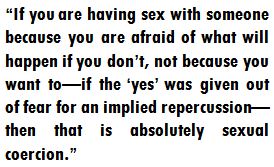
*See also this post about the death of Christopher Mackney, which contains links to his suicide note: “First Amendment Rights from Beyond the Grave: Defense of a Suicide’s Publication of His Final Words by the Randazza Legal Group.” The circumstances that conduced to Mr. Mackney’s taking his life are chronicled in a forthcoming book by investigative journalist Michael Volpe, which is titled, Bullied to Death: The Chris Mackney Story.

Kangaroo Court: The Australian Government Acknowledges “Abuse of Process,” so Why Doesn’t Ours?

The previous post introduced Legal Abuse Syndrome (LAS), a condition posited by marriage and family therapist Karin P. Huffer and defined as a form of posttraumatic stress disorder (PTSD). “It is a personal injury that develops in individuals assaulted by ethical violations, legal abuses, betrayals, and fraud,” Dr. Huffer explains. “Abuse of power and authority and a profound lack of accountability in our courts have become rampant, compounding an already stressful experience.” This post catalogs types of legal abuse that exemplify the “ethical violations…betrayals, and fraud” to which Dr. Huffer refers.


Australians aren’t distinguished for their refinement. I like them, though.

Plenty have plainly spent too much time with the sheep—I think we have an Aussie to thank for the Creation Museum, which features dinosaurs cavorting in the Garden of Eden—but Australians tend to tell it straighter than Americans do; they’re frank.

Maybe it comes of living in an equatorial zone that forbids the Puritan dress code.

I learned last week that they have a “Law Reform Commission.” The Australian government, like governments everywhere else, may be slow to acknowledge abusive laws, but at least it acknowledges laws are abused.

In America, feminism (not the equity-for-all kind but the men-suck kind) holds sway. There’s no shortage of conscientious objectors who feel abuses of statutory processes that were conceived to curb violence against women are out of control, but their voices are effectively subdued. To express a quibble is to be immediately beset by frenzied piranha.

So I was pleasantly surprised to discover that the Australian Law Reform Commission openly acknowledges “false or misleading evidence about family violence” and “vexatious applications in protection order proceedings”—which it wouldn’t do if these violations weren’t a lot more common than Americans like to pretend they are.

(Vexatious, incidentally, means “intended to harass.” It’s a warm-and-fuzzy euphemism for intended to destroy.)

The commission predictably wimps out and concludes that “existing measures [in Australia] to sanction persons who give false evidence of family violence are sufficient,” but it does indicate that it finds “merit in allowing courts to order that a person who has brought several vexatious applications or cross applications for protection orders against the same person without reasonable grounds may not make further applications except with the leave of the court.”

This absurdly says that even if a person is repeatedly found to abuse process, the worst consequence s/he should face is having to ask special permission before doing it again. What makes the commission’s comments significant, however, is that they actually own that there are people who exploit court process to hurt others and that they may do it over and over.

In America, you’re not allowed to acknowledge this—or even to allege process is abused to any degree worthy of note. To criticize legal processes instituted to protect women means you think women are “disposable.” The indictment is a non sequitur, but it works. It shuts most politicians up. It shuts most professors and journalists up, too. Never mind that each of “several vexatious applications” for restraining orders or assertions of “false or misleading evidence about family violence” may (permanently) associate the accused with “stalking,” “violent threat,” “assault,” “child abuse,” “molestation,” or even “rape.” Remarkably, there are influential people who briskly opine in venerable media that being accused of these acts, including rape, is no big deal.

(What do you wanna bet it hasn’t happened to them?)

It’s a big enough deal that some people never recover, and some kill themselves (or others). Most survive and persist, but this isn’t the same thing as recovering; they may never be “whole” again. One false accusation that sticks can unravel a life…and the accusation doesn’t even have to stick.

Victims of legal abuse are said to be negligible by the political powers that be, however, because there are women who are battered or raped who never receive justice. Victims of legal abuse are called a “drop in the bucket” in contrast. This argument—ye olde non sequitur again—ignores (among a great many other considerations) that there are women who are battered and/or raped who are also then falsely accused by their batterers or rapists to compound the violation and conceal their crimes. In some cases, at least, feminists who deny legal abuse and its horrors abet batterers and rapists of women.

Completely lost on flatulent opinion-mongers, besides, is that falsely accusing someone of violence or one or more “violence-related” acts is an acutely personal attack that’s often committed by a trusted intimate or former intimate (a friend, for example, or a spouse, family member, or lover), and that judicial process is punishing even when no punishment is meted out. It’s dehumanizing. People’s dignity is violated, their credibility is compromised, their names are tarnished, and their trust is savaged. The scrutiny alone is traumatic—just the anticipation of it is. Regardless of the court’s judgment, an entire network of relationships may be trashed. Members become invested in one side or the other, and no one backs down. Even if the truth emerges and frauds are exposed, apologies and reconciliations may be rare and grudging.

It’s not called “adversarial process” for nothing.

Legal gamesmanship, what’s more, runs the gamut, and this, too, is significant among the Australian Law Reform Commission’s observations. It includes false or misleading accusations of violence, false petitions for state protection, false cross-petitions for protection, false claims made to have restraining orders changed or revoked, etc. (fraud here, fraud there, fraud everywhere). What no one in authority wants to concede is that if the laws make it easy and attractive to lie impulsively and hurtfully, people will lie impulsively and hurtfully.

One of my favorite phrases in the English language is shit for brains when it’s pronounced in an Australian accent. It never fails to make me smile.

What the Australian Law Reform Commission’s remarks make clear is that any shit for brains should recognize that a whole lot of fraud is committed in these volatile yet superficial court procedures that are often started and finished in minutes but whose consequences, irrespective of rulings, are nevertheless extensive, lasting, and crushing.

Copyright © 2015 RestrainingOrderAbuse.com
“Shame and Stigma” and the “Mean-Spirited Cultural Response” That Efforts to Cast Them Off Provoke: Procedural Abuse and Parental Alienation

“Parental alienation is the ‘programming’ of a child by one parent to denigrate the other (targeted) parent, in an effort to undermine and interfere with the child’s relationship with that parent, and most often occurs within the context of a child custody conflict. This includes the ‘legal abuse’ of parents who have been disenfranchised from their children’s lives subsequent to sole custody and primary residence judgments. Within an adversarial legal process, non-custodial parents are often subjected to shame and stigma, lack of access to their children, and devaluation of their role as parents. And those who speak about the pain and woundedness in their lives are subjected to a mean-spirited cultural response, where their talk of woundedness is mocked.”

Edward Kruk, Ph.D.

Here’s child and family social worker Edward Kruk corroborating that parents may be the targets of “legal abuse”; that they’re subjected to shame and stigma, and to alienation from their children; and that they’re ridiculed and regarded with contempt for complaining about it: “The Impact of Parental Alienation on Parents: Post-traumatic Stress in the Rupture of Parent-Child Relationships” (2013). There are mothers who endure this, make no mistake, but as Dr. Kruk observes, “Most alienated parents are non-custodial fathers.”

Members of both genders (parents and non-parents alike) have reported on this blog that they’ve experienced (or are in the throes of) PTSD consequent to abusive legal contests, and it’s not the intent of this post to discount the plaints of mothers who face this torment. It must be emphasized, however, that the “mean-spirited cultural response” Dr. Kruk notes is predominately, if not exclusively, directed at men, and it’s because fathers’/men’s plaints are so roundly and effectively denounced and dismissed that mothers’/women’s plaints also lack a sympathetic audience.

(Feminists would prefer that female victims of legal abuse quietly recede into obscurity and accept the role of martyr for “the cause.”)

The “mean-spirited cultural response” is broad but includes highly influential voices, including law professors and esteemed advocacy groups like the Southern Poverty Law Center, which has equated men’s and fathers’ rights representatives with hate groups, asserting that they’re on a par with the Ku Klux Klan.

No kidding.

To vehemently complain about being treated prejudicially by the courts and alienated from your kids is to be caricatured as a racist wearing a bedsheet and brandishing a torch. (Few in the mainstream press, moreover, scoff at this rhetoric.) For moms (and women in general) who’ve been victimized by legal abuse to be heeded, the demonization of men’s and fathers’ advocates as mere “misogynists” must first be controverted.

Last year, a post on this blog reported the award of a $500,000 grant to a female law professor to “debunk” the claim that court procedures are abused to alienate parents from their children, and it’s this sort of (government-funded) social science research that marginalizes voices like Dr. Kruk’s.

It provides fodder to bloggers and other commentators, and it’s used to “train” judges how to rule.

The selective orientation of feminist social science ignores competing (and compelling) findings like these Dr. Kruk cites:

Suicide rates are reported to be of epidemic proportions among parents, fathers in particular, who are struggling to maintain a parenting relationship with their children (Kposowa, 2000; Kposowa, 2003); and legal abuse has been noted as a key factor in these cases.

A recent post on this blog referenced the suicide of a father who’d undergone years of legal hell and couldn’t face any more. He bled out—emotionally, morally, and financially. Feminist advocates stress the consequences and “rampancy” of domestic violence—focusing narrowly on female victims—while denying that the effects of legal abuses are grave. They trivialize those effects and often deny legal abuses occur to any extent worthy of attention or redress.

The devaluation of family and the curtailment of lives aren’t trivial.

Copyright © 2015 RestrainingOrderAbuse.com

A Victory for Free Speech: Matthew Chan Prevails in His First Amendment Appeal of a Lifetime Restraining Order

Several posts on this blog in the past year have concerned the case of Matthew Chan, a Georgia entrepreneur who blogs and administers a forum for victims of “copyright extortion” (i.e., people who’ve been threatened with lawsuits for unsanctioned use of a copyright holder’s original material and may be intimidated into paying thousands to avoid being taken to court—this for posting a photo online, for example, or using a snippet of text without proper acknowledgment or without having paid a fee or otherwise obtained the author’s consent).

Matthew S. Chan

The blog has also featured a guest post by Mr. Chan.

This post reports that the Georgia Supreme Court returned a virtually unanimous ruling in his favor Friday, after many months of deliberation, that lifted a lifetime protection order prohibiting Mr. Chan from criticizing a woman he characterized as a “copyright troll.”

The basis of Mr. Chan’s appeal, prosecuted by New York attorney Oscar Michelen, was that the trial court that issued the order misconstrued and misapplied the law. Forcing a procrustean interpretation onto the facts, it determined Mr. Chan had harassed, intimidated, and “stalked” the plaintiff in the case, Linda Ellis. Accordingly, it imposed a “prior restraint” on Mr. Chan’s freedom of expression, barring him indefinitely from writing about her.

First Amendment authorities, Profs. Eugene Volokh and Aaron Caplan, submitted an amicus brief to the court in Mr. Chan’s favor, arguing that the First Amendment—with some exceptions—authorizes speech about a person, even if that speech isn’t polite or flattering.

Justice Keith Blackwell, writing for the Georgia Supreme Court, summarized the case in the court’s March 27 ruling:

Matthew Chan has a website on which he and others publish commentary critical of copyright enforcement practices that they consider predatory. Linda Ellis is a poet, and her efforts to enforce the copyright in her poetry have drawn the ire of Chan and his fellow commentators. On his website, they have published nearly 2,000 posts about Ellis, many of which are mean-spirited, some of which are distasteful and crude, and some of which publicize information about Ellis that she would prefer not to be so public. […] It is undisputed that Chan never caused any of these posts to be delivered to Ellis or otherwise brought to her attention. But it also is undisputed that Chan anticipated that Ellis might see the commentary on his website, and he may have even intended that she see certain of the posts, including the open letter to her.

Ellis eventually did learn of the posts, and she sued Chan for injunctive relief under the Georgia stalking law, OCGA § 16-5-90 et seq., alleging that the electronic publication of the posts was a violation of OCGA § 16-5-90 (a) (1), which forbids one to “contact” another for certain purposes without the consent of the other. Following an evidentiary hearing, the trial court agreed that the electronic publication of posts about Ellis amounted to stalking, and it entered a permanent injunction against Chan, directing him to, among other things, delete “all posts relating to Ms. Ellis” from his website. Chan appeals, contending that the evidence simply does not show that the publication of posts about Ellis on his website amounts to the sort of “contact” that is forbidden by OCGA § 16-5-90 (a) (1). With that contention, we agree, and we reverse the judgment of the trial court.

New York entertainment and intellectual property attorney Oscar Michelen, who represented Matthew Chan before the Georgia Supreme Court

To summarize the summary, Mr. Chan and members of his forum ventilated outrage toward what they perceived as legal terrorism (letters from Ms. Ellis’s attorney threatening civil prosecution for “copyright infringement” and reportedly offering to settle out of court for $7,500), and Ms. Ellis successfully represented the online remarks to the trial judge as tantamount to “stalking.” The statute, however, requires that an alleged “stalker” have actually contacted the “victim,” and no such contact was ever made.

For purposes of the statute, one “contacts another person” when he “communicates with another person” through any medium, including an electronic medium. See OCGA § 16-5-90 (a) (1).4 See also Johnson v. State, 264 Ga. 590, 591 (1) (449 SE2d 94) (1994) (as used in OCGA § 16-5-90, “[t]o ‘contact’ is readily understood by people of ordinary intelligence as meaning ‘to get in touch with; communicate with” (citation and punctuation omitted)). Although one may “contact” another for the purposes of the statute by communicating with the other person through any medium, it nevertheless is essential that the communication be directed specifically to that other person, as opposed to a communication that is only directed generally to the public.

There was no contact to satisfy the statutory definition of stalking.

Similarly, allegations of harassment and intimidation were deemed insufficient in the Georgia Supreme Court’s ruling, because no contact had been made with the plaintiff, so no contact had been made against her wishes.

The evidence shows that Ellis visited the website herself—it appears, in fact, that she registered herself as an authorized commentator on the website—and that she had others visit the website and report back to her about the commentary published there. Generally speaking, our stalking law forbids speech only to the extent that it is directed to an unwilling listener, and even if Ellis did not like what she heard, she cannot be fairly characterized as an unwilling listener. Ellis failed to prove that Chan “contacted” her without her consent, and the trial court erred when it concluded that Chan had stalked Ellis. See OCGA § 16-5-90 (a)(1).

Other commenters on this blog, who hadn’t the wherewithal to appeal their cases to the high courts, report having had similar judgments entered against them, typically subsequent to an earlier restraining order. This blog’s author is among them. He was issued a restraining order based on false claims in 2006 and was sued for libel and harassment fully seven years later by its petitioner, who had since moved to another state, after he criticized her publicly, this despite his having had no contact with the woman in the intervening period. The court imposed a lifetime restraining order upon him barring him from exposing the woman (a professional scientist) in anything he publishes.

Mr. Chan’s case highlights that lower-tier judges, presiding over abbreviated procedures spanning mere minutes and according to their personal lights, arbitrarily exercise the broad latitude they’ve been granted by lawmakers. It’s the rare restraining order case like Mr. Chan’s, one that ascends through the courts, that exposes the degree to which bottom-rung judges do what they want without regard to the letter of the law.

Mr. Chan’s victory is shared by all of those who’ve been wronged by the court—and if I know my friend Matthew, his advocacy is going to be all the louder for it.

Copyright © 2015 RestrainingOrderAbuse.com

STINKIEST: Most Restraining Orders Are Sought Impulsively, if Not Maliciously

stinkiest“The first question for a legislature is whether to enact a civil harassment law at all. One thing is certain: If a civil harassment statute is enacted, it will be used—a lot. In 2003, Oklahoma reimposed a relationship requirement on its civil harassment statute because metropolitan counties were ‘being overrun with requests for protective orders.’”

—Prof. Aaron Caplan, “Free Speech and Civil Harassment Orders” (2013)

“The measure [House Bill 1667]:

  • Limits VPOs [“victim protective orders”] for harassment to situations in which the victim is being harassed by a family or household member or a person with whom the victim has been involved in a dating relationship. This provision is meant to reduce the number of frivolous applications for VPOs;
  • Requires victims of stalking who are not family or household members or in a dating relationship with the alleged stalker to file a complaint against the defendant with the proper law enforcement agency prior to filing for a VPO. The victim must provide a copy of the complaint with the petition for the VPO. This is also being done in an effort to reduce the number of frivolous applications for VPOs […].”

Highlights of Legislation (49th Oklahoma Legislature, 2003)

As law professor and former ACLU staff attorney Aaron Caplan all but says, restraining orders are exploited. The 49th Oklahoma Legislature cited in Mr. Caplan’s law monograph explicitly implies the same thing. The purpose of its 2003 HB 1667 was to “reduce the number of frivolous applications.” This clearly wouldn’t have been a concern if there weren’t a great number of frivolous applications.

Frivolous means “having no sound basis.” Its vernacular synonym is bullshit.

The preceding two posts on this blog examine how many restraining orders are either rejected by the court (“tossed”) or withdrawn by petitioners after they succeed in securing them. Available news reports indicate most restraining orders are rejected outright or dismissed upon a “full hearing.” Most. Indications, too, are that a lot that aren’t rejected are later withdrawn by the people who petitioned them. A lot.

This alone is reason to suspect the motives of complainants and the merits of their complaints. Certainly it says judges do. As the epigraph reveals, legislators do, too.

Consternating to people whose lives have been derailed by false accusations is that the problem has been vigorously exposed and criticized for decades, and judges, lawmakers, and attorneys know those criticisms are more than hot air.

Yet little changes…including rhetoric that legislators know is misleading (stinky).

Look at the second quotation in the epigraph. First, note that the civil harassment orders that were repealed by HB 1667 were called “victim protective orders” (i.e., reflect on the absurdity of the phrase victim protective orders for harassment). Also note the acknowledgment that a significant proportion of petitions for “victim protective orders” are “frivolous.” Orders that may have nothing to do with violence are called “victim protective orders” and—and—they’re acknowledged to be used falsely, or at least wrongly (and to such an extent that legislative revision was urged).

stink6Applicants for orders that are acknowledged to be used frivolously, however, are nevertheless called “victims.” (As the previous post shows, journalists collude in this misrepresentation.)

Recognized non-victims who clog court dockets with illegitimate claims are still called victims. Cases recognized as non-violent are still characterized as violent. When bias is this manifestly rooted, is it really that hard to believe that many or most orders that are approved and finalized may be malicious? The “fix” is obvious—it’s obvious—so how hard can “frames” or “set-ups” be to pull off?

Much ink has been spilled by opponents of the restraining order process desperate to arouse awareness to false allegations and prejudiced practices. People are issued restraining orders with fraudulent accusations that stick. They lose their jobs, homes, money, property, and good names. They lose access to their kids, who may come to hate them based on lies. Some may end up on the streets; some may even kill themselves in despair after being bullied and ground down, possibly for years.

False allegations that are rejected by the courts aren’t called false, yet false accusations that aren’t rejected by the courts are invariably called true (or “true enough”). The entire system reeks to high heaven.

How often false allegations succeed can’t be statistically established. Victims are left with having to lay out their cases in blogs and YouTube vids, or voicing four-letter epithets in Internet forums—or just quietly going mad.

This has inspired a great deal of rage and arguably more than a few deaths (suicides and murders), and that rage has inspired vehement denunciations from legions of special interest groups.

What all of this distracts from, though, is that explicitly manifest in judicial rulings and legislative reforms is that the court itself recognizes that false—or at least “frivolous” or “baseless”—claims are made more often than not.

Most restraining order petitions are rejected. Put more emphatically, theirs are considered to be bullshit claims.

What must be appreciated, finally, is that the restraining order process is a highly “accelerated” one (as Prof. Caplan, quoted in the epigraph, notes in his study). The conceptual justifications are that (1) applicants are “in danger” and need immediate relief, and (2) restraining orders are “no big deal.” The latter is refuted by rates of depression and suicide (or would be if they were they known), and the former is refuted by a preponderance of court rulings.

Unanticipated by lawmakers (apparently though inexplicably) is that an accelerated process rewards impulse, including malicious impulse. It’s exploited in heat, completed in moments, and usually free (and there’s no statutory limit imposed upon the number of times a single petitioner may exploit it).

Why do judges determine most restraining order petitioners’ claims are bullshit? That’s why.

Copyright © 2015 RestrainingOrderAbuse.com

STINKIER: Not Only Do the Courts Toss Most Restraining Order Petitions, a Lot of the Ones That Are Finalized Are Later Withdrawn by Their Petitioners

stinkier
A couple available rejection rates for restraining order petitions filed with the courts were scrutinized in the last post. Those rates, based on news reports out of Colorado (1998) and Connecticut (2014) were high: roughly 82% (lowball calculation) and 72%, respectively. That’s how many restraining order petitions may be denied or dismissed by our courts. They’re either rejected at first glance, or they’re preliminarily approved and then vacated on review.

They’re judged to be stinky.

Yesterday, I came across this: “Many abuse victims request protection orders then have them dismissed” (March 26, 2015). How many? Almost half (in the cited county, anyhow).

The headline and slant of the story pain me, and I’m compelled to comment on them before broaching the meat of the article.

Note that the typical journalistic bias is in evidence: accusers are termed “abuse victims.” This bias accounts significantly for why the bad odor of the restraining order process is obscured. It stinks, too—of Glade aerosol.

My criticism may seem cold—many accusers assuredly are abuse victims—but a journalist’s brief is to report what he’s investigated, and it’s a safe bet that the “many abuse victims” referenced in the headline aren’t people whose cases the writer looked into. At all. He assumes they’re “abuse victims,” apparently because why else would they have claimed to be?

This is smelly news reporting, and Journalism 101 urges a revision: “Many who are granted protection orders then have them dismissed.” There’s a difference, and the journalist who doesn’t discern that difference is in the wrong line of work.

The writer also begins his story with an account of a woman who’d obtained a protection order against her husband only to be subsequently shot to death by that husband. Then the reader is informed:

Though [the homicide victim] had not asked for her protection order to be dismissed, many other victims do and some of them end up coming back and asking for additional protection orders.

In other words, the reported tragedy has absolutely nothing to do with people who “request protection orders then have them dismissed.” I studied journalism in high school under the tutelage of a man who was the real deal, so lurid and careless journalism offends me.

What do we know from what’s related by Matt Elofson, the crime and courts reporter for Alabama’s Dothan Eagle? We know people apply for restraining orders, get them, and then reconsider (and sometimes re-reconsider). And we know that one person, who never reconsidered the restraining order she was granted, was fatally shot (possibly as a consequence of seeking the state’s protection). These are facts; the rest is rhetoric and specious connections, which are journalistic no-nos.

The reportage of Mr. Elofson’s that isn’t corrupt, however, is telling.

Roughly 40 percent of the petitions for protection from abuse filed in Houston County over the past year were dismissed upon request of the victim.

Houston County Circuit Clerk Carla Woodall said 223 petitions for protection from abuse were filed in Houston County from March 2014 to March of this year. She said 90 of the 223 petitions were later dismissed upon request by the victim.

For “victim,” substitute “petitioner” (pretend, in other words, that it’s a news story that’s been quoted) and then note that it says nearly half of orders that are approved and finalized are afterwards withdrawn by their petitioners.

Nearly half.

Here’s what a journalist (somewhere, someday) should observe: Most restraining orders are denied or dismissed by our courts, and an arresting proportion of those that aren’t denied or dismissed are withdrawn. That’s a whole lot of “sound and fury signifying nothing” except a whole lot of misery for a whole lot of accused people.

This, furthermore, ignores that a majority of orders that are approved and not withdrawn may be false.

We’re not allowed to call the restraining order process a farce, because—as Mr. Elofson reminds us—sometimes people who procure restraining orders are legitimately at risk.

How, though, does Mr. Elofson remind us that restraining orders are necessary and vital to the protection of women? He reminds us by citing an instance in which a restraining order may have gotten its petitioner killed.

Copyright © 2015 RestrainingOrderAbuse.com

Invoking the Fifth Amendment Protection against Self-Incrimination in “Domestic Violence” Cases

In “How the Fifth Amendment Impacts Family Court in Domestic Violence Cases” (2013), family attorney Tracy Duell-Cazes offers the following counsel against self-incrimination (it’s directed to Californians but may be applicable generally):

To make this easier to read, I will use Respondent when referring to the person who is accused of committing a domestic violence offense and Petitioner for the person against whom the violence was alleged to have been committed.

The Respondent has the right not to make [self-]incriminating statements in any proceeding. This includes discovery, hearings, and any other place where statements may be made. The general rule is that the Respondent cannot be required to testify at the restraining order hearing. The Respondent does not have to produce any discovery regarding the domestic violence issue if the Respondent timely claims the privilege against self-incrimination in response to the discovery request.

Courts usually grant a continuance until the criminal action is concluded. The temporary restraining orders stay in effect. Once the criminal action is concluded, then the hearing in Family Court can go forward. Usually the criminal case is dispositive of whether or not permanent restraining orders in Family Court are issued. If there is a conviction, the permanent restraining orders will almost always be ordered.

The Respondent must make sure that s/he doesn’t say anything to anyone but his/her attorney. (It is usually a good idea in these kinds of cases to have an attorney who practices family law and knows something about criminal law.) If any discovery is sent to you to answer, you need to assert your privilege against self-incrimination in a timely fashion. If you do not, you will lose this right and be required to testify against yourself and be required to respond to the discovery request. This means that the court can compel you to answer the questions, or sanctions will be imposed. Sanctions can be anything from your paying money to the other side to the issue being decided with only the other person’s information.

In order for [the] Respondent to give up his/her right to remain silent, s/he must knowingly and intelligently waive that right. This means that s/he has to know the consequences if s/he talks about the facts and that s/he understands that whatever s/he says can (read will) be used against her/him in the criminal case. If you are ever unsure of whether or not you have a “right to remain silent,” you should immediately consult with an attorney. It is best to consult with an attorney who practices both family law and criminal law or who handles domestic violence cases.

Copyright © 2013, 2015 Tracy Duell-Cazes and RestrainingOrderAbuse.com

*The Fifth Amendment guarantees you don’t have to say anything against yourself. To enjoy this privilege, however, you have to say you don’t intend to say anything against yourself (e.g., “I decline to answer on the grounds that it may tend to incriminate me”). You can’t, in other words, be completely silent. (See Ms. Duell-Cazes’s next to last paragraph above.)

A Word on Restraining Order Statistics and the Rate of False Restraining Orders

I responded to a paper published last year by law professor Kelly Behre, who took umbrage that so-called FRGs (father’s rights groups) were promulgating the statistic that 80% of restraining orders were frivolous or false. This conjectural statistic (60 to 80%) was, I believe, postulated by Save Services based on its studying available information, which is scant. I don’t know that the estimate is unimpeachable, but I don’t believe its authors ever asserted it was conclusive.

Speaking conclusively about figures like this is impossible. Even estimates of how many restraining orders are issued every year in the United States is speculative (and informed guesses I’ve read range from 900,000 to two or three million).

The posited “80%” statistic was seized upon by critics of the restraining order process and bruited broadly on the Internet. I published it myself, and this blog, accordingly, was cited in Prof. Behre’s paper as the product of an “FRG.” It’s actually the product of a single tired and uninspired man who knows that false accusations are made.
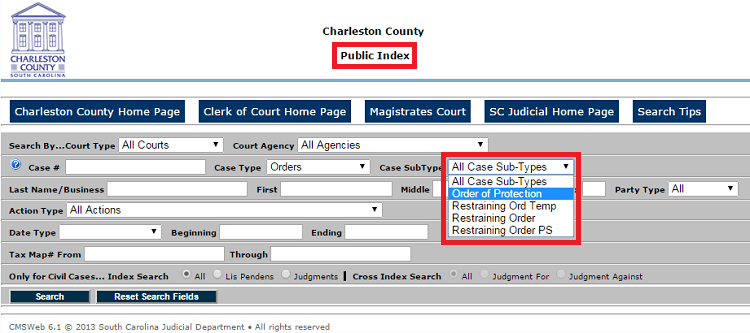
Is the statistic wrong? Who knows. Who can say, even, what such a statistic purports to refer to? Does it mean most restraining order petitions are false? Does it mean most temporary restraining orders are dismissed as insufficiently founded? Or does it mean most restraining orders that are finalized have bogus grounds?

There are three phases to the process. A petitioner files an application, which may be approved by a judge or may not be. If it’s approved (ex parte), a temporary order is issued. This order is then supposed to be subjected to review by another judge before being affirmed and made “permanent.” (The word permanent is misleading. A “permanent” order typically has a duration of one year—though, to compound the confusion, some orders may actually be permanent and never expire. What isn’t misleading is that the public record of a restraining order is permanent.)

Three phases: application, temporary order, “permanent” order—got that?

What people invested in exposing this travesty of justice must understand is that it’s possible an unknown (and significant) number of applications for restraining orders are rejected at the outset. Their petitioners are refused. Is this number recorded someplace? Maybe, maybe not. We’re a federation of states, and every one of those states has its own budget, recordkeeping practices, and priorities.

Perhaps even its individual courthouses do.

Putting aside the fact that the number of applications that are rejected may not be recorded, there’s also the question of how many orders are preliminarily approved by the court and then dismissed on review.

I recently quoted a statistic reported in The Denver Post: “In fiscal 1998, about 18,000 temporary and 3,300 permanent domestic-violence-related restraining orders were issued in Colorado counties.” This statistic itself suggests that over 80% of restraining orders are determined to be frivolous, flimsy, or false. It says that of some 18,000 initially approved (i.e., temporary) restraining orders, only a fractional 3,300 were found meritorious on review.

It says the “80%” statistic is, in one sense at least, right on the money, if not conservative.

If comprehensive statistics for all courts were available that showed how many restraining orders were petitioned, how many of those petitions were rejected outright, and how many of those petitions were rejected on review, the proper statistic for restraining orders determined to be unfounded or indefensible by the court might prove to be in the 90th-percentile range.

And that’s ignoring that a goodly number (and maybe a majority) of the restraining order petitions that “pass muster” and are affirmed by judges may themselves be based partly or wholly on BS claims.

Even what “false” may mean in respect to restraining order allegations is ambiguous. Does “false” mean misrepresentative of the truth, i.e., misleading? Does it mean inclusive of true and falsified allegations? Or does it mean fabricated wholesale, i.e., purely and maliciously untrue?

James Thurber: “It is better to know some of the questions than all of the answers.”

Copyright © 2015 RestrainingOrderAbuse.com

Judicial Incompetence and the Consequences of Restraining Order Rulings (Using South Carolina to Illustrate Why the Restraining Order Process is Pernicious)

“Most magistrate judges in both Beaufort County and the state are not lawyers, and the county’s chief magistrate lacks a college degree, state records show.

[…]

“In Beaufort County, four of 11 magistrates are lawyers, according to Terry Leverette of S.C. Court Administration.

“Seven of the county’s judges were required to have a four-year college degree, because they were first appointed after the state changed the education requirement in 2005. Beaufort County’s chief magistrate, Darlene Smith, appointed in 1994, finished high school but does not have a college degree.”

—Luke Thompson, The Beaufort Gazette (Sept. 20, 2010)

In his article “Most county magistrates aren’t lawyers, but education standards are changing,” Luke Thompson reports that in 2010 “only about 13 percent of [South Carolina’s] 311 magistrates” were certified to practice law.

Standards are changing, he relates. The state’s Supreme Court requires that magistrate judges who rule on “check cases” be licensed attorneys (because decisions may levy significant fines).

This degree of legal competency isn’t, however, required to rule on restraining order cases.

“Are lawyers kind of presumptively better qualified to judge cases than somebody who has never had that background? Yes, sure they are,” said John Freeman, a retired University of South Carolina law school professor who sits on a panel that screens state judges. “Would the public be better off? I think probably the public would be better off, and I say that without meaning to disparage or degrade some of our fine magistrates who don’t have full legal educations.”

[…]

It’s not clear if magistrates without legal training are more likely to make bad rulings. Leverette said the state does not keep statistics regarding how many magistrate cases are overturned on appeal. [Note: few restraining order cases are ever appealed to the state courts in the first place.]

Freeman…said magistrates account for a disproportionate number of disciplinary actions. Requiring law degrees might reduce that number, he said.

(Ya think?)

The “check cases” referenced in Mr. Thompson’s story presumably have to do with fraud or nonpayment, i.e., money. In law, a great deal of emphasis is placed on money. Disregarded, however, is that “disciplinary actions” undertaken carelessly, like the casual issuance of restraining orders, can exact a far graver toll than some kited checks.

Restraining orders, what’s more, are no less permanent public records than charges of “check fraud,” and these records may be conveniently accessed by the Internet. The “public index” for Charleston County, South Carolina, shows just how conveniently:

Appreciate that the (mere) implications of the (mere) phrase restraining order or protection order include stalking, “terroristic behavior,” battery, child abuse, and sexual assault.

Finally, consider that petitions for restraining orders—which may cost men and women their jobs, security, and access to children, pets, home, and property—may be ruled upon by people whose educational credentials are nothing more than a high school diploma or a degree in library science, and that highly prejudicial and prejudiced restraining order rulings are available for public consumption (by defendants’ friends, associates, students, patients, employers or employees, loan officer, landlord, etc., etc., etc.).

Anytime and for all time.

Copyright © 2015 RestrainingOrderAbuse.com

*The story cited above was killed after it was quoted in this post. Here is a story about magistrates in Pennsylvania. Its reportage is similar.

In Perspective: How to Look at Restraining Order Judges Neutrally

It’s hard not to hate judges who issue rulings that may be based on misrepresentations or outright fraud when those rulings (indefinitely) impute criminal behavior or intentions to defendants, may set defendants up for further (or serial) malicious prosecutions by the same false accuser (and possibly land them in jail), and may finally inflict severe privations, including loss of income, employment, and/or access to children, pets, home, and property.

It’s especially hard not to hate judges when you’ve told them the truth, pronounced it politely and respectfully, and nevertheless been scorned, humiliated, and demeaned…with gusto.

Judges tend to be hubristic, condescending, and willfully menacing (even when they’re smiling at you).

To compound the outrage, it’s only their station that licenses their haughtiness. More often than not, their authority doesn’t come from learnedness in the law but is simply a perk of the job.

Though there have been some motions in recent years to amend this situation, most bottom-rung judges who issue restraining orders aren’t qualified lawyers, that is, they don’t have law degrees. They were just elected or appointed to the position and sent to “judicial boot camp.” Judges are trained to execute specific duties; they’re not necessarily educated in jurisprudence.

Some have no education beyond high school.

This may either be a reason to resent them all the more for their audacity or a reason to see them as mere tools of a system that conditions their bigoted behavior. Restraining order judges are told—possibly quite explicitly—how they’re expected to rule. That’s a significant part of their “training.”

This hardly excuses conduct that obviously contravenes judicial ethics. It does, though, make that conduct understandable.

Certainly judges aren’t to blame for the state of things, including the shambles they unjustly make of people’s lives. They don’t level the allegations, nor do they formulate the rules, draft the laws, or influence the political and public opinions that do determine rules and laws.

Sure, judges of conscience could vocalize qualms or defy the system. They could martyr themselves for principle. Whether this would effectively alter the status quo, however, is debatable.

Remember, they’re not legal scholars, by and large; they’re just referees who’ve had certain priorities impressed upon them. It’s not theirs to comment on the laws—and being unqualified to do so, they may genuinely believe they’re acting righteously.

There’s no particular reason not to hate judges if one or more have wronged you. If you step back, though, you’ll see that they’re more like ants that bite because they’ve been tasked with defending the colony according to certain marching orders than they are like people we should reasonably expect to treat us with dignity and charity.

Judges are often power-corrupt—it comes of sitting above others who must kowtow to them—but they’re basically people doing a job they may be scarcely better equipped to do than you or I.

Copyright © 2015 RestrainingOrderAbuse.com

On “Restraining Order Conspiracy”: Why Judge-Plaintiff and Judge-Attorney Collusion May Have More to Do with Judicial Ignorance than Complicity

The last post posited that the snarky zinger often aimed at teachers applies at least as aptly to the court: Those who can’t do, judge.

Conclusions in that post were inspired by conversations I had this week with a client, a former criminal defense attorney who began his legal career in the county prosecutor’s office. He impressed upon me that lower-court judges’ legal credentials ranged from inexperience to no education in the law whatever.

He told me that judges often called him to get clarifications of legal niceties.

I’ve been in procedures in both my county’s “justice court” and superior court. In each, I represented myself. If you’ve been the defendant in a restraining order trial (and possibly one or more trials that devolved from allegations on a restraining order petition), see if your experience didn’t correspond with mine.

My impression of the judge’s conduct in the restraining order hearing I was granted was that he grasped at whatever he could to justify the court’s preliminary findings. He didn’t “negotiate” the facts; he chose ones that could support the conclusion he preferred.

Similarly, in cases before the superior court in 2010 and 2013, in which I was self-represented and my accuser had an attorney speak for her, the judges basically did whatever her attorney told them they should: monkey see, monkey do. In each trial, it was like watching a puppet show. The judges, in instances, even parroted back the attorney’s language in their rulings.

At the time, I just assumed the whole process was fixed (i.e., bent as a papier-mâché flagpole), and I know from hearing many other people’s stories of similar travesties that they left the courtroom feeling the same.

What I realize now, though, is that the reason judges acquiesce to attorneys and seem to echo whatever they say like ventriloquists’ dummies is that they’re glad to be told what to conclude and how to justify that conclusion. The record doesn’t have to withstand much scrutiny—few people actually take such cases to the high courts; its “findings” just have to be persuasively plausible.

Instead of having a healthy skepticism and suspicion of attorneys’ (and plaintiffs’) motives, arguments, and testimony, judges aren’t confident enough in their own knowledge and powers of discernment to challenge them.

As my client, the former attorney, derisively says of judges, “They’re umpires” (spectators). They don’t “find” anything but what’s handed to them.

If bottom-rung judges only ruled on traffic citations and officiated over marriages—which is all some of them possess the proper qualifications to do—this wouldn’t be a big deal. When, however, they indefinitely impact futures (or void them) because their “civil” rulings impute criminal behavior to defendants (possibly based on nothing or on lies), this is playing fast-and-loose with people’s lives.

Copyright © 2015 RestrainingOrderAbuse.com

Diddly: What Judges Who Issue Restraining Orders May Know about the Law

I should go back and edit out whatever grudging credit I’ve given to judges for their knowledge of the law in posts past. It turns out that if you’ve been calling the guy or gal who issued you a restraining order—and then scorned and humiliated you when you tried to defend yourself—a “clown,” a “petty tyrant,” or a “mouth-breathing wannabe,” you may have better grounds for your assessment of his or her character and qualifications than you imagine.

A client I talked with this week, a retired criminal defense attorney who started out as a county prosecutor, set me straight about what legal credentials are required to ascend to a seat on the court’s lowest tier in my home state of Arizona.

None. At all. These “judges” don’t have to know jack about the law.

Arizona isn’t known for progressivism, of course. We still have “justices of the peace.” On the other hand, so, too, do New York and the United Kingdom.

The majority of JPs (or “magistrates,” as they’re sometimes called) aren’t qualified lawyers, that is, they don’t have law degrees. It may be the case, what’s more, that bottom-rung municipal and county judges in many or most places are laypeople whose only grounding in the law may be a bit of mandated “judicial training.”

(When I was a graduate teaching assistant, I was required to meet with a panel of professors once a week for a “colloquium.” The point was to familiarize up-and-coming professors with what the business of professorship entailed. I’ve witnessed no evidence that “judicial training” is any more intensive than this was.)

Restraining orders, it should be noted, may issue from a diversity of courts. Their typical sources, however, are judges at the dirt end of the totem pole, the same people who hear traffic cases and officiate over marriages for tips (they can make, incidentally, $100–$200K, depending on the size of the jurisdiction they preside in and the docket it generates). All that may distinguish JPs or their equivalents from anybody else (excepting their lavish salaries) is that they got elected or appointed to office. In Arizona and places elsewhere, they’re minor politicians, like schoolboard members and city councilmen and -women.

(In 2014, nearly 50 JPs elected in my state of Arizona ran unopposed; they didn’t even have to be good politicians to “earn” their judicial posts. Amusing story: In 2011 or 12, after I’d just started writing about procedural abuses, I chanced to bump into a friend from the University of Arizona English Department. She hollered at me across the parking lot of a public library. It happened that she was dating a judge and wanted me to sign her boyfriend’s petition for reelection. He seemed like a nice guy—I’d never met him before—and I didn’t think twice about lending my support and shaking his hand. I only realized as I was driving away that he’d been one of the four judges involved in my own case in 2006. I made the connection because his promotional gimmick was a chip bag clip with his name embossed on it. It’s probably still in my truck somewhere under the string cheese wrappers.)

All this is to say that the “reverend pontiffs” we’re required to bow and scrape to when we appear in court (“Yes, Your Honor!”) may have been former McDonald’s shift managers. These are the same guys, mind you, whose offhand judgments may spur protracted domestic wars whose financial tolls can run to the five or six digits (and ruin families)—and that’s besides the thousands or tens of thousands that serial litigations (from one couple) may cost the taxpaying public.

(“Can I interest you in a large drink to go with your order?”)

Rulings by these men and women, who may have no collegiate training in the law, may moreover drive some defendants to commit suicide or to do violence to others.

(“You wanna supersize that?”)

Several people who’ve registered complaints about restraining order decisions on this site have J.D.’s—law degrees—and are or were licensed attorneys. (Larry Smith is a former lawyer who’s been subject to and who blogs about restraining order and other procedural abuses.) As if the restraining order process weren’t already a sham owing to the slack standards authorized by lawmakers, the mere minutes-long (“drive-thru”) hearings, and the preferential treatment shown to plaintiffs, the process is also administered by folks who may have less background in the law than the people they pronounce judgment upon.

This isn’t to say these guys don’t know “the rules” and what the statutes say. There’s more, though, to the law than laws. You or I could learn those with a few nights of study. The point is they may have no footing in the principles of jurisprudence or have ever taken a freshman level course in legal ethics. All they may know is what they’re “supposed” to do.

(“Does everything look right on your screen?”)

Judges higher up the ladder, like superior court justices, do have to have degrees and must have passed the bar, according to the former lawyer I talked with this week (for whom I removed an aged tree with hands I’d meant to do other things with—I did also offer to help him with a book he’s writing). But even superior court judges need not necessarily have practiced the law significantly before assuming a position on the bench. It’s sort of like naming a greenhorn architecture professor to be the foreman of a construction site.

The snarky zinger often aimed at teachers applies at least as aptly to the court: Those who can’t do, judge.

Not only did my client (the former lawyer) opine that some judges were “complete idiots”; he felt some of them weren’t even sane (and he named names, which I have to be cautious about doing). “God,” I said, “it’s like the Wild West.” He agreed.

Copyright © 2015 RestrainingOrderAbuse.com

*To make matters more shameful yet, restraining orders may be issued by judges pro tem—temporary help hired by the court to cover for JPs or their ilk. These courthouse temps may have no judicial experience (and no particular investment in doing their jobs well). The restraining order this writer was issued in 2006, which had been petitioned by a married woman who hung around his house at night in 2005 (minus both her husband and her wedding ring), was approved by a judge pro tem. On appeal, the order was determined by a JP to have been “incorrectly issued,” because the woman had included her husband on the order (her motive for the order was plainly to have me prohibited from speaking to him). The judge, who had a black cowboy mustache that screamed dye, ruled to affirm the order despite its sketchiness after he “allowed” me to testify for 15 minutes. What a guy. (In conversation with the client I’ve mentioned in this post, I was told he’d ironically helped to get this particular judge elected. He shared some gossip with me, too. He said the man liked to tell people he was a former member of Special Forces. My client quipped he was probably the cook. Not long after I stood before him in 2006, “Judge Commando”—who had declared during my hearing that he considered his courtroom the “last bastion of civilization”—was nominated to head up my county’s domestic violence court. Who better to sensitively negotiate disputes that fracture families than a fella who fancies himself Rambo? As you might guess, he’s very popular with female plaintiffs.)