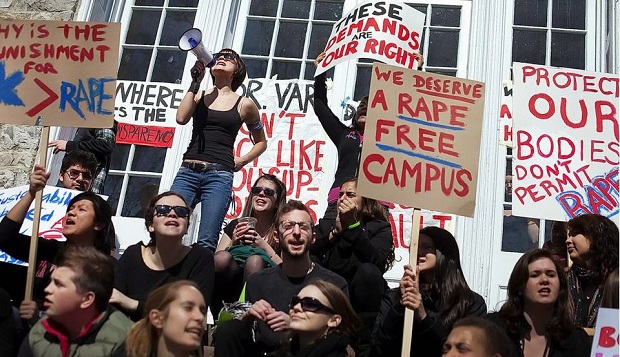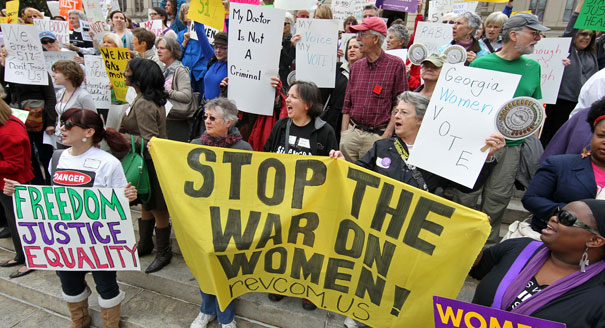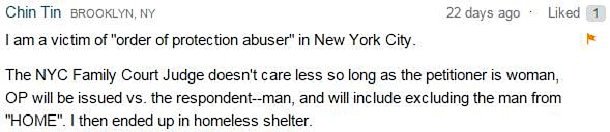
A Brief Introduction to Feminist Rape Culture

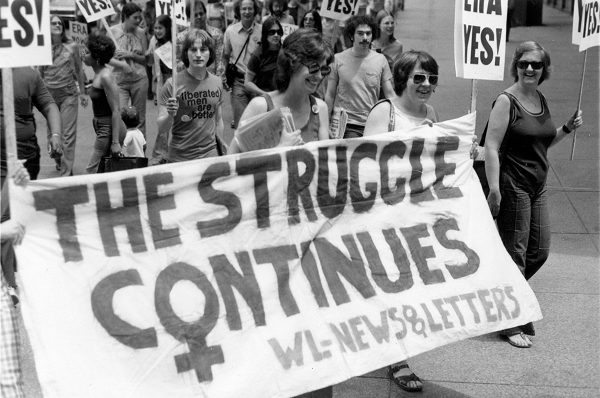
“For those who don’t know, rape culture is an environment in which rape is highly prevalent, normalized and excused by the society’s media, popular culture, and political figures.”

—Ashley Jordan, The Humanist


Copyright © 2018 RestrainingOrderAbuse.com

*Omitted from this collage, its author realizes belatedly, is the acronym VAWA, which stands for a vector of evil. A chronicle of what this collage summarizes is here.

If Restraining Orders CAN Be Abused, then the PROCESS Is Abusive—and Should Be Repealed

This post addresses a block its writer has noted even in the commentaries of those profoundly injured by unjust or false accusations. That block typically runs something like this: “I’m totally for restraining orders when they protect the violently abused, but….” This perspective is blind, and this post will explain why.

“The road to hell is paved with good intentions.”

—Proverb

“You know, the very powerful and the very stupid have one thing in common: They don’t alter their views to fit the facts; they alter the facts to fit the views. Which can be uncomfortable if you happen to be one of the facts that needs altering.”

Dr. Who

I was accused of a number of unsavory things in the spring of 2006 by a disturbed and very married woman who had hung around outside of my house in the dark for a few months the previous fall. She filed multiple police reports then complained to a judge in my presence that my request for “an explanation of sorts” had caused her grave upset and interfered with her work. (Also, she was concerned she might be “attacked”…and her husband might be…and her friends might be…and her mother might be…and….)

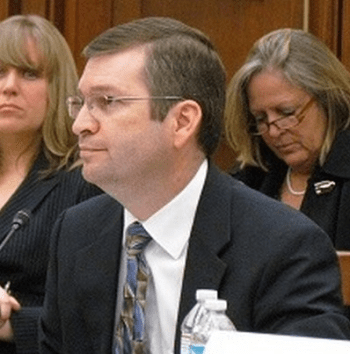
Michael Honeycutt TCEQ, Michael Honeycutt EPA, Michael Honeycutt PhD, TCEQ, EPA Science Advisory Board, Texas Commission on Environmental Quality, Environmental Protection Agency

This man, Dr. Michael Honeycutt, Ph.D., testified to the Superior Court of Arizona in 2013 (by phone) that the government department he heads (in another state) had instituted special security measures to protect a woman from me whom I hadn’t seen or contacted in seven years. When I found this self-styled damsel in distress standing outside of my residence in 2005, I was a practicing children’s humorist who fed birds and had a pup who wore a pink collar. The same woman who would accuse me of stalking and violent intentions had come to my door one night seeking a defender against men she feared were stalking her and had violent intentions. This established a relationship that included her plying me with conversation about her breasts and underwear and trying to follow me into my house after midnight (minus her wedding ring).

That was 12 years ago, and this woman has dramatically and broadly misrepresented me ever since. She’s also induced others to join her in her hoax.

I tried to find you in our system,” I was told in my initial police interview many years ago (when I still had plans and dreams of my own), “but there was nothing. At all. That’s really rare.

Over the four years I’ve maintained this blog, begun five years after my interviews with the cop, I’ve heard repeatedly from others who allege they were falsely accused and who report they had had no prior acquaintance with police precincts or courthouses, either.

Consider how this jibes with the assertion that restraining orders protect victims of violent abusers. It plainly doesn’t, and only “the very powerful and the very stupid” would say otherwise.

Public sentiment has been coerced by “the very powerful and the very stupid” to the extent that even those who know the procedure is a travesty feel compelled to allow that there are cases when restraining orders are necessary.

Changing the minds of “the very powerful and the very stupid” has to start with changing the minds of people who are neither powerful nor stupid, and who know better. There is no justification for bad law. It should be repealed.

What victims of that bad law mean when they say “there are cases when restraining orders are necessary” is that they acknowledge there are people in abusive relationships or imminent danger who need relief. They should appreciate, though, that it isn’t restraining orders that are necessary; something is. Rejecting bad law doesn’t obligate its critic to propose what that something should be. Clearly, however, what that something should be should never have innocent casualties. A law that’s supposed to protect the innocent but may destroy them is both wildly flawed and dangerous.

These are facts: Restraining orders deny defendants their constitutional right to due process; justice rendered in drive-thru procedures that may deprive defendants of employment, security, home, and family can only ever be dubious at best; and being misrepresented in a court of law, scourged by a biased judge, and gibbeted on grounds that may be trumped up or cunningly fraudulent is hurtful and possibly ruinous, and shouldn’t be possible…ever.

If you acknowledge these facts, then you must be against restraining orders, and you must be against them categorically—no ifs, ands, or buts. They’re not the answer. They were a stopgap that has become an institution. That doesn’t mean their engineering was ever sound.

Sure, it may be correct to say that you’re certain not all petitioners lie and that some desperately need protection and deserve it. It’s politically correct to say so, certainly, and it’s sympathetic to say so, too. And, sure, it may be correct to say that sometimes justice does prevail.

But if you own that rulings can be manipulated and that pitfalls are built into the process itself, then you cannot be for restraining orders under any circumstances, because the very same procedure that sometimes assuredly works good also assuredly works evil (and more easily).

Lives are at stake. A process that’s inherently corrupt is inherently wrong, regardless of whether its intentions are good and regardless of whether rulings may be righteous.

Put simply, you can’t make chicken salad out of chicken shit.

Copyright © 2018 RestrainingOrderAbuse.com

What Defamation Is and Isn’t: On Writing about Abuses of Process


“Defamation is the general term for a legal claim involving injury to one’s reputation caused by a false statement of fact and includes both libel (defamation in written or fixed form) and slander (spoken defamation). The crux of a defamation claim is falsity. Truthful statements that harm another’s reputation will not create liability for defamation (although they may open you up to other forms of liability if the information you publish is of a personal or highly private nature).”

Digital Media Law Project

No honest lawyer would deny that a whole lot of lying goes on in court—though there are more than a few jaded veterans of legal process who would deny there’s such a thing as an honest lawyer.

Either way: a whole lot of lying.

A purpose of the First Amendment is to protect the citizen’s right to register disapproval of anyone or anything, for example, rampant lying in court. If a plaintiff lies in court and prevails because of it, a defendant may have no means to reverse the court’s opinion after the fact. The plaintiff will, for legal purposes, have gotten away with it.

That doesn’t, of course, mean s/he didn’t lie.

It also doesn’t mean the defendant is prohibited from bringing the truth to light in the court of public opinion. What transpires in a courtroom is public property, and the right of a witness to talk about that (and his or her life) is sacrosanct. There’s an obvious public interest, besides, in knowing lying occurs in court, which makes speech about lying in court political, and political speech is what the First Amendment is preeminently there to safeguard.

Journalism is the true court of last resort, and bloggers enjoy the same privileges as the institutional press. A trial judge may not recognize that, but the law does.

A purpose of a plaintiff’s lying to the court to procure an injunction (a “restraining order”) is always to shut the defendant up (possibly to conceal unethical or unlawful acts s/he has committed). The same plaintiff who thought it was perfectly fine to lie up and down about the defendant under oath will be livid if s/he’s then exposed for it in a public medium that could be read by friends, family, and coworkers. Bottling the truth to maintain appearances was the point of misleading the court in the first place.

The plaintiff’s immediate turn-to recourse will be to claim the defendant violated the injunction by writing about him or her. This is invalidated by the First Amendment, but a trial judge may not know that (talking or writing to someone may be properly prohibited by the court; not so talking or writing about someone, which is protected speech). Additional to alleging harassment, a plaintiff will likely claim s/he has been “defamed.

Defamation is a word that’s applied casually to any negative speech about a person. As the epigraph shows, the significance of the word in the law is very narrow, however: to qualify as defamatory, speech must be false. Speech that’s merely critical, offensive, upsetting, or coercive (i.e., meant to urge someone to change his or her ways) is protected by the First Amendment.

To ground this discussion, let’s say a man cheats on his wife, and let’s say the unknowing mistress finds out and threatens to tell her—and his friends, his boss, etc.—unless he apologizes and comes clean. The man gets a restraining order to silence the woman, maybe alleging harassment or stalking…or threats against his pet bunny. (He can make up anything he wants—and if there are a few angry emails or texts, easy-peasy.)

This disarms the woman (who is the actual wronged party), robs her of credibility—“She’s just some crazy person who’s obsessed with me; I had to get a restraining order”—and besides humiliates and terrifies her: She is instantly the creep.

Now what if instead of contacting the man’s wife (boss, friends, etc.), the deceived woman subsequently writes about the ordeal in a blog? Contrary to what most may think, including lawyers and judges, this is protected one-to-many speech—like orating on a campus quad or in the town square, or wearing a sandwich board and marching up and down the sidewalk. Willing listeners can attend; everyone else can turn away.

Negative speech about a person usually will qualify, by the dictionary definition of the word, as defamatory. Certainly if I call someone a “scumbag,” it’s not likely to enhance his or her image and popularity. Is calling someone a name actionable? No.

So speech can defame and still be defensible. Liability for defamation requires that unwanted speech be false.

If I think someone’s a scumbag, that’s not false speech; it’s my opinion. So it isn’t defamatory according to the law…even if a judge might believe otherwise.

Let’s help him or her out: Is pronouncing that someone is a criminal defamatory? Certainly. But judges do it all the time. Defaming people is their business. Generally speaking, judges’ defamatory speech is the most harmful kind.

The distinction is, if someone is sentenced for the commission of a criminal act, s/he is ipso facto a “convicted criminal” (and maybe even a “felon”). Saying so is defamatory, but it isn’t “defamation” by the standard recognized by the law. It isn’t false.

Similarly, if someone committed a crime (like perjury) and wasn’t caught, that doesn’t mean s/he didn’t lie under oath. (Parenthetically, there is no one who has never told a lie so just calling someone a liar can never be defamatory by the legal standard.)

In a courtroom, a person’s allowed to make any defamatory allegation against someone else, whether true or not. Judges (and everybody else) get hung up on the question of what you can say outside of one. It’s as if they imagine what happens in court isn’t public or “doesn’t count.”

An irony lost on judges is that lies uttered with impunity in court procedures can carry grave and permanent consequences. A judge will just stonily sit there and listen. (The author, for example, was accused in 2013 of “propositioning” a woman he’s been in and out of court with for almost 12 years. It never happened, but the judge didn’t bat an eyelash.) “Objectionable” opinions and truths spoken outside of court may well arouse a judge’s ire, though. This is a prejudice, and it’s more than a little backwards.

Critical speech cannot help but defame. That doesn’t mean it’s unjust, and it doesn’t mean it’s punishable.

We don’t say the truth hurts for nothing.

Copyright © 2017 RestrainingOrderAbuse.com

*An Arizona Superior Court judge in 2013 ruled speech of mine to be “defamatory on its face.” Defamation is a jury question (as any superior court judge should know…and I wasn’t even afforded a bench trial). The law doesn’t recognize the instant conclusion “defamatory on its face” (i.e., at first glance). Many of the conclusions drawn by the judge who declared my speech “defamatory on its face” were flagrantly unlawful. His administration of the 2013 case, Bredfeldt v. Greene, violated both the state constitution and the Constitution. Judges can do that, you ask? They can and they do—all the time.

Why Judicial Process Is Corrupt: The “Customer” Is Always Right

Everyone angered by procedural abuse has a different grievance: false allegations of domestic violence, civil rights violations, wrongful claims of child abuse, exploitation of process to silence critics, and even lying about rape, to name a few. Typically, it’s what sort of procedural abuse a person has experienced—or someone close to that person has experienced—that determines the particular subject of his or her outrage. (Restraining order abuse—the abuse of court injunctions—is associated with all of them, and is often discounted as merely incidental to a “bigger problem.”)

There are some broader categories of offense, for example, hyped claims of abuse by women (of whatever nature). Prominent female advocates against procedural abuse, like Wendy McElroy, Christina Hoff Sommers, and Cathy Young, often take aim at social science that’s negatively skewed against men and blame prevailing prejudices promulgated and reinforced by what’s loosely called “mainstream feminism.” These prejudices have conditioned how accusations of abuse are treated by employers, university administrators, the police, and judges—and how they’re reflexively perceived by the public at large. Then there are First Amendment advocates who catalog and decry a plethora of misapplications of law to speech, which may be silenced by wrongful accusations of “abuse” (including violence), “harassment,” “(cyber)stalking,” “defamation,” “copyright infringement,” “trademark infringement,” etc. There’s a dominant tendency among trial court judges to pay heed to anyone who alleges something “unwanted” has been said about him or her or his or her business, especially on the Internet, which to many judges is still a suspect medium.

The success of procedural abuse boils down to a basic corruption of ethics and perception: The customer (the complainant) is always right; s/he is a “victim,” not an “accuser” or even just a “plaintiff”: a “victim.”

This characterization is inscribed in state statutes and, as a matter of form, used by prosecutors and judges in court. Even the “free press” may use it instead of “alleged victim,” and that says everything. It means there are no objective influential voices. Both judges’ and journalists’ determinations conform to a script.

People who falsely accuse seldom or never risk punishment; accountability is almost nil. The only party in jeopardy is the accused. For that reason alone, skepticism by arbiters of fact is mandated by morality.

A judge once told this writer that he considered his court the “last bastion of civilization.” Consider the implications if that supposed bulwark against societal anomie is just a puppet stage where players are issued halos and black waxed mustaches depending on which of them was first up the courthouse steps.

Copyright © 2016 RestrainingOrderAbuse.com

Gimme a Break: A Response to Marlisse Silver Sweeney’s “What the Law Can (and Can’t) Do about Online Harassment”

“It was late summer when we met, on a patio jutting out onto the Pacific. The night was still warm as I sipped my Gewürztraminer and asked him about his exciting career. His articulate responses drew me in, and I breathed back nerves and adrenaline with the ocean air as we continued this perfect first date.”

—Marlisse Silver Sweeney, The Atlantic (2014)

I don’t know about you, but she lost me at Gewürztraminer.

Ms. Sweeney goes on to report that her dream date afterwards propositioned her with an “almost full frontal—via Snapchat,” despite which she agreed to meet up with him again…because who could resist?

Two minutes in, or perhaps when he asked me if I wanted to leave the restaurant and go take a bath together, I realized we were looking for different things.

One of those sudden epiphanies, I guess.

A few days later, he sent me a Snapchat video. It was a close-up shot of him masturbating for ten seconds.

It’s a toss-up as to who in the story is the bigger exhibitionist, the man it describes…or the woman narrating it.

Color me cloistered, but this kind of thing never happens to me—and I don’t think I’m alone. Ms. Sweeney’s piece would apparently have us believe encounters like this occur all the time. The subhead to her story asserts: “Over a third of women report being stalked or threatened on the Internet.”

That’s one in three.

A couple of preliminary observations:

  1. I don’t know anyone out of their teens who would know how to receive a “Snapchat” video (apparently the would-be paramours had exchanged various media contacts after their “romantic” evening).
  2. If over a third of women report being “stalked or threatened on the Internet,” we should consider what that says about female sensitivity, and they should consider joining a book club.

Ms. Sweeney’s article concerns what’s called “cyber-stalking,” and writers who use this word concern me.

At its most basic legal definition, “cyber-stalking is a repeated course of conduct that’s aimed at a person designed to cause emotional distress and fear of physical harm,” said Danielle Citron, a professor at the University of Maryland’s Francis King Carey School of Law. Citron is an expert in the area of cyber-stalking, and recently published the book called Hate Crimes in Cyberspace. Citron told me that cyber-stalking can include threats of violence (often sexual), spreading lies asserted as facts (like a person has herpes, a criminal record, or is a sexual predator), posting sensitive information online (whether that’s nude or compromising photos or social security numbers), and technological attacks (falsely shutting down a person’s social-media account). “Often, it’s a perfect storm of all these things,” she said.

This definition isn’t bad, and what it describes is, but this definition doesn’t say a lot more than it does. What it doesn’t say, for example, is that online statements ABOUT people, even critical or “invasive” ones, aren’t necessarily untrue but can still be represented as “cyber-stalking” thanks to the influence of stories like Ms. Sweeney’s and books like Dr. Citron’s. Opinions and truthful statements, even if “unwanted speech,” are nevertheless protected speech.

The irony is that alarmist reports like Ms. Sweeney’s have both emboldened and empowered flagrant abuses of legal procedures meant to curb harm. Harm, for those who’ve forgotten, inflicts pain; it doesn’t merely wound pride or arouse distaste.

[S]preading lies asserted as facts” is exactly what false accusation is. It’s often the reason legal procedures are exploited, and there are no consequences for that. Typically there are no forms or redress, either. People lie on restraining order petitions, in domestic violence proceedings, and to Child Protective Services. The motives for lying, what’s more, are not hard to imagine and don’t require painstaking elucidation, least of all to intelligent people possessed of the kind of imagination that could produce the sentence quoted at the top of this post (apropos of which a couple of the motives for lying are attention-seeking and self-aggrandizement.)

The absence of accountability and modes of redress within the system means people who are misrepresented to it (and who may accordingly be driven to the brink of desperation) are left with no recourse but to tell their stories. Even this may be denied them if a false accuser alleges speech ABOUT him or her is “cyber-stalking,” because a bottom-tier judge is likely to agree, again thanks to stories like the one criticized here. (Consider the case assayed in the previous post.)

While the Ms. Sweeneys of the world are sipping Gewürztraminers by the seaside, there are people living (possibly out of their cars) in constant apprehension or under the unremitting weight of false onuses. Ms. Sweeney cites a case of a woman’s committing suicide after being “cyber-stalked.” The casualties of false accusation are far more numerous, and false accusations, unlike computers, can’t be turned off or tuned out (they’re consuming).

Feminist abdication of responsibility isn’t just careless; it’s corrosive. If you don’t want to get “penis pictures” in your inbox, don’t date men who send them. If you don’t want people badmouthing you on the Internet, follow the granola bumper sticker maxim and “Be Nice.” If you’re among the “third” of women who believe they’re being “stalked,” unplug (and consider doing something productive or enriching with your time instead of living a vicarious life on Twitbook). If you don’t want naked pictures of yourself on the Internet, don’t pose for them—or upload them to the Internet if you do.

People who assume public presences also assume the attendant risks. What’s shocking is that this even needs to be said.

Critical speech ABOUT a person should not automatically be assumed to be unjust. Saying unkind things about vicious people is the definition of just. It’s also constitutionally protected. Having the right to say your piece is the point of the First Amendment, which defends the concept of accountability against the concept of kumbaya.

The Internet has broadened the frontier of what’s covered by the First Amendment. No longer are critics limited to voicing disapproval with handbills and signboards staked in their front yards. Their use of online media to accomplish the same end is no less protected, however.

The person liberal writers reflexively want to label “bully,” “harasser,” or “stalker” may be the actual victim of bullying, harassment, or stalking.

A reminder to those writers: Don’t blame the victim.

Copyright © 2016 RestrainingOrderAbuse.com

Legal Abuse and “Learned Helplessness” (Including Commentary on the Mythical Value of “Taking the High Road”)

“Learned helplessness is behavior typical of an organism (human or animal) that has endured repeated painful or otherwise aversive stimuli which it was unable to escape or avoid. After such experience, the organism often fails to learn escape or avoidance in new situations where such behavior would be effective. In other words, the organism seems to have learned that it is helpless in aversive situations, that it has lost control, and so it gives up trying. Such an organism is said to have acquired learned helplessness. Learned helplessness theory is the view that clinical depression and related mental illnesses may result from such real or perceived absence of control over the outcome of a situation.”

Wikipedia

I introduced this psychological theory to a judge in 2010 when I filed a lawsuit against a woman who falsely accused me to the police and multiple courts in 2006. The accusations began in March, and before the close of July, she had defrauded at least four judges.

To be falsely accused is bewildering; it savages the mind. To then learn that efforts to expose the truth are met by judges not with keen interest and probing questions but variably with mute indifference, scornful derision, and offhand dismissal—that’s to have it firmly impressed upon you that resistance is futile. Worse, it’s to learn that resistance compounds the frustration and pain.

The system isn’t on your side, and bucking it for many is just an invitation to be scourged afresh.

After attempting some direct appeals to people who, I reasoned, might care more about the truth than the court did (2007), then writing about the business online (2008), then employing an attorney to mediate a resolution (2009), all of which efforts were met with stony silence, I filed a lawsuit (on my own).

That was in 2010. By then, unknown to me, the statutes of limitation on the civil torts I alleged—fraud, false light, defamation, and intentional infliction of emotional distress—had flown. My accuser’s attorney, with mock ingenuousness, wondered to the court why I hadn’t filed my suit in 2006, right after having had the court twice swat down my appeals.
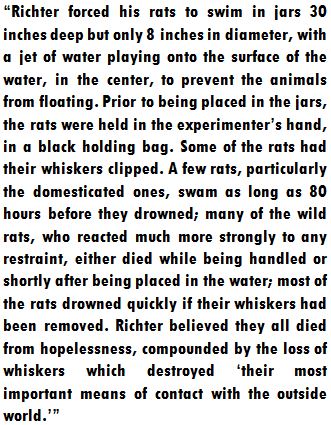
learned_helplessnessI offered the explanation to the judge that people who go through this become conditioned to helplessness (or hopelessness), because process militates against the proposition that a claimant of abuse has engaged in deception. The righteous indignation and outrage of the wronged defendant gradually succumb to the inevitable conclusion that facts, truth, and reason are impotent against fraud and judicial bias. (The defendant lives besides under the constant menace of unwarranted arrest.)

I didn’t know I could prosecute a lawsuit on my own until a legal assistant told me so in 2009, which I also told the judge. I might have been motivated to find out sooner if I’d had the least faith that a judge would heed my testimony.

My accuser’s attorney disdained the explanation for my tardy filing as “self-diagnosis,” and the judge eagerly echoed his assessment and dismissed the case (the court’s interest is in economy, not truth or justice). What was another six months of my life? (Letters from a physician and a therapist, along with witness affidavits, including one from a former cop, made no difference.)

I wasn’t wrong, though. People who defy a rigged system—whether restraining order defendants, domestic violence defendants, or family court defendants—can be conditioned to helplessness, and many accordingly report experiencing posttraumatic stress (which fortifies their distrust and their aversion to further rude scrutiny and contemptuous treatment from the court).

A lesson to take from this is that the “high road” (i.e., trusting in facts, truth, and reason) is a detour to hell. If I had known in 2006 what I know today, I could have extricated myself from my accuser’s false accusations in five minutes by playing the game according to her rules, which were “whatever works.”

The studies from which the term “learned helplessness” emerged were studies of drowned rats and tortured dogs. Playing fair (or aspiring to saintliness by never uttering an ill word against your accuser) is noble, but nobly drowned is still drowned. If an accuser lies about you, denounce him or her as a liar. Similarly, if a process of law is bullshit, call it what it is.

Some respondents to this blog, even after they’ve been through the courthouse ringer, retain a beleaguered faith in ethics. They believe that if injustice is laid bare to a discerning audience by rhetorical appeals to reason and decency, this will spur change. “Our objective is to fix the problem, not the blame” was quoted in a recent comment.
The abstract and impersonal may be informative, but they don’t arouse curiosity, because they don’t inflame the passions; controversy does. Advocates of the “high road” eschew naming names, for example, because it’s aggressive. Avoidance of confrontation, however, accomplishes little and exemplifies “learned helplessness.” The “high road” is safe and tame, and it leads to a dead-end.

The reason restraining order abuse endures is that the abused are paralyzed by indecisiveness. They won’t knuckle down and demand that a flawed process be repealed.
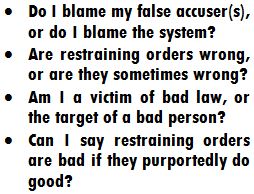
Among people who’ve been damaged by fraudulent abuse of restraining orders and related civil court procedures that are supposed to protect the defenseless, you’ve got, for instance, your liberals who’ll defend the process on principle, because they insist it must be preserved to protect the vulnerable, and they’ll fence-sit just to spite conservatives who flatly denounce the process as a governmental intrusion that undermines family.

Liberals and women who identify with legitimately victimized women feel obligated to “negotiate the gray space” and acknowledge the pros and cons of “women’s law.”

Then you have people (of whatever political allegiance or none) who believe that if you eliminated procedural inequities and ensured that defendants’ due process rights were observed, the system would work fine.

Maybe they believe a process that allows a person in Nevada to mosey into a courthouse, fill out some forms, and accuse a person in Wyoming of “stalking” or “domestic violence,” necessitating that the person in Wyoming hustle him- or herself to Nevada to present a defense within the week, can be made fair, and maybe they don’t know that the same Nevadan can prosecute the same claim over and over against the same Wyomingite (three times, six times, a dozen times, or more).

Maybe they believe that appeals to public conscience will urge the passage of laws that require free legal counsel be provided to defendants.

This would mean that if, say, a million restraining orders are petitioned a year, and legal representation for each defendant in each case could be capped at $2,000 (which might translate to a feeble defense, anyway), state governments would be required to shell out $2,000,000,000 to make everything “fair and square.” But that’s not all. If government gave free representation to “abusers,” advocates for “victims” would demand the same for them. So your $2,000,000,000 would become $4,000,000,000.

That’s per annum. (Also, the hypothetical Wyomingite would still need to travel to Nevada, and who’s paying for that?)

Others believe that if lying (perjury) were prosecuted, that would straighten things out. The costs to prosecute what may be hundreds of thousands of liars a year might be less than $4,000,000,000…or it might not be. Too, how do you prove someone is lying about an emotional state, like “fear”? How do you prove an alleged event didn’t happen?

You can’t, not conclusively, which is what a criminal prosecution requires.

More say appeal to your senator, to the president, to the press…nicely and cogently. They follow a utopian faith that basic decency will prevail if “the problem” is exposed.

As a rhetorical stance, the position has its merits. It suggests calmness and rationality, and calmness and rationality should recommend attention from others. “We’re calm and rational,” proponents of the position imply, “so when we say there’s a problem in need of fixing, it’s calmness and rationality speaking, not anger.”

The limitation is that no one who needs to be convinced has a motive to listen. No one can be made to care about abstractions like equity and due process when in the other ear they’re being cited statistics about epidemic violence.

Everything to do with the law is adversarial. If you seek to revise it without being personal or confrontational, the soonest you can expect a just reward is in the afterlife.
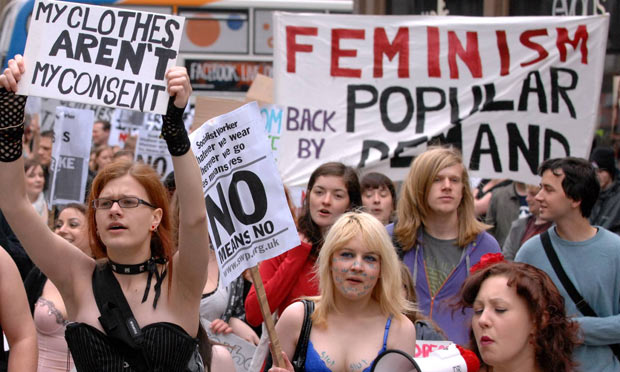
Protesters march on a SlutWalk in Newcastle

Copyright © 2015 RestrainingOrderAbuse.com

*Splendid writers, particularly Cathy Young, have responsibly and lucidly exposed “the problem” for 20 years in major news outlets. The system has responded with statutes that are broader, laxer, and more punishing.


The Rape Victim’s Trauma in Court Is the SAME Trauma Experienced by the Falsely Accused

“[Tina] Renton still has nightmares about her time in the witness box. ‘During the day I can cope with it. In my sleep…. You can’t control your subconscious.’ She dreams of ‘running and never being able to find anyone able to help you’ and of ‘standing in court, people laughing at you, but you don’t know why.’”

Amelia Gentleman, the Guardian (April 13, 2013)

Above are the words of a woman who was the prosecuting witness in the rape trial of her stepfather.

Below are the words of a man who was repeatedly accused by a prosecuting witness (his estranged wife and the mother of his children):

I couldn’t flee and I could not fight. I was never going to be allowed to heal or recover. I wish I were better at articulating the psychological and emotional trauma I experienced.

I could fill a book with all the lies and mysterious rulings of the Court. Never have I experienced this kind of pain. I asked for help, but good men did nothing and evil prevailed.

Correspondences between the man’s and woman’s statements are obvious, as are contrasts between the man’s and woman’s treatment under the law.

The woman prevailed in criminal court. She also authored a book. The man was hectored in family court until he killed himself, and his wife obtained a court order granting her the intellectual property rights to his final words, which she attempted to expunge from every nook and cranny of the Internet.

Tina Renton, quoted in the epigraph, accused her stepfather of “raping and assaulting her multiple times during her childhood,” and a jury found him guilty. The trauma Ms. Renton describes, however, isn’t the residue of being physically violated by a parental figure years before; it’s the aftereffect of being psychologically violated in court.

She defended herself and was taunted and denounced as a liar.

“It is hard being accused of being a liar,” she says. “I would never have put myself through the trauma of a court case if it wasn’t true.”

Her stepfather was sentenced to 14 years. Still Ms. Renton reports having nightmares about her experiences in court, and certainly no feminist is going to contradict her claim of trauma.

Why, then, are feminists the most adamant critics of those who allege they’ve been falsely vilified or persecuted in civil and family court (where there is no standard of proof)? Is it reasonable to argue that being falsely called a “liar” is more traumatic than being falsely called a “stalker,” “wife batterer,” “child abuser,” or worse? If feminists understand the trauma described by Tina Renton and sympathize with it, why are they the most unyielding obstacle to reform of restraining order and domestic violence laws that make false accusation easy and rewarding? Ms. Renton, a woman, very plausibly says she was caused lasting injury by being falsely accused of lying. Yet some feminists assert that a man’s being falsely accused of rape is insignificant. How is this not only hypocritical but heinous?

When it’s asserted that rape victims face “being raped all over again” in court, what’s meant is that they face being lied about, misrepresented, defamed, badgered, and shamed. They face, in sum, being falsely accused.

This is compared to being raped.

It must be appreciated that those falsely accused in civil or family court (women among them) are traumatized by exactly the same treatment (including by their judges), and many of them may also have been abused by their accusers, including violently. Moreover, the abuse they receive in and from the court may be aggravated (exorbitantly) by having their children taken from them, being cast out of their homes, and/or being forced to pay their false accusers’ living expenses.

Feminists seem to have no difficulty imagining the psychic scars caused to rape victims by being denounced and disparaged in criminal court.

For feminists to identify with complainants of false accusation in civil and family court, then, they need only imagine what it would feel like for those rape victims to be forced to surrender all they value to their abusers and pay them for the privilege of being lied about and publicly humiliated.

Copyright © 2015 RestrainingOrderAbuse.com

*The quoted Guardian story includes a case of a woman who prevailed in court but nevertheless committed suicide. “Her son, Oliver, told a newspaper how profoundly the cross-examination had affected her.”

The Words Get in the Way: Reconceiving Arguments against Restraining Order Fraud

block
Traffickers of this blog will sometimes advise that complainants of abuse of so-called “protective orders” consider “the bigger picture.” They feel the matter is less about personal loss than about statutory and procedural derelictions (bad law and judicial bias, carelessness, and tyranny). They emphasize principle over individual privation.

For some, the bigger picture that’s stressed is denial of constitutional rights to due process (for example, the right to be heard before a judgment is entered, the right to court-appointed legal counsel, or the right to a trial by jury); for others, the bigger picture is the right to freedom of speech. Some underscore gender and race inequities; some the undermining of the family.

The obstacle to making whatever “bigger picture” is emphasized perceptible to the public at large is the phrase “restraining order” or “protection order,” which comes with a host of conditioned prejudices. It arouses images of violence against those helpless to defend themselves. Accordingly, even many who acknowledge the process is flawed nevertheless say they recognize it to be necessary…in cases.

So even those against the process may not actually be against the process. This has created a disjointed community of complainants, namely, a marginalized extreme labeled “misogynist cranks,” “angry white men,” or “restraining-order-Americans” and a fence-sitting majority who against all evidence and experience retains the faith that reason will prevail against unreason if we just talk it out long enough: “All around the mulberry bush, the monkey chased the weasel….”

The monkey never catches the weasel, so there’s nothing to recommend monkeying around.

What needs to be stressed and comprehended, to this writer’s way of thinking, is that civil court is no place for the litigation of accusations that explicitly or implicitly allege violence, violent threat, or other criminal acts, and that in civil court, which applies no standard of evidence, fraud is too easily perpetrated. The exposure of falsehood or exaggerated claims of fear will not necessarily discredit a plaintiff’s claims, and findings in favor of a plaintiff who’s a proven liar are possible and acceptable to the court.

Therefore the procedure is vexed; it’s wrongly engineered. The concept is corrupt.

Instead of denouncing “restraining order fraud,” it’s civil court rulings that exact an unconscionable toll that should be denounced. It’s all about the words. Civil procedures should not result, ever, in people’s being placed in police databases. Civil rulings should not criminalize people or make them vulnerable to warrantless arrest (for alleged behavior that may not violate any laws). It should not be possible to have a person evicted from a residence he or she owns by a civil ex parte decision, nor should such a decision predispose a court to find against that person when s/he’s permitted to address the court in his or her defense (if such an opportunity is even practicable to the accused, who may preposterously be required to travel to another county or state to be heard).

Against policies of law and process so manifestly unjust, even improved due process rights would promise to be a shabby deterrent against abuse and miscarriages.

Not only have we become habituated to the reality of “restraining orders” to the extent that we believe they must be here to stay; procedural process has become rote (adjudication by rubber stamp). Yes, new “safety catches” could be installed, but what guarantee would there be that the conditioned habits of those who administrate the process would change? Economy would require that there continue to be minimal oversight and accountability, and the trial judge would still have the final (and absolute) discretion to make a determination, according to his or her own personal lights. So long as the process were conducted in civil court, rulings could still be arbitrary (anything goes), because the standard of evidence would remain whatever the trial judge chose.

Social and judicial impression cannot be overhauled—what’s etched on the brain stays there—and the preconceptions attached to the phrase restraining order will never be dispelled. Judgment by a single man or woman who has had his or her priorities conditioned by rhetoric and social and political expectations (possibly for decades) cannot be impartial. The implications of the process and dictates about how it’s supposed to be administered are too deeply ingrained. The phrase restraining order is by itself damning (right from the get-go). It stirs presuppositions of guilt, and this is inimical to fair and just process. Accordingly, the phrase must be abolished and the process reconceived from the ground up.

Copyright © 2015 RestrainingOrderAbuse.com

Mixed Loyalties: Why the Only One Looking Out for the Victim of Restraining Order Abuse is the Victim of Restraining Order Abuse, or, Why You’re on Your Own

A recent commenter observed that the “abuse industry” is a goldmine that no one who benefits from it has any motive to oppose, including judges and lawyers.

There are exceptions—attorneys Gregory Hession and David Heleniak are examples—but in general the commenter is right. Civil rights groups like the ACLU and the Southern Poverty Law Center have a defining investment in women’s rights, and restraining orders are “women’s law.” So their sensitivity to procedural abuse is profoundly limited, also.

The Academy is feminist-dominated. You’ll find no open sympathy there. Feminists hold political sway, whatever their numbers actually are and regardless of whether theirs are majority positions or minority ones. Higher education is a political milieu. Professors who publicly voice qualms with feminist doctrine are few. (Not that long ago, a Harvard president was driven out of office for candidly proposing that men and women were different.) Mainstream media are pressured into conformity with the favored views of the “intelligentsia” (or what’s sometimes called the “East Coast establishment”), and these favored views are feminist views.

Outspoken female critics who represent your side—and there are several stellar ones—may have personal motives, like affiliation with a set of political/family values, cornering a market demographic to enhance sales of books they’ve authored or services they offer,  or carving out a literary niche for themselves in the popular press. Alternatively, they may be intellectually offended by the direction feminism has taken; they may feel betrayed by a cause they formerly championed. They oppose the source of your injury, and they’re to be esteemed for that, but they can’t afford to make an investment in you.

Finally, even forums on the Internet that address restraining order and other types of prosecutorial abuses may be jealous of “competing” voices; they have a brand that they’ve invested in and a particular ideology they espouse.

These are among the reasons why there is no common front.

None of this means that any or all of the aforementioned couldn’t be moved to take up your cause, but to attract their interest, you would need to make a splash. This requires loud action that attains a measure of legitimacy, and this is probably only possible if individuals unify—in a campaign, for example, or a class action.

The solitary complainant who can’t brandish a court judgment that exonerates him or her of foul accusations is an iffy investment. Nobody knows you. Too, the person who understands where you’re coming from but is mired in his or her own hell will only have a modicum of attention to spare you. Alliance toward a common goal that raises the hopes of all those involved could reward the individual, but to realize such an alliance requires action, and it requires action that aims to attract power to itself.

There is value in registering your complaint, anywhere and in any way, because more stories translate to greater awareness (which also encourages others to step forward and share their travails). To break the chokehold of ambivalence and resignation, though, requires the kind of action that grabs headlines, and that requires community and a concerted effort.

Only success attracts popular support.

Copyright © 2015 RestrainingOrderAbuse.com

*Here is an example of a campaign that resonated.

Understanding the Significance of False Accusations in Restraining Order and Related “Trials”

Misperception of the significance of false accusations is a topic that’s been considered in past posts on this blog, particularly false accusations of sexual assault, which are the only false accusations anyone seems to believe are deserving of mention.

It’s wrong to say that the nature of false accusations doesn’t matter. But more relevant to observing corruption than a consideration of what is alleged is a consideration of how it’s alleged and decided.

Imagine if special courts were convened to judge accused people of a certain type, and imagine if the normal standards of evidence applied to allegations that may impute criminal wrongdoing to them were suspended. Imagine if instead of having to prove they had done what they were accused of, it were enough for a single judge (absent a jury) to “determine” upon a few minutes’ deliberation that the allegations were probably true and sufficiently urgent to merit the court’s intrusion.

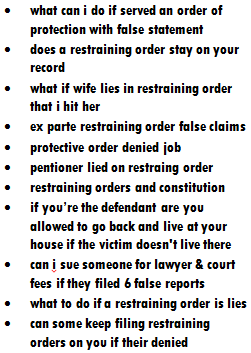
These are among recent search terms that brought readers to this site.

If the accused people of a certain type were Jews or African-Americans, for instance, we would denounce these special courts to be an abomination. This kind of discrimination would raise our hackles.

Yet such special courts exist. Restraining order allegations are decided exactly this way, as may be allegations of domestic violence or rape, allegations that can also be made on restraining order petitions. There is nothing that can’t be alleged on a restraining order petition. Yet nothing alleged must be verified.

Now the critic of complaints about the harm of false allegations will chime in at this point and say, yeah, but it’s not like the victim of false accusations decided in a kangaroo court will be served a felony conviction.

Yes…and no. The critic should ask him- or herself what kind of person would maliciously or self-servingly lie about stalking, sexual violation, or violence and then ask him- or herself whether it’s reasonable not to expect more and worse from such a person.

Subsequent false allegations can give people criminal records (possibly, again, without a jury’s ever having vetted the evidence). They can give people criminal records because of the prior lie. A person can find him- or herself deprived of everything, including liberty, based on a tissue of frauds.

My ex-husband used to batter me and then go crawling on his hands and knees through the neighborhood until he reached the hospital or police station, and he would claim I had attacked him. I’d be hysterical, and police would arrest me. This happened repeatedly. […] I was made homeless on multiple occasions. He would involve my family, his family, all of our friends, employers, and university professors, and I was always the bad guy and still am. […] They filed restraining orders against me and claimed I was a danger to everyone; kidnapped my son, my dogs; stole my car at one point; drained bank accounts, PayPal accounts; and sawed locks of my storage unit and took off with everything…and EVERY F[—]ING TIME, police just validated the abuse and continued to terrorize me.

To complicate matters, a ruling on a false accusation can criminalize lawful behavior. So a subsequent allegation against someone can be true, but the alleged behavior that lands him or her in jail might only have been unlawful because of the original false accusation.

She filed a PFA [protection from abuse order] against me in April of 2014. Several months later, I was charged [by the district attorney on two counts of] violating the PFA. (1) My wife read my private password-protected Facebook emails. I asked a friend to contact her ex-husband #2 and tell him what was going on between her and me (he lives in Mexico and was listed on the PFA as one of the people I could not contact). The friend I emailed didn’t contact her ex-husband. In fact, nobody contacted her ex-husband. (2) I drafted a letter to my wife and gave it to my lawyer. My lawyer in turn forwarded it to her lawyer. They claimed this was also a PFA violation. We went to court, and the judge agreed on both counts and sent me to jail for 30 days. [This commenter’s wife was a Mexican national whom he met in March 2013 (Match.com) and married a month later. The PFA was filed after he “got her and her children their immigration papers” and later told her he wanted to divorce her because the marriage was unsatisfactory.]

Appreciate that one false record can be invoked until the end of time. The superficial critic thinks that once a trial is concluded and the framed victim survives his or her licks, the matter is concluded.

Not so. Ignoring the psychological residue for the moment, if the victim of a false accusation is falsely accused a second time, it can now be alleged that s/he has a “history” or “pattern” of abusive behavior, which may influence a divorce or child custody proceeding, a lawsuit, or even a criminal prosecution.

Respondent [—] and Father have a history of domestic violence that includes, but may not be limited to, the issuance of temporary restraining orders in cases […] and the issuance of a permanent restraining order in case […] which was entered by default on January 16, 2015, placing the welfare of the Child at risk. [The “Father” in this case was married to his wife for a brief period before she left and then filed a number of allegations of violence, both with the police and the court, over the ensuing six months. She then committed suicide after being institutionalized. She gave birth to a daughter a couple of months prior whom she had told the father she had miscarried. The father was never heard by a court in his defense but has nevertheless been represented as a serial abuser by the district prosecutor, who has sought to deny him any role in his child’s life.]

Lies that stick…cling, and they can be recycled. Public records don’t expire, and court rulings that impute grave misdeeds, even if those rulings were formed in mere minutes, aren’t questioned. They’re as valid as any other ruling.

Lies that stick, moreover, are entered into public (police) databases, registries that throw up red flags…indefinitely. The person falsely accused of domestic violence, for instance, may be permanently barred from certain types of employment and even, say, from attending his or her daughter’s dance recitals at school.

Defendant was refused jobs, [is] not allowed to attend [or] volunteer [at] her daughter’s school events, [and has had] numerous other rights taken away due to Plaintiff’s Abuse of Process and Fraudulent Allegations and written Affidavit to the Court. This continues today. [This is an excerpt from the draft of a commenter’s “Motion to Expunge,” which she was preparing herself with no legal know-how.]

Again, privations endure permanently, for always, ad infinitum.

The liberal critic who declaims s/he’s for immigrant rights and for restraining orders should be aware that a non-citizen who’s falsely accused in a restraining order proceeding and then accused of violating an order obtained by fraud can be summarily booted from the country: Adios, muchachito (we don’t like your kind here).

Based on lies, people are deprived of their good names, their dignity, their children, their homes, their property, their livelihoods, and their security.

Finally, being lied about and then scorned by cops and lambasted by judges—these traumas last, and they last no less indefinitely than false records do. So on top of everything else, people may be driven out of their minds.

Copyright © 2015 RestrainingOrderAbuse.com

*Public records, besides being permanent, are also public records, and a lie that a judge legitimates is a lie that everyone else will regard as true (e.g., a neighbor, a boy- or girlfriend, a student, a patient, a client, an employer, a loan officer, a landlord….).

“Defend Our Constitutional Rights”: Anne’s Proposal to Redress Restraining Order Injustice

Below is a proposition by a 74-year-old California woman, Anne Copeland, who’s earning a degree in criminal justice administration. Anne alleges that accusations against her made in a restraining order petition were trumped up, and has reported being taunted and terrorized by her accusers, who were her neighbors. She also reports she’s been prohibited from performing volunteer work as a consequence of the court’s order and that it has necessitated that she pack up and move away from her accusers to gain relief from their abuse, which the order against her in essence authorized.

She urges a course of remedial action.

Some prefatory remarks from the blog’s author: Restraining orders were enacted into law pre-Internet. No one considered in the ’80s that they could be abused. No one considered that “obscure court records” would soon be talked about from one end of the planet to the other; that they could be “scanned,” “uploaded,” and conveniently distributed by “email”; or that they would be accessed by employers. No one considered that there would be “public registries” (in cases that anyone with an “Internet connection” could consult). No one imagined that the very phrase restraining order would come to be associated with the savage imagery that “the Internet” is awash with. “Restraining orders” were supposed to stop wife-batterers. Today, they may be approved to quiet any complaint, however actually innocuous the alleged behavior is. Though reported figures are few, all indications are that the vast majority of restraining order petitions are rejected right off the bat. That means even the courts regard most complaints to be stinky. So if “plenty of cases ARE actually justified,” as Anne allows below, it’s only plenty of a small fraction of those the court doesn’t already summarily toss out. Since respondents to this site like Anne are typically people who’ve had  orders sworn against them that were grounded on hyped or false accusations but even so passed muster with a judge or two, the process is pretty much just stinky.


Hi, my name is Anne Copeland, and I have written before about the abuse of restraining orders, which I too have experienced. I am a 74-year-old senior studying criminal justice at a university online, and will receive my degree this coming year and go on to get my master’s so that I can work with juvenile delinquents.

Concerns about the decay in our government are not without foundation. I just read a wonderful article written by the Honorable Judge Harvie Wilkinson III, who serves as a judge for the U.S. Fourth Circuit Court of Appeals: “In Defense of American Criminal Justice.” It was an eye-opener for me, as I too have come to believe that our justice system is going to hell in a hay basket. I would say that it is very worthwhile reading; it was definitely pivotal in changing my thinking on the subject.

There is a particular case of a man named Clarence Earl Gideon of Bay Harbor, Florida, who in 1964 changed the acknowledgment of our rights under the Constitution. Previously, only cases that were pretty major in nature would enable a person to have a defense attorney provided by a particular state. In this case, the man was indigent, and his alleged “crimes” were mostly minor in nature. But he insisted on his right to have an attorney, and it was a turning point for indigent people facing criminal charges. There is a lot more that is well-discussed in the essay. I think every person who is interested in where our government is going needs to read this.

After reading this article, my next step in thinking was, “Why doesn’t someone who is facing a restraining order, which does have disastrous effects on human lives, request to have an attorney represent him or her and let it be known that his or her constitutional rights are being denied?” I am thinking of doing something along these lines in trying to appeal my case. The “witness” in the case was definitely not credible, nor were the charges that were brought against me. And the judge did not allow me to really defend myself at all but actually charged me, showing me that he considered me guilty before even hearing the case.

I have thought out all the issues, and I feel that each person who can do it needs to appeal the case against him or her on the grounds that his or her constitutional rights have been denied. If enough of us do this, one will get heard finally, and we can put a stop to this devastating and unlawful practice. Just because someone says it is the law doesn’t make it so. We do have the right to challenge the law as it exists now, just as women did to get it changed in their favor in the first place.

I am not saying there is no place for justified restraining orders. In today’s confused and conflicted world, I am quite sure there are plenty of actual cases that are justified, but we need to have the process reexamined and re-aligned with the principle of civil rights for all citizens, not just for those who file falsified restraining orders. The process has to allow the determination that there has been a true injustice done to a person, and then perhaps there needs to be a period of counseling on both sides, as well as a look at the behavioral histories of both sides. I honestly don’t know what, in the long run, would truly be the best procedure to work to the benefit of both parties fairly and for the courts as well, but this issue needs to be addressed so that there is something to recommend.

Remember that as citizens of the United States, we still do have rights guaranteed us by the Constitution, and while they might be tiresome to fight for and very unrewarding in the short distance, we need to exercise our rights the best we can. If we don’t do this, we have nothing to blame but our apathy and feelings of victimhood. Sometimes we need to get therapy to help us overcome the PTSD and stress, etc. from the events that were forced upon us, but then as soon as we can, we need to pull ourselves back up and instead of trying to fight the person or persons who are petitioning the falsified restraining orders (which is always going to be a losing battle), we need to stop thinking about them and not give them power by doing that. Instead we need to deal with the government itself, making our voices heard where we can potentially make an actual difference. Yes, just one person might not be able to do it, but if enough of us petition the government in the higher courts using constitutional grounds, I believe we can get things done. Clarence Earl Gideon was a common street person, not highly educated, and definitely not with any funds to help him. But he believed his rights were being denied, and he took it to the courts and would not give up. And Gideon forever changed the rights of indigent people to have equal representation in court.

I believe most visitors to this site have been injured emotionally, spiritually, and otherwise by falsified cases. So it is time for us to gather together as a body of people and stop wasting our time trying to get justice against those who act against us. Rather, let’s think of a way to get our voices heard in the higher courts to defend our constitutional rights. It is true that our justice system is very unjust at times, but if we do nothing about it, we have nothing to speak for us.

Just because these are civil cases doesn’t mean that we have no rights anymore. The fact is that they can be turned into criminal cases, and frequently are. So our rights are being abused, and we need to come together and form a strong voice to go to the higher courts to defend our constitutional rights.

Thank you most kindly.

Copyright © 2015 RestrainingOrderAbuse.com

What Is “the Court,” and Who’s REALLY Looking Out for Its Honor?

Yes, sites like this one criticize judges. Judges aren’t the Court.

Yes, sites like this one criticize laws and procedures. Laws and procedures aren’t the Court.

Sites like this one criticize lawyers and law professors and writers and accusers and feminists (whose rhetoric emboldens false testimony). Lawyers, professors, writers, accusers, and feminists—they, also, are not the Court.

What is “the Court”? It’s an idea, and inclusive in that idea are principles like truth, justice, and the American way. More minutely, the idea entails fairness (equity) and observation of civil rights, like those to due process and freedom of speech. The idea is pretty straightforward: adversaries at law state their cases truthfully to a judge who impartially and honestly negotiates the facts with great deliberation and arrives at a just determination.

According to this idea, lies are censured (as “sturdy blows to the root of justice”), abuse isn’t tolerated, and never are people stripped of their dignity, family, property, and livelihood on a whim. “The Court” is a bulwark against moral anomie, and it’s never arbitrary or capricious in its decisions.

“The Court” isn’t real (it doesn’t exist); it’s an ideal. It’s something to be striven after.

Sites like this one don’t criticize the Court. They defend it.

Copyright © 2015 RestrainingOrderAbuse.com

*One of the most vigorous and vehement denouncers of corruption this writer knows, the author of BuncyBlawg.com, began his professional life as an earnest young attorney. He meant to do good. His faith in “the Court” was betrayed by reality. As if he needed a further reminder of why he abandoned his vocation decades ago, he has for the last several years been relentlessly hectored by procedural abuses (during a phase of his life when he should be savoring every moment).

A Consideration of Attorney Gregory Hession’s “How to Fight a False Allegation Restraining Order”

“In thousands of 10-minute hearings held all over the Commonwealth, judges are now able to do what the Marxists have only dreamed of doing before now, and could never hope to do before they were able to use the pretext of ‘domestic violence.’ However, the real violence is almost always to the rights of the defendant, and to the Constitution itself….”

—Attorney Gregory Hession

As a follow-up to the previous post, “Pointers for Contesting a Restraining Order,” this post analyzes (and recommends) attorney Gregory Hession’s tutorial “How to Fight a False Allegation Restraining Order.”

The title’s a little weird. An earlier version of the explication used the phrase “false restraining order.” Evidently Mr. Hession wanted to clarify that he means a restraining order that’s very real but based on an allegation that’s false—hence the phrase “false allegation restraining order.”

Massachusetts attorney Gregory Hession, who urges the wrongly implicated to expose their accusers’ false motives, identifies the above as “ulterior” reasons for the procurement of a restraining order.

The quotation of Mr. Hession’s that was lifted for the epigraph above highlights that violence is the pretext used to justify procedures that are constitutionally unconscionable. Often no violence is alleged. The word, however, emphatically appears everywhere in state statutes as a smokescreen. It makes any violation or abuse of the accused “okay.” The courts aren’t messing around with people’s lives for kicks; they’re protecting the vulnerable from “violence.”

Here, therefore, is what you, as the “defendant” or “respondent” (the accused), are up against:

In restraining order hearings, judges may ignore ALL traditional due process protections such as jury trials, the rules of evidence, the right to innocent until proven guilty, etc. They may also usurp several other dearly held rights, such as the right to be with one’s children, to occupy one’s own home and property, or travel where one pleases. No one has yet come up with so demonic a perversion of our legal system to match the breathtaking scope of the unconstitutional deprivations of this law.

What is the actual legal basis for getting an abuse restraining order? Many courts issue restraining orders without following the requirements of the law (which are already so flimsy as to be a mockery). If a person comes into court (called the “complainant” or “plaintiff”) and whines about feeling “fear,” a court will often issue an order, even though many times it is improper and illegal to do it.

Restraining orders—not just in Mr. Hession’s state of Massachusetts but in most if not all states—require that some intimation of “imminent physical harm” be suggested by the alleged conduct of the accused. Mr. Hession urges that this qualification be picked apart.

First the harm has to be “imminent,” [that is], immediate, right there, right now. Not a vague threat to do something someday. Not a phone call from a far location. Next, it has to be “serious.” The [Massachusetts] attorney general, on a ballot referendum to overturn some recent changes to the domestic violence laws, defined “serious bodily injury” as follows:

“Injury that results in a permanent disfigurement; long-term loss or impairment of a bodily function, arm, leg, or organ; or substantial risk of death.” [If you’re appealing an order in another state, you may investigate how your state defines “serious bodily injury.”]

Lastly, the fear has to be of “physical” harm, not emotional harm, psychic harm, hurt feelings, or any number of other non-physical issues that people commonly get orders for.

If courts went by this definition strictly, fewer frivolous orders would be issued. However, as you likely know, judges often issue an order if they feel it should be issued, regardless of the law’s requirements.

(Statutes are often mishmashes. Ridiculously, an injunction against harassment in the author’s state of Arizona reads, “The Court finds reasonable evidence of harassment of the Plaintiff by the Defendant or that great or irreparable harm would result….” There’s plainly a huge gulf between annoyance and “irreparable harm.” That’s how these statutes are designed: to apply to virtually any alleged conduct, however harmless, but to make it seem as though plaintiffs are being protected from violent assault…or murder. That’s how the laws are justified. The person who sends some angry text messages is equated with tomorrow’s serial killer.)

If you hope to appeal a restraining order, Mr. Hession stresses, you must appeal the initial order (which may issue from any of a number of courts). It is possible to contest an order through higher tiers of the court system if the first judge finds against you, but if you blow off your initial court appearance, “fuhgetaboutit.”

First, Mr. Hession says, get your “docket number” (your case number), go to the courthouse, and demand to see all of the allegations against you. (Sometimes the plaintiff’s affidavit, his or her sworn narrative statement, isn’t provided to the defendant when the order is served and must be requested.)

Second, he offers a number of strategies to attack the allegations against you, mainly by exposing falsehoods. For these, go to the source: “How to Fight a False Allegation Restraining Order.”

If you have no experience of court procedure, Mr. Hession’s tutorial is a challenging read. It’s also long, which can be off-putting. It is, however, definitely worthwhile, whatever state you may be in.

The point of this heads-up is to ensure that the substance of Mr. Hession’s advice isn’t discounted by the bewildered defendant who may think it only applies to the wrongfully accused in Massachusetts. Absorb the gist of the material, and it’s likely you’ll fare far better in an appeal than you would have otherwise.

Copyright © 2015 RestrainingOrderAbuse.com

Pointers for Contesting a Restraining Order

One of the earliest posts on this blog (from 2011) offers some procedural orientation to the falsely accused. The author hasn’t revisited the post except to update a link to attorney Gregory Hession’s blog, MassOutrage, which is recommended reading.

Much of the author’s early advice is important: show up early, dress well, be polite, organize your defense and rehearse it ahead of time, make three sets of whatever evidence and exhibits you intend to present, etc. It can also be boiled down to (1) mind your p’s and q’s, and (2) don’t “wing it.”

This post offers some more seasoned counsel to the defendant who can’t afford representation:

  1. Be direct. If something alleged against you is false, say it’s “false.” Be explicit. Don’t “defend yourself” by explaining how the accusations against you couldn’t be true. Say they aren’t true (and then offer what proofs you can). If allegations are “mostly” not true, if they’re hyped or skewed or exaggerated, they’re “false.” Say so right off the bat.
  2. The author suggested this statement as a “for example” to a recent commenter who wanted to know how to defend herself against false allegations. She reported her ex falsely alleged on a temporary restraining order petition that she had threatened to kill herself and her son. She said her ex took their son, refused to return him, and filed for a restraining order on bogus grounds so that he’d never have to return the boy or pay child support. Consider how a statement like this is much more effective than a long rehash of a relationship history that might only distract the judge from hearing what’s important.

    You’re the bad guy, so present an argument instead of an explanation. You won’t win over the judge by appealing to his or her sympathy.

  3. Be humble. Judges are vain, proud, and self-important, and some resent it if you sound like a smarty-pants. (Yes, a judge is capable of finding against you just because s/he thinks you’re haughty. The rules are whatever s/he wants them to be.)
  4. Keep it simple. These procedures are in-and-out. If your story is long and convoluted, change it. CHANGE IT. The truth that serves you is what’s important, not “facts.” Facts may not tell the truth. In these procedures, what counts are impressions.
  5. Be straightforward. Use brief, declarative sentences. Don’t backpedal. Some qualifiers are okay, like these: “I believe,” “I think,” or “Plain to me, Your Honor, is that….” Prefacing remarks like this expresses humility and honesty. Some qualifiers aren’t okay: “Well…,” “What I meant was…,” “Then again…,” “Perhaps….” They sound wimpy and uncertain, and they inspire suspicion; they say you’re guilty.
  6. Don’t leave anything up to a judge’s interpretation. Don’t submit an exhibit and expect the judge to see what you want him or her to see. Tell the judge what s/he should see (“What this shows, Your Honor, is…”). The judge doesn’t know anything, and s/he’s not on your side.
  7. Don’t mince. Use loaded words. Instead of saying something was “untoward,” for instance, say it was “sexual.” Graphic words make an impression. Careful ones don’t.
  8. Cross-examine (question) your accuser. Put him or her on the defensive. Some accusers are vehement fraudsters and will deny the truth and lie freely. If you can trip your accuser up, however, possibly by getting him or her to commit to a lie that you can disprove with evidence, this can be a winning move, as can be forcing your accuser to own an inconvenient truth because s/he knows you have proof of it.
  9. These procedures are contests between personalities, not just competing facts. The person who looks and sounds best, fares best. Aggressive defenses make an impression. Limp ones do, too, but not a favorable one.
  10. Expose lies to make an impression, but don’t depend on it that proving the plaintiff lied about something will impact the judge’s ruling. No one in these procedures is ever sanctioned or prosecuted for perjury. Presenting proof of lying can mean absolutely nothing; a restraining order petition will not be dismissed simply because a plaintiff demonstrably told a lie. Your accuser’s behavior is not what the judge is there to form an opinion on; yours is.
  11. You’re right; your accuser is wrong—that’s the impression you need to make. To win, you must convince the judge that the accusations against you are without merit.

Copyright © 2015 RestrainingOrderAbuse.com

If a Man Who Complains of Procedural Abuse is an “MRA,” What Do You Call a Woman Who Complains of Procedural Abuse?

It isn’t just the men disparaged as “MRAs” (men’s rights activists) who denounce the injustice of feminist-inspired “women’s law.” Women also lose their homes, their families, their dignity, and their lives to misapplications of restraining order and domestic violence statutes. Unlike the men whose lot they share, these women aren’t distinguished with a label.

I propose the acronym “BRA,” which could stand for any of the following:

  • Beleaguered rights activist;
  • Baffled, boggled, buffaloed, or bewildered rights activist; or
  • Buggered rights activist.

The latter of these, especially, would evoke the same mockery shown the men’s rights activist to whom “MRA” is applied like a markdown sticker.

Make no mistake: Women who complain of procedural abuses are no less ignored than the men who do. They’re not saying anything anyone wants to hear—not the ACLU nor the Southern Poverty Law Center nor battered women’s advocates nor feminists in general. They’re misfits, and they’re accordingly denied status. No one dares contradict them, because that might sound misogynist. So they’re just disregarded.

Here are some different proposals for what BRA might represent: bypassed rights activist, betrayed rights activist…or balanced rights activist.

You want the straight dope about false accusation and the need for procedural reform? Ask the ex-wife who’s had her child taken from her, ask the disabled girl who’s been accused of domestic violence and cries herself to sleep every night, ask the mom who can’t attend her child’s school functions or keep a job, ask the ex-girlfriend who was nearly parked on the curb, or ask the professional woman who’s been denied protection against a brute and then framed.

But only ask if you can tolerate an inconvenient truth.

Copyright © 2015 RestrainingOrderAbuse.com

*A woman is the best rights activist, and more women’s voices should be heard in coordinated public protest.

What Makes Someone an “MRA”? Why Are Those Guys So ANGRY?

Both questions in the title have a common answer, which I’ll illustrate by allegory.

When I was about 20, I worked next to the residence of an aged woman who kept a Rottweiler on a chain in her yard. The dog lived on the tie-out all hours of the day and probably had all of his life.

After I’d observed his situation for months and saw it never changed, I determined to offer to fence in the woman’s property for her. Our business had some unused rolls of chain link that wouldn’t be missed.

I knocked on the woman’s door and explained my interest. She said she’d come out and talk to me. While I waited, the dog approached. I knelt down to greet him. He lunged at my face, tore my nose, and then clamped down on the arm I raised protectively, crushing my radial nerve. I kicked him off and drove myself to the emergency room. If he hadn’t been on a chain, it would have been an ambulance transporting me there. It would still be eight or 10 months before I recovered the use of my left hand, brief as the attack was.

The dog had been mistreated, and he was insane. When I returned to Tucson after leaving for a time to rehabilitate, I learned he’d mauled two little girls and was destroyed. (I passed the woman on the road not long after. She smiled and waggled her fingers at me, and then scowled when I stared at her coldly.)

Question: Who was to blame?

People are no different from dogs. If you force them to live with undeserved privations, whether cruelly or just irrationally, they lose it. This is the answer to the questions in the title.

Calling male victims of abuse, abuse that has its roots in gender dogma, “crazy”—as the man does whose writings I panned in the last post—isn’t necessarily wrong. But driving people crazy and then blaming them for it does kind of make you a monster.

If I then call you a monster, does that mean I’m insensitive? The conclusion is ridiculous.

Consider this story of female violence that was submitted to the blog yesterday:

Hi, I just wanted to share my story for all the other guys who have been victims of vengeful women. I have had two restraining orders placed on me now. The second one is pending…. The first one was dismissed because it was a lie. The girl used it to kick me out of our apartment and to punish me. That was in 2004.

It has caught up with me since then.

In 2010, a guy who was jealous and wanted my girl used his private investigator credentials to pull my records. He found the [dismissed] restraining order and told my girl, who promptly left me.

I am currently married to a woman who has been hitting me, shoving me, knocking me over, and physically keeping me trapped in my own apartment. After having enough, I told her that I wanted a divorce and to go live her life (but really I love her and don’t want to leave her).

She left the next day and then called me a few days later and said she was going to come home. We argued and I yelled that if she attacked me again, I’d call the police immediately. That night when I came home, there were three police cruisers there (mind you, this is three days after the incident). The police escorted her along with my parents to help her get her stuff from the apartment. […]

My mother is a drama queen and always has been. She gets in fights with people in public and was kicked out of her family for spreading lies about them. When my wife asked to be taken home (she was staying with my parents whom she promised never to talk to), my mother told her about the restraining order I had over 10 years ago. I’m sure my mother embellished as she always does. She frightened Diana, and my mother called the cops.

That Monday, my mother brought her to the courthouse to file the restraining order. Diana did not stop her, and Diana even called me, and I heard this new tone in her voice, a tone of righteousness, like she was talking to a child she was about to punish. […] The next day, the police were beating down my door and served me the notice (that’s today).

I have no doubt that I will win this case, but just as the last case caught up with me…how do I explain two cases? This may ruin my reputation for life. I mean surely if you’ve had two cases brought against you, you did something wrong. You must be guilty, right? But I’m not. The first case actually brought on the second case, and in both cases it was the women who were hitting me, not me hitting them or even threatening them. […]

This man says he was battered by two women who petitioned restraining orders against him as a further form of assault (a power play). “They do it because they’re emotional disasters and want to punish,” he offers. He’s right. The system panders to impulse (and often rewards it).

Now consider that the blogger, Tom Boggioni a.k.a.“TBOGG,” criticized in the last post for a 2014 commentary on “MRAs” published on RawStory.com, popped out a piece two days ago telling men they should never strike a woman—as if anyone who would strike a woman will have some sort of moral awakening because Tom pronounced he shouldn’t. Please. (If pieces like his do more than make their male authors look good to their female audience members, it’s lost on me. They pander, and feminists eat it up.)

A man like the one in the account above, who has tolerated violence from women without raising his hand even in self-defense, has been punished for his tolerance by having cops pound on his door and being dragged into court to stand accused. He’s been represented as an abuser—to compound the indignities of being battered—and the implications of the representation are alone enough to damage him…indefinitely. (The first order against the man, which cost him a relationship, was thrown out of court. Note: Even when the court acknowledges allegations are groundless…it doesn’t matter, because the damning implications are preserved. Only one state in the nation, Tennessee, has a law on the books that enables a dismissed restraining order to be expunged.)

Will the guy in the story become the “embittered, divorced white man with anger issues” that TBOGG and his fellows mock? Who knows?

But would you blame him if he did? More significantly, if you did blame him, who would the real monster be?

Copyright © 2015 RestrainingOrderAbuse.com

*What writers who contemn MRA rhetoric seem to miss is that it’s not violent. It may be unsavory—it may be downright nasty—but its aggressiveness is passive. If the authors of MRA rhetoric (or what’s held up as exemplifying MRA rhetoric) were actually the violent bullies that many of them have probably been represented to be in courtrooms, is this the form their anger would assume…words? Put another way, what form would their anger take if they weren’t the violent bullies that many of them have probably been represented to be? That’s right…words.

Borderline Personality Disorder, Procedural Abuse, and Feminism: A Victim’s Reckoning of Their Tolls

YY_mural

“I hate this world and almost everybody in it. People use each other. I find most of you disgusting. My brothers are disgusting. The people I used to work with are disgusting. You’re shallow, you’re two-faced and hypocritical, you’re judgmental, you cause me more pain than you could ever possibly know. You don’t want me around? Guess what? I don’t want to be around you ugly motherf[—]ers, either. You cause all of your own problems, heap them onto other people, and then blame those people for your problems. You bitch about the amount of pain you’re in, then tell other people to get over their pain.

“I am done with all of you. I am done with your lies and your shitty society, and most of all, I am done kissing your ass.”

—Mrs. Nathan Larson (May 9, 2014)

Virginian Nathan Larson has had a tumultuous year.

He married a woman he met online (April 23, 2014); then she moved out (June 21, 2014) and accused him, among other things, of rape (August 2014 through January 2015); then they divorced; then he learned he was a father when the news reached him that his ex-wife had committed suicide.

The quotation above is from an online post of his former wife’s published between their marriage and their separation. Below is an excerpt from a digital diary entry of hers written when she was a teen (which included a “hit list”):

I hate the students at […]. They are arrogant and foolish. My one dream, my passion is to achieve a machine gun or something and shoot every f[—]er in the school. I want to pump them full of metal, their blood splattered on the tiles. I want to make a massacre that becomes the worst in American history. There are only a few people who I would spare. Everyone else…I would love to see them writhing on the ground in pain, blood oozing out of a million holes in their body.

Nathan’s wife, who was an arguably troubled woman, abruptly terminated their relationship of “75 days total” and then informed him she had miscarried their child. In August 2014, she accused him of rape to the police, but he declined to talk with them and was never charged. In November 2014, she began to accuse him to the courts.

This wasn’t a trial run, either. The accusations brought against Nathan by his wife mirrored charges she had made against a previous partner, also to damning effect.

She petitioned three ex parte (temporary) restraining orders before successfully obtaining a permanent order against Nathan in January of this year (by default). Its alleged bases were “domestic abuse, stalking, sexual assault, and physical assault.” The order was petitioned in Colorado, and Nathan would have had to travel a significant distance to be heard in his defense. “Not wanting to invest money and emotional energy in fighting it, and knowing it would be hard for me to successfully contest it, I didn’t show up to the hearing,” he says. He elected to “move on.”

The two were divorced in April 2015, and that seemed to be an end on it.

Two months later, Nathan was told his (then) wife had given birth to a child in February, presumably the one she had told him she had miscarried. This information reached him along with the news that his former wife had killed herself following her commitment for “suicidal depression” and allegedly hearing voices compelling her “to hurt or kill the Child.”

Nathan must now contest a “dependency and neglect petition” in Colorado asserting he’s an unfit parent.

What follows are his reflections on his marriage to a woman who he alleges had untreated borderline personality disorder, on feminism, and on “abuse culture” and its damages.

Nathan Larson (with his new fiancée’s infant cousin)

Having the benefit of distance from the situation and more calmness about it (especially now that she’s dead), I would say that we both made a lot of mistakes during and after the relationship. There are some people who say that it’s a mistake to enter into a relationship with someone with untreated borderline personality, because it simply won’t work, no matter what you do. Unfortunately, once you get into a relationship like that, your sense of reality can get distorted because you’re so in love, and they’re so convincing, and they get so many other people to agree with them, that you too start to believe it if you don’t have enough of an understanding of BPD to realize what’s happening and why.

For example, suppose you used to argue with your BPD partner, and occasionally lost your temper and had to apologize for saying something unkind. Because they’re so sensitive to minor betrayals, they might claim that you horribly emotionally abused and bullied them to get your way, and then tried to be sweet to them and make up, just like in the classic model we’ve been taught of the cycle of abuse. If you’re still thinking this person is the most wonderful person in the world, then logically you might think that you really did emotionally abuse them, because why would such a wonderful person say it if it weren’t true? Plus, they are clearly very upset over how you treated them, and they broke up the relationship over it, and now they’ve told everyone in your circle of friends and family about it, and many of them are telling you they agree that the breakup was your fault because of your emotional abuse.

These are people you respect and trust, and therefore this could not possibly be happening unless you really were abusive!

You start to blame yourself and even tell people, “She left me because I was emotionally abusive” (which of course attracts more criticism, because who would admit that if it weren’t true?). Eventually, you run into someone who hears your account of what was actually said and done, and challenges your interpretation, saying you’re being too hard on yourself, and that this chick is not as great as you seem to think she is. (To which, of course, you may think, “He just doesn’t know and understand her and our deep and beautiful relationship! We were soulmates! What are the chances I will ever find another woman like that? I searched my whole life, and she was the only one like that I’ve ever met who loved and appreciated me so much.”)

If you have good friends, they’ll awaken you to the fact that someone who truly loved you that much would be willing to forgive and come back to you, or at least treat you decently, rather than holding a grudge and trying to make you suffer.

Also, there’s the fact to consider that people with borderline personality disorder idealize and devalue, and they view people as either completely good or completely bad. This means that once they’re faced with the inescapable reality that you’re not perfect, they have to view you as completely evil. They also have to deny any blame at all for the end of the relationship, lest they have to conclude that they too are flawed, which would cause them to view themselves as completely evil. They can’t handle any feelings of guilt; they have to deflect all blame, including the blame for their own emotionality.

Feminists, of course, are not thinking about all this psychology going on behind the scenes.

They’re busy calculating whether being skeptical of the claims of someone like that will make the public more likely to be skeptical of the claims of someone with legitimate, serious complaints, and make those victims more reluctant to come forward. So the innocent who was accused gets sacrificed for the greater good.

Some women with borderline personality disorder are attracted to the feminist movement and voraciously read all of their materials about abuse, patriarchy, rape culture, etc. because it helps them view themselves as a helpless victim of powerful sociopaths, and thus deflect blame.

They can find a community of people who will give them the benefit of the doubt by believing their stories, and confirm their interpretation of what happened. Borderlines also sometimes struggle to find a sense of identity, and the feminist movement can provide that as well. Their victimhood actually makes them useful to someone, since it’s a story they can tell and retell to those who need to be persuaded that political change is necessary to stop these abuses. (Feminists, like advocates for most other political movements, would bristle at any suggestion that their ideology attracts mentally ill people, since that would tend to discredit them.)

Yet what the feminist movement can never satisfactorily explain to them is why, despite all this training in recognizing red flags of abusers, and despite all the tools the system has provided for punishing abusers (e.g., restraining orders, prison sentences, etc.), they keep getting “abused” by partner after partner, while many other women seem to have successful, happy relationships.

The only possible answer is that it’s a combination of sociopaths’ finding them particularly attractive for some reason (maybe they sense they’ve been abused and think it’ll be easy to re-victimize them) combined with the fact that the patriarchy is still strong, abused women are still not being believed, and therefore we need to punish abusers more harshly and give the accusers even more benefit of the doubt.

Then, finally, when we have a world where all you need to do to get a man locked away for life is cry rape without any supporting evidence, rational men will finally stop raping. Except, even if such a system were put in place, these insecure women would still feel victimized by their partners, and they would attribute the “abuse” to these guys’ acting impulsively without regard to the certain punishment.

Copyright © 2015 RestrainingOrderAbuse.com

*An excellent explication of procedural abuse by “high-conflict” people (who are associated with personality disorders like BPD) and why court procedure is attractive to them is here.

There Is Nothing about Restraining Order Law, Its Abuse, or Its Application That ISN’T Political

According to a critic of the last post, restraining order abuse is apolitical, and he rejects the writer for not striving “to build a broad, non-ideological [base?] for real restraining order reform.”

This is not—or it shouldn’t be—an ideological issue. It’s an issue that affects liberals and conservatives alike, and a problem in liberal and conservative courts. The idea that only liberals and liberal judges abuse restraining orders and that conservative women and conservative courts in conservative jurisdictions never do has zero basis in fact.

The latter point is true enough: No one is immune to procedural abuse (and that point has been made at least once or twice on this blog).

The “idea” the commenter purports to be responding to is his own. There was no mention in the post of “liberal judges” or “conservative women.” The idea appears to be an imposition on the text provoked by the writer’s pejorative use of the phrase liberal/feminist perspectives, which evidently affronted the commenter.

Note: It’s the hazards of cranky interpretations that most posts on this blog concern. Maybe the critic will detect the irony; maybe he won’t.

His former point, that this “is not…an ideological issue,” is puzzling. Is the issue fraud (i.e., false allegations)? Is it bad law? Lack of accountability? Judicial corruption?

Whatever the perceived “issue” is, the perception itself is superficial. Laws are products of politicking. They’re a response to a social demand. Where did the demand for restraining orders come from, and where the demands that have influenced restraining orders’ legal evolution and application?

This 2012 rally was held to “pan [the] GOP’s Violence Against Women bill.”

To deny women as the source would be silly when the most comprehensive database on restraining order statutes constitutes a website called WomensLaw.org. More pointedly, we might suggest “feminism” as the source, though what that word meant 40 years ago and what it means today are inarguably very different.

Can we be more specific yet? Consideration of who specifically advocates for “women’s law” will overwhelmingly recommend the characterization “liberals.” There may be exceptions, sure…but let’s not be coy.

What if we look to critics of restraining orders? Will we find that they’re typically characterized as “conservative”? Whether the characterization is accurate or not…yeah.

It’s not so much that the “issue” divides along party lines; it’s that those who weigh in on either side identify the opposition as “other.” Feminists, for example, may identify Dr. Christina Hoff Sommers (who herself identifies as a feminist philosopher) as “conservative,” and that’s if they’re being polite (here, for instance, is what they call her when they’re not). No one would refer to her as a “liberal”…because we know what liberals are supposed to stand for. (See also, for example, Wendy McElroy, who may be invited on Fox News but not on NPR.)

Clearly, at the nexus of the conflict, there is “party” division.

Denying that the issue is “ideological” or that laws, policies, and practices are influenced by dogma—that’s a different story. It’s starkly wrong.

The critic quoted in this post is right that party identification doesn’t mean a person will be sensitive or callous to procedural abuse, per se, or immunized against it. Purportedly, only about one in five people identifies him- or herself as a feminist (and probably most of the young women of Women Against Feminism broadly identify with liberal values). On the populist level, the “issue” isn’t necessarily a partisan one. Feminists, however, who hold political sway, are predominantly “liberals”; and they do coerce loyalty from others who identify themselves the same way, and rightly or wrongly their values have come to represent their party’s values.

What the previous post highlighted was that liberal ideology (as it manifests in government) ignores reality, and the consequences are reprehensible. Change isn’t motivated by telling people what they’re doing right.

Copyright © 2015 RestrainingOrderAbuse.com

*The previous post was about a real person who was really killed. That policy failed her and that the oversights and indifference of politically motivated policy injure lives on an epic scale—these are also realities.

It All Starts with the “Rape Question”: Before Society Can Be Expected to Redress the Harms of False Accusation, It Must First Be Led to Acknowledge That False Accusation Destroys

“Having demonstrated that the percentage of false sexual assault reports is not as high as many people think, this does not deny their terrible reality. We all know that false reports do really exist, and they are incredibly damaging both to criminal justice personnel and to the countless victims of sexual assault whose credibility they undermine.”

Dr. Kimberly A. Lonsway, et al. (2009)

Everyone “thinks” that male invocations and criticisms of false rape claims are really the misogynist yowls of the disentitled patriarchy…or something like that. They aren’t. Rape is the tinderbox issue. If complainants of false accusation and unjust demonization, who are typically men, seem to focus on false rape claims, it’s because that’s where everyone else’s focus is directed.

Rape overrules all other concerns and trivializes them.

Read the epigraph by Dr. Lonsway again and ask yourself what’s missing from her brief catalog of “incredibly damaging” consequences of false rape reports.

Her statement owns that “false reports [of rape] do really exist.” It also owns that they’re “incredibly damaging.” But it completely discounts the damage to the people falsely accused by those reports.

They’re not even mentioned as victims; they don’t count at all.

If victims of false rape claims aren’t acknowledged to be victims of anything, then how can victims of false accusations of other sorts expect to be afforded a sympathetic ear? Societal regard has been coerced to the extent that acknowledgment of false accusation (any act of false accusation) is equated with rape denial. To own false accusation is a significant problem is to commit an act of moral treason.

What those who haven’t been abused by process will never appreciate, so long as false accusation is dismissed as inconsequential, is that any foothold a false accuser can obtain can spell the end of someone’s life as s/he knew it.

People can be hounded to the end of time, particularly through civil procedures (like restraining orders), which generate records that gnaw, humiliate, and limit life options, and that open the door (gapingly wide) for further false accusations. The falsely accused can lose everything. They can find themselves felons and exiles, homeless and jobless, and possibly suicidal or homicidal…based on nothing real or true: a layered sandwich of lies.

What’s more, the dismissal of false accusation as an urgent societal concern is contagious. It influences judicial policy and practice; it influences the law. Thus is the problem compounded: False accusation is encouraged, because it’s effective. There are no risks, so there’s no downside.

Denial of the problem worsens it.

Our civil rights advocates vociferously decry violations of women’s rights, children’s rights, minority rights, gay and lesbian (GLBTQ) rights, animal rights, and on and on, and there aren’t any of these rights that aren’t violated by false accusers. None. Children are scarred (voicelessly); women are stigmatized and stripped of all resource; minorities, who may have the least access to legal representation, are railroaded or sidelined; gays and lesbians are handily represented as “creepy queers”; and pets are abandoned (possibly to be killed).

They might as well be living in 1956…and that’s significantly because of the “rape question.”

Look, how widespread false accusations of rape are is irrelevant. It’s irrelevant. What’s relevant is that they hurt and they kill, as do false accusations of all varieties. Rape also hurts and kills…but only also. What hurts and kills must be censured categorically, not selectively.

Dogma must be rebuked. Those who haven’t been falsely accused have no place at the table. They’re due to listen for a change.

The reason so many energies are concentrated on the “rape question” is that until the harm of being falsely accused of society’s “worst” crime is acknowledged, there can be no expectation that the harm of being falsely accused of any other will even register.

Copyright © 2015 RestrainingOrderAbuse.com

*Rape has been used to chasten society’s conscience, which means anti-rape advocates have determined society’s conscience. Their priorities have become “our” priorities and to gainsay them is to be ridiculed and vilified. A reason news stories of false rape claims are bruited by those denounced as “MRAs” (men’s rights activists) is because they often reveal deeply warped motives and methods, and these deeply warped motives and methods aren’t exclusive to false rape claimants.

False Accusations and Procedural Abuse Hurt Pets…and May Be the Death of Them

This post is the first of a projected series that will explore the rollback of advances in women’s rights, civil rights, minority rights, gay and lesbian (GLBTQ) rights, children’s rights, and animal rights by bad procedural policy, bad procedural practice, and procedural abuse. The detriment to animal rights begins the series because dogs are dear to the blog’s author and many of its friends, including fraud victims and blog authors Betty Krachey (who maintains a Facebook page dedicated to Dobermans) and Larry Smith (who dotes on three toy poodles).

Consequences of legal abuse are often invisible, and its victims may die invisibly…whether by slow deterioration or in terror.

“Pets, mostly dogs and cats, can be used as pawns to threaten and coerce people to stay in abusive situations or keep quiet about them. Women are told if they leave the relationship, their beloved pet will be harmed or killed. Abused children may be threatened into silence because they fear their pet will be hurt, too.”

—Cathy M. Rosenthal, “Preventing pets from being used as pawns” (2013)

This is the scenario the public hears about, and it’s a reality, certainly, and a horrific one.

Consequently, protection order statutes to safeguard pets from domestic abusers exist in many states. (See this 2012 survey prepared by Phil Arkow of the National Link Coalition: “Pets in Protection Orders by State.”)

A reality that’s not publicized is that pets, no less so and possibly much more so than adults and children, may be victims of false accusations and procedural abuse, which aren’t uncommon when relationships stagnate or couples’ conflict reaches a crescendo. Procedural abusers are also hostage-takers…or may relish the prospect of a pet’s demise as the decisive blow in a malicious attack based on lies.

Millions of pets are abandoned each year and subsequently killed.

Legal abuse often aims for the heart. (The author of this blog was contacted by a friend of his false accuser in 2012, while his dog was crippled and in need of a surgery. His and his dog’s lives were daily a misery. The woman strung him along for months, insisting she was an ally and promising aid as his dog’s condition worsened. She then testified against him the following year in the fifth of a series of prosecutions over a seven-year span, all based on a hoax begun in 2006. The blog author’s dog has lived her entire life in the shadow of lies.)

Naval officer Theresa Donnelly, who calls her three boxers her “fur kids,” was inspired to write about “What to do with pets when getting divorced,” because she recognizes that the stresses of separation can lead to companion animals’ being abandoned. “If you’re facing a family separation, please explore every possible option before dropping the animal off at a shelter,” she urges.

How much more likely pet abandonment is in instances of bitter and vicious legal abuse is easily imagined. Some falsely accused are left homeless and unable to provide for themselves. Shelters, besides, may not admit pets. Victims of a malicious restraining order or false allegations of domestic violence can find themselves instantly on the curb and stripped of all resource.

The flipside to the scenario sketched in the epigraph is the misapplication of protection order statutes designed to protect pets from abusers. Nancy Peterson, an issues specialist with the Humane Society of the United States, has been quoted as saying, “[T]he pet may become a symbol of power and control.” Since “power and control” are common motives of procedural abusers, possession of pets may be part of the grand f*-you.

Also unacknowledged by earnest dogmatists who never consider the misuse of the laws they celebrate is that domestic abusers may also abuse process—to compound the abuse and to conceal it. The protection order process, which is handily manipulated by liars and usually costs them nothing to exploit, is perfectly suited to this purpose. Accordingly pets, like children, may be awarded to abusers by the court. “Protection” orders can be instrumental in child and pet abuse.

Then there are the cases when one person in a stagnant relationship rides it out, because s/he’s concerned for the welfare of his or her animal friend(s). Betty Krachey, whose legal ordeal has been chronicled on this blog, exemplifies such a person. Betty postponed calling it quits with her long-term boyfriend, concerned for her dogs, only to be falsely accused and nearly left indigent. She faced the choice of living on the streets until her court date or seeking residency in a shelter that didn’t admit pets.

Only about one in 10 dogs in this country ever finds a home in the first place, according to “11 Facts about Animal Homelessness,” which also approximates that 7.6 million dogs and cats are abandoned to shelters every year and that 2.7 million dogs and cats are killed.

How pets are killed is by lethal injection, suffocation in a decompression or gas chamber, or electrocution—among other methods. Their bodies are then cremated (atypically), rendered into reusable products, or buried in a landfill.

Do formerly cherished, exuberantly joyful, trusting members of families meet such an end because of impulsive lies and petty vindictiveness?

Unquestionably they do…every day.

Copyright © 2015 RestrainingOrderAbuse.com

*Government and agents of the press are more concerned with “service dog fraud” than they are with legal fraud and its consequences.

Women Are Bigmouths: Why This Has Been Bad for People Who’ve Been Abused by the Court…but COULD Be Good

I grudgingly constructed a page this week on Facebook, which confirmed to me two things I already knew: (1) I really hate Facebook, and (2) women are more socially networked than men.
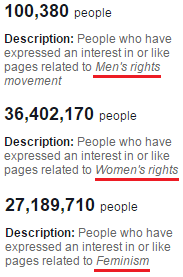
Calling women “bigmouths” isn’t strictly right, and people affronted by the assertion will insist women and men talk about the same amount, or that men talk more than women do.

Uh-huh.

Not impolite to observe is that women “collaborate” more than men do, that is, they sooner work in tandem, which is what statistics I gleaned from Facebook corroborate.

“Tell us about the people you’d most like to connect with,” Facebook urges when you piece together a page on its site. My entries under “Interests” brought up terms like Men’s rights movement, Feminism, and Women’s rights. Accompanying these topics were figures about how many others had expressed an interest in connecting with people who shared those interests.

See for yourself.

Notice that 200 to 400 times greater interest in bonding with people concerned with women’s rights has been shown than interest in bonding with people concerned with men’s rights. That’s a lot…A LOT a lot.

I don’t think there’s anyone who would deny that the fruits of feminism owe to social networking. Some of these fruits have been great; some really horrible. This blog concerns the rotten ones: a culture of victimhood and false accusation combined with the legislation of accelerated and derelict legal procedures presided over by judges bigoted by politics, bad practices (including engineered social science), and money.

Men have been the majority of victims, and they’ve been the only source of concentrated complaint, concentrated complaint that’s been mocked and muted. If we can assume the 200 to 400 times greater interest shown in women’s rights translates more or less proportionally to the number of people disinterested in or opposed to men’s beefs, then no wonder. Female influence, which is significantly feminist influence, is vastly predominant. The sympathy market has been cornered.

Men aren’t the only victims of procedural abuse, however.

Many if not most of the victims who comment on this blog are women, and they’re often desolate. Some live like hermits, some like refugees. They feel exiled and isolated.

The irony is this is exactly how women felt before the rise of feminism, and there’s a lesson to be taken from that.

Men’s struggles for a market share of sympathy face a phalanx of resistance and the priority of conditioned sentiment (prejudice); they’re also troubled by men’s lesser inclination to work collaboratively (the maverick mentality is a losing one). Women, however, can work from behind the lines. They can tap into the women’s rights network and harness its power.

And they should.

Copyright © 2015 RestrainingOrderAbuse.com

The Question of “Angry White Men” and Complaints of Procedural Abuse

I started to include the contents of this post in the last one, “Why More Falsely Accused Don’t Speak Out.” Then I thought the topic of angry white men might be due some room of its own.

The previous post outlined reasons why men and women who’ve been victimized by false accusations and procedural abuse are subdued from voicing their outrage publicly. This post criticizes how victims who have expressed their pain and fury have been perceived and treated.

What complaints have emerged in the past couple of decades have been derogated as the rants of “angry white men” (Google this phrase, and you’ll see what I mean; it’s even the title of a 2014 book). Complaints have been dismissed, that is, as nothing worthier of consideration than the cranky kvetches of the disenfranchised “patriarchy,” yesterday’s top dogs said to resent their loss of dominion.

What members of angry white men’s and fathers’ groups are said to object to really is not their being unjustly vilified, kicked to the curb, impoverished, and stripped of roles in their children’s lives (pfft) but their loss of power and status.

It’s an attractively tidy idea and syncs up with feminist dogma nicely, but it’s critically shallow, besides ethically and empathically vacuous.
One thing the conclusion ignores is culture. Consider the Jews you may know, or the Koreans or the Pakistanis. Do you reckon restraining orders, for example, or domestic abuse allegations are as commonly brought against Jews or East Asians as they are against whites? Would the action be as countenanced in these ethnic communities, whose members may be more accountable to the judgment of other members and whose community conscience may forbid the public airing of familial discord?

Now it could be true that entitled white men, as members of the patriarchy or former patriarchy, are meaner and feel freer to be abusive than Jews and East Asians. Certainly that’s arguable, but it’s not necessarily arguable on the basis of reports of abuse, because it could also be true that entitled white women, as the usurpers of patriarchy (and as white women), feel freer to exploit feminine advantage and cry wolf than Jews and East Asians do.

Consider that feminism—the origin of the characterization angry white men—is criticized even within its ranks as ethnocentric, i.e., Whitey McWhite. If white women are those who are preponderantly pro-litigation, thanks to white feminist indoctrination into the culture of victimhood and “empowerment,” then who would you expect to be a majority of the targets of procedural abuse?

Those who posit that complainants of courthouse dirty dealings are predominately angry white men aren’t necessarily wrong, but they may be right for reasons they haven’t considered.

Another one of these reasons is entitlement.

Has it occurred to them, I wonder, that only white people may feel entitled to complain publicly? Do they really imagine that certain minorities aren’t that much more vulnerable to legal abuse, or that they’re not invisible and mute because of their self-perceived or actual lack of entitlement? People who’ve traditionally been the system’s goats aren’t people eager to stick their necks out. They never had faith in social justice.

If you allow that a majority of entitled victims of procedural abuses are white men, then it stands to reason that a majority of complainants of procedural abuses will be white men.

It further stands to reason that these white men, who had been conditioned to the expectation of justice, should feel disappointed…and angry.

Copyright © 2015 RestrainingOrderAbuse.com

*The book Angry White Men: American Masculinity at the End of an Era (2014) is by sociologist Michael Kimmel. Dr. Kimmel is a New York Jew with a Ph.D. from Berkeley. His book was reviewed in The New York Times by Hanna Rosin, a Stanford grad, a senior editor at The Atlantic, and the author of The End of Men and the Rise of Women. Ms. Rosin is also Kimmel-Rosina New York Jew. While neither one’s conclusions can be dismissed offhand, their cultural and class remove from the subjects of Dr. Kimmel’s book makes their identification with those subjects suspect, and Ms. Rosin’s objectivity and access are plainly dubious. From Ms. Rosin’s review: “Kimmel’s balance of critical distance and empathy works best in his chapter on the fathers’ rights movement, a subset of the men’s rights movement. Members of this group are generally men coming out of bitter divorce proceedings who believe the courts cheated them out of the chance to be close to their children.” Contrast this confidently categorical interpretation of men’s and fathers’ complaints to this firsthand account by a father who was ruined by “bitter divorce proceedings”: “The ‘Nightmare’ Neil Shelton Has Lived for Three Years and Is Still Living: A Father’s Story of Restraining Order Abuse.” A comment on Amazon.com credits Ms. Rosin with being sensitive to “real women’s experience.” The story highlighted in the previous sentence chronicles a real (angry white) man’s—whose telephone number is provided in a comment beneath the post.

Courthouse Violations and PTSD: What Is “Legal Abuse Syndrome”?

This is the first post on this blog to introduce Legal Abuse Syndrome (LAS), a condition proposed by marriage and family therapist Karin P. Huffer, whose books on the subject of posttraumatic stress stemming from court-mediated violations are Overcoming the Devastation of Legal Abuse Syndrome (1995) and Legal Abuse Syndrome: 8 Steps for Avoiding the Traumatic Stress Caused by the Justice System (2013), and Legal Abuse Syndrome: A Preventable Public Health Problem (2018).


“Anyone who has ever worked in a legal aid office or law library has met people whose lives have come unhinged after a bad contact with the legal system. The details vary—they may have lost a business or inheritance or the custody of a child—but the common theme of feeling violated by the legal system does not. Even 20 years after losing a lawsuit, some people who suffer from Legal Abuse Syndrome still carry a suitcase of old legal papers around, desperately hoping someone will help them find justice.”

—Ralph Warner, quoted in the San Francisco Chronicle (1997)

I’ve encountered the ghostly men and women described by Mr. Warner in the epigraph. They haunt law libraries the way some exiles haunt coffeehouses or used to haunt bookstores. They carry sheaves of papers, foxed file folders, and weathered satchels, just as Mr. Warner describes. They’re known to one another and exchange muted greetings and tinny words of encouragement.

They desultorily pore over computerized case law and weighty reference tomes—whether pursuing a lead or just out of habit, it’s impossible to tell—and they propound among themselves novel approaches to revisiting one or another of the dusty judgments that have plainly come to consume their lives.

The eager young law students who mill and toil never cast a glance in the direction of these damned souls, who palpably emanate doom.

Maybe I’m a fatalist, or maybe I was smart enough to recognize a fix when I saw one. A few self-navigated trips through the legal ringer were enough to cement in me a sense of futility. Otherwise, I suppose I might have found myself among this skeleton crew.

After my most recent pelting in that burlesque show advertised as process of law (2013), I resolved to stick with what I know: writing. I have no illusions that this makes me any more a master of my fate than if I clung to a corner and allayed my outrage by rocking back and forth and muttering imprecations, but the activity provides a sense of purpose, however lackluster, and bestows a semblance of order to my inner world (my outer world is a hopeless shambles from which the writing blessedly distracts).

I surface now and again to discover people I knew have aged, have entered puberty or college, have married or divorced, or have died.

Elucidating the trauma that forces a person to exchange living for some deranged form of solace like prating in a blog in defiance of a juggernaut is all this initial post on Legal Abuse Syndrome aspires to. For this, I defer to Dr. Huffer (though anyone who has tracked posts and comments here will find significant correspondences between their positions and hers):

LEGAL ABUSE SYNDROME (LAS) is a form of posttraumatic stress disorder (PTSD). It is a psychic injury, not a mental illness. It is a personal injury that develops in individuals assaulted by ethical violations, legal abuses, betrayals, and fraud. Abuse of power and authority and a profound lack of accountability in our courts have become rampant, compounding an already stressful experience.

This stress can and does lead to physical illness. AMA statistics show that around 85% of all physical illness is directly attributable to stress. Legal Abuse Syndrome is a public health menace in this country. It leads to massive medical intervention costs, burdens insurance companies, and adds to Medicare and Social Security costs. Most painfully, it crushes the brilliance and creativity of its sufferers. Legal Abuse Syndrome is detrimental to all of society, and nobody is immune.

Whatever the court setting, whether it is regarding divorce, child custody, parental support, probate matters, personal injury, property disputes, legal or medical malpractice, criminal charges, or other deeply personal issues, the frauds put forth in our courts add greatly to the trauma. When litigants are unable to get fair resolution to their issues, when the court dysfunction further adds to the litigant’s burden, when no amount of actual case law compels an equitable outcome, litigants suffer often disabling levels of stress. When further attempts to achieve redress fail, litigants display the hallmark signs of Legal Abuse Syndrome (LAS).

I’ll conclude with a refrain that has become trite with repetition: The thesis Dr. Huffer’s statements delineate was put forward decades ago, like so many arguments from journalists, jurists, and other social critics against a heedless and unyielding status quo that has prevailed for far too long.

Copyright © 2015 RestrainingOrderAbuse.com

*The concept of Legal Abuse Syndrome was brought to the attention of this writer by investigative journalist Michael Volpe, coauthor of Bullied to Death: The Chris Mackney Story.