The previous post, which highlights how fraudulent abuse of process is promoted and disguised, contains a link to a PDF prepared by the National Coalition Against Domestic Violence (NCADV) called “Comparison of VAWA 1994, VAWA 2000 and VAWA 2005 Reauthorization Bill.”
The acronym VAWA stands for the federal Violence Against Women Act, which was ratified over 20 years ago (and has been repeatedly renewed). State police and judicial bias toward allegations of abuse has accordingly been conditioned with billions of dollars over decades and is today well-cemented.
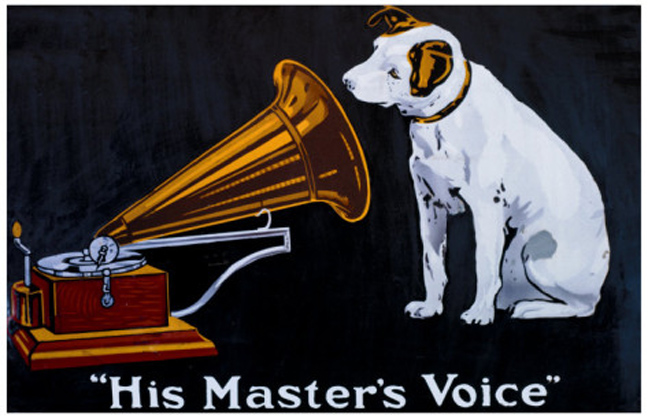
Even a non-cynical critic would call the “justice system” owned.
Parsing the entirety of the NCADV’s PDF would be overkill. This post will examine a few quotations that illustrate how police, judicial, and prosecutorial conduct have been bought with inducements that are called “grants.”
Grants from the Office on Violence Against Women for “Court Training and Improvements” (i.e., “training” or “educating” judges and court staff) have been discontinued under current legislation, possibly because it occurred to someone that “instructing” the court how it should rule sounds very like coercing verdicts. Procedural bias, however, has already been firmly rooted, and money to influence court process has merely been relabeled Grants to Support Families in the Justice System.
High school civics teachers tell us our government was set up so that its administrative, legislative, and judicial branches act independently to ensure that “checks and balances” prevent any one branch from acting tyrannically, and that state governments enjoy autonomy from the central government. What the quotations below show is how checks and balances can be worked around with cash.
(VAWA 2000): “Amends Pro-arrest grants to expressly include enforcement of protection orders, and is designed to help state and tribal courts improve interstate enforcement of protection orders.”
This quotation means that money from the federal government is issued to state police departments to urge them to arrest people, including anyone who has purportedly violated a restraining order. If the petitioner of a restraining order reports a violation (real or not)—including a violation s/he has “arranged” (“Susie, I’ve reconsidered. Please come over so we can talk about this!”)—officers have been “incentivized” to haul the defendant in (according to their “judgment,” which has been influenced and can hardly be called fair and objective).
(VAWA 2000): “Clarifies that as a condition of funding, recipients of STOP and Pro-Arrest grants must ensure filing and service of protection orders at no extra cost to the victim.”
This quotation “clarifies” that unless states allow restraining order petitioners to accuse people for free, they won’t get any money.
(VAWA 2005): “Requires law enforcement agencies and courts to enforce these orders.”
(VAWA 2005): “Prevents courts from publishing survivor information on the internet.”
These quotations explicitly say that state police and court policy has been dictated (i.e., cops and courts have been told how they’re “required” to act). Either they comply, or the money tap gets shut off. This may reasonably be called extortion or coercion.
(VAWA 2005): “Encourages protocols and training to avoid dual arrest.”
This quotation means if there are two complainants in a domestic spat, for example, only one should be arrested (and since this stipulation is eagerly reported by the National Coalition Against Domestic Violence, guess which member of a hetero couple the police are supposed to arrest).
(VAWA 2005): “Criminalizes stalking by surveillance.”
(VAWA 2005): “Expands the accountable harm to include substantial emotional harm to the victim.”
(VAWA 2005): “Expands minimum penalties of stalking if it occurs in violation of a protection order.”
These quotations mean that pretty much any alleged misconduct is punishable and dictates how it should be punished (at a minimum) if it reportedly occurs while a restraining order is in effect.
(VAWA 2005): “Permits LAV-funded attorneys to support victims’ dealings with the criminal justice system; but, does not permit funding to pay for prosecutorial or defense functions.”
This quotation says accusers (“victims”) may be provided with free legal services but that the accused must not be.
The themes in these few quotations indicate the pattern of the web:
- Punishable conduct has been broadened to include almost anything that can be described as offensive by a plaintiff and/or a judge. In practice, this means any alleged conduct that allegedly causes a complainant to feel afraid.
- Police and judges have been urged to act and to act without deliberation and bigotedly.
- Accusers’ accountability has been minimized (and accusers are nominated “victims” or even “survivors” on no more ascertainable grounds than that they accused someone of violating them), while the accused’s accountability has been maximized to include permanent registration in public/police databases, ones that may specifically label them “stalkers” or “violent abusers.”
- Free attorney services are granted to accusers but must be denied to the accused.
This web has been constructed methodically with billions of taxpayer dollars, and this money has gone not only to the police and the courts but to law schools and nonprofits (like the NCADV), and the latter may reciprocate by producing research papers; websites; and pamphlets, brochures, and posters that further bias the system as well as the public and their representatives, for example, journalists. (Grants from the National Institute of Justice may also be awarded to generate feminist “social science” that’s used to “train” judges.) The federal government’s investment in favored nonprofits furthermore legitimates and empowers those nonprofits and thereby increases the donations they receive from the public. The Kayden Jayce Foundation (KJF), a nonprofit that acknowledged false accusation and focused on providing legal aid to low-income (non-white) families, applied for grant monies, was denied, and has since had to shutter its windows. So, too, have nonprofits that defend men’s rights—i.e., equal rights—been spurned. They’re on their own. Consequently, they can’t pay for teams of professional writers and web designers, etc., and receive little or no public assistance. They don’t have the cachet that only money can buy.
If all of this weren’t enough, rulings that nominate people “stalkers,” “batterers,” “child abusers,” or even “rapists” can legally be formed in 10 minutes or even by “default” (i.e., without ever having heard from a defendant at all). In some states (Arizona and Indiana are examples), three-minute ex parte rulings are final unless defendants apply to the court for the opportunity to be heard. Men and women may be accused from another state and never afforded a practicable chance to defend themselves against allegations that may be arrant lies and exercise dire effects on their lives (including loss of employment).
When complainants of procedural abuses speak of “conspiracy,” this is what they’re talking about…and they’re not wrong.
Copyright © 2015 RestrainingOrderAbuse.com
*For further insight, see “‘You have bullsh*t; we have research’: The National Coalition Against Domestic Violence v. Daddy Justice (Or, Why False Allegations Are a Serious Problem).”
 Some recent posts on this blog have touched on what might be called the five magic words, because their utterance may be all that’s required of a petitioner to obtain a restraining order. The five magic words are these: “I’m afraid for my life.”
 Gamesmanship in this arena is both bottom-up and top-down. Liars hustle judges…and judges hustle liars along.
 TALKING BACK to restraining orders