How Restraining Order Fraud is Motivated and Concealed by VAWA and Its Advocates

The previous post, which highlights how fraudulent abuse of process is promoted and disguised, contains a link to a PDF prepared by the National Coalition Against Domestic Violence (NCADV) called “Comparison of VAWA 1994, VAWA 2000 and VAWA 2005 Reauthorization Bill.”

The acronym VAWA stands for the federal Violence Against Women Act, which was ratified over 20 years ago (and has been repeatedly renewed). State police and judicial bias toward allegations of abuse has accordingly been conditioned with billions of dollars over decades and is today well-cemented.

Even a non-cynical critic would call the “justice system” owned.

Parsing the entirety of the NCADV’s PDF would be overkill. This post will examine a few quotations that illustrate how police, judicial, and prosecutorial conduct have been bought with inducements that are called “grants.

Grants from the Office on Violence Against Women for “Court Training and Improvements” (i.e., “training” or “educating” judges and court staff) have been discontinued under current legislation, possibly because it occurred to someone that “instructing” the court how it should rule sounds very like coercing verdicts. Procedural bias, however, has already been firmly rooted, and money to influence court process has merely been relabeled Grants to Support Families in the Justice System.

High school civics teachers tell us our government was set up so that its administrative, legislative, and judicial branches act independently to ensure that “checks and balances” prevent any one branch from acting tyrannically, and that state governments enjoy autonomy from the central government. What the quotations below show is how checks and balances can be worked around with cash.

 (VAWA 2000): “Amends Pro-arrest grants to expressly include enforcement of protection orders, and is designed to help state and tribal courts improve interstate enforcement of protection orders.”

This quotation means that money from the federal government is issued to state police departments to urge them to arrest people, including anyone who has purportedly violated a restraining order. If the petitioner of a restraining order reports a violation (real or not)—including a violation s/he has “arranged” (“Susie, I’ve reconsidered. Please come over so we can talk about this!”)—officers have been “incentivized” to haul the defendant in (according to their “judgment,” which has been influenced and can hardly be called fair and objective).

 (VAWA 2000): “Clarifies that as a condition of funding, recipients of STOP and Pro-Arrest grants must ensure filing and service of protection orders at no extra cost to the victim.”

This quotation “clarifies” that unless states allow restraining order petitioners to accuse people for free, they won’t get any money.

(VAWA 2005): “Requires law enforcement agencies and courts to enforce these orders.”

(VAWA 2005): “Prevents courts from publishing survivor information on the internet.”

These quotations explicitly say that state police and court policy has been dictated (i.e., cops and courts have been told how they’re “required” to act). Either they comply, or the money tap gets shut off. This may reasonably be called extortion or coercion.

(VAWA 2005): “Encourages protocols and training to avoid dual arrest.”

This quotation means if there are two complainants in a domestic spat, for example, only one should be arrested (and since this stipulation is eagerly reported by the National Coalition Against Domestic Violence, guess which member of a hetero couple the police are supposed to arrest).

(VAWA 2005): “Criminalizes stalking by surveillance.”

(VAWA 2005): “Expands the accountable harm to include substantial emotional harm to the victim.”

(VAWA 2005): “Expands minimum penalties of stalking if it occurs in violation of a protection order.”

These quotations mean that pretty much any alleged misconduct is punishable and dictates how it should be punished (at a minimum) if it reportedly occurs while a restraining order is in effect.

(VAWA 2005): “Permits LAV-funded attorneys to support victims’ dealings with the criminal justice system; but, does not permit funding to pay for prosecutorial or defense functions.”

This quotation says accusers (“victims”) may be provided with free legal services but that the accused must not be.

The themes in these few quotations indicate the pattern of the web:

  • Punishable conduct has been broadened to include almost anything that can be described as offensive by a plaintiff and/or a judge. In practice, this means any alleged conduct that allegedly causes a complainant to feel afraid.
  • Police and judges have been urged to act and to act without deliberation and bigotedly.
  • Accusers’ accountability has been minimized (and accusers are nominated “victims” or even “survivors” on no more ascertainable grounds than that they accused someone of violating them), while the accused’s accountability has been maximized to include permanent registration in public/police databases, ones that may specifically label them “stalkers” or “violent abusers.”
  • Free attorney services are granted to accusers but must be denied to the accused.

This web has been constructed methodically with billions of taxpayer dollars, and this money has gone not only to the police and the courts but to law schools and nonprofits (like the NCADV), and the latter may reciprocate by producing research papers; websites; and pamphlets, brochures, and posters that further bias the system as well as the public and their representatives, for example, journalists. (Grants from the National Institute of Justice may also be awarded to generate feminist “social science that’s used to “train” judges.) The federal government’s investment in favored nonprofits furthermore legitimates and empowers those nonprofits and thereby increases the donations they receive from the public. The Kayden Jayce Foundation (KJF), a nonprofit that acknowledged false accusation and focused on providing legal aid to low-income (non-white) families, applied for grant monies, was denied, and has since had to shutter its windows. So, too, have nonprofits that defend men’s rights—i.e., equal rights—been spurned. They’re on their own. Consequently, they can’t pay for teams of professional writers and web designers, etc., and receive little or no public assistance. They don’t have the cachet that only money can buy.

If all of this weren’t enough, rulings that nominate people “stalkers,” “batterers,” “child abusers,” or even “rapists” can legally be formed in 10 minutes or even by “default” (i.e., without ever having heard from a defendant at all). In some states (Arizona and Indiana are examples), three-minute ex parte rulings are final unless defendants apply to the court for the opportunity to be heard. Men and women may be accused from another state and never afforded a practicable chance to defend themselves against allegations that may be arrant lies and exercise dire effects on their lives (including loss of employment).

When complainants of procedural abuses speak of “conspiracy,” this is what they’re talking about…and they’re not wrong.

Copyright © 2015 RestrainingOrderAbuse.com

*For further insight, see “‘You have bullsh*t; we have research’: The National Coalition Against Domestic Violence v. Daddy Justice (Or, Why False Allegations Are a Serious Problem).”

Restraining Order Rulings Aren’t about Justice but about Justification, and Lies to the Court Only Work because Judges Also Lie

What this post predicts in its postscript occurred exactly a year after its publication.—Editor, 2018


Here’s a formula for fraud:

  1. You lavish police departments with hefty federal grants to urge their officers to steer complainants of abuse to the courthouse to apply for restraining orders.
  2. You have legislation in place that rewards impulsive or malicious accusation with quickie ex parte rulings from judges.
  3. You instruct judges how they should form those and subsequent rulings and threaten to withdraw funding from states whose courts don’t play ball and comply with federal dictates (see VAWA).
  4. You give this farce a gloss of credibility by requiring that the accused be granted the opportunity to be heard in their defense.
  5. You ensure that the appellate process is also cursory and that the accused have no further recourse to the law to expose what may be false allegations.
  6. With rhetoric and obfuscation, you further ensure that journalistic investigation and criticism are minimal and that the public is kept in the dark.

Accusers are encouraged to beef up their claims to justify themselves to the court and appear duly afraid (and that’s the ones who aren’t outright lying). Judges, whose motives have been coerced, are encouraged to skew their findings (in hearings that may span all of 10 minutes) to meet social and political expectations and justify their intrusions into the lives of the accused (intrusions that deprive the accused of rights and property), as well as to justify themselves to other judges and the public should their performance come under scrutiny.

Other judges who weigh in on accusations that may spawn multiple prosecutions or appeals are encouraged to skew their findings for the same motives and to preserve the veneer of judicial propriety. They are justified in this course by the original ruling or rulings in a case, which may have been formed in moments.

Frauds may start with hyped or false claims from plaintiffs, but that isn’t where they stop.

Copyright © 2015 RestrainingOrderAbuse.com

*The writer of this post was sued for harassment and libel in 2013 (based on his writing about false accusations against him that began seven years prior). To justify the court’s ruling against me, the judge asserted on record that statements of mine on this site were “false.” The judge didn’t say what statements were false, because he didn’t have to. No statements were false. The judge took liberties with the truth. Based on his characterization, I could be sued again. (The next judge would just cite the former judge’s statement as fact.) This conduct isn’t extraordinary; it’s how things are done (and how the court guarantees things stay done).

Hocus-Pocus: More on False Restraining Orders and the Five Magic Words

Some recent posts on this blog have touched on what might be called the five magic words, because their utterance may be all that’s required of a petitioner to obtain a restraining order. The five magic words are these: “I’m afraid for my life.”
Cops, it’s even reported, tell women whom they goad to get restraining orders that they should recite this magical phrase to the judge (wink, wink)—and some of these women complain later that they felt forced onto a course that they regretted pursuing but weren’t permitted to correct.

(Notably, billions in federal tax dollars have been invested under the Violence Against Women Act in so-called STOP grants—“Services and Training for Officers and Prosecutors”—as well as in grants to encourage arrests, according to which VAWA grants police officers have essentially been instructed to promote restraining orders.)

The I’m-afraid-for-my-life enchantment has variant forms. This writer’s accuser, who had for months nightly hung around outside of his residence alone in the dark, used this one: “Will I be attacked?”

The abbreviated version, “I’m afraid,” can even suffice. What’s more, judges in some jurisdictions may cue a restraining order applicant to say it, because they’re not authorized to issue the requested injunction unless s/he does (e.g., “I can only issue a restraining order if you tell me you’re afraid of [him or her]. I’m going to ask you one more time: Are you afraid?”).

Gamesmanship in this arena is both bottom-up and top-down. Liars hustle judges…and judges hustle liars along.

Claims of fear are seldom unaccompanied by specific for-instances (sometimes real, sometimes not), but typically if it weren’t for the magic words’ coloring the for-instances, they would signify little by themselves.

(A California man employed as a little league umpire, for example, had a restraining order petitioned against him this year by his sister-in-law. She alleged that looks the man had cast in his nephew’s direction—while the boy was playing baseball, and the man was in the park to perform his job—caused his nephew grave emotional upset. She also cited an incident when she said her brother-in-law had aggressively honked and waved at her and her son from his car. The so-called relevant facts were only made sinister by their reporter’s alleged apprehension.)

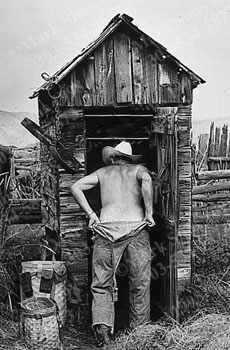
Words aren’t magical, and allegations of fear aren’t facts. In procedures as brief and superficial as those mandated by restraining order laws, even facts aren’t facts. They’re often just innuendo upon which foundation a judge is urged and authorized to erect an outhouse.

Copyright © 2014 RestrainingOrderAbuse.com

“Are You Serious?”: One Commenter’s Experience of Restraining Order Corruption

A commenter on this blog’s Q&A page recently submitted an update on his own ordeal that illumines the contradictions, corruption, and chaos that mar the restraining order process. His story, which I’ve edited for clarity, is worthy of the attention of legislators and should be of interest to anyone who has a stake in these matters or is curious to know how the restraining order process has been debauched since its advent decades ago.

As I mentioned before, I made an attempt to file an order of protection against the scorned sociopathic woman who put one on me. I was told I could not, yet nobody was able to tell me what statute prohibits this or what the law says except, “You cannot put an order of protection on anyone who has one on you.” I did, however, file a motion to dismiss/vacate.

One day last week I was going to visit my mother for lunch—her house is one of the few places I will go. She lives downtown. While on the way to visit her, I decided to make another attempt to file this order of protection. The court building is very close to where my mother lives. I went to the main courthouse and was ultimately told by a clerk (as well as lawyer who had overheard me) that to file a restraining order, I had to go to another building specifically for this. This new courthouse is about three years old. I took a taxi to the new building, made it into the area to file, gave my info, signed in, and waited. Ninety percent of the people there were women, most of whom looked like trouble. There were no secretaries. Questions and answers were audible to everyone. There were some very legitimate people, though I could see a lot of these people were simply looking for trouble. Not one was turned away.

They should get a revolving door put in soon.

There were about 20 forms to fill out. I was handed examples of how to fill them out with arrows, underlines, and check marks to indicate where everything went. I had already filled mine out in advance, using an online PDF. I handed the paperwork in, and it was gone over with me before the helper entered it into the computer. A short while later, a woman called my name. She asked me if had a case with this woman. I said yes. She said she sees I’m in the computer for filing a motion to vacate. She asked, “Vacate what?” I said, “Restraining order.” She told me, “You cannot put an order of protection on a person who has one on you.” I said, “I have not been out of my house in a year. I am the one who needs this. This woman is a scorned sociopath, and she is looking to get me in trouble.” She said a judge usually won’t hear a case like this. I said, “The constitution says we have equal protection under the law.” She said, “Let me see what I can do.” A short while later another woman called me and said the judge will see you at 2. I sat around and phoned my mother to say lunch was off. Two o’clock rolled around. I headed to the courtroom and saw the youngest female judge I have ever encountered (my fourth female judge). I thought to myself, she looks like a nice woman; I think she will be unbiased.

I honestly think people become possessed by demons when they put that black robe on. Most of them, anyway.

While I waited to be called, I did witness a couple of cases that were legit. I also saw some are-you-serious? cases. One woman just wanted her ex-boyfriend to stop calling and bugging her. I thought, no way is she getting one. The judge asked her, “Are you afraid he will hurt you?” She answered, “No.” The judge said, “I cannot issue one if you have no fear of him.” She said, “I don’t think he will hurt me…I don’t want him to bug me,” and fumbled for what else to say. The judge again leaned in, stuck her head forward and said, “I am going to ask you one more time: Do you fear him?” She said, “Yes.” Bingo! You just won a restraining order. Congrats!

Now I was called.

The judge had thought my order was up in a couple weeks, though that was the motion to dismiss. She said, “I cannot give an order of protection to anyone who has one on them from the other party.” I said, “What about the U.S. Constitution and the Illinois Constitution that state citizens have equal protection under the law?” She was cocky and said, “Oh, really. Where exactly does it say that?” I went into my carrier, which has a stack of paperwork for this case, and I pulled out the full constitution and said, “Article1, Section 2: ‘nor be denied the equal protection of the laws.’” I heard gasps at the back of the courtroom. She said, “Well, it is law I cannot give you one.” (By the way, this was the fastest talker I had ever encountered in my life—Adderall added, I’m guessing.) I grabbed my pen and said, “I have looked all over for such laws and cannot find any. Can you give me that statute?” She grabbed a book and said it was in the Illinois restraining order law book (I missed the page number), statute 750:60/215. I tried to find this book or that statute and had no luck. I must have written it down wrong, or she made it up, because she found it as fast as I could put pen to paper.

The good news is she made the restraining order “pending,” and it will be heard the same day as the motion. Her final words were, “You’ve made all the proper steps so far.” Like a game, eh? If that book does exists (I’m sure it does), I’d love to buy a copy!

The statute the judge quoted to him does exist (750 ILCS 60/215):

Mutual orders of protection; correlative separate orders. Mutual orders of protection are prohibited. Correlative separate orders of protection undermine the purposes of this Act and are prohibited unless both parties have properly filed written pleadings, proved past abuse by the other party, given prior written notice to the other party unless excused under Section 217, satisfied all prerequisites for the type of order and each remedy granted, and otherwise complied with this Act. In these cases, the court shall hear relevant evidence, make findings, and issue separate orders in accordance with Sections 214 and 221. The fact that correlative separate orders are issued shall not be a sufficient basis to deny any remedy to petitioner or to prove that the parties are equally at fault or equally endangered.

This statute is over 25 years old and derives from the Illinois Domestic Violence Act of 1986. The commenter above was not a batterer, nor, it’s very likely, were most of the men (and possibly women) who were slated to be issued restraining orders as a consequence of allegations made against them on the afternoon the commenter visited the courthouse (allegations, it’s worthy to note, that may have been coerced by the presiding judge: judicial subornation of perjury). The language of the statute (“protection,” “abuse,” “endangered”) along with the title of the act that instituted it into law plainly suggest that a much narrower application of it was intended by lawmakers than obtains in the administration of restraining orders today.

I find this commenter’s account very credible, as I hope any legislators who may read it will. “Are you serious?” is right.

Copyright © 2013 RestrainingOrderAbuse.com