L’Oreal Stepney, TCEQ Director, Falsely Denies Agency’s Censorship Practices

L'Oreal Stepney, Loreal Stepney, Loreal Stepney TCEQ, L'Oreal Stepney TCEQ, L'Oreal Stepney PE, Loreal Stepney PE, TCEQ, Texas Commission on Environmental Quality, Toby Baker, Greg Abbott, Governor Greg Abbott
“Let me say this clearly. We are not an agency that is about censorship. It is not what we do, it is wrong, it is not who we are.”

L’Oreal Stepney (2011)

That’s how the Texas Commission on Environmental Quality’s deputy director of the Office of Water responded to allegations by scientists that their conclusions had been censored by her agency, which considers climate change to be “unsettled science.” The TCEQ was accused of censoring facts that appeared to support the contrary.

L’Oreal Stepney countered the criticism by flatly stating that censorship was wrong and was not representative of TCEQ practices.

Less than 24 months after Stepney’s public protestation, a censorship order against this writer was unlawfully coerced from an Arizona judge by TCEQ senior toxicologist Tiffany Bredfeldt with the help of TCEQ Toxicology Director Michael Honeycutt to conceal facts that were potentially embarrassing to them and to the agency that apparently still provides them with paychecks seven years later.

A detailed account of Bredfeldt’s and Honeycutt’s statements to the court, including contradictory testimony, is here.

The 2013 injunction that they succeeded in securing against the writer, which made reporting his experiences with Bredfeldt both in and out of court, even “by word of mouth,” a criminal offense was itself in violation of the law, specifically, the Constitution. It was furthermore issued without a trial, which was also illegal.

According to testimony given by Honeycutt in 2013 (linked to above), the TCEQ had, besides, censored the writer within its agency before any court judgment was issued, in 2011 or 12, in other words, almost exactly concurrent with Stepney’s denial that the agency engaged in censorship, and it seems unlikely that Honeycutt would have or could have acted without other TCEQ administrators’ knowledge. Either Stepney knew, or she arguably should have known. Her 2011 public pronouncement that “censorship…is wrong” should have placed the entire agency on notice.

[A]s a general matter, the First Amendment means that government has no power to restrict expression because of its message, its ideas, its subject matter, or its content” unless the speech falls within one of the “well-defined and narrowly limited” exceptions, like defamation or obscenity. United States v. Stevens, 559 U.S. 460, 468-69 (2010) (citations omitted). Here, the injunction restricts Greene’s speech based on its subject matter and content—but covers speech that does not fit within any First Amendment exceptions [Greene v. Bredfeldt, Brief of Amicus Curiae, 2017].

The unlawful speech injunction (or “prior restraint”) that was imposed on the writer in 2013, and whose intent was to conceal a vicious hoax, stood for five years and was only dissolved after Bredfeldt attempted to have the writer imprisoned for its alleged violation, a threat that loomed over the writer’s head for two years, during which his father died, alone, while the writer was preoccupied with defending himself from accusations founded on lies.

The writer was rewarded with nothing but sore joints and muscles in contrast to the six-figure annual salary Stepney enjoyed during the same period. His ambition, corrupted by a dozen years of false, filthy, and/or frivolous allegations (which remain unrectified to this day), had been to publish humor for kids.

The loss of First Amendment freedoms, for even minimal periods of time, unquestionably constitutes [an] irreparable injury [Elrod v. Burns, 427 U.S. 347 (1976)].

I’m pretty sure the TCEQ was implicated in information suppression recently, moreover, and there’s no question that some critics of the agency consider suppression and/or distortion of facts typical of TCEQ “science.”

L’Oreal Stepney, a consummate bureaucrat whose claims of disdaining censorship are ones this writer considers expedient falsehoods, has reportedly sought to hold the TCEQ’s top administrative position. She apparently feels she should run the agency.

The writer wouldn’t trust someone so willing to sweep dirt under the rug with a job on its janitorial staff.

Stepney has the last laugh, though. At the expense of the Texas working class, she’s lavishly paid $165,000 a year.

Copyright © 2020 RestrainingOrderAbuse.com

Michael Honeycutt, Hack Ph.D., Grooms Chronic Liar to Give Expert Witness Testimony as TCEQ Rep; Both Named to Trump EPA

Michael Honeycutt, Dr. Michael Honeycutt PhD, Michael Honeycutt PhD, TCEQ, Texas Commission on Environmental Quality, Gov Greg Abbott, TCEQ, L'Oreal Stepney, Loreal Stepney
“Almost every time there’s a public concern about pollution, [Michael Honeycutt] says there’s nothing to worry about. Almost every time industry takes a position against stronger health protections, he takes their side and contorts the science to advocate for doing nothing. He just doesn’t have any credibility anymore.”

Luke Metzger, director of Environment Texas

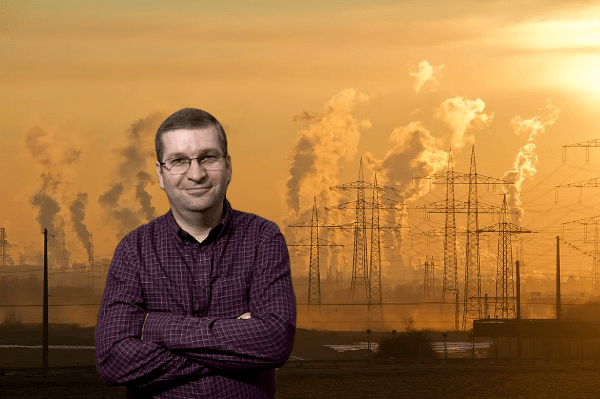
The subject of this post, Michael Honeycutt, Ph.D., is the toxicology director for the Texas Commission on Environmental Quality (TCEQ) and the Pruitt-appointed chairman of the EPA’s Science Advisory Boards.

I can corroborate that he has a knack for pollution, a knack, that is, for producing it.

Here is a bio possibly written by Michael Honeycutt about himself, in which either he or one of his TCEQ subordinates identifies Dr. Michael E. Honeycutt as a “dedicated, distinguished scientist.” That alone would be a sufficient commentary on the man’s ethics, besides a testament to his vanity, arrogance, and professional ridiculousness. But I have more.



Michael Honeycutt indiscriminately helped further tatter my life at a time when I might still have been able to patch the rents, and he did that by supporting a hoax, which is something that apparently comes naturally to him.
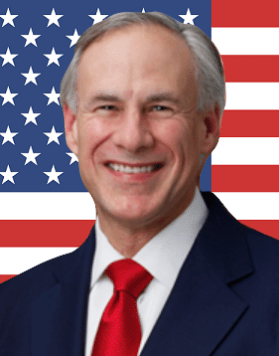
Greg Abbott, Texas Governor Greg Abbott, TCEQ, Texas Commission on Environmental Quality

Governor Greg Abbott, who says he supports “faith, family, and freedom,” but whose agency, the Texas Commission on Environmental Quality, has been repeatedly implicated in censorship, including censorship of the author of this post to cover up public mischief

A guy I had never met and still haven’t, Honeycutt “witnessed” against me in 2013 before the Arizona Superior Court—by phone from the comfort of his office in Texas, where I can’t help but imagine he was talking around a jelly donut and taking care not to dribble its contents on his shirt.

Some of his testimony appears below, along with that of the person on whose behalf he testified, a liar in his employ. Texas Governor Greg Abbott and TCEQ directors Toby Baker, Stephanie Bergeron Perdue, L’Oreal Stepney, and Beth West should be ashamed. Both my best friend and my father died while this mischief was ongoing. And its residue doesn’t simply evaporate as the TCEQ seems to believe chemical pollutants do. The only one who can undo lies is the liar.

Thanks in no small part, I’m certain, to Honeycutt’s flash credentials and suave delivery, which I have no doubt was coached, I would be denied my constitutionally guaranteed First Amendment freedoms for the next five years by an unlawful speech injunction that was imposed without a trial (which is, of course, also illegal). The TCEQ has been repeatedly implicated in censorship and information suppression, so in that regard there’s nothing exceptional about this instance.

During the five years I was silenced, I might have racked up a couple of Ph.D.’s of my own or published a book or two, as I had intended, had a case initiated by a protégée of Honeycutt’s at the TCEQ, senior toxicologist Tiffany Bredfeldt, been settled instead of unlawfully hushed.


Tiffany Bredfeldt, who represented the TCEQ on the news while seeking the writer’s imprisonment, was apparently dumped by her husband around the time the case concluded against her. That case stemmed from a 2013 censorship order validated by Michael Honeycutt, who might have averted manifold damages to all parties concerned had he demonstrated a molecule of discernment.


Tiffany Bredfeldt is a developmentally arrested, chronic, documented liar. She’s also a liar who has ridden her mentor’s coattails straight into the federal government—which, I grant, is where many of society’s least scrupulous succeed in turning their ethical disinhibition to profit.

I imagine Mike and Tiffany are flourishing there. I’d be surprised, really, if they weren’t already conspiring to occupy the office of EPA Administrator Andrew Wheeler.

Eugene Volokh, UCLA School of Law, UCLA Law Prof. Eugene Volokh, First Amendment

Constitutional scholar Eugene Volokh, who blogs on Reason.com, among other things about faith, family, and freedom, addressing the U.S. Senate Judiciary Committee

I was first in court with Bredfeldt in 2006, when I was granted a 20-minute self-defense against cooked allegations, and I was last in court with her in 2016, accused of having violated the illegal speech injunction Honeycutt had helped her illegally secure three years prior. Discounting many pretrial conferences, the entire 2016 “trial” again amounted to a single hearing, during which the proceedings were indefinitely suspended. Then they were dismissed…two years later. That’s 12 years of lying and legal abuse, including lawbreaking. What made the difference in 2016 was that I had public defenders and the support of UCLA professor of law and eminent First Amendment scholar Eugene Volokh; it wasn’t just a backroom lynching as it had been in 2013 when Honeycutt glibly voiced an appearance.

At the end of the 2016 hearing, after the mics had been turned off, Honeycutt’s apprentice could be heard exclaiming, “God damn it!” She then remarked for her courtroom entourage that Honeycutt had joked that her prosecution would be “good experience” for when she gave expert witness testimony as a TCEQ rep. That was Honeycutt’s alleged commentary on a prosecution meant to have a man wrongfully imprisoned. And Honeycutt’s a guy who identifies himself as a stalwart Christian and a devotee of the Boy Scouts.

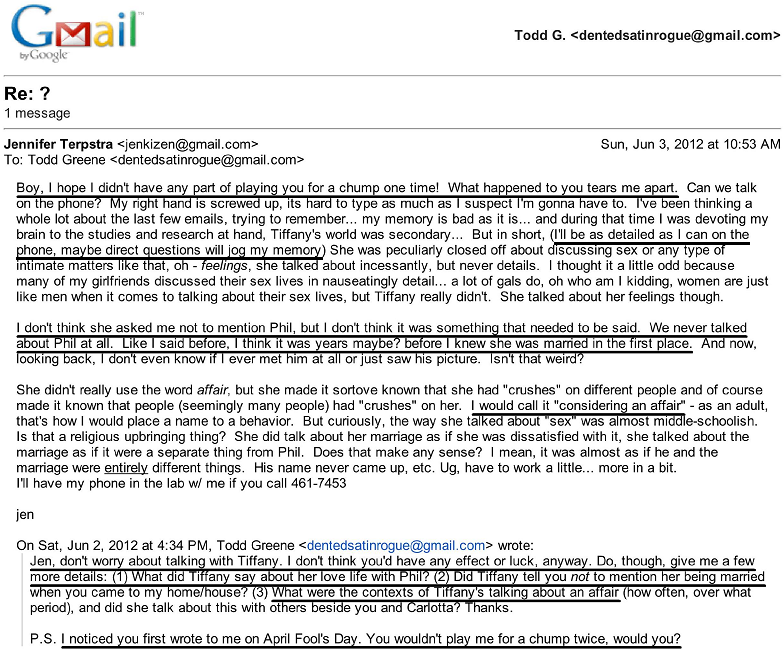
Here’s a synopsis of statements Texas state official and EPA adviser Tiffany Bredfeldt gave in evidence to the court or, in one instance, to the police only between the years 2006 and 2017. The story they tell isn’t the half of it, but it’s succinct, and its contradictions are palpable. The statements provide all the background the reader will require. Honeycutt’s contribution to this list is the third from the top. His apprentice, a stranger who had routinely hung around outside of my house at night, alone, has lied impulsively and randomly to whitewash what might be called an extramarital infatuation, and she has lied without qualm and to anyone who would listen. Like her mentor Honeycutt, she’s fond of attention.




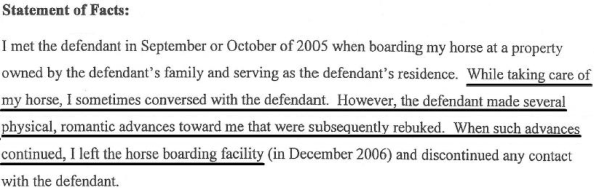

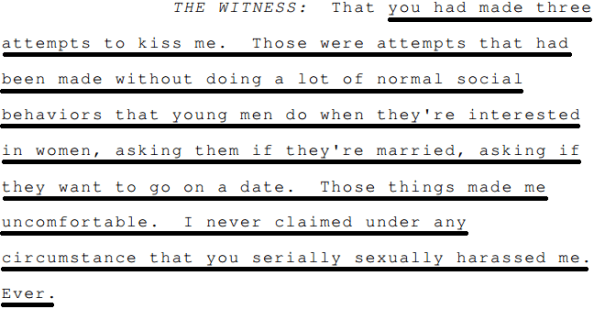
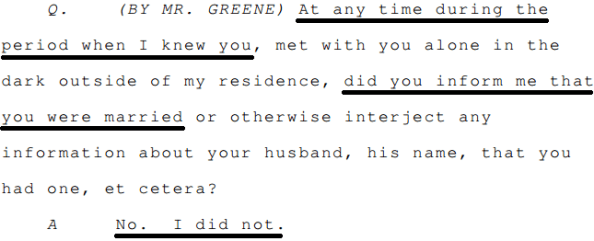




The crackpot who made the preceding statements was, the last I knew, entrusted with a role in determining U.S. public health policy besides that of Texas.

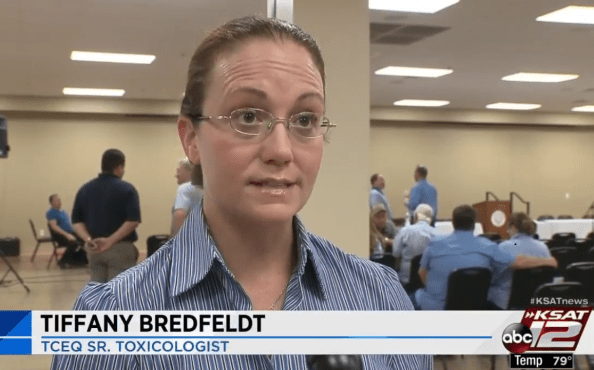
And she’s a virtual phantom. Anyone with a grievance toward the TCEQ who’s curious to learn if a Tiffany Bredfeldt is employed there will be disappointed. Thanks to Mike Honeycutt, she hasn’t appeared on its employee roster since 2011 or 12, though she represented the TCEQ on the TV news less than three years ago (see the image above) and still draws an agency paycheck (annual salary: $73,608).

Here’s Mike’s 2013 explanation to the court:
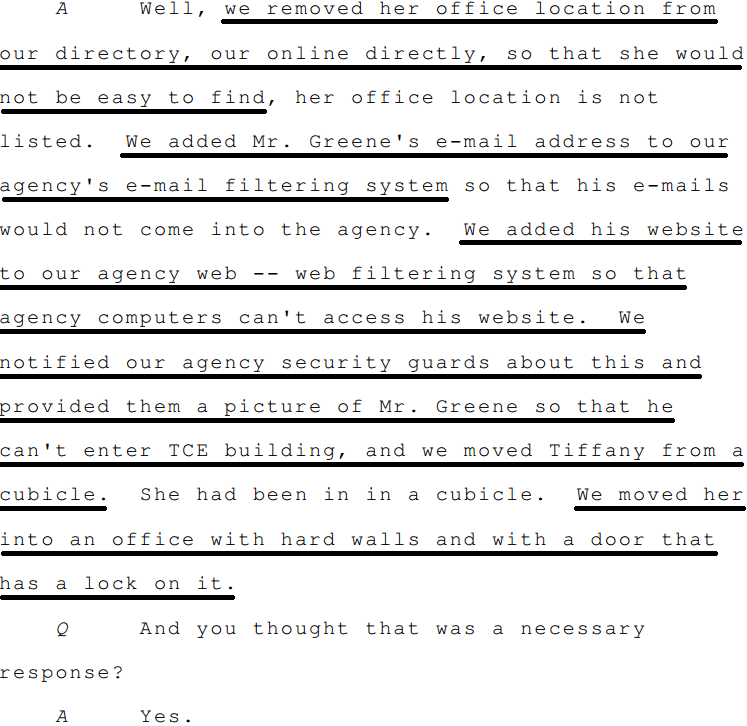
Even the reader with no courtroom experience can appreciate how steered testimony like that could drive some coffin nails home.

I encountered Honeycutt’s protégée in 2005, a few feet from my house, which is the only place I’ve ever seen her outside of a courtroom, and I’ve never been to Texas.

A woman who was scheduled to testify in the 2016 lawsuit that was meant to have me jailed had characterized Bredfeldt’s behavior toward me this way:

Michael Honeycutt, TCEQ, Texas Commission on Environmental Quality, hoax, Tiffany Bredfeldt PhD, Dr. Tiffany Bredfeldt, Governor Greg Abbott, Beth West TCEQ, TCEQ Human Resources Director Beth West, TCEQ Executive Director Toby Baker, Toby Baker TCEQ, TCEQ Deputy Executive Director Stephanie Bergeron Perdue

The email containing the woman’s remarks has been online for two years and is presumably known to Honeycutt, who, as far I can tell, has only sought to keep the matter from interfering with his moment in the limelight and his activities in church and with the Boy Scouts.

The exclusive basis for Michael Honeycutt’s involvement in the case at all was that I had contacted him in 2011 to tell him he was employing a scientist who had no compunction about lying.

It wouldn’t have occurred to me then that a willingness to lie, including under oath, might be a qualification the TCEQ prized.

Copyright © 2020 RestrainingOrderAbuse.com

*Michael Honeycutt told the court in 2013 that I had accused his apprentice Bredfeldt of engaging in scientific fraud, which is something I’ve never done. In fact I was careful to clarify that I knew nothing about her professional conduct. Honeycutt’s testimony, given under oath, was false. It was, however, effective, and I’m convinced that effectiveness was his priority, not accuracy. Misrepresenting a material fact in a sworn court proceeding, that is, stating a fact under oath that is likely to influence the judge but is untrue, is called perjury, and it’s a felony crime.

**Liberal detractors of Michael Honeycutt’s favor PC characterizations like this one by Honeycutt’s peer Elena Craft, Ph.D., senior health scientist for the Environmental Defense Fund in Texas: “[Honeycutt’s] positions generally are totally inconsistent with mainstream thinking.” To someone who distrusts conventional perspectives, as I do, this sounds like a compliment. Moreover, the conduct this post criticizes accords with mainstream thinking, which is something people like Ms. Craft might broaden themselves by considering. Archly feminist views, I’ve noted, are endemic in the hard sciences (and in a good many of the soft ones). A scientist is someone who confronts the truth in whatever unsettling form it comes. Otherwise, s/he’s misappropriating the title.
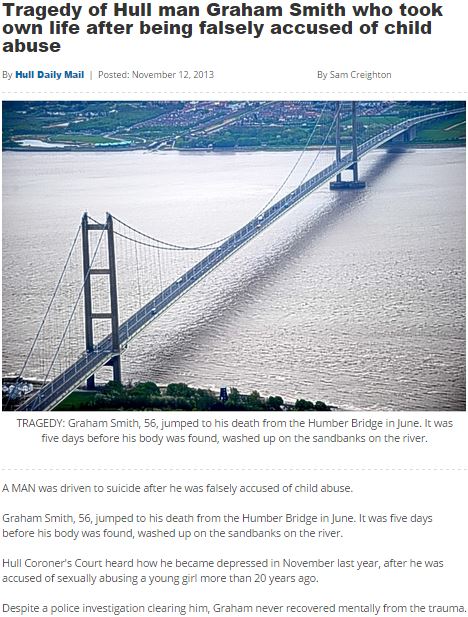
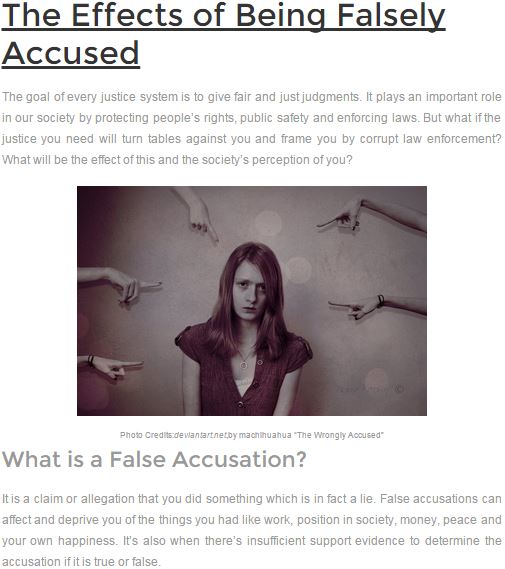
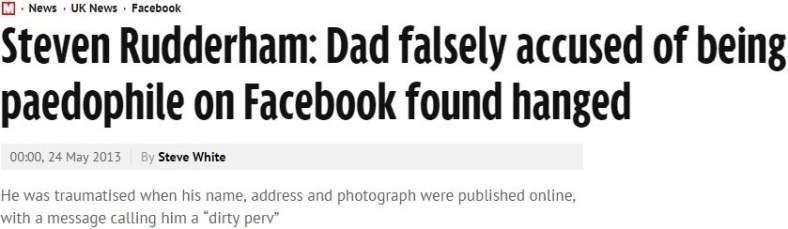
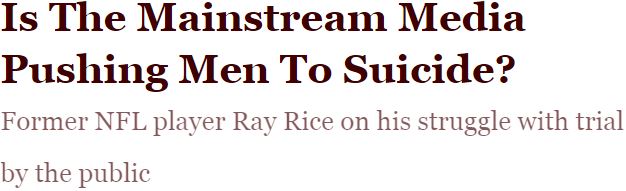
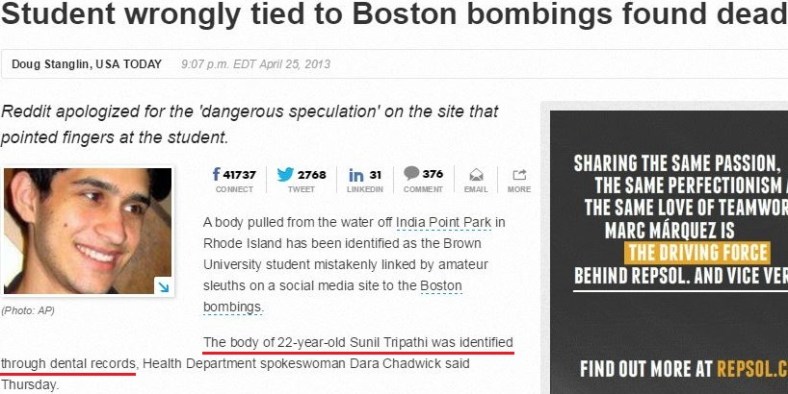
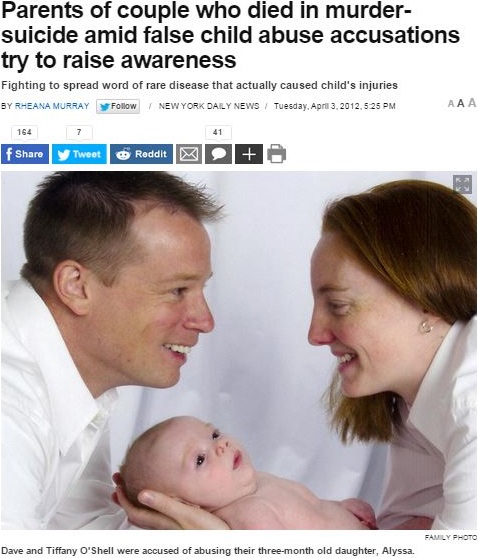
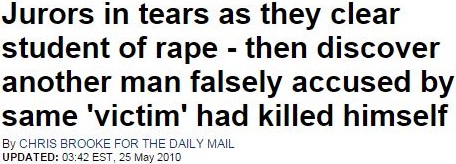
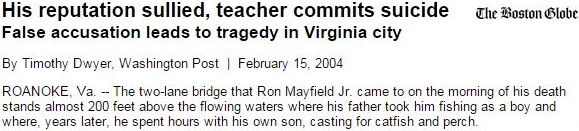
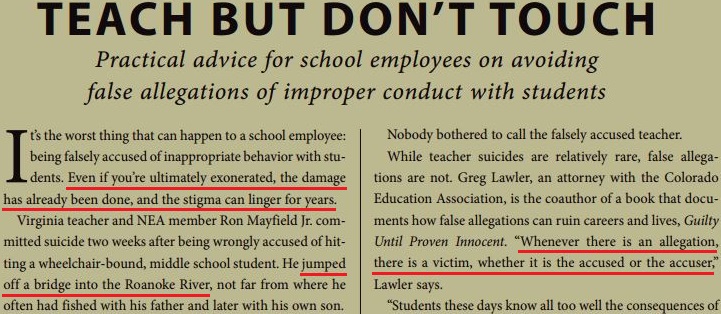
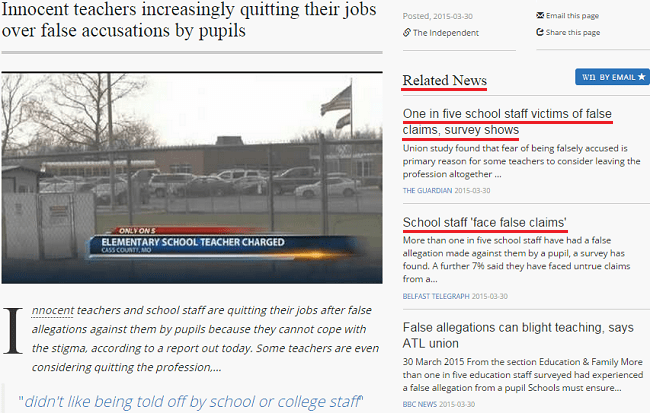
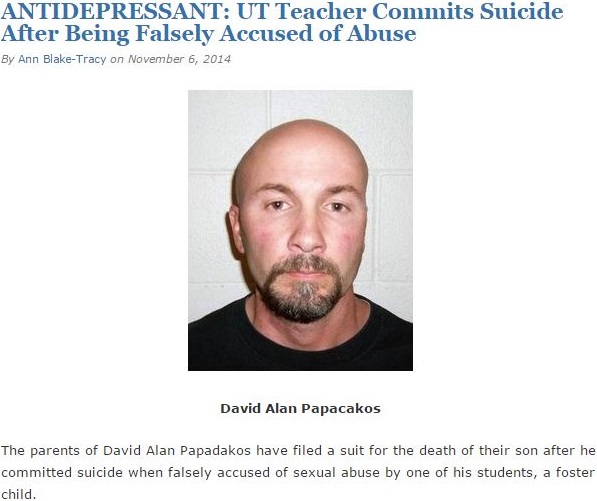
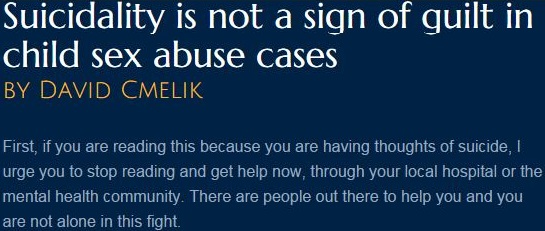
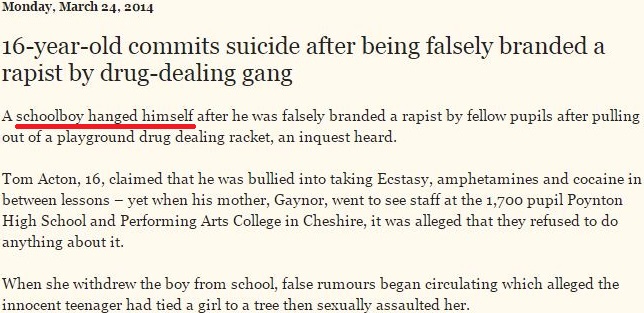
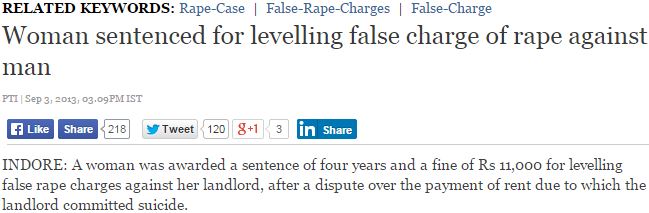
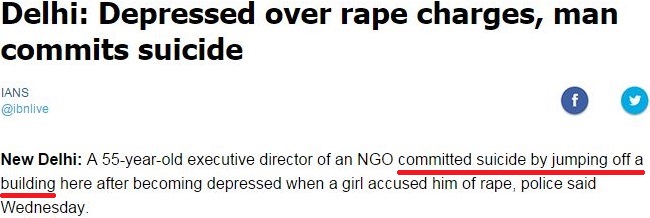
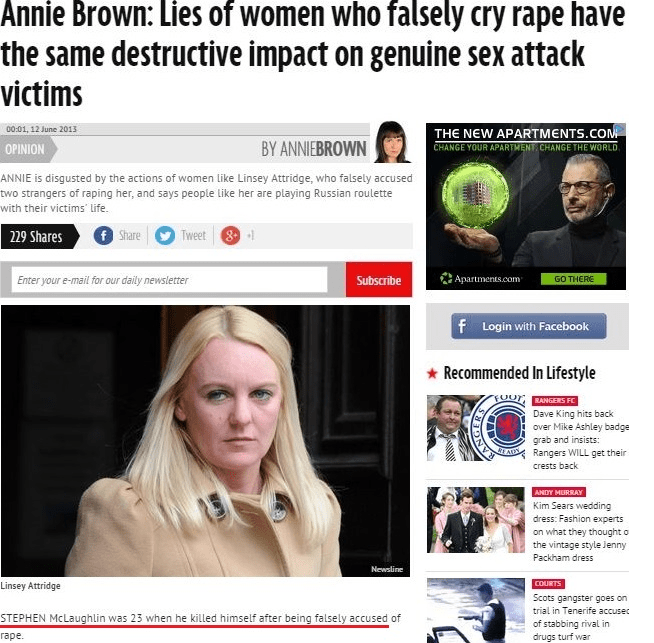
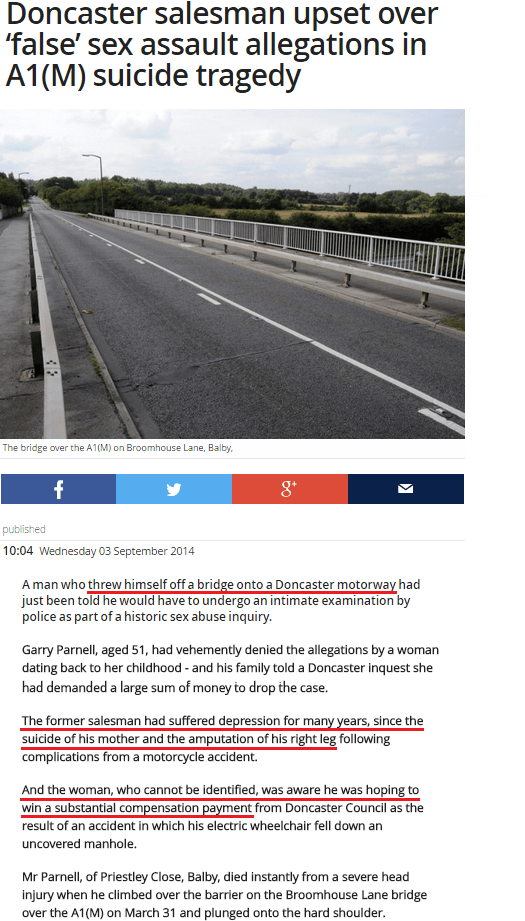
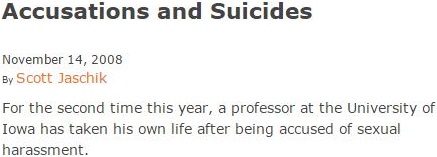
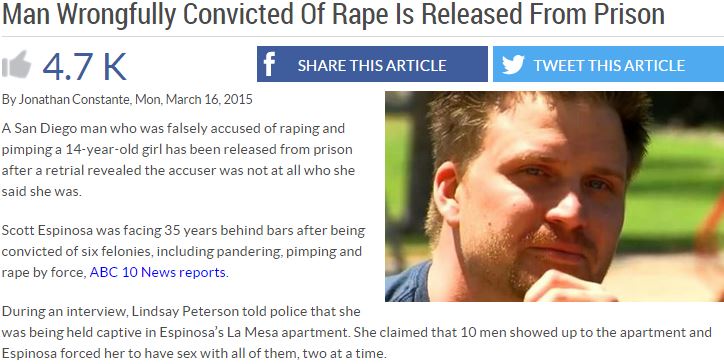
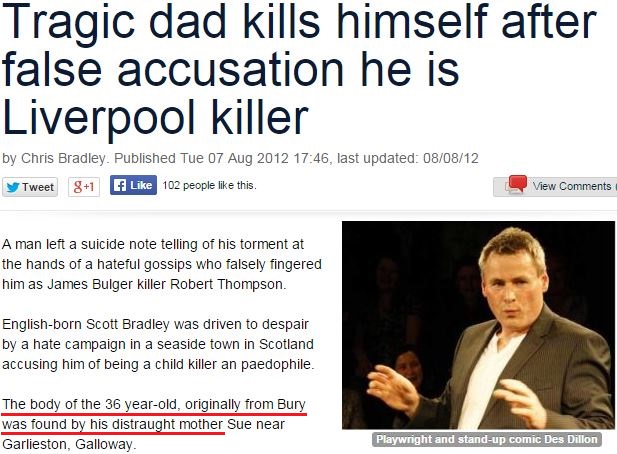
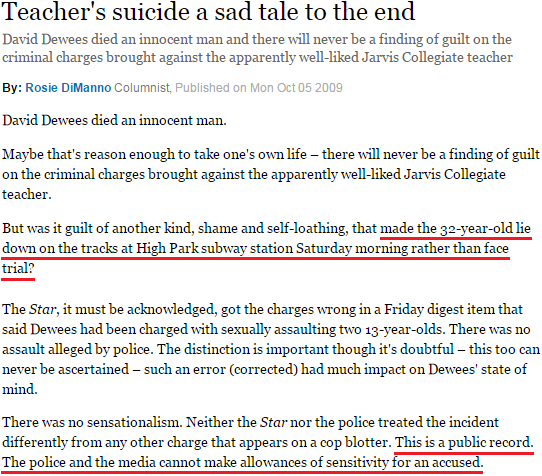
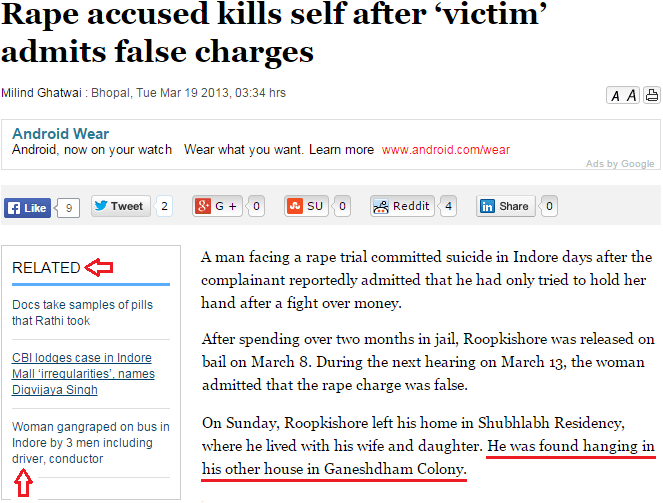
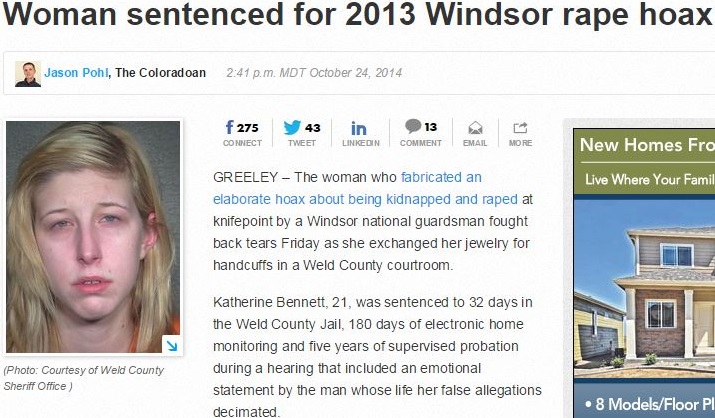
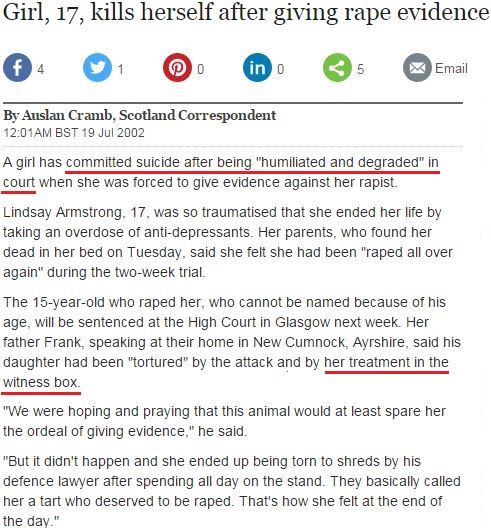
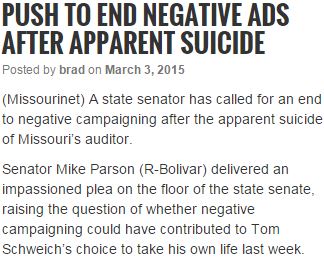
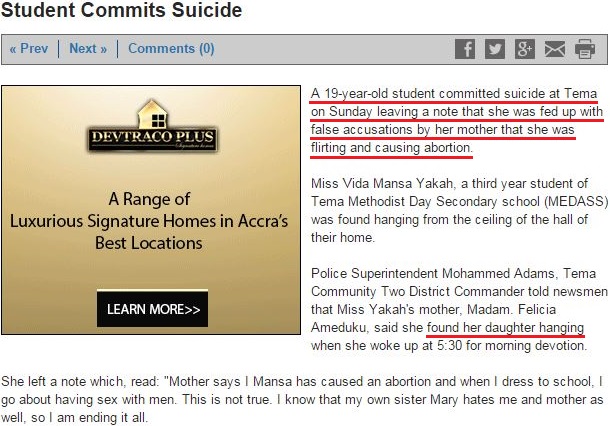
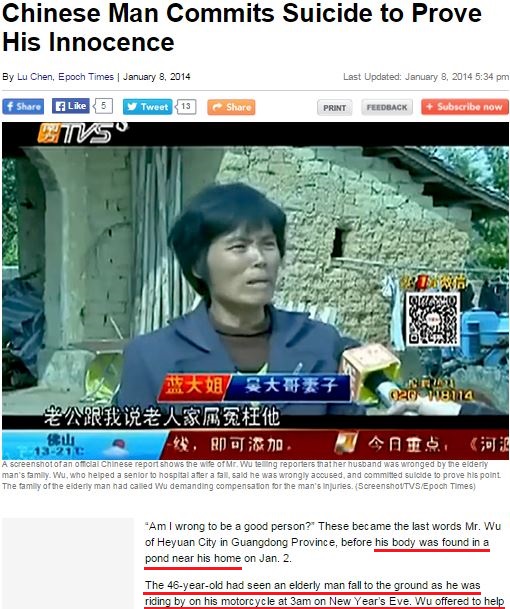
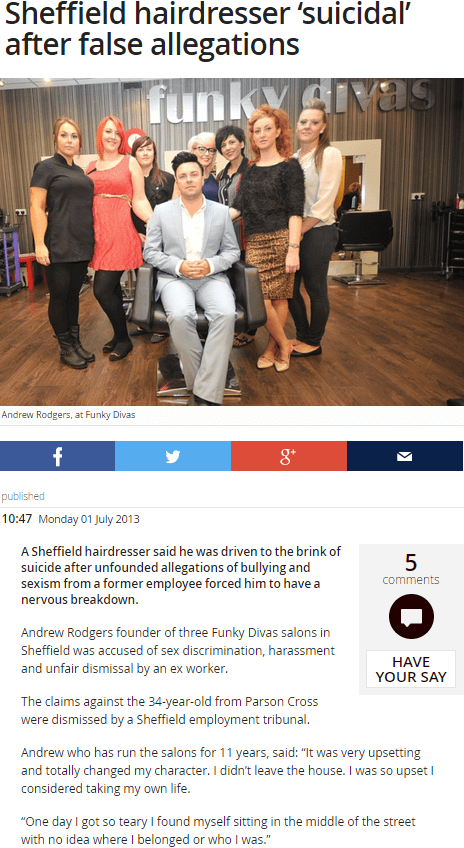
False Accusations and Suicide: Some Headlines about the Effects of Finger-Pointing and Legal Abuse (Culled for the Empathically Challenged)

Since the publication of this post, the one quoted above has been deleted.

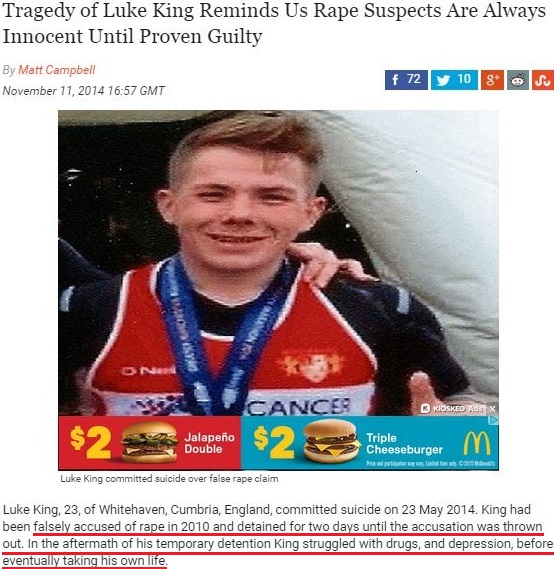
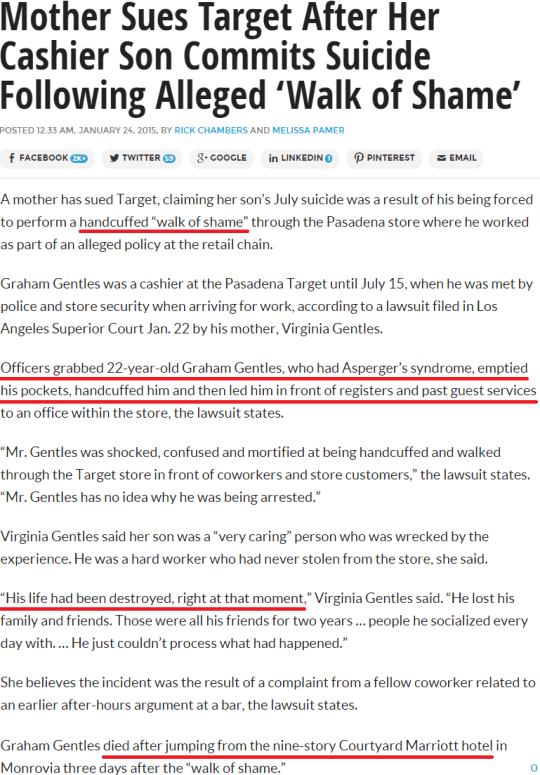
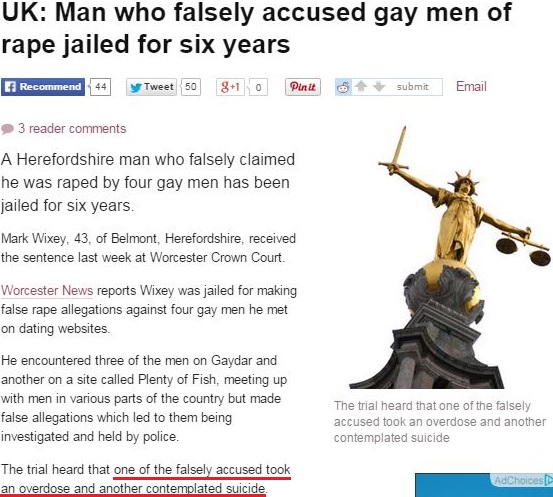
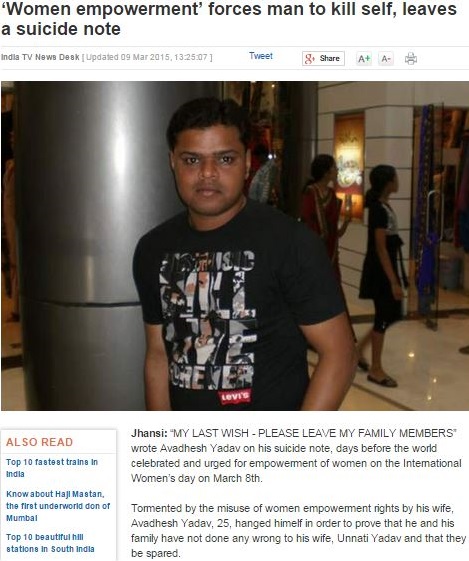
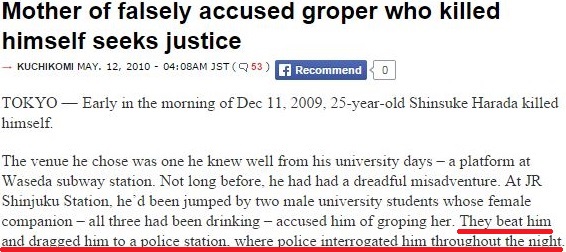
One of the stories highlighted below concerns a young man who was falsely labeled a rapist by some bullies at school. He hanged himself. He was 16. Another concerns a man who spent a year and a half in prison based on a false accusation of sexual assault (among other false accusations). While the man was behind bars, his mother killed herself, believing her son was a pimp and a rapist.

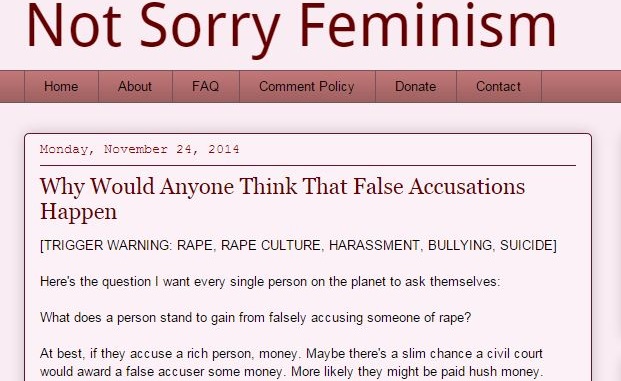
A word to the wise: Only ask a rhetorical question if you know the answer…and it favors your position.

The question posed above by the zealous, young author of Not Sorry Feminism isn’t, of course, a question at all; it’s an indictment. She means how dare anyone think false accusations happen. What problematizes the writer’s rhetorical-question-cum-admonition is that it has a very obvious answer: The reason people think false accusations “happen” (so to speak) is that they do.

(It might alternatively be asserted that no one does believe false accusations “happen,” the same way no one believes rapes “happen.” Both are acts, and both have agents. If rape happens isn’t a construction a feminist could get behind, false accusations happen shouldn’t be, either. You’re a proponent of accountability, or you’re not.)

Worse than her question’s being problematic, because answerable, is that its answer isn’t one the writer wants to hear. Motives for false accusations, including of rape, are greed, malice, bullying, vengeance, jealousy, possessiveness, attention-seeking, mental illness, and cover-up, to name a few. They’re ugly, often petty, always destructive…and they can kill.

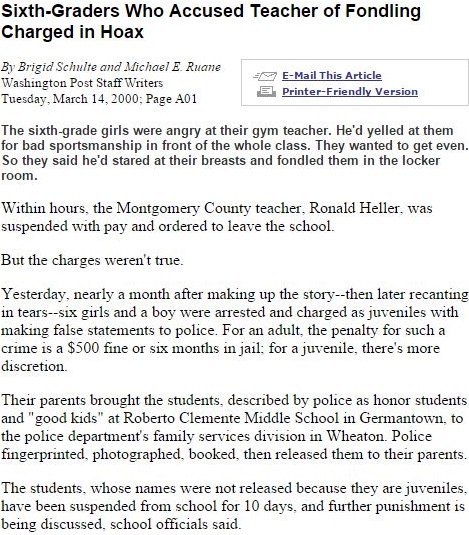
This post surveys examples of false allegations or deadly allegations or false and deadly allegations drawn from news stories. Here’s one such:

Unlike most of the rest, the first story glossed in this hastily cobbled digital scrapbook doesn’t include a suicide or references to suicide. It’s nevertheless a good starting point, because it’s old news.
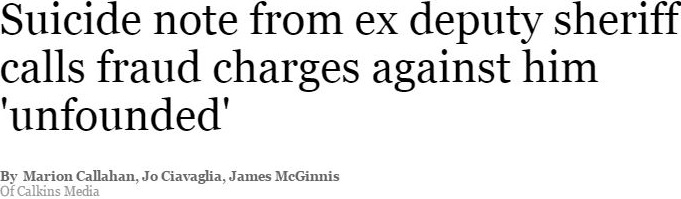
The article’s from 15 years ago. Fifteen. Significantly, though, no half-hearted sleuth would find it a challenge today to turn up commentaries on the Internet, mostly from feminist writers like the one who introduces this post, that either (1) deny such a thing ever happens or (2) deny it’s a big deal when it does happen—and deny it’s a sign that a culture of false accusation exists and has for some time. (A story so uncannily similar as to be almost identical can be found here. It appeared in The Huffington Post less than 24 months ago.)

Consider: Where would six elementary school girls and a boy get the idea of framing their gym teacher as a molester, and where would they get the impression this conduct was okay (or “cool”) or that they’d get away with it and not face dire consequences? Should we believe the notion had no cultural influences and was purely a product of these honors students’ collective wicked imagination?

For accusing their teacher of groping them, the kids were suspended for 10 days. It’s likely the most traumatic part of their punishment was being detained by police and “fingerprinted, photographed, [and] booked.” Keep this thought in mind.

Keep this quotation in mind, too: “‘When they made the charge, that’s about 80 percent of the damage to your reputation right there,’ [attorney Paul F.] Kemp said. ‘Because even if you’re found innocent, people will assume you got off on a technicality. Or that there’s something there when there’s not.’”

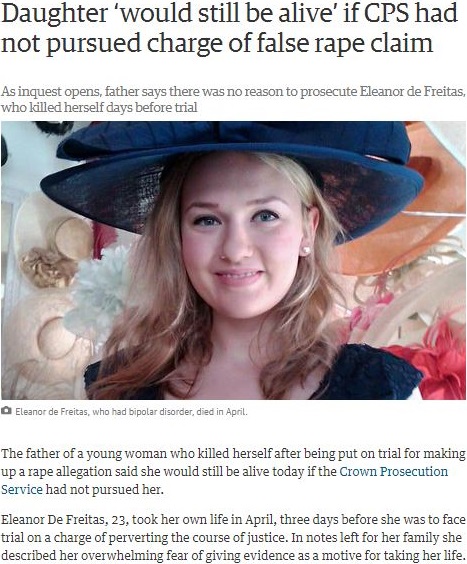
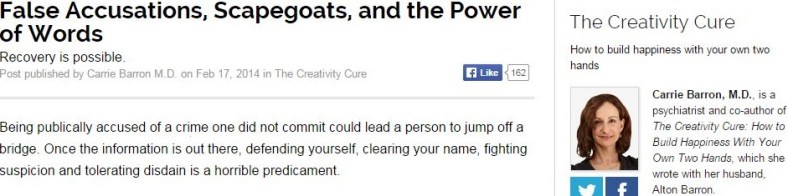
Editorial intrusions end here; the remainder of this post is a series of Internet clippings (linked to the “complete stories”) from which readers may draw their own conclusions about the motives and effects of accusation, bullying, and legal abuse. The author of this post would only point out before absenting himself that an accusation that may induce someone to kill him- or herself need not be of rape and that one of the suicides chronicled below is of a woman who faced being tried for falsely alleging she was sexually assaulted (“In notes left for her family, she described her overwhelming fear of giving evidence…”).

The common denominator is accusation and public scrutiny and judgment, not being accused of a particular act, per se. Zerlina Maxwell and her ilk are categorically wrong.

fale_accusations_destroy

nancy_grace_suit

dad_falsely_accused

murder_suicide

jurors_in_tears_full

reputation_sullied_full

suicidality

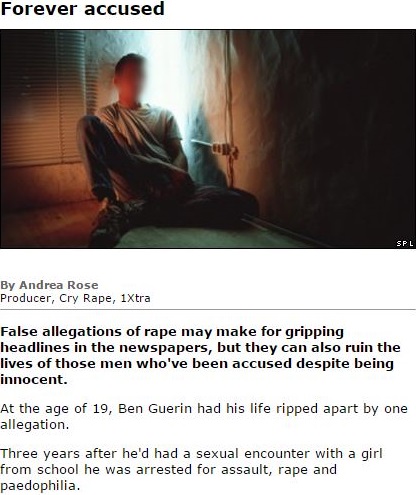
forever_accused

Sheffield_hairdresser

Chinese_man_commits_suicide

Copyright © 2015 RestrainingOrderAbuse.com