Disregarded Reality Checks to VAWA: Highlighting the Efforts of Family Law Attorney Lisa Scott

“Congressional sources have revealed some significant changes will be made to federal domestic violence laws. Bowing to pressure from men’s rights groups who for years have claimed that the Federal Violence Against Women Act (VAWA) is biased against men, congressional leaders will soon announce a revamping of this legislation.

“In recognition of the fact that there may be a few men out there who get beaten up by their wives but are too ashamed to admit it, the Violence Against Women Act (VAWA) will be renamed the Violence Against Women and Wimps and Wussies Act (VAWAWAWA).”

—“VAWAWAWA: Federal Law Finally Catches Up with Reality

That’s Lisa Scott, a Bellevue, Washington, family attorney who knows a whole lot more than almost anyone about the reality of domestic conflict, satirically poking defenders of the Violence Against Women Act (as biased an act of legislation as has ever been conceived) squarely in the eye.

The Violence Against Women Act, or VAWA, which demonizes men, takes as granted that they’re always the villains and could never be victims themselves.

Ms. Scott is one of those rare, intrepid women of parts and integrity—see also Cathy Young, Christina Hoff Sommers, Wendy McElroy, and Phyllis Schlafly, among a few select others—who made a determined effort to temper the iniquity of “women’s law” in the years before the most recent decade or so, during which light has been smothered by heat and noise (or what might be called “Tweat”).

Victims of VAWA, who were powerless to begin with against a billion-dollar federal juggernaut flanked by thousands of media-savvy minions, have today been marginalized by the #MeToo movement to the point of invisibility.

This post, which is meant as an homage to writing Ms. Scott did between 2001 and 2011, endeavors only to highlight her perspectives, if not simply because they’re right then for those who will appreciate them.

They are no less current today than when they were first published.

Copyright © 2020 RestrainingOrderAbuse.com

*For more on male suicide: “First Amendment Rights from Beyond the Grave: Defense of a Suicide’s Publication of His Final Words by the Randazza Legal Group”; “False Accusations and Suicide: Some Headlines about the Effects of Finger-Pointing and Legal Abuse (Culled for the Empathically Challenged)”; Wendy McElroy (Fox News, 2002); Prof. Augustine J. Kposowa, Ph.D. (Journal of Epidemiology & Community Health, 2000); Dan Bilsker, Ph.D., and Jennifer White, Ed.D. (BC Medical Journal, 2011); Christie Blatchford (National Post, 2017); Suzette Reynoso (Eyewitness News, 2017); Lindsay Holmes and Anna Almendrala (Huffington Post, 2016).

Jeremy Cheezum Complicit in 11 Years of Lying, Abuse

This post was formerly titled, “Uncle Phil Said He’s a SICK F–K.” That phrase was one I was labeled with in a document submitted to the police by the brother-in-law of “Rev.” Jeremy Cheezum, whose four children are the inspiration of this post. Those children’s aunt, uncle, and grandfather, who are today prohibited by mandate of the court from harassing me further, endeavored to have me imprisoned based on false, filthy, and/or frivolous allegations. They employed unscrupulous attorneys and exploited laws that are typically criticized by conservatives as destructive to the family, conservatives, it’s worth noting, like those of Pastor Cheezum’s evangelical Christian congregation, which Montrose Mirror columnist Gail Marvel has reported is mostly “young families with children.” Conservatives criticize the laws for good reason: While advocates of these laws pay lip service to child welfare, children are arguably the predominant victims of the laws’ commonplace abuse. Among the ways children are damaged is exposure to the twisted games that self-indulgent adults play.


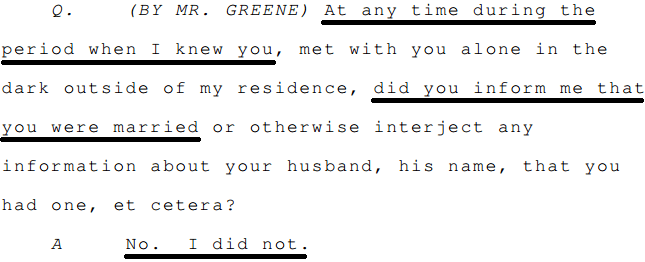
This message was communicated to me by email on the first day of what would become 12 years of legal harassment by the aunt and uncle of the children who inspired this post. Their uncle Phil I had never met. Their auntie Tiffany I knew better than I ever should have. She had nightly lingered outside of my house for months and taunted me with references to her body and underwear, apparently relishing the attention. Then she lied to the police and the court to conceal her misconduct when I learned she was married and demanded an explanation—and she has lied over and over since (as testimony I’ve included below shows plainly). The message above was sent after Phil and Tiffany Bredfeldt had obtained a court injunction forbidding me from responding to it. Sort of like a four-letter nyah-nyah. The couple thought it would be cute to send a copy of the message to the police, apparently to reinforce the idea that they were afraid for their lives (because why wouldn’t you provoke someone you were afraid of?). I was an aspirant kids’ writer with a puppy and a parent in chemotherapy. Maybe the spoiled brats thought that was funny also.

Like many or most of those who visit this site and identify with its accounts and criticisms of false accusation and abused and abusive laws, I’ve been lied about a lot and for a long time, and the lies may continue today.

I have no way of knowing.

What I do know, because I know I’ve been monitored for as long as I’ve been lied about, is that there’s no one I’ve appealed to for help over the years who can possibly be unaware of the truth today.

Jeremy Cheezum, Counselor Jeremy Cheezum, Innovation at Work Interview with Jeremy Cheezum, Rev. Jeremy Cheezum, Pastor Jeremy Cheezum, Watch D.O.G.S., Watch Dads of Great Students, Trinity Montrose, TRPC, Trinity Reformed Presbyterian Church, Montrose, Kimberly Cheezum, Kim Cheezum, PCA, Presbyterian Church in America, Rocky Mountain Presbytery, Ray Bredfeldt, Ruth Bredfeldt, Trinity Presbyterian Church, Montrose High School, Olathe High School, Peak Academy

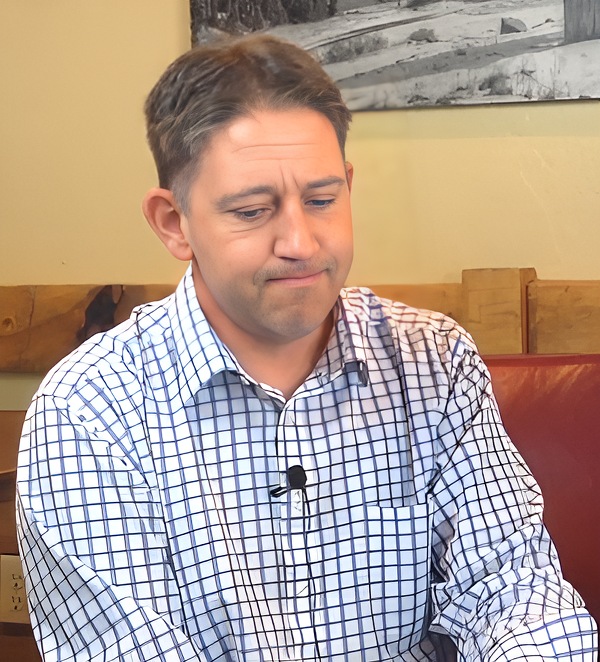
Above, in an interview with InSync Media CEO Laura Williams, Jeremy Cheezum, pastor of Trinity Reformed Presbyterian Church in Montrose, Colorado, and “volunteer coordinator” of an elementary school mentoring program called Watch D.O.G.S. (“Watch Dads of Great Students”) jokingly clarifies the program’s requirement of a background check for participation. Thanks to Rev. Cheezum’s family’s sleaze, it’s uncertain the author of this post would pass such a check. Rev. Cheezum’s church hosts a weekly “Men’s Coffee Klatch.” This post’s contents could be mined for many rich topics of discussion, among them repentance and atonement, men’s and fathers’ rights, and spousal fidelity. Of note is that Rev. Cheezum, unlike his brother-in-law’s wife, actually wears his wedding ring.

That includes Jeremy Cheezum, today minister of Trinity Reformed Presbyterian Church (TRPC) in Montrose, Colorado. If mention of his name attracts any of his congregants to this post and site, so much the better, because I think they’re exactly the kind of forthrightly ethical people who are offended by the excesses of feminism and #MeToo movementeers.

I appealed several times to Rev. Cheezum for aid in gaining relief from persistent false accusations made by his brother-in-law’s wife, Tiffany Bredfeldt. I reckoned a pastor, a person who might well identify himself as an evangelist of truth, would be eager to serve the truth and promote peace.

Not only did I never hear from him, but his wife’s father, Dr. Ray Bredfeldt, a Presbyterian deacon who got rich flacking health insurance, volunteered to testify in court five years later to have me jailed while my father lay dying and to have me forbidden, besides, from ever sharing the truth with anyone in any way for the rest of my own life. He wasted his time and years more of mine.

In my appeals to Pastor Cheezum, I had told him that cleaning up Auntie Tiffany’s lies would be costly and that those lies had left me in no position to foot the bill. The good reverend passed my appeals along to his in-laws whose shyster lawyers represented them to the court as extortion (and threatened a felony prosecution in federal court). The allegation was baseless, and it was abandoned when I declined to be intimidated and submit to their terms.

Their terms boiled down to disappear and die.

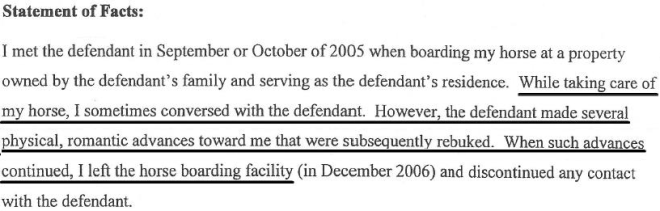
Here’s a synopsis of statements Fletcher Cheezum, Bailey Cheezum, (Philip) Logan Cheezum, and Lydia Cheezum’s aunt gave in evidence to the court or, in one instance, to the police only between 2006 and 2017. The story they tell isn’t the half of it, but it’s succinct, and its contradictions are palpable. The children’s aunt has lied impulsively, randomly, and wickedly and then lied to conceal the lying. (The children’s uncle Philip, Rev. Cheezum’s brother-in-law, after whom one of the kids may be named, was incidentally privy to all of these statements and has supported them fully, including under oath.)


People of moral character might call the woman a crackpot, a Jezebel, a monster, or a pageant of much coarser things. What they couldn’t call the woman is a victim.

Jeremy Cheezum, Trinity Montrose, PCA, Presbyterian Church in America, Colorado, Trinity Reformed Presbyterian Church, Pastor Jeremy Cheezum, Rev. Jeremy Cheezum

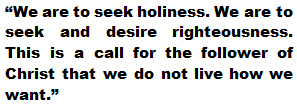
So Jeremy Cheezum tells his followers. The message his children register, however, may be very different: Do what you want. Don’t get caught. Lie. Wealthy people love you. Nothing else matters.

I’ve never met Rev. Cheezum or his kids. The children, however, I pity, because I don’t think this conduct is a kind that should be role-modeled. Some might consider deceiving law enforcement officials and judges against the law.

Rev. Cheezum and his wife, Kim, an elementary school teacher, have seemed cool with it, and to me that’s worse role-modeling yet. And what a simple Google search suggests is that their kids spend a lot of time with Grampa Bredfeldt, a man who sought to have me shut up and locked away to save face and expense (but who probably supports the Cheezums generously—both in church and out of it).

A woman Grampa Bredfeldt was scheduled to testify with in 2016 had characterized his daughter-in-law’s behavior toward me this way:

The email containing the woman’s remarks has been online since the beginning of last year and is presumably known to Rev. Cheezum, whose denomination, the Presbyterian Church in America, asserts:

Godliness is founded on truth. A test of truth is its power to promote holiness according to our Saviour’s rule, “By their fruits ye shall know them” (Matthew 7:20). No opinion can be more pernicious…than that which brings truth and falsehood upon the same level.

By the church’s own standard, Jeremy Cheezum and his family’s fruits are rotten.

I’m reminded of a Biblical quotation about whited sepulchers, and some readers of this post may be too.

Copyright © 2019 RestrainingOrderAbuse.com

*My father starved to death in 2016, without dignity or grandchildren, alone in a cramped room in a cut-rate nursing home, while the latest series of prosecutions brought or motivated by the family this post concerns was raging. I spent the last night of my dad’s life preoccupied with another family’s dysfunction. These people have allowed their disease to corrupt and diminish others’ lives for almost 14 years.

**My impression of Jeremy Cheezum’s reaction to this post (which may give him more credit than he deserves):

Jeremy Cheezum, Rev. Jeremy Cheezum, Pastor Jeremy Cheezum, Montrose High School, Olathe High School, Peak Academy, MontroseJeremy Cheezum, Rev. Jeremy Cheezum, Pastor Jeremy Cheezum, Montrose High School, Olathe High School, Peak Academy, MontroseJeremy Cheezum, Rev. Jeremy Cheezum, Pastor Jeremy Cheezum, Montrose High School, Olathe High School, Peak Academy, MontroseJeremy Cheezum, Rev. Jeremy Cheezum, Pastor Jeremy Cheezum, Montrose High School, Olathe High School, Peak Academy, MontroseJeremy Cheezum, Rev. Jeremy Cheezum, Pastor Jeremy Cheezum, Montrose High School, Olathe High School, Peak Academy, MontroseJeremy Cheezum, Rev. Jeremy Cheezum, Pastor Jeremy Cheezum, Montrose High School, Olathe High School, Peak Academy, Montrose

Why Lying Women Don’t Cry Rape All the Time

A rhetorical catfight has been waged for years on the Internet between injured men and injured women or people who advocate on behalf of injured women. It’s a logical mare’s nest. Untold men (and women) have been wronged by casually abused and abusive procedures of law whose genesis owes to rabid feminist politicking at the end of the last century. These men (and women) have, again in untold because incalculable numbers, been unjustly deprived of children, home, property, livelihood, security, dignity, and/or liberty, and that fact has largely gone disregarded. A perusal of the quotations in the margin of this blog will satisfy any conscientious reader that this is a fact and not merely an allegation. The laws themselves are bent. Injured men (their predominant victims) have, sensibly or not, accordingly sought to draw attention to lying by women by emphasizing that women will lie even about rape (the specter in the room, incidentally, during any legal proceeding based on an allegation of abuse). There have, of course, been many documented cases of false rape allegations’ being made by women. Feminist advocates deny false accusation of rape “occurs” to any significant degree, ignoring the underlying male plaint, namely, that women lie in heinously vengeful, passive-aggressive, attention-seeking, destructive ways—and contrary to what some apologists for feminine lying would have the public believe, unscrupulous women (and men) don’t lie because they’re crazy, per se. They lie because it’s effective, just as diverting the “conversation” away from lying to lying about rape is effective at denying either one merits consideration.


These are not people.

“Feminism is the radical notion that women are people.”

—Marie Shear

Far from suggesting that women are Barbie dolls or marble angels, a proposition that may even have offended its speaker, this quotation, oft brandished by feminists today, promotes the idea that women are people. And people, unlike Barbie dolls or marble angels, lie. They lie about anything it serves them to lie about.

So much then for the myth of the faultless woman—which is one you’re unlikely to find debunked on Jezebel.com.

The question this post considers is that if women are willing to lie to cops and judges (and they are, as are men), why pussyfoot and not just accuse any target of malice of sexual violation? It’s a potent allegation.

Well, it comes with a host of complications is why. In civil court, a false (or possibly real but baseless) claim of fear is all it takes to procure a protective order and turn a person’s life on its head. It can win a perfect stranger the exclusive entitlement to a person’s home and property while possibly landing him or her in jail. Unless a lying plaintiff aims to drive her victim to suicide, falsely alleging rape is overkill and pointlessly invites exposure.

A criminal claim of rape, on the other hand, both figuratively and literally invites strangers’ noses into uncomfortable places. Government wants specifics and evidence. Girlfriends and family members may gently inquire about details.

This is the kind of claim, if false, that requires a great deal of determination to pull off and carries a heavy risk of tattering under scrutiny.

Let’s not deceive ourselves that unscrupulous women are too virtuous to lie about rape. Rather let’s be honest: Lying about rape is demanding and dicey.

That said, it’s really not that tough in civil court, which doesn’t require “proof beyond a reasonable doubt.” In civil court, it’s just he-said-she-said. A defendant doesn’t even have to be heard in court for a “default” judgment to be entered against him. And even if he does appear, there’s no guarantee the plaintiff will be required to or that the accused will have the opportunity to cross-examine her, making a mockery of the adversarial process. A judgment in civil court doesn’t represent a finding that a rape was committed, necessarily, but it’s not a denial that a rape was committed, either, and the accusation is what’s preserved.

The injustice is glaring but note that it’s legally no worse than that any other allegation that works can be made and can accomplish the same damaging consequences.

People have to live with this shit. Their families have to live with this shit. Their children have to live with this shit.

This is what men’s rights advocates would be saying if there were anyone who would listen or have the least capacity to comprehend the breadth and depth of injuries that instead tend to be casually batted aside (while accounts of groping or sexual harassment are gravely highlighted on NPR).

Most of these men have not been accused of rape, which doesn’t mean they couldn’t also have been accused of rape had their accusers been gutsy enough or that it wasn’t implied (point 1). And it doesn’t mean they have nothing to complain about (point 2).

Injustice is always something to complain about (point 3).

Copyright © 2019 RestrainingOrderAbuse.com

*I think I even read that on a liberal yard sign.

Katie Roiphe Rebukes the Trivialization of Due Process by Feminists but Is Scarcely Less Guilty of It Herself

A recent post on this blog commended NYU Journalism Prof. Katie Roiphe’s essay, “The Other Whisper Network: How Twitter feminism is bad for women,” published a few months ago in Harper’s. Certainly its observations about feminism’s “vicious energy and ugliness” are unimpeachable—and for their confrontational candor, remarkable.

It feels as if the feminist moment is, at times, providing cover for vindictiveness and personal vendettas and office politics and garden-variety disappointment, that what we think of as purely positive social change is also, for some, blood sport.

Prof. Roiphe’s reportage and commentary on America’s due process crisis, though, be they ever so laudable, are limited by classism. What Prof. Roiphe considers a “new” witch hunt has only newly spread into her social set, which includes prominent media figures like those who’ve recently been run out on a rail.

Who are the female members of the “other whisper network” who Prof. Roiphe says “fear varieties of retribution (Twitter rage, damage to their reputations, professional repercussions, and vitriol from friends) for speaking out” about “the weird energy behind [the #MeToo] movement”?

They’re her peers.

Whose due process rights, similarly, does her essay defend?

Those of her peers.

Her appreciation of the due process crisis is motivated by attacks on those who occupy high political posts, particularly in media, and who formerly enjoyed the immunity that only money and titles can confer. Her curiosity, furthermore, seems to extend little further than that.

Observations like this one are trenchant:

The need to differentiate between smaller offenses and assault is not interesting to a certain breed of Twitter feminist; it makes them impatient, suspicious. The deeper attitude toward due process is: don’t bother me with trifles!

Further symptomatic of the crisis, though, is that Prof. Roiphe’s own “deeper attitude” toward complaints by people of lesser pedigree and influence—for example, those who toil for a living and who have been the butt of outrageous “abuse” laws and their unscrupulous administration for decades and in the tens of millions—seems no different from Twitter feminists’. The path of her essay meanders some but nevertheless skirts the murky underbrush.

The social media “dialogue,” even if it were amended to meet Prof. Roiphe’s standards of decency and qualified judgment, would still be sophomoric chatter.

No less so is the one carried on among writers in the likes of The New Yorker, The Atlantic Monthly, New York Magazine—and Harper’s.

Copyright © 2018 RestrainingOrderAbuse.com

“Vicious Energy and Ugliness”: Candid Observations about the Feminist Movement by Prof. Katie Roiphe

“[V]icious energy and ugliness is there beneath the fervor of our new reckoning, adeptly disguised as exhilarating social change. It feels as if the feminist moment is, at times, providing cover for vindictiveness and personal vendettas and office politics and garden-variety disappointment, that what we think of as purely positive social change is also, for some, blood sport.”

—NYU Prof. Katie Roiphe

A preliminary, superfluous observation: Prof. Roiphe is right. The only valid criticism of her perspectives is that what she perceives as new and alarming isn’t new but only newly visible because of social media.

A recent post considered some measured criticisms of an essay of hers, “The Other Whisper Network: How Twitter feminism is bad for women,” which was published a couple of months ago in Harper’s. Jonathan Chait of New York Magazine quibbled, “Katie Roiphe Is Right About Twitter Feminism and Wrong About #MeToo.”

Underscoring the absurdity of the “dialogue,” a week before Mr. Chait said Prof. Roiphe was right about Twitter feminism, Sarah Jones of The New Republic, where Mr. Chait worked for 16 years, pronounced: “There’s no such thing as Twitter Feminism.”

Other responses, instancing dramatic irony that reinforces Prof. Roiphe’s points about mainstream feminism’s knee-jerk intolerance and conformity policing:

The reactions themselves are protracted tweets and creepily insular and incestuous. There’s no evidence their authors read anything but one another and those they consider influential blasphemers, like Prof. Roiphe, who is probably considered a gender-betrayer. The repeated reference to Prof. Roiphe’s essay as “anticipated” suggests a throng of rabid feminist meat merchants impatiently whetting their knives—in lockstep accord with Prof. Roiphe’s criticism of their leap to prejudge and their “vicious energy.”

To any sane reader, Prof. Roiphe’s essay isn’t even edgy. Consider a point like this, for instance:

[C]onnecting condescending men and rapists as part of the same wellspring of male contempt for women…renders the idea of proportion irrelevant.

Or:

The need to differentiate between smaller offenses and assault is not interesting to a certain breed of Twitter feminist; it makes them impatient, suspicious. The deeper attitude toward due process is: don’t bother me with trifles!

The scandal is that statement of the obvious is felt to be a daring act of defiance. Prof. Roiphe quotes members of a “new whisper network” who “fear varieties of retribution (Twitter rage, damage to their reputations, professional repercussions, and vitriol from friends) for speaking out” about “the weird energy behind [the #MeToo] movement.” Prof. Roiphe says:

Before the piece was even finished, let alone published, people were calling me “pro-rape,” “human scum,” a “harridan,” a “monster out of Stephen King’s ‘IT,’?” a “ghoul,” a “bitch,” and a “garbage person”—all because of a rumor that I was planning to name the creator of the so-called Shitty Media Men list.

Her piece centers around a list of professional media men alleged to be miscreants, a list that one of her “whisperers” describes as “Maoist.” The celebrity bellwethers of the #MeToo movement, who were collectively named Person of the Year by Time Magazine, were extolled as “silence breakers.” For doing the same thing unpopularly, Prof. Roiphe is derogated “scum.”

Noteworthy is the perception by a journalism professor that this sort of feminist list-making is novel when it has been the feminist m.o. for years, maybe decades. The push under the Violence Against Women Act, or VAWA (advent 1994), has been to have anyone who is accused, in civil court no less, entered into permanent public registries, even in cases if the allegations were later dismissed. (This is actually a contractually stipulated demand made of states in return for massive federal grants.) Lawmakers who have opposed renewal of VAWA have been publicly “outed” the same way.

Jonathan Chait, mentioned in the introduction to this post, besides in an earlier one, calls Prof. Roiphe’s essay “alternatingly brilliant and incoherent.” The essay is ranging, but there’s nothing incoherent about it.

Its sole fault is its assumption that only still waters run deep. Neither feminists’ “great, unmanageable anger” nor its unseen impacts are new.

Copyright © 2018 RestrainingOrderAbuse.com

*Toward the end of her essay, in a description of a conversation with a friend, Prof. Roiphe relates a reaction she had that exactly mirrors how civil court allegations of abuse are received by judges and adjudicated: “[A]s she was talking, I was completely drawn in. I found myself wanting to say something to please her. The outrage grew and expanded and exhilarated us. It was as though we weren’t talking about [an alleged abuser] anymore, we were talking about all the things we have ever been angry about…. I felt as though I were joining a club, felt a warming sense of social justice, felt that this was a weighty, important thing we were engaging in.” This response, which Prof. Roiphe says caused her to feel remorseful afterwards, is the same one that has been drilled into judges for decades thanks to feminist politicking. Why it requires a blogger to make such a connection is baffling.

Talking Back to Irish Feminist and Misandry-Denier Taryn de Vere

Since the publication of this post, feminist Taryn de Vere’s criticisms of Men’s Voices Ireland have been deleted from the Internet.


“Misandry, n. hatred of men.”

World Book Dictionary

“[A] satirical imaginary concept.”

—Taryn de Vere

This post is inspired by mockery of a group called Men’s Voices Ireland, which in November held a conference titled, “Challenging Misandry.”

Feminist Taryn de Vere, whom we might call “Miss Andry” for fun, felt compelled to remark beforehand, “In what could possibly be a first for Ireland, a conference has been arranged on the theme of a satirical imaginary concept.”

I don’t know for Men’s Voices Ireland or Irish feminists, but I do know something about semantics.

First, all concepts are imaginary. “Women,” for example, is a concept. It represents nothing that is real. It’s an idea. Real are this person and that person and that other one over there. We form the concept “women” by observing that this person and that person have common contours. That’s it.

If that’s difficult for feminists to hear, so much the better.

Second, “satirical” means sarcastic. Ms. de Vere may use “misandry” sarcastically; Men’s Voices Ireland plainly wasn’t.

So there’s her acid characterization neutralized. While I don’t have the resources of the late Bill Safire to trace the provenances of words, I’m assured by consultation with Webster’s New International Dictionary (second edition, which is the only edition I own) that the word misandry was around before Ms. de Vere was born and was not coined by the men’s rights activists she ridicules.

Ms. de Vere endeavors to support her dismissal of any societal manifestation of misandry today by quoting some academics who know nothing about the law, which is something I know quite a lot about after being the butt of serial prosecutions and false accusations for 12 years.

Ms. de Vere:

It is impossible to have an “ingrained prejudice” against men when we live in a world made by men for men.

For this to be true, there would have to be no such thing as “women’s law,” a phrase that explicitly expresses a prejudice in favor of women by the part of society’s machinery that no citizen can safely resist or defy.

For decades, law monograph after law monograph has charted the evolution of “women’s law” (see left for citations of a few): progressively harsher statutes with progressively broader definitions of “abuse” and progressively reduced thresholds of proof; judges and police officers, who’ve received inducements in the forms of massive federal grants, being “trained” according to tailored social science; etc.

That’s “engrained prejudice” to a tee.

The laws themselves are the stuff of satire. Accusers, who are predominately female, are nominated “victims” based solely on their say-so, and they may move a court to dismiss their allegations while defendants, who are predominately male, may not. Defendants are railroaded through.

That’s in the United States, but it’s likely laws and court custom in Ireland aren’t so different, and they should inspire protest. Ms. de Vere, who is the mother of five, might feel very differently very promptly about men’s plaints if she were abruptly to find herself the mother of none based on some random allegations (of child abuse, say) made to a judge during a few-minute interview to which she wasn’t invited.

For many or most of those who constitute Men’s Voices Ireland, the perception of misandry is probably empirical, that is, based on experience.

It’s Ms. de Vere’s concepts, which are ignorantly based on emotions, that aren’t concepts at all but fantasies.

Copyright © 2018 RestrainingOrderAbuse.com

*“I’ve had a lot of super awful stuff happen to me in my life like multiple rape & domestic abuse,” Ms. de Vere says of her own experiences, which, however sympathetic, only make her willingness to understand men’s experiences that much more suspect. Most disappointingly, Ms. de Vere is a gifted humorist who calls herself “The Joy Bringer” yet is immune to stories like the one here—which is desolating and largely unexceptional. The “joy” she brings to her fans may derive, in part at least, from her derision of others’ agony.

What Massachusetts Law Firm Dane Shulman Associates Says about Restraining Order Abuse and Divorce

Below is Massachusetts law firm Dane Shulman Associates writing about the game of false accusation. Lawyers know this happens. They know it very well.

Various feminist advocates doggedly assert that restraining order abuse, particularly to gain leverage in family court, is insignificant—or worse, that claims of it are merely men’s rights propaganda—and such assertions are made even by professors of law. Practitioners of law (the lawyers in the trenches, not the ivory tower) report otherwise.

Restraining Order Abuse in Divorce Cases” (emphases added):

Unfortunately, some people are abusing Massachusetts’ restraining order laws and using them as a divorce tactic. An individual involved in divorce proceedings may file a temporary restraining order against [his or her] spouse, alleging abuse of him or [her] or of the couple’s children. This would prevent the alleged abuser from having contact with his or her children during the 10-day temporary order, and if the allegations stick, the restraining order would last up to a year after the accusations were made. Often, such allegations are false, and only a way to put a wrench in the divorce proceedings and for the accusing spouse to gain custody of the children involved.

To prevent the restraining order from being extended, it is imperative that the alleged abuser present evidence [in] the second hearing that the allegations made against him or her are false. This is the first and only time an alleged abuser can present his or her case. If he or she fails to appear, chances are that the restraining order will be extended, and the accusing spouse will gain custody of the children.

A restraining order can have disastrous effects on the alleged abuser. The order is put on his or her criminal record, and any violation of the order results in criminal charges. The alleged abuser is also listed in the statewide Domestic Violence Registry, a record that never goes away. All of these actions greatly impact an alleged abuser’s ability to secure new employment, especially jobs for the government or jobs that involve working with children.

Massachusetts’ courts issue restraining orders to protect victims, not so the orders can be used as frivolous tactics to gain the upper hand in a divorce or a child custody matter. Restraining orders have serious consequences for the alleged abuser, and also for the relationship between the alleged abuser and his or her children, since the order could put strain on the parent-child relationship. A restraining order is something no one should consider obtaining without a serious, truthful cause.

Copyright © 2018 RestrainingOrderAbuse.com

*One of the most outspoken critics of restraining orders, attorney Gregory Hession, also practices in Massachusetts.

Most False Restraining Orders against Feminists Who Abuse Children Work

If you’re not sure what the title means, that’s the point.

It’s satirical and intended to emphasize that if you falsely accuse someone of abusing a child and the accusation sticks, there’s about a 100% probability that the restraining order will work to deter future abuse of that child by the falsely accused person who never abused the child in the first place.

As a feminist might reason, however, zero probability of abuse is good, and that zero probability recommends that all feminists be restrained by order of the court from abusing children…because how could that be a bad thing?

It’s certainly likely that there are feminist child abusers. If all feminists were put on notice, then, malefactors among them would be discouraged from committing further abuses.

Okay, sure, non-child-abusing feminists might resent the implication of a court order that prohibited them from abusing children. But so what? As a feminist might observe, the net effect of forbidding all feminists from abusing children would be enhanced protection of children. Unquestionably this would be worth some ruffled fur.

Now, do I mean the above as lampoon, or am I being serious? When it comes to the subject of restraining orders, both amount to the same thing.

These remarks and my choice of words in this post’s title were inspired by a 15-year-old “family violence special report” headlined, “Most restraining orders work.” It was written by Kristen Go for The Denver Post and published Sept. 12, 1999.

The headline’s assertion is the kind that makes people who’ve been falsely accused grate their teeth.

Imagine, just for argument’s sake, that most restraining order accusations are hyped or false. If that were the case, then naturally most restraining orders would “work” (to curb behavior that the accused never exhibited in the first place).

What Ms. Go’s report saliently relates is that three Colorado women who obtained restraining orders against “abusive husbands” were subsequently shot to death by those husbands.

While these recent high-profile cases in Grand Junction, Fort Collins and Colorado Springs make it appear that restraining orders don’t work, experts say that’s not the case. Enforcing a restraining order can be difficult but not impossible. And obtaining a restraining order is just one step toward leaving an abusive relationship and staying safe, experts say.

“The reality is that a restraining order is a piece of paper,” said John Poley, an assistant city attorney in Denver’s Domestic Violence Unit. “It’s not going to stop bullets. If you get a restraining order without a safety plan in a domestic situation, I think that’s almost asking for trouble.”

Translation: Restraining orders against violent people may not actually do a damn thing but make those violent people murderously angry, and those much-promoted pieces of paper may inspire a false sense of security in their applicants that gets them killed.

No one…keeps track of how many domestic-abuse homicide victims had restraining orders against their killers.

Translation: No one really cares what the consequences are so long as perception is predominantly positive.

Recent studies—which include data collected in Denver—are inconsistent about how often orders are violated. A 1994 study by the National Center for State Courts found that two-thirds of restraining orders are never violated. Yet a 1993 study by the Urban Institute reported that 60 percent of women said their abuser violated the order.

Translation: What the courts report contradicts what women report, and what women report contradicts what Ms. Go does (“Most restraining orders work”).

What the studies do agree on, however, is that about 70 percent of people who obtain restraining orders report feeling safer.

Translation: A majority of people who obtain restraining orders report “feeling” safer, and this means most restraining orders “work.”

The foregoing may be summarized thus: (1) Restraining orders against violent people may get their applicants killed; (2) no one takes a particular interest in how often this occurs; (3) most restraining orders “work”; (4) if most restraining orders are based on BS, it only stands to reason that they should; and (5) we know that three restraining orders obtained in Colorado in the late 90s were presumably legit…and ascertainably worthless.

Copyright © 2018 RestrainingOrderAbuse.com

*Ms. Go’s report also relates the following data: “In fiscal 1998, about 18,000 temporary and 3,300 permanent domestic-violence-related restraining orders were issued in Colorado counties.” If Ms. Go is correct, there’s no evidence in her reportage that she understands this means over 80% of domestic-violence-related restraining orders issued in Colorado counties in 1998 were dismissed. Of the approximately 18,000 petitions preliminarily approved by the court, that is, less than 20% (3,300) were affirmed (made “permanent”). Over 14,500 cases, then, may have been (tacitly) deemed frivolous, flimsy, or false by Colorado courts. Appreciate, besides, that a significant proportion of the 3,300 orders that were upheld may have had false grounds. Almost 20 more years of this charade have gone by since.

Alison Friedman and Karen Mallard: A Consideration of Two Congressional Candidates from Virginia Who Could Move for Reform of Corrupt Abuse Laws if Elected But Who Probably Wouldn’t

Two recent posts here have commented on a restraining order petitioned by Warrenton, Virginia Vice Mayor Sunny Reynolds. The order was grounded on an exchange of words in a restaurant that lasted “three or four minutes.” To critics of feminist-inspired civil court processes that reek of kangaroo, the absurdity of Ms. Reynolds’ complaint, for which a man is now registered in the FBI’s National Crime Information Center (NCIC) database, isn’t necessary to remark.

Misapprehended, though, almost by everyone, is that what makes such travesties endlessly possible are laws, laws made by the legislators who we vote into office (and can vote out of office).

This post rhetorically analyzes the campaign videos of two congressional candidates from Sunny Reynolds’ state. The women in the videos may be tomorrow’s lawmakers.

One message is by an activist mom and former State Dept. official, Alison Friedman (“Alison for Virginia”):

The other is by a schoolteacher, Karen Mallard (“Teacher for Congress”):

Both advertisements conspicuously center around children, and their appeals are emotional. Her voice trembles as Ms. Friedman narrates a series of stills. She describes her grade school daughter’s fear that the President would “[bring] his guns to [their] house” if news of a letter she wrote to him were leaked. Mrs. Mallard, who’s on camera throughout her ad, gets teary-eyed as she recalls learning that her father was illiterate and teaching him to read.

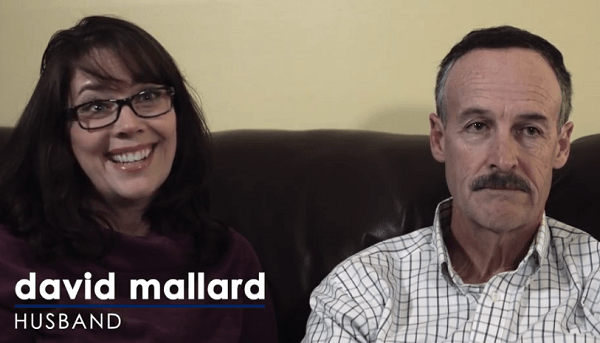
Adult male presences in the ads are tame or mute. Ms. Friedman seems to be a single mom. Mrs. Mallard’s husband, David, appears in her video, but how he appears is positively morose:

Mr. Mallard becomes animated later on—after he cooks dinner, which he’s filmed doing. Two young men, who seem to be Mrs. Mallard’s sons, are seen on the beach in her company but never speak.

The structure of Ms. Friedman’s video is provided by a homework assignment given to her daughter, Olivia, “to write a letter to the President.” Below are some of Olivia’s appeals to “Trump,” juxtaposed with images that will resonate with citizens who’ve been injured or crippled by false allegations of abuse.


Make sure everyone has freedom.


Love instead of hate.


No violence; only words.


Please remember everyone matters.


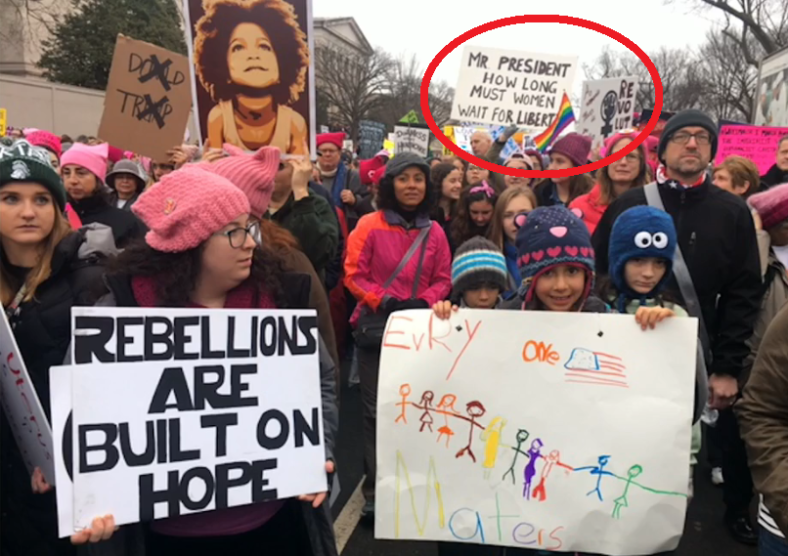
In this still from Ms. Friedman’s campaign video, her daughter, Olivia (in the foreground), is flanked by predominately female protesters in pink, some holding up feminist signs, one with a clenched fist. Olivia’s sign reads, “EV[E]RY ONE Mat[t]ers,” and features a daisy chain of unified male and female stick figures.


Mrs. Mallard is endorsed by the People’s House Project:

We recruit and support excellent candidates in Republican-held congressional districts in Midwestern and Appalachian states. Our candidates are classically Progressive, true to their working- and middle-class roots, and focused on issues of consequence to those who work not for personal fulfillment but for a living.

It purports to be looking out for the interests of “working- and middle-class” America.

The president of the People’s House Project is described as “an author, activist, [and] social media innovator” who’s “central to Glamour magazine’s political coverage, where she concentrates on issues important to women.”

Her name is Krystal Ball…which is something no one should need to predict the future if the present course isn’t corrected.

Copyright © 2018 RestrainingOrderAbuse.com

“INFEST ’IM”: Some Anagrams of FEMINIST with Commentary about Why It’s a Dirty Word

Feminism has been called a “cancer,” and there’s no question many of its manifestations are malignant. Or that its cells metastasize unchecked. Despite those cells’ being a minority in the body politic, they exercise a systemic and debilitating influence on the whole.

“Plague” might be a better metaphor yet.

While only 20% of the population “identifies” as feminist (according to the Huffington Post), feminism has proved an epidemic contagion—“infest ’im” feminists have, many ’ims and ’ers.

Alas, a pocketful of posies is no deterrent. Brandish a bouquet at a feminist, and there’s a good chance you’ll be accused of stalking (#YouToo?).

Which leads to another anagram of feminist: “fine mist”—like fog or like the spittle that might cloud your glasses when a rabid crank holds forth on “rape culture”…before retiring to her laptop to tweenishly  effuse about a male lead on HBO’s Game of Thrones.

This sort of self-ridicule makes the anagram “finite S&M” a pervect fit, though it may be optimistic in its appraisal of feminism’s longevity.

A final anagram of feminist is “mini-fest.” Feminists have certainly had their fun. Here’s hoping the anagram is auspicious and that their next “wave” is goodbye.

Copyright © 2018 RestrainingOrderAbuse.com

*The anagram “fistin’ ’em” was considered and then rejected upon consultation with an online slang dictionary. Apparently having a fist inserted in their rectums is considered pleasurable by many—which may account for a corrupted movement’s lasting as long as it has.


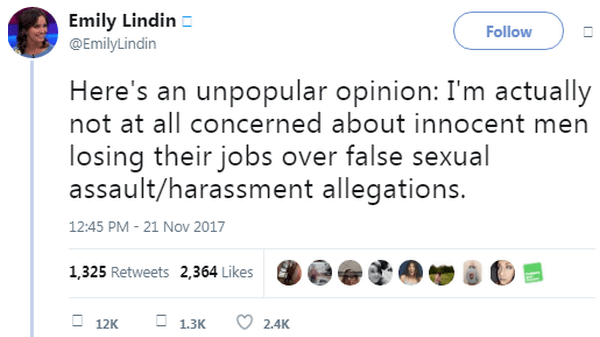
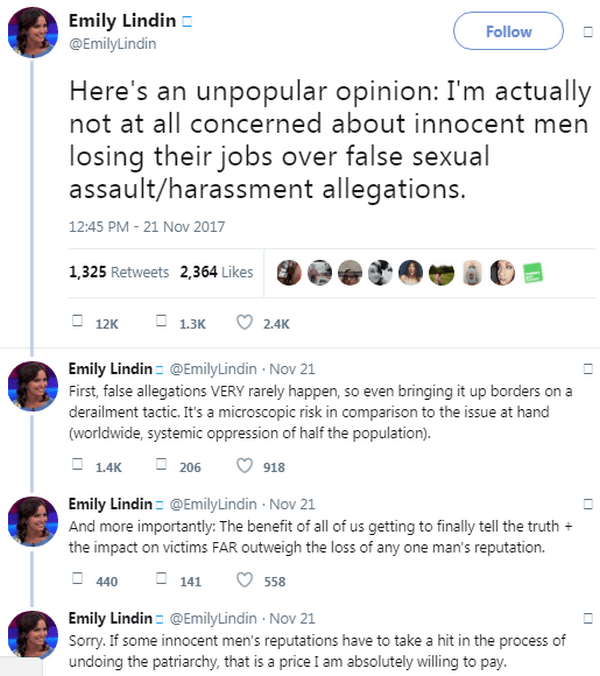
Feminist Writer Emily Lindin Explains How “Innocent Men Losing Their Jobs over False Sexual Assault/Harassment Allegations” Isn’t a Matter for Concern

Feminists manage to reap the best of both worlds. They enjoy the insulated life of the nursery but are patted on the heads and told what big girls they are. They purport to understand life’s grim realities better than anyone and arrogate to themselves the right to nominate which of them most urgently deserves attention. And they are parentally indulged.

Consequent fact: You can’t persuade feminists of anything they don’t want to believe. On the upside, though, you don’t have to prove to other grownups that feminists’ positions are vicious. You only have to quote them.

This sequence of “tweets” was brought to my attention by Dorothy Cummings McLean in an article that I chanced upon while dealing with the aftermath of 12 years of false allegations (including of sexual harassment), the effects of which are only comprehensible to adults who have also experienced them.

Emily Lindin, the author of the tweets, writes for Teen Vogue, a magazine whose title verbalizes the essence of contemporary feminism, a movement sustained by social media, where playground popularity determines value.

Here are Ms. Lindin’s Teen Vogue writing credits with some emphases added:

  • “Rob Kardashian Slut-Shamed Blac Chyna — and the Internet’s Response Is Part of the Problem”
  • “What You Need to Know Before Sending a Nude Photo”
  • “How to Get Your Parents to Stop Slut Shaming You”
  • Slut-Shaming Actually Makes Life Worse for Straight Guys, Too”
  • “6 Ways You May Be Slut Shaming Without Realizing It”
  • “Why Sexist Dress Codes Suck for Everyone”
  • “How to Say ‘No’ in the Middle of a Hookup Without Feeling Awkward About It”
  • “How I Learned the Definition of ‘Slut’
  • “Why You Should Stop ‘Playing Hard to Get’ and Start Masturbating”
  • “If You’ve Ever Ordered Pizza, Then You Already Understand What Consent Is”

Ms. Lindin writes in the magazine’s “Wellness” section—or did: Her last byline is dated July 5.

Assigned the same job, I would probably have encouraged today’s youth to read more (books, I guess I have to add). Being slutty is bound to be more fun, or at least less challenging, but there are some rewards to cultivating the mind. I’ll try to demonstrate some.

Ms. Lindin “identifies” as a member of an oppressed class. Oppressed is a word that means held down or held back by abuse of power or authority…such as men and women are who are falsely accused and arbitrarily vilified by the state.

Being able to discern contradictions in what people argue—and being outraged by them—is a hallmark of intelligence, and an instruction to a young woman that a feminist might have given when I was a child is this: “Intelligence is sexy.” (Such a feminist might even have counseled: “Self-reliance is sexy.”)

There’s probably a fossil exhibit about feminists like this in the Museum of Natural History.

Ms. Lindin, who was evidently never steered toward a library, insists that “false allegations very rarely happen.” Actually, false allegations never “happen”; false allegations are made, typically (but not always) by lying women. How often is unquantifiable but certainly a lot more frequently than “very rarely,” a judgment Ms. Lindin probably copped secondhand from another feminist source. On Twitter, maybe.

Consider the wording here: “The benefit of all of us getting to finally tell the truth + the impact on victims FAR outweigh the loss of any one man’s reputation.” A trained mind might pause and wonder: Who are “all of us”? And: A man whose reputation is ruined by lies isn’t a victim? And: What do you mean “one man”?

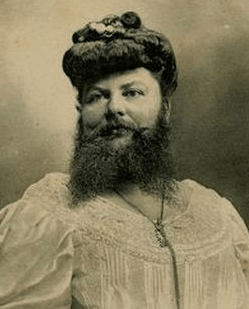
The face of “patriarchy”

Feminism purports to advocate for equality, which would make “us” inclusive of “innocent men losing their jobs over false…allegations.” The feminist “us” clearly means girls only, and the exigency of their “truth” makes all other truths insignificant. It makes all other people (one or 100 million) insignificant. A trained mind might observe that in a democracy, where “all…are created equal,” value judgments about who should be thrown under the bus have no place. No citizen is more important than any other, nor any class of citizens more important than any other.

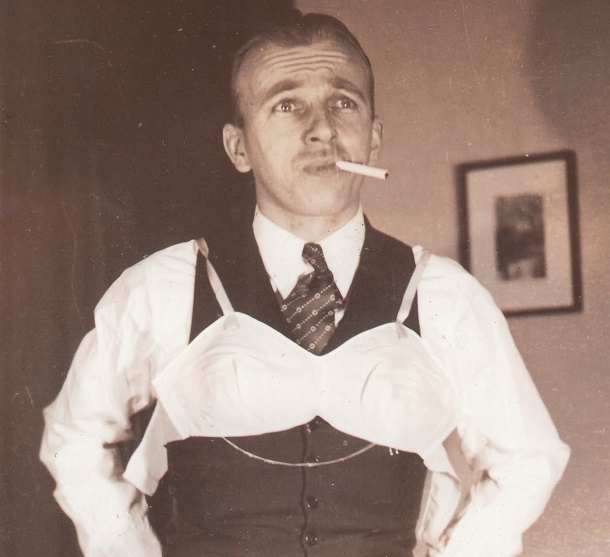
Self-contradictory rhetoric like Ms. Lindin’s works, because it is supported by power and has been for a long time. It has determined, and it continues to determine, what lawmakers’ priorities should be, how statutes are shaped and sharpened, and how they’re applied by our courts, the Constitution be damned. So who are the oppressors really? The “patriarchy” that Ms. Lindin would have her “followers” believe is being undone went out with the fedora. The members of today’s “patriarchy” wear bras—or maybe they don’t, for which omission they absolutely should not be slut-shamed.

The hit to “some innocent men’s reputations” by lying women is a price Ms. Lindin says she, for one, is “willing to pay.”

At a cost to her and her family (and Tweetmates) of exactly nada.

Copyright © 2018 RestrainingOrderAbuse.com

Restraining Order Abuse and Munchausen Syndrome by Proxy

Since my companion died in August, I’ve doped myself before bed with genre fiction and a bottle of wine. After 10 years of legal assaults, including three simultaneous ones as of this writing, alcohol is the only thing that quiets my mind and affords me a few hours of oblivion. I’m into my third novel by thriller writer Gillian Flynn. (The movie Gone Girl, about a woman who fakes her death to frame her husband for murder, is based on a Flynn novel.)

Martina Walkingstick, Marty Grist, Marty Tackitt-Grist, Martha Grist, Martha Tackitt Grist

The woman in this photo, Marty Grist, has persecuted a friend of the writer’s for several years by lying about him in social media and on public record. Her reign of malicious self-publicity abruptly ended when she testified to a judge (the most recent of numerous) that he’d “hacked” her phone, computer, and email account (from his house across the street) and said she had some record (“someplace”) that proved he was a disbarred attorney who had “embezzled” from his clients (both serious charges and both false). She reported on Facebook, besides, that he had mooned her friends and provoked invisible dogs to howl at her for hours. She has two daughters and teaches children for a living. (The writer’s accuser, who was isolated as a child, is also the daughter of a schoolteacher.)

I won’t give away its plot, but her novel Sharp Objects involves “MBP” or Munchhausen (Syndrome) by Proxy. It’s a mental illness that induces a caretaker, usually a parent and usually the maternal parent, to sicken a child to get attention. Recall the movie Sixth Sense.

Flynn, besides being a delicious writer, plays rock-‘em-sock-‘em with feminist dogma. Her villains, who are seriously villainous, are all women.

If Flynn is a feminist, and I think she is, she’s the real thing. None of her female characters are weak, least of all the monstrous ones. I’d call her honest negotiation of male-female dynamics (thoughts, actions, interactions) “refreshing” if that word weren’t moldy. She’s bravely candid (she’s accurate), and she doesn’t play for (or pander to) a “team.” There’s nothing flinching about her or her writing.

Munchhausen by Proxy, pathological behavior that figures in her novel Sharp Objects, exemplifies (with science) that there are women who commit heinous abuses to draw attention to themselves and excite drama, and this is one of the motives the FBI remarks is common to cases of false accusation. It’s also a motive for bullying, which can include crying wolf  (BullyOnline.org, now defunct, formerly had a page devoted to MBP). The disease MBP is just a metaphor writ large for what women do when they go wrong: They poison. (Both false accusation and crying wolf figure in the plot of Flynn’s novel Gone Girl.)

Flynn’s stories involve violent murders by people of the “fairer sex,” but the female violence they portray best is the psychological kind: sinuous, spiteful, and constant.

Mainstream feminists militate against the notion that women are attention-oriented, competitive, or catty…or that they can lie unconscionably to exact petty revenge for some perceived slight.

That’s a fictional bubble in need of collision with a sharp object.

Copyright © 2016 RestrainingOrderAbuse.com

Love Actually…Is Why Feminists Relate Best to Cats (Indoor Ones): On Perspectives That Account for “Stalking” Hysteria

LA_still

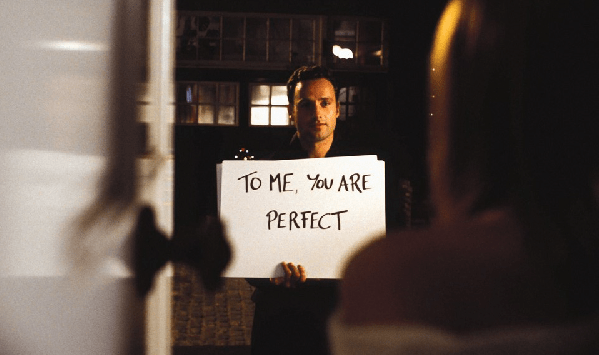
“One card says: ‘To me, you are perfect.’ Another says: ‘My wasted heart will love you ‘til you look like this [insert image of a time-ravaged skeleton].’ Juliet laughs. My reaction would be to slam the door and get a restraining order. What is Mark implying here?”

—Maitri Mehta, Bustle.com

Answer: What Mark is “implying” (with gentle, anguished humor) is that he will love Juliet “till the end of time” (“till the wells run dry, and every mountain disappears”) despite knowing his love can’t be requited. Mark silently confesses his feelings, to ease Juliet’s mind as much as his own, and then he walks away with no expectations at all. His is an act of apology and “closure” that could only be read as a tender gesture by people possessed of a soul.

(Ms. Mehta, exhibiting the undisciplined critical faculty characteristic of feminists and other judges, feels a picture of a skeleton authorizes her to infer that Mark intends to turn Juliet into one. Context is invisible to those who only see in monochrome.)

According to the Ms. Mehtas of the world, one of the great romantic figures of literature, Cyrano de Bergerac, would be a “stalker,” because he“serially” wooed his lady love beneath her balcony while masquerading as someone else.

(“And that nose and rapier! What was Cyrano implying there?”)

It doesn’t matter that neither Roxane nor Juliet was afraid. What matters is that they Damn Well Should Have Been.

By feminists’ lights, I’m a stalker, too, and I can’t imagine any romantic who wouldn’t be. I wrote love notes to a classmate in first grade even after she told me not to. With crayon hearts on them.  I suppose the feminist interpretation of what my purple construction paper cards “implied” would be that I wanted to eat the girl’s organs.

They’re to be pitied, I guess, these women who never obsessively wrote a boy’s name in their notebooks as a girl or tittered with their friends about a schoolmate while spying on him (again) from behind a bank of lockers—and I would pity instead of scorn them if I didn’t know firsthand how perniciously influential their twisted perspectives are.

I was invited to visit some older friends on Christmas to watch Love Actually with them. That’s the movie the quotation above refers to. They’re in their 70s, and this is a holiday ritual of theirs.

The Mark-and-Juliet scene is a poignant one, and only an emotionally disturbed mind could construe it otherwise.

Ms. Mehta says this scene represents for her “a level of creepy that shakes me to my core, and every time she runs after him and kisses him in the street, I cringe.” (The phrase “every time” betrays Ms. Mehta has nevertheless watched the movie over and over.)

Sentiments like hers are what make me cringe. (Ms. Mehta’s name says her family is from India, where people still squat in the dirt because indoor plumbing isn’t universal. People starve there, too.)

I introduce Ms. Mehta’s remarks in this context (a blog about restraining orders), because they’re not exclusive to her. They echo social science produced by a post-doc fellow at Michigan U, Julia Lippman, who performed a study that concludes romantic comedies “mak[e] stalking behaviors seem like a normal part of romance.” It’s titled, “The Effects of Media Portrayals of Persistent Pursuit on Beliefs about Stalking.”

This “work” isn’t discounted, either. Google it. Dr. Lippman has her own website.

In a write-up about the study in The Atlantic, Julie Beck quotes the National Institute of Justice’s definition of stalking as “a course of conduct directed at a specific person that involves repeated (two or more occasions) visual or physical proximity, nonconsensual communication, or verbal, written, or implied threats, or a combination thereof, that would cause a reasonable person fear.”

You’ll find this definition inscribed in many states’ criminal statutes.

Observe that the language is so tortured with qualifying phrases beginning with “or” that the “fear” component seems optional—and feminists more than suggest it is.

To judge from Ms. Mehta’s response to a scene in a romantic comedy, the “reasonable person” restriction in the definition of “stalking”…is entirely superfluous.

Copyright © 2016 RestrainingOrderAbuse.com

*A comment from a female respondent submitted three days ago: “I too am a victim, then became a whistle blower/informant exposing my perps, then victimized again with six false stalking petitions…. Three were granted and all were dismissed, including one where we made case law!” The respondent calls herself “Warrior Lady in Florida.” When I was a kid, that’s what feminists were: warrior ladies. Today, they’re distinguished for cringing.

The Rape Victim’s Trauma in Court Is the SAME Trauma Experienced by the Falsely Accused

“[Tina] Renton still has nightmares about her time in the witness box. ‘During the day I can cope with it. In my sleep…. You can’t control your subconscious.’ She dreams of ‘running and never being able to find anyone able to help you’ and of ‘standing in court, people laughing at you, but you don’t know why.’”

Amelia Gentleman, the Guardian (April 13, 2013)

Above are the words of a woman who was the prosecuting witness in the rape trial of her stepfather.

Below are the words of a man who was repeatedly accused by a prosecuting witness (his estranged wife and the mother of his children):

I couldn’t flee and I could not fight. I was never going to be allowed to heal or recover. I wish I were better at articulating the psychological and emotional trauma I experienced.

I could fill a book with all the lies and mysterious rulings of the Court. Never have I experienced this kind of pain. I asked for help, but good men did nothing and evil prevailed.

Correspondences between the man’s and woman’s statements are obvious, as are contrasts between the man’s and woman’s treatment under the law.

The woman prevailed in criminal court. She also authored a book. The man was hectored in family court until he killed himself, and his wife obtained a court order granting her the intellectual property rights to his final words, which she attempted to expunge from every nook and cranny of the Internet.

Tina Renton, quoted in the epigraph, accused her stepfather of “raping and assaulting her multiple times during her childhood,” and a jury found him guilty. The trauma Ms. Renton describes, however, isn’t the residue of being physically violated by a parental figure years before; it’s the aftereffect of being psychologically violated in court.

She defended herself and was taunted and denounced as a liar.

“It is hard being accused of being a liar,” she says. “I would never have put myself through the trauma of a court case if it wasn’t true.”

Her stepfather was sentenced to 14 years. Still Ms. Renton reports having nightmares about her experiences in court, and certainly no feminist is going to contradict her claim of trauma.

Why, then, are feminists the most adamant critics of those who allege they’ve been falsely vilified or persecuted in civil and family court (where there is no standard of proof)? Is it reasonable to argue that being falsely called a “liar” is more traumatic than being falsely called a “stalker,” “wife batterer,” “child abuser,” or worse? If feminists understand the trauma described by Tina Renton and sympathize with it, why are they the most unyielding obstacle to reform of restraining order and domestic violence laws that make false accusation easy and rewarding? Ms. Renton, a woman, very plausibly says she was caused lasting injury by being falsely accused of lying. Yet some feminists assert that a man’s being falsely accused of rape is insignificant. How is this not only hypocritical but heinous?

When it’s asserted that rape victims face “being raped all over again” in court, what’s meant is that they face being lied about, misrepresented, defamed, badgered, and shamed. They face, in sum, being falsely accused.

This is compared to being raped.

It must be appreciated that those falsely accused in civil or family court (women among them) are traumatized by exactly the same treatment (including by their judges), and many of them may also have been abused by their accusers, including violently. Moreover, the abuse they receive in and from the court may be aggravated (exorbitantly) by having their children taken from them, being cast out of their homes, and/or being forced to pay their false accusers’ living expenses.

Feminists seem to have no difficulty imagining the psychic scars caused to rape victims by being denounced and disparaged in criminal court.

For feminists to identify with complainants of false accusation in civil and family court, then, they need only imagine what it would feel like for those rape victims to be forced to surrender all they value to their abusers and pay them for the privilege of being lied about and publicly humiliated.

Copyright © 2015 RestrainingOrderAbuse.com

*The quoted Guardian story includes a case of a woman who prevailed in court but nevertheless committed suicide. “Her son, Oliver, told a newspaper how profoundly the cross-examination had affected her.”

If a Man Who Complains of Procedural Abuse is an “MRA,” What Do You Call a Woman Who Complains of Procedural Abuse?

It isn’t just the men disparaged as “MRAs” (men’s rights activists) who denounce the injustice of feminist-inspired “women’s law.” Women also lose their homes, their families, their dignity, and their lives to misapplications of restraining order and domestic violence statutes. Unlike the men whose lot they share, these women aren’t distinguished with a label.

I propose the acronym “BRA,” which could stand for any of the following:

  • Beleaguered rights activist;
  • Baffled, boggled, buffaloed, or bewildered rights activist; or
  • Buggered rights activist.

The latter of these, especially, would evoke the same mockery shown the men’s rights activist to whom “MRA” is applied like a markdown sticker.

Make no mistake: Women who complain of procedural abuses are no less ignored than the men who do. They’re not saying anything anyone wants to hear—not the ACLU nor the Southern Poverty Law Center nor battered women’s advocates nor feminists in general. They’re misfits, and they’re accordingly denied status. No one dares contradict them, because that might sound misogynist. So they’re just disregarded.

Here are some different proposals for what BRA might represent: bypassed rights activist, betrayed rights activist…or balanced rights activist.

You want the straight dope about false accusation and the need for procedural reform? Ask the ex-wife who’s had her child taken from her, ask the disabled girl who’s been accused of domestic violence and cries herself to sleep every night, ask the mom who can’t attend her child’s school functions or keep a job, ask the ex-girlfriend who was nearly parked on the curb, or ask the professional woman who’s been denied protection against a brute and then framed.

But only ask if you can tolerate an inconvenient truth.

Copyright © 2015 RestrainingOrderAbuse.com

*A woman is the best rights activist, and more women’s voices should be heard in coordinated public protest.

An Anagram of RationalWiki Is “A Liar—I Know It”: Talking Back to Little Sisters Who Play Big Brother

They have a network of informants. They target dissenters, lump them, and apply a label. They maintain lists. They coerce lockstep conformity with their perspectives by ridicule and censure….

No, I don’t mean the former East German secret police; I mean those liberal/feminist pretenders to enlightenment and humanism whose robotic pronouncements are so clotted with jargon they actually read like computer code: YEC, ID, MRAs, MGTOWs, PUAs, Nice Guys/Incels/AFCs, TERFs, radfems, Randroids, etc.

RationalWiki’s logo, fittingly, is a disembodied brain.

Don’t underestimate the potency of nerds, though. They have Twitter accounts…and they’re not afraid to use them.

I learned the other day that this blog had been put on one of their blacklists. If my motive for writing about reprehensible acts like fraud, corruption, perjury, betrayal, parental alienation, discrimination, legal abuse, judicial dereliction, and bullying people to suicidal despair were self-promotion instead of firsthand knowledge of the ruin they cause, I might be flattered that my desultory musings had achieved the notice of (dotdotdotDAAAAAA)…

RationalWiki.org. (Enter Chihuahua, stage left, in a tutu,)

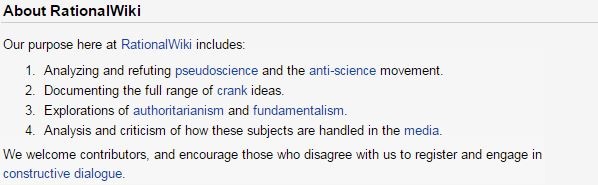
No, I didn’t know there was a RationalWiki.org, either—and after visiting the site, I’m still not sure there is. If “rational” is meant to imply “having reason and understanding,” then this is to report the domain name lacks qualification. The word rational can also mean “involving division,” however. Maybe that’s what the editors meant.

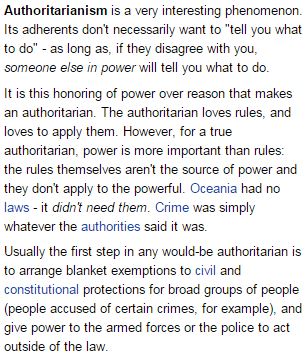
RationalWiki, “Authoritarianism”

The rhetoric of sites like this isn’t without its amusements. For example, RationalWiki invites its audience to “Check Our Entitlement.” In other words, it doesn’t want to exclude the less advantaged, or seem to talk down to them.

Considering there’s nothing on RationalWiki that doesn’t smack of pop-culture-poxed, pseudo-intellectual, East Coast establishment condescension, and that the educationally impoverished victims of racism and classism that RationalWiki purports to defend probably couldn’t track a fraction of what’s published there, the invitation to “Check Our Entitlement” deserves to be met with chorus of raspberries or a barrage of moldy tomatoes.

The page on RationalWiki that pans the blog you’re reading is charmingly titled, “Webshites.” The word is a pun that will only be understood by fans of the BBC or the novels, say, of Graham Swift—and there’s nothing elitist or alienating about that. (Shite is Anglo-Irish for shit.)

RationalWiki accuses this site of being “sexist.” Since RationalWiki is plainly a stalking-horse for feminist and otherwise PC propagandists, this site proposes it’s projecting. Since RationalWiki is blind to the wealth of pain its derelict dogma produces, this site further proposes it’s vicious.

Finally, this site’s editor dismisses RationalWiki’s editors as a collective of dorks.

Copyright © 2015 RestrainingOrderAbuse.com

*Propaganda is “the spreading of ideas, information, or rumor for the purpose of helping or injuring an institution, a cause, or a person” (Merriam-Webster’s Collegiate Dictionary). This is how information control is disguised:

This is reality:

Women’s Use of Restraining Orders to Commit Rape

In the wake of several purported cases that gained widespread attention and then unraveled, free range feminist representations of rape, including how prevalent it is, have fallen under scrutiny and skepticism. Press response to the excesses of anti-rape rhetoric has been persistent—and in instances remonstrative, if not scathing.

A significant source of backlash has been claims of rampant sexual coercion and violation on college campuses.

Eden Strong of Bustle.com poses and responds to the question, “Is It Rape If You Say Yes?” (April 16, 2015).

One reason these claims have met with challenge is that the standard for qualifying what is and isn’t rape is wide open. It’s argued that in the absence of ongoing and deliberate tokens of consent, a sex act may be called rape. Accordingly, some have advocated that participants in intercourse repeatedly express to each other (in media res) that everything’s still okay. (One draws the impression that lovers are supposed to continually pause and inquire, “Are we good here?”)

The word rape, then, doesn’t exclusively mean what it did when I was a kid: some guy snatching a woman unawares and having his way with her in the bushes with a hand over her mouth. Today, rape means any nonconsensual act of sex, any act of sex, that is, in which one party is there without full, voluntary, and enthusiastic eagerness.

This post is to report that by this definition, women use restraining orders to rape.

A previous post considered this in the context of coercion generally: “BLACKMAIL: Using Restraining Orders to Extort and Punish.” It quotes a respondent to this blog:

My son’s girlfriend…filed a domestic abuse CPO [civil protection order] against my son, again telling him that he shouldn’t have left her. He hasn’t been served yet—they keep missing him. She calls my son constantly, stringing him along with the idea that she “might” let it go. He’s taking her out to eat, giving her money, staying the night with her. Hoping that she’ll let it go. All that and yet two hearing dates for him have come and gone with her showing up at both his hearings asking for a continuance because he hasn’t been served.

According to prevailing standards, the man referenced in this account is a victim of sexual coercion (of a particularly fiendish nature); he was induced to have sex with a woman he rejected. She made him fear the consequences if he didn’t comply, meanwhile continually refreshing the threat (and, no, this isn’t an isolated scenario, and why should it be?).

The ironies, if they need elucidation, are that a process of law that’s vehemently defended as a rape deterrent can be (and is) used to coerce sex, and advocates of the process who vociferously decry “rape enablement,” “rape denial,” and “victim-blaming” consequently may be said to practice the very things they denounce. The official victim in the story above is the rapist, and the rapist is a woman. (It’s these sorts of ironies that inspired the writer to characterize restraining order advocates as residents of la-la land in a recent post: They’re loyal to pet ideas—not principles, ideas—and they deny infelicitous realities.)

Arm-twisting doesn’t require a stronger arm, folks, just superior leverage.

Copyright © 2015 RestrainingOrderAbuse.com

*Eden Strong, quoted in this post, concludes her piece “Is It Rape If You Say Yes?” with this assistance to victims of sexual extortion: “If you’ve been pressured or coerced into sex, you can speak with a counselor at the Rape, Abuse, and Incest National Network at 1-800-656-HOPE.” One wonders how such a counselor would respond to the story of restraining order abuse cited above and whom s/he would recommend the man in the story turn to for relief.

Borderline Personality Disorder, Procedural Abuse, and Feminism: A Victim’s Reckoning of Their Tolls

YY_mural

“I hate this world and almost everybody in it. People use each other. I find most of you disgusting. My brothers are disgusting. The people I used to work with are disgusting. You’re shallow, you’re two-faced and hypocritical, you’re judgmental, you cause me more pain than you could ever possibly know. You don’t want me around? Guess what? I don’t want to be around you ugly motherf[—]ers, either. You cause all of your own problems, heap them onto other people, and then blame those people for your problems. You bitch about the amount of pain you’re in, then tell other people to get over their pain.

“I am done with all of you. I am done with your lies and your shitty society, and most of all, I am done kissing your ass.”

—Mrs. Nathan Larson (May 9, 2014)

Virginian Nathan Larson has had a tumultuous year.

He married a woman he met online (April 23, 2014); then she moved out (June 21, 2014) and accused him, among other things, of rape (August 2014 through January 2015); then they divorced; then he learned he was a father when the news reached him that his ex-wife had committed suicide.

The quotation above is from an online post of his former wife’s published between their marriage and their separation. Below is an excerpt from a digital diary entry of hers written when she was a teen (which included a “hit list”):

I hate the students at […]. They are arrogant and foolish. My one dream, my passion is to achieve a machine gun or something and shoot every f[—]er in the school. I want to pump them full of metal, their blood splattered on the tiles. I want to make a massacre that becomes the worst in American history. There are only a few people who I would spare. Everyone else…I would love to see them writhing on the ground in pain, blood oozing out of a million holes in their body.

Nathan’s wife, who was an arguably troubled woman, abruptly terminated their relationship of “75 days total” and then informed him she had miscarried their child. In August 2014, she accused him of rape to the police, but he declined to talk with them and was never charged. In November 2014, she began to accuse him to the courts.

This wasn’t a trial run, either. The accusations brought against Nathan by his wife mirrored charges she had made against a previous partner, also to damning effect.

She petitioned three ex parte (temporary) restraining orders before successfully obtaining a permanent order against Nathan in January of this year (by default). Its alleged bases were “domestic abuse, stalking, sexual assault, and physical assault.” The order was petitioned in Colorado, and Nathan would have had to travel a significant distance to be heard in his defense. “Not wanting to invest money and emotional energy in fighting it, and knowing it would be hard for me to successfully contest it, I didn’t show up to the hearing,” he says. He elected to “move on.”

The two were divorced in April 2015, and that seemed to be an end on it.

Two months later, Nathan was told his (then) wife had given birth to a child in February, presumably the one she had told him she had miscarried. This information reached him along with the news that his former wife had killed herself following her commitment for “suicidal depression” and allegedly hearing voices compelling her “to hurt or kill the Child.”

Nathan must now contest a “dependency and neglect petition” in Colorado asserting he’s an unfit parent.

What follows are his reflections on his marriage to a woman who he alleges had untreated borderline personality disorder, on feminism, and on “abuse culture” and its damages.

Nathan Larson (with his new fiancée’s infant cousin)

Having the benefit of distance from the situation and more calmness about it (especially now that she’s dead), I would say that we both made a lot of mistakes during and after the relationship. There are some people who say that it’s a mistake to enter into a relationship with someone with untreated borderline personality, because it simply won’t work, no matter what you do. Unfortunately, once you get into a relationship like that, your sense of reality can get distorted because you’re so in love, and they’re so convincing, and they get so many other people to agree with them, that you too start to believe it if you don’t have enough of an understanding of BPD to realize what’s happening and why.

For example, suppose you used to argue with your BPD partner, and occasionally lost your temper and had to apologize for saying something unkind. Because they’re so sensitive to minor betrayals, they might claim that you horribly emotionally abused and bullied them to get your way, and then tried to be sweet to them and make up, just like in the classic model we’ve been taught of the cycle of abuse. If you’re still thinking this person is the most wonderful person in the world, then logically you might think that you really did emotionally abuse them, because why would such a wonderful person say it if it weren’t true? Plus, they are clearly very upset over how you treated them, and they broke up the relationship over it, and now they’ve told everyone in your circle of friends and family about it, and many of them are telling you they agree that the breakup was your fault because of your emotional abuse.

These are people you respect and trust, and therefore this could not possibly be happening unless you really were abusive!

You start to blame yourself and even tell people, “She left me because I was emotionally abusive” (which of course attracts more criticism, because who would admit that if it weren’t true?). Eventually, you run into someone who hears your account of what was actually said and done, and challenges your interpretation, saying you’re being too hard on yourself, and that this chick is not as great as you seem to think she is. (To which, of course, you may think, “He just doesn’t know and understand her and our deep and beautiful relationship! We were soulmates! What are the chances I will ever find another woman like that? I searched my whole life, and she was the only one like that I’ve ever met who loved and appreciated me so much.”)

If you have good friends, they’ll awaken you to the fact that someone who truly loved you that much would be willing to forgive and come back to you, or at least treat you decently, rather than holding a grudge and trying to make you suffer.

Also, there’s the fact to consider that people with borderline personality disorder idealize and devalue, and they view people as either completely good or completely bad. This means that once they’re faced with the inescapable reality that you’re not perfect, they have to view you as completely evil. They also have to deny any blame at all for the end of the relationship, lest they have to conclude that they too are flawed, which would cause them to view themselves as completely evil. They can’t handle any feelings of guilt; they have to deflect all blame, including the blame for their own emotionality.

Feminists, of course, are not thinking about all this psychology going on behind the scenes.

They’re busy calculating whether being skeptical of the claims of someone like that will make the public more likely to be skeptical of the claims of someone with legitimate, serious complaints, and make those victims more reluctant to come forward. So the innocent who was accused gets sacrificed for the greater good.

Some women with borderline personality disorder are attracted to the feminist movement and voraciously read all of their materials about abuse, patriarchy, rape culture, etc. because it helps them view themselves as a helpless victim of powerful sociopaths, and thus deflect blame.

They can find a community of people who will give them the benefit of the doubt by believing their stories, and confirm their interpretation of what happened. Borderlines also sometimes struggle to find a sense of identity, and the feminist movement can provide that as well. Their victimhood actually makes them useful to someone, since it’s a story they can tell and retell to those who need to be persuaded that political change is necessary to stop these abuses. (Feminists, like advocates for most other political movements, would bristle at any suggestion that their ideology attracts mentally ill people, since that would tend to discredit them.)

Yet what the feminist movement can never satisfactorily explain to them is why, despite all this training in recognizing red flags of abusers, and despite all the tools the system has provided for punishing abusers (e.g., restraining orders, prison sentences, etc.), they keep getting “abused” by partner after partner, while many other women seem to have successful, happy relationships.

The only possible answer is that it’s a combination of sociopaths’ finding them particularly attractive for some reason (maybe they sense they’ve been abused and think it’ll be easy to re-victimize them) combined with the fact that the patriarchy is still strong, abused women are still not being believed, and therefore we need to punish abusers more harshly and give the accusers even more benefit of the doubt.

Then, finally, when we have a world where all you need to do to get a man locked away for life is cry rape without any supporting evidence, rational men will finally stop raping. Except, even if such a system were put in place, these insecure women would still feel victimized by their partners, and they would attribute the “abuse” to these guys’ acting impulsively without regard to the certain punishment.

Copyright © 2015 RestrainingOrderAbuse.com

*An excellent explication of procedural abuse by “high-conflict” people (who are associated with personality disorders like BPD) and why court procedure is attractive to them is here.


There Is Nothing about Restraining Order Law, Its Abuse, or Its Application That ISN’T Political

According to a critic of the last post, restraining order abuse is apolitical, and he rejects the writer for not striving “to build a broad, non-ideological [base?] for real restraining order reform.”

This is not—or it shouldn’t be—an ideological issue. It’s an issue that affects liberals and conservatives alike, and a problem in liberal and conservative courts. The idea that only liberals and liberal judges abuse restraining orders and that conservative women and conservative courts in conservative jurisdictions never do has zero basis in fact.

The latter point is true enough: No one is immune to procedural abuse (and that point has been made at least once or twice on this blog).

The “idea” the commenter purports to be responding to is his own. There was no mention in the post of “liberal judges” or “conservative women.” The idea appears to be an imposition on the text provoked by the writer’s pejorative use of the phrase liberal/feminist perspectives, which evidently affronted the commenter.

Note: It’s the hazards of cranky interpretations that most posts on this blog concern. Maybe the critic will detect the irony; maybe he won’t.

His former point, that this “is not…an ideological issue,” is puzzling. Is the issue fraud (i.e., false allegations)? Is it bad law? Lack of accountability? Judicial corruption?

Whatever the perceived “issue” is, the perception itself is superficial. Laws are products of politicking. They’re a response to a social demand. Where did the demand for restraining orders come from, and where the demands that have influenced restraining orders’ legal evolution and application?

This 2012 rally was held to “pan [the] GOP’s Violence Against Women bill.”

To deny women as the source would be silly when the most comprehensive database on restraining order statutes constitutes a website called WomensLaw.org. More pointedly, we might suggest “feminism” as the source, though what that word meant 40 years ago and what it means today are inarguably very different.

Can we be more specific yet? Consideration of who specifically advocates for “women’s law” will overwhelmingly recommend the characterization “liberals.” There may be exceptions, sure…but let’s not be coy.

What if we look to critics of restraining orders? Will we find that they’re typically characterized as “conservative”? Whether the characterization is accurate or not…yeah.

It’s not so much that the “issue” divides along party lines; it’s that those who weigh in on either side identify the opposition as “other.” Feminists, for example, may identify Dr. Christina Hoff Sommers (who herself identifies as a feminist philosopher) as “conservative,” and that’s if they’re being polite (here, for instance, is what they call her when they’re not). No one would refer to her as a “liberal”…because we know what liberals are supposed to stand for. (See also, for example, Wendy McElroy, who may be invited on Fox News but not on NPR.)

Clearly, at the nexus of the conflict, there is “party” division.

Denying that the issue is “ideological” or that laws, policies, and practices are influenced by dogma—that’s a different story. It’s starkly wrong.

The critic quoted in this post is right that party identification doesn’t mean a person will be sensitive or callous to procedural abuse, per se, or immunized against it. Purportedly, only about one in five people identifies him- or herself as a feminist (and probably most of the young women of Women Against Feminism broadly identify with liberal values). On the populist level, the “issue” isn’t necessarily a partisan one. Feminists, however, who hold political sway, are predominantly “liberals”; and they do coerce loyalty from others who identify themselves the same way, and rightly or wrongly their values have come to represent their party’s values.

What the previous post highlighted was that liberal ideology (as it manifests in government) ignores reality, and the consequences are reprehensible. Change isn’t motivated by telling people what they’re doing right.

Copyright © 2015 RestrainingOrderAbuse.com

*The previous post was about a real person who was really killed. That policy failed her and that the oversights and indifference of politically motivated policy injure lives on an epic scale—these are also realities.

Restraining Orders Are Not Solutions People Should Be Told They Can Stake Their Lives On

A couple of weeks ago, a correspondent of mine, whose brother is in the service, brought my attention to a National Review story that underlines the sort of political contradictions that are bound to drive any thinking person up the wall.

It’s about a 39-year-old hairdresser, Carol Browne, who “had become increasingly nervous about her ex-boyfriend. Convinced that he intended to do her physical harm, she took out a restraining order, had security cameras installed at her home, and purchased an alarm system.”

She also applied for a permit to buy a gun, which she should have received (or at least had some word about) within a month. About six weeks after her application, she was stabbed to death in her driveway.

Defending his tardiness, the local police chief explained that the application process usually takes more than two months, and that when Bowne died, his team was still waiting for her fingerprints to be processed. Perhaps so. But this should serve as no acceptable excuse. By state law, New Jersey is required to get back to permit petitioners within 30 days. It didn’t.

It almost never does. Instead, would-be gun owners report waiting for three, four, six, and even nine months for permission to exercise what the Second Amendment makes clear is an unalienable individual right. The rules do not apply to the government.

Sure, the story makes a good case for easing restrictive firearm policies (or at least making them no more restrictive than the law prescribes), but what it saliently stresses is that liberal/feminist perspectives and the public safety policies they coerce are incoherent. Easy access to restraining orders is fiercely defended, and domestic and sexual violence are promoted as “epidemic.” Complainants of “whatever” are emboldened to represent their situations as dire and seek state protections. It’s estimated that millions of these orders are dispensed every year, and violence is the justification—and violence is always implicit in judicial rulings in this arena of law.

At the same time, the most obvious deterrents to violence, guns, are denounced—also in accordance with party positions. Okay, but which is it? Are multitudes of people in immediate danger…or aren’t they? Are their needs desperately important…or aren’t they?

(What wonder if police officers exhibit a degree of cynicism?)

Corollary to millions of restraining orders’ being granted to people is that millions of restraining orders are issued to people, and those people are publicly represented as threats. If they’re not really regarded as threats, then this is wrong. If they are regarded as threats, then there are a lot of people at risk, and denying them the means to defend themselves is wrong.

What the story in this post emphasizes above all is that restraining orders aren’t armor; they can’t live up to their promises and may enrage violent aggressors to extremity.

The perspectives outlined above persist in spite of obvious and outrageous contradictions because the leftist ideologues who hold them don’t get falsely accused…or stabbed to death in their driveways on their way to restock their larders with croissants and cat litter.

Copyright © 2015 RestrainingOrderAbuse.com

The Question of “Angry White Men” and Complaints of Procedural Abuse

I started to include the contents of this post in the last one, “Why More Falsely Accused Don’t Speak Out.” Then I thought the topic of angry white men might be due some room of its own.

The previous post outlined reasons why men and women who’ve been victimized by false accusations and procedural abuse are subdued from voicing their outrage publicly. This post criticizes how victims who have expressed their pain and fury have been perceived and treated.

What complaints have emerged in the past couple of decades have been derogated as the rants of “angry white men” (Google this phrase, and you’ll see what I mean; it’s even the title of a 2014 book). Complaints have been dismissed, that is, as nothing worthier of consideration than the cranky kvetches of the disenfranchised “patriarchy,” yesterday’s top dogs said to resent their loss of dominion.

What members of angry white men’s and fathers’ groups are said to object to really is not their being unjustly vilified, kicked to the curb, impoverished, and stripped of roles in their children’s lives (pfft) but their loss of power and status.

It’s an attractively tidy idea and syncs up with feminist dogma nicely, but it’s critically shallow, besides ethically and empathically vacuous.
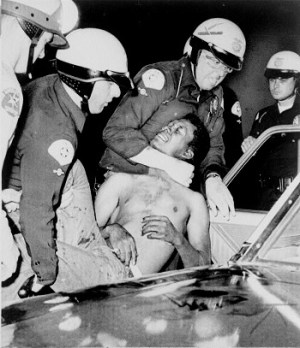
One thing the conclusion ignores is culture. Consider the Jews you may know, or the Koreans or the Pakistanis. Do you reckon restraining orders, for example, or domestic abuse allegations are as commonly brought against Jews or East Asians as they are against whites? Would the action be as countenanced in these ethnic communities, whose members may be more accountable to the judgment of other members and whose community conscience may forbid the public airing of familial discord?

Now it could be true that entitled white men, as members of the patriarchy or former patriarchy, are meaner and feel freer to be abusive than Jews and East Asians. Certainly that’s arguable, but it’s not necessarily arguable on the basis of reports of abuse, because it could also be true that entitled white women, as the usurpers of patriarchy (and as white women), feel freer to exploit feminine advantage and cry wolf than Jews and East Asians do.

Consider that feminism—the origin of the characterization angry white men—is criticized even within its ranks as ethnocentric, i.e., Whitey McWhite. If white women are those who are preponderantly pro-litigation, thanks to white feminist indoctrination into the culture of victimhood and “empowerment,” then who would you expect to be a majority of the targets of procedural abuse?

Those who posit that complainants of courthouse dirty dealings are predominately angry white men aren’t necessarily wrong, but they may be right for reasons they haven’t considered.
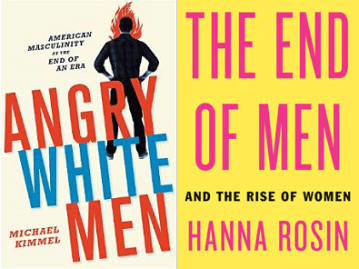
Another one of these reasons is entitlement.

Has it occurred to them, I wonder, that only white people may feel entitled to complain publicly? Do they really imagine that certain minorities aren’t that much more vulnerable to legal abuse, or that they’re not invisible and mute because of their self-perceived or actual lack of entitlement? People who’ve traditionally been the system’s goats aren’t people eager to stick their necks out. They never had faith in social justice.

If you allow that a majority of entitled victims of procedural abuses are white men, then it stands to reason that a majority of complainants of procedural abuses will be white men.

It further stands to reason that these white men, who had been conditioned to the expectation of justice, should feel disappointed…and angry.

Copyright © 2015 RestrainingOrderAbuse.com

*The book Angry White Men: American Masculinity at the End of an Era (2014) is by sociologist Michael Kimmel. Dr. Kimmel is a New York Jew with a Ph.D. from Berkeley. His book was reviewed in The New York Times by Hanna Rosin, a Stanford grad, a senior editor at The Atlantic, and the author of The End of Men and the Rise of Women. Ms. Rosin is also Kimmel-Rosina New York Jew. While neither one’s conclusions can be dismissed offhand, their cultural and class remove from the subjects of Dr. Kimmel’s book makes their identification with those subjects suspect, and Ms. Rosin’s objectivity and access are plainly dubious. From Ms. Rosin’s review: “Kimmel’s balance of critical distance and empathy works best in his chapter on the fathers’ rights movement, a subset of the men’s rights movement. Members of this group are generally men coming out of bitter divorce proceedings who believe the courts cheated them out of the chance to be close to their children.” Contrast this confidently categorical interpretation of men’s and fathers’ complaints to this firsthand account by a father who was ruined by “bitter divorce proceedings”: “The ‘Nightmare’ Neil Shelton Has Lived for Three Years and Is Still Living: A Father’s Story of Restraining Order Abuse.” A comment on Amazon.com credits Ms. Rosin with being sensitive to “real women’s experience.” The story highlighted in the previous sentence chronicles a real (angry white) man’s—whose telephone number is provided in a comment beneath the post.
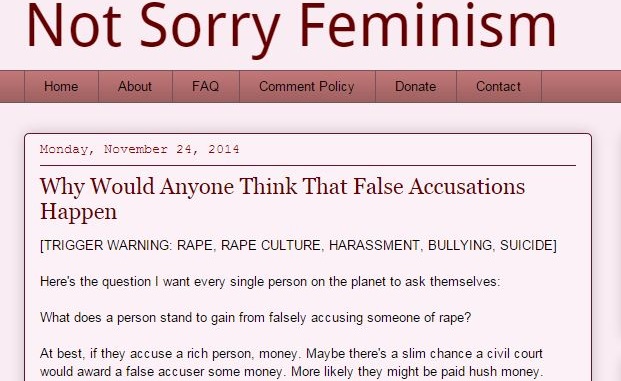
Misperception of the Damages of False Accusation Isn’t a Girls-Only Fault

“What the fuck is wrong with these people? I keep seeing the same argument again and again and again and again—the idea that being accused of rape is not simply as bad as being raped but often worse. I honestly can’t believe how people can be so fucking dense so as to think this is true.

“Note that I am not saying that being falsely accused of rape is not bad and can utterly damage your life, but it just does not even compare to the experience of being raped. […]

“A person falsely accused of rape (and convicted, of course) may, at the worst case scenario, lose friends and family and have their career ruined, but given time they can find new friends who will believe them and repair their social circle, even while hindered by the state. Many times they even clear their names eventually (otherwise we wouldn’t have such a nice influx of False Rape Accusation news stories for the Men’s Right crowd to cheer around). But apparently for some, even the short-term damage of a false rape accusation that a male was eventually cleared from, compares to being actually raped.”

A Division by Zer0

No, the blog A Division by Zer0 isn’t authored by Zerlina Maxwell, the attorney and social critic who gained notoriety a few months ago for voicing identical sentiments in The Washington Post (and being widely panned for it).

The post the epigraph is drawn from was authored by a man. He doesn’t identify himself…and I don’t blame him.

The quoted post is emphatically titled, “For fuck’s sake, No! Being falsely accused of rape is not not NOT as bad as being actually raped!”

People’s gender and political allegiances don’t interest me. People are people, and to each his own. Ill-reasoning, however, offends me regardless of the contours of the body that emits it, especially when it’s emitted loudly. Ill-reasoning is particularly offensive when it mocks human suffering, as this man’s perspectives do.

His sympathy for victims of sexual violation would be commendable if only it weren’t countervailed by callousness.

A recent post on the blog you’re reading highlighted the case of a young British man who was detained by authorities for two days, based on a false accusation of rape. Then the charges were thrown out, that is, they were almost immediately dismissed. He nevertheless killed himself after struggling with depression pursuant to the violation. He was 23. Another featured case concerned an adolescent who was falsely accused of rape by some hoodlums at school. He hanged himself. He was 16. A third was about a man who was falsely convicted for rape (and five other felonies) and served a year and a half of a 35-year sentence. He was exonerated when it was belatedly discovered that his “14-year-old” accuser was an adult in her 20s and that her identity wasn’t all she’d lied about. While the man was in prison, his mother committed suicide. She died believing her son was a pimp and a rapist.

Introducing cases of false accusation that have consequences of this magnitude is illustrative, but it shouldn’t be necessary. The author of A Division by Zer0, like most feminist writers, betrays he understands the aftermath of trauma very well.

Here’s the difference though, a rape victim most likely will never escape the damage of the event. Once the deed has been done, the scar will stay forever, no matter if the perpetrator is punished. You cannot undo the [violation]. You cannot restore the lost trust. You cannot wipe the memory triggers.

In a moment of dramatic irony, the writer acknowledges the root of his own indifference: “Much of it, I believe, comes from lack of empathy.”

The man behind A Division by Zer0 is a member of the “Men’s Rights crowd”—or more aptly the People’s Rights crowd. He just doesn’t know it.

Copyright © 2015 RestrainingOrderAbuse.com

False Accusations and Suicide: Some Headlines about the Effects of Finger-Pointing and Legal Abuse (Culled for the Empathically Challenged)

Since the publication of this post, the one quoted above has been deleted.

One of the stories highlighted below concerns a young man who was falsely labeled a rapist by some bullies at school. He hanged himself. He was 16. Another concerns a man who spent a year and a half in prison based on a false accusation of sexual assault (among other false accusations). While the man was behind bars, his mother killed herself, believing her son was a pimp and a rapist.

A word to the wise: Only ask a rhetorical question if you know the answer…and it favors your position.

The question posed above by the zealous, young author of Not Sorry Feminism isn’t, of course, a question at all; it’s an indictment. She means how dare anyone think false accusations happen. What problematizes the writer’s rhetorical-question-cum-admonition is that it has a very obvious answer: The reason people think false accusations “happen” (so to speak) is that they do.

(It might alternatively be asserted that no one does believe false accusations “happen,” the same way no one believes rapes “happen.” Both are acts, and both have agents. If rape happens isn’t a construction a feminist could get behind, false accusations happen shouldn’t be, either. You’re a proponent of accountability, or you’re not.)

Worse than her question’s being problematic, because answerable, is that its answer isn’t one the writer wants to hear. Motives for false accusations, including of rape, are greed, malice, bullying, vengeance, jealousy, possessiveness, attention-seeking, mental illness, and cover-up, to name a few. They’re ugly, often petty, always destructive…and they can kill.

This post surveys examples of false allegations or deadly allegations or false and deadly allegations drawn from news stories. Here’s one such:

Unlike most of the rest, the first story glossed in this hastily cobbled digital scrapbook doesn’t include a suicide or references to suicide. It’s nevertheless a good starting point, because it’s old news.

The article’s from 15 years ago. Fifteen. Significantly, though, no half-hearted sleuth would find it a challenge today to turn up commentaries on the Internet, mostly from feminist writers like the one who introduces this post, that either (1) deny such a thing ever happens or (2) deny it’s a big deal when it does happen—and deny it’s a sign that a culture of false accusation exists and has for some time. (A story so uncannily similar as to be almost identical can be found here. It appeared in The Huffington Post less than 24 months ago.)

Consider: Where would six elementary school girls and a boy get the idea of framing their gym teacher as a molester, and where would they get the impression this conduct was okay (or “cool”) or that they’d get away with it and not face dire consequences? Should we believe the notion had no cultural influences and was purely a product of these honors students’ collective wicked imagination?

For accusing their teacher of groping them, the kids were suspended for 10 days. It’s likely the most traumatic part of their punishment was being detained by police and “fingerprinted, photographed, [and] booked.” Keep this thought in mind.

Keep this quotation in mind, too: “‘When they made the charge, that’s about 80 percent of the damage to your reputation right there,’ [attorney Paul F.] Kemp said. ‘Because even if you’re found innocent, people will assume you got off on a technicality. Or that there’s something there when there’s not.’”

Editorial intrusions end here; the remainder of this post is a series of Internet clippings (linked to the “complete stories”) from which readers may draw their own conclusions about the motives and effects of accusation, bullying, and legal abuse. The author of this post would only point out before absenting himself that an accusation that may induce someone to kill him- or herself need not be of rape and that one of the suicides chronicled below is of a woman who faced being tried for falsely alleging she was sexually assaulted (“In notes left for her family, she described her overwhelming fear of giving evidence…”).

The common denominator is accusation and public scrutiny and judgment, not being accused of a particular act, per se. Zerlina Maxwell and her ilk are categorically wrong.

fale_accusations_destroy

nancy_grace_suit

dad_falsely_accused

murder_suicide

jurors_in_tears_full

reputation_sullied_full

suicidality

forever_accused

Sheffield_hairdresser

Chinese_man_commits_suicide

Copyright © 2015 RestrainingOrderAbuse.com

“Shame and Stigma” and the “Mean-Spirited Cultural Response” That Efforts to Cast Them Off Provoke: Procedural Abuse and Parental Alienation

“Parental alienation is the ‘programming’ of a child by one parent to denigrate the other (targeted) parent, in an effort to undermine and interfere with the child’s relationship with that parent, and most often occurs within the context of a child custody conflict. This includes the ‘legal abuse’ of parents who have been disenfranchised from their children’s lives subsequent to sole custody and primary residence judgments. Within an adversarial legal process, non-custodial parents are often subjected to shame and stigma, lack of access to their children, and devaluation of their role as parents. And those who speak about the pain and woundedness in their lives are subjected to a mean-spirited cultural response, where their talk of woundedness is mocked.”

Edward Kruk, Ph.D.

Here’s child and family social worker Edward Kruk corroborating that parents may be the targets of “legal abuse”; that they’re subjected to shame and stigma, and to alienation from their children; and that they’re ridiculed and regarded with contempt for complaining about it: “The Impact of Parental Alienation on Parents: Post-traumatic Stress in the Rupture of Parent-Child Relationships” (2013). There are mothers who endure this, make no mistake, but as Dr. Kruk observes, “Most alienated parents are non-custodial fathers.”

Members of both genders (parents and non-parents alike) have reported on this blog that they’ve experienced (or are in the throes of) PTSD consequent to abusive legal contests, and it’s not the intent of this post to discount the plaints of mothers who face this torment. It must be emphasized, however, that the “mean-spirited cultural response” Dr. Kruk notes is predominately, if not exclusively, directed at men, and it’s because fathers’/men’s plaints are so roundly and effectively denounced and dismissed that mothers’/women’s plaints also lack a sympathetic audience.

(Feminists would prefer that female victims of legal abuse quietly recede into obscurity and accept the role of martyr for “the cause.”)

The “mean-spirited cultural response” is broad but includes highly influential voices, including law professors and esteemed advocacy groups like the Southern Poverty Law Center, which has equated men’s and fathers’ rights representatives with hate groups, asserting that they’re on a par with the Ku Klux Klan.

No kidding.

To vehemently complain about being treated prejudicially by the courts and alienated from your kids is to be caricatured as a racist wearing a bedsheet and brandishing a torch. (Few in the mainstream press, moreover, scoff at this rhetoric.) For moms (and women in general) who’ve been victimized by legal abuse to be heeded, the demonization of men’s and fathers’ advocates as mere “misogynists” must first be controverted.

Last year, a post on this blog reported the award of a $500,000 grant to a female law professor to “debunk” the claim that court procedures are abused to alienate parents from their children, and it’s this sort of (government-funded) social science research that marginalizes voices like Dr. Kruk’s.

It provides fodder to bloggers and other commentators, and it’s used to “train” judges how to rule.

The selective orientation of feminist social science ignores competing (and compelling) findings like these Dr. Kruk cites:

Suicide rates are reported to be of epidemic proportions among parents, fathers in particular, who are struggling to maintain a parenting relationship with their children (Kposowa, 2000; Kposowa, 2003); and legal abuse has been noted as a key factor in these cases.

A recent post on this blog referenced the suicide of a father who’d undergone years of legal hell and couldn’t face any more. He bled out—emotionally, morally, and financially. Feminist advocates stress the consequences and “rampancy” of domestic violence—focusing narrowly on female victims—while denying that the effects of legal abuses are grave. They trivialize those effects and often deny legal abuses occur to any extent worthy of attention or redress.

The devaluation of family and the curtailment of lives aren’t trivial.

Copyright © 2015 RestrainingOrderAbuse.com

More on False Accusation Culture: A Memoir That Exemplifies how False Accusations Are Motivated by “Mass Panic”

Meredith Maran, in writing about falsely accusing her father of molesting her, has been lauded for her bravery, compassion, and honesty by no lesser literary lights than Anne Lamott, Elizabeth Loftus, and Michael Chabon. One must wonder, however, whether a memoir by her father about the torment of being falsely accused and alienated from his grandchildren, particularly if Ms. Maran had maintained her story of abuse, would have received the same sympathetic interest, never mind the same critical acclaim.

Thanks to how Google News is prioritizing its returns for the search term “false accusations,” I came across a Salon.com interview the other day (published in 2010) that speaks significantly to how false claims of abuse, even “false memories” of abuse, can be socially coerced. What it relates exemplifies why how we talk about violence is a very big deal.

More than 20 years ago, Meredith Maran falsely accused her father of molestation. That she came to believe such a thing was possible reveals what can happen when personal turmoil meets a powerful social movement. In her book My Lie: A True Story of False Memory (the introduction of which is excerpted on Salon), Maran recounts the 1980s feminist-inspired campaign to expose molestation, which hit feverish levels in 1988 with the book The Courage to Heal. As an early reporter on the story, Maran observed family therapy sessions, interviewed molesters, and steeped herself in cases where abuse clearly took place. Meanwhile, she divorced her husband and fell in love with a woman who was also an incest survivor. Maran began having nightmares about her own molestation and soon what had been a contentious relationship with her father turned into accusations of unspeakable crimes. Eventually, she came to realize the truth. She was the person who had done wrong.

Toward the end of her memoir, her father asks her, “What I really want to know is how the hell you could have thought that of me.”

Ms. Maran tells Salon reporter Michael Humphrey that she was a thrall of “mass hysteria” (of “mind control” or “brainwashing”).

I was working as a feminist journalist, writing exposés of child sexual abuse, trying to convince the world that incest was more than a one-in-a-million occurrence. In the process, I convinced myself that my father had molested me. After five years of incest nightmares and incest workshops and incest therapy, I accused my father, estranging myself and my sons from him for the next eight years.

In the early 1990s the culture flipped, and so did I. Across the country, falsely accused fathers were suing their daughters’ incest therapists. Falsely accused molesters were being freed from jail—and I realized that my accusation was false. I was one of the lucky ones. My father was still alive, and he forgave me.

The early ’90s, coincidentally, was when restraining orders entered full swing, and the Violence Against Women Act emerged—and allegations of “epidemic violence,” largely from feminist quarters, have never broken stride since.

Ms. Maran’s memoir presents a case study in the coercive effects of rhetoric, especially when it’s backed by widely embraced “social science.”

In 2007, I was out for a walk with someone I wasn’t even that close to. She asked me if I’d ever done anything I was ashamed of and had never forgiven myself for. And without hesitation I said, yeah, when I was in my 30s I accused my father of molesting me, and then I realized it wasn’t true. She stopped walking and stood still, just staring at me and she said, “The same exact thing happened to me.” When I came home from that hike I started calling people I had known back then and speaking to some of the therapists I had seen during that period. With the exception of my ex-lover, every other person I talked to who had accused her father in the ’80s and early ’90s now believed she had been wrong.

[…]

It really shocked me, I must say, to see how much influence the external had on the internal. That the most intimate emotions and relationships can be so affected by the dominant paradigm.

Today’s “dominant paradigm” (a.k.a. dogma) is that accusers who allege abuse are telling it straight, especially if the accusers are female and they’re alleging violence. Conscientious voices continue to meet with vehement hostility, even for making the mild (and very reasonable) suggestion that allegations shouldn’t be treated as facts.

[T]he statement of accusation is all it takes to put the wheels in motion. Either legally or in your family. One thing I’ve learned is the relevance of the phrase “the perfect storm.” Not only for me, but for a lot of women I know who made these false accusations, it was very much a social phenomenon. Metaphorically, everything we were saying was true. But there was a confusion between a metaphor and a fact. And it was a highly relevant difference.

Put plainly, the difference Ms. Maran remarks is between real and fictional—a “highly relevant difference” indeed. So much of the rhetoric that continues to exert a governing influence on social perspectives mirrors what we “want to think” or what we’ve been motivated or conditioned to think (what it’s “right” or politically correct to think). There’s a broad and vocal contingent of “true believers” who are deeply invested in the notion that “violence is epidemic” and that “victim’s” needs should preempt all other concerns, including justice and the false implication of the innocent.

Mr. Humphrey’s interview with Ms. Maran ends on a chilling statement that’s worthy of reflection, coming as it does from a woman who’s written a book acknowledging that people may be led to falsely accuse and that she herself was “brainwashed” into doing so.

In the middle of the book, while you are still deeply in the mind-set of being molested, there’s a notion you agree with that if one innocent man goes to prison, but it stops a hundred molesters, it’s worth it. Do you still agree with that notion?

I’m fairly close to a man still in prison, and really believe he is innocent. I know how he’s suffered. I know he’s 80 years old and in ill health. He’s spent 20 years in prison, for no reason. If every elementary school child is now taught how to protect themselves from sexual abuse—and even more to the point, some father or preschool teacher who feels the urge to molest a child will be inhibited from doing so because they think there are guys still in jail for doing that—but innocent people are in prison, do I have to make that choice? It is a Sophie’s choice kind of thing. Would I allow an innocent man to sit in prison if it meant keeping children safe?

So would you make that choice?

I think so.

In closing, appreciate these facts: (1) A false accuser isn’t pilloried but praised for “bravely” admitting the truth years later, years during which someone else—may we also say “bravely”?—lived with the isolating stigma of her accusations; and (2) the same false accuser who “saw the light” nevertheless opines that other people’s lives are arbitrarily expendable for a virtuous cause.

If these compound horrors weren’t bad enough, the view the memoirist expresses is generally shared and, for all intents and purposes, held by our own “justice system” (consequently).

The question the interviewer poses isn’t a “Sophie’s choice.” The character in William Styron’s novel is forced by a Nazi soldier to choose which of her children should be allowed to live. The choice wasn’t a moral one. Opting to punish people for crimes they haven’t committed to make “object lessons” of them against their will decidedly is.

Whether it’s “worth it” to expediently destroy some other person’s life for the betterment of society isn’t a decision anyone gets to make but the owner of that life—and how dare anyone presume otherwise.

Copyright © 2015 RestrainingOrderAbuse.com

*The definition of expedient in my dictionary (World Book) includes this model sentence: “No honest judge would make a decision that was expedient rather than fair and just.”