If you’re not sure what the title means, that’s the point.
It’s satirical and intended to emphasize that if you falsely accuse someone of abusing a child and the accusation sticks, there’s about a 100% probability that the restraining order will work to deter future abuse of that child by the falsely accused person who never abused the child in the first place.
 As a feminist might reason, however, zero probability of abuse is good, and that zero probability recommends that all feminists be restrained by order of the court from abusing children…because how could that be a bad thing?
It’s certainly likely that there are feminist child abusers. If all feminists were put on notice, then, malefactors among them would be discouraged from committing further abuses.
Okay, sure, non-child-abusing feminists might resent the implication of a court order that prohibited them from abusing children. But so what? As a feminist might observe, the net effect of forbidding all feminists from abusing children would be enhanced protection of children. Unquestionably this would be worth some ruffled fur.
Now, do I mean the above as lampoon, or am I being serious? When it comes to the subject of restraining orders, both amount to the same thing.
These remarks and my choice of words in this post’s title were inspired by a 15-year-old “family violence special report” headlined, “Most restraining orders work.” It was written by Kristen Go for The Denver Post and published Sept. 12, 1999.
The headline’s assertion is the kind that makes people who’ve been falsely accused grate their teeth.
Imagine, just for argument’s sake, that most restraining order accusations are hyped or false. If that were the case, then naturally most restraining orders would “work” (to curb behavior that the accused never exhibited in the first place).
What Ms. Go’s report saliently relates is that three Colorado women who obtained restraining orders against “abusive husbands” were subsequently shot to death by those husbands.
While these recent high-profile cases in Grand Junction, Fort Collins and Colorado Springs make it appear that restraining orders don’t work, experts say that’s not the case. Enforcing a restraining order can be difficult but not impossible. And obtaining a restraining order is just one step toward leaving an abusive relationship and staying safe, experts say.
“The reality is that a restraining order is a piece of paper,” said John Poley, an assistant city attorney in Denver’s Domestic Violence Unit. “It’s not going to stop bullets. If you get a restraining order without a safety plan in a domestic situation, I think that’s almost asking for trouble.”
Translation: Restraining orders against violent people may not actually do a damn thing but make those violent people murderously angry, and those much-promoted pieces of paper may inspire a false sense of security in their applicants that gets them killed.
No one…keeps track of how many domestic-abuse homicide victims had restraining orders against their killers.
Translation: No one really cares what the consequences are so long as perception is predominantly positive.
Recent studies—which include data collected in Denver—are inconsistent about how often orders are violated. A 1994 study by the National Center for State Courts found that two-thirds of restraining orders are never violated. Yet a 1993 study by the Urban Institute reported that 60 percent of women said their abuser violated the order.
Translation: What the courts report contradicts what women report, and what women report contradicts what Ms. Go does (“Most restraining orders work”).
What the studies do agree on, however, is that about 70 percent of people who obtain restraining orders report feeling safer.
Translation: A majority of people who obtain restraining orders report “feeling” safer, and this means most restraining orders “work.”
The foregoing may be summarized thus: (1) Restraining orders against violent people may get their applicants killed; (2) no one takes a particular interest in how often this occurs; (3) most restraining orders “work”; (4) if most restraining orders are based on BS, it only stands to reason that they should; and (5) we know that three restraining orders obtained in Colorado in the late 90s were presumably legit…and ascertainably worthless.
Copyright © 2018 RestrainingOrderAbuse.com
*Ms. Go’s report also relates the following data: “In fiscal 1998, about 18,000 temporary and 3,300 permanent domestic-violence-related restraining orders were issued in Colorado counties.” If Ms. Go is correct, there’s no evidence in her reportage that she understands this means over 80% of domestic-violence-related restraining orders issued in Colorado counties in 1998 were dismissed. Of the approximately 18,000 petitions preliminarily approved by the court, that is, less than 20% (3,300) were affirmed (made “permanent”). Over 14,500 cases, then, may have been (tacitly) deemed frivolous, flimsy, or false by Colorado courts. Appreciate, besides, that a significant proportion of the 3,300 orders that were upheld may have had false grounds. Almost 20 more years of this charade have gone by since.

 Among people who’ve been damaged by fraudulent abuse of restraining orders and related civil court procedures that are supposed to protect the defenseless, you’ve got, for instance, your liberals who’ll defend the process on principle, because they insist it must be preserved to protect the vulnerable, and they’ll fence-sit just to spite conservatives who flatly denounce the process as a governmental intrusion that undermines family.
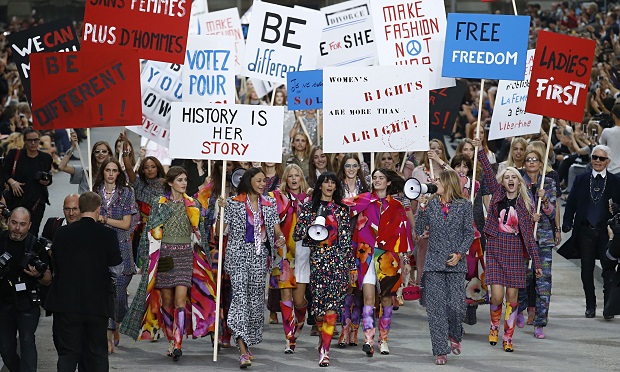





 This absurdly says that even if a person is repeatedly found to abuse process, the worst consequence s/he should face is having to ask special permission before doing it again. What makes the commission’s comments significant, however, is that they actually own that there are people who exploit court process to hurt others and that they may do it over and over.

 Not one of those things has affected me as deeply as being on the receiving end of a sociopath’s lies, and the legal system’s subsequent validation of those lies. There is no “coming out the other side” of a public, on-the-legal-record character assassination. It gnaws at me on a near-daily basis like one of those worms that lives inside those Mexican jumping beans for sale to tourists on the counters of countless cheesy gift shops in Tijuana.
 These days, when sleep escapes me, which seems to be fairly frequently, I often relive the various court hearings associated with this shit show. One is the court hearing for the restraining order that my abuser sought against me (and which was granted) based on his completely vague, bullshit story that he felt “afraid” of me—this from the beast that had assaulted me on numerous occasions, slashed my tires, and had a documented history of abusing previous girlfriends. Another is his trial for assault and battery, during which I was forced to undergo a hostile, nasty, and innuendo-laced cross-examination by his scumbag defense attorney in front of a courtroom full of strangers. But the hearing that really gnaws at me and fills me with an almost homicidal enmity for the judge overseeing it is the one where I was requesting a restraining order against my abuser, this after a particularly heinous assault in the days following my cancer diagnosis and my partial mastectomy.
 I will have that prick’s bogus restraining order on my record today, tomorrow, next week, and on and on into perpetuity. I am a licensed professional whose employers require a full background check prior to being hired. I honestly don’t know how that restraining order was missed by the company that my most recent employer contracted to perform my pre-employment vetting. I live with the ever-present dread that someday, someone will unearth the perverse landmine that my abusive ex planted in my legal record, and that dread hasn’t lessened one whit since the day the restraining order was granted.
 I don’t believe this registry will ever be abolished, because restraining order abuse isn’t “sexy” and no one thinks it could ever happen to her, but can we at least limit who can access this information and the circumstances under which they can access it? It’s mind-boggling to me. It’s just so goddamn devastating to the people who are unfairly stigmatized, and, call me pessimistic, but I don’t think these casualties will ever have a voice.
 33-year-old Heather Coglaiti went to the Corpus Christi Police Department (CCPD) to report that her on-again-off-again boyfriend, José Calderon, had threatened to hurt her, and had slashed her car tires.
 This isn’t pettifoggery. Distinctions like this aren’t minor, and they betray how we interpret allegations: We believe they must be true. Objectivity, if not skepticism, though, is the journalist’s brief, not credulity.
 In an offhand response to a comment yesterday, I remarked that restraining orders weren’t meant to provide people with a sense of security; they were meant to secure people from danger.
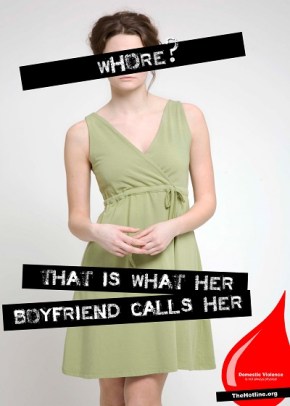 Money has steadily aggregated to representatives of feminist causes over the decades, and this money has been used to secure public opinion through “information campaigns.” Too, it has inspired grant allocations to agencies of the justice system amounting to billions under the feminist motivated
  To ensure abused women aren’t afraid to come forward—again, so the
  The police knock on my bedroom door and give me 10 minutes to get some clothes. The “husband-owner” filed a restraining order on me!



 whispered about then, can marry in a majority of states. When I was a kid, it was shaming for bra straps or underpants bands to be visible. Today they’re exposed on purpose.
 What once upon a time made this a worthy compromise of defendants’ constitutionally guaranteed expectation of
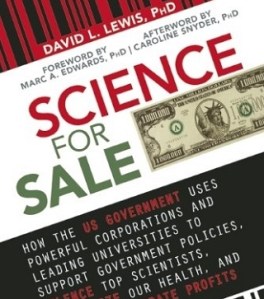
  Pols and corporations engage in flimflam to win votes and increase profit shares. Science, too, seeks acclaim and profit, and judicial motives aren’t so different. Judges know what’s expected of them, and they know how to interpret information to satisfy expectations.
 Since judges can rule however they want, and since they know that very well, they don’t even have to lie, per se, just massage the facts a little. It’s all about which facts are emphasized and which facts are suppressed, how select facts are interpreted, and whether “fear” can be reasonably inferred from those interpretations. A restraining order ruling can only be construed as “wrong” if it can be demonstrated that it violated statutory law (or the source that that law must answer to:
  Feminism’s foot soldiers in the blogosphere and on social media, finally, spread the “good word,” and John and Jane Doe believe what they’re told—unless or until they’re torturously disabused of their illusions. Stories like those you’ll find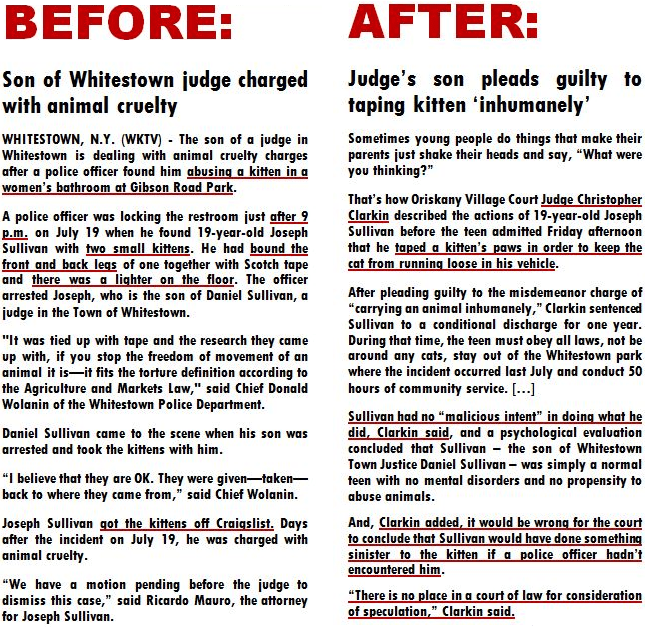

 It gets by with a little help from its friends.
 Prof. Meier says she expects to use the $500,000 federal grant to conclusively expose gender bias in family court against women—and to do it using a study sample of “over 1,000 court cases from the past 15 years” (a study sample, in other words, of fewer than 2,000 cases).


 Here are two recent headlines that caught my eye: “
 Recognize that in these rare instances when perjury statutes are enforced, the motive is political impression management (government face-saving). Everyday claimants who lie to judges are never charged at all, because the victims of their lies (moms, dads,
  pay them money I didn’t even owe! This person was my babysitter, who is the most manipulative, money hungry witch. I just didn’t know it until now.
 From a draft of Ally’s “Motion to Expunge”:
 Ironic is that Dr. Behre’s denial of men’s groups’ position that men aren’t treated fairly is itself unfair.
 What isn’t appreciated by critics of various men’s rights advocacy groups is that these groups’ own criticisms are provoked by legal inequities that are inspired and reinforced by feminist groups and their socially networked loyalists. These feminist groups arrogate to themselves the championship of female causes, among them that of battered women. Feminists are the movers behind the “battered women’s movement.”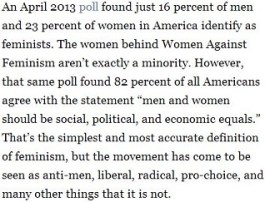
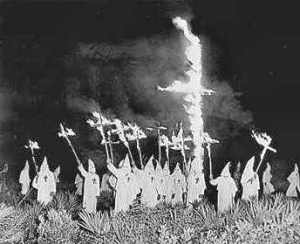 The professor carefully prefaces her points with phrases like “Researchers have noted,” which gives them the veneer of plausibility but ignores this obvious question: where do the loyalties of those “researchers” lie? The professor cites, for example, the Southern Poverty Law Center’s equation of SAVE Services with a hate group. An attentive survey of SAVE’s reportage, however, would suggest little correspondence. The professor doesn’t quote any of SAVE’s reports; she simply quotes an opposing group’s denunciation of them as being on a par with white supremacist propaganda.

 Members of the legislative subcommittee referenced in The Courant article reportedly expect to improve their understanding of the flaws inherent in the restraining order process by taking a field trip. They plan “a ‘ride along’ with the representative of the state marshals on the panel…to learn more about how restraining orders are served.”
 A high school cheerleader whose dad is a former chief of police had a boyfriend her parents disapproved of. The girl says her parents “threw her out” because of him; her parents say she left because she didn’t want to abide by their rules.
 A theme that emerges upon consideration of
  It’s ironic that the focus of those who should be most sensitized to injustice is so narrow. Ironic, moreover, is that “emotional abuse” is frequently a component of state definitions of domestic violence. The state recognizes the harm of emotional violence done in the home but conveniently regards the same conduct as harmless when it uses the state as its instrument.
 Here’s yet another irony. Too often the perspectives of those who decry injustices are partisan. Feminists themselves are liable to see only one side.
 Now consider the motives of false allegations and their certain and potential effects: isolation, termination of employment and impediment to or negation of employability, inaccessibility to children (who are used as leverage), and being forced to live on limited means (while possibly being required under threat of punishment to provide spousal and child support) and perhaps being left with no home to furnish or automobile to drive at all.
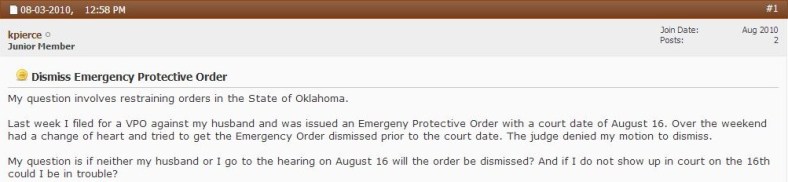
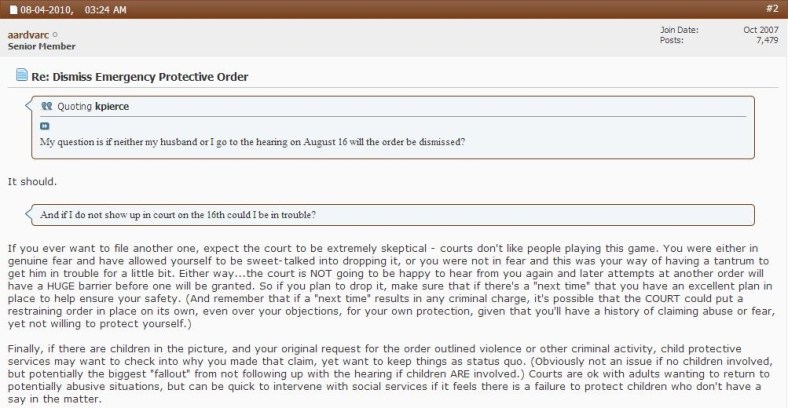
 Notable, contrariwise, however, is that the respondent discourages the petitioner of the restraining order, who’s admitted to proceeding impulsively, from following through with her expressed intention to rectify an act that may have been motivated by spite. The respondent is the executive director of
 Some feminists categorically can’t be reasoned with. They’re the equivalents of high-conflict courtroom litigants who reason with their feelings. But I don’t get the impression that the author of this blog is one such, and I think there are many self-styled feminists like her out there. She seems very much in earnest and without spiteful motive. Her intentions are well-meaning.

 It must be considered, for example, that the authority for the statistic “1 in 4 women will experience domestic violence in her lifetime” cited by this writer (and which is commonly cited) is a pamphlet: “
 What everyone must be brought to appreciate is that a great deal of what’s called “domestic violence” (and, for that matter, “stalking”) depends on subjective interpretation, that is, it’s all about how someone reports feeling (or what someone reports perceiving).
 The zealousness of the public and of the authorities and courts to acknowledge people, particularly women, who claim to be “victims” as victims has produced miscarriages of justice that are far more epidemic than domestic violence is commonly said to be. Discernment goes out the window, and lives are unraveled based on finger-pointing. Thanks to feminism’s greasing the gears and to judicial procedures that can be initiated or even completed in minutes, people in the throes of angry impulses can have those impulses gratified instantly. All parties involved—plaintiffs, police officers, and judges—are simply reacting, as they’ve been conditioned to.
 TALKING BACK to restraining orders