Phil Bredfeldt Apparently Dumps Wife, a Woman Who Serially Accused Me for a Decade with Him at Her Side

Ruth Bredfeldt, GaLyn Hargis, Philip Bredfeldt, Philip Alan Bredfeldt, Tiffany Bredfeldt, Tiffany Gail Hargis, Tiffany Hargis, Phil Bredfeldt, Ray Bredfeldt, Dr Ray Bredfeldt, Raymond Bredfeldt

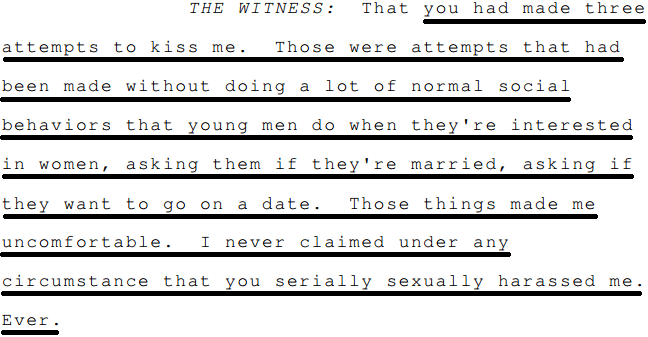
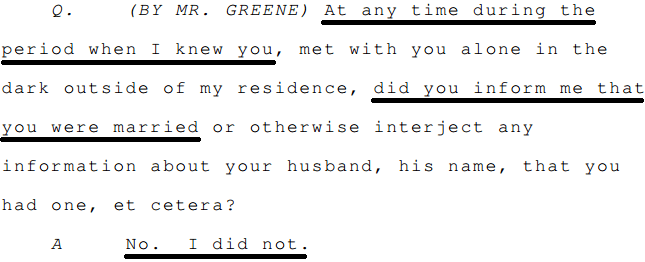
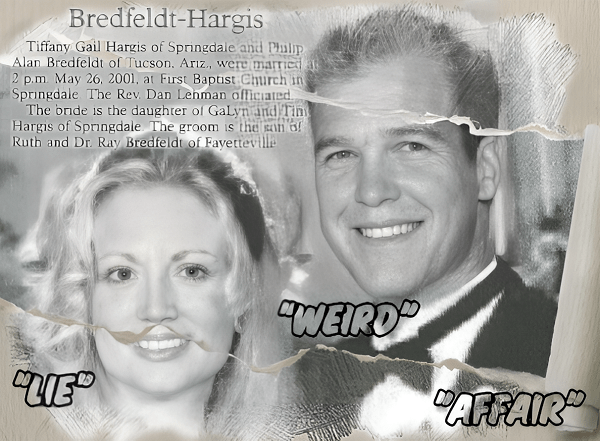
The subject of this post, Phil Bredfeldt, along with his wife, serially prosecuted the writer for 12 years. Words that appear in the image above are excerpted quotations from emails sent to the writer by one of the Bredfeldts’ witnesses. The same person was induced to lie in court on the Bredfeldts’ behalf in 2013 and then to lie again both to the police and to the court a couple of years after that.


For reasons I may share in a forthcoming post, I believe someone has been manipulating Google’s algorithm to submerge or suppress returns for posts on this blog.

If I’m right, one of the ironic side effects has been the elevation in Google returns of what should be obscure facts about an obscure guy named Philip Alan Bredfeldt.



A seeming attempt to quash negative information has only succeeded in bringing other facts to the fore.

Phil also pops up as “Philip Allen Bredfeldt,” which would seem to be a lame attempt at disguise.
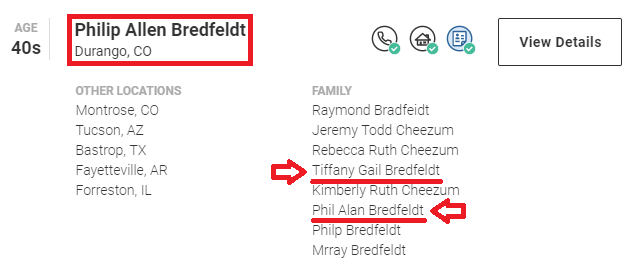

Same address, same relations, altered middle name


Phil Bredfeldt is an infantile middle-aged tool who, at his wife’s side, subjected me to repeated prosecutions over a 12-year period, alleging everything from harassment to stalking to sexual assault and violent danger—all to cover up extramarital mischief of hers. The couple used my public record as a no-flush toilet.

They also tried to have me imprisoned while my father lay on his deathbed and my inheritance was in foreclosure.

That was until the court turned on them. An unlawful injunction they had secured with the help of a lowlife attorney in 2013, which prohibited me from exposing their deceits (even by “word of mouth”), was dissolved in 2018.

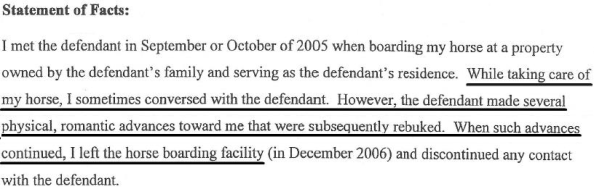
While I was being sued by Phil, whom I’ve never seen outside of a courtroom, he and his wife, Tiffany Bredfeldt, used a post office box in another state in order to maintain the sham that they were terrified I might come calling.

Now Phil’s home address tops the returns for the search terms Phil Bredfeldt on Google. It would seem that either Phil’s vestigial testicles descended in his fifth decade of life, or he’s no longer concerned who knows about his hoax.


Stephanie Bergeron Perdue, Toby Baker, Beth West, TCEQ, Texas Commission on Environmental Quality, Tiffany Bredfeldt, Tiffany G. Bredfeldt


Also notable is that while Tiffany G. Bredfeldt appears to remain in or around Bastrop, Texas, in the employ of the Texas Commission on Environmental Quality (TCEQ), Phil himself reportedly resides and is registered to vote in a different time zone. His new home base, Durango, Colorado, confirmed by his engineering license, is nearby the town of Montrose, which is where his sister and brother-in-law Kim and Jeremy Cheezum and (suggests Google) his mother and father, Ray and Ruth Bredfeldt, live.

I guess deceiving the court for so long was stressful on Phil, and he craved the comfort of family.

I don’t care enough to try to determine conclusively whether Phil and Tiffany Bredfeldt, who made a great show for over a decade in court of being conjugally devoted, are now divorced.

What seems evident, though, is that they live in different states, which is tantamount to the same thing, and my belief that their marriage was one of convenience, which wed the wealth of a conservative Christian doctor’s family to a conservative Christian banker’s family, seems corroborated.

The last case against me (two-years long) concluded about the time the Internet reports Phil Bredfeldt “shared his journey on the Rimrocker Trail” with RimRockerTrail.org (June 22, 2018). Phil submitted selfies, including one in which he smiles in rainbow socks, taken as he rode the 160-mile Colorado trail on his mountain bike. Alone.

It must have been very cathartic for him after tormenting me for a dozen years and steamrolling my ambitions while he advanced his own career.

I can still picture Phil on the stand in 2016 whimpering of honest statements I had made concerning marital infidelity by his wife, “It isn’t true!” He hammed it up for his audience, as I imagine his sleazy lawyer had instructed him to do.

His amateur hour salesmanship was probably convincing enough to the judge. The only one it seems to have failed to convince was everybody else.

Copyright © 2020 RestrainingOrderAbuse.com

*Phil Bredfeldt’s family members are evangelical Christians who belong to a denomination called the Presbyterian Church in America and who purportedly view divorce very gravely. If Phil did divorce his wife, I may have provided the validating excuse (possibly the one that Phil denied under oath). And this family, which seems to have learned the value of piousness but not the values of piousness, is, I think, just self-important enough to believe that I should draw some consolation from that.

**Below is a synopsis of statements Phil Bredfeldt’s wife, Tiffany, gave in evidence to the court or, in one instance, to the police only between the years 2006 and 2017. They provide all the background to the matter a reader will require. Phil Bredfeldt, who was privy to all of these statements, supported them fully, including under oath. The couple even provided sworn affidavits to the court “confirming” that they were telling the truth. The reader may wonder where Phil Bredfeldt was while this was purportedly going on (and with whom), which is a question he escaped ever having to answer in court.




Michael Honeycutt, TCEQ, Texas Commission on Environmental Quality, EPA, Environmental Protection Agency, Tiffany Bredfeldt, Governor Greg Abbott, Beth West TCEQ, TCEQ Human Resources Director Beth West, TCEQ Executive Director Toby Baker, Toby Baker TCEQ, TCEQ Deputy Executive Director Stephanie Bergeron Perdue


Michael Honeycutt, TCEQ, Texas Commission on Environmental Quality, EPA, Environmental Protection Agency, Tiffany Bredfeldt, Governor Greg Abbott, Beth West TCEQ, TCEQ Human Resources Director Beth West, TCEQ Executive Director Toby Baker, Toby Baker TCEQ, TCEQ Deputy Executive Director Stephanie Bergeron Perdue


Michael Honeycutt, TCEQ, Texas Commission on Environmental Quality, EPA, Environmental Protection Agency, Tiffany Bredfeldt, Governor Greg Abbott, Beth West TCEQ, TCEQ Human Resources Director Beth West, TCEQ Executive Director Toby Baker, Toby Baker TCEQ, TCEQ Deputy Executive Director Stephanie Bergeron Perdue


What Massachusetts Law Firm Dane Shulman Associates Says about Restraining Order Abuse and Divorce

Below is Massachusetts law firm Dane Shulman Associates writing about the game of false accusation. Lawyers know this happens. They know it very well.

Various feminist advocates doggedly assert that restraining order abuse, particularly to gain leverage in family court, is insignificant—or worse, that claims of it are merely men’s rights propaganda—and such assertions are made even by professors of law. Practitioners of law (the lawyers in the trenches, not the ivory tower) report otherwise.

Restraining Order Abuse in Divorce Cases” (emphases added):

Unfortunately, some people are abusing Massachusetts’ restraining order laws and using them as a divorce tactic. An individual involved in divorce proceedings may file a temporary restraining order against [his or her] spouse, alleging abuse of him or [her] or of the couple’s children. This would prevent the alleged abuser from having contact with his or her children during the 10-day temporary order, and if the allegations stick, the restraining order would last up to a year after the accusations were made. Often, such allegations are false, and only a way to put a wrench in the divorce proceedings and for the accusing spouse to gain custody of the children involved.

To prevent the restraining order from being extended, it is imperative that the alleged abuser present evidence [in] the second hearing that the allegations made against him or her are false. This is the first and only time an alleged abuser can present his or her case. If he or she fails to appear, chances are that the restraining order will be extended, and the accusing spouse will gain custody of the children.

A restraining order can have disastrous effects on the alleged abuser. The order is put on his or her criminal record, and any violation of the order results in criminal charges. The alleged abuser is also listed in the statewide Domestic Violence Registry, a record that never goes away. All of these actions greatly impact an alleged abuser’s ability to secure new employment, especially jobs for the government or jobs that involve working with children.

Massachusetts’ courts issue restraining orders to protect victims, not so the orders can be used as frivolous tactics to gain the upper hand in a divorce or a child custody matter. Restraining orders have serious consequences for the alleged abuser, and also for the relationship between the alleged abuser and his or her children, since the order could put strain on the parent-child relationship. A restraining order is something no one should consider obtaining without a serious, truthful cause.

Copyright © 2018 RestrainingOrderAbuse.com

*One of the most outspoken critics of restraining orders, attorney Gregory Hession, also practices in Massachusetts.

Women Are Bigmouths: Why This Has Been Bad for People Who’ve Been Abused by the Court…but COULD Be Good

I grudgingly constructed a page this week on Facebook, which confirmed to me two things I already knew: (1) I really hate Facebook, and (2) women are more socially networked than men.
Calling women “bigmouths” isn’t strictly right, and people affronted by the assertion will insist women and men talk about the same amount, or that men talk more than women do.

Uh-huh.

Not impolite to observe is that women “collaborate” more than men do, that is, they sooner work in tandem, which is what statistics I gleaned from Facebook corroborate.

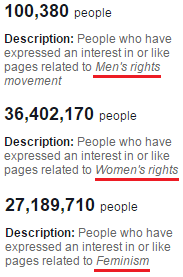
“Tell us about the people you’d most like to connect with,” Facebook urges when you piece together a page on its site. My entries under “Interests” brought up terms like Men’s rights movement, Feminism, and Women’s rights. Accompanying these topics were figures about how many others had expressed an interest in connecting with people who shared those interests.

See for yourself.

Notice that 200 to 400 times greater interest in bonding with people concerned with women’s rights has been shown than interest in bonding with people concerned with men’s rights. That’s a lot…A LOT a lot.


I don’t think there’s anyone who would deny that the fruits of feminism owe to social networking. Some of these fruits have been great; some really horrible. This blog concerns the rotten ones: a culture of victimhood and false accusation combined with the legislation of accelerated and derelict legal procedures presided over by judges bigoted by politics, bad practices (including engineered social science), and money.

Men have been the majority of victims, and they’ve been the only source of concentrated complaint, concentrated complaint that’s been mocked and muted. If we can assume the 200 to 400 times greater interest shown in women’s rights translates more or less proportionally to the number of people disinterested in or opposed to men’s beefs, then no wonder. Female influence, which is significantly feminist influence, is vastly predominant. The sympathy market has been cornered.

Men aren’t the only victims of procedural abuse, however.

Many if not most of the victims who comment on this blog are women, and they’re often desolate. Some live like hermits, some like refugees. They feel exiled and isolated.

The irony is this is exactly how women felt before the rise of feminism, and there’s a lesson to be taken from that.

Men’s struggles for a market share of sympathy face a phalanx of resistance and the priority of conditioned sentiment (prejudice); they’re also troubled by men’s lesser inclination to work collaboratively (the maverick mentality is a losing one). Women, however, can work from behind the lines. They can tap into the women’s rights network and harness its power.

And they should.

Copyright © 2015 RestrainingOrderAbuse.com

The “Nightmare” Neil Shelton Has Lived for Three Years and Is Still Living: A Father’s Story of Restraining Order Abuse

The following account is reported by North Carolinian Neil Shelton, a father denied access to his son and daughter for “three years now and counting.”

In his account, Mr. Shelton alleges that his sister, in collusion with his ex-wife, lied to have him involuntarily committed, and that one or more partners in the law firm of his ex-wife’s attorney fabricated evidence to have him incarcerated. He alleges, in short, some very dirty divorce tactics.

Mr. Shelton’s allegations are abhorrent yet all too believable. Significantly, none of the criminal allegations introduced against him have held up in court.

Because, however, its author has no means of corroborating Mr. Shelton’s allegations of fraud, it is not the position of this blog that Mr. Shelton’s sister lied to the court or that either the attorney in question or his associates engaged in forgery. The blog author’s investigative wherewithal is limited, and he has no way of determining the allegations’ accuracy. Rebuttal responses from the accused are accordingly welcomed.

Neil’s story, then, as he tells it:

I am the victim of false allegations and restraining order abuse resulting from my divorce.

I’ve been wrongfully incarcerated for almost a year and falsely arrested numerous times for nothing I’ve done. To get a better idea, look at my page on Facebook, Growing UP Mayberry, and that will give you most of the full story. For this website, I want to share the restraining order abuse, as well as the ex parte abuse, and several things resulting from the restraining order and false allegations.

On May 29, 2012, which was shortly after I was kicked out of my house by my now ex-wife, I was arrested three times in one day.

This was the start of a campaign by my ex-wife’s divorce attorney, who is also my state representative, Sarah Stevens of Surry County and Mayberry (Mt. Airy), North Carolina. Yes, Mayberry, home of Andy Griffith and the inspiration for The Andy Griffith Show. My only reason for pointing that out is that no matter where you live, you are not immune to this unnecessary attack and, ultimately, bullying.

My ex-wife had my sister, Joan Shelton Phillips, a family nurse practitioner and my primary care physician, lie on two Involuntary Commitment forms saying I was bipolar, refused medication, and was riding around in a limousine threatening myself and others. At the top of the commitment papers, it says clearly: “wife wants husband committed.” The interviewing physicians were able to get my medical records, which showed I had never been seen or medicated for bipolar disorder. After some questioning, I was released from the first commitment attempt.

The Surry County Sheriff’s Dept. had arrested me at 10 a.m. the first time. I was released at 2:30 p.m. and rearrested by the MAPD at 3 p.m. for the second commitment attempt. When I arrived back at the hospital, the head physician asked, “What the hell are you doing back? I just released you!” Again, after a shorter session with the doctors, my ex-wife was made aware they were going to release me. On the commitment forms, the doctor even wrote that the one needing commitment was my soon-to-be ex-wife, not me.

When my now ex-wife was made aware of my impending release, she took her sister-in-law, who was the director of Surry’s Stop Child Abuse Now (SCAN), and they went to the Surry County Sheriff’s Dept. and had me charged with criminal trespassing.

I went straight from the hospital into police custody. Even though I was charged with criminal trespassing, my now ex-wife would later admit that I’d never been physically violent toward her. Using the criminal trespassing charge, of which I would later be found not guilty, my soon-to-be ex-wife was able to get a restraining order against me. Because I was never physically violent toward her, her divorce lawyer got creative. I had called my ex-wife a bitch and said, “You are not going to keep me from my kids.” This was used as the reason for the restraining order. Three years later, I’m still subject to the same restraining order.

The first day I met the divorce lawyer, Sarah Stevens, she asked to talk with me out in the hallway before the trial, saying maybe we could reach an agreement before being heard. I turned on my audio recorder and placed it in my shirt pocket, and proceeded to go speak with her. Once in the hallway, she said: “Now two things can happen today. One, you can be found guilty, which I promise you will be, and leave here with a restraining order against you from not only your ex-wife but your kids. Two, you can take a $5,000 settlement with no child support and agree to supervised visitation with your children, and the restraining order will disappear.”

I told her my children were not mentioned on the restraining order, and all I did was call my wife a bitch and tell her she wasn’t going to keep my kids from me, and that’s not domestic violence. She said yes your kids are mentioned in it, at which point I said then if you believe that, you need to go back to law school, because I haven’t been and know better than that.

“I’m dangerous broke, as y’all have shut down all my businesses, but I’m not dangerous with $5,000 and no restraining order against me?” With that, I told her I was finished. She said, “Yes, you are,” and we proceeded into the courtroom. I called her a few choice words, and her reply was, “Boy, am I gonna have fun playing with you.”

This is the nightmare I’ve lived for three years and am still living. I was arrested every time I turned down a settlement offer for an alleged restraining order violation. I began trashing Sarah Stevens on Facebook by posting what she was doing to me in court. I got warned to shut up and stop, but I didn’t and, again, everything I was doing was legal.

A total of five restraining order violations were alleged, leading up to a sixth, before they got tired of my winning in court without representation and got tired, also, of my political Facebook posts, and did something borderline genius, instead…only they executed it wrong.

They sat down with Zach Brintle, Stevens’s law partner, and penned a letter posing as me. In it, “I” threatened to kill all the lawyers, including him and his law partner/aunt, Sarah Stevens. It also threatened that all the district attorneys, the police, my entire family, and others would be killed, and ended, “Boston is nothing compared to what I’m planning.” This letter was purportedly mailed to my now ex-wife, and I was arrested for making terroristic threats.

During my almost yearlong incarceration, I was found not guilty on all counts of violating the restraining order, but I lost everything in my divorce. That’s because I was only allowed to work on my criminal trial while in jail, and my incarceration just happened to end two days after the deadline to appeal my divorce decree passed, and the decree gave my now ex-wife everything. The incarceration continued, because the district attorney claimed the FBI was doing an analysis of the letter. But after I was released, the FBI told me it had never received this letter for analysis. When I took the letter to my own handwriting expert, he concluded it was 98% likely that Brintle, not I, wrote it.

Upon my release, I showed the judge the two failed commitment attempts, the six not-guilty verdicts for allegedly violating the restraining order, the dismissal of the letter charges, the phone number of the FBI agent who told me the FBI had never been involved and had never investigated the letter—which supposed investigation the other side had used to hold me in jail—and the handwriting analysis proving the lawyer, Zach Brintle, wrote the letter. But the judge still extended the restraining order for yet another year.



I met Michael Volpe, the author of the upcoming book Bullied to Death: The Chris Mackney Story, who told me that these tactics are quite common in family court. I also met Raquel Okyay, who knows a lot and has helped raise my awareness that there are others going through this, too. She has also helped me tremendously in getting my story out.

My story is bizarre and extreme, but there are a many with stories like mine out there. I have not been allowed to see or speak with my children for three years now and counting. I’m sure I’ve left some things out, but there’s not enough room to tell my tale in this forum.

Since you’re reading this, chances are you’ve either experienced the same or are experiencing it, as most people don’t care until it happens to them. Honestly, I didn’t either, but that has changed. When reading this and all articles like it, remember you are not alone.

GOD BLESS.

Copyright © 2015 RestrainingOrderAbuse.com

Report Family Court Fraud to the Federal Trade Commission, Says FCLU

The Family Civil Liberties Union (FCLU) has taken a novel approach to attacking legal abuse and the ineptitude and corruption of the courts: reporting it as consumer fraud. The FCLU invites complainants of legal violations to join its campaign.

FCLU has opened a formal Federal Trade Commission (FTC) case for investigation into Family Court Fraud, Deception, and Racketeering. Send your complaints to crcmessages@ftc.gov or fax 202-326-2012.  Please reference Case Number 58748109 in the email subject line. State all judges, lawyers, “experts,” laws broken, duration, and cost of your case. Make sure you include your contact information, docket number, and jurisdictional information. Your document can be as little as one page or numerous pages. We need volumes of complaints to support our formal legal filings. FTC’s charter is “Protecting America’s Consumer,” and Family Court needs to be abolished or strongly regulated federally. Let’s make it do its job.

The FCLU has also reportedly developed a Judicial Investigative Program—whose felicitous acronym, JIP, sounds like gyp (as in ripoff)—and it urges participation in its Violations Research Program (VRP).

Registering complaint is vital, and here may be a way to do it constructively and “legitimately.” (Complainants who chose to email the FTC might, furthermore, choose to send copies of their emails to their local political representatives, along with a prompt that they take independent action.)

FYI.

Copyright © 2015 RestrainingOrderAbuse.com

*The preceding three posts have concerned Legal Abuse Syndrome, a term coined by marriage and family therapist Karin P. Huffer. Dr. Huffer numbers among the FCLU’s board of advisors (as does civil litigation attorney David Heleniak, an ardent proponent of reform).

“Shame and Stigma” and the “Mean-Spirited Cultural Response” That Efforts to Cast Them Off Provoke: Procedural Abuse and Parental Alienation

“Parental alienation is the ‘programming’ of a child by one parent to denigrate the other (targeted) parent, in an effort to undermine and interfere with the child’s relationship with that parent, and most often occurs within the context of a child custody conflict. This includes the ‘legal abuse’ of parents who have been disenfranchised from their children’s lives subsequent to sole custody and primary residence judgments. Within an adversarial legal process, non-custodial parents are often subjected to shame and stigma, lack of access to their children, and devaluation of their role as parents. And those who speak about the pain and woundedness in their lives are subjected to a mean-spirited cultural response, where their talk of woundedness is mocked.”

Edward Kruk, Ph.D.

Here’s child and family social worker Edward Kruk corroborating that parents may be the targets of “legal abuse”; that they’re subjected to shame and stigma, and to alienation from their children; and that they’re ridiculed and regarded with contempt for complaining about it: “The Impact of Parental Alienation on Parents: Post-traumatic Stress in the Rupture of Parent-Child Relationships” (2013). There are mothers who endure this, make no mistake, but as Dr. Kruk observes, “Most alienated parents are non-custodial fathers.”

Members of both genders (parents and non-parents alike) have reported on this blog that they’ve experienced (or are in the throes of) PTSD consequent to abusive legal contests, and it’s not the intent of this post to discount the plaints of mothers who face this torment. It must be emphasized, however, that the “mean-spirited cultural response” Dr. Kruk notes is predominately, if not exclusively, directed at men, and it’s because fathers’/men’s plaints are so roundly and effectively denounced and dismissed that mothers’/women’s plaints also lack a sympathetic audience.

(Feminists would prefer that female victims of legal abuse quietly recede into obscurity and accept the role of martyr for “the cause.”)

The “mean-spirited cultural response” is broad but includes highly influential voices, including law professors and esteemed advocacy groups like the Southern Poverty Law Center, which has equated men’s and fathers’ rights representatives with hate groups, asserting that they’re on a par with the Ku Klux Klan.

No kidding.

To vehemently complain about being treated prejudicially by the courts and alienated from your kids is to be caricatured as a racist wearing a bedsheet and brandishing a torch. (Few in the mainstream press, moreover, scoff at this rhetoric.) For moms (and women in general) who’ve been victimized by legal abuse to be heeded, the demonization of men’s and fathers’ advocates as mere “misogynists” must first be controverted.

Last year, a post on this blog reported the award of a $500,000 grant to a female law professor to “debunk” the claim that court procedures are abused to alienate parents from their children, and it’s this sort of (government-funded) social science research that marginalizes voices like Dr. Kruk’s.

It provides fodder to bloggers and other commentators, and it’s used to “train” judges how to rule.

The selective orientation of feminist social science ignores competing (and compelling) findings like these Dr. Kruk cites:

Suicide rates are reported to be of epidemic proportions among parents, fathers in particular, who are struggling to maintain a parenting relationship with their children (Kposowa, 2000; Kposowa, 2003); and legal abuse has been noted as a key factor in these cases.

A recent post on this blog referenced the suicide of a father who’d undergone years of legal hell and couldn’t face any more. He bled out—emotionally, morally, and financially. Feminist advocates stress the consequences and “rampancy” of domestic violence—focusing narrowly on female victims—while denying that the effects of legal abuses are grave. They trivialize those effects and often deny legal abuses occur to any extent worthy of attention or redress.

The devaluation of family and the curtailment of lives aren’t trivial.

Copyright © 2015 RestrainingOrderAbuse.com

Even when They’re Right, They’re Wrong: A Female Author Agrees Domestic Violence Laws Are Exploited to “Set Up” Partners but Puts the Blame Squarely on Men

Since the publication of this post, the website it quotes has been deleted.


“Victims of these increasingly common set-ups face criminal charges alongside their emotionally depleting divorce and custody cases, which are, of course, by now stacked against them.”

—Former crime reporter Janie McQueen

The quotation above comes from the author of the book, Hanging on by My Fingernails: Surviving the New Divorce Gamesmanship, and How a Scratch Can Land You in Jail.

Perhaps you’re thinking: I can so identify with that—and perhaps you can identify with it. If you’re not a woman, though, you’re not supposed to. So stop it.

Yep, a female author (and journalist) acknowledges that lying to the court to gain the upper hand in divorce and custody cases occurs. In fact, she says it’s “increasingly common.” According to her, though, the culprits are violent men.
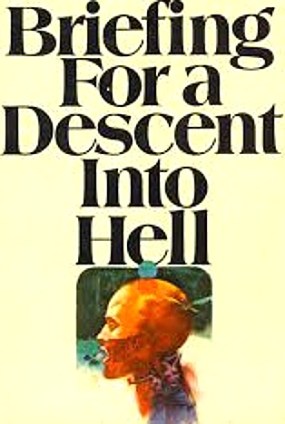
Ms. McQueen apparently aspires to upset the dogma while still keeping the faith: The system is abused, she emphasizes, but women are the victims, and men are the victimizers.

Evident without benefit of having read her book is that because Ms. McQueen alleges she was framed (and probably quotes other women who allege they were framed), “set-ups” of this sort are asserted to be “increasingly common.” They probably are—they’re reported here routinely—but never mind, apparently, that Ms. McQueen’s contention is exactly what men have been saying for, um, decades. Whether frame-ups are “increasingly” common or not, they are common, and they have been for a long time (and thanks to rhetoric that insists women are incapable of lying maliciously, the likelihood of their becoming increasingly “increasingly common” is strong).

Since I haven’t read Ms. McQueen’s book, fairness requires that I acknowledge her position may not be as chauvinistic as it sounds. Also, the book has apparently been in print for three years, and I just heard about it Monday, so I’d venture to guess that it hasn’t exerted a great deal of populist influence. For an audience sympathetic to feminism to concede that false allegations from men are rampant would be to invite speculation on how rampant false allegations from women are.

That, as they say, ain’t gonna happen.

I learned of Ms. McQueen’s book in an online column in Forbes by Jeff Landers, a “certified divorce financial analyst” and the founder of Bedrock Divorce Advisors, LLC, a “divorce financial advisory firm that works exclusively with women.” Mr. Landers is also the author of multiple books directed to a strictly female audience.

His representation of Ms. McQueen’s book, then, may be skewed to his marketing demographic. I can’t say. This, however, is a passage from Ms. McQueen’s book quoted in Mr. Landers’s column “How Some Men Are Upending Domestic Violence Laws to Scam an Advantage in Divorce” (the passage is from the book’s forward, which is penned by Chicago criminal defense attorney Tamara N. Holder):

Unfortunately, many abusive men have learned to reshape domestic violence laws into another weapon of abuse. They are turning police and court protections upside down: The abusers themselves call 9-1-1; they have the women arrested for domestic violence; and then they do everything they can to try to have the women prosecuted and sentenced. In this way, the true victim is painted as the abuser.

There is a deeper motivation in using this ploy; to show a pattern of “violent conduct” on the woman’s part so that the abuser can use it as evidence against her in a divorce or child custody battle. And this form of abuse is permanent. A bruise heals after a few days, but a conviction for a violent crime mars her record forever.

The set-up: A couple has a fight. Either the wife calls 9-1-1 in a desperate plea for police intervention, or the husband makes the call first in a preemptive attack. When the police arrive, the woman is visibly upset. The man, on the other hand, is extremely calm as he switches off his anger. The husband tells the police that his wife is delusional, crazy, and violent. Depending on how convincing the man’s story is to the police officer, and the state’s law on domestic violence, either both people are arrested or the woman is arrested.

In the case of a dual arrest, which some states discourage, the woman often tells prosecutors she doesn’t want to testify against her husband, so the case is dismissed. Meanwhile, the husband is determined that she be prosecuted. Instead of the prosecutors looking into the history of the relationship before proceeding with the criminal case, they move full speed ahead. The wife is usually cut off from her husband’s financial support so she cannot pay for defense against him. As a result, she is forced to take a plea to the charges because she cannot afford to defend herself. She fears taking the case to trial, losing, and going to jail.

Conclusory remarks will be brief. First, bravo to Ms. Holder (and Ms. McQueen) for a detailed articulation of a serious problem, one that founders lives. What’s described above certainly happens; don’t doubt it for a moment. Second, though, what impassioned subdual of the imagination is required for an intelligent person to believe this only happens to women? C’mon. (Not only does the same thing happen to men, but the presence of children in the relationship isn’t a necessary motivation.) Finally, mark this statement well: “And this form of abuse is permanent. A bruise heals after a few days, but a conviction for a violent crime mars [a] record forever.”

Copyright © 2015 RestrainingOrderAbuse.com

Eight Years of Hell: On the Toll of False Allegations of Abuse

“Bitter separation battles and unrequited love are among the reasons why people falsely accuse others of sexual abuse, according to legal professionals.

“Lawyers contacted by The Sunday Times of Malta came across several examples of cases when people, often women, made false claims that they or their children had been abused.

“Lawyer Roberto Montalto gave the example of one situation where a woman claimed her children were abused by her husband’s colleague.

“The case dragged on for eight years and the man was acquitted after the court found that the woman lied….”

—“False Abuse Accusations Not One-Offs, Say Lawyers

To read the rest of this story, published just a couple of weeks ago, you have to subscribe to The Times of Malta. I can guess the remainder’s content, as I know many men and women who’ve visited this site can.

This excerpt is highlighted, because even today most people are under the impression that instances of false allegations’ being made repeatedly in protracted legal assaults are rare and isolated occurrences.

As attorneys and others attest, they’re not. Only hearing about them is.

Among the reasons why restraining orders are criticized on this site and elsewhere is that they’re superlative and intoxicating gateway fixes for spiteful accusers bent on gratifying malicious impulses. They can be obtained in a few hours—even a few minutes—based on allegations that require no substantiation and that are subjected to a minimum of scrutiny, if any at all.

They’re easily exploited to establish claims that can then be parlayed into interminable attacks.

False criminal allegations suggestive of sexual or violent deviancy—e.g., stalking, sexual harassment or molestation, and domestic abuse—can be just as effective and for the same reasons. The hysteria promoted by the abuse industry and the political influence it has bent to its “cause” have conditioned police, municipal prosecutors, and judges to credit allegations of abuse automatically (especially ones from women).

Eight years—that’s the term in hell the man in the epigraph had to endure before it was apparently demonstrated that the whole ordeal was based on lies: eight years lost for nothing. Nothing. More horrible yet is that the only thing that makes this story exceptional is that the fraudulent accuser was eventually exposed and acknowledged as such.

Eight years is a Ph.D. Eight years is a career. Eight years is a son or daughter’s childhood.

Copyright © 2014 RestrainingOrderAbuse.com

Learning to Talk the Talk: Resources for Victims of “Disturbed” People Who’ve Also Been Victimized by the Courts

“[Narcissism] is, in my opinion, the single most damaging and maladaptive tendency seen in sociopaths. When taken to extremes, it can lead to seriously abusive patterns of behavior that are repulsive and idiotic, both from any sort of ethical perspective and from the perspective of sheer self-interest. It is also fundamentally misunderstood. The word ‘narcissist’ connotes, to most people, merely personal vanity taken to an extreme. This is not what the word narcissism means in the context of sociopathic psychology. Narcissism…means the inability to understand that other people exist as distinct entities from oneself—with their own wants, emotions, and personal space—combined with a grandiose and exaggerated perception of self. The ‘narcissistic personality disorder’ described in the DSM is in my opinion simply the identification of sociopathic individuals who allow their own narcissistic tendencies to become so severe that [they begin] to ruin their lives and the lives of those around them.”

—Clinically diagnosed sociopath and blogger

I encountered this exceptional writer in an online forum recently and quoted much of what he had to say about the motives of the sociopathic mind, as well as his “insider” conclusions about what makes narcissists tick. He corroborated some of my own lay suspicions and corroborates as well the belief of psychologist Tara Palmatier, who has written volubly about abuses of legal procedure, that the personality disorders most damaging to others stem from sociopathy.

This writer, who very plausibly calls himself a “high-functioning sociopath” but who doesn’t otherwise identify himself, perceives people with these personality disorders (specifically, narcissistic personality disorder and borderline personality disorder) as “low-functioning sociopaths” who are prone to indulge hedonistic (that is, pleasure-seeking) impulses, both to their own detriment and that of those who run afoul of them. Put plainly, they hurt other people to gratify the urges of their haywire brains. This writer’s ideas are carefully and lengthily qualified, and with convincing earnestness and intelligence, and I urge anyone who’s interested in a nuanced understanding of disordered brains and their eccentricities to visit this writer’s blog, as well as that of the aforementioned psychologist, Dr. Tara Palmatier, for personal and clinical perspectives on disordered personalities and how to deal with them.

The reasons the personality-disordered are often brought up in this blog are two: (1) because these people have limitless capacity to destroy the lives of others and no scruples or inhibitions about lying to disown accountability for their actions, and (2) because their victims, who are also often victims of legal clashes people like this instigate to distance themselves from their crimes, don’t have the words or concepts to qualify what in the hell just happened to them.

Those who’ve been pursued by or had relationships with disordered personalities, particularly narcissists, whose peculiarities aren’t prominent and easily distinguished as aberrant, may be inclined to doubt or question their own perceptions (which narcissists are masters at manipulating) and may be no more able to characterize the conduct and chronic lying of such people than as “hurtful” or “disturbed” or “psycho.” The motives of the personality-disordered aren’t easily explicable, because they don’t make any sense. Until you’ve been initiated and made an earnest effort to comprehend such bewilderingly anomalous minds, you don’t have the tools to even articulate what you’ve been subjected to. It’s no wonder, for example, that blogs about victimization by narcissists have titles like An Upturned Soul and Out of the Fog—or that using the search term “narcissist” on Amazon.com yields 1,028 returns (including the titles, How Many Lies Are Too Many?: How to Spot Liars, Con Artists, Narcissists, and Psychopaths before It’s Too Late and Web of Lies: My Life with a Narcissist).

Fascinatingly, reading the blog of the “high-functioning sociopath” I’ve commended, and considering that sociopaths are popularly said to be emotional vacuums, there’s no avoiding the impression that he is very empathic, though his isn’t an “I feel you” empathy so much as a reasoned, analytic (“I feel me”) one, which actually makes for very lucid explication unmuddied by touchy-feely distractions that are hardly soothing, anyway, to people who’ve had their lives derailed and are looking for answers rather than palliatives.

Copyright © 2014 RestrainingOrderAbuse.com

*The original blog cited and recommended in this post, QuestioningSociopathy.com, has since been deleted by its author.

“Why Fix It If It Ain’t Broke?”: On Restraining Order Injustice and the Authority of Usage

“The greatest absurdities in the world become correct, as soon as they have got Usage fully on their side, just as the worst usurper becomes legitimate, as soon as he is completely established on the throne.”

—Esaias Tegner (1874)

The author of the epigraph, a Swede who popularized linguistic research, was talking about language, but his denunciation is broadly applicable. He deplored that standards of reason and rectitude are easily corrupted when “anything goes” becomes the norm.

He despairingly observed, in other words, that when absurdity becomes customary, it’s accepted without question.

The inanities inherent in the administration of civil restraining orders persist, because the process has enjoyed a 30-year reign virtually uncontested. Those most qualified to protest its inequities and inadequacies are seldom its victims, so their protests (few and far between) have accomplished little toward motivating reform, and those victimized by the process are seldom sufficiently educated in the law or spiritually equipped to defy their lot.

Popularity and rootedness have replaced decency and propriety as the gauges of worthiness, and the authorities who should most be outraged by this misrule have mostly kept mum.

Estimable jurists (legal experts) shouldn’t be contented with the dismissal, “Why fix it if it ain’t broke?” The restraining order process is broke, in more ways than one. It’s not only broken; it’s morally bankrupt, besides.

Elaine Epstein, former president of the Massachusetts Bar Association, acknowledged two decades ago that restraining orders are “granted to virtually all who apply.” Echoes of her critical candor from peers in the legal community have been markedly few, however, during the years since. Disdainful remarks by respected attorneys about how restraining orders are abused, such as those by Terri Weiss in her blog From Bedroom to Courtroom, may appear as asides in treatments of other topics, but seldom are restraining orders categorically denounced at length.

Eminent legal scholars are more likely to parse and weigh in on legal niceties of interest to the highest courts in the land, because such opinions are excellent fodder for curricula vitae (academic résumés). Meanwhile gross abuses of everyday processes that victimize citizens on an epidemic scale go disregarded. Too mundane, wot, wot. In reality, bucking the status quo by observing the obvious isn’t impressive or likely to enhance one’s popular (and thus professional) regard and credibility.

It would, however, promise to do a lot more social good.

Copyright © 2014 RestrainingOrderAbuse.com

If You’re not Part of the Solution, You’re Part of the Problem: On Why Restraining Order Abuses Have Persisted for So Long and How to Do Something about It

“Men are bastards!”

“Women are cun[ning]!”

I could end this editorial here, and I would have summed up the problem, which originates with hearts but owes its infinitude to different organs entirely.

Predictably, since most restraining orders are sought against a member of the opposite sex, online forums about dirty divorces, domestic abuse, treacherous lovers, vengeful exes, predatory or parasitic whackjobs, etc. often boil down to cross-gender sniping and “team camaraderie.” Women just want to be pissed with men and bitch about them with other women, and men just want to be pissed with women and bitch about them with other men.

Both genders have limitless potential to suck; sex is beside the point.

Those who profit politically and monetarily by the misery inflicted through court processes that are easily abused by the “morally unencumbered” love all this conflict and misdirected rage, which only ensure that these corrupt processes continue to thrive.


They’ve already hummed along without a hitch for over 30 years. In fact, they’ve gained momentum, despite reasoned and articulately critical pans from distinguished members of the legal, journalistic, academic/philosophic, and public policy communities.

Not only does cross-gender bitching by victims of state abuses distract from the actual source of the problem, which is bad laws; it makes those victims sound like the cranks and nuts everyone else is glad to assume they are.

True, the person who betrayed you and lied about you should be subjected to medieval punishment. True, the judge you got may be worthy of the same for his or her cruelty or carelessness or cluelessness. But…the reason either was entitled to abuse and humiliate, rob and defame you was THE LAW.

Except for the statutes that authorized your injuries, those injuries wouldn’t have been possible.

Passive aggression isn’t going to accomplish anything. I can’t imagine venting even makes anyone feel better for very long.

Aggressive aggression holds a lot more promise. If you’ve been wronged, tell your story, and tell it in a way that will count. Sign a petition and add a comment about your own circumstances. You don’t even have to expose your name. Sign several and tweet them, too (a few are below). Start a petition of your own. Tweet that also and post it here. Start a Facebook page. Connect and consolidate forces.

STOP FALSE ALLEGATIONS OF DOMESTIC VIOLENCE

THE SUPREME COURT: FEATHER FOR THE FALSELY ACCUSED

RESTRAINING ORDER LAWS ARE DANGEROUS AND UNFAIR TO MEN

This may seem unthinkable to you, especially if your wounds are fresh, but appreciate that the impulse to conceal shame only potentiates that shame. If you’ve been wronged, the shame isn’t yours. Re-channel your emotions in constructive ways. You’re not alone.

No one wants to do this. No one should have to. I wanted to write humor for kids. Though not a big dream, it contented me, and I think I would have been successful at it by now and that other doors would have opened. I was dragged from my interior world and away from the life I might have enjoyed. Not only am I not a political person; I don’t even like board games.

I do, though, hate bullies, especially ones with gangs behind them.

Recognize that the ringleader of the gang that assaulted you isn’t that petty lowlife you mistakenly invested your trust in; he’s an invisible man who’s represented in posters wearing red, white, and blue, and his gang is everybody.

The only way you can beat him and attain some satisfaction is by taking away his gang and making it yours.

Copyright © 2014 RestrainingOrderAbuse.com

Because Perjury Occurs a Lot, It’s Ignored: On the Absurdity and Toll of Domestic Violence and Restraining Order Policies’ Disregarding False Allegations

“My 87-year-old father has been arrested and jailed three times by my mentally ill mother, who is using domestic violence laws to her advantage in a divorce. This is a man who served in the military for 20 years, the federal government for 25 years, and the Department of Social Services for five years before retiring. My dad has never even had so much as a speeding ticket in his entire life, but now, at the end of his life, he has been humiliated, placed on supervised probation, and will probably lose everything due to the abuse of domestic violence laws. Nobody in law enforcement will listen to what is really going on here. Even though I had prior knowledge that my dad was being set up, I have actually been told by the District Attorney…and I quote, ‘I have convicted your father of assault on a female, and I will convict him of everything else I can.’ The justice system has gone off the rails, and the truth means nothing. My father fought in World War II and in Korea to keep this country free, and this is how he is repaid.”

—E-petition respondent

How did you spend the yuletide? With friends and family, listening to Nat King Cole and Bing Crosby, mussing kids’ hair and congratulating them on their Christmas spoils?

Read the epigraph above, and you’ll have a pretty clear idea of what Todd L. of Wilmington, North Carolina had on his mind. Not much to raise a cup of cheer to, is it?

This distinguished service veteran’s age approximates that of the cited victim of false allegations.

Two hours after Todd shared his story on the e-petition “Stop False Allegations of Domestic Violence,” a fellow North Carolinian opined, “There should be a legal penalty for false accusations!”

Lawmakers have agreed, actually, and statutes making lying to the court a felony crime are universal. What this commenter should have said is that legal penalties for false accusations should be enforced.

Perjury is never prosecuted. District attorneys will tell you that if they did prosecute perjurers, there’d be no resources left for putting “dangerous people” behind bars.

Let’s parse that logic.

First, it actually recognizes that lying occurs a lot. If it only occurred now and then, prosecutions would be few and hardly a budgetary strain.

Second, recognizing that lying occurs a lot also recognizes that the so-called dangerous people the state prefers to prosecute may simply be victims of false allegations. Preferring to prosecute alleged domestic assailants, therefore—take, for example, the 87-year-old man cited in this post’s epigraph—may mean preferring to prosecute the falsely accused (the innocent) over the genuinely criminal (the false accusers).

Ask yourself which would look better on the books: “We’ve successfully prosecuted [x number of] wife-beaters” or “We’ve successfully prosecuted [x number of] perjurers”? Everyone knows what wife-beater means. How many people even know what a perjurer is?

“If we did prosecute perjurers, there’d be no resources left for putting dangerous people behind bars…so we’ll prosecute the people perjurers falsely accuse of being dangerous”—as analysis of most of the arguments made in defense of domestic violence and restraining order policies reveals, the reasoning is circular and smells foul. It’s in fact unreasoned “reasoning” that’s really just something to say to distract attention from unflattering truths that don’t win elections, federal grants, popular esteem, or political favor. So entrenched are these policies and so megalithic (and lucrative) that rhetoric like this actually passes for satisfactory when it’s used by someone in a crisp suit with a crisper title.

Obviously it wouldn’t be necessary to prosecute all perjurers to arrest epidemic lying. Ensuring that false allegations were made less frequently would only entail putting a few frauds in cages for a year or two where they belong, making examples of them, and revising policy so that the consequences of lying were impressed upon other would-be frauds. As it is, policy (including menacing rhetoric on court documents like restraining orders) is to impress upon defendants how serious the consequences of being lied about are: “For being publicly lied about, you may be subject to arrest and incarceration for being publicly lied about some more.”

The absurdity is patent, as is the wanton cruelty. Applying the word justice to any aspect of this policy should itself be criminal.

The 87-year-old man referenced in the epigraph above may be at the end of his life, and it’s a reasonable surmise that whatever remaining time he could have hoped for will be shortened by the treatment he’s received from the country in whose service he’s dedicated over half of that life.

If a YouTube video were posted of state agents bludgeoning an 87-year-old veteran, it would shortly go viral, reporters would elbow their way onto the man’s front stoop, lawyers would scrap and scrabble to represent him, and cable commentators would decry the outrage of the abuse.

Heads would roll.

Since state agents have instead subjected this man to public denigration and dehumanizing psychic torments under the guise of propriety, the odds are strong that he’ll slip away erelong, invisibly, his final days having been poisoned by anguish, disgrace, and the unrelenting consciousness that 50 years of public service were callously invalidated: “I have convicted your father of assault on a female, and I will convict him of everything else I can.”

Copyright © 2013 RestrainingOrderAbuse.com

“Why Would a Narcissist Put a Restraining Order on You?”

Questions about the motives of the narcissistic brain like the one that titles this post bring visitors to this blog almost daily (related search terms that have drawn readers here can be found cataloged at the end of this post). Among the blog’s most clicked-on links are those to short essays on the subjects of narcissistic malice and vengeance by Dr. Linda Martinez-Lewi like those I’ve provided in the comments to this page. Dr. Martinez-Lewi is an expert on pathological narcissism (also called narcissistic personality disorder or NPD) who hosts the blog The Narcissist in Your Life. (Investigators into this subject may also find enlightening the writings of Stanton E. Samenow, Ph.D.; Sam Vaknin, Ph.D.; Paul J. Hannig, Ph.D.; and the late and very astute Joanna M. Ashmun.)

Below are some excerpted paragraphs from Dr. Martinez-Lewi’s essays that, contemplated as a series, will lead a person a long way toward an understanding of why malicious abuse of restraining orders to defame, discredit, and demolish targets of their wrath is so attractive to narcissists. (Italics are added.)

Narcissists expect everyone, through their words, gestures, and behaviors to mirror them perfectly. If you fail to do this in their eyes (and they are always looking for imperfection in others not themselves), it causes an unconscious bruise in their brittle egos. Even the smallest mistake or what the narcissist perceives as your mistake will result in the spewing of dark rage. If you do not go along to get along with them perfectly and buck them, you are bumping up against an inflexible, grandiose ego, and there will be hell to pay.

No one says “No” to the narcissist—unless they want to be the recipient of retribution. That is the narcissist’s mindset. These individuals have very rigid personality structures that do not change. They have unbending wills that insist they are always right, that their way is the only one, and…all of those who buck them will be discarded and punished severely. The narcissist plays dirty; [s/he] is a street fighter, a ninja. The narcissist picks the weak spots, the vulnerabilities in his [or her] opponent and knows exactly where and how to turn the screws. We become an opponent of the narcissist when we defy him [or her] and think for ourselves and let him or her know that they can no longer rule our lives. Most people are intimidated by the power and force of the narcissistic personality, especially if this is a person of high professional achievement, financial status, and powerful connections.

There are sociopathic narcissists who will not be satisfied until their “enemy” is completely vanquished—emotionally, psychologically, financially. They seek revenge, not for what has been done to them but what they perceive in a highly deluded way…has been done to them. Narcissists are never wrong—they are incapable of mistakes, because they truly believe that they are perfect. They are capable of persuading even intelligent people that they are the good guy, and their victim is the culprit. With the use of a fake charm, dynamism, [and] sexual wiles, they fool most individuals. A sociopathic narcissist will tear you to shreds….

[N]arcissists or their doubles contact your relatives, in-laws, friends, and anyone who will listen to broadcast blatant lies about your character. This doesn’t happen in all instances, but it is remarkable the lengths these malicious individuals exceed to trash you, putting you at fault and even leading others to believe that you are “crazy.” Even people whom you have trusted…can be flipped to the narcissist’s side, especially if [s/he] has influence where you have lived and deep pockets.

Narcissists never play fair. Narcissists are extreme competitors. Narcissists are very sore losers. When you cross a narcissist in business or your personal life, be prepared for some form of revenge.  Although the narcissist has a full-blown, grandiose ego, beneath the surface [s/he] is subject to narcissistic wounds. His [or her] ego bruises easily. If you beat him [or her] out of a business deal, it is likely that [s/he] will go after you in some way. If you choose to divorce a narcissist, it can go several ways. [S/he] may want to get rid of you and any children you have…and send you out of his [or her] life. In some cases, the narcissist is holding a deep grudge and is determined to collect on what [s/he] knows is his [or hers]. In divorce matters, [s/he] makes outlandish claims and tells outright lies about his [or her] spouse in order to win the battle.

The urge to take revenge runs deeply through the narcissist’s blood. Revenge is as prehistoric as life in the caves. Revenge is an act of retaliation for a perceived wrong or injury—payback time. I have been in contact with many spouses and ex-spouses of narcissists who were shocked by the unrelenting force of their former partner’s revenge tactics. During a divorce from a narcissistic partner, plans for revenge are hatched and played out. One classic ploy is the narcissist’s bullying tactics as [s/he] convincingly threatens to take you down financially and psychologically. Even after the divorce is final, the narcissist continues the Hundred Year War. Many narcissists cannot let go, not because they have ever loved their previous spouse, but for purposes of psychologically destroying the previous partner. Rumor campaigns are ignited to ruin the reputation and social standing of the previous spouse. Threats are made to change custodial agreements, not because the narcissist feels compelled to have more involvement in his [or her] children’s lives but to shake the cage of the ex-spouse. One of the most potent ploys of the narcissist is playing the victim role. When he or she has torn his [or her] ex-spouse’s life to bits for decades, [s/he] makes a quick switch, becoming the recipient of psychological and emotional pain not the narcissistic perpetrator.

Narcissists know how to manipulate their way out of trouble—even if there are serious ethical violations or illegal activities involved. Some narcissists finally tumble, and we watch them finally get their due and pay the consequences. This doesn’t happen often. If you are waiting for your ex-narcissistic husband or wife to be brought down due to his cruel, manipulative, and devastating behaviors toward his family, don’t hold your breath. We cannot put our faith even in the courts to obtain justice. Narcissists find clever ways around legal issues. If they have large sums of money at their disposal, there are situations in which they manipulate the outcome of legal proceedings. I know of cases in which a narcissistic spouse ended up wresting custody control from the other partner.

Dr. Martinez-Lewi’s therapeutic orientation is toward narcissists’ spouses and family members, but her revelations of basic narcissistic motives and tactics are applicable to the situation of anyone who runs afoul of a narcissist, irrespective of how intimate their relationship.

Though this advice of Dr. Martinez-Lewi’s is directed toward soon-to-be ex-spouses, its gist should be taken to heart by anyone in a legal contest with a narcissist: “[B]e sure you hire an attorney who is not only an expert in family law but who is exceedingly savvy about the ruses, tricks, and ploys of the narcissistic personality disorder. Your attorney needs to be highly professional but fearless in facing this relentless, cruel, and destructive individual. An excellent attorney in these situations must be like ultra-marathon runners. Regardless of any obstacle placed in front of them by the narcissist, they are undaunted. Their perseverance is golden.”

There are no depths to which a narcissist won’t stoop to injure the target of his or her wrath. A narcissist will lie to your face about things you did together, so expect him or her to have no compunction at all about lying to anyone else about you, including friends, associates, authorities, and officers of the court.

Because judges of restraining order applications are inclined to presume a plaintiff is telling the truth, they’re readily duped by narcissists, who not only lie glibly and persuasively but with a cold-bloodedness nothing shy of fiendish.

Copyright © 2013 RestrainingOrderAbuse.com