Courtroom Fraud and Smear Campaigns: The Full Machiavelli

Cheryl Lyn Walker PhD, Dr. Cheryl Lyn Walker, Dr. Cheryl L. Walker PhD, M.D. Anderson Cancer Center, Michael Honeycutt PhD, Michael Honeycutt TCEQ

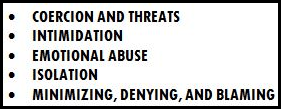
“False Accusations, Distortion Campaigns, and Smear Campaigns can all be used with or without a grain of truth, and have the potential to cause enormous emotional hurt to the victim or even impact [his or her] professional or personal reputation and character.”

—“False Accusations and Distortion Campaigns

There are several fine explications on the Internet about the smear campaigns of false accusers. Some sketch method and motive generally; some catalog specific damages that ensue when lies are fed to the police and courts.
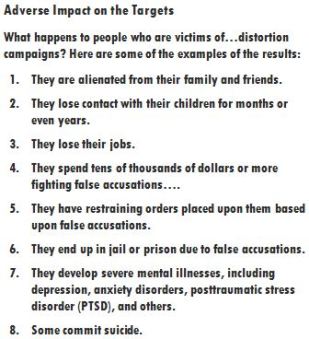
This survey of “adverse impacts” is credited to lies told by people with borderline personality disorder. Conducting “distortion campaigns” isn’t exclusive to BPDs, however, and the “adverse impacts” are the same, irrespective of campaigners’ particular cognitive kinks.

The valuable role of the police and courts in the prosecution of campaigns to slander, libel, and otherwise bully and defame can’t be overstated. They’re instrumental to a well-orchestrated character assassination.

Lies can be told to anyone, of course, and lies told to anyone can have toxic effects. The right lie told in a workplace, for example, can cost someone a job and impair or imperil a career.

Lies told to police and judges—especially judges—they’re the real wrecking balls, though. False allegations of threat or abuse are handily put over in restraining order or domestic violence procedures, and they endure indefinitely (and embolden accusers to tell further lies, which are that much more persuasive).

Among the motives of false accusation are blame-shifting (cover-up), attention, profit, and revenge (all corroborated by the FBI). Lying, however, may become its own motive, particularly when the target of lies resists. The appetite for malice, once rewarded, may persist long after an initial (possibly impulsive) goal is realized. Smear campaigns that employ legal abuse may go on for years, or indefinitely (usually depending on the stamina of the falsely accused to fight back).

Legitimation of lies by the court both encourages lying and reinforces lies told to others. Consider the implications of this pronouncement: “I had to take out a restraining order on her.” Who’s going to question whether the grounds were real or the testimony was true? Moreover, who’s going to question anything said about the accused once that claim has been made? It’s open season.

In the accuser’s circle, at least—which may be broad and influential—no one may even entertain a doubt, and the falsely accused can’t know who’s been told what and often can’t safely inquire.

Judgments enable smear and distortion campaigners to slander, libel, and otherwise bully with impunity, because their targets have been discredited and left defenseless (judges may even punish them for lawfully exercising their First Amendment rights and effectively gag them). The courts, besides, may rule that specific lies are “true,” target_of_blamethereby making the slanders and libels impervious to legal relief. Statements that are “true” aren’t defamatory. The man or woman, for instance, who’s wrongly found guilty of domestic violence (and entered into a police database) may be called a domestic abuser completely on the up and up (to friends, family, or neighbors, for example, or to staff at a child’s school).

Lies become facts that may be shared with anybody and publicly (court rulings are public records). Smear campaigners don’t limit themselves to court-validated lies, either, but it seldom comes back to bite them once a solid foundation has been laid.

Some so-called high-conflict people, the sorts described in the epigraph, conduct their smear or distortion campaigns brazenly and confrontationally. Some poison insidiously, spreading rumors behind closed doors, in conversation and private correspondence. As Dr. Tara Palmatier has remarked, social media also present them with attractive and potent platforms (and many respondents to this blog report being tarred on Facebook or even mobbed, i.e., bullied by multiple parties, including strangers).
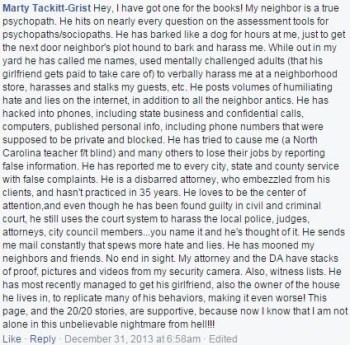
Even when false accusers’ claims are outlandish and over the top, like these posted on Facebook by North Carolinian Marty Tackitt-Grist, they’re rarely viewed with suspicion—and almost never if a court ruling (or rulings) in the accusers’ favor can be asserted. The man accused in this comment to ABC’s 20/20 is a retiree with three toy poodles and a passion for aviation who couldn’t “hack” firewood without pain, because his spine is deformed. He is a retired lawyer, but he wasn’t “disbarred” and hasn’t “embezzled” (or, for that matter, “mooned” anyone). He has, however, been jailed consequent to insistent and serial falsehoods from his patently disturbed neighbor…who’s a schoolteacher.

For Crazy, social media websites are an endless source of attention, self-promotion, self-aggrandizement, and a sophisticated weapon. Many narcissists, histrionics, borderlines, and other self-obsessed, abusive personality types use Facebook, Twitter, and the like to run smear campaigns, to make false allegations, to perpetrate parental alienation, and to stalk and harass their targets while simultaneously portraying themselves as the much maligned victim, superwoman, and/or mother of the year.

(A respondent to this blog who’s been relentlessly harried by lies for two years, who’s consequently homeless and penniless, and who’s taken flight to another state, recently reported that a woman who’d offered her aid suddenly and inexplicably defriended her on Facebook and shut her out without a word. Her “friend” had evidently been gotten to.)

(An advocate for legal reform who was falsely accused in court last year by her husband and succeeded in having the allegations against her dismissed reports that he afterwards circulated it around town that she tried to kill him.)

I was falsely accused in 2006 by a woman who had nightly hung around outside of my house for a season. She was married and concealed the fact. Then she lied to conceal the concealment and the behavior that motivated the concealment. She has sustained her fictions (and honed them) for nearly 10 years. People like this build tissues of lies, aptly and commonly called webs.

Their infrastructures are visible, but many strands may not be…and the spinners never stop spinning.

The personality types associated with chronic lying are often represented as serpentine, arachnoid, or vampiric. This ironically feeds into some false accusers’ delusions of potency. Instead of shaming them, it turns them on.

I know from corresponding with many others who’ve endured the same traumas I have that they’ve been induced to do the same thing I did: write to others to defend the truth and hope to gain an advocate to help them unsnarl a skein of falsehoods that propelled them face-first into a slough of despond. (Why people write, if clarification is needed, is because there is no other way to articulate what are often layered and “bizarre” frauds.)

I know with heart-wrenching certainty, also, that these others’ honest and plaintive missives have probably been received with exactly the same suspicion, contempt, and apprehension that mine were. It’s a hideous irony that attempts to dispel false accusations are typically perceived as confirmations of them, including by the court. To complain of being called a stalker, for example, is interpreted as an act of stalking. There’s a kind of awful beauty to the synergy of procedural abuse and lies. (Judges pat bullies on the head and send them home with smiles on their faces.)

Smear campaigns wrap up false accusations authorized by the court with a ribbon and a bow.

Copyright © 2015 RestrainingOrderAbuse.com

*The name Machiavelli, referenced in the title of this post, is associated with the use of any means necessary to obtain political dominion (i.e., power and control). Psychologists have adapted the name to characterize one aspect of a syzygy of virulent character traits called “The Dark Triad.”

Dust It Off: This Isn’t 1979, and It’s Time Restraining Order Laws Were Reconsidered

I remarked to a commenter the other day that when I became a vegetarian in the ’80s, I was still a kid, and my family took it as an affront, which was a common reaction then. Today, everyone’s a vegetarian or “tried vegetarianism” or has “thought about becoming a vegetarian.” Other subjects that were outré or taboo in my childhood like atheism, cross-dressing, and depression—they’re no longer stigmatized, either (in the main). Gay people, who were only whispered about then, can marry in a majority of states. When I was a kid, it was shaming for bra straps or underpants bands to be visible. Today they’re exposed on purpose.

It’s a brave new world.

While domestic violence is no more comfortable a topic of conversation now than it was then, it’s also hardly hush-hush. When restraining orders were conceived, it was unmentionable, and that was the problem. It was impossible for battered women to reliably get help. They faced alienation from their families and even ridicule from the police if they summoned the courage to ask for it. They were trapped.

Restraining orders cut through all of the red tape and made it possible for battered women to go straight to the courthouse to talk one-on-one with a judge and get immediate relief. The intention, at least, was good.

It’s probable, too, that when restraining orders were enacted way back when, their exploitation was minimal. It wouldn’t have occurred to many people to abuse them, just as it wouldn’t have occurred to lawmakers that anyone would take advantage.

This isn’t 1979. Times have changed and with them social perceptions and ethics. Reporting domestic violence isn’t an act of moral apostasy. It’s widely encouraged.

No one has gone back, however, and reconsidered the justice of a procedure of law that omits all safeguards against misuse. Restraining orders circumvent investigation by police and the vetting of accusations by district attorneys. They allow individuals to prosecute allegations all on their own, trusting that those individuals won’t lie about fear or abuse, despite the fact that there are any number of compelling motives to do so, including greed/profit, spite, victim-playing, revenge, mental illness, personality disorder, bullying, blame-shifting, cover-up, infidelity/adultery, blackmail, coercion, citizenship, stalking, and the mere desire for attention.

Restraining orders laws have steadily accreted even as the original (problematic) blueprint has remained unchanged. Claims no longer need to be of domestic violence (though its legal definition has grown so broad as to be virtually all-inclusive, anyway). They can be of harassment, “stalking,” threat, or just inspiring vague unease.

These aren’t claims that are hard to manufacture, and they don’t have to be proved (and there’s no ascertaining the truth of alleged “feelings” or “beliefs,” anyway, just as there’s no defense against them). Due to decades of feminist lobbying, moreover, judges are predisposed to issue restraining orders on little or no more basis than a petitioner’s saying s/he needs one.

What once upon a time made this a worthy compromise of defendants’ constitutionally guaranteed expectation of due process and equitable treatment under the law no longer does. The anticipation of rejection or ridicule that women who reported domestic violence in the ’70s and ’80s faced from police, and which recommended a workaround like the restraining order, is now anachronistic.

Prevailing reflex from authorities has swiveled 180 degrees. If anything, the conditioned reaction to claims of abuse is their eager investigation; it’s compulsory policy.

Laws that authorize restraining order judges, based exclusively on their discretion, to impose sanctions on defendants like registry in public databases that can permanently foul employment prospects, removal from their homes, and denial of access to their kids and property are out of date. Their license has expired.

Besides material privations, defendants against allegations made in brief trips to the courthouse are subjected to humiliation and abuse that’s lastingly traumatic. Making false claims is a simple matter, and offering damning misrepresentations that don’t even depend on lies is simpler yet.

What shouldn’t be possible happens. A lot. Almost as bad is that we make believe it doesn’t.

Just as it was wrong to avert our eyes from domestic violence 30 years ago, it’s wrong to pretend that attempts to curb it since haven’t fostered new forms of taunting, terrorism, and torment that use the state as their agent.

Copyright © 2015 RestrainingOrderAbuse.com

A Scratch, a Push, a Pinch: “Domestic Violence,” False Allegations, and Restraining Order Abuse

The subject of this excursion is “domestic violence,” which phrase is placed in quotation marks because it’s a suspect term that’s become so broadly inclusive as to mean virtually anything a user wants it to.

This is how domestic violence is defined by the American Psychiatric Association—and by many states’ statutes, as well:

Domestic violence is control by one partner over another in a dating, marital, or live-in relationship. The means of control include physical, sexual, emotional, and economic abuse, threats, and isolation.

Emphatically noteworthy at the outset of this discussion is that false allegations of domestic violence have the same motive identified by the APA that domestic violence has: “control”; have the same consequences: “psychological and economic entrapment [and] physical isolation”; use the same methods to abuse: “fear of social judgment, threats, and intimidation”; have the same mental health effects on victims: “depression, anxiety, panic attacks, substance abuse, and post-traumatic stress disorder”; and can also “trigger suicide attempts [and] homelessness.”

A domestic violence factsheet published by the National Coalition Against Domestic Violence features a “Power and Control” pie chart. These segments of it are ALSO among the motives and effects of false allegations.

Accordingly, then, making false allegations of domestic violence is domestic violence.

When I was a kid, domestic violence meant something very distinct. It meant serial violence, specifically the habitual bullying or wanton battery by a man of his wife. The phrase represented a chronic behavior, one that gave rise to terms like battered-wife syndrome and to domestic violence and restraining order statutes.

These days, however, domestic violence, which is the predominant grounds for the issuance of civil protection orders, can be a single act, an act whose qualification as “violence” may be highly dubious, and an act not only of a man but of a woman (that can be alleged on a restraining order application merely by ticking a box).

As journalist Cathy Young observed more than 15 years ago, the War on Domestic Violence, which was “[b]orn partly in response to an earlier tendency to treat wife-beating as nothing more than a marital sport,” has caused the suspension of rational standards of discernment and introduced martial law into our courtrooms. “[T]his campaign treats all relationship conflict as a crime. The zero-tolerance mentality of current domestic violence policy means that no offense is too trivial, not only for arrest but for prosecution.” Reduced standards of judicial discrimination inspired by this absolutist mentality further mean that even falsely alleged minor offenses are both credited and treated as urgent and damnable.

Consider this recent account posted to the e-petition Stop False Allegations of Domestic Violence:

My boyfriend accused me of DV after an argument about separating and my 18-month-old…. The officer arrested me in front of my daughter, and when I asked why, he said he had a scratch on his arm.

A scratch.

The woman goes on to report that she spent two days in jail, had to post a $5,000 bond to get out, and that she was subsequently “displaced” from her former life.

Here’s another:

My ex-husband told the police that I pushed him, even though a witness had called the police on him for pushing me. He was completely drunk…but I got arrested instead. Right in front of my stunned family.

And another:

I was accused of domestic violence because I pinched my ex-husband when he pinned me and my son between two trucks. He ruined my life.

A scratch, a push, a pinch—which may not even have been real but whose allegation had real enough consequences.

I’ve also heard from and written about a man who caught his wife texting her lover and tried to take her phone. The two rowed for an hour, wrestling for it. The upshot was that the man was arrested and tried for domestic violence and ended up having to forfeit the home they shared to his wife, into which she had already moved her boyfriend.

(This week, I was contacted by a man trying to vacate an old restraining order whose story is identical: “[T]he only incident was in 2008 when I caught her cheating and tried to grab her phone.”)

False allegations to shift blame for misconduct are common, as are stories like these—stories of lives turned upside down by acts of “violence” that are daily tolerated by little kids—and they’re the motive of my politically incorrect two cents.

I read a feminist bulletin about domestic violence not long ago that featured for its graphic a woman who had very conspicuously been punched in the eye. Her injury was certainly more serious than a scratch or a pinch, but it, too, may have represented a single occurrence and was an injury that would heal within a month or two at the outside.

The gravity with which a single act of assault like this is regarded by the justice system can’t be overstated. The perpetrator is liable to have the book thrown at him.

By contrast, false allegations of domestic violence—or any number of other disreputable offenses—aren’t regarded by the courts or the public with any gravity at all, and their injuries don’t go away.

I work outside with my hands most days—which I wouldn’t be doing if I hadn’t had my own aspirations curtailed by the courts years ago (not based on allegations of domestic violence but on ones sufficiently crippling). I bang, stab, and gash myself routinely. From stress, besides, I’m prone to the occasional ruptured capillary in one of my eyes. I wouldn’t tolerate someone’s hurting a woman—or anyone else—in my presence, but at the same time, if I were offered the chance to recover my name, my peace of mind, and the years I’ve lost by taking a punch in the eye, I’d take the punch. In fact, I’d take many more than one.

I think other targets of false allegations who’ve had their lives wrung dry by them would say the same.

In my 20s, I was run down in the road when I left my vehicle to go to the help of a maimed animal. A 35-year-old guy, driving on a lit street under a full moon, smashed into me hard enough to lift me out of my shoes. The consequences of my injuries are ones I still live with, but a few surgeries and a year later, I was walking without a noticeable limp. I haven’t given the driver another thought since and couldn’t tell you his last name today. I think it started with an M.

Not only do I dispute the idea that physical injuries are worse than injuries done by fraudulent abuse of legal process; I don’t believe most physical injuries even compare.

And I think victims of domestic terrorism, whose torments are ridiculed by false accusers, would acknowledge that the lasting damage of that terrorism is psychic, which further corroborates my point.

Such violation promotes insecurity, distrust, and a state of constant anxiety—exactly as false allegations to authorities and the courts do, which may besides strip from a victim everything s/he has, everything s/he is, and possibly everything that s/he hoped to have and be.

There are no support groups for victims like this—nor shelters, nor relief, nor sympathy. Victims of lies aren’t even recognized as victims.

I’ve written recently about the abuse of restraining orders by fraudulent litigants to punish. What needs observation is that the laws themselves, that is, restraining order and domestic violence statutes, are corrupted by the same motive: to punish. Their motive is not simply to protect (a fact that’s borne out by the prosecution of alleged pinchers).

Reforms meant to apply perspective to these statutes and reduce miscarriages of justice from their exploitation have been proposed; they’ve just been vehemently resisted by the feminist establishment.

Laws that were conceived decades ago to redress a serious societal problem have not only been let out at the seams but are easily contorted into tools of domestic violence. This hasn’t been accomplished by fraudulent manipulators of legal process, who merely take advantage of a readily available weapon; it’s rather the product of a dogmatic will to punish exerted by advocates who wouldn’t concede that even real scratches, pushes, or pinches are hardly just grounds for having people forcibly detained, tried, and exiled.

Copyright © 2014 RestrainingOrderAbuse.com

Face Mask or Baseball Bat?: Abuse of Domestic Violence Laws and Restraining Orders

“As a male victim of domestic violence, my voice was never heard by any responding police officer. In fact, when they arrived my batterer made false allegations against me [that] led to my arrest. Three years later, the Eloy Police Department settled out of court, admitting wrongdoing. Still, I lost my career, my name, and three years of income because of the sexist actions taken by Arizona law enforcement.”

—E-petition respondent

“As strange as it sounds, the very laws designed to help victims sometimes hurt them. After I spent over a year as a lead attorney in a specialized felony domestic violence court, I realized the potential for abuse of the domestic violence system. Often, perpetrators of domestic violence would twist the system by accusing their victims of domestic violence. On the theory that ‘the best defense is a good offense,’ batterers accused the victims to neutralize any claims they feared their victims would make against them. In addition, I have seen parties to family law cases make allegations of domestic violence to try to gain an advantage in a divorce proceeding as relates to custody or property settlements.”

—Family attorney Samantha D. Malloy

Everything that’s wrong with restraining orders becomes emphatically pronounced when you observe that a process originally conceived to provide relief to victims of domestic violence may easily be abused to magnify and compound their torments.

That abusers should eagerly embrace the opportunity to heap further pain on their victims (while simultaneously exculpating themselves) should hardly be shocking to anyone. What’s shocking is how readily this opportunity for offenders to reverse roles with their victims presents itself (which role-reversal, readers will note, the quoted attorney remarks occurs “often” not rarely, as is commonly posited by those hostile to exposure of the rampancy of false allegations and abuses of restraining orders).

To get a protective order, one must only complete and sign a petition “under oath” or “penalty of perjury.” The petition is given “ex parte” (in the absence of the accused and without their notice) to a judge, who will enter the order if certain necessary allegations are made. There is no trial or requirement of further evidence before the initial order is entered.

The subsequent hearing of testimony and evidence, typically prejudiced by the preconception that the accused is guilty, is furthermore answerable to no strict standard of proof (hence Ms. Malloy’s advertisement of her services). It’s too often the case that procurement of an “initial order” represents a fait accompli, because calculated histrionics, finger-pointing, and concocted allegations from a persuasive plaintiff (particularly a female plaintiff) are all but certain to clinch a favorable judgment.

Noteworthy finally is Ms. Malloy’s acknowledgment that false allegations of violence, which are devastating in the emotional oppression, humiliation, and social and professional havoc they wreak on the falsely accused, are used strategically to gain leverage in divorce proceedings.

None of this information is new. Its potency, however, is defused by feminist dogmatists and their sympathizers—who refuse to concede that false allegations are commonplace—with the claim that men’s rights or fathers’ rights groups sensationalize the frequency of false allegations or purvey false information about their frequency. If feminist hardliners were sincerely invested in social justice, they would ask practitioners in the field of law, particularly family law, what their impressions and perceptions are (based on real-life experience).

Ms. Malloy, who may well be an exceptional attorney but isn’t exceptional among attorneys in her acknowledgment that restraining orders are abused, advertises her services both to victims of domestic violence and victims of false allegations of domestic violence. If the dogmatists were right about false allegations’ being rare, or if the restraining order process were anything approaching fair and just, she wouldn’t have to switch-hit, would she?

Copyright © 2014 RestrainingOrderAbuse.com

Motives of the False Accuser According to the FBI: Mental Illness, Attention-Seeking, Profit, Blame-Shifting, and Revenge

“At 7:30 a.m., an unknown male abducted Pamela at knifepoint while she fueled her car at a convenience store. The offender then forced her to drive to a bridge, where they crossed into a neighboring state. During the long ride, he choked her with a bicycle security chain and slashed her with a knife.

“Next, the assailant ordered Pamela to park the vehicle in a secluded rural area and led her into the woods. He bound her to a tree, placing the bicycle chain around her neck. The subject then assaulted her vaginally with a box cutter and lacerated her breasts and right nipple.

“Then, he ordered Pamela back into her car and had her drive them to a nearby ferry. The subject exited the vehicle and disappeared while heading toward the ferry at about 3 p.m. Pamela drove herself to the nearest hospital for treatment, and staff members notified the police. After receiving medical attention, she was released.

“State and local police investigators conducted the initial interview of Pamela at the hospital. Although initially cooperative, she stopped answering questions. Pamela agreed to meet investigators at a later date at the state police barracks to discuss the abduction and sexual assault, but she never arrived.

“A review of hospital medical records showed that Pamela received treatment for superficial lacerations to her right hand, left breast, right breast and nipple, and neck. She also had several superficial abrasions in her pubic region. The doctor described her as tired but in no acute discomfort.

“Officers found no forensic evidence from Pamela or her vehicle. They contacted the FBI’s National Center for the Analysis of Violent Crime (NCAVC) for assistance in developing an interview strategy. Investigators determined that Pamela suffered from depression and anxiety and had a prescription for an antidepressant. Working with NCAVC, officers developed a successful interview strategy, and Pamela finally admitted that she fabricated the abduction and sexual assault.

“Her false allegation tied up the resources of several state and local police departments, as well as the area FBI office. Significant media attention focused on the case prior to her confession. An artist’s sketch of the imaginary offender circulated. The media quoted a spokesperson for a local women’s rape crisis center as saying, ‘What I see is a community that is scared….’”

Federal Bureau of Investigation (FBI)

Does this sort of thing happen frequently? No. What’s often and deplorably discounted by those hostile to exposure of false allegations, however, is that it does happen. And typically the alleged offender isn’t a phantom but a real person (victim).

The likelihood of false allegations to withstand critical scrutiny by multiple police agencies is remote. What the cited case highlights, however, is that false accusers can be extremely convincing and deliberate in their frauds; and what this blog seeks to expose is that false accusers can very easily abuse civil procedure, specifically the restraining order process, according to the same motives that false criminal accusers exhibit, which according to the FBI are these:

  • Mental illness/depression
  • Attention/sympathy
  • Financial/profit
  • Alibi
  • Revenge

It’s no coincidence that this catalog exactly corresponds to the motives of false restraining order applicants, whose allegations are made in brief, five- or 10-minute interviews with judges, and are subject to no particular scrutiny whatever. Any number of the posts on and comments made to this blog concern abuses motivated by mental illness or personality disorders, attention-seeking, financial gain (including wresting money, property, and home from the falsely accused), blame-shifting (establishing an alibi for misconduct and shifting the blame for that misconduct onto its victim), and/or good old-fashioned vengeance.

These motives for legal attacks are moreover readily corroborated by psychologists.

The FBI Law Enforcement Bulletin I’ve quoted goes on at some length to detail the difficulties and complexities that unraveling false claims entails for agents of the FBI. Appreciate then how absurd is the state’s faith that a single judge—or a couple of them—can ascertain the truth of civil restraining order allegations by auditing claims in a hearing or hearings arrived at with no prior information, that last mere minutes, and that are furthermore biased by the preconception that the accused is guilty.

The only reasonable conclusion to be drawn is that the state believes judges can discern what teams of crack FBI specialists working around the clock may not or that the truth doesn’t matter.

What makes this conclusion outrageous is that though false criminal allegations may result in a false conviction for a crime, the consequences of false civil allegations may be no less severe.

At the very least, those falsely accused in civil court are subject to threats, menace, curtailment of freedom, humiliation, and the contamination of their public records, which can permanently interfere with or exclude employment prospects and options—all of this topped off by the psychological trauma that necessarily ensues. The falsely accused may further be subject to incarceration resulting from further false allegations by malicious and/or mentally ill or personality-disordered plaintiffs (possibly for terms as lengthy as sentences based on false criminal allegations might impose), as well as loss of entitlement to home and property. Some false restraining order defendants are left homeless and bereft of everything that made their lives meaningful. As one advocate puts it, the falsely accused may be “erased.”

These consequences, recall, stem from cursory auditions of allegations that are answerable to no standard of proof. Allegations in civil court are judged largely according to impressions. Civil rulings, contrasted with criminal investigations, are no more conclusive than coin tosses.

The restraining order process is a tidy workaround that allows false accusers to realize the same objectives fraudulent criminal allegations might gratify, possibly to a much greater extremity, while requiring no lengthy interrogation and threatening no risk of criminal consequences to the false accuser who’s caught out. False allegations made in civil court are more often than not slyly ignored even when detected, and they’re certainly not recorded in any statistical database. They’re typically unremarked, typically unremarked on when discerned, and duck public awareness and scrutiny entirely.

The reason why this is so lies in the last line of the epigraph: “The media quoted a spokesperson for a local women’s rape crisis center as saying, ‘What I see is a community that is scared….’”

Copyright © 2014 RestrainingOrderAbuse.com

DARVO and the Diva: A Hypothetical Case in Point of Restraining Order Abuse to Reverse the Roles of Victim and Offender

“False allegations and bogus calls to the police are an extremely sick form of abuse.”

Tara J. Palmatier, Psy.D.

I introduced a useful term in my previous post coined by psychologist Jennifer Freyd and adapted by psychologist Tara Palmatier to her own practice and professional writing: DARVO, an acronym of Deny, Attack, and Reverse Victim and Offender.

In sum, the abuser in a relationship denies a behavior s/he’s called on, attacks his or her confronter (the victim of the behavior), and by social manipulation (including false allegations, hysterical protestations, smear tactics, etc.) reverses roles with him or her: the batterer becomes the beaten, the stalker becomes the stalked, the sexual harasser becomes the sexually harassed, etc.

The restraining order process and DARVO are a jigsaw-puzzle fit, because the first party up the courthouse steps is recognized as the victim, that party’s representations are accepted as “the truth,” a restraining order is easily got with a little dramatic legerdemain, and procurement of a restraining order instantly qualifies its plaintiff as the victim and its defendant as the villain in the eyes of nearly everybody. In one fell swoop, the exploiter dodges accountability for his or her misconduct and punishes his or her victim for being intolerant of that misconduct.

To illustrate, a conjectural case in point:

Imagine that a solitary, bookish man, a starving but striving artist working on a project for children, haplessly attracts a group of overeducated and neglected women keen for recognition and attention. Their leader, a brassy, charismatic, married woman, works her wiles on the man to indulge an infatuation, contriving reasons to hang around his house up to and past midnight. He lives remotely, and the secluding darkness and intimacy are delicious and allow the woman to step out of the strictures of her daytime life as easily as she slips off her wedding ring and mutes her cellphone.

Her coterie of girlfriends is transposed straight from the halls of high school. They’re less physically favored than the leader of their pack and content to warm themselves in her aura. The adolescent intrigue injects some color into their treadmill lives, and they savor the vicarious thrill of the hunt. The man is a topic of their daily conversation. The women feel young again for a few months, like conspirators in an unconsummated teen crush.

Eventually, however, the creeping finger of consequence insinuates itself between the pages of the women’s Harlequin-novel holiday, and the game is a lark no more. Realizing the ruse can’t be maintained indefinitely, the married woman abruptly vanishes, and her cronies return where they came from like shadows retreating from the noonday sun.

What no one knows can’t hurt them.

The man, though, nevertheless learns of the deception and confronts the woman in a letter, asking her to meet with him so he can understand her motives and gain some closure. The woman denies understanding the source of his perplexity and represents him (to himself) as a stalker. She then proceeds to represent him as such to her peers at his former place of work and then to her husband, the police, and the court over a period of days and weeks. She publicly alleges the man sexually harassed her, is dangerous, and poses a threat to her and her spouse, and to her friends and family.

Her co-conspirators passively play along. It’s easy: out of sight, out of mind.

The life of the man who’d hospitably welcomed the strangers, shaking hands in good faith and doling out mugs of cheer, is trashed: multiple trips to the police precinct to answer false charges and appeals to the court that only invite censure and further abuse. His record, formerly that of an invisible man, becomes hopelessly corrupted. His artistic endeavor, a labor of love that he’d plied himself at for years and on which he’d banked his future joy and financial comfort, is predictably derailed.
The women blithely return to realizing their ambitions while the man’s life frays and tatters.

Sleepless years go by, the economy tanks, and the man flails to simply keep afloat. The paint flakes on his house and his hopes. His health deteriorates to the extent that he’s daily in physical pain. He finally employs an attorney to craft a letter, pointlessly, undertakes a lawsuit on his own, too late, and maunders on like this, alternately despairing and taking one stab or another at recovering his life and resuscitating his dreams.

The married woman monitors him meanwhile, continuing to represent him as a stalker, both strategically and randomly to titillate and arouse attention, while accruing evidence for a further prosecution, and bides her time until the statute of limitation for her frauds on the court lapses to ensure that she’s immune from the risk of punishment. A little over seven years to the day of her making her original allegations, she takes the man to court all over again, enlisting the ready cooperation of one of her former confederates, to nail the coffin shut.

This is DARVO at its most dedicated and devotional, and it’s pure deviltry and exemplifies the dire effects and havoc potentially wrought by a court process that’s easily and freely exploited and indifferently administered.

In her explication of DARVO, Dr. Palmatier introduces this quotation from attorney and mediator William (Bill) Eddy: “It’s only the Persuasive Blamers of Cluster B [see footnote] who keep high-conflict disputes going. They are persuasive, and to keep the focus off their own behavior (the major source of the problem), they get others to join in the blaming.”  As a scenario like the one I’ve posited above illustrates, persuasive blame-shifters may keep high-conflict clashes going for years, clashes that in their enlistment of others verge on lynch-mobbing that includes viral and virulent name-calling and public denigration.

Consider the origins of consequences that cripple lives and can potentially lead to physical violence, including suicide or even homicide, and then consider whether our courts should be the convenient tools of such ends. Absent our courts’ availability as media of malice, the appetite of the practitioner of DARVO would starvo.

Copyright © 2014 RestrainingOrderAbuse.com

Dr. Tara Palmatier: “Cluster B disorders include histrionic personality disorder, borderline personality disorder, narcissistic personality disorder, and antisocial personality disorder. At their core, I believe all Cluster B disorders stem from sociopathy (i.e., lack of empathy for others, refusal to hold themselves accountable for their behaviors, and exploitation of others). Bleiberg (2001) refers to these characterological disorders as ‘severe,’ because they chronically engage in extreme conflict [and] drama, and cause the most problems in society.”

Shifting Blame: DARVO, Personality Disorders, and Restraining Order Abuse

“DARVO refers to a reaction that perpetrators of wrongdoing…display in response to being held accountable for their behavior. The perpetrator or offender may Deny the behavior, Attack the individual doing the confronting, and Reverse the roles of Victim and Offender such that the perpetrator assumes the victim role and turns the true victim into an alleged offender. This occurs, for instance, when an actually guilty perpetrator assumes the role of ‘falsely accused’ and attacks the accuser’s credibility or even blames the accuser of being the perpetrator of a false accusation.”

—Jennifer J. Freyd, Ph.D.

I discovered this quotation and the acronym it unpacks in Dr. Tara Palmatier’s “Presto, Change-o, DARVO: Deny, Attack, and Reverse Victim and Offender,” one of the most validating explications of the motives of false accusers I’ve read. There’s nothing in it that I can’t identify with personally, and I’ve heard from many others who I know would respond similarly.

DARVO seems to be a combination of projection, denial, lying, blame-shifting, and gaslighting…. It also seems to be common behavior in most predators, bullies, high-conflict individuals, and/or abusive personality-disordered individuals.

Goaded by some instances of blame-shifting that screamed at me from the e-petition “Stop False Allegations of Domestic Violence,” I recently wrote about “Role Reversal: Using Restraining Orders to Conceal Misconduct and Displace Blame.” I even referred to Dr. Palmatier’s work in the post, not yet having come across the above-mentioned entry in her own blog, which incisively exposes the origins of false motives.

Dr. Palmatier is a psychologist who specializes in treating male victims of domestic violence and abuse, but the behaviors she elucidates aren’t gender-specific, and both male and female victims of blame-shifting will be edified by her revelations, among them “why many Narcissists, Borderlines, Histrionics, and Antisocials effectively employ smear-campaign and mobbing tactics when they target someone” (“By blaming others for everything that’s wrong in their lives, they keep the focus off the real problem: themselves”).

At least a few visitors are brought here daily by an evident interest in understanding the motives of personality-disordered individuals—usually their spouses, lovers, or exes—who’ve obtained restraining orders against them by fraud or otherwise abused them through the courts. If you’re such a reader, consider whether this sounds familiar:

The offender takes advantage of the confusion we have in our culture over the relationship between public provability and reality (and a legal system that has a certain history in this regard) in redefining reality. Future research may test the hypothesis that the offender may well come to believe in [his or her] innocence via this logic: if no one can be sure [s/he] is guilty then logically [s/he] is not guilty no matter what really occurred. The reality is thus defined by public proof, not by personal lived experience [quoting Dr. Freyd].

So thorough and laser-sighted is Dr. Palmatier’s topical treatment of “[a]busive, persuasive blamers [who] rely on the force of their emotions to sell their lies, half-truths, and distortions” that there’s little point in my repeatedly quoting it and adding my two cents, but I eagerly bring it to the attention of those who’ve been attacked through the courts by abusers who used them as scapegoats to mask their own misconduct.

Dr. Palmatier remarks, “This behavior is crazy-making if you are the target of it.” If you respond, Amen—and especially if you respond, F*ckin’ A!men—read this.

Copyright © 2014 RestrainingOrderAbuse.com