Gimme a Break: A Response to Marlisse Silver Sweeney’s “What the Law Can (and Can’t) Do about Online Harassment”

“It was late summer when we met, on a patio jutting out onto the Pacific. The night was still warm as I sipped my Gewürztraminer and asked him about his exciting career. His articulate responses drew me in, and I breathed back nerves and adrenaline with the ocean air as we continued this perfect first date.”

—Marlisse Silver Sweeney, The Atlantic (2014)

I don’t know about you, but she lost me at Gewürztraminer.

Ms. Sweeney goes on to report that her dream date afterwards propositioned her with an “almost full frontal—via Snapchat,” despite which she agreed to meet up with him again…because who could resist?

Two minutes in, or perhaps when he asked me if I wanted to leave the restaurant and go take a bath together, I realized we were looking for different things.

One of those sudden epiphanies, I guess.

A few days later, he sent me a Snapchat video. It was a close-up shot of him masturbating for ten seconds.

It’s a toss-up as to who in the story is the bigger exhibitionist, the man it describes…or the woman narrating it.

Color me cloistered, but this kind of thing never happens to me—and I don’t think I’m alone. Ms. Sweeney’s piece would apparently have us believe encounters like this occur all the time. The subhead to her story asserts: “Over a third of women report being stalked or threatened on the Internet.”

That’s one in three.

A couple of preliminary observations:

  1. I don’t know anyone out of their teens who would know how to receive a “Snapchat” video (apparently the would-be paramours had exchanged various media contacts after their “romantic” evening).
  2. If over a third of women report being “stalked or threatened on the Internet,” we should consider what that says about female sensitivity, and they should consider joining a book club.

Ms. Sweeney’s article concerns what’s called “cyber-stalking,” and writers who use this word concern me.

At its most basic legal definition, “cyber-stalking is a repeated course of conduct that’s aimed at a person designed to cause emotional distress and fear of physical harm,” said Danielle Citron, a professor at the University of Maryland’s Francis King Carey School of Law. Citron is an expert in the area of cyber-stalking, and recently published the book called Hate Crimes in Cyberspace. Citron told me that cyber-stalking can include threats of violence (often sexual), spreading lies asserted as facts (like a person has herpes, a criminal record, or is a sexual predator), posting sensitive information online (whether that’s nude or compromising photos or social security numbers), and technological attacks (falsely shutting down a person’s social-media account). “Often, it’s a perfect storm of all these things,” she said.

This definition isn’t bad, and what it describes is, but this definition doesn’t say a lot more than it does. What it doesn’t say, for example, is that online statements ABOUT people, even critical or “invasive” ones, aren’t necessarily untrue but can still be represented as “cyber-stalking” thanks to the influence of stories like Ms. Sweeney’s and books like Dr. Citron’s. Opinions and truthful statements, even if “unwanted speech,” are nevertheless protected speech.

The irony is that alarmist reports like Ms. Sweeney’s have both emboldened and empowered flagrant abuses of legal procedures meant to curb harm. Harm, for those who’ve forgotten, inflicts pain; it doesn’t merely wound pride or arouse distaste.

[S]preading lies asserted as facts” is exactly what false accusation is. It’s often the reason legal procedures are exploited, and there are no consequences for that. Typically there are no forms or redress, either. People lie on restraining order petitions, in domestic violence proceedings, and to Child Protective Services. The motives for lying, what’s more, are not hard to imagine and don’t require painstaking elucidation, least of all to intelligent people possessed of the kind of imagination that could produce the sentence quoted at the top of this post (apropos of which a couple of the motives for lying are attention-seeking and self-aggrandizement.)

The absence of accountability and modes of redress within the system means people who are misrepresented to it (and who may accordingly be driven to the brink of desperation) are left with no recourse but to tell their stories. Even this may be denied them if a false accuser alleges speech ABOUT him or her is “cyber-stalking,” because a bottom-tier judge is likely to agree, again thanks to stories like the one criticized here. (Consider the case assayed in the previous post.)

While the Ms. Sweeneys of the world are sipping Gewürztraminers by the seaside, there are people living (possibly out of their cars) in constant apprehension or under the unremitting weight of false onuses. Ms. Sweeney cites a case of a woman’s committing suicide after being “cyber-stalked.” The casualties of false accusation are far more numerous, and false accusations, unlike computers, can’t be turned off or tuned out (they’re consuming).

Feminist abdication of responsibility isn’t just careless; it’s corrosive. If you don’t want to get “penis pictures” in your inbox, don’t date men who send them. If you don’t want people badmouthing you on the Internet, follow the granola bumper sticker maxim and “Be Nice.” If you’re among the “third” of women who believe they’re being “stalked,” unplug (and consider doing something productive or enriching with your time instead of living a vicarious life on Twitbook). If you don’t want naked pictures of yourself on the Internet, don’t pose for them—or upload them to the Internet if you do.

People who assume public presences also assume the attendant risks. What’s shocking is that this even needs to be said.

Critical speech ABOUT a person should not automatically be assumed to be unjust. Saying unkind things about vicious people is the definition of just. It’s also constitutionally protected. Having the right to say your piece is the point of the First Amendment, which defends the concept of accountability against the concept of kumbaya.

The Internet has broadened the frontier of what’s covered by the First Amendment. No longer are critics limited to voicing disapproval with handbills and signboards staked in their front yards. Their use of online media to accomplish the same end is no less protected, however.

The person liberal writers reflexively want to label “bully,” “harasser,” or “stalker” may be the actual victim of bullying, harassment, or stalking.

A reminder to those writers: Don’t blame the victim.

Copyright © 2016 RestrainingOrderAbuse.com

FABRY v. POWERS: An Injunction against a Woman That Underscores the Wastefulness and Absurdity of the Restraining Order Process, and Its Licensing of Civil Rights Violations by the Courts

Contents of this post were independently investigated by the writer. He alone is responsible for the post’s authorship.


Tennessee ball player Jacob Benjamin Fabry petitioned an “order of protection” against a Colorado woman 20 years his senior in September. He told the court he feared “harm” from the woman, Sheila Powers, who is 65 lbs. lighter than he is, stands 7″ shorter, and has never been within the borders of the state in which Fabry lives.

Here is a chart prepared by the “state administrative offices of the courts” in 2010 that puts the number of “general” and “limited” jurisdiction state courts in our country at about 30,000.

Here is a single judge’s docket for this week. It has about 30 cases on it, eight of which (about a fourth) are protection order cases.

That’s one judge, one week, eight restraining order cases. While it’s unlikely this means there are 240,000 restraining orders issued each week in the United States, it does suggest that there are a whole lot. (A cost estimate by DailyFinance.com, also from 2010, projects the national expenditure to be at least $4,000,000,000 per annum.)

The particular judge whose docket is cited is L. Marie Williams, who issued a restraining order in Tennessee last year petitioned by Jacob Fabry against Coloradan Sheila Powers. The judge’s order requires that Ms. Powers, who lives three states distant from Mr. Fabry, “stay away” from him and his children, and it mandated that she turn over any firearms in her possession within 48 hours.

Mr. Fabry’s affidavit to the court claims “threats of harm,” besides “harassment and stalking,” as the motives for his application for an injunction. Ms. Powers says she has never been to Tennessee, including to contest Mr. Fabry’s “order of protection.” The order was finalized by default: “The Tennessee judge…refused to let me appear by phone and then threw my notarized affidavit out, [rejecting] it as hearsay.”

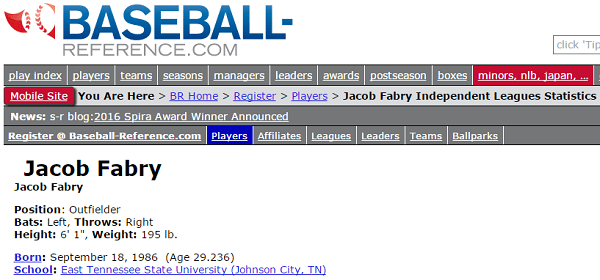
Mr. Fabry, the plaintiff, is a competitive baseball player who stands 6′ 1″ and weighs 195 lbs.; Ms. Powers is 5′ 6″, weighs 130, and lives in a different time zone. She’s also 20 years older than Mr. Fabry.

Jacob Fabry

Judge Williams ruled:

Respondent shall refrain from contacting Petitioner, his family, his girlfriend or his employer, directly or indirectly, from stalking, harassing, threatening, texting, emailing, posting on the Internet or any social media platform anything about, referring to in any way referencing the Petitioner, his family, his girlfriend or his employer.

The judge’s ruling exemplifies how an already extravagantly expensive, easily exploited, and dubiously necessary process opens the door to gross violations of citizens’ civil rights. In wanton excess of her jurisdiction, the judge prohibited Ms. Powers from exercising her right to freedom of speech.

This order, besides highlighting palpable absurdities endemic to the restraining order process, is transparently unlawful (i.e., unconstitutional) and therefore void (which does not mean it can be safely disobeyed).

Copyright © 2016 RestrainingOrderAbuse.com

*The order concludes: “Neither you nor the Petitioner can agree to change this Order. Even if the Petitioner attempts to contact you or agrees to have contact with you, you must obey this Order. If you do not, you can be jailed for up to 11 months and 29 days and fined up to $2,500.” (Emphases added.)

Jacob Fabry


Restraining Orders as Strategic Lawsuits Against Public Participation (SLAPPs)

Not a day goes by when a search engine query doesn’t lead someone to this blog because s/he wants to know whether speech on Facebook can be prohibited by the court.

Lawfully…maybe. If someone sends communications TO someone else after the someone else has repeatedly requested that s/he be left alone, this can be labeled “harassment,” and a judge can “properly” issue an injunction forbidding further contact.

If, however, a person merely makes remarks ABOUT another person (even a so-called “private figure”) or otherwise expresses his or her view on something, that’s his or her constitutional right (see the First Amendment). Americans are guaranteed the freedom to criticize one another, as well as their government, and judges have no business poking their noses in…which doesn’t mean they won’t if invited. A person merely making remarks ABOUT someone can still be sued. Anyone can be, whether on meritorious grounds or frivolous or vexatious ones.

Enter the “SLAPP,” or, Strategic Lawsuit Against Public Participation.

Lawsuits whose motive is to silence critical speech by intimidation are SLAPPs. They typically allege that an opinion is “defamatory.” There can be no defamation in opinion, but that doesn’t matter.

SLAPPs work because being sued is stressful and expensive. Only about half of states have anti-SLAPP laws on their books and their content varies significantly, as well as do targets’ means to hire attorneys and prosecute a defense. (For just this reason, a federal “Speak Free Act” has been proposed.)

Making matters worse, how SLAPPs are used, particularly when they take the form of restraining order petitions, is by alleging a constellation of offenses that may be utterly false but can nevertheless be very persuasive.

The writer of this post is the defendant in three such litigations right now. The complainants don’t like what I’ve reported or opined about them. They haven’t, though, alleged that I’ve been unkind in my characterizations; they’ve claimed they’re afraid for their lives, that they’ve been harassed, that they’ve been defamed, that they’ve been stalked, that they’ve been sexually aggressed against…that kind of thing. The more frenzied of the two women who are prosecuting me—a woman who emailed me four years ago calling herself an “avid reader” of the blog and calling the other woman who’s prosecuting me a “sociopath”—today says she’s packing a gun. (I’ve seen this person once in 10 years: I consented to join her for coffee, and afterwards she hugged me.)

You see how it works: You make your allegations lurid to distract from your real motive, which is to shut somebody up who’s making you look bad (because you are bad).

Commenters on this blog have reported having restraining orders petitioned against them because the plaintiff owed them money or because they had knowledge of the plaintiff’s commission of a criminal act, like drug abuse, tax evasion, or violence, including rape.

In instances like this, restraining orders are SLAPPs. They’re meant to make sure the defendant is gagged and subdued.

As SLAPPs is just another way restraining orders are abused.

Copyright © 2016 RestrainingOrderAbuse.com
How Perjury in Restraining Order Cases Is “Incentivized”

SRU

“Perjury in restraining orders is actually incentivized, not only by failing to prosecute it, but by allowing one-person hearings (ex parte) to get the orders originally, a super-low burden of proof to issue orders, no juries, a judiciary which actually gets training from feminist groups about the need for issuing orders, no rules of evidence to keep out unreliable phony stuff like hearsay, and much else. Given all this pro-perjury bias, it is a miracle when an innocent defendant wins.”

—Massachusetts attorney Greg Hession

Mr. Hession says it more authoritatively on his own blog, MassOutrage.com, but here’s what he means, elaborated point by point.

Laws concerning restraining orders, which originated in the ’70s when women complaining of domestic violence had no voice, authorize the courts to hear plaintiffs privately (ex parte) and to issue orders based on nothing more than claims that are often unsubstantiated and may be impervious to proof (or disproof). An allegation of “fear can suffice, and that’s an allegation anyone can make against anyone else (anywhere), truthfully or not, reasonably or not.

Though the justification for ex parte hearings is anachronistic (women certainly don’t lack a voice today), restraining order laws resist overdue reform. Nobody wants to rock a boat captained by politically powerful advocacy groups. (Restraining orders have besides spawned a booming cottage industry with a financial stake in maintaining the status quo.)

In the interest of economy over observation of civil rights (like due process), hearings to finalize restraining orders are both prejudiced and streamlined: no jury (albeit that consequences for allegedly violating an order are criminal), no appointment of counsel for the defendant, no guarantee of the right to cross-examine (which is fundamental to a fair adversarial system), and the extension to trial judges of broad discretionary powers (for example, to curtail a hearing to 10 minutes).

Many respondents to this blog have reported being told by a judge, “I’ve heard enough.” Some report never being afforded a chance to get a word in (and lest anyone imagine otherwise, many of these complainants are women).

Making matters worse, judges are trained by feminist advocates, who often cite tailored “social science” (that may be funded by the Justice Department), making the idea of an “independent judiciary” more than suspect. Courts, too, are issued grant monies under the Violence Against Women Act (VAWA) and have been for 20 years. Judicial bribery is scandalous, but payouts from Uncle Sam are “in the public interest.”

Hearsay” (secondhand evidence with no reliability: “She told me he said,” for example) isn’t just admissible; it’s explicitly authorized by the law.

This is a formula for a lot of jaded, angry people. And if those jaded, angry people express their outrage by exercising their First Amendment rights, they risk being prosecuted for that, too. (If they do it anonymously, they’re mocked as cowards and discredited as cranks and misogynists.)

This villainy persists unchecked and largely unacknowledged by the “free press” or by “rights advocacy groups.” Even the American Civil Liberties Union (ACLU) is circumspect in its criticism, because it has close ties with the feminist community and has long congratulated itself for its contributions toward realizing “equality.”

A process that is not just manifestly unjust, manifestly corrupt, and manifestly indecent is lauded as an “essential protection,” including sometimes by people who’ve been victimized by it.

That’s how strongly we’ve been conditioned.

Copyright © 2016 RestrainingOrderAbuse.com
*Or blinded.

Evidence of Perjury Cannot Be Used to Appeal a Fraudulently Obtained Restraining Order

Someone once told me that the only value of a lock is to keep an honest man honest.

The value of perjury statutes is exactly the same: They make an honest person extra careful about what s/he tells the court.

To a liar (the person they’re supposed to thwart), they’re just “blah-blah-blah.” Perjury (often recognized as a felony crime) isn’t prosecuted—and for that reason, judges seldom even use the word. If a plaintiff is caught lying, and the lying is significant enough to urge dismissal of the case, s/he may get a stern talking to post-trial. That’s about it.

Restraining order judges make a liberal determination about whether sufficient merit exists in a plaintiff’s claims to warrant upholding a temporary order. Lies irrelevant to that determination may be ignored even if a judge detects them.

Judicial disposition is to credit plaintiffs and suspect defendants, and that’s a high hurdle for a defendant to clear. The defendant also enters the courtroom having been prejudged “guilty.” (Some respondents to this blog report never having been allowed to address the court at all—or being silenced after a few minutes.) Besides their being prejudiced, hearings to finalize restraining orders are, putting it generously, “highly accelerated” trials. Putting it accurately, they’re superficial.

But no allowance for that is made after they’re over.

The only way to have a restraining order that’s based on fraud vacated is to expose lies during the “highly accelerated” trial. That’s why attorney Greg Hession, a strenuous critic of restraining orders (his blog is MassOutrage.com), emphasizes the importance of exposing a plaintiff’s lies and “ulterior motives” during trial: There is no “second chance.”

From Easterling v. Ameristate Bancorp., Inc. (2012):

[I]t is well settled that “[p]erjury in a prior case cannot support a cause of action in a subsequent civil case.” Elliott v. Brown, 2d Dist. Miami No. 10-CA-19, 2010-Ohio-5749, ¶12; see also Costell v. Toledo Hosp., 38 Ohio St.3d 221, 223-24, 527 N.E.2d 858 (1988) (“[A]ppellants have essentially set forth allegations constituting perjury, subornation of perjury, and conspiracy to commit perjury, all of which are punishable under the criminal statutes but which, for public policy reasons, may not be the basis of a civil lawsuit.”).

You can’t appeal a restraining order that succeeded on false evidence on the grounds that it succeeded on false evidence (unless new proof is discovered that you couldn’t have previously brought to the court’s attention). You can’t sue for perjury, either.

Similarly, unless you prevailed at trial, the odds of winning a lawsuit brought for fraud or intentional infliction of emotional distress, for instance, are very low.

You have one window of time in which to expose false accusations (and ulterior motives), and that window is very narrow.

Other countries follow the same policy ours does (in the interest of economy), for example, Canada:

[T]he claim to vacate a judgment on the grounds of perjury cannot succeed unless by new evidence and shewing that the aggrieved party could not by reasonable diligence have been able to discover and bring forward at the trial such new evidence as desired to be presented in the action….

That opinion (in MacDonald v. Pier) was entered almost 100 years ago (hence the antique spelling of showing). It’s etched in stone.

Everyone who’s been fraudulently misrepresented to a judge and railroaded in court is excited to learn the word perjury, because s/he just knew lying under oath had to be a crime.

What s/he might have expected, though, is that perjury, like telling the truth, doesn’t matter.

Copyright © 2016 RestrainingOrderAbuse.com

*To expose false accusations and ulterior motives at trial, it’s essential that defendants insist upon the right to cross-examine (question) their accusers. It’s one thing to say the plaintiff is lying or to try to show that s/he has lied with evidence; it’s another to actually have the plaintiff admit lies (or contradict him- or herself) on the stand in the presence of the judge.

Midlife Madness and Restraining Order Abuse

“Of the 760 women approached [of menopausal age], 539 (71 %) returned completed questionnaires. A total of 155 women (29%) had a score of 12 or more on the general health questionnaire and were identified as probable psychiatric cases.”

C. Barbara Ballinger, British Medical Journal (1975)

Translation: About every fourth woman you meet “of a certain age” is at least a little off.

Men in this age group, besides—perceiving their virility to be on the wane—are commonly said to experience “midlife crises.”

In investigating and writing about abuses of restraining orders for five years, I’ve heard from plenty of teenaged and young adult victims (who are not uncommonly represented by their very distressed moms or dads).

The really hairy stories, though, come from people in midlife. I’m in midlife, and I’m fending off allegations from women who have begun (or are fast approaching) “the change.” Here are some statements one of them made to a police detective in January:

  • Jennifer said Todd wrote in his blog on 10-31-15 “Your lives have an expiration date and so do you.”
  • Jennifer said Todd also wrote, “You don’t want people like me thinking about people like you, think about that.”
  • Jennifer said Todd’s dog died in August 2015 and that he had said that once he didn’t have dependents he would go crazy and seek justice.
  • Jennifer said she believed Todd posted several blogs in which she believed he was a danger to others which included seeking retribution and “going biblical” and “seeking his own justice.”
  • Jennifer said she now carries a handgun due to her concern that Todd is a threat to her safety.

Note especially the last statement. This woman, who has monitored me for 10 years (and will have read this post before you), has also referred to my mother in her incoherent remarks to the police.

She works as a research specialist in the University of Arizona Department of Psychiatry.

My accuser, who is (peri)menopausal and whom I’ve met once in 10 years, was evicted from her home last summer after she accused her husband of something in 2014, which inspired him to lose his cool and flourish what police called a “killing knife” in an intoxicated rage. He was charged with aggravated assault with a deadly weapon. A former bartender, he’d previously been convicted for cocaine possession. My accuser was cited for impaired driving in 2011, though she wasn’t convicted. Her brother has been charged with DUI and imprisoned for violent crimes. The head of the University of Arizona Pharmacy College, where my accuser works or has worked, was indicted in November on three counts of sexual assault allegedly involving the use of “date rape drugs.”

The accusations against me began right at the same time. As I tried to urgently impress upon a Tucson judge this week, that’s probably more than coincidental. As I also tried to urgently impress upon him, I’m not the one whose mental state should be under suspicion.

People in midlife can be powder kegs with short fuses, and it’s hardly rare for their orientation to life to be more backwards-directed than toward the future.

Midlifers can devote an exorbitant amount of time to worrying the question, “Where did it all go wrong?” Those with accountability issues also wonder who’s to blame, and the answer they arrive at is never “me.”

A woman I’m in contact with, Betty Krachey, was threatened with eviction from her home not that long ago, because her long-term boyfriend (of decades) had designs on it and maybe nursed plans to trade Betty in for a newer model. She was issued a restraining order, which blessedly she managed to extricate herself from with the help of a lawyer (something those in her situation often don’t know is an option even if it’s an option they could afford).

Many or most respondents to this blog who report deep-seeded conflict are in their 40s or 50s. They’re served with restraining orders whose hyped or false grounds are motivated by resentments that have simmered for years or decades. Midlife is when they reach a boiling point.

It’s also a time when people’s familial infrastructures crumble. They lose friends, siblings, and parents. Safety nets tatter or disappear.

They are, accordingly, less accountable to others for their choices. They’re more socially isolated, and therefore less socially inhibited. They have fewer people to answer to for what they do, and they don’t have the fear of rejection that they might have had when they were younger. They tend to be more callused, disillusioned, and jaded or cynical (or crazier). This can mean they’re less scrupulous, too.

Appreciate that accusation is the perfect way to:

  1. “get even” for past slights and indignities (real or imagined) and/or
  2. “ditch” a spouse or boy- or girlfriend and keep shared possessions (including the home) and
  3. “reset” the clock.

A quickie process that lets a person swan into a courthouse, breezily recite some accusations, and skip back out in under an hour with a renewed lease on life is therefore bound to hold some attractions for the embittered midlifer.

That’s besides anyone of any age with moral deficits and a pen.

Copyright © 2016 RestrainingOrderAbuse.com

*Update (2018): Legal actions brought pursuant to the allegations against me referenced in this post were in each instance dismissed (two to 20 months later). The matter, which goes back 12 years, is detailed here.

“Contact”: A Lesson in Semantics for Officers of the Law and Court

I was an English major. In the mid- to late ’90s, I taught literature as a doctoral student—everything from Homer to Robert Louis Stevenson to Virginia Woolf.

I taught privately, too. Each week, I would tutor the grandson of a retired Pima County Superior Court judge, sometimes crossing town to do it. For years.

I got $15 (eventually $20) per visit. It wasn’t about the money.

I liked words, and I liked sensitizing others to them. I used to carry words around in my pockets, and I meant to write for my living.

If the Tucson Police Department and the Tucson City Prosecutor’s Office are correct that writing ABOUT someone is “contact,” then the Weekly World News is distinguished for contacting Bigfoot; Saddam Hussein, Osama bin Laden, AND their shaved ape baby; aliens; a redneck vampire; and both Satan and Jesus.

As a teacher and student of words, then, it’s not without irony that today I face nearly a year and a half in jail because of them. Ostensibly I stand exposed to this punishment because of words I’ve written here. Really it’s because a single word, whose meaning everybody knows, has taken on such a pyrotechnic glare that custodians of the law have become blind to its significance.

That word is contact, which decades of scare propaganda have turned into a loaded weapon. People are criminalized today for purportedly making “unwanted contact” or “unsolicited contact.”

I was arrested in January by a Tucson detective I’ll call Rottweiler (which is a word the detective used to clarify how his name is spelled and pronounced, and isn’t used by me to insult him: Rottweilers are dogs dear to my heart). Det. Rottweiler told me that he believed I had “caused a contact” with some women who’ve stalked me for a decade and falsely accused me of stalking them to reverse roles. They’ve accused me of sexually harassing and posing a violent “danger” to them, too. (One of them, whom I’ve met exactly three times in my life, reported to Det. Rottweiler in January that she now carries a gun to protect herself from me—and she probably does; she takes her method acting seriously. When you’ve deceived as many people as these women have, including police officers and judges, you have to up your game to save face.) The detective said I had “contacted” the women by using their names as I’ve just used “his” in this paragraph. By this reasoning, I have just contacted him.

Have I, though? No, plainly not. When the detective called me in January, we were “in contact.” When I later called him to appoint a time to meet for an interview, that, too, was a “contact.”

The distinction is stark. Contact is one-to-one. I contact someone by calling him, meeting him, emailing, texting, etc.

In its ruling in favor of entrepreneur Matthew Chan last spring, who was accused of “stalking” on the same basis I’m being prosecuted for criminal “harassment,” the Georgia Supreme Court put it like this:

“To ‘contact’ is readily understood by people of ordinary intelligence as meaning ‘to get in touch with; communicate with.’” […] Although one may “contact” another…by communicating with the other person through any medium, it nevertheless is essential that the communication be directed specifically to that other person, as opposed to a communication that is only directed generally to the public.

To put it another way, these do not represent contact: carving a person’s name in a tree trunk in the park, skywriting it, or having it tattooed on your biceps. Like using a person’s name in a one-to-many “blog” (which does not communicate anything to any particular person), all of these acts are publications of a person’s name; none is contact.

If an anchor on CNN or Fox News or NPR or the BBC today reports something that the president of Egypt said or did yesterday, that does not mean the news presenter will necessarily have “contacted” the president of Egypt.

(While this should be obvious to anyone, I’ve been writing motions to the court for the past two months, and salient in the documents are boldfaced prepositions like ABOUT, as opposed to TO or WITH. You wouldn’t think communicating the distinction to learned adults would require such antics, but it does.)

It’s a telling reflection on the priorities of stewards of the law today that citizens face imprisonment because of a misattribution of meaning to a word we all learned as little kids.

Copyright © 2016 RestrainingOrderAbuse.com
*It will presage real progress toward reform when we as a people start to re-familiarize ourselves with the meanings of these words: decency, fairness, equality, and justice.

Restraining Order Abuse and Munchausen Syndrome by Proxy

Since my companion died in August, I’ve doped myself before bed with genre fiction and a bottle of wine. After 10 years of legal assaults, including three simultaneous ones as of this writing, alcohol is the only thing that quiets my mind and affords me a few hours of oblivion. I’m into my third novel by thriller writer Gillian Flynn. (The movie Gone Girl, about a woman who fakes her death to frame her husband for murder, is based on a Flynn novel.)

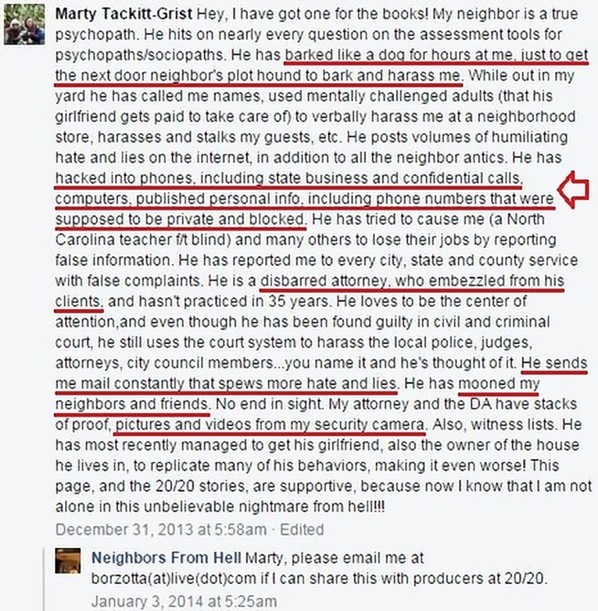
Martina Walkingstick, Marty Grist, Marty Tackitt-Grist, Martha Grist, Martha Tackitt Grist

The woman in this photo, Marty Grist, has persecuted a friend of the writer’s for several years by lying about him in social media and on public record. Her reign of malicious self-publicity abruptly ended when she testified to a judge (the most recent of numerous) that he’d “hacked” her phone, computer, and email account (from his house across the street) and said she had some record (“someplace”) that proved he was a disbarred attorney who had “embezzled” from his clients (both serious charges and both false). She reported on Facebook, besides, that he had mooned her friends and provoked invisible dogs to howl at her for hours. She has two daughters and teaches children for a living. (The writer’s accuser, who was isolated as a child, is also the daughter of a schoolteacher.)

I won’t give away its plot, but her novel Sharp Objects involves “MBP” or Munchhausen (Syndrome) by Proxy. It’s a mental illness that induces a caretaker, usually a parent and usually the maternal parent, to sicken a child to get attention. Recall the movie Sixth Sense.

Flynn, besides being a delicious writer, plays rock-‘em-sock-‘em with feminist dogma. Her villains, who are seriously villainous, are all women.

If Flynn is a feminist, and I think she is, she’s the real thing. None of her female characters are weak, least of all the monstrous ones. I’d call her honest negotiation of male-female dynamics (thoughts, actions, interactions) “refreshing” if that word weren’t moldy. She’s bravely candid (she’s accurate), and she doesn’t play for (or pander to) a “team.” There’s nothing flinching about her or her writing.

Munchhausen by Proxy, pathological behavior that figures in her novel Sharp Objects, exemplifies (with science) that there are women who commit heinous abuses to draw attention to themselves and excite drama, and this is one of the motives the FBI remarks is common to cases of false accusation. It’s also a motive for bullying, which can include crying wolf  (BullyOnline.org, now defunct, formerly had a page devoted to MBP). The disease MBP is just a metaphor writ large for what women do when they go wrong: They poison. (Both false accusation and crying wolf figure in the plot of Flynn’s novel Gone Girl.)

Flynn’s stories involve violent murders by people of the “fairer sex,” but the female violence they portray best is the psychological kind: sinuous, spiteful, and constant.

Mainstream feminists militate against the notion that women are attention-oriented, competitive, or catty…or that they can lie unconscionably to exact petty revenge for some perceived slight.

That’s a fictional bubble in need of collision with a sharp object.

Copyright © 2016 RestrainingOrderAbuse.com

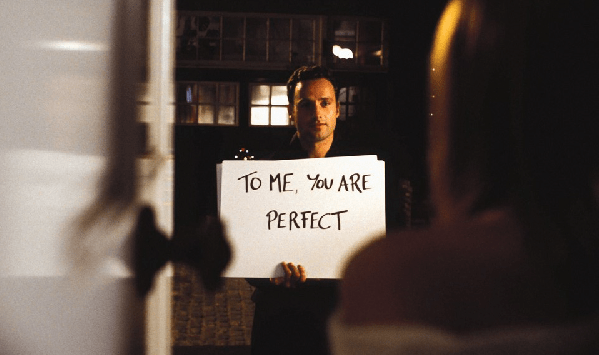
Love Actually…Is Why Feminists Relate Best to Cats (Indoor Ones): On Perspectives That Account for “Stalking” Hysteria

LA_still

“One card says: ‘To me, you are perfect.’ Another says: ‘My wasted heart will love you ‘til you look like this [insert image of a time-ravaged skeleton].’ Juliet laughs. My reaction would be to slam the door and get a restraining order. What is Mark implying here?”

—Maitri Mehta, Bustle.com

Answer: What Mark is “implying” (with gentle, anguished humor) is that he will love Juliet “till the end of time” (“till the wells run dry, and every mountain disappears”) despite knowing his love can’t be requited. Mark silently confesses his feelings, to ease Juliet’s mind as much as his own, and then he walks away with no expectations at all. His is an act of apology and “closure” that could only be read as a tender gesture by people possessed of a soul.

(Ms. Mehta, exhibiting the undisciplined critical faculty characteristic of feminists and other judges, feels a picture of a skeleton authorizes her to infer that Mark intends to turn Juliet into one. Context is invisible to those who only see in monochrome.)

According to the Ms. Mehtas of the world, one of the great romantic figures of literature, Cyrano de Bergerac, would be a “stalker,” because he“serially” wooed his lady love beneath her balcony while masquerading as someone else.

(“And that nose and rapier! What was Cyrano implying there?”)

It doesn’t matter that neither Roxane nor Juliet was afraid. What matters is that they Damn Well Should Have Been.

By feminists’ lights, I’m a stalker, too, and I can’t imagine any romantic who wouldn’t be. I wrote love notes to a classmate in first grade even after she told me not to. With crayon hearts on them.  I suppose the feminist interpretation of what my purple construction paper cards “implied” would be that I wanted to eat the girl’s organs.

They’re to be pitied, I guess, these women who never obsessively wrote a boy’s name in their notebooks as a girl or tittered with their friends about a schoolmate while spying on him (again) from behind a bank of lockers—and I would pity instead of scorn them if I didn’t know firsthand how perniciously influential their twisted perspectives are.

I was invited to visit some older friends on Christmas to watch Love Actually with them. That’s the movie the quotation above refers to. They’re in their 70s, and this is a holiday ritual of theirs.

The Mark-and-Juliet scene is a poignant one, and only an emotionally disturbed mind could construe it otherwise.

Ms. Mehta says this scene represents for her “a level of creepy that shakes me to my core, and every time she runs after him and kisses him in the street, I cringe.” (The phrase “every time” betrays Ms. Mehta has nevertheless watched the movie over and over.)

Sentiments like hers are what make me cringe. (Ms. Mehta’s name says her family is from India, where people still squat in the dirt because indoor plumbing isn’t universal. People starve there, too.)

I introduce Ms. Mehta’s remarks in this context (a blog about restraining orders), because they’re not exclusive to her. They echo social science produced by a post-doc fellow at Michigan U, Julia Lippman, who performed a study that concludes romantic comedies “mak[e] stalking behaviors seem like a normal part of romance.” It’s titled, “The Effects of Media Portrayals of Persistent Pursuit on Beliefs about Stalking.”

This “work” isn’t discounted, either. Google it. Dr. Lippman has her own website.

In a write-up about the study in The Atlantic, Julie Beck quotes the National Institute of Justice’s definition of stalking as “a course of conduct directed at a specific person that involves repeated (two or more occasions) visual or physical proximity, nonconsensual communication, or verbal, written, or implied threats, or a combination thereof, that would cause a reasonable person fear.”

You’ll find this definition inscribed in many states’ criminal statutes.

Observe that the language is so tortured with qualifying phrases beginning with “or” that the “fear” component seems optional—and feminists more than suggest it is.

To judge from Ms. Mehta’s response to a scene in a romantic comedy, the “reasonable person” restriction in the definition of “stalking”…is entirely superfluous.

Copyright © 2016 RestrainingOrderAbuse.com

*A comment from a female respondent submitted three days ago: “I too am a victim, then became a whistle blower/informant exposing my perps, then victimized again with six false stalking petitions…. Three were granted and all were dismissed, including one where we made case law!” The respondent calls herself “Warrior Lady in Florida.” When I was a kid, that’s what feminists were: warrior ladies. Today, they’re distinguished for cringing.

“Hacked”: A Word Used by False Accusers That’s Code for CRAZY

This post introduces the fauna and flora of false accusation: spiders and nuts. Spiders are subtle, and their webs are hard to see. Nuts…aren’t subtle at all.


Marty Grist, Martha Grist, Marty Tackitt Grist, Martha Tackitt Grist, Martina Walkingstick


Restraining orders can be issued based on nothing but an inarticulate claim of “fear,” so willful deception of the authorities and courts is easily perpetrated by fraudulent petitioners’ use of vague claims like “he won’t stop calling me,” “her emails are disturbing and aggressive, “[s/he] threatened me, “I’m afraid”—that kind of thing. The more emotion-based lies are, the less they can be exposed. The worst accusers can be called is histrionic.

Good liars manipulate facts; they spin, like spiders. They’re plausible. They have social skills and endeavor to get their audiences to “relate” to them. They want approval, and getting it is part of the kick, as it is for any con artist.

Nuts, however, make up any lunacy they want, and they may not even know they’re making it up. The restraining order process is so deplorably automated that crazy works.

This is a code word for crazy that shouldn’t work: “hacked.”

If someone claims her neighbor, for example, has remotely “hacked” her email account, “hacked into” her phone, or “hacked” her computer, she’s crazy.

I regularly talk to and correspond with a man who’s been accused of “hacking” in a court of law (and, no, he’s not a retired NSA agent). He was last summoned before a judge to respond to criminal allegations of “cyberstalking.” He’s in his 70s and has three toy poodles (which I’ve been scolded for suggesting is in any way unmanly). He says when his accuser trotted out her claims of “hacking,” the judge rolled his eyes.

That’s cute, but what the judge should have done was immediately dismiss the case and have the bailiff escort the prosecuting witness to the door—if not the loony bin. Then he should have turned the prosecuting attorneys over his knee.

Instead, the judge indulgently listened to the woman’s teary testimony about how her security had been breached and how she’d had to get a new computer because her old one had been infiltrated, etc.

The same woman, a school teacher, had previously reported to 20/20 that some confidential calls to important “state” agencies had been eavesdropped upon (this is also code for crazy) and made reference to her video surveillance camera (also code for crazy).

The judge eventually gave her a tongue-lashing and vacated her allegations…but they had just been the latest of dozens (over years), and her other actions (including a restraining order, which inaugurated and licensed her reign of terror) were not vacated retroactively.

If nuts are treated this tolerantly by the justice system, is it any wonder that frauds by spiders are so effective?

Copyright © 2016 RestrainingOrderAbuse.com

*The categories spiders and nuts aren’t hard-and-fast; eight-legged head cases aren’t unheard of among freaks of nature. I’ve known more than one. For some excellent fictional representations, see the novels of Gillian Flynn.

A Glimpse of Life in Limbo (See Also “Legal Abuse Syndrome”)

There are critics who fulminate against talking about the effects of false accusation and legal gamesmanship on a life, because, they say, you don’t want to give your “enemies” the satisfaction of knowing they’ve injured you. These critics value truth according to its utility: Tell it if it helps; hide it if it doesn’t. Certainly this is how a lawyer thinks. A lot of lawyers, though, are assholes.

silouette

Yesterday, a Sunday, it was a balmy 80 degrees where I live. I passed couples who were strolling blithely in the park with their dogs. A duo of skywriters nosedived in synchrony and sketched a valentine heart in the heavens (some guy’s idea of a grand romantic gesture) when I forced myself to leave the house around 3:30. The annual book festival, which I’d always meant to check out when I used to aspire to write books, was going on someplace.

I heard about it on the radio.

I spent the remainder of the afternoon working on documents in the library for an upcoming trial in which I’ve been cast in the role of “stalker” by some women who’ve serially accused me of this and that since I found them outside of my house 10 years ago (yes, outside of my house, and, yes, 10 years ago). When the library closed, I went to a Starbucks and hunched over the computer some more.

My next court date is my birthday.

St. Patrick’s is sometime this week. I’ll be wearing black, not green, and I’ll be very tired. I’m always very tired. I haven’t had nerve sensation in my feet since I was last in court in 2013. They’re chronically swollen from daily labor and little rest. I’ve been an insomniac for a decade, and I don’t mend quickly. Despite living in the desert, I drink more coffee than water.

Instead of writing this, after an afternoon and evening staring at legalese, I should be exercising or kissing someone or playing with my dog. She died, though—in August and sooner than she should have—while I was still writing about courthouse abuses, and along with her perished any interest in “healthy activities.” I no longer think about the future. I’m smoking as I type. I eat carelessly, haven’t gotten a haircut in five months, and seldom look in the mirror.

In February, I was invited and went to Maui for six days, which was the first time I’d been on a trip in over 15 years. I was dyspeptic the entire time, and the interlude wasn’t long enough to relieve the inflammation in my hands (my right middle finger, fittingly, is rigidly stiff from a sprain). I flew home on the red-eye the day before my last court date, a criminal arraignment, and Hawaii is already a faded memory. It was very pretty, my hosts were generous, and I slept on a bed with clean sheets for a change.

I missed some jobs, and after a stop at the grocery store this evening, I have five bucks and some change in my pocket. I have a cache of cigars, though, and the electricity is still on, so I can work on my next couple of motions to the court tomorrow from the comfort of a nicotine fug. The job I have lined up for Tuesday will cover the costs of the half-ream of color-printed exhibits for the court and the city prosecutor, their text abundantly streaked in canary yellow or framed in crimson rectangles (my surrogate for art).

I’ve only checked the mailbox twice since the cops came in January, and those two times were the only times I’ve checked the mailbox since June. I’ll have to start doing that more often now that I have a judge for a correspondent. I think he’s number seven, which I used to consider lucky. Lucky isn’t a word I use anymore.

I brought back a piece of lava from Hawaii for which a man I dined with warned me I’d be cursed. He might be right, but how the fuck would I tell?

Copyright © 2016 RestrainingOrderAbuse.com

No One Is a VICTIM Just because S/he Says S/he Is: A Reminder for Reporters…and Other People Who Shouldn’t Need Reminding

I looked at a form I was handed a couple of weeks ago at a criminal arraignment I was ordered to attend. The form gives the impression I was supposed to sign it, which no one asked me to do. This would be disturbing if I were still capable of registering disturbance. I noticed with dim approval, though, that it said this:

alleged_victim

When accusations are made on “protective orders” or are of the type “protective orders” typically purport to concern (e.g., harassment, stalking, or domestic violence), journalists routinely call accusers “victims” automatically. They reason, apparently, that a person can’t be awarded a restraining order unless s/he has demonstrably been victimized. (More accurately, “reporters” don’t scruple overmuch about the facts or how the process works, because they know where their loyalties are supposed to lie.) Probably a majority of injunctions are awarded based on their petitioners’ say-so alone. To understand what that means, a “reporter” would have to investigate (instead of, say, quoting a pamphlet authored by the National Coalition Against Domestic Violence).

Prosecutors? They seem to call all accusers “victims” on reflex. Their job, after all, is to “prevail” in court. If they think they can win, they try to; it’s not about justice. That’s rosy rhetoric for the rubes…like journalists.

Whether intentionally or not, both journalists and prosecutors get it wrong. Legislators do, too. The statutes they enact may explicitly call accusers “victims” (due process be damned).

The (criminal) court at least got this much right: Allegations aren’t facts, and until some semblance of due process has been staged, an accuser is an “alleged victim,” not a “victim.”

Judges don’t always get this right, either, however.

I couldn’t say with complete assurance whether lapses in objectivity, ethics, and procedural propriety like this have always existed or whether they’re testaments to systemic bigotry conditioned since the mid-’90s by the Violence Against Women Act (VAWA)—whose megabuck grant contracts stipulate that alleged victims should be treated as victims in every instance.

I feel pretty confident, though, in my suspicions of corruption.

The lines can’t help but have become blurry since the advent of the restraining order, which authorizes the court to draw conclusions prior to a trial, based on a few minutes of testimony and what may be no ascertainable facts at all.

If “verdicts” can be formed without proof and possibly without any adversarial contest in which controverting evidence could be adduced, that would seem to make the distinction between “victim” and “alleged victim” merely academic.

Restraining order judgments aren’t uncommonly “default” judgments, because defendants either don’t show up in court or can’t. An “emergency” injunction can require a defendant to appear in court mere days after service, possibly after having been booted to the curb (and left without resource or a vehicle), and even a non-emergency injunction may require a defendant to appear in court within a week. There’s no time to secure legal representation, even if the means are available and even if the respondent appreciates the significance of the paperwork that’s been thrust in his or her hand, and injunctions can be issued against defendants in other counties or states. (Some defendants, moreover, may not be first-timers, and they may simply conclude: “F— it. What’s the point?”)

(What defendants are told: “Here’s your restraining order. Don’t violate it, or we’ll arrest you.” What they’re not told: “You have six days to learn enough law to extricate yourself from allegations of which you’ve already been found guilty.” At the time they’re told anything, chances are they won’t know what the word defendant means.)

When procedure is engineered to find anyone who has alleged victimhood to be a “victim,” maybe calling every accuser a victim to begin with is just economical. Maybe it’s also the closest thing to honest a person can expect from a manifestly crooked business.

Copyright © 2016 RestrainingOrderAbuse.com
*And make no mistake: It is a business.

Laying the Blame for Epidemic Bullying where It Belongs: At the Feet of Feminist Liberalism

The phrases in this poster that define bullying (for little kids) also precisely identify the motives and consequences of false accusation and malicious prosecution (by grownup little kids): material privation (i.e., loss of home and property), mischaracterization, threat (by the state), name-calling, public belittlement and humiliation, infliction of pain, social isolation/marginalization, and mobbing.

I mentioned in the last post that a teenage girl I know, an AP student, told me she was called a “whore” through a website called Snapchat. She also told me classmates of hers—girl classmates—had accused her of prostituting herself for money to buy cocaine…which is pretty specific.

It’s true the social media that the Internet Age has spawned make bullying a lot easier than it was when I was a kid (and you had to face your victim), and I’m sure the Liberal Establishment blames it for a wealth of abuses. (I think a valid observation would be that social media make female passive-aggression a lot easier to exercise…just like restraining orders do: You don’t have to look the target of your malice in the eye.)

What, though, has made calling a high school junior a “cocaine whore” okay?

Zero accountability—that’s one thing. Kids know adults can’t do anything but civilly ask that they “behave more considerately.” Anything sterner would be “child abuse,” and kids know they can sink any adult shoulder-deep in it if they finger him or her (especially him) as an abuser. Easy-peasy. (If I were a school administrator in charge of reprimanding kids, I’d never close my office door.)

It’s not just the kids, though, is it?

Feminist liberalism, in the name of “progressive reform,” has encouraged accusation and demanded knee-jerk responsiveness to it from the system for a long time. It was horrible when abused women faced social stigma for complaining of mistreatment in their homes, no question, but that was 40 years ago.

Today, someone has to ask what we lost when we abandoned shame and made accusation not merely acceptable and sympathetic but virtuous and rewarding. Accusation garners attention, and it’s potent. People in power rush to our defense at the drop of a name (cf. McCarthyism). And if we fudge the facts a little, there’s no risk anyone in power is going to back-peddle and turn the glare of blame our way. It’s not an exaggeration to say accusation has become a sport, and it’s certainly no exaggeration to say it has become a weapon, as well as a way to whitewash your own misconduct and make bank.

Kids don’t just “get this stuff off the Internet,” and they’re not just inherently cruel. Kids absorb from their social environment like the sponges they are, and today’s social environment says finger-pointing is cool.

Kids know what they can get away with, and they know there are no reprisals. Adults sling dirt with impunity, so why shouldn’t they?

Accusation and bullying are flipsides of the same coin. The feminist liberal who says it’s okay to accuse your husband (father, teacher, etc.) if you feel like it is the same person who made it okay to call a 16-year-old girl a “cocaine whore.”

Copyright © 2016 RestrainingOrderAbuse.com

“No Stigma Zone”: A Case for VAWA Grants’ Being Issued to Provide All Government Offices with Dictionaries so Their Employees Can Look Up Words like “Stigma”

stigma poster

I had occasion to visit the city prosecutor’s office on Friday. The decor was sternly clinical. The only ornamentation was some small posters on a bulletin board under glass (which was probably there to protect them from cynics armed with Sharpies). One of the posters notably featured the phrase “No Stigma Zone.”

The poster was about bullying, and its message was bullying is bad and won’t be tolerated. If I didn’t have better reasons to distrust bureaucrats, I’d distrust them for being immune to irony.

To municipal lawyers, “bullying” means playground taunts and insults, like “fatso, “slut,” and “queer.” The state’s applying cruel labels to people like “stalker” and “molester” based on three minutes of finger-pointing (and permanently inscribing those labels on people’s public records)—that isn’t the same thing.

Accusations are typed up on government forms, and that makes them different from name-calling.

Duh.

I bumped into a teenage girl yesterday whom I used to swing around by the arms in another life. That was about the time I was first falsely accused—10 years ago—and she was still a twerp. (I was more carefree then. My body wasn’t run-down, and tomorrow still held infinite promise.) She told me another girl had called her a “whore” on an Internet medium called Snapchat. She explained that posts there only linger for a few seconds, so kids can snipe one another without leaving a trail of evidence.

This is what the state means by “bullying”—a zinger with a half-life of moments—and count on it that some lawmaker somewhere has designs to stop this conduct in its tracks(!)…by enacting more laws to facilitate accusation.

This is what my old journalism teacher would have called missing the forest for the trees.

Copyright © 2016 RestrainingOrderAbuse.com

*The girl I chanced into yesterday asked me why she always finds me at Starbucks hunched over my beater laptop. I spared her (and myself) a truthful answer but did have to tell her my dog, whom she grew up with, had died in August (while I was still hunched over my beater laptop composing commentaries like this one instead of swinging children around by the arms or playing with dogs).

Why the Restraining Order Is the Perfect White Trash Instrument of Malice

People who exploit restraining orders are not necessarily victims, and they’re not necessarily the “good guys.”

This post will be brief. Its only ambition is to show why restraining orders present trashy people with the chance to commit malicious acts with far-reaching and permanent consequences—and to do it hands-free using our justice system as their bully agent.

  1. Restraining orders are cheap or totally free of charge (as the Office on Violence Against Women requires).
  2. They’re available to anyone and require no bona fides at all. Felons can obtain restraining orders just like anyone else. It has been reported on this site that restraining orders can even be procured under assumed names. No i.d. is necessarily required, because accusers are automatically “victims,” and the pretense is that victims never lie.
  3. Restraining orders are issued ex parte, which means “respondents” (defendants) don’t actually get to be “respondents” until after they’ve been judged and found guilty.
  4. Restraining orders can be petitioned from other counties or even other states…against total strangers.
  5. They’re often issued more or less automatically: Ask and you shall receive.
  6. Lies that aren’t successfully exposed in what may be a 10-minute follow-up hearing cannot be attacked in a collateral action. In other words, if lies work once, they work forever. Defendants cannot sue for perjury, and they cannot base an appeal to a higher court on allegations of perjury or fraud.
  7. Restraining orders, even if dismissed, remain public records, and the mere title of a restraining order is prejudicial if not damning. They blacken citizens’ names and cost them relationships, jobs, and even employability in some fields (which of course affects them psychologically and physically).
  8. Restraining orders, because they represent civil not criminal trespasses, can rarely be expunged. Their traces linger even if judges determined they were unfounded or petitioned fraudulently.
  9. People who lie to obtain restraining orders, including egregiously, are never prosecuted.

Now appreciate that on top of all of this, even if a defendant successfully has a fraudulent order that was petitioned by some lowlife dismissed, that lowlife is likely to be judgment-proof. That means even if the defendant sues him or her for malicious prosecution/abuse of process—a stressful six-month ordeal all by itself—s/he has no chance of realizing any compensation, because the lowlife has no money.

The restraining order is the ideal white trash tool of malice.

Copyright © 2016 RestrainingOrderAbuse.com

*The author of this post attended a criminal arraignment this week. That’s where people who have been accused of crimes plead guilty or not guilty. The city prosecutor, in every instance, referred to accusers as “victims.”

WTF Is Wrong with Restraining Orders and the People Who Administer Them?

There are a lot of things about restraining order laws and policies that elicit (and deserve) this reaction: “What the f—?

Defendants’ due process rights are suspended; orders are issued without defendants’ even knowing it, let alone being permitted to respond before possibly being forcibly evicted from their homes; testimony from accusers is accepted at face value (and may even be given under an assumed name); citizens may be accused by strangers who live in different states from them; judges have been conditioned to be suspect of the accused and trusting of accusers; the evidentiary standard applied to allegations that are typically of criminal acts is the lowest civil standard; the fundamental right to cross-examine accusers and other witnesses is often short-circuited and may be outright denied; false accusations aren’t sanctioned (or ever called “false”) and the falsely accused can’t sue for perjury; hearings to finalize orders may begin and end in mere minutes; viable grounds for appeal to a higher court are precious few, and false accusation isn’t among them; even if restraining orders are dismissed, they’re preserved in the public record and cannot be expunged…. I could go on.

A different inspiration for “WTF” is indiscrimination by officers of the court.

There is room for the inclusion of basic intuition and eyeball evidence in judicial decisions. Yet I couldn’t tell you how many times a woman has complained on this site of being falsely accused of abuse by a man who was twice her size (and who was violent to her). Sure, there are men who are harassed and violently abused by women. There absolutely are. But often the same men who are reluctant to defend themselves are reluctant to take their complaints to the court, because that, too, would be “ungentlemanly” or “unchivalrous” (besides humiliating). When a large, confident man accuses a woman half his size of vague, wishy-washy, or sketchy abuses, and especially when ulterior motives like custody of the kids and/or possession of a shared residence lurk in the background, a degree of suspicion is warranted.

monstrousSimilarly, if a woman accusing a man of stalking looks like someone whose best opportunity for attention is accusing a man of stalking, a little ding! should sound in the minds of the people vetting the claim. There are women who are “to die for” (hubba-hubba), and there are women who are “to croak for” (ribbet). How about some discernment?

It may be politically incorrect to judge according to surfaces—hell, it may be unethical—but the whole process is guided by superficialities like, for example, sex: The number of orders issued against men is grossly disproportionate to the number issued against women. So what does ethics have to do with anything? Testimony by the accused is routinely rejected on no more evident basis than that it’s testimony from people who’ve been prejudged to be “abusers” (whose accusers, incidentally, are automatically called “victims”). So the “ethical scruples” argument is DOA.

I’ve heard from a vegetarian single mom, disabled women (here is post based on a petition respondent’s report), and men who’ve been violently abused and shamed by their wives only to be falsely accused of violence. I’ve heard from a little league umpire who was just doing his job. The number of accounts I’ve heard from lucid, articulate, educated men who’ve been casually accused of abuse, including violence to children, is obscene. Here is one such by a man who was falsely accused of burning and kidnapping his son.

Some respondents to this blog have been women in their seventh and eighth decades of life who were accused by “fearful” complainants who didn’t share a household with them and could outrun them on one leg. One says she’s consequently suffered PTSD and has been afraid to leave her house. The only just accusations against women this age I’ve heard about have come after the women accused first—and falsely and repeatedly. One female respondent in her 60s, living alone—the model of feminist self-sufficiency—was driven from her home by persistent accusations from a cranky (female) neighbor to everyone from the police, the court, and PETA. I haven’t heard from her since.

A retired man I communicate with regularly is in his 70s and has a crippled spine and three toy poodles. No slight to his virility is intended but…three toy poodles. He was accused relentlessly by his (yep, cranky female) neighbor (who’s hardly among the hubba-hubba demographic) of stalking, cyber-stalking, harassment, and various “threats” (like inciting invisible hound dogs to bay at her) until years later he finally inspired a judge to chew her a new one. By that time, he’d been jailed and had a cop point her sidearm at him through the front door of his house. His mugshot is on the Internet, and public records nominating him a menace number in the dozens. He’ll have to live with the onus of this sh— for the rest of his life (which will probably be shorter than it might otherwise have been).

W-T-F.

Copyright © 2016 RestrainingOrderAbuse.com
*The writer of this post is a lifelong vegetarian who had been a practicing kids’ poet when he was first accused 10 years ago by a woman he encountered around his house with a band of her girlfriends. I’ve been in and out of court several times (and for half a year at a time…each time) over the intervening period. Today I face criminal allegations brought by one of the girlfriends—who also petitioned an ex parte court injunction against me in December. Because she could. I haven’t communicated with her in years, but she told police I’ve “stalked” her since 2005. I’m right now learning how to make audio files of voicemails she left me after writing to me in 2012, inviting me to join her for coffee, hugging me, and telling me how sorry she was about the earlier rounds of lies to the court.

Restraining Orders Make Casual Interpretation of Superficial Facts Easy, Privative, and Enduringly Crippling

Most restraining orders are issued ex parte, that is, based exclusively on the testimony of the accuser. Making hyped, skewed, or false allegations against someone who’s not there to contradict them, and making those allegations persuasive, isn’t hard. Hearings to finalize orders based on ex parte rulings, furthermore, may begin and end in 10 minutes.

At no stage of the process do allegations meet with eagle-eyed scrutiny.

This shouldn’t be news to anyone, nor should it be news that the effects of picknose adjudications are far-reaching. Based on them, citizens are publicly humiliated and may be deprived of access to their children and property besides denied jobs. Proximal effects of these consequences are stress, emotional turmoil, depression, and disease. (Restraining orders are also a foot in the door from which vexatious litigants can persecute the accused relentlessly, aggravating these effects manifold.)

The accused expect these results to be obvious to judges, and they expect consciousness of them to influence judges’ decisions. They expect judges to care about the truth and to care equally about the lives of those who stand before them. Judges, however, aren’t boy scouts, philosophers, or social workers. They’re just people performing a job. They clock their eight and hit the gate like sanitation workers do—and they may not perceive their job very differently.

There is a difference, though. How judges are to perform their job is prescribed by the law. The indifference of the law is the problem.

Laws concerning restraining orders were hastily slapped together decades ago, and their evolution has been informed by very narrow priorities (mostly prescribed by feminist advocates and VAWA). None of these priorities considers the rights or welfare of the accused. Restraining order law is “women’s law,” and the only historical imperative has been to process, prohibit, punish, and permanently brand purported abusers in the name of protecting those who are “politically disadvantaged.”

As recent posts have stressed, restraining orders are public records that staunchly resist revision or expungement. While convicted felons may be able to have their criminal records erased, citizens accused on restraining order petitions, even ones that have been dismissed (“thrown out”), must wear their labels forever.

To be accused is to stay accused.

This injustice won a fresh objector recently whose story is telling. I won’t identify him, because he intends to tell the story himself sometime soon, and he hopes to report a happy conclusion. This man made headlines last year when he successfully appealed a restraining order against him in his state’s supreme court. The order was vacated, and that should have been an end on it.

Not long ago, he says, he and his girlfriend were detained by a customs and border official when they attempted to reenter the country after going on a cruise. The dismissed restraining order raised some kind of red flag (in the mind of the official, anyhow). The man wasn’t seriously inconvenienced, and as an American citizen, he faced no risk of being barred from the country.

What was forcibly brought to his attention, though, is that a very dead order of the court still hounded him months after it should have been laid to rest.

The man is an entrepreneur who works for himself, but he’s now cognizant of the potential harm a record like this could have on anyone who’s employed in the public or private sector who’s subject to a thorough background check. The record that got him detained didn’t say “vacated” or “void” or any such thing. It showed, in fact, as current.

That’s because tidy-up isn’t mandated by law; only this is: “Process, prohibit, punish, and permanently brand purported abusers.” Nobody in the system cares what happens afterwards, because no one in the system has to. It’s on to the next “abuser.”

This highlights a broader fact about restraining orders. They’re prejudicial, and because they’re pumped into statewide and national databases, they’re subject to free interpretation by anyone in the system—or anyone with access to the public record…which is anyone.

Summary:

  1. A judge interprets some superficial claims made by a complainant and enters a “preliminary” (ex parte) order. This is then permanently entered into the public record, including into state and federal registries.
  2. The order may be finalized, or it may be “tossed.” Either way, the initial judge’s (five-minute) impression is preserved.
  3. Any other cog in the system, whether a clerk of the court, police officer, or other public official, can see this record and freely interpret its significance.
  4. Any private party, what’s more (e.g., an employer, a loan officer, a landlord, a student, a client, a girl- or boyfriend, a child’s school administrator, etc.), is also invited to freely interpret the significance of an order that may bear a title as fatal to the accused’s popularity and prospects as “emergency protective order for stalking and sexual assault.” (Even if such an order is tossed after the defendant is afforded the chance to defend him- or herself—or because the plaintiff voluntarily had the order dismissed—the permanent record still says, “emergency protective order for stalking and sexual assault,” and it says it right next to the defendant’s name.)

What might be called cruel and unusual punishment isn’t acknowledged by our government as unjust or even unfair.

Copyright © 2016 RestrainingOrderAbuse.com
*When the writer of this post was first accused in 2006, he inquired with two clerks at the Pima County Superior Courthouse about where to file a brief to a judge. The male of the pair, upon hearing what the matter was about, fixed him with a knowing look and gratuitously remarked, “She wants you to stay away from her, right?” My accuser, a married woman who deceived multiple judges, was someone I had only ever encountered outside of my own house (where she nightly hung around in the dark). Pococurante orders of the court license any arrogant twit to form whatever conclusion s/he wants…and to pronounce that conclusion with righteous contempt.

An Aggressive Approach to Restraining Order Policy Reform: Threaten to Sue the State Courts Administrator in Federal Court

Restraining orders are public records, and recent posts have concerned or commented on their publicity and the unavailability of having their traces expunged even if orders are dismissed by their petitioners or otherwise vacated. This post highlights the pioneering efforts of one Missouri civil rights lawyer to upset the imbalance by threatening to file a federal lawsuit.


“Unless expunged, criminal case records remain online, even if prosecutors drop the charges. Civil lawsuits [which include restraining orders] stay on Case.net even if a judge dismisses the claims, [Kansas City media attorney Jean Maneke] noted.

“‘Openness is generally a better way to clean up concerns about inaccuracy than attempting to put everything back in a box,’ Maneke said.”

—“Pending Protection Orders Yanked from Public View

Everyone is entitled to his or her opinion. “Bullshit” is this writer’s opinion of the one quoted above. If you’ve been wrongly implicated in an abuse of process (or several), you probably disagree with views like Ms. Maneke’s, too, and believe that lies should never have been taken out of the box in the first place let alone engraved in databases and preserved indefinitely for public scrutiny.

Here are among what views like Ms. Maneke’s ignore:

  1. Restraining orders aren’t criminal cases, so they can never be expunged. Even if a judge dismisses (“tosses”) the allegations, only Tennessee has legislation that affords a wronged defendant the opportunity to have the case against him or her erased from the public record. Many orders, moreover, are finalized despite being grounded on fraud.
  2. Restraining orders aren’t criminal cases, but they’re not strictly civil cases, either. Acts imputed to defendants are often, if not typically, criminal (e.g., harassment, sexual harassment, stalking, terroristic threats, assault, battery, child abuse, sexual violence, or domestic violence).
  3. Unlike in other kinds of civil cases, a restraining order judgment may be wordless and formed in mere minutes, and the defendant may never be heard from at all. (An order can be obtained in a county or state other than the one a defendant resides in, so s/he may have no practicable opportunity to defend.) Also, an order may be awarded even though some of what may be many allegations are never considered by the court or are determined to be baseless. An approved order is an approved order. There aren’t necessarily any qualifications from the court on the recorded instrument to indicate which claims it regarded to be real and urgent, which suspect, or which baseless. To a third-party reader of the order, then, the accusations that appear on it are taken at face value.
  4. The mere title of an order may be prejudicial all by itself, regardless of the facts litigated in court.

The story the epigraph was excerpted from begins like this:

The client couldn’t stand it.

He typed his name into Case.net and up popped an ugly classification: “Protection Order: Adult Abuse Stalking.”

Who needs any more than those five words to form a conclusion about the person they were applied to? The case was dropped by the woman who made the accusation, but those five words nevertheless remained on the Internet.

The man was naturally concerned about the affect those words could have on his business and asked his lawyer to intervene.

[Bevis] Schock, a St. Louis attorney, [drafted] a federal equal protection lawsuit against the Office of State Courts Administrator. He never filed it, because four months later a Missouri Supreme Court committee decided privacy concerns trumped the public nature of this type of electronic court records.

Now pending orders of protection don’t appear on Case.net until judges grant full orders of protection.

The policy shift isn’t unopposed, but today “if the judge denies a petition or the filing party drops her request, it won’t ever appear online [and the] rule change is retroactive; OSCA scrubbed any previous ex parte orders from Case.net, including those involving Schock’s client.”

Schock said he spent 40 to 50 unpaid hours drafting an 18-page federal lawsuit against Greg Linhares, state courts administrator. Among other arguments, the lawsuit claimed the prior public records rule treats respondents differently than petitioners, because respondents are named online but petitioners are not.

The federal 2005 Violence Against Women Act prohibits states from publishing online any identifying information about people seeking protection.

Remarkable is that it takes the threat of a federal lawsuit to alert the courts to an obvious inequity. (Note, too, that finalized orders remain online, even though they may have been based on false allegations, and that even dismissed orders are preserved and can be accessed at the courthouse.)

The story is recommended reading. It notes in passing several facts about the process that are rarely observed, for example, that plaintiffs may file “seven or eight orders of protection” only to have them dismissed.

Under Missouri’s former policy, all of these dismissed petitions would have been visible online.

Unsurprisingly, a staff attorney with the Domestic Violence Unit at Legal Services of Southern Missouri is quoted as expressing the conviction that a “history” like this is indicative of true victimhood.

It can also be indicative of persecution by a venal and vindictive ex, vexatious neighbor, or fixated nutcase.

Copyright © 2016 RestrainingOrderAbuse.com
The So-Called Dialogue about Restraining Order Injustice and How It Might Be Redirected with Smarter Words…Like FRAUD

wall

Okay, first, there is no “dialogue” (or “debate”) about restraining orders. That’s a misnomer. There are uninfluential people speaking truth to influential people (occasionally) and influential people calling uninfluential people crazy (typically). That’s not communication, so it’s not a conversation. The only dialogues are between influential people talking to influential people (e.g., politicians with anti-domestic-violence advocates) and uninfluential people talking to uninfluential people (e.g., fellow victims of procedural abuse commiserating on Reddit). Uninfluential people who try to get the ears of politicians or journalists (the influential people) are spurned. (Uninfluential people who try to get the ears of anti-domestic-violence advocates are lambasted.)

There’s no inter-group exchange (except insults and sniping), so there is no “dialogue.” (One side, moreover, is consolidated, organized, and flush with cash, and the other is fragmentary.)

Case in point: I tuned in to an interview on NPR a few months ago with a man who had allegedly been falsely accused of some kind of abuse of a serious nature. I knew long before the interviewer said as much that the man being interviewed was gay and in a position of prominence. The man didn’t “sound gay.” I just knew he would be, because I know what victims liberal-oriented media are interested in and what victims they aren’t. False allegations against women and gay men of “social importance” rate attention; false allegations against hetero men and “little people” don’t.

No one of the influential party is comfortable saying people who allege abuse lie. It’s taboo. It’s “victim-blaming” (because, as you know, to claim to be a victim is to be a “victim,” ipso facto.)

Consider the first paragraph of a news story that was excerpted in the last post:

A man who was shot in a work dispute learned a few days later that a judge granted a protection order against him—requested by the man who shot him.

The journalist observes an ironic circumstance. It isn’t her place to comment, though, on whether the plaintiff of the protection order lied. The fact she cites casts suspicion on the process, but what the truth is isn’t for the writer to conclude.

No one in a position of influence ever uses the word lied. Judges don’t, journalists don’t, politicians don’t, and certainly no one with a political interest in maintaining the status quo (i.e., “anti-abuse advocates”) does.

Journalists and politicians can only say “lied” if a judge does. Judges don’t. If they dismiss abuse allegations, they call them “unfounded” or “baseless.” Use of the word lied would begin to cast suspicion on the legitimacy of the whole shebang (and someone influential might wonder aloud why “liars” aren’t being prosecuted). Judges and others are perfectly comfortable with the moral judgment “victim,” but the moral judgment “lied” is one they avoid. It’s a hot potato. It’s also a judgment that would require more investigation than some 10- to 30-minute drive-thru procedure allows (one might suggest the same is true of the judgment “victim,” but that one’s written into the law itself—which tells you the law itself is ethically compromised).

People who’ve been lied about who use the word lied, what’s more, are typically (dis)regarded as sore losers. (Even if these “sore losers” actually “won” in court, their accusers are still called “victims,” and the record of the accusations against them is indefinitely and publicly preserved, so whether they prevailed at all is an open question.) People who’ve been lied about who use the word lied publicly, what’s more than that, face being prosecuted for it.

This post is to report a trend the author of this blog has noted of late. Observe for yourself:

People who’ve been lied about are using a different and savvier word, one that has more pointed legal implications. Fraud is knowingly lying with the intent to cheat people and to cheat the system.

Fraud in the restraining order process is epidemic, and the process itself promotes fraud, because accusers, even when their allegations have a basis in fact, are motivated to sensationalize their claims to make them seem more urgent and be more effective.

Allegations spiked to mislead are fraudulent, because they intend to induce a false conclusion.

Words count, and it may be small changes like this in how people characterize how they’ve been abused that obliquely enter the stream of conversation and consciousness.

Copyright © 2016 RestrainingOrderAbuse.com

States that MAY Allow Records of “Protective Orders” to be Expunged…and Why They’re So Few

“The consequences that arise once a protective order is entered against a person (the respondent) are substantial. Though technically considered civil proceedings, protective orders have a close relationship to criminal law. The consequences of having a protective order entered often include restrictions on constitutional rights in addition to financial obligations. Violations of protective orders bring about serious criminal charges.”

Attorney Misha Lopez

“I have been fighting for 10 years to clear my son’s name from a false restraining order that [was] dismissed and vacated by the court. But to clear themselves, [officers of] the judicial system turn their heads to the wrongdoing and cause this young man to be [defamed], not able to continue his education, etc. His [access to] life has, it seems like, forever been barred.”

Blog respondent

The remark above by a criminal lawyer on the “consequences of protective orders” echoes those of many other attorneys (which may observe that restraining order records limit job opportunities and can interfere with the lease of a home, getting government housing, or obtaining credit). I could find you a quotation along the same lines from a law firm in any state of the Union. The woman whose remark follows the lawyer’s, Lena Bennett, identifies herself as a “concerned mother who needs to be heard,” and this post is dedicated to her and her son.

Black_debateA former trial attorney, Larry Smith, who knows the law in this arena better than he wishes he did, responded to Lena:  “I doubt that you can get an expired order expunged in most states because the restraining order, although it has may components of the criminal law, is said to be civil.”

As usual, Larry gets right to the heart of the matter. The fact is there are laws on the books that allow a person who’s been convicted in a criminal court of, say, harassment, stalking, terroristic threats, or assault to later have the charges expunged.

But if a person is baselessly accused of any or all of these acts on a civil restraining order, there’s no legislation in place (except in Tennessee) to enable him or her to have the accusations removed from his or her public record even if a judge determined them to be baseless and dismissed the order.

Note: People who have actually committed crimes can relieve themselves of the onus of a court record (that may hobble their employment opportunities), while people who’ve merely been accused on an ex parte order of the court (30 minutes in and out) are incriminated for life without ever having been tried for a crime, and that, again, is even if a judge formally decreed them innocent and tossed the accusations.

The paper trail, which may include multiple false reports to police officers and registration in police and publicly accessible state databases, is indefinitely preserved.

(Let’s say you’re an employer screening a male job applicant, and you see a restraining order record on which a woman has indicated that he stalked or sexually assaulted her. Let’s even say the court dismissed the case as lacking any foundation. Will you or won’t you be influenced by that record?)

Excuses for preserving restraining order records, which emerge from anti-domestic-violence dogmatists, are anachronistic. Typical of the law, statutes are about 20 years behind social trends.

Consider:

MD_bill

The bill whose defeat is reported in the headline above would have allowed citizens of Maryland who had been accused of domestic violence on a dismissed restraining order petition to have the allegations completely expunged (erased). It was shot down.

Supporters of the measure argued that abuse accusations carry such a stigma that allowing records to remain public in cases that have been deemed unfounded unfairly hurts innocent people as they seek employment or housing.

Opponents contended that requests for protective orders are often dismissed because battered victims, usually women, are too scared or intimidated to pursue the matter. They said records are not expunged in other kinds of civil cases, even when allegations are unproved.

Never mind that these opponents are well aware that restraining order cases are not like “other kinds of civil cases.” Their implications are plainly criminal and highly prejudicial. They’re recorded in police databases.

MD_bill2A year later, another bill is proposed to the same legislature. This one wouldn’t expunge anything, but it would “hide” restraining order records from public view.

“Shielding” is possible in Maryland today and only requires a clerk to sign off on it. It removes the record of a dismissed order from Maryland’s Judiciary Case Search. The record still exists, however, and can be easily accessed by anyone who swings by the courthouse.

In the whole of the nation, as revealed by a Google search performed yesterday, these are the only states in which there are reportedly means to have a restraining order expunged:

Of these, only Tennessee has an actual statute (law) enabling a person who’s been accused on a restraining order petition that was later dismissed to move the court to expunge the record.

And in only a handful of states (again, according to a casual Google search) has legislation been proposed that would offer the same opportunity to their citizens:

That’s it.

Copyright © 2016 RestrainingOrderAbuse.com

What Knee-Jerk Feminists, Their PC Partisans, and Judges Need to Understand about Why People Complain about the Abuse of Restraining Orders and Family Court, Domestic Violence, and Child Protection Procedures

Some posts on this site have concerned exposing and articulating legal frauds, and the challenges these acts face, such as distrust and disinterest from the public, and censorship from the powers that be. The focus of posts past has been divided between efforts to encourage the wronged to talk back and efforts to chasten the rigid views of those who would diminish, derogate, or dismiss their complaints.

This post is directed exclusively toward detractors, particularly dogmatic feminists and judges. This is what you need to understand. What you think motivates people to complain of legal abuse is wrong.

There are plenty of feminist attention-seekers, and they seem to be of the opinion that complainants of legal abuse are like them. They’re not. They’re people who want their lives back. They’re not interested in “debate” or a fan following; they want(ed) to be left alone.

Besides its direct consequences (i.e., privation), the pain of legal abuse is that it’s public. For its victims to openly acknowledge they’ve been abused, then, is to exacerbate their pain. This is not a decision made lightly or an undertaking embraced with gusto, which is why public complaints are few and often anonymous.

No one does this for shits and giggles.

Both feminists and judges may believe complainants of legal abuse are trying to “get even.” How, with a “blog” post—or with 100 “blog” posts? There is no “getting even.” People abused by legal process want relief from slurs and false allegations that are preserved as public records and that may have cost them everything. They want restoration.

A bizarre misconception prevails that the person who counter-accuses someone is hung up on that person. What s/he wants is that person (and the court) out of his or her life. But how is a falsely accused person to achieve that? Recourse to the law doesn’t avail, because law in this area has been corrupted. So s/he’s stuck (literally) with exposing the shenanigans of some cretin, creep, or kook who means absolutely nothing. S/he’s stuck because of what that cretin, creep, or kook took, whether that was his or her dignity, peace of mind, security, livelihood, property, or family (or all of the above).

can_I_stalk_him2Complainants of legal abuse may “live” under constant threat. One successful false accusation not only invites but may encourage an endless number, particularly from a “high-conflict” person. The only alternative for some to looking over their shoulders day and night is exposing their tormentors and making everything a matter of public accountability. It’s not about exhibitionism.

Knee-jerk feminists and judges want to believe complainants of injustice are enjoying a game and not that accusers are. The accused’s lives aren’t a game, and those lives have been hijacked. Many vocal feminists and all judges are paid to play games; the legally abused are not.

Copyright © 2016 RestrainingOrderAbuse.com
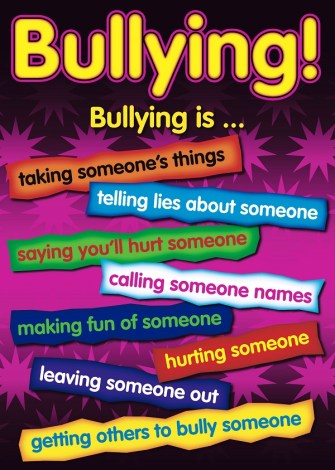
*And if the “rantings” of the legally abused seem raw and unpolished, that’s why. They’re not professional disputants; they’re normal joes and janes who are distraught, anguished, or unhinged. Note: A person doesn’t endure these outrages and not become unhinged.

What Can Be Done with Public Records, Like Restraining Orders, Arrests, and Convictions: A Tutorial for Judges and Everyone Who’s Been Lied about to One

Court records are available for public consumption, freely or for a few dollars, besides people’s home addresses, telephone numbers, birth dates and ages, work histories, list of associates and family members, etc. Men and women falsely targeted for blame in drive-thru court procedures may be fined or jailed for airing information about their accusers’ conduct that’s far less sensitive than what anyone with an Internet connection and a credit card can glean in five minutes—which may include decisions against men and women falsely targeted for blame in drive-thru court procedures….

sniffing

Decisions of the court in public proceedings are public records.

Remarkably, not even judges grasp the significance of the word public. More astonishing than that many judges today don’t know the first thing about the Internet is that no one in government seems to think it’s important that they be instructed.

The conditioned imperative is blame…and the consequences be damned.

Billions of federal tax dollars have been dedicated over the past 20 years to biasing police and judicial responses to accusations of abuse, but not one has been earmarked to show judges how the Internet works and how the public records they generate may be used.

This post will attempt to amend the lapse.

Here are a mere handful of websites that peddle so-called “private” information:

What follows is a demonstration of how they work.

In the most recent fiction-based prosecution against the author of this post, it was ruled by a superior court judge that I violated the privacy of my accuser by discussing her motives online, and I was unlawfully prohibited from publicly referencing her in future. My judge was Carmine Cornelio, and here is what is returned (at no charge) if I enter his first and last names into SwitchBoard.com:

  1. his middle initial,
  2. his approximate age,
  3. his phone number (a landline provided by Coxcom),
  4. his home address (and a map showing where his home is located),
  5. a tab that provides directions to his house,
  6. a tab that leads to information about his neighbors,
  7. the names of a couple of “people [he] may know,” and
  8. an invitation to “View [his] Background & Public Record Information.”

If I enter his name into Intelius.com (again for free), his age is confirmed to be 64, and I’m provided with the names of five of his relatives, as well as his address history, aliases, and prior jobs he’s held (he’s identified as an attorney but not a judge). All of this is right there on the surface. If I cared to know more, here’s what else I could learn for a trivial fee:


Matthew Chan of Defiantly.net has recently chronicled the case of a New Jersey man, Bruce Aristeo, who was jailed for six months for “vlogging” about a woman who accused him of abuse after he was issued something called an “indefinite temporary restraining order.” The judge didn’t even view the contents of the YouTube videos his ruling was based on. I’ve viewed some of their contents, which are mostly satire and fully protected under the First Amendment, and they’re a lot less invasive that an Intelius report. Mr. Aristeo has been arrested at least four times based on allegations he says are false, and those arrests are all public records that may be pulled from an Intelius report, by an employer, for instance, or a prospective girlfriend.

Below is a screenshot from a website called BustedMugshots.com (a product of U.S. Data Co. Ltd.).

blurred mugshot


I was told by this man’s sister that accusations against him were falsified:

It makes me wonder, how common is this? Because my own brother had his girlfriend and mother of his child accuse him of rape a few years ago. He went to prison for it even though she later recanted her lie, but the case was already in the court’s hands and they wouldn’t accept her testimony. She truly ruined his life.

This certainly isn’t something a viewer of this record (e.g., an employer, a neighbor, or a girlfriend) would conclude. Significantly, also, this record is 15 years old. Court records, besides being very public, are very permanent.

Twice on the same page featuring the above record appears this search bar:

It encourages the viewer to look up the public records of yet other people. A button under the mugshot offers the viewer the option to “Order Complete Background Report” from the same “National Database” (called “Instant Checkmate”). The viewer is also invited to enroll in a service that notifies him or her of future arrests of the same person (“Monitor For Future Crimes”).

People, possibly on arrantly false grounds, are set up as targets for constant and endless scrutiny…to which they can hardly be insensitive.

While a line of text under the mugshot suggests a person can “Request This Record to be Modified or Purged,” here’s what pops up when you click its hyperlink:


It’s a tease. The website will only remove the record if it’s been ordered sealed or vacated by the court, or if the person it identifies has died. The blurb hastily clarifies that BustedMugshots.com isn’t out to blackmail people. It doesn’t have to: It collects fees from its advertisers.

This titillating “warning” greets the visitor to InstantCheckmate.com.

Besides advertising the services of Instant Checkmate, BustedMugshots.com advertises for InternetReputation.com, with which the notice above tacitly urges someone with a mugshot published online to inquire (“Protect Your Online Privacy”).

Observe the squeeze: Damning information is published (legally) for the person it concerns to see. That person also sees that anyone can access this and other sensitive information, and is urged to exploit the services of a company that offers to protect his or her reputation…for a fee.

(Summary in media res: A person may be falsely accused in a farcical “trial” and emotionally and financially devastated. S/he may be arrested and imprisoned based on lies. The records may be used to further maim him or her in additional prosecutions. And—and—the records of all of these proceedings, based on a fraud or frauds, may be aired publicly. But the accused may not discuss them defensively without risk of court censure. No wonder, then, that some victims of procedural abuse never want to leave the house and flinch when the doorbell rings.)

This blog concerns restraining orders, which can be obtained easily on hyped or fraudulent grounds and make defendants vulnerable to arrest and conviction for “crimes” that only they can commit, for example, sending an email or placing a phone call.

Vigilant response to any claimed violation of an order has been vigorously conditioned for decades (by the Office on Violence Against Women), and it’s not uncommon for people to report that they’ve been arrested multiple times for falsified violations of restraining orders with falsified bases (see above).

On top of all of this, the records generated by this mischief can be legally published or sold, and the government, besides, has its own public databases that may be freely accessed by anyone with an Internet connection.

These are among the reasons why principle must be restored to process.

Copyright © 2016 RestrainingOrderAbuse.com

*BustedMugshots.com includes this contemptible sentence in its disclaimer: “The data may not reflect the status of current charges or convictions and all individuals are presumed innocent until proven guilty in a court of law.” Sure they are.

How Restraining Order Fraud is Motivated and Concealed by VAWA and Its Advocates

The previous post, which highlights how fraudulent abuse of process is promoted and disguised, contains a link to a PDF prepared by the National Coalition Against Domestic Violence (NCADV) called “Comparison of VAWA 1994, VAWA 2000 and VAWA 2005 Reauthorization Bill.”

The acronym VAWA stands for the federal Violence Against Women Act, which was ratified over 20 years ago (and has been repeatedly renewed). State police and judicial bias toward allegations of abuse has accordingly been conditioned with billions of dollars over decades and is today well-cemented.

Even a non-cynical critic would call the “justice system” owned.

Parsing the entirety of the NCADV’s PDF would be overkill. This post will examine a few quotations that illustrate how police, judicial, and prosecutorial conduct have been bought with inducements that are called “grants.

Grants from the Office on Violence Against Women for “Court Training and Improvements” (i.e., “training” or “educating” judges and court staff) have been discontinued under current legislation, possibly because it occurred to someone that “instructing” the court how it should rule sounds very like coercing verdicts. Procedural bias, however, has already been firmly rooted, and money to influence court process has merely been relabeled Grants to Support Families in the Justice System.

High school civics teachers tell us our government was set up so that its administrative, legislative, and judicial branches act independently to ensure that “checks and balances” prevent any one branch from acting tyrannically, and that state governments enjoy autonomy from the central government. What the quotations below show is how checks and balances can be worked around with cash.

 (VAWA 2000): “Amends Pro-arrest grants to expressly include enforcement of protection orders, and is designed to help state and tribal courts improve interstate enforcement of protection orders.”

This quotation means that money from the federal government is issued to state police departments to urge them to arrest people, including anyone who has purportedly violated a restraining order. If the petitioner of a restraining order reports a violation (real or not)—including a violation s/he has “arranged” (“Susie, I’ve reconsidered. Please come over so we can talk about this!”)—officers have been “incentivized” to haul the defendant in (according to their “judgment,” which has been influenced and can hardly be called fair and objective).

 (VAWA 2000): “Clarifies that as a condition of funding, recipients of STOP and Pro-Arrest grants must ensure filing and service of protection orders at no extra cost to the victim.”

This quotation “clarifies” that unless states allow restraining order petitioners to accuse people for free, they won’t get any money.

(VAWA 2005): “Requires law enforcement agencies and courts to enforce these orders.”

(VAWA 2005): “Prevents courts from publishing survivor information on the internet.”

These quotations explicitly say that state police and court policy has been dictated (i.e., cops and courts have been told how they’re “required” to act). Either they comply, or the money tap gets shut off. This may reasonably be called extortion or coercion.

(VAWA 2005): “Encourages protocols and training to avoid dual arrest.”

This quotation means if there are two complainants in a domestic spat, for example, only one should be arrested (and since this stipulation is eagerly reported by the National Coalition Against Domestic Violence, guess which member of a hetero couple the police are supposed to arrest).

(VAWA 2005): “Criminalizes stalking by surveillance.”

(VAWA 2005): “Expands the accountable harm to include substantial emotional harm to the victim.”

(VAWA 2005): “Expands minimum penalties of stalking if it occurs in violation of a protection order.”

These quotations mean that pretty much any alleged misconduct is punishable and dictates how it should be punished (at a minimum) if it reportedly occurs while a restraining order is in effect.

(VAWA 2005): “Permits LAV-funded attorneys to support victims’ dealings with the criminal justice system; but, does not permit funding to pay for prosecutorial or defense functions.”

This quotation says accusers (“victims”) may be provided with free legal services but that the accused must not be.

The themes in these few quotations indicate the pattern of the web:

  • Punishable conduct has been broadened to include almost anything that can be described as offensive by a plaintiff and/or a judge. In practice, this means any alleged conduct that allegedly causes a complainant to feel afraid.
  • Police and judges have been urged to act and to act without deliberation and bigotedly.
  • Accusers’ accountability has been minimized (and accusers are nominated “victims” or even “survivors” on no more ascertainable grounds than that they accused someone of violating them), while the accused’s accountability has been maximized to include permanent registration in public/police databases, ones that may specifically label them “stalkers” or “violent abusers.”
  • Free attorney services are granted to accusers but must be denied to the accused.

This web has been constructed methodically with billions of taxpayer dollars, and this money has gone not only to the police and the courts but to law schools and nonprofits (like the NCADV), and the latter may reciprocate by producing research papers; websites; and pamphlets, brochures, and posters that further bias the system as well as the public and their representatives, for example, journalists. (Grants from the National Institute of Justice may also be awarded to generate feminist “social science that’s used to “train” judges.) The federal government’s investment in favored nonprofits furthermore legitimates and empowers those nonprofits and thereby increases the donations they receive from the public. The Kayden Jayce Foundation (KJF), a nonprofit that acknowledged false accusation and focused on providing legal aid to low-income (non-white) families, applied for grant monies, was denied, and has since had to shutter its windows. So, too, have nonprofits that defend men’s rights—i.e., equal rights—been spurned. They’re on their own. Consequently, they can’t pay for teams of professional writers and web designers, etc., and receive little or no public assistance. They don’t have the cachet that only money can buy.

If all of this weren’t enough, rulings that nominate people “stalkers,” “batterers,” “child abusers,” or even “rapists” can legally be formed in 10 minutes or even by “default” (i.e., without ever having heard from a defendant at all). In some states (Arizona and Indiana are examples), three-minute ex parte rulings are final unless defendants apply to the court for the opportunity to be heard. Men and women may be accused from another state and never afforded a practicable chance to defend themselves against allegations that may be arrant lies and exercise dire effects on their lives (including loss of employment).

When complainants of procedural abuses speak of “conspiracy,” this is what they’re talking about…and they’re not wrong.

Copyright © 2015 RestrainingOrderAbuse.com

*For further insight, see “‘You have bullsh*t; we have research’: The National Coalition Against Domestic Violence v. Daddy Justice (Or, Why False Allegations Are a Serious Problem).”

Restraining Order Rulings Aren’t about Justice but about Justification, and Lies to the Court Only Work because Judges Also Lie

What this post predicts in its postscript occurred exactly a year after its publication.—Editor, 2018


Here’s a formula for fraud:

  1. You lavish police departments with hefty federal grants to urge their officers to steer complainants of abuse to the courthouse to apply for restraining orders.
  2. You have legislation in place that rewards impulsive or malicious accusation with quickie ex parte rulings from judges.
  3. You instruct judges how they should form those and subsequent rulings and threaten to withdraw funding from states whose courts don’t play ball and comply with federal dictates (see VAWA).
  4. You give this farce a gloss of credibility by requiring that the accused be granted the opportunity to be heard in their defense.
  5. You ensure that the appellate process is also cursory and that the accused have no further recourse to the law to expose what may be false allegations.
  6. With rhetoric and obfuscation, you further ensure that journalistic investigation and criticism are minimal and that the public is kept in the dark.

Accusers are encouraged to beef up their claims to justify themselves to the court and appear duly afraid (and that’s the ones who aren’t outright lying). Judges, whose motives have been coerced, are encouraged to skew their findings (in hearings that may span all of 10 minutes) to meet social and political expectations and justify their intrusions into the lives of the accused (intrusions that deprive the accused of rights and property), as well as to justify themselves to other judges and the public should their performance come under scrutiny.

Other judges who weigh in on accusations that may spawn multiple prosecutions or appeals are encouraged to skew their findings for the same motives and to preserve the veneer of judicial propriety. They are justified in this course by the original ruling or rulings in a case, which may have been formed in moments.

Frauds may start with hyped or false claims from plaintiffs, but that isn’t where they stop.

Copyright © 2015 RestrainingOrderAbuse.com

*The writer of this post was sued for harassment and libel in 2013 (based on his writing about false accusations against him that began seven years prior). To justify the court’s ruling against me, the judge asserted on record that statements of mine on this site were “false.” The judge didn’t say what statements were false, because he didn’t have to. No statements were false. The judge took liberties with the truth. Based on his characterization, I could be sued again. (The next judge would just cite the former judge’s statement as fact.) This conduct isn’t extraordinary; it’s how things are done (and how the court guarantees things stay done).

Some Inconvenient Facts to Consider before You Apply for a Restraining Order

chirp_chirp

Restraining orders are urgently encouraged by many, including the police. They reward impulse and can be procured in moments. Everyone may goad you to act, including friends and family, which can exert a coercive influence on your decision. This is what they don’t know and you won’t be told.

  1. Application for a restraining order may cost you nothing, but that doesn’t mean it’s free; the taxpayer foots the bill (which by some estimates may run from $1,000 to $2,000).
  2. Accordingly, “your” restraining order is not yours; it’s the public’s, bought and paid for.
  3. The court, the district prosecutor, and the police represent the public interest; the restraining order is theirs. You are just the complainant, and your control ends there.
  4. The court may allow you to recant your allegations and vacate the order if you reconsider, or it may not, and the system will act on those allegations regardless of whether you want it to; you have nothing to say about it. You can whine, wheedle, and beg, and it won’t matter; process is blind and deaf, and you have made the accused vulnerable to incarceration by placing a target on his or her back.
  5. Once you introduce an allegation publicly, it becomes a permanent public record.
  6. That record may be aired publicly by anyone anywhere and anytime in accordance with the First Amendment. That includes in a blog, on YouTube, or in a newspaper.
  7. To accuse someone is to make it a criminal offense for that person to communicate with you. You have no power to “allow” exceptions to what a court orders. You concede your adult right to exercise personal discretion when you petition the court to assume a parental role in your life.
  8. To accuse someone publicly is furthermore to make him or her subject to warrantless arrest, subject to automatic enrollment in public (including police) databases, and consequently subject to prohibition from certain forms of employment and denial of the benefits that would otherwise accompany that employment (traces of the record do not dissipate; they’re permanent).
  9. Since this will likely be objectionable to the accused, it can set in motion a cycle of reciprocal accusation and prosecution besides create enduring strife in families and social circles. Legal action cements a lasting distrust and enmity, and makes it impossible (because illegal) for anyone to talk things out and reach a detente.

Copyright © 2015 RestrainingOrderAbuse.com

*A restraining order is not “just a restraining order.” The point of restraining orders was to cull and identify violent abusers, and the imperative promoted by feminist proponents of “women’s law” is to make that label permanent and punitive.