
“In thousands of 10-minute hearings held all over the Commonwealth, judges are now able to do what the Marxists have only dreamed of doing before now, and could never hope to do before they were able to use the pretext of ‘domestic violence.’ However, the real violence is almost always to the rights of the defendant, and to the Constitution itself….”
—Attorney Gregory Hession
As a follow-up to the previous post, “Pointers for Contesting a Restraining Order,” this post analyzes (and recommends) attorney Gregory Hession’s tutorial “How to Fight a False Allegation Restraining Order.”
The title’s a little weird. An earlier version of the explication used the phrase “false restraining order.” Evidently Mr. Hession wanted to clarify that he means a restraining order that’s very real but based on an allegation that’s false—hence the phrase “false allegation restraining order.”

Massachusetts attorney Gregory Hession, who urges the wrongly implicated to expose their accusers’ false motives, identifies the above as “ulterior” reasons for the procurement of a restraining order.
The quotation of Mr. Hession’s that was lifted for the epigraph above highlights that violence is the pretext used to justify procedures that are constitutionally unconscionable. Often no violence is alleged. The word, however, emphatically appears everywhere in state statutes as a smokescreen. It makes any violation or abuse of the accused “okay.” The courts aren’t messing around with people’s lives for kicks; they’re protecting the vulnerable from “violence.”
Here, therefore, is what you, as the “defendant” or “respondent” (the accused), are up against:
In restraining order hearings, judges may ignore ALL traditional due process protections such as jury trials, the rules of evidence, the right to innocent until proven guilty, etc. They may also usurp several other dearly held rights, such as the right to be with one’s children, to occupy one’s own home and property, or travel where one pleases. No one has yet come up with so demonic a perversion of our legal system to match the breathtaking scope of the unconstitutional deprivations of this law.
What is the actual legal basis for getting an abuse restraining order? Many courts issue restraining orders without following the requirements of the law (which are already so flimsy as to be a mockery). If a person comes into court (called the “complainant” or “plaintiff”) and whines about feeling “fear,” a court will often issue an order, even though many times it is improper and illegal to do it.
Restraining orders—not just in Mr. Hession’s state of Massachusetts but in most if not all states—require that some intimation of “imminent physical harm” be suggested by the alleged conduct of the accused. Mr. Hession urges that this qualification be picked apart.
First the harm has to be “imminent,” [that is], immediate, right there, right now. Not a vague threat to do something someday. Not a phone call from a far location. Next, it has to be “serious.” The [Massachusetts] attorney general, on a ballot referendum to overturn some recent changes to the domestic violence laws, defined “serious bodily injury” as follows:
“Injury that results in a permanent disfigurement; long-term loss or impairment of a bodily function, arm, leg, or organ; or substantial risk of death.” [If you’re appealing an order in another state, you may investigate how your state defines “serious bodily injury.”]
Lastly, the fear has to be of “physical” harm, not emotional harm, psychic harm, hurt feelings, or any number of other non-physical issues that people commonly get orders for.
If courts went by this definition strictly, fewer frivolous orders would be issued. However, as you likely know, judges often issue an order if they feel it should be issued, regardless of the law’s requirements.
(Statutes are often mishmashes. Ridiculously, an injunction against harassment in the author’s state of Arizona reads, “The Court finds reasonable evidence of harassment of the Plaintiff by the Defendant or that great or irreparable harm would result….” There’s plainly a huge gulf between annoyance and “irreparable harm.” That’s how these statutes are designed: to apply to virtually any alleged conduct, however harmless, but to make it seem as though plaintiffs are being protected from violent assault…or murder. That’s how the laws are justified. The person who sends some angry text messages is equated with tomorrow’s serial killer.)
If you hope to appeal a restraining order, Mr. Hession stresses, you must appeal the initial order (which may issue from any of a number of courts). It is possible to contest an order through higher tiers of the court system if the first judge finds against you, but if you blow off your initial court appearance, “fuhgetaboutit.”
First, Mr. Hession says, get your “docket number” (your case number), go to the courthouse, and demand to see all of the allegations against you. (Sometimes the plaintiff’s affidavit, his or her sworn narrative statement, isn’t provided to the defendant when the order is served and must be requested.)
Second, he offers a number of strategies to attack the allegations against you, mainly by exposing falsehoods. For these, go to the source: “How to Fight a False Allegation Restraining Order.”
If you have no experience of court procedure, Mr. Hession’s tutorial is a challenging read. It’s also long, which can be off-putting. It is, however, definitely worthwhile, whatever state you may be in.
The point of this heads-up is to ensure that the substance of Mr. Hession’s advice isn’t discounted by the bewildered defendant who may think it only applies to the wrongfully accused in Massachusetts. Absorb the gist of the material, and it’s likely you’ll fare far better in an appeal than you would have otherwise.
Copyright © 2015 RestrainingOrderAbuse.com



 The ruling was reported Monday on the

 “TRO violation for inadvertent butt calls”
 Perform a purge, and make sure the firewall has no holes.








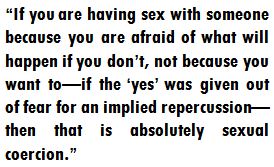
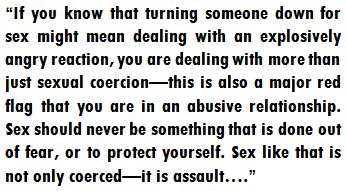


 This is how, whether you’re a man or a woman, you can be deemed a rapist without the court’s knowing a thing about you other than your name. (Yes, women, too, are accused of rape in civil court, that is, of having coerced an unwilling partner to have sex.)




 Feminists, of course, are not thinking about all this psychology going on behind the scenes.
 According to a
 Her statement owns that “false reports [of rape] do really exist.” It also owns that they’re “incredibly damaging.” But it completely discounts the damage to the people falsely accused by those reports.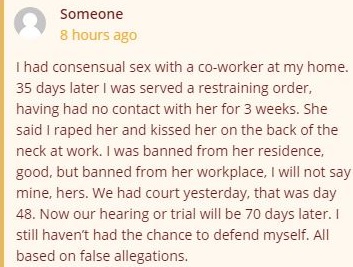





 I am a little league, travel ball, and high school umpire. I umpire because I love the game and to make some additional money on the side. I have been umpiring baseball for close to 25 years without any incident whatsoever, and most reviews of my performance have been complimentary.
 parenting and considers herself an expert in child-rearing. I had even caught her entering my house and administering medication to my daughter without our consent, which I firmly put a stop to.
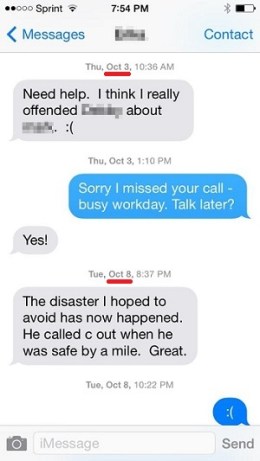 Well, because there was no good reason for my sister-in-law to be upset, and because the umpire company needed me to cover the game, I did. There was no issue with the game, and I received many compliments afterwards. I ended up working another one of my nephew’s games a couple of weeks later, again with no issues. The next week, I got a call from my umpire assignor reporting that my sister-in-law filed a complaint with the league saying her son was “uncomfortable” with my working behind the plate.
 After about a two-hour hearing, the judge ruled against me. He stated that because my wife informed me that her younger sister had told her to keep me away from her kid that I was put on notice…yet persisted in showing up at the fields to work. Never mind that I was told two months after their conversation (my wife didn’t tell me right away because she thought it was just her sister acting crazy). The judge then went on to say that a mother had the right to determine who got to be around her kids and didn’t need a good reason.
 We have filed a motion for a new trial with compelling evidence. It was denied by the same judge. We have also filed a motion to modify the order to allow me to attend my daughter’s school events since I am her primary caregiver while my wife is at work (I own my own business), and this too was denied, because the judge thought it would be too hard for the school and the police to enforce.







 A: Right (
 TALKING BACK to restraining orders