RestrainingOrderAbuse.com Guest Post by Matthew S. Chan, the Appellant in a Restraining Order Case before Georgia’s Highest Court

Matthew S. Chan is the creator and administrator of ExtortionLetterInfo.com (ELI) and the appellant in the Georgia Supreme Court case Chan v. Ellis.

In my desire to give something back to RestrainingOrderAbuse.com (ROA) for the enormous help, contribution, and insights into my own protective order appeal case with the Georgia Supreme Court that it provided, I found myself a bit stumped as to what to write about that might be helpful and perhaps a bit different from the articles and commentaries I have read on ROA so far. So, if I make some wrong assumptions about ROA, please forgive me as I am a relative newcomer. As a disclaimer, I do not feel qualified to speak specifically on matters of domestic protective/restraining orders as they relate to divorces, custody fights, or other family disputes.  I feel those issues are highly volatile, and I don’t have the background to properly discuss them.

What I do feel qualified to speak on, however, are matters that pertain to the First Amendment, free speech, and that speech as it relates to online speech. Whether disputing parties are related or not, the First Amendment, backed by many significant rulings from the U.S. Supreme Court, makes it clear that everyone in the U.S. (including murderers, rapists, robbers, embezzlers, and any other type of criminal you can name) enjoys the right to free speech. That free speech comes with certain exceptions and restrictions as defined by the U.S. Supreme Court.

Some of them are:

  • Incitement
  • Defamation (including libel and slander)
  • Obscenities, such as child pornography
  • Fighting words

It is almost always legal to engage in speech about someone publicly or privately, unflattering or not. But it is not always acceptable to engage in speech to a person, especially if it is unwanted. In the context of the Internet, you should have the right to speak freely about anything or anyone as long as your speech doesn’t fall within the list of exceptions and restrictions.

And yet, I am hearing more about these underground restraining orders that instruct people to be absolutely silent regarding a certain person or party, i.e., that dictate you cannot speak publicly about that person or party to anyone. That is clearly unconstitutional.

This is an abuse of the protective/restraining order system that frequently happens in courts of local and smaller jurisdictions. It is no surprise that many of these cases involve “pro se” (self-represented) parties, who are more likely to be taken advantage of by an overzealous and overstepping judge. Up to this point, I have stated what most ROA readers already know.
But what then can you do about it? The easy, copout answer is hire a good lawyer. But we all know “pro se” parties represent themselves because they either can’t find a good lawyer or they can’t afford a good lawyer.

Having lived with a protective order for nearly two years, I have found that it largely doesn’t impact my day-to-day existence. I have very little emotional baggage about it. Although my protective order is a matter of public record, it is not easily found, nor is it advertised. However, my accuser chooses to make mine public as a way to get revenge/payback and to embarrass and humiliate me.  I don’t feel embarrassed or humiliated at all anymore. I’ve had two years to let it sink in. She went to her local newspaper as well as a photography blog site to publicize my protective order. I am very certain she approached several other media sources, but she only managed to succeed in getting two to write her story. When she went public, I also went public, and I got way more coverage than she did because of the First Amendment issue.

It goes without saying that I became angry about her actions because the “facts” as told by her were incorrect. I was faced with one of two decisions:  either slink away silently and live in fear, shame, and embarrassment of the protective order…or speak out and fight back, and tell my story.

An issue I see is that people let little pieces of paper define them, such as high school diplomas, college degrees, technical and professional certifications, their financial statements, their marriage certificate, etc. A basic protective/restraining order is simply a piece of paper that formally instructs someone to stay away and not bother someone. It is a civil issue, not a criminal one.  But accusers like to try to criminalize the matter. My accuser loves to do the “stalkie-talkie” routine and likes to refer to me as her “stalker.” I have called her a copyright extortionist even longer. And yet, we have never met, spoken, emailed, text-messaged, snail-mailed, or even faxed. There has never been any contact. Still, she wants to say I am a “stalker” because she currently has a little piece of paper that says “stalking protective order.”

She is attempting to define who I am to whomever will listen. The problem she has is that I don’t buy into it; I have no guilt or shame over it, and I don’t hide from it.  And because I am pretty good at explaining the facts of my case and position, only the most gullible or uninformed believe her.

Too many people take things too literally. Too many people are legally ignorant. Too many people do not understand how the judicial system works. Too many people do not understand the realities of the judicial system.

For example, I live in a city where there are overcrowded jails. I don’t think that is unique to the city I live in. I also live in a city where the district attorney and prosecutor’s office has many cases to pursue and a tight budget to do it with. I live in a city where there is an abundance of physical and “harder” crimes such as burglaries, robberies, murders, drug crimes, rapes, etc. In that context, I see the matter of a protective/restraining order (a civil matter) as ranking low in the prosecutorial pecking order.

Generally speaking, protective/restraining orders are designed to prohibit unwanted physical contact and unwanted communications.  In my view, unless you have some huge emotional issues or obsessive tendencies towards your accuser, most orders are easy to follow, and they are not unconstitutional.

However, what if you have a restriction on your free speech where you can’t breathe a word about your accuser to anyone?  It is certainly problematic on the local level, but it is even more problematic at a state or national level. It is simply unconstitutional, which is my way of saying that it is, in a sense, “illegal.”  But some of you might say, what the order says goes. I don’t necessarily agree with that, because illegal contracts are not enforceable. For example, two people agree to do a drug deal. If one person decides to break the rules of the deal, it is unenforceable, because the deal was illegal to begin with. Likewise, an agreement broken by a John to pay a prostitute is unenforceable because it was illegal from the start. I similarly view it as illegal for my accuser to try to have me arrested or fined because I spoke or wrote about her (not to her) on my own website, and I think it would be embarrassing for any public official to dare to find me in violation of the law. That is my truth because I know what I know, but it may not be enough for you.

The sense of right and wrong has to be weighed against the costs of being a silent victim. The ability to overcome fear and ignorance, personal resourcefulness, the urgency to right a wrong, the fortitude to face conflict and risk—these are factors, and they are ones each person must self-assess.

It all begins with introspection and evaluation of whether the fight is “worth it.” In my case, if I had received a “stay away” order for one year, I would have been angry and unhappy, but I probably would never have appealed the order placed upon me. To me, it would have been an easy order to comply with, and I would not have seen it as devastating to my reputation, even if it were made public. The reason is that I know how to tell my story (and I have many times) in an open and authentic way.  Certainly, there are some less than flattering reports about me but none worse than what I have seen about others.
I have a larger view of myself in this world. I am not famous, and most people don’t care about me or what I do. I am largely unimportant (to them). I am not a celebrity; I am one of many. But for many, because it happens to them, they think the whole world is actually looking at them and their restraining orders. The truth of the matter is that most people simply don’t care.

In the larger view, famous people have committed all kinds of indiscretions, including having affairs, divorcing, getting into fights, committing DUI’s, doing drugs, getting arrested, soliciting prostitutes, etc. There is a huge list of all the embarrassing things people get themselves into. But the fact of the matter is most of that is small potatoes in the big scheme of things. You think people will shun and hate you, but the reality is, to most, it is trivial. You are just another person who allegedly committed an indiscretion.

You may ask, if I believe it is all small potatoes, why am I fighting so hard against my protective order?  There are actually multiple reasons for my current course of action.

My accuser inflamed me. For a woman who is so allegedly afraid of me and my alleged “stalking,” her actions betrayed that she really wasn’t that frightened of me or about whether I would actually cause her any physical harm or endanger her personal safety. She chose to flaunt, brag, and gloat over her “win,” and there was no good purpose in that.

The lawyer who represented her, Elizabeth W. McBride, engaged in unethical tactics like not providing me with a copy of her exhibits so I could examine them closely, while I, a non-lawyer, gave her the professional courtesy of providing an extra copy of mine. When the hearing was over, I both called and emailed the lawyer about getting a preview copy of the protective order. I also wanted to coordinate with her about both of us getting a copy of the courtroom transcript, because it was a shared resource that was agreed upon at the beginning of my hearing. I realized she treated me the way she did because I was not a lawyer and she was trying to cheat me. Because I was opposing counsel, she was required to interact with me on certain matters as she would with another lawyer. She chose not to, and I have remembered this the last two years. One day, I am confident it will come back to bite her.

But the biggest reason I fought back was the outrage that I and others felt that there was a flagrant disregard of the First Amendment as it related to online speech, a total disregard of the actual context of my speech, and a total disregard for Section 230 of the Communications Decency Act, which states that website owners are not responsible for content other users post. These were all points I clearly argued but the judge seemingly ignored.

I saw this as serious misbehavior by the judge and the local court system that could potentially have wide-ranging and long-term consequences to me and any other Georgia website owner. As a matter of disclosure, I do place a great importance on my Internet presence and online activities to my business and reputation. I am a self-employed entrepreneur and business owner who regards the Internet as a hugely important resource to both his personal and business life—probably much more so than the average person who works at a job 40 hours per week for an employer.

For all those reasons, I fought back. But I would be lying if I said there weren’t moments when I wavered. I had moments of weakness, but I also had my anger to prop me up. A lot of my impetus owes to the actions of my adversary and her lawyers.  By their actions, they practically taunted and drove me into appealing the case. Because of my anger and sense of injustice, I was galvanized into action.

I want to take the time to point out an important element of my fight-back. It is very helpful to find friends and supporters who understand you, your character, and the type of person you are. Getting moral support from people who will empower and encourage you is motivating.  Having “support” from people who are fearful, bashful, risk-averse, cynical, and unwilling is not.

In my life, I believe “like attracts like” and “birds of a feather flock together.” In my case, I have many people around me, people who are independent-minded, self-determined, believe in fighting for a cause (such as free speech) and not letting your enemies get the best of you. And believe it or not, most of my best support actually comes from those I have never met in “real life.”  My best support came from “strangers” I have met on the Internet. I have never met or spoken to Todd of ROA and yet, unbeknownst to him, his work on ROA has had a huge influence on my fight.

There are so many layers to the conversation of how to fight back against a wrongful restraining order restricting your right to free speech. There is no way I could get into all the stories, tactics, and strategies, or the mindset involved in my own journey. I will one day write a book on the subject. However, as a guest blogger on ROA, I thought I would share some insights into how my mind works and the mindset that drives me.

I consider myself a victim of protective/restraining order abuse, but I have also chosen to publicly fight back against my accuser and the lower court that allowed the unconstitutional order. Win, lose, or draw, I have no regrets, because my voice is loud and travels far. And I will never let my accuser, a judge, a court, or a piece of paper define who I am. Not as long as I live.

It is that attitude, which has resonated outwards, that I believe helped attract many supporters to my side, including the lawyers who have worked on my (and my position’s) behalf.

Matthew S. Chan is the creator and administrator of ExtortionLetterInfo.com (ELI) and the appellant in Chan v. Ellis, an appeal of a lifetime protection order presently under deliberation by the Georgia Supreme Court.

Copyright © 2015 RestrainingOrderAbuse.com and Matthew S. Chan

*Update: The Georgia Supreme Court returned a verdict in favor of Matthew Chan on March 27, 2015.

(Straw) Hats off to Tennessee, the One State in the Nation That Has a Provision for Expunging a Bogus Restraining Order

“TCA 40-32-101(a)(5) All public records concerning an order of protection [ex-parte, exparte] authorized by title 36, chapter 3, part 6, which was successfully defended and denied by the court following a hearing conducted pursuant to § 36-3-605, shall, upon petition by that person to the court denying the order, be removed and destroyed without cost to the person.”

 —Wikpedia, “Expungement in the United States” (Tennessee)

A woman wrote this week desperate to learn how to seal or expunge the record of a temporary restraining order petitioned against her in California. The order was rejected by the judge, but she’s concerned about the potential ramifications of a lingering record to both her and her children.

Not unduly.

In trying to discover what recourse might be available to her to have the record zapped, I chanced upon the Tennessee statute highlighted in the epigraph. It appears to be the only one of its kind in the country.

Ironically, I’ve also been in correspondence with a gutsy Tennessee woman, Betty Krachey, who was issued a protection order by her boyfriend a few months ago that was dismissed by the court but whose reported fraudulence so outraged Betty that she’s been vigorously petitioning her state to “hold false accusers accountable.”

I wrote to Betty about the Tennessee provision for expunging the record yesterday. I told her I only hoped knowledge of it wouldn’t dull her fervor to inspire change. She says no way.

The order of protection that was served on me was dropped when we went to court. BUT I know a lot of people (all men but me) that this has happened to whose were not dropped and are still on their records. I want something done to my ex for filing this false report against me, and I want to get the law changed to hold anyone who does this accountable for trying to ruin someone’s life. (I know it’s mostly women who file these false reports!) A friend of mine’s ex-wife did this to him, and I remember when the police came to serve him (at my store, while he was having breakfast). He was telling everyone it wasn’t true and he never laid a hand on her.  No one believed him. I remember thinking he must have done something or the cops wouldn’t be serving him papers to leave his home. I know better now, and I know how people think of the ones this is done to.

For its being more legally evolved than the rest of the nation, hats off to Tennessee—and, as I quipped to Betty, I didn’t think people there even wore shoes.

Copyright © 2015 RestrainingOrderAbuse.com

*Betty quipped back, “And most of the people out here DON’T wear shoes…or teeth!!!!”

Restraining Orders Are Public Records

It’s hard to tell whether this is a goad or a guarantee: “Find Restraining Order Records For Anyone Instantly!” Either way, it’s enticing.
If you’re dating someone and you’ve noticed how their temper gets out of control, before things go any further, check their record on Restraining Order Records. They might not have ever committed a crime, but if their name shows up on Restraining Order Records, you might think twice about pursuing this relationship.

Lawyers discount restraining orders as he said/she said matters: no biggie. Judges may also consider objections to them to be overstated—simply because they’ve been stated at all. These dismissals stand in stark contrast to the admonition: “Restraining Orders aren’t pleasant to think about, but the consequences can be worse. Check Restraining Order Records.”

Which appraisal of the significance of restraining orders do you think more closely corresponds to the public’s? (That is a rhetorical question, yes.)
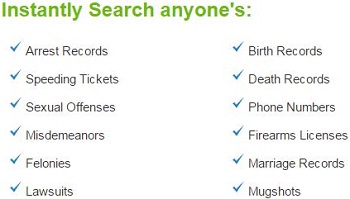
The quoted material above is featured on the site PublicRecordsReview.com, which advertises the “Top Restraining Order Records Sites”: Instant Checkmate, United States Background Checks, Been Verified, U.S. People Records, and SpyFly.

Whether the returns from such sites can be relied upon is something the reader may investigate if s/he chooses; the writer doesn’t want to know. Whatever the case, however, the issuance of a civil restraining order represents a judicial ruling, and judicial rulings are public records. Here’s “why”:

Essential to the rule of law is the public performance of the judicial function. The public resolution of court cases and controversies affords accountability, fosters public confidence, and provides notice of the legal consequences of behaviors and choices.

[…]

The public in general and news media in particular have a qualified right of access to court proceedings and records. This right is rooted in the common law. The First Amendment also confers on the public a qualified right of access. In 1980, the Supreme Court held that the First Amendment right of access to court proceedings includes the public’s right to attend criminal trials. The Court suggested that a similar right extends to civil trials…. Some courts of appeals have held that the public’s First Amendment right of access to court proceedings includes both criminal and civil cases (Timothy Reagan, “Sealing Court Records and Proceedings: A Pocket Guide”).

Although they’re civil instruments, restraining orders are associated with violent or otherwise criminally deviant behavior, so they’re recorded and preserved in statewide police databases and the FBI’s National Crime Information Center (NCIC) database, which private investigator Brian Willingham calls the “closest thing to a nationwide criminal records check in the United States today” (italics added). They’re also recorded (virtually in perpetuity) at their courthouses of origin. Defendants named on domestic violence restraining orders may furthermore be entered into a domestic violence (specific) registry, possibly even if a temporary order against them is dismissed. The potential consequences to employment and even employability in certain fields could hardly be more obvious.

A profession as mundane as “substitute teacher” requires that its applicants undergo an FBI background check, and any interviewer may, of course, simply ask if a prospective employee has “ever been the subject of a restraining order.”

Ease of access to restraining order records by the general public differs from state to state. In Indiana, for example, it just takes an Internet connection. In other states, records aren’t as conveniently scrutinized.

That doesn’t, however, mean they’re inaccessible.

The animus behind advocacy for restraining orders is the animus behind all law related to violence against women. Whether advocates are anti-rape or anti-domestic-violence, the argument is the same: that the accused must be exposed so that (female) victims of violence will be encouraged to come forward. Publicity isn’t just incidental; it’s demanded.

Superficially, the demand isn’t without sympathy.

Restraining orders, however, are adjudicated in civil court. That means they’re matters instigated by private citizens whose allegations aren’t (necessarily) vetted by the authorities or by government prosecutors. They are, very literally, he said/she said prosecutions. Temporary restraining orders may be obtained in minutes based only on finger-pointing and feelings (“I’m afraid”), or on testimony that’s significantly or totally false (or even maliciously fabricated). The evidentiary bar is so low as to be skipped over—tra-la-la—and judicial bias is endemic and may even be mandated.

Elaine Epstein, former president of the Massachusetts Bar Association, famously observed decades ago, “Everyone knows restraining orders…are granted to virtually all who apply.”

The situation that obtains then is one of damning documents’ being generated on the basis of one or two protestations of fear or danger made to prejudiced judges in mere minutes-long procedures whose rulings are recorded indefinitely in public databases that any teen with a laptop and Daddy’s credit card can poke a zitty nose into from McDonald’s.

Copyright © 2015 RestrainingOrderAbuse.com

Not All Feminists Are Women, but All Feminists Are Responsible for Why False Accusations Are Rampant and Why They Work

Feminist lobbying is to blame for the injustice of restraining order and related laws and policies. There are no ifs, ands, or buts about it.

False accusations shouldn’t work, but they do—commonly, and not uncommonly to devastating effect.

That’s thanks to feminist crusaders, who may or may not represent Women, and who may or may not be women. This clarification isn’t intended for men who’ve been abused by court process; they don’t have any problem criticizing feminists, whatever form they come in.

Women, however, do—even women who’ve been abused by court process themselves. The clarification is for them.

Consider:

(1994) “Hi, Senator. This is Polly Wannacracker of COMA, the Consortium Opposing Male Aggression. I’m calling to share some startling statistics about violence, violence, and more violence. May I forward our research findings to your office?”

(1998) “Hi, Senator. This is Polly Wannacracker of COMA, the Consortium Opposing Male Aggression. I’m calling to share some more startling statistics about violence, violence, and more violence—also to tell you about the exciting progress we’ve made toward alerting the public to  the horrors of domestic abuse. Of course, nothing is ever enough when the stakes are this high!”

(2005) “Hi, Senator. This is Polly Wannacracker of COMA, the Consortium Opposing Male Aggression. How are you? How’s your wife? Oh, Bob, you kidder! We’ve so appreciated the support you’ve shown our cause over the years. Ha, you know me too well! Yes, I was of course calling to share some further startling statistics about violence, which, as you know, is epidemic, epidemic, epidemic….”

The allegory may be corny, but you get the point. This is how legislation is prompted, and support for it solidified and maintained. Names change; the message doesn’t.

Money has steadily aggregated to representatives of feminist causes over the decades, and this money has been used to secure public opinion through “information campaigns.” Too, it has inspired grant allocations to agencies of the justice system amounting to billions under the feminist motivated Violence Against Women Act (VAWA). Federal grants are also issued to promote and fund social science that validates these expenditures and laws related to violence against women, including restraining order laws. Both money and this tailored research are used to influence police policy and condition judicial priorities.

Women, defensively, may deny that members of their sex instigate malicious prosecutions more often than men or to greater effect. Who lies and why doesn’t matter, though. Judges should be vigilant against false claims, which should be detected, dismissed, and punished. Judges aren’t vigilant, false claims aren’t detected, and their claimants aren’t sanctioned. Why?

Thanks to dogged and vehement feminist politicking for the past 30 years or more, standards for substantiating claims of abuse made by restraining order petitioners are none, and penalties for lying are none. That’s because (women, please note) if the law made the standards too demanding or it threatened penalties for iffy testimony—so the dated argument runs—abused women might be afraid to come forward. They would just “suffer in silence” instead.

To ensure abused women aren’t afraid to come forward—again, so the dated argument runs—allegations must be taken on faith, and judges must have complete latitude to rule as they “think best” to protect the interests of people who can’t protect themselves.

If all this wiggle room means some people (or a lot of people) get falsely implicated…so what?

Law follows politics, and the political fix has been in for a long time. It stays in, because the architecture of laws has been concrete-reinforced. Feminist advocates continue to “monitor public policy” and to maintain their painstakingly erected social webwork. They have the money to do it. Oppositional voices are neither bankrolled nor have any political cachet. They’re not just the underdogs; they’re the usual suspects.

The above makes the below possible (comment submitted to this blog a few days ago by “Rhonda Lynn”):

I’m going to court in a few hours. I haven’t slept or eaten, and I’m a wreck. My life is over. Today.

I fled a [domestic violence] situation in another state and moved back to Washington. I bounced around a bit and finally ended up renting a room. (I’m disabled, on Social Security.) Yes, Craigslist.

I felt I asked all the right questions: Are you married? Do you live on the property? Do you own the home? Who else lives there? Both [man and woman] were surprised to learn [I was disabled, because] the other tenants renting the room across from me were disabled, as well. The man of the [tenant] couple was deaf, and I know American Sign Language.

Upon moving in, I began noticing the lies being told. The disabled couple was made to turn over their food cards. They tried with me when I signed the month-to-month agreement. I, of course, declined.

I helped with the deaf man and his developmentally disabled woman, because the female “owner” (also a lie) was overwhelmed and claimed she was sick. I cooked and cleaned (28 loads of laundry, using the washer and dryer I brought from my previous residence). I paid for Thanksgiving dinner.

Then Hell came. A friend of the female claimed the “husband” had been coming on to her…long story. The next day, it was me! […] First she tells me to move out; then she’s my friend.

The exploitation of the couple continues. The sister of the deaf man calls me [and] then calls Adult Protective Services. I make a call as well. There is an active investigation.

Ready?

sign-languageThe police knock on my bedroom door and give me 10 minutes to get some clothes. The “husband-owner” filed a restraining order on me!

I had a couple stay overnight for a movie marathon the night before, so I had a bit of help. The female officer verified I had a lock for my room. She advised the petitioner no one was to enter my room. She had me turn over the house key. I was in shock, crying.

As we pull away, the “husband” sends me a voice recording…saying, “See…who got [who] out of whose house? I got you out of my house! Neener Neener.”

I called the police. No good. I am not the victim. I’m the perpetrator. While on the phone…two more [messages] telling me I’m not getting any more of my stuff back, can’t come back to the house…even with an officer. “You’re burnt bitch! If the police ask where’s your stuff, I’m gonna say I don’t know.”

Then, there’s the “order.” A Domestic Violence Protection Order!

The allegations, all false…and very damning: stealing his mail, opening it and not giving it to him, going in his wallet, taking his [Social Security] card and old i.d., shoving him into a wall, causing a bruise on his back, yelling at all hours of the day and night, causing such stress on the disabled couple that they can’t eat or sleep and have PTSD episodes, calling members of the house vulgar names, texting and calling everyone while they sleep, [threatening] to burn the house down, [warning] him not to sleep, because I’d kill him. [He alleges] he is in fear of his life, afraid to take a shower or come home.

Then, lastly, the night before (when I had company), [he says] I came at him with a kitchen knife as he was getting ready for work [and that] he tried to call the cops, and I took his cell phone away. Then gave it back that morning.

Oh, my lord!

They both went on my Facebook [page]. He called me a hooker, said I would sleep with any man, and called me a horrible name. I didn’t respond, of course. Then he said I do meth, [which] he knows because I lived with him and he cleaned my room and found pipes and bags. Then she responds and says…and rigs and baggies. Now we know [they say] why she cleaned, and it explains her treatment of us. He [wrote] in another post: “I just want everyone to know she does methamphetamines.” (He is in outpatient treatment.)

[…]

I call the police…to get my stuff. I left my daughter’s ashes and pictures.

They say, “How can you prove you live there? If he doesn’t say you live there, we won’t bust down the door.”

I’M GOING TO JUMP OFF A BRIDGE.
(BUT DON’T DRIVE AND NO BUS FARE)
PLEASE. HELP ME.
RHONDA

The reader may choose to indict the male accuser in Rhonda’s story instead of the apparatus he exploited because he could, or the reader may choose to indict the apparatus itself and those who inspired it, defend it, keep it well lubricated, profit from it, and convincingly deny it’s abused.

Neither position will help Rhonda, who may be broken forever (or until she finds a bridge), but one of them may eventually make it illegal for a life to be so viciously demeaned as hers has been.

Copyright © 2015 RestrainingOrderAbuse.com

“You have bullsh*t; we have research”: The National Coalition Against Domestic Violence v. Daddy Justice (Or, Why False Allegations Are a Serious Problem)

A correspondent, friend, and fellow blogger who’s been relentlessly attacked through the courts by a disturbed neighbor (over a period now spanning years) sent a link to the YouTube vid “The Grand Poobah” last week. It’s a 2011 “interview” between men’s rights activist Ben Vonderheide (a.k.a. “Daddy Justice”) and Rita Smith, former executive director of the National Coalition Against Domestic Violence (NCADV), an influential Colorado-based nonprofit.

(Note: The word in the video’s title should be spelled “poohbah,” after a comic opera character whose name was probably formed from the interjections pooh + bah. Mr. Vonderheide’s spelling it “poobah” might have been an accident—or it might have been on purpose.)

The setting of the interview, which would more aptly be called an exchange of words, isn’t clear, but it seems to be a post-conference mix-and-mingle. Mr. Vonderheide takes issue with the NCADV’s feminine bias and the propagandist tenor of the factsheets it publishes, which aren’t uncommonly cited by feminist advocates.

As the quotation in this post’s title suggests, the questions he poses to Ms. Smith aren’t favorably received. Those questions regard the NCADV’s disinclination to acknowledge maternal child abuse (Ms. Smith: “It’s not our focus of work”), as well as its denial that false accusations of domestic violence are a serious problem, false accusations that Mr. Vonderheide alleges are “promoted by [the NCADV’s] budget.”

Daddy Justice’s interview style (à la Michael Moore) is obtrusive—he’s plainly crashed the party—but while Mr. Vonderheide is necessarily assertive, the worst you could say of his questions is that they’re confrontational. They’re nevertheless called “abusive” and “aggressive,” and he’s prodded to leave.

The grudging answers his questions prompt before he’s rebuffed don’t provide much informational grist for the mill, but to his allegation that more than 80% of restraining orders are based on false accusations, Ms. Smith significantly counters that her facts say it’s only “2% of the time” (and she urges Mr. Vonderheide to “stop lying”). Later she revises her estimate of the number of false accusations from 2% to “2 to 5%,” dismissively, despite the fact that if, say, 2,000,000 restraining orders are petitioned a year (and the total may be much higher), the extra 3% translates to the invasion, disruption, and possible dismantling of 60,000 innocent defendants’ lives, besides those of their children and others peripheral to the mischief.

A mere 5% false allegation rate means the victimization of 100,000 (or many more) innocent people per year (again, not including ambient casualties). Anecdotal reports, of course—including from judges and attorneys—put the false allegation rate 6 to 18 times higher than 5% (30 to 90%). It just depends who you’re asking.

Even a ridiculously conservative false allegation rate like the posited 5% plainly recommends legislative reform, because there’s absolutely no accountability in the restraining order process. False accusers aren’t punished, and damages from false allegations aren’t remediable by lawsuit. Additional false claims can what’s more be lodged almost immediately by the same accusers using the same process. There’s no statutory ceiling on the number of orders a single complainant may apply for. (Some victims of procedural abuse report spending tens of thousands of dollars to fend off one petition only to throw up their hands—and in cases forfeit their custody entitlements—when a second comes down the pike a few months later. See here for an example.)

It should be appreciated, too, that any audit-derived estimate of the number of false allegations can only be based on allegations that are recorded as false (by “somebody”). No official false allegation rate accounts for the number of times false allegations succeed or the number of times cases based on them are simply “dismissed” without comment.

In other words, false allegations may well be rampant or “epidemic” (a word favored by anti-domestic-violence advocates), and there would be no record that says so.

The nyah-nyah from the title—“We have research; you have bullshit”—deserves reflection, also. (It doesn’t come from Ms. Smith, incidentally, but from an unidentified confederate who can’t resist a Parthian shot at Mr. Vonderheide before she and the “Grand Poobah” turn their backs to him). The “research” that advocacy groups posit is survey-based, that is, it amounts to responses to questionnaires that are administered to sample groups and then extrapolated to the population as a whole. Even this survey data we must take on faith.

Appreciate that conducting “research” of this sort depends on means, which depend on money, which is only allocated to groups like the NCADV. Consider:

The NCADV’s reported income for 2011 was $643,797, down about $70,000 from the previous year. Ms. Smith’s salary was $74,586.

Among the programs toward which the NCADV’s 2011 budget was dedicated were “General Program – provides information to educate and inform the general public about domestic violence” ($240,991), “Public Policy – works in collaboration with other national organizations to affect societal response to domestic violence through public education and coalition building, monitors federal legislation, and contacts legislators regarding domestic violence issues” ($88,808), “Membership – publishes a newsletter and provides networking opportunities for individuals and organizations interested in the work to empower battered women and their children” ($67,607), “Child custody – provides resources, referrals and support to advocates working with victims of domestic violence involved in family court cases with their abusers also provides resources to victims, attorney, and family members when family court issues are present” ($97,402).

In contrast to the social largesse enjoyed by groups like the NCADV, no money is allocated for the administration of surveys to determine, for example, incident rates of depression, drug or alcohol abuse, stress-related injuries, or suicide proximal to being falsely accused; no surveys appraise the resulting lost earnings and assets; and no surveys attempt to measure the hits taken by health insurance providers as a result. Prognosis of the long-term consequences to the welfare and life prospects of injured children is, moreover, impossible. Worse, it’s not even considered, which casts rather a long shadow on the purported “mission” of groups like the NCADV to protect kids.

Clearly, that motive is context-specific.

Daddy Justice makes up for the lack of information his “interview” questions elicit with quotations interposed between snippets of footage. Here are some of them:

  • “Everyone knows restraining orders…are granted to virtually all who apply.” […] “In many cases, allegations of abuse are used for tactical advantage” (Elaine Epstein, former president of the Massachusetts Bar Association).
  • “Restraining orders are now considered part of the ‘gamesmanship of divorce’” (Illinois Bar Journal, 2005).
  • “In nonreciprocally violent relationships, women were the perpetrators in more than 70% of the cases” (American Journal of Public Health, May 2007).
  • “Women were slightly more likely than men to use one or more acts of physical aggression and to use such acts more frequently” (Psychological Bulletin, 26, No. 5, pp. 651-680).
  • “Leading sociologists have repeatedly found that men and women commit violence at similar rates” (Law Professor Linda Kelly, 2003).
  • “More women than men engage in controlling behavior in their current marriages” (Violence and Victims, 22, Issue 4, 2007).
  • “Of all persons who suffer injuries from partner aggression, 38% are male” (Dr. John Archer, Psychological Bulletin).
  • “There is no doubt that this law [Ohio’s domestic violence statute] has been abused” (Judge Nadine Allen of Hamilton County, Ohio).
  • “Standards for proving abuse have been so relaxed that any man who stands accused is considered guilty” (Cheryl Hanna, William and Mary Law Review).
  • “Women are nine times more likely to report domestic violence than male victims” (National Family Violence Survey).
  • “85% of temporary restraining orders are filed against men” (Cathy Young, “Domestic Violence: An In-Depth Analysis,” 2005).
  • “Many judges view restraining orders as ‘a rubber-stamping exercise,’ and subsequently hearings are ‘usually a sham’” (Attorney Arnold Rutkin, Family Advocate, Winter 1996).
  • “The mere allegation of domestic violence may shift the burden of proof to the defendant” (Massachusetts Law Weekly, 1995).

Notable is that cited remarks from legal experts that categorically define the restraining order process as prejudiced, if not an outright abomination against rudimentary civil rights and principles of law, may be a decade or decades old. Rhetorical stances like the NCADV’s aren’t fooling anybody in the know, and they haven’t for a long time. But they continue to dominate political debate. They’re heeded because they’re supposed to be. Not coincidentally, women’s advocates hold the keys to the treasury.

The value of Mr. Vonderheide’s video, finally, isn’t in the information it educes or even the information it asserts but the psychological study it offers of the women behind the dogma and the sway they exercise on public perception. His questions, only impeachable as indelicate, inspire predictable reactions: antagonism, levity, or disdain.

According to tried and true method (a method both practiced and preached), the “self-reliant” feminist women who are the targets of Mr. Vonderheide’s questions register alarm. These deniers of false allegations and undue hysteria…call the police.

Copyright © 2015 RestrainingOrderAbuse.com

*Daddy Justice’s videos can be found here.

Dust It Off: This Isn’t 1979, and It’s Time Restraining Order Laws Were Reconsidered

I remarked to a commenter the other day that when I became a vegetarian in the ’80s, I was still a kid, and my family took it as an affront, which was a common reaction then. Today, everyone’s a vegetarian or “tried vegetarianism” or has “thought about becoming a vegetarian.” Other subjects that were outré or taboo in my childhood like atheism, cross-dressing, and depression—they’re no longer stigmatized, either (in the main). Gay people, who were only whispered about then, can marry in a majority of states. When I was a kid, it was shaming for bra straps or underpants bands to be visible. Today they’re exposed on purpose.

It’s a brave new world.

While domestic violence is no more comfortable a topic of conversation now than it was then, it’s also hardly hush-hush. When restraining orders were conceived, it was unmentionable, and that was the problem. It was impossible for battered women to reliably get help. They faced alienation from their families and even ridicule from the police if they summoned the courage to ask for it. They were trapped.

Restraining orders cut through all of the red tape and made it possible for battered women to go straight to the courthouse to talk one-on-one with a judge and get immediate relief. The intention, at least, was good.

It’s probable, too, that when restraining orders were enacted way back when, their exploitation was minimal. It wouldn’t have occurred to many people to abuse them, just as it wouldn’t have occurred to lawmakers that anyone would take advantage.

This isn’t 1979. Times have changed and with them social perceptions and ethics. Reporting domestic violence isn’t an act of moral apostasy. It’s widely encouraged.

No one has gone back, however, and reconsidered the justice of a procedure of law that omits all safeguards against misuse. Restraining orders circumvent investigation by police and the vetting of accusations by district attorneys. They allow individuals to prosecute allegations all on their own, trusting that those individuals won’t lie about fear or abuse, despite the fact that there are any number of compelling motives to do so, including greed/profit, spite, victim-playing, revenge, mental illness, personality disorder, bullying, blame-shifting, cover-up, infidelity/adultery, blackmail, coercion, citizenship, stalking, and the mere desire for attention.

Restraining orders laws have steadily accreted even as the original (problematic) blueprint has remained unchanged. Claims no longer need to be of domestic violence (though its legal definition has grown so broad as to be virtually all-inclusive, anyway). They can be of harassment, “stalking,” threat, or just inspiring vague unease.

These aren’t claims that are hard to manufacture, and they don’t have to be proved (and there’s no ascertaining the truth of alleged “feelings” or “beliefs,” anyway, just as there’s no defense against them). Due to decades of feminist lobbying, moreover, judges are predisposed to issue restraining orders on little or no more basis than a petitioner’s saying s/he needs one.

What once upon a time made this a worthy compromise of defendants’ constitutionally guaranteed expectation of due process and equitable treatment under the law no longer does. The anticipation of rejection or ridicule that women who reported domestic violence in the ’70s and ’80s faced from police, and which recommended a workaround like the restraining order, is now anachronistic.
Prevailing reflex from authorities has swiveled 180 degrees. If anything, the conditioned reaction to claims of abuse is their eager investigation; it’s compulsory policy.

Laws that authorize restraining order judges, based exclusively on their discretion, to impose sanctions on defendants like registry in public databases that can permanently foul employment prospects, removal from their homes, and denial of access to their kids and property are out of date. Their license has expired.

Besides material privations, defendants against allegations made in brief trips to the courthouse are subjected to humiliation and abuse that’s lastingly traumatic. Making false claims is a simple matter, and offering damning misrepresentations that don’t even depend on lies is simpler yet.

What shouldn’t be possible happens. A lot. Almost as bad is that we make believe it doesn’t.

Just as it was wrong to avert our eyes from domestic violence 30 years ago, it’s wrong to pretend that attempts to curb it since haven’t fostered new forms of taunting, terrorism, and torment that use the state as their agent.

Copyright © 2015 RestrainingOrderAbuse.com

Feminism and False Accusation Culture

“The idea that—as pandering anti-feminist goon Christina Hoff Sommers asserted over the weekend—university campuses have a ‘false accusation culture’ is as ludicrous as the idea that Sommers herself is a feminist. Not only do we not have a ‘false accusation culture’ anywhere on earth, we don’t have an accusation culture at all. Most victims never say a word. The price is too high. And, if their joy at the outing, harassment and supposed ‘discrediting’ of Jackie is any indication, Sommers and her cohort would like to keep it that way.”

Lindy West, The Guardian (Dec. 9, 2014)

Alongside the headline of Lindy West’s op-ed, “Rolling Stone threw a rape victim to the misogynist horde,” is a tag that reads, “Comment is free.” It’s a fitting commentary on Ms. West’s commentary, which is cheaper than just cheap.

Not only is false accusation culture real; it extends beyond the quad.

Ms. West’s piece centers on the “Jackie story,” a Rolling Stone “exposé” that ran a couple of months ago about a purported gang rape at the University of Virginia whose details have since proved unreliable.

According to Ms. West, “The result was swift, frightening and predictable [italics added]. Jackie became an anti-feminist rallying point—incontrovertible ‘proof’ that women maliciously (or recreationally, even) lie about rape to ruin men’s lives, and that ‘rape culture’ is nothing but hysterical feminist propaganda.”

Ms. West’s diagnosis is itself hysterical feminist propaganda that’s swift and predictable…and shopworn. Writers like her incite rhetorical food fights. They tweak and pique, and this excites a flood of comments, some of them earnest, some of them dismissive or disgusted, and all of them leading to nothing.

This is a constructive formula: thesis + antithesis = synthesis. There is no synthesis, though. Provocateurs like Ms. West never relent and are only egged on by criticism, even if it’s coolly reasoned. They’re looking for conflict, not a conversation. Their arguments are purposefully outrageous to ignite attention, a motive that not coincidentally underlies many false accusations, especially ones made by women.

The quotation from Ms. West at the top of this post is stressed because it exemplifies the flatfooted feminist m.o.: nonsensical but snarky.

Ignoring the slight to Dr. Sommers, whose discernment Windy Lindy’s doesn’t hold a candle to, here’s a quickie analysis of Ms. West’s assertion that there’s no “‘false accusation culture’ anywhere on earth” (an assertion that only merits a quickie analysis):

  1. Ms. West says there’s no “false accusation culture.”
  2. The proof, she says, is there’s no “accusation culture.”
  3. The evidence of this is that “most victims never say a word” (i.e., most victims never make accusations).

The only victims of a false accusation culture are the falsely accused; false accusers aren’t victims. A false accusation culture doesn’t require that actual victims of abuse ever report anything. Therefore whether actual victims “never say a word” is completely irrelevant to the existence of a false accusation culture. Feminists are encouraged to read this paragraph again and to look up words they may misunderstand, such as false.

There is a false accusation culture, and feminists like Ms. West are the reason why. They’ve made it attractive and rewarding (even ennobling) for people to style themselves “victims.” They’re also, consequently, the authors of what they label “rape denial.”

The culture of false accusation they’ve inspired is why there are so-called rape deniers. Sure, there may actually be people who deny “rape!” is ever rape, but it’s a fair deduction that most resistance to feminist social indictment that’s called “rape denial” is really a manifestation of resentment toward what feminist rhetoric has wrought. Men who’ve wrongly been treated like brutes and sex offenders over the decades since the enactment of the Violence Against Women Act (VAWA), which ensures all men are regarded by the system prejudicially, are pained animals. (Appreciate that while prosecuting rape may be rare and difficult in criminal court, implicating someone as a violent offender in civil court, including falsely, is cake.) What do pained animals do? They snarl and claw at what hurt them (and whatever they associate with it).

Feminists provoke animosity—which rightly or wrongly may be directed toward all women—and then they denounce that animosity as misogyny…which provokes more animosity…which is denounced as misogyny (and on and on). “Rape deniers” may simply be people who’ve been conditioned to distrust accusations of violence from women and to hate feminists.
Unconscious of this, along comes someone like Megan Carpentier, who writes in the same commentary section of The Guardian as Ms. West, “I’m a victim of sexual assault and the law failed. How many of us must speak out for you to believe?” She describes a harrowing experience, to which response is mostly sympathetic, and responses that are guarded don’t challenge the accuracy of her account; they reasonably point out that “these constant calls for automatic belief of accusers signal a desire to move away from the presumption of innocence.” This challenge is what’s commonly represented as “rape denial,” and it’s the challenge of minds jaded by a culture that tolerates and rewards—and thus encourages—false accusations.

Ms. Carpentier says that “of every 100 sexual assaults in the United States, only 40 are reported to the police, only 10 result in arrests, only eight get prosecuted and only four result in a felony conviction,” not appreciating that this can only touch as it should the person (particularly the man) who has never been falsely implicated or known someone who was. Snipes like this one, besides, don’t win over any fence-sitters: “Too many women who are sexually assaulted are not considered sexual assault victims in the eyes of the law—and in the words of more than a few bloviating bystanders.”

The irony of her statement is that feminists are the original “bloviating bystanders,” and it’s their call for selective accountability instead of universal accountability that has aroused skepticism toward allegations of violence against women, including sexual violence.

Feminists blame reactions they themselves have provoked by fostering a climate of false accusation.

Copyright © 2015 RestrainingOrderAbuse.com

“Trapped”: Betty’s Story of Restraining Order Abuse

Betty Krachey says she only wishes she had superpowers. She has, nevertheless, been flexing her muscles pretty impressively for a former drugstore clerk.

Betty launched an e-petition not long ago to bring flaws in the administration of restraining orders and the need to hold false accusers accountable to the attention of lawmakers in her home state of Tennessee (and beyond). Betty emphasizes that restraining orders can be “taken out on innocent people based on false allegations so a vindictive person can gain control with the help of authorities.” She stresses, too, that “false accusers are being allowed to walk away and pay NO consequences for swearing to lies to get these orders.”

Betty’s charges shouldn’t be revelations; opponents of restraining order laws (and related laws inspired by violence against women) have been saying what Betty is for years. What makes her denunciations eye-opening is that they’re coming from an injured woman who refuses to take her licks and silently retreat into the shadows like she’s supposed to do. Besides that, the typical rebuttals to complaints like Betty’s, rebuttals that play to our sympathies for abused women, don’t apply.

Betty is an abused woman. She was nearly deprived of her home and consigned to the curb, for no reason, like yesterday’s trash (a situation others find themselves in every day). Betty’s story, as she tells it, corresponds moreover to those of women who are considered victims of emotional abuse (which state statutes may classify as “domestic violence”).

I used to be a very private person—till all this crap—and told very few people my business, so everyone thought everything was going good with me and [him]. They had no idea I was living with someone I felt trapped with. I could NEVER talk to him or even ask him a question without him blowing up. That’s not a very happy life to live with someone. Even though I never told others how bad things were at home, I NEVER made it a secret to [him] that I wanted to leave…! I never posted lies on Facebook or emailed my friends telling them lies about [him] like he did me to try to get people to feel sorry for me and think [he] was such a bad person. Now that I think about it, he’s always played the victim….

The counterclaim feminists inevitably reach for to bat away complaints of restraining order abuse like Betty has made is that invisible, voiceless legions of battered women never receive justice, so tough luck, Charlie Brown, if you’re not treated fairly. The argument appeals to pathos, but its influence on our laws and justice system is plainly corrupt. Remarking that there are starving children in India has never made and never will make broccoli taste like cheesecake. It’s not the place of our justice system to punish people for things they haven’t done, let alone to blame them for the imagined crimes of strangers.

The posited pains and privations of unnamed others don’t justify running an innocent person through the wringer, female or male. Publicly implicating people as batterers and creeps based on superficial claims scrawled on forms and mouthed in five-minute meetings with judges shouldn’t be possible in a developed society. On these grounds, citizens are cast out of their homes by agents of the state, as Betty almost was.

Our courts take no interest in the lives they invade and often derail or devastate. The people restraining order judges summarily condemn are just names on forms; judges may never even know what the owners of those names look like—forget about who they are.

Let’s meet one.

Betty’s story begins in 1992 when she moved from Florida to Tennessee with her boyfriend, and the two built a house and life together there.

The circumstances that led to Betty’s being falsely accused by her boyfriend decades later are cliché. He slimmed down in midlife, she says, and began “cheating on me with younger girls…. So he had to figure out a way to get my half of our house from me.”

A protection order fit the bill perfectly: no muss, no fuss, and no division of assets. The boyfriend would be granted sole entitlement to the house that Jack and Jill built. Jill, with a little shove, would tumble down the hill alone, and an empty bucket to collect handouts in is all she’d end up with.

His first plan was to bully and threaten me into signing over my half of the house by signing a quitclaim deed. He had told me he would give me $50K, which…I knew I’d never see, and he promised me this would be my best deal. And if I did not sign the house over to him, he let me know I would lose everything I had worked my ass off for. “You watch and see, I promise you that,” he would tell me over and over.

Betty says she was tempted to sign. One of her dearest companions, her Doberman Dragon, had died, and Betty reckoned she could provide for her remaining dog, Lacy, by herself. “One reason I stayed was for my dogs,” she admits. “I had been wanting to leave…for years.” She and her boyfriend had effectively separated, and Betty intuited her boyfriend “knew he wasn’t going to be able to trick me into staying and paying half the bills much longer,” and she planned to call it quits. But he beat her to the punch.

His next plan, with the advice from his awesome friend, was to get the police involved and then to file the order of protection on me to get me kicked out of the house! If it weren’t for my lawyer, I would have had to leave my home from Aug. 29th to the court date Sept. 12th! [He, the ex] knew and did NOT care one teeny tiny bit that I had NOWHERE TO GO! Plus I had Lacy to worry about. [He] had moved out of our house August 6th and wasn’t even living in the home at the time he did this. [He] has another house to live in that has everything he needs. I had NOTHING else and nowhere else to go!

Betty’s situation mirrors that of many others who are falsely accused by domestic partners. Those not so lucky to have (or to be able to afford) effective legal representation may find themselves abruptly homeless (besides jobless and penniless, in cases), sleeping in their cars, sheltering with strangers, or living on the street. These are people who the day before may have been living normal, comfortable middleclass or even upper-middleclass lives.

On our court date—Sept 12th—the order of protection was dropped. My lawyer told me I was right: “This is all about the house and YOUR money you have coming from your business you sold.” I knew it!! And [he, the ex] wanted ME to pay the court costs for this!

The best laid plans of lice and men go oft astray. Betty quips, “All I can say is [he] had a lot more to be concerned about than me causing him ‘bodily harm’!”

Betty’s been in touch with a Tennessee state representative who’s indicated to her that she has “a good chance at getting [the] law changed. But he said the soonest it will go into effect is July 2015, and he let me know that means it will NOT help me with what my ex did to me, because he filed his false report on me in August!”

Besides singlehandedly pressing for reform of one of the most intransigent legal mockeries ever conceived, she’s considering a lawsuit.

Happy New Year, Betty.

Copyright © 2015 RestrainingOrderAbuse.com