It’s been posited, and I believe this is true, that women who are genuinely in fear only obtain restraining orders in dire extremity. Ironically, who posits this are deniers of high rates of false allegations.
If they’re right about the reluctance of abused women to seek intervention—and as I’ve said, I believe they are—what accounts for the fact that millions of restraining orders are obtained each year?
The obvious answer is that the majority of them are sought by people (predominately women but also men) who aren’t sincerely afraid for their safety at all.
Put another way, the woman who knows she has legitimate cause to fear for her safety (or her life and/or the lives of her children) may think twice, or many more times than that, before taking a step that she realizes could turn a bad situation into a much worse one. The paradigmatic female victim of domestic violence, for example, is often emotionally conflicted and cowed into submission, and it requires the summoning of a heroic burst of will to act in defiance of her abuser. By contrast, the woman who knows she has nothing to fear may not think at all before running to a judge, because she has no (real) concern for consequence.
Appreciating this, consider which of the two is going to more commonly be a restraining order applicant.
 Right, the faker (opportunist, easy-outer, buck-passer, hysteric, bully, vengeance- or attention-seeker, crank, sociopath, neurotic, disordered personality, etc.).
Having read many accounts of male victims of domestic violence, what’s more, who to a man have taken the abuse sooner than applied to authorities or the courts for relief (or who’ve done so only to be treated with open disdain), I would venture to say that as with women, most men who apply for restraining orders have motives ulterior to “fear.”
They hype the extremity of their apprehension if not outright lie.
No one who hasn’t had firsthand experience with lies told to judges would believe how complacent the court is toward fraud. It’s embarrassing in fact to see how excited a judge may get when a witness is clearly and straightforwardly telling (admitting) the truth—as long, that is, as the truth s/he’s telling doesn’t conflict with how the judge wants to perceive the case. That judge may become positively giddy.
Contrariwise, judicial contempt toward inconvenient truths may be scalding, while obvious lies that jibe with the story the judge prefers may be slyly ignored and are never censured, let alone sanctioned.
It’s a game. More horrifying yet is that fraudsters will evince surprise if things don’t go entirely their way. Just as the child today who shouts “F* you!” in a public library and defies an adult to do anything about it knows he’s untouchable, so too do his degenerate adult counterparts know our basic moral formulas have been reversed in recent decades.
Witness the moral anomie exemplified by the coincidental ascendency of (“fair and balanced”) tabloid news channels. Impression has eclipsed fact as a critical standard. It’s okay to believe something because it suits us to.
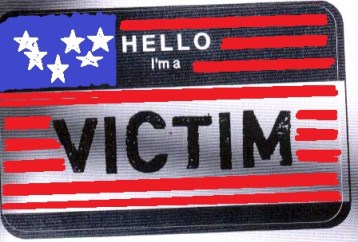
It suits us, for instance, to exalt ourselves as “America the Brave” despite the fact that the approval of millions of restraining orders each year plainly signifies we’re a nation of victims.
Copyright © 2014 RestrainingOrderAbuse.com
 TALKING BACK to restraining orders