Hoax Prosecutions by Psych Patient Tiffany Bredfeldt & Co. against the Author of this Site Terminate: ILLEGAL SPEECH INJUNCTION COERCED FROM DISGRACED JUDGE IN 2013 IS GUTTED

Tiffany Bredfeldt, a toxicologist employed by the Texas Commission on Environmental Quality (TCEQ) and the EPA who testified before the Arizona Superior Court in 2013 that she was in psychiatric care, has accused the writer to, in her own words, “the Court multiple times [and] to multiple police departments, detectives, federal agencies, and other officials in several states,” including the Arizona Dept. of Public Safety and the FBI. The writer knew Bredfeldt for three months in 2005, in and around his own home, where she “would not wear a wedding ring,” and he has had no contact with her since March 2006. All of her post-2006 allegations, which have included charges of sexual trespass/assault and which have corroded more than a decade of the writer’s life, were this month invalidated. Coincident with the conclusion of the case, Tiffany Bredfeldt was apparently dumped by her husband.

Tiffany Bredfeldt, Tiffany Bredfeldt PhD, Tiffany Bredfeldt TCEQ, Tiffany Bredfeldt EPA, Tiffany Hargis, Bredfeldt TG, Dr. Tiffany Bredfeldt, Texas Commission on Environmental Quality, TCEQ, Michael Honeycutt PhD, Loreal Stepney, Phil Bredfeldt, Ray and Ruth Bredfeldt, Jeremy and Kim Cheezum, Jeremy Cheezum, Kim Cheezum, Ray Bredfeldt, Ruth Bredfeldt, Governor Greg Abbott, GaLyn Hargis

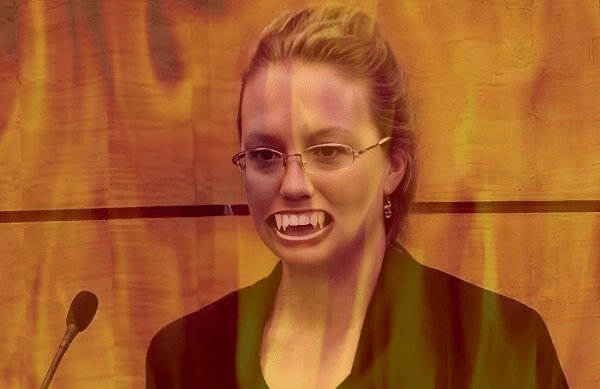
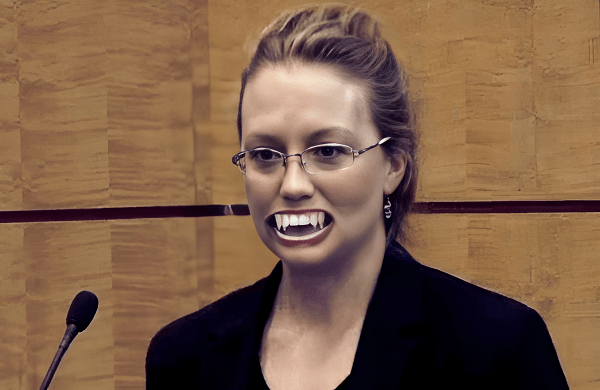
TCEQ senior toxicologist Tiffany Bredfeldt, who lied to the court and law enforcement for over a decade, represented as the monster I believe her to be


“Defendant Greene agrees not to use the following terms and/or phrases in reference to Plaintiff [Tiffany] Bredfeldt, unless and until these words become true: perjurer, felon, felonious conduct, criminal, fraud or fraudulent within her profession, narcissistic personality disorder, [or] adulteress….”

Bredfeldt v. Greene, June 26, 2018 settlement agreement

Consenting to the foregoing clause in a “voluntary” settlement with a woman who has accused me broadly since 2006—and twice attempted to have me jailed in recent years for exercising my First Amendment liberties—was a compromise I had to make to gain the substantive dissolution of an illegal speech injunction, or “prior restraint,” that she coerced in 2013 from a since disgraced superior court judge, Carmine Cornelio, that literally prohibited me from speaking…at all.

(Cornelio was shamed off the bench in 2016. Put politely, he declined to face voters after being roundly panned by the Arizona Commission on Judicial Performance Review. Put plainly, he abused the power entrusted to him and, what’s far more extraordinary, was held to account for it.)

When judges violate the Constitution—and other judges affirm the violation despite, for example, contrary arguments by a renowned constitutional scholar—a settlement agreement like that quoted above is the recourse of last resort.

In contrast to my concessions, which were relatively minor, my accuser of over a decade had to consent to this:

Plaintiff agrees not to pursue any criminal charges against Defendant for any conduct by Defendant before the date of this Settlement Agreement.

And:

Plaintiff agrees that her execution of this Settlement Agreement constitutes a release of any and all claims which she may have or claim against the Defendant, whether known or unknown, which in any way arise out of or are connected to Defendant’s actions occurring before the date of this Settlement Agreement.

This doesn’t of course mean her accusations, which exist in at least four different police agencies’ and at least three different courts’ public records, will be shredded; it just means the gag is now on the other face.

My accuser is expressly prohibited from making false or frivolous accusations to law enforcement officials, and any further allegations she wishes to bring at court must pass muster with “a single arbitrator who shall be a practicing attorney, retired judge, or law school professor with at least ten years of total working experience as such and with experience in First Amendment law.”

She’s also obligated to schlep herself from Texas to Tucson where her mendacious accusations began 12 years ago.

Copyright © 2018 RestrainingOrderAbuse.com

*I was granted the services of a public defender in 2016, because my accuser demanded that I be jailed. Otherwise the cost to me of realizing an equitable revision of an injunction grounded on judicial abuse of power would easily have exceeded $50,000. Who footed the actual bill, including expenses incurred by law enforcement and the courts? If you’re an Arizona taxpayer, you did. (Also to thank for that is Michael Honeycutt, Ph.D., toxicology director of the Texas Commission on Environmental Quality (TCEQ) and Scott Pruitt’s selection for chairman of the EPA’s Science Advisory Board. Honeycutt presented misleading testimony to the court in 2013 on my accuser’s behalf.) Good thing Arizona didn’t need those tens of thousands of dollars for education or low-income housing or the legal representation of immigrant children taken from their families and confined in cages. Rock on, #MeToo. You go, “social justice crusaders.”

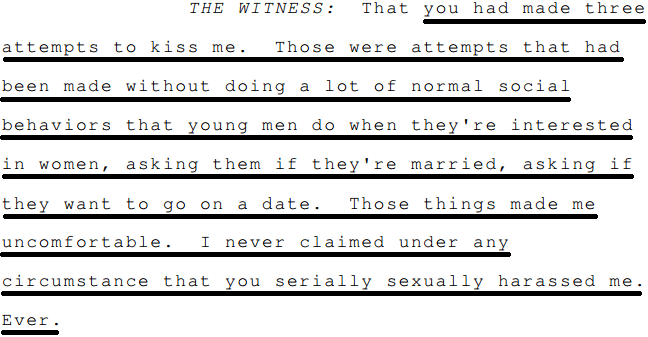
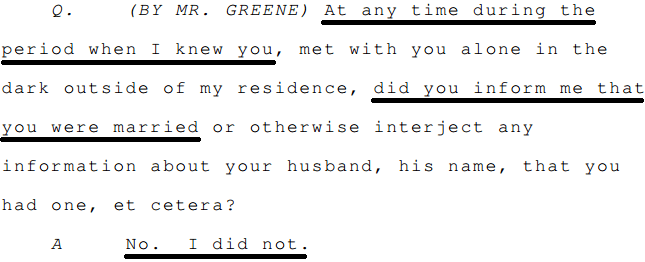
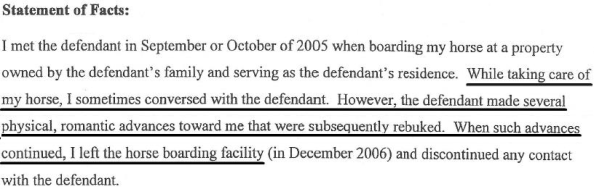
**What follows is a synopsis of statements Texas state official and EPA adviser Tiffany Bredfeldt gave in evidence to the court or, in one instance, to the police only between the years 2006 and 2017.




Michael Honeycutt, TCEQ, Texas Commission on Environmental Quality, EPA, Environmental Protection Agency, Tiffany Bredfeldt, Governor Greg Abbott, Beth West TCEQ, TCEQ Human Resources Director Beth West, TCEQ Executive Director Toby Baker, Toby Baker TCEQ, TCEQ Deputy Executive Director Stephanie Bergeron Perdue


Michael Honeycutt, TCEQ, Texas Commission on Environmental Quality, EPA, Environmental Protection Agency, Tiffany Bredfeldt, Governor Greg Abbott, Beth West TCEQ, TCEQ Human Resources Director Beth West, TCEQ Executive Director Toby Baker, Toby Baker TCEQ, TCEQ Deputy Executive Director Stephanie Bergeron Perdue


Michael Honeycutt, TCEQ, Texas Commission on Environmental Quality, EPA, Environmental Protection Agency, Tiffany Bredfeldt, Governor Greg Abbott, Beth West TCEQ, TCEQ Human Resources Director Beth West, TCEQ Executive Director Toby Baker, Toby Baker TCEQ, TCEQ Deputy Executive Director Stephanie Bergeron Perdue


Tiffany Bredfeldt, Tiffany Bredfeldt TCEQ, Tiffany Bredfeldt Phd

Tiffany Bredfeldt, Tiffany Bredfeldt TCEQ, Tiffany Bredfeldt Phd

Tiffany Bredfeldt, Tiffany Bredfeldt TCEQ, Tiffany Bredfeldt Phd

“What Would Mrs. Grundy Say?” Has Nothing to Do with the Law: Scrutiny of the Restraining Order Case against Blogger and Political Activist Derek Logue as Reported by Writer Peter Schorsch

The law is a two-way street. Those who violate it are answerable to it. So, too, though, are those who exploit it. It’s canonical that administrators of law not play favorites. The defendant in the case this post scrutinizes was convicted of a sex offense against a preteen girl in 2001, and the author of this post, a would-have-been children’s writer, is ambivalent about the defendant’s cause, which is articulated here (and is not without valid and urgent points). The plaintiff in the case, however, is not a child. She’s an adult representative of the people whose job is to negotiate issues of concern to society, no matter how thorny or repugnant. And it’s this writer’s opinion that she has abdicated that responsibility and abused the law. Also criticized in this post is a self-styled reporter whose job is to relate facts without bias. It’s this writer’s opinion that he, too, has failed to meet his ethical duties.

No allegation is more prejudicial today than “abuse.” Forty years of slipshod and slapdash legislation, and the pumping of billions of federal tax dollars into police precincts and the court system are among the reasons. Priorities have been bought. And the propaganda that has motivated this investment has been no less effective at influencing the public.

“Abuse” isn’t an allegation these days; it’s Revelation—and skepticism is tantamount to heresy. The torch-bearing mob doesn’t answer to the system. It owns it.

Accordingly, attorneys for plaintiffs alleging abuse are free to exercise dramatic license, and both judges and cops know what’s expected of them and strive to please.

Journalists who report and comment on investigative and court findings in “abuse” prosecutions typically know the least about the law but may be the most arrogant in their judgments.

Enter Peter Schorsch, who introduced me to the restraining order case of Florida Sen. Lauren Book v. Derek Logue in a jaundiced account on the website Florida Politics, which bills itself as a “statewide, new media platform covering campaigns, elections, government, policy, and lobbying in Florida.” Mr. Schorsch is its publisher.

Mr. Logue, the defendant in the case, was issued a permanent restraining order this month, based, apparently, on political speech, which is protected in our country above all other kinds. It seems his entitlements under the First Amendment were deemed negligible, however, because he committed the cardinal sin of profaning a woman—and because he’s a registered sex offender. Mr. Logue pleaded guilty to first degree sexual abuse of an 11-year-old girl 17 years ago. This is his account from his blog, Once Fallen:

I kissed an underage girl. She was somebody I knew, and I knew better. I am what you call a “situational offender.” I was arrested in 2000 and convicted in 2001 (I sat in jail a full year before my conviction). I served 37 months of a six-year sentence in an Alabama State Prison, and was released in April 2003. I never chose to become an activist, but after I spent years in vain [lying] low, working and paying bills, and bothering no one, I was targeted by local politicians determined to use registrants like me to further their careers. I was forced out of one residence formerly pre-approved by the authorities, and had to fight to keep my second residence. My activism was inspired by my struggle to survive.

That activism, Mr. Schorsch reports, has included R-rated criticisms of Sen. Book since 2009 on a variety of Internet media, as well as in-person protests of her positions at public events where Sen. Book was present. Mr. Logue is said to have “heckle[d]” her at one last year.

Although there’s no mention in Mr. Schorsch’s story of Mr. Logue’s having issued threats, brandished a weapon, or cast literal brickbats, Mr. Schorsch quotes Sen. Book’s restraining order petition as stating: “[B]ecause of the anger and hostility targeted at Ms. Book during the session by Mr. Logue, she had to be quickly escorted off stage by security for her safety.”

The logical non sequitur is obvious, but legal interpretation has been conditioned in “abuse” cases to treat alleged emotional impressions as incontrovertible facts. Why words from a distance required that Sen. Book be rushed off of a stage is a taboo question.

Plainly Mr. Logue has been implicated by implication—and not even his own implication.

Mr. Schorsch reports “he posted a video on Twitter entitled ‘You are a C**t’ that included lyrics saying he would ‘f**k up [Book’s] face.’” If Mr. Logue said he would “f**k up” Ms. Book’s face, then why does “Book’s” appear in brackets in Mr. Schorsch’s story? The referenced video is by Australian singer-songwriter Kat McSnatch (note the stage name).

The video has nothing to do with Sen. Book, nor is Mr. Logue its author. The allegation is that the hyperlink republication of the video by Mr. Logue on Twitter implied violent intent and ignores context. Unreported by Mr. Schorsch, what Mr. Logue tweeted was this: “I think I found the official…Lauren Book theme song.” The meaning of the statement is unambiguous.

Even if it weren’t, though, implication is not a true threat, which must “communicate a serious expression of an intent to commit an act of unlawful violence to a particular individual or group of individuals” (Virginia v. Black). Nevertheless, Mr. Schorsch reports that a hyperlink to a cartoon was “deemed a credible threat to Book’s safety by the FBI and other law enforcement agencies.”

Here’s Mr. Schorsch:

Logue claims his lyrics, his website and in-person protests are within his First Amendment rights, though Book’s attorneys vehemently disagree.

Were the lyrics his? Are Sen. Book’s attorneys correct in their interpretation of First Amendment protections? These are questions to which a journalist might have pursued answers, particularly one who has fallen under criminal suspicion himself, as Mr. Schorsch reportedly has.

Instead Mr. Schorsch contents himself with quoting Sen. Book’s attorneys:

“To even flirt with the notion that Mr. Logue’s words directed at Lauren Book are anything less than profane insults or ‘fighting words’ would be nonsensical,” the argument reads. “Mr. Logue’s mission, which he continuously reemphasizes over several social media platforms…has been to target Senator Book because of her political views and her attempt to pass more legislature relating to violent sexual offenders, such as Mr. Logue.”

Without exception, “profane insults” are fully protected by the First Amendment, and the dated phrase “fighting words” (1942) hardly applies. Fighting words are those “which by their very utterance inflict injury or tend to incite an immediate breach of the peace” (Chaplinsky v. New Hampshire). In the age of HBO, there is no conceivable sequence of words Mr. Logue could have strung together from a distance of yards, possibly many yards, that could have inspired a brawl, and tweets to the world at large, for example, can never be qualified as “fighting words” (or “stalking,” a characterization Mr. Schorsch uses in his article’s headline). If Mr. Logue’s “mission” had been to criticize President Trump’s policies “over several social media platforms,” there would be no story. The allegations only survived scrutiny because Mr. Logue committed a sex offense in the distant past, which is “continuously reemphasize[d]” because it’s highly prejudicial. (The website Florida Bulldog reports that Sen. Book’s initial request for a temporary restraining order was rejected for “insufficient evidence showing she was in immediate danger.”)

Finally, Mr. Schorsch reports:

The court approved the restraining order, which requires Logue to stay at least 500 feet away from Book’s house and car, 1,000 feet from her person, and prohibits him from contacting her directly or indirectly in any way.

Finally, I have to wonder, has Mr. Logue ever been anywhere near Sen. Book’s “house and car”? From the reported facts, it seems improbable. So Mr. Logue has been indefinitely prohibited from attending public events to engage in constitutionally protected political protest, and he has effectively if not explicitly been prohibited from criticizing a politician by the court’s misinterpretation of harassment laws, which cannot be applied to one-to-many speech…even if it uses “bad words.”

Copyright © 2018 RestrainingOrderAbuse.com

*On his blog, Mr. Logue writes that in “2007, [he] received a partial pardon from the state of Alabama in recognition of [his] rehabilitation” and has “been ‘free’ for over 14 years without a single accusation or suspicion of re-offense.” He expresses the belief that the pardon signified “hope for redemption, even for those with the label ‘sex offender.’” It granted Mr. Logue the restoration of his “civil and political rights”—as long, apparently, as he declined to actually exercise them.

FABRY v. POWERS: An Injunction against a Woman That Underscores the Wastefulness and Absurdity of the Restraining Order Process, and Its Licensing of Civil Rights Violations by the Courts

Contents of this post were independently investigated by the writer. He alone is responsible for the post’s authorship.


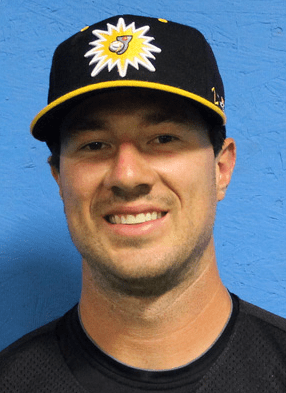
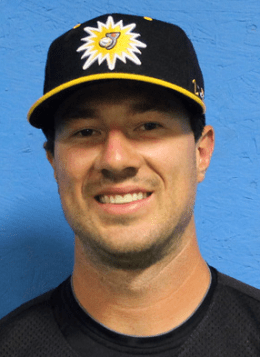
Tennessee ball player Jacob Benjamin Fabry petitioned an “order of protection” against a Colorado woman 20 years his senior in September. He told the court he feared “harm” from the woman, Sheila Powers, who is 65 lbs. lighter than he is, stands 7″ shorter, and has never been within the borders of the state in which Fabry lives.

Here is a chart prepared by the “state administrative offices of the courts” in 2010 that puts the number of “general” and “limited” jurisdiction state courts in our country at about 30,000.

Here is a single judge’s docket for this week. It has about 30 cases on it, eight of which (about a fourth) are protection order cases.

That’s one judge, one week, eight restraining order cases. While it’s unlikely this means there are 240,000 restraining orders issued each week in the United States, it does suggest that there are a whole lot. (A cost estimate by DailyFinance.com, also from 2010, projects the national expenditure to be at least $4,000,000,000 per annum.)

The particular judge whose docket is cited is L. Marie Williams, who issued a restraining order in Tennessee last year petitioned by Jacob Fabry against Coloradan Sheila Powers. The judge’s order requires that Ms. Powers, who lives three states distant from Mr. Fabry, “stay away” from him and his children, and it mandated that she turn over any firearms in her possession within 48 hours.

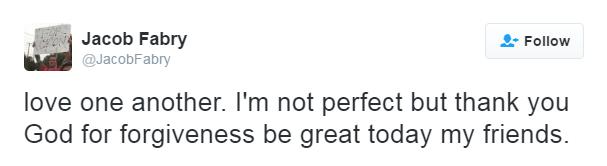
Mr. Fabry’s affidavit to the court claims “threats of harm,” besides “harassment and stalking,” as the motives for his application for an injunction. Ms. Powers says she has never been to Tennessee, including to contest Mr. Fabry’s “order of protection.” The order was finalized by default: “The Tennessee judge…refused to let me appear by phone and then threw my notarized affidavit out, [rejecting] it as hearsay.”

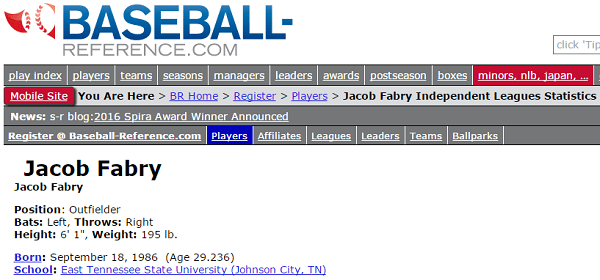
Mr. Fabry, the plaintiff, is a competitive baseball player who stands 6′ 1″ and weighs 195 lbs.; Ms. Powers is 5′ 6″, weighs 130, and lives in a different time zone. She’s also 20 years older than Mr. Fabry.

Jacob Fabry

Judge Williams ruled:

Respondent shall refrain from contacting Petitioner, his family, his girlfriend or his employer, directly or indirectly, from stalking, harassing, threatening, texting, emailing, posting on the Internet or any social media platform anything about, referring to in any way referencing the Petitioner, his family, his girlfriend or his employer.

The judge’s ruling exemplifies how an already extravagantly expensive, easily exploited, and dubiously necessary process opens the door to gross violations of citizens’ civil rights. In wanton excess of her jurisdiction, the judge prohibited Ms. Powers from exercising her right to freedom of speech.

This order, besides highlighting palpable absurdities endemic to the restraining order process, is transparently unlawful (i.e., unconstitutional) and therefore void (which does not mean it can be safely disobeyed).

Copyright © 2016 RestrainingOrderAbuse.com

*The order concludes: “Neither you nor the Petitioner can agree to change this Order. Even if the Petitioner attempts to contact you or agrees to have contact with you, you must obey this Order. If you do not, you can be jailed for up to 11 months and 29 days and fined up to $2,500.” (Emphases added.)

Jacob Fabry