Jamie Hargis Witmer LPC Condones Abuse: Victims Should Seek Help Elsewhere

The subject of this post, Jamie Hargis Witmer, is a licensed professional counselor (LPC) based in Tulsa, Oklahoma, where she shares offices with Sallie L. Trecek, LPC, who is herself distinguished as one of the best therapists in Tulsa by CareDash.com.

Jamie Witmer’s son, Daniel, is reported to be a convicted felon, and charges reportedly brought against him over the years have included DUI, public intoxication, assault and battery (including on a police officer), and domestic abuse. No fewer than six mug shots of his are pulled up by a simple Internet search. One would expect that would make Mrs. Witmer particularly sensitive to the effects of accusation on the family members of the accused.
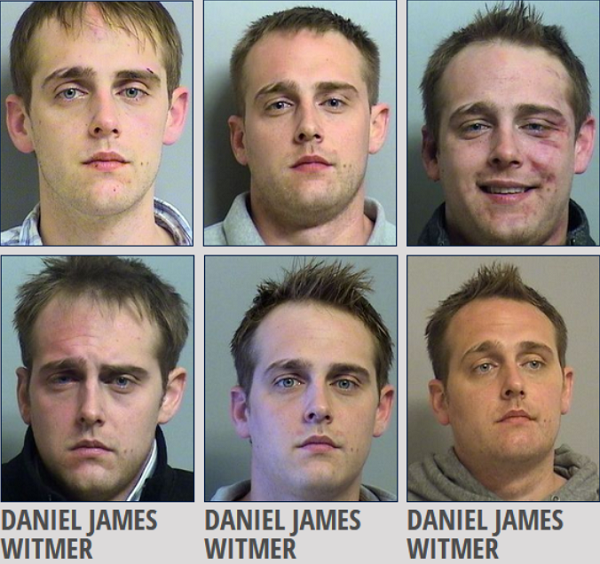
Jamie Hargis Witmer, Jamie Witmer, Jamie Witmer LPC, Jamie Hargis Witmer LPC, Jamie Witmer therapist, Tulsa OK, Ron Witmer, Video Revolution

False accusations against the writer of this post by Mrs. Witmer’s niece (a few are highlighted in the text below) have been allowed to stand for 14 years. One would expect that if Mrs. Witmer were truly qualified in her profession, never mind as a human being (and a self-professed Christian), that sympathy for the writer’s mother if not for the writer himself would have motivated her to intercede.


Jamie Hargis Witmer, Jamie Witmer, Jamie Hargis Witmer LPC, Jamie Witmer LPC, Jamie Witmer therapist, Tulsa, Tulsa OK, Sallie L. Trecek, Sallie L. Trecek LPC, therapist Sallie Trecek, Sallie Trecek LPC, Ron Witmer, Video Revolution

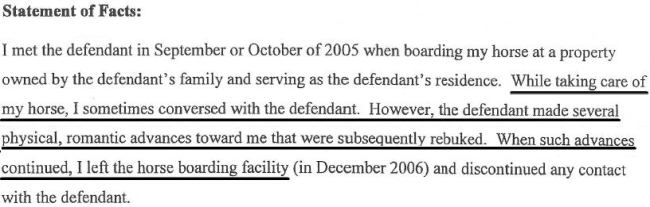
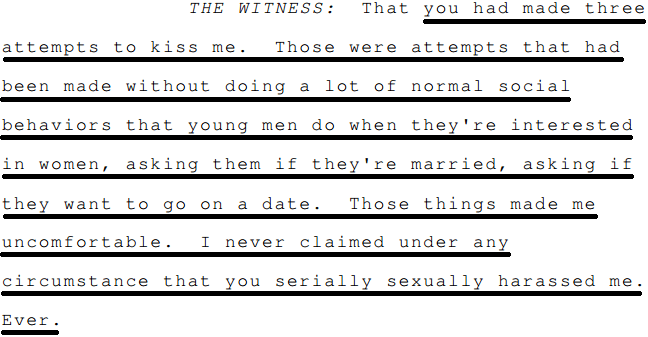
Below is what I was called by the married niece of Jamie Hargis Witmer, LPC, after her niece had taunted me for three months in 2005 with candid references to her body and underwear, outside of my house, in the dark, minus her wedding ring, while my mother was in chemotherapy, and I had invited the woman to explain.


Jamie Hargis Witmer, Jamie Witmer, Jamie Witmer LPC, Jamie Hargis Witmer LPC, Jamie Witmer therapist, Tulsa OK, Ron Witmer, Video Revolution, Tiffany Hargis, Tiffany Bredfeldt, Phil Bredfeldt, Philip Bredfeldt


The message was communicated by email by Mrs. Witmer’s niece and her husband, a guy the niece had never mentioned, and it was sent to a police officer with whom the couple were on the phone as it was sent to me. An order of the court forbidding me from talking to the husband, a man I had never met, was petitioned earlier the same day by the niece.

Ron Witmer, Video Revolution, Tulsa, Jamie Hargis Witmer, Jamie Witmer LPC

Ron Witmer, who runs an electronics store in Tulsa called Video Revolution

Tiffany Hargis (Bredfeldt) would go on to falsely accuse me broadly that year and for 10 years after to cover up her catting around behind her husband’s back. That includes to police in multiple jurisdictions, among them the FBI, and to judges who would end up numbering in the double digits.

Because I was nice to her. And because her family produced a monster.

I asked Jamie Witmer, LPC, and her husband, Ron Witmer, for help in the interim. None was offered or came. Ever.

During the 11 years of lies that corroded and diminished my life and my family’s lives, I would be surprised if Mrs. Witmer, who identifies herself as a behavioral health specialist, or her husband did anything but support their niece with sympathetic words of encouragement.

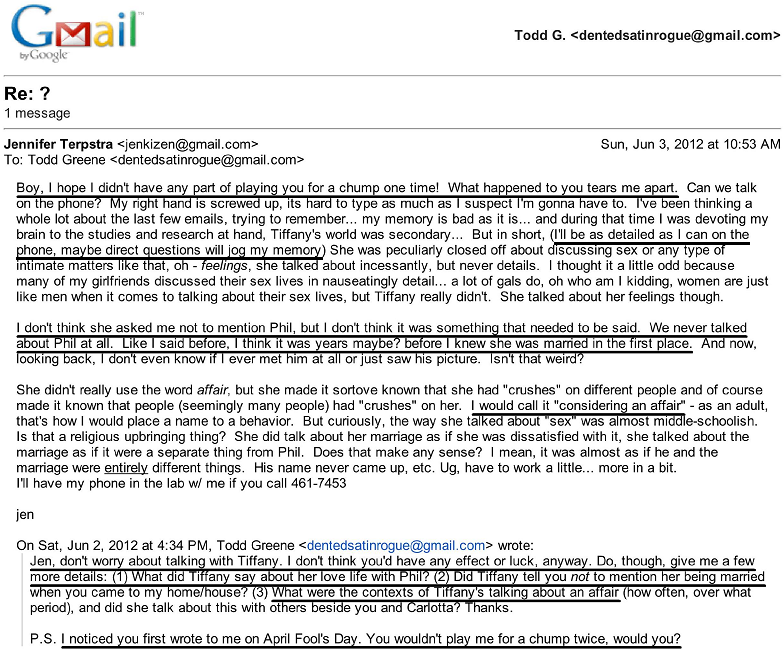
Here’s a brief synopsis of statements their niece gave in evidence to the court or, in one instance, to the police only between the years 2006 and 2017. The story they tell isn’t the half of it, but it’s short, and its contradictions are incontrovertible. The statements provide all the background the reader will require. The lies, which may have been spread by Jamie Witmer, LPC, to people I’ll never meet likely continue today.








Michael Honeycutt, TCEQ, Texas Commission on Environmental Quality, EPA, Environmental Protection Agency, Tiffany Bredfeldt


Michael Honeycutt, TCEQ, Texas Commission on Environmental Quality, EPA, Environmental Protection Agency, Tiffany Bredfeldt


These crackpot allegations (and many others) culminated in four separate lawsuits initiated against me almost simultaneously in 2016, two of which sought my imprisonment. It required two more years of my life to fend them off, working with my hands and back by day in the Arizona heat and poring over legal gobbledygook by night, while Jamie Witmer crooned solacing words in her air-conditioned office and probaby profited from it handsomely. My father meantime starved to death, alone. The upshot was that though her malicious vomit continues to coat my public record, all of Jamie Witmer’s disturbed niece’s charges were dismissed, an illegal injunction prohibiting me from reporting her fictions to the court was dissolved, and she was forced to renounce any and all legal claims against me.

Then her husband apparently dumped her.

Jamie Hargis Witmer, Jamie Witmer, Jamie Hargis Witmer LPC, Jamie Witmer LPC, Tulsa OK


Maybe Mrs. Witmer would say she didn’t know.

Here’s what I know.

Jamie Hargis Witmer, Jamie Witmer, Jamie Hargis Witmer LPC, Jamie Witmer LPC, Jamie Witmer therapist, Tulsa, Tulsa OK I know, because I was told by a witness, that Jamie Witmer’s niece was an emotional mess as a child, a kid who would throw tantrums and even drop to the floor and flail her arms. I know from the same source that her friends were screened by her parents, Mrs. Witmer’s brother, Tim Hargis, and his wife, GaLyn Hargis, and that unsuitable candidates were rejected.

I know from Tiffany Hargis herself that she felt isolated and confined as a girl. She showed me a choker once that she had fashioned to remind herself of what it was to be “kept on a leash.” Maybe she meant that figuratively, and maybe she didn’t. She also said her parents, who are evangelical Christians, had made her feel “like a whore.”

Jamie Hargis Witmer, Jamie Witmer, Jamie Hargis Witmer LPC, Jamie Witmer LPC, Jamie Witmer therapist, Tulsa, Tulsa OKI know too from her that her grandfather, Jamie Witmer’s dad, I believe, killed himself. The impression I took from what she said about the gore he left behind for others to “clean up” was that her grandfather shot himself.

If I know these things, I’m confounded how Mrs. Witmer, who is a professional therapist, could have failed to recognize her niece was unbalanced and prone to attention-seeking histrionics that could only do harm.

Something else I know: Jamie Witmer has or has had close money ties with her brother and his family, which include or included a fourth-generation family cattle ranch.

I imagine money and the belief that you’re better than other people could be powerful motives for self-deception or distinterest in the damages that lies inflict.

I don’t know whether to hate Jamie Witmer for what may have been complicity or whether to simply resent her for complacency and indifference, and putting her own interests ahead of her professional ethics.

What I’m not uncertain about is that victims need the help of “licensed professional counselors” who are more than fee collectors.

From this writer’s perspective, Jamie Witmer, LPC, has merely profited by other’s suffering.

Copyright © 2020 RestrainingOrderAbuse.com

Disregarded Reality Checks to VAWA: Highlighting the Efforts of Family Law Attorney Lisa Scott

“Congressional sources have revealed some significant changes will be made to federal domestic violence laws. Bowing to pressure from men’s rights groups who for years have claimed that the Federal Violence Against Women Act (VAWA) is biased against men, congressional leaders will soon announce a revamping of this legislation.

“In recognition of the fact that there may be a few men out there who get beaten up by their wives but are too ashamed to admit it, the Violence Against Women Act (VAWA) will be renamed the Violence Against Women and Wimps and Wussies Act (VAWAWAWA).”

—“VAWAWAWA: Federal Law Finally Catches Up with Reality

That’s Lisa Scott, a Bellevue, Washington, family attorney who knows a whole lot more than almost anyone about the reality of domestic conflict, satirically poking defenders of the Violence Against Women Act (as biased an act of legislation as has ever been conceived) squarely in the eye.

The Violence Against Women Act, or VAWA, which demonizes men, takes as granted that they’re always the villains and could never be victims themselves.

Ms. Scott is one of those rare, intrepid women of parts and integrity—see also Cathy Young, Christina Hoff Sommers, Wendy McElroy, and Phyllis Schlafly, among a few select others—who made a determined effort to temper the iniquity of “women’s law” in the years before the most recent decade or so, during which light has been smothered by heat and noise (or what might be called “Tweat”).

Victims of VAWA, who were powerless to begin with against a billion-dollar federal juggernaut flanked by thousands of media-savvy minions, have today been marginalized by the #MeToo movement to the point of invisibility.

This post, which is meant as an homage to writing Ms. Scott did between 2001 and 2011, endeavors only to highlight her perspectives, if not simply because they’re right then for those who will appreciate them.

They are no less current today than when they were first published.

Copyright © 2020 RestrainingOrderAbuse.com

*For more on male suicide: “First Amendment Rights from Beyond the Grave: Defense of a Suicide’s Publication of His Final Words by the Randazza Legal Group”; “False Accusations and Suicide: Some Headlines about the Effects of Finger-Pointing and Legal Abuse (Culled for the Empathically Challenged)”; Wendy McElroy (Fox News, 2002); Prof. Augustine J. Kposowa, Ph.D. (Journal of Epidemiology & Community Health, 2000); Dan Bilsker, Ph.D., and Jennifer White, Ed.D. (BC Medical Journal, 2011); Christie Blatchford (National Post, 2017); Suzette Reynoso (Eyewitness News, 2017); Lindsay Holmes and Anna Almendrala (Huffington Post, 2016).

What Do People Accused in Civil Court Have to Complain About?: Civil Prosecutions and PTSD

“Contemplating, undergoing, or having undergone a lawsuit is disruptive. The experience saps energy and distracts the litigant from the normal daily preoccupations that we call ‘life.’ Litigants, who commonly feel alone, isolated, and helpless, are challenged to confront and manage the emotional burden of the legal process. The distress of litigation can be expressed in multiple symptoms: sleeplessness, anger, frustration, humiliation, headaches, difficulty concentrating, loss of self-confidence, indecision, anxiety, despondency: the picture has much in common with the symptoms of posttraumatic stress disorder (PTSD).”

—Dr. Larry H. Strasburger (1999)

Prior posts on this blog have considered Legal Abuse Syndrome (LAS), a concept proposed by marriage and family therapist Karin Huffer that has been discounted by the courts as a “novel theory.” This post spotlights a journal monograph published almost 20 years ago by psychiatrist Larry H. Strasburger that unequivocally states Dr. Huffer isn’t wrong and the courts are.

Dr. Strasburger’s comments in “The Litigant-Patient: Mental Health Consequences of Civil Litigation” are based on his having treated the legally abused (who may include anyone who’s been exposed to litigation).

The therapist of a litigant will encounter not only the trauma that produced the lawsuit, but the distress and disruption of litigation as well, including the delays, rehashing and reliving the original trauma, and challenges to honesty and integrity. The patient may come after years of feeling frustrated and thwarted by a system that moves at a snail’s pace, preventing the litigant from putting the issue of the litigation behind him [or her] and “moving on” with life. Gutheil et al. have recently coined the term “critogenic harm” to describe these emotional harms resulting from the legal process itself.

The term “critogenic harm,” by its etymology, refers to the psychic damages that arise from judgment, i.e., the pain and humiliation of being verbally attacked and publicly disparaged.

This, the reader will note, is a blaring clinical denunciation of those self-appointed, armchair authorities who would deny the damages of false prosecution. Nearly two decades after the publication of the journal article this post examines, such deniers are everywhere, including in the mainstream press.

The deniers, according to the experts, are talking out of their blowholes. Mere accusation, ignoring the effects of protracted legal battles, drives some to suicide and multitudes more into agoraphobic withdrawal.

The adversarial system is also a threat to the maintenance of personal boundaries. Formal complaints, interrogatories, depositions, public testimony, and cross-examination are intrusive procedures that aggravate feelings previously caused by trauma. Such procedures amplify feelings that the world is an unsafe place, redoubling the litigant’s need to regain a sense of control—often in any way he or she can, including exhibiting characteristic symptoms or defenses. It is not unusual to find entries such as the following in the medical records of litigants: “Janet is hearing voices to cut herself again after talking to her lawyer today.” Similarly, a male plaintiff in a sexual harassment suit threatened violence when he was informed that he was to be deposed, and he required hospitalization.

Exposure to civil process can very literally drive people nuts, and inspire in them urges to commit violence, whether to themselves or others.

Consider Dr. Strasburger’s remarks in the context of restraining order abuse and appreciate that the strains they describe can be compounded by loss of residence (some defendants are left homeless), loss of family, loss of income, loss of employment/career, loss of property, etc. Those so deprived may accordingly become estranged from friends and relations, if not socially ostracized. (They must also live with the consciousness that they’re vulnerable to warrantless arrest at any time.)

Litigants are often further distressed as various members of their support systems “burn out.” Their need for human connection and their need to talk about their experience often exceed the tolerance of family members and friends. Embarrassment and humiliation shrink their social world.

That’s besides the discord and isolation caused by a damning accusation, which may be accepted as fact even by kith and kin. Loyalties may become divided, and the accused may be spurned based on allegations that aren’t true. The sources of outrage to the mind and emotions multiply like cancer cells.

It should come as no surprise then that many who complain of procedural abuse report they’re in therapy. If the costs weren’t prohibitive to most, they might all be. Desolating, as Dr. Strasburger points out, is that even if this were the case, the promise of “healing” isn’t necessarily good. The therapist’s role may be little more than cheerleader.

Psychotherapy for a patient involved in ongoing litigation can take on the aspects of managing a continuing crisis. The therapist, facing this need for crisis management, may be providing support more than insight.

Litigation (or its aftermath) may become consuming; normal, healthy activities are suspended. (One woman this author has corresponded with laments she hasn’t known intimate contact in years; a recent female commenter, alienated from her child, refers to herself as a living homicide.) People may become stuck in a tape loop perpetuated by interminable indeterminacy, insurmountable loss, and a galling sense of injustice.

The legal battle enables people to put their lives on “hold,” thereby avoiding other aspects of their lives (e.g., “How can I be intimate with you when I’m involved in this lawsuit?”). The patient may be so attuned to psycholegal issues and hypotheses that she focuses thereupon in resistance to dealing with significant personal conflict. As a result, she is continually “pleading her case” in the therapy hour.

This cognitive rut exemplifies Legal Abuse Syndrome, and the state may be unending.

Copyright © 2015 RestrainingOrderAbuse.com

*The journal article cited in this post may be introduced to the court by litigants in need of an authoritative voice to validate complaints of pain and suffering induced by fraudulent or vexatious prosecution.

It All Starts with the “Rape Question”: Before Society Can Be Expected to Redress the Harms of False Accusation, It Must First Be Led to Acknowledge That False Accusation Destroys

“Having demonstrated that the percentage of false sexual assault reports is not as high as many people think, this does not deny their terrible reality. We all know that false reports do really exist, and they are incredibly damaging both to criminal justice personnel and to the countless victims of sexual assault whose credibility they undermine.”

Dr. Kimberly A. Lonsway, et al. (2009)

Everyone “thinks” that male invocations and criticisms of false rape claims are really the misogynist yowls of the disentitled patriarchy…or something like that. They aren’t. Rape is the tinderbox issue. If complainants of false accusation and unjust demonization, who are typically men, seem to focus on false rape claims, it’s because that’s where everyone else’s focus is directed.

Rape overrules all other concerns and trivializes them.

Read the epigraph by Dr. Lonsway again and ask yourself what’s missing from her brief catalog of “incredibly damaging” consequences of false rape reports.

Her statement owns that “false reports [of rape] do really exist.” It also owns that they’re “incredibly damaging.” But it completely discounts the damage to the people falsely accused by those reports.


They’re not even mentioned as victims; they don’t count at all.

If victims of false rape claims aren’t acknowledged to be victims of anything, then how can victims of false accusations of other sorts expect to be afforded a sympathetic ear? Societal regard has been coerced to the extent that acknowledgment of false accusation (any act of false accusation) is equated with rape denial. To own false accusation is a significant problem is to commit an act of moral treason.

What those who haven’t been abused by process will never appreciate, so long as false accusation is dismissed as inconsequential, is that any foothold a false accuser can obtain can spell the end of someone’s life as s/he knew it.

People can be hounded to the end of time, particularly through civil procedures (like restraining orders), which generate records that gnaw, humiliate, and limit life options, and that open the door (gapingly wide) for further false accusations. The falsely accused can lose everything. They can find themselves felons and exiles, homeless and jobless, and possibly suicidal or homicidal…based on nothing real or true: a layered sandwich of lies.

What’s more, the dismissal of false accusation as an urgent societal concern is contagious. It influences judicial policy and practice; it influences the law. Thus is the problem compounded: False accusation is encouraged, because it’s effective. There are no risks, so there’s no downside.

Denial of the problem worsens it.

Our civil rights advocates vociferously decry violations of women’s rights, children’s rights, minority rights, gay and lesbian (GLBTQ) rights, animal rights, and on and on, and there aren’t any of these rights that aren’t violated by false accusers. None. Children are scarred (voicelessly); women are stigmatized and stripped of all resource; minorities, who may have the least access to legal representation, are railroaded or sidelined; gays and lesbians are handily represented as “creepy queers”; and pets are abandoned (possibly to be killed).

They might as well be living in 1956…and that’s significantly because of the “rape question.”

Look, how widespread false accusations of rape are is irrelevant. It’s irrelevant. What’s relevant is that they hurt and they kill, as do false accusations of all varieties. Rape also hurts and kills…but only also. What hurts and kills must be censured categorically, not selectively.

Dogma must be rebuked. Those who haven’t been falsely accused have no place at the table. They’re due to listen for a change.

The reason so many energies are concentrated on the “rape question” is that until the harm of being falsely accused of society’s “worst” crime is acknowledged, there can be no expectation that the harm of being falsely accused of any other will even register.

Copyright © 2015 RestrainingOrderAbuse.com

*Rape has been used to chasten society’s conscience, which means anti-rape advocates have determined society’s conscience. Their priorities have become “our” priorities and to gainsay them is to be ridiculed and vilified. A reason news stories of false rape claims are bruited by those denounced as “MRAs” (men’s rights activists) is because they often reveal deeply warped motives and methods, and these deeply warped motives and methods aren’t exclusive to false rape claimants.

What “the Law” Means in the Restraining Order Arena and Why All Reasonable Expectations Defendants Have Are Wrong, Wrong, Wrong

  • “I put a restraining order on my ex-husband. Now he’s depressed and staying in his truck.”
  • “Can a restraining order result in suicide?”
  • “Get [a] restraining order lifted for job.”
  • “Can a restraining order be appealed if there isn’t evidence?”
  • “How will it affect my child custody if I filed a false order for protection?”
  • “What if my abuser files [a] restraining order against me?”
  • “My daughter falsely accused her stepmother of civil stalking.”
  • “Falsely accused of breaking a protection order.”
  • “A crazy person filed a restraining order on me.”
  • “Teacher falsely accused [in] Ohio.”
  • “Girlfriend filed a frivolous, retaliatory protection order against me.”
  • “I’m falsely accused. I need help. My ex has [a] protective order on me. I’m the victim, not him.”
  • “Suicide [and] false accusations.”
  • “I was served a domestic violence restraining order, but I don’t see any evidence.”

—Some recent search terms that led visitors here (punctuation added)

Victims of restraining order fraud often voice the conviction that restraining orders require evidence, because trials, we’ve been led to believe, must have an ascertainable basis; you can’t just summon a person to court for whatever. They also express the conviction that plaintiffs “can’t” lie. After all, accusers are made to swear an oath to tell “nothing but the truth.” They should be in trouble if they lie. They should go to jail.

These expectations are all reasonable ones…but they’re wrong.

Q: To get a restraining order, you have to have proof, right?

A: No. “Proof” is not the standard by which civil restraining order allegations are judged. Also, a person can’t “prove” s/he’s afraid; all s/he can do is say so, and his or her say-so is all that’s required.

Q: But if you have proof your accuser is lying, the restraining order has to be dismissed…doesn’t it?

A: No. This is the expectation of everyone summoned before a judge, for obvious reasons: Allegations aren’t facts, and only facts can mean someone is “guilty” of something. Restraining orders, however, don’t require evidence of anything or a determination of “guilt” of anything. What “provable” facts may exist are only as relevant as a judge elects to make them.

Q: A restraining order can be finalized even if a judge knows the plaintiff is lying?

A: Yes. Oath-swearing is just a ritual; lying doesn’t invalidate a petition. Restraining order statutes don’t have a “truth” standard. A person files a petition. If the alleged grounds satisfy the law according to a judge’s personal standards—and a judge’s personal standards are the legal standard—s/he’s authorized to approve the petition. In a subsequent hearing, even if the veracity of the plaintiff is controverted, the law doesn’t require that the order be dismissed. That’s up to the judge. Often if a judge can find a reason to “believe” the plaintiff has a reason to feel harassed or afraid, based on nothing but what the plaintiff says s/he feels, that’s sufficient (even if s/he has given false testimony). Glaringly false allegations may rile a judge, but the law doesn’t require him or her to dismiss a petition on those grounds (or on any others).

Q: So a judge can do whatever s/he wants on no grounds or even on bad ones?

A: Right (a judge who may not be a lawyer or even have a college degree). The only grounds necessary are that someone submitted an application.

Q: And if a plaintiff lies to get a restraining order, s/he can also lie to have someone arrested?

A: S/he can call the police every day if s/he wants to, and allege anything. There’s also no statutory ceiling on the number of restraining orders someone can petition (for free, usually), and subsequent allegations are that much more easily put over, and subsequent orders that much more easily obtained, once one has been approved. Some people are dragged into court relentlessly.

Q: So it’s like that story by Kafka?

A: Exactly like it (with some Lewis Carroll mixed in).

Copyright © 2015 RestrainingOrderAbuse.com

*On this basis, people are removed from their homes, stripped of all possessions, denied a role in their children’s lives, incarcerated, and left broke(n) and homeless. Some kill themselves.

Misperception of the Damages of False Accusation Isn’t a Girls-Only Fault

“What the fuck is wrong with these people? I keep seeing the same argument again and again and again and again—the idea that being accused of rape is not simply as bad as being raped but often worse. I honestly can’t believe how people can be so fucking dense so as to think this is true.

“Note that I am not saying that being falsely accused of rape is not bad and can utterly damage your life, but it just does not even compare to the experience of being raped. […]

“A person falsely accused of rape (and convicted, of course) may, at the worst case scenario, lose friends and family and have their career ruined, but given time they can find new friends who will believe them and repair their social circle, even while hindered by the state. Many times they even clear their names eventually (otherwise we wouldn’t have such a nice influx of False Rape Accusation news stories for the Men’s Right crowd to cheer around). But apparently for some, even the short-term damage of a false rape accusation that a male was eventually cleared from, compares to being actually raped.”

A Division by Zer0

No, the blog A Division by Zer0 isn’t authored by Zerlina Maxwell, the attorney and social critic who gained notoriety a few months ago for voicing identical sentiments in The Washington Post (and being widely panned for it).

The post the epigraph is drawn from was authored by a man. He doesn’t identify himself…and I don’t blame him.

The quoted post is emphatically titled, “For fuck’s sake, No! Being falsely accused of rape is not not NOT as bad as being actually raped!”

People’s gender and political allegiances don’t interest me. People are people, and to each his own. Ill-reasoning, however, offends me regardless of the contours of the body that emits it, especially when it’s emitted loudly. Ill-reasoning is particularly offensive when it mocks human suffering, as this man’s perspectives do.

His sympathy for victims of sexual violation would be commendable if only it weren’t countervailed by callousness.

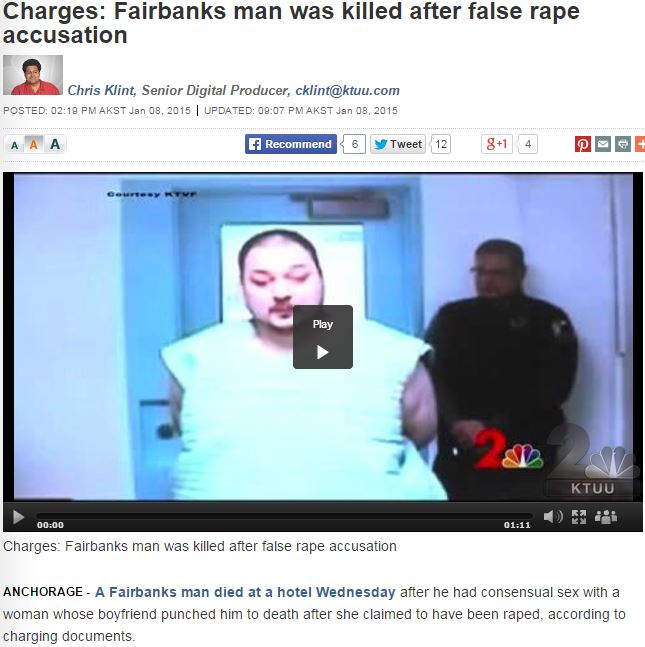
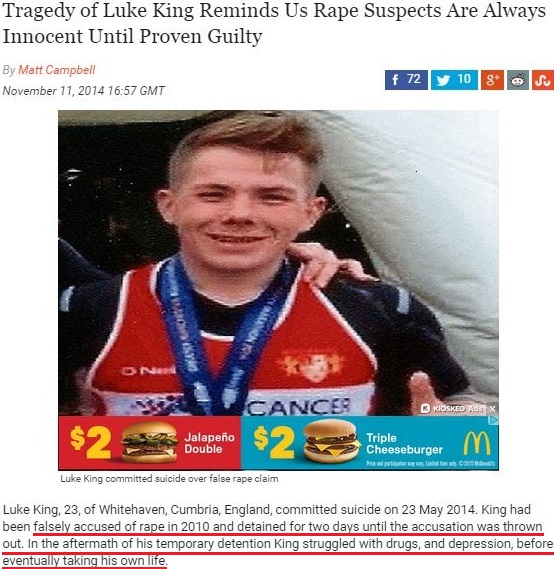
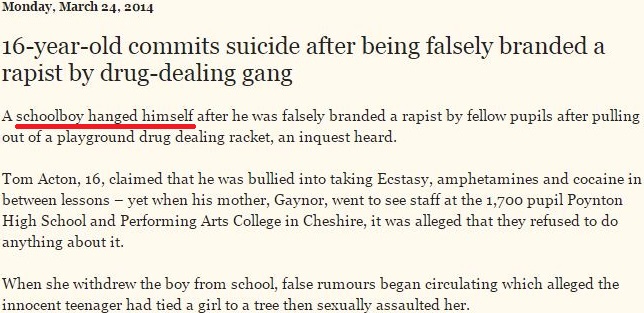
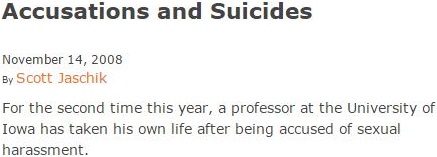
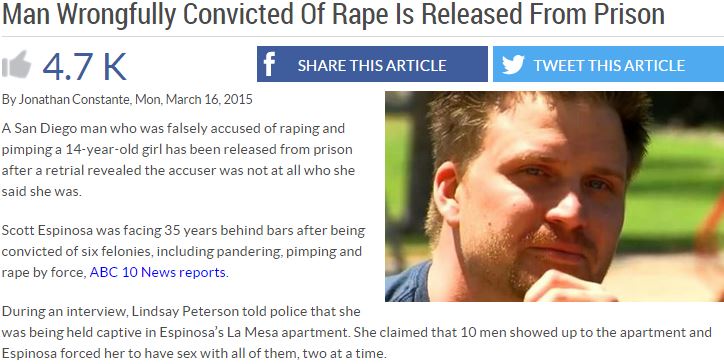
A recent post on the blog you’re reading highlighted the case of a young British man who was detained by authorities for two days, based on a false accusation of rape. Then the charges were thrown out, that is, they were almost immediately dismissed. He nevertheless killed himself after struggling with depression pursuant to the violation. He was 23. Another featured case concerned an adolescent who was falsely accused of rape by some hoodlums at school. He hanged himself. He was 16. A third was about a man who was falsely convicted for rape (and five other felonies) and served a year and a half of a 35-year sentence. He was exonerated when it was belatedly discovered that his “14-year-old” accuser was an adult in her 20s and that her identity wasn’t all she’d lied about. While the man was in prison, his mother committed suicide. She died believing her son was a pimp and a rapist.

Introducing cases of false accusation that have consequences of this magnitude is illustrative, but it shouldn’t be necessary. The author of A Division by Zer0, like most feminist writers, betrays he understands the aftermath of trauma very well.

Here’s the difference though, a rape victim most likely will never escape the damage of the event. Once the deed has been done, the scar will stay forever, no matter if the perpetrator is punished. You cannot undo the [violation]. You cannot restore the lost trust. You cannot wipe the memory triggers.

In a moment of dramatic irony, the writer acknowledges the root of his own indifference: “Much of it, I believe, comes from lack of empathy.”

The man behind A Division by Zer0 is a member of the “Men’s Rights crowd”—or more aptly the People’s Rights crowd. He just doesn’t know it.

Copyright © 2015 RestrainingOrderAbuse.com

False Accusations and Murder: More Headlines about the Effects of Finger-Pointing and Legal Abuse

“[W]hy would someone lie about being sexually assaulted? What could be gained from that? Nothing, really.”

Tracie Egan Morrissey, Jezebel (Feb. 28, 2014)

The quotation above derives from a piece titled, “Rape, Lies and the Internet: The Story of Conor Oberst and His Accuser.” It’s spotlighted because it echoes the sentiment expressed by the writer of the prior post’s epigraph, who’s also a feminist and who betrays the same blindness.

What’s disturbing to the author of the blog you’re reading is that feminists who ask questions like Ms. Morrissey’s make a strong case for rape denial, because it might just as unreasonably be asked, “Why would someone sexually assault anyone? What could be gained from that?”

What could be “gained” from raping someone is the same thing that could be “gained” from lying about being raped—or lying about any number of other offenses: the exultation of control (i.e., power, dominance).

Other reasons for lying suggested by Ms. Morrisey’s own reportage are attention-seeking, self-aggrandizement, and mythomania. There have also been a number of publicized cases about false rape accusations’ being used for concealment of sexual infidelity. Two hyperlinks in this post lead to stories exemplifying this motive. Of course (and significantly), none of these motives applies exclusively to false rape claims. Besides avarice and malice, they’re common motives among false accusers (of all types). People hurt people…to hurt people. Appetites, least of all vicious ones, don’t answer to sense.

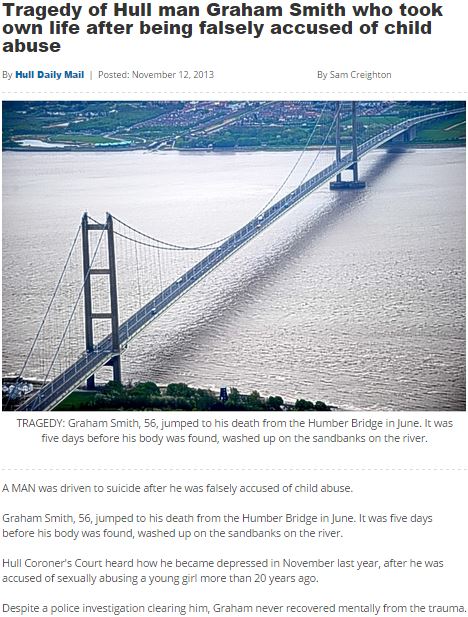
The previous post emphasized the emotional trauma of accusation, particularly false accusation, by highlighting a number of suicides reported in the news.

Suicide is a recognized consequence of bullying; name-calling and public humiliation are recognized as among the forms that bullying takes; and falsely branding someone a stalker, rapist, child abuser, or killer, for example, certainly qualifies as publicly humiliating name-calling.

Whether someone is disparaged on the playground, on Facebook, in a courtroom, or in the headlines makes absolutely no difference; the effect is the same, and it may be unbearable.

This stuff shouldn’t need to be pointed out to grown-ups. But since the fatal consequences of false accusation don’t support any dominant political agendas—and may undermine them—they’re ignored. That people are harried and hectored by lies, sometimes to death, is an inconvenient truth.

At least it is here. Many of the news clippings featured in the last post notably originate from the U.K., as do two of the clippings below. Journalism is far more balanced there, and it’s less taboo to call a jade a jade. A Jezebel reporter might denounce this as “misogynistic,”  but truth isn’t misogynistic; it’s just the truth, and it doesn’t play favorites (nor should its purveyors).

This post looks at the other lethal upshot of false accusation: murder. The stories that follow are about people who existed and now do not.

The point of introducing these stories isn’t to assert incidents like these are common; the point is to reveal the emotions that are inspired by false accusations, whether by women, by men, or by mobs. It’s also to reveal their consequences…writ large and lurid. These same emotions are aroused in cops and judges no less than they are in anyone else. False accusers know what reactions they can expect, and they know how to manipulate their audience—and bending others to do their will is thrilling.

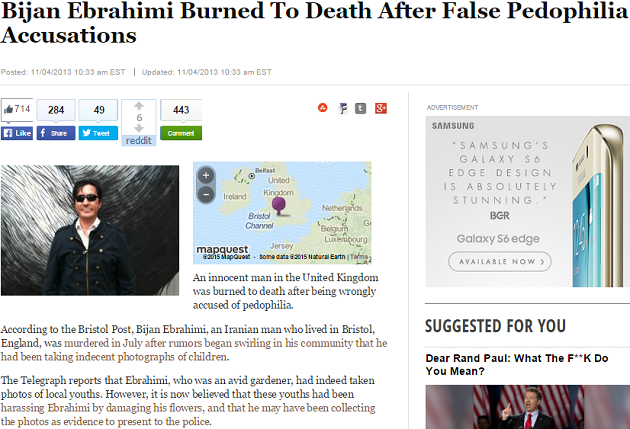
Nothing makes the emotions provoked by accusation more manifest than when accusation inspires others to beat someone to death—or set him ablaze.

This is nevertheless typically lost on reporters and their viewers and readers. The details that are stressed and eagerly sought are who got it, and how. Why, which is always the more speculative aspect, is in its broader implications the most important one, however.

Gore is sexy. It’s what gets airplay and column space. It’s an attention-grabber and a ratings booster. Nothing draws the eye like the color red.

What sensation eclipses, though, is that for every false accusation that ends in red, thousands or hundreds of thousands end in gray, an interminable state of disquiet, disease, and dolor.

Copyright © 2015 RestrainingOrderAbuse.com

*Jezebel, if I’m remembering my Bible stories right, was a mass murderer who was condemned for promoting a false dogma. (Among her victims was a man she had judicially executed.)

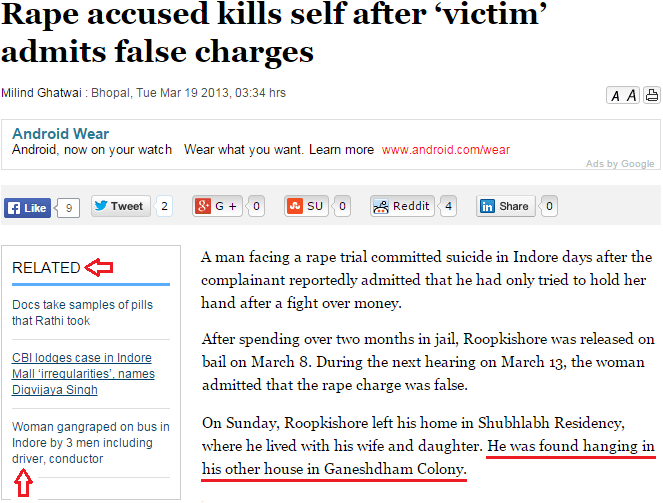
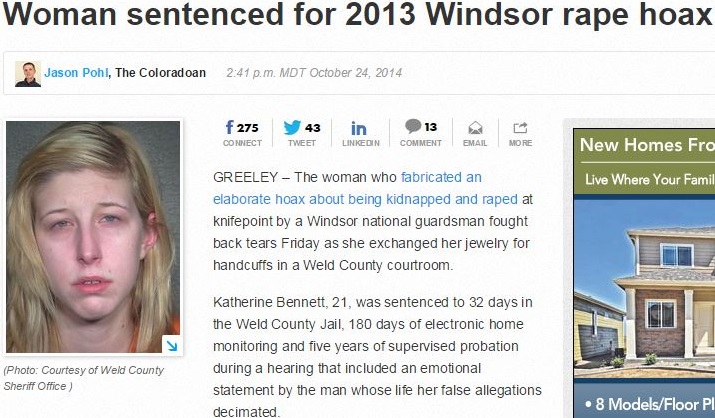
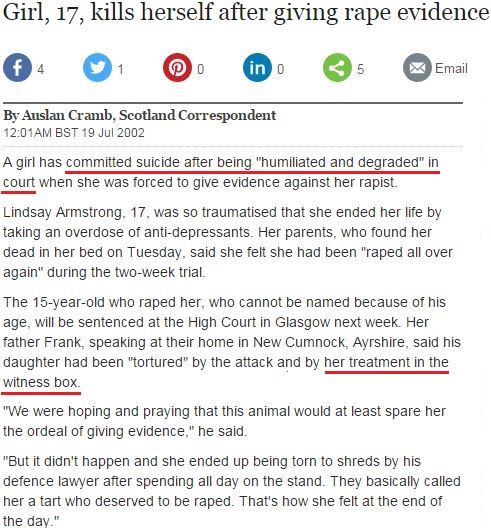
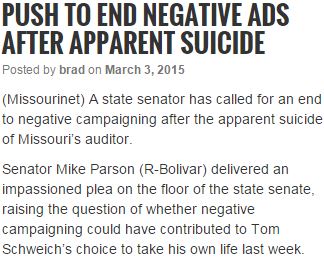
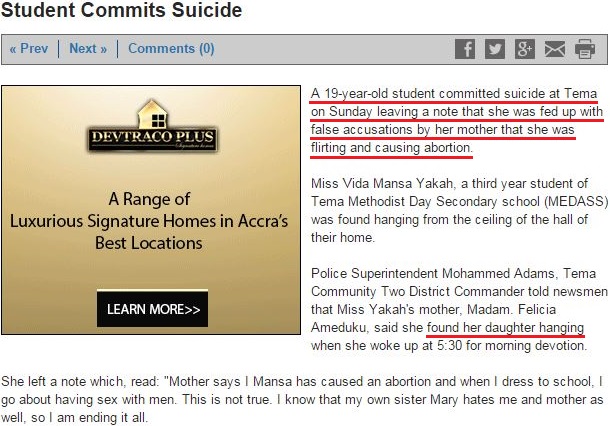
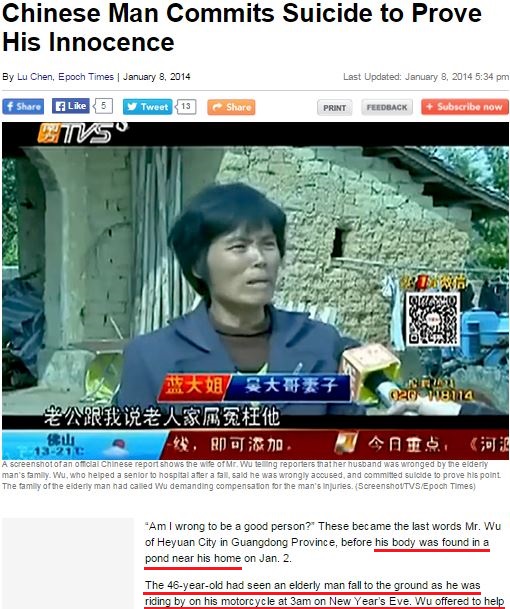
False Accusations and Suicide: Some Headlines about the Effects of Finger-Pointing and Legal Abuse (Culled for the Empathically Challenged)

Since the publication of this post, the one quoted above has been deleted.

One of the stories highlighted below concerns a young man who was falsely labeled a rapist by some bullies at school. He hanged himself. He was 16. Another concerns a man who spent a year and a half in prison based on a false accusation of sexual assault (among other false accusations). While the man was behind bars, his mother killed herself, believing her son was a pimp and a rapist.

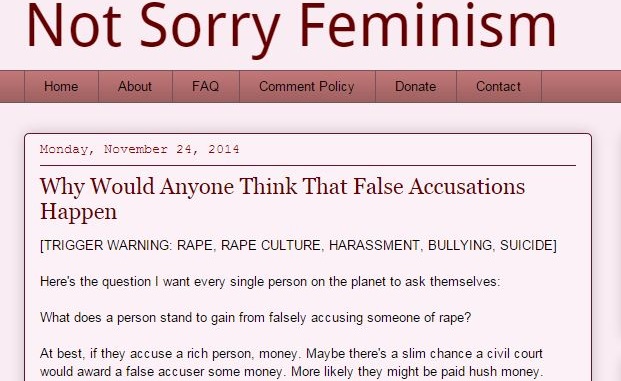
A word to the wise: Only ask a rhetorical question if you know the answer…and it favors your position.

The question posed above by the zealous, young author of Not Sorry Feminism isn’t, of course, a question at all; it’s an indictment. She means how dare anyone think false accusations happen. What problematizes the writer’s rhetorical-question-cum-admonition is that it has a very obvious answer: The reason people think false accusations “happen” (so to speak) is that they do.

(It might alternatively be asserted that no one does believe false accusations “happen,” the same way no one believes rapes “happen.” Both are acts, and both have agents. If rape happens isn’t a construction a feminist could get behind, false accusations happen shouldn’t be, either. You’re a proponent of accountability, or you’re not.)

Worse than her question’s being problematic, because answerable, is that its answer isn’t one the writer wants to hear. Motives for false accusations, including of rape, are greed, malice, bullying, vengeance, jealousy, possessiveness, attention-seeking, mental illness, and cover-up, to name a few. They’re ugly, often petty, always destructive…and they can kill.

This post surveys examples of false allegations or deadly allegations or false and deadly allegations drawn from news stories. Here’s one such:

Unlike most of the rest, the first story glossed in this hastily cobbled digital scrapbook doesn’t include a suicide or references to suicide. It’s nevertheless a good starting point, because it’s old news.

The article’s from 15 years ago. Fifteen. Significantly, though, no half-hearted sleuth would find it a challenge today to turn up commentaries on the Internet, mostly from feminist writers like the one who introduces this post, that either (1) deny such a thing ever happens or (2) deny it’s a big deal when it does happen—and deny it’s a sign that a culture of false accusation exists and has for some time. (A story so uncannily similar as to be almost identical can be found here. It appeared in The Huffington Post less than 24 months ago.)

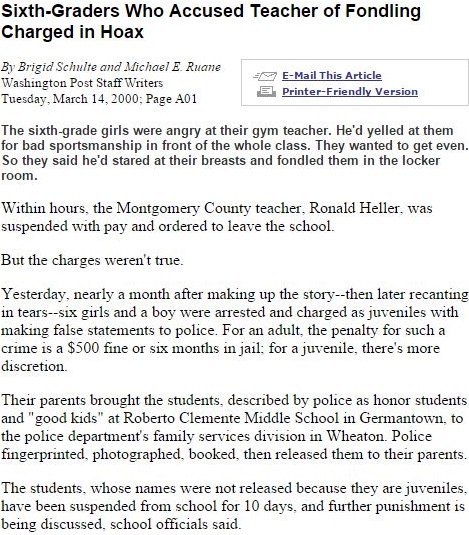
Consider: Where would six elementary school girls and a boy get the idea of framing their gym teacher as a molester, and where would they get the impression this conduct was okay (or “cool”) or that they’d get away with it and not face dire consequences? Should we believe the notion had no cultural influences and was purely a product of these honors students’ collective wicked imagination?

For accusing their teacher of groping them, the kids were suspended for 10 days. It’s likely the most traumatic part of their punishment was being detained by police and “fingerprinted, photographed, [and] booked.” Keep this thought in mind.

Keep this quotation in mind, too: “‘When they made the charge, that’s about 80 percent of the damage to your reputation right there,’ [attorney Paul F.] Kemp said. ‘Because even if you’re found innocent, people will assume you got off on a technicality. Or that there’s something there when there’s not.’”

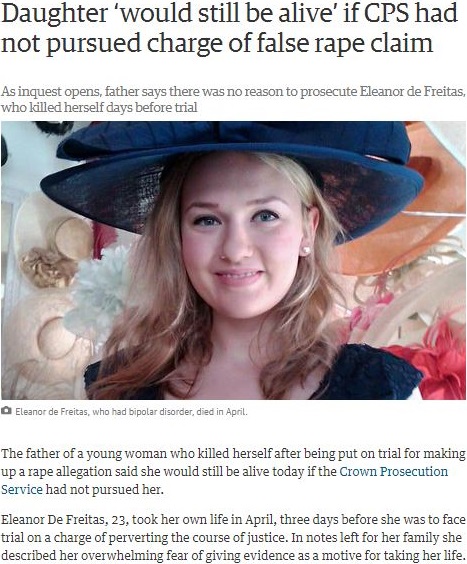
Editorial intrusions end here; the remainder of this post is a series of Internet clippings (linked to the “complete stories”) from which readers may draw their own conclusions about the motives and effects of accusation, bullying, and legal abuse. The author of this post would only point out before absenting himself that an accusation that may induce someone to kill him- or herself need not be of rape and that one of the suicides chronicled below is of a woman who faced being tried for falsely alleging she was sexually assaulted (“In notes left for her family, she described her overwhelming fear of giving evidence…”).

The common denominator is accusation and public scrutiny and judgment, not being accused of a particular act, per se. Zerlina Maxwell and her ilk are categorically wrong.

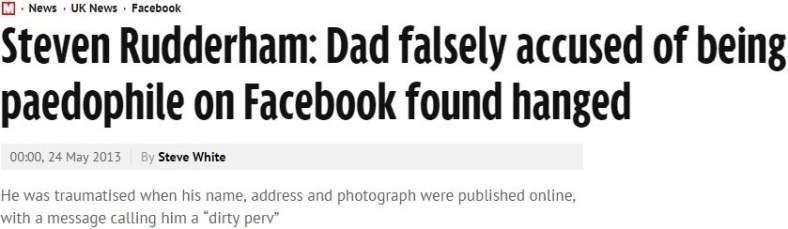
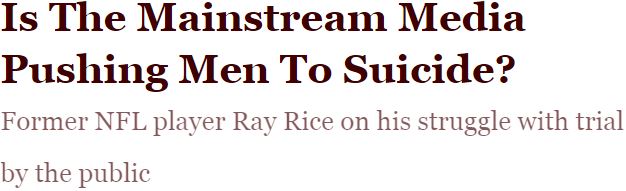
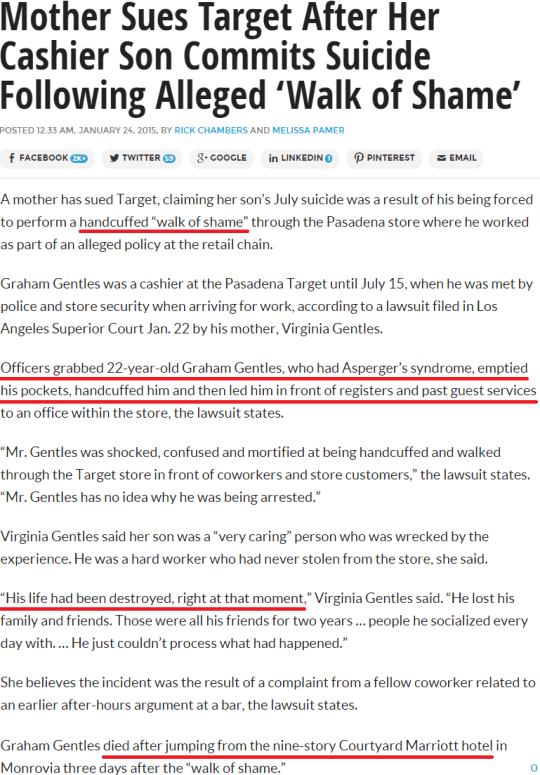
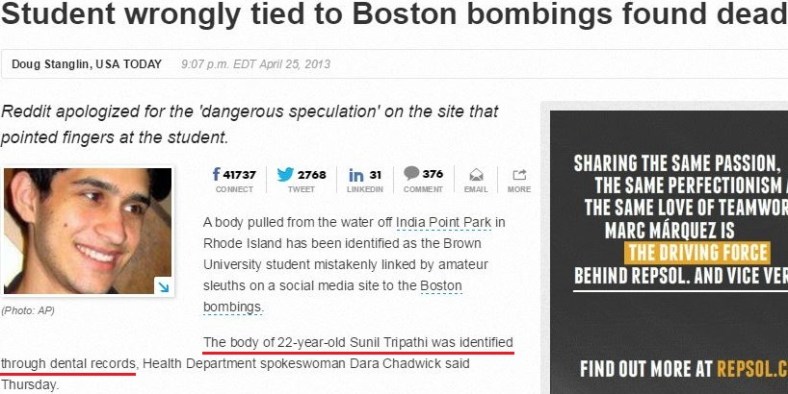
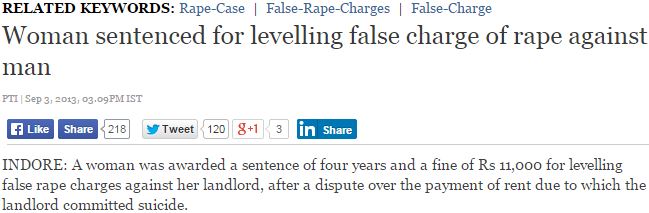
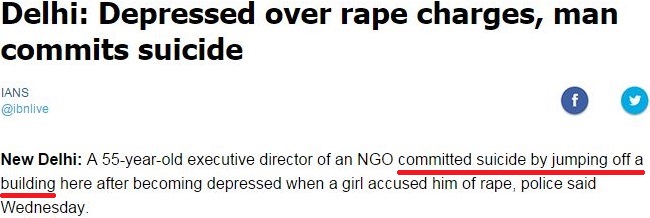
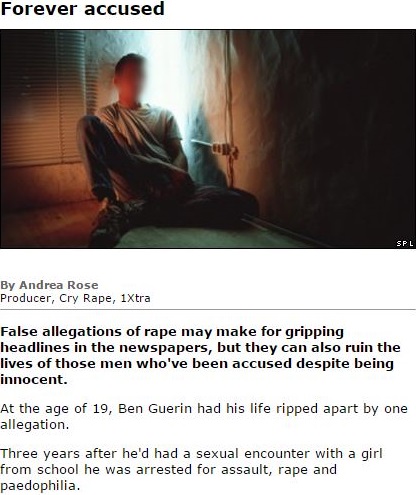
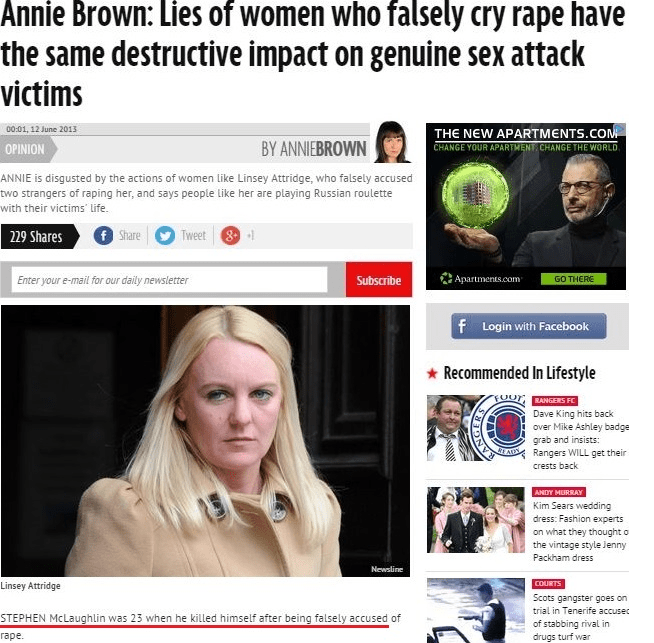
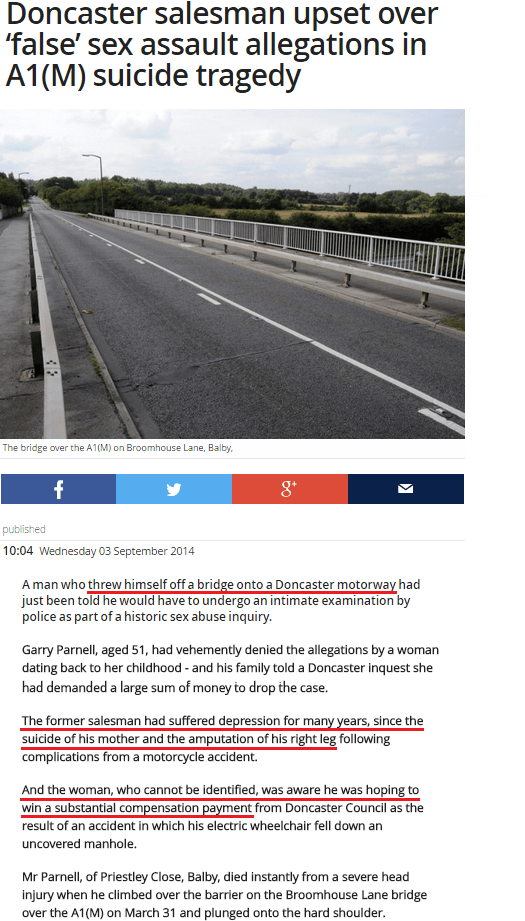
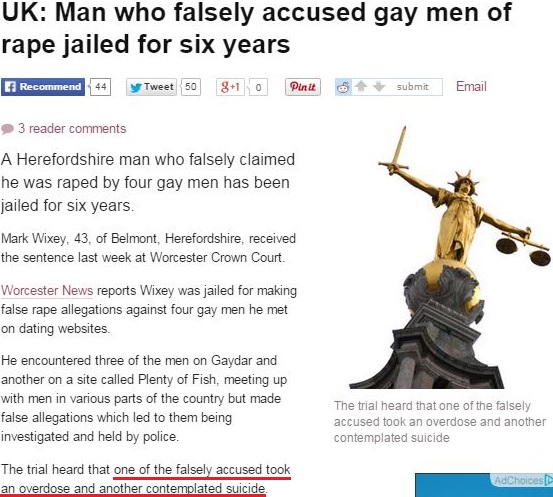
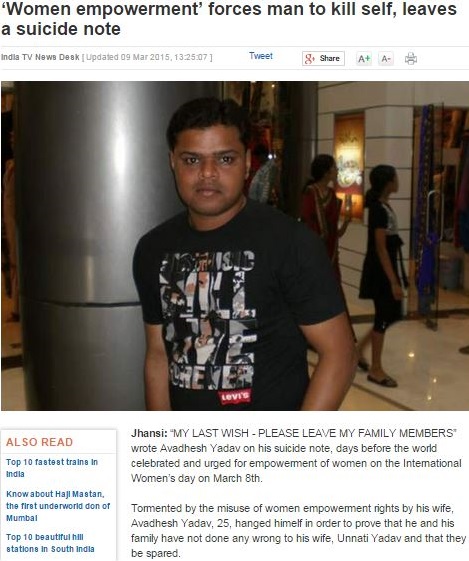
fale_accusations_destroy

nancy_grace_suit

dad_falsely_accused

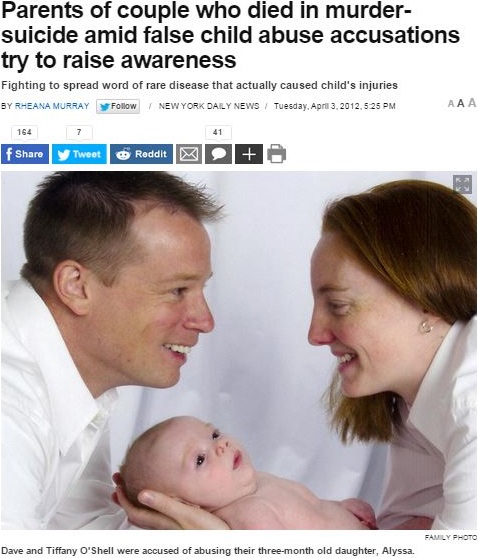
murder_suicide

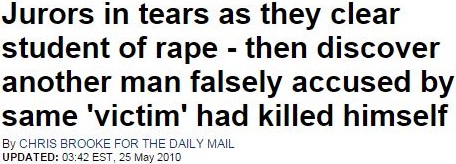
jurors_in_tears_full

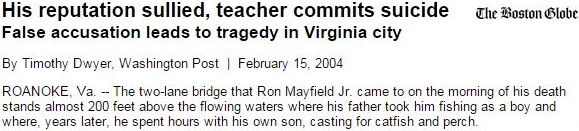
reputation_sullied_full

suicidality

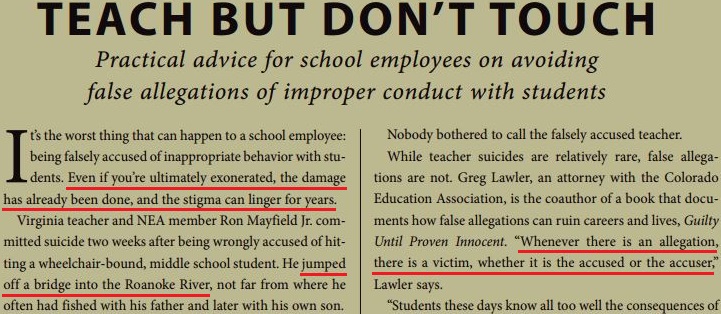
forever_accused

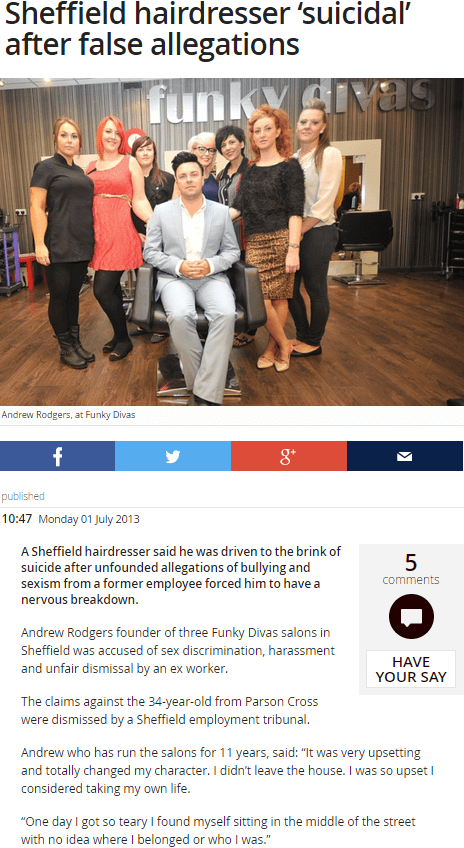
Sheffield_hairdresser

Chinese_man_commits_suicide

Copyright © 2015 RestrainingOrderAbuse.com

Abandon All Hope Ye Who Enter Here: The Hell of Legal Abuse Syndrome

This is the third sequential post on this blog about Legal Abuse Syndrome (LAS), a condition proposed by marriage and family therapist Karin P. Huffer “that develops in individuals assaulted by ethical violations, legal abuses, betrayals, and fraud” and that’s exacerbated by “abuse of power and authority and a profound lack of accountability in our courts.” This post surveys accounts of affliction (and its sources) drawn from various websites.

abandon all hope
Editorial intrusions and commentary in this post have been kept to a minimum, but some grammatical polishing is acknowledged.

You May Be Suffering from Legal Abuse Syndrome if You Have Been a Victim of DCF”:

I have been doing some reading on LAS (Legal Abuse Syndrome) and PTSD since I have begun to fear my own shadow. I hate the doorbell to ring. I run to the window to try to see who it might be, and rarely answer. If someone knocks on the door with any force, I am paralyzed. I do not like to answer the phone and thank God for caller ID. When I go out of the house, heaven help me if I see a child who reminds me of what we have lost. I cannot tell you the number of times I have vomited in public toilets. A police car in the rearview mirror leads to deep breathing and panic attacks. The thought of walking into a courtroom is enough to reduce me to a shaking mess. Certain names…can cause me to feel a sense of violation like no other. Sleep rarely happens and is often interrupted by nightmares, or even worse, waking and screaming for my child. No one cares; all of those I thought would protect us have not only failed us but willingly allowed misconduct and lies. Those I held in high regard due to their positions of trust and power I have found to have let their power corrupt their values and morals. Do I think I am ill? Yes, I know I am. I have a good doctor who is trying to help, a church to support me, and my husband and children who have stood by me, but I also know I will never be the same person I was. I will never trust in the “system” and have been totally disillusioned by what I always thought were my constitutional rights as an American citizen not only being disregarded but willfully being trampled on by those sworn to protect them.

Sufferer Legal Abuse Syndrome” (MyPTSD.com):

I was just diagnosed with PTSD from a prolonged and nasty legal battle (10 years). It was my understanding that PTSD was only for vets coming back from war. I guess there are other ways to fight wars. Mine was in the courtroom trying to fight off the onslaught of unethical attorneys and judges. I believe I fought for a good cause, but it has taken its toll on me. My nerves are shot; I have anxiety from the minute I wake up until I go to bed. Thoughts of what they did and the power they had over me and my children are with me always. I want to have a life, but I still deal with the consequences every day. I feel guilty for feeling this way as there are so many other people who have been through much worse. I think the feeling of being powerless and abused by a system I had faith in has shaken my foundation. My feelings about people and the world have changed forever, and my trust level is very low. A psychologist involved in the battle betrayed me and my family with lies, along with two other professionals in this field, all my attorneys, and the judges. You might discount my viewpoint as overboard. It took a long time to see it myself, but my investigations proved correct.

Legal Abuse Syndrome” (Caught.net):

I became depressed, physically ill, and seriously suicidal after experiencing the insanity of litigation. I lost my home and was sent to the street with nothing but the clothes on my back. Literally everything I owned was gone for several years. I fought my fight to points of exhaustion where all I could do was stare into space. Friends had left; I was emotionally isolated, and normal living activities were no longer normal. Rage doesn’t come close to describing the feelings I lived with for years. Even this is not the full story of how bad it got.

Posttraumatic Stress Disorder Legal Abuse Syndrome”:

I was diagnosed about two years ago with LAS [Legal Abuse Syndrome]. Protracted litigation and corrupt court decisions not only exacerbated my fibromyalgia but caused me to begin a whole new set of debilitating symptoms which have rendered me unable to sleep properly, hold a job, succeed in relationships, enjoy life, maintain goals, dreams, and hope. I suffer from what I call “spinal cord attacks,” which feel like rushes of adrenaline or cortisol permeating my spine, making me feel paralyzed, causing severe pain, lasting for 30 seconds to two minutes, and resulting in complete exhaustion and distress.

My once beautiful life as a drama and music teacher, writer and producer of children’s musicals, and fledgling writer has all but vanished. I am so debilitated from extensive legal research, useless and destructive attorneys and judges, horrendous living conditions imposed upon me by corrupt judges who denied me due process, the loss of my beautiful family home to my ex (which I had been paying for but couldn’t qualify for), the purging of all my earthly belongings, a now transient lifestyle, and increasing medical problems like high blood pressure, anxiety attacks, and hopelessness.

Massachusetts Mother Calling for Family Court Justice in Domestic Abuse Cases”:

I have missed all of my three daughters’ birthdays, first days of school, first dances, holidays, vacations, and school volunteering since 2007. My youngest daughter, Kelly, is nine. That means I have already missed out on half her life. I am not a drug addict. I am not an alcoholic.  I was and still am an upstanding citizen in the community despite Attorney Arabasz and his clients’ attempts to cause deliberate and malicious harm to me. I do my best to volunteer in the community, including hospice and domestic abuse, and have won numerous awards for my volunteerism over the years, which tends to bring me a renewed sense of healing from my own traumas. My children and I cannot get back those formative years we have missed. They are gone forever, never to return.  I am speechless in my ability to describe the pain and anguish I feel over this injustice alone.

Over that time, as documented through the courts, I have endured numerous, repeated, serious abuses that I have come to the court pleading for help with to no avail.  I am a human being who can take being abused only for so long.  I have suffered serious, repeated, unrelenting, undue stresses, many of which are criminal in nature, that have caused health issues. When the trial arrived, I prayed and hoped for justice to finally prevail for the sake of my children.

I have been severed from my children’s lives with little to no contact since August 3, 2011, and even longer since September 2007. The verdict of August 2012 from the trial was devastating to me and I worried about the long-term negative impact it would have on my children….

As a result, I am currently being treated for ADHD, Legal Abuse Syndrome, and trauma-related stress, and my treatment since trial has increased. Symptoms of trauma-related stress include gastrointestinal issues; anxiety and fear, especially when exposed to situations reminding me of the many repeated traumatic events; trouble sleeping; trouble eating; low energy; memory problems, including difficulty remembering aspects of the trauma; a “scattered” feeling and inability to focus on work or daily activities;  emotional “numbness,” which causes me to feel withdrawn, disconnected, or different from others; and protectiveness of loved ones or fear for their safety.

I did not suffer any of these symptoms until after I married an abusive partner and endured years of abuse. I was a victim that the system failed to protect, and now I suffer greatly. I was a fantastic mother, and even the father never questioned my ability to care for or mother these children until he got what he wanted and stole financially through the divorce.  However, the system has stripped away all my ability to love, nurture, and parent my three daughters who need me greatly.

The foregoing first-person accounts are hardly comprehensive; they were culled because they’re evocative. Notably, they echo numerous comments submitted by visitors to this blog, who have reported everything from homelessness and hopelessness to living “like a hamster” to contemplating suicide. Many respondents to the e-petition “Stop False Allegations of Domestic Violence” have reported the same.

The third-person account below, though it leaves the victim’s torment to the reader’s imagination, is certainly no less sympathetic than those above. It speaks, particularly, to how blind or indifferent others may be to the effects of legal abuse.

How academia betrayed and continues to betray Aaron Swartz”:

As news spread last week that digital rights activist Aaron Swartz had killed himself ahead of a federal trial on charges that he illegally downloaded a large database of scholarly articles with the intent to freely disseminate its contents, thousands of academics began posting free copies of their work online, coalescing around the Twitter hashtag #pdftribute.

This was a touching tribute: a collective effort to complete the task Swartz had tried—and many people felt died trying—to accomplish himself. But it is a tragic irony that the only reason Swartz had to break the law to fulfill his quest to liberate human knowledge was that the same academic community that rose up to support his cause after he died had routinely betrayed it while he was alive.

This survey concludes with an impersonal commentary from a woman who’s still embroiled in legal strife and fears the consequences of speaking about it too candidly in a public medium. She has removed herself to another state to escape a malicious accuser’s clutches but remains in the crosshairs, despite having been deprived of everything she once took for granted—including her sense of self.

‘White Collar’ Domestic Violence Sanctioned by the State”:

The fraudulently obtained protective order is the new tool of abuse for abusers to obtain total power and control over their victims. The protective order is obtained using false allegations of domestic violence and abuse against the victim in an open court of law without due process or an evidentiary hearing. The protective order is then used as a state-sanctioned license to stalk, harass, intimidate, and continue to abuse the victim. The victim lives in constant fear that s/he will be arrested and incarcerated any time the abuser chooses to place him or her in jail. The accuser plays the victim of his or her own crime [cf. Dr. Tara Palmatier’s “Presto, Change-o, DARVO: Deny, Attack, and Reverse Victim and Offender”].

This is the new “white collar” form of domestic violence and abuse. It is a tactic used by both men and women to gain the upper hand in a divorce or custody battle, or to have a domestic partner simply removed from a lease and ejected from his or her own home. In the case of a victim’s terrible misfortune of coupling with a psychopath or sociopath suffering from a narcissistic or borderline personality disorder, the protective order is fraudulently obtained by means of false accusations of domestic abuse simply to gain total power and control over him or her while simultaneously inflicting emotional distress to hurt and humiliate him or her and publicly harm his or her reputation. This in and of itself allows the abuser to compromise the integrity of his or her victim with a permanent public record, thereby impugning the victim’s character. This not only serves to satisfy the malicious intent of the abuser; it also renders the victim helpless in any and all attempts to plead innocence and defend him- or herself to law enforcement and the courts.

Acts of malicious intent by way of falsifying police reports, manufacturing evidence, and committing perjury in a court of law—all crimes at a felony offense level—go criminally unprosecuted because restraining order courts are of a civil nature, held by low level officials with no due process. Any attempts by the victim to file complaints or police reports of his or her own are useless and futile attempts at self-protection, because probable cause cannot be proven; a victim simply cannot prove with tangible evidence the intent or motive of the abuser. All attempts by the victim to file complaints or police reports to protect him- or herself do is embolden and provoke the abuser to escalate the abusive behavior toward the victim to the point that the victim cannot attend school, go to work, or even leave his or her own home out of living in a constant state of fear that the abuser will have him or her arrested on a whim.

Without due process and without protection, the victim is ultimately under the total power and control of the abuser. Law enforcement and the legal system (the courts, the judges, the attorneys) are all simply pawns in the sociopath’s sick game of abuse of process. A carefully constructed web of lies is in itself so complex that the victim is powerless to prove s/he is the victim of abuse, not its perpetrator. Over time, after the victim is professionally and academically destroyed, publicly humiliated, and ultimately alienated and completely isolated from his or her community, from friends, and even from family, s/he begins to doubt him- or herself and eventually loses all sense of human identity. Many victims commit suicide as a result of the abuse.

Copyright © 2015 RestrainingOrderAbuse.com

*See also this post about the death of Christopher Mackney, which contains links to his suicide note: “First Amendment Rights from Beyond the Grave: Defense of a Suicide’s Publication of His Final Words by the Randazza Legal Group.” The circumstances that conduced to Mr. Mackney’s taking his life are chronicled in a forthcoming book by investigative journalist Michael Volpe, which is titled, Bullied to Death: The Chris Mackney Story.

“Shame and Stigma” and the “Mean-Spirited Cultural Response” That Efforts to Cast Them Off Provoke: Procedural Abuse and Parental Alienation

“Parental alienation is the ‘programming’ of a child by one parent to denigrate the other (targeted) parent, in an effort to undermine and interfere with the child’s relationship with that parent, and most often occurs within the context of a child custody conflict. This includes the ‘legal abuse’ of parents who have been disenfranchised from their children’s lives subsequent to sole custody and primary residence judgments. Within an adversarial legal process, non-custodial parents are often subjected to shame and stigma, lack of access to their children, and devaluation of their role as parents. And those who speak about the pain and woundedness in their lives are subjected to a mean-spirited cultural response, where their talk of woundedness is mocked.”

Edward Kruk, Ph.D.

Here’s child and family social worker Edward Kruk corroborating that parents may be the targets of “legal abuse”; that they’re subjected to shame and stigma, and to alienation from their children; and that they’re ridiculed and regarded with contempt for complaining about it: “The Impact of Parental Alienation on Parents: Post-traumatic Stress in the Rupture of Parent-Child Relationships” (2013). There are mothers who endure this, make no mistake, but as Dr. Kruk observes, “Most alienated parents are non-custodial fathers.”

Members of both genders (parents and non-parents alike) have reported on this blog that they’ve experienced (or are in the throes of) PTSD consequent to abusive legal contests, and it’s not the intent of this post to discount the plaints of mothers who face this torment. It must be emphasized, however, that the “mean-spirited cultural response” Dr. Kruk notes is predominately, if not exclusively, directed at men, and it’s because fathers’/men’s plaints are so roundly and effectively denounced and dismissed that mothers’/women’s plaints also lack a sympathetic audience.

(Feminists would prefer that female victims of legal abuse quietly recede into obscurity and accept the role of martyr for “the cause.”)

The “mean-spirited cultural response” is broad but includes highly influential voices, including law professors and esteemed advocacy groups like the Southern Poverty Law Center, which has equated men’s and fathers’ rights representatives with hate groups, asserting that they’re on a par with the Ku Klux Klan.

No kidding.

To vehemently complain about being treated prejudicially by the courts and alienated from your kids is to be caricatured as a racist wearing a bedsheet and brandishing a torch. (Few in the mainstream press, moreover, scoff at this rhetoric.) For moms (and women in general) who’ve been victimized by legal abuse to be heeded, the demonization of men’s and fathers’ advocates as mere “misogynists” must first be controverted.

Last year, a post on this blog reported the award of a $500,000 grant to a female law professor to “debunk” the claim that court procedures are abused to alienate parents from their children, and it’s this sort of (government-funded) social science research that marginalizes voices like Dr. Kruk’s.

It provides fodder to bloggers and other commentators, and it’s used to “train” judges how to rule.

The selective orientation of feminist social science ignores competing (and compelling) findings like these Dr. Kruk cites:

Suicide rates are reported to be of epidemic proportions among parents, fathers in particular, who are struggling to maintain a parenting relationship with their children (Kposowa, 2000; Kposowa, 2003); and legal abuse has been noted as a key factor in these cases.

A recent post on this blog referenced the suicide of a father who’d undergone years of legal hell and couldn’t face any more. He bled out—emotionally, morally, and financially. Feminist advocates stress the consequences and “rampancy” of domestic violence—focusing narrowly on female victims—while denying that the effects of legal abuses are grave. They trivialize those effects and often deny legal abuses occur to any extent worthy of attention or redress.

The devaluation of family and the curtailment of lives aren’t trivial.

Copyright © 2015 RestrainingOrderAbuse.com

First Amendment Rights from Beyond the Grave: Defense of a Suicide’s Publication of His Final Words by the Randazza Legal Group

“I couldn’t flee and I could not fight. I was never going to be allowed to heal or recover. I wish I were better at articulating the psychological and emotional trauma I experienced. I could fill a book with all the lies and mysterious rulings of the Court. Never have I experienced this kind of pain. I asked for help, but good men did nothing and evil prevailed.”

—Chris Mackney (1968–2013)

An emailed riposte from Las Vegas attorney Marc Randazza was introduced to my attention this week. It was an answer to a move by the “estranged wife” of a man who committed suicide in 2013 to have the man’s suicide note removed from the blog A Voice for Men.

The genesis of this dispute appears to be that Mr. Christopher Hines Machnij a/k/a Christopher Hines Mackney and his estranged wife were in an acrimonious relationship. Due to the strains of that relationship, Mr. Mackney started a blog in order to express his thoughts about his treatment in the family law system. This culminated in a suicide note, which he published to his blog from Washington, D.C., on December 29, 2013, and then he committed suicide on December 29, 2013. His writing and his suicide note were admittedly unflattering to your client. Your client then petitioned a Virginia state court to grant her some ambiguous (and questionable) intellectual property rights to the blog’s contents, which she is using to attempt to purge Mr. Mackney’s expression from every corner possible. One of those corners is my client’s blog.

[…]

It is our position that A Voice for Men’s republication of the suicide note is not copyright infringement, pursuant to 17 U.S.C. § 107. Accordingly, even if Mr. Mackney were to rise from the dead and insist upon the depublication of the suicide note, it is my client’s position that it has a right to continue publication of the letter.

Perusal of Mr. Randazza’s email, which is masterfully composed, is recommended to anyone invested in the right to redress perceived injustices by the public exercise of his or her voice.

Christopher Mackney

I’ve read Mr. Mackney’s “suicide note,” which is neither a manifesto of hate nor a farewell-cruel-world. It’s a supremely calm and sincere apology that’s all the more haunting for its quiet lucidity and resignation.

What Mr. Mackney describes in his final statement (dated four days after Christmas) will be familiar to anyone who’s endured something similar: the isolation, alienation, and paralysis; the mute indifference from anyone who could have intervened; the loss of identity, emotional decay, and financial ruin; and the hopelessness that comes from repeated confirmations that resistance is futile.

The consequences of the court’s intrusion into family and interpersonal matters—and the imposition of its judgment—are seldom viewed with the gravity they deserve.

Much of the debate of issues orbital to the events that prompted Mr. Mackney’s suicide occurs in the abstract. Commentators’ opinions (and they are legion) can rarely be seen to acknowledge the real-life strains and torments that real, live accused people suffer.

What is animating fodder for conversation to some, however, leads others to kill themselves.

Copyright © 2015 RestrainingOrderAbuse.com

*Among Mr. Mackney’s final words are an adjuration to stand up and speak out in defense of the abused (his blog resided at GoodMenDidNothing.com).

Disdain for a Feminist Institution of Law Isn’t the Same as Disdain for Women

“I am the victim of false accusations [by] a female with sociopathic tendencies. She stabbed my husband [and] threatened to kill me, but for whatever reason filed for a domestic violence protective order on me. I value respect from people, so I do and act morally to maintain my relationships, but because any given person, whether sane or not, can go file a petition with its being granted depending on how it’s worded, I was treated like a criminal and not one time given the opportunity to inform even the judge that the petitioner had committed perjury. Only in [West Virginia] a felony can be committed and go unpunished. This is [an overlooked] flaw that needs immediate attention!!!! This not only jeopardizes my future, but my kids’ future, because if the petitioner wouldn’t have dropped it, it would [have been] filed in a national database, popping up whenever a background check is done on me, including [by] my college for my admission into Nuclear Medicine Technology…and this is all based on a drug-addicted, manipulating, vindictive person’s false accusations.”

—Female e-petition respondent

“Dangerous law easily used as a sword instead of shield. A Butte man died over this. His girlfriend, after making the false allegations, cleaned out his bank account. He committed suicide. His mother, Ruth, had no money to bury him. The girlfriend depleted his assets partying.”

—Female e-petition respondent

“I can relate to this topic, because I once made false allegations against my lover because I was a woman scorned and wanted to get even with him and make him feel the same level of pain that he made me feel. Luckily for him and me, I was convicted in my spirit and confessed to the court that I’d lied, and the matter was dropped. If I’d not been led to do that, my lie could have ruined this man’s life….”

—Female e-petition respondent

“It makes me sick that there are so many families affected by false allegations. The children [who] are affected break my heart. We have been living this nightmare for over a year now—over $40 thousand dollars spent, and this woman still keeps us in court with her false allegations…. At what point will the courts make these people accountable???”

—Female e-petition respondent

A recent comment to this blog from a female victim of restraining order abuse (by her husband) expressed the perception that criticism of feminist motives and the restraining order process, a feminist institution of law, seemed vitriolic toward women.

Her reaction is understandable.

What isn’t perceived generally, including by female victims of fraudulent abuse of process, is that the restraining order was prompted by feminist lobbying just a few decades ago and that its manifest injustices are sustained by feminist lobbying. It’s not as though reform has never been proposed; it’s that reform is rejected by those with a political interest in preserving the status quo.

Political motives, remember, aren’t humanitarian motives; they’re power motives.

So enculturated has the belief that women are helpless victims become that no one recognizes that feminist political might is unrivaled—unrivaled—and it’s in the interest of preserving that political might and enhancing it that the belief that women are helpless victims is vigorously promulgated by the feminist establishment that should be promoting the idea that women aren’t helpless.

It’s this belief and this political might that make restraining order abuses, including abuses that trash the lives of women, possible. Not only does the restraining order process victimize women; it denies that women have personal agency.

Nurturance of the belief that women are helpless victims puts a lot of money in a lot of hands, and very few of those hands belong to victims.

The original feminist agenda, one that’s been all but eclipsed, was inspiring women with a sense of personal empowerment and dispelling the notion that they’re helpless. The restraining order process is anti-feminist as is today’s mainstream feminist agenda, which equity feminists have been saying for decades.

Restraining orders continue to be doled out (in the millions per annum) on the basis of meeting a civil standard of evidence (which means no proof is necessary), pursuant to five- or 10-minute interviews between plaintiffs and judges, from which defendants are excluded.

So certainly has the vulnerability and helplessness of women been universally accepted that the state credits claims of danger or threat made in civil restraining order applications on reflex, including by men, because our courts must be perceived as “fair.” Consequently, fraudulent claims are both rampant and easily put over.

Restraining orders aren’t pro-equality and don’t contribute to the advancement of social justice. They do, though, put a lot of people’s kids through college, like lawyers’ and judges’.

Copyright © 2014 RestrainingOrderAbuse.com

Middle Class to Pauper in a Day: On Restraining Order Fraud, Homelessness, and Suicide

This describes what happened and continues to happen to me because of my wife’s lying to the court authorities. I am desperately seeking someone to help me, because I lost everything: job, home, money, and reputation. I already tried once to take my life because of it. [Although I have never] been in trouble with the law in the past…she was able to have me arrested for [domestic violence] and stalking with no proof, facts, or witnesses. I did not do those things, and I have surveillance video to prove my innocence. She [has] stalked and continues to stalk, intimidate, harass, threaten, and humiliate me regularly. I’m homeless in [an area where I know] no one [and have no one] to turn to, no job, no money, [and] no adequate legal representation. My life as I knew it is over. Help me, please!!!”

E-petition respondent

He’s lying, right? Like the thousands of others who’ve responded to the same petition he has? Really ask yourself. It’s appalling to me that there are intelligent human beings in the world who find it an easy matter to dismiss pleas like this out of hand.

Does this person sound crazy? Does he sound dangerous? I also find it appalling how rarely obvious questions like these present themselves even to minds trained to think critically.

I’ll answer for you: No, he doesn’t sound crazy or dangerous. Next question (this is how critical thinking works): If he’s telling it true, how is something like this possible?

It’s possible for exactly the reason he names: substantiating claims of stalking and domestic violence made through the civil court requires no evidence (nor does substantiating any other allegations), and on their basis a defendant can be summarily stripped of everything. Any adult can walk into a courtroom off the street and make allegations like these against another adult and have a restraining order issued. This can even be true when the accuser has no domestic relationship with his or her “abuser” or has never even met that “abuser” before. Allegations like these can moreover be made by people who live in different states from the accused. The restraining order process, in other words, is a golden ticket to any liar or crank with an ax to grind or even to any psycho responding to the urges of the voices in his or her head. There’s no inspection or corroboration of credentials. (One recent respondent to this blog reports that his wife’s embittered ex-boyfriend was awarded one of her children upon his falsely swearing out a restraining order against her and claiming to be the boy’s father. The boy was removed from school and handed to him. Consider how you’d feel if one of your kids were placed in the custody of a stranger…who hated you. Just based on his say-so. If you tried to recover the child and return him or her to safety, incidentally, you’d be arrested by the state and charged at the very least with contempt of court for violating the restraining order.)

It’s imagined, I think, even by those who are capable of acknowledging the stink of injustice, that the fallout of false allegations is exaggerated. There is no exaggerating it. Whatever you think you own and whoever you think you are can be taken from you and reinterpreted in an instant. By public factotums who’ve never even clapped eyes on you, couldn’t care less, and wouldn’t scruple a bit about locking you in a cage.

The nifty part is that once a person like the man quoted in the epigraph is forcibly divested of all means to fight back, s/he can’t. And no journalist is going to touch a story like his. Allegations that may lead to someone’s being stripped of home, property, and dignity may be so impossible to discriminate from the truth that there’s no way to assuredly expose the injustice. There’s no proving an allegation of fear, for instance, to be false. For that matter, there’s no proving an allegation of threat or violence to be false.

There’s no proving them to be true, either (even welts and bruises can be self-inflicted). But that doesn’t matter. This glaring bias is the only ascertainable injustice.

Aside, that is, from the fact that the man whose story prompted this discussion is sleeping in a box and thinking about offing himself.

Copyright © 2014 RestrainingOrderAbuse.com