Tiffany Bredfeldt, Lying Freak

To whom it may concern: It is the qualified conviction of this writer, who has been the target of violent stalking, that the subject of this post, Tiffany Bredfeldt, Ph.D., is a chronic, manipulative, and inveterate liar who has no business occupying a position of public trust or even one that depends on good faith relations among colleagues. Anyone involved in a transaction with this woman, social or professional, should conduct it with a trusted third party present and in a public setting—or with the office door propped wide open.

*Since the publication of this post, the state of Texas seems to have drawn the same conclusion. (Bredfeldt has gained fresh employ with the Kimberly-Clark Corporation, maker of feminine hygeine products and Depend adult diapers.)


Bredfeldt Tiffany, Tiffany Bredfeldt, Bredfeldt TG, Dr Tiffany Bredfeldt, Tiffany Hargis, Tiffany Bredfeldt PhD, Tiffany Bredfeldt EPA, Tiffany Bredfeldt TCEQ, Tiffany Bredfeldt Linkedin, Tiffany Bredfeldt University of Arizona, Tiffany Bredfeldt MD Anderson, GaLyn Hargis, Phil Bredfeldt, Philip Bredfeldt

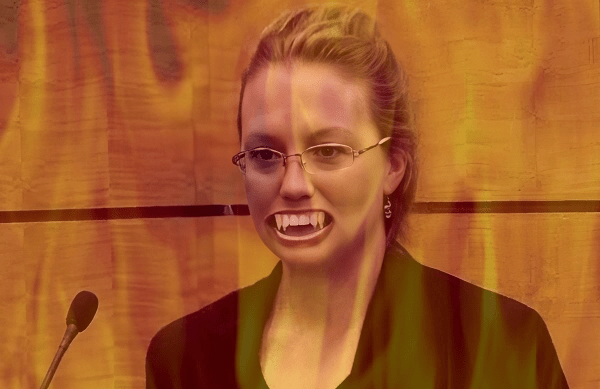
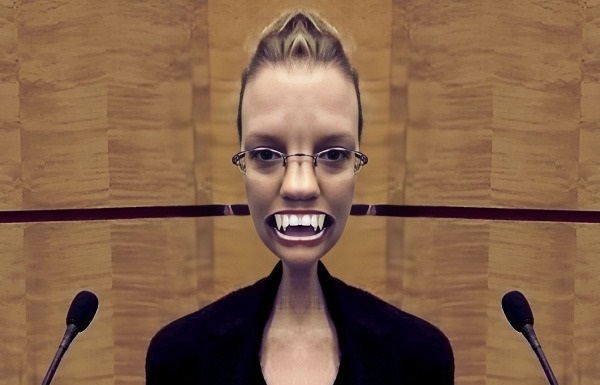
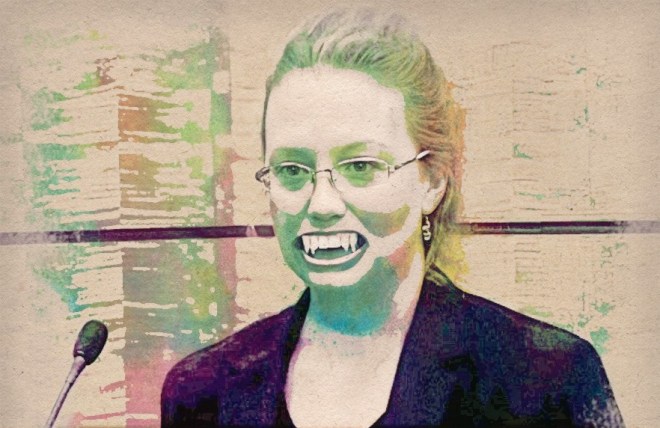
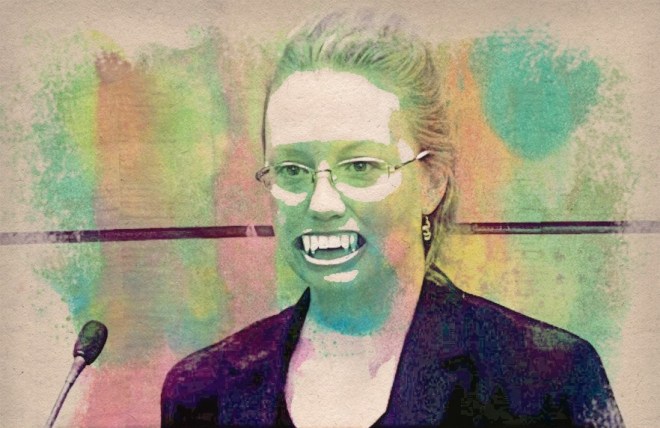
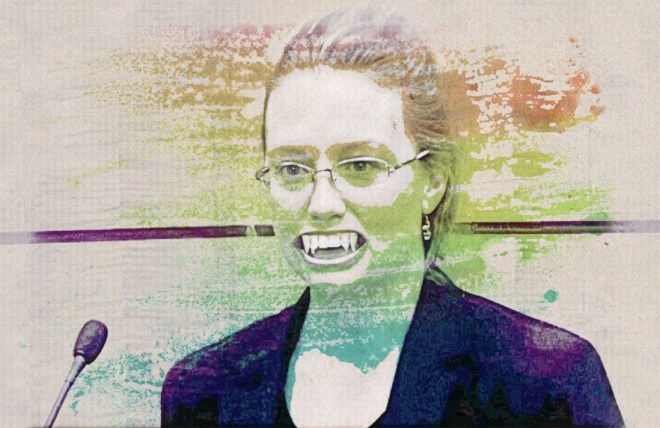
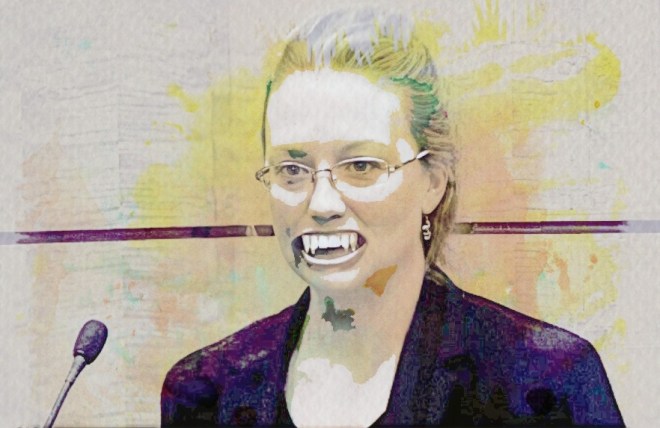
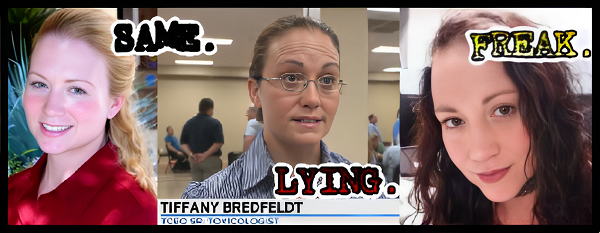
The photographs juxtaposed above (dated approximately 2005, 2016, and 2022) are of the same person, a serial deceiver who derailed the author’s life by hoaxing the police and courts for 12 years even as she herself worked in government as a senior public official. Underscoring the unscrupulous persistence of people like her, the woman evidently still maintains her fictions even as she seems to be trying to disassociate herself from reports of those fictions by literally trying to look like somebody else.

The writer has chronicled his experiences with Tiffany Bredfeldt, Ph.D., a cunning and committed con artist, in many prior posts. This post is prompted by fresh efforts on Bredfeldt’s part to suppress her negative press and remarket herself on LinkedIn.

Tiffany Bredfeldt, Tiffany Bredfeldt TCEQ, Tiffany Bredfeldt PhD, Bredfeldt TG

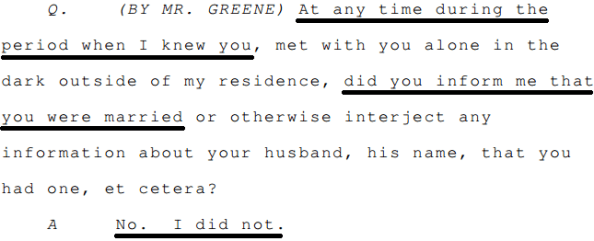
This is what I was called in an email from a married woman who had insinuated herself into the lives of my family and me, coerced favors and free labor, and contrived reasons to hold my hand and advertise her body while hanging around my house in the dark. She represented herself as single and never wore a wedding ring. The email was in response to a request for an explanation.

Maybe she’s looking for a different job. Or a new boyfriend. Her husband seems to have divorced her after the last time she took the writer to court, that time with the intent not just to scald him but to have him imprisoned.

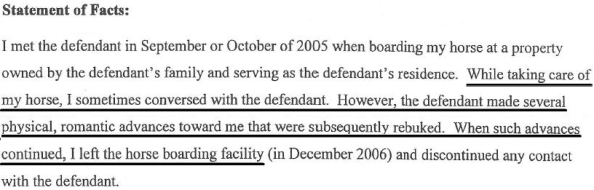
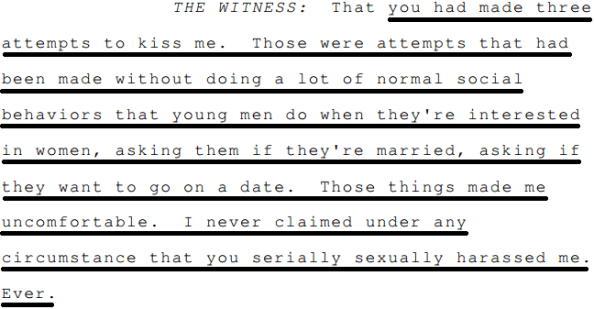
Below are statements from testimony and evidence provided by Tiffany Bredfeldt, a senior government scientist, to Arizona law enforcement officials and judges over a 10-year period in prosecutions that spanned fully 12 years (she has also admitted to giving similar statements to police and public officials in other states). The first statement is by Bredfeldt’s attorney, and the second-person statements that follow it are from emails from Bredfeldt to the writer that she entered into evidence herself, apparently with complete confidence that the contradictions would go unremarked. The setting is the author’s own home, which Bredfeldt frequented, typically at night, wearing a crocodile grin and no wedding ring, for three months.

In 16 years, the author’s home is the only place he has ever encountered Bredfeldt outside of a courthouse. Bredfeldt and the writer have not resided in the same state since shortly after her accusations began, and the writer has had no contact with her since that time (nor has he ever been to Texas, where Bredfeldt has been employed as a senior toxicologist for the Texas Commission on Environmental Quality, or TCEQ).

The only time the writer ever initiated physical contact with the woman was when she declined his mother’s invitation to join their family for Thanksgiving dinner. Bredfeldt didn’t say she had a husband who was expecting her; she said she had a migraine. The writer put his hand on her shoulder and told her he hoped she felt better.

While a little girl could perceive the inconsistencies in this senior government official’s statements, no sitting judge with jurisdiction to intervene has ever formally acknowledged them.


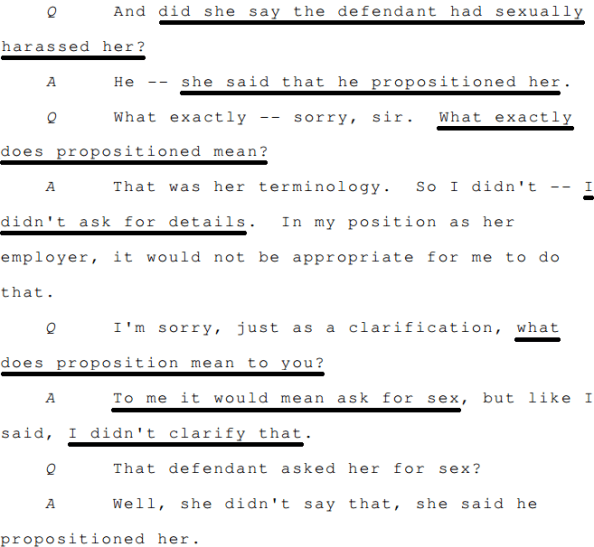
Here is a fuller version of one of the false accounts excerpted above, given by one of Bredfeldt’s witnesses, her boss, Michael Honeycutt, Ph.D., director of toxicology for the Texas Commission on Environmental Quality:


These finally are excerpted remarks from emails to the writer by a reportedly mentally ill woman, Jen J. Terpstra (or Jenn Oas when the writer first met her), who would apologize to the writer in 2012 and then be induced by Bredfeldt a few months afterwards to testify on Bredfeldt’s behalf:


See the cautionary note that prefaces this post.

Bredfeldt is presently under a court injunction barring her from reintroducing any of her copious prior claims against the writer, from surveilling the writer, and from having any direct contact with him or his family.

Copyright © 2022 RestrainingOrderAbuse.com

*One of the umpteen judges the writer had to appear before concerning Bredfeldt’s charges against him may or may not have offhandedly remarked that “crazy is what keeps us in business.”

**These brief 2024 YouTube videos (“Jeremy Cheezum, White Evangelical Family Values” and “Jeremy Cheezum, White Evangelical Family Stalking”) relate the story in an engaging way and from a broader perspective:


***Tiffany Bredfeldt, represented as the monster I know her to be:

Tiffany Bredfeldt, Tiffany Bredfeldt TCEQ, Tiffany Bredfeldt Phd, Jeremy Cheezum

Tiffany Bredfeldt TCEQ, Tiffany Bredfeldt, Jeremy Cheezum, Tiffany Bredfeldt Phd

Tiffany Bredfeldt

Tiffany Bredfeldt, Tiffany Hargis

Tiffany Bredfeldt PhD, Tiffany Hargis Tiffany Bredfeldt TCEQ, Tiffany Bredfeldt, Jeremy Cheezum

Tiffany Bredfeldt, Tiffany Bredfeldt TCEQ, Tiffany Bredfeldt Phd

Jeremy Cheezum, Tiffany Bredfeldt, Tiffany Bredfeldt PhD, Tiffany Bredfeldt TCEQ, Tiffany Hargis

Living in the Crosshairs: Crackpot Neighbors, False Reports, and Restraining Order Abuse

I bonded with a client recently while wrestling a tough job to conclusion. I’ll call him “Joe.” Joe and I were talking in his backyard, and he confided to me that his next-door neighbor was “crazy.” She’d reported him to the police “about a 100 times,” he said, including for listening to music after dark on his porch.

His neighbor had never been punished for her mischief, only indulged and rewarded. This is behavior the police and court have been conditioned to treat as urgent. The woman’s husband refused to participate in her sniping—but didn’t interfere with it, either. He had to live with her. Others in the vicinity just tried to stay off her radar.

The neighboring house was dim and still as Joe related the woman’s pranks, which spanned a period of years. “She’s probably listening to us now,” he remarked.

I commiserated but didn’t share with Joe that I wrote about such things and heard about them monthly from people whose lives were sometimes crippled by hyped allegations of fear and danger.

Joe told me, unsurprisingly, that his neighbor had twice sworn out restraining orders against him. The first was laughed out of court on appeal; the second he didn’t bother to contest. He gestured as if to say, “What would’ve been the point?” Maybe Joe intuited that high-conflict people like his neighbor live for strife and attention, and decided to deny her the satisfaction of a fight.

(Many respondents to this blog report they’ve had multiple false restraining orders petitioned against them. One e-petition respondent recently reported being the recipient of seven fraudulent restraining orders obtained by a “diagnosed narcissist.”)

Joe informed me, with a hint of sarcasm, that his neighbor was a professional psychic. Surveillance cameras nevertheless hung from the corners of her home’s roofline. I guess she couldn’t see everything coming.

(Among people who report being stalked or serially accused by neighbors through the courts, the presence of security cameras is commonly mentioned. The neighbors also tend to be of middle or advanced age and female—as are their victims, sometimes. One 60-year-old woman, chronically accused by a female neighbor, has reported having to abandon her house and flee to forestall further allegations. Men who are spies, peepers, and cranks are more likely to be the recipients of restraining orders than the petitioners of them: women accuse sooner than men do—and they do it more effectively.)

Joe didn’t get too explicit, but he told me he’d been photographed fooling around with his wife in the hot tub, which he’d since removed. In Arizona, at least, it’s apparently legal to monitor your neighbor over a bordering fence.

Joe said after he and his wife divorced, his neighbor told his ex-wife he was having an affair. He took in a male roommate. His neighbor photographed him, too—through the window adjacent to her backyard.

Joe shifted an arbor from one side of his patio to the other after getting approval (but no compensation) from the homeowners’ association. Two massive Tombstone rosebushes interwove to form a decent privacy screen.

I asked Joe whether he’d ever tried to get the woman off his back. He told me, unrepentant, that he’d once shot her with the garden hose while she was peeping. To this day, he says, she circulates it that he “assaulted her with a high-pressure hose.” He may have said this was the grounds for one of the restraining orders.

His neighbor has reported her other neighbors, too. The neighbor across the street knew of her particular “sensitivities” and informed her in advance that she was having a birthday party for her little girl at 2 in the afternoon on a weekend. The neighbor from hell reported it, anyway—on principle, I guess. The kids’ party was disrupted by cops.

Joe says his neighbor’s record is seven calls to the sheriff’s department in a single day (just on him). Deputies finally told her that if she called again, they’d cite her.

Joe works as a chef and didn’t appear to have any kids. With a few beers in him, he seemed to take the whole thing in stride.

I wonder if a feminist would be as tolerant.

Copyright © 2014 RestrainingOrderAbuse.com

“Women scare the sh— out of me”: When Restraining Orders Are Petitioned by Female Stalkers against Men Who Treat Them Sensitively

On 15 March 2009 at 11.07pm: Hi there! How are you? I am lying in my bed and thinking…I miss you and miss having you in my life and I would love to have you back in it…. I do have a lot of issues, I know, and I suppose I am a difficult woman at times…. In the same breath, I could have made the biggest tit out of myself now, because you might have met someone else…. Deep down inside I hope you miss me as much as I miss you! […] I don’t want you to feel that I am pressurising you….

On 21 April 2009: Hallo Col, you must think I am crazy…. I just read the mail I sent you on Sunday and it was a bit intense…. It feels like my life is falling apart….

On 13 July, 2009: Col, I don’t understand why you don’t answer my emails. Have you thought about what I said? I really think we’d be great together.

Later that day [Colin] replies:  Hi Danielle, I feel we keep going over this. I think you keep misreading my friendship. I like you as a person but am just not interested in going out with you. Please just accept this as you are making things awkward. Colin.

On 18 July, 2009, [Danielle] writes: You are obviously very angry with me and have decided not to contact me at all. I, on the other hand, am not a person of a few words, as you very well know and have decided to mail you, because I know you won’t even pick up the phone if I try to call you. I should probably just let you be, but…I have gotten used to spending time with you…. You always say I am needy. Perhaps, but it is because I feel like the outsider in your life, the one you keep at a distance….

You’re probably thinking I’m some sort of psycho chick and that I keep contacting you in all sorts of ways, but…I do mean well…. Hope to hear from you soon, Danielle x.

—from “Trivial Pursuit” (Noseweek magazine)

One of the parties in this “correspondence” got a protection order against the other. Which do you imagine it was?

A female respondent to the blog brought my attention to the three-year-old story out of Cape Town, South Africa from which the epigraph is excerpted. It’s about a man who was served with a domestic violence restraining order (later revised to a stalking protection order) petitioned by a woman he’d threatened to “un-friend” on Facebook and with whom he’d never had a domestic relationship (he says they had fatefully “kissed once or twice” during a “brief fling”). The order was apparently the tag-team brainchild of this woman, who would be called a stalker according to even the most forgiving standards, and another woman, an attorney the man had dated for six months.

Harmless, right? Tee-hee.

The man agreed to speak with reporters about the business in 2011 because, he said, “I’ve exhausted every avenue to clear my name” (a sentiment that may sound familiar).

The seedy “girl plot” evolved on Facebook and is too long to include in its entirety. It’s impressively sick (and tragic).

The story is one this writer can relate to and synchs with any number of accounts that have been shared with him over the past three years. (Feminists who contend that opposition to restraining orders originates exclusively from fathers’ rights groups—or FRGs, as they call them—are decidedly wrong.)

The restraining order against the man in the story (Colin) was eventually dismissed. Here’s the upshot:

“At this stage, one side of me is relieved, as the stalker girl is gone, but another part of me feels aggrieved. Firstly, I had incurred unnecessary legal costs—I had stopped counting at R20,000. Secondly, I was furious that an unsubstantiated order had been brought against me by ‘a woman scorned’ who lied to the court, and thirdly, I could not understand why [my ex-girlfriend] had become involved. I could not think of a single thing I had done against her. The only thing I was guilty of was doing good things for her and her family. In return, she branded me with the stigma of a domestic violence charge which never goes away. People just think that you go around beating up women.”

Two weeks ago, [Colin] asked a woman out. “She had heard this story that I threaten women. Cape Town is a small place.”

He can’t imagine having a normal life and a normal relationship. “To be honest, women scare the shit out of me at the moment. I have no plans to date any women for the foreseeable future.”

Harmless, right? Tee-hee.

Copyright © 2014 RestrainingOrderAbuse.com

*The female judge in the matter, who was interviewed by the magazine that aired the story, is quoted as explaining, “We are all trained and experienced magistrates, but we do not know whether somebody is lying under oath.” What this means is judges just approve restraining orders on faith. Harmless, right? Tee-hee.

Sex, Restraining Order Abuse, and the “Dark Triad”: Narcissism, Machiavellianism, and Psychopathy

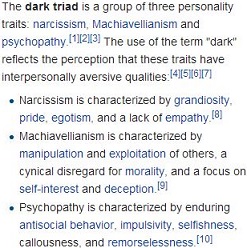
“Socially aversive personality traits such as Psychopathy, Machiavellianism, and Narcissism have been studied intensively in clinical and social psychology. […] Although each of these three constructs may have some unique features not shared by the other two, they do appear to share some common elements such as exploitation, manipulativeness, and a grandiose sense of self-importance. Accordingly, Paulhus and Williams (2002) have called these three constructs the ‘Dark Triad’ of personality….”

Kibeom Lee and Michael C. Ashton

“Members of the Dark Triad tend to be especially untrustworthy in the mating context.”

Daniel N. Jones and Delroy L. Paulhus

Restraining orders are commonly used to sever relationships. The assumption is that the applicant of a restraining order has been the victim of mistreatment. Many who’ve been implicated as abusers, however, report mistreatment by manipulative personalities who then exploited court process to dominate them, garner attention, and/or deflect blame for their own conduct—typically by lying through their teeth.

It turns out there’s a sexy phrase for the collective personality traits exhibited by manipulators of this sort: the “Dark Triad.”

Several of the posts on this blog have discussed personality-disordered and high-conflict people (who may be personality-disordered), and such people are a central focus of the work of attorney, mediator, and therapist Bill Eddy and psychologist Tara Palmatier, whom I’ve frequently quoted and who’ve written volubly about abuses of legal process by predatory personalities. Narcissism and psychopathy, two of the constituents of the Dark Triad, also qualify as “Cluster B” personality disorders.

As should be evident to anyone who’s read up on these matters, there’s a high degree of overlap among attempts to define, differentiate, and distinguish the mentally kinked.

The context in which the phrase Dark Triad is applied is interpersonal relationships that are familiarly called “romantic.” This should be of interest to victims of court process, because their abusers are more often than not current or former spouses, boy- or girlfriends, or intimates.

The concept of the Dark Triad should also be of interest to them because clinical labels may only roughly match their abusers’ conduct, conduct like deception, inexplicable betrayals, irreconcilable (mixed) messages, etc. (behaviors that “don’t make sense”). People who fall within this (subclinical) delta of personality quirks represent their interest and intentions to be sincere, and reveal them, often abruptly, to have been shallow or even sinister.

From “How the Dark Triad Traits Predict Relationship Choices” (Jonason, Luevano, & Adams):

The Dark Triad traits should be associated with preferring casual relationships of one kind or another. Narcissism in particular should be associated with desiring a variety of relationships. Narcissism is the most social of the three, having an approach orientation towards friends (Foster & Trimm, 2008) and an externally validated ‘ego’ (Buffardi & Campbell, 2008). By preferring a range of relationships, narcissists are better suited to reinforce their sense of self. Therefore, although collectively the Dark Triad traits will be correlated with preferring different casual sex relationships, after controlling for the shared variability among the three traits, we expect that narcissism will correlate with preferences for one-night stands and friend[s]-with-benefits.

In contrast, psychopathy may be characterized by an opportunistic, exploitive mating strategy (Figueredo et al., 2006; Jonason et al., 2009b; Mealey, 1995). Booty-call relationships by their very name denote a degree of exploitation. That is, individuals use others—their booty-call partner[s]—for sex by a late night phone call with the expressed or implied purpose of sex (Jonason et al., 2009). Therefore, we expect that after controlling for the shared variability among the three traits, psychopathy will be correlated with preferences for booty-call relationships. Such a relationship may be consistent with their exploitive mating strategy. Last, although prior work has linked Machiavellianism with a short-term mating style (McHoskey, 2001), more sophisticated analyses controlling for the shared correlation with psychopathy has revealed that Machiavellianism might not be central to predicting short-term mating (Jonason et al., 2011). Therefore, we expect Machiavellianism to not be correlated with preferences for any relationships.

What we’re talking about, basically, are people who exploit others for sexual attention and/or satisfaction (that is, players). The common denominator is a disinclination toward or disinterest in what’s called a “meaningful” or “serious” relationship. The motive is noncommittal, urge-driven self-pleasure (assisted masturbation, as it were). Psychologists sometimes remark in writing about narcissists in other contexts that they entertain “romantic fantasies” but conclude that these fantasies are exclusively about personal feelings and not interpersonal anything.

What we’re talking about in the context of abuse of restraining orders are people who exploit others and then exploit legal process as a convenient means to discard them when they’re through (while whitewashing their own behaviors, procuring additional narcissistic supply in the forms of attention and special treatment, and possibly exacting a measure of revenge if they feel they’ve been criticized or contemned).

Since it’s only natural that people with normally constructed minds will struggle to comprehend the motives of those with Dark Triad traits, they conveniently set themselves up for allegations of harassment or stalking, which are easily established with nothing more than some emails or text messages (that may, for example, be pleas for an explanation—or demands for one). People abused by manipulators who then abuse legal process to compound their injuries typically report that they were “confused,” “angry,” and/or “wanted to understand.”

This is the Jonason & Webster “Dirty Dozen” scale for assessing Dark Triad candidacy:

  1. I tend to manipulate others to get my way.
  2. I tend to lack remorse.
  3. I tend to want others to admire me.
  4. I tend to be unconcerned with the morality of my actions.
  5. I have used deceit or lied to get my way.
  6. I tend to be callous or insensitive.
  7. I have used flattery to get my way.
  8. I tend to seek prestige or status.
  9. I tend to be cynical.
  10. I tend to exploit others toward my own end.
  11. I tend to expect special favors from others.
  12. I want others to pay attention to me.

Victims of restraining order abuse by manipulative lovers or “romantic” stalkers will note a number of correspondences with their accusers’ personalities, as well as discern motives for their lying to the police and courts, which elicits special treatment and attention from authority figures…and subsequently every other sucker with whom they share their “ordeal.”

Copyright © 2014 RestrainingOrderAbuse.com

*Some specialist monographs on this subject are here.

(Female) Stalkers, False Allegations, and Restraining Order Abuse

Restraining orders are maliciously abused—not sometimes, but often. Typically this is done in heat to hurt or hurt back, to shift blame for abusive misconduct, or to gain the upper hand in a conflict that may have far-reaching consequences.

There’s a cooler, more methodical style of abuse practiced by people who aren’t in intimate daily proximity to their victims, however, that’s alternatively called stalkingbullying, or mobbing. These words have distinct meanings but are nevertheless porous, because motives for the behaviors they represent are the same: coercion, punishment, domination, and control.

There’s a lot of crossover between them—as is there crossover between the various high-conflict personality types who engage in these behaviors, who contrary to popular perception may be women.

Journalists’, psychologists’, and bloggers’ representations of those with personality disorders that stem from sociopathy tend to use gendered language that implies most abusers (or the worst abusers) are male.  Possibly this is because many who write about sociopaths and narcissists are female, and their experiences are of abuse by men. Or possibly this is because making women out to be villains is ungallant. Or possibly it’s assumed that men can’t be victims of women, even sociopaths, because men have nerves of steel or because their general physical advantage carries over into all contexts. Neither of the latter beliefs is true, and when the context is abuse of legal process, it’s usually the case that the bigger you are, the harder you fall.

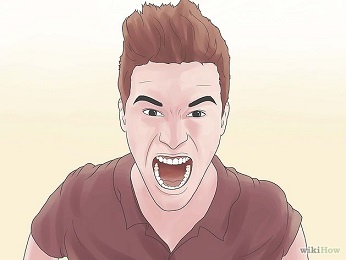
Consider these illustrated WikiHow tutorials on “How to Spot a Sociopath” and “How to Identify a Psychopath,” which are pretty good, except that the reader is likely to get the impression from the cartoons that all sociopaths are men.

They aren’t.

These “tips” from “How to Spot a Sociopath” are at least as applicable to women as men, and suggest why abuse of legal process, including restraining order abuse, is so attractive to the sociopathic mind—and why it comes easily to sociopaths or to those who manifest sociopathic traits.

  • “Most sociopaths can commit vile actions and not feel the least bit of remorse. Such actions may include physical abuse or public humiliation of others. If the person is a true sociopath, then he or she will feel no remorse about hurting others, lying, manipulating people, or just generally acting in an unacceptable way.”

    Sociopaths often know how to make others believe they are the victim while actually being the aggressor.

  • Sociopaths tend to blame the victim for their shortcomings. They can never admit to fault and instead attack the victim. Key factor in any DSM diagnosis.
  • This type of person will tell you things to get you to forgive them and then say they never told you. This is a tactic to play mind games.
  • If a person is “too good to be true,” they probably are. This is the case for any DSM diagnosis, including sociopathy, borderline [personality], and narcissism.
  • Most are aware of their need to hide cold traits, and are good actors (have adapted to being different)….
  • Some scientists believe that sociopaths suffer from damage to the prefrontal cortex which regulates emotions and morality, etc.
  • Sociopathic behavior is strongly inherited, so look at problems in the family as a clue to a person’s real personality.
  • Some experts say that a great number of sociopaths were also child abuse sufferers.

The same tutorial, despite its gendered cartoons, references a book published last year titled, Confessions of a Sociopath, which is by a female sociopath who uses the penname M. E. Thomas—and who’s an attorney and law professor, which shouldn’t be particularly surprising to anyone who’s been exposed to legal practitioners.

It may be that not all sociopaths are fairly typified as stalkers and bullies, but if you read this review of Confessions of a Sociopath, you’ll appreciate that motives for abusive conduct come readily enough to the sociopathic psyche.

Thinking of women as stalkers or bullies is just something we’re unaccustomed to or something we treat lightly.

In a series of hers titled, “Female Stalkers,” psychologist Tara Palmatier notes that “female stalking behaviors are portrayed as ‘funny’ or ‘cute.’” We’ve been conditioned—and “we” includes the police and judges—to think of women as both harmless and helpless. Women don’t hurt people.

They do, though.

Popular perceptions of “stalking,” domestic violence, and other abuses tend inordinately to inculpate men. The object of observing that women also act hurtfully isn’t to suggest that women more often act hurtfully than men but to controvert the popular notion that they don’t or can’t, which is both false and largely to blame for the absurd ease with which legal process is maliciously abused.

Accounts submitted to this blog by both men and women indicate that individuals of either gender may and do abuse legal process to torment others, horribly and sometimes for years on end. Either sex may engage in cyclic mind games, as well: manipulating another into trust and then punishing that trust (“It’s okay, I’m sorry, come here”…WHACK!). Repeatedly. One woman’s (mother’s) account of this, shared a few months ago, is numbing: affairs by her (probably borderline personality-disordered) boyfriend followed by apologies followed by recriminations (rinse, repeat) followed by false allegations to the police, to the court, to child protective services, to the military, and on and on.

Most group-stalking or -bullying (mobbing) acts reported to this blog, though, are orchestrated by women. These include combinations of behaviors like making false allegations, spreading false and ruinous rumors with the help of negative advocates (accomplices), using social media to taunt and intimidate from multiple directions, etc. These passive-aggressive forms of abuse to punish, frighten, and dominate—which, depending on the context, may alternatively be called bullying, harassment, or stalking—are usually viewed as less harmful than physical assault. This perception is facile, however, and wrong.

A recent male respondent to this blog, for example, reports encountering an ex while out with his kids and being lured over, complimented, etc. (“Here, boy! Come!”), following which the woman reported to the police that she was terribly alarmed by the encounter and, while brandishing a restraining order application she’d filled out, had the man charged with stalking. Though the meeting was recorded on store surveillance video and was unremarkable, the woman had no difficulty persuading a male officer that she responded to the man in a friendly manner because she was afraid of him (a single father out with his two little kids). The man also reports (desperately and apologetic for being a “bother”) that he and his children have been baited and threatened on Facebook, including by a female friend of his ex’s and by strangers.

Harassment by these means, which tends to be unrelenting but is just as bad when sporadic, creates anxiety and insecurity in its victims, and may well undo them not only psychologically but professionally, financially, and in every other possible way. False allegations (which alone gnaw and corrode) may lead to criminal charges, which may lead to incarceration, from which ensues traumatization of children and possibly loss of employment (from which ensues further traumatization of children…). Same thing with restraining orders, which may easily be obtained in an afternoon by spiteful fraud and which don’t go away—and may also lead not only to loss of employment but loss of employability in a given field.

When a restraining order is issued, it’s entered into state law enforcement databases as well as the FBI’s National Crime Information Center (NCIC) database. The pretense is that restraining orders are civil misdemeanors of no particular significance. Repeat: National Crime Information Center.

Records of restraining orders are public, besides, and accessible by anyone, and may moreover be recorded in public registries for easy access. Allegations on those records, no matter how scandalous and even if found to be exaggerated or maliciously false, aren’t censored.

Our perceptions of the consequences of public allegations, as well as the justice system’s perceptions of them, are completely schizoid. They’re neither actually “no big deal” nor actually treated as though they’re “no big deal.” And they’re certainly not “no big deal” to those falsely accused and everyone who depends on them. False allegations may range from stalking to sexual harassment to battery or worse.

The actuality is that allegations made on restraining orders, which may be utterly malicious fabrications, are presumed to be legitimate by everyone. Just the phrase restraining order instantly establishes the credibility of an accuser who may be a bully or stalker.

Applicants for restraining orders, it’s again presumed, are afraid of the people they’ve accused and want nothing to do with them. Accordingly, there are no limitations placed on the conduct of petitioners and no repercussions to them for their harassing the people they’ve alleged they’re afraid of. Restraining orders license abusers—bullies, stalkers, and their confederates—to act with impunity. Even when abuses are reported, the tendency of cops and court staff is to shrug.

Restraining orders, because they establish credibility with judges and police officers (based on no standard of evidence and on mere minutes-long “trials” that never approach conclusiveness), make further claims that bullies or stalkers allege, whether proximally or later on (even years later on), entirely plausible. Conflict can be rekindled and stoked endlessly and whimsically.

Lives are derailed this way: sanity compromised, careers sabotaged or sundered, savings exhausted, and on and on. Trials may lead to further trials without end.

And all of this may originate with sick games whose motives are dismissed as “harmless”—or even “cute.”

Copyright © 2014 RestrainingOrderAbuse.com

Rethinking “Stalking”: When Sociopathic Stalkers Apply for Restraining Orders

“Stalking acts are engaged in by a perpetrator for different reasons: to initiate a relationship (i.e., Some call it stalking; [he or] she calls it courtship); to persuade/coerce a former partner to reconcile; to punish, frighten, or control the victim; to feel a sense of personal power; to feel a ‘connection’ to the victim; or some combination of all of the above. Stalking is a form of abuse, and most abusers ultimately want control over their victims. Therefore, stalking is about controlling a love object, a hate object, or a love/hate object. Both love and hate can inspire obsession.

“Abusive personalities and stalkers often lack or have selective empathy for their victims. In fact, a characteristic of stalking is that the stalker objectifies [his or] her victim. If you don’t see your victim as another human being with feelings, needs, and rights, it becomes very easy to perpetrate any number of cruel, crazy, malicious, spiteful, and sick behaviors upon him or her. What about stalkers who believe they’re in love with their victims? Again, this is about possession and control; not love. They want to possess and control you regardless of what you want.”

Dr. Tara J. Palmatier, Psy.D.

Laws tend to define stalking as the exhibition of unwanted behaviors that alarm people.

What a broader yet nuanced definition of stalking like Dr. Palmatier’s reveals is that what makes someone a stalker isn’t how his or her target perceives him or her; it’s how s/he perceives his or her target: as an object (what stalking literally means is the stealthy pursuit of prey—that is, food).

Who perceives others as objects? The sociopath. Mention sociopath and restraining order in the same context, and the assumption will be that the victim of a coldblooded abuser will have sought the court’s protection from him or her.

The opposite, however, may as easily be the case.

Appreciate that stalking is about coercion, punishment, domination, and control of a target who’s viewed as an object, and it’s easy to see why the stalker in a relationship might be the petitioner of a restraining order, an instrument of coercion, punishment, domination, and control.

(“[T]o feel a sense of personal power,” furthermore, is a recognized reward motive for the commission of fraud. Pulling one over on other people, particularly those in authority, feels gooood.)

Appreciate, also, that a stalker’s motives for “courtship” (i.e., what s/he stands to gain from a relationship) may not be recognized by his or her target as abnormal at all. Nor, of course, will they be understood as abnormal by the stalker. What this means is, stalking isn’t always recognized as stalking (predator behavior), and correspondingly isn’t always repelled.

The Psychology of Stalking: Clinical and Forensic Perspectives notes that the majority of stalkers manifest Cluster B personality disorders, which I’ve talked about in the previous two posts, citing various authorities. People like this—borderlines, antisocials, narcissists, and histrionics—often pass as normal (“neurotypical”). They’re around us all the time…and invisible. Dr. Palmatier, a psychologist from whose writings the epigraph is drawn, has posited that Cluster B personality disorders “form a continuum” and “stem from sociopathy,” a trait of which is viewing others as objects, not subjects. Not only may others be unconscious of personality-disordered people’s motives; such people may be unconscious of their motives themselves.

(Out of respect for the author of the epigraph, I should note that my application of the word stalker in the context of this post departs from hers. The position of this post is that the person who pursues an objectified target and then displaces blame for aberrant behavior onto that target to “punish, frighten, or control” him or her is no less a stalker than the person who relentlessly seeks to possess his or her target. The topic of Dr. Palmatier’s exposition is attachment pathology of the latter sort.)

Contrary to the popular conception that stalkers are wallflower weirdos who obsessively trail dream lovers from a distance with the aid of telescopic lenses, stalkers may be socially aggressive and alluring—or at least sympathetic—and may exhibit no saliently weird qualities whatever.

Returning to Dr. Palmatier’s definition of stalking, what makes someone a stalker isn’t how s/he acts, per se, it’s why she acts the way s/he does. What makes an act an act of stalking is the motive of that act (the impulse behind it), which isn’t necessarily evident to a stalker’s quarry.

Placed in proper perspective, then, not all acts of stalkers are rejected or alarming, because their targets don’t perceive their motives as deviant or predatory. The overtures of stalkers, interpreted as normal courtship behaviors, may be invited or even welcomed by the unsuspecting.

The author of the blog Dating a Sociopath astutely limns the course of a relationship with a stalker (someone who views the other as a means, not an end with “feelings, needs, and rights”).

The sociopath wears a mask. But [s/he] will only wear that mask for as long as it is getting him [or her] what [s/he] wants. The sociopath is not emotionally connected, to you or anybody else. Whilst the sociopath might show connection, this would only be a disguise, to serve his [or her] own needs.

When the sociopath realises that [s/he] can have better supply elsewhere, or if [s/he] feels that supply with you is coming to an end, [s/he] will leave you without warning. The sociopath would have sourced a new victim for supply, but this would have been done behind your back and without your knowledge.

To do so, it is likely that the sociopath needed to play victim to the new source. Often [s/he] would have made complaints about you to gain sympathy and win support. Again, this will be something that you have absolutely no knowledge of, until later.

Consider her conclusion that a sociopath may “play victim” to acquire new narcissistic supply, and you’ll perceive how perfectly lies to the police and/or the courts (donning a new mask) may assist him or her in realizing his or her pathological wishes.

The blog post from which this quoted material is drawn concerns being abruptly discarded by a sociopath, which the writer notes may leave the sociopath’s quarry feeling:

  • Confused
  • Bewildered
  • Lost
  • Desperate for answers
  • A longing and neediness to understand
  • Wanting back the honeymoon stage
  • Unsure if the relationship is actually over or not?
  • Self-blame
  • Manipulated, conned, and deceived

Expressions of these feelings, whose motives are not those of stalkers but of normal people prompted by a need to understand the inexplicable, may take the form of telephone calls, emails, or attempts at direct confrontation—all of which lend themselves exquisitely to misrepresentation by stalkers as the behaviors of stalkers.

The personality-disordered answer primal urges, and among those urges is the will to blame others when their bizarre expectations aren’t satisfied—and they inevitably aren’t—or when others express natural expectations of their own that defy disordered personalities’ fantasized versions of how things are supposed to go.

The author of this blog, a formerly private man who had a restraining order petitioned against him characterizing him as a stalker (and who has been back to court three times since to respond to the same allegation, the least of several), has been monitored for eight years by a stranger he naïvely responded to whom he found standing outside of his house one day as he went to climb into his car.

I was a practicing writer for kids.

The first correspondent I had when I began this blog three years ago was a woman who’d been pursued and discarded by a pathological narcissist, who subsequently obtained a restraining order against her (by fraud), representing her as a stalker (cf. Dr. Palmatier’s “Presto, Change-o, DARVO: Deny, Attack, and Reverse Victim and Offender”).

She taught music to kids.

Last fall, I exchanged numerous emails with a woman who’d fallen for a man with borderline personality disorder, who abused her, including violently, then did the same thing after she sought a restraining order against him, which was denied.

She was a nurse who had three kids.

You’ll note that those labeled “stalkers” by the state in these cases—and they’re hardly exceptions—confound the popular stalker profile that’s promoted by restraining order advocates.

An irony of this already twisted business is that injuries done to people by their being misrepresented to the authorities and the courts by disordered personalities as stalkers ignite in them the need to clear their names, on which their livelihoods may depend (never mind their sanity); and their determination, which for obvious reasons may be obsessive, seemingly corroborates stalkers’ false allegations of stalking.

This in turn further feeds into the imperative of personality-disordered stalkers to divert blame from themselves and exert it on their targets. People like this fatten on drama and conflict, and legal abuses gratify their appetites like no other source, both because the residue of legal abuses never evaporates and because those abuses can be refreshed or repeated, setting off further chain reactions ad infinitum.

The agents of processes that were conceived to arrest social parasitism and check the conduct of stalkers are no less susceptible to believing the false faces and frauds of predatory people than their victims are.

Copyright © 2014 RestrainingOrderAbuse.com

Fantasists Fatales: More on Narcissistic Sociopaths and Restraining Order Abuse to Gratify Stalkers’ Anger and Jealousy

“Narcissistic people do fall in love, but they usually fall in love with being in love—and not with you. They crave the excitement of love, but are quickly disappointed when it becomes a relationship—and not just a trip into fantasy.”

Mark Banschick, M.D.

In a recent post, I surveyed some scientific literature about stalking and narcissism, probably to excess, because qualification by experts makes arguments more palatable to a certain audience. That post’s epigraph, by two distinguished researchers, concluded that the motives of stalkers could be reduced in sum to anger and jealousy, both of which emotions are ones to which the narcissistic personality is pathologically prone.

Narcissistic stalkers are anomalous in their abuse of restraining orders (as they are in most respects). Some stalkers use restraining orders serially or as part of a campaign of harassment and attention-seeking, and not always against a current or former romantic partner or love interest. The same qualifications of anger and jealousy apply to the woman who torments a former boyfriend’s or husband’s new girlfriend, fiancée, or wife with restraining orders. Only last week, one such victim wrote to report that as soon as she got one restraining order quashed, another was petitioned.

The narcissistic stalker, by contrast, may pour all of his or her venom into one consummate fraud. The point is to get revenge and discard the offending threat to his or her ego-stability once that person’s use value has been exhausted. A false restraining order may simply represent the final blow that shifts the narcissist’s pathological courtship behavior onto its target. The narcissist walks and leaves his or her victim splayed in the dust.

Essential to bear in mind is that a relationship with a narcissist is always a one-way relationship and always confusing. The only person actually trying to relate is the person the narcissist targeted or baited; the narcissist can’t relate. The narcissist’s intentions—not necessarily understood as such by the narcissist him- or herself—were never real in the first place but based on fantasy fueled by the solicited attention and interest of the other person. Once that other person ceases to mirror back to the narcissist what s/he wants to see, that person is expendable. Some psychologists suggest, moreover, that in his or her paranoia about being rejected/abandoned, s/he may be motivated to act preemptively, that is, to reject first and thereby preserve his or her ego from an imagined injury.

Something I neglected to explicitly observe in the recent post referenced in the introduction that may merit observation is that all narcissists are stalkers (whether latent or active) insofar as the objects of narcissists’ romance fantasies are always merely objects to them (psycho-emotional gas pumps); they’re never subjects. What distinguishes the narcissistic stalker is that s/he’s seldom recognized for what s/he is, so s/he’s seldom rejected for what s/he is. Realize that the difference between normal pursuit behavior and aberrant pursuit behavior may be nothing more than how the pursued feels about it. Narcissists choose targets they perceive as vulnerable (empathic, tolerant, and pliable).

Because narcissists are extroverted, confident, aggressive, and socially commanding, “stalking” is seldom applied to their conduct. Narcissistic pursuit is by allure, false promise, and emotional coercion. The narcissist preys on the expectations of the cognitively normal, which s/he understands intuitively and manipulates with horrible proficiency. S/he often isn’t recognized as a user with no sincere investment in the other’s feelings until it’s too late.

To compound the difficulty either of making categorical pronouncements about narcissistic motives or exposing them, they’re not always known to narcissists themselves. To read most diagnostic explications of their mentality, the uninitiated would come away with the impression that narcissists are sharks, cunning, predatory automatons with false smiles and devious intentions. Anyone who’s had intimate and sustained relations with a narcissist, though, will perceive that s/he’s following what to him or her seem normal, romantic impulses in the moment. The difference is the narcissist is able to disown the moment with reptilian facility when his or her fantasy conflicts with interests of more pressing concern to the narcissist’s ego-preservation—or the interests of the other conflict with the narcissist’s fantasy.

It’s often argued that narcissists aren’t crazy, that they know what they’re doing. But this isn’t strictly so. In the throes of fantasy, narcissistic consciousness may be schizoid. Narcissists may lead parallel lives, even multiple parallel lives, like polygamists with spouses in different cities. And they may indulge an impulse with abandonment…then coldly—oh, so coldly—return to business as usual and plot the necessary steps to erase traces of the lapse. The narcissist runs either hot or cold. There is no warm.

Once the other fails to satisfy the psycho-emotional needs of the narcissist, corrupts his or her fantasy, or by intimacy threatens the autonomy of the narcissist or the reality s/he’s primarily invested in, the narcissist’s pathology is such that s/he can instantly blame the other (whom the narcissist targeted in the first place) for his or her perceived “betrayal.”

It’s at this stage that the anger and jealousy, identified as the germinal motives of the stalker, rear their scaly heads. For the narcissist, a restraining order may not only satisfy his or her lust to scourge and cripple his or her target; it may also be a way to satisfy jealousy: “Now no one else will have you.”

Revenge for the narcissist, too, is an impassioned fantasy. The preternatural vehemence of the narcissist is dismaying to its target. In a sense, though, it’s just a redirection of ardor that provides a different source of narcissistic supply. The restraining order process accommodates the narcissist exquisitely, allowing him or her to summon police like a dignitary and ham it up for a judge or several of them. S/he owns the spotlight. And once in possession of a restraining order, the spotlight will follow him or her wherever s/he wants.

The monstrous caricature of the other s/he’s authorized to present to friends, family, and acquaintances current and future serves as the perfect surrogate for the other. It delivers all of the attention while being free of any of the expectations.

Copyright © 2014 RestrainingOrderAbuse.com

Targeted by a Narcissistic Sociopath: When a Stalker Obtains a Restraining Order to Dominate and Destroy

“Accumulated forensic, clinical, and social research strongly suggests that the two most prominent emotions of most stalkers are anger and jealousy…. Such feelings are often consciously felt and acknowledged by the stalker. Nevertheless, these feelings often serve to defend the stalker against more vulnerable feelings that are outside of the stalker’s awareness. Anger can mask feelings of shame and humiliation, the result of rejection by the once idealized object, and/or feelings of loneliness, isolation, and social incompetency.

“Anger may also fuel the pursuit, motivated by envy to damage or destroy that which cannot be possessed…or triggered by a desire to inflict pain on the one who has inflicted pain, the primitive impulse of lex talionis, an eye for an eye.

“Angry pursuit can also repair narcissistic wounds through a fantasized sense of omnipotence and control of the victim. Victim surveys, in fact, have noted that the most common victim perception of the stalker’s motivations is to achieve control….”

—J. Reid Meloy, Ph.D., and Helen Fisher, Ph.D.

This discussion’s epigraph is drawn from “Some Thoughts on the Neurobiology of Stalking” and touches on a number of the motives of restraining order abuse both by stalkers generally and, in particular, by those stalkers who are most vulnerable to narcissistic wounds, namely, pathological narcissists.

The narcissist is a living emotional pendulum. If [s/he] gets too close to someone emotionally, if [s/he] becomes intimate with someone, [s/he] fears ultimate and inevitable abandonment. [S/he], thus, immediately distances [him- or herself], acts cruelly, and brings about the very abandonment that [s/he] feared in the first place. This is called the ‘approach-avoidance repetition complex’ [Sam Vaknin, Ph.D., “Coping with Various Types of Stalkers: The Narcissist”].

While procurement of a restraining order is commonly perceived as the definitive act of rejection, possibly rejection of a stalker’s advances, it may in fact be an act of possession and control by a stalker (a perverse form of wish fulfillment). A restraining order indelibly stamps the presence of a stalker onto the public face of his or her target (“I own you”). It further disarms the target and mars his or her life, possibly to an extremity. Per Meloy and Fisher, a stalker achieves control and damages or destroys that which cannot be possessed. The “connection,” furthermore, can be repeatedly revisited and harm perpetually refreshed through exploitation of legal process.

The authors of the epigraph use the phrase attachment pathology. For a stalker who’s formed an unreciprocated attachment or an unauthorized one (as in the case of someone who’s married), a restraining order presents the treble satisfactions of counter-rejection (“I reject you back” or “I reject you back first”), revenge for not meeting the authoritarian expectations of the stalker, and possession/control. Procurement of a restraining order literally enables a false petitioner to revise the truth into one more favorable to his or her interests or wishes (cf. DARVO: Deny, Attack, and Reverse Victim and Offender). A judge is a rapt audience who only has the petitioner’s account on which to base his or her determination. The only “facts” that s/he’s privy to are the ones provided by the restraining order applicant.

In “Female Stalkers, Part 2: Checklist of Stalking and Harassment Behaviors,” psychologist Tara Palmatier identifies use of “the court and law enforcement to harass” as a female stalking tactic (“e.g., making false allegations, filing restraining orders, petitioning the court for frivolous changes in custody, etc.”), and this form of abuse likely is more typically employed by women against men (women tending “to be more ‘creatively aggressive’ in their stalking acts”). Anecdotal reports to this blog’s author, however, indicate that male stalkers (jilted or high-conflict exes and attention-seeking “admirers”) also engage in this form of punitive subversion against women. (Dr. Palmatier acknowledges as much but explains, “I tailor myself writing for a male audience.”)

Clinical terms for this kind of stalking—less stringent in their scope than legal definitions of stalking, which usually concern threat to personal safety—are “obsessive relational intrusion, intrusive contact, aberrant courtship behavior, obsessional pursuit, and unwanted pursuit behavior,” among others (Katherine S-L. Lau and Delroy L. Paulhus, “Profiling the Romantic Stalker”).
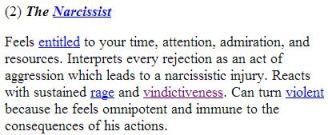
For someone with narcissistic personality disorder, someone, that is, who lives for attention (and is only capable of “aberrant courtship behavior”), a restraining order is a cornucopia, a source of infinitely renewing psychic nourishment, because it can’t fail to titillate an audience and excite drama.

(As noted in The Psychology of Stalking: Clinical and Forensic Perspectives, “Axis II personality disorders are…evident in a majority of stalkers, particularly Cluster B [which includes the narcissistic and borderline personality-disordered]”).

Per the DSM-IV, a narcissist evinces:

A. A pervasive pattern of grandiosity (in fantasy or behavior), need for admiration, and lack of empathy, beginning by early adulthood and present in a variety of contexts, as indicated by five (or more) of the following:

1. Has a grandiose sense of self-importance (e.g., exaggerates achievements and talents, expects to be recognized as superior without commensurate achievements).

2. Is preoccupied with fantasies of unlimited success, power, brilliance, beauty, or ideal love.

3. Believes that he or she is “special” and unique and can only be understood by, or should associate with, other special or high-status people (or institutions).

4. Requires excessive admiration.

5. Has a sense of entitlement, i.e., unreasonable expectations of especially favorable treatment or automatic compliance with his or her expectations.

6. Is interpersonally exploitative, i.e., takes advantage of others to achieve his or her own ends.

7. Lacks empathy: is unwilling to recognize or identify with the feelings and needs of others.

8. Is often envious of others or believes that others are envious of him or her.

9. Shows arrogant, haughty behaviors or attitudes.

Correspondences between this clinical definition and what might popularly be regarded as the traits of a stalker are uncanny (e.g., preoccupation with fantasies of “ideal love,” dependence on admiration not necessarily due, interpersonal exploitation, and an inability to identify with or a disregard for others’ feelings). It further suggests why a narcissist wouldn’t scruple about abusing legal process to realize malicious ends.

In “Threatened Egotism, Narcissism, Self-Esteem, and Direct and Displaced Aggression: Does Self-Love or Self-Hate Lead to Violence?”, psychologists Brad Bushman and Roy Baumeister observe that aggressively hurtful behavior is more likely to originate from narcissistic arrogance than from insecurity:

[I]t has been widely asserted that low self-esteem is a cause of violence (e.g., Kirschner, 1992; Long, 1990; Oates & Forrest, 1985; Schoenfeld, 1988; Wiehe, 1991). According to this theory, certain people are prompted by their inner self-doubts and self-dislike to lash out against other people, possibly as a way of gaining esteem or simply because they have nothing to lose.

A contrary view was proposed by Baumeister, Smart, and Boden (1996). On the basis of an interdisciplinary review of research findings regarding violent, aggressive behavior, they proposed that violence tends to result from very positive views of self that are impugned or threatened by others. In this analysis, hostile aggression was an expression of the self’s rejection of esteem-threatening evaluations received from other people.

The DSM-5 notes that for the narcissist, “positive views of self” are everything (and others’ feelings nothing). Diagnostic criteria are:

A. Significant impairments in personality functioning manifest by:

1. Impairments in self functioning (a or b):

a. Identity: Excessive reference to others for self-definition and self-esteem regulation; exaggerated self-appraisal may be inflated or deflated, or vacillate between extremes; emotional regulation mirrors fluctuations in self-esteem.

b. Self-direction: Goal-setting is based on gaining approval from others; personal standards are unreasonably high in order to see oneself as exceptional, or too low based on a sense of entitlement; often unaware of own motivations.

AND

2. Impairments in interpersonal functions (a or b):

a. Empathy: Impaired ability to recognize or identify with the feelings and needs of others; excessively attuned to reactions of others, but only if perceived as relevant to self; over- or underestimate of own effect on others.

b. Intimacy: Relationships largely superficial and exist to serve self-esteem regulation; mutuality constrained by little genuine interest in others’ experiences and predominance of a need for personal gain.

B. Pathological personality traits in the following domain:

1. Antagonism, characterized by:

a. Grandiosity: Feelings of entitlement, either overt or covert; self-centeredness; firmly holding to the belief that one is better than others; condescending toward others.

b. Attention seeking: Excessive attempts to attract and be the focus of the attention of others; admiration seeking.
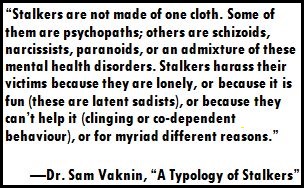
The picture that emerges from clinical observations of the narcissistic personality is one of a person who has no capacity to identify with others’ feelings, a fantastical conception of love, and unreasonable expectations of others and an irrational antagonism toward those who disappoint his or her wishes.

It’s further commonly observed that narcissists’ antagonism toward anyone whom they perceive as critical of them—that is, as a threat to their “positive views of self”—is boundless. The object, then, of a narcissist’s attachment pathology who rejects him or her (disappointing his or her “magical fantasies”), who challenges his or her entitlement, or who manifests disdain or condescension toward the narcissist (even in the form of sympathy) becomes instead the object of the narcissist’s wrath. As psychologist Linda Martinez-Lewi notes, “For the narcissist, revenge is sweet. It’s where they live in their delusional, treacherous minds.”

Narcissists adopt a predictable cycle of Use, Abuse, Dispose. This pathological repetition can last a few weeks or decades…. With a narcissist, there is never an authentic relationship. He/she is a grandiose false self without conscience, empathy, or compassion. Narcissists are ruthless and exploitive to the core [Linda Martinez-Lewi, Ph.D., “Narcissistic Relationship Cycle: Use, Abuse, Dispose”].

The restraining order process, because it enables a petitioner to present a false self and caters to fraudulent representation, is a medium of vengeance ideally suited to a narcissistic stalker. Its exploitation plays to a narcissist’s strengths: social savvy, cunning, and persuasiveness. Its value as an instrument of abuse, furthermore, is unmatched, offering for a minimal investment of time and energy the rewards of public disparagement and alienation of his or her victim, as well as impairment of that victim’s future prospects.

There are sociopathic narcissists who will not be satisfied until their ‘enemy’ is completely vanquished—emotionally, psychologically, financially. They seek revenge, not for what has been done to them but [for] what they perceive in a highly deluded way…has been done to them [Linda Martinez-Lewi, Ph.D., “Sociopathic Narcissists—Relentlessly Cruel”].
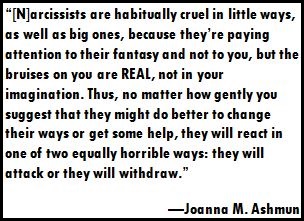
Fraudulent abuse of legal process elevates the narcissistic stalker to prime mover and puppet-master over his or her prey and compensates his or her disappointment of “ideal love” with the commensurate satisfactions of “unlimited power” over his or her victim and an infinitely renewable source of ego-fueling attention. By his or her false representations to the court, the narcissist’s fantasies become “the truth.” S/he’s literally able to refashion reality to conform to the false conception s/he favors.

In conclusion, an observation by psychologist Stanton Samenow:

The narcissist may not commit an act that is illegal, but the damage [s/he] does may be devastating. In fact, because the narcissist appears to be law-abiding, others may not be suspicious of him [or her] leaving him [or her] freer to pursue his [or her] objectives, no matter at whose expense. I have found that the main difference between the narcissist and antisocial individual, in most instances, is that the former has been shrewd or slick enough not to get caught…breaking the law.

Copyright © 2014 RestrainingOrderAbuse.com
Middle Class to Pauper in a Day: On Restraining Order Fraud, Homelessness, and Suicide

This describes what happened and continues to happen to me because of my wife’s lying to the court authorities. I am desperately seeking someone to help me, because I lost everything: job, home, money, and reputation. I already tried once to take my life because of it. [Although I have never] been in trouble with the law in the past…she was able to have me arrested for [domestic violence] and stalking with no proof, facts, or witnesses. I did not do those things, and I have surveillance video to prove my innocence. She [has] stalked and continues to stalk, intimidate, harass, threaten, and humiliate me regularly. I’m homeless in [an area where I know] no one [and have no one] to turn to, no job, no money, [and] no adequate legal representation. My life as I knew it is over. Help me, please!!!”

E-petition respondent

He’s lying, right? Like the thousands of others who’ve responded to the same petition he has? Really ask yourself. It’s appalling to me that there are intelligent human beings in the world who find it an easy matter to dismiss pleas like this out of hand.

Does this person sound crazy? Does he sound dangerous? I also find it appalling how rarely obvious questions like these present themselves even to minds trained to think critically.

I’ll answer for you: No, he doesn’t sound crazy or dangerous. Next question (this is how critical thinking works): If he’s telling it true, how is something like this possible?

It’s possible for exactly the reason he names: substantiating claims of stalking and domestic violence made through the civil court requires no evidence (nor does substantiating any other allegations), and on their basis a defendant can be summarily stripped of everything. Any adult can walk into a courtroom off the street and make allegations like these against another adult and have a restraining order issued. This can even be true when the accuser has no domestic relationship with his or her “abuser” or has never even met that “abuser” before. Allegations like these can moreover be made by people who live in different states from the accused. The restraining order process, in other words, is a golden ticket to any liar or crank with an ax to grind or even to any psycho responding to the urges of the voices in his or her head. There’s no inspection or corroboration of credentials. (One recent respondent to this blog reports that his wife’s embittered ex-boyfriend was awarded one of her children upon his falsely swearing out a restraining order against her and claiming to be the boy’s father. The boy was removed from school and handed to him. Consider how you’d feel if one of your kids were placed in the custody of a stranger…who hated you. Just based on his say-so. If you tried to recover the child and return him or her to safety, incidentally, you’d be arrested by the state and charged at the very least with contempt of court for violating the restraining order.)

It’s imagined, I think, even by those who are capable of acknowledging the stink of injustice, that the fallout of false allegations is exaggerated. There is no exaggerating it. Whatever you think you own and whoever you think you are can be taken from you and reinterpreted in an instant. By public factotums who’ve never even clapped eyes on you, couldn’t care less, and wouldn’t scruple a bit about locking you in a cage.

The nifty part is that once a person like the man quoted in the epigraph is forcibly divested of all means to fight back, s/he can’t. And no journalist is going to touch a story like his. Allegations that may lead to someone’s being stripped of home, property, and dignity may be so impossible to discriminate from the truth that there’s no way to assuredly expose the injustice. There’s no proving an allegation of fear, for instance, to be false. For that matter, there’s no proving an allegation of threat or violence to be false.

There’s no proving them to be true, either (even welts and bruises can be self-inflicted). But that doesn’t matter. This glaring bias is the only ascertainable injustice.

Aside, that is, from the fact that the man whose story prompted this discussion is sleeping in a box and thinking about offing himself.

Copyright © 2014 RestrainingOrderAbuse.com

Granting Restraining Orders to Stalkers: On How the Courts Are Abused to Abet or Conceal Stalking (or Label Conduct “Stalking” That Hardly Qualifies)

Restraining orders, which some have called blank checks to do malice, are marvelously versatile instruments. Consider, for example, that while they were conceived to deter stalkers from, say, hanging around other’s homes at night and propositioning them in the dark, they’re also easily obtained by stalkers to legitimate the same or similar conduct.

Because restraining orders place no limitations on the actions of their plaintiffs (that is, their applicants), stalkers who successfully petition for restraining orders (which are easily had by fraud) may follow their targets around; call, text, or email them; or show up at their homes or places of work with no fear of rejection or repercussion. In fact, any acts to drive them off may be represented to authorities as violations of those stalkers’ restraining orders. It’s very conceivable that a stalker could even assault his or her victim with complete impunity, representing the act of violence as self-defense (and at least one such victim of assault has been brought to this blog).

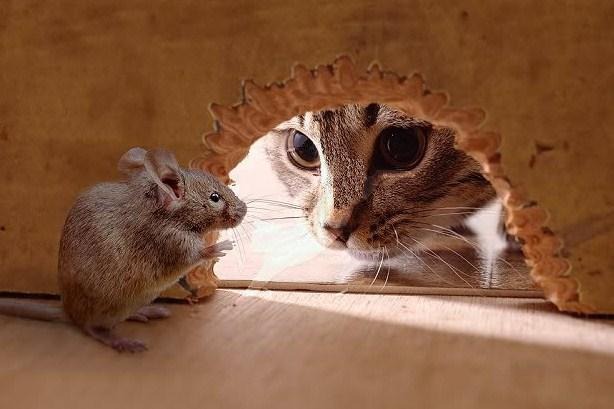
A stalker who petitions a restraining order against his or her target can toy with him or her like a cat might a mouse. Even if the target had solid grounds for some type of reciprocal or retributive legal action, the uncertainty and apprehension inspired by having received a restraining order would likely work a paralytic effect on him or her. No one who hasn’t had the state rapping on his or her door can appreciate the menace and uncertainty that linger after the echo has faded.

A reasonable person would expect there to be a readily available recourse in place to redress and remedy such a scenario. That reasonable person would find his expectation disappointed. Neither laws nor the courts officially recognize that abuses of restraining orders occur.

Granted, in most situations like this, the “stalker” is a girlfriend who impulsively procured a restraining order but still nurses amative feelings for the boyfriend she obtained it against—or a grudge. (Both defendants complaining of being stalked by those who’ve petitioned restraining orders against them and petitioners concerned to know whether they’re “in trouble” for violating their own orders are brought to this blog weekly.) This situation is less sinister than a source of constant anxiety for the target, who has no way of questioning or interpreting his or her stalker’s motives, or anticipating what further menace to expect.

A variant theme is represented by the person who becomes infatuated with or fixated on someone and later seeks to disown his or her feelings and conduct. For whatever reason—maybe the person is married—s/he professes apprehension of his or her target to the police and courts (and others) to generate a smokescreen. S/he flips the truth and alleges that the person s/he stalked stalked him or her. This is accomplished with particular ease by a woman, who can have every man she knows walking her to her car like a Secret Service entourage with a few hysterical attestations of terror.

There are in fact few more effective ways for stalkers to imprint themselves on the lives of objects of their (current or former) interest or obsession. For a stalker, a restraining order may even represent a token of love that its object is powerless to refuse.

Stalkers are driven by obsession. Realizing some consummated idyllic relationship with the objects of their fixations may not be their earnest goal at all. The source of gratification may be the stalking (the proximity, real or imagined: the connection).

Of course, a great deal of what’s called “stalking” isn’t, and the absurd over-application of this word is mocked by its use by one of a pair of acquaintances when they repeatedly bump into each other unexpectedly: “Are you stalking me?”

Restraining orders and the culture of hysteria that they nurture and reward, and which at the same time ensures their being both offhandedly approved by judges and reflexively credited as legit by everyone who’s informed of them, have invested the words stalking and stalker with talismanic foreboding: “Ooh, a stalker.” I can’t count the number of women I’ve been told have or have had a “stalker” or “stalkers” (and the veracity of the woman who most recently impressed upon me her “stalker ordeal”—and hugged me afterwards for my sympathetic responses—I’ve been given exorbitant reason to doubt). Their eagerness to share sometimes reminds me of the pride people used to derive from having full dance cards.

Just last month I caught a story about a former Baywatch babe who was issued a restraining order petitioned by a woman whom the TV actress had labeled her “stalker” and gotten a restraining order against years prior: a mom with a young son who’d brought the actress presents (gasp!). The recent restraining order case had something to do with the two encountering each other at a community swimming pool.

I can certainly appreciate the karmic turnabout (and do), but enough already.

Real harm is caused by hyped and fraudulent allegations used to set state machinery in motion, and our being conditioned to respond to hysterical trumpery as if it signified something more than its purveyor’s egotism and self-exaltation has clouded detection of genuine mischief.

When someone casually drops that s/he’s being or has been “stalked,” we should be at least as suspicious as sympathetic.

Copyright © 2013 RestrainingOrderAbuse.com

Infidelity and Restraining Order Abuse

Restraining orders are unparalleled tools for discrediting, intimidating, and silencing those they’ve been petitioned against. It’s presumed that those people (their defendants) are menaces of one sort or another. Why else would they be accused?

One answer, not to put too fine a point on it, is sex.

A couple of years ago, a story came to my attention about two British women who accompanied a guy home for a roisterous threesome. He probably thought it was his lucky day. The women later accused him of rape, because both had boyfriends they were concerned would discover they’d cheated.

Classy, huh?

Although their victim could easily have ended up imprisoned indefinitely, he was able to produce exculpatory evidence that saw him vindicated and them jailed instead. The beauty of a criminal prosecution is that evidence is key: no proof, no blame.

Petitions for restraining orders, by contrast, are civil prosecutions. The horror of a civil prosecution is that no evidence is required. False allegations of crimes, which may never even be contemplated or commented on by a judge, may be entered on restraining order applications without fear of recrimination. Even if those allegations are proven false later on when the defendant is allowed to respond, there are no consequences for making them, and the likely consequence of making them is success. Also, and this is a beaut, those false allegations remain on public view for all time and may reasonably be presumed true and valid by any third party who scrutinizes the record.

Whether an infidelity is emotional, sexual, or somewhere in between, a restraining order is a peerless tool not only for covering it up but for revising the truth into one favorable to an unfaithful partner. The cheat has the further gratification of displacing the blame s/he is due onto the (very possibly unsuspecting and unintentional) third wheel.

Ever wondered how to have your (beef/cheese)cake and eat it, too? Get a restraining order.

Memorable stories of restraining orders’ being used to conceal (or indulge) indiscretions or infidelities that have been shared with me since I began this blog over two years ago include a woman’s being accused of domestic violence by a former boyfriend she briefly renewed a (Platonic) friendship with who had a viciously jealous wife who put him up to it; a man’s being charged with domestic violence after catching his wife texting her lover and wrestling with her for possession of the phone for an hour (he was forced to abandon his house so his rival could move in); and a young , female attorney’s being seduced by an older, married colleague who never told her he was married and subsequently petitioned an emergency restraining order against her, both to shut her up and to minimize her opportunity to prepare a defense. I’ve even been apprised of people’s (women’s) having restraining orders petitioned against them by spouses (women) who resented being informed of their mates’ sleeping around.

Restraining orders not only enable cheating spouses to redeem themselves by characterizing people they’ve come on to, developed infatuations with, or bedded as stalkers or kooks; they enable the spouses who’ve been cheated on to exact a measure of vengeance on intruders into their relationships, intruders who either may have had no designs on compromising those relationships or may not have been told about them in the first place. Restraining orders reassure the “cheatees” or cuckolds that they’re still their spouses’ numero unos.

If I haven’t remarked it before, restraining orders cater to all manner of kinks.

Copyright © 2013 RestrainingOrderAbuse.com

The Real Obstacle to Exposing Restraining Order Fraud: Blind, Gullible Faith

What most people don’t get about restraining orders is how much they have in common with Mad Libs. You know, that party game where you fill in random nouns, verbs, and modifiers to concoct a zany story? What petitioners fill in the blanks on restraining order applications with is typically more deliberate but may be no less farcical.

Consult any online exposition about restraining orders or a similar legal remedy for harassment or threat like the law against telephone (or “telephonic”) harassment, and you’ll find it’s taken on faith that someone seeking such a remedy has a legitimate need.

And it’s not just taken on faith by expository writers but by cops and judges, too, who’ve been trained to react paternally, especially to allegations of threat made by women—as, in the age of feminist ascendency, we all have to some extent by dint of cultural osmosis and conformity.

I mention the law against telephone harassment, because its ease of abuse was recently brought to my attention by a respondent to this blog. What this law is meant to do is provide relief from harassing callers like cranks, heavy breathers, or hangup pranksters—or to get people off your back who are threatening you.

How, you might ask, does someone prove what was said or exchanged during certain telephone calls? S/he doesn’t. Unless the calls were recorded, there’s no way a third party can know what transpired. It’s presumed that someone who complains is telling the truth (and what’s supposed to be presumed, of course, is that the person who stands accused is innocent).

The insurmountable unh-duh factor here is that someone with an ax to grind and no scruples about lying to cops and judges can make up any story s/he wants: “He said he was going to burn my house down!”

Now, let’s say you have to defend yourself against an allegation like this and what you really said was, “Hey, Sally. I just called to say thanks. That fondue you sent over was delicious!” And maybe you called back later to get the recipe. And maybe you really thought the fondue—or whatever it was—was revolting, and you think Sally is certifiably bats, but your sister said to be nice to her. And maybe Sally asked you over to see her collection of porcelain ballerinas, and you politely declined and inadvertently hurt her feelings, and now Sally feels spurned and hates your guts.

How do you prove you didn’t threaten to burn Sally’s house down? Or to eat her cat with some fava beans and a nice Chianti?

You can’t. The burden of proof that should be your accuser’s is yours. Justice, which is supposed to be blind, is instead blindly credulous: “Yeah, yeah, and then what happened?”

Restraining orders work the same way and are just as easily abused by wanton frauds (in fact, they too can be based on telephone calls). Police officers and judges have very literally been trained to accept the stories they’re told like baby birds awaiting a regurgitated meal.

Any number of people have written in to this blog whose lives have been highjacked by vengeful liars, attention-seekers, embittered (ex-)spouses or (ex-)lovers, psychopaths, or flat out predators. Many, targeted by the particularly and devotedly malicious, have even been jailed on false allegations. Their personal and professional lives have been scarred if not derailed or demolished.

They plan to sue. They plan to seek media attention. They plan to write a book (or, um, start a blog). Being vindicated from obscene lies validated by a complacent judge or earnest cop becomes their mission in life.

Sound mad? If it does, that’s because the same thing hasn’t happened to you.

Copyright © 2013 RestrainingOrderAbuse.com