
“On the Receiving End of a Sociopath’s Lies”: A Professional Mom’s Story of Restraining Order Abuse

The following account is reproduced almost verbatim from an email of recent vintage. Its writer is a professional woman and single mother of three with whom I corresponded last year while she was embroiled in strife—legal, medical, and emotional (a synergy of torments that’s been reported here before). The capsule version of her story is that she was in an abusive relationship (including violently abusive), sought a restraining order, which was dismissed on appeal, and then was issued an order petitioned by her abuser, which she reports was based on fraud, and which was nevertheless upheld despite her appealing it. She brought criminal charges, also. Her abuser smoothly extricated himself from those, too. The victim of assault is the one with the “restraining order” on her permanent record. She asked that I not use her name because she’s “terrified of  the possibility of repercussions.”

In her own words, which more poignantly express the psychic trauma of procedural abuses than any I’ve ever read:

My active involvement with my sociopath has, mercifully, ended.

[H]e refused to accept a plea deal, he took his assault case to a jury trial, and he was found not guilty by a jury of his peers. His lies were, apparently, more believable than my truth, or, best case, the jurors didn’t really believe him but couldn’t find him guilty beyond a reasonable doubt. Either way, it doesn’t matter. I’ve seen enough of the court system to learn that the truth is completely immaterial, and that the officers of the court will consistently choose the “easy” ruling over the one that is true. If the matter before them requires some thought, some extrapolation, some reading between the lines, and/or some backbone, forget it. The truth will be jettisoned faster than a grenade with its pin pulled.

I don’t really know how to describe how profoundly my brushes with domestic abuse/restraining order abuse/generalized legal abuse have affected me. In a few short months, a year will have passed since the criminal trial against my abuser took place. Four years will have passed since the whole odyssey began on Easter of 2011, when I walked into the police station and reported my abuser’s attack after agonizing overnight about whether or not I should do so. Imagine that—agonizing overnight about whether or not to report a crime! On some level, I must have known even then how very awry it all could go.

Let me just attempt to put this into perspective: I have lived through my parents’ divorce. I have boarded an Amtrak train headed for New Orleans at 16 years old in an effort to escape a miserable childhood. I have been scarred by the shame of being a high school dropout and then gone on to receive a college education. I have experimented with more drugs than I can count on two hands. I have traveled all over Europe with little more than a backpack and a few pfennigs. I have been robbed at gunpoint while working third shift in a Shell-Mart in Anniston, Alabama. I have scuba-dived off the coast of Honduras. I have watched my stepmother fight to regain pulmonary function after she was stabbed by a purse-snatching punk in the alley behind her home in Washington, D.C., only to watch her die an agonizing death from lung cancer fifteen years later. I have held a lion cub in my arms. I have lain helplessly in a hospital bed as not one, not two, but three premature babies were whisked from my body and transferred straight into the NICU. I have survived breast cancer, and then my mother’s untimely death from a hospital-acquired infection four months after my diagnosis. I have been sliced and diced and blasted by radiation. I have been exposed to, and treated for, tuberculosis. I have lived through bacterial meningitis and undergone a blood patch procedure after a botched spinal tap. I have been resuscitated with Narcan after being given too much IV narcotic during an acute episode of kidney stones. I have skydived over the Newport, Rhode Island coastline. I have loved multiple dogs and cats and then held them in my arms when it was their time to leave this earth. I have fought for my children and for myself against a relentlessly bitter spouse during a contentious, protracted divorce.
Not one of those things has affected me as deeply as being on the receiving end of a sociopath’s lies, and the legal system’s subsequent validation of those lies. There is no “coming out the other side” of a public, on-the-legal-record character assassination. It gnaws at me on a near-daily basis like one of those worms that lives inside those Mexican jumping beans for sale to tourists on the counters of countless cheesy gift shops in Tijuana.

I have sort of moved on; I mean, what else can one do, particularly when one has young children? But the horror, outrage, shame, and, yes, fury engendered by being wrongly accused by a perpetrator, and then having that perpetrator be believed, chafes at me constantly. Some things born of irritation and pressure are ones of beauty, like a pearl, or a diamond, but not this. This is a stoma on one’s soul—it never heals, it’s always chapped and raw, and if you’re not careful, it can leak and soil everything around it.

These days, when sleep escapes me, which seems to be fairly frequently, I often relive the various court hearings associated with this shit show. One is the court hearing for the restraining order that my abuser sought against me (and which was granted) based on his completely vague, bullshit story that he felt “afraid” of me—this from the beast that had assaulted me on numerous occasions, slashed my tires, and had a documented history of abusing previous girlfriends. Another is his trial for assault and battery, during which I was forced to undergo a hostile, nasty, and innuendo-laced cross-examination by his scumbag defense attorney in front of a courtroom full of strangers. But the hearing that really gnaws at me and fills me with an almost homicidal enmity for the judge overseeing it is the one where I was requesting a restraining order against my abuser, this after a particularly heinous assault in the days following my cancer diagnosis and my partial mastectomy.

That judge apparently believed my abuser’s bald-faced, self-serving, and absurdly improbable lies over my detailed, accurate, and horrific account of his behavior immediately following my surgery. That judge believed that a well-dressed, employed, and reasonably intelligent woman would drag her ass to court a week after a life-threatening diagnosis and major surgery just to harass her blameless ex. My memory of the surreal, humiliating, and completely unexpected ruling that day, made even more galling by the judge’s proclamation that he found the defendant to be “more credible” than me, is as grievously harrowing today as it was then.

To say that I feel indignant about it would be an understatement. Take indignation, add a dollop of pain, some hefty pinches of fear, embarrassment, and hopelessness, and a heaping dose of fury, and you’ve got a toxic mix of emotions that, if I don’t actively squelch them whenever they surface, could blow the top of my skull clean off. No amount of therapy can mitigate this particular affront; I’ve learned that the best I can hope for is some measure of containment. Kind of like radioactive waste.

foreverI will have that prick’s bogus restraining order on my record today, tomorrow, next week, and on and on into perpetuity. I am a licensed professional whose employers require a full background check prior to being hired. I honestly don’t know how that restraining order was missed by the company that my most recent employer contracted to perform my pre-employment vetting. I live with the ever-present dread that someday, someone will unearth the perverse landmine that my abusive ex planted in my legal record, and that dread hasn’t lessened one whit since the day the restraining order was granted.

I understand that the existence of a past restraining order can be a valuable red flag for the police when dealing with domestic abusers and stalkers. Most domestic abusers are repeat offenders, so prior bad acts can help to establish a pattern that law enforcement should be aware of (though, confoundingly, these same bad acts are not admissible during any trial). Even though I’m not necessarily comfortable with the existence of a permanent registry of all restraining orders—both those that are sought and those that are actually granted (which, as you know, is what currently exists)—what I’m not comfortable with is that this information is available not just to the police, not just to other governmental agencies, but to the public at large! My height and weight taken while at the doctor’s office are protected by law. A hospital cannot disclose if I was treated there for a sore throat. But an inflammatory, defamatory, embarrassing, unsubstantiated, and oftentimes false restraining order affidavit can be obtained by whoever strolls into a courthouse and requests a copy from the clerk.
I don’t believe this registry will ever be abolished, because restraining order abuse isn’t “sexy” and no one thinks it could ever happen to her, but can we at least limit who can access this information and the circumstances under which they can access it? It’s mind-boggling to me. It’s just so goddamn devastating to the people who are unfairly stigmatized, and, call me pessimistic, but I don’t think these casualties will ever have a voice.

[Today] I’m working full-time at a job that I basically enjoy, and my three children are flourishing. I no longer feel that I am defined by my intensely negative experiences with my abuser and with the legal system, or that my life is being hijacked on a daily basis. I go days at a time without any of this crossing my mind. To say that I have “gotten over it,” though, would be a lie. A piece of me was lost because of this, and an emotional fissure was left behind, that, from what I can tell, simply cannot be fixed or ignored. My only succor is my halfhearted hope that karma is, indeed, a bitch.

Copyright © 2015 RestrainingOrderAbuse.com

Motives of the False Accuser According to the FBI: Mental Illness, Attention-Seeking, Profit, Blame-Shifting, and Revenge

“At 7:30 a.m., an unknown male abducted Pamela at knifepoint while she fueled her car at a convenience store. The offender then forced her to drive to a bridge, where they crossed into a neighboring state. During the long ride, he choked her with a bicycle security chain and slashed her with a knife.

“Next, the assailant ordered Pamela to park the vehicle in a secluded rural area and led her into the woods. He bound her to a tree, placing the bicycle chain around her neck. The subject then assaulted her vaginally with a box cutter and lacerated her breasts and right nipple.

“Then, he ordered Pamela back into her car and had her drive them to a nearby ferry. The subject exited the vehicle and disappeared while heading toward the ferry at about 3 p.m. Pamela drove herself to the nearest hospital for treatment, and staff members notified the police. After receiving medical attention, she was released.

“State and local police investigators conducted the initial interview of Pamela at the hospital. Although initially cooperative, she stopped answering questions. Pamela agreed to meet investigators at a later date at the state police barracks to discuss the abduction and sexual assault, but she never arrived.

“A review of hospital medical records showed that Pamela received treatment for superficial lacerations to her right hand, left breast, right breast and nipple, and neck. She also had several superficial abrasions in her pubic region. The doctor described her as tired but in no acute discomfort.

“Officers found no forensic evidence from Pamela or her vehicle. They contacted the FBI’s National Center for the Analysis of Violent Crime (NCAVC) for assistance in developing an interview strategy. Investigators determined that Pamela suffered from depression and anxiety and had a prescription for an antidepressant. Working with NCAVC, officers developed a successful interview strategy, and Pamela finally admitted that she fabricated the abduction and sexual assault.

“Her false allegation tied up the resources of several state and local police departments, as well as the area FBI office. Significant media attention focused on the case prior to her confession. An artist’s sketch of the imaginary offender circulated. The media quoted a spokesperson for a local women’s rape crisis center as saying, ‘What I see is a community that is scared….’”

Federal Bureau of Investigation (FBI)

Does this sort of thing happen frequently? No. What’s often and deplorably discounted by those hostile to exposure of false allegations, however, is that it does happen. And typically the alleged offender isn’t a phantom but a real person (victim).

The likelihood of false allegations to withstand critical scrutiny by multiple police agencies is remote. What the cited case highlights, however, is that false accusers can be extremely convincing and deliberate in their frauds; and what this blog seeks to expose is that false accusers can very easily abuse civil procedure, specifically the restraining order process, according to the same motives that false criminal accusers exhibit, which according to the FBI are these:

  • Mental illness/depression
  • Attention/sympathy
  • Financial/profit
  • Alibi
  • Revenge

It’s no coincidence that this catalog exactly corresponds to the motives of false restraining order applicants, whose allegations are made in brief, five- or 10-minute interviews with judges, and are subject to no particular scrutiny whatever. Any number of the posts on and comments made to this blog concern abuses motivated by mental illness or personality disorders, attention-seeking, financial gain (including wresting money, property, and home from the falsely accused), blame-shifting (establishing an alibi for misconduct and shifting the blame for that misconduct onto its victim), and/or good old-fashioned vengeance.

These motives for legal attacks are moreover readily corroborated by psychologists.

The FBI Law Enforcement Bulletin I’ve quoted goes on at some length to detail the difficulties and complexities that unraveling false claims entails for agents of the FBI. Appreciate then how absurd is the state’s faith that a single judge—or a couple of them—can ascertain the truth of civil restraining order allegations by auditing claims in a hearing or hearings arrived at with no prior information, that last mere minutes, and that are furthermore biased by the preconception that the accused is guilty.

The only reasonable conclusion to be drawn is that the state believes judges can discern what teams of crack FBI specialists working around the clock may not or that the truth doesn’t matter.

What makes this conclusion outrageous is that though false criminal allegations may result in a false conviction for a crime, the consequences of false civil allegations may be no less severe.

At the very least, those falsely accused in civil court are subject to threats, menace, curtailment of freedom, humiliation, and the contamination of their public records, which can permanently interfere with or exclude employment prospects and options—all of this topped off by the psychological trauma that necessarily ensues. The falsely accused may further be subject to incarceration resulting from further false allegations by malicious and/or mentally ill or personality-disordered plaintiffs (possibly for terms as lengthy as sentences based on false criminal allegations might impose), as well as loss of entitlement to home and property. Some false restraining order defendants are left homeless and bereft of everything that made their lives meaningful. As one advocate puts it, the falsely accused may be “erased.”

These consequences, recall, stem from cursory auditions of allegations that are answerable to no standard of proof. Allegations in civil court are judged largely according to impressions. Civil rulings, contrasted with criminal investigations, are no more conclusive than coin tosses.

The restraining order process is a tidy workaround that allows false accusers to realize the same objectives fraudulent criminal allegations might gratify, possibly to a much greater extremity, while requiring no lengthy interrogation and threatening no risk of criminal consequences to the false accuser who’s caught out. False allegations made in civil court are more often than not slyly ignored even when detected, and they’re certainly not recorded in any statistical database. They’re typically unremarked, typically unremarked on when discerned, and duck public awareness and scrutiny entirely.

The reason why this is so lies in the last line of the epigraph: “The media quoted a spokesperson for a local women’s rape crisis center as saying, ‘What I see is a community that is scared….’”

Copyright © 2014 RestrainingOrderAbuse.com

Learning to Talk the Talk: Resources for Victims of “Disturbed” People Who’ve Also Been Victimized by the Courts

“[Narcissism] is, in my opinion, the single most damaging and maladaptive tendency seen in sociopaths. When taken to extremes, it can lead to seriously abusive patterns of behavior that are repulsive and idiotic, both from any sort of ethical perspective and from the perspective of sheer self-interest. It is also fundamentally misunderstood. The word ‘narcissist’ connotes, to most people, merely personal vanity taken to an extreme. This is not what the word narcissism means in the context of sociopathic psychology. Narcissism…means the inability to understand that other people exist as distinct entities from oneself—with their own wants, emotions, and personal space—combined with a grandiose and exaggerated perception of self. The ‘narcissistic personality disorder’ described in the DSM is in my opinion simply the identification of sociopathic individuals who allow their own narcissistic tendencies to become so severe that [they begin] to ruin their lives and the lives of those around them.”

—Clinically diagnosed sociopath and blogger

I encountered this exceptional writer in an online forum recently and quoted much of what he had to say about the motives of the sociopathic mind, as well as his “insider” conclusions about what makes narcissists tick. He corroborated some of my own lay suspicions and corroborates as well the belief of psychologist Tara Palmatier, who has written volubly about abuses of legal procedure, that the personality disorders most damaging to others stem from sociopathy.

This writer, who very plausibly calls himself a “high-functioning sociopath” but who doesn’t otherwise identify himself, perceives people with these personality disorders (specifically, narcissistic personality disorder and borderline personality disorder) as “low-functioning sociopaths” who are prone to indulge hedonistic (that is, pleasure-seeking) impulses, both to their own detriment and that of those who run afoul of them. Put plainly, they hurt other people to gratify the urges of their haywire brains. This writer’s ideas are carefully and lengthily qualified, and with convincing earnestness and intelligence, and I urge anyone who’s interested in a nuanced understanding of disordered brains and their eccentricities to visit this writer’s blog, as well as that of the aforementioned psychologist, Dr. Tara Palmatier, for personal and clinical perspectives on disordered personalities and how to deal with them.

The reasons the personality-disordered are often brought up in this blog are two: (1) because these people have limitless capacity to destroy the lives of others and no scruples or inhibitions about lying to disown accountability for their actions, and (2) because their victims, who are also often victims of legal clashes people like this instigate to distance themselves from their crimes, don’t have the words or concepts to qualify what in the hell just happened to them.

Those who’ve been pursued by or had relationships with disordered personalities, particularly narcissists, whose peculiarities aren’t prominent and easily distinguished as aberrant, may be inclined to doubt or question their own perceptions (which narcissists are masters at manipulating) and may be no more able to characterize the conduct and chronic lying of such people than as “hurtful” or “disturbed” or “psycho.” The motives of the personality-disordered aren’t easily explicable, because they don’t make any sense. Until you’ve been initiated and made an earnest effort to comprehend such bewilderingly anomalous minds, you don’t have the tools to even articulate what you’ve been subjected to. It’s no wonder, for example, that blogs about victimization by narcissists have titles like An Upturned Soul and Out of the Fog—or that using the search term “narcissist” on Amazon.com yields 1,028 returns (including the titles, How Many Lies Are Too Many?: How to Spot Liars, Con Artists, Narcissists, and Psychopaths before It’s Too Late and Web of Lies: My Life with a Narcissist).

Fascinatingly, reading the blog of the “high-functioning sociopath” I’ve commended, and considering that sociopaths are popularly said to be emotional vacuums, there’s no avoiding the impression that he is very empathic, though his isn’t an “I feel you” empathy so much as a reasoned, analytic (“I feel me”) one, which actually makes for very lucid explication unmuddied by touchy-feely distractions that are hardly soothing, anyway, to people who’ve had their lives derailed and are looking for answers rather than palliatives.

Copyright © 2014 RestrainingOrderAbuse.com

*The original blog cited and recommended in this post, QuestioningSociopathy.com, has since been deleted by its author.

Differentiating the Frauds of Sociopaths and Narcissists: A First-Person Perspective

“I became suspicious of my own traits after extended contact with another sociopath, with whom I clicked instantly.”

—Clinically diagnosed sociopath

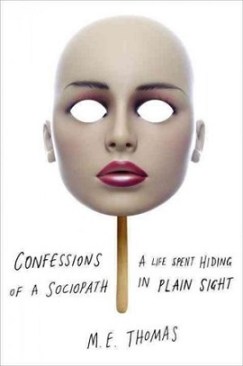
The above remark in an online forum caught my eye, because it validated a suspicion I’ve nursed that sociopathic people identify with and gravitate toward one another. It’s predictable, really, that people with common perspectives should be mutually attracted, as well as drawn to particular fields, for a couple of examples, institutional research and law. Italics that appear in the quoted paragraphs below, which are by the same male speaker, are added. This speaker, whose comments will be illuminating to students of anomalous brains, is not the author of the book whose cover is used as illustration.

“Generally our impulsive and charismatic personalities mean we become friends easily. For example, both of my flatmates are sociopathic, although probably to a lesser degree than myself. I’m able to freely talk with them about manipulative behavior, and we occasionally teach each other tricks based on our own areas of social expertise. Working as a group, we can very easily mask one another and cooperate to more effectively manipulate others. We also mutually operate on the same rationally motivated, prosocial basis, and as a result we find it very easy to trust one another as our motivations are all identical, and we’re aware of that.

“An awful lot of my sociopathic friends are aware, because I had the conversation with them and ‘woke them up.’ I tend to deliberately gather other socios around me and then make them self-aware, which has created a very interesting little social circle around me. We talk about it quite regularly, because it often comes up when we’re venting to each other or discussing our emotional responses.

“Academia is full of narcissists and sociopaths. So is the legal profession. Virtually any ‘prestigious’ career that offers a lot of potential cash will contain socios, but at the same time there will be some of us almost anywhere as many socios choose the easiest lifestyle possible, which isn’t compatible with those sorts of high-level careers. All fringe subcultures have a higher than average representation of socios, and the drug subculture is absolutely infested with them.”

Reading this person’s analysis of the differences between sociopaths and narcissists, which is very self-aware and forthcoming, was equally interesting, and those who’ve been traumatized by personalities of these types, may also find it significant.

“It’s the difference between ‘I am better than those around me’ and ‘I am fundamentally different [from] those around me, because I have a bizarre and somewhat broken brain.’ Narcissists believe they excel because they’re amazing at everything; sociopaths accept that we’re cheating.

“I very rapidly psychoanalyze others and then use their self-image and insecurities against them. For example, say I spot a woman who’s very insecure and in need of male validation. I can compliment her in exactly the way she wants and needs, and as a result foster emotional dependence, which can give me what I want. Or if you’re badly educated and insecure about your intelligence, I’ll show interest in you as an intelligent and well educated man, and tell you how smart I think you are and how much potential you secretly have, and as a result you’ll end [up] feeling ‘special’ and get the feelings of excellence you crave. Which can give me what I want. Etc., etc. It would take a very long time to explain every possible outcome, but generally it relies on telling people what they want to hear. This is my style, though, and some other socios can be VERY different. Female sociopaths tend to use self-victimization and foster ‘white knight’ behavior in men above all else, for example.

“I can be very passionate about some things, and that’s genuine. I care about my closer friends (because they’re mine) and the women I’m sleeping with (because they’re mine). I avoid negatively affecting those people at all and can actually be very, very protective of them—which in practice ends up being a mutually beneficial relationship.”

This person also validated my conviction that narcissists possess a far greater potential to damage others.

“I f*cking hate narcissists. They’re even worse than us, and they manage to delude themselves into believing that they’re the nicest people on earth. I hate the effect they have on other people, because it’s completely, needlessly damaging, and my own ethics are utilitarian, so the sort of wastefully cruel behavior they participate in just strikes me as stupid and childish.”

He corroborates the most basic defining attributes of the sociopath—and the character traits and tendencies he limns are ones familiar to me as a daily reader of people’s ordeals with sociopathic partners or former partners.

“I don’t feel any guilt. I have no idea what guilt even feels like. I have very few emotions at all. Most of my social interactions with non-socios are pure acting. I also have the full-on stereotypical predatory stare unless I remind myself to ‘act’ as if I’m making normal eye contact, which is a dead giveaway. I feel like most people are just zombies rather than real human beings at all.

“I don’t have a conscience. I use the word hate all the time, but I’m not sure I know what it truly means, to be honest.

“Most of my emotions are what is described as ‘shallow’—that is, they are short-lived, theatrical, and don’t affect my thought processes to the same degree as a normal person. Anger is heightened, and I have a capacity for truly blind rage. I have fallen in what I perceived as ‘love’ with another sociopath in the past, but whether that was mutual obsession or what a neurotypical person would describe as ‘love’ is a mystery to me, although I did care about her deeply.

“We’re almost invariably very smart and possessed of higher than average verbal and social intelligence. Acting is just…easy, for us, for some reason. It’s something we all seem to learn naturally. It is absolutely just acting, and if you can watch a professional actor bring tears on command then you understand how we do it.

“I think all sociopaths get off on power. We tend to view ourselves as distinct from other people (in a way that very easily slips into narcissism) and as ‘natural leaders’ (which we sort of are, in all fairness), and we enjoy being in those positions. I enjoy success, and I enjoy demonstrating that I’m more able than others. Sexually, I tend towards being extremely dominant and aggressive; however, I’d rather find submissives who enjoy that experience than shoot myself in the foot by needlessly harming other people. I think this need to demonstrate dominance over others is inherent, but you can deal with it in different ways; I’d rather be heavily involved in BDSM and a careerist assh*le than satisfy my need for dominance by needlessly murdering other human beings, but I do suspect that that need is why the most maladjusted and broken sociopathic individuals sometimes deliberately harm others for kicks, or even kill.

“Fringe sexual preferences [are] virtually ubiquitous. They don’t bother me at all, because they’re really fun—and drug use allows me to experience some of the emotional extremes that I would otherwise be denied.”

He also contradicts the psychopath stereotype.

“Animals love me for some reason. Cats especially will always pick me to sit on if there [are] multiple people in the room. Dogs respond to my eye contact and mannerisms by being very submissive.

“I like cats and dogs, and I enjoy having them around, so I don’t see any reason to hurt them. The idea of hurting an animal does not make me feel guilty at all, but I do see it as unpleasant.”

His derision of narcissists betrays resentment that sociopaths should be popularly or psychologically associated with these undisciplined and self-delusory slaves to their compulsions. Below is his response to the inquiry, “In your [opinion], do narcissists a) know fully that they’re lying when they’re gaslighting you? b) truly believe the twisted version of reality they present you with, or c) talk themselves into believing their own lies gradually because it suits them? This question is something that causes me a lot of pain and confusion when being gaslighted. Some part of me still wants to believe they are good people without malice….”

”This depends on exactly how self-deluding any given narcissist is, and from an external perspective it’s very hard to tell. I avoid gaslighting [see footnote]…but if I [were] to do it, I’d be fully aware that I was lying. On the other hand, narcissists are extremely unlikely to ever admit it to themselves, because their entire self-perception is completely distorted. It’s likely to be a combination of B + C in practice; A would be behavior more characteristic of a true sociopath. Keep in mind that narcissism is a sliding scale of self-delusion in practice; the worst examples will be B, but the majority are likely to be C. A narcissist is just a sociopath who believes [his or her] own bullshit, really. I wouldn’t say they’re ‘good people’ but they’re not fully conscious of what they’re doing.

“Assume everything they say is bullshit until you see at least some evidence. You don’t have to tell them this, but be absolutely cynical.

“Any extreme displays of emotion are not real.

“Do NOT do anything to give them any more power over you than they have—lending or borrowing money, making minor concessions, etc. They will use it against you.

“Narcissists have incredibly unstable self-esteem. Keep this in mind, and you may be able to motivate them into doing what you want to some degree.

“I think sociopaths are born, and narcissists are made from some of those sociopaths. I don’t think every person has the potential to be a true narcissist based on nurture. People who are naturally ‘sociopathic’ aren’t evil, because we can be incredibly socially symbiotic if we’re aware of the value of prosocial behavior.”

It’s fascinating to me to contrast my impression of this highly intelligent man, who’s a self-acknowledged sociopath with a reasoned code of ethics, with what I know of the narcissist, who’s a parasitic sponge and chronic and impulsive liar. The narcissist is infantile; designing, perfidious, and fraudulent to the core; and wantonly vengeful and destructive. This man, who’s clearly very singular in his self-awareness, lucidness, and honesty may be a sociopath, but after observing how willfully “neurotypical” people lie and treacherously betray others, I’d much sooner trust his motives and integrity than theirs.

Copyright © 2014 RestrainingOrderAbuse.com

Wikipedia: “Gaslighting is a form of mental abuse in which false information is presented with the intent of making a victim doubt his or her own memory, perception, and sanity. Instances may range simply from the denial by an abuser that previous abusive incidents ever occurred up to the staging of bizarre events by the abuser with the intention of disorienting the victim.”

Not Evil Geniuses but Brats in Slacks: On Narcissists and Restraining Order Abuse

Pathological narcissism is apparently a titillating topic.

A growing number of visitors to this blog are brought here by search terms that include words and phrases like narcissism, narcissistic personality disorder, and NPD. More commenters, too, have lately reported abuses by narcissists through the courts, typically restraining order abuse. This surge is less likely due to an uptick in abuses by narcissists than to a dawning awareness of the psychological motives that underlie many vicious legal assaults. More Internet support groups and websites devoted exclusively to exposing abuses by narcissists are emerging, and the same words and phrases glossed above are now appearing in headlines, such as those on The Huffington Post and Salon.com.

My own opinion, on reflection, is that narcissists are banal. Evil, as Hannah Arendt famously noted, usually is (Arendt was a teacher and writer who fled Nazi Germany). The truth is the sorts of legal mischief narcissists get up to only work because our courts are accustomed to crediting lies (however painfully transparent they might be to a disinterested party). Narcissists assuredly congratulate themselves on their courtroom triumphs (congratulating themselves is among narcissists’ principal preoccupations). Yet any precocious child would see through their counterfeit dramatics.

Narcissists aren’t, in fact, epic anything; they’re pathetic. You may perceive narcissists’ pathological lies as devious; you’d more usefully perceive them as compulsive. (A compulsion is an irresistible urge.) What gives their frauds that aura of grandeur is the astonishing ease with which they’re committed, particularly on authorities and judges, and the facility with which narcissists enlist others in those frauds or convince others that they’re true. (Narcissists’ allies and pawns are more often than not morally normal people, that is, “neurotypicals.” Sometimes they’re even seemingly intelligent and discerning ones.)

Casual charlatanism, though, is hardly an accomplishment for people without consciences to answer to. And rubes and tools are ten cents a dozen.

There probably are some narcissistic masterminds out there. None of the narcissists whose conduct I know of, however—and I’ve had dozens of stories shared with me and read scores of other accounts, besides—has ever impressed me as more than a child in big-boy pants or a big-girl skirt. Narcissists succeed by virtue of soulless inveiglement and outward plausibility, neither of which bears up under close scrutiny. (Courtroom decisions made in restraining order cases are the products of a few minutes.)

I’ve read many people differentiate between narcissism and “mental illness.” Narcissists aren’t crazy, they’ll write. I’m unconvinced. I think it’s more accurately pronounced that narcissists don’t seem crazy and that most people are taken in by narcissists not because there isn’t something about them that alerts the antennae of others that there’s something off about them than that what’s off about them doesn’t match any of the familiar paradigms of craziness.

I’m not a psychologist, but my personal opinion is that narcissists are mentally ill and, when their frauds and ploys are resisted to any significant extent, that that mental illness becomes more prominent and perceptible, particularly to those whom they’ve abused. Normal people won’t run themselves ragged defending such frauds and ploys. A narcissist will.

Narcissism is about surface. And surface, despite the warning of that adage about book covers, is what we judge by. Narcissists are good with audiences. They’re also good with stress. They don’t slide into that state of neglected personal hygiene that we associate with “madness” even when pushed to an extremity. This isn’t a reflection of their interior hygiene, however.

Scratch beneath the surface, and you will find disorder.

Contrary to what many online writers counsel, people in legal contests with narcissists shouldn’t think of their opponents as reasoning beings in possession of highly developed albeit wicked minds; they should reckon themselves to be in struggles against recalcitrant children. Much ado is made of the cunning of narcissists. That apparent cunning is really just a manifestation of obsessive-compulsive self-justification combined with infantile rage provoked by the narcissist’s not getting his or her way.

Narcissists aren’t Hannibal Lecters; they’re brats in permanent temper tantrums who recognize no moral boundaries or authority.

Copyright © 2013 RestrainingOrderAbuse.com

Crying Wolf: On Attention-Seeking Personality Disorders and Restraining Order Abuse

I this week came across an online monograph with the unwieldy (and very British) title, “Drama Queens, Saviours, Rescuers, Feigners, and Attention-Seekers: Attention-Seeking Personality Disorders, Victim Syndrome, Insecurity, and Centre of Attention Behavior,” which pointedly speaks to a number of behaviors identified by victims of restraining orders who have written in to this blog or alternatively contacted its author concerning the plaintiffs in their cases.

What caught my eye, especially, is that this monograph appears on a site titled, BullyOnline.org (now defunct).

The popular perception of restraining orders is that they’re sought by plaintiffs to remedy bullying. The monograph I’ve referenced doesn’t speak to restraining orders, per se, but its revelations about attention-seeking personality disorders are very applicable to abuses of restraining orders and are interesting because they turn the popular perception of restraining order plaintiffs’ motives on its head.

Victims of false restraining orders are urged to consult this monograph for language that may be of assistance both in defining the motives of fraudulent plaintiffs and in cementing an understanding of the psychological exigencies that underlie those motives. Of particular relevance to the subject of this blog are the following personality types sketched by the monograph’s author:

The manipulator: she may exploit family relationships, manipulating others with guilt and distorting perceptions; although she may not harm people physically, she causes everyone to suffer emotional injury. Vulnerable family members are favourite targets. A common attention-seeking ploy is to claim she is being persecuted, victimised, excluded, isolated, or ignored by another family member or group, perhaps insisting she is the target of a campaign of exclusion or harassment.

The mind-poisoner: adept at poisoning people’s minds by manipulating their perceptions of others, especially against the current target.

The drama queen: every incident or opportunity, no matter how insignificant, is exploited, exaggerated, and if necessary distorted to become an event of dramatic proportions. Everything is elevated to crisis proportions. Histrionics may be present where the person feels she is not the centre of attention but should be. Inappropriate flirtatious behaviour may also be present.

The feigner: when called to account and outwitted, the person instinctively uses the denial-counterattack-feigning victimhood strategy to manipulate everyone present, especially bystanders and those in authority. The most effective method of feigning victimhood is to burst into tears, for most people’s instinct is to feel sorry for them, to put their arm round them or offer them a tissue. There’s little more plausible than real tears, although as actresses know, it’s possible to turn these on at will. Feigners are adept at using crocodile tears. From years of practice, attention-seekers often give an Oscar-winning performance in this respect. Feigning victimhood is a favourite tactic of bullies and harassers to evade accountability and sanction. When accused of bullying and harassment, the person immediately turns on the waterworks and claims they are the one being bullied and harassed—even though there’s been no prior mention of being bullied or harassed. It’s the fact that this claim appears after and in response to having been called to account that is revealing. Mature adults do not burst into tears when held accountable for their actions.

The abused: a person claims they are the victim of abuse, sexual abuse, rape, etc. as a way of gaining attention for themselves. Crimes like abuse and rape are difficult to prove at the best of times, and their incidence is so common that it is easy to make a plausible claim as a way of gaining attention.

The victim: she may intentionally create acts of harassment against herself, e.g., send herself hate mail or damage her own possessions in an attempt to incriminate a fellow employee, a family member, neighbour, etc. Scheming, cunning, devious, deceptive, and manipulative, she will identify her “harasser” and produce circumstantial evidence in support of her claim. She will revel in the attention she gains and use her glib charm to plausibly dismiss any suggestion that she herself may be responsible. However, a background check may reveal that this is not the first time she has had this happen to her.

Many respondents to this blog—victims of lovers, spouses or ex-spouses, friends, coworkers, neighbors, or family members—have reported serial behaviors of the aforementioned sorts, and some have discovered that plaintiffs who have sought restraining orders against them are not first-time applicants. One or more of these personality types (or a merger of them) is likely recognizable to most victims of restraining order abuse.

Separate profiles on the “serial bully,” the “attention-seeker,” “narcissistic personality disorder,” and “bullies in the family” appear on the referenced site, and its author estimates that 1/30 people fit its profiles.

Hold this statistic up beside the one propounded by psychologist Martha Stout in her book, The Sociopath Next Door, that an estimated 1/25 people fit the clinical definition of “sociopath”—someone, that is, who’s devoid of moral compunction/empathic identification altogether—and it’s a reasonable proposition that an abundance of allegations made to officers of our courts derive from calculated hokum and that a goodly percentage of restraining orders, far from being sought out of a need for remedial relief, are in fact exploited as instruments of abuse or employed to gratify their plaintiffs’ need to have all eyes focused on them.

Copyright © 2013 RestrainingOrderAbuse.com

“perjury and sociopaths”: On the Challenges of Contesting Restraining Orders Sought by the Mentally Aberrant, Deranged, or Ill

A recent respondent to this blog detailed his restraining order ordeal at the hands of a woman who he persuasively alleges is a sociopath. He says this label is generally scoffed at by people he explains the matter to and wonders how he could convince a judge of its accuracy.

Since this blog was published nearly two years ago, hundreds have been led to it by search terms that include words and phrases like “sociopath,” “mental illness,” “narcissist,” and “personality disorder” or “borderline personality disorder” (“bpd”).

This should hardly be a source of surprise.

Restraining order applicants aren’t screened based on their psychiatric histories. Sociopaths and narcissists, who are seldom clinically diagnosed in the first place, are moreover cunning liars and manipulators. Obtaining restraining orders—which are issued solely on the basis of brief interviews between petitioners and judges—is not only a simple matter for them but rewards their pathological drives for dominance and revenge.

Characterized generously, the restraining order process is fast-food justice. The ability and opportunity of most defendants to qualify allegations of sociopathy or insanity against their accusers—assuming these defendants even recognize these conditions—is effectively none at all. And unless a restraining order applicant is completely off the wall, his or her allegations won’t even cause a judge to arch an eyebrow. Applicants are in and out of restraining order interviews in a matter of minutes. Sociopaths are the smoothest liars you’ll ever meet, and the insane may be more convincing yet if they wholeheartedly believe their allegations in spite of those allegations’ possibly having no relationship to reality at all.

The imperceptibility of mental disorders is what makes them so difficult to expose (on this subject, see also these related posts).

I could go on about how easily the restraining order process is abused by sociopaths or the otherwise mentally aberrant. And I could describe to you the devastating effects their false allegations have on the lives of those they abuse. Instead I’ll close with some of the relevant search terms that have brought readers here since this blog’s inception. Identical search terms have been eliminated (“beating a narcissistic sociopath,” for example, rolls in regularly).

  • “beating a narcissistic sociopath”
  • “emotional crimes” “sociopathy”
  • #beating a narcissistic sociopath
  • a crazy person filed a restraining order on me
  • a mentally ill sister files false charges in virginia
  • a narcissist filing pfa
  • a narcissist that plays the victim role
  • abuse by a nsrcisistic sociopath restraining order
  • abusice narcissist ruined my life erased
  • antisocial personality disorder and self-victimizing statements
  • antisocial personality mom filed abuse charges against
  • are narcissists con artists?” for order of protection
  • attention seeker false abuse
  • attorneys lawyer in san jose for emotionally abused men by bpd wife
  • attribute mental illness false allegations
  • bdp, false charges,revenge
  • beating a narcissistic sociopath in court false accusations
  • beating a narcissistic sociopath restraining order
  • bi polar ex gets restraining order
  • bipolar and getting a protection order against me
  • borderline ex got ppo
  • borderline ex ruining my reputation
  • borderline false restraining orders
  • borderline mother making false accusations
  • borderline personality and false restraining order
  • borderline personality and restraining order
  • borderline personality boyfriend call the cops with false alligations
  • borderline personality disorder and denied restraining orders
  • borderline personality disorder and false accusations and restraining orders
  • borderline personality disorder and restrainig orders
  • borderline personality disorder and restraining order police
  • borderline personality disorder false accusations
  • borderline personality disorder false allegations restraining order
  • borderline personality disorder false harrassment claims
  • borderline personality disorder false pfa
  • borderline personality disorder getting a restraining order against me
  • borderline personality disorder restraining order
  • borderline personality false domestic violence
  • borderline personality perjury custody
  • borderline personality restraining order
  • borderline personality wife how to stop her ruining my reputation?
  • borderline restraining order
  • borderline teen making false accusations
  • borderline trying to ruin reputation
  • borderline woman and restraining order
  • borderline woman out to ruin my reputation
  • borderline women false accusations of violence
  • borderlines and protection orders
  • borderlines and restrainging orders
  • bpd “false accusations” police
  • bpd and false accusations
  • bpd and restraining order
  • bpd and restraining orders
  • bpd and slander
  • bpd destroying other peoples false allegations, police, court, arrested, crazy
  • bpd ex boyfriend wanting revenge
  • bpd ex filed restraining order
  • bpd ex got ppo
  • bpd ex ruined my reputation
  • bpd false accusations and jealousy
  • bpd false accusations legal process
  • bpd false harassment claims
  • bpd false protective orders
  • bpd false stalking
  • bpd filing protection of abuse order to spouse
  • bpd gf abused me
  • bpd how to deal with false allegations california
  • bpd protective order children
  • bpd restraining order dropped
  • bpd restraining orders
  • bpd restraining orders fraudulent
  • bpd spouse ruined my life
  • bpd threatening to call cops
  • bpd why do they make false accusations
  • bpd wife filing for restraining order based on false accusations
  • bpd wife put restraining order on husband
  • bpd wife ruined my life
  • bpd woman and restraining order
  • california domestic violence false allegations borderline disorder
  • can you secretly videotape a narcissist for proof of perjury
  • civil harassment and narcissistic personality disorder in california
  • crazy ex girlfriend filing fake assault charges on me
  • crazy girlfriend filing fake domestic violence charges
  • crazy girlfriend pfa
  • crazy girlfriend who makes false police reports
  • crazy neighbor got a restraining order on me
  • darvo + bpd
  • darvo and the bpd
  • dealing with sociopaths in court
  • defeating a sociopath
  • defense of false allegations and maryland and personality disorder
  • defense says plaintiff is sociopath
  • destroyed by a narcissis sociopath
  • destroyed by a narcissist sociopath
  • do abusive narcassists like reatraining orders
  • does the bpd woman return after making false allegations
  • ex wife is a bpd and keeps filing bogus restraining orders how to stop this
  • exposing a sociopath narcissist in court
  • false accusations police borderline personality
  • false charges of child sexual abuse and narcissistic personality
  • false police report made in missouri due to mental illness
  • false report by mentallt ill girlfriend az
  • false restraining orders and personality disorders
  • female narcissist revenge
  • female sociopaths family court
  • fighting a sociopath ex husband in court
  • fighting back against false claims made by borderline personality disordered women
  • fighting tro placed on you by a person with bpd
  • fraud narcissist
  • god’s plan for me after bpd wife restraining order
  • harrassment sociopath courts
  • help me, i got punished at work psychopath due incapable work and fraud
  • how can i beat my bpd wife in court
  • how can my narcassist husband that said loved me file and go through with false exparte now all i had is gone
  • how to beat a narcissistic in court
  • how to beat a narcissistic sociopath
  • how to beat a narcissitic sociopath
  • how to beat my sociopath ex gf in court pfa
  • how to beat narcissistic mother in court
  • how to deal with sociopath in court
  • how to deal with mentally ill making false reports against you to the police
  • how to expose a sociopath
  • how to expose a sociopath in court
  • how to fight a psychopath in court protection order
  • how to get rid of a sociopath ex wife + filing false restraining orders
  • how to outsmart a sociolpath in divorce fraud
  • how to protect yourself against false allegations by bpd ex wife
  • how to stop a sociopath from filing false restraining orders + family court
  • how to win against a narcissistic sociopath in court
  • how to win against a sociopath in court
  • husband refusal to submit to bpd false accusations
  • is wise to take back a bipolar daughter that put on me a restraint order but the judge exonerate me?
  • lies and false accusations sociopath ex husband custody
  • malicious sociopathic sister
  • mental and personality disorders
  • mental help dealing with sociopath restraining order
  • mental history restraining order
  • mental illness gets restaining order
  • mental illness protective order
  • mental illness restraining order
  • mental illness took out false ppo against me
  • mental illness, extended family, and restraining order
  • mental+illness+&+no+contact+orders
  • mentally disabled wife files false restraining order
  • mentally ill and restraining order
  • mentally ill daughter filed restraining order
  • mentally ill exwife harassing
  • mentally ill false protective order
  • mentally ill filing false ppo michigan
  • mentally ill keeps makng false allegations
  • mentally ill spouse filed false orders of protection
  • mentally ill stalker filing false police reports
  • michigan ppo put on me by crazy sister
  • my bipolar gf filed a restraining order
  • my bpd ex girlfriend had me served with a tro
  • my mentally unstable daughter mad a false police report what should she do
  • my narcissistic ex put a restraining order on me
  • my wife has mental illness lied on restraing order
  • narcassist and restraining order
  • narcisist court orders
  • narcisist puts restraining order on me , will he come back?
  • narcissism and criminal fraud
  • narcissism and restrainig orders
  • narcissism and restraining order
  • narcissism restraining order
  • narcississ threatens restraining order
  • narcississtic man filing false police reports
  • narcissist above the law
  • narcissist abuse of legal system
  • narcissist an drestraining order
  • narcissist and a civil protection order
  • narcissist and false police reports
  • narcissist and falsifying police reports
  • narcissist and final restraining orders
  • narcissist and lying fabricating lies
  • narcissist and personal protective order
  • narcissist and protective order
  • narcissist and restraining orders
  • narcissist convincing
  • narcissist darvo
  • narcissist ex boyfriend falsely accused me of domestic violence
  • narcissist ex finally got what she want filed restraning order against me
  • narcissist ex girlfriend filed sexual harassment
  • narcissist ex girlfriend puts a restraining violent order on me
  • narcissist exwife put restraining order on me
  • narcissist false allegations
  • narcissist false allegations of stalking
  • narcissist filed a false pfa on me
  • narcissist filed bogus pfa against me
  • narcissist filed bogus pfa against me and it was denied
  • narcissist filed pfa agains me
  • narcissist files for order of protection for revenge
  • narcissist files restraining order
  • narcissist got a restraining order against me
  • narcissist got restraining order against me
  • narcissist has filed restraning order
  • narcissist has restraining order
  • narcissist husband filed fake restrainig order on me
  • narcissist husband filed for divorce and served me a restraining order
  • narcissistic in the civil courts how to beat
  • narcissist lied and got restraining order
  • narcissist lied to police and had me arrested
  • narcissist lies
  • narcissist lying on court affidavit
  • narcissist playing the victim
  • narcissist plays the victim
  • narcissist put restraining order on me
  • narcissist restraining order
  • narcissist restraining order child custody
  • narcissist restraining order on me
  • narcissist restraining order still talking to me
  • narcissist seeking sole custody filed tro
  • narcissist spouse discards
  • narcissist threatened me with a restraining order
  • narcissist wife files assault charge
  • narcissist’s false accusers
  • narcissistic abuse order of protection
  • narcissistic abusive sociopath
  • narcissistic borderline restraining order
  • narcissist domestic abuse
  • narcissistic ex filed restraining order against me for finding out her lies
  • narcissistic mother restraining order
  • narcissistic personality disorder and restraining order
  • narcissistic personality disorder in the family court system
  • narcissistic personality disorder injunction for harassment
  • narcissistic personality disorder restraining order
  • narcissistic revenge
  • narcissistic revenge tactics
  • narcissistic sociopath
  • narcissistic sociopath false accusations
  • narcissistic sociopath in court
  • narcissistic sociopath restraining order
  • narcissistic sociopath women restraining orders
  • narcissistic sociopaths
  • narcissistic spouse accused you of domestic abuse
  • narcissistic threatens restraining order
  • narcissistic woman false domestic violence
  • narcissistic women and false accusations of “stalking”
  • narcissistic women making false statement
  • narcissists accuse me of harsment
  • narcissists and misuse of restraining orders
  • narcissists and restraining orders
  • narcissists are evil
  • narcissists breaking protective orders
  • narcissists make their children lie
  • narcissists restraining order
  • narcissists restraining orders
  • narcissists ruin lives
  • narcissists who try to get protective orders
  • narcissit grudge
  • narcissitic bastard filed a false restraining order on me
  • narcissitic ex husband slandering new husband
  • narcisstic men and restraining orders
  • narcisstic personality disorder and restraining order
  • narcisstists restraining order abuse
  • narrcassist use restraini.comg orders
  • narrcissist and false restraining orders
  • narrsim and not letting go even with a restraining otder
  • neighbor harassment mental illness maryland
  • new petition for change of custody based on false accuasations by exhusband with bpd
  • npd and protection orders
  • npd and restraining order
  • npd disordered people will they threaten to have you arrested on false charges
  • npd restraining order
  • npd sister “restraining order”
  • obssive vindictive narcissist and a restraining order
  • pathological liar and restrainig orders
  • perjury & narcissist
  • perjury and sociopaths
  • personality disorder order protection illinois
  • personality disorders and restraining orders
  • physcopath husband filed false dv
  • protective order mental illness
  • psychopath free restraining order
  • psychopath lied to get restraining order
  • psychopath manipulating a woman to make a false allegations against me
  • psychopath narcissist abuse
  • psychopath put restraining order against me took my house
  • psychopath restraining order pennsylvania
  • psychopath targets roomate for false arrest
  • psychopathic husband had me arrested for dv
  • psychopaths and restraining orders
  • psychopaths entrap their victims
  • psychopaths: what attorneys and judges should know.
  • psyphopath and perjury
  • recourse mental ill ex-spouse slandering
  • restraining order and mental illness
  • restraining order and narcissist
  • restraining order appeal personality disorder
  • restraining order mental illness
  • restraing orders and sociopaths
  • restraining orders borderline personality disorder
  • restraining orders from sociopaths
  • restraining orders in ma for mentally ill
  • restraining orders sociopath and narcissist
  • restrasingn ordre and psycopath
  • revenge of a narcissist after divorce
  • self exaltation and lying by bpd
  • signs of mental illness false accusations against people
  • sociapathic narcissistic ex boyfriend filed restraining order, how do i fight it
  • sociopath & restrainig order
  • sociopath accusing me of harassment
  • sociopath and court orders
  • sociopath and false abuse
  • sociopath and perjury
  • sociopath and restraining order
  • sociopath and restraining orders
  • sociopath as vexatious litigant
  • sociopath behavior perjury
  • sociopath civil perjury
  • sociopath daughter put a restraining order on me
  • sociopath fake police report
  • sociopath false domestic abuse charges
  • sociopath game restraing order
  • sociopath made vile false accusations about me
  • sociopath makes false allegation and forgets
  • sociopath mom files restraining order on her child
  • sociopath narcissist bogus protective order
  • sociopath order protection
  • sociopath perjury
  • sociopath restraining order
  • sociopath restraining order abuse
  • sociopath tricks restraining orders
  • sociopath with a restraining order
  • sociopath narcissist bogus protective order
  • sociopath women restraining orders
  • sociopathic boyfriend threatens with restraining order
  • sociopathic narcissist violence domestic and he had me falsely arrested for self defense
  • sociopaths and orders of protections
  • sociopaths and protective orders
  • sociopaths and restraining orders
  • sociopaths restraining orders
  • socipath protective orders
  • son’s psychopath ex girlfriend keeps harassing him
  • stop narcissist filing motions
  • the narcissist and false accusations of stalking
  • the narcissistic wife and false accusations of abuse
  • the sociopath is making me the victim mentally sick
  • the teenage sociopath and false accusations of abuse
  • type of personality disorder restraining order
  • uk divorce “narcissistic spouse” “false accusations”
  • victims rights and narcissist
  • what do i do about mother of my grandchild having me investigated .she is one with persnality disorder lying to dept of childrens services
  • what to do against falst accusations from a borderline personality disorder
  • what type of person does a sociopathic narcissist target?
  • when a crazy person tries to put a restraining order on you
  • when a narcissist files a restraining order on you
  • when a narcissist files false charges against someone
  • when a narcissist puts a restraining order against you
  • when a wife leaves a husband and then claims false tro bpd
  • who can help with narcissist exhusband knowing everyrhing i do calling filing bogus xharges on me
  • why do bpd women ruin lives
  • why do narcissists play the victim
  • why do sociopaths file restraining orders
  • why has the narcissist put a restrianing order on me
  • win court against narcissist
  • winning an epo hearing against mentally ill wife
  • woman narcissistic sociopath no contact orders abuse
  • women with mental illness that file pfa’s
  • youtube when a narcissist call police with false statment

Copyright © 2013 RestrainingOrderAbuse.com

Narcissistic Sociopaths and Restraining Orders: When the System Is Primed to Abet the Criminally Deviant

“Narcissistic sociopaths leave very few people with whom they form relationships—intact. I am speaking here about the sociopath who does not commit physically violent crimes but perpetrates psychological and emotional crimes that destroy the lives of others…. The [narcissistic sociopath] is without conscience of any kind. [He or she] is very clever at not getting caught. It is very rare that these individuals serve any time in jail or prison.”

 —Linda Martinez-Lewi, Ph.D.

Restraining orders, requiring little or nothing in the way of concrete substantiation to obtain, are ripe for abuse by anyone with a flair for lying and a malicious will; but they are especially easy to exploit for sociopaths, being as they are uninhibited by the moral boundaries that constrain most people from engaging in outright deception—and particularly from engaging in outright deception of authorities. Narcissistic sociopaths, who lie adeptly and are always keen for a rapt audience, are unreluctant to commit criminal frauds on the police and courts provided that the risk of their being punished for it is marginal. In the abuse of restraining orders, that risk is zero.

Narcissists feed on attention. Married narcissists may stray to satisfy their appetite (the added thrills of “danger” and transgression only intensifying the reward).  Narcissists are known to marry for convenience, specifically for financial security, social elevation, and material gain. So infidelity to their spouses—whether social, emotional, or carnal—is common. For an unmarried narcissist, “romance” always has gratification of his or her need to dominate and be desired (to own the other person) as its objective. S/he may even keep trophies of his or her conquests (and a restraining order may represent such a trophy to him or her).

Discovering the narcissist’s true nature is bad enough if you’ve sworn vows of fidelity to him or her before a clergyman or justice of the peace; it’s devastating if you’re simply cast off after your value as an ego-pump has been exhausted.

Narcissists make no apologies, and romantic entanglements based on deception seldom end cleanly, especially when the deceiver is unwilling to acknowledge his or her misconduct. Unsurprisingly, visitors and respondents to this blog are brought here regularly by complaints of restraining order abuse by narcissistic sociopaths.

Restraining orders are not only peerless tools for severing inconvenient relationships; obtaining them is a simple matter for those who lie without compunction and simultaneously gratifies narcissists’ cravings for vengeance and attention. Someone a narcissist has abused for sex or sexual interest can be punished for his or her perceived criticism of the narcissist (“How could you?”), and the narcissist can exploit the restraining order indefinitely to gain the attention and sympathy of others by representing his or her victim as a stalker. Years later, narcissists who’ve obtained fraudulent restraining orders can claim to be in danger from people they in fact targeted for abuse, exciting the concern and protective impulses of those around them and thereby receiving the special treatment they believe they’re entitled to and which their egos depend upon for sustenance.

As Dr. Martinez-Lewi (the author of this post’s epigraph) points out, narcissistic sociopaths are “often very bright intellectually and exceedingly quick in scouting out and discovering people whom they can dominate completely.” They’re exceptionally canny predators, in other words. The obvious irony is that narcissistic sociopaths who abuse the restraining order process by alleging fear and danger to put distance between themselves and their casualties do so against those they originally targeted for having dependably even temperaments and tolerance (that is, for being easily manipulated).

Narcissists’ being consummate charlatans allows them to facilely exploit the system to doubly victimize those they selected for abuse. And if that weren’t enough, they can thereby represent themselves as victims and bask in the attention their “victimhood” arouses.

Gaming strangers in uniforms and robes who are already poised to credit everything they say is a junket to the candy shop for narcissistic sociopaths, and their being awarded restraining orders presents them with gifts that keep on giving.

Copyright © 2012 RestrainingOrderAbuse.com