Eugene Volokh Is a Name Restraining Order Defendants Should Know

Eugene Volokh

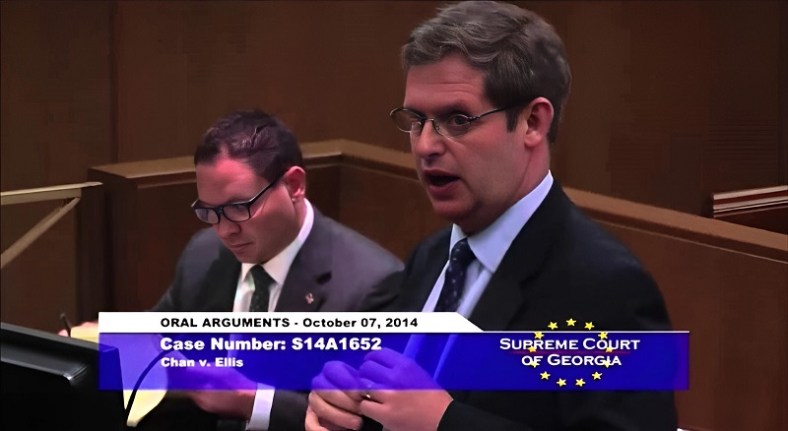
Above, Prof. Eugene Volokh argues before the Georgia Supreme Court in Chan v. Ellis (2014). Prof. Volokh teaches free speech law, religious freedom law, church-state relations law, a First Amendment Amicus Brief Clinic, and tort law at UCLA School of Law.

“If you post on social media about your life, is that going against a restraining order if you don’t mention the petitioner’s name?”

—Search term that led someone here last week

As UCLA Law Prof. Eugene Volokh has doggedly emphasized in his blog, The Volokh Conspiracy (formerly hosted by The Washington Post), the answer to this question is no, it isn’t going against a restraining order if you write ABOUT the order, ABOUT the person who petitioned it, or ABOUT the impact it’s had on your life. Your right to express your opinions and talk about your life to the public at large is protected by the First Amendment.

A person may legitimately be prohibited by a judge from communicating something TO someone (by phone or text, say, or by email or in a letter, or in person), but a judge “can’t order someone to just stop saying anything about a person.”

The citizen’s right to talk about him- or herself, about someone else (including by name), or about anything (excepting state secrets) is sacrosanct. It’s protected by the First Amendment, and a trial judge has no rightful authority to contradict the Constitution.

Note that the key phrase here is rightful authority. A judge can act in ignorance, and s/he can even act in willful contravention of the law.

Why Eugene Volokh’s is a name to know is that Prof. Volokh has endeavored to make the distinction between speech that may be prohibited and speech that may not be prohibited everyday knowledge. He’s done that by writing in a medium accessible to everybody, a blog, rather than exclusively in law journals, as well as by framing in simplest terms the difference between speech that may be censored and speech that may not be.

He’s building steam, too. These posts are from last month alone:
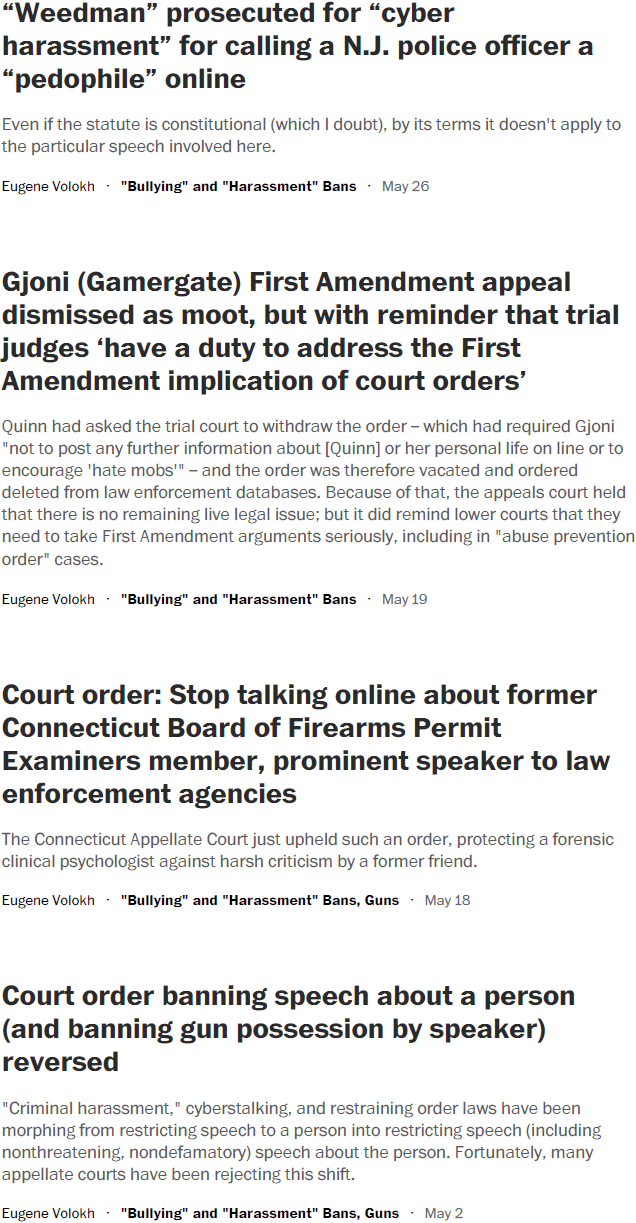
VC_May 2016

It’s important to observe that nothing in the restraining order arena is hard-and-fast, because judges can rule however they want. When what they do clashes with the law, an abused defendant’s only recourse is to appeal, and the intrepid writer should be prepared to do that…right on up the ladder. (S/he should also know that s/he has the right to request reimbursement for lost time, for costs, etc.)

A blogger wrote last month to report that an ex-boyfriend’s claims of “domestic violence” were laughed out of court and that the motive for the accusations was that she had criticized him in a blog. The guy went back to the courthouse a couple of weeks later, petitioned another order from a different judge, and that one stuck. His abuse of process had recent precedent, and it didn’t matter.

Such manipulations of the justice system by false complainants and spongy decision-making by judges owe to 20 years of mainstream feminist rhetoric decrying “epidemic” violence. Judges have been trained according to tailored social science and had it impressed upon them what their priorities should be. Too, they’ve traditionally been given no cause to second-guess themselves.

Eugene Volokh is changing that.

A steady stream of cogent arguments against the due process violations (and statutory and conditioned inequities) that make the restraining order process contemptible has been voiced by influential critics since the ’90s…to little effect.

Rather than appeals to reason and social conscience, what may finally turn the tide against a corrupt procedure of law is an indirect attack on its legitimacy. Once it’s commonly known that speech about its victims’ experiences cannot lawfully be squelched, and that both the issuers of orders and their petitioners can be exposed, warts and all, what has been an unaccountable process no longer will be. Shadowy (and shady) proceedings that have enjoyed invisibility will have to tolerate the glare of spotlights.

And bullies don’t like reading about themselves.

Copyright © 2016 RestrainingOrderAbuse.com

*The motives of a goodly proportion of false complainants are to cause pain and have the party they’ve injured gagged. Restraining orders are the perfect tool for this. But what people say on public record (e.g., in a courtroom) is public property. It’s supposed to be the opposite of hush-hush.
Restraining Orders as Strategic Lawsuits Against Public Participation (SLAPPs)

Not a day goes by when a search engine query doesn’t lead someone to this blog because s/he wants to know whether speech on Facebook can be prohibited by the court.

Lawfully…maybe. If someone sends communications TO someone else after the someone else has repeatedly requested that s/he be left alone, this can be labeled “harassment,” and a judge can “properly” issue an injunction forbidding further contact.

If, however, a person merely makes remarks ABOUT another person (even a so-called “private figure”) or otherwise expresses his or her view on something, that’s his or her constitutional right (see the First Amendment). Americans are guaranteed the freedom to criticize one another, as well as their government, and judges have no business poking their noses in…which doesn’t mean they won’t if invited. A person merely making remarks ABOUT someone can still be sued. Anyone can be, whether on meritorious grounds or frivolous or vexatious ones.

Enter the “SLAPP,” or, Strategic Lawsuit Against Public Participation.

Lawsuits whose motive is to silence critical speech by intimidation are SLAPPs. They typically allege that an opinion is “defamatory.” There can be no defamation in opinion, but that doesn’t matter.

SLAPPs work because being sued is stressful and expensive. Only about half of states have anti-SLAPP laws on their books and their content varies significantly, as well as do targets’ means to hire attorneys and prosecute a defense. (For just this reason, a federal “Speak Free Act” has been proposed.)

Making matters worse, how SLAPPs are used, particularly when they take the form of restraining order petitions, is by alleging a constellation of offenses that may be utterly false but can nevertheless be very persuasive.

The writer of this post is the defendant in three such litigations right now. The complainants don’t like what I’ve reported or opined about them. They haven’t, though, alleged that I’ve been unkind in my characterizations; they’ve claimed they’re afraid for their lives, that they’ve been harassed, that they’ve been defamed, that they’ve been stalked, that they’ve been sexually aggressed against…that kind of thing. The more frenzied of the two women who are prosecuting me—a woman who emailed me four years ago calling herself an “avid reader” of the blog and calling the other woman who’s prosecuting me a “sociopath”—today says she’s packing a gun. (I’ve seen this person once in 10 years: I consented to join her for coffee, and afterwards she hugged me.)

You see how it works: You make your allegations lurid to distract from your real motive, which is to shut somebody up who’s making you look bad (because you are bad).

Commenters on this blog have reported having restraining orders petitioned against them because the plaintiff owed them money or because they had knowledge of the plaintiff’s commission of a criminal act, like drug abuse, tax evasion, or violence, including rape.

In instances like this, restraining orders are SLAPPs. They’re meant to make sure the defendant is gagged and subdued.

As SLAPPs is just another way restraining orders are abused.

Copyright © 2016 RestrainingOrderAbuse.com

Courtroom Fraud and Smear Campaigns: The Full Machiavelli

Cheryl Lyn Walker PhD, Dr. Cheryl Lyn Walker, Dr. Cheryl L. Walker PhD, M.D. Anderson Cancer Center, Michael Honeycutt PhD, Michael Honeycutt TCEQ

“False Accusations, Distortion Campaigns, and Smear Campaigns can all be used with or without a grain of truth, and have the potential to cause enormous emotional hurt to the victim or even impact [his or her] professional or personal reputation and character.”

—“False Accusations and Distortion Campaigns

There are several fine explications on the Internet about the smear campaigns of false accusers. Some sketch method and motive generally; some catalog specific damages that ensue when lies are fed to the police and courts.

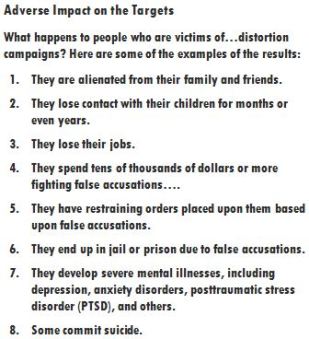
This survey of “adverse impacts” is credited to lies told by people with borderline personality disorder. Conducting “distortion campaigns” isn’t exclusive to BPDs, however, and the “adverse impacts” are the same, irrespective of campaigners’ particular cognitive kinks.

The valuable role of the police and courts in the prosecution of campaigns to slander, libel, and otherwise bully and defame can’t be overstated. They’re instrumental to a well-orchestrated character assassination.

Lies can be told to anyone, of course, and lies told to anyone can have toxic effects. The right lie told in a workplace, for example, can cost someone a job and impair or imperil a career.

Lies told to police and judges—especially judges—they’re the real wrecking balls, though. False allegations of threat or abuse are handily put over in restraining order or domestic violence procedures, and they endure indefinitely (and embolden accusers to tell further lies, which are that much more persuasive).

Among the motives of false accusation are blame-shifting (cover-up), attention, profit, and revenge (all corroborated by the FBI). Lying, however, may become its own motive, particularly when the target of lies resists. The appetite for malice, once rewarded, may persist long after an initial (possibly impulsive) goal is realized. Smear campaigns that employ legal abuse may go on for years, or indefinitely (usually depending on the stamina of the falsely accused to fight back).

Legitimation of lies by the court both encourages lying and reinforces lies told to others. Consider the implications of this pronouncement: “I had to take out a restraining order on her.” Who’s going to question whether the grounds were real or the testimony was true? Moreover, who’s going to question anything said about the accused once that claim has been made? It’s open season.

In the accuser’s circle, at least—which may be broad and influential—no one may even entertain a doubt, and the falsely accused can’t know who’s been told what and often can’t safely inquire.

Judgments enable smear and distortion campaigners to slander, libel, and otherwise bully with impunity, because their targets have been discredited and left defenseless (judges may even punish them for lawfully exercising their First Amendment rights and effectively gag them). The courts, besides, may rule that specific lies are “true,” target_of_blamethereby making the slanders and libels impervious to legal relief. Statements that are “true” aren’t defamatory. The man or woman, for instance, who’s wrongly found guilty of domestic violence (and entered into a police database) may be called a domestic abuser completely on the up and up (to friends, family, or neighbors, for example, or to staff at a child’s school).

Lies become facts that may be shared with anybody and publicly (court rulings are public records). Smear campaigners don’t limit themselves to court-validated lies, either, but it seldom comes back to bite them once a solid foundation has been laid.

Some so-called high-conflict people, the sorts described in the epigraph, conduct their smear or distortion campaigns brazenly and confrontationally. Some poison insidiously, spreading rumors behind closed doors, in conversation and private correspondence. As Dr. Tara Palmatier has remarked, social media also present them with attractive and potent platforms (and many respondents to this blog report being tarred on Facebook or even mobbed, i.e., bullied by multiple parties, including strangers).

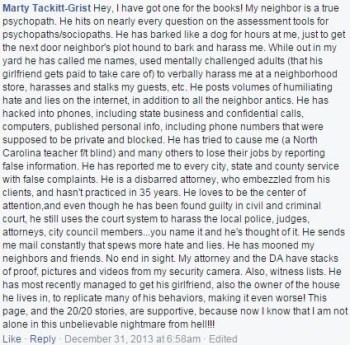
Even when false accusers’ claims are outlandish and over the top, like these posted on Facebook by North Carolinian Marty Tackitt-Grist, they’re rarely viewed with suspicion—and almost never if a court ruling (or rulings) in the accusers’ favor can be asserted. The man accused in this comment to ABC’s 20/20 is a retiree with three toy poodles and a passion for aviation who couldn’t “hack” firewood without pain, because his spine is deformed. He is a retired lawyer, but he wasn’t “disbarred” and hasn’t “embezzled” (or, for that matter, “mooned” anyone). He has, however, been jailed consequent to insistent and serial falsehoods from his patently disturbed neighbor…who’s a schoolteacher.

For Crazy, social media websites are an endless source of attention, self-promotion, self-aggrandizement, and a sophisticated weapon. Many narcissists, histrionics, borderlines, and other self-obsessed, abusive personality types use Facebook, Twitter, and the like to run smear campaigns, to make false allegations, to perpetrate parental alienation, and to stalk and harass their targets while simultaneously portraying themselves as the much maligned victim, superwoman, and/or mother of the year.

(A respondent to this blog who’s been relentlessly harried by lies for two years, who’s consequently homeless and penniless, and who’s taken flight to another state, recently reported that a woman who’d offered her aid suddenly and inexplicably defriended her on Facebook and shut her out without a word. Her “friend” had evidently been gotten to.)

(An advocate for legal reform who was falsely accused in court last year by her husband and succeeded in having the allegations against her dismissed reports that he afterwards circulated it around town that she tried to kill him.)

I was falsely accused in 2006 by a woman who had nightly hung around outside of my house for a season. She was married and concealed the fact. Then she lied to conceal the concealment and the behavior that motivated the concealment. She has sustained her fictions (and honed them) for nearly 10 years. People like this build tissues of lies, aptly and commonly called webs.

Their infrastructures are visible, but many strands may not be…and the spinners never stop spinning.

The personality types associated with chronic lying are often represented as serpentine, arachnoid, or vampiric. This ironically feeds into some false accusers’ delusions of potency. Instead of shaming them, it turns them on.

I know from corresponding with many others who’ve endured the same traumas I have that they’ve been induced to do the same thing I did: write to others to defend the truth and hope to gain an advocate to help them unsnarl a skein of falsehoods that propelled them face-first into a slough of despond. (Why people write, if clarification is needed, is because there is no other way to articulate what are often layered and “bizarre” frauds.)

I know with heart-wrenching certainty, also, that these others’ honest and plaintive missives have probably been received with exactly the same suspicion, contempt, and apprehension that mine were. It’s a hideous irony that attempts to dispel false accusations are typically perceived as confirmations of them, including by the court. To complain of being called a stalker, for example, is interpreted as an act of stalking. There’s a kind of awful beauty to the synergy of procedural abuse and lies. (Judges pat bullies on the head and send them home with smiles on their faces.)

Smear campaigns wrap up false accusations authorized by the court with a ribbon and a bow.

Copyright © 2015 RestrainingOrderAbuse.com

*The name Machiavelli, referenced in the title of this post, is associated with the use of any means necessary to obtain political dominion (i.e., power and control). Psychologists have adapted the name to characterize one aspect of a syzygy of virulent character traits called “The Dark Triad.”

Women Are Bigmouths: Why This Has Been Bad for People Who’ve Been Abused by the Court…but COULD Be Good

I grudgingly constructed a page this week on Facebook, which confirmed to me two things I already knew: (1) I really hate Facebook, and (2) women are more socially networked than men.
Calling women “bigmouths” isn’t strictly right, and people affronted by the assertion will insist women and men talk about the same amount, or that men talk more than women do.

Uh-huh.

Not impolite to observe is that women “collaborate” more than men do, that is, they sooner work in tandem, which is what statistics I gleaned from Facebook corroborate.

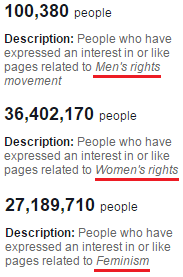
“Tell us about the people you’d most like to connect with,” Facebook urges when you piece together a page on its site. My entries under “Interests” brought up terms like Men’s rights movement, Feminism, and Women’s rights. Accompanying these topics were figures about how many others had expressed an interest in connecting with people who shared those interests.

See for yourself.

Notice that 200 to 400 times greater interest in bonding with people concerned with women’s rights has been shown than interest in bonding with people concerned with men’s rights. That’s a lot…A LOT a lot.

I don’t think there’s anyone who would deny that the fruits of feminism owe to social networking. Some of these fruits have been great; some really horrible. This blog concerns the rotten ones: a culture of victimhood and false accusation combined with the legislation of accelerated and derelict legal procedures presided over by judges bigoted by politics, bad practices (including engineered social science), and money.

Men have been the majority of victims, and they’ve been the only source of concentrated complaint, concentrated complaint that’s been mocked and muted. If we can assume the 200 to 400 times greater interest shown in women’s rights translates more or less proportionally to the number of people disinterested in or opposed to men’s beefs, then no wonder. Female influence, which is significantly feminist influence, is vastly predominant. The sympathy market has been cornered.

Men aren’t the only victims of procedural abuse, however.

Many if not most of the victims who comment on this blog are women, and they’re often desolate. Some live like hermits, some like refugees. They feel exiled and isolated.

The irony is this is exactly how women felt before the rise of feminism, and there’s a lesson to be taken from that.

Men’s struggles for a market share of sympathy face a phalanx of resistance and the priority of conditioned sentiment (prejudice); they’re also troubled by men’s lesser inclination to work collaboratively (the maverick mentality is a losing one). Women, however, can work from behind the lines. They can tap into the women’s rights network and harness its power.

And they should.

Copyright © 2015 RestrainingOrderAbuse.com

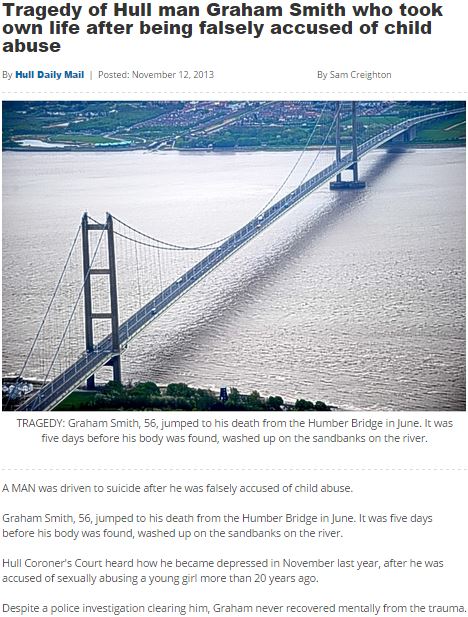
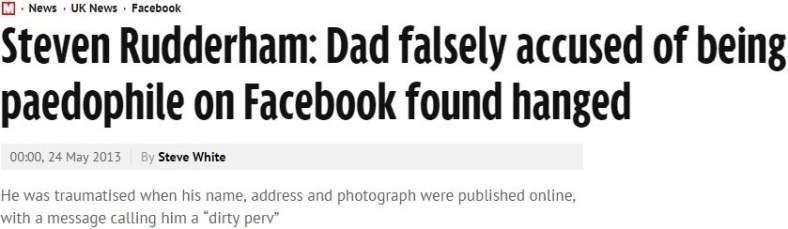
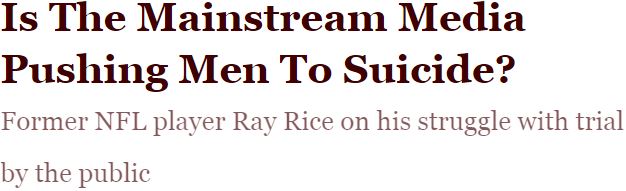
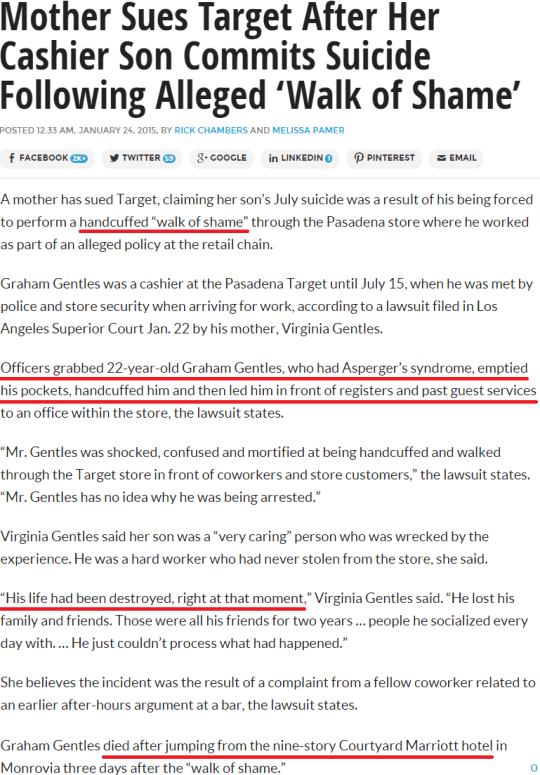
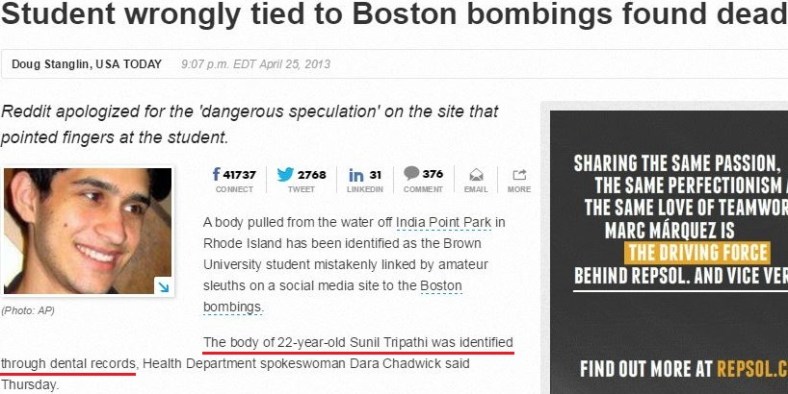
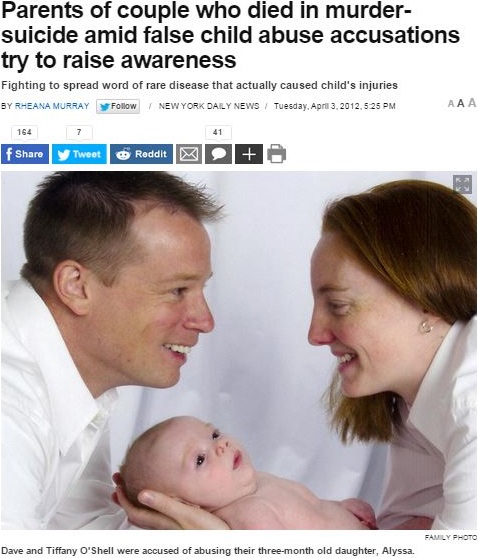
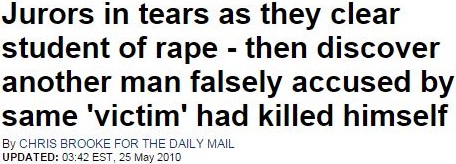
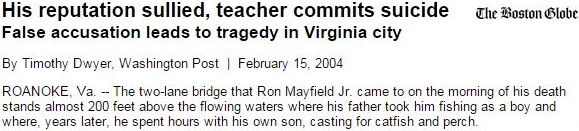
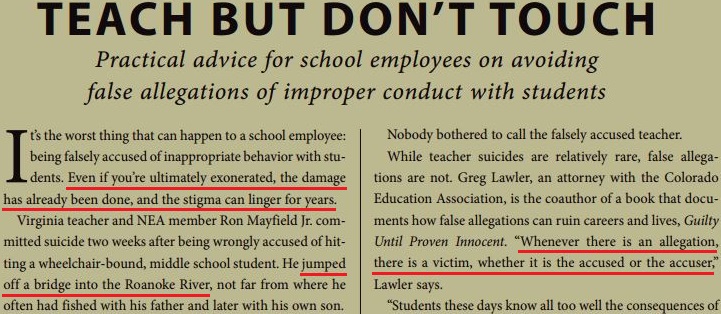
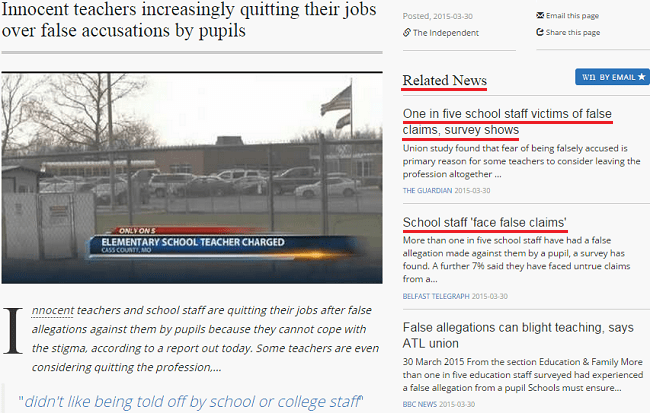
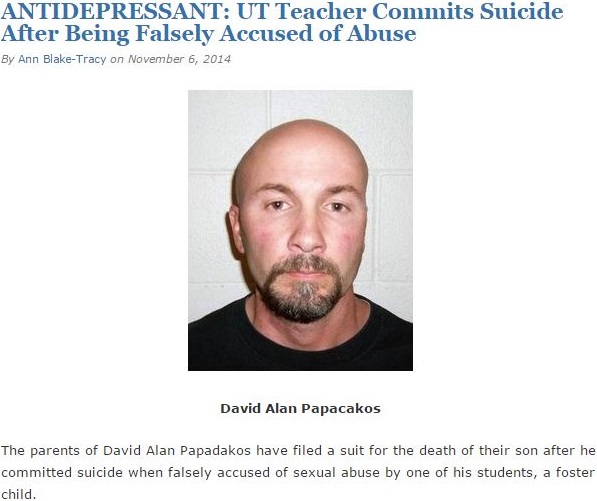
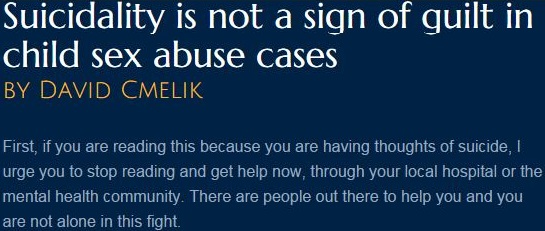
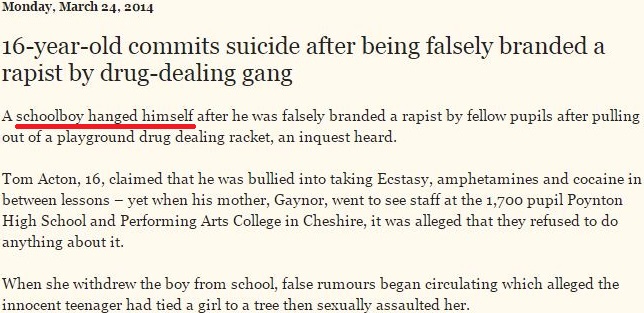
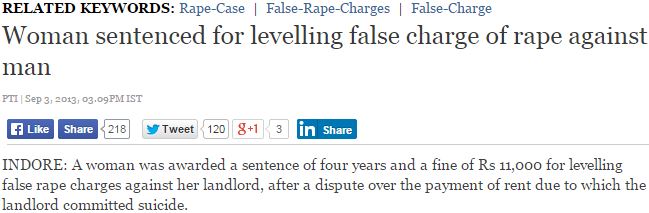
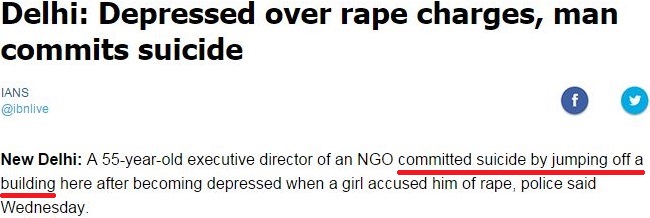
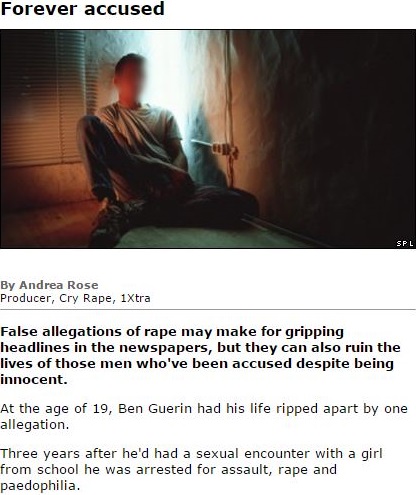
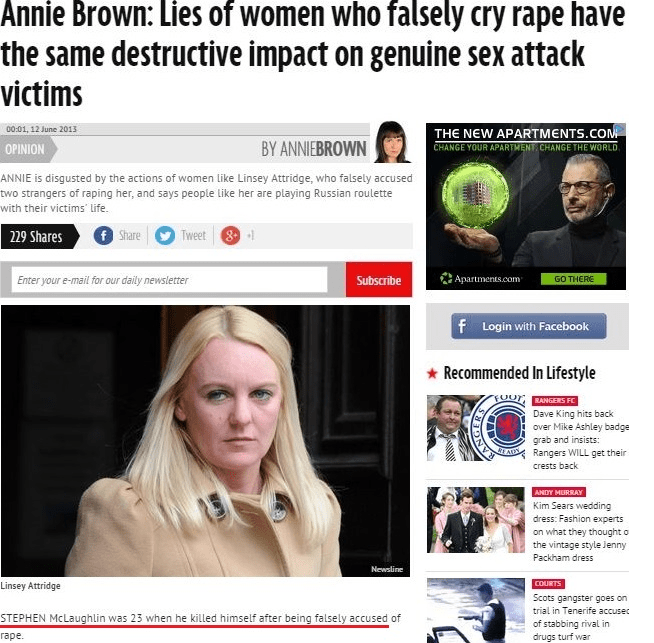
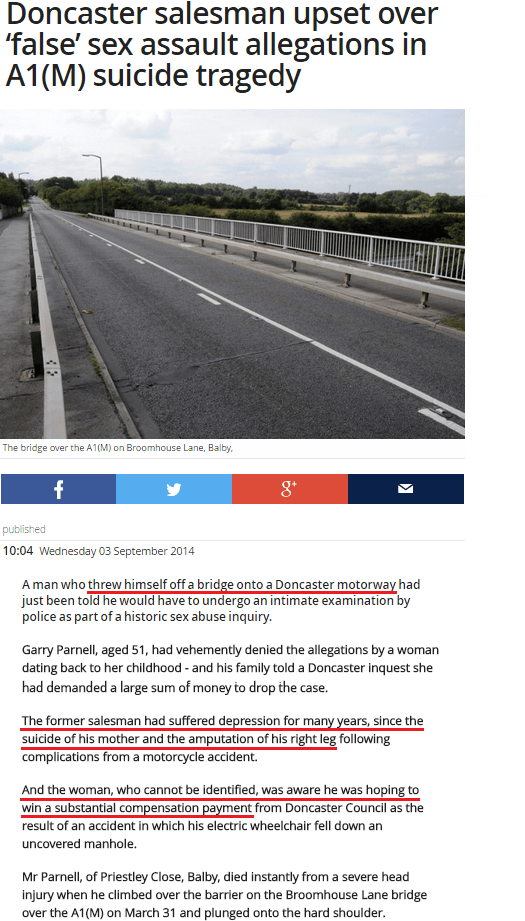
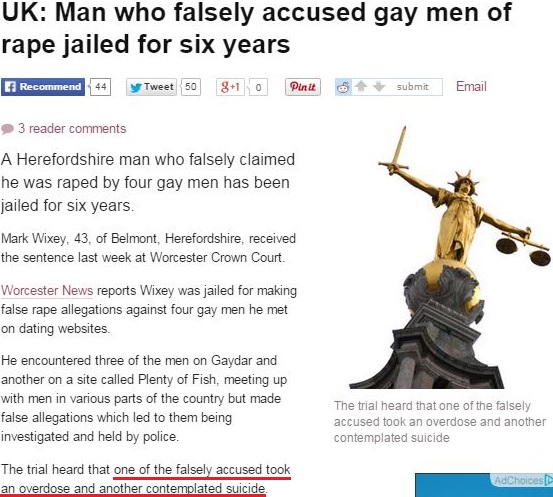
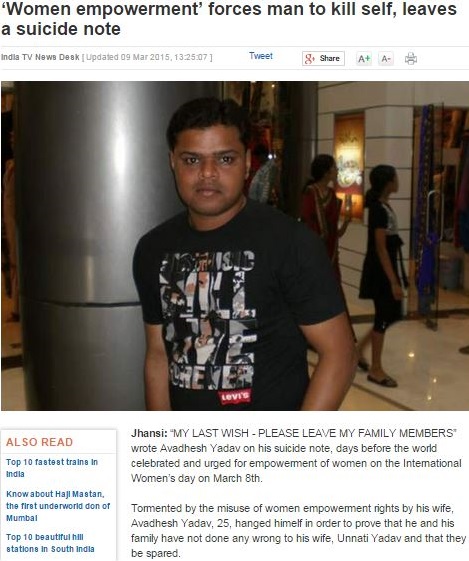
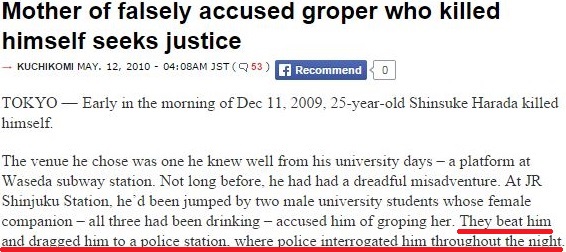
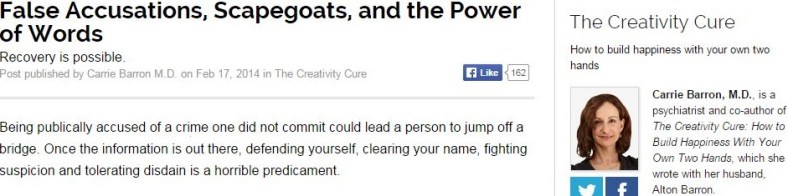
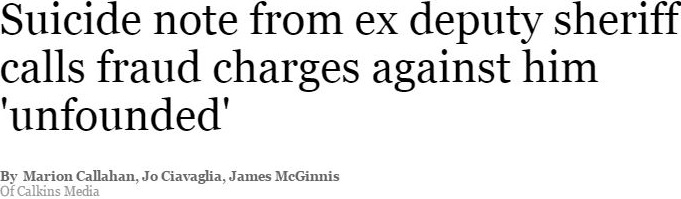
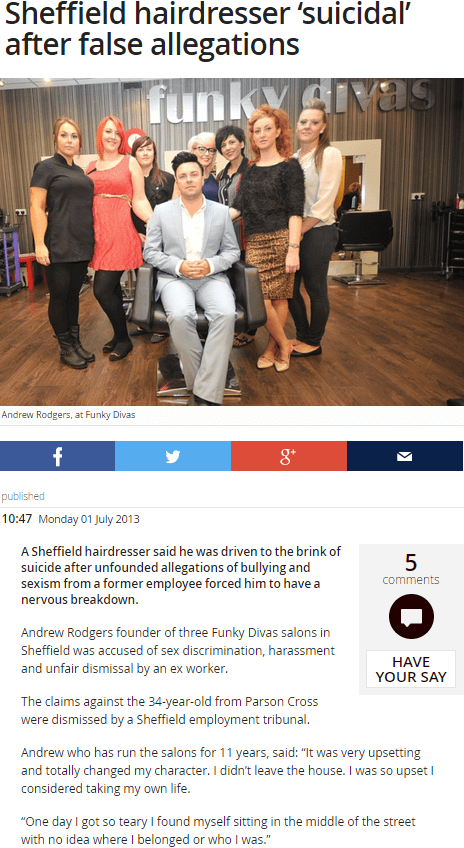
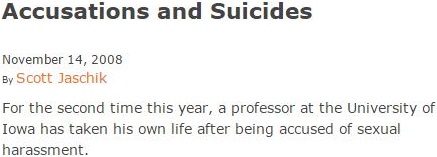
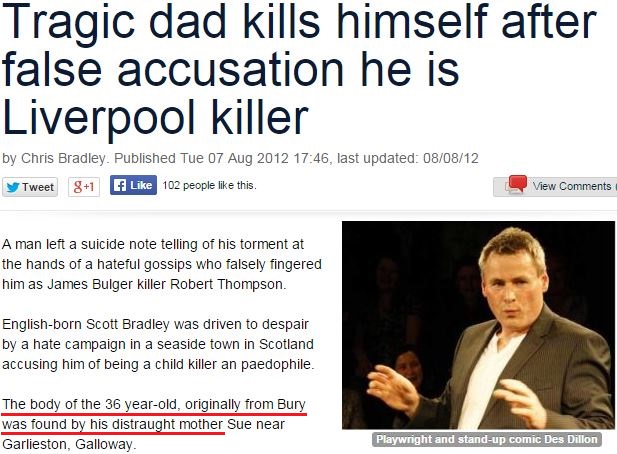
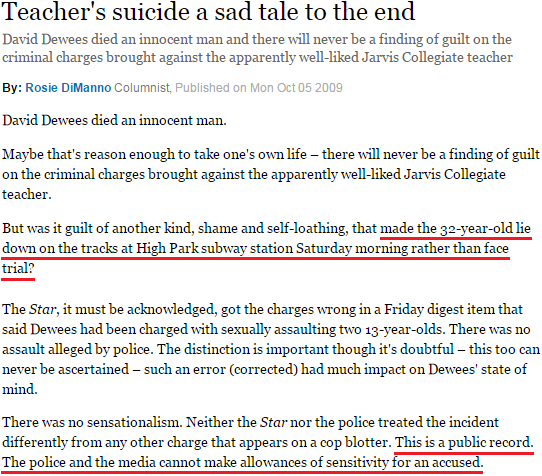
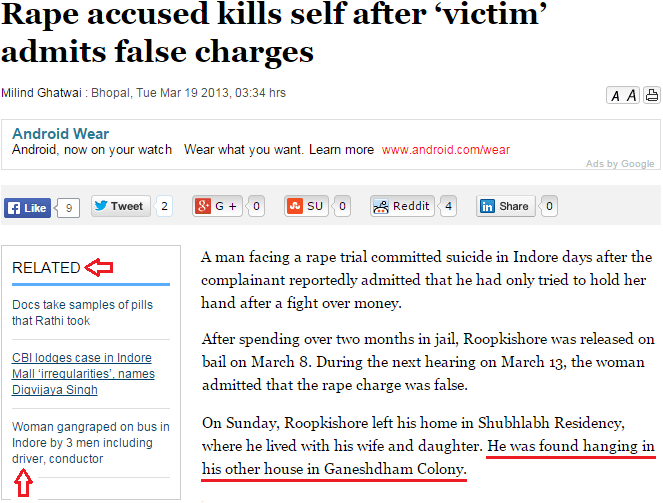
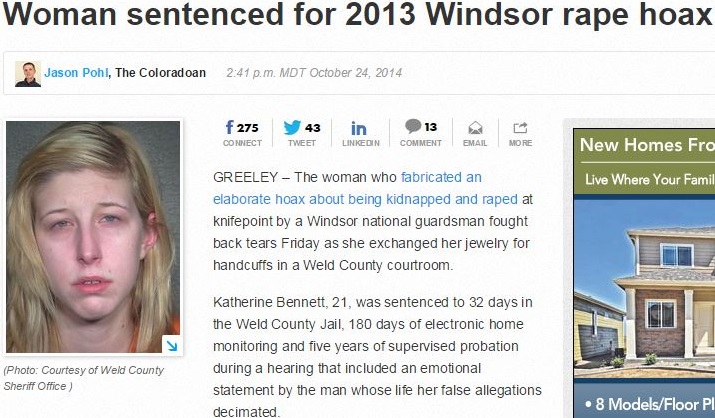
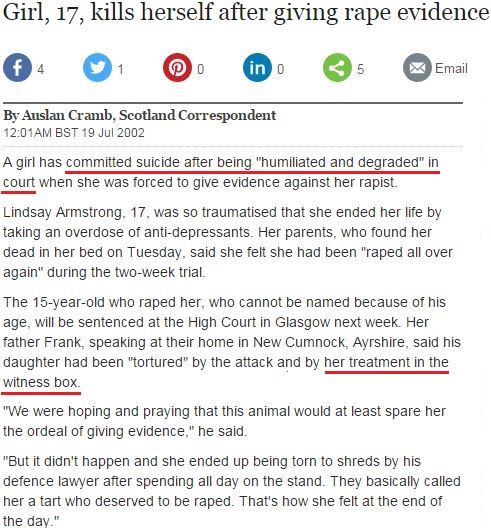
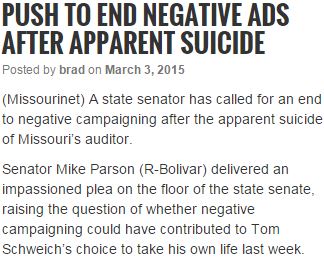
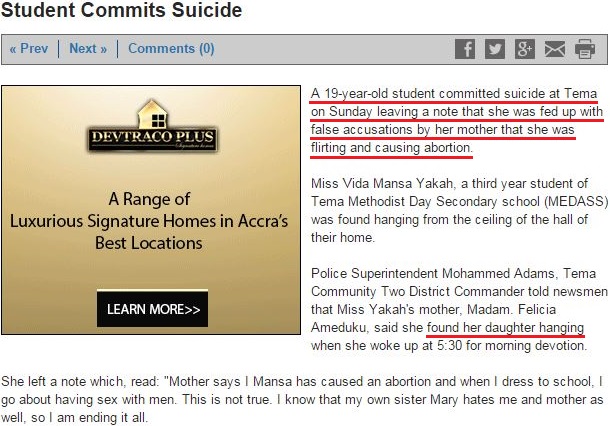
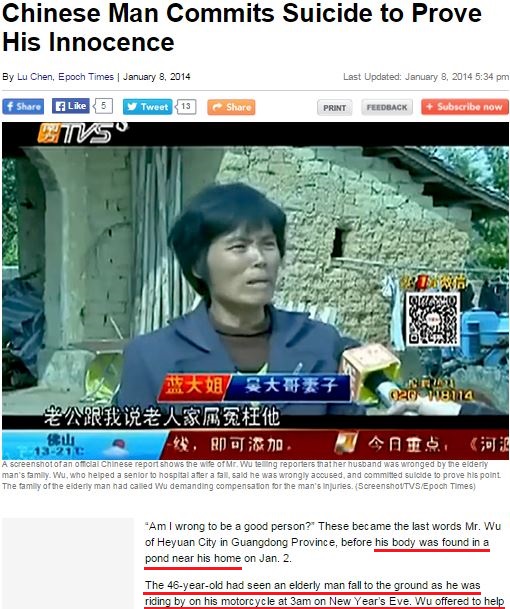
False Accusations and Suicide: Some Headlines about the Effects of Finger-Pointing and Legal Abuse (Culled for the Empathically Challenged)

Since the publication of this post, the one quoted above has been deleted.

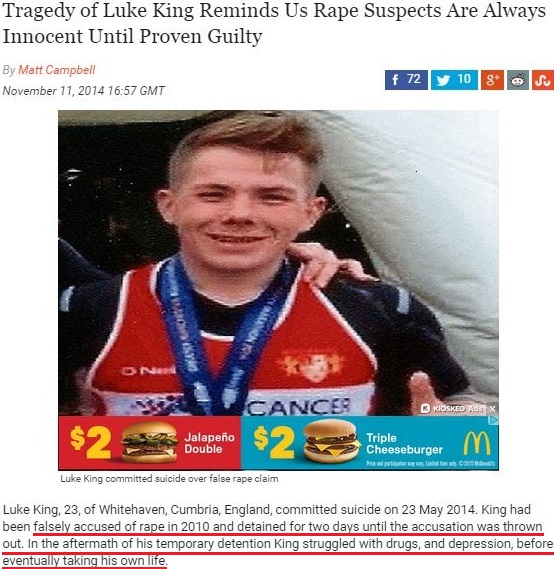
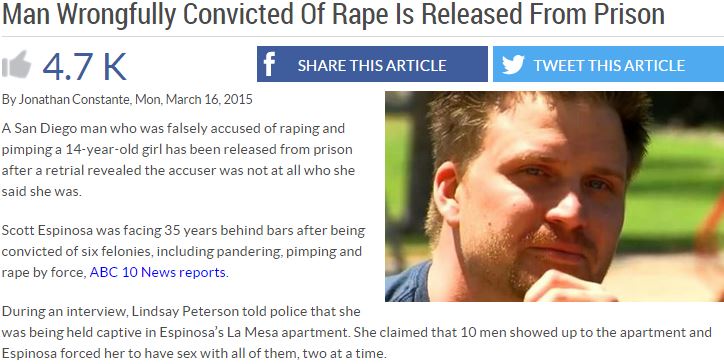
One of the stories highlighted below concerns a young man who was falsely labeled a rapist by some bullies at school. He hanged himself. He was 16. Another concerns a man who spent a year and a half in prison based on a false accusation of sexual assault (among other false accusations). While the man was behind bars, his mother killed herself, believing her son was a pimp and a rapist.

A word to the wise: Only ask a rhetorical question if you know the answer…and it favors your position.

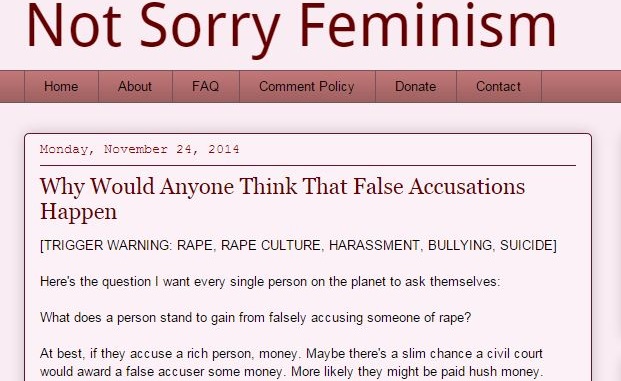
The question posed above by the zealous, young author of Not Sorry Feminism isn’t, of course, a question at all; it’s an indictment. She means how dare anyone think false accusations happen. What problematizes the writer’s rhetorical-question-cum-admonition is that it has a very obvious answer: The reason people think false accusations “happen” (so to speak) is that they do.

(It might alternatively be asserted that no one does believe false accusations “happen,” the same way no one believes rapes “happen.” Both are acts, and both have agents. If rape happens isn’t a construction a feminist could get behind, false accusations happen shouldn’t be, either. You’re a proponent of accountability, or you’re not.)

Worse than her question’s being problematic, because answerable, is that its answer isn’t one the writer wants to hear. Motives for false accusations, including of rape, are greed, malice, bullying, vengeance, jealousy, possessiveness, attention-seeking, mental illness, and cover-up, to name a few. They’re ugly, often petty, always destructive…and they can kill.

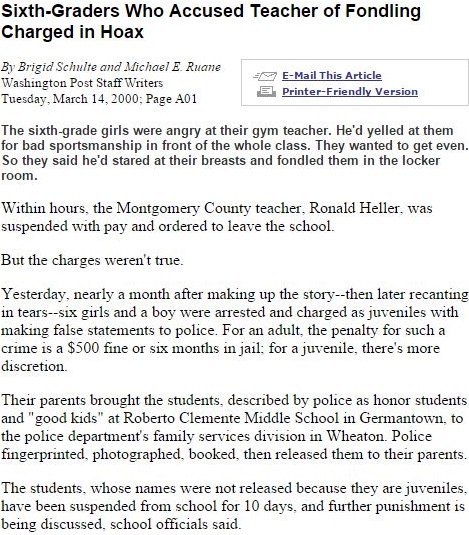
This post surveys examples of false allegations or deadly allegations or false and deadly allegations drawn from news stories. Here’s one such:

Unlike most of the rest, the first story glossed in this hastily cobbled digital scrapbook doesn’t include a suicide or references to suicide. It’s nevertheless a good starting point, because it’s old news.

The article’s from 15 years ago. Fifteen. Significantly, though, no half-hearted sleuth would find it a challenge today to turn up commentaries on the Internet, mostly from feminist writers like the one who introduces this post, that either (1) deny such a thing ever happens or (2) deny it’s a big deal when it does happen—and deny it’s a sign that a culture of false accusation exists and has for some time. (A story so uncannily similar as to be almost identical can be found here. It appeared in The Huffington Post less than 24 months ago.)

Consider: Where would six elementary school girls and a boy get the idea of framing their gym teacher as a molester, and where would they get the impression this conduct was okay (or “cool”) or that they’d get away with it and not face dire consequences? Should we believe the notion had no cultural influences and was purely a product of these honors students’ collective wicked imagination?

For accusing their teacher of groping them, the kids were suspended for 10 days. It’s likely the most traumatic part of their punishment was being detained by police and “fingerprinted, photographed, [and] booked.” Keep this thought in mind.

Keep this quotation in mind, too: “‘When they made the charge, that’s about 80 percent of the damage to your reputation right there,’ [attorney Paul F.] Kemp said. ‘Because even if you’re found innocent, people will assume you got off on a technicality. Or that there’s something there when there’s not.’”

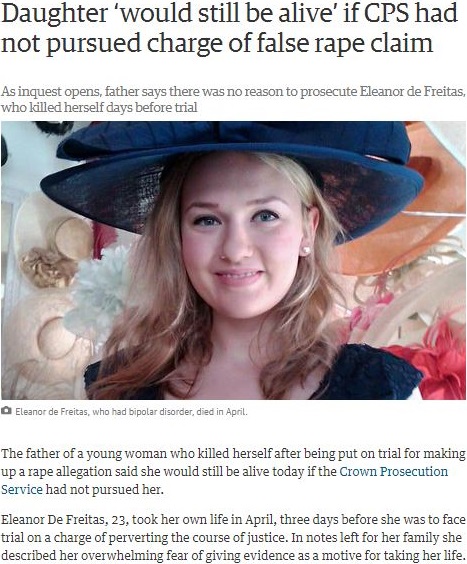
Editorial intrusions end here; the remainder of this post is a series of Internet clippings (linked to the “complete stories”) from which readers may draw their own conclusions about the motives and effects of accusation, bullying, and legal abuse. The author of this post would only point out before absenting himself that an accusation that may induce someone to kill him- or herself need not be of rape and that one of the suicides chronicled below is of a woman who faced being tried for falsely alleging she was sexually assaulted (“In notes left for her family, she described her overwhelming fear of giving evidence…”).

The common denominator is accusation and public scrutiny and judgment, not being accused of a particular act, per se. Zerlina Maxwell and her ilk are categorically wrong.

fale_accusations_destroy

nancy_grace_suit

dad_falsely_accused

murder_suicide

jurors_in_tears_full

reputation_sullied_full

suicidality

forever_accused

Sheffield_hairdresser

Chinese_man_commits_suicide

Copyright © 2015 RestrainingOrderAbuse.com

Judicial Impression Management: What Makes False Allegations “True” and True Allegations “False” (and Drives Victims of Procedural Abuses to Despair)

“Politics, corporate bullshit—it’s all the same game of impression management.”

House of Lies

What do political spin-doctoring, corporate PR, government-sponsored science, and judicial rulings have in common?

Each is about impression management, the selective representation of facts to create a composite “truth” that suits a particular set of social, political, and/or economic imperatives.

Pols and corporations engage in flimflam to win votes and increase profit shares. Science, too, seeks acclaim and profit, and judicial motives aren’t so different. Judges know what’s expected of them, and they know how to interpret information to satisfy expectations.

The general context of discussions on this blog is the issuance of restraining orders, an arena of law that receives little scrutiny either from within the system or from the public; there is no oversight. Judges are moreover licensed to rule according to their discretion, so their latitude for impression management is broad. Any set of facts or plausible fictions can be rendered damning with a little rhetorical footwork, which needn’t be subtle—skewed rulings more often suggest clog dancing than ballet.

Nobody’s paying attention anyhow, except to make sure judges are fulfilling their mandate to make government look good and keep special interest groups mollified.

Since judges can rule however they want, and since they know that very well, they don’t even have to lie, per se, just massage the facts a little. It’s all about which facts are emphasized and which facts are suppressed, how select facts are interpreted, and whether “fear” can be reasonably inferred from those interpretations. A restraining order ruling can only be construed as “wrong” if it can be demonstrated that it violated statutory law (or the source that that law must answer to: the Constitution). There are no “mistakes,” only the very exceptional “over-reach.”

The restraining order process is the product of lobbying by special interest groups (collectively called “feminism”), which have secured government favor in recent decades, and this favor has conditioned how judges manage impressions. Favoring special interest groups has translated into the investment of billions, which has directed trends in social science research (including monetarily), swayed public opinion, and besides conditioned police and judicial impulses and priorities, thereby determining how allegations ranging from harassment to violent and/or sexual assault are credited and acted upon by officers of the justice system.

A crude evolutionary précis (not necessarily chronological) might look something like this:

  • Feminism gets the nod;
  • legislation is passed enacting restraining orders;
  • further legislation is passed making them more stringent and punitive;
  • additional legislation is passed: domestic violence acts and statutes, stalking statutes, etc.;
  • the definition of “domestic violence” is broadened to be inclusive of almost anything that can be construed as “abusive” according to judicial discretion;
  • the Violence Against Women Act (VAWA) is passed;
  • a special office of the Justice Department is established;
  • billions of dollars of federal monies are doled out in the form of grants to police departments and the courts to beef up arrest policies and “train” judges and police officers how to interpret allegations of violence or merely “fear”;
  • and the popular press is enlisted, knowingly or not, to flak the whole business.

Impression management marks the standard operating procedure from top to bottom.

Feminism’s foot soldiers in the blogosphere and on social media, finally, spread the “good word,” and John and Jane Doe believe what they’re told—unless or until they’re torturously disabused of their illusions. Stories like those you’ll find here are often the stories of average people who’ve been publicly maligned and have maddeningly discovered that “the truth” is whatever the system chooses to enter into the record.
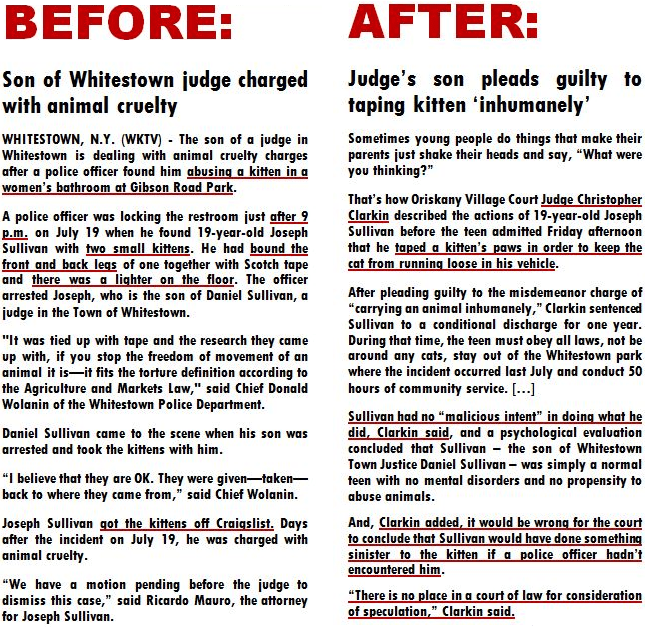
To conclude this abstract litany with a concrete illustration, consider these stories, published six months apart (“Son of Whitestown judge charged with animal cruelty” and “Judge’s son pleads guilty to taping kitten ‘inhumanely’”):

The difference you’ll detect between the two versions of the facts and how they’re interpreted exemplifies impression management.

Copyright © 2014 RestrainingOrderAbuse.com