How an Innocent Woman May Be Accused of Molestation, Rape, or Murder and Have to Live with It

Consider the following allegations:

“She has repeatedly exposed herself to me.”

“She told me on multiple occasions that if I wouldn’t have sex with her again she would tell the police I raped her.”

“She has stalked me since I met her. I’ve kept a dated log of all of the instances when she appeared someplace where I was. I’ve told her to leave me alone but she won’t. She says I’m her ‘destiny.’”

“She grabbed my crotch. When I pushed her hand away and ran, she laughed and called me a ‘pussy.’”

“I loaned her money. She told me if I asked for it back one more time, she and a friend of hers would hurt me. She bragged that they had killed someone before.”

“She has sent me panties covered with blood, urine, and feces. I threw them away because they were disgusting.”

“She showed me a knife and said that if I didn’t leave my girlfriend she would ‘cut her good.’”

“She said she wanted to drink my blood.”

An affidavit on a protective order application could include any or all of these statements and any number of others, including, say, alleged confessions of any act conceivable by the imagination of the accuser.

An affidavit, that is, a statement of facts alleged and sworn to be true, can usually be of any length and could include detailed descriptions of the accused’s anatomy, commentaries on his or her hygiene, and judgments of any variety, besides including an account of “what happened.”

There are no rules, and the court cannot retroactively censor what is effectively a complainant’s testimony.

Note that none of the accusations listed above could ever be ascertained as true or false, and a judge, accordingly, has no particular investment in “the truth.” His or her job, as prescribed by the law, is to decide whether the accuser is convincing.

An even cruder fact is that a judge may never read a complainant’s affidavit at all but simply ask for a verbal accounting, that’s if s/he does anything more than make sure the paperwork is filled out correctly. Once validated by a judge’s signature, unless contested and successfully quashed during a hearing that may be afforded 30 minutes on a judge’s docket, the order is a binding instrument of law and an indefinitely preserved public document that can be quoted or published.

Restraining orders are typically issued ex parte. That means based on the accuser’s say-so only. The accused may know nothing about it until a law enforcement officer or agent of the court appears at his or her door, possibly in the presence of friends, family, and/or neighbors.

The whole application and approval process may take from a few minutes to a few hours.

The latitude granted to judges in this arena of law is virtually boundless, as the politicking behind so-called “women’s law” intended it to be. A single statement from the list that heads this post, delivered persuasively enough, could suffice to make any number of allegations “stick” (whether relevant or not). Or repeated emphatic claims of terror and violation could. Or the testimony of a crony witness. Or a real or faked series of text messages or emails. Or a real or spoofed series of calls on a phone (which, if real, could have been about anything).

As Ralph Nader said, “Power has to be insecure to be responsive.” To judges, this business is just quotidian paper-shuffling, and they have no liability for their rulings, which are issued without oversight (including by judges who aren’t even judges but merely seasonal temps). Grounds for appeal, furthermore, are almost none (and “lying” is not among the few).

A reasonable person would conclude that anyone who supported laws that would allow a woman to be falsely accused of molestation, rape, or murder would have to be a monster.

The left-leaning feminist humanists and self-styled social justice advocates who do militantly support these laws emphasize their virtue: bringing relief to women in abusive relationships. This is somewhat like explaining communism’s goal is the protection of the working class citizen—while ignoring that tens of millions of working class citizens have been killed in the name of an idealistic social experiment.

Perhaps social justice crusaders who promote “women’s law” would say they’ve only ever meant for it to treat men monstrously.

Copyright © 2022 RestrainingOrderAbuse.com

*In civil lawsuits that aren’t filed for free, as restraining order applications usually are, a defendant could move the court to strike inflammatory statements that weren’t relevant and that could only serve to damage (his or) her reputation and, for example, professional standing (and health, security, interpersonal relationships, etc.). Whether this would fare any chance of success in drive-thru procedures conceived to permanently document misdeeds is less than iffy. (It would require redacting, or “blacking out,” parts of the original order, which is contrary to its purpose.)

L’Oreal Stepney Vanishes!: On How Legal Abuse Hides and Legal Abusers Hide

L'Oreal Stepney, Loreal Stepney, L'Oreal Stepney TCEQ, Loreal Stepney TCEQ, L'Oreal Stepney PE, Loreal Stepney PE, TCEQ, Texas Commission on Environmental Quality, Toby Baker, Greg Abbott, Gov Greg Abbott

Has L’Oreal Stepney, a Texas Commission on Environmental Quality deputy director and the subject of a recent post on this site (here represented as a children’s entertainer), gone off and joined the circus? This post will use the disappearance of images of her from the first page of Google’s returns to exemplify how legal abuse is concealed.

Since a series of malicious prosecutions against this writer terminated in 2018 and his First Amendment rights were “restored” by a court system that never had the authority to deny them in the first place, he has endeavored to expose wrongdoing—in a majority of cases by government officials who enjoy the public’s trust undeservedly—while at the same time demonstrating to others who have endured abuses similar to those the writer has that they have the constitutionally guaranteed liberty to voice complaint.

Not meekly, not anonymously, not in prose sanitized of names and dates and allegations but pointedly and graphically. Criticism is protected speech, and it doesn’t have to be polite.

In the name of “social justice,” procedures of law that enable any adult, citizen or not, to stroll into a courthouse and upend other people’s lives according to nothing more than their own say-so have been allowed to stand for decades.  Lying is not only tolerated in court; it’s standard operating procedure, especially in civil court, which is a procedural backwater with zero accountability. The processes and how they’re conducted are farcical, which translates to cruel and indecent.

Here are a few ways, for example, that protective orders may be employed:

The gamut of abuses is only limited by accusers’ imaginations and lack of scruples.

One successful prosecution (total investiture: less than two hours’ time and sometimes mere minutes) can moreover open the door to serial mischief, including violation of constitutional rights and liberties. In the writer’s case, past false but prejudicial claims were used to deny him the freedom to speak, including by “word of mouth,” about his own travails in court. For five years. And he’s hardly alone (see for instance the case here or that of Bruce Aristeo, who remains subject to one of the most draconian speech injunctions the writer has ever seen).

The order that forbid the writer from discussing even matters of public record was eventually dissolved (after more strenuous exertions than any outsider could possibly comprehend).

So what do scofflaws do when the court is no longer willing to abet them? They get creative (or desperate, depending on your perspective).

The woman named in the title of this post, L’Oreal Stepney, has done nothing to injure the writer directly. He has merely pointed out that in her capacity as a representative of the Texas Commission of Environmental Quality, which has injured the writer directly, she falsely reported that the TCEQ doesn’t engage in censorship. Her role in anything concerning the writer was tangential only. Still, what he has reported is potentially embarrassing to her. So—

Here is the carousel of images that pop up when Google is queried with the search terms L’Oreal Stepney.

In recent weeks, this carousel hasn’t appeared on the first page of Google’s returns, as such image strips typically do when names are queried. As of this writing, it’s deep on page 2. The same is true of other TCEQ administrators the writer has criticized, Michael Honeycutt, its director of toxicology, and Stephanie Bergeron Perdue, its deputy executive director: The carousels for them disappear from the first page of Google’s returns, or they regularly plummet to the bottom.

It’s common knowledge that most people only pay attention to what emerges on page 1. I don’t know what specific underhand methods are used to accomplish this end, but this is how the game of politics works.

You don’t make wrongs right; you cover your butt.

Copyright © 2020 RestrainingOrderAbuse.com

*The writer believes the suspected agent of this suspected conduct, a disturbed woman named Tiffany Bredfeldt, currently or formerly an employee of the TCEQ, who appears to have been dumped by her husband a couple of years ago, makes search engine manipulation a dedicated part of her everyday routine since duping the court for over a decade.

Disregarded Reality Checks to VAWA: Highlighting the Efforts of Family Law Attorney Lisa Scott

“Congressional sources have revealed some significant changes will be made to federal domestic violence laws. Bowing to pressure from men’s rights groups who for years have claimed that the Federal Violence Against Women Act (VAWA) is biased against men, congressional leaders will soon announce a revamping of this legislation.

“In recognition of the fact that there may be a few men out there who get beaten up by their wives but are too ashamed to admit it, the Violence Against Women Act (VAWA) will be renamed the Violence Against Women and Wimps and Wussies Act (VAWAWAWA).”

—“VAWAWAWA: Federal Law Finally Catches Up with Reality

That’s Lisa Scott, a Bellevue, Washington, family attorney who knows a whole lot more than almost anyone about the reality of domestic conflict, satirically poking defenders of the Violence Against Women Act (as biased an act of legislation as has ever been conceived) squarely in the eye.

The Violence Against Women Act, or VAWA, which demonizes men, takes as granted that they’re always the villains and could never be victims themselves.

Ms. Scott is one of those rare, intrepid women of parts and integrity—see also Cathy Young, Christina Hoff Sommers, Wendy McElroy, and Phyllis Schlafly, among a few select others—who made a determined effort to temper the iniquity of “women’s law” in the years before the most recent decade or so, during which light has been smothered by heat and noise (or what might be called “Tweat”).

Victims of VAWA, who were powerless to begin with against a billion-dollar federal juggernaut flanked by thousands of media-savvy minions, have today been marginalized by the #MeToo movement to the point of invisibility.

This post, which is meant as an homage to writing Ms. Scott did between 2001 and 2011, endeavors only to highlight her perspectives, if not simply because they’re right then for those who will appreciate them.

They are no less current today than when they were first published.

Copyright © 2020 RestrainingOrderAbuse.com

*For more on male suicide: “First Amendment Rights from Beyond the Grave: Defense of a Suicide’s Publication of His Final Words by the Randazza Legal Group”; “False Accusations and Suicide: Some Headlines about the Effects of Finger-Pointing and Legal Abuse (Culled for the Empathically Challenged)”; Wendy McElroy (Fox News, 2002); Prof. Augustine J. Kposowa, Ph.D. (Journal of Epidemiology & Community Health, 2000); Dan Bilsker, Ph.D., and Jennifer White, Ed.D. (BC Medical Journal, 2011); Christie Blatchford (National Post, 2017); Suzette Reynoso (Eyewitness News, 2017); Lindsay Holmes and Anna Almendrala (Huffington Post, 2016).

Women Are Bigmouths: Why This Has Been Bad for People Who’ve Been Abused by the Court…but COULD Be Good

I grudgingly constructed a page this week on Facebook, which confirmed to me two things I already knew: (1) I really hate Facebook, and (2) women are more socially networked than men.

Calling women “bigmouths” isn’t strictly right, and people affronted by the assertion will insist women and men talk about the same amount, or that men talk more than women do.

Uh-huh.

Not impolite to observe is that women “collaborate” more than men do, that is, they sooner work in tandem, which is what statistics I gleaned from Facebook corroborate.

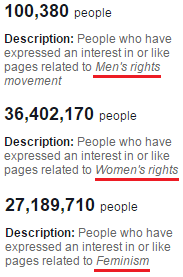
“Tell us about the people you’d most like to connect with,” Facebook urges when you piece together a page on its site. My entries under “Interests” brought up terms like Men’s rights movement, Feminism, and Women’s rights. Accompanying these topics were figures about how many others had expressed an interest in connecting with people who shared those interests.

See for yourself.

Notice that 200 to 400 times greater interest in bonding with people concerned with women’s rights has been shown than interest in bonding with people concerned with men’s rights. That’s a lot…A LOT a lot.

I don’t think there’s anyone who would deny that the fruits of feminism owe to social networking. Some of these fruits have been great; some really horrible. This blog concerns the rotten ones: a culture of victimhood and false accusation combined with the legislation of accelerated and derelict legal procedures presided over by judges bigoted by politics, bad practices (including engineered social science), and money.

Men have been the majority of victims, and they’ve been the only source of concentrated complaint, concentrated complaint that’s been mocked and muted. If we can assume the 200 to 400 times greater interest shown in women’s rights translates more or less proportionally to the number of people disinterested in or opposed to men’s beefs, then no wonder. Female influence, which is significantly feminist influence, is vastly predominant. The sympathy market has been cornered.

Men aren’t the only victims of procedural abuse, however.

Many if not most of the victims who comment on this blog are women, and they’re often desolate. Some live like hermits, some like refugees. They feel exiled and isolated.

The irony is this is exactly how women felt before the rise of feminism, and there’s a lesson to be taken from that.

Men’s struggles for a market share of sympathy face a phalanx of resistance and the priority of conditioned sentiment (prejudice); they’re also troubled by men’s lesser inclination to work collaboratively (the maverick mentality is a losing one). Women, however, can work from behind the lines. They can tap into the women’s rights network and harness its power.

And they should.

Copyright © 2015 RestrainingOrderAbuse.com

Further Reflections on MSNBC’s Coverage of the First Annual International Conference on Men’s Issues

Rereading MSNBC’s article on the first annual International Conference on Men’s Issues, I have to marvel that so firmly has feminism taken hold that even reporters (whose watchword is objectivity) may respond with Pavlovian menace to an act of civil disobedience—which challenging feminism is.

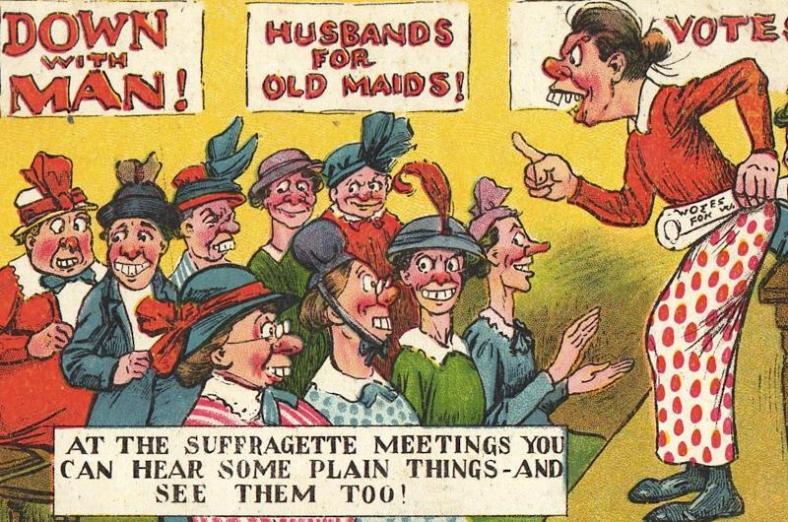
Consider that feminism originates with the 19th-century suffrage movement, that is, with some ragtag groups of women banding together to oppose second-class citizenship and demand the right to vote. Consider, too, that reactions to their early rallies to assert their rights presaged those of the MSNBC reporter who wrote about last month’s men’s conference.

His rhetorical strategies (which, like an apt pupil—or myrmidon—he lifts straight from the feminist playbook) were these:

  • Underrepresent the opposition. The MSNBC piece is surmounted by a photograph (snapped and cropped by the writer) showing a sparsely populated conference room. Some 16 people are visible if you count the odd pair of hands or feet poking into the frame. Though in a passing nod to journalistic accuracy the writer later reports attendees numbered “more than 100,” the first impression the reader is clearly meant to draw is “handful of nutters.”
  • Distort and caricature. Quotations featured in the piece were plainly culled for sensationalist impact. Commentary—for example on the phrase equity feminists, coined by a female feminist philosopher whose acumen is redoubtable—was confidently careless and pandering.
  • Distract. “The conference comes amid increased focus on women’s rights,” the writer observes saliently. Later he quotes a feminist post-grad as saying, “[D]ue to concerns for physical safety, we have decided the best way to oppose the conference that is now going on…is to keep our distance.” The source of fear was unspecified.
  • Ridicule. Pick a paragraph, any paragraph.

Attacks on the efforts of the early suffragists to have their grievances answered were…right, exactly the same.

Copyright © 2014 RestrainingOrderAbuse.com

Confusing Women’s Rights with Feminism: Some Observations on MSNBC’s Coverage of the First Annual International Conference on Men’s Issues

Apparently the first annual International Conference on Men’s Issues was held in Michigan recently. I read this fact on the MSNBC website in an article that disdained even to capitalize the title of the conference and which, for more reasons than just that one, reminded me of the days when I edited my high school paper.

My journalism adviser would’ve given the piece a C, among other reasons because it seems uncertain whether it wants to be a news story or an editorial—or an advertisement for its writer’s Twitter feed.

Its introduction, at least, was gripping to read: “At what was billed as the first annual international conference on men’s issues, feminists were ruining everything.” I was keen to hear about how the meeting was disrupted by a mob of angry women swinging truncheons.

I’ve come to expect disappointment, which expectation the reporter continued to cement over an ensuing two dozen paragraphs.

Not having attended the conference, I can’t say whether the reporter’s characterization of its presenters’ arguments as cranky is fair or not. Remarking that he failed to probe any of the topics he glosses in the article, however, does seem fair. A reporter’s job is to ask questions, not assemble a boa of plucked horsefeathers and hyperlinks.

I’m sympathetic to men’s plaints about legal mockeries that trash lives, including those of children, so I found the MSNBC coverage offensively yellow-tinged in more senses than one, but I’m not what feminists call an MRA or “men’s rights activist.” I don’t think men need any rights the Constitution doesn’t already promise them. What they need is for their government to recognize and honor those rights. The objection to feminism is that it has induced the state to act in wanton violation of citizens’ civil entitlements—not just men’s, but women’s, too.

On this subject, something useful the referenced MSNBC article does accomplish is reveal its writer’s unexamined presupposition that women’s rights and what feminists advocate for are the same thing. Probably many women are under the same illusion.

It’s understandable. Feminism still waves the same banner its pioneers sewed decades ago on which is blazoned that rainbow word EQUALITY. Today’s mainstream feminists, however, have redefined that word to mean “whatever’s best for us,” which doesn’t always mean what’s best for women.

To illustrate, take the 60-year-old woman who wrote last year to relate that she was expelled from the home she’d shared for 10 years with her invalid mother and terminally ill brother, whom she nursed, by her sister. The latter spitefully lied about her to the court—possibly because she was the executor of her mother’s will—and then destroyed her belongings, including her clothes and family memorabilia (photos, videos, etc.—a lifetime’s worth) when it was mandated that she vacate her residence. Her sister’s malicious testimony was rendered in a few minutes without the woman’s even being present. Though the fraudulent restraining order it succeeded in having issued was tossed on appeal, the woman’s record was sufficiently corrupted to cost her her job at a bank and the income and medical benefits it provided. When I last heard from her, she was living out of her car and trying to stay warm.

Or take the naïve girl who was lured away from her family, knocked up, and deserted by a twice-divorced pastor’s son. When the girl appealed to him to take an interest nine months later and moved to Virginia with her newborn on assurances from him that he’d found Jesus and wanted to do right by her, he and his family represented her as a hysteric to the court and, when last I got a status update, were in the process of seeking custody of her baby (cf. Charlotte Perkins Gilman’s “The Yellow Wallpaper”).

These aren’t merely people who “believe” they’ve been treated unfairly; these are women who’ve been used viciously and rolled into the gutter.

Women I’ve corresponded with in the three years I’ve maintained this blog have reported being stripped of their dignity and good repute, their livelihoods, their homes and possessions, and even their children according to prejudicial laws and court processes that are feminist handiworks. These laws and processes favor plaintiffs, who are typically women, so their prejudices are favored by feminists. Feminists decry inequality when it’s non-advantageous. They’re otherwise cool with it. What’s more, when victims of the cause’s interests are women, those victims are just as indifferently shrugged off—as “casualties of war,” perhaps.

I don’t know that feminists are “ruining everything,” but I do know that among the fruits of their industry has been ruining a lot of people’s lives.

Copyright © 2014 RestrainingOrderAbuse.com

False Restraining Orders That Allege Emotional Abuse ARE Emotional Abuse

A theme that emerges upon consideration of restraining order abuse is lack of empathy—from impulsive or false accusers and from those who abet them. Plaintiffs who act either spitefully or viciously seldom appreciate the ramifications of their actions. They may possess what we call a normal conscience but either don’t think or, in the heat of the moment, don’t care.

The horror is that this same indifference extends not only to authorities and officers of the court but to feminist advocates for restraining orders and the public at large, who are persuaded that the gravity of violence against women trivializes all other considerations. Their indifference may in fact be unconsciousness, but when people’s livelihoods and lives are at stake, unconsciousness is no more pardonable.

It’s ironic that the focus of those who should be most sensitized to injustice is so narrow. Ironic, moreover, is that “emotional abuse” is frequently a component of state definitions of domestic violence. The state recognizes the harm of emotional violence done in the home but conveniently regards the same conduct as harmless when it uses the state as its instrument.

From “Are You a Victim of Emotional Abuse?” by Cathy Meyer:

Emotional abuse is used to control, degrade, humiliate, and punish a spouse. While emotional abuse differs from physical abuse, the end result is the same….

Note the writer’s conclusion that emotional abuse is equivalent to violence in its effects.

Her orientation, of course, is toward victims of domestic violence, but her judgment is just as applicable to false allegations, whose intent is to “control, degrade, humiliate, and punish.”

Plainly the motive of most reasonable feminist arguments and appeals, at least as that motive is understood by those making them, is to induce empathic understanding. They want people to care.

Here’s yet another irony. Too often the perspectives of those who decry injustices are partisan. Feminists themselves are liable to see only one side.

“But my side’s more important” isn’t a rebuttal but a confirmation of chauvinism.

In the explication quoted above, the writer compares the conduct of emotional abusers to that of prison guards toward prisoners of war, who use psychological torment to achieve compliance from their wards. Consider that victims of false allegations may literally be imprisoned.

Consider further some of the tactics that Ms. Meyer identifies as emotionally abusive:

  • Isolating a spouse from friends and family.
  • Discourag[ing] any independent activities such as work; taking classes or activities with friends.
  • If the spouse does not give into the control, they are threatened, harassed, punished, and intimidated by the abuser.
  • Us[ing] the children to gain control by undermining the other parent’s authority or threatening to leave and take the children.
  • Control[ling] all the financial decisions, refus[ing] to listen to their partner’s opinion, withhold[ing] important financial information and mak[ing] their spouse live on limited resources.
  • Mak[ing] all major decisions such as where to live, how to furnish the home, and what type of automobile to drive.

Now consider the motives of false allegations and their certain and potential effects: isolation, termination of employment and impediment to or negation of employability, inaccessibility to children (who are used as leverage), and being forced to live on limited means (while possibly being required under threat of punishment to provide spousal and child support) and perhaps being left with no home to furnish or automobile to drive at all.

The correspondence is obvious…if you’re looking for it. Opponents of emotional abuse need to recognize it in all of its manifestations, because the expectation of empathy is only justified if it’s reciprocated.

Copyright © 2014 RestrainingOrderAbuse.com

WomensLaw: A Domain Name That Says All You Need to Know about Where Restraining Order Reform Needs to Start

The biggest challenge to sensitizing people to abusive restraining order policies that are readily and pervasively exploited by malicious litigants can be summed up in a single word: sex.

Women, who are often victims of abuse of court process, don’t want to implicate women in their injuries; they want to blame their false accusers, who are frequently men. Appreciate that this urge to blame men is the reason why restraining orders as processes of law exist in the first place.

Appreciate also that men aren’t the force behind the perpetuation of the status quo, and pointing fingers in their direction isn’t going to change that fact.

In the last month, I’ve sifted the Internet to discover what types of restraining order are available where and how to undo their misapplication. The most thorough source of information on restraining orders offered by the various states that I’ve found—and one I’ve repeatedly returned to—is WomensLaw.org.

It’ll tell you everything you ever wanted to know about restraining orders in your neck of the woods. Its domain name will also remind you why restraining orders exist and what they signify (there is no MensLaw.org).

After decades of rampant abuse’s being tolerated and with restraining orders’ having become a familiar institution, men have hopped onto the abuse industry bandwagon, and their malicious exploitation of restraining orders will probably continue to escalate with the passage of time.

The authorship of restraining orders, however, is by women, for women. Anyone with an interest in social justice or in reforming a handily abused process that fractures families and derails lives every day must acknowledge this fact and resist the reflex to divert blame from where it’s due.

The women who advocate for restraining orders don’t necessarily understand that they’re abused, why they’re abused, how they’re abused, or what the consequences of their abuse are. And they’re not going to take men’s word for it.

Copyright © 2014 RestrainingOrderAbuse.com

“Redeeming Feminism”: Making It about Equality and Not Victimhood

Since the publication of this post, the feminist blog it cites and criticizes has been made private.


When criticizing injustices wrought by prejudicial, feminist-motivated laws and court procedures like the restraining order process, restraint isn’t easy to pull off.

It’s nevertheless worthy of striving for, because the gender divide that fosters the perpetuation of these prejudicial laws and procedures needs to be bridged—for the sake not just of their male victims but of their female victims, too.

I came across a blog yesterday titled, Redeeming Feminism. It arrested my attention, because its banner reads, “Equality of rights under the law shall not be denied or abridged by the United States or by any state on account of sex.”
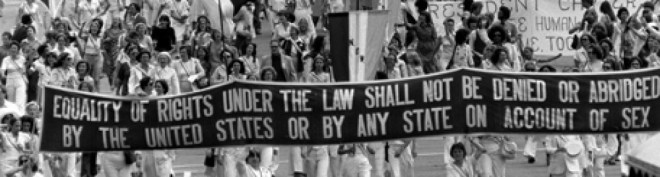
The dramatic irony is lost on the blog’s author, but this is, of course, the argument against feminism, whose “second wave” has done at least as much to promote and enforce sexual bigotry as it has to eliminate it. (First-wave feminists, who sought to dissolve gender discrimination instead of cement it, were those who pushed for the 1972 Equal Rights Amendment from which the quotation above derives.)

Some feminists categorically can’t be reasoned with. They’re the equivalents of high-conflict courtroom litigants who reason with their feelings. But I don’t get the impression that the author of this blog is one such, and I think there are many self-styled feminists like her out there. She seems very much in earnest and without spiteful motive. Her intentions are well-meaning.

To judge from the wattage of her smile in the photograph of her on her blog, however, she’s never been stalked by someone only to have that person publicly and persuasively accuse her of stalking, or had it falsely suggested to authorities and the courts, for example, that she’s violent or a danger to children.

To quote a falsely accused woman I’ve corresponded with for the past six months, a professional nurse and mother of three who’s been through years of hell, that sort of thing “changes a person on a cellular level.” Had the blog author been subjected to what my correspondent has been—or what most of the respondents to this blog and to other blogs and petitions it links to have been—her smile would be considerably more muted (which would be a shame, because it’s a good smile).

This is the shortcoming of most vigorous feminist advocacy out there: It tends to see only what it was looking for in the first place. Its argumentation is based in the abstract. I wouldn’t wish the real on anyone, but before taking up arms, advocates of one position or another have a moral obligation to look up, down, and sideways.

The post on the referenced blog that I read is called, “Anti-Feminist Memes pt.3: ‘Domestic abuse, Men are the real victims’.” It rebuts the rhetorical strategies of counter-feminist “memes” on the Internet.

This is a meme.

This type of meme is extremely popular. In looking for memes to write about for this blog project, this theme was one of the most prevalent. Memes like these send a lot of messages simultaneously. First, they suggest that feminism is rooted in hypocrisy. They want us to assume that feminists not only support negative gender restrictions on men, but that they also encourage policy that will oppress men. A lot of these memes have phrases in them like “according to feminists,” “feminists believe,” and “feminist logic.” It’s not enough for these memes to suggest that men are oppressed more than women claim to be, the meme must also suggest that feminism causes and supports violence against men, with the aim of total male oppression.

Her criticisms, though spirited, lack balance. The “memes” she refers to don’t actually “suggest feminism is rooted in hypocrisy” (though this is certainly true of today’s feminism) or posit that “men are oppressed more than women,” nor do they appear to want anyone to “assume” anything. What they do is point out and denounce a double standard, which is an endeavor every true feminist should commend. The author of the blog doesn’t address the double standard; she takes a defensive tack and asserts that women are victims of violence and that such “memes” insensitively ignore this urgent fact.

This line of (emotional) reasoning basically says never mind if there is a double standard, because women are victims. It’s a logical bait-and-switch—and one that betrays unawareness that women are also injured by the same double standard.

meme2

These, too, are memes.

Laws that have arisen and been fortified in the last three decades in response to demands for the curtailment of violence against women are applied unequally and unfairly (which is another way of saying they disregard the most basic tenets of our Constitution). The prevalence of violence in the world is completely beside the point. John Doe isn’t his brother’s keeper and can’t justly be held to account for the actions of others. The fact is whenever anyone makes a complaint of domestic violence today, whether a woman or a man, his or her allegation may be presumed valid, especially in civil court, and the reason why this is so owes to feminist lobbying, which has engendered prejudice against defendants (who, once upon a time, were only men). When allegations of abuse are exaggerated or false, the consequences are often the same as they would have been had the allegations been true. Innocent men and women are rubbed out every day by procedures that are virtually automated. They’re criminalized, exiled from their families, stripped of property and resource, and sometimes barred from employment and even left living out of their cars or homeless.

The blog writer, a young woman, is piqued by domestic violence, as should we all be. Matters peripheral to it, like legal inequities, are lost in the shadows cast by its specter—and shouldn’t be. Even the specter itself is seldom scrutinized.

It must be considered, for example, that the authority for the statistic “1 in 4 women will experience domestic violence in her lifetime” cited by this writer (and which is commonly cited) is a pamphlet: “Domestic Violence Facts.”

Consulting its footnotes, you’ll find that this stat is derived from something called the National Violence Against Women Survey. In other words, the figure’s based on what women report on questionnaires.

Last week, I was sitting outside of a Starbucks in a posh strip mall and observed a couple standing 20 feet distant from me in the company of two others. The woman repeatedly belted the man in the shoulder and chest with a closed fist, and then proceeded to pinch him a series of good ones. He laughed and cringed from the attack. “Did you fart?” she demanded. He giggled. She punched him a few more times—good, resonant thwacks like you’d hear if you slapped a ham. She was still punching and pinching him when I turned back to my laptop.

What someone like the author of the blog I’ve cited would never conceive is that had this man called the cops and alleged that his wife assaulted him, there’s a very excellent chance that horseplay like this could cost her everything she owns, including her identity. “Did she punch him?” an officer might ask of witnesses. “Well…yeah, but….” And that might be that (criminal restraining order to ensue). It happens. Sometimes even the reports of onlookers precipitate arrests.
What everyone must be brought to appreciate is that a great deal of what’s called “domestic violence” (and, for that matter, “stalking”) depends on subjective interpretation, that is, it’s all about how someone reports feeling (or what someone reports perceiving).

Important to recognize is that how someone reports feeling about being punched or pinched may depend a lot on how that person is feeling toward the puncher or pincher at the time (or at a later time). In other words, actions that are harmless can be represented however a person wants to represent them.

When the state gets involved in private, interpersonal matters, consequences can be severe. What the “memes” the referenced blog writer confronts are concerned with is public perception that translates into law. Fervent condemnations of domestic violence don’t simply inform general opinion; they inform legislation and the application of laws by police officers and judges.

Feminist predilections, both to blame men and to perceive “violence” everywhere, encourage and, consciously or not, endorse exaggerated, impulsive, and/or false allegations. Feminism’s basic message to women today is, “You’re a victim.”

Is there any person walking the face of the planet over the age of five who hasn’t been slapped, punched, kicked, spanked, pinched, poked, or threatened? That’s a rhetorical question. Everyone has been the “victim of violence” if not the “victim of domestic violence” sometime in his or her life. The difference is not everyone is going to characterize him- or herself as a “victim.”

When someone like the author of the blog I’ve referenced uses the phrase domestic violence, she means wanton physical abuse and household terrorism, which is what the phrase used to mean. That’s not, however, how domestic violence is any longer defined by the law. The same phrase may be applied to angry phone calls—even a single angry phone call (which may easily be misrepresented or not even real). This blogger’s outrage is sympathetic; she’s just unconscious—as most people are—that the messages she’s outraged by aren’t veiled arguments in defense of battery; they’re rejections of a feminist message that has jaundiced popular perceptions and corrupted our laws and how they’re applied.

The zealousness of the public and of the authorities and courts to acknowledge people, particularly women, who claim to be “victims” as victims has produced miscarriages of justice that are far more epidemic than domestic violence is commonly said to be. Discernment goes out the window, and lives are unraveled based on finger-pointing. Thanks to feminism’s greasing the gears and to judicial procedures that can be initiated or even completed in minutes, people in the throes of angry impulses can have those impulses gratified instantly. All parties involved—plaintiffs, police officers, and judges—are simply reacting, as they’ve been conditioned to.

When everyone’s simply reacting, nobody’s actually thinking.

The road to feminism’s redemption will only be paved when feminists begin making observations like this.

Copyright © 2014 RestrainingOrderAbuse.com

Disdain for a Feminist Institution of Law Isn’t the Same as Disdain for Women

“I am the victim of false accusations [by] a female with sociopathic tendencies. She stabbed my husband [and] threatened to kill me, but for whatever reason filed for a domestic violence protective order on me. I value respect from people, so I do and act morally to maintain my relationships, but because any given person, whether sane or not, can go file a petition with its being granted depending on how it’s worded, I was treated like a criminal and not one time given the opportunity to inform even the judge that the petitioner had committed perjury. Only in [West Virginia] a felony can be committed and go unpunished. This is [an overlooked] flaw that needs immediate attention!!!! This not only jeopardizes my future, but my kids’ future, because if the petitioner wouldn’t have dropped it, it would [have been] filed in a national database, popping up whenever a background check is done on me, including [by] my college for my admission into Nuclear Medicine Technology…and this is all based on a drug-addicted, manipulating, vindictive person’s false accusations.”

—Female e-petition respondent

“Dangerous law easily used as a sword instead of shield. A Butte man died over this. His girlfriend, after making the false allegations, cleaned out his bank account. He committed suicide. His mother, Ruth, had no money to bury him. The girlfriend depleted his assets partying.”

—Female e-petition respondent

“I can relate to this topic, because I once made false allegations against my lover because I was a woman scorned and wanted to get even with him and make him feel the same level of pain that he made me feel. Luckily for him and me, I was convicted in my spirit and confessed to the court that I’d lied, and the matter was dropped. If I’d not been led to do that, my lie could have ruined this man’s life….”

—Female e-petition respondent

“It makes me sick that there are so many families affected by false allegations. The children [who] are affected break my heart. We have been living this nightmare for over a year now—over $40 thousand dollars spent, and this woman still keeps us in court with her false allegations…. At what point will the courts make these people accountable???”

—Female e-petition respondent

A recent comment to this blog from a female victim of restraining order abuse (by her husband) expressed the perception that criticism of feminist motives and the restraining order process, a feminist institution of law, seemed vitriolic toward women.

Her reaction is understandable.

What isn’t perceived generally, including by female victims of fraudulent abuse of process, is that the restraining order was prompted by feminist lobbying just a few decades ago and that its manifest injustices are sustained by feminist lobbying. It’s not as though reform has never been proposed; it’s that reform is rejected by those with a political interest in preserving the status quo.

Political motives, remember, aren’t humanitarian motives; they’re power motives.

So enculturated has the belief that women are helpless victims become that no one recognizes that feminist political might is unrivaled—unrivaled—and it’s in the interest of preserving that political might and enhancing it that the belief that women are helpless victims is vigorously promulgated by the feminist establishment that should be promoting the idea that women aren’t helpless.

It’s this belief and this political might that make restraining order abuses, including abuses that trash the lives of women, possible. Not only does the restraining order process victimize women; it denies that women have personal agency.

Nurturance of the belief that women are helpless victims puts a lot of money in a lot of hands, and very few of those hands belong to victims.

The original feminist agenda, one that’s been all but eclipsed, was inspiring women with a sense of personal empowerment and dispelling the notion that they’re helpless. The restraining order process is anti-feminist as is today’s mainstream feminist agenda, which equity feminists have been saying for decades.

Restraining orders continue to be doled out (in the millions per annum) on the basis of meeting a civil standard of evidence (which means no proof is necessary), pursuant to five- or 10-minute interviews between plaintiffs and judges, from which defendants are excluded.

So certainly has the vulnerability and helplessness of women been universally accepted that the state credits claims of danger or threat made in civil restraining order applications on reflex, including by men, because our courts must be perceived as “fair.” Consequently, fraudulent claims are both rampant and easily put over.

Restraining orders aren’t pro-equality and don’t contribute to the advancement of social justice. They do, though, put a lot of people’s kids through college, like lawyers’ and judges’.

Copyright © 2014 RestrainingOrderAbuse.com

If You’re not Part of the Solution, You’re Part of the Problem: On Why Restraining Order Abuses Have Persisted for So Long and How to Do Something about It

“Men are bastards!”

“Women are cun[ning]!”

I could end this editorial here, and I would have summed up the problem, which originates with hearts but owes its infinitude to different organs entirely.

Predictably, since most restraining orders are sought against a member of the opposite sex, online forums about dirty divorces, domestic abuse, treacherous lovers, vengeful exes, predatory or parasitic whackjobs, etc. often boil down to cross-gender sniping and “team camaraderie.” Women just want to be pissed with men and bitch about them with other women, and men just want to be pissed with women and bitch about them with other men.

Both genders have limitless potential to suck; sex is beside the point.

Those who profit politically and monetarily by the misery inflicted through court processes that are easily abused by the “morally unencumbered” love all this conflict and misdirected rage, which only ensure that these corrupt processes continue to thrive.

They’ve already hummed along without a hitch for over 30 years. In fact, they’ve gained momentum, despite reasoned and articulately critical pans from distinguished members of the legal, journalistic, academic/philosophic, and public policy communities.

Not only does cross-gender bitching by victims of state abuses distract from the actual source of the problem, which is bad laws; it makes those victims sound like the cranks and nuts everyone else is glad to assume they are.

True, the person who betrayed you and lied about you should be subjected to medieval punishment. True, the judge you got may be worthy of the same for his or her cruelty or carelessness or cluelessness. But…the reason either was entitled to abuse and humiliate, rob and defame you was THE LAW.

Except for the statutes that authorized your injuries, those injuries wouldn’t have been possible.

Passive aggression isn’t going to accomplish anything. I can’t imagine venting even makes anyone feel better for very long.

Aggressive aggression holds a lot more promise. If you’ve been wronged, tell your story, and tell it in a way that will count. Sign a petition and add a comment about your own circumstances. You don’t even have to expose your name. Sign several and tweet them, too (a few are below). Start a petition of your own. Tweet that also and post it here. Start a Facebook page. Connect and consolidate forces.

STOP FALSE ALLEGATIONS OF DOMESTIC VIOLENCE

THE SUPREME COURT: FEATHER FOR THE FALSELY ACCUSED

RESTRAINING ORDER LAWS ARE DANGEROUS AND UNFAIR TO MEN

This may seem unthinkable to you, especially if your wounds are fresh, but appreciate that the impulse to conceal shame only potentiates that shame. If you’ve been wronged, the shame isn’t yours. Re-channel your emotions in constructive ways. You’re not alone.

No one wants to do this. No one should have to. I wanted to write humor for kids. Though not a big dream, it contented me, and I think I would have been successful at it by now and that other doors would have opened. I was dragged from my interior world and away from the life I might have enjoyed. Not only am I not a political person; I don’t even like board games.

I do, though, hate bullies, especially ones with gangs behind them.

Recognize that the ringleader of the gang that assaulted you isn’t that petty lowlife you mistakenly invested your trust in; he’s an invisible man who’s represented in posters wearing red, white, and blue, and his gang is everybody.

The only way you can beat him and attain some satisfaction is by taking away his gang and making it yours.

Copyright © 2014 RestrainingOrderAbuse.com

No False Motives: On WHY Judges Refuse to Acknowledge Restraining Order Fraud

In the last post, I stressed that the courts refuse to acknowledge false allegations made by restraining order plaintiffs as lies, perjury, or fraud. It’s unlikely courts will call them “true.” Rather they’ll just accept them as given.

This shouldn’t be too surprising considering that the legitimacy and worthiness of the restraining order process is itself unquestioned. Why? Because it’s favored by the feminist establishment, which has gained so much political sway in recent decades that society, particularly its liberal constituency, is inclined to feel that what feminists want is what women want, and what women want is what everyone should want. Even women may not question whether what feminists want is what’s in their best interests. Restraining orders are promoted as positive and empowering for women. Also, they’re there to bring bad guys to bay and advance the causes of peace, justice, and the American way. So what possible grounds could exist for criticizing them? No harm, no foul, right?

The answer to these questions is of course known to (besides men) any number of women who’ve been victimized by the restraining order process. They’re not politicians, though. Or members of the ivory-tower club that determines the course of what we call mainstream feminism. They’re just the people who actually know what they’re talking about, because they’ve been broken by the state like butterflies pinned to a board and slowly vivisected with a nickel by a sadistic child.
And the value of their lives is deemed negligible. They’re what feminist jihadists would likely refer to as casualties of war.

The perpetuation of the restraining order process and the preservation of its appearance of propriety is the product of prejudice and perception mutually reinforcing each other. Public perception is that restraining orders are “good,” because they answer a social need. Judicial perception of restraining order applicants’ motives is accordingly prejudiced by pressures both political and social. If that weren’t enough, it’s also programmed. Courts receive massive federal grants under the Violence Against Women Act (VAWA) in return for having their judges submit to indoctrination.

Thus judges not only ignore whether allegations made on restraining orders are false; they may well assume the position that restraining orders are never sought maliciously (or frivolously).

They do what people expect of them, what the state wants of them, and what accordingly feels righteous and noble. That it’s also in their professional interests is a bonus (as is the possible gratification they derive from making “miscreants” cavil and quail). All of these motives are wrong and are furthermore contrary to judicial ethics (due process, Constitutional privilege, social justice, etc.), but the only people who care about principle are this travesty’s sacrificial lambs.

And they’re mostly silent.

Copyright © 2013 RestrainingOrderAbuse.com

Coercing Coercion: State Abuses of the Restraining Order Process

I was emailed yesterday by a humbly polite man whose family was under threat of eviction from their state-subsidized living quarters if his wife refused to swear out a restraining order against him. He admits to a criminal past but says he’s engaged in no recent conduct that would warrant this invasive action. Nevertheless his inaccessibility to legal representation and his family’s being in dire financial straits make his wife’s “choice” inevitable: either he lives in a refrigerator box on the streets or he shares one with his wife and children.

Browsing the Internet brings up similar accounts of coercion by government agents (of a process that is itself inherently coercive: “Do what we say or live in a cage”):

coercion, restraining order, restraining orders

coercion, restraining order, restraining orders, CPS

And these stories are echoed by others that have led visitors to this blog over the past year.

So unregulated and debauched is the restraining order process that even agents of the state abuse it without worry of censure or reprisal. Its manipulation has become standard operating procedure and is both systemic and systematic. There are even secret passwords to cue judges as to how they should rule on restraining order applications: “Just say you’re ‘in fear of immediate danger’”—wink, wink.

These are the cynical conspiracies of those who know they have the power and can abuse it arbitrarily. Public perception of restraining orders is that they’re indispensably vital to checking the misconduct of “bad guys.” The propagandists who maintain this duck blind—feminist advocates, for example—are often true believers who militate for even broader court discretion and laxer standards of due process, ignoring the truism that absolute power corrupts absolutely. And lawmakers and administrators yield to popular sentiment.

As for the kids who are either left fatherless or are tossed to the curb or fostered out—they don’t vote, anyway.

Copyright © 2013 RestrainingOrderAbuse.com

“a restraining order ruined my life”: A Partial Catalog of Search Engine Queries Leading to This Blog on a Single Day

The 148 search engine terms that appear below—at least one to two dozen of which concern false allegations—are ones that brought readers to this blog between the hours of 12 a.m. and 7:21 p.m. yesterday (and don’t include an additional 49 “unknown search terms”).
Were it the case that only 12 of the thousands of restraining orders issued on a given day were based on false allegations, the number of fraudulent restraining orders generated by our courts in a single year would be 4,380 (the recipients of which may have to live, for example, with false allegations of stalking or domestic violence on their public records, and may besides have been forcibly evicted from their homes, possibly at gunpoint). This absurdly conservative casualty toll of restraining order abuse ignores lives peripherally affected by it, including those of spouses, boy- and girlfriends, and children and other family members.

It’s in fact estimated by extrapolation from government studies that a majority of the two to three million restraining orders issued each year are either “unnecessary” (that is, frivolous) or grounded on trumped-up allegations. Statistics concerning restraining orders (for example, the number of them that are thrown out on appeal, often at a cost of thousands of dollars to their defendants) either aren’t compiled or aren’t made readily available to the public by our judicial system—nor is there any way of determining the incident rates of depression, stress-related injury and disease, alcoholism and drug abuse, job and income loss, suicide or premature death, etc. linked to restraining order abuse.

The number of plaintiffs prosecuted for committing felony perjury to obtain restraining orders is zero.

  • due process in restraining order
  • can a police officer work in a town if someone has a restraining order against them
  • dated a manipulator whose threatening me with a restraining order
  • how much does it cost to heat a restraining order
  • state puts restraining order
  • fighting exparte maryland
  • does my husband have the right to slander my name to my doctor
  • wisconsin consequences of false accuse get t restraining order harrassing non-violent
  • can u beat pfa in ohio if you have prior mental issues
  • can you get a protective order cause of a threatening phone call
  • can i include my girlfriend in a restraining order
  • court order protected party lets restrained party contact
  • my friend called the police and gave a false statement. this person owes me money and now i cant call or talk to him. how do i get my money?
  • ex abusive restraining order broken uk
  • can he make a restraining order against me
  • court order to stop me being approached
  • if someone files a police report on me for saying i would slap them but i didn’t and they threw a book at the door i was exiting out of who would get charged
  • how long do you have to wait to file a restraining order from the time you filed a police report?
  • is posting pictures of someone on facebook who has a pfa illegal?
  • can you put a restraining order on your mom
  • a restraining order ruined my life
  • wife filed restraining order against me
  • odds of getting a restraining order
  • can a restraining order be filed against an officer
  • what happens if i violate my restraing order in the us
  • if i dont want to press charges will they drop the restraining order
  • i was violent ny girlfriend wont take me back
  • restraining order aginst crazy ex boyfriend houston texas law
  • peace order in new york for a church’s
  • how does a lawyer handle a defendant for restraining order in pennsylvania
  • what happens if someone avoids being served a restraining order
  • order of protection for stalking-does it go on your record
  • can my adult son take legal action if i try to call him?
  • what happens if you run from the cops while they’re trying to serve you a restraining order
  • is there a protective order against me without being served
  • what type of attorney do i hire to prosecute malicious prosecution
  • can i email to offer a settlmeent to someone who has a tro on me
  • pressing charges againstfraudulent restraining order
  • how to get a restraining order against someone who has one against me
  • can you charge someone with fraud without concrete evidence ny
  • expunging ex parte orders missouri
  • how to stop someone from filing false lawsuit
  • restraining order in washington can i my attorney represent me?
  • how to protect yourself against false accusations protective order hearing
  • how long before a ppo expires if u never get served with it
  • can i send a email to someone who issued me a tro offering a settlement
  • defemding yourself against a civill harrassemnt order ca
  • can i get in trouble for responding to my ex if there is a no contact order
  • counter restraining order
  • my wife is the plaintiff and broke her own protection order in kansas is it still in effect?
  • if u never physically harmed someone can they put a restraining order on you
  • can you appeal a protective order entered against you
  • do you have to notify your job you have a ppo against someone
  • is it put defendant in better position if plaintiff dies?
  • what to do if served with an order of protection arizona
  • what happens when a restraining order is dropped
  • restraining orders cause women to get hurt
  • can a restraining order be issued if charges are dropped
  • narcissistic friends and family
  • court ordered protective order for minor expires
  • should i notify my job about peace order
  • is it legal for a lawyer to call me and say i have a court date but not serve me by paper?
  • can i file a pfa against an exlovers new girlfriend
  • is it easy to ask for more distance in a restraining order
  • can you report protection order based on suspicion only
  • how to get a court order lifted off my child, i dunno if social had it on all my girlfriend
  • do they put date i went on restraining orders
  • husband under protection order rules
  • can i file protective order on someone who has filed one on me
  • my wife wanted temporary support and my lswyer was able to fight it and let the status quo remain
  • can an order of protection be placed without pressing charges in nys
  • my husbands girlfriend filed a restraining order against me so they can try to take my baby away what can i do
  • tro was dropped but i want to prove she lied
  • if i call someone a name can they get a restraining order against me
  • how to sue my daughters mother for filing a false claim
  • what to do if someone files a false restraining order against you
  • can i speak to the judge for a restraining order before my court date?
  • can court provide lawyer for defendant with restraining order
  • what to do if ex girlfriend files ppo an
  • does continued unwanted third party contact violate a protection order
  • is requesting the pettiontioner on face valate restrainign order
  • how do you get a restraining order in arkansas against my daughters boyfriend
  • can employers find out about restraining order
  • can i sue someone for a false order of protection
  • can i lay charges against someone who says im having aids?
  • what if i’m threatened with libel and slander
  • how can i pick up my belongings from ex wife that hit me with restraining order
  • how to defeat a pfa
  • restraining order served me
  • fighting false restraining order in illinois
  • can i report someone breaking restraining order even if its not against me
  • if someone files a says they police report against you saying you hit someone
  • can a person get a false restraining order
  • is telling someone’s boyfriend that he can do better than his present girlfriend a defamation of character
  • what to write on removing a restraining order
  • slander in restraining order violation
  • how to vacate a protection order in massachusetts
  • bogus criminal protection orders
  • maryland protection order petitioner does not show
  • washington state legal action against texting harassment
  • how to cancel injunction for self but keep kids on?
  • canmy ex husband get a restraining order to stop me sending letters to my kids
  • are az injunction against harassment ever thrown out on appeal
  • can my husband file a restraining order without cause in california
  • can you file a restraining order against someone who has posted a video of you
  • can you sue someone for put a restraining order on you
  • how to cancel a protective order in ok
  • how to stop a restraining order against me
  • how to take off a restraining order in missouri
  • my fiance dad keeps attacking my fiance by sending him to court
  • what if a person files a false tro in california
  • “civil restraining order” alberta
  • the police called me on phone restraining order
  • vacating restraining order when alleged victin is incarcerated
  • how much trouble for braking protection order
  • what would happen if you don’t follow protective order
  • what possibility could happen if the judge findss out allegations of harrassing are false accusation
  • if someone keeps taking communictain threats warrants out on me and dropping them is that slander
  • drop restraining order before
  • person using dishonest restraining order to intimidate
  • is my husband post new pictures online and then put the disclaimer that i can’t copy them will it be illegal for me to copy them
  • can they file a restraining order for making phone call
  • which is the hr theory where one is defending oneself just because he is telling other do the same and no action it taken against him
  • what to say on a restraining order to get it dropped
  • can a email someone with a settlement offer if i have a tro
  • what happens to the plaintiff if she is caught with the defendant in a restraining order
  • beating a narcissistic sociopath
  • what happens if i have a restraining order and at same party
  • what happens if a family court order of protection is broken through phone calls
  • nm law on appealing an order of protection
  • npd father won’t accept no contact keeps calling to my house
  • can i call my spouse’s girlfriend without getting into trouble
  • how much will an attorney cost me to represent me in a restraining order hearing
  • courts won’t honor my request to drop restraining order
  • sue wife for defromation of charchter after restraing order
  • can a police officer work in a town if someone has a restraining order
  • expungement arrest for restraining order alabama
  • im charging someone with abuse
  • will police pursue criminal charges based on a restraining order
  • if i have a hearing in court for a temporary restraining order can i go in and see the judge early
  • knotty
  • what if i don’t go to court to enforce restraining order
  • when the mother of a child file a restraining order and is lying
  • defamation of character and wrongful dismissal because of spousal dispute
  • penalty for lying on a restraining order
  • when temporary restraining order expires does come back
  • defending a restaining order from your own home
  • ex-girlfriend served restraining order falsely

Copyright © 2013 RestrainingOrderAbuse.com

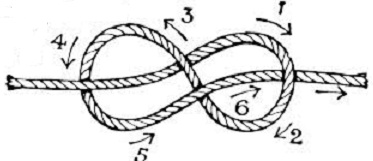
Knotty, Knotty: False Allegations and Restraining Orders

Whoever came up with restraining orders must have been a marvel at Twister.

Though they’re billed as civil instruments, restraining orders threaten their recipients with criminal consequences and may be based on allegations of a criminal nature, for example, stalking, sexual harassment, the threat of violence, or assault.

The standard of substantiation applied to criminal allegations is “proof beyond a reasonable doubt.”

Since restraining orders are “civil” instruments, however, their issuance doesn’t require proof beyond a reasonable doubt of anything at all. Approval of restraining orders is based instead on a “preponderance of evidence.” Because restraining orders are issued ex parte, the only evidence the court vets is that provided by the applicant. This evidence may be scant or none, and the applicant may be a sociopath. The “vetting process” his or her evidence is subjected to by a judge, moreover, may very literally comprise all of five minutes.

Based on allegations leveled in this hiccup of time by a person with an obvious interest in seeing you suffer, you are now officially recognized as a stalker, batterer, and/or violent crank and will be served at your home with a restraining order (and possibly evicted from that home) by an agent of the nanny state: “Sign here, please” (“and don’t let the door hit you on your way out”).

The application of a standard of proof to restraining order allegations is circumvented entirely: what a plaintiff claims you are becomes the truth of you. The loophole is neatly conceived (and it’s exploited thousands of times a day). Your record may be corrupted by criminal allegations like those enumerated above based on crocodile tears and arrant lies spilled on a boilerplate bureaucratic form. And these allegations may tear your life apart.

Abuse of restraining orders for malicious ends is a court-catered cakewalk.

How easily it’s exploited for foul purposes, in fact, is the restraining order process’s claim to distinction from other judicial procedures. Even by veteran officers of the court, false allegations made in restraining order petitions are routinely accepted at face value. The reasons for this are manifold:

  1. Judges are trained to regard women’s plaints as legitimate and may never question this prejudice, because it’s shared by the society at large. And to appear to be fair, a judge may apply the same prejudice to allegations brought by men against women.
  2. No judge wants to be the one who refused a restraining order to someone who later comes to harm, because (a) he will have failed a constituent in need and be perceived as having had a hand in her (or his) injury; and (b) because he will be publicly vilified, likely fired or forced to resign, and possibly sued.
  3. Innocent defendants never succeed in making a stink that would put a judge’s career in jeopardy: erring on the side of a plaintiff poses no threat to a judge’s job security, while erring on the side of a defendant may cost him not only his job but considerably more.
  4. It’s in the financial interests of local jurisdictions and their judges to appear to be “cracking down” on society’s bad eggs.

Lying to obtain a restraining order, therefore, is a cinch. Any lowlife can do it.

Disinterest (a.k.a. objectivity, fairness, impartiality, yadda-yadda-yadda) is the essential canon of judicial ethics. Since it’s one that clearly doesn’t obtain in the restraining order process, this judicial procedure is also distinguished from others by its inherent corruptness.

This corruptness is obscured from public awareness by yet another knot. Innocent defendants, in endeavoring to extricate themselves from false allegations—for example, as this author has by clamoring in a blog—cannot help but appear to be the fixated “deviants” that those false allegations represent them to be. The more they resist the allegations, the more they seem to corroborate them.

Appearances are not only the predominant grounds for restraining orders; appearances are what motivated their sketchy conception in the first place (“We’ve got to show we care”), and appearances are what preserve the corrupt process from which they issue from being recognized for the disgrace that it is.

Copyright © 2013 RestrainingOrderAbuse.com

“You Mean It Isn’t All about Me?”: On Women and Restraining Orders

A woman writes: “I got a TRO, and he got a lawyer.” (TRO abbreviates “temporary restraining order.”)

What’s the first thing that strikes you about this search engine query? The first thing that strikes me is that this woman seems surprised. You can almost hear the exclamation point that was left off the Google search.

Her incredulity at having her restraining order challenged seems to suggest that its defendant shouldn’t regard it as a big deal, which would suggest that she doesn’t regard it as one.

Which would suggest that she’s either careless of the consequences of her action or very self-preoccupied—or both.

Over the past three decades, feminist advocates have succeeded in making restraining orders more and more punitive and more and more public. The current push is to have restraining order recipients recorded in public registries like sex offenders. Some such registries already exist.

It shouldn’t be any wonder that men are loath to be criminalized by the “civil” restraining order process.

The query that led this woman to this blog underscores a schizophrenic rift that obtains in the way women regard restraining orders. On the one hand, they expect women’s plaints to be considered grave and urgent and restraining order allegations to be taken very seriously; on the other hand, they expect defendants to take their licks and forge ahead in spite of those publicly recorded allegations’ permanently compromising their futures. Maybe women want to have their cake and eat it, too—or maybe they don’t really think about the consequences to defendants at all.

Civil equality—the insistence upon which was the original motive for the legislative enactment of restraining orders—means uniform regard for the rights, value, and well-being of all citizens, irrespective of gender. With the social ascendancy of women in recent decades has come instead an unexamined assumption that what’s important to them should be what’s important to everyone.

Restraining orders aren’t a game, a fact that’s contradicted by the ease with which they’re sought, the carelessness with which they’re issued, and the apparent expectation from plaintiffs that they should be upheld based on their word alone. All restraining order plaintiffs should have to face cross-examination in court. Social conscience should demand it.

Either restraining orders should be taken seriously, or they should be taken off the books.

Copyright © 2012 RestrainingOrderAbuse.com

“Take That!”: On Restraining Orders’ Catering to Hurtful Impulses

Someone asks: “Can I be charged for talking to someone I put a protective order against?”

Someone else asks: “What to do when [the] petitioner contacts you under a restraining order to tell you she loves you?”

Search engine queries like these regularly lead readers to this blog. Along similar lines, one reader reports his girlfriend moved back in with him after filing a restraining order to forbid him from coming near her. Another reports his girlfriend’s subsequently moving in up the street from him after doing the same. Yet another reports his girlfriend’s stalking him after successfully petitioning for a restraining order against him. Such questions and reports prompt an unavoidable conclusion: restraining orders are obtained impulsively.

Which leads to a further obvious conclusion, namely, that they’re urged too readily by authorities and gotten too easily.

This is the scenario as I’ve seen it play out in the restraining order cases I’ve personally been privy to: party goes to the police to register a complaint, police solicitously “suggest” a restraining order, party—feeling righteously supported by the system and possibly obligated to it—immediately goes to the courthouse and obtains one (which in my state is free and takes less than an hour to acquire).

I’m sure that restraining orders are sometimes taken out by people with very real concerns for their safety and that some of these probably accomplish what they’re meant to (which is to provide their plaintiffs with a sense of security).

I’m unconvinced, however, that this recommendation validates the restraining order process’s annual $4-billion-dollar-plus price tag (and that’s just its cost to the United States). Or the untold costs to defendants of frivolous and fraudulent restraining orders.

After a year of monitoring queries to this blog by restraining order plaintiffs and defendants, this is what I am convinced of: that restraining orders are commonly petitioned in hot blood by plaintiffs who are ushered (or goaded) through the procedure and who neither weigh the consequences of their actions on defendants or ever have the gravity or expense of this action impressed upon them. I’m further convinced that danger is only rarely a legitimate factor in restraining order cases and that motives for petitioning restraining orders are commonly ulterior to those stated—typically boiling down to “Take that!”

Worse, I’m convinced that officers of the court—lawyers and judges—know this very well and are by and large content to play along and profit on the discord and misery they abet.

Oh, and to the man who writes, “Does she still love me if she got a restraining order on me?” the answer, disturbingly, may be yes.

Copyright © 2012 RestrainingOrderAbuse.com

Mind the Gender Gap: On Coming Together against Restraining Orders

This blog was “liked” this week by a blogger whose collegiate disciplines are criminology and sociology. In her own blogs, she tracks news of interest to students of these fields that relates especially to social justice and gender-based violence and oppression (phrases that are often mistaken as exclusively concerning the same thing).

Contrasting her blogs’ contents with those of sites that monitor and editorialize on issues of concern to this blog highlights a divide that must be spanned if progress is to be made toward achieving genuine social justice (the word social being inclusive of both sexes). Informed and objectively critical minds like hers—sensitive both to the needs for civil equality and recognition and redress of violence toward women—are out there, and cultivating their advocacy is vital to reforming the defective restraining order process.

I’m a day laborer and would-be children’s humorist who doesn’t even have Internet service at home. The time I’m able and willing to devote to keeping tabs on movements in the blogosphere is scant. But I have perforce become familiar with many of the sites that focus on restraining order injustice, and the preponderance of respondents to most if not all of them are men whose views on this injustice and the issues that orbit it typically derive from one ideological bias or another: post-70’s misandry, the political favoritism shown to women in the West, the courts’ attack on the family, etc.

I don’t challenge the merits of their beefs, which far from lacking legitimacy are very defensible; but these forums leave little room for unification of awareness and purpose among activists and socially conscientious members of the community at large.

The advocacy rift is often crudely genital: boys siding with boys and girls either seeing the boys as villainous, uncompromising, or exclusionary. Men, reared as and genetically engineered to be rule-oriented beings, equate unfair with wrong (plain and simple). Women, pragmatic and historically the holders of the short end of the stick, aren’t immune to the difference between fair and unfair but know the impetus behind the advent of restraining orders to be an urgent and well-grounded one: men are violent.

Men aren’t going to quit being violent if the restraining order process is dissolved, and the process isn’t going to trend toward fairness if it isn’t. Herein lies the rub.

Both sides of this divide are naturally reactionary, and the mediated space—that occupied by those sensitive to both truth-born positions—is narrow and sparsely populated.

It’s a manifest and uncontestable fact that the restraining order process is biased, unconstitutional, and injurious to both men and women who find themselves on its receiving end. It caters to and rewards fraud, and liars come in both sexes. The process’s flaws will only become clear to the mainstream when proponents of one team or the other stop being opponents.

The split in perspective is as much Cartesian as sexual: body vs. mind. Violence can in fact be of either sort, physical or psycho-emotional. Even rape isn’t strictly a physical act. Many violations, equally traumatic and enduringly oppressive, are perpetrated by men and women who never touch their victims. A false allegation of rape, for example, is a rape. The notion that physical violence is necessarily worse is facile and unexamined. Physical violence is loud and dramatic; psychological violence is invisible and insidiously corrosive. Both can be catastrophic. Calumnious lies are just as likely to drive victims to despair or even conceivably suicide, and the pain of these violations is magnified manyfold in the case of false allegations made in restraining order cases, because victims (men, especially) can’t expect social sympathy, as victims of violence may, but quite the opposite: condemnation. (This was the horror that kept a lid on abuses by Catholic priests for so long. Adults molested as boys were constrained from coming forward by fear of further shame, humiliation, and social indictment. Damages finally awarded to these victims weren’t for their being manhandled so much as their being scarred to the extent that they failed to thrive.)

Mob mentality is what sustains the crooked restraining order process; it won’t be what leads to its revision. A problem is that those who speak against it have never been a direct party to it (except in the case of activist attorneys), and those who have been victimized aren’t talking at all, because they’ve been intimidated into silence. Advocates tend to subscribe to one dogma or the other: good/bad, pro/con. Good or bad, useful or not—these are natural but misleading inquiries. The restraining order process is flawed and destructively pernicious, being both subject to and permissive of wanton abuse. To bring this fact and its poignancy across to a political consensus, the partisan gap must be closed. Finger-pointing is fruitless and even erroneous, because the real culprit is a faceless bureaucratic machine that has no oversight.

And it’s going to take a plurality of arms to pull the lever that stills its gears.

Copyright © 2012 RestrainingOrderAbuse.com