Traffic was directed to this site Friday from another one intriguingly called ScamBoard.com. I followed the link. It led me to a 2016 complaint posted by Arizonan James Cukr, who says a woman has been making “false and untrue” statements about him “on every social media outlet available to her,” and that he’s sworn out a restraining order against her, which he includes in his complaint.
I had intended to leave reportage of my own case topmost while I rebuilt this blog. I’m led to comment on the Scam Board post, though, because it relates.
To see how, first consider Mr. Cukr’s “restraining order,” which is a public document:
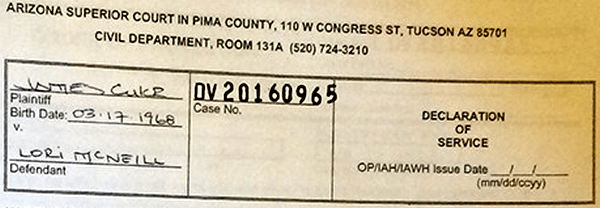
Look at the case number: DV20160965. The prefix “DV” stands for “domestic violence.” In other words, in an affidavit given under penalty of perjury to the Superior Court of Arizona, Mr. Cukr alleged domestic violence against a woman who criticized him on the Internet. The closest thing to substantiation of his domestic violence claim that he offers on Scam Board is that she had a “temper.” The “OP” that you see in the lower right corner stands for “order of protection.”
Apparent is that Mr. Cukr was upset and wanted to intimidate his accuser into silence for remarks like this one posted on CheaterLand.com: “James Cukr trolls dating sites like POF, Match, and OKCUPID lying to U of A students and desperate older women to get sex…but he is married with a wife and child in France he is lying to.”
The protective order is almost entirely blank, and there is no indication that it was ever served (which does not necessarily mean the record was discarded).
In other posts on Cheater Land and elsewhere—presuming they’re all by the same person—Mr. Cukr’s accuser, who is anonymous, does make statements that might be qualified as defamatory (pursuant to a civil lawsuit that would demand a filing fee and a lot more effort than filling out a form). Since those comments were directed to the world at large, however, and not to Mr. Cukr himself, they cannot properly be characterized as harassing, never mind “violent,” and are not grounds for a protective order.
A reasoning person might deduce that effectively accusing someone of domestic violence is easily accomplished, irrespective of the facts or the law. Mr. Cukr might just as handily have alleged “stalking”—and maybe he did.
Here are two other cases chronicled on this site that reflect the same gender dynamic, similar facts, and an identical misapplication of the law/abuse of process:
- The Use of Restraining Orders to Bully Women: Jenny’s Story
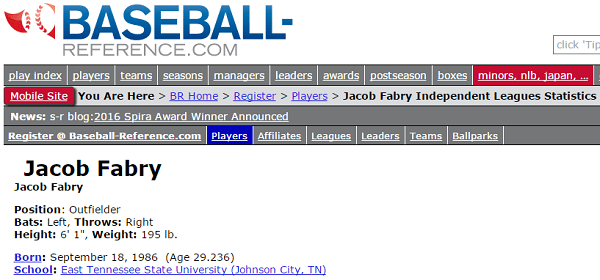
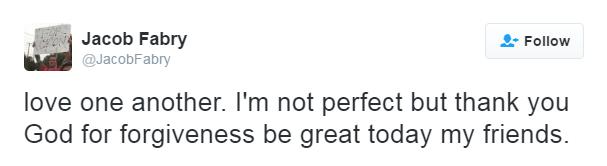
- FABRY v. POWERS: An Injunction against a Woman That Underscores the Wastefulness and Absurdity of the Restraining Order Process, and Its Licensing of Civil Rights Violations by the Courts
The court wrongly arrogates to itself the power to censor speech to the world at large because it is alleged to be harassing to some party it criticizes.
To quote eminent constitutional scholar Aaron Caplan, a law professor at Loyola:
American law deliberately makes defamation difficult to prove…. By contrast, civil harassment is designed to be easy to prove…. A petitioner should not be able to evade the limits on defamation law (many of them constitutionally mandated) by redesignating the claim as civil harassment.
The highlighted cases exemplify how restraining orders are exploited as cheap workarounds, possibly to conceal any nature of objectionable conduct by plaintiffs, from deceitful to criminal.
To quash embarrassing criticism, you allege you’re in danger.
Copyright © 2018 RestrainingOrderAbuse.com
*See The Volokh Conspiracy for related stories and commentaries.


 TALKING BACK to restraining orders