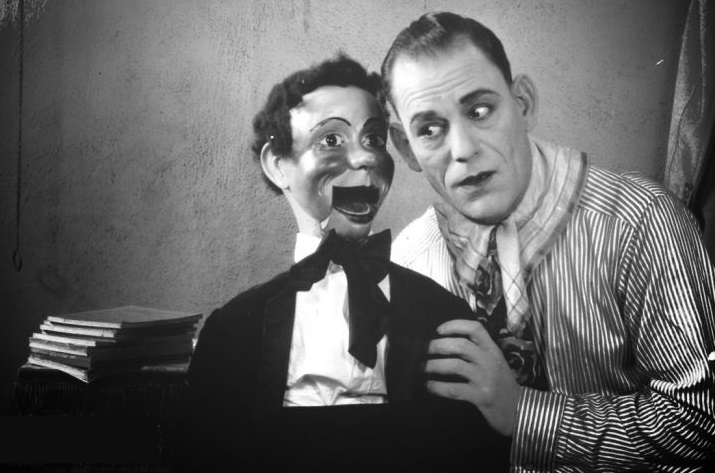
“I Reckon”: The Standard of Proof Applied by Judges to Restraining Order Cases

As the story goes, civil restraining orders are awarded to plaintiffs who demonstrate by a “preponderance of the evidence” that they need one. According to this story, a judge determines by actuarial science that there’s a 51% or greater probability that the petitioner’s need is valid, that is, that s/he’s representing some facts and his or her feelings about them more sincerely than not and that those facts and feelings fall into some legal definition of trespass (that’s typically as voluminous as interstellar space).

So concludes Harvard Law Prof. Louis Kaplow (who actually does the math).

The important thing is that the process sounds just.

Restraining order judges rule with mallets—and no subtler instruments. While they may be formulaic, their opinions (and they’re not called “opinions” for nothing) aren’t arrived at by the application of algebra. The phrase preponderance of the evidence is a rhetorical affectation used to lend those opinions an air of gravitas…because “I reckon” sounds a little squishy.

The suggestion that they’re the products of painstaking moral computation is supposed to make rulings sound dignified and conclusive. It’s not important that the defendants in what may be 10-minute “hearings” aren’t fooled.

It’s only important that everybody else is.

Copyright © 2016 RestrainingOrderAbuse.com

*The reader who retorts that judges rule with their minds—and their minds are subtler instruments than mallets—has never actually been before one in a restraining order “trial.”

What Restraining Order Defendants Need to Know That No One Ever Tells Them: The Truth Doesn’t Matter

The ambition of this post, an intermission between considerations of graver subjects, is to dispel restraining order defendants’ faith in the value of “truth.” Defendants are led to believe that if they’re truthful in the defiance of lies or hyped allegations, all will turn out as it should. But truth is a false idol that answers no prayers.


If you haven’t yet had to swear this oath, you’ve heard it before on TV: “Do you swear to tell the truth, the whole truth, and nothing but the truth?” (Sometimes God and the word solemnly are thrown in for emphasis…maybe to suggest you’ll be struck by lightning if you distort the facts or omit any.)

The significance of this courtroom ritual is none, and taking it literally is for chumps.

Civil trials, especially the kind this blog concerns, do not weigh “truth”; they weigh testimony, along with evidence as it’s represented (in procedures that may span minutes only). The savvy defendant will think in terms of economics and marketing. “Truth” has no inherent value to a defense. Unless it conclusively proves something you want to prove, it’s totally worthless. Worse, it may distract and dilute the potency of what you’re trying to sell. Facts, besides, may not tell the truth. The word truth is a trap for the naïve.

What wins cases are successful representations, ones that work the desired effect (i.e., what wins is salesmanship not scrupulous reporting).

While the court asks for honesty, it doesn’t reward it. It’s what you say and how you say it that counts, not “the truth.” God isn’t the judge; a man or woman is, and his or her favor goes to the person who gives the most compelling presentation (i.e., sales pitch).

Why do lying plaintiffs win? They win because their representations were persuasive. Did they tell “the whole truth and nothing but”? They may have told none at all. (Restraining orders have reportedly been obtained by people using assumed names; they didn’t even tell the truth of who they were.)

What do cunning attorneys who represent lying clients (or any clients) do? They tell only those truths that support their stories…and no others. (They may lie, also—and vigorously.)

The fastidious defendant who finicks over every detail, who backpedals and carefully qualifies his statements (in the interest of complete and accurate disclosure), and who otherwise invests his or her trust in “the truth” grossly misperceives the nature of process.

Representations win court contests, not “the truth.” The truth doesn’t matter.

~ EPILOG ~

A few months ago, the writer spoke for an hour or so with a 30-something man who said he was an obsessive-compulsive. He had written that he was “starting to go downhill really fast” and needed help. “I will try to eventually explain,” he began, “but there’s such a long history of what happened.”

What he explained was that he’d been bullied by a woman many years prior, while they were in high school, and had been haunted and galled by the abuse ever since. He said she had tried to coerce him to have sex with a friend of hers, that he had refused, and that she had spitefully urged some guys to rough him up (one of them would later be convicted of murder, so this wasn’t bush league bullying). She had also greeted him with a sneer whenever they met after that, and flipped him the bird and yelled “Fuck you!” at him as he passed by. He had tried to reach an accord but had only been mocked. He said he never used to stand up for himself and was sick of turning the other cheek.

He impulsively ventilated rage that he had bottled for 20 years by calling the cell of the woman’s husband and leaving her a voicemail that called her a “rude, mean bitch” and that ended with a string of “Fuck you!”s. That was pretty much the extent of it, but he was handily represented as a stalker.

He wanted to know what pointers I could offer that might aid him in his defense against a restraining order petitioned by a woman who claimed to have no memory of the events he described and whose stepmother, he said, was a former lawyer who had prosecuted cases before the state supreme court and was, besides, the director of a “domestic abuse and physical violence organization.”

Yeah.

I repeatedly impressed upon him that reciting a history that spanned decades wasn’t likely to move a judge to anything but a yawn (or a rebuke) and that he should consider how to frame his story to put himself in the most favorable light, for example, by updating the context (and abandoning a rigidly chronological narrative).

Each time I interrupted, he said he understood and then recommenced his story, which stretched back to his anguished childhood. He was very earnest and conscientious, and continually paused and qualified his remarks with “Granted, I….” It was important to him, he said, to tell his “heart’s truth” (i.e., the “whole truth”). He wanted someone to sympathize, and I did. But I knew a judge would not.

I never heard from him again.

Copyright © 2015 RestrainingOrderAbuse.com

In Perspective: How to Look at Restraining Order Judges Neutrally

It’s hard not to hate judges who issue rulings that may be based on misrepresentations or outright fraud when those rulings (indefinitely) impute criminal behavior or intentions to defendants, may set defendants up for further (or serial) malicious prosecutions by the same false accuser (and possibly land them in jail), and may finally inflict severe privations, including loss of income, employment, and/or access to children, pets, home, and property.

It’s especially hard not to hate judges when you’ve told them the truth, pronounced it politely and respectfully, and nevertheless been scorned, humiliated, and demeaned…with gusto.

Judges tend to be hubristic, condescending, and willfully menacing (even when they’re smiling at you).

To compound the outrage, it’s only their station that licenses their haughtiness. More often than not, their authority doesn’t come from learnedness in the law but is simply a perk of the job.

Though there have been some motions in recent years to amend this situation, most bottom-rung judges who issue restraining orders aren’t qualified lawyers, that is, they don’t have law degrees. They were just elected or appointed to the position and sent to “judicial boot camp.” Judges are trained to execute specific duties; they’re not necessarily educated in jurisprudence.

Some have no education beyond high school.

This may either be a reason to resent them all the more for their audacity or a reason to see them as mere tools of a system that conditions their bigoted behavior. Restraining order judges are told—possibly quite explicitly—how they’re expected to rule. That’s a significant part of their “training.”

This hardly excuses conduct that obviously contravenes judicial ethics. It does, though, make that conduct understandable.

Certainly judges aren’t to blame for the state of things, including the shambles they unjustly make of people’s lives. They don’t level the allegations, nor do they formulate the rules, draft the laws, or influence the political and public opinions that do determine rules and laws.

Sure, judges of conscience could vocalize qualms or defy the system. They could martyr themselves for principle. Whether this would effectively alter the status quo, however, is debatable.

Remember, they’re not legal scholars, by and large; they’re just referees who’ve had certain priorities impressed upon them. It’s not theirs to comment on the laws—and being unqualified to do so, they may genuinely believe they’re acting righteously.

There’s no particular reason not to hate judges if one or more have wronged you. If you step back, though, you’ll see that they’re more like ants that bite because they’ve been tasked with defending the colony according to certain marching orders than they are like people we should reasonably expect to treat us with dignity and charity.

Judges are often power-corrupt—it comes of sitting above others who must kowtow to them—but they’re basically people doing a job they may be scarcely better equipped to do than you or I.

Copyright © 2015 RestrainingOrderAbuse.com

On “Restraining Order Conspiracy”: Why Judge-Plaintiff and Judge-Attorney Collusion May Have More to Do with Judicial Ignorance than Complicity

The last post posited that the snarky zinger often aimed at teachers applies at least as aptly to the court: Those who can’t do, judge.

Conclusions in that post were inspired by conversations I had this week with a client, a former criminal defense attorney who began his legal career in the county prosecutor’s office. He impressed upon me that lower-court judges’ legal credentials ranged from inexperience to no education in the law whatever.

He told me that judges often called him to get clarifications of legal niceties.

I’ve been in procedures in both my county’s “justice court” and superior court. In each, I represented myself. If you’ve been the defendant in a restraining order trial (and possibly one or more trials that devolved from allegations on a restraining order petition), see if your experience didn’t correspond with mine.

My impression of the judge’s conduct in the restraining order hearing I was granted was that he grasped at whatever he could to justify the court’s preliminary findings. He didn’t “negotiate” the facts; he chose ones that could support the conclusion he preferred.

Similarly, in cases before the superior court in 2010 and 2013, in which I was self-represented and my accuser had an attorney speak for her, the judges basically did whatever her attorney told them they should: monkey see, monkey do. In each trial, it was like watching a puppet show. The judges, in instances, even parroted back the attorney’s language in their rulings.

At the time, I just assumed the whole process was fixed (i.e., bent as a papier-mâché flagpole), and I know from hearing many other people’s stories of similar travesties that they left the courtroom feeling the same.

What I realize now, though, is that the reason judges acquiesce to attorneys and seem to echo whatever they say like ventriloquists’ dummies is that they’re glad to be told what to conclude and how to justify that conclusion. The record doesn’t have to withstand much scrutiny—few people actually take such cases to the high courts; its “findings” just have to be persuasively plausible.

Instead of having a healthy skepticism and suspicion of attorneys’ (and plaintiffs’) motives, arguments, and testimony, judges aren’t confident enough in their own knowledge and powers of discernment to challenge them.

As my client, the former attorney, derisively says of judges, “They’re umpires” (spectators). They don’t “find” anything but what’s handed to them.

If bottom-rung judges only ruled on traffic citations and officiated over marriages—which is all some of them possess the proper qualifications to do—this wouldn’t be a big deal. When, however, they indefinitely impact futures (or void them) because their “civil” rulings impute criminal behavior to defendants (possibly based on nothing or on lies), this is playing fast-and-loose with people’s lives.

Copyright © 2015 RestrainingOrderAbuse.com

“She Said That I Had Been Burning Him Intentionally and That I Had Kidnapped Him”: Aaron’s Story of Restraining Order Abuse

The account below was recently submitted as a comment to BuncyBlawg.com, a site I’ve mentioned in several recent posts. Its administrator, Larry Smith, a former attorney, has been waging a one-man war on corruption excited by his relentless persecution through and by the legal system since 2011.

Aaron’s story is one of a spiteful ex-partner whose false allegations orbit popular themes: fear, emotional torment, stalking, and other (unprovable) crimes and misdemeanors that become more sensational and incriminating over time.

What makes Aaron’s story exceptional is that it has a reasonably happy ending, because the court saw through the lies.

In Aaron’s own words (lightly edited):

In my accuser’s affidavit, she repeatedly used “deathly afraid” and spoke of the medications she was on due to three years of stalking by me, vicious verbal abuse of herself and her family by me, and my stalking her where she works, shops, and lives. She claimed to have video surveillance of me following her into a grocery store. She even claimed to have a police report where I was “caught” sitting behind her home at 10 at night, etc.

She was granted an ex parte restraining order lasting two years.

Of course, none of it was true, none of her evidence existed, and the family that I had supposedly verbally abused didn’t even come to court. There was no police report, nor was there a surveillance video, because I didn’t have time to subpoena it; and had she brought the video, it would’ve shown her following me into the store she knew I was going to be at because I told her I was going to get groceries there at an exchange of our son. Had this video been brought to court, it would’ve conflicted with her affidavit.

On top of all of that, I brought in three copies of 40 pages that had every text message we had sent to each other for the previous two years in chronological conversation format. In these texts, two months prior she was inviting me into her home for “dessert” and asking to borrow money from me. Six months prior, she offered to loan or sell me her other car because I was having mechanical problems with my Jeep. These and other very common things. The texts also contained many instances of very immature ranting and attempts to create animosity and intensify disagreements into arguments, which I never fell for and always just said what needed to be said for our son’s sake. I never cursed or belittled her, though to someone like this the truth hurts.

After several hours, the judge shut the whole thing down, dismissed the order, and gave her a stern lecture. All this and no charge of perjury against her! One week later, she was granted an ex parte OFP on behalf of our then three-year-old son by a different judge in the same county! Same style of affidavit.

She said that I had been burning him intentionally and that I had kidnapped him.

He did have a burn about half the size of a pea on his finger, because he had touched a hot pot on the stove. I didn’t kidnap our son. She didn’t show up to pick him up! Since she was issued an OFP on behalf of our son, she was then afforded the services of a battered women’s and children’s center. She signed me up for psych evals and supervised visitation only with our son. Her instructions to law enforcement in her application were to arrest me for kidnapping and return her son to her.

Once again I proved the entire thing to be a lie. It was dismissed entirely. STILL NO CHARGES FILED AGAINST HER FOR PERJURY! Just stern words from a judge toward her and even a bit directed my way in that the two of us needed “to learn each other’s triggers and steer clear of conflict that needed to be sorted out by the courts”! I had to share custody with her for two more years and attempt to co-parent with her.

Our son is six now, and he lives with me and goes to her every other weekend. I had to use kindergarten as a guise to change our custody agreement. Although I am very thankful the courts named my home as our son’s primary residence, the court’s impotence to prosecute liars and the horrifying parenting that has to take place before they’ll change rights are despicable! I do think it is far worse to be a self-consumed person than to be a target of one, though. Karma is on our side.

This blog definitely gave me great insight into other people’s struggles outside of my own and opened my eyes to some of the types of people who abuse the system. I never could’ve imagined how easy and common it is until it happened.

Copyright © 2015 RestrainingOrderAbuse.com
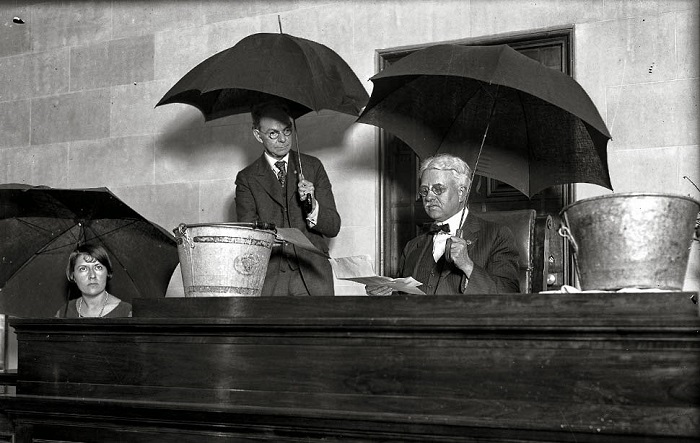
Cross-Examination: Yet Another Way the Deck Is Stacked against Restraining Order Defendants

Perusing the trial transcript of a North Carolina man, former attorney Larry Smith, forcefully brought something to my attention last week, namely, that cross-examination can make or break a defense.

Larry extricated himself last summer from the latest of an endless series of fraudulent complaints and prosecutions brought against him by a vexatious litigant—this trial revolved around his criticizing her in his blog (besides allegedly “cyberstalking” his “victim” by tapping her phone and hacking her computer)—and how he exonerated himself was by probing her fictions while she was on the stand, and exposing them for what they were (this despite being tag-teamed by multiple county prosecutors and being hustled along by the judge).

Prior to Larry’s being given the chance to cross-examine the prosecuting witness, the smell of cooked goose pervaded the proceeding. What his example shows is that having the chance to question the witness against you may make the difference between victory and the coffin—or at least the curb.

The opportunity to question the plaintiff in a drive-thru restraining order trial in which it’s presumed s/he’s deathly afraid of you is all but stifled (and in some instances, a plaintiff doesn’t even have to show for court, because the accused is represented as an “imminent danger”). Putting questions to the plaintiff may be permitted by asking them of the judge who in turn asks them of the witness. Judicial patience being none, the impediment this protocol presents is obvious—as are the railroad tracks.

Copyright © 2015 RestrainingOrderAbuse.com

*Of his own restraining order case (the petition of his accuser’s that stuck—she filed two), former lawyer Larry Smith, who’s mentioned in the introductory paragraph, says: “I was not allowed to cross-examine [my accuser] in the RO hearing. I got kangarooed every step of the way. Every time I tried to ask a leading question, the judge would interrupt me and yell out, ‘Ask a question.’ It was a bit of a nightmare, a madhouse, and even when I managed to get in a jab, the witnesses all huddled with the judge and would refuse (with her blessing) to answer them. The rules of evidence, honesty, fairness, confrontation, the right to probe the witness on her contention of ‘substantial emotional distress,’ the presumptions of innocence, equal protections of the law, and burden of proof—all were tossed out the window like trash.”