
An absurd notion seems to prevail in the minds of men and women of the court—many of whose familiarity with the Internet begins and ends with shopping for bargains on eBay or Skyping their grandkids—that people who “blog” about being abused in court have nothing better to do.
No, they do it because they’ve been screwed, blued, and tattooed, and the peace of mind needed to do what they’d rather be doing has been denied them.
Their sanity, dignity, and good names, if not their children, have been sacrificed to the false idol of justice. They’ve been railroaded through one or more gimmicky, derelict procedures that confounded their lives for nothing…excepting politics, that is, and cash.
(Seriously, what pinnacle of pretense does a person need to surmount to entertain the idea that someone would expend dozens, hundreds, or thousands of hours decrying inept, lopsided policies of law merely because s/he was “miffed” or “disappointed”? )

Demonstrating the ability to write isn’t proof of anything but the attainment of a third-grade education.
Wake up and smell the Folgers: Not everyone knows to or has the means to enlist a lawyer to swat down some false or hyped allegations whose only ascertainable basis is that they were scrawled on a bureaucratic form in 10 minutes with a Bic Round Stic by someone displaying anxiety.
If you’re a veteran of process, you know very well the obstacles people face (even if they have representation) in disentangling themselves from accusations after a judge has once signed off on them. Tell yourself what you want, but this isn’t deliberative stuff (an order of the court can be delivered sooner than an order of waffles at Denny’s).
This stuff is, however, saprogenic. That’s a fancy word—and we know judges favor fancy words—that means producing decay and putrefaction.
What may be a few moments of your workday can profoundly influence years (or all) of a person’s life. It can hasten a body into the grave.
If this is news to you, that’s probably because you began your career before a medium existed in which the legally abused little guy could publicly air his or her grievances. That doesn’t mean you haven’t been arbitrarily trashing lives all along; it just means you didn’t have to hear about it before.
Probably you felt securer on your pontifical peak before casualties of slovenly adjudications could complain about them.
Probably, too, that’s why orders of the court are routinely issued that prohibit the exercise of free speech by complainants of procedural abuse, orders that have recently fallen under stern scrutiny.
The reason people “blog” or “video-blog” (“vlog”) is that the courts fail them, and the court’s miscarriages exact a grave toll that endures and compounds over the months and years. The victims of those miscarriages live in limbo, and speech is the only recourse left them to air truths the court disdained, ignored, edited, or quashed.
Copyright © 2015 RestrainingOrderAbuse.com
*Doctors may get to bury their mistakes; judges don’t. “Public record” doesn’t mean only as public as you want it to be.
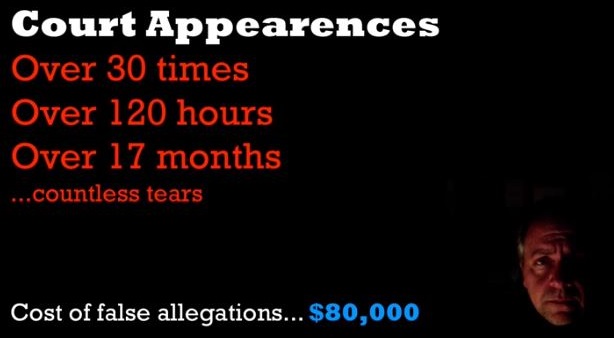
New Jerseyite Bruce Aristeo was cited for violating an “indefinite temporary restraining order” for, among other things, using his accuser’s image and that of her “pet Belgian Malinois.” He has been arrested at least four times.
 TALKING BACK to restraining orders