“I wasn’t thinking when I wrote my domestic abuse statement in Virginia against my boyfriend.”
“Can I get a permanent protection order against my spouse’s lover?”
“How [do you] bait someone into violating a restraining order?”
—A few recent search terms leading to this blog
I stumbled upon a video presentation the other day by a self-styled anti-feminist activist Karen Straughan, who’s blogged for a couple years under the moniker “girlwriteswhat.” I thought her talk, “Feminism: Socialism in Panties,” was evenhandedly confrontational, nervy, and smart.
Responses from feminist quarters that I hastily gleaned yesterday suggest that this activist’s denunciations have raised some hackles. I noted, though, that more than one woman respectfully remarked that she’s “articulate,” if “biased.” She’s in fact very articulate. And something I don’t think her female critics are able to appreciate is that her “bias” is a counter-bias and that she isn’t employing rhetorical strategies that are any more tendentious or inflammatory than those used by the people she draws a bead on.
For feminists to argue that turnabout is foul play is silly, and it’s interesting to observe that when dogma’s challenged using its own tactics, it pitches a fit.
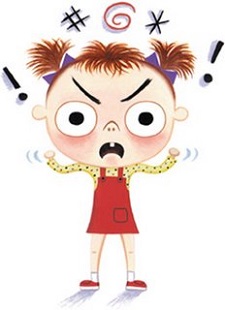
 The same impulsive emotional reasoning exemplified by this foot-stamping is what’s suggested by the search terms that introduce this post (to which I could have appended thousands more of a similar nature).
The large-scale injustices perpetrated by the restraining order process (on both men and women) are the product of impulsive emotional reasoning, as is the process itself. What may have started out as a sober guard dog 30 years ago has transformed into a manic dragon that arbitrarily spits fire when fingers are snapped, particularly nail-polished fingers. It doesn’t warn its targets to back down; it torches them.
There’s an ancient philosophic principle called the golden mean that advocates avoidance of extremes (“moderation in all things”). According to this principle, if something gets too far off-kilter in one direction, you have to counteract the imbalance by excessively striving in the contrary direction. If the above-referenced activist strikes some as overstating her case, they might consider that she’s endeavoring to knock things back toward equilibrium.
Reading through online comments about her, I was familiarized with the acronyms MRM and MRA, which apparently stand for “men’s rights movement” and “men’s rights activist,” respectfully. One thread about her I found was titled, “What do Feminists think about YouTube blogger ‘Girl Writes What,’ a Female MRA?”
You see from this question how far abroad feminism has strayed and why equity feminists are appalled by what they call the “feminist establishment” (a.k.a. “The Sorority”). The motive of the feminist movement that was underway when I was a kid was to dissolve distinctions and dichotomies between the sexes. Yet as conversational prompts like this one show, today’s so-called feminism promotes division: Us versus Them. Its compulsion is to split everyone into camps. The original idea was to have everybody recognized as the same, irrespective of whether they had an innie or an outie between their legs.
 The thrust of today’s mainstream ideological feminism is to blame, subjugate, and punish, not unify. Feminism has betrayed itself.
It has also betrayed women. Something that’s long been a source of curiosity to me is that while the feminist establishment is often criticized as misandronist (man-hating), it’s rarely criticized as misogynist (woman-hating).
Yet inducing women to self-identify as victims can hardly be called “empowering.” If the source of power isn’t you, the power isn’t yours. What inducing women to self-identify as victims is, rather, is denigrating to feminine self-respect. The feminist establishment doesn’t encourage women to cultivate or rely on personal agency; it infantilizes them and urges them to apply for paternal protection (and the abuse and domestic dispute industries have been glad to profit by the ensuing strife).
Contemporary feminism has conditioned women to identify themselves respective to men, namely, as their victims. It’s thoroughly preoccupied with men—to the point of fixation. (The online conversational threads I’ve just looked at either concerned bitching about men or bitching about women who don’t bitch about men.)
The original feminist platform argued that women should identify themselves as independent people. Feminism, however, has become entirely male-centric. There is no feminist identification independent of men.
Prejudicial laws and court processes criticized in this blog and elsewhere are a societal response to women’s conceding that they lack personal agency. Consider that the reason why infants cry for help is because they’re incapable of meeting their own needs (incapable, literally, of standing on their own two feet). Women are much more capable than they’ve been led to believe.
 Restraining orders are by and large sought impulsively—in the millions every year. Both motives and the engine that generates them are virtually automatic.
Interesting to me, finally, is that men have adapted to the new status quo (“If you can’t beat ‘em, join ‘em”). Most of the complainants of court abuses who’ve responded to this blog are women, some of whose lives have been shattered by lies and fraud. Men have hopped onto the abuse industry bandwagon, too, and the time may come that the equality that feminism is supposed to be advocating for is realized in the form of both sexes’ exploiting state protections to bash each other into a uniform goo.
Copyright © 2014 RestrainingOrderAbuse.com


 Judge Daniel Sanchez issued a restraining order against Letterman based on those allegations. By doing so, it put Letterman on a national list of domestic abusers, gave him a criminal record, took away several of his constitutionally protected rights, and subjected him to criminal prosecution if he contacted Nestler directly or indirectly, or possessed a firearm.
 To some degree at least, this understanding restricts all but the mentally ill, who may be delusional, and

 I’ll give you a for-instance. Let’s say Person A applies for a protection order and claims Person B threatened to rape her and then kill her with a butcher knife.
 Person A circulates the details she shared with the court, which are embellished and further honed with repetition, among her friends and colleagues over the ensuing days, months, and years.
 Note that the odds of its being accurate, assuming all conditions are equal, may be only slightly better than a coin flip’s.
 Restraining orders are understood to be issued to “sickos.” Nobody hears “restraining order” and thinks “Little Rascal.”
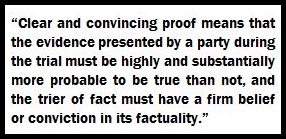
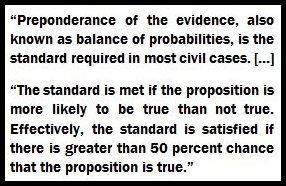


 No argument here.
 to the procurement of restraining orders, which are presumed to be sought by those in need of protection.
 Such hearings are far more perfunctory than probative. Basically a judge is just looking for a few cue words to run with and may literally be satisfied by a plaintiff’s saying, “I’m afraid.” (Talk show host
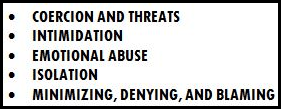
 A scratch, a push, a pinch—which may not even have been real but whose allegation had real enough consequences.
 I’ve written recently about the abuse of restraining orders by fraudulent litigants to punish. What needs observation is that the laws themselves, that is, restraining order and domestic violence statutes, are corrupted by the same motive: to punish. Their motive is not simply to protect (a fact that’s borne out by the prosecution of alleged pinchers).
 Restraining orders are maliciously abused—not sometimes, but often. Typically this is done in heat to hurt or hurt back, to shift blame for abusive misconduct, or to gain the upper hand in a conflict that may have far-reaching consequences.
 A recent male respondent to this blog, for example, reports encountering an ex while out with his kids and being lured over, complimented, etc. (“Here, boy! Come!”), following which the woman reported to the police that she was terribly alarmed by the encounter and, while brandishing a restraining order application she’d filled out, had the man charged with stalking. Though the meeting was recorded on store surveillance video and was unremarkable, the woman had no difficulty persuading a male officer that she responded to the man in a friendly manner because she was afraid of him (a single father out with his two little kids). The man also reports (desperately and apologetic for being a “bother”) that he and his children have been baited and threatened on Facebook, including by a female friend of his ex’s and by strangers.
 What a broader yet nuanced definition of stalking like Dr. Palmatier’s reveals is that what makes someone a stalker isn’t how his or her target perceives him or her; it’s how s/he perceives his or her target: as an object (what stalking literally means is the stealthy pursuit of prey—that is, food).
 Placed in proper perspective, then, not all acts of stalkers are rejected or alarming, because their targets don’t perceive their motives as deviant or predatory. The overtures of stalkers, interpreted as normal courtship behaviors, may be invited or even welcomed by the unsuspecting.
 courts by disordered personalities as stalkers ignite in them the need to clear their names, on which their livelihoods may depend (never mind their sanity); and their determination, which for obvious reasons may be obsessive, seemingly corroborates stalkers’ false allegations of stalking.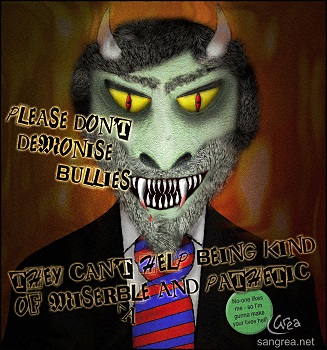
 Contemplating these statements should also make clear the all-but-impossible task that counteracting the fraudulent allegations of high-conflict people can pose, both because disordered personalities lie without compunction and because they’re intensely invested in domination, blaming, and punishment.
 I’ve read Freud, Lacan, and some other abstruse psychology texts, because I was trained as a literary analyst, and psychological theories are sometimes used by textual critics as interpretive prisms. None of these equipped me, though, to understand the kind of person who would wantonly lie to police officers and judges, enlist others in smear campaigns, and/or otherwise engage in dedicatedly vicious misconduct.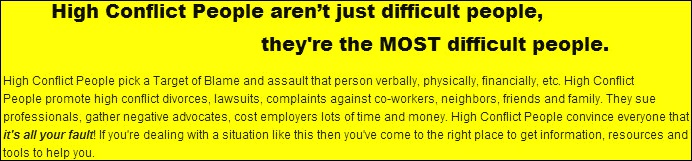

 If you’ve been attacked serially by someone you trusted who’s abused legal process to hurt you, spread false rumors about you, made false allegations against you, and otherwise manipulated others to join in bullying you (possibly over a period spanning years and despite your reasonable attempts to settle the situation), your persecutor is an example of the high-conflict person to whom the epigraph refers, and understanding his or her motives may be of value to your self-protection.
 Under the Violence Against Women Act (VAWA), our courts and police districts are awarded hefty
  Judicial process proceeds from rules first and facts second. Our entire system of law is based upon the principle of stare decisis, which says that what has previously been decided must be adhered to.
 So enculturated has the belief that women are helpless victims become that no one recognizes that feminist political might is unrivaled—unrivaled—and it’s in the interest of preserving that political might and enhancing it that the belief that women are helpless victims is vigorously promulgated by the feminist establishment that should be promoting the idea that women aren’t helpless.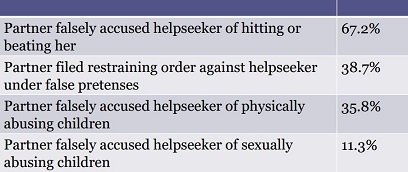

 Learning the ins and outs of restraining order litigation has for this writer been an ongoing educational process bordering on a descent into hell that he’s only submitted to with a great deal of teeth-gnashing. In my state (Arizona), it’s possible for a plaintiff who’s petitioned for a restraining order in civil court to return to the same court and file a
  Noteworthy finally is Ms. Malloy’s acknowledgment that false allegations of violence, which are devastating in the emotional oppression, humiliation, and social and professional havoc they wreak on the falsely accused, are used strategically to gain leverage in divorce proceedings.
 Disturbing, also, are that the phrase miscarriages of justice is typically only applied to wrongful criminal convictions and that false allegations are discounted as contributing significantly to the number of miscarriages of justice, when in fact they’re responsible for the majority of them. Fraudulent claims are certainly unexceptional in civil proceedings, and the successes of fraudulent claims in civil court are just as much miscarriages of justice as failures of the system that result in false criminal convictions are.
 The FBI Law Enforcement Bulletin I’ve quoted goes on at some length to detail the difficulties and complexities that unraveling false claims entails for agents of the FBI. Appreciate then how absurd is the state’s faith that a single judge—or a couple of them—can ascertain the truth of civil restraining order allegations by auditing claims in a hearing or hearings arrived at with no prior information, that last mere minutes, and that are furthermore biased by the preconception that the accused is guilty.
 The first of these important facts is that the nanny state issues restraining orders carelessly, tactlessly, and callously. Their recipients are completely bewildered, and no one actually explains to them what a restraining order signifies, what its specific prohibitions are, or anything else. If a cop is involved, s/he may impress upon a restraining order recipient that the court’s order should be “taken very seriously.” (“What should be taken very seriously?” “The court’s order!”) That’s it. Not one person involved even inquires, for example, whether the restraining order recipient is sighted (as opposed to stone blind), mentally competent, or knows how to read. Restraining orders are casually dispensed (millions of them, each year) and then, unless they’re violated intentionally or accidentally (and motive doesn’t matter; the cops swoop in, regardless), they’re dispensed with: “NEXT!” “NEXT!” “NEXT!” It’s a revolving-door process that’s administered by conveyor belt but enforced with rigorous menace. That’s the first important fact.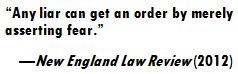


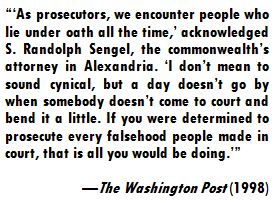
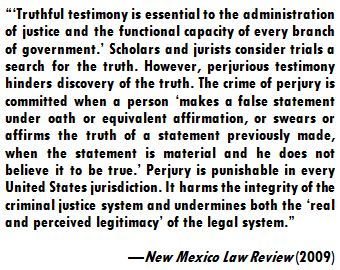

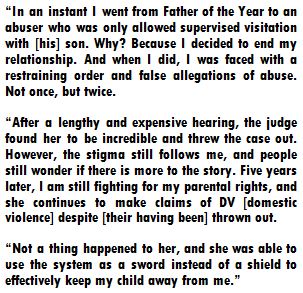
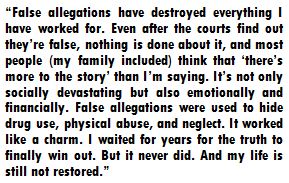
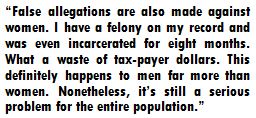
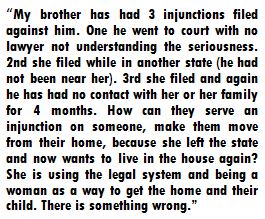
 The very real if inconvenient truth remains that victims of false allegations made to authorities and the courts present with the same symptoms highlighted in the epigraph: “fear, anxiety, nervousness, self-blame, anger, shame, and difficulty sleeping”—among a host of others. And that’s just the ones who aren’t robbed of everything that made their lives meaningful, including home, property, and family. In the latter case, post-traumatic stress disorder may be the least of their torments. They may be left homeless, penniless, childless, and emotionally scarred.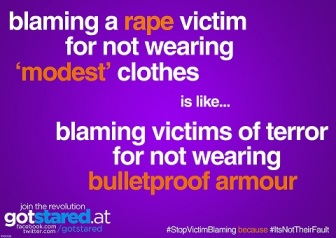
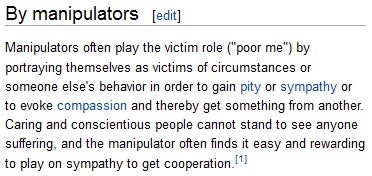
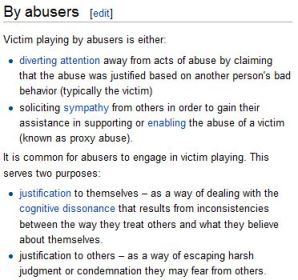
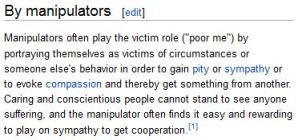
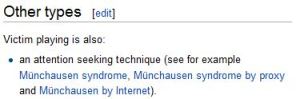
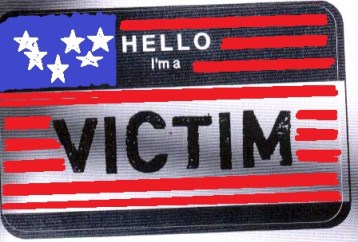 Right, the faker (opportunist, easy-outer, buck-passer, hysteric, bully, vengeance- or attention-seeker, crank, sociopath, neurotic, disordered personality, etc.).
 What I discovered was that group-bullying certainly is a recognized social phenomenon among kids, and it’s one that’s given rise to the coinage cyberbullying and been credited with inspiring teen suicide. The clinical term for this conduct is
  TALKING BACK to restraining orders