Sex, Restraining Order Abuse, and the “Dark Triad”: Narcissism, Machiavellianism, and Psychopathy

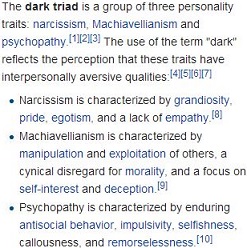
“Socially aversive personality traits such as Psychopathy, Machiavellianism, and Narcissism have been studied intensively in clinical and social psychology. […] Although each of these three constructs may have some unique features not shared by the other two, they do appear to share some common elements such as exploitation, manipulativeness, and a grandiose sense of self-importance. Accordingly, Paulhus and Williams (2002) have called these three constructs the ‘Dark Triad’ of personality….”

Kibeom Lee and Michael C. Ashton

“Members of the Dark Triad tend to be especially untrustworthy in the mating context.”

Daniel N. Jones and Delroy L. Paulhus

Restraining orders are commonly used to sever relationships. The assumption is that the applicant of a restraining order has been the victim of mistreatment. Many who’ve been implicated as abusers, however, report mistreatment by manipulative personalities who then exploited court process to dominate them, garner attention, and/or deflect blame for their own conduct—typically by lying through their teeth.
It turns out there’s a sexy phrase for the collective personality traits exhibited by manipulators of this sort: the “Dark Triad.”

Several of the posts on this blog have discussed personality-disordered and high-conflict people (who may be personality-disordered), and such people are a central focus of the work of attorney, mediator, and therapist Bill Eddy and psychologist Tara Palmatier, whom I’ve frequently quoted and who’ve written volubly about abuses of legal process by predatory personalities. Narcissism and psychopathy, two of the constituents of the Dark Triad, also qualify as “Cluster B” personality disorders.
As should be evident to anyone who’s read up on these matters, there’s a high degree of overlap among attempts to define, differentiate, and distinguish the mentally kinked.

The context in which the phrase Dark Triad is applied is interpersonal relationships that are familiarly called “romantic.” This should be of interest to victims of court process, because their abusers are more often than not current or former spouses, boy- or girlfriends, or intimates.

The concept of the Dark Triad should also be of interest to them because clinical labels may only roughly match their abusers’ conduct, conduct like deception, inexplicable betrayals, irreconcilable (mixed) messages, etc. (behaviors that “don’t make sense”). People who fall within this (subclinical) delta of personality quirks represent their interest and intentions to be sincere, and reveal them, often abruptly, to have been shallow or even sinister.

From “How the Dark Triad Traits Predict Relationship Choices” (Jonason, Luevano, & Adams):

The Dark Triad traits should be associated with preferring casual relationships of one kind or another. Narcissism in particular should be associated with desiring a variety of relationships. Narcissism is the most social of the three, having an approach orientation towards friends (Foster & Trimm, 2008) and an externally validated ‘ego’ (Buffardi & Campbell, 2008). By preferring a range of relationships, narcissists are better suited to reinforce their sense of self. Therefore, although collectively the Dark Triad traits will be correlated with preferring different casual sex relationships, after controlling for the shared variability among the three traits, we expect that narcissism will correlate with preferences for one-night stands and friend[s]-with-benefits.

In contrast, psychopathy may be characterized by an opportunistic, exploitive mating strategy (Figueredo et al., 2006; Jonason et al., 2009b; Mealey, 1995). Booty-call relationships by their very name denote a degree of exploitation. That is, individuals use others—their booty-call partner[s]—for sex by a late night phone call with the expressed or implied purpose of sex (Jonason et al., 2009). Therefore, we expect that after controlling for the shared variability among the three traits, psychopathy will be correlated with preferences for booty-call relationships. Such a relationship may be consistent with their exploitive mating strategy. Last, although prior work has linked Machiavellianism with a short-term mating style (McHoskey, 2001), more sophisticated analyses controlling for the shared correlation with psychopathy has revealed that Machiavellianism might not be central to predicting short-term mating (Jonason et al., 2011). Therefore, we expect Machiavellianism to not be correlated with preferences for any relationships.

What we’re talking about, basically, are people who exploit others for sexual attention and/or satisfaction (that is, players). The common denominator is a disinclination toward or disinterest in what’s called a “meaningful” or “serious” relationship. The motive is noncommittal, urge-driven self-pleasure (assisted masturbation, as it were). Psychologists sometimes remark in writing about narcissists in other contexts that they entertain “romantic fantasies” but conclude that these fantasies are exclusively about personal feelings and not interpersonal anything.

What we’re talking about in the context of abuse of restraining orders are people who exploit others and then exploit legal process as a convenient means to discard them when they’re through (while whitewashing their own behaviors, procuring additional narcissistic supply in the forms of attention and special treatment, and possibly exacting a measure of revenge if they feel they’ve been criticized or contemned).

Since it’s only natural that people with normally constructed minds will struggle to comprehend the motives of those with Dark Triad traits, they conveniently set themselves up for allegations of harassment or stalking, which are easily established with nothing more than some emails or text messages (that may, for example, be pleas for an explanation—or demands for one). People abused by manipulators who then abuse legal process to compound their injuries typically report that they were “confused,” “angry,” and/or “wanted to understand.”

This is the Jonason & Webster “Dirty Dozen” scale for assessing Dark Triad candidacy:

  1. I tend to manipulate others to get my way.
  2. I tend to lack remorse.
  3. I tend to want others to admire me.
  4. I tend to be unconcerned with the morality of my actions.
  5. I have used deceit or lied to get my way.
  6. I tend to be callous or insensitive.
  7. I have used flattery to get my way.
  8. I tend to seek prestige or status.
  9. I tend to be cynical.
  10. I tend to exploit others toward my own end.
  11. I tend to expect special favors from others.
  12. I want others to pay attention to me.

Victims of restraining order abuse by manipulative lovers or “romantic” stalkers will note a number of correspondences with their accusers’ personalities, as well as discern motives for their lying to the police and courts, which elicits special treatment and attention from authority figures…and subsequently every other sucker with whom they share their “ordeal.”

Copyright © 2014 RestrainingOrderAbuse.com

*Some specialist monographs on this subject are here.
Learning to Talk the Talk: Resources for Victims of “Disturbed” People Who’ve Also Been Victimized by the Courts

“[Narcissism] is, in my opinion, the single most damaging and maladaptive tendency seen in sociopaths. When taken to extremes, it can lead to seriously abusive patterns of behavior that are repulsive and idiotic, both from any sort of ethical perspective and from the perspective of sheer self-interest. It is also fundamentally misunderstood. The word ‘narcissist’ connotes, to most people, merely personal vanity taken to an extreme. This is not what the word narcissism means in the context of sociopathic psychology. Narcissism…means the inability to understand that other people exist as distinct entities from oneself—with their own wants, emotions, and personal space—combined with a grandiose and exaggerated perception of self. The ‘narcissistic personality disorder’ described in the DSM is in my opinion simply the identification of sociopathic individuals who allow their own narcissistic tendencies to become so severe that [they begin] to ruin their lives and the lives of those around them.”

—Clinically diagnosed sociopath and blogger

I encountered this exceptional writer in an online forum recently and quoted much of what he had to say about the motives of the sociopathic mind, as well as his “insider” conclusions about what makes narcissists tick. He corroborated some of my own lay suspicions and corroborates as well the belief of psychologist Tara Palmatier, who has written volubly about abuses of legal procedure, that the personality disorders most damaging to others stem from sociopathy.

This writer, who very plausibly calls himself a “high-functioning sociopath” but who doesn’t otherwise identify himself, perceives people with these personality disorders (specifically, narcissistic personality disorder and borderline personality disorder) as “low-functioning sociopaths” who are prone to indulge hedonistic (that is, pleasure-seeking) impulses, both to their own detriment and that of those who run afoul of them. Put plainly, they hurt other people to gratify the urges of their haywire brains. This writer’s ideas are carefully and lengthily qualified, and with convincing earnestness and intelligence, and I urge anyone who’s interested in a nuanced understanding of disordered brains and their eccentricities to visit this writer’s blog, as well as that of the aforementioned psychologist, Dr. Tara Palmatier, for personal and clinical perspectives on disordered personalities and how to deal with them.

The reasons the personality-disordered are often brought up in this blog are two: (1) because these people have limitless capacity to destroy the lives of others and no scruples or inhibitions about lying to disown accountability for their actions, and (2) because their victims, who are also often victims of legal clashes people like this instigate to distance themselves from their crimes, don’t have the words or concepts to qualify what in the hell just happened to them.

Those who’ve been pursued by or had relationships with disordered personalities, particularly narcissists, whose peculiarities aren’t prominent and easily distinguished as aberrant, may be inclined to doubt or question their own perceptions (which narcissists are masters at manipulating) and may be no more able to characterize the conduct and chronic lying of such people than as “hurtful” or “disturbed” or “psycho.” The motives of the personality-disordered aren’t easily explicable, because they don’t make any sense. Until you’ve been initiated and made an earnest effort to comprehend such bewilderingly anomalous minds, you don’t have the tools to even articulate what you’ve been subjected to. It’s no wonder, for example, that blogs about victimization by narcissists have titles like An Upturned Soul and Out of the Fog—or that using the search term “narcissist” on Amazon.com yields 1,028 returns (including the titles, How Many Lies Are Too Many?: How to Spot Liars, Con Artists, Narcissists, and Psychopaths before It’s Too Late and Web of Lies: My Life with a Narcissist).

Fascinatingly, reading the blog of the “high-functioning sociopath” I’ve commended, and considering that sociopaths are popularly said to be emotional vacuums, there’s no avoiding the impression that he is very empathic, though his isn’t an “I feel you” empathy so much as a reasoned, analytic (“I feel me”) one, which actually makes for very lucid explication unmuddied by touchy-feely distractions that are hardly soothing, anyway, to people who’ve had their lives derailed and are looking for answers rather than palliatives.

Copyright © 2014 RestrainingOrderAbuse.com

*The original blog cited and recommended in this post, QuestioningSociopathy.com, has since been deleted by its author.

Differentiating the Frauds of Sociopaths and Narcissists: A First-Person Perspective

“I became suspicious of my own traits after extended contact with another sociopath, with whom I clicked instantly.”

—Clinically diagnosed sociopath

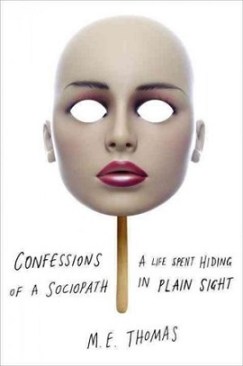
The above remark in an online forum caught my eye, because it validated a suspicion I’ve nursed that sociopathic people identify with and gravitate toward one another. It’s predictable, really, that people with common perspectives should be mutually attracted, as well as drawn to particular fields, for a couple of examples, institutional research and law. Italics that appear in the quoted paragraphs below, which are by the same male speaker, are added. This speaker, whose comments will be illuminating to students of anomalous brains, is not the author of the book whose cover is used as illustration.

“Generally our impulsive and charismatic personalities mean we become friends easily. For example, both of my flatmates are sociopathic, although probably to a lesser degree than myself. I’m able to freely talk with them about manipulative behavior, and we occasionally teach each other tricks based on our own areas of social expertise. Working as a group, we can very easily mask one another and cooperate to more effectively manipulate others. We also mutually operate on the same rationally motivated, prosocial basis, and as a result we find it very easy to trust one another as our motivations are all identical, and we’re aware of that.

“An awful lot of my sociopathic friends are aware, because I had the conversation with them and ‘woke them up.’ I tend to deliberately gather other socios around me and then make them self-aware, which has created a very interesting little social circle around me. We talk about it quite regularly, because it often comes up when we’re venting to each other or discussing our emotional responses.

“Academia is full of narcissists and sociopaths. So is the legal profession. Virtually any ‘prestigious’ career that offers a lot of potential cash will contain socios, but at the same time there will be some of us almost anywhere as many socios choose the easiest lifestyle possible, which isn’t compatible with those sorts of high-level careers. All fringe subcultures have a higher than average representation of socios, and the drug subculture is absolutely infested with them.”

Reading this person’s analysis of the differences between sociopaths and narcissists, which is very self-aware and forthcoming, was equally interesting, and those who’ve been traumatized by personalities of these types, may also find it significant.

“It’s the difference between ‘I am better than those around me’ and ‘I am fundamentally different [from] those around me, because I have a bizarre and somewhat broken brain.’ Narcissists believe they excel because they’re amazing at everything; sociopaths accept that we’re cheating.

“I very rapidly psychoanalyze others and then use their self-image and insecurities against them. For example, say I spot a woman who’s very insecure and in need of male validation. I can compliment her in exactly the way she wants and needs, and as a result foster emotional dependence, which can give me what I want. Or if you’re badly educated and insecure about your intelligence, I’ll show interest in you as an intelligent and well educated man, and tell you how smart I think you are and how much potential you secretly have, and as a result you’ll end [up] feeling ‘special’ and get the feelings of excellence you crave. Which can give me what I want. Etc., etc. It would take a very long time to explain every possible outcome, but generally it relies on telling people what they want to hear. This is my style, though, and some other socios can be VERY different. Female sociopaths tend to use self-victimization and foster ‘white knight’ behavior in men above all else, for example.

“I can be very passionate about some things, and that’s genuine. I care about my closer friends (because they’re mine) and the women I’m sleeping with (because they’re mine). I avoid negatively affecting those people at all and can actually be very, very protective of them—which in practice ends up being a mutually beneficial relationship.”

This person also validated my conviction that narcissists possess a far greater potential to damage others.

“I f*cking hate narcissists. They’re even worse than us, and they manage to delude themselves into believing that they’re the nicest people on earth. I hate the effect they have on other people, because it’s completely, needlessly damaging, and my own ethics are utilitarian, so the sort of wastefully cruel behavior they participate in just strikes me as stupid and childish.”

He corroborates the most basic defining attributes of the sociopath—and the character traits and tendencies he limns are ones familiar to me as a daily reader of people’s ordeals with sociopathic partners or former partners.

“I don’t feel any guilt. I have no idea what guilt even feels like. I have very few emotions at all. Most of my social interactions with non-socios are pure acting. I also have the full-on stereotypical predatory stare unless I remind myself to ‘act’ as if I’m making normal eye contact, which is a dead giveaway. I feel like most people are just zombies rather than real human beings at all.

“I don’t have a conscience. I use the word hate all the time, but I’m not sure I know what it truly means, to be honest.

“Most of my emotions are what is described as ‘shallow’—that is, they are short-lived, theatrical, and don’t affect my thought processes to the same degree as a normal person. Anger is heightened, and I have a capacity for truly blind rage. I have fallen in what I perceived as ‘love’ with another sociopath in the past, but whether that was mutual obsession or what a neurotypical person would describe as ‘love’ is a mystery to me, although I did care about her deeply.

“We’re almost invariably very smart and possessed of higher than average verbal and social intelligence. Acting is just…easy, for us, for some reason. It’s something we all seem to learn naturally. It is absolutely just acting, and if you can watch a professional actor bring tears on command then you understand how we do it.

“I think all sociopaths get off on power. We tend to view ourselves as distinct from other people (in a way that very easily slips into narcissism) and as ‘natural leaders’ (which we sort of are, in all fairness), and we enjoy being in those positions. I enjoy success, and I enjoy demonstrating that I’m more able than others. Sexually, I tend towards being extremely dominant and aggressive; however, I’d rather find submissives who enjoy that experience than shoot myself in the foot by needlessly harming other people. I think this need to demonstrate dominance over others is inherent, but you can deal with it in different ways; I’d rather be heavily involved in BDSM and a careerist assh*le than satisfy my need for dominance by needlessly murdering other human beings, but I do suspect that that need is why the most maladjusted and broken sociopathic individuals sometimes deliberately harm others for kicks, or even kill.

“Fringe sexual preferences [are] virtually ubiquitous. They don’t bother me at all, because they’re really fun—and drug use allows me to experience some of the emotional extremes that I would otherwise be denied.”

He also contradicts the psychopath stereotype.

“Animals love me for some reason. Cats especially will always pick me to sit on if there [are] multiple people in the room. Dogs respond to my eye contact and mannerisms by being very submissive.

“I like cats and dogs, and I enjoy having them around, so I don’t see any reason to hurt them. The idea of hurting an animal does not make me feel guilty at all, but I do see it as unpleasant.”

His derision of narcissists betrays resentment that sociopaths should be popularly or psychologically associated with these undisciplined and self-delusory slaves to their compulsions. Below is his response to the inquiry, “In your [opinion], do narcissists a) know fully that they’re lying when they’re gaslighting you? b) truly believe the twisted version of reality they present you with, or c) talk themselves into believing their own lies gradually because it suits them? This question is something that causes me a lot of pain and confusion when being gaslighted. Some part of me still wants to believe they are good people without malice….”

”This depends on exactly how self-deluding any given narcissist is, and from an external perspective it’s very hard to tell. I avoid gaslighting [see footnote]…but if I [were] to do it, I’d be fully aware that I was lying. On the other hand, narcissists are extremely unlikely to ever admit it to themselves, because their entire self-perception is completely distorted. It’s likely to be a combination of B + C in practice; A would be behavior more characteristic of a true sociopath. Keep in mind that narcissism is a sliding scale of self-delusion in practice; the worst examples will be B, but the majority are likely to be C. A narcissist is just a sociopath who believes [his or her] own bullshit, really. I wouldn’t say they’re ‘good people’ but they’re not fully conscious of what they’re doing.

“Assume everything they say is bullshit until you see at least some evidence. You don’t have to tell them this, but be absolutely cynical.

“Any extreme displays of emotion are not real.

“Do NOT do anything to give them any more power over you than they have—lending or borrowing money, making minor concessions, etc. They will use it against you.

“Narcissists have incredibly unstable self-esteem. Keep this in mind, and you may be able to motivate them into doing what you want to some degree.

“I think sociopaths are born, and narcissists are made from some of those sociopaths. I don’t think every person has the potential to be a true narcissist based on nurture. People who are naturally ‘sociopathic’ aren’t evil, because we can be incredibly socially symbiotic if we’re aware of the value of prosocial behavior.”

It’s fascinating to me to contrast my impression of this highly intelligent man, who’s a self-acknowledged sociopath with a reasoned code of ethics, with what I know of the narcissist, who’s a parasitic sponge and chronic and impulsive liar. The narcissist is infantile; designing, perfidious, and fraudulent to the core; and wantonly vengeful and destructive. This man, who’s clearly very singular in his self-awareness, lucidness, and honesty may be a sociopath, but after observing how willfully “neurotypical” people lie and treacherously betray others, I’d much sooner trust his motives and integrity than theirs.

Copyright © 2014 RestrainingOrderAbuse.com

Wikipedia: “Gaslighting is a form of mental abuse in which false information is presented with the intent of making a victim doubt his or her own memory, perception, and sanity. Instances may range simply from the denial by an abuser that previous abusive incidents ever occurred up to the staging of bizarre events by the abuser with the intention of disorienting the victim.”

Fantasists Fatales: More on Narcissistic Sociopaths and Restraining Order Abuse to Gratify Stalkers’ Anger and Jealousy

“Narcissistic people do fall in love, but they usually fall in love with being in love—and not with you. They crave the excitement of love, but are quickly disappointed when it becomes a relationship—and not just a trip into fantasy.”

Mark Banschick, M.D.

In a recent post, I surveyed some scientific literature about stalking and narcissism, probably to excess, because qualification by experts makes arguments more palatable to a certain audience. That post’s epigraph, by two distinguished researchers, concluded that the motives of stalkers could be reduced in sum to anger and jealousy, both of which emotions are ones to which the narcissistic personality is pathologically prone.

Narcissistic stalkers are anomalous in their abuse of restraining orders (as they are in most respects). Some stalkers use restraining orders serially or as part of a campaign of harassment and attention-seeking, and not always against a current or former romantic partner or love interest. The same qualifications of anger and jealousy apply to the woman who torments a former boyfriend’s or husband’s new girlfriend, fiancée, or wife with restraining orders. Only last week, one such victim wrote to report that as soon as she got one restraining order quashed, another was petitioned.

The narcissistic stalker, by contrast, may pour all of his or her venom into one consummate fraud. The point is to get revenge and discard the offending threat to his or her ego-stability once that person’s use value has been exhausted. A false restraining order may simply represent the final blow that shifts the narcissist’s pathological courtship behavior onto its target. The narcissist walks and leaves his or her victim splayed in the dust.

Essential to bear in mind is that a relationship with a narcissist is always a one-way relationship and always confusing. The only person actually trying to relate is the person the narcissist targeted or baited; the narcissist can’t relate. The narcissist’s intentions—not necessarily understood as such by the narcissist him- or herself—were never real in the first place but based on fantasy fueled by the solicited attention and interest of the other person. Once that other person ceases to mirror back to the narcissist what s/he wants to see, that person is expendable. Some psychologists suggest, moreover, that in his or her paranoia about being rejected/abandoned, s/he may be motivated to act preemptively, that is, to reject first and thereby preserve his or her ego from an imagined injury.

Something I neglected to explicitly observe in the recent post referenced in the introduction that may merit observation is that all narcissists are stalkers (whether latent or active) insofar as the objects of narcissists’ romance fantasies are always merely objects to them (psycho-emotional gas pumps); they’re never subjects. What distinguishes the narcissistic stalker is that s/he’s seldom recognized for what s/he is, so s/he’s seldom rejected for what s/he is. Realize that the difference between normal pursuit behavior and aberrant pursuit behavior may be nothing more than how the pursued feels about it. Narcissists choose targets they perceive as vulnerable (empathic, tolerant, and pliable).
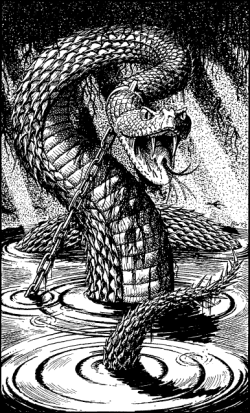
Because narcissists are extroverted, confident, aggressive, and socially commanding, “stalking” is seldom applied to their conduct. Narcissistic pursuit is by allure, false promise, and emotional coercion. The narcissist preys on the expectations of the cognitively normal, which s/he understands intuitively and manipulates with horrible proficiency. S/he often isn’t recognized as a user with no sincere investment in the other’s feelings until it’s too late.

To compound the difficulty either of making categorical pronouncements about narcissistic motives or exposing them, they’re not always known to narcissists themselves. To read most diagnostic explications of their mentality, the uninitiated would come away with the impression that narcissists are sharks, cunning, predatory automatons with false smiles and devious intentions. Anyone who’s had intimate and sustained relations with a narcissist, though, will perceive that s/he’s following what to him or her seem normal, romantic impulses in the moment. The difference is the narcissist is able to disown the moment with reptilian facility when his or her fantasy conflicts with interests of more pressing concern to the narcissist’s ego-preservation—or the interests of the other conflict with the narcissist’s fantasy.

It’s often argued that narcissists aren’t crazy, that they know what they’re doing. But this isn’t strictly so. In the throes of fantasy, narcissistic consciousness may be schizoid. Narcissists may lead parallel lives, even multiple parallel lives, like polygamists with spouses in different cities. And they may indulge an impulse with abandonment…then coldly—oh, so coldly—return to business as usual and plot the necessary steps to erase traces of the lapse. The narcissist runs either hot or cold. There is no warm.

Once the other fails to satisfy the psycho-emotional needs of the narcissist, corrupts his or her fantasy, or by intimacy threatens the autonomy of the narcissist or the reality s/he’s primarily invested in, the narcissist’s pathology is such that s/he can instantly blame the other (whom the narcissist targeted in the first place) for his or her perceived “betrayal.”

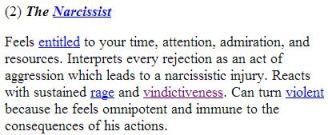
It’s at this stage that the anger and jealousy, identified as the germinal motives of the stalker, rear their scaly heads. For the narcissist, a restraining order may not only satisfy his or her lust to scourge and cripple his or her target; it may also be a way to satisfy jealousy: “Now no one else will have you.”

Revenge for the narcissist, too, is an impassioned fantasy. The preternatural vehemence of the narcissist is dismaying to its target. In a sense, though, it’s just a redirection of ardor that provides a different source of narcissistic supply. The restraining order process accommodates the narcissist exquisitely, allowing him or her to summon police like a dignitary and ham it up for a judge or several of them. S/he owns the spotlight. And once in possession of a restraining order, the spotlight will follow him or her wherever s/he wants.

The monstrous caricature of the other s/he’s authorized to present to friends, family, and acquaintances current and future serves as the perfect surrogate for the other. It delivers all of the attention while being free of any of the expectations.

Copyright © 2014 RestrainingOrderAbuse.com

Targeted by a Narcissistic Sociopath: When a Stalker Obtains a Restraining Order to Dominate and Destroy

“Accumulated forensic, clinical, and social research strongly suggests that the two most prominent emotions of most stalkers are anger and jealousy…. Such feelings are often consciously felt and acknowledged by the stalker. Nevertheless, these feelings often serve to defend the stalker against more vulnerable feelings that are outside of the stalker’s awareness. Anger can mask feelings of shame and humiliation, the result of rejection by the once idealized object, and/or feelings of loneliness, isolation, and social incompetency.

“Anger may also fuel the pursuit, motivated by envy to damage or destroy that which cannot be possessed…or triggered by a desire to inflict pain on the one who has inflicted pain, the primitive impulse of lex talionis, an eye for an eye.

“Angry pursuit can also repair narcissistic wounds through a fantasized sense of omnipotence and control of the victim. Victim surveys, in fact, have noted that the most common victim perception of the stalker’s motivations is to achieve control….”

—J. Reid Meloy, Ph.D., and Helen Fisher, Ph.D.

This discussion’s epigraph is drawn from “Some Thoughts on the Neurobiology of Stalking” and touches on a number of the motives of restraining order abuse both by stalkers generally and, in particular, by those stalkers who are most vulnerable to narcissistic wounds, namely, pathological narcissists.

The narcissist is a living emotional pendulum. If [s/he] gets too close to someone emotionally, if [s/he] becomes intimate with someone, [s/he] fears ultimate and inevitable abandonment. [S/he], thus, immediately distances [him- or herself], acts cruelly, and brings about the very abandonment that [s/he] feared in the first place. This is called the ‘approach-avoidance repetition complex’ [Sam Vaknin, Ph.D., “Coping with Various Types of Stalkers: The Narcissist”].

While procurement of a restraining order is commonly perceived as the definitive act of rejection, possibly rejection of a stalker’s advances, it may in fact be an act of possession and control by a stalker (a perverse form of wish fulfillment). A restraining order indelibly stamps the presence of a stalker onto the public face of his or her target (“I own you”). It further disarms the target and mars his or her life, possibly to an extremity. Per Meloy and Fisher, a stalker achieves control and damages or destroys that which cannot be possessed. The “connection,” furthermore, can be repeatedly revisited and harm perpetually refreshed through exploitation of legal process.

The authors of the epigraph use the phrase attachment pathology. For a stalker who’s formed an unreciprocated attachment or an unauthorized one (as in the case of someone who’s married), a restraining order presents the treble satisfactions of counter-rejection (“I reject you back” or “I reject you back first”), revenge for not meeting the authoritarian expectations of the stalker, and possession/control. Procurement of a restraining order literally enables a false petitioner to revise the truth into one more favorable to his or her interests or wishes (cf. DARVO: Deny, Attack, and Reverse Victim and Offender). A judge is a rapt audience who only has the petitioner’s account on which to base his or her determination. The only “facts” that s/he’s privy to are the ones provided by the restraining order applicant.

In “Female Stalkers, Part 2: Checklist of Stalking and Harassment Behaviors,” psychologist Tara Palmatier identifies use of “the court and law enforcement to harass” as a female stalking tactic (“e.g., making false allegations, filing restraining orders, petitioning the court for frivolous changes in custody, etc.”), and this form of abuse likely is more typically employed by women against men (women tending “to be more ‘creatively aggressive’ in their stalking acts”). Anecdotal reports to this blog’s author, however, indicate that male stalkers (jilted or high-conflict exes and attention-seeking “admirers”) also engage in this form of punitive subversion against women. (Dr. Palmatier acknowledges as much but explains, “I tailor myself writing for a male audience.”)

Clinical terms for this kind of stalking—less stringent in their scope than legal definitions of stalking, which usually concern threat to personal safety—are “obsessive relational intrusion, intrusive contact, aberrant courtship behavior, obsessional pursuit, and unwanted pursuit behavior,” among others (Katherine S-L. Lau and Delroy L. Paulhus, “Profiling the Romantic Stalker”).

For someone with narcissistic personality disorder, someone, that is, who lives for attention (and is only capable of “aberrant courtship behavior”), a restraining order is a cornucopia, a source of infinitely renewing psychic nourishment, because it can’t fail to titillate an audience and excite drama.

(As noted in The Psychology of Stalking: Clinical and Forensic Perspectives, “Axis II personality disorders are…evident in a majority of stalkers, particularly Cluster B [which includes the narcissistic and borderline personality-disordered]”).

Per the DSM-IV, a narcissist evinces:

A. A pervasive pattern of grandiosity (in fantasy or behavior), need for admiration, and lack of empathy, beginning by early adulthood and present in a variety of contexts, as indicated by five (or more) of the following:

1. Has a grandiose sense of self-importance (e.g., exaggerates achievements and talents, expects to be recognized as superior without commensurate achievements).

2. Is preoccupied with fantasies of unlimited success, power, brilliance, beauty, or ideal love.

3. Believes that he or she is “special” and unique and can only be understood by, or should associate with, other special or high-status people (or institutions).

4. Requires excessive admiration.

5. Has a sense of entitlement, i.e., unreasonable expectations of especially favorable treatment or automatic compliance with his or her expectations.

6. Is interpersonally exploitative, i.e., takes advantage of others to achieve his or her own ends.

7. Lacks empathy: is unwilling to recognize or identify with the feelings and needs of others.

8. Is often envious of others or believes that others are envious of him or her.

9. Shows arrogant, haughty behaviors or attitudes.

Correspondences between this clinical definition and what might popularly be regarded as the traits of a stalker are uncanny (e.g., preoccupation with fantasies of “ideal love,” dependence on admiration not necessarily due, interpersonal exploitation, and an inability to identify with or a disregard for others’ feelings). It further suggests why a narcissist wouldn’t scruple about abusing legal process to realize malicious ends.

In “Threatened Egotism, Narcissism, Self-Esteem, and Direct and Displaced Aggression: Does Self-Love or Self-Hate Lead to Violence?”, psychologists Brad Bushman and Roy Baumeister observe that aggressively hurtful behavior is more likely to originate from narcissistic arrogance than from insecurity:

[I]t has been widely asserted that low self-esteem is a cause of violence (e.g., Kirschner, 1992; Long, 1990; Oates & Forrest, 1985; Schoenfeld, 1988; Wiehe, 1991). According to this theory, certain people are prompted by their inner self-doubts and self-dislike to lash out against other people, possibly as a way of gaining esteem or simply because they have nothing to lose.

A contrary view was proposed by Baumeister, Smart, and Boden (1996). On the basis of an interdisciplinary review of research findings regarding violent, aggressive behavior, they proposed that violence tends to result from very positive views of self that are impugned or threatened by others. In this analysis, hostile aggression was an expression of the self’s rejection of esteem-threatening evaluations received from other people.

The DSM-5 notes that for the narcissist, “positive views of self” are everything (and others’ feelings nothing). Diagnostic criteria are:

A. Significant impairments in personality functioning manifest by:

1. Impairments in self functioning (a or b):

a. Identity: Excessive reference to others for self-definition and self-esteem regulation; exaggerated self-appraisal may be inflated or deflated, or vacillate between extremes; emotional regulation mirrors fluctuations in self-esteem.

b. Self-direction: Goal-setting is based on gaining approval from others; personal standards are unreasonably high in order to see oneself as exceptional, or too low based on a sense of entitlement; often unaware of own motivations.

AND

2. Impairments in interpersonal functions (a or b):

a. Empathy: Impaired ability to recognize or identify with the feelings and needs of others; excessively attuned to reactions of others, but only if perceived as relevant to self; over- or underestimate of own effect on others.

b. Intimacy: Relationships largely superficial and exist to serve self-esteem regulation; mutuality constrained by little genuine interest in others’ experiences and predominance of a need for personal gain.

B. Pathological personality traits in the following domain:

1. Antagonism, characterized by:

a. Grandiosity: Feelings of entitlement, either overt or covert; self-centeredness; firmly holding to the belief that one is better than others; condescending toward others.

b. Attention seeking: Excessive attempts to attract and be the focus of the attention of others; admiration seeking.

The picture that emerges from clinical observations of the narcissistic personality is one of a person who has no capacity to identify with others’ feelings, a fantastical conception of love, and unreasonable expectations of others and an irrational antagonism toward those who disappoint his or her wishes.

It’s further commonly observed that narcissists’ antagonism toward anyone whom they perceive as critical of them—that is, as a threat to their “positive views of self”—is boundless. The object, then, of a narcissist’s attachment pathology who rejects him or her (disappointing his or her “magical fantasies”), who challenges his or her entitlement, or who manifests disdain or condescension toward the narcissist (even in the form of sympathy) becomes instead the object of the narcissist’s wrath. As psychologist Linda Martinez-Lewi notes, “For the narcissist, revenge is sweet. It’s where they live in their delusional, treacherous minds.”

Narcissists adopt a predictable cycle of Use, Abuse, Dispose. This pathological repetition can last a few weeks or decades…. With a narcissist, there is never an authentic relationship. He/she is a grandiose false self without conscience, empathy, or compassion. Narcissists are ruthless and exploitive to the core [Linda Martinez-Lewi, Ph.D., “Narcissistic Relationship Cycle: Use, Abuse, Dispose”].

The restraining order process, because it enables a petitioner to present a false self and caters to fraudulent representation, is a medium of vengeance ideally suited to a narcissistic stalker. Its exploitation plays to a narcissist’s strengths: social savvy, cunning, and persuasiveness. Its value as an instrument of abuse, furthermore, is unmatched, offering for a minimal investment of time and energy the rewards of public disparagement and alienation of his or her victim, as well as impairment of that victim’s future prospects.

There are sociopathic narcissists who will not be satisfied until their ‘enemy’ is completely vanquished—emotionally, psychologically, financially. They seek revenge, not for what has been done to them but [for] what they perceive in a highly deluded way…has been done to them [Linda Martinez-Lewi, Ph.D., “Sociopathic Narcissists—Relentlessly Cruel”].

Fraudulent abuse of legal process elevates the narcissistic stalker to prime mover and puppet-master over his or her prey and compensates his or her disappointment of “ideal love” with the commensurate satisfactions of “unlimited power” over his or her victim and an infinitely renewable source of ego-fueling attention. By his or her false representations to the court, the narcissist’s fantasies become “the truth.” S/he’s literally able to refashion reality to conform to the false conception s/he favors.

In conclusion, an observation by psychologist Stanton Samenow:

The narcissist may not commit an act that is illegal, but the damage [s/he] does may be devastating. In fact, because the narcissist appears to be law-abiding, others may not be suspicious of him [or her] leaving him [or her] freer to pursue his [or her] objectives, no matter at whose expense. I have found that the main difference between the narcissist and antisocial individual, in most instances, is that the former has been shrewd or slick enough not to get caught…breaking the law.

Copyright © 2014 RestrainingOrderAbuse.com

Covens, Cabals, and Coercion: On Peer Pressure as a Motive for Restraining Order Abuse

Last month, I emphasized that the evils wrought by the restraining order process aren’t, strictly speaking, conspiratorial in origin. That’s basically true of the macrocosm. On the local level, though, they well may be.

It’s not uncommon for victims of restraining order abuse to report that their false accusers had confederates who spurred them on, lied for or sided with them, or put them up to making false allegations. Some report, alternatively, that they were coerced either by threat or urgent prompting by authorities. They were emotionally bullied into acting: Do it, Do it, Do it.

(Or: Do it or else. Women may be intimidated into seeking restraining orders against their husbands under threat from the state of eviction from government housing or having their children taken from them and fostered out.)

There’s something in us that thrills at seeing the ax fall on someone else’s neck. (If you haven’t read Shirley Jackson’s short story, “The Lottery,” do.) We get excited, like coyotes summoned to partake in the kill. We’re glad to be among the pack.

Although men regularly abuse the restraining order process, it’s more likely that tag-team offensives will be by women against men. Women may be goaded on by their parents or siblings, by authorities, by girlfriends, or by dogmatic women’s advocates. The expression of discontentment with a partner may be regarded as grounds enough for exploiting the system to gain a dominant position. These women may feel obligated to follow through to appease peer or social expectations. Or they may feel pumped up enough by peer or social support to follow through on a spiteful impulse. Girlfriends’ responding sympathetically, whether to claims of quarreling with a spouse or boy- or girlfriend or to claims that are clearly hysterical or even preposterous, is both a natural female inclination and one that may steel a false or frivolous complainant’s resolve.
And, sure, women will lie for women, too. This is something I’ve witnessed personally. Academic types, in particular—women who’ve been cultivated in the feminist hothouse—may well nurse a great deal of animosity toward men in general and be happy for any opportunity to indulge it (manipulating the court can make a Minnie Mouse feel like Arnold Schwarzenegger). A contrasting but also correspondent dynamic is mothers-in-law’s lying about their daughters-in-law (or their sons’ girlfriends). It’s not for nothing that we have a word like catty.

I’ve never heard of men urging other men to acquire restraining orders. When men are egged on, it’s reportedly by a woman who’s jealous of a rival and wants to see her suffer, but men are just as likely to exploit false allegations successfully put over on the courts to smear their victims. My impression is that this is less about attention-seeking than rubbing salt in the wound and fortifying the credibility of their frauds—though attention, particularly female, may be a welcome dividend.

An exceptional case is the person with an attention-seeking personality disorder, whose concoctions may be so extravagantly persuasive that s/he has everyone s/he knows siding with him or her. S/he creates his or her own sensation. Perfectly innocent and well-intentioned chumps may testify on such a person’s behalf firmly convinced that they’re acting nobly (which reinforces their own resolve to self-defensively stick to their stories, even if they’re later given cause to doubt them). Domineering personality types like pathological narcissists, who come in both genders and compulsively lie with sociopathic cold-bloodedness, may even coerce or seduce others into assuming their perspectives. They generate peer pressure and alliance. Narcissists are walking Jiffy Pops in search of a little heat to rub against.

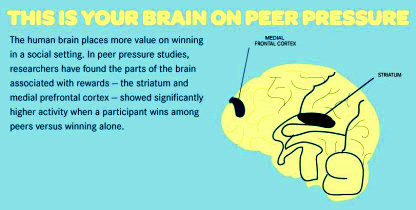
Everything to do with restraining orders is about pressure. Possibly the same could be said about all court procedures involving conflict (real or hyped), but this is particularly true of the restraining order process. Those who game the system often do so to gain attention and approbation or to appease others’ expectations.

If invoking this state procedure failed or ceased to excite drama, its applicant pool would dry up faster than a Visine tear.

Copyright © 2014 RestrainingOrderAbuse.com

Egotists, Narcissists, and Other Self-Seeking Con Artists: On (Restraining Order) Fraud and Its Motives

I came upon a monograph recently that articulates various motives for the commission of fraud, including to bolster an offender’s ego or sense of personal agency, to dominate and/or humiliate his or her victim, to contain a threat to his or her continued goal attainment, or to otherwise exert control over a situation.
These motives will be familiar to anyone who’s been the victim of a fraudulent abuse of legal process and correspond with those of attention- and revenge-seeking restraining order plaintiffs, plaintiffs keen to avoid exposure of extramarital entanglements or otherwise compromising indiscretions or misconduct (such as stalking), and plaintiffs intent upon wresting possession of children and/or property from a partner (and, in one fell swoop, rubbing him or her out).

Excerpted from “The Psychology of Fraud” by Grace Duffield and Peter Grabosky (published by the Australian Institute of Criminology in its Trends and Issues in Crime and Criminal Justice):

“[An] aspect of motivation that may apply to some or all types of fraud is ego/power. This can relate to power over people as well as power over situations. In terms of the former, the sensation of power over another individual or individuals seems to be a strong motivating force for some fraud offenders to the point that it becomes an end in itself. As one confidence man put it:

“‘For myself, I love to make people do what I want them to, I love command. I love to rule people. That’s why I’m a con artist’ (quoted in Blum 1972, p. 46).

“In manipulating and making fools of their victims, some fraud perpetrators seem to take a contemptuous delight in the act itself rather than simply the outcome. As Stotland (1977) points out:

“‘[S]ometimes individuals’ motivation for crime may have originally been relative deprivation, greed, threat to continued goal attainment, and so forth. However, as they found themselves successful at this crime, they began to gain some secondary delight in the knowledge that they are fooling the world, that they are showing their superiority to others’ (pp. 186–7).

“Similar to the sense of superiority over others is the gratification obtained from mastery of a situation.”

Predictably the monograph also touches on narcissistic personality disorder (NPD), one of several personality disorders that lead people to commit frauds on the court, and sketches the dimensions of this cognitive aberration.

“Persons who harbour unrealistic impressions of their own capability, when reinforced by sycophants, lack a reality check and may be more likely to engage in risky behaviour than more grounded or ‘normal’ [types] (Janis 1982).

“This risk-taking would be exacerbated by the indifference to conventional rules of conduct that apply to narcissistic personalities. According to the Diagnostic and Statistical Manual of Mental Disorders, narcissistic personality disorder is a pervasive pattern of grandiosity, a need for admiration and a lack of empathy for others. Individuals with this disorder believe that they are superior, unique, and ‘chosen,’ and they are likely to have inflated views of their own accomplishments and abilities. They focus on how well they are doing in comparison with others, and this can take the form of an excessive need for attention and admiration. A sense of entitlement is evident, and they expect to be given whatever they want regardless of the imposition it places on others. In the workplace, these people tend to overwork others. They demand unquestioning loyalty and are incredulous or infuriated when it is not forthcoming. They are likely to respond angrily to criticism (DSM-IV Task Force 1994, pp. 658–9). Perhaps most relevant to fraud offences is the tendency of the narcissistic personality to usurp special privileges and extra resources that they feel they have an entitlement to, over and above ordinary people. This attitude is captured in the words of Leona Helmsley, a wealthy American subsequently convicted of tax evasion, when she said ‘only the little people pay taxes.’ Due to their ambition, confidence, and ruthlessness in dealing with others, the narcissistic personality may be a high achiever in their chosen field of endeavour.”

This definition bears obvious correspondences with that of the sociopath, another familiar abuser of legal process. Narcissists and sociopaths are statistically rare: 1/100 and 1/25, respectively. If you consider, however, that within a population the size of the United States’ that translates to over 3,000,000 narcissists and over 12,000,000 sociopaths, widespread complaints of fraudulent abuses by these human anomalies are easily credible. They become more credible yet if you further consider that such people, being devoid of moral inhibition, may be far more likely than others to engage in fraud for spiteful or self-serving ends.

Restraining order fraud, which often entails criminal acts like the commission of false reporting and perjury, is commonplace and commonly winked at by the courts. Possibly judges don’t appreciate how attractive and accommodating restraining orders are to frauds. Possibly they don’t appreciate how damaging the consequences of restraining order fraud are to the psyches and fortunes of defendants (among others, for example, defendants’ children). Possibly they don’t recognize how epidemic the problem is. Or possibly…they don’t care.

But should.

Copyright © 2013 RestrainingOrderAbuse.com

[Referenced works in the quoted excerpts above are Deceivers and Deceived by R. H. Blum, “White Collar Criminals” by E. Stotland (published in the Journal of Social Issues), and Groupthink: Psychological Studies of Policy Decisions and Fiascos by I. Janis.]

Lying Back: On Taking the Low Road against Restraining Order Abusers

One of the most common questions that brings recipients of false restraining orders to this blog is how to prevail in an appeals hearing against an unscrupulous liar.

Because restraining orders are easily applied for and typically cost applicants nothing but a lunch break, they’re unparalleled as instruments of malice. With a few strokes of a pen and some calculated fictions conveyed to a judge with the right touch of hysteria, a liar can undo a target of his or her wrath in short order, permanently sullying his or her reputation, subjecting him or her to public disparagement and disgrace, and possibly denying him or her access to home, children, pets, and property. If word gets out, that target may lose his or her job and moreover have a highly prejudicial blot on his or her record that impedes him or her from getting a new one. More than one respondent to this blog has reported being jailed on fraudulent charges or left homeless and destitute.

Multiple restraining orders against a number of people marked for vendetta can even be applied for back to back by a single plaintiff.

False allegations are routinely accepted by the courts at face value—the attention paid to such allegations is scant at best—and if those whom false allegations are leveled against are heard from by the courts at all, it’s only after the allegations against them have been presumed true. An appellant may furthermore be granted no more than 15 or 20 minutes to try to convince the court that it erred in its initial decision. The expectation of a fair and just hearing, therefore, is next to nil.

I’ve spilled a good deal of digital ink over the past 26 months articulating the manifold and manifest problems inherent in the restraining order process, and I’ve offered what limited information and modest advice I could to those who’ve been abused by it.

In doing so, I’ve tried to toe the ethical line: “speak to the allegations and show that they’re false,” “explain to the judge any ulterior motives the plaintiff would have for lying about you,” etc. I’ve counseled, in other words, fighting fire with water.

The more familiar phrase, of course, is “fight fire with fire.” I can’t endorse lying and won’t. But admitting that lying more effectively than your accuser may be the best defense against a false restraining order isn’t a lie.

The sad and disgusting fact is that success in the courts, particularly in the drive-thru arena of restraining order prosecution, is largely about impressions. Ask yourself who’s likelier to make the more impressive showing: the liar who’s free to let his or her imagination run wickedly rampant or the honest person who’s constrained by ethics to be faithful to the facts?

A fraud enters an appeals hearing with the advantage of already having had his or her lies recognized by a judge as true. An honest defendant not only faces the obstacle of disproving what should never have been taken for fact to begin with but must also fend off whatever new lies his or her accuser may have concocted in the meantime or may invent on the spur of the moment.

And that defendant may have all of 15 minutes in which to accomplish this, since restraining order appeals hearings may be allotted no more than half an hour on the court’s docket. A fraud knows exactly what facts to anticipate from an honest person (and can prefabricate false defenses); an honest person flies blind (and in this process, injured), never knowing what’s coming or from what direction.

Unscrupulous restraining order plaintiffs, who may be sociopaths or have borderline personality disorders, may falsely allege violence, bizarre sex acts, stalking, death threats, or worse. And they do so with complete indifference to the effects these allegations (and their being made publicly) have on their victims. Some liars are horrifyingly imaginative and color their frauds with lurid details that would inspire the envy of a professional screenwriter. Some liars—pathological narcissists, for example—are magnetic personalities, besides, who may have devoted followers willing to abet them in a fraud or who may readily persuade those who don’t know any better to take their side.

Should defendants lie?

This question has two possible interpretations:  1. Is it ethically conscionable? Or 2. Is it the only way to defuse an improvised explosive device that could shatter their lives? Depending on which of these interpretations is meant by the question, the answer could be negative or affirmative.

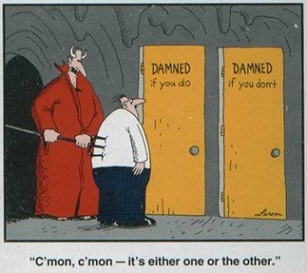
Should citizens in the civilized world ever be placed in the damned-if-you-do-damned-if-you-don’t position of having to lie to the courts to counteract lies to the courts? The answer to that question is easy:  Hell no.

Copyright © 2013 RestrainingOrderAbuse.com

“perjury and sociopaths”: On the Challenges of Contesting Restraining Orders Sought by the Mentally Aberrant, Deranged, or Ill

A recent respondent to this blog detailed his restraining order ordeal at the hands of a woman who he persuasively alleges is a sociopath. He says this label is generally scoffed at by people he explains the matter to and wonders how he could convince a judge of its accuracy.

Since this blog was published nearly two years ago, hundreds have been led to it by search terms that include words and phrases like “sociopath,” “mental illness,” “narcissist,” and “personality disorder” or “borderline personality disorder” (“bpd”).

This should hardly be a source of surprise.

Restraining order applicants aren’t screened based on their psychiatric histories. Sociopaths and narcissists, who are seldom clinically diagnosed in the first place, are moreover cunning liars and manipulators. Obtaining restraining orders—which are issued solely on the basis of brief interviews between petitioners and judges—is not only a simple matter for them but rewards their pathological drives for dominance and revenge.

Characterized generously, the restraining order process is fast-food justice. The ability and opportunity of most defendants to qualify allegations of sociopathy or insanity against their accusers—assuming these defendants even recognize these conditions—is effectively none at all. And unless a restraining order applicant is completely off the wall, his or her allegations won’t even cause a judge to arch an eyebrow. Applicants are in and out of restraining order interviews in a matter of minutes. Sociopaths are the smoothest liars you’ll ever meet, and the insane may be more convincing yet if they wholeheartedly believe their allegations in spite of those allegations’ possibly having no relationship to reality at all.

The imperceptibility of mental disorders is what makes them so difficult to expose (on this subject, see also these related posts).

I could go on about how easily the restraining order process is abused by sociopaths or the otherwise mentally aberrant. And I could describe to you the devastating effects their false allegations have on the lives of those they abuse. Instead I’ll close with some of the relevant search terms that have brought readers here since this blog’s inception. Identical search terms have been eliminated (“beating a narcissistic sociopath,” for example, rolls in regularly).

  • “beating a narcissistic sociopath”
  • “emotional crimes” “sociopathy”
  • #beating a narcissistic sociopath
  • a crazy person filed a restraining order on me
  • a mentally ill sister files false charges in virginia
  • a narcissist filing pfa
  • a narcissist that plays the victim role
  • abuse by a nsrcisistic sociopath restraining order
  • abusice narcissist ruined my life erased
  • antisocial personality disorder and self-victimizing statements
  • antisocial personality mom filed abuse charges against
  • are narcissists con artists?” for order of protection
  • attention seeker false abuse
  • attorneys lawyer in san jose for emotionally abused men by bpd wife
  • attribute mental illness false allegations
  • bdp, false charges,revenge
  • beating a narcissistic sociopath in court false accusations
  • beating a narcissistic sociopath restraining order
  • bi polar ex gets restraining order
  • bipolar and getting a protection order against me
  • borderline ex got ppo
  • borderline ex ruining my reputation
  • borderline false restraining orders
  • borderline mother making false accusations
  • borderline personality and false restraining order
  • borderline personality and restraining order
  • borderline personality boyfriend call the cops with false alligations
  • borderline personality disorder and denied restraining orders
  • borderline personality disorder and false accusations and restraining orders
  • borderline personality disorder and restrainig orders
  • borderline personality disorder and restraining order police
  • borderline personality disorder false accusations
  • borderline personality disorder false allegations restraining order
  • borderline personality disorder false harrassment claims
  • borderline personality disorder false pfa
  • borderline personality disorder getting a restraining order against me
  • borderline personality disorder restraining order
  • borderline personality false domestic violence
  • borderline personality perjury custody
  • borderline personality restraining order
  • borderline personality wife how to stop her ruining my reputation?
  • borderline restraining order
  • borderline teen making false accusations
  • borderline trying to ruin reputation
  • borderline woman and restraining order
  • borderline woman out to ruin my reputation
  • borderline women false accusations of violence
  • borderlines and protection orders
  • borderlines and restrainging orders
  • bpd “false accusations” police
  • bpd and false accusations
  • bpd and restraining order
  • bpd and restraining orders
  • bpd and slander
  • bpd destroying other peoples false allegations, police, court, arrested, crazy
  • bpd ex boyfriend wanting revenge
  • bpd ex filed restraining order
  • bpd ex got ppo
  • bpd ex ruined my reputation
  • bpd false accusations and jealousy
  • bpd false accusations legal process
  • bpd false harassment claims
  • bpd false protective orders
  • bpd false stalking
  • bpd filing protection of abuse order to spouse
  • bpd gf abused me
  • bpd how to deal with false allegations california
  • bpd protective order children
  • bpd restraining order dropped
  • bpd restraining orders
  • bpd restraining orders fraudulent
  • bpd spouse ruined my life
  • bpd threatening to call cops
  • bpd why do they make false accusations
  • bpd wife filing for restraining order based on false accusations
  • bpd wife put restraining order on husband
  • bpd wife ruined my life
  • bpd woman and restraining order
  • california domestic violence false allegations borderline disorder
  • can you secretly videotape a narcissist for proof of perjury
  • civil harassment and narcissistic personality disorder in california
  • crazy ex girlfriend filing fake assault charges on me
  • crazy girlfriend filing fake domestic violence charges
  • crazy girlfriend pfa
  • crazy girlfriend who makes false police reports
  • crazy neighbor got a restraining order on me
  • darvo + bpd
  • darvo and the bpd
  • dealing with sociopaths in court
  • defeating a sociopath
  • defense of false allegations and maryland and personality disorder
  • defense says plaintiff is sociopath
  • destroyed by a narcissis sociopath
  • destroyed by a narcissist sociopath
  • do abusive narcassists like reatraining orders
  • does the bpd woman return after making false allegations
  • ex wife is a bpd and keeps filing bogus restraining orders how to stop this
  • exposing a sociopath narcissist in court
  • false accusations police borderline personality
  • false charges of child sexual abuse and narcissistic personality
  • false police report made in missouri due to mental illness
  • false report by mentallt ill girlfriend az
  • false restraining orders and personality disorders
  • female narcissist revenge
  • female sociopaths family court
  • fighting a sociopath ex husband in court
  • fighting back against false claims made by borderline personality disordered women
  • fighting tro placed on you by a person with bpd
  • fraud narcissist
  • god’s plan for me after bpd wife restraining order
  • harrassment sociopath courts
  • help me, i got punished at work psychopath due incapable work and fraud
  • how can i beat my bpd wife in court
  • how can my narcassist husband that said loved me file and go through with false exparte now all i had is gone
  • how to beat a narcissistic in court
  • how to beat a narcissistic sociopath
  • how to beat a narcissitic sociopath
  • how to beat my sociopath ex gf in court pfa
  • how to beat narcissistic mother in court
  • how to deal with sociopath in court
  • how to deal with mentally ill making false reports against you to the police
  • how to expose a sociopath
  • how to expose a sociopath in court
  • how to fight a psychopath in court protection order
  • how to get rid of a sociopath ex wife + filing false restraining orders
  • how to outsmart a sociolpath in divorce fraud
  • how to protect yourself against false allegations by bpd ex wife
  • how to stop a sociopath from filing false restraining orders + family court
  • how to win against a narcissistic sociopath in court
  • how to win against a sociopath in court
  • husband refusal to submit to bpd false accusations
  • is wise to take back a bipolar daughter that put on me a restraint order but the judge exonerate me?
  • lies and false accusations sociopath ex husband custody
  • malicious sociopathic sister
  • mental and personality disorders
  • mental help dealing with sociopath restraining order
  • mental history restraining order
  • mental illness gets restaining order
  • mental illness protective order
  • mental illness restraining order
  • mental illness took out false ppo against me
  • mental illness, extended family, and restraining order
  • mental+illness+&+no+contact+orders
  • mentally disabled wife files false restraining order
  • mentally ill and restraining order
  • mentally ill daughter filed restraining order
  • mentally ill exwife harassing
  • mentally ill false protective order
  • mentally ill filing false ppo michigan
  • mentally ill keeps makng false allegations
  • mentally ill spouse filed false orders of protection
  • mentally ill stalker filing false police reports
  • michigan ppo put on me by crazy sister
  • my bipolar gf filed a restraining order
  • my bpd ex girlfriend had me served with a tro
  • my mentally unstable daughter mad a false police report what should she do
  • my narcissistic ex put a restraining order on me
  • my wife has mental illness lied on restraing order
  • narcassist and restraining order
  • narcisist court orders
  • narcisist puts restraining order on me , will he come back?
  • narcissism and criminal fraud
  • narcissism and restrainig orders
  • narcissism and restraining order
  • narcissism restraining order
  • narcississ threatens restraining order
  • narcississtic man filing false police reports
  • narcissist above the law
  • narcissist abuse of legal system
  • narcissist an drestraining order
  • narcissist and a civil protection order
  • narcissist and false police reports
  • narcissist and falsifying police reports
  • narcissist and final restraining orders
  • narcissist and lying fabricating lies
  • narcissist and personal protective order
  • narcissist and protective order
  • narcissist and restraining orders
  • narcissist convincing
  • narcissist darvo
  • narcissist ex boyfriend falsely accused me of domestic violence
  • narcissist ex finally got what she want filed restraning order against me
  • narcissist ex girlfriend filed sexual harassment
  • narcissist ex girlfriend puts a restraining violent order on me
  • narcissist exwife put restraining order on me
  • narcissist false allegations
  • narcissist false allegations of stalking
  • narcissist filed a false pfa on me
  • narcissist filed bogus pfa against me
  • narcissist filed bogus pfa against me and it was denied
  • narcissist filed pfa agains me
  • narcissist files for order of protection for revenge
  • narcissist files restraining order
  • narcissist got a restraining order against me
  • narcissist got restraining order against me
  • narcissist has filed restraning order
  • narcissist has restraining order
  • narcissist husband filed fake restrainig order on me
  • narcissist husband filed for divorce and served me a restraining order
  • narcissistic in the civil courts how to beat
  • narcissist lied and got restraining order
  • narcissist lied to police and had me arrested
  • narcissist lies
  • narcissist lying on court affidavit
  • narcissist playing the victim
  • narcissist plays the victim
  • narcissist put restraining order on me
  • narcissist restraining order
  • narcissist restraining order child custody
  • narcissist restraining order on me
  • narcissist restraining order still talking to me
  • narcissist seeking sole custody filed tro
  • narcissist spouse discards
  • narcissist threatened me with a restraining order
  • narcissist wife files assault charge
  • narcissist’s false accusers
  • narcissistic abuse order of protection
  • narcissistic abusive sociopath
  • narcissistic borderline restraining order
  • narcissist domestic abuse
  • narcissistic ex filed restraining order against me for finding out her lies
  • narcissistic mother restraining order
  • narcissistic personality disorder and restraining order
  • narcissistic personality disorder in the family court system
  • narcissistic personality disorder injunction for harassment
  • narcissistic personality disorder restraining order
  • narcissistic revenge
  • narcissistic revenge tactics
  • narcissistic sociopath
  • narcissistic sociopath false accusations
  • narcissistic sociopath in court
  • narcissistic sociopath restraining order
  • narcissistic sociopath women restraining orders
  • narcissistic sociopaths
  • narcissistic spouse accused you of domestic abuse
  • narcissistic threatens restraining order
  • narcissistic woman false domestic violence
  • narcissistic women and false accusations of “stalking”
  • narcissistic women making false statement
  • narcissists accuse me of harsment
  • narcissists and misuse of restraining orders
  • narcissists and restraining orders
  • narcissists are evil
  • narcissists breaking protective orders
  • narcissists make their children lie
  • narcissists restraining order
  • narcissists restraining orders
  • narcissists ruin lives
  • narcissists who try to get protective orders
  • narcissit grudge
  • narcissitic bastard filed a false restraining order on me
  • narcissitic ex husband slandering new husband
  • narcisstic men and restraining orders
  • narcisstic personality disorder and restraining order
  • narcisstists restraining order abuse
  • narrcassist use restraini.comg orders
  • narrcissist and false restraining orders
  • narrsim and not letting go even with a restraining otder
  • neighbor harassment mental illness maryland
  • new petition for change of custody based on false accuasations by exhusband with bpd
  • npd and protection orders
  • npd and restraining order
  • npd disordered people will they threaten to have you arrested on false charges
  • npd restraining order
  • npd sister “restraining order”
  • obssive vindictive narcissist and a restraining order
  • pathological liar and restrainig orders
  • perjury & narcissist
  • perjury and sociopaths
  • personality disorder order protection illinois
  • personality disorders and restraining orders
  • physcopath husband filed false dv
  • protective order mental illness
  • psychopath free restraining order
  • psychopath lied to get restraining order
  • psychopath manipulating a woman to make a false allegations against me
  • psychopath narcissist abuse
  • psychopath put restraining order against me took my house
  • psychopath restraining order pennsylvania
  • psychopath targets roomate for false arrest
  • psychopathic husband had me arrested for dv
  • psychopaths and restraining orders
  • psychopaths entrap their victims
  • psychopaths: what attorneys and judges should know.
  • psyphopath and perjury
  • recourse mental ill ex-spouse slandering
  • restraining order and mental illness
  • restraining order and narcissist
  • restraining order appeal personality disorder
  • restraining order mental illness
  • restraing orders and sociopaths
  • restraining orders borderline personality disorder
  • restraining orders from sociopaths
  • restraining orders in ma for mentally ill
  • restraining orders sociopath and narcissist
  • restrasingn ordre and psycopath
  • revenge of a narcissist after divorce
  • self exaltation and lying by bpd
  • signs of mental illness false accusations against people
  • sociapathic narcissistic ex boyfriend filed restraining order, how do i fight it
  • sociopath & restrainig order
  • sociopath accusing me of harassment
  • sociopath and court orders
  • sociopath and false abuse
  • sociopath and perjury
  • sociopath and restraining order
  • sociopath and restraining orders
  • sociopath as vexatious litigant
  • sociopath behavior perjury
  • sociopath civil perjury
  • sociopath daughter put a restraining order on me
  • sociopath fake police report
  • sociopath false domestic abuse charges
  • sociopath game restraing order
  • sociopath made vile false accusations about me
  • sociopath makes false allegation and forgets
  • sociopath mom files restraining order on her child
  • sociopath narcissist bogus protective order
  • sociopath order protection
  • sociopath perjury
  • sociopath restraining order
  • sociopath restraining order abuse
  • sociopath tricks restraining orders
  • sociopath with a restraining order
  • sociopath narcissist bogus protective order
  • sociopath women restraining orders
  • sociopathic boyfriend threatens with restraining order
  • sociopathic narcissist violence domestic and he had me falsely arrested for self defense
  • sociopaths and orders of protections
  • sociopaths and protective orders
  • sociopaths and restraining orders
  • sociopaths restraining orders
  • socipath protective orders
  • son’s psychopath ex girlfriend keeps harassing him
  • stop narcissist filing motions
  • the narcissist and false accusations of stalking
  • the narcissistic wife and false accusations of abuse
  • the sociopath is making me the victim mentally sick
  • the teenage sociopath and false accusations of abuse
  • type of personality disorder restraining order
  • uk divorce “narcissistic spouse” “false accusations”
  • victims rights and narcissist
  • what do i do about mother of my grandchild having me investigated .she is one with persnality disorder lying to dept of childrens services
  • what to do against falst accusations from a borderline personality disorder
  • what type of person does a sociopathic narcissist target?
  • when a crazy person tries to put a restraining order on you
  • when a narcissist files a restraining order on you
  • when a narcissist files false charges against someone
  • when a narcissist puts a restraining order against you
  • when a wife leaves a husband and then claims false tro bpd
  • who can help with narcissist exhusband knowing everyrhing i do calling filing bogus xharges on me
  • why do bpd women ruin lives
  • why do narcissists play the victim
  • why do sociopaths file restraining orders
  • why has the narcissist put a restrianing order on me
  • win court against narcissist
  • winning an epo hearing against mentally ill wife
  • woman narcissistic sociopath no contact orders abuse
  • women with mental illness that file pfa’s
  • youtube when a narcissist call police with false statment

Copyright © 2013 RestrainingOrderAbuse.com