No False Allegations: On Judges’ Refusing to Acknowledge Restraining Order Fraud

In case you were wondering—and since you’re here, you probably were—there is no gaining relief from false allegations on a civil restraining order. Repetition for emphasis: There is no gaining relief from false allegations on a civil restraining order. Why? Because as far as the court’s concerned, there are no such things.

Among the arts of being a judge is management of information and external perception. It’s as much about what you don’t say and what you don’t formally observe as about what you do, because everything is recorded for posterity and subject to later review (including by the general public).

And as much as the authority of the court depends on popular consciousness of the painful consequences that will ensue if that authority is flouted, it depends even more on the appearance of propriety, dignity, and rectitude.

In a recent post, I emphasized that restraining order injustice isn’t the product of conspiracy. I have to qualify that here, because there is an element of judicial practice that does smack of peer collusion. That element approximates to something like this: “We don’t recognize on record that lying happens, let alone that it happens all the time.” The reason is obvious. The justice and legitimacy of the entire apparatus would be called into question if cases were being dismissed because judges explicitly deemed them “frauds.”

Ask anyone who’s actually extricated him- or herself from false allegations made on a restraining order whether the judge who found in his or her favor acknowledged that the plaintiff lied his or her butt off. What s/he’ll tell you is that the judge found his or her case “more credible.” Or found some other reason to dismiss it, for example, that it had been “incorrectly issued.”

In a courtroom, a judge may wrinkle his or her nose or otherwise betray disgust or distaste when s/he perceives an obvious lie (facial expressions aren’t recorded). What s/he won’t do is say, “Well, that’s obviously a big, fat lie!” Which would, after all, be the honest, upright thing to do (and would nip a malicious proceeding in the bud). It would, besides, make the party who’s been lied about feel a whole lot better.

But we wouldn’t, of course, want that.

In fairness, judges may also decline to recognize false allegations made by plaintiffs as “true.” (Judicial negotiation of facts is largely about staying tight-lipped.) The difference is, because false allegations may sit there on defendants’ public records, judges’ not explicitly recognizing them as true doesn’t matter. A judge’s signing off on the restraining order that those false allegations are smeared on legitimates them, and for all practical purposes (and in the eyes of any who would scrutinize the record) makes them “true.” A judge’s signature, moreover, authorizes a plaintiff to continue to disseminate his or her false allegations as if they were true. It also authorizes another judge who hears the same allegations or who examines the record of the previous case to assume they’re true.

Here’s where the “game” aspect of restraining order adjudication becomes evident, and this is a significant part of what leads many to perceive corruption and conspiracy. Not unreasonably.

False allegations are made. This isn’t conjecture; it’s something any child who’s blamed a broken cookie jar on his or her sibling knows to be fact. People lie.

By forcing judges to give it the gloss of propriety by pretending false allegations aren’t made, the restraining order process debases the dignity and honor of the system judges are sworn to protect.

That’s not a false allegation.

Copyright © 2013 RestrainingOrderAbuse.com

Permanent, Public, and Persuasive: On the Enduring Effects of False Allegations

Freak collisions occur in life. So sometimes do collisions with freaks.

It’s difficult to impress upon people who’ve been spared from such collisions the damage their impact can exert on others’ lives.

Many of the respondents to this blog are the victims of collisions like this. Some anomalous moral zero latched onto them, duped them, exploited them, even assaulted them and then turned the table and misrepresented them to the police and the courts as a stalker, harasser, or brute to compound the injury. Maybe for kicks, maybe for “payback,” maybe to cover his or her tread marks, maybe to get fresh attention at his or her victim’s expense, or maybe for no motive a normal mind can hope to accurately interpret.

The restraining order process is free, nondiscriminatory, and can be abused over and over without consequence to the abuser.

Victims often preface the stories of their ordeals by insistently making it known that not only do they have no criminal record; they’ve never even had a run-in with authorities or any prior familiarity with the courts in their lives. More than one alleged perpetrator of domestic violence who’s responded to this blog is a vegetarian. And all of these vegetarian “batterers” have been women. People who “wouldn’t hurt a fly” are represented to the courts as monsters. And the label sticks.

Like hot tar.

The other day (less than a week before Christmas), someone was brought here wondering how s/he could sue a judge for approving a fraudulent restraining order. It’s unlikely s/he’ll follow through on a very understandable impulse, but if s/he were to go to the monetary and grinding psychic expense of pursuing this end, the likelihood is that s/he’d be run down mercilessly.

The point isn’t just that these things hurt; they don’t stop hurting. A victim of false allegations I corresponded with for some months in 2012, one of the aforementioned vegetarians accused of battery, wrote to me recently to report that she’s still smarting from the betrayal and humiliation over a year later. And this person prevailed against her accuser in court. Even “exoneration” isn’t a guaranteed salve.

And most victims of restraining order fraud aren’t so fortunate. They must wait in a state of constant anxiety for the term of the restraining order to run (a term that may be years), never knowing what new act of treachery to expect.

They’ll stew and fret. They may pursue a legal action of their own. They may employ an attorney (or more than one) to attempt to negotiate a resolution. They may shell out thousands or tens of thousands of dollars. They’ll stew and fret some more. And the probability is their attempts to recover their lives will be met with torturous silence from their accusers and further derogation from the courts. Some will be arrested. Some repeatedly.

A vicious impulse that takes mere moments to act on and satisfy may preoccupy or tear apart years of a victim’s life. Pointlessly. And there’s no “getting over it.” False allegations don’t evaporate or recede into the archives; they’re indelibly imprinted not just on their victims’ minds but on their public faces. Records are permanent, publicly accessible, and persuasive.

Victims of abuses whose toxic ripples are impossible to even quantify are moreover expected by judges and the public to maintain a stoical posture and reasonable tone in spite of them. A judge would evince palpable disgust, for example, at a victim’s expressing a feeling like this one:

WTF.

Copyright © 2013 RestrainingOrderAbuse.com

The Word for Restraining Order Abuse is FRAUD

So complacent toward lying have judges become that restraining order fraud goes over without raising an eyebrow. I’ve known one judge to scoff at the use of the word perjury on reflex, despite being ignorant of the facts he’d been called upon to adjudicate. And, though careless, he wasn’t a dim man.

Perjury, a felony crime, is the false (i.e., fraudulent) representation of a material fact to a judge (including on a sworn document like a restraining order application). A material fact is one that’s likely to influence a judicial decision. To falsely allege you’ve been sexually harassed or assaulted, for instance, is to commit perjury. Perjury is a word all defendants who’ve been falsely accused should know. Chances are they’re victims of more than one materially factual misrepresentation to the court.

The phrase restraining order fraud, too, needs to gain more popular currency, and I encourage anyone who’s been victimized by false allegations to employ it. Fraud in its most general sense is willful misrepresentation intended to mislead for the purpose of realizing some source of gratification. As fraud is generally understood in law, that gratification is monetary. It may, however, derive from any number of alternative sources, including attention and revenge, two common motives for restraining order abuse. The goal of fraud on the courts is success (toward gaining, for example, attention or revenge).

People who are victimized by the restraining order process are rarely students of law and often have had no prior exposure to legal procedure whatever. Words like perjury and fraud, while possibly familiar from having been heard in TV courtroom dramas or read in novels, are mostly alien concepts to the uninitiated. Restraining order recipients have mere days to prepare a defense—if they know they can contest an order of the court at all—and it’s unlikely that they’ll have concepts like these at their command. (I’m a student of words, and it took a lawyer’s familiarizing me with the significance of these two, among others, for me to gain a reasonably firm grasp of their meaning—and this was years after my own day in court. I was a practicing kids’ poet, and words like these weren’t ones I’d ever had call to use. And I’d prefer I were still ignorant of them today.)

Fraud isn’t commonly applied to restraining order abuse (itself an uncommonly used phrase), and it certainly should be, because the restraining order process is assuredly the most common motivator of frauds on the court. This process is usually employed impulsively, is free, and is completed in a matter of moments. Those motivated to use it maliciously—and they’re legion—typically do so in the throes of spiteful passion. They say whatever they believe they need to to achieve their desired ends.

However lacking their stories may be of scrupulous premeditation, though, they’re nevertheless frauds. And they nevertheless work.

The reason for the court’s failure to perceive restraining order fraud derives from its failure to perceive how damaging false allegations are to defendants. Judges aren’t likely to associate fraud with restraining order allegations, believing the term more aptly applied to cases that inflict “real” harm. Restraining order fraud, even when it doesn’t cost a defendant access to his or her home, property, and children, does real harm: anxiety, gnawing outrage, despondency, and depression, which may predictably lead to insomnia, deterioration of health, loss of productivity, and behavioral changes, and may conceivably induce drug or alcohol abuse and homicidal or suicidal ideation. Defendants may lose jobs or job opportunities. They may end up homeless. And these consequences ignore those inflicted on peripheral parties like children, who may also be lastingly traumatized.

The judicial disconnect between restraining order and harm is one defendants against false restraining orders must endeavor to bridge, because even a judge who’s nobody’s fool isn’t likely to get there on his or her own. The restraining order process is virtually automated. Judges know they don’t have to apply a great deal of diligent attention to particulars and consequently rarely do.

Use of the words perjury and fraud aren’t likely to avail restraining order defendants. Of probable value, though, is understanding them. And of definite value to arousing awareness of restraining order abuse and promoting reform of the restraining order process is leading others to understand them.

Copyright © 2013 RestrainingOrderAbuse.com

Narcissism: A Study in Distortion

The narcissist is a study in distortion.

You’d think someone as intently preoccupied with mirrors as the narcissist is would be brutally self-critical. You’d be mistaken, though. The narcissist exalts him- or herself, very possibly in defiance of a host of reasons not to. This isn’t to say the narcissist is immune to negative judgments; it’s to say that instead of responding to reproaches as normal people do and adapting or modifying his or her behavior and perspectives accordingly, the narcissist resents and would have others adapt their perspectives to match his or hers instead.

The narcissist has a distorted sense of his or her own self-worth, distorts perceived slights or criticisms into monstrous proportions, and endeavors to distort others’ perceptions of those who dared to “criticize.”

The temptation is to say that narcissists are masters of both deception and self-deception. “Mastery,” however, implies skill. Narcissists can’t help lying. It’s a propensity to which they’re enslaved. It can therefore hardly be called a talent.

Increasing numbers of visitors to this blog are brought here because they’ve had a brush with one of these piteous people, and it’s damaged them badly.

There’s an attractiveness to detecting mental illness or personality disorders in people who’ve injured us, because it provides us with a label, a way to quantify and qualify misconduct that’s otherwise inexplicable to a normal mind. Typically visitors to this blog have been victims of false allegations leveled publicly, often through the courts, and they’ve discovered the difficulty of exposing the motives of frauds committed by the mentally aberrant: they don’t make sense.

Distortion is very effective at poisoning the minds of others, particularly authorities and judges, because they in particular have no reason to suspect and have been trained to chasten any suspicions they might naturally have of accusers. Suspicion is what they’re supposed to reserve for the accused.

If this sounds backwards, that’s because it is.

Everything to do with narcissists distills to distortion. Narcissists evince all outward signs of plausibility, and outward signs are all most people attend to. Hence narcissists readily induce others to join them in their altered perspectives.

Scrutinize a photograph of a narcissist, and what you may detect in his or her eyes is not only a consciousness of being looked at but a degree of excitement approaching sexual thrill. Those eyes are hotly relishing the attention and may almost seem prehensile, as if they’re not just trying to make an impression but trying to grab the viewer by the collar. A significant measure of what’s called a narcissist’s “magnetism” borders on coercion.

Narcissists have the power of utter faith in their convictions, and they’re no less convinced of falsehoods than normal people are of truths. Their faith in their own frauds is contagious, because most people only perceive lies that are told abashedly, and narcissists are immune to shame and self-rebuke. The mentally ill (i.e., crazy people) are correspondently convincing, because to them illusions of the mind are real. The parallel is telling.

I once read a biography of Ayn Rand that cited an instance of the philosopher’s being thrown into a fit of pique, because someone had caused her to doubt her perceptions (she called her method Objectivism, a word based on objectivity, which means perception of the world honestly and without preconceived notions). Had she ever fallen prey to a narcissist, she’d have probably throttled the mendacious wretch purple.

Copyright © 2013 RestrainingOrderAbuse.com

“I Want My Life Back”: On the Unacknowledged Toll of Restraining Order Abuse

“I want my life back. Restraining orders have stolen everything from me, and I’d give anything to have it back.”

—From “End Restraining Order Abuses”

Here’s what no one on the outside of the restraining order process can possibly grasp: that it can strip from someone, possibly based on nothing but maliciously false allegations, everything that s/he held dear.

That everything may have been what we conventionally regard as the worthiest values in life: home, family, and children. Or that everything may have been a career, an ambition, or sanity, peace of mind, and well-being. It may have been faith in government…or God. Or it may have been good repute.

All of these values are sacred ones and ones protected by our Constitution, and all of these values are vulnerable to casual violation by a state process engineered, intentionally or not, to abet casual violations. Restraining orders not only enable but legitimate attacks that wouldn’t otherwise be possible, let alone legal.

The source of the gnawing outrage so evident in complaints about restraining order abuse isn’t simply false allegations but the eagerness with which they’re accepted as fact by the court and effectively sublimated into fact by application of a judicial signature.

Consider: If someone falsely circulates that you’re a sexual harasser, stalker, and/or violent threat—possibly endangering your employment, to say nothing of savaging you psychologically—you can report that person to the police, seek a restraining order against that person for harassment, and/or sue that person for defamation and intentional infliction of emotional distress. If, however, that person first obtains a restraining order against you based on the same false allegations—which is simply a matter of filling out a form and lying to a judge for five or 10 minutes—s/he can then circulate those allegations, which have been officially recognized as legitimate on an order of the court, with impunity. Your credibility, both among colleagues, perhaps, as well as with authorities and the courts, is instantly shot. You may, besides, be subject to police interference based on further false allegations, or even jailed (arrest for violation of a restraining order doesn’t require that the arresting officer actually witness or have incontrovertible proof of anything). And if you are arrested, your credibility is so hopelessly compromised that a false accuser can successfully continue a campaign of harassment indefinitely. Not only that, s/he can expect to do so with the solicitous support and approval of all those who recognize him or her as a “victim” (which may be practically everyone).

Can a completely innocent person be completely destroyed like this in gratification of a sick impulse by someone with a yen for vengeance or an attention-seeking personality disorder? Totally. The allegations, files, and records (public records) gradually accrete to mock, humiliate, and destabilize that person indefinitely, denying him or her a sense of security and any reasonable expectation of receiving just treatment from his or her own government.

It works this way: police officers and judges have only brief exposure(s) to the matter and, having no investment in it, couldn’t care less either way; people who are on the fence are liable to maintain their perch, being disinclined to get involved; those who know better will express their sympathies, which are kind but powerless to work any sort of remedial or regenerative effect; and those who don’t know any better will swallow a liar’s frauds, because their reactions have been socially conditioned and they have, besides, no reason to doubt the merits of a court’s (or multiple courts’) findings.

It’s a piece of cake.

Liars typically don’t expect to have their frauds challenged, but if they are, those frauds are more likely than not to continue to succeed (the courts are averse to backpedaling, and there’s no oversight). Lies don’t even have to be consistent or particularly cunning, just sensational and dramatically delivered (bigger, more lurid lies are actually easier sells than small ones). The rewards of attention, social sympathy and encouragement, recognition by authority figures, and the sense of power that comes from prevailing over an opponent are furthermore heady and addictive, and easily eclipse any twinge of conscience or fear that a liar may feel.

Victims of abuse are left eating their hearts out while those who’ve abused them can expect to be surrounded by consoling arms. In work settings, those abusers may even end up with promotions.

Copyright © 2013 RestrainingOrderAbuse.com

“restraining order is bullsh*t”: A Lesson in Lying

The previous post concerned lying to get restraining orders, how easily frauds are put over, and the possible value to recipients of false restraining orders of lying better than their accusers.

The quoted phrase in this post’s title, slightly censored, represents an actual search term that has brought several such recipients to this blog.

Among those with no firsthand knowledge of how restraining orders are abused or why, there’s an assumption that by lying, complainants of restraining order fraud mean exaggeration, inflation of allegations that at least bear some correspondence to fact.

This assumption is mistakenly based on the belief that courts only act on proof. Proof is not the standard by which civil matters are judged or the criterion upon which civil restraining orders are approved. Restraining order interviews between applicants and judges are five- or 10-minute screen tests, nothing more; proof is unnecessary.

“But surely you can’t just make things up!” You surely can. Anything. There are no consequences to lying to the police, lying under oath to a judge, or lying on a sworn document unless the district attorney’s office opts to prosecute you, and this seldom happens in civil matters and never in those as low on its list of priorities as restraining order fraud. Statutes that threaten penalties for false reporting or committing perjury are like padlocks: they’re only meant to keep honest people honest.

Not only can people lie to the courts—and with impunity—they can lie BIG.

Not many years ago, philosopher Harry Frankfurt published a treatise that I was amused to discover called On Bullshit (which predictably mounted the bestseller list on the allure of its title alone).

In his book—which is brilliant, in fact, and well-deserving of acclaim—Dr. Frankfurt distinguishes “lies” from “bullshit.” Lies, he explains, have a basic or tangential relationship with the truth, that is, they’re not purely imaginative; they fandango the truth. Bullshit, in contrast to lies, lacks even a passing acquaintance with truth. It’s wholly improvisational. The bullshitter doesn’t “reject the authority of the truth, as the liar does, and oppose himself to it. He pays no attention to it at all.”

False allegations on restraining orders may not be lies simply; they may be bullshit, fabrications that are utterly divorced from reality. A number of respondents to this blog who have been accused of violence, for example, are vegetarian or vegan women who scruple about the welfare of insects and regard violence as unthinkable. Their accusers haven’t merely misrepresented them but reinvented them. The motive? Sheer malice. What correspondence restraining order applicants’ bullshit may have with the truth is antithetical: they allege falsehoods—ones completely estranged from the truth—that they know will most searingly damage their victims.

Success in leading anyone who hasn’t been abused in this way toward realizing that accusers can and do lie is tricky enough; getting them to perceive that allegations may be out-and-out bullshit requires forceful eye-opening.

I can’t responsibly advocate lying. I do, however, acknowledge that since opportunities afforded restraining order defendants to expose the bullshit of unscrupulous accusers may permit them all of 15 minutes to work a miracle, defendants’ following the dictum “if you can’t beat ‘em, join ‘em” has something to recommend it.

The logical extension of there being no consequences for lying is there being no consequences for lying back. Bigger and better.

It could be advantageous, speaking practically not morally, for defendants of false restraining orders to embrace this premise and—instead of trying to deflect turds flung at them—to respond in kind (and even less kindly). Fairness, one of our courts’ fundamental procedural principles, dictates that if judicators are willing to tolerate monkey-cage antics from one side (and moreover reward those antics), they can hardly be averse to bilateral flingfests.

Maybe the only way to prompt this process to evolve is to expose it to its own degeneracy: Monkey see, monkey doo-doo.

Copyright © 2013 RestrainingOrderAbuse.com

Lying Back: On Taking the Low Road against Restraining Order Abusers

One of the most common questions that brings recipients of false restraining orders to this blog is how to prevail in an appeals hearing against an unscrupulous liar.

Because restraining orders are easily applied for and typically cost applicants nothing but a lunch break, they’re unparalleled as instruments of malice. With a few strokes of a pen and some calculated fictions conveyed to a judge with the right touch of hysteria, a liar can undo a target of his or her wrath in short order, permanently sullying his or her reputation, subjecting him or her to public disparagement and disgrace, and possibly denying him or her access to home, children, pets, and property. If word gets out, that target may lose his or her job and moreover have a highly prejudicial blot on his or her record that impedes him or her from getting a new one. More than one respondent to this blog has reported being jailed on fraudulent charges or left homeless and destitute.

Multiple restraining orders against a number of people marked for vendetta can even be applied for back to back by a single plaintiff.

False allegations are routinely accepted by the courts at face value—the attention paid to such allegations is scant at best—and if those whom false allegations are leveled against are heard from by the courts at all, it’s only after the allegations against them have been presumed true. An appellant may furthermore be granted no more than 15 or 20 minutes to try to convince the court that it erred in its initial decision. The expectation of a fair and just hearing, therefore, is next to nil.

I’ve spilled a good deal of digital ink over the past 26 months articulating the manifold and manifest problems inherent in the restraining order process, and I’ve offered what limited information and modest advice I could to those who’ve been abused by it.

In doing so, I’ve tried to toe the ethical line: “speak to the allegations and show that they’re false,” “explain to the judge any ulterior motives the plaintiff would have for lying about you,” etc. I’ve counseled, in other words, fighting fire with water.

The more familiar phrase, of course, is “fight fire with fire.” I can’t endorse lying and won’t. But admitting that lying more effectively than your accuser may be the best defense against a false restraining order isn’t a lie.

The sad and disgusting fact is that success in the courts, particularly in the drive-thru arena of restraining order prosecution, is largely about impressions. Ask yourself who’s likelier to make the more impressive showing: the liar who’s free to let his or her imagination run wickedly rampant or the honest person who’s constrained by ethics to be faithful to the facts?

A fraud enters an appeals hearing with the advantage of already having had his or her lies recognized by a judge as true. An honest defendant not only faces the obstacle of disproving what should never have been taken for fact to begin with but must also fend off whatever new lies his or her accuser may have concocted in the meantime or may invent on the spur of the moment.

And that defendant may have all of 15 minutes in which to accomplish this, since restraining order appeals hearings may be allotted no more than half an hour on the court’s docket. A fraud knows exactly what facts to anticipate from an honest person (and can prefabricate false defenses); an honest person flies blind (and in this process, injured), never knowing what’s coming or from what direction.

Unscrupulous restraining order plaintiffs, who may be sociopaths or have borderline personality disorders, may falsely allege violence, bizarre sex acts, stalking, death threats, or worse. And they do so with complete indifference to the effects these allegations (and their being made publicly) have on their victims. Some liars are horrifyingly imaginative and color their frauds with lurid details that would inspire the envy of a professional screenwriter. Some liars—pathological narcissists, for example—are magnetic personalities, besides, who may have devoted followers willing to abet them in a fraud or who may readily persuade those who don’t know any better to take their side.

Should defendants lie?

This question has two possible interpretations:  1. Is it ethically conscionable? Or 2. Is it the only way to defuse an improvised explosive device that could shatter their lives? Depending on which of these interpretations is meant by the question, the answer could be negative or affirmative.

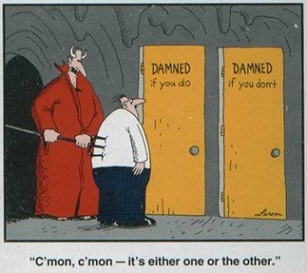
Should citizens in the civilized world ever be placed in the damned-if-you-do-damned-if-you-don’t position of having to lie to the courts to counteract lies to the courts? The answer to that question is easy:  Hell no.

Copyright © 2013 RestrainingOrderAbuse.com

“Why Would a Narcissist Put a Restraining Order on You?”

Questions about the motives of the narcissistic brain like the one that titles this post bring visitors to this blog almost daily (related search terms that have drawn readers here can be found cataloged at the end of this post). Among the blog’s most clicked-on links are those to short essays on the subjects of narcissistic malice and vengeance by Dr. Linda Martinez-Lewi like those I’ve provided in the comments to this page. Dr. Martinez-Lewi is an expert on pathological narcissism (also called narcissistic personality disorder or NPD) who hosts the blog The Narcissist in Your Life. (Investigators into this subject may also find enlightening the writings of Stanton E. Samenow, Ph.D.; Sam Vaknin, Ph.D.; Paul J. Hannig, Ph.D.; and the late and very astute Joanna M. Ashmun.)

Below are some excerpted paragraphs from Dr. Martinez-Lewi’s essays that, contemplated as a series, will lead a person a long way toward an understanding of why malicious abuse of restraining orders to defame, discredit, and demolish targets of their wrath is so attractive to narcissists. (Italics are added.)

Narcissists expect everyone, through their words, gestures, and behaviors to mirror them perfectly. If you fail to do this in their eyes (and they are always looking for imperfection in others not themselves), it causes an unconscious bruise in their brittle egos. Even the smallest mistake or what the narcissist perceives as your mistake will result in the spewing of dark rage. If you do not go along to get along with them perfectly and buck them, you are bumping up against an inflexible, grandiose ego, and there will be hell to pay.

No one says “No” to the narcissist—unless they want to be the recipient of retribution. That is the narcissist’s mindset. These individuals have very rigid personality structures that do not change. They have unbending wills that insist they are always right, that their way is the only one, and…all of those who buck them will be discarded and punished severely. The narcissist plays dirty; [s/he] is a street fighter, a ninja. The narcissist picks the weak spots, the vulnerabilities in his [or her] opponent and knows exactly where and how to turn the screws. We become an opponent of the narcissist when we defy him [or her] and think for ourselves and let him or her know that they can no longer rule our lives. Most people are intimidated by the power and force of the narcissistic personality, especially if this is a person of high professional achievement, financial status, and powerful connections.

There are sociopathic narcissists who will not be satisfied until their “enemy” is completely vanquished—emotionally, psychologically, financially. They seek revenge, not for what has been done to them but what they perceive in a highly deluded way…has been done to them. Narcissists are never wrong—they are incapable of mistakes, because they truly believe that they are perfect. They are capable of persuading even intelligent people that they are the good guy, and their victim is the culprit. With the use of a fake charm, dynamism, [and] sexual wiles, they fool most individuals. A sociopathic narcissist will tear you to shreds….

[N]arcissists or their doubles contact your relatives, in-laws, friends, and anyone who will listen to broadcast blatant lies about your character. This doesn’t happen in all instances, but it is remarkable the lengths these malicious individuals exceed to trash you, putting you at fault and even leading others to believe that you are “crazy.” Even people whom you have trusted…can be flipped to the narcissist’s side, especially if [s/he] has influence where you have lived and deep pockets.

Narcissists never play fair. Narcissists are extreme competitors. Narcissists are very sore losers. When you cross a narcissist in business or your personal life, be prepared for some form of revenge.  Although the narcissist has a full-blown, grandiose ego, beneath the surface [s/he] is subject to narcissistic wounds. His [or her] ego bruises easily. If you beat him [or her] out of a business deal, it is likely that [s/he] will go after you in some way. If you choose to divorce a narcissist, it can go several ways. [S/he] may want to get rid of you and any children you have…and send you out of his [or her] life. In some cases, the narcissist is holding a deep grudge and is determined to collect on what [s/he] knows is his [or hers]. In divorce matters, [s/he] makes outlandish claims and tells outright lies about his [or her] spouse in order to win the battle.

The urge to take revenge runs deeply through the narcissist’s blood. Revenge is as prehistoric as life in the caves. Revenge is an act of retaliation for a perceived wrong or injury—payback time. I have been in contact with many spouses and ex-spouses of narcissists who were shocked by the unrelenting force of their former partner’s revenge tactics. During a divorce from a narcissistic partner, plans for revenge are hatched and played out. One classic ploy is the narcissist’s bullying tactics as [s/he] convincingly threatens to take you down financially and psychologically. Even after the divorce is final, the narcissist continues the Hundred Year War. Many narcissists cannot let go, not because they have ever loved their previous spouse, but for purposes of psychologically destroying the previous partner. Rumor campaigns are ignited to ruin the reputation and social standing of the previous spouse. Threats are made to change custodial agreements, not because the narcissist feels compelled to have more involvement in his [or her] children’s lives but to shake the cage of the ex-spouse. One of the most potent ploys of the narcissist is playing the victim role. When he or she has torn his [or her] ex-spouse’s life to bits for decades, [s/he] makes a quick switch, becoming the recipient of psychological and emotional pain not the narcissistic perpetrator.

Narcissists know how to manipulate their way out of trouble—even if there are serious ethical violations or illegal activities involved. Some narcissists finally tumble, and we watch them finally get their due and pay the consequences. This doesn’t happen often. If you are waiting for your ex-narcissistic husband or wife to be brought down due to his cruel, manipulative, and devastating behaviors toward his family, don’t hold your breath. We cannot put our faith even in the courts to obtain justice. Narcissists find clever ways around legal issues. If they have large sums of money at their disposal, there are situations in which they manipulate the outcome of legal proceedings. I know of cases in which a narcissistic spouse ended up wresting custody control from the other partner.

Dr. Martinez-Lewi’s therapeutic orientation is toward narcissists’ spouses and family members, but her revelations of basic narcissistic motives and tactics are applicable to the situation of anyone who runs afoul of a narcissist, irrespective of how intimate their relationship.

Though this advice of Dr. Martinez-Lewi’s is directed toward soon-to-be ex-spouses, its gist should be taken to heart by anyone in a legal contest with a narcissist: “[B]e sure you hire an attorney who is not only an expert in family law but who is exceedingly savvy about the ruses, tricks, and ploys of the narcissistic personality disorder. Your attorney needs to be highly professional but fearless in facing this relentless, cruel, and destructive individual. An excellent attorney in these situations must be like ultra-marathon runners. Regardless of any obstacle placed in front of them by the narcissist, they are undaunted. Their perseverance is golden.”

There are no depths to which a narcissist won’t stoop to injure the target of his or her wrath. A narcissist will lie to your face about things you did together, so expect him or her to have no compunction at all about lying to anyone else about you, including friends, associates, authorities, and officers of the court.

Because judges of restraining order applications are inclined to presume a plaintiff is telling the truth, they’re readily duped by narcissists, who not only lie glibly and persuasively but with a cold-bloodedness nothing shy of fiendish.

Copyright © 2013 RestrainingOrderAbuse.com

Just because Simon Says Someone’s a Danger Doesn’t Make It So: On the Playground Nature of Restraining Order Administration

Restraining orders occupy an exceptional status among complaints made to our courts, because their defendants (recipients) are denied due process, that is, they have no say in the “preliminary” conclusions formed by judges.

A plaintiff (applicant) waltzes into a courthouse and makes some allegations against a defendant, who is just a name on a form. That’s it. And those allegations are subject to no special standard of verification, which is why the word preliminary in the first sentence is enclosed in quotation marks of contempt: presumed conclusions are seldom revised even when defendants pursue what meager opportunities they may be afforded to challenge and controvert allegations casually leveled against them.

Once a judge signs off on a restraining order, it’s typically a done deal. Which is a problem, because no due process means plaintiffs get to play Simon Says with the truth.

“Simon says he’s a danger.”

Check.

“Simon says she’s a stalker.”

Check.

The restraining order process has devolved into a playground game—all comers welcome!—that is provided a gloss of legitimacy by the stern and forbidding rhetoric and consequences that attend it and the earnest faith it’s afforded by those who don’t know any better, which certainly includes the general public and may include authorities and officers of the court, also.

It’s a sham, a scam, and a shame on our justice system.

Allegations of any nature, including assault (physical or sexual), can be made on restraining orders without applicants being charged a penny or having to satisfy any standard of proof (and these allegations may be permanently stamped on recipients’ public records for anyone to peruse—employers, for example—or entered into public registries). And they can be made straight to a judge who it’s usually the case has been instructed not merely to take those allegations seriously but to accept them at face value.

In fact, contrary to reason, the worse an allegation is, the less it’s to be questioned. The truth of an allegation of violence, especially, is to be accepted as given.

There are even “emergency restraining orders” that may deny their defendants any more than a weekend to prepare a defense (try finding a lawyer on a Thursday who’s willing to represent you on the following Monday), and the standard of credibility applied by judges to applications for these orders is no more demanding. Emergency restraining orders may likelier be approved on reflex because of the implications of the word emergency (I wish I were kidding).

Hysteria is not evidence, and finger-pointing is not fact. Parents scold their children: “Would you jump off a bridge just because everybody else did?” Little kids are exhorted to think independently and not to act on impulse or in sheepish compliance with convention.

Judges, I’m pretty sure, are supposed to do the same.

Copyright © 2013 RestrainingOrderAbuse.com

“Why Would Someone Get a False Restraining Order?”

This question pops up a lot.

Simply rephrasing it can dispel some of the wonderment: “What would someone have to gain by falsely accusing someone else of conduct society condemns?”

Satisfaction of a spiteful impulse might come to mind.

I remember looking at a book once by a guy named Hayduke. It was chock full of ingenious vengeance schemes—pretty much all of them criminal or bordering on it. Lying on a restraining order to sate a hurtful yen, while technically criminal, is never treated as such and may well succeed in criminalizing the target of that yen.

Common allegations on restraining orders are harassment, stalking, danger, and violence. Any of these—and especially the last—can doom a person’s employment or professional aspirations, tear relationships apart, and gnaw at and vex the innocently accused indefinitely (to his or her physical and psychological erosion). Allegations like this from a domestic partner can deprive the same victim of assets and access to loved ones. The use of fraudulent restraining orders to gain the upper hand in child custody battles is pretty much cliché.

And restraining orders don’t just vanish from public record when the expire. In some regions, there are even restraining order registries to make finding out who’s had a restraining order sworn out against him or her conveniently (and alluringly) accessible by the public. The political push is toward making such registries universal.

It’s possible that the question, “Why would someone get a false restraining order?” is prompted by a disbelief that a person could be so unethical. Such a disbelief betrays the questioner’s naivety.

People frame people for crimes or commit crimes to hurt others every day. Abusing restraining orders is just more fail-safe. Perjury (lying in court or on a sworn statement) is never prosecuted, and restraining orders are generally free for the asking. You get the state to exercise your malice for you, it costs you nothing, and everyone extends you their sympathies.

The worst that happens when someone lies to obtain a restraining order is that it’s overturned on appeal. And even if it’s quashed, the recipient of the fraudulent restraining order will have been put through hell (and possibly cost several thousands of dollars in attorney fees). In fact succeeding in having a restraining order vacated (canceled) doesn’t necessarily mean it disappears from public record. Even if a fraud loses, s/he wins.

Clearly then the answer to the question, “Why would someone get a false restraining order?” is “Why not?”

Copyright © 2013 RestrainingOrderAbuse.com

A Liar’s Dream Medium: On Why Fraudulent Restraining Orders Are So Effective

vivid imagination

Restraining order allegations defy physics. They can self-sustain indefinitely fueled on nothing more than human credulity and their gratification of our appetite for the unseemly. They’re paid the same intently lurid curiosity as a wreck on the side of the road.

Auditors can’t avert their ears.

I read stories about the horrors endured by victims of false restraining orders every week, and I’d still listen with sensitivity to someone’s telling me s/he “had to get a restraining order.” It’s an irresistible impulse.

Just the phrase restraining order prompts a preconditioned reflex in the hearer. Live Pavlov’s dinner bell. It’s certainly one of the most prejudicial phrases in the English language, surpassing even “Beware of Dog.”

That’s why the restraining order offers liars a dream medium: whatever they write on one becomes “true.”

It’s that Pavlovian conditioning. We presume that someone who applies for a restraining order has a genuine need. Even police officers and judges, who encounter the unscrupulous and the scheming on a daily basis, take this for granted. They’ve been trained to. Hefty federal grants are provided to local police departments and courts in return for their mandating that their officers submit to that training and consent to accept allegations pursuant to obtaining a restraining order as factual.

And since restraining orders are approved by judges on the spot without the people whom they’re issued against even knowing about them, there aren’t any naysayers to interrupt or object to a liar’s allegations.

A fraud has a captive audience and can just let ’er rip.

The more outrageous a fraud’s lies, furthermore, the more effective they usually are. They’re not only that much likelier to bias police officers and judges but anyone else they’re told to. Where there’s smoke there’s fire, it’s assumed, and frauds who lie big blow a whole lot of smoke.

Counterintuitively, the broader the fraud, the more certain it is to go over.

Upon convincing a judge of his or her need for a restraining order—child’s play—a liar has an official document that says s/he’s a victim who’s weathered a grievous ordeal, and s/he can get even freer with the details when relating his or her “travail” to others. Say you “had to get a restraining order,” and all heads tilt in your direction, keen for the salacious details. Applying for a restraining order—which entails considerably less nuisance, for example, than applying for a driver’s license—creates a sensation (and waves of positive feedback and attention to nourish a liar’s ego).

And the damage to the liar’s victim is done possibly before s/he’s even had the restraining order brought to his or her attention.

To counteract a false restraining order requires that a recipient convince a second judge that the first one (his or her peer) screwed up or was hoodwinked. Not an obstacle easily surmounted. What a wanton fraud can accomplish in a 45-minute excursion to the courthouse may preoccupy and torment his or her victim for years to come.

A restraining order based on lies carefully, or even carelessly, stitched together is like Frankenstein’s monster: once a judge throws the switch, “It’s Alive!” And calamitous.

Unlike Frankenstein’s monster, burning a fraudulent restraining order won’t make it go away.

Copyright © 2013 RestrainingOrderAbuse.com

“A Nightmare That Won’t End”: Dealing with False Allegations

A person who obtains a fraudulent restraining order or otherwise abuses the system to bring you down with false allegations does so because you didn’t bend to his or her will like you were supposed to do.
To contest the restraining order (or whatever other state process was abused) is to once more defy the will of your accuser.

No surprise then that such an accuser will up the stakes on you. Defy subsequent allegations, and your accuser will escalate them further. This is especially the case when your accuser is female. It’s not for nothing that the (mis)quotation, “Hell hath no fury like a woman scorned,” has become immortal. (And it’s not only men who have to fear this wrath; women can be at least as vehemently and doggedly brutal to other women.)

It’s rare for a false accuser to relent.

This is partly due to psychology and partly due to how easily the processes we’re talking about are abused. Restraining order issuance, for example, pretty much follows a revolving-door policy: plaintiffs are in and out in minutes.

Once a foothold is attained, and the paperwork starts mounting in the plaintiff’s favor, she’s committed and feels ten feet tall, and the snowball begins rolling downhill on its way to becoming an avalanche.

One success (that first rubber-stamped round of allegations) assures that a repeat performance will be that much easier. And it is. Both police officers and judges have been “educated” to react paternally to allegations leveled by women, and the worse those allegations are, the more hastily they’re swallowed. Initial allegations once validated by a judge’s signature, moreover, make future allegations that much more credible and future judges’ eyes that much narrower.

Each added strand strengthens and sustains the web of lies and makes it that much more lethal a snare.

Any number of men and women have written to this blog reporting that they never had a run-in with the law in their lives, and now, in the span of a few months, they’ve been transmogrified into Attila the Hun.

And no one gazing down the tunnel from the far end—whether an employer, a neighbor, or a judge—can perceive that it originates with some calculated lies scrawled on a bureaucratic form: “Hey, can I borrow your pen for a sec? I’ll give it right back.”

Lies like these, upon multiplying like cancer cells and having as they do the full force of public policy behind them, can take over lives.

And, relentlessly chewing, chewing, chewing like the parasitic agents they are, destroy them.

Processes that are supposed to defend people from abuse provide liars with the perfect media to make their wildest vengeance fantasies come true.

Copyright © 2013 RestrainingOrderAbuse.com

Ordure in the Court: On False Restraining Orders and What It Means to Get One

I’ve recently tried to debunk some of the myths that surround the administration of restraining orders. This post is about what it’s like to actually be the recipient of one, particularly a fraudulent one.

Among the uninitiated, there’s a belief that there’s some kind of prelude to the moment a constable shows up at your door. There isn’t. Restraining orders are as foreseeable as a shovel to the back of the head.

Constables, incidentally, are nice guys. Like process servers, they’re quick to assert that they’re just the messengers—and they are, of course: they otherwise have nothing to do with anything.

The motive forces behind the issuance of a restraining order are two people: the plaintiff (the person who drops by the courthouse to allege that you’re a fiend) and the judge who interviews him or her for a few minutes before validating his or her allegations with a signature.

Application for a restraining order is a fast-food process designed so that a plaintiff legitimately in need of urgent relief from a stressful situation can obtain that relief quickly and easily. The humor of this is only appreciated by recipients of fraudulent restraining orders petitioned by plaintiffs who are willful manipulators of a system primed to take them at their word.

Restraining orders are issued ex parte: a judge never sees or knows a thing about the person s/he approves a restraining order against. What this means in practical terms is that whatever a plaintiff alleges against you, no matter how damningly untrue, is all a judge has to go on. In other words, you’re guilty until proven innocent. And there’s really no ceiling on what a plaintiff can allege: battery, sexual violations, stalking, theft—you name it. (Plaintiffs who can’t squeeze all of their allegations into the blanks on the restraining order form are allowed to use a separate piece of paper.)

The plaintiff doesn’t have to actually prove anything. The burden is entirely upon you to discredit whatever the plaintiff alleges, and what s/he alleges is only limited by his or her ethics if s/he has any. Otherwise what s/he alleges is only limited by his or her imagination and malice.

Consider what your worst enemy might relish having permanently stamped on your public record. At the moment a restraining order is applied for against you, it’s a fair bet its plaintiff is your worst enemy.

Judges, who should know better than anyone the lengths people will go to to injure one another, have been instructed to react mechanically in the presence of certain criteria like claims of threat or danger. They don’t know the plaintiff. They don’t know the defendant. They’re often just responding to cues without letting much deliberation interfere. They don’t have to worry about professional censure, because this is established practice.

So. A plaintiff waltzes into a courthouse, takes a number and fills out a form, waits to see a judge, makes his or her plea, and more than likely leaves the courthouse feeling validated by the judge’s approval of his or her restraining order, regardless of whether the allegations on that order bear any correspondence to the truth. S/he’s feeling high and righteous (and possibly wickedly gratified).

The defendant is greeted the next day by an officer—at his or her home and possibly in front of friends, family, and/or neighbors—and served with an order from the court that may accuse him or her of violence, stalking, or other perversions and that warns him or her in no uncertain terms that s/he’ll be arrested for any perceived violations of that order. (S/he may alternatively be forcibly removed from that home on the same basis with nothing but the clothes on his or her back and denied access to children, pets, property, money, and transportation—for a year, a number of years, or indefinitely.)

It’s estimated, based on statistics extrapolated from government studies, that one in five recipients of restraining orders is pretty much the person his or her accuser has represented him or her to be, has pretty much done what s/he’s been accused of doing, and that whatever that is is bad enough that s/he shouldn’t be much surprised by a knock on the door from a person in uniform.

For the other 80% of restraining order defendants—recipients of orders that were either dubiously necessary or based on false allegations—their lives may well come to an abrupt halt. Recipients of fraudulent restraining orders, especially, may be traumatized by feelings of gnawing outrage, betrayal, mortification, and impending doom. The rhetoric of restraining orders is calculated to inspire dread—maybe so most recipients simply slink away into a gloomy corner. It reflects better on the court and its statistics if restraining orders stick.

Insomnia, persistent feelings of vulnerability and distrust, anxiety, depression, retreat—the stress responses people report are predictable and are ones, obviously, that can lead to physical and psychological illness, sidetracked careers, and neglected, scarred, or broken relationships. In most cases, restraining orders that do stick—and that’s most of them—never come unstuck. The stink follows you wherever you go.

Even the rare few who manage to extricate themselves from trumped-up allegations, usually with the help of a competent attorney, are never the same. What may have been an attention-seeking stunt performed by some pathetic schemer over a lunch break leaves a permanent impression.

Like a shovel to the back of the head.

Copyright © 2013 RestrainingOrderAbuse.com

The Real Obstacle to Exposing Restraining Order Fraud: Blind, Gullible Faith

What most people don’t get about restraining orders is how much they have in common with Mad Libs. You know, that party game where you fill in random nouns, verbs, and modifiers to concoct a zany story? What petitioners fill in the blanks on restraining order applications with is typically more deliberate but may be no less farcical.


Consult any online exposition about restraining orders or a similar legal remedy for harassment or threat like the law against telephone (or “telephonic”) harassment, and you’ll find it’s taken on faith that someone seeking such a remedy has a legitimate need.

And it’s not just taken on faith by expository writers but by cops and judges, too, who’ve been trained to react paternally, especially to allegations of threat made by women—as, in the age of feminist ascendency, we all have to some extent by dint of cultural osmosis and conformity.

I mention the law against telephone harassment, because its ease of abuse was recently brought to my attention by a respondent to this blog. What this law is meant to do is provide relief from harassing callers like cranks, heavy breathers, or hangup pranksters—or to get people off your back who are threatening you.

How, you might ask, does someone prove what was said or exchanged during certain telephone calls? S/he doesn’t. Unless the calls were recorded, there’s no way a third party can know what transpired. It’s presumed that someone who complains is telling the truth (and what’s supposed to be presumed, of course, is that the person who stands accused is innocent).

The insurmountable unh-duh factor here is that someone with an ax to grind and no scruples about lying to cops and judges can make up any story s/he wants: “He said he was going to burn my house down!”

Now, let’s say you have to defend yourself against an allegation like this and what you really said was, “Hey, Sally. I just called to say thanks. That fondue you sent over was delicious!” And maybe you called back later to get the recipe. And maybe you really thought the fondue—or whatever it was—was revolting, and you think Sally is certifiably bats, but your sister said to be nice to her. And maybe Sally asked you over to see her collection of porcelain ballerinas, and you politely declined and inadvertently hurt her feelings, and now Sally feels spurned and hates your guts.

How do you prove you didn’t threaten to burn Sally’s house down? Or to eat her cat with some fava beans and a nice Chianti?

You can’t. The burden of proof that should be your accuser’s is yours. Justice, which is supposed to be blind, is instead blindly credulous: “Yeah, yeah, and then what happened?”

Restraining orders work the same way and are just as easily abused by wanton frauds (in fact, they too can be based on telephone calls). Police officers and judges have very literally been trained to accept the stories they’re told like baby birds awaiting a regurgitated meal.

Any number of people have written in to this blog whose lives have been highjacked by vengeful liars, attention-seekers, embittered (ex-)spouses or (ex-)lovers, psychopaths, or flat out predators. Many, targeted by the particularly and devotedly malicious, have even been jailed on false allegations. Their personal and professional lives have been scarred if not derailed or demolished.

They plan to sue. They plan to seek media attention. They plan to write a book (or, um, start a blog). Being vindicated from obscene lies validated by a complacent judge or earnest cop becomes their mission in life.

Sound mad? If it does, that’s because the same thing hasn’t happened to you.

Copyright © 2013 RestrainingOrderAbuse.com

Some Myths about Restraining Orders

FALSE: Restraining orders are mostly sought against batterers.

Redress of domestic violence was the original impetus behind the conception of restraining orders 30 years ago. Today, however, violence is seldom a factor in restraining order cases. This isn’t because violence has been stamped out—far from it—but because relative to the vast number of restraining orders petitioned from our courts each year in which violence plays no part at all, those involving violence or allegations of violence are few. As many restraining orders may now be based on Facebook annoyances as on domestic assault.

FALSE: Restraining order fraud happens only occasionally.

Fraud of a greater or lesser kind is probably more the rule than the exception. Allegations made on restraining orders are rarely without a subjective element: I feel harassed, I feel afraid, I feel in danger. Judges are responding more like advice columnists when they sign off on restraining orders than they are like criminal scientists, that is, they’re responding to alleged emotional states more than anything concrete. “I feel afraid” may in fact be the only allegation needed for an applicant to have a restraining order approved. Disregarding whether this assertion should be sufficient grounds for a restraining order’s being issued, allegations of fear can be falsified, obviously, or greatly exaggerated to mask any number of ulterior motives. Maybe someone is really just peeved and feeling spiteful. Maybe one domestic partner has designs on the other’s property or wants to gain sole custody of the kids. Maybe a dissatisfied boyfriend or girlfriend doesn’t want to make a difficult break-up call. Maybe an adulterer doesn’t want news of an affair getting back to his or her spouse. Maybe someone has a pathological need for attention (“Save me!”). Or maybe someone just wants to trash someone else’s life for the sheer wicked satisfaction of it. Neither restraining order applications nor their applicants receive any special scrutiny. An applicant is in and out of the courthouse door in less than an hour. And most of that time is spent filling out the form(s) and hanging around to rap with a judge for five or 10 minutes.

FALSE: Only residents of trailer parks receive restraining orders.

Restraining orders are issued to people in all economic brackets and fields of employ and who have achieved any level of scholastic or professional success. Those who’ve responded to this blog over the past two years are people with advanced degrees (and students seeking them), teachers, police officers, attorneys, public officials, and businessmen and -women, among others. In fact most respondents who allege they’re victims of false restraining orders are both highly sensitive and highly literate.

FALSE: Only guttersnipes defraud the courts to obtain restraining orders.

Casual lying or sensationalizing of allegations cuts across all economic and social divides. Truly committal and calculated lying, though, seems more common among the intelligent, educated, and socially successful—whose credentials, moreover, make a fraud that much more plausible in the eyes of a judge. Remember we’re talking here about a five- or 10-minute screen test. A successful performance in a restraining order interview doesn’t have to be Oscar-worthy. With intelligence, education, and social success, also, come a surer faith in one’s personal value and entitlement to special treatment. The greater someone’s sense of entitlement, the greater his or her sense of being above the law. Movers and shakers are accustomed to viewing others as competitors who either need to be wooed, subdued, or eliminated. Cut-throat comes easier and more naturally to them than it does to soccer moms. The politically oriented are more practiced at, adept at, and indifferent to lying to achieve their desired ends. They perceive life and the manipulation of others as a game.

FALSE: The issuance of restraining orders is fact/evidence-based.

Though they invariably criminalize their recipients by mere implication, restraining orders are civil not criminal instruments. Consequently no standard of proof is applied to them at all. Because they’re issued ex parte, furthermore, their sole basis is the word of their applicants and those applicants’ representations/interpretations of whatever evidence they may provide to the judge during a few-minute interview. Restraining order recipients are completely in the dark until a constable shows up on the lawn, and if they don’t immediately appeal, no contradictory testimony or evidence is so much as heard by the court, let alone considered. A judge doesn’t even know what the person looks like whom s/he’s issued a restraining order against.

FALSE: Having a restraining order on your record is no biggie.

Restraining orders routinely implicate their recipients as serial harassers, violent threats, sexual deviants, and stalkers (in sum, sickos). Allegations of this sort don’t have to be made explicitly; there are little tick boxes on the forms that allow them to be made implicitly. And just the phrase restraining order conveys these connotations, irrespective of what’s alleged. Not only are restraining orders public record and subject to discovery by employers or would-be employers, significant others, authorities, and officers of the court; there are also movements afoot to have restraining order recipients cataloged in registries like sex offenders, and some such registries already exist. These registries don’t just make the names of restraining order recipients conveniently available to the public; they make finding them out enticing. Those falsely accused on restraining orders of the behaviors identified above are psychologically traumatized and may be indefinitely tormented by fraudulent allegations that endure on public record to corrupt all aspects of their lives, in extreme cases causing social isolation tantamount to false imprisonment. Respondents to this blog have wondered if they’re allowed to relocate, to travel, to do volunteer work, to become police officers, to adopt, or even to talk to other people.

I’ll debunk other misconceptions concerning restraining orders in time, possibly by making additions to this post. One of the most common of these is manifested in the question, “Why would someone lie to get a restraining order?” Below is a brief response to this question lifted from this blog’s Q & A page (see also here):

There are many [reasons]. Here are some: to spitefully subject the defendant to public humiliation and/or to ruin him or her personally or professionally (petty revenge), to gain custody of children or possession of property from a domestic partner, to terminate an illicit relationship (or gag an extramarital friend or lover so s/he feels intimidated and can’t speak to your spouse), to lame or discredit a romantic or business rival (exes’ new spouses or love interests are popular targets), to gain power or leverage over someone (stalkers have obtained restraining orders against their victims), or simply to get attention.

In short, there are no limits on the ways people can suck when they’re handed a golden ticket to.

Copyright © 2013 RestrainingOrderAbuse.com

“Do I Need a Lawyer?”: On Combating Restraining Orders

nutcracker
“Do I need a lawyer?” is a question that commonly brings restraining order defendants to this blog and other sites like it.

No one wants to shell out thousands for an attorney to bat away allegations made on a restraining order that may have been concocted in a fit of pique by an embittered friend, a jealous ex, or a crazy neighbor. Too, it’s often the case that allegations leveled by restraining order plaintiffs are of a kind no one wants to advertise to strangers, let alone friends and family. Just the implications of the phrase restraining order are enough to make most people recoil.

I know someone who applied to the mayor for a character reference after she was falsely accused of domestic violence—on a restraining order—by a married friend she’d briefly renewed an association with. Sounds insane, right? The judge ultimately tossed the case after observing that the allegation wasn’t even applicable, because the plaintiff and the defendant weren’t in a domestic relationship. But that didn’t cause a judge any hesitation in approving the restraining order in the first place, and imagine what it cost this woman emotionally to have to explain the matter and ask for help. Imagine further if she had been a he, and you can appreciate the horror of fighting these kinds of allegations, which are validated by judges on a modicum of evidence, if any, and which neither cost nor risk their plaintiffs anything to make. Restraining orders are cheap or free to get, and no one is ever actually jailed for lying to get them.

I did a quick scan today of top Google returns for the term “lying to the court.” Most commenters weighed in that lying = perjury, which is a crime, so beware. It’s true that lying about a material fact in court (a fact, that is, that’s likely to influence a judge’s opinion) is a statutory crime. A felony, no less. Equally true, though, and much more pertinent is that lying isn’t prosecuted. So there’s nothing really for a fraudulent plaintiff to have to be wary of except maybe a little embarrassment if actually caught in a lie (and most plaintiffs, of course, aren’t aware that lying to a judge is a crime, so it’s not even on their minds).

Someone who’s morally bankrupt enough to lie to a judge in the first place isn’t going to hesitate because of the risk of shame if s/he’s caught. Shame is an emotion to which s/he’s obviously immune, anyway.

In the administration of restraining orders, the ideal of justice isn’t given priority. Restraining orders are issued ex parte, which means they’re approved without the judge’s having the faintest idea who s/he’s issuing a restraining order against. The only person the judge hears from is the plaintiff, and hearings to obtain restraining orders are typically 10-minute affairs.

Talk show host David Letterman was famously issued a restraining order petitioned by a stranger who lived in another part of the country. The judge didn’t think twice about rubber-stamping the thing and moving on to the next applicant.

Defendants don’t need attorneys; it’s perfectly lawful for them to defend themselves in an appeals hearing. Whether defendants need attorneys to better their chances of a favorable verdict is a different question entirely. David Letterman, it should go without saying, had a team of them. And it should come as no surprise that they shredded the restraining order to confetti.

A cynical answer to the question of whether defendants need attorneys to improve their odds of beating a bum rap is that defendants who can afford attorneys are perceived as deserving greater consideration than ones who can’t (or who don’t know enough to seek counsel—or who are hoping they can just quietly make the whole thing go away on their own). This answer doesn’t jibe with the judicial canon that everyone should be treated the same, but that doesn’t mean it isn’t true. Because restraining orders are issued ex parte, the idea that fairness obtains at any stage of the process is clearly dubious.

Truth and falsehood in judicial proceedings are, besides, very relative things. For truth to even exercise its power to dispel lies depends on how effectively a defendant can make it plain to the judge. As straightforward as a naïve defendant might believe this to be, it’s not as simple as stating facts that contradict fraudulent testimony or producing some evidence that’s expected to be conclusive. The judge might decide that that evidence is irrelevant or that the lie it exposes is immaterial to the case. Or s/he might decide s/he doesn’t like the defendant period. Can you lose a case because the judge doesn’t like you or likes the plaintiff better? Sure. Does that have anything to do with the truth of the plaintiff’s allegations against you? No.

Representation by an attorney isn’t a guarantee of success. The mere presence of one, though, will give you a degree of credibility you wouldn’t otherwise have. An attorney with courtroom experience, furthermore, has presentational skills that you lack. Restraining order appeals hearings are very brief, judges tend to be skeptical of defendants (particularly men), and even a self-styled Perry Mason may find him- or herself stammering and squirming once s/he’s in the hot seat under the glare of the judge.

There’s the possibility, too, that the plaintiff will have an attorney, and attorneys aren’t known either for playing fair or for showing mercy to their opponents. Some attorneys—gasp—are even professional liars. Several respondents to this blog, in fact, have had false restraining orders petitioned against them by attorneys who were ex-lovers or -spouses or—in one case—a parent. The restraining order process, more than any other, brings out the worst in human nature.

If you’re the defendant in a restraining order case, especially one grounded on fraud, get an attorney.

Now.

Copyright © 2013 RestrainingOrderAbuse.com

Crying Wolf: On Attention-Seeking Personality Disorders and Restraining Order Abuse

I this week came across an online monograph with the unwieldy (and very British) title, “Drama Queens, Saviours, Rescuers, Feigners, and Attention-Seekers: Attention-Seeking Personality Disorders, Victim Syndrome, Insecurity, and Centre of Attention Behavior,” which pointedly speaks to a number of behaviors identified by victims of restraining orders who have written in to this blog or alternatively contacted its author concerning the plaintiffs in their cases.

What caught my eye, especially, is that this monograph appears on a site titled, BullyOnline.org (now defunct).

The popular perception of restraining orders is that they’re sought by plaintiffs to remedy bullying. The monograph I’ve referenced doesn’t speak to restraining orders, per se, but its revelations about attention-seeking personality disorders are very applicable to abuses of restraining orders and are interesting because they turn the popular perception of restraining order plaintiffs’ motives on its head.

Victims of false restraining orders are urged to consult this monograph for language that may be of assistance both in defining the motives of fraudulent plaintiffs and in cementing an understanding of the psychological exigencies that underlie those motives. Of particular relevance to the subject of this blog are the following personality types sketched by the monograph’s author:

The manipulator: she may exploit family relationships, manipulating others with guilt and distorting perceptions; although she may not harm people physically, she causes everyone to suffer emotional injury. Vulnerable family members are favourite targets. A common attention-seeking ploy is to claim she is being persecuted, victimised, excluded, isolated, or ignored by another family member or group, perhaps insisting she is the target of a campaign of exclusion or harassment.

The mind-poisoner: adept at poisoning people’s minds by manipulating their perceptions of others, especially against the current target.

The drama queen: every incident or opportunity, no matter how insignificant, is exploited, exaggerated, and if necessary distorted to become an event of dramatic proportions. Everything is elevated to crisis proportions. Histrionics may be present where the person feels she is not the centre of attention but should be. Inappropriate flirtatious behaviour may also be present.

The feigner: when called to account and outwitted, the person instinctively uses the denial-counterattack-feigning victimhood strategy to manipulate everyone present, especially bystanders and those in authority. The most effective method of feigning victimhood is to burst into tears, for most people’s instinct is to feel sorry for them, to put their arm round them or offer them a tissue. There’s little more plausible than real tears, although as actresses know, it’s possible to turn these on at will. Feigners are adept at using crocodile tears. From years of practice, attention-seekers often give an Oscar-winning performance in this respect. Feigning victimhood is a favourite tactic of bullies and harassers to evade accountability and sanction. When accused of bullying and harassment, the person immediately turns on the waterworks and claims they are the one being bullied and harassed—even though there’s been no prior mention of being bullied or harassed. It’s the fact that this claim appears after and in response to having been called to account that is revealing. Mature adults do not burst into tears when held accountable for their actions.

The abused: a person claims they are the victim of abuse, sexual abuse, rape, etc. as a way of gaining attention for themselves. Crimes like abuse and rape are difficult to prove at the best of times, and their incidence is so common that it is easy to make a plausible claim as a way of gaining attention.

The victim: she may intentionally create acts of harassment against herself, e.g., send herself hate mail or damage her own possessions in an attempt to incriminate a fellow employee, a family member, neighbour, etc. Scheming, cunning, devious, deceptive, and manipulative, she will identify her “harasser” and produce circumstantial evidence in support of her claim. She will revel in the attention she gains and use her glib charm to plausibly dismiss any suggestion that she herself may be responsible. However, a background check may reveal that this is not the first time she has had this happen to her.

Many respondents to this blog—victims of lovers, spouses or ex-spouses, friends, coworkers, neighbors, or family members—have reported serial behaviors of the aforementioned sorts, and some have discovered that plaintiffs who have sought restraining orders against them are not first-time applicants. One or more of these personality types (or a merger of them) is likely recognizable to most victims of restraining order abuse.

Separate profiles on the “serial bully,” the “attention-seeker,” “narcissistic personality disorder,” and “bullies in the family” appear on the referenced site, and its author estimates that 1/30 people fit its profiles.

Hold this statistic up beside the one propounded by psychologist Martha Stout in her book, The Sociopath Next Door, that an estimated 1/25 people fit the clinical definition of “sociopath”—someone, that is, who’s devoid of moral compunction/empathic identification altogether—and it’s a reasonable proposition that an abundance of allegations made to officers of our courts derive from calculated hokum and that a goodly percentage of restraining orders, far from being sought out of a need for remedial relief, are in fact exploited as instruments of abuse or employed to gratify their plaintiffs’ need to have all eyes focused on them.

Copyright © 2013 RestrainingOrderAbuse.com

“a restraining order ruined my life”: A Partial Catalog of Search Engine Queries Leading to This Blog on a Single Day

The 148 search engine terms that appear below—at least one to two dozen of which concern false allegations—are ones that brought readers to this blog between the hours of 12 a.m. and 7:21 p.m. yesterday (and don’t include an additional 49 “unknown search terms”).

Were it the case that only 12 of the thousands of restraining orders issued on a given day were based on false allegations, the number of fraudulent restraining orders generated by our courts in a single year would be 4,380 (the recipients of which may have to live, for example, with false allegations of stalking or domestic violence on their public records, and may besides have been forcibly evicted from their homes, possibly at gunpoint). This absurdly conservative casualty toll of restraining order abuse ignores lives peripherally affected by it, including those of spouses, boy- and girlfriends, and children and other family members.

It’s in fact estimated by extrapolation from government studies that a majority of the two to three million restraining orders issued each year are either “unnecessary” (that is, frivolous) or grounded on trumped-up allegations. Statistics concerning restraining orders (for example, the number of them that are thrown out on appeal, often at a cost of thousands of dollars to their defendants) either aren’t compiled or aren’t made readily available to the public by our judicial system—nor is there any way of determining the incident rates of depression, stress-related injury and disease, alcoholism and drug abuse, job and income loss, suicide or premature death, etc. linked to restraining order abuse.

The number of plaintiffs prosecuted for committing felony perjury to obtain restraining orders is zero.

  • due process in restraining order
  • can a police officer work in a town if someone has a restraining order against them
  • dated a manipulator whose threatening me with a restraining order
  • how much does it cost to heat a restraining order
  • state puts restraining order
  • fighting exparte maryland
  • does my husband have the right to slander my name to my doctor
  • wisconsin consequences of false accuse get t restraining order harrassing non-violent
  • can u beat pfa in ohio if you have prior mental issues
  • can you get a protective order cause of a threatening phone call
  • can i include my girlfriend in a restraining order
  • court order protected party lets restrained party contact
  • my friend called the police and gave a false statement. this person owes me money and now i cant call or talk to him. how do i get my money?
  • ex abusive restraining order broken uk
  • can he make a restraining order against me
  • court order to stop me being approached
  • if someone files a police report on me for saying i would slap them but i didn’t and they threw a book at the door i was exiting out of who would get charged
  • how long do you have to wait to file a restraining order from the time you filed a police report?
  • is posting pictures of someone on facebook who has a pfa illegal?
  • can you put a restraining order on your mom
  • a restraining order ruined my life
  • wife filed restraining order against me
  • odds of getting a restraining order
  • can a restraining order be filed against an officer
  • what happens if i violate my restraing order in the us
  • if i dont want to press charges will they drop the restraining order
  • i was violent ny girlfriend wont take me back
  • restraining order aginst crazy ex boyfriend houston texas law
  • peace order in new york for a church’s
  • how does a lawyer handle a defendant for restraining order in pennsylvania
  • what happens if someone avoids being served a restraining order
  • order of protection for stalking-does it go on your record
  • can my adult son take legal action if i try to call him?
  • what happens if you run from the cops while they’re trying to serve you a restraining order
  • is there a protective order against me without being served
  • what type of attorney do i hire to prosecute malicious prosecution
  • can i email to offer a settlmeent to someone who has a tro on me
  • pressing charges againstfraudulent restraining order
  • how to get a restraining order against someone who has one against me
  • can you charge someone with fraud without concrete evidence ny
  • expunging ex parte orders missouri
  • how to stop someone from filing false lawsuit
  • restraining order in washington can i my attorney represent me?
  • how to protect yourself against false accusations protective order hearing
  • how long before a ppo expires if u never get served with it
  • can i send a email to someone who issued me a tro offering a settlement
  • defemding yourself against a civill harrassemnt order ca
  • can i get in trouble for responding to my ex if there is a no contact order
  • counter restraining order
  • my wife is the plaintiff and broke her own protection order in kansas is it still in effect?
  • if u never physically harmed someone can they put a restraining order on you
  • can you appeal a protective order entered against you
  • do you have to notify your job you have a ppo against someone
  • is it put defendant in better position if plaintiff dies?
  • what to do if served with an order of protection arizona
  • what happens when a restraining order is dropped
  • restraining orders cause women to get hurt
  • can a restraining order be issued if charges are dropped
  • narcissistic friends and family
  • court ordered protective order for minor expires
  • should i notify my job about peace order
  • is it legal for a lawyer to call me and say i have a court date but not serve me by paper?
  • can i file a pfa against an exlovers new girlfriend
  • is it easy to ask for more distance in a restraining order
  • can you report protection order based on suspicion only
  • how to get a court order lifted off my child, i dunno if social had it on all my girlfriend
  • do they put date i went on restraining orders
  • husband under protection order rules
  • can i file protective order on someone who has filed one on me
  • my wife wanted temporary support and my lswyer was able to fight it and let the status quo remain
  • can an order of protection be placed without pressing charges in nys
  • my husbands girlfriend filed a restraining order against me so they can try to take my baby away what can i do
  • tro was dropped but i want to prove she lied
  • if i call someone a name can they get a restraining order against me
  • how to sue my daughters mother for filing a false claim
  • what to do if someone files a false restraining order against you
  • can i speak to the judge for a restraining order before my court date?
  • can court provide lawyer for defendant with restraining order
  • what to do if ex girlfriend files ppo an
  • does continued unwanted third party contact violate a protection order
  • is requesting the pettiontioner on face valate restrainign order
  • how do you get a restraining order in arkansas against my daughters boyfriend
  • can employers find out about restraining order
  • can i sue someone for a false order of protection
  • can i lay charges against someone who says im having aids?
  • what if i’m threatened with libel and slander
  • how can i pick up my belongings from ex wife that hit me with restraining order
  • how to defeat a pfa
  • restraining order served me
  • fighting false restraining order in illinois
  • can i report someone breaking restraining order even if its not against me
  • if someone files a says they police report against you saying you hit someone
  • can a person get a false restraining order
  • is telling someone’s boyfriend that he can do better than his present girlfriend a defamation of character
  • what to write on removing a restraining order
  • slander in restraining order violation
  • how to vacate a protection order in massachusetts
  • bogus criminal protection orders
  • maryland protection order petitioner does not show
  • washington state legal action against texting harassment
  • how to cancel injunction for self but keep kids on?
  • canmy ex husband get a restraining order to stop me sending letters to my kids
  • are az injunction against harassment ever thrown out on appeal
  • can my husband file a restraining order without cause in california
  • can you file a restraining order against someone who has posted a video of you
  • can you sue someone for put a restraining order on you
  • how to cancel a protective order in ok
  • how to stop a restraining order against me
  • how to take off a restraining order in missouri
  • my fiance dad keeps attacking my fiance by sending him to court
  • what if a person files a false tro in california
  • “civil restraining order” alberta
  • the police called me on phone restraining order
  • vacating restraining order when alleged victin is incarcerated
  • how much trouble for braking protection order
  • what would happen if you don’t follow protective order
  • what possibility could happen if the judge findss out allegations of harrassing are false accusation
  • if someone keeps taking communictain threats warrants out on me and dropping them is that slander
  • drop restraining order before
  • person using dishonest restraining order to intimidate
  • is my husband post new pictures online and then put the disclaimer that i can’t copy them will it be illegal for me to copy them
  • can they file a restraining order for making phone call
  • which is the hr theory where one is defending oneself just because he is telling other do the same and no action it taken against him
  • what to say on a restraining order to get it dropped
  • can a email someone with a settlement offer if i have a tro
  • what happens to the plaintiff if she is caught with the defendant in a restraining order
  • beating a narcissistic sociopath
  • what happens if i have a restraining order and at same party
  • what happens if a family court order of protection is broken through phone calls
  • nm law on appealing an order of protection
  • npd father won’t accept no contact keeps calling to my house
  • can i call my spouse’s girlfriend without getting into trouble
  • how much will an attorney cost me to represent me in a restraining order hearing
  • courts won’t honor my request to drop restraining order
  • sue wife for defromation of charchter after restraing order
  • can a police officer work in a town if someone has a restraining order
  • expungement arrest for restraining order alabama
  • im charging someone with abuse
  • will police pursue criminal charges based on a restraining order
  • if i have a hearing in court for a temporary restraining order can i go in and see the judge early
  • knotty
  • what if i don’t go to court to enforce restraining order
  • when the mother of a child file a restraining order and is lying
  • defamation of character and wrongful dismissal because of spousal dispute
  • penalty for lying on a restraining order
  • when temporary restraining order expires does come back
  • defending a restaining order from your own home
  • ex-girlfriend served restraining order falsely

Copyright © 2013 RestrainingOrderAbuse.com