“Fag,” “Stalker,” “Sicko,” “Brute,” “Creep”: On Labeling and the Psychic Effects of Public Revilement in and out of Court

One of my favorite puzzles when I was a boy directed the solver to figure out what was different between almost identical pictures. I think it appeared in Highlights for Children. I have a collection of Highlights someplace, because I meant to write for kids and used to study and practice children’s writing daily, but I haven’t looked at them in years.

I’m reminded of this, because, as you might have discerned, one among the epithets in this post’s title is distinct from the others: fag.

When I was growing up, I knew a very simple boy who was singled out at an early age—nine or thereabouts—and routinely ridiculed by the “cool” boys at school. Some girls occasionally joined in, too, albeit half-heartedly, to curry favor with boys they wanted to like them. “Fag!” or “Faggot!” was a favored insult among schoolboys. No other had anything close to its heft as a term of contempt to pierce a man-child to the bone.

The boy I’m recalling happened to be Polish, and Polack was a competing term of derision that might have conveniently been used to hurt him. It didn’t rouse nearly as much pack frenzy, though. His name started with F, besides, so its pairing with fag was poetic kismet. “Fag!” followed this boy from grade to grade like a toxic echo. It was how he was greeted, and he would sometimes mince, affect limp wrists, and swipe at the other boys, because it amused them and won him attention and the closest thing to membership he could hope for.

The boy wasn’t gay; he was just easy meat to sate the bloodlust of cruel kids.

The last time I saw him was when I was a young adult. He was panhandling outside of a drugstore for diaper money. He’d apparently gotten a girl pregnant right out of high school to prove his virility. The abuses to which he’d been relentlessly subjected determined the arc of his life.

I relate this story in the context of restraining order abuse to highlight the grave effects of public humiliation and revilement. Labeling of this sort isn’t just tormenting and alienating but destructive. It corrupts the mind, silently and sinuously. It confounds ambitions, erodes trust, and hobbles lives.

Victims of false allegations made on restraining orders may be labeled “stalker,” “batterer,” “sicko,” “sexual harasser,” “child-abuser,” “whore,” or even “rapist”—publicly and permanently—by accusers whose sole motive is to brutalize. And agents of these victims’ own government(s) arbitrarily authorize this bullying and may baselessly and basely participate in it, compounding the injury exponentially.

I’ve been contacted by people who’ve either been explicitly or implicitly branded with one or several of these labels. Falsely and maliciously. I’ve been branded with more than one myself, and these epithets have been repeatedly used with and among people I don’t even know. For many years. Even at one of my former places of work. And there’s f* all I can do about it, legally.

Labels like these, even when perceived as false by judges, aren’t scrupulously scrubbed away. Resisting them, furthermore, simply invites the application of more of the same. Judges’ turning a blind eye to them, what’s more than that, authorizes their continuously being used with impunity, as the boys in the story I shared used the word fag. Victims of false allegations report being in therapy, being on meds for psychological disturbances like depression and insomnia, leaving or losing jobs—sometimes serially—and entertaining homicidal thoughts and even acting on suicidal ones.

No standard of proof is applied to labels scribbled or check-marked on restraining orders, which to malicious accusers are the documentary equivalents of toilet stalls begging for graffiti.

That the courts may only enable bullying, taunting, and humiliation is no defense, nor is “policy.” Adding muscle to malice is hardly blameless. Anyone occupying a position of public trust who abets this kind of brutality, actively or passively, knowingly or carelessly, should be removed, whether a judge, a police officer, or other government official, agent, or employee.

This hateful misconduct is bad enough when it originates on the playground.

Copyright © 2014 RestrainingOrderAbuse.com

Diving into the Shallow End: What It Takes to Disprove and Recover Damages for a Restraining Order Based on Fraud

Many restraining order recipients are brought to this site wondering how to recover damages for false allegations and the torments and losses that result from them. Not only is perjury (lying to the court) never prosecuted; it’s never explicitly acknowledged. The question arises whether false accusers ever get their just deserts.

It turns out it does happen sometimes. Or has at least once. Kinda.

A news story I came across the other day exemplifies how extreme false allegations must be, how vigorously they must be confuted, and how prominently their victim must stand out from the crowd for a judge to sit up and take notice.

The story concerned a woman’s being ordered to pay her former boyfriend over $55,000 after she “falsely accused him of raping and brutalizing her…during a child-custody dispute.” She had applied for a permanent restraining order against him alleging that he “perpetrated a horrific physical attack.” Her specific allegations to the police and court were that he “knocked her unconscious,” “dragged her in the house,” “sexually assaulted her,” and “burned her with matches and committed other violence.”

The boyfriend was arrested and held without bail for three months before a judge dismissed the charges. To regain his liberty, the man had to hire (besides an attorney, of course) a private investigator, who turned up “10 witnesses who were ready to testify that they saw [him] in other locations at the time of the alleged attack.”

According to his lawyer, he would otherwise have “faced the possibility of five life sentences in prison as a result of [his girlfriend’s] criminal complaint.” The money he was awarded was for legal and travel expenses. Although the lawyer informed the district attorney’s office that she had evidence the girlfriend had committed perjury, the woman wasn’t prosecuted. She had accused her boyfriend of breaking her shoulder during his alleged assault, but, the lawyer said, “her medical records reveal that she broke her shoulder diving into the shallow end of a swimming pool.”

The news story goes on to report that the boyfriend was pursuing a malicious prosecution lawsuit against his accuser, with whom he shares a son, alleging false imprisonment, abuse of process, and infliction of emotional distress.

While the recognition this man received for his suffering may surprise readers who’ve also been victimized by false allegations only to be subjected to further ridicule and disparagement from the court for resisting a bum rap, the fact that this rare recipient of quasi-justice is the senior vice president of a bank won’t be surprising at all.

Copyright © 2014 RestrainingOrderAbuse.com

Lies AREN’T a Game Leg: On Recognizing That False Allegations Only HAVE to Be Tolerated, Because They’re Not Retracted

I have a crippled leg.

It’s hardly the impediment it would have been if a surgeon hadn’t reconstructed it, but there’s only so much I can expect from it, and barring some advances in orthopedic science and my winning the lottery, its limitations are ones I’ll have to live with.

A recent comment from a very generous woman moved to express sympathy for a fellow victim of false allegations brought something to my attention. She said she was trying to get past her pain.

I understand her very well, but at the risk of pointing out the obvious, she shouldn’t have to. False allegations aren’t a withered limb, a ruptured disc, or an autoimmune disease. These latter things are real and unavoidable. Lies aren’t real, and their pain is easily relieved. The lies just have to be rectified.

That lies were made to the court doesn’t somehow convert them to truths that necessarily must be lived with. Lies don’t become authenticated or authorized because they work. The court isn’t God, and its rulings aren’t ineluctable verities etched on stone tablets. The pains of false allegations are artificially induced and nothing the wrongly accused should have to bear.

I’ve known people who were participants in compound hoaxes on the court. They, too, convinced themselves that false allegations were something that the victims of those allegations had to live with. One of the people I’m thinking of is a parent. She’s probably commanded her children to apologize for lying more than once, because she recognizes it’s wrong and wants to impress that fact upon her kids.

Lies by adults only have to be borne, because those adults aren’t equal to the expectations placed on infants. This fact isn’t changed because the lies were made to judges (who may be unequal to those expectations themselves).

The civil in civil process (from the Latin for citizen) is you and I. “The court” is a concept that society (also you and I) made up and invested with meaning. It stands for a collection of procedures that are supposed to preserve brotherly (and sisterly) harmony. The common denominator here—and the only real part—is you and I. The court’s agents are merely more infinitely fallible you’s and I’s.

It’s certainly pragmatic to accept that liars who don’t have to recant their lies probably won’t. But lies are never irreversible impositions of divine will.

They’re just the acts of liars, and there’s nothing lowlier and less divine than them. The only ones who should have to live with lies are their perpetrators.

Copyright © 2014 RestrainingOrderAbuse.com

Role Reversal: Using Restraining Orders to Conceal Misconduct and Displace Blame

“My brother was [the] victim of [domestic violence], but he was the one [who] got arrested, because he didn’t report it, and she called the police saying that she was the victim.”

“I have been accused of domestic violence. When my wife was arrested for credit fraud, I told her I wanted a divorce. She said she wasn’t letting me go. So she called the police and said I hit her so I was arrested. I’m so confused.”

—E-petition respondents

I’ve been monitoring the online petition, “Stop False Allegations of Domestic Violence,” since I came across it almost three years ago. The comments above were topmost when I looked at it Sunday evening.

The motives of the frauds they describe are essentially the same: cover-up. Plaintiffs’ blaming their victims for their own misconduct is a common motive for frauds on the police and courts, which typically stem from or involve restraining order abuse.

Dr. Tara Palmatier, on her website Shrink4Men.com, has written extensively about domestic violence committed by women, as well as about female abusers’ filing false allegations against their victims to compound the injury and garner attention. It’s neither my intention nor my interest to alienate female victims of restraining order abuse or to discount the horrors of their own ordeals with this observation, but women like attention (and, sure, men are hardly indifferent to it). This observation isn’t made gratuitously, either. Attention-seeking is a basic motive for the fraudulent abuse of restraining orders, which may derail or destroy defendants’ lives and which may be awarded based on nothing more substantial that hysterical hot air.

Playing the victim is a very potent form of passive aggression when the audience includes authorities and judges. Validation from these audience members is particularly gratifying to the egos of frauds, and both the police and judges have been trained to respond gallantly to the appeals of “damsels in distress.”

Besides attracting attention, bad faith abuses of civil process gratify abusers’ will to dominate and own their victims. Here you see the correspondence between the two scenarios in the epigraph. Potential threats in both cases have been defanged and subjugated to the control of the false accusers.

With their false allegations now in place, any threat to them that their victims may have posed has effectively been neutralized. Should the victim in the former case report that his wife is in fact the batterer, his allegation will be profoundly controverted by her beating him to the punch. She’s killed his credibility. If the victim in the latter case seeks a divorce, what should have been a clean break will have been made very messy by the domestic violence charge.

The most unacknowledged horror of the restraining order process is its convenient use to victimize men and women a second time even as they’re reeling from grievous or humiliating betrayals committed by their false accusers.

The reason this horror is unacknowledged is that the courts are very good at covering up, too.

Copyright © 2014 RestrainingOrderAbuse.com

The Impact of Fraudulent Restraining Orders on Employment Prospects

“This law needs to change. NOW! A very good friend of mine had a false PFA filed against her by her sister, causing her to lose her career as a police officer. I have seen firsthand how this can ruin someone’s life! Please help bring the true victims in these circumstances some justice!”

E-petition respondent

One of the prevailing myths about civil restraining orders is that they’re harmless. In fact, they may exercise a graver effect on a defendant’s future prospects than a felony conviction might, because the immediate associations evoked by “restraining order” or “protection order” are those of stalking, threat, and violence. It’s presumed that a restraining order plaintiff would only petition a restraining order because s/he was afraid for his or her safety.

A restraining order defendant, including one who’s the victim of false allegations, may well be viewed with greater distaste, suspicion, and apprehension than someone with a criminal record (a burglar, for instance) whose crimes didn’t suggest s/he posed a danger to another person.

Those who’ve responded to this blog whose careers have been imperiled or derailed by false allegations made through the medium of a restraining order include an inventor and entrepreneur with a Ph.D. in science, a nurse, a lawyer, a therapist, a stock broker, a firefighter, teachers (one an aspirant composer and performer), university students, and several police officers. And any number of people who haven’t identified their professions have visited this site desperate to know if restraining orders are public records and can damage their careers.

They are and they can.

Job applications may explicitly ask whether applicants have “ever been the subject of a restraining order.” And not only has more than one visitor here reported that s/he’s lost multiple jobs because of a false restraining order; several have reported losing jobs because of a false restraining order that was dismissed. Even restraining orders recognized by the court as groundless are liabilities.

That’s how prejudicial these instruments are.

The general public has no idea how easily they’re obtained, let alone how easily they’re obtained by fraud—or that they’re obtained by fraud.

This is due as much to the system’s successfully shaming and intimidating its victims into silence as it is to propaganda that promotes restraining orders as instruments that can only do good. And that perception of restraining orders’ being harmless and of public benefit extends to government and other administrators, as well as to lawmakers. Judges and authorities may very well know that restraining orders are abused, as many lawyers certainly do, but are compelled to act otherwise.

I have a lifelong friend who works for a defense contractor and is subject to periodic background checks, as, for example, was the aforementioned stock broker. By the FBI. My friend doesn’t even have text messaging on his cell phone, because he has to be vigilant about paper trails. A restraining order would finish him: hasta la bye-bye. The aforementioned lawyer, a young woman fresh out of law school who was victimized by a false accuser, wanted to work for the FBI. Not gonna happen. And that may have been her dream since she was a little girl. She was falsely fingered as a crackpot by an older, male colleague (also an attorney) who seduced her while concealing from her that he was married. He wanted to shut her up and shut her down—and did.

It was easy.

One of the aforementioned teachers was on his way to Nashville to become a songwriter, that is, a creative artist. Any career in the public eye like this one is vulnerable to being compromised or trashed by a scandal that may be based on nothing but cunning lies or a disturbed person’s fantasies spewed impulsively in a window of five or 10 minutes. Besides the obvious impairment that something like this can exert on income prospects, its psychological effects alone can make performance of a job impossible. And nothing kills income prospects more surely than that.
Restraining orders are publicly recorded on courthouse websites, and in some regions restraining order recipients are entered in public registries, like sex offenders. Imagine being a schoolteacher and never knowing when one of your students is going to out that you were issued a restraining order that may have been filed by some short-term loser boy- or girlfriend and based on malicious lies. The juicy parts can be copied at the local courthouse for a couple of dollars (and scanned and electronically circulated on the Internet for nothing).

The abovementioned therapist has agonized over whether to publicly own what she’s been put through for fear than she’ll damage her professional standing or embarrass her children. She’s opted on the path that she’d probably counsel a patient to take: reject shame, own what’s happened to you, and defy lies sooner than let them unravel your sanity. That path is commendably courageous, but what the consequences of choosing it will be only time will tell.

Implications are what restraining orders are based on (no proof of anything is requisite), and those implications can be socially and psychologically crippling or fatal.

The prosperity of the independently wealthy—trust fund babies, for instance—doesn’t depend on public image. For these people, restraining orders likely aren’t big deals. Not coincidentally, of course, these are the folks who successfully escape from courtroom travails, anyway.

Bullshit talks, money walks.

Copyright © 2014 RestrainingOrderAbuse.com

Covens, Cabals, and Coercion: On Peer Pressure as a Motive for Restraining Order Abuse

Last month, I emphasized that the evils wrought by the restraining order process aren’t, strictly speaking, conspiratorial in origin. That’s basically true of the macrocosm. On the local level, though, they well may be.

It’s not uncommon for victims of restraining order abuse to report that their false accusers had confederates who spurred them on, lied for or sided with them, or put them up to making false allegations. Some report, alternatively, that they were coerced either by threat or urgent prompting by authorities. They were emotionally bullied into acting: Do it, Do it, Do it.

(Or: Do it or else. Women may be intimidated into seeking restraining orders against their husbands under threat from the state of eviction from government housing or having their children taken from them and fostered out.)

There’s something in us that thrills at seeing the ax fall on someone else’s neck. (If you haven’t read Shirley Jackson’s short story, “The Lottery,” do.) We get excited, like coyotes summoned to partake in the kill. We’re glad to be among the pack.

Although men regularly abuse the restraining order process, it’s more likely that tag-team offensives will be by women against men. Women may be goaded on by their parents or siblings, by authorities, by girlfriends, or by dogmatic women’s advocates. The expression of discontentment with a partner may be regarded as grounds enough for exploiting the system to gain a dominant position. These women may feel obligated to follow through to appease peer or social expectations. Or they may feel pumped up enough by peer or social support to follow through on a spiteful impulse. Girlfriends’ responding sympathetically, whether to claims of quarreling with a spouse or boy- or girlfriend or to claims that are clearly hysterical or even preposterous, is both a natural female inclination and one that may steel a false or frivolous complainant’s resolve.


And, sure, women will lie for women, too. This is something I’ve witnessed personally. Academic types, in particular—women who’ve been cultivated in the feminist hothouse—may well nurse a great deal of animosity toward men in general and be happy for any opportunity to indulge it (manipulating the court can make a Minnie Mouse feel like Arnold Schwarzenegger). A contrasting but also correspondent dynamic is mothers-in-law’s lying about their daughters-in-law (or their sons’ girlfriends). It’s not for nothing that we have a word like catty.

I’ve never heard of men urging other men to acquire restraining orders. When men are egged on, it’s reportedly by a woman who’s jealous of a rival and wants to see her suffer, but men are just as likely to exploit false allegations successfully put over on the courts to smear their victims. My impression is that this is less about attention-seeking than rubbing salt in the wound and fortifying the credibility of their frauds—though attention, particularly female, may be a welcome dividend.

An exceptional case is the person with an attention-seeking personality disorder, whose concoctions may be so extravagantly persuasive that s/he has everyone s/he knows siding with him or her. S/he creates his or her own sensation. Perfectly innocent and well-intentioned chumps may testify on such a person’s behalf firmly convinced that they’re acting nobly (which reinforces their own resolve to self-defensively stick to their stories, even if they’re later given cause to doubt them). Domineering personality types like pathological narcissists, who come in both genders and compulsively lie with sociopathic cold-bloodedness, may even coerce or seduce others into assuming their perspectives. They generate peer pressure and alliance. Narcissists are walking Jiffy Pops in search of a little heat to rub against.

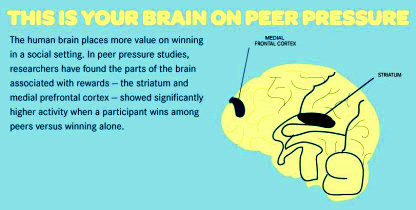
Everything to do with restraining orders is about pressure. Possibly the same could be said about all court procedures involving conflict (real or hyped), but this is particularly true of the restraining order process. Those who game the system often do so to gain attention and approbation or to appease others’ expectations.

If invoking this state procedure failed or ceased to excite drama, its applicant pool would dry up faster than a Visine tear.

Copyright © 2014 RestrainingOrderAbuse.com

Because Perjury Occurs a Lot, It’s Ignored: On the Absurdity and Toll of Domestic Violence and Restraining Order Policies’ Disregarding False Allegations

“My 87-year-old father has been arrested and jailed three times by my mentally ill mother, who is using domestic violence laws to her advantage in a divorce. This is a man who served in the military for 20 years, the federal government for 25 years, and the Department of Social Services for five years before retiring. My dad has never even had so much as a speeding ticket in his entire life, but now, at the end of his life, he has been humiliated, placed on supervised probation, and will probably lose everything due to the abuse of domestic violence laws. Nobody in law enforcement will listen to what is really going on here. Even though I had prior knowledge that my dad was being set up, I have actually been told by the District Attorney…and I quote, ‘I have convicted your father of assault on a female, and I will convict him of everything else I can.’ The justice system has gone off the rails, and the truth means nothing. My father fought in World War II and in Korea to keep this country free, and this is how he is repaid.”

—E-petition respondent

How did you spend the yuletide? With friends and family, listening to Nat King Cole and Bing Crosby, mussing kids’ hair and congratulating them on their Christmas spoils?

Read the epigraph above, and you’ll have a pretty clear idea of what Todd L. of Wilmington, North Carolina had on his mind. Not much to raise a cup of cheer to, is it?

This distinguished service veteran’s age approximates that of the cited victim of false allegations.

Two hours after Todd shared his story on the e-petition “Stop False Allegations of Domestic Violence,” a fellow North Carolinian opined, “There should be a legal penalty for false accusations!”

Lawmakers have agreed, actually, and statutes making lying to the court a felony crime are universal. What this commenter should have said is that legal penalties for false accusations should be enforced.

Perjury is never prosecuted. District attorneys will tell you that if they did prosecute perjurers, there’d be no resources left for putting “dangerous people” behind bars.

Let’s parse that logic.

First, it actually recognizes that lying occurs a lot. If it only occurred now and then, prosecutions would be few and hardly a budgetary strain.

Second, recognizing that lying occurs a lot also recognizes that the so-called dangerous people the state prefers to prosecute may simply be victims of false allegations. Preferring to prosecute alleged domestic assailants, therefore—take, for example, the 87-year-old man cited in this post’s epigraph—may mean preferring to prosecute the falsely accused (the innocent) over the genuinely criminal (the false accusers).

Ask yourself which would look better on the books: “We’ve successfully prosecuted [x number of] wife-beaters” or “We’ve successfully prosecuted [x number of] perjurers”? Everyone knows what wife-beater means. How many people even know what a perjurer is?

“If we did prosecute perjurers, there’d be no resources left for putting dangerous people behind bars…so we’ll prosecute the people perjurers falsely accuse of being dangerous”—as analysis of most of the arguments made in defense of domestic violence and restraining order policies reveals, the reasoning is circular and smells foul. It’s in fact unreasoned “reasoning” that’s really just something to say to distract attention from unflattering truths that don’t win elections, federal grants, popular esteem, or political favor. So entrenched are these policies and so megalithic (and lucrative) that rhetoric like this actually passes for satisfactory when it’s used by someone in a crisp suit with a crisper title.
Obviously it wouldn’t be necessary to prosecute all perjurers to arrest epidemic lying. Ensuring that false allegations were made less frequently would only entail putting a few frauds in cages for a year or two where they belong, making examples of them, and revising policy so that the consequences of lying were impressed upon other would-be frauds. As it is, policy (including menacing rhetoric on court documents like restraining orders) is to impress upon defendants how serious the consequences of being lied about are: “For being publicly lied about, you may be subject to arrest and incarceration for being publicly lied about some more.”

The absurdity is patent, as is the wanton cruelty. Applying the word justice to any aspect of this policy should itself be criminal.

The 87-year-old man referenced in the epigraph above may be at the end of his life, and it’s a reasonable surmise that whatever remaining time he could have hoped for will be shortened by the treatment he’s received from the country in whose service he’s dedicated over half of that life.

If a YouTube video were posted of state agents bludgeoning an 87-year-old veteran, it would shortly go viral, reporters would elbow their way onto the man’s front stoop, lawyers would scrap and scrabble to represent him, and cable commentators would decry the outrage of the abuse.

Heads would roll.

Since state agents have instead subjected this man to public denigration and dehumanizing psychic torments under the guise of propriety, the odds are strong that he’ll slip away erelong, invisibly, his final days having been poisoned by anguish, disgrace, and the unrelenting consciousness that 50 years of public service were callously invalidated: “I have convicted your father of assault on a female, and I will convict him of everything else I can.”

Copyright © 2013 RestrainingOrderAbuse.com

Repeat after Me: RESTRAINING ORDER and FRAUD May Mean the Same Thing

Judge: “Are you afraid of her?”

Man: “No, I….”

Judge: “Are you afraid of her?”

Man: “No, it’s not that. It’s—”

Judge: “I can’t award a restraining order unless you tell me you’re afraid of her. I’m going to ask you one more time: Are you afraid of her?”

Man: “Okay, yes, I’m very afraid of her.”

The above isn’t satire but an exchange between a plaintiff and a judge whose equivalent may be heard any weekday, particularly in Midwestern states like Illinois and Ohio. While this sort of ritual litany might have its place in church, it has no place in a courtroom.

The restraining order process has become a perfunctory routine verging on a skit, a scripted pas de deux between a judge and a complainant. Exposure of the iniquity of this procedural farce hardly requires commentary.

Upon the basis of a manifestly crooked “adjudication of facts” like this one, a defendant will be confronted at his or her home by an officer of the state and presented with a minatory order of the court alleging anything from harassment to stalking to threatening conduct or battery and warning him or her that s/he’ll be subject to arrest and incarceration for violation of that order.

This alone is excruciatingly humiliating and nerve-wracking, and brings a defendant’s life to an abrupt halt. These allegations become all s/he can think about—and this state of emotional anarchy may be one that a defendant is forced to live in for years (while everything around him or her deteriorates). Restraining orders expire but never wither and fall off the books unless vacated. All this horror may be based on allegations that are false and/or coerced.

It’s no wonder that some defendants refer to the restraining order process as “domestic terrorism.”

Once a plaintiff, by contrast, sees how eager the state is to play along, s/he may transform from a child of spite into a monster of menace, and a few impulsive lies may rapidly blossom into a protracted and layered assault.

Alleging a defendant violated an order of the court may be as farcical an exchange as the one sketched above, only this time it will be between the plaintiff and a cop: “Did she?” “Um.” “Did she?” “Er.” “DID SHE?” “YES!” A plaintiff may alternatively bait a defendant into actually violating a restraining order’s proscriptions by conveying the message that s/he had the order canceled, cold-calling him or her, or approaching him or her and provoking a scene.

A few posts ago, I stressed that the restraining order racket wasn’t the product of a conspiracy, and I keep finding myself having to qualify that. Police officers and officers of the court follow an established protocol, possibly knowing goddam well that its basis is a sham. They don’t perceive this as a collusive act, but an outsider’s perceiving it that way is certainly reasonable.

What restraining orders and their policies do is authorize these public servants to act. Though the grounds for action may be arbitrary, those grounds can be represented as sound and just. Policy is clear-cut and easily executed with no risk of repercussions to its agents.

That execution may spell the devastation of a life (or several), but it fills the day and ensures that there’ll be plenty more to do tomorrow.

Copyright © 2013 RestrainingOrderAbuse.com

No False Motives: On WHY Judges Refuse to Acknowledge Restraining Order Fraud

In the last post, I stressed that the courts refuse to acknowledge false allegations made by restraining order plaintiffs as lies, perjury, or fraud. It’s unlikely courts will call them “true.” Rather they’ll just accept them as given.

This shouldn’t be too surprising considering that the legitimacy and worthiness of the restraining order process is itself unquestioned. Why? Because it’s favored by the feminist establishment, which has gained so much political sway in recent decades that society, particularly its liberal constituency, is inclined to feel that what feminists want is what women want, and what women want is what everyone should want. Even women may not question whether what feminists want is what’s in their best interests. Restraining orders are promoted as positive and empowering for women. Also, they’re there to bring bad guys to bay and advance the causes of peace, justice, and the American way. So what possible grounds could exist for criticizing them? No harm, no foul, right?

The answer to these questions is of course known to (besides men) any number of women who’ve been victimized by the restraining order process. They’re not politicians, though. Or members of the ivory-tower club that determines the course of what we call mainstream feminism. They’re just the people who actually know what they’re talking about, because they’ve been broken by the state like butterflies pinned to a board and slowly vivisected with a nickel by a sadistic child.

And the value of their lives is deemed negligible. They’re what feminist jihadists would likely refer to as casualties of war.

The perpetuation of the restraining order process and the preservation of its appearance of propriety is the product of prejudice and perception mutually reinforcing each other. Public perception is that restraining orders are “good,” because they answer a social need. Judicial perception of restraining order applicants’ motives is accordingly prejudiced by pressures both political and social. If that weren’t enough, it’s also programmed. Courts receive massive federal grants under the Violence Against Women Act (VAWA) in return for having their judges submit to indoctrination.

Thus judges not only ignore whether allegations made on restraining orders are false; they may well assume the position that restraining orders are never sought maliciously (or frivolously).

They do what people expect of them, what the state wants of them, and what accordingly feels righteous and noble. That it’s also in their professional interests is a bonus (as is the possible gratification they derive from making “miscreants” cavil and quail). All of these motives are wrong and are furthermore contrary to judicial ethics (due process, Constitutional privilege, social justice, etc.), but the only people who care about principle are this travesty’s sacrificial lambs.

And they’re mostly silent.

Copyright © 2013 RestrainingOrderAbuse.com

No False Allegations: On Judges’ Refusing to Acknowledge Restraining Order Fraud

In case you were wondering—and since you’re here, you probably were—there is no gaining relief from false allegations on a civil restraining order. Repetition for emphasis: There is no gaining relief from false allegations on a civil restraining order. Why? Because as far as the court’s concerned, there are no such things.

Among the arts of being a judge is management of information and external perception. It’s as much about what you don’t say and what you don’t formally observe as about what you do, because everything is recorded for posterity and subject to later review (including by the general public).

And as much as the authority of the court depends on popular consciousness of the painful consequences that will ensue if that authority is flouted, it depends even more on the appearance of propriety, dignity, and rectitude.

In a recent post, I emphasized that restraining order injustice isn’t the product of conspiracy. I have to qualify that here, because there is an element of judicial practice that does smack of peer collusion. That element approximates to something like this: “We don’t recognize on record that lying happens, let alone that it happens all the time.” The reason is obvious. The justice and legitimacy of the entire apparatus would be called into question if cases were being dismissed because judges explicitly deemed them “frauds.”

Ask anyone who’s actually extricated him- or herself from false allegations made on a restraining order whether the judge who found in his or her favor acknowledged that the plaintiff lied his or her butt off. What s/he’ll tell you is that the judge found his or her case “more credible.” Or found some other reason to dismiss it, for example, that it had been “incorrectly issued.”

In a courtroom, a judge may wrinkle his or her nose or otherwise betray disgust or distaste when s/he perceives an obvious lie (facial expressions aren’t recorded). What s/he won’t do is say, “Well, that’s obviously a big, fat lie!” Which would, after all, be the honest, upright thing to do (and would nip a malicious proceeding in the bud). It would, besides, make the party who’s been lied about feel a whole lot better.

But we wouldn’t, of course, want that.

In fairness, judges may also decline to recognize false allegations made by plaintiffs as “true.” (Judicial negotiation of facts is largely about staying tight-lipped.) The difference is, because false allegations may sit there on defendants’ public records, judges’ not explicitly recognizing them as true doesn’t matter. A judge’s signing off on the restraining order that those false allegations are smeared on legitimates them, and for all practical purposes (and in the eyes of any who would scrutinize the record) makes them “true.” A judge’s signature, moreover, authorizes a plaintiff to continue to disseminate his or her false allegations as if they were true. It also authorizes another judge who hears the same allegations or who examines the record of the previous case to assume they’re true.

Here’s where the “game” aspect of restraining order adjudication becomes evident, and this is a significant part of what leads many to perceive corruption and conspiracy. Not unreasonably.

False allegations are made. This isn’t conjecture; it’s something any child who’s blamed a broken cookie jar on his or her sibling knows to be fact. People lie.

By forcing judges to give it the gloss of propriety by pretending false allegations aren’t made, the restraining order process debases the dignity and honor of the system judges are sworn to protect.

That’s not a false allegation.

Copyright © 2013 RestrainingOrderAbuse.com

Permanent, Public, and Persuasive: On the Enduring Effects of False Allegations

Freak collisions occur in life. So sometimes do collisions with freaks.

It’s difficult to impress upon people who’ve been spared from such collisions the damage their impact can exert on others’ lives.

Many of the respondents to this blog are the victims of collisions like this. Some anomalous moral zero latched onto them, duped them, exploited them, even assaulted them and then turned the table and misrepresented them to the police and the courts as a stalker, harasser, or brute to compound the injury. Maybe for kicks, maybe for “payback,” maybe to cover his or her tread marks, maybe to get fresh attention at his or her victim’s expense, or maybe for no motive a normal mind can hope to accurately interpret.
The restraining order process is free, nondiscriminatory, and can be abused over and over without consequence to the abuser.

Victims often preface the stories of their ordeals by insistently making it known that not only do they have no criminal record; they’ve never even had a run-in with authorities or any prior familiarity with the courts in their lives. More than one alleged perpetrator of domestic violence who’s responded to this blog is a vegetarian. And all of these vegetarian “batterers” have been women. People who “wouldn’t hurt a fly” are represented to the courts as monsters. And the label sticks.

Like hot tar.

The other day (less than a week before Christmas), someone was brought here wondering how s/he could sue a judge for approving a fraudulent restraining order. It’s unlikely s/he’ll follow through on a very understandable impulse, but if s/he were to go to the monetary and grinding psychic expense of pursuing this end, the likelihood is that s/he’d be run down mercilessly.

The point isn’t just that these things hurt; they don’t stop hurting. A victim of false allegations I corresponded with for some months in 2012, one of the aforementioned vegetarians accused of battery, wrote to me recently to report that she’s still smarting from the betrayal and humiliation over a year later. And this person prevailed against her accuser in court. Even “exoneration” isn’t a guaranteed salve.

And most victims of restraining order fraud aren’t so fortunate. They must wait in a state of constant anxiety for the term of the restraining order to run (a term that may be years), never knowing what new act of treachery to expect.

They’ll stew and fret. They may pursue a legal action of their own. They may employ an attorney (or more than one) to attempt to negotiate a resolution. They may shell out thousands or tens of thousands of dollars. They’ll stew and fret some more. And the probability is their attempts to recover their lives will be met with torturous silence from their accusers and further derogation from the courts. Some will be arrested. Some repeatedly.

A vicious impulse that takes mere moments to act on and satisfy may preoccupy or tear apart years of a victim’s life. Pointlessly. And there’s no “getting over it.” False allegations don’t evaporate or recede into the archives; they’re indelibly imprinted not just on their victims’ minds but on their public faces. Records are permanent, publicly accessible, and persuasive.

Victims of abuses whose toxic ripples are impossible to even quantify are moreover expected by judges and the public to maintain a stoical posture and reasonable tone in spite of them. A judge would evince palpable disgust, for example, at a victim’s expressing a feeling like this one:

WTF.

Copyright © 2013 RestrainingOrderAbuse.com

The Word for Restraining Order Abuse is FRAUD

So complacent toward lying have judges become that restraining order fraud goes over without raising an eyebrow. I’ve known one judge to scoff at the use of the word perjury on reflex, despite being ignorant of the facts he’d been called upon to adjudicate. And, though careless, he wasn’t a dim man.

Perjury, a felony crime, is the false (i.e., fraudulent) representation of a material fact to a judge (including on a sworn document like a restraining order application). A material fact is one that’s likely to influence a judicial decision. To falsely allege you’ve been sexually harassed or assaulted, for instance, is to commit perjury. Perjury is a word all defendants who’ve been falsely accused should know. Chances are they’re victims of more than one materially factual misrepresentation to the court.

The phrase restraining order fraud, too, needs to gain more popular currency, and I encourage anyone who’s been victimized by false allegations to employ it. Fraud in its most general sense is willful misrepresentation intended to mislead for the purpose of realizing some source of gratification. As fraud is generally understood in law, that gratification is monetary. It may, however, derive from any number of alternative sources, including attention and revenge, two common motives for restraining order abuse. The goal of fraud on the courts is success (toward gaining, for example, attention or revenge).

People who are victimized by the restraining order process are rarely students of law and often have had no prior exposure to legal procedure whatever. Words like perjury and fraud, while possibly familiar from having been heard in TV courtroom dramas or read in novels, are mostly alien concepts to the uninitiated. Restraining order recipients have mere days to prepare a defense—if they know they can contest an order of the court at all—and it’s unlikely that they’ll have concepts like these at their command. (I’m a student of words, and it took a lawyer’s familiarizing me with the significance of these two, among others, for me to gain a reasonably firm grasp of their meaning—and this was years after my own day in court. I was a practicing kids’ poet, and words like these weren’t ones I’d ever had call to use. And I’d prefer I were still ignorant of them today.)

Fraud isn’t commonly applied to restraining order abuse (itself an uncommonly used phrase), and it certainly should be, because the restraining order process is assuredly the most common motivator of frauds on the court. This process is usually employed impulsively, is free, and is completed in a matter of moments. Those motivated to use it maliciously—and they’re legion—typically do so in the throes of spiteful passion. They say whatever they believe they need to to achieve their desired ends.

However lacking their stories may be of scrupulous premeditation, though, they’re nevertheless frauds. And they nevertheless work.

The reason for the court’s failure to perceive restraining order fraud derives from its failure to perceive how damaging false allegations are to defendants. Judges aren’t likely to associate fraud with restraining order allegations, believing the term more aptly applied to cases that inflict “real” harm. Restraining order fraud, even when it doesn’t cost a defendant access to his or her home, property, and children, does real harm: anxiety, gnawing outrage, despondency, and depression, which may predictably lead to insomnia, deterioration of health, loss of productivity, and behavioral changes, and may conceivably induce drug or alcohol abuse and homicidal or suicidal ideation. Defendants may lose jobs or job opportunities. They may end up homeless. And these consequences ignore those inflicted on peripheral parties like children, who may also be lastingly traumatized.

The judicial disconnect between restraining order and harm is one defendants against false restraining orders must endeavor to bridge, because even a judge who’s nobody’s fool isn’t likely to get there on his or her own. The restraining order process is virtually automated. Judges know they don’t have to apply a great deal of diligent attention to particulars and consequently rarely do.

Use of the words perjury and fraud aren’t likely to avail restraining order defendants. Of probable value, though, is understanding them. And of definite value to arousing awareness of restraining order abuse and promoting reform of the restraining order process is leading others to understand them.

Copyright © 2013 RestrainingOrderAbuse.com

“I Want My Life Back”: On the Unacknowledged Toll of Restraining Order Abuse

“I want my life back. Restraining orders have stolen everything from me, and I’d give anything to have it back.”

—From “End Restraining Order Abuses”

Here’s what no one on the outside of the restraining order process can possibly grasp: that it can strip from someone, possibly based on nothing but maliciously false allegations, everything that s/he held dear.

That everything may have been what we conventionally regard as the worthiest values in life: home, family, and children. Or that everything may have been a career, an ambition, or sanity, peace of mind, and well-being. It may have been faith in government…or God. Or it may have been good repute.

All of these values are sacred ones and ones protected by our Constitution, and all of these values are vulnerable to casual violation by a state process engineered, intentionally or not, to abet casual violations. Restraining orders not only enable but legitimate attacks that wouldn’t otherwise be possible, let alone legal.

The source of the gnawing outrage so evident in complaints about restraining order abuse isn’t simply false allegations but the eagerness with which they’re accepted as fact by the court and effectively sublimated into fact by application of a judicial signature.

Consider: If someone falsely circulates that you’re a sexual harasser, stalker, and/or violent threat—possibly endangering your employment, to say nothing of savaging you psychologically—you can report that person to the police, seek a restraining order against that person for harassment, and/or sue that person for defamation and intentional infliction of emotional distress. If, however, that person first obtains a restraining order against you based on the same false allegations—which is simply a matter of filling out a form and lying to a judge for five or 10 minutes—s/he can then circulate those allegations, which have been officially recognized as legitimate on an order of the court, with impunity. Your credibility, both among colleagues, perhaps, as well as with authorities and the courts, is instantly shot. You may, besides, be subject to police interference based on further false allegations, or even jailed (arrest for violation of a restraining order doesn’t require that the arresting officer actually witness or have incontrovertible proof of anything). And if you are arrested, your credibility is so hopelessly compromised that a false accuser can successfully continue a campaign of harassment indefinitely. Not only that, s/he can expect to do so with the solicitous support and approval of all those who recognize him or her as a “victim” (which may be practically everyone).
Can a completely innocent person be completely destroyed like this in gratification of a sick impulse by someone with a yen for vengeance or an attention-seeking personality disorder? Totally. The allegations, files, and records (public records) gradually accrete to mock, humiliate, and destabilize that person indefinitely, denying him or her a sense of security and any reasonable expectation of receiving just treatment from his or her own government.

It works this way: police officers and judges have only brief exposure(s) to the matter and, having no investment in it, couldn’t care less either way; people who are on the fence are liable to maintain their perch, being disinclined to get involved; those who know better will express their sympathies, which are kind but powerless to work any sort of remedial or regenerative effect; and those who don’t know any better will swallow a liar’s frauds, because their reactions have been socially conditioned and they have, besides, no reason to doubt the merits of a court’s (or multiple courts’) findings.

It’s a piece of cake.

Liars typically don’t expect to have their frauds challenged, but if they are, those frauds are more likely than not to continue to succeed (the courts are averse to backpedaling, and there’s no oversight). Lies don’t even have to be consistent or particularly cunning, just sensational and dramatically delivered (bigger, more lurid lies are actually easier sells than small ones). The rewards of attention, social sympathy and encouragement, recognition by authority figures, and the sense of power that comes from prevailing over an opponent are furthermore heady and addictive, and easily eclipse any twinge of conscience or fear that a liar may feel.

Victims of abuse are left eating their hearts out while those who’ve abused them can expect to be surrounded by consoling arms. In work settings, those abusers may even end up with promotions.

Copyright © 2013 RestrainingOrderAbuse.com

Lying Back: On Taking the Low Road against Restraining Order Abusers

One of the most common questions that brings recipients of false restraining orders to this blog is how to prevail in an appeals hearing against an unscrupulous liar.

Because restraining orders are easily applied for and typically cost applicants nothing but a lunch break, they’re unparalleled as instruments of malice. With a few strokes of a pen and some calculated fictions conveyed to a judge with the right touch of hysteria, a liar can undo a target of his or her wrath in short order, permanently sullying his or her reputation, subjecting him or her to public disparagement and disgrace, and possibly denying him or her access to home, children, pets, and property. If word gets out, that target may lose his or her job and moreover have a highly prejudicial blot on his or her record that impedes him or her from getting a new one. More than one respondent to this blog has reported being jailed on fraudulent charges or left homeless and destitute.

Multiple restraining orders against a number of people marked for vendetta can even be applied for back to back by a single plaintiff.

False allegations are routinely accepted by the courts at face value—the attention paid to such allegations is scant at best—and if those whom false allegations are leveled against are heard from by the courts at all, it’s only after the allegations against them have been presumed true. An appellant may furthermore be granted no more than 15 or 20 minutes to try to convince the court that it erred in its initial decision. The expectation of a fair and just hearing, therefore, is next to nil.

I’ve spilled a good deal of digital ink over the past 26 months articulating the manifold and manifest problems inherent in the restraining order process, and I’ve offered what limited information and modest advice I could to those who’ve been abused by it.

In doing so, I’ve tried to toe the ethical line: “speak to the allegations and show that they’re false,” “explain to the judge any ulterior motives the plaintiff would have for lying about you,” etc. I’ve counseled, in other words, fighting fire with water.

The more familiar phrase, of course, is “fight fire with fire.” I can’t endorse lying and won’t. But admitting that lying more effectively than your accuser may be the best defense against a false restraining order isn’t a lie.

The sad and disgusting fact is that success in the courts, particularly in the drive-thru arena of restraining order prosecution, is largely about impressions. Ask yourself who’s likelier to make the more impressive showing: the liar who’s free to let his or her imagination run wickedly rampant or the honest person who’s constrained by ethics to be faithful to the facts?

A fraud enters an appeals hearing with the advantage of already having had his or her lies recognized by a judge as true. An honest defendant not only faces the obstacle of disproving what should never have been taken for fact to begin with but must also fend off whatever new lies his or her accuser may have concocted in the meantime or may invent on the spur of the moment.

And that defendant may have all of 15 minutes in which to accomplish this, since restraining order appeals hearings may be allotted no more than half an hour on the court’s docket. A fraud knows exactly what facts to anticipate from an honest person (and can prefabricate false defenses); an honest person flies blind (and in this process, injured), never knowing what’s coming or from what direction.

Unscrupulous restraining order plaintiffs, who may be sociopaths or have borderline personality disorders, may falsely allege violence, bizarre sex acts, stalking, death threats, or worse. And they do so with complete indifference to the effects these allegations (and their being made publicly) have on their victims. Some liars are horrifyingly imaginative and color their frauds with lurid details that would inspire the envy of a professional screenwriter. Some liars—pathological narcissists, for example—are magnetic personalities, besides, who may have devoted followers willing to abet them in a fraud or who may readily persuade those who don’t know any better to take their side.

Should defendants lie?

This question has two possible interpretations:  1. Is it ethically conscionable? Or 2. Is it the only way to defuse an improvised explosive device that could shatter their lives? Depending on which of these interpretations is meant by the question, the answer could be negative or affirmative.

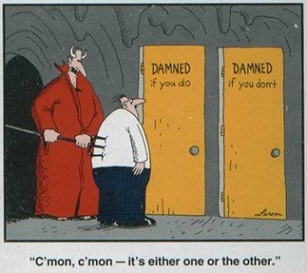
Should citizens in the civilized world ever be placed in the damned-if-you-do-damned-if-you-don’t position of having to lie to the courts to counteract lies to the courts? The answer to that question is easy:  Hell no.

Copyright © 2013 RestrainingOrderAbuse.com

A Liar’s Dream Medium: On Why Fraudulent Restraining Orders Are So Effective

vivid imagination

Restraining order allegations defy physics. They can self-sustain indefinitely fueled on nothing more than human credulity and their gratification of our appetite for the unseemly. They’re paid the same intently lurid curiosity as a wreck on the side of the road.

Auditors can’t avert their ears.

I read stories about the horrors endured by victims of false restraining orders every week, and I’d still listen with sensitivity to someone’s telling me s/he “had to get a restraining order.” It’s an irresistible impulse.

Just the phrase restraining order prompts a preconditioned reflex in the hearer. Live Pavlov’s dinner bell. It’s certainly one of the most prejudicial phrases in the English language, surpassing even “Beware of Dog.”

That’s why the restraining order offers liars a dream medium: whatever they write on one becomes “true.”

It’s that Pavlovian conditioning. We presume that someone who applies for a restraining order has a genuine need. Even police officers and judges, who encounter the unscrupulous and the scheming on a daily basis, take this for granted. They’ve been trained to. Hefty federal grants are provided to local police departments and courts in return for their mandating that their officers submit to that training and consent to accept allegations pursuant to obtaining a restraining order as factual.

And since restraining orders are approved by judges on the spot without the people whom they’re issued against even knowing about them, there aren’t any naysayers to interrupt or object to a liar’s allegations.

A fraud has a captive audience and can just let ’er rip.

The more outrageous a fraud’s lies, furthermore, the more effective they usually are. They’re not only that much likelier to bias police officers and judges but anyone else they’re told to. Where there’s smoke there’s fire, it’s assumed, and frauds who lie big blow a whole lot of smoke.

Counterintuitively, the broader the fraud, the more certain it is to go over.

Upon convincing a judge of his or her need for a restraining order—child’s play—a liar has an official document that says s/he’s a victim who’s weathered a grievous ordeal, and s/he can get even freer with the details when relating his or her “travail” to others. Say you “had to get a restraining order,” and all heads tilt in your direction, keen for the salacious details. Applying for a restraining order—which entails considerably less nuisance, for example, than applying for a driver’s license—creates a sensation (and waves of positive feedback and attention to nourish a liar’s ego).

And the damage to the liar’s victim is done possibly before s/he’s even had the restraining order brought to his or her attention.

To counteract a false restraining order requires that a recipient convince a second judge that the first one (his or her peer) screwed up or was hoodwinked. Not an obstacle easily surmounted. What a wanton fraud can accomplish in a 45-minute excursion to the courthouse may preoccupy and torment his or her victim for years to come.

A restraining order based on lies carefully, or even carelessly, stitched together is like Frankenstein’s monster: once a judge throws the switch, “It’s Alive!” And calamitous.

Unlike Frankenstein’s monster, burning a fraudulent restraining order won’t make it go away.

Copyright © 2013 RestrainingOrderAbuse.com