How “Preponderance of the Evidence” Rewards Restraining Order Fraud and Why Bigger Lies Work Better than Smaller Ones

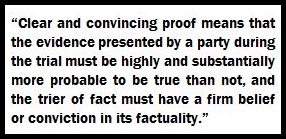
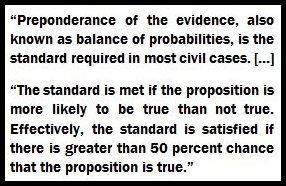
Recent posts to this blog have discussed American evidentiary standards and stressed that the standard applied to civil restraining orders, “preponderance of the evidence,” has nothing to do with proof. According to this standard, a judge should find in favor of a restraining order plaintiff if s/he figures there’s a greater probability that the plaintiff’s claims are true than that they’re totally false.

The word to bear in mind here is probability.
I’ll give you a for-instance. Let’s say Person A applies for a protection order and claims Person B threatened to rape her and then kill her with a butcher knife.

Along with the allegation of the rape/death threat, Person A tells Judge A that she and Person B dated for six months, that she dumped Person B, that he refuses to leave her alone and insists that she’s the love of his life and that if he can’t have her no one will, and that she’s terrified of him. Person A shows Judge A a text message from Person B that says, “I want what’s mine.” She also tells Judge A that Person B insisted that she engage in sexual role-playing during their relationship and that he liked to spank her. “Sometimes he was very rough and scared me,” Person A says. Too, she says she thinks Person B jealously monitored her email correspondence and adds that he frequently accused her of seeing other men behind his back (“He would just suddenly go off sometimes for no reason”).

Judge A doesn’t know Person A, and all he knows of Person B is what Person A has just told him. How does Judge A determine that there’s a greater probability Person A is telling the truth than that she’s lying? With no certain facts other than a text message, he can’t. He issues a protection order anyway, because Person A might be telling the truth, and he doesn’t want to be answerable to his conscience or the public if she were to come to harm.

Person B, who didn’t actually threaten to rape or kill Person A, is more than unsettled by the allegations against him and appears in court to deny them. He tells Judge B that he and Person A dated for six months after she hit on him at a party, and that they had discussed moving in together but that he discovered Person A had been cheating on him and angrily demanded that she return expensive gifts she had asked him to buy for her during their relationship. He tells the judge that Person A laughed at him and called him “a fool,” and that he’s never been abused this way before. “She was horrible to me,” he says, “and I was only ever nice to her.” Person B also tells the judge that Person A was sexually withholding, and would often, he realizes now, use the promise of sex to manipulate him, and that he had never hit her, even in fun. “There was no role-playing,” he says indignantly. “That’s a complete lie!” Person B admits that he may have heatedly called Person A “a sick bitch” when he last saw her and slammed her apartment door behind him. Person B also admits to sending the text message, but testifies that he’s never struck or even threatened another person in his life.

Judge B has no more ascertainable grounds for determining whether Person B threatened to rape and kill Person A than Judge A did previously. On the basis of Person B’s admitted rage and reason for feeling vengeful, however, he rules in favor of Person A and affirms the protection order. The alleged rape/death threat, which may have been influential but was otherwise irrelevant, is preserved on public record along with allegations of “constant temper tantrums,” “violent sex games,” and stalking.  The protection order is also recorded in the databases of state and federal police.

Person A circulates the details she shared with the court, which are embellished and further honed with repetition, among her friends and colleagues over the ensuing days, months, and years.

Person B, a widowed engineer, is fired from the position he’d occupied for over a decade with a national defense contractor. Consequent to his being terminated, Person B’s daughter, whose tuition at an Ivy League university he’d been paying, is forced to drop out of school 12 months shy of graduation with honors.

This scenario, though purely allegorical, is mirrored to a greater or lesser extent by thousands, tens of thousands, or hundreds of thousands of restraining order cases adjudicated in this country every year (false allegations, including false criminal allegations, may moreover be made to the police, besides the courts). Its gender reversal (Person A = male; Person B = female), while less probable, is also entirely possible. Women, too, are falsely accused of threats, violence, stalking, and other crimes on restraining orders, including felonies. Feminist advocates of restraining orders, consciously or not, defend the daily dismemberment of women’s lives across the map.

(Besides facing loss of employment and employability, victims of false allegations and distortions of the truth may be forcibly removed from their homes and prohibited access to their children, money, and property. Legal derelictions, besides, make such victims vulnerable to further state interference, including arrest and incarceration, upon additional false reports’ being filed by malicious accusers.)

The point of the above hypothetical is neither to deny that real rape or death threats are made nor to characterize complainants of such abuse as liars. Unquestionably many complainants, particularly of extreme abuse, honestly and reasonably fear for their safety. Its point, rather, is to illustrate that the truth of any allegation made pursuant to the procurement of a restraining order is literally irrelevant (except to the accused). It’s not the brief of judges of restraining order cases to determine whether individual facts are truthfully reported, nor is ascertainment of the truth or falsity of individual allegations required by the standard of “preponderance of the evidence.”

This standard is satisfied by probability, which is gauged according to a judge’s personal lights. It doesn’t depend on certainty of anything.

Emphatically noteworthy of a standard that’s satisfied by probability is that it acknowledges from the start that truth doesn’t matter. A standard that relied on proof wouldn’t contain the word probability or its derivatives at all.

Consider further that lying is rarely if ever prosecuted or even acknowledged by the courts.

Consider finally this question: If the object of a restraining order applicant is to win—and it always is—what tactics will most assuredly be effective in persuading a judge that his or her allegations (on balance) are probably true? The answer is lying, lying luridly and sensationally, and lying copiously, particularly about facts that are impossible to verify (facts that in a criminal case would be discounted or dismissed).

Because “preponderance of the evidence” is based on the overall forcefulness of allegations rather than the truth or falsity of one, two, or a few of them, the most effective way to win a restraining order case is to lie hugely.

As should be obvious, “preponderance of the evidence” is seldom if ever actually satisfied in cases where restraining orders are awarded, because specific claims on restraining order applications are often impossible to accurately assess as even 51% likely to be true. “Satisfaction” of this standard is based, instead, on the acceptance that the sum total of allegations (their tenor or essence), which collectively support an overarching allegation of “fear” or “distress,” can together be called “preponderant” (which means more potent, convincing, or influential).

In other words, there’s no point in malicious litigants’ lying small.

Copyright © 2014 RestrainingOrderAbuse.com
They Don’t Have to Be True, Just “Truthy”: Civil Restraining Order Allegations and the “Burden of Proof”

“Preponderance of the evidence, also known as balance of probabilities, is the standard required in most civil cases. […]

“The standard is met if the proposition is more likely to be true than not true. Effectively, the standard is satisfied if there is greater than 50 percent chance that the proposition is true.”

—Wikipedia, “Legal burden of proof

As the previous two posts have discussed, “preponderance of the evidence” is the standard according to which restraining order allegations are “tried.”

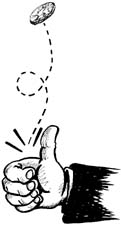
Note that the odds of its being accurate, assuming all conditions are equal, may be only slightly better than a coin flip’s.

Accusations on restraining orders that are adjudicated by this standard may include any of the following (along with any other allegation conceivable): simple or aggravated assault, simple or aggravated battery, stalking, cyberstalking, sexual abuse, false/unlawful/forced imprisonment, peeping, criminal coercion, reckless endangerment, child abuse/molestation, “menacing,” “terroristic threatening,” theft, arson, criminal mischief, extortion, burglary, criminal trespass, sexual harassment, incest, offensive touching/“lewd fondling,” kidnapping/abduction, malicious property damage, injury or killing of animals/pets, larceny, rape or statutory rape, or other felonies, including (in New Jersey and Alaska) homicide.

See for yourself: “Standards of Proof for Domestic Violence Civil Protection Orders (CPOs) by State.” And appreciate that accusations like these need not be made against domestic partners or other members of a shared household. They can be made against friends, lovers, work associates, neighbors, exes, exes’ new spouses or boy- or girlfriends, rivals of any other sort, nondomestic family members, former family members, strangers—you name it.

Accusations on restraining orders may alternatively amount to no more than “annoyance.” The same standard is applied to the allegation of rape as is applied to allegations of nuisance, and irrespective of a plaintiff’s actual claims, the implications of a restraining order, which is a publicly accessible record and one preserved in the databases of state and federal police, are threat, stalking, and/or violence.

Restraining orders are understood to be issued to “sickos.” Nobody hears “restraining order” and thinks “Little Rascal.”

Consider that the initial determination of the truth or falsity of a restraining order plaintiff’s allegations is grounded on a brief interview between the plaintiff and a judge. Consider further that the judge will likely have never met the plaintiff before; that the judge may therefore have no basis whatever for forming an opinion of the plaintiff’s honesty, soberness, or sanity; and that the defendant upon whom judgment is rendered is just a name on a form.

If the “legal burden of proof” defined in the epigraph didn’t already sound sketchy enough, observe that unless a defendant has a prior record of misconduct, no empirical grounds exist even for a judge to decide that there’s a 51% probability that the plaintiff’s telling the truth—other than, perhaps, whatever physical corroboration the plaintiff may provide, which may be none, may be forged, or may be misrepresented.

Restraining order allegations are essentially established (and essential establishment is all that’s required) on the forcefulness of a plaintiff’s claims. The truth or falsity of individual allegations is literally irrelevant (except, of course, to the defendant who has to live with them for the rest or his or her life). A judge isn’t a fact-finder in these cases; s/he’s a bookmaker.

It’s all about the probability that a plaintiff’s claims are more true than false, and the fixer of the odds is a single judge—or at most two.

In other words, the standard “preponderance of the evidence” is hokum. It’s basically an authorization for a judge to act according to his or her discretion, which is a lofty way of saying that it authorizes a judge to decide however s/he wants. Allegations, including of felony crimes, don’t have to be true, just “truthy.”

If, prior to forming a decision on a restraining order petition, a judge were required to at least meet the defendant; and if it weren’t the case that the judge had likely had it impressed upon him or her that s/he should prejudicially regard the plaintiff’s allegations as true; and if it weren’t the case that societally conditioned expectations urged the same prejudice…then there might be a reasonable hope that a judge could perform the computation required by “preponderance of the evidence” with some degree of accuracy, allowing that a “degree of accuracy” should be acceptably conclusive.

As the procedure exists today, there can be no such reasonable hope.

Copyright © 2014 RestrainingOrderAbuse.com
No Proof Necessary: Why Restraining Orders Are Abused and Why Restraining Orders Exist

Advocates of restraining orders consider this standard too demanding.

The previous post addressed American standards of evidence and observed that with a single exception, the standard that’s applied to restraining order adjudications, “preponderance of the evidence,” is the least demanding.

Both the award of restraining orders and their being made “permanent” are at a judge’s discretion. (One of the meanings of discretion is “freedom to choose.”)

Even in Maryland, the exception to the rule, where final decisions to approve restraining orders must meet the intermediate standard of “clear and convincing evidence,” issuance of restraining orders is discretionary.

In other words, it’s pretty much up to whether judges feel plaintiffs’ allegations are more probably true than not. (Some states call this “good cause” or “reasonable grounds.”)

As previously remarked, this means the legitimacy of restraining order claims is always iffy. This is beside the fact that issuance of restraining orders proceeds from brief, one-sided interviews between plaintiffs and judges, and hearings to finalize them, which may be held mere days later, may themselves be nearly as cursory. Prejudice in favor of complainants, furthermore, has been conditioned if not explicitly mandated, and is all but universal.

What must be emphasized is that in a significant number of cases, despite their bearing criminal imputations or implications, the word evidence isn’t actually applicable.

This is the standard according to which restraining order allegations are “vetted.”

The phrase standard of evidence is misleading, because we’re accustomed to equating the word evidence with proof.

A restraining order may be approved on no more ascertainable a basis than an accuser’s alleged emotional state, that is, the claim of fear may be sufficient. Even when “evidence” is adduced, it may of course be misrepresented—and easily. Doctoral candidates’ oral exams are far more rigorous than restraining order hearings.

Worthy of note is that their tolerance of an absence of proof is both the reason why restraining orders are criticized and the reason why restraining orders are defended.

The only “justification” for restraining orders is the absence of proof.

This isn’t as counterintuitive as it sounds. Crimes alleged on restraining orders are prohibited by criminal statute. Assault, for example, may of course be tried in criminal court.

In that case, however, satisfaction of the standard “proof beyond a reasonable doubt” is necessary.

Restraining orders are stopgaps. What do you do if someone’s threatening you or knocking you around, but you can’t prove it? You apply for a restraining order. It takes an hour—or at most an afternoon—and gratification is immediate. The provision of instant relief was one of the germinal motives of restraining order laws.

All well and good, and there’s no question that people are abused all the time in ways they could never prove in criminal court. But what if an accuser is neurotic, mentally ill, or maliciously lying to gratify an ulterior motive?

There’s no failsafe built into the system. Recognize this, and the limitless potential restraining orders have for abuse becomes obvious.

What restraining orders do is make it easy for the system to dispense with a great number of complaints in short order that would otherwise gum up the works. They also keep a number of special interests happy and a lot of people busy and flush.

This wouldn’t be a big deal if their consequences were minor and restraining orders left no traces once their terms expired. This, however, isn’t the case. Restraining orders, which are prejudicially presumed by the public to be issued to stalkers and batterers, are public records that are not only preserved in the databases of the courts that issued them but in those of state and federal police.

Maryland

This assertion, which originates from the Maryland governor’s office and which presumes only genuine victims apply for restraining orders, argues that allegations ranging from “serious bodily harm” to “rape or sexual offense” should be adjudicated according to the same standard as contract or insurance disputes (as they are in every other state).

Direct consequences to their recipients, besides harassment and public humiliation, may include eviction from their homes and denial of access to kids, money, and property; and proximal consequences may include loss of employment and employability—along with all of the psychological effects that ensue from such losses, among which may be loss of enjoyment of life. Victims of delusional or malicious accusers may moreover be subject to arrest and incarceration if additional allegations are filed.

Pretty big deals, all of them, especially when the precipitating allegations are trumped up. Lives are undone by less.

Few suggest that restraining orders should be abolished, because no one wants to be accused of indifference to victims of domestic violence. The justification for restraining orders, finally, is coercive (and maybe always was).

Restraining orders should be abolished—or radically reconceived.

It’s true that restraining orders help victims out of abusive situations, and this is huge; but in a nation founded on the principle that all people are equal, no group’s interests excuse injury to other people. Aid to those in abusive situations, including children, must not come at the expense of others whose entitlement under the law is the same.

This doesn’t mean those in abusive situations should be written off; it means the present “solution” needs to be revised, because it’s unconscionable.

Coercive influences on law related to violence against women have generated wild imbalances in how allegations of stalking and domestic violence are treated, and have besides promoted unreasonable expansions of statutory definitions (“domestic violence,” for example, can mean a single act, which may not even qualify as violent). Our laws have become rattletraps.

Adjudication of restraining orders, catchalls that bear the stigma of stalking and violence and which may include these allegations among an assortment of others, is particularly problematic, because criminal allegations as severe as rape may escape being answerable either to a jury or to the standard to which they should properly be subject.

That standard is “proof beyond a reasonable doubt.”

Copyright © 2014 RestrainingOrderAbuse.com