
Resistance Is Feudal: Understanding the Role of the Court, Especially in Civil “Abuse” Prosecutions

The role of the court, despite popular notions and its own rhetoric, is not to mete out justice. The role of the court is to keep power where it’s “supposed to be.”

Does that mean the court privileges plaintiffs over defendants, the rich over the poor, and the titled over the commoner? Generally, yes. Little has changed in 1,000 years. Even the word court is evocative of the Middle Ages, and it’s hardly unusual for court administrators to behave like overlords.

Skilled attorney representation can upset the age-old paradigm, but typically it’s the haves and not the have-nots who can afford it, so not really.

In the restraining order arena, or in any civil procedure arising from allegations of abuse (domestic violence, child welfare, etc.), the influence of money and power in favor of plaintiffs is preexistent. Billions of federal tax dollars have been lavished on law enforcement and the courts since the 1990s to sway their judgment, or even to prescribe how they should react. Complainants of abuse today don’t need money to tilt the scales, because it has been prepaid. Plaintiffs just need stories. Female plaintiffs alleging abuse, what’s more, may be entitled to free attorney representation in accordance with the same special interest legislation that authorized the federal subsidies (see Violence Against Women Act).

This is what leads many victims of procedural abuse to conclude, “It’s a conspiracy.” They expect the court’s definition of justice to be the same as the dictionary’s.

Copyright © 2018 RestrainingOrderAbuse.com

*The author of this post has been in nonstop litigation for over two years, litigation stemming from accusations made 12 years ago. Judicial response in 2006 was incompetent (the judge, a pro tem, or temp, violated statutory law), and an order arising from the 2006 judgment, in 2013, was even more plainly unlawful. The Arizona Court of Appeals last year affirmed the 2013 judgment, because the writer hadn’t been able to afford to promptly appeal it. The 2017 court upheld “finality of judgment,” ignoring that the 2013 judgment offended both the state and federal constitutions. The 2017 court privileged economy and maintenance of face, in other words, over justice. The writer’s case now returns to the trial court for further litigation, which has provoked the court’s consternation, again despite the facial illegality of the 2013 order. In 2016, the attorney for the plaintiffs cited their monetary investment in the case as a reason the court should enforce the unlawful order and send the victim of that order to jail. The court can not only justify its own malfeasance but punish its victim for it. To quote a California paralegal, There is no justice system; there’s just a system. The writer is expected in court on Wednesday and again in July based on allegations made in 2016 that were based on allegations made in 2013 that were based on allegations made in 2006…that were false.
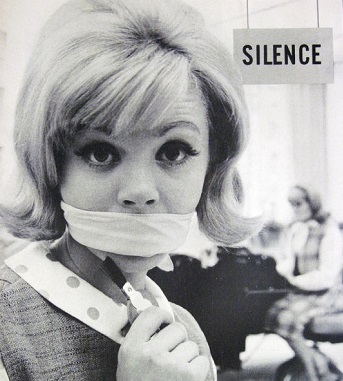
Why More Falsely Accused Don’t Speak Out

If procedural abuses are epidemic (and they are), why do so few vociferously complain? Why isn’t the Internet inundated with personal horror stories (and why aren’t state representatives’ in-boxes choked with them)? We purportedly enjoy the privilege of free speech, so why isn’t it exercised more?

The absence of rampant complaints of procedural abuse is misleading. Limitation of complaints to sketchy e-petitions and forum comments, often anonymous, makes them suspect and easily discounted by those with a political interest in discrediting them.

The dearth of forthright exclamations of abuse and injustice, however, is easily understood.

Rather than consider who isn’t talking back, consider who does. What distinguishes these men and women from what may be hundreds of thousands or millions of victims of false, exaggerated, or misleading accusations to the court?

For one, most of them are childless or without young children. They don’t face being further deprived access to their kids if they buck the system. Those with minor children who do speak out have often been denied all rights to their kids, anyway; they have nothing left to lose.

Too, most of them work for themselves. It’s a fact that restraining orders influence employers. Furthermore, studies have shown that employers are influenced even by Internet disclosures by employees or potential hires that may be negatively perceived by the public. Human Resources personnel are paid to snoop around. Mere injudicious comments on Facebook may be hazardous to job opportunities and careers. Declaring that you’ve been judged to be a stalker, for example, or a domestic or child abuser has obvious and grave drawbacks, never mind if you’re also construed as a wacko because you vehemently insist online that your accuser’s psychopathic. This is an express train to sleeping in a refrigerator box.

Women aren’t immune to false accusation. They’re a minority among its victims, and that status is itself isolating (from a community peopled mainly by men who resent women and the favored political status they enjoy). Many respondents to this blog are female—maybe most. By and large, however, women may feel like interlopers in male-dominated discussions, and women’s advocates, whom they should be able to turn to, don’t want to bring scrutiny to bear on the question of procedural abuse (which is mostly by women).

People who may be foully wronged and branded with accusations that may daily tear at them are coerced into silence by the feared repercussions of ventilating their rage and anguish. Their false accusers, moreover, may be violent people or, for example, extremely vindictive ones, and the accused may fear for their safety and their children’s safety, or fear further legal abuse, which can be endlessly renewed, particularly after false accusations have once stuck, and which can result in incarceration—possibly meaning loss of a single parent’s child(ren) to the state—or financial hardship or ruin. The falsely accused are squeezed between a rock and a hard place.

As you might imagine—and it’s okay to try imagining even if it goes against your partisan loyalties—this creates a hell within a hell.

Probably most of the falsely accused, besides, are not trained writers (like the loudest voices that discredit people in their shoes are) nor among the politically privileged class, whose members are typically the most able to free themselves from false accusations in the first place. They’re not suave, and they don’t possess the kinds of credentials that make people think twice.

(Also, ironically, the people who do possess the kinds of credentials that make people think twice but who fail to deflect a false finger of blame are often sensitive to “social decorum” and may be loath to air dirty laundry.)

Public outcry, finally, is discomforting to family and friends (and their family and friends). It compounds the alienation and isolation of false accusation with alienation from those who believe in you; they sidle away.

In a nutshell, it’s not merely coincidental that those few who do elect to talk back are mainly single, independently employed, without small children, white…and male. Men don’t fear violent retaliation from their false accusers, usually, and they may have nothing left to be stripped of except the lingering expectation of justice.

Copyright © 2015 RestrainingOrderAbuse.com

*Bearing the foregoing in mind, it should be no surprise that the preponderance of publicized outrage originates from “just folks” who aren’t distinguished and who are easily dismissed (and mocked) as “rabble.” What should be a surprise is that their detractors are often those who are supposed to be looking out for them, for example, civil rights advocates like the ACL(where R)U and agents of the popular press.