In Perspective: How to Look at Restraining Order Judges Neutrally

It’s hard not to hate judges who issue rulings that may be based on misrepresentations or outright fraud when those rulings (indefinitely) impute criminal behavior or intentions to defendants, may set defendants up for further (or serial) malicious prosecutions by the same false accuser (and possibly land them in jail), and may finally inflict severe privations, including loss of income, employment, and/or access to children, pets, home, and property.

It’s especially hard not to hate judges when you’ve told them the truth, pronounced it politely and respectfully, and nevertheless been scorned, humiliated, and demeaned…with gusto.

Judges tend to be hubristic, condescending, and willfully menacing (even when they’re smiling at you).

To compound the outrage, it’s only their station that licenses their haughtiness. More often than not, their authority doesn’t come from learnedness in the law but is simply a perk of the job.

Though there have been some motions in recent years to amend this situation, most bottom-rung judges who issue restraining orders aren’t qualified lawyers, that is, they don’t have law degrees. They were just elected or appointed to the position and sent to “judicial boot camp.” Judges are trained to execute specific duties; they’re not necessarily educated in jurisprudence.

Some have no education beyond high school.

This may either be a reason to resent them all the more for their audacity or a reason to see them as mere tools of a system that conditions their bigoted behavior. Restraining order judges are told—possibly quite explicitly—how they’re expected to rule. That’s a significant part of their “training.”

This hardly excuses conduct that obviously contravenes judicial ethics. It does, though, make that conduct understandable.

Certainly judges aren’t to blame for the state of things, including the shambles they unjustly make of people’s lives. They don’t level the allegations, nor do they formulate the rules, draft the laws, or influence the political and public opinions that do determine rules and laws.

Sure, judges of conscience could vocalize qualms or defy the system. They could martyr themselves for principle. Whether this would effectively alter the status quo, however, is debatable.

Remember, they’re not legal scholars, by and large; they’re just referees who’ve had certain priorities impressed upon them. It’s not theirs to comment on the laws—and being unqualified to do so, they may genuinely believe they’re acting righteously.

There’s no particular reason not to hate judges if one or more have wronged you. If you step back, though, you’ll see that they’re more like ants that bite because they’ve been tasked with defending the colony according to certain marching orders than they are like people we should reasonably expect to treat us with dignity and charity.

Judges are often power-corrupt—it comes of sitting above others who must kowtow to them—but they’re basically people doing a job they may be scarcely better equipped to do than you or I.

Copyright © 2015 RestrainingOrderAbuse.com
On “Restraining Order Conspiracy”: Why Judge-Plaintiff and Judge-Attorney Collusion May Have More to Do with Judicial Ignorance than Complicity

The last post posited that the snarky zinger often aimed at teachers applies at least as aptly to the court: Those who can’t do, judge.

Conclusions in that post were inspired by conversations I had this week with a client, a former criminal defense attorney who began his legal career in the county prosecutor’s office. He impressed upon me that lower-court judges’ legal credentials ranged from inexperience to no education in the law whatever.

He told me that judges often called him to get clarifications of legal niceties.

I’ve been in procedures in both my county’s “justice court” and superior court. In each, I represented myself. If you’ve been the defendant in a restraining order trial (and possibly one or more trials that devolved from allegations on a restraining order petition), see if your experience didn’t correspond with mine.

My impression of the judge’s conduct in the restraining order hearing I was granted was that he grasped at whatever he could to justify the court’s preliminary findings. He didn’t “negotiate” the facts; he chose ones that could support the conclusion he preferred.

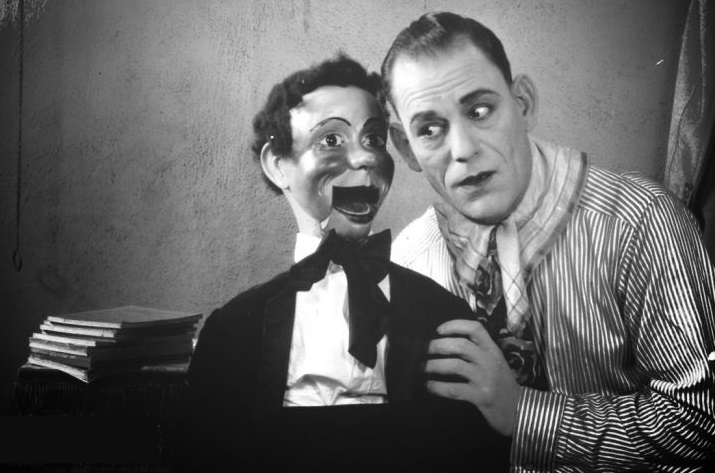
Similarly, in cases before the superior court in 2010 and 2013, in which I was self-represented and my accuser had an attorney speak for her, the judges basically did whatever her attorney told them they should: monkey see, monkey do. In each trial, it was like watching a puppet show. The judges, in instances, even parroted back the attorney’s language in their rulings.

At the time, I just assumed the whole process was fixed (i.e., bent as a papier-mâché flagpole), and I know from hearing many other people’s stories of similar travesties that they left the courtroom feeling the same.

What I realize now, though, is that the reason judges acquiesce to attorneys and seem to echo whatever they say like ventriloquists’ dummies is that they’re glad to be told what to conclude and how to justify that conclusion. The record doesn’t have to withstand much scrutiny—few people actually take such cases to the high courts; its “findings” just have to be persuasively plausible.

Instead of having a healthy skepticism and suspicion of attorneys’ (and plaintiffs’) motives, arguments, and testimony, judges aren’t confident enough in their own knowledge and powers of discernment to challenge them.

As my client, the former attorney, derisively says of judges, “They’re umpires” (spectators). They don’t “find” anything but what’s handed to them.

If bottom-rung judges only ruled on traffic citations and officiated over marriages—which is all some of them possess the proper qualifications to do—this wouldn’t be a big deal. When, however, they indefinitely impact futures (or void them) because their “civil” rulings impute criminal behavior to defendants (possibly based on nothing or on lies), this is playing fast-and-loose with people’s lives.

Copyright © 2015 RestrainingOrderAbuse.com

No False Allegations: On Judges’ Refusing to Acknowledge Restraining Order Fraud

In case you were wondering—and since you’re here, you probably were—there is no gaining relief from false allegations on a civil restraining order. Repetition for emphasis: There is no gaining relief from false allegations on a civil restraining order. Why? Because as far as the court’s concerned, there are no such things.

Among the arts of being a judge is management of information and external perception. It’s as much about what you don’t say and what you don’t formally observe as about what you do, because everything is recorded for posterity and subject to later review (including by the general public).

And as much as the authority of the court depends on popular consciousness of the painful consequences that will ensue if that authority is flouted, it depends even more on the appearance of propriety, dignity, and rectitude.

In a recent post, I emphasized that restraining order injustice isn’t the product of conspiracy. I have to qualify that here, because there is an element of judicial practice that does smack of peer collusion. That element approximates to something like this: “We don’t recognize on record that lying happens, let alone that it happens all the time.” The reason is obvious. The justice and legitimacy of the entire apparatus would be called into question if cases were being dismissed because judges explicitly deemed them “frauds.”

Ask anyone who’s actually extricated him- or herself from false allegations made on a restraining order whether the judge who found in his or her favor acknowledged that the plaintiff lied his or her butt off. What s/he’ll tell you is that the judge found his or her case “more credible.” Or found some other reason to dismiss it, for example, that it had been “incorrectly issued.”

In a courtroom, a judge may wrinkle his or her nose or otherwise betray disgust or distaste when s/he perceives an obvious lie (facial expressions aren’t recorded). What s/he won’t do is say, “Well, that’s obviously a big, fat lie!” Which would, after all, be the honest, upright thing to do (and would nip a malicious proceeding in the bud). It would, besides, make the party who’s been lied about feel a whole lot better.

But we wouldn’t, of course, want that.

In fairness, judges may also decline to recognize false allegations made by plaintiffs as “true.” (Judicial negotiation of facts is largely about staying tight-lipped.) The difference is, because false allegations may sit there on defendants’ public records, judges’ not explicitly recognizing them as true doesn’t matter. A judge’s signing off on the restraining order that those false allegations are smeared on legitimates them, and for all practical purposes (and in the eyes of any who would scrutinize the record) makes them “true.” A judge’s signature, moreover, authorizes a plaintiff to continue to disseminate his or her false allegations as if they were true. It also authorizes another judge who hears the same allegations or who examines the record of the previous case to assume they’re true.

Here’s where the “game” aspect of restraining order adjudication becomes evident, and this is a significant part of what leads many to perceive corruption and conspiracy. Not unreasonably.

False allegations are made. This isn’t conjecture; it’s something any child who’s blamed a broken cookie jar on his or her sibling knows to be fact. People lie.

By forcing judges to give it the gloss of propriety by pretending false allegations aren’t made, the restraining order process debases the dignity and honor of the system judges are sworn to protect.

That’s not a false allegation.

Copyright © 2013 RestrainingOrderAbuse.com