 This blog was inspired by firsthand experience with judicial iniquity.
Its author has never been accused of violence, doesn’t sanction violence except in self-defense or the defense of others, and has been a practicing vegetarian since adolescence. I have, what’s more, hazarded my life going to the aid of non-human animals. In one instance, I lost the use of my hand for a year; in another, I had various of my bones fractured or crushed, and that damage is permanent.
Although I’ve never been accused of violence (only its threat: “Will I be attacked?”), I know very well I might have been accused of violence, and I know with absolute certainty that the false accusation could have stuck—and easily—regardless of my ethical scruples and what my commitment to them has cost me.
Who people are, what they stand for, and what they have or haven’t done—these make no difference when they’re falsely fingered by a dedicated accuser who alleges abuse or fear.
This is wrong, categorically wrong, and the only arguments for maintenance of the status quo are ones that favor a particular interest group or political persuasion, which means those arguments contravene the rule of constitutional law.
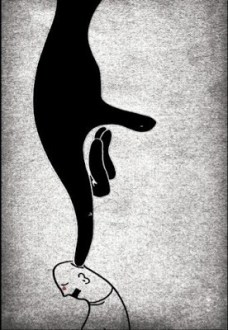 Justice that isn’t equitable isn’t justice. Arguments for the perpetuation of the same ol’ same ol’, then, are nonstarters. Dogma continues to prevail, however, by distraction: “a majority of rapes go unreported,” “most battered women suffer in silence,” “domestic violence is epidemic” (men have it coming to them). Invocation of social ills that have no bearing on individual cases has determined public policy and conditioned judicial impulse.
Injustice, no surprise, arouses animosity; injustice that confounds lives, moreover, provokes rage, predictably and justly. This post looks at how that rage is severed from its roots—injustice—and held aloft like a monster’s decapitated head to be scorned and reviled.
I first learned of the Southern Poverty Law Center (SPLC) from a research paper published by Law Professor Kelly Behre this year that equates men’s rights activism with hatemongering. I later heard this position of the SPLC’s reiterated in an NPR piece about the first International Conference on Men’s Issues.
Injustice, it should be noted preliminarily, is of no lesser interest to women than to men. Both men and women are abused by laws and practices purportedly established to protect women, laws and practices that inform civil, criminal, and family court proceedings.
Groups like the SPLC, however, represent opposition to these laws and practices as originating strictly from MRAs, or men’s rights activists, whom they dismiss as senseless haters. This lumping is characteristic of the smoke-and-mirrors tactics favored by those allied to various women’s causes. They limn the divide as being between irrationally irate men and battered women’s advocates (or between “abusers” and “victims”).
 They don’t necessarily deny there’s a middle ground; they just ignore it. Consequently, they situate themselves external to it. There are no women’s rights activists (“WRAs”?) who mediate between extremes. They’re one of the extremes.
I’m a free agent, and this blog isn’t associated with any group, though the above-mentioned law professor, Dr. Behre, identifies the blog in her paper as authored by an “FRG” (father’s rights group), based on my early on citing the speculative statistic that as many as 80% of restraining orders are said to be “unnecessary” or based on false claims, which may in fact be true even if Dr. Behre finds the estimate unscientific. (Survey statistics cited by women’s advocates and represented as fact are no more ascertainably conclusive; they’re only perceived as more “legitimate.”)
SAVE Services, one of the nonprofits to cite a 2008 West Virginia study from which the roughly 80% or 4-out-of-5 statistic is derived, is characterized by the SPLC and consequently Dr. Behre as being on a par with a “hate group,” like white supremacists. It isn’t, and the accusation is silly, besides nasty. This kind of facile association, though, has proven to be very effective at neutering opposing perspectives, even moderate and disciplined ones. Journalists, the propagators of information, may more readily credit a nonprofit like the SPLC, which identifies itself as a law center and has a longer and more illustrious history, than it may SAVE, which is also a nonprofit. The SPLC’s motto, “Fighting Hate • Teaching Tolerance • Seeking Justice,” could just as aptly be applied to SAVE’s basic endeavor.

On the left is a symbol for the Ku Klux Klan; on the right, the symbol for feminist solidarity. The images have common features, and their juxtaposition suggests the two groups are linked. This little gimmick exemplifies how guilt by association works.
The SPLC’s rhetorical strategy, an m.o. typical of those with the same political orientation, is as follows: (1) scour websites and forums in the “manosphere” for soundbites that include heated denunciations and misogynistic epithets, (2) assemble a catalog of websites and forums that espouse or can be said to sympathize with extremist convictions or positions, and (3) lump all websites and forums speaking to discrimination against men together and collectively label them misogynistic. Thus reports like these: “Misogyny: The Sites” and “Men’s Rights Movement Spreads False Claims about Women.”
Cherry-picked posts, positions, and quotations are highlighted; arguments are desiccated into ideological blurbs punctuated with indelicate words; and all voices are mashed up into a uniform, sinister hiss.
The SPLC’s explicit criticism may not be unwarranted, but coming as it does from a “law center” whose emblem is a set of balanced scales, that criticism is fairly reproached for its carelessness and chauvinism. There are no qualifications to suggest there’s any merit to the complaints that the SPLC criticizes.
The SPLC’s criticism, rather, invites its audience to conclude that complaints of feminist-motivated iniquities in the justice system are merely hate rhetoric, which makes the SPLC’s criticism a PC version of hate rhetoric. The bias is just reversed.
Complaints from the “[mad]manosphere” that are uncivil (or even rabid) aren’t necessarily invalid. The knee-jerk  urge to denounce angry rhetoric betrays how conditioned we’ve been by the prevailing dogma. No one is outraged that people may be falsely implicated as stalkers, batterers, and child molesters in public trials. Nor is anyone outraged that the falsely accused may consequently be forbidden access to their children, jackbooted from their homes, denied employment, and left stranded and stigmatized. This isn’t considered abusive, let alone acknowledged for the social obscenity that it is. “Abusive” is when the falsely implicated who’ve been typified as brutes and sex offenders and who’ve been deprived of everything that meant anything to them complain about it.
Impolitely. (What would Mrs. Grundy say?)
There’s no question the system is corrupt, and the SPLC doesn’t say it isn’t. It reinforces the corruption by caricaturing the opposition as a horde of frothing woman-haters.
Enter Betty Krachey, a Tennessee woman who knows court corruption intimately. Betty launched a website and e-petition this year to urge her state to prosecute false accusers after being issued an injunction that labeled her a domestic abuser and that she alleges was based on fraud and motivated by spite and greed. Ask her if she’s angry about that, and she’ll probably say you’re damn right. (Her life has nothing to do with whether “most battered women suffer in silence” or “a majority of rapes go unreported,” and those facts in no way justify her being railroaded and menaced by the state.)
I made this website to make people aware of Order of Protections & restraining orders being taken out on innocent people based on false allegations so a vindictive person can gain control with the help of authorities. The false accusers are being allowed to walk away and pay NO consequences for swearing to lies to get these orders! […]
I know that, in my case, the judge didn’t know me. Even though I talked to the magistrate the day BEFORE the order of protection was taken out on me & I told him what I heard [he] had planned for me. They didn’t know that I might have superpowers where I could cause him bodily harm 4 1/2 miles away. SO they had no choice but to protect [him] from me. BUT when they found out this order of protection was based on lies that he swore to, and he used the county in a cunning and vindictive way to get me kicked out of the house – HE SHOULD HAVE HAD TO PAY SOME CONSEQUENCES INSTEAD OF BEING ALLOWED TO WALK AWAY LIKE NOTHING HAPPENED!!!!
Seems like a fair point, and it’s fair points like Betty’s that get talked around and over. There are no legal advocates with the SPLC’s clout looking out for people like Betty; they’re busy making claims like hers seem anomalous, trivial, or crackpot.
Copyright © 2014 RestrainingOrderAbuse.com
*Betty reports she’s been in conference with one of her state’s representatives and has been told she has “a good chance at getting this law changed,” albeit too belatedly to affect her own circumstances. Says Betty, “I still want the law changed to hold false accusers accountable!” Amen to that.

 With regard to the honest representation of facts in court, however, both accusers and judges fudge (and that’s putting it mildly). Each may frame facts to produce a favored impression.
 Judge Stump quickly signed the order, and the judge and mamma hustled Linda into a hospital, telling her it was for an appendicitis operation. Linda was then sterilized without her knowledge. Two years later, Linda married a Leo Sparkman and discovered that she had been sterilized without her knowledge. The Sparkmans proceeded to sue mamma, mamma’s attorney, the doctors, the hospital, and Judge Stump, alleging a half-dozen constitutional violations.
 It’s often reported by recipients of restraining orders that the cops and constables who serve them recognize they’re stigmatizing.
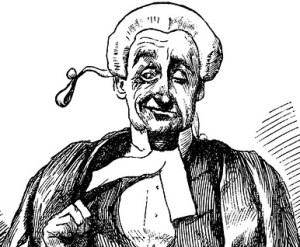 “Obscure public records” is how some officers of the court think of restraining orders. In the age of the Internet, there are no such things. Many judges are in their 60s and 70s, however, and scarcely know the first thing about the Internet, let alone Twitter, Facebook, and YouTube. They’re still living in the days of mimeographs and microfiche.
 TALKING BACK to restraining orders