Both questions in the title have a common answer, which I’ll illustrate by allegory.
When I was about 20, I worked next to the residence of an aged woman who kept a Rottweiler on a chain in her yard. The dog lived on the tie-out all hours of the day and probably had all of his life.
After I’d observed his situation for months and saw it never changed, I determined to offer to fence in the woman’s property for her. Our business had some unused rolls of chain link that wouldn’t be missed.
I knocked on the woman’s door and explained my interest. She said she’d come out and talk to me. While I waited, the dog approached. I knelt down to greet him. He lunged at my face, tore my nose, and then clamped down on the arm I raised protectively, crushing my radial nerve. I kicked him off and drove myself to the emergency room. If he hadn’t been on a chain, it would have been an ambulance transporting me there. It would still be eight or 10 months before I recovered the use of my left hand, brief as the attack was.
The dog had been mistreated, and he was insane. When I returned to Tucson after leaving for a time to rehabilitate, I learned he’d mauled two little girls and was destroyed. (I passed the woman on the road not long after. She smiled and waggled her fingers at me, and then scowled when I stared at her coldly.)
Question: Who was to blame?
People are no different from dogs. If you force them to live with undeserved privations, whether cruelly or just irrationally, they lose it. This is the answer to the questions in the title.
Calling male victims of abuse, abuse that has its roots in gender dogma, “crazy”—as the man does whose writings I panned in the last post—isn’t necessarily wrong. But driving people crazy and then blaming them for it does kind of make you a monster.
If I then call you a monster, does that mean I’m insensitive? The conclusion is ridiculous.
Consider this story of female violence that was submitted to the blog yesterday:
Hi, I just wanted to share my story for all the other guys who have been victims of vengeful women. I have had two restraining orders placed on me now. The second one is pending…. The first one was dismissed because it was a lie. The girl used it to kick me out of our apartment and to punish me. That was in 2004.
It has caught up with me since then.
In 2010, a guy who was jealous and wanted my girl used his private investigator credentials to pull my records. He found the [dismissed] restraining order and told my girl, who promptly left me.
I am currently married to a woman who has been hitting me, shoving me, knocking me over, and physically keeping me trapped in my own apartment. After having enough, I told her that I wanted a divorce and to go live her life (but really I love her and don’t want to leave her).
She left the next day and then called me a few days later and said she was going to come home. We argued and I yelled that if she attacked me again, I’d call the police immediately. That night when I came home, there were three police cruisers there (mind you, this is three days after the incident). The police escorted her along with my parents to help her get her stuff from the apartment. […]
My mother is a drama queen and always has been. She gets in fights with people in public and was kicked out of her family for spreading lies about them. When my wife asked to be taken home (she was staying with my parents whom she promised never to talk to), my mother told her about the restraining order I had over 10 years ago. I’m sure my mother embellished as she always does. She frightened Diana, and my mother called the cops.
That Monday, my mother brought her to the courthouse to file the restraining order. Diana did not stop her, and Diana even called me, and I heard this new tone in her voice, a tone of righteousness, like she was talking to a child she was about to punish. […] The next day, the police were beating down my door and served me the notice (that’s today).
I have no doubt that I will win this case, but just as the last case caught up with me…how do I explain two cases? This may ruin my reputation for life. I mean surely if you’ve had two cases brought against you, you did something wrong. You must be guilty, right? But I’m not. The first case actually brought on the second case, and in both cases it was the women who were hitting me, not me hitting them or even threatening them. […]
This man says he was battered by two women who petitioned restraining orders against him as a further form of assault (a power play). “They do it because they’re emotional disasters and want to punish,” he offers. He’s right. The system panders to impulse (and often rewards it).
Now consider that the blogger, Tom Boggioni a.k.a.“TBOGG,” criticized in the last post for a 2014 commentary on “MRAs” published on RawStory.com, popped out a piece two days ago telling men they should never strike a woman—as if anyone who would strike a woman will have some sort of moral awakening because Tom pronounced he shouldn’t. Please. (If pieces like his do more than make their male authors look good to their female audience members, it’s lost on me. They pander, and feminists eat it up.)
A man like the one in the account above, who has tolerated violence from women without raising his hand even in self-defense, has been punished for his tolerance by having cops pound on his door and being dragged into court to stand accused. He’s been represented as an abuser—to compound the indignities of being battered—and the implications of the representation are alone enough to damage him…indefinitely. (The first order against the man, which cost him a relationship, was thrown out of court. Note: Even when the court acknowledges allegations are groundless…it doesn’t matter, because the damning implications are preserved. Only one state in the nation, Tennessee, has a law on the books that enables a dismissed restraining order to be expunged.)
Will the guy in the story become the “embittered, divorced white man with anger issues” that TBOGG and his fellows mock? Who knows?
But would you blame him if he did? More significantly, if you did blame him, who would the real monster be?
Copyright © 2015 RestrainingOrderAbuse.com
*What writers who contemn MRA rhetoric seem to miss is that it’s not violent. It may be unsavory—it may be downright nasty—but its aggressiveness is passive. If the authors of MRA rhetoric (or what’s held up as exemplifying MRA rhetoric) were actually the violent bullies that many of them have probably been represented to be in courtrooms, is this the form their anger would assume…words? Put another way, what form would their anger take if they weren’t the violent bullies that many of them have probably been represented to be? That’s right…words.

 What isn’t appreciated by critics of various men’s rights advocacy groups is that these groups’ own criticisms are provoked by legal inequities that are inspired and reinforced by feminist groups and their socially networked loyalists. These feminist groups arrogate to themselves the championship of female causes, among them that of battered women. Feminists are the movers behind the “battered women’s movement.”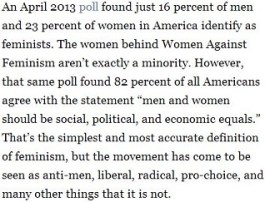
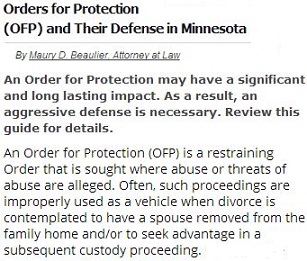
 The professor carefully prefaces her points with phrases like “Researchers have noted,” which gives them the veneer of plausibility but ignores this obvious question: where do the loyalties of those “researchers” lie? The professor cites, for example, the Southern Poverty Law Center’s equation of SAVE Services with a hate group. An attentive survey of SAVE’s reportage, however, would suggest little correspondence. The professor doesn’t quote any of SAVE’s reports; she simply quotes an opposing group’s denunciation of them as being on a par with white supremacist propaganda.
 TALKING BACK to restraining orders