“Ten years ago, about one in 10 domestic violence arrests involved women as defendants. Now, it’s one in five in Michigan and Connecticut, one in four in Vermont and Colorado, and more than one in three in New Hampshire. Public officials are trying to figure out what’s going on. They are especially mystified because, according to [The New York Times], the trend ‘so diverges from the widely accepted estimate that 95 percent of batterers are men.’
“Interesting logic: first, a dogma contradicted by virtually all social science research [namely, 95% of batterers are men] becomes ‘widely accepted.’ Then, when it’s disproved by the facts, the response is to ask what’s wrong with the facts.”
—Cathy Young, “Female Aggression—Domestic Violence’s ‘Dirty Little Secret’” (1999)
What the quoted writer means is that when dogma becomes “widely accepted,” it stays “widely accepted.” Time has proven her right. Fifteen years later, that dogma—men are abusers; women are victims—still predominates.
 It gets by with a little help from its friends.
Some months ago, a post on this blog responded to research conclusions published this year by Prof. Kelly Behre, director of the UC Davis Law School’s Family Protection and Legal Assistance Clinic.
Among those conclusions was that anecdotal reports of procedural abuses, false allegations, and judicial bias by what she calls FRGs (fathers’ rights groups) have no “legitimate” research studies to back them up and should therefore exert no influence on public policy. They should, according to the professor’s own research, be disregarded.
Last month, it was reported that a George Washington University law professor was awarded a $500,000 grant from the National Institute of Justice (i.e., taxpayers) to “conduct a study in which she hopes to show that family courts across the country have fallen into a pattern of awarding custody” of children to fathers who are “known abusers.”
The professor, Joan Meier, directs the university’s Domestic Violence Project. She’s also the “founder and legal director of the Domestic Violence Legal Empowerment and Appeals Project, a nonprofit that [helps] domestic violence survivors receive pro-bono [legal aid].” Her credentials, you’ll notice, are conspicuously similar to those of Prof. Behre, referenced above.
Consider why Prof. Meier was awarded the grant:
She said researchers can say anecdotally that courts have awarded custody to known abusers or fathers whose [partners or ex-partners] have warned could be abusive to children, but researchers and advocates’ sharing their experiences alone hasn’t yet led to change.
Now consider that fathers’ rights researchers and advocates’ sharing their experiences has also yet to lead to change, and appreciate that those researchers and advocates aren’t being cut half-million-dollar checks to compile research data. What they have to say doesn’t accord with the “widely accepted” dogma; it isn’t popular.
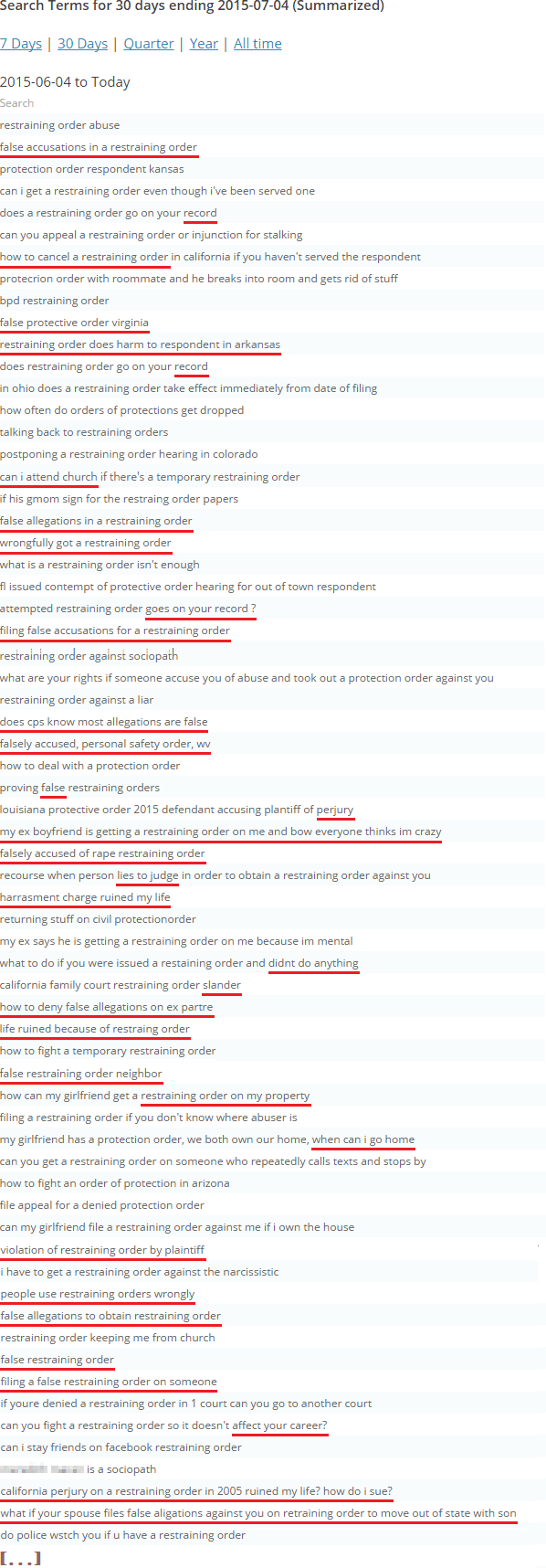
Because their anecdotal reports of false allegations, procedural abuses, and judicial bias don’t have any official research to validate them, they’re to be ignored.
Ignoring those reports, in fact, is essential for a hypothesis like Prof. Meier’s to be tenable. It depends on absolutely denying that those whom the professor calls “known abusers” could be men who’ve been falsely implicated.
 Prof. Meier says she expects to use the $500,000 federal grant to conclusively expose gender bias in family court against women—and to do it using a study sample of “over 1,000 court cases from the past 15 years” (a study sample, in other words, of fewer than 2,000 cases).
For the professor’s hypothesis to be proven “true,” it just has to be shown that in a significant number of the “over 1,000 cases” reviewed, a father awarded custody of children had previously been accused of abuse.
The researchers hope to debunk “junk science” that mothers make false accusations of abuse to alienate fathers from their sons or daughters, a misconception that Meier said has put many children in danger.
Prof. Meier seems to fail to grasp that the complaint is that mothers successfully “make false accusations of abuse to alienate fathers from their sons and daughters.” Even if her study were to show that child custody is awarded to fathers who’ve been successfully accused of abuse, it wouldn’t necessarily prove that the complaint that false accusations are routine is based on “junk science” (unless by that phrase she means science that hasn’t been government-funded and -audited).
Prof. Meier’s assertion that claims of false allegations are a “misconception,” what’s more, ignores that any number of attorneys who practice family law publicly corroborate that so-called misconception. Some indeed say false allegations to gain the advantage in custody battles are commonplace. These are the attorneys who actually practice in the trenches. Their reports, however, are once again only anecdotal.
Fathers and their advocates who claim false accusations are made don’t, of course, misconceive anything. They know what they know; they’ve lived it. The professor’s use of the word misconception is directed at the “people who count,” that is, the policy-makers. What she means is any credibility they might be disposed to show complainants of procedural abuse is based on a misconception. That misconception, apparently, is that men without law degrees could possibly be telling the truth.
The professor’s assertion that reports of false accusations are “junk science,” furthermore, would seem to advocate for good science, and there’s certainly nothing scientific about prejudicially dismissing those reports offhand. Studies like those proposed by Prof. Meier need to be counterbalanced by studies with opposing hypotheses—and they aren’t.
Meier and her team of legal and statistical experts will create a database of court opinions that she hopes will show a pattern that supports her hypothesis, and will then present it to activists, local courts, and organizations that train judges.
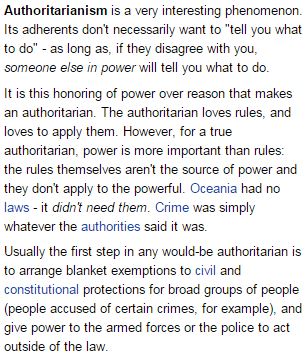
Preservation of dogma is a game of ring-around-a-rosy. Advocacy for what’s widely accepted to be true is lavishly funded, and the resultant “science” may then be used to “train” judges how to rule, further reinforcing the dogma.
(If the context of this policy were Russia instead of the United States, would training still be the word we used to mean influencing judges?)
This is how underhand gets the upper hand, and it’s remarkable how openly this kind of business is transacted. No one bats an eye, because it’s “official.”
Prof. Meier may have the best of intentions. The author of this post has never known anyone whom he would characterize as a domestic violence “survivor.” He has no doubt, however, that there are people who are daily subject to violent cruelty, and if he did know someone like that, he’d be grateful that there were people like Prof. Meier looking out for their interests.
Victims need advocates and defenders.
The reality is, though, that victims of domestic violence have quite an abundance of public and private sympathizers, while victims of abuse of civil and criminal processes legislated to protect battered women and children (including restraining orders) receive little public recognition at all. An agency that calls itself the “National Institute of Justice” shouldn’t play (or pay) favorites. Justice would, in fact, advocate that an equal payout be provided to researchers to study the frequency of fraudulent accusations, which can’t be determined from court rulings, because those rulings are influenced if not dictated by the prevailing dogma.
Hypotheses, it’s been amply observed, tend to incline researchers to find evidence of whatever it was they were looking for in the first place (this is called “confirmation bias” or “myside bias”).
Leora Rosen, a former senior social science analyst at the National Institute of Justice, said [Prof. Meier’s] study is unique because it is transparent about its lack of objectivity and looks at family court rather than criminal court cases. She has partnered with Meier for the study.
Copyright © 2014 RestrainingOrderAbuse.com




 TALKING BACK to restraining orders