
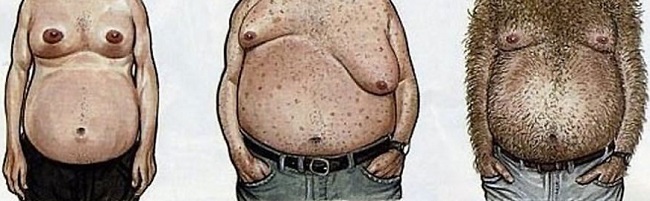
“Man Boobz has a contingent of MRA commentors, but he has never (to his knowledge) changed any of their minds.”
—Kate Donovan, TeenSkepchick.org
Even at the risk of giving the impression that what the epigraph means is worth understanding, I’ll interpret: ManBoobz.com is the domain name of a website that mocks “MRAs” or “Men’s Rights activists.” (The grammar of the quoted writer, Kate Donovan, also humorously suggests “Man Boobz” is a nickname of the website’s author, David Futrelle—which, admittedly, is why I lifted the sentence.)
If you’re like me, you’ll be filing this information under the mental tab WHATEVER. So why do I bring this up?
In recent weeks, I’ve corresponded with and written about
- a black dad who was illegally denied any role in his daughter’s life for 12 years, and then was coldly informed she was dead—many months after her funeral—by a notice telling him he’d better not expect anything from her estate;
- a white dad who was framed as a (literal) terrorist by his wife’s divorce attorney to make sure his wife got everything, including sole custody of their children;
- a black dad who was beaten by police and dragged from his home after his white wife (a member of the Screen Actors Guild) deceived the authorities and the court to destroy him;
- and a gay man who was slapped and slammed into an appliance (which split the side of his head open), and who was then represented as a “threat” by his violent abuser, publicly disgraced by repeated arrests (including at his place of work), financially ruined, and run out of town.
This is besides digesting copious nauseating and desolate reports of abuse compounded by legal fraud submitted by both men and women. A respondent the other day, for example, reported she’d been chronically forced to have sex and was then issued a restraining order petitioned by her rapist, who endeavors to expel her from the life of an older woman she nurses, an older woman she loves and thinks of as her “grandmother.” The man has also cost the girl work by telling people she’s crazy. He’s apparently concerned she might pose a risk to his inheriting the older woman’s estate…besides concerned she might expose him as a rapist.

Dilettante demagogue Dave Futrelle has “document[ed] and mock[ed]” male complaints of injustice since 2010. Today a fulltime heckler, he supports himself and his cats with advertising revenues and online donations from feminist fans.
In writing about the black dad who now has an “18%” share in the lives of his two infant boys (“who go insane when I have to drop them back to their mother”), I was moved to criticize the rhetoric of the Southern Poverty Law Center, which represents itself as a civil rights advocacy group. The SPLC publishes a page called, “Misogyny: The Sites,” that suggests opposition to feminist-inspired legal travesties (for instance, the restraining order) is motivated by hatred of women, and on this page it refers approvingly to ManBoobz.com, the site introduced above.
The domain name ManBoobz.com leads to the blog We Hunted the Mammoth, whose title is apparently a lampoon of the titles of “MRM” (Men’s Rights Movement) blogs like Return of Kings. “We Hunted the Mammoth” is meant to suggest the Men’s Rights people are Neanderthals. Yuk-yuk.
If you’re a parent who’s missing his or her children, an abused (former) spouse or boy- or girlfriend who’s now homeless or living “like a hamster” consequent to misapplications of the law, or a senior who’s been bullied into cowering behind his or her blinds, this post is to make you aware of the trash talk that has cost you what you valued most; that talk is what informs pop culture sentiment and diverts awareness from your torment.
The anti-MRM crowd—of whom David Futrelle, author of We Hunted the Mammoth, is apparently a bellwether—represents the complaints of men/fathers to be unprovoked hate rhetoric (and anyone, man or woman, whose complaints are identified as corresponding to MRM complaints is simply lumped in). Calling complaints of state-sanctioned abuses “misogynist” makes them easy to dismiss. The conclusion that complaints are “misogynist” is plainly superficial but not unpredictably embraced by feminist partisans.
Here’s a snippet from a recent post on We Hunted the Mammoth (selected because I don’t have the stomach to stick my hand all the way into the bowl):
 Men’s Rights Redditors agree: it’s tough to be a man. Well, a cis man, in any case. And those silly trans people are making it worse.
On the Men’s Rights subreddit, one concerned fellow has discovered a possibly insurmountable obstacle standing in the way of true gender equality: A “Women’s Room” at the University of Queensland that, as a sign on its door notes, is open to “trans*, intersex and genderqueer people as well as cis-females.” The horror!
The post concerns a sign on the door of a University of Queensland toilet. That’s right: a toilet.
(Apparently chemical prefixes are now used to distinguish different “gender types.” A “cis” is what most of us would naïvely call a heterosexual man or woman.)
Here’s an excerpt from another post:
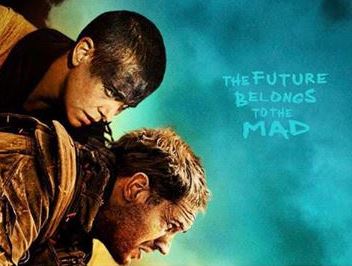 Yep, I reported the 100% true fact that a Youtube bloviater named Aaron Clarey had written a post on Return of Kings urging men, in his words, to “not only REFUSE to see the movie, but spread the word to as many men as possible.” I described his readers on Return of Kings as misogynists, not MRAs, though clearly there is a massive overlap between those two groups.
The idea that this was specifically a Men’s Rights crusade was, to be sure, a bit of sloppiness on the part of the journalists writing about it, who are not quite as familiar as some of us are with all the different varieties of woman-hating shitheads there are in the “manosphere”—especially since their belief systems overlap considerably. As I noted in a previous post on this subject, writing about Esmay’s accusations against a writer for the Huffington Post,
It’s true that the HuffPo writer, in the original version of her piece, wrongly described the MRA-adjacent Return of Kings—which has urged a boymancott of Mad Max Fury Road—as a Men’s Rights site proper. There are in fact some differences between ROK and AVFM. For example, while AVFM writers have declared women to be “obnoxious cunts,” who control men with their vaginas, ROK writers have suggested that women are actually depraved, disloyal sheep.
You can almost forgive journalists for getting a bit mixed up.
The post has something to do with a recent movie (Mad Max: Fury Road). As of this composition, it’s been tweeted 27 times and circulated on Facebook 98 times. It was more popular than the toilet post…maybe because it has dirty words in it.
The writing is virtually indecipherable to outsiders but communicates the nature and maturity of the “discourse” (i.e., teenage). This sniping has “evolved” (or escalated unchecked by the reproofs of grownups) to the stage that it has its own jargon and insider acronyms.
Noteworthy is that Mr. Futrelle’s tirades are in each instance against a single person: “one concerned fellow” and “a YouTube bloviator.” Whether these two men represent the “Men’s Rights Movement” is clearly questionable. Here, incidentally, is a clipping that shows topics surveyed on the Men’s Rights “subreddit” (r/MensRights) that Mr. Futrelle criticizes, topics that paint a different picture from the one his writing does.

Among the members of this so-called collective of haters who posted yesterday are a “self-reflective feminist,” a defender of an elderly man with dementia who was reportedly assaulted, and a father who alleges he was falsely accused of child abuse.
Issues these posts purport to concern seem no less worthy than those feminists raise. Mr. Futrelle nevertheless categorically calls contributors a “hate group,” as does the Southern Poverty Law Center. Ms. Donovan, the girl or woman quoted in the epigraph, offers this interpretation:
MRA stands (loosely, and inaccurately) for the Men’s Rights Activists. More correctly, the MRA movement has enveloped a terrifying sector of the population that feels women and particularly feminists are devoted to squashing the given rights of men in every way. This ranges from belief that women deserve abuse to abusing evolutionary psychology to claim that women are just genetically inferior and will remain that way.
While you, the reader of this post, perhaps sit huddled in a dark corner wondering at the maliciousness of Fate, wondering whether your estranged child or children are safe, wondering if you’ll ever vigorously embrace life again—this is how your pain is perceived (or at least represented) by the feminist “smart set,” which celebrates specialized toilets and mocks you as a “misogynist” and a crybaby.
Copyright © 2015 RestrainingOrderAbuse.com
*Consider this woman’s post to the “subreddit” r/AskFeminists: “Why do Feminists hate ‘MRAs’ and portray them poorly?”

 I corresponded with a man last year, a man in a homosexual relationship, who was assaulted by his partner severely enough to require the ministrations of a surgeon. His boyfriend was issued a restraining order coincident to his being charged with assault. That’s how it typically works in New York: A protection order is issued following a criminal complaint.
 This means, evidently and bizarrely, that there are people dwelling under the same roof as their accusers who may be cited for criminal contempt if an accuser calls and reports them for “harassment” that occurred, for example, in the hallway or the kitchen. The implications, which are fairly stunning, bring to mind the phrase “sleeping with the enemy.” The law invests its
  TALKING BACK to restraining orders