
As the story in this post shows, the phrase “America’s Game” has taken on a new meaning.
The common assumption—one that’s been vigorously enforced by advocates of the “abuse industry”—is that restraining orders are used to protect “victims” from “abusers.” So-called abusers are represented as violent husbands or boyfriends, or as stalkers, representations that account for the ubiquity of restraining orders and the ease of their procurement.
The man whose story of restraining order abuse appears below reports that restraining orders can be obtained by drive-thru in his state (California), like milkshakes and onion rings.
The restraining order against this father and family man was petitioned by his sister-in-law on behalf of her son, his nephew. The man affronted his sister-in-law by umpiring two of her son’s games (his job), contrary to her wishes. That’s the basis of her complaint to the court.
Fighting that complaint has now cost the man and his family some $15,000 (besides money he would have earned as an umpire), and his life’s on hold while he awaits an appellate court ruling that won’t emerge for six to 24 months.
Here’s his story, as he tells it:
I am a victim of restraining order abuse.
At the age of 37, I married the love of my life. It wasn’t until after we were engaged that I found out that most of my wife’s family didn’t like me. This is the foundation of my story.
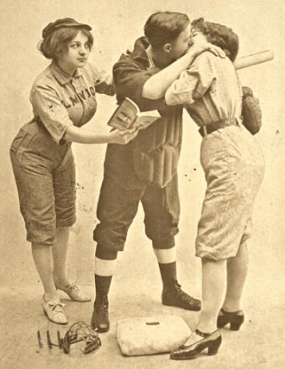 I am a little league, travel ball, and high school umpire. I umpire because I love the game and to make some additional money on the side. I have been umpiring baseball for close to 25 years without any incident whatsoever, and most reviews of my performance have been complimentary.
When my wife and I were married, we resided in Orange County, California. Our residence was far from the rest of her family, which limited our exposure to her parents and her sisters. My wife has two sisters, one older and one younger. Her elder sister is a lawyer, and her younger sister is a stay-at-home mom.
The eldest sister and her family and I have a great relationship. The problem is with the youngest sister, who is a control freak. She likes to control everything, including how many cups of coffee her husband has a day, and if she’s denied control, she will go to whatever lengths she has to to get it.
Two years or so ago, my wife was offered a job that would move us nearer to the younger sister. This was something that excited my wife, because she loves her family very much and wanted to be closer to her nieces and nephews. When she decided to take the job, she contacted her sister and told her the good news. Her sister was excited and worked with my wife to find a house that was near hers, and she found us a great one.
After moving in, we were visited quite frequently by my wife’s little sister and her family. Every time she visited, however, she pointedly let my wife know about her displeasure with the way we parented our eight-year-old little girl. As a stay-at-home mom whose entire existence revolves around her four kids, she has read every book on  parenting and considers herself an expert in child-rearing. I had even caught her entering my house and administering medication to my daughter without our consent, which I firmly put a stop to.
Back to baseball.
After we moved, I enlisted with the local little league to umpire. I worked for a local umpire company that was very pleased with the service I provided to them. It considered me one of its better umpires. One day, I was assigned to umpire one of my wife’s younger sister’s kids’ games. I checked with the league to see if there was an issue and was told no and that it had people umpiring their relatives’ games all the time. Just be neutral, I was told, which I always am.
My wife’s younger sister found out that I was going to be umpiring her son’s game and called my wife to tell her to have me remove myself from the game. When asked why, she stated she just wanted to keep things separate. My wife didn’t understand why and told her to not worry, that I would not show any bias toward her kids and everything would be great. He sister repeated that she just wanted to keep things separate. My wife still didn’t understand why, because her son and I had a great relationship, with no problems at all. At this point, the woman became hysterical and said, “Keep your husband away from my son.” My wife got very upset and hung up on her. After that, we found out that the younger sister called the older sister and asked what she should do to repair things with my wife because she had upset her.
 Well, because there was no good reason for my sister-in-law to be upset, and because the umpire company needed me to cover the game, I did. There was no issue with the game, and I received many compliments afterwards. I ended up working another one of my nephew’s games a couple of weeks later, again with no issues. The next week, I got a call from my umpire assignor reporting that my sister-in-law filed a complaint with the league saying her son was “uncomfortable” with my working behind the plate.
At that point, I banned her and her son from visiting my house. This really angered her and inspired her to get back at me.
Meanwhile, my assignor and I got together and agreed I should no longer work any of her kids’ games because she was clearly sick. So I was assigned to other games at the park that didn’t involve her kids.
This wasn’t acceptable to her. She didn’t want me at the fields at all. So she took pictures of me there on the days I was scheduled to work and created a story that involved my hunting and stalking her kids, and affecting their mental well-being.
She went to court and was granted an ex parte restraining order.
When I was served the restraining order, the deputy sheriff told me that he had read it and thought it was the funniest thing he had ever seen. He said he had no idea why it was issued and told me to just stay away from my sister-in-law.
When the time came for me to appear in court to fight the order, I had an attorney and she did not. The judge clearly stated that he would not give her preferential treatment, even so.
This turned out to be completely false.
My attorney laid out a solid case to have the order dismissed, presenting facts that showed there was no proof of any stalking or harassment, and that up until the time of my sister-in-law’s going crazy, her kids and I had had a great relationship.
 After about a two-hour hearing, the judge ruled against me. He stated that because my wife informed me that her younger sister had told her to keep me away from her kid that I was put on notice…yet persisted in showing up at the fields to work. Never mind that I was told two months after their conversation (my wife didn’t tell me right away because she thought it was just her sister acting crazy). The judge then went on to say that a mother had the right to determine who got to be around her kids and didn’t need a good reason.
Now since the restraining order was made permanent, my sister-in-law has been using it to harass me and my family.
She went to the elementary school and instructed staff there that I was only to be allowed to pick up and drop off my daughter, and she warned them that if I dared to attend any of my child’s awards ceremonies, school performances, science fairs, or other school functions, she would call the police and have me arrested. She has also been sending letters with false claims about police reports and bullying to the little league administration that regulates all of the local little leagues, and has effectively had me removed from umpiring any games at any of the area little leagues, even ones in which her kids don’t participate.
Her family has been following me and my daughter to public parks and then approaching me to tell me I am in violation of the restraining order. Also, they have changed their walking routes to school so they walk by me and my daughter, or by me as I walk home after taking my daughter to school, to accuse me of “pushing the envelope.” They constantly photograph me when I am waiting at school, and make up stories about me doing things to harass them or their kids.
 We have filed a motion for a new trial with compelling evidence. It was denied by the same judge. We have also filed a motion to modify the order to allow me to attend my daughter’s school events since I am her primary caregiver while my wife is at work (I own my own business), and this too was denied, because the judge thought it would be too hard for the school and the police to enforce.
We have filed an appeal, and briefs have been submitted. We are currently waiting for the appellate court to consider the briefs and issue a ruling. We were informed that it can take anywhere from six months to two years for this to happen. Now we are investigating whether we have proper grounds to file a motion asking for expedition to move our case closer to the front of the queue.
To show you just how crazy this restraining order is, the local police department asked, when we dropped off our guns, what clown would sign such a stupid restraining order? They said they would hold our guns for as long as needed to get this thing appealed.
This is my story, which has been my life for a year…and counting.
Copyright © 2015 RestrainingOrderAbuse.com
*From “High Conflict Family Law Matters and Personality Disorders” by attorneys Beth E. Maultsby and Kathryn Flowers Samler:


 This post shares a letter to the editor of the Fauquier Times that was recently submitted by Virginian Nathan Larson and that concerns an injunction sought by Warrenton Vice Mayor Linda “Sunny” Reynolds, whose nickname and whose evident hypersensitivity are strikingly incongruous. “Misty” Reynolds would seem to suit her better—or maybe “Runny.”
 The posited “80%” statistic was seized upon by critics of the restraining order process and bruited broadly on the Internet. I published it myself, and this blog, accordingly, was cited in Prof. Behre’s paper as the product of an “FRG.” It’s actually the product of a single tired and uninspired man who knows that false accusations are made.
 TALKING BACK to restraining orders