Why More Falsely Accused Don’t Speak Out

If procedural abuses are epidemic (and they are), why do so few vociferously complain? Why isn’t the Internet inundated with personal horror stories (and why aren’t state representatives’ in-boxes choked with them)? We purportedly enjoy the privilege of free speech, so why isn’t it exercised more?

The absence of rampant complaints of procedural abuse is misleading. Limitation of complaints to sketchy e-petitions and forum comments, often anonymous, makes them suspect and easily discounted by those with a political interest in discrediting them.

The dearth of forthright exclamations of abuse and injustice, however, is easily understood.

Rather than consider who isn’t talking back, consider who does. What distinguishes these men and women from what may be hundreds of thousands or millions of victims of false, exaggerated, or misleading accusations to the court?

For one, most of them are childless or without young children. They don’t face being further deprived access to their kids if they buck the system. Those with minor children who do speak out have often been denied all rights to their kids, anyway; they have nothing left to lose.

Too, most of them work for themselves. It’s a fact that restraining orders influence employers. Furthermore, studies have shown that employers are influenced even by Internet disclosures by employees or potential hires that may be negatively perceived by the public. Human Resources personnel are paid to snoop around. Mere injudicious comments on Facebook may be hazardous to job opportunities and careers. Declaring that you’ve been judged to be a stalker, for example, or a domestic or child abuser has obvious and grave drawbacks, never mind if you’re also construed as a wacko because you vehemently insist online that your accuser’s psychopathic. This is an express train to sleeping in a refrigerator box.

Women aren’t immune to false accusation. They’re a minority among its victims, and that status is itself isolating (from a community peopled mainly by men who resent women and the favored political status they enjoy). Many respondents to this blog are female—maybe most. By and large, however, women may feel like interlopers in male-dominated discussions, and women’s advocates, whom they should be able to turn to, don’t want to bring scrutiny to bear on the question of procedural abuse (which is mostly by women).

People who may be foully wronged and branded with accusations that may daily tear at them are coerced into silence by the feared repercussions of ventilating their rage and anguish. Their false accusers, moreover, may be violent people or, for example, extremely vindictive ones, and the accused may fear for their safety and their children’s safety, or fear further legal abuse, which can be endlessly renewed, particularly after false accusations have once stuck, and which can result in incarceration—possibly meaning loss of a single parent’s child(ren) to the state—or financial hardship or ruin. The falsely accused are squeezed between a rock and a hard place.

As you might imagine—and it’s okay to try imagining even if it goes against your partisan loyalties—this creates a hell within a hell.

Probably most of the falsely accused, besides, are not trained writers (like the loudest voices that discredit people in their shoes are) nor among the politically privileged class, whose members are typically the most able to free themselves from false accusations in the first place. They’re not suave, and they don’t possess the kinds of credentials that make people think twice.

(Also, ironically, the people who do possess the kinds of credentials that make people think twice but who fail to deflect a false finger of blame are often sensitive to “social decorum” and may be loath to air dirty laundry.)

Public outcry, finally, is discomforting to family and friends (and their family and friends). It compounds the alienation and isolation of false accusation with alienation from those who believe in you; they sidle away.

In a nutshell, it’s not merely coincidental that those few who do elect to talk back are mainly single, independently employed, without small children, white…and male. Men don’t fear violent retaliation from their false accusers, usually, and they may have nothing left to be stripped of except the lingering expectation of justice.

Copyright © 2015 RestrainingOrderAbuse.com

*Bearing the foregoing in mind, it should be no surprise that the preponderance of publicized outrage originates from “just folks” who aren’t distinguished and who are easily dismissed (and mocked) as “rabble.” What should be a surprise is that their detractors are often those who are supposed to be looking out for them, for example, civil rights advocates like the ACL(where R)U and agents of the popular press.

If You Doubt the Grief Caused by False Accusation, Consider the Whimpers of False Accusers When THEY’RE Exposed

Forthcoming posts on this blog will consider character assassination, and they will critique one of the many execrable ironies of the civil restraining order process. It is possible to falsely accuse a person of anything—literally anything (mooning the neighbors, groping children, chewing the ears off of puppies, rape, you name it)—and the act of false accusation, which is universally deemed a statutory crime (perjury), is not sanctioned by the court. The falsely accused, what’s more, cannot litigate the crime of perjury him- or herself nor apply to the court for relief from the falsehoods or an award for the damages they do, which may include PTSD, loss of home, and financial ruin. But…but if the falsely accused exercises his or her constitutionally protected right to free speech and exposes his or her false accuser, which is his or her only lawful defense (and a feeble one at that), this act may paradoxically be construed as “character assassination” by state prosecutors and judges. This post will ease into the topic of character assassination gently.

An alternative way of understanding the pains inflicted by false accusation, if you’re among the compassionately challenged, is to consider the complaints of those accused of falsely accusing.

They don’t like it much when the table is turned.

A woman I’m in correspondence with and have written about was accused of abuse on a petition for a protection order last year by a scheming long-term domestic partner, a man who’d seemingly been thrilled by the prospect of publicly ruining her and having her tossed to the curb with nothing but the clothes on her back. He probably woke up each morning to find his pillow saturated with drool.

The woman he accused, meanwhile, probably didn’t sleep at all during the weeks of purgatory between the accusation and her hearing. For a while, she had to worry about where she’d be able to sleep.

She successfully had the protection order dismissed and has since publicly exposed her false accuser. She’s also filed a lawsuit and endeavors to have the laws in her state amended so people like her ex face consequences for defrauding the court (which at present they never do…anywhere). After her exoneration in court, she says her ex starting circulating it around town that she tried to kill him.

Now her former boyfriend complains that the stir she’s caused by expressing her outrage in public media is affecting his business, and he reportedly wants to obtain a restraining order to shut her up…for exposing his last attempt to get a restraining order…which was based on fraud.

He feels defamed, you see.

Public exposure is not the same thing as being put on the legal rack, but, oh, how those outed for lying will snivel and pule. They expected their testimony would be neatly kept under wraps, and it’s just…not…fair!

Anyone who doubts or misconceives the torments of legal abuse need only look to the whiners who object to being revealed as its perpetrators to be disabused of illusion.

Copyright © 2015 RestrainingOrderAbuse.com

*First Amendment advocate Matthew Chan, who recently prevailed in a protection order appeal before the Georgia Supreme Court, keeps a constant vigil over what’s said about him by his own accuser, who reportedly began a social media campaign to reboot the conflict after the court ruled against her. Larry Smith, who authors BuncyBlawg.com, was ordered to show cause in 2014 why he shouldn’t be censured for writing about his false accuser, a disturbed woman who complained of grave emotional distress. A sometime commenter here, Sean Heeger, has had a restraining order against him extended, has been jailed, and has had his character and sanity impugned for talking publicly about legal abuse. Neil Shelton, who was jailed for a year, alleges his (now ex-)wife’s divorce attorney, a state congresswoman, conspired to frame him as a terrorist to shut him up after he ridiculed her on Facebook for her efforts to frame him for various violations of a restraining order obtained on false grounds (Neil represented himself in six hearings and each time won). Though Neil’s case is extreme, cases like these are exceptional only insofar as the victims of legal abuse have elected to speak out.

A Victory for Free Speech: Matthew Chan Prevails in His First Amendment Appeal of a Lifetime Restraining Order

Several posts on this blog in the past year have concerned the case of Matthew Chan, a Georgia entrepreneur who blogs and administers a forum for victims of “copyright extortion” (i.e., people who’ve been threatened with lawsuits for unsanctioned use of a copyright holder’s original material and may be intimidated into paying thousands to avoid being taken to court—this for posting a photo online, for example, or using a snippet of text without proper acknowledgment or without having paid a fee or otherwise obtained the author’s consent).

Matthew S. Chan

The blog has also featured a guest post by Mr. Chan.

This post reports that the Georgia Supreme Court returned a virtually unanimous ruling in his favor Friday, after many months of deliberation, that lifted a lifetime protection order prohibiting Mr. Chan from criticizing a woman he characterized as a “copyright troll.”

The basis of Mr. Chan’s appeal, prosecuted by New York attorney Oscar Michelen, was that the trial court that issued the order misconstrued and misapplied the law. Forcing a procrustean interpretation onto the facts, it determined Mr. Chan had harassed, intimidated, and “stalked” the plaintiff in the case, Linda Ellis. Accordingly, it imposed a “prior restraint” on Mr. Chan’s freedom of expression, barring him indefinitely from writing about her.

First Amendment authorities, Profs. Eugene Volokh and Aaron Caplan, submitted an amicus brief to the court in Mr. Chan’s favor, arguing that the First Amendment—with some exceptions—authorizes speech about a person, even if that speech isn’t polite or flattering.

Justice Keith Blackwell, writing for the Georgia Supreme Court, summarized the case in the court’s March 27 ruling:

Matthew Chan has a website on which he and others publish commentary critical of copyright enforcement practices that they consider predatory. Linda Ellis is a poet, and her efforts to enforce the copyright in her poetry have drawn the ire of Chan and his fellow commentators. On his website, they have published nearly 2,000 posts about Ellis, many of which are mean-spirited, some of which are distasteful and crude, and some of which publicize information about Ellis that she would prefer not to be so public. […] It is undisputed that Chan never caused any of these posts to be delivered to Ellis or otherwise brought to her attention. But it also is undisputed that Chan anticipated that Ellis might see the commentary on his website, and he may have even intended that she see certain of the posts, including the open letter to her.

Ellis eventually did learn of the posts, and she sued Chan for injunctive relief under the Georgia stalking law, OCGA § 16-5-90 et seq., alleging that the electronic publication of the posts was a violation of OCGA § 16-5-90 (a) (1), which forbids one to “contact” another for certain purposes without the consent of the other. Following an evidentiary hearing, the trial court agreed that the electronic publication of posts about Ellis amounted to stalking, and it entered a permanent injunction against Chan, directing him to, among other things, delete “all posts relating to Ms. Ellis” from his website. Chan appeals, contending that the evidence simply does not show that the publication of posts about Ellis on his website amounts to the sort of “contact” that is forbidden by OCGA § 16-5-90 (a) (1). With that contention, we agree, and we reverse the judgment of the trial court.

New York entertainment and intellectual property attorney Oscar Michelen, who represented Matthew Chan before the Georgia Supreme Court

To summarize the summary, Mr. Chan and members of his forum ventilated outrage toward what they perceived as legal terrorism (letters from Ms. Ellis’s attorney threatening civil prosecution for “copyright infringement” and reportedly offering to settle out of court for $7,500), and Ms. Ellis successfully represented the online remarks to the trial judge as tantamount to “stalking.” The statute, however, requires that an alleged “stalker” have actually contacted the “victim,” and no such contact was ever made.

For purposes of the statute, one “contacts another person” when he “communicates with another person” through any medium, including an electronic medium. See OCGA § 16-5-90 (a) (1).4 See also Johnson v. State, 264 Ga. 590, 591 (1) (449 SE2d 94) (1994) (as used in OCGA § 16-5-90, “[t]o ‘contact’ is readily understood by people of ordinary intelligence as meaning ‘to get in touch with; communicate with” (citation and punctuation omitted)). Although one may “contact” another for the purposes of the statute by communicating with the other person through any medium, it nevertheless is essential that the communication be directed specifically to that other person, as opposed to a communication that is only directed generally to the public.

There was no contact to satisfy the statutory definition of stalking.

Similarly, allegations of harassment and intimidation were deemed insufficient in the Georgia Supreme Court’s ruling, because no contact had been made with the plaintiff, so no contact had been made against her wishes.

The evidence shows that Ellis visited the website herself—it appears, in fact, that she registered herself as an authorized commentator on the website—and that she had others visit the website and report back to her about the commentary published there. Generally speaking, our stalking law forbids speech only to the extent that it is directed to an unwilling listener, and even if Ellis did not like what she heard, she cannot be fairly characterized as an unwilling listener. Ellis failed to prove that Chan “contacted” her without her consent, and the trial court erred when it concluded that Chan had stalked Ellis. See OCGA § 16-5-90 (a)(1).

Other commenters on this blog, who hadn’t the wherewithal to appeal their cases to the high courts, report having had similar judgments entered against them, typically subsequent to an earlier restraining order. This blog’s author is among them. He was issued a restraining order based on false claims in 2006 and was sued for libel and harassment fully seven years later by its petitioner, who had since moved to another state, after he criticized her publicly, this despite his having had no contact with the woman in the intervening period. The court imposed a lifetime restraining order upon him barring him from exposing the woman (a professional scientist) in anything he publishes.

Mr. Chan’s case highlights that lower-tier judges, presiding over abbreviated procedures spanning mere minutes and according to their personal lights, arbitrarily exercise the broad latitude they’ve been granted by lawmakers. It’s the rare restraining order case like Mr. Chan’s, one that ascends through the courts, that exposes the degree to which bottom-rung judges do what they want without regard to the letter of the law.

Mr. Chan’s victory is shared by all of those who’ve been wronged by the court—and if I know my friend Matthew, his advocacy is going to be all the louder for it.

Copyright © 2015 RestrainingOrderAbuse.com

First Amendment Rights from Beyond the Grave: Defense of a Suicide’s Publication of His Final Words by the Randazza Legal Group

“I couldn’t flee and I could not fight. I was never going to be allowed to heal or recover. I wish I were better at articulating the psychological and emotional trauma I experienced. I could fill a book with all the lies and mysterious rulings of the Court. Never have I experienced this kind of pain. I asked for help, but good men did nothing and evil prevailed.”

—Chris Mackney (1968–2013)

An emailed riposte from Las Vegas attorney Marc Randazza was introduced to my attention this week. It was an answer to a move by the “estranged wife” of a man who committed suicide in 2013 to have the man’s suicide note removed from the blog A Voice for Men.

The genesis of this dispute appears to be that Mr. Christopher Hines Machnij a/k/a Christopher Hines Mackney and his estranged wife were in an acrimonious relationship. Due to the strains of that relationship, Mr. Mackney started a blog in order to express his thoughts about his treatment in the family law system. This culminated in a suicide note, which he published to his blog from Washington, D.C., on December 29, 2013, and then he committed suicide on December 29, 2013. His writing and his suicide note were admittedly unflattering to your client. Your client then petitioned a Virginia state court to grant her some ambiguous (and questionable) intellectual property rights to the blog’s contents, which she is using to attempt to purge Mr. Mackney’s expression from every corner possible. One of those corners is my client’s blog.

[…]

It is our position that A Voice for Men’s republication of the suicide note is not copyright infringement, pursuant to 17 U.S.C. § 107. Accordingly, even if Mr. Mackney were to rise from the dead and insist upon the depublication of the suicide note, it is my client’s position that it has a right to continue publication of the letter.

Perusal of Mr. Randazza’s email, which is masterfully composed, is recommended to anyone invested in the right to redress perceived injustices by the public exercise of his or her voice.

Christopher Mackney

I’ve read Mr. Mackney’s “suicide note,” which is neither a manifesto of hate nor a farewell-cruel-world. It’s a supremely calm and sincere apology that’s all the more haunting for its quiet lucidity and resignation.

What Mr. Mackney describes in his final statement (dated four days after Christmas) will be familiar to anyone who’s endured something similar: the isolation, alienation, and paralysis; the mute indifference from anyone who could have intervened; the loss of identity, emotional decay, and financial ruin; and the hopelessness that comes from repeated confirmations that resistance is futile.

The consequences of the court’s intrusion into family and interpersonal matters—and the imposition of its judgment—are seldom viewed with the gravity they deserve.

Much of the debate of issues orbital to the events that prompted Mr. Mackney’s suicide occurs in the abstract. Commentators’ opinions (and they are legion) can rarely be seen to acknowledge the real-life strains and torments that real, live accused people suffer.

What is animating fodder for conversation to some, however, leads others to kill themselves.

Copyright © 2015 RestrainingOrderAbuse.com

*Among Mr. Mackney’s final words are an adjuration to stand up and speak out in defense of the abused (his blog resided at GoodMenDidNothing.com).

Talking Back to Restraining Orders Online: What the First Amendment Says Is Okay

“If someone puts a restraining order on you, can you write about it online?”

—Google query that brought a visitor here recently

Here are some other search terms that led people to this site last week: “lying to obtain a restraining order,” “false cps reports perjury,” “fake rape restraining order,” “restraining order lie,” “falsely accused of molestation […],” “ex lied on order of protection,” “what happens when a bogus pfa is filed on a police officer[?],” “protection order fraud,” “old restraining order keeping me from coaching,” “ex-girlfriend lied about domestic violence and i lost my career.”

You see why people might be inspired to talk back.

I was introduced last year to how the constitutionally guaranteed right to free speech is qualified. In Chan v. Ellis, an appeal before the Georgia Supreme Court that was brought to my attention, First Amendment privileges are spelled out by two prominent authorities who offered opinions on the case, Profs. Eugene Volokh and Aaron Caplan (the latter a former staff attorney for the American Civil Liberties Union). Their amicus brief opposed the trial court’s issuance of a permanent protection order against Matthew Chan (the appellant) on the grounds that the order exerted an unconstitutional “prior restraint” on Mr. Chan’s lawfully writing about his accuser, Linda Ellis, a self-styled motivational speaker/writer whom Mr. Chan had criticized as a “copyright troll” (someone who threatens to sue people for unsanctioned use of his or her original material).

The First Amendment protects the right to speak about people, so long as the speech does not fall into an established First Amendment exception (such as those for defamation or for true threats). This includes the right to speak about private figures, especially when they do something that others see—rightly or wrongly—as unethical.

Succinctly, the First Amendment licenses a person to write about another, including critically, but not necessarily to write to him or her. In other words, you can say things about a person that s/he doesn’t necessarily want to hear; if you say those things to the person, you could be lawfully restrained by the court from continuing.

About a person is okay; to a person may not be.

Qualifiers are that what you say about someone publicly must be true (you can’t lie about someone, i.e., defame him or her), you must not infringe upon his or her privacy (e.g., by revealing his or her medical history), and you must not threaten him or her (i.e., don’t say, “I’m coming to kill you”).

Otherwise, the Constitution says you’re good.

Can a trial court judge, though, blow off the Constitution and come down on you for criticizing someone who obtained a restraining order against you (even by fraud)? Yes, s/he can. Rightly or wrongly, it happens, and lawful has nothing to do with it. Restraining order rulings and those peripheral to them are largely about spin.

(What do I mean by spin? Literally, words—actually expressed or merely alleged—can be represented to and by the court as “harassment,” which may satisfy a state’s statutory definition of “stalking,” which definition may imply sexual molestation. Alleged statements, then, may effectively implicate someone as a sex offender on public record. I wish I were kidding, but I emphatically am not. In a case I recently reviewed, the defendant was said to have committed harassment by “facial gestures.” This exemplifies spin.)

This writer’s thoughts are these:

  1. If you’re presently under a restraining order, exercise informed caution, because anything you say publicly that can be construed as “harassing” may well be interpreted that way by a lower tier judge (these guys are answerable to no one; they do what they want). These posts are about people who were issued restraining orders or show cause orders simply because they wrote about someone: “Restraining Orders and the First Amendment: A Female Blogger’s Successful Appeal of a Restraining Order That Labeled Her a ‘Cyber-Stalker’” and “The Use of Restraining Orders to Bully Women: Jenny’s Story.” Is a judge likely to throw you in jail for merely speaking about someone? No, but there’s no surefire guarantee. What’s strictly lawful and what’s possible are two different things.
  2. There are constitutional grounds to appeal a judgment against you for simply writing about someone. The questions to ask yourself are: How committed are you? Are you up for more court drama? The Constitution is on your side, but reversing a bad judgment requires appealing it to a higher court.
  3. If a restraining order against you has expired, and what you write isn’t false, invasive, or threatening, then you have a strong basis for opposing any further legal action taken against you so long as what you write is about your former accuser and not to him or her (or anyone associated with him or her).

I was sued for writing about someone, and I wasn’t trying to “tell my side”; I wanted to terminate a nasty hoax that had already consumed years of my life. I speculated about my accuser’s motives, and I used a lot of names. I also reported what I knew to be misconduct and applied to a distant family member of my accuser’s (a pastor) to help me effect a resolution. Had I only written in a blog and had I confined what I wrote to facts that couldn’t be represented as invasive or libelous, the court may not have found for my accuser, particularly if I’d had a lawyer to speak for me.

The point of this post is to inform you of your legal rights, and to assert that purveyors of the truth should never have to hide or censor themselves. This is the United States of America, not North Korea. It is not the point of this post, however, to downplay the eagerness of the American court system to deny citizens their rights. If judges weren’t ready and willing to violate citizens’ constitutional entitlements, this blog wouldn’t exist in the first place.

Copyright © 2015 RestrainingOrderAbuse.com

RestrainingOrderAbuse.com Guest Post by Matthew S. Chan, the Appellant in a Restraining Order Case before Georgia’s Highest Court

Matthew S. Chan is the creator and administrator of ExtortionLetterInfo.com (ELI) and the appellant in the Georgia Supreme Court case Chan v. Ellis.

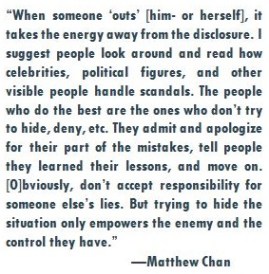
In my desire to give something back to RestrainingOrderAbuse.com (ROA) for the enormous help, contribution, and insights into my own protective order appeal case with the Georgia Supreme Court that it provided, I found myself a bit stumped as to what to write about that might be helpful and perhaps a bit different from the articles and commentaries I have read on ROA so far. So, if I make some wrong assumptions about ROA, please forgive me as I am a relative newcomer. As a disclaimer, I do not feel qualified to speak specifically on matters of domestic protective/restraining orders as they relate to divorces, custody fights, or other family disputes.  I feel those issues are highly volatile, and I don’t have the background to properly discuss them.

What I do feel qualified to speak on, however, are matters that pertain to the First Amendment, free speech, and that speech as it relates to online speech. Whether disputing parties are related or not, the First Amendment, backed by many significant rulings from the U.S. Supreme Court, makes it clear that everyone in the U.S. (including murderers, rapists, robbers, embezzlers, and any other type of criminal you can name) enjoys the right to free speech. That free speech comes with certain exceptions and restrictions as defined by the U.S. Supreme Court.

Some of them are:

  • Incitement
  • Defamation (including libel and slander)
  • Obscenities, such as child pornography
  • Fighting words

It is almost always legal to engage in speech about someone publicly or privately, unflattering or not. But it is not always acceptable to engage in speech to a person, especially if it is unwanted. In the context of the Internet, you should have the right to speak freely about anything or anyone as long as your speech doesn’t fall within the list of exceptions and restrictions.

And yet, I am hearing more about these underground restraining orders that instruct people to be absolutely silent regarding a certain person or party, i.e., that dictate you cannot speak publicly about that person or party to anyone. That is clearly unconstitutional.

This is an abuse of the protective/restraining order system that frequently happens in courts of local and smaller jurisdictions. It is no surprise that many of these cases involve “pro se” (self-represented) parties, who are more likely to be taken advantage of by an overzealous and overstepping judge. Up to this point, I have stated what most ROA readers already know.
But what then can you do about it? The easy, copout answer is hire a good lawyer. But we all know “pro se” parties represent themselves because they either can’t find a good lawyer or they can’t afford a good lawyer.

Having lived with a protective order for nearly two years, I have found that it largely doesn’t impact my day-to-day existence. I have very little emotional baggage about it. Although my protective order is a matter of public record, it is not easily found, nor is it advertised. However, my accuser chooses to make mine public as a way to get revenge/payback and to embarrass and humiliate me.  I don’t feel embarrassed or humiliated at all anymore. I’ve had two years to let it sink in. She went to her local newspaper as well as a photography blog site to publicize my protective order. I am very certain she approached several other media sources, but she only managed to succeed in getting two to write her story. When she went public, I also went public, and I got way more coverage than she did because of the First Amendment issue.

It goes without saying that I became angry about her actions because the “facts” as told by her were incorrect. I was faced with one of two decisions:  either slink away silently and live in fear, shame, and embarrassment of the protective order…or speak out and fight back, and tell my story.

An issue I see is that people let little pieces of paper define them, such as high school diplomas, college degrees, technical and professional certifications, their financial statements, their marriage certificate, etc. A basic protective/restraining order is simply a piece of paper that formally instructs someone to stay away and not bother someone. It is a civil issue, not a criminal one.  But accusers like to try to criminalize the matter. My accuser loves to do the “stalkie-talkie” routine and likes to refer to me as her “stalker.” I have called her a copyright extortionist even longer. And yet, we have never met, spoken, emailed, text-messaged, snail-mailed, or even faxed. There has never been any contact. Still, she wants to say I am a “stalker” because she currently has a little piece of paper that says “stalking protective order.”

She is attempting to define who I am to whomever will listen. The problem she has is that I don’t buy into it; I have no guilt or shame over it, and I don’t hide from it.  And because I am pretty good at explaining the facts of my case and position, only the most gullible or uninformed believe her.

Too many people take things too literally. Too many people are legally ignorant. Too many people do not understand how the judicial system works. Too many people do not understand the realities of the judicial system.

For example, I live in a city where there are overcrowded jails. I don’t think that is unique to the city I live in. I also live in a city where the district attorney and prosecutor’s office has many cases to pursue and a tight budget to do it with. I live in a city where there is an abundance of physical and “harder” crimes such as burglaries, robberies, murders, drug crimes, rapes, etc. In that context, I see the matter of a protective/restraining order (a civil matter) as ranking low in the prosecutorial pecking order.

Generally speaking, protective/restraining orders are designed to prohibit unwanted physical contact and unwanted communications.  In my view, unless you have some huge emotional issues or obsessive tendencies towards your accuser, most orders are easy to follow, and they are not unconstitutional.

However, what if you have a restriction on your free speech where you can’t breathe a word about your accuser to anyone?  It is certainly problematic on the local level, but it is even more problematic at a state or national level. It is simply unconstitutional, which is my way of saying that it is, in a sense, “illegal.”  But some of you might say, what the order says goes. I don’t necessarily agree with that, because illegal contracts are not enforceable. For example, two people agree to do a drug deal. If one person decides to break the rules of the deal, it is unenforceable, because the deal was illegal to begin with. Likewise, an agreement broken by a John to pay a prostitute is unenforceable because it was illegal from the start. I similarly view it as illegal for my accuser to try to have me arrested or fined because I spoke or wrote about her (not to her) on my own website, and I think it would be embarrassing for any public official to dare to find me in violation of the law. That is my truth because I know what I know, but it may not be enough for you.

The sense of right and wrong has to be weighed against the costs of being a silent victim. The ability to overcome fear and ignorance, personal resourcefulness, the urgency to right a wrong, the fortitude to face conflict and risk—these are factors, and they are ones each person must self-assess.

It all begins with introspection and evaluation of whether the fight is “worth it.” In my case, if I had received a “stay away” order for one year, I would have been angry and unhappy, but I probably would never have appealed the order placed upon me. To me, it would have been an easy order to comply with, and I would not have seen it as devastating to my reputation, even if it were made public. The reason is that I know how to tell my story (and I have many times) in an open and authentic way.  Certainly, there are some less than flattering reports about me but none worse than what I have seen about others.

I have a larger view of myself in this world. I am not famous, and most people don’t care about me or what I do. I am largely unimportant (to them). I am not a celebrity; I am one of many. But for many, because it happens to them, they think the whole world is actually looking at them and their restraining orders. The truth of the matter is that most people simply don’t care.

In the larger view, famous people have committed all kinds of indiscretions, including having affairs, divorcing, getting into fights, committing DUI’s, doing drugs, getting arrested, soliciting prostitutes, etc. There is a huge list of all the embarrassing things people get themselves into. But the fact of the matter is most of that is small potatoes in the big scheme of things. You think people will shun and hate you, but the reality is, to most, it is trivial. You are just another person who allegedly committed an indiscretion.

You may ask, if I believe it is all small potatoes, why am I fighting so hard against my protective order?  There are actually multiple reasons for my current course of action.

My accuser inflamed me. For a woman who is so allegedly afraid of me and my alleged “stalking,” her actions betrayed that she really wasn’t that frightened of me or about whether I would actually cause her any physical harm or endanger her personal safety. She chose to flaunt, brag, and gloat over her “win,” and there was no good purpose in that.

The lawyer who represented her, Elizabeth W. McBride, engaged in unethical tactics like not providing me with a copy of her exhibits so I could examine them closely, while I, a non-lawyer, gave her the professional courtesy of providing an extra copy of mine. When the hearing was over, I both called and emailed the lawyer about getting a preview copy of the protective order. I also wanted to coordinate with her about both of us getting a copy of the courtroom transcript, because it was a shared resource that was agreed upon at the beginning of my hearing. I realized she treated me the way she did because I was not a lawyer and she was trying to cheat me. Because I was opposing counsel, she was required to interact with me on certain matters as she would with another lawyer. She chose not to, and I have remembered this the last two years. One day, I am confident it will come back to bite her.

But the biggest reason I fought back was the outrage that I and others felt that there was a flagrant disregard of the First Amendment as it related to online speech, a total disregard of the actual context of my speech, and a total disregard for Section 230 of the Communications Decency Act, which states that website owners are not responsible for content other users post. These were all points I clearly argued but the judge seemingly ignored.

I saw this as serious misbehavior by the judge and the local court system that could potentially have wide-ranging and long-term consequences to me and any other Georgia website owner. As a matter of disclosure, I do place a great importance on my Internet presence and online activities to my business and reputation. I am a self-employed entrepreneur and business owner who regards the Internet as a hugely important resource to both his personal and business life—probably much more so than the average person who works at a job 40 hours per week for an employer.

For all those reasons, I fought back. But I would be lying if I said there weren’t moments when I wavered. I had moments of weakness, but I also had my anger to prop me up. A lot of my impetus owes to the actions of my adversary and her lawyers.  By their actions, they practically taunted and drove me into appealing the case. Because of my anger and sense of injustice, I was galvanized into action.

I want to take the time to point out an important element of my fight-back. It is very helpful to find friends and supporters who understand you, your character, and the type of person you are. Getting moral support from people who will empower and encourage you is motivating.  Having “support” from people who are fearful, bashful, risk-averse, cynical, and unwilling is not.

In my life, I believe “like attracts like” and “birds of a feather flock together.” In my case, I have many people around me, people who are independent-minded, self-determined, believe in fighting for a cause (such as free speech) and not letting your enemies get the best of you. And believe it or not, most of my best support actually comes from those I have never met in “real life.”  My best support came from “strangers” I have met on the Internet. I have never met or spoken to Todd of ROA and yet, unbeknownst to him, his work on ROA has had a huge influence on my fight.

There are so many layers to the conversation of how to fight back against a wrongful restraining order restricting your right to free speech. There is no way I could get into all the stories, tactics, and strategies, or the mindset involved in my own journey. I will one day write a book on the subject. However, as a guest blogger on ROA, I thought I would share some insights into how my mind works and the mindset that drives me.

I consider myself a victim of protective/restraining order abuse, but I have also chosen to publicly fight back against my accuser and the lower court that allowed the unconstitutional order. Win, lose, or draw, I have no regrets, because my voice is loud and travels far. And I will never let my accuser, a judge, a court, or a piece of paper define who I am. Not as long as I live.

It is that attitude, which has resonated outwards, that I believe helped attract many supporters to my side, including the lawyers who have worked on my (and my position’s) behalf.

Matthew S. Chan is the creator and administrator of ExtortionLetterInfo.com (ELI) and the appellant in Chan v. Ellis, an appeal of a lifetime protection order presently under deliberation by the Georgia Supreme Court.

Copyright © 2015 RestrainingOrderAbuse.com and Matthew S. Chan

*Update: The Georgia Supreme Court returned a verdict in favor of Matthew Chan on March 27, 2015.
Restraining Orders and the First Amendment: A Female Blogger’s Successful Appeal of a Restraining Order That Labeled Her a “Cyber-Stalker”

“The First Amendment is FIRST for a reason.”

Larry Smith, former attorney and indomitable muckraker

A recent post on this blog revisited the case of Matthew Chan, author of ExtortionLetterInfo.com (ELI), whose appeal of a lifetime restraining order is presently under consideration by the Georgia Supreme Court. A verdict is anticipated within the coming month or months.

Criticisms are handily represented as acts of terrorism to the courts, whose officers have been conditioned to pander to accusers. Anyone is a potential target of facile accusations, which are made in mere moments. Retirees and vegetarian soccer moms, for whom the cost of attorney representation is often prohibitive, report being implicated as violent menaces and tyrants.

This post reports a successful appeal waged by North Carolinian Cindie Harman, who was issued a no-contact order for allegedly “cyber-stalking” a mother and her minor daughter by publicly criticizing them in a blog. Mrs. Harman named the adult plaintiff’s daughter a “bully” of other children and opined that her behavior was influenced by her mother’s conduct.

According to the Associated Press, the mother, who owns or owned an Asheville-area water services company, was “sentenced to nearly three years in prison for faking thousands of tests designed to ensure that drinking water is safe” in 2012 (and also faced “conspiracy charges”), had “plead guilty in 2010 to mail fraud,” and “paid a fine and did community service after pleading guilty to misconduct by a public official after she was charged with embezzling more than $10,000 from Marshal when she served as town clerk there.” Mrs. Harman’s accuser, whose husband is a former magistrate, controverts the popular notion that restraining order applicants are innocent lambs seeking protection from marauding predators.

Mrs. Harman prevailed in her restraining order appeal, but the vindication of her character and her judgment of her accuser’s character didn’t come without a steep price—and that’s excluding attorney fees.

According to the blogger quoted in the epigraph, Larry Smith, a friend of Mrs. Harman’s and fellow comrade-in-arms:

During the long time this case was pending, I had been talking to Cindie on the telephone, trying to reassure her that she would win her case in the NC Court of Appeals. She was very nervous, inconsolable, dyspeptic, upset about it.

Being accused of stalking, let alone being accused of stalking a child, isn’t funny. It’s the kind of thing that breaks a person.

To be charged with stalking in North Carolina signifies you’ve caused someone “to suffer substantial emotional distress by placing that person in fear of death, bodily injury, or continued harassment.” (Note that the latter element of the statutory definition of stalking, “continued harassment,” is glaringly incongruous to the elements that precede it. The contrast between fear of “death [or] bodily injury” and fear of “continued harassment” underscores the slapdash, catch-all nature of stalking and related statutes that makes them not only objectionable but outrageous, and urges their legislative revision or repeal.)

The trial court that heard the restraining order case against Mrs. Harman, and whose backroom judgment was overturned by the North Carolina Court of Appeals, had ruled, “Defendant [Harman] has harassed plaintiffs within the meaning of [N.C. Gen. Stat. §] 50C-1(6) and (7) by knowingly publishing electronic or computerized transmissions directed at plaintiffs that torments, terrorizes, or terrifies plaintiffs and serves no legitimate purpose” (italics added).

Observe that even the court’s grammar was bad. The ruling should have read “transmissions…that torment, terrorize, or terrify.” Gaffes like this are hardly surprising considering how hastily and carelessly restraining order judgments are formed.

Mrs. Harman was said to have tormented, terrorized, or terrified the child plaintiff by referring to her as a “bully” (a “reason kids hate to go to school”) and tormented, terrorized, or terrified her mother by calling her a “crow,” an “idiot,” and a “wack” on a blog.

Terrifying indeed.

At the beginning of this year, Law Professor Jonathan Turley eagerly reported that the U.S. Court of Appeals for the Ninth Circuit ruled “Bloggers Have Same First Amendment Rights As Journalists” (cf. Robinson Meyer’s “U.S. Court: Bloggers Are Journalists,” published in The Atlantic, and “Reporters’ Privilege,” prepared by the Electronic Frontier Foundation). Judges in North Carolina seem not to have heard the news.

The decision came in a defamation lawsuit where the panel ordered a new trial in the case of Crystal L. Cox, a blogger from Eureka, Montana. Cox was sued for defamation by attorney Kevin Padrick and his company, Obsidian Finance Group LLC, after she wrote about what she viewed as fraud, corruption, money-laundering and other illegal activities.

The details may sound familiar.

In legal commentary presented in Chan v. Ellis, the appeal mentioned in the introduction to this post, Law Profs. Eugene Volokh and Aaron Caplan asserted to the Georgia Supreme Court:

The First Amendment protects the right to speak about people, so long as the speech does not fall into an established First Amendment exception (such as those for defamation or for true threats). This includes the right to speak about private figures, especially when they do something that others see—rightly or wrongly—as unethical.

Restraining orders and criminal stalking law may properly restrict unwanted speech to a person. But they may not restrict unwanted speech about a person, again unless the speech falls within a First Amendment exception. The trial court’s order thus violates the First Amendment.

This may also sound familiar.

Cindie Harman ultimately won the case against her, a case that should never have been entertained by the court in the first place, but a victory that should have reassured her that freedom of speech in our country is a revered and inviolate privilege has had the opposite effect.

Reportedly consequent to receiving threats against her person and having several of her pets poisoned, Mrs. Harman has removed her blogs. Even her Twitter feed is now “protected” and no longer accessible to a general audience. Mrs. Harman lives in the sticks and says if she weren’t armed, she’d be afraid to be alone.

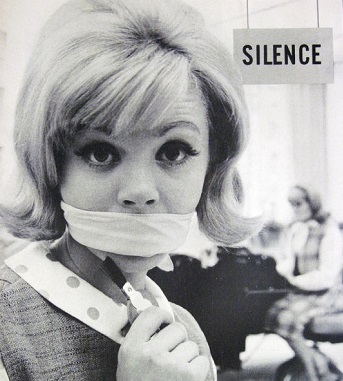
She has been terrorized into silence.

Copyright © 2014 RestrainingOrderAbuse.com

*The author of this blog, too, has had a lifetime injunction imposed upon him by the court for communication “about a person” (communication that alleged misconduct, including criminal, by a public official). His 2013 trial, which was conducted in the Superior Court of Arizona and in which he represented himself, concluded less than four months before the Ninth Circuit Court of Appeals’ ruling in Cox v. Obsidian Finance Group. He hasn’t subsequently received any threats but has been monitored. His accuser, a married woman he encountered standing outside of his house one day in 2005 (and many nights thereafter), is believed to be among the first to read anything posted here.

Don’t Let a False Restraining Order Crush Your Spirit: Reach Out and Talk Back

Someone writes (in reply to an earlier commenter): “I too am a victim of a false order of protection and have the same judge. My story is an unbelievable loss of rights with no possible outcome of justice. As I am fearful that publicly telling my story would result in retribution from the judge, I must stay quiet until after I can get out of the court system.”

In the year or so that I’ve maintained this blog, it has received thousands of queries from people abused by restraining orders but considerably fewer actual comments from victims. Most of these comments are anonymous, and many victims seeking answers or consolation have instead emailed me to avoid subjecting themselves to further public scrutiny—understandably. They’re wounded, humiliated, and intimidated and have had it impressed upon them by the state that they if they don’t shut up they’ll be locked up (or suffer more permanent privations).

The restraining order process is sustained on shame and fear and perpetuated because of its political value not its social value, which is dubious at best. The agents of its perpetuation, the courts, are very effective at subduing resistance. Defendants are publicly condemned and threatened with police interference and further forfeitures of rights, and are saddled with allegations that make them afraid besides of social recrimination and rejection—even if those allegations are fraudulent. Avenues of relief are narrow and by and large only available to defendants of means, who, if they prevail, are glad to put the ordeal behind them and move on. The rest are put to flight. And so it goes…on.

First Amendment. Amendment to U.S. Constitution guaranteeing basic freedoms of speech, religion, press, and assembly and the right to petition the government for redress of grievances. The various freedoms and rights protected by the First Amendment have been held applicable to the states through the due process clause of the Fourteenth Amendment (Black’s Law Dictionary, sixth ed.).

Due process clause. Two such clauses are found in the U.S. Constitution, one in the [Fifth] Amendment pertaining to the federal government, the other in the [Fourteenth] Amendment which protects persons from state actions. There are two aspects: procedural, in which a person is guaranteed fair procedures and substantive which protects a person’s property from unfair governmental interference or taking. Similar clauses are in most state constitutions. See Due process of law (Black’s Law Dictionary, sixth ed.).

Glaring to anyone who peruses these entries in Black’s Law Dictionary and who’s been put through the restraining order wringer is that the process flouts the very principles on which our legal system was established (when I recall one of the judges in my own case referring to his courtroom as “the last bastion of civilization,” I don’t know whether to laugh or cry). It mocks the guarantee of fair procedures and the protection of a person’s property from unfair governmental interference or seizure—and it does a pretty decent job of convincing defendants that if they complain about it they’ll go from the frying pan into the fire. (For those who don’t have an intimate familiarity with the process, a restraining order case may receive no more than 10 minutes of deliberation from a judge—without ever meeting or hearing from the defendant—and even if appealed, no more than 20 or 30 minutes. That’s minutes. On allegations that often include stalking, battery, or violent threat; that may result in a defendant’s being denied access to home, property, family, and assets, and/or forfeiting his or her job and/or freedom; and that are publicly accessible and may be indefinitely stamped on a defendant’s record. It takes a judge many times longer to digest a meal than a restraining order case.)

If you’re a restraining order defendant, recognize these facts: (1) no matter what truth there is to allegations made against you in a restraining order, your civil rights have been violated by the state (all restraining order defendants are blindsided if not railroaded); (2) the restraining order process’s being constitutionally unsupportable makes it unworthy of respect; and (3) impressions by menacing rhetoric notwithstanding, you have every right to challenge the legitimacy of an unfair procedure (in fact, doing so makes you the last bastion of civilization).

Reject the impulse the process inspires to withdraw and hide. Seek counsel (consult with an attorney—or three—even if you can’t afford to employ one). Get information. Harry court clerks until your questions are answered. Ask others for help in the form of character and witness testimony and affidavits, advice, legwork, or just moral support. Get familiar with a local law library (university librarians, in particular, are very helpful). Request a postponement from the court if you need more time to prepare a defense. File a motion to see a judge if your appeal is normally conducted in writing only. Be assertive. Make the plaintiff work for it.

The restraining order process is a specter that feeds on fear. Switch on the light. Remember that as horrible as the accusations against you may seem or feel to you, they’re not likely to be credited by those who know you—especially if those accusations are completely unfounded. And chances are lawyers you explain them to will yawn rather than wag their fingers at you. They’ve heard it all before and know to take allegations made in restraining orders with a shaker of salt. So don’t hesitate to reach out, particularly if the case against you is trumped up. The last thing you want to do is give it credibility by behaving as though it’s legitimate. Don’t violate a restraining order but do resist its tearing your life apart.

And if one has compromised your life and you’re “out of the court system” as the commenter in the epigraph awaits becoming, recognize that your freedom of speech is sacrosanct. This nation was founded on the blood of men who died to guarantee your right to express yourself.

This travesty, the restraining order process, is a breach of the contract between the state and its citizens, and it endures because defendants feel impotent, helpless, and vulnerable (even after their cases are long concluded). This is how you’re meant to feel, and the effectiveness of this emotional coercion is what ensures that the cogs of the meat grinder stay greased.

Don’t give ’em the satisfaction.

Copyright © 2012 RestrainingOrderAbuse.com