Play Misty for Me: Feminine Psychodrama and Restraining Orders

“The first time ‘Misty’ broke into the backyard to pound and scream at the bedroom window, the police handcuffed her and said—her face pressed to the hood of the idling black-and-white—that she was not to return. I figured we would never see her again after that early morning in 2012. But the next night, around 1 a.m., I was in bed with my new boyfriend, ‘Scott,’ and we heard the bedroom door slowly crack open. Scott jumped up. ‘No! You can’t be here!’ he shouted, all high-pitched.”

—“This Restraining Order Expires on Tuesday

Here’s a fascinating look at the female drama behind restraining orders. Its author is a gifted writer, and it’s an engaging read.

The subject of the piece, who’s called “Misty,” actually responds to it in the comments section—repeatedly—and calls some of its details into question, including ones that suggest speculation by the author (which, while imaginative, is nevertheless scrupulous and plausible). The writer, Natasha, was Misty’s rival in a love triangle. She apparently replaced Misty before Misty was prepared to relinquish her man.

That first night, [Scott and I] stayed at my house, and after having an intimate conversation in bed, we noticed his phone had 41 missed calls from Misty.

Then came the texts. She was at his house.

12:03 AM: Where are you? I’m staying here

12:05 AM: Please come back. I’m not going to lose you. I’m not going to give up. Please come back I want to see you. I love you

12:06 AM: I’m too drunk to drive home, can I please stay?

12:10 AM: Ok I’m staying.

Scott turned off the phone. The next morning when we checked again there were 16 more:

6:41 AM: By the way the pup tore the shit out of the house, but don’t worry I cleaned it up. If you can’t take care of him then you need to put him up for adoption.

To judge from Misty’s not contradicting the meat of the story (see the comments that follow it), its more titillating details are substantially accurate—and include serial calls and text messages to a nonresponsive ex, camping out in his yard, and even entering his house uninvited.
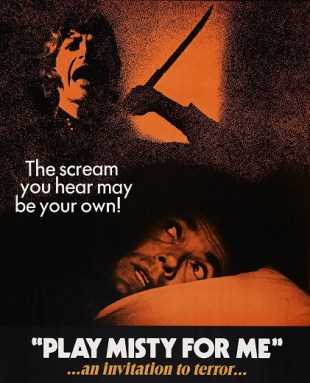
Hollywood representations like this one are seldom mirrored in real life. True “fatal attractions” are rare. High-conflict people, though, aren’t as rare as most imagine, which would be better known were their spiteful urges literally murderous (or even significantly violent). Attacks are typically insidious in their effects rather than bloody.

I tried to relax in Scott’s bed and just as I did, Misty appeared in the doorway.

“No! You can’t be here!” Scott cried, as he scrambled out of the sheets.

“I just came to see about the dog!” Misty shouted, rushing towards Scott.

Scott managed to wrangle Misty backwards away from the bed but she broke through and, before I could get fully to my feet, her arm swung back and I felt a fleshy thud against the side of my head.

She looked me in the eye, her nose ring glinting in the lamplight. “That’s what you get, you fat c[—],” she said.

She swooshed around, threw open the door (she had broken in through the window), and ran away into the night.

There was another series of confrontations with Misty but most of them took place in a courtroom, or through the unregulated space of fake Facebook profiles and anonymous emails. In the days after our first six-month order expired in 2013, Scott’s phone buzzed at 1 a.m.

It was a text message from Misty that just read: “Hi.”

Misty’s claim that her rival engaged in some passive-aggressive payback after a restraining order was procured also sounds credible:

Did you tell the people reading this article that you sent me a blank text from your boyfriend’s new phone during the restraining order period? I responded asking “who is this?” Natasha then proceeded to call the cops and told them I had violated the order. The judge laughed at it.

I’m no more a psychologist than Natasha, who chronicles the escapade, and I don’t know that her diagnosis of borderline personality disorder (BPD) would be confirmed by a clinician, but I think there’s more than a hint of personality-disordered aggression in Misty’s conduct (that reported and that on display in the comments section beneath the story). Of the various personality disorders that typify high-conflict people, what’s more, BPD seems the best fit.

The individual with BPD demonstrates a wide range of impulsive behaviors, particularly those that are self destructive. BPD is characterized by wide mood swings, intense anger even at benign events, and idealization followed by devaluation. The BPD individual’s emotional life is a rollercoaster and his/her interpersonal relationships are particularly unstable. Typically, the individual with BPD has serious problems with boundaries. They become quickly involved in relationships with people, and then quickly become disappointed with them. They make great demands on other people, and easily become frightened of being abandoned by them.

Most suggestive of a disordered personality is the lack of shame or remorse in Misty’s responses. Her impulse is to blame, derogate, and punish:

One day I will laugh at her and said moron’s obese, ugly children and thank the lord they are not mine. I will defend myself to the end! A gigantic f[—] you to all is well deserved. I really can’t help the fact that she’s ugly. Jealousy is a horribly disease. I can’t really think of any other reason why she’d carry this drama on so long, they clearly talk about me. I’m flattered.

A high-conflict person may act impulsively—i.e., in hot blood—but having a personality disorder doesn’t mean someone is insane or psychotic. After an outburst of pique, rage may cool to mute hostility—which may nevertheless endure and continue to flare for years. (It’s perhaps telling, though, that wrathful women are often portrayed brandishing knives. It’s our go-to image for invoking vengeful malice.)

There’s a temptation to wonder whether all of this couldn’t have been resolved by talking things through. The reactions of the couple, like the behavior of Misty’s that motivated it, might be considered hysterical. On the other hand, had the man in the middle shown empathy and tried to assuage Misty’s feelings, he might have been the one who ended up on the receiving end of a restraining order.

This happens.

People like Misty are on both sides of restraining order and related prosecutions. Dare to imagine what Misty would be like as an accuser—the absence of conscience and the vengeful vehemence—and you’ll have an idea of what those who are falsely fingered as abusers are subject to. They’re menaced not by repeated home intrusions but by repeated abuses of process (false allegations to the police and court), which are at least as invasive and far more lasting and pernicious in their effects and consequences.

Something the story significantly highlights is feminine volatility. Feminism (itself often markedly hostile) would have us believe women are categorically passive, nurturing, and vulnerable. It’s men who are possessive, domineering, and dangerous.

The active agents in this story are the women; the guy (the “bone of contention”) is strictly peripheral.

Copyright © 2018 RestrainingOrderAbuse.com

*The author of RestrainingOrderBlog.com (now apparently defunct) alleged his accuser was a borderline personality.
Living in the Crosshairs: Crackpot Neighbors, False Reports, and Restraining Order Abuse

I bonded with a client recently while wrestling a tough job to conclusion. I’ll call him “Joe.” Joe and I were talking in his backyard, and he confided to me that his next-door neighbor was “crazy.” She’d reported him to the police “about a 100 times,” he said, including for listening to music after dark on his porch.


His neighbor had never been punished for her mischief, only indulged and rewarded. This is behavior the police and court have been conditioned to treat as urgent. The woman’s husband refused to participate in her sniping—but didn’t interfere with it, either. He had to live with her. Others in the vicinity just tried to stay off her radar.

The neighboring house was dim and still as Joe related the woman’s pranks, which spanned a period of years. “She’s probably listening to us now,” he remarked.

I commiserated but didn’t share with Joe that I wrote about such things and heard about them monthly from people whose lives were sometimes crippled by hyped allegations of fear and danger.

Joe told me, unsurprisingly, that his neighbor had twice sworn out restraining orders against him. The first was laughed out of court on appeal; the second he didn’t bother to contest. He gestured as if to say, “What would’ve been the point?” Maybe Joe intuited that high-conflict people like his neighbor live for strife and attention, and decided to deny her the satisfaction of a fight.

(Many respondents to this blog report they’ve had multiple false restraining orders petitioned against them. One e-petition respondent recently reported being the recipient of seven fraudulent restraining orders obtained by a “diagnosed narcissist.”)

Joe informed me, with a hint of sarcasm, that his neighbor was a professional psychic. Surveillance cameras nevertheless hung from the corners of her home’s roofline. I guess she couldn’t see everything coming.

(Among people who report being stalked or serially accused by neighbors through the courts, the presence of security cameras is commonly mentioned. The neighbors also tend to be of middle or advanced age and female—as are their victims, sometimes. One 60-year-old woman, chronically accused by a female neighbor, has reported having to abandon her house and flee to forestall further allegations. Men who are spies, peepers, and cranks are more likely to be the recipients of restraining orders than the petitioners of them: women accuse sooner than men do—and they do it more effectively.)

Joe didn’t get too explicit, but he told me he’d been photographed fooling around with his wife in the hot tub, which he’d since removed. In Arizona, at least, it’s apparently legal to monitor your neighbor over a bordering fence.

Joe said after he and his wife divorced, his neighbor told his ex-wife he was having an affair. He took in a male roommate. His neighbor photographed him, too—through the window adjacent to her backyard.

Joe shifted an arbor from one side of his patio to the other after getting approval (but no compensation) from the homeowners’ association. Two massive Tombstone rosebushes interwove to form a decent privacy screen.

I asked Joe whether he’d ever tried to get the woman off his back. He told me, unrepentant, that he’d once shot her with the garden hose while she was peeping. To this day, he says, she circulates it that he “assaulted her with a high-pressure hose.” He may have said this was the grounds for one of the restraining orders.

His neighbor has reported her other neighbors, too. The neighbor across the street knew of her particular “sensitivities” and informed her in advance that she was having a birthday party for her little girl at 2 in the afternoon on a weekend. The neighbor from hell reported it, anyway—on principle, I guess. The kids’ party was disrupted by cops.

Joe says his neighbor’s record is seven calls to the sheriff’s department in a single day (just on him). Deputies finally told her that if she called again, they’d cite her.

Joe works as a chef and didn’t appear to have any kids. With a few beers in him, he seemed to take the whole thing in stride.

I wonder if a feminist would be as tolerant.

Copyright © 2014 RestrainingOrderAbuse.com

(Female) Stalkers, False Allegations, and Restraining Order Abuse

Restraining orders are maliciously abused—not sometimes, but often. Typically this is done in heat to hurt or hurt back, to shift blame for abusive misconduct, or to gain the upper hand in a conflict that may have far-reaching consequences.

There’s a cooler, more methodical style of abuse practiced by people who aren’t in intimate daily proximity to their victims, however, that’s alternatively called stalkingbullying, or mobbing. These words have distinct meanings but are nevertheless porous, because motives for the behaviors they represent are the same: coercion, punishment, domination, and control.

There’s a lot of crossover between them—as is there crossover between the various high-conflict personality types who engage in these behaviors, who contrary to popular perception may be women.

Journalists’, psychologists’, and bloggers’ representations of those with personality disorders that stem from sociopathy tend to use gendered language that implies most abusers (or the worst abusers) are male.  Possibly this is because many who write about sociopaths and narcissists are female, and their experiences are of abuse by men. Or possibly this is because making women out to be villains is ungallant. Or possibly it’s assumed that men can’t be victims of women, even sociopaths, because men have nerves of steel or because their general physical advantage carries over into all contexts. Neither of the latter beliefs is true, and when the context is abuse of legal process, it’s usually the case that the bigger you are, the harder you fall.

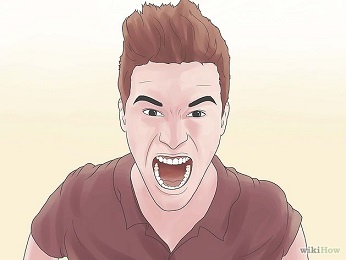
Consider these illustrated WikiHow tutorials on “How to Spot a Sociopath” and “How to Identify a Psychopath,” which are pretty good, except that the reader is likely to get the impression from the cartoons that all sociopaths are men.

They aren’t.

These “tips” from “How to Spot a Sociopath” are at least as applicable to women as men, and suggest why abuse of legal process, including restraining order abuse, is so attractive to the sociopathic mind—and why it comes easily to sociopaths or to those who manifest sociopathic traits.

  • “Most sociopaths can commit vile actions and not feel the least bit of remorse. Such actions may include physical abuse or public humiliation of others. If the person is a true sociopath, then he or she will feel no remorse about hurting others, lying, manipulating people, or just generally acting in an unacceptable way.”

    Sociopaths often know how to make others believe they are the victim while actually being the aggressor.

  • Sociopaths tend to blame the victim for their shortcomings. They can never admit to fault and instead attack the victim. Key factor in any DSM diagnosis.
  • This type of person will tell you things to get you to forgive them and then say they never told you. This is a tactic to play mind games.
  • If a person is “too good to be true,” they probably are. This is the case for any DSM diagnosis, including sociopathy, borderline [personality], and narcissism.
  • Most are aware of their need to hide cold traits, and are good actors (have adapted to being different)….
  • Some scientists believe that sociopaths suffer from damage to the prefrontal cortex which regulates emotions and morality, etc.
  • Sociopathic behavior is strongly inherited, so look at problems in the family as a clue to a person’s real personality.
  • Some experts say that a great number of sociopaths were also child abuse sufferers.

The same tutorial, despite its gendered cartoons, references a book published last year titled, Confessions of a Sociopath, which is by a female sociopath who uses the penname M. E. Thomas—and who’s an attorney and law professor, which shouldn’t be particularly surprising to anyone who’s been exposed to legal practitioners.

It may be that not all sociopaths are fairly typified as stalkers and bullies, but if you read this review of Confessions of a Sociopath, you’ll appreciate that motives for abusive conduct come readily enough to the sociopathic psyche.

Thinking of women as stalkers or bullies is just something we’re unaccustomed to or something we treat lightly.

In a series of hers titled, “Female Stalkers,” psychologist Tara Palmatier notes that “female stalking behaviors are portrayed as ‘funny’ or ‘cute.’” We’ve been conditioned—and “we” includes the police and judges—to think of women as both harmless and helpless. Women don’t hurt people.

They do, though.

Popular perceptions of “stalking,” domestic violence, and other abuses tend inordinately to inculpate men. The object of observing that women also act hurtfully isn’t to suggest that women more often act hurtfully than men but to controvert the popular notion that they don’t or can’t, which is both false and largely to blame for the absurd ease with which legal process is maliciously abused.

Accounts submitted to this blog by both men and women indicate that individuals of either gender may and do abuse legal process to torment others, horribly and sometimes for years on end. Either sex may engage in cyclic mind games, as well: manipulating another into trust and then punishing that trust (“It’s okay, I’m sorry, come here”…WHACK!). Repeatedly. One woman’s (mother’s) account of this, shared a few months ago, is numbing: affairs by her (probably borderline personality-disordered) boyfriend followed by apologies followed by recriminations (rinse, repeat) followed by false allegations to the police, to the court, to child protective services, to the military, and on and on.

Most group-stalking or -bullying (mobbing) acts reported to this blog, though, are orchestrated by women. These include combinations of behaviors like making false allegations, spreading false and ruinous rumors with the help of negative advocates (accomplices), using social media to taunt and intimidate from multiple directions, etc. These passive-aggressive forms of abuse to punish, frighten, and dominate—which, depending on the context, may alternatively be called bullying, harassment, or stalking—are usually viewed as less harmful than physical assault. This perception is facile, however, and wrong.

A recent male respondent to this blog, for example, reports encountering an ex while out with his kids and being lured over, complimented, etc. (“Here, boy! Come!”), following which the woman reported to the police that she was terribly alarmed by the encounter and, while brandishing a restraining order application she’d filled out, had the man charged with stalking. Though the meeting was recorded on store surveillance video and was unremarkable, the woman had no difficulty persuading a male officer that she responded to the man in a friendly manner because she was afraid of him (a single father out with his two little kids). The man also reports (desperately and apologetic for being a “bother”) that he and his children have been baited and threatened on Facebook, including by a female friend of his ex’s and by strangers.

Harassment by these means, which tends to be unrelenting but is just as bad when sporadic, creates anxiety and insecurity in its victims, and may well undo them not only psychologically but professionally, financially, and in every other possible way. False allegations (which alone gnaw and corrode) may lead to criminal charges, which may lead to incarceration, from which ensues traumatization of children and possibly loss of employment (from which ensues further traumatization of children…). Same thing with restraining orders, which may easily be obtained in an afternoon by spiteful fraud and which don’t go away—and may also lead not only to loss of employment but loss of employability in a given field.

When a restraining order is issued, it’s entered into state law enforcement databases as well as the FBI’s National Crime Information Center (NCIC) database. The pretense is that restraining orders are civil misdemeanors of no particular significance. Repeat: National Crime Information Center.

Records of restraining orders are public, besides, and accessible by anyone, and may moreover be recorded in public registries for easy access. Allegations on those records, no matter how scandalous and even if found to be exaggerated or maliciously false, aren’t censored.

Our perceptions of the consequences of public allegations, as well as the justice system’s perceptions of them, are completely schizoid. They’re neither actually “no big deal” nor actually treated as though they’re “no big deal.” And they’re certainly not “no big deal” to those falsely accused and everyone who depends on them. False allegations may range from stalking to sexual harassment to battery or worse.

The actuality is that allegations made on restraining orders, which may be utterly malicious fabrications, are presumed to be legitimate by everyone. Just the phrase restraining order instantly establishes the credibility of an accuser who may be a bully or stalker.

Applicants for restraining orders, it’s again presumed, are afraid of the people they’ve accused and want nothing to do with them. Accordingly, there are no limitations placed on the conduct of petitioners and no repercussions to them for their harassing the people they’ve alleged they’re afraid of. Restraining orders license abusers—bullies, stalkers, and their confederates—to act with impunity. Even when abuses are reported, the tendency of cops and court staff is to shrug.

Restraining orders, because they establish credibility with judges and police officers (based on no standard of evidence and on mere minutes-long “trials” that never approach conclusiveness), make further claims that bullies or stalkers allege, whether proximally or later on (even years later on), entirely plausible. Conflict can be rekindled and stoked endlessly and whimsically.

Lives are derailed this way: sanity compromised, careers sabotaged or sundered, savings exhausted, and on and on. Trials may lead to further trials without end.

And all of this may originate with sick games whose motives are dismissed as “harmless”—or even “cute.”

Copyright © 2014 RestrainingOrderAbuse.com