Feminist Writer Emily Lindin Explains How “Innocent Men Losing Their Jobs over False Sexual Assault/Harassment Allegations” Isn’t a Matter for Concern

Feminists manage to reap the best of both worlds. They enjoy the insulated life of the nursery but are patted on the heads and told what big girls they are. They purport to understand life’s grim realities better than anyone and arrogate to themselves the right to nominate which of them most urgently deserves attention. And they are parentally indulged.

Consequent fact: You can’t persuade feminists of anything they don’t want to believe. On the upside, though, you don’t have to prove to other grownups that feminists’ positions are vicious. You only have to quote them.
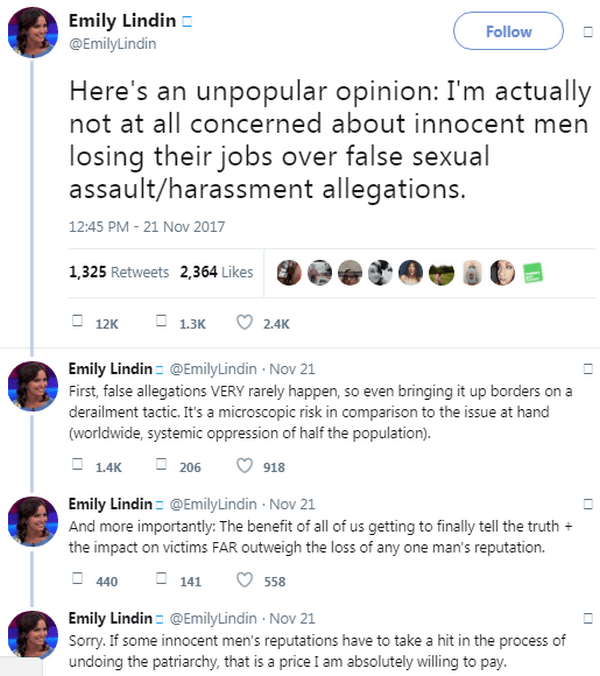
This sequence of “tweets” was brought to my attention by Dorothy Cummings McLean in an article that I chanced upon while dealing with the aftermath of 12 years of false allegations (including of sexual harassment), the effects of which are only comprehensible to adults who have also experienced them.

Emily Lindin, the author of the tweets, writes for Teen Vogue, a magazine whose title verbalizes the essence of contemporary feminism, a movement sustained by social media, where playground popularity determines value.

Here are Ms. Lindin’s Teen Vogue writing credits with some emphases added:

  • “Rob Kardashian Slut-Shamed Blac Chyna — and the Internet’s Response Is Part of the Problem”
  • “What You Need to Know Before Sending a Nude Photo”
  • “How to Get Your Parents to Stop Slut Shaming You”
  • Slut-Shaming Actually Makes Life Worse for Straight Guys, Too”
  • “6 Ways You May Be Slut Shaming Without Realizing It”
  • “Why Sexist Dress Codes Suck for Everyone”
  • “How to Say ‘No’ in the Middle of a Hookup Without Feeling Awkward About It”
  • “How I Learned the Definition of ‘Slut’
  • “Why You Should Stop ‘Playing Hard to Get’ and Start Masturbating”
  • “If You’ve Ever Ordered Pizza, Then You Already Understand What Consent Is”

Ms. Lindin writes in the magazine’s “Wellness” section—or did: Her last byline is dated July 5.

Assigned the same job, I would probably have encouraged today’s youth to read more (books, I guess I have to add). Being slutty is bound to be more fun, or at least less challenging, but there are some rewards to cultivating the mind. I’ll try to demonstrate some.

Ms. Lindin “identifies” as a member of an oppressed class. Oppressed is a word that means held down or held back by abuse of power or authority…such as men and women are who are falsely accused and arbitrarily vilified by the state.

Being able to discern contradictions in what people argue—and being outraged by them—is a hallmark of intelligence, and an instruction to a young woman that a feminist might have given when I was a child is this: “Intelligence is sexy.” (Such a feminist might even have counseled: “Self-reliance is sexy.”)

There’s probably a fossil exhibit about feminists like this in the Museum of Natural History.

Ms. Lindin, who was evidently never steered toward a library, insists that “false allegations very rarely happen.” Actually, false allegations never “happen”; false allegations are made, typically (but not always) by lying women. How often is unquantifiable but certainly a lot more frequently than “very rarely,” a judgment Ms. Lindin probably copped secondhand from another feminist source. On Twitter, maybe.

Consider the wording here: “The benefit of all of us getting to finally tell the truth + the impact on victims FAR outweigh the loss of any one man’s reputation.” A trained mind might pause and wonder: Who are “all of us”? And: A man whose reputation is ruined by lies isn’t a victim? And: What do you mean “one man”?
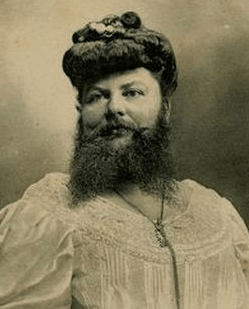
The face of “patriarchy”

Feminism purports to advocate for equality, which would make “us” inclusive of “innocent men losing their jobs over false…allegations.” The feminist “us” clearly means girls only, and the exigency of their “truth” makes all other truths insignificant. It makes all other people (one or 100 million) insignificant. A trained mind might observe that in a democracy, where “all…are created equal,” value judgments about who should be thrown under the bus have no place. No citizen is more important than any other, nor any class of citizens more important than any other.

Self-contradictory rhetoric like Ms. Lindin’s works, because it is supported by power and has been for a long time. It has determined, and it continues to determine, what lawmakers’ priorities should be, how statutes are shaped and sharpened, and how they’re applied by our courts, the Constitution be damned. So who are the oppressors really? The “patriarchy” that Ms. Lindin would have her “followers” believe is being undone went out with the fedora. The members of today’s “patriarchy” wear bras—or maybe they don’t, for which omission they absolutely should not be slut-shamed.

The hit to “some innocent men’s reputations” by lying women is a price Ms. Lindin says she, for one, is “willing to pay.”

At a cost to her and her family (and Tweetmates) of exactly nada.

Copyright © 2018 RestrainingOrderAbuse.com
PERJURY: BS-ing the Court, the Frequency of False Allegations, and the Fraudulent Abuse of the Civil Restraining Order

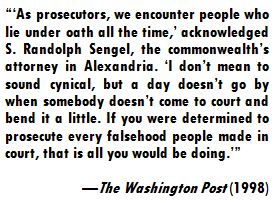
In the last post, I discussed how lying is generally gotten away with beneath the radar. What people who’ve blessedly had no personal experience with fraudulent abuse of legal process fail to grasp is (1) there’s no incentive to expose untruths except (perhaps) when they’re used to frame people for crimes for which they stand to be convicted, (2) lies are much more commonly used to re-frame the truth into one favorable to the image or malicious intentions of fraudsters than they are to send people to prison, (3) lies don’t have to succeed in false criminal convictions to be damning or ruinous, and (4) lies may be of sorts that are impossible to discredit yet may permanently corrupt the public records and lives of the falsely accused.

Writers, for instance, who confront false allegations of domestic violence don’t actually invite their imaginations to conceive what such false allegations might be. Perhaps they vaguely suppose they’re of this nature: “He beats me with a belt buckle” or “She locks me in the pantry.” False allegations like these may certainly be made, but lies may be much more subtle or vaporous: “I live in a constant state of fear” or “She said she was going to kill me while I sleep.” Is the truth or falsity of these latter claims possible to ascertain? No. Police reports and restraining orders may be based on allegations like these, however, and anyone who imagines maliciously motivated people are incapable of making false statements to this effect have lived enviably sheltered lives.

False claims of stalking are as easily manufactured: “He creeps around my neighborhood late at night” or “She cut me off in traffic, almost running me off the road.” Allegations like these may not only be the substance of false police reports (which may—and do—gnaw at the sanity of their victims) but may be grounds for false restraining orders (which are far more nightmarish). In fact, the latter allegation was the basis of an emergency restraining order reported to this blog, which was petitioned against a college girl, in or just out of her teens, by her female counselor. The girl and her mom had a weekend to prepare her defense, and she wasn’t fully exonerated of her accuser’s litany of “terror-inspiring misconduct” (which included the girl’s greeting her accuser a few times in chance public encounters in a town of 2,000 residents and seeing her at church).

False allegations of sexual harassment? “He‘s repeatedly told me he wants me to [X] him” or “She keeps propositioning me”—try disproving allegations like these, which may be much more explicit and include claims of physical molestation. The consequences, if it’s necessary to enumerate them, could include termination of employment, marital dissolution, peer or social isolation, and the emotional and thus physical decay that accompany each or all. False claims like these, which take mere seconds to articulate, may never be recovered from.

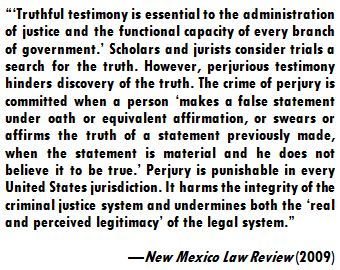
For making such false allegations to the authorities and courts, there are no consequences, except to their victims. There are statutory penalties on the books for making false claims (committing perjury), but they’re rarely if ever enforced and couldn’t be enforced consistently within governmental budgetary constraints, so commonplace is lying. Are such false claims going to end up in some statistical database? Of course not. Ask an honest district attorney, though, why lying isn’t prosecuted, and s/he’ll tell you it’s because lying is an everyday occurrence.

This is the invisible irony that escapes everyone who tackles consideration of rates of false allegations: the fact that lying isn’t prosecuted is the indicator of its rampancy (prosecution of frauds on the police and courts would overwhelm the system). And because lying isn’t prosecuted, it’s in the interest of maintaining the dignity of the legal system and the semblance of just and orderly process that judges not acknowledge even flagrant lies as such. To acknowledge them in all their plenitude, yet not punish them, would be to call into question the legitimacy of the system itself. Restraining order frauds, moreover, may be rewarded with favorable verdicts in spite of lies, making the concealment of those lies by judges that much more urgent.

Society has been conditioned, in the decades since the advent of the restraining order, to be hyper-vigilant and -reactive toward allegations of domestic violence, stalking, and sexual harassment—behaviors associated with male abuse of women, which the restraining order was conceived to curb, if not remedy. These offenses are ones to which the population has been vigorously, even coercively, sensitized. The justice system is consequently poised to descend upon those accused of such behaviors (including women), as is the public poised to believe allegations of such behaviors to be true, especially when validated by the courts.

False accusers are certainly aware of these prejudices and may easily exploit them—and should hardly be expected not to. Agents of the system may, in fact, goad them on, even while salting the wounds of those who report that they’re victims of false allegations by telling them they have no legal recourse (which, practically speaking, they don’t). Judges, furthermore, may scourge such victims in the courtroom based on allegations that their accusers leveled in one-sided, five- or 10-minute auditions.

To recap: Liars aren’t prosecuted, so lies aren’t acknowledged as lies, but the civil procedure that’s most eagerly and impulsively abused by liars, the restraining order process,  is supremely lax, instantly gratifying, and universally promoted. This procedure, what’s more, indelibly fouls a falsely accused defendant’s public record; may deny him or her entitlement to home, children, and property; and may cost him or her, besides, employment and employability in his or her chosen field of endeavor.

If this weren’t infernal enough, the outrage and misery expressed by victims who’ve found themselves in the eye of this perfect storm of unreason, some of whom are left impoverished of everything that gave their lives meaning, are credibly denounced or even mocked as crackpot.

Copyright © 2014 RestrainingOrderAbuse.com

The New Domestic Violence: Restraining Order Abuse

Daughter: “He hits me, Ma.”

Mother: “Well…I can’t say I’m surprised. What’d ya do?”

Daughter: “Whaddya mean, what’d I do?”

Mother: “What’d ya do to make him angry? He didn’t just hit ya outta the blue.”

Daughter: “I guess I didn’t do what he wanted me to.”

This exchange is extracted from a recent Hollywood movie set in the 1970s immediately preceding the advent of the restraining order and illustrates the social mindset that ’70s-era feminists sought to counteract, namely, one that tolerated spousal abuse and placed the blame for it on its victims.

Living in an environment of insecurity and intimidation is a daily torment no one should have to bear, and no one can deny that the motives that led to restraining order legislation’s being drafted were very sympathetic ones.

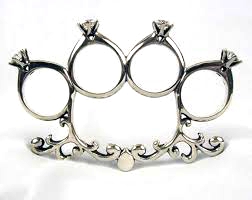
What this blog and others like it seek to bring to light is that restraining orders have become the arbitrarily brutal hand that they were originally conceived to check—and they’ve put brass knuckles on it.

Restraining orders’ abuses arise from the same impulse: anger, jealousy, or control, for instance; but they’re much worse in many ways than slaps and threats, because their consequences are more exacting, enduring, and inescapable.

As in the exchange above, the answer to why someone had a restraining order petitioned against him or her is too often: “I guess I didn’t do what [s/he] wanted me to.”  The motive for the abuser’s action may be identical. Only the means of abuse are different.

Because those means may, and often do, include lying and lying publicly and savagely, abuses accomplished with restraining orders don’t fade like bruises do. A man falsely accused of domestic violence, for example, is publicly recognized as a batterer for the rest of his life, and that label may follow him from job to job or relationship to relationship. Years of his life may pass in agony before his ordeal in the courts has even concluded. A lie impulsively told to a judge in a few minutes may be something its victim has to continue to counteract forever, and though counseling may help him reconcile himself to the lie and its injuries, no amount of it will ever erase that lie, because it’s branded on his public face.

And while women alleged to be batterers may not be perceived as harshly as men accused of domestic violence, women, too, may be abused by restraining orders in exactly the same way, making a process that was designed to protect women a convenient means of brutalizing them that has the sanction of both the government and the feminist establishment.

Fraudulent allegations, furthermore, don’t need to be of domestic violence to lay victims low. Falsely characterizing them as stalkers or sources of sexual harassment or threat may be just as damning and damaging, both socially and psychologically. The implications of the phrase “protection order” or “restraining order” are alone sufficient enough, because their resonance never diminishes. It and its ramifications persist indefinitely.

The horror of the woman in the domestic situation suggested in the scene recited above was that she was stuck in an untenable situation, a situation she was powerless to correct or extricate herself from. Thirty years ago, a woman might have had nowhere to turn. Even mom and dad might turn her away and remind her that she swore a vow of fidelity she was obligated to honor (which is what the mother in this scene does).

Today, a (female) victim of spousal abuse has options. Public and familial reactions to her plaints are liable to be very different. She can move out and divorce without any stigma affixing itself to her, and if she lacks the wherewithal, there are shelters that may take her in until she’s able to provide for herself.

For the victim of restraining order abuse, there are no escapes. The stigma, which may be debilitating, is permanent and may be accompanied besides by his or her being denied access to home, kids, pets, property, and money. In other words, s/he may find him- or herself robbed by the state of all resources and values on top of having to bear a psychic wound there’s no staunching.

Restraining order frauds go over easily, because three decades later authorities and the courts are still responding to what they imagine are scenarios like the one sketched in the scene above. Irrespective of the actual circumstances, it’s what sparks and fuels the indignation that meets many defendants on the faces and in the conduct of judges they’re brought before, conduct that verges on retributive vigilantism.

It’s time to dust off the misperceptions and the process itself. Restraining order laws, which originated in the 1970s, have “evolved” retrospectively, seemingly aiming to amend injustices that occurred before many or most recipients of restraining orders today even drew breath.

The sins of our fathers and forefathers, however villainous (and they assuredly were), aren’t anyone’s but theirs.

Copyright © 2013 RestrainingOrderAbuse.com