Why Judicial Process Is Corrupt: The “Customer” Is Always Right

Everyone angered by procedural abuse has a different grievance: false allegations of domestic violence, civil rights violations, wrongful claims of child abuse, exploitation of process to silence critics, and even lying about rape, to name a few. Typically, it’s what sort of procedural abuse a person has experienced—or someone close to that person has experienced—that determines the particular subject of his or her outrage. (Restraining order abuse—the abuse of court injunctions—is associated with all of them, and is often discounted as merely incidental to a “bigger problem.”)

There are some broader categories of offense, for example, hyped claims of abuse by women (of whatever nature). Prominent female advocates against procedural abuse, like Wendy McElroy, Christina Hoff Sommers, and Cathy Young, often take aim at social science that’s negatively skewed against men and blame prevailing prejudices promulgated and reinforced by what’s loosely called “mainstream feminism.” These prejudices have conditioned how accusations of abuse are treated by employers, university administrators, the police, and judges—and how they’re reflexively perceived by the public at large. Then there are First Amendment advocates who catalog and decry a plethora of misapplications of law to speech, which may be silenced by wrongful accusations of “abuse” (including violence), “harassment,” “(cyber)stalking,” “defamation,” “copyright infringement,” “trademark infringement,” etc. There’s a dominant tendency among trial court judges to pay heed to anyone who alleges something “unwanted” has been said about him or her or his or her business, especially on the Internet, which to many judges is still a suspect medium.

The success of procedural abuse boils down to a basic corruption of ethics and perception: The customer (the complainant) is always right; s/he is a “victim,” not an “accuser” or even just a “plaintiff”: a “victim.”

This characterization is inscribed in state statutes and, as a matter of form, used by prosecutors and judges in court. Even the “free press” may use it instead of “alleged victim,” and that says everything. It means there are no objective influential voices. Both judges’ and journalists’ determinations conform to a script.

People who falsely accuse seldom or never risk punishment; accountability is almost nil. The only party in jeopardy is the accused. For that reason alone, skepticism by arbiters of fact is mandated by morality.

A judge once told this writer that he considered his court the “last bastion of civilization.” Consider the implications if that supposed bulwark against societal anomie is just a puppet stage where players are issued halos and black waxed mustaches depending on which of them was first up the courthouse steps.

Copyright © 2016 RestrainingOrderAbuse.com

What Knee-Jerk Feminists, Their PC Partisans, and Judges Need to Understand about Why People Complain about the Abuse of Restraining Orders and Family Court, Domestic Violence, and Child Protection Procedures

Some posts on this site have concerned exposing and articulating legal frauds, and the challenges these acts face, such as distrust and disinterest from the public, and censorship from the powers that be. The focus of posts past has been divided between efforts to encourage the wronged to talk back and efforts to chasten the rigid views of those who would diminish, derogate, or dismiss their complaints.

This post is directed exclusively toward detractors, particularly dogmatic feminists and judges. This is what you need to understand. What you think motivates people to complain of legal abuse is wrong.

There are plenty of feminist attention-seekers, and they seem to be of the opinion that complainants of legal abuse are like them. They’re not. They’re people who want their lives back. They’re not interested in “debate” or a fan following; they want(ed) to be left alone.

Besides its direct consequences (i.e., privation), the pain of legal abuse is that it’s public. For its victims to openly acknowledge they’ve been abused, then, is to exacerbate their pain. This is not a decision made lightly or an undertaking embraced with gusto, which is why public complaints are few and often anonymous.

No one does this for shits and giggles.

Both feminists and judges may believe complainants of legal abuse are trying to “get even.” How, with a “blog” post—or with 100 “blog” posts? There is no “getting even.” People abused by legal process want relief from slurs and false allegations that are preserved as public records and that may have cost them everything. They want restoration.

A bizarre misconception prevails that the person who counter-accuses someone is hung up on that person. What s/he wants is that person (and the court) out of his or her life. But how is a falsely accused person to achieve that? Recourse to the law doesn’t avail, because law in this area has been corrupted. So s/he’s stuck (literally) with exposing the shenanigans of some cretin, creep, or kook who means absolutely nothing. S/he’s stuck because of what that cretin, creep, or kook took, whether that was his or her dignity, peace of mind, security, livelihood, property, or family (or all of the above).

can_I_stalk_him2Complainants of legal abuse may “live” under constant threat. One successful false accusation not only invites but may encourage an endless number, particularly from a “high-conflict” person. The only alternative for some to looking over their shoulders day and night is exposing their tormentors and making everything a matter of public accountability. It’s not about exhibitionism.

Knee-jerk feminists and judges want to believe complainants of injustice are enjoying a game and not that accusers are. The accused’s lives aren’t a game, and those lives have been hijacked. Many vocal feminists and all judges are paid to play games; the legally abused are not.

Copyright © 2016 RestrainingOrderAbuse.com

*And if the “rantings” of the legally abused seem raw and unpolished, that’s why. They’re not professional disputants; they’re normal joes and janes who are distraught, anguished, or unhinged. Note: A person doesn’t endure these outrages and not become unhinged.

Who Lies about Whom on Restraining Order Petitions?

Feminists would have the public believe that complaints of procedural abuse and courthouse fraud come from a single source: ex-husbands who’ve been left high and dry after a contentious divorce. The impression they promote is that criticism of feminist-inspired procedures of law is nothing more than the misogynistic ravings of bitter men who got what they deserved.

(The Southern Poverty Law Center and some leftist dweeb collective styling itself “RationalWiki” maintain lists of what they pejoratively term “MRA” websites, which they lavish with contempt, and the blog We Hunted the Mammoth is dedicated to mocking the men’s rights movement.)

No allowance is made that the claims of husbands and fathers could be true or even understated, claims, for example, of vicious frauds by false accusers and institutionalized discrimination. Obviously, no allowance can be made by the profiteers of the that discrimination; it would discredit their “cause.” Accordingly, the array of relationships accusers and the accused have is also concealed. That array is ugly to contemplate, and it ridicules the restraining order and domestic violence processes themselves.

Here are some of the scenarios the author of this blog has heard firsthand, all of them reportedly based on false or hyped allegations to the court:

This list is by no means comprehensive. Asterisks indicate how repeatedly the scenario has been reported here.

Copyright © 2015 RestrainingOrderAbuse.com

Abandon All Hope Ye Who Enter Here: The Hell of Legal Abuse Syndrome

This is the third sequential post on this blog about Legal Abuse Syndrome (LAS), a condition proposed by marriage and family therapist Karin P. Huffer “that develops in individuals assaulted by ethical violations, legal abuses, betrayals, and fraud” and that’s exacerbated by “abuse of power and authority and a profound lack of accountability in our courts.” This post surveys accounts of affliction (and its sources) drawn from various websites.

abandon all hope
Editorial intrusions and commentary in this post have been kept to a minimum, but some grammatical polishing is acknowledged.

You May Be Suffering from Legal Abuse Syndrome if You Have Been a Victim of DCF”:

I have been doing some reading on LAS (Legal Abuse Syndrome) and PTSD since I have begun to fear my own shadow. I hate the doorbell to ring. I run to the window to try to see who it might be, and rarely answer. If someone knocks on the door with any force, I am paralyzed. I do not like to answer the phone and thank God for caller ID. When I go out of the house, heaven help me if I see a child who reminds me of what we have lost. I cannot tell you the number of times I have vomited in public toilets. A police car in the rearview mirror leads to deep breathing and panic attacks. The thought of walking into a courtroom is enough to reduce me to a shaking mess. Certain names…can cause me to feel a sense of violation like no other. Sleep rarely happens and is often interrupted by nightmares, or even worse, waking and screaming for my child. No one cares; all of those I thought would protect us have not only failed us but willingly allowed misconduct and lies. Those I held in high regard due to their positions of trust and power I have found to have let their power corrupt their values and morals. Do I think I am ill? Yes, I know I am. I have a good doctor who is trying to help, a church to support me, and my husband and children who have stood by me, but I also know I will never be the same person I was. I will never trust in the “system” and have been totally disillusioned by what I always thought were my constitutional rights as an American citizen not only being disregarded but willfully being trampled on by those sworn to protect them.

Sufferer Legal Abuse Syndrome” (MyPTSD.com):

I was just diagnosed with PTSD from a prolonged and nasty legal battle (10 years). It was my understanding that PTSD was only for vets coming back from war. I guess there are other ways to fight wars. Mine was in the courtroom trying to fight off the onslaught of unethical attorneys and judges. I believe I fought for a good cause, but it has taken its toll on me. My nerves are shot; I have anxiety from the minute I wake up until I go to bed. Thoughts of what they did and the power they had over me and my children are with me always. I want to have a life, but I still deal with the consequences every day. I feel guilty for feeling this way as there are so many other people who have been through much worse. I think the feeling of being powerless and abused by a system I had faith in has shaken my foundation. My feelings about people and the world have changed forever, and my trust level is very low. A psychologist involved in the battle betrayed me and my family with lies, along with two other professionals in this field, all my attorneys, and the judges. You might discount my viewpoint as overboard. It took a long time to see it myself, but my investigations proved correct.

Legal Abuse Syndrome” (Caught.net):

I became depressed, physically ill, and seriously suicidal after experiencing the insanity of litigation. I lost my home and was sent to the street with nothing but the clothes on my back. Literally everything I owned was gone for several years. I fought my fight to points of exhaustion where all I could do was stare into space. Friends had left; I was emotionally isolated, and normal living activities were no longer normal. Rage doesn’t come close to describing the feelings I lived with for years. Even this is not the full story of how bad it got.

Posttraumatic Stress Disorder Legal Abuse Syndrome”:

I was diagnosed about two years ago with LAS [Legal Abuse Syndrome]. Protracted litigation and corrupt court decisions not only exacerbated my fibromyalgia but caused me to begin a whole new set of debilitating symptoms which have rendered me unable to sleep properly, hold a job, succeed in relationships, enjoy life, maintain goals, dreams, and hope. I suffer from what I call “spinal cord attacks,” which feel like rushes of adrenaline or cortisol permeating my spine, making me feel paralyzed, causing severe pain, lasting for 30 seconds to two minutes, and resulting in complete exhaustion and distress.

My once beautiful life as a drama and music teacher, writer and producer of children’s musicals, and fledgling writer has all but vanished. I am so debilitated from extensive legal research, useless and destructive attorneys and judges, horrendous living conditions imposed upon me by corrupt judges who denied me due process, the loss of my beautiful family home to my ex (which I had been paying for but couldn’t qualify for), the purging of all my earthly belongings, a now transient lifestyle, and increasing medical problems like high blood pressure, anxiety attacks, and hopelessness.

Massachusetts Mother Calling for Family Court Justice in Domestic Abuse Cases”:

I have missed all of my three daughters’ birthdays, first days of school, first dances, holidays, vacations, and school volunteering since 2007. My youngest daughter, Kelly, is nine. That means I have already missed out on half her life. I am not a drug addict. I am not an alcoholic.  I was and still am an upstanding citizen in the community despite Attorney Arabasz and his clients’ attempts to cause deliberate and malicious harm to me. I do my best to volunteer in the community, including hospice and domestic abuse, and have won numerous awards for my volunteerism over the years, which tends to bring me a renewed sense of healing from my own traumas. My children and I cannot get back those formative years we have missed. They are gone forever, never to return.  I am speechless in my ability to describe the pain and anguish I feel over this injustice alone.

Over that time, as documented through the courts, I have endured numerous, repeated, serious abuses that I have come to the court pleading for help with to no avail.  I am a human being who can take being abused only for so long.  I have suffered serious, repeated, unrelenting, undue stresses, many of which are criminal in nature, that have caused health issues. When the trial arrived, I prayed and hoped for justice to finally prevail for the sake of my children.

I have been severed from my children’s lives with little to no contact since August 3, 2011, and even longer since September 2007. The verdict of August 2012 from the trial was devastating to me and I worried about the long-term negative impact it would have on my children….

As a result, I am currently being treated for ADHD, Legal Abuse Syndrome, and trauma-related stress, and my treatment since trial has increased. Symptoms of trauma-related stress include gastrointestinal issues; anxiety and fear, especially when exposed to situations reminding me of the many repeated traumatic events; trouble sleeping; trouble eating; low energy; memory problems, including difficulty remembering aspects of the trauma; a “scattered” feeling and inability to focus on work or daily activities;  emotional “numbness,” which causes me to feel withdrawn, disconnected, or different from others; and protectiveness of loved ones or fear for their safety.

I did not suffer any of these symptoms until after I married an abusive partner and endured years of abuse. I was a victim that the system failed to protect, and now I suffer greatly. I was a fantastic mother, and even the father never questioned my ability to care for or mother these children until he got what he wanted and stole financially through the divorce.  However, the system has stripped away all my ability to love, nurture, and parent my three daughters who need me greatly.

The foregoing first-person accounts are hardly comprehensive; they were culled because they’re evocative. Notably, they echo numerous comments submitted by visitors to this blog, who have reported everything from homelessness and hopelessness to living “like a hamster” to contemplating suicide. Many respondents to the e-petition “Stop False Allegations of Domestic Violence” have reported the same.

The third-person account below, though it leaves the victim’s torment to the reader’s imagination, is certainly no less sympathetic than those above. It speaks, particularly, to how blind or indifferent others may be to the effects of legal abuse.

How academia betrayed and continues to betray Aaron Swartz”:

As news spread last week that digital rights activist Aaron Swartz had killed himself ahead of a federal trial on charges that he illegally downloaded a large database of scholarly articles with the intent to freely disseminate its contents, thousands of academics began posting free copies of their work online, coalescing around the Twitter hashtag #pdftribute.

This was a touching tribute: a collective effort to complete the task Swartz had tried—and many people felt died trying—to accomplish himself. But it is a tragic irony that the only reason Swartz had to break the law to fulfill his quest to liberate human knowledge was that the same academic community that rose up to support his cause after he died had routinely betrayed it while he was alive.

This survey concludes with an impersonal commentary from a woman who’s still embroiled in legal strife and fears the consequences of speaking about it too candidly in a public medium. She has removed herself to another state to escape a malicious accuser’s clutches but remains in the crosshairs, despite having been deprived of everything she once took for granted—including her sense of self.

‘White Collar’ Domestic Violence Sanctioned by the State”:

The fraudulently obtained protective order is the new tool of abuse for abusers to obtain total power and control over their victims. The protective order is obtained using false allegations of domestic violence and abuse against the victim in an open court of law without due process or an evidentiary hearing. The protective order is then used as a state-sanctioned license to stalk, harass, intimidate, and continue to abuse the victim. The victim lives in constant fear that s/he will be arrested and incarcerated any time the abuser chooses to place him or her in jail. The accuser plays the victim of his or her own crime [cf. Dr. Tara Palmatier’s “Presto, Change-o, DARVO: Deny, Attack, and Reverse Victim and Offender”].

This is the new “white collar” form of domestic violence and abuse. It is a tactic used by both men and women to gain the upper hand in a divorce or custody battle, or to have a domestic partner simply removed from a lease and ejected from his or her own home. In the case of a victim’s terrible misfortune of coupling with a psychopath or sociopath suffering from a narcissistic or borderline personality disorder, the protective order is fraudulently obtained by means of false accusations of domestic abuse simply to gain total power and control over him or her while simultaneously inflicting emotional distress to hurt and humiliate him or her and publicly harm his or her reputation. This in and of itself allows the abuser to compromise the integrity of his or her victim with a permanent public record, thereby impugning the victim’s character. This not only serves to satisfy the malicious intent of the abuser; it also renders the victim helpless in any and all attempts to plead innocence and defend him- or herself to law enforcement and the courts.

Acts of malicious intent by way of falsifying police reports, manufacturing evidence, and committing perjury in a court of law—all crimes at a felony offense level—go criminally unprosecuted because restraining order courts are of a civil nature, held by low level officials with no due process. Any attempts by the victim to file complaints or police reports of his or her own are useless and futile attempts at self-protection, because probable cause cannot be proven; a victim simply cannot prove with tangible evidence the intent or motive of the abuser. All attempts by the victim to file complaints or police reports to protect him- or herself do is embolden and provoke the abuser to escalate the abusive behavior toward the victim to the point that the victim cannot attend school, go to work, or even leave his or her own home out of living in a constant state of fear that the abuser will have him or her arrested on a whim.

Without due process and without protection, the victim is ultimately under the total power and control of the abuser. Law enforcement and the legal system (the courts, the judges, the attorneys) are all simply pawns in the sociopath’s sick game of abuse of process. A carefully constructed web of lies is in itself so complex that the victim is powerless to prove s/he is the victim of abuse, not its perpetrator. Over time, after the victim is professionally and academically destroyed, publicly humiliated, and ultimately alienated and completely isolated from his or her community, from friends, and even from family, s/he begins to doubt him- or herself and eventually loses all sense of human identity. Many victims commit suicide as a result of the abuse.

Copyright © 2015 RestrainingOrderAbuse.com

*See also this post about the death of Christopher Mackney, which contains links to his suicide note: “First Amendment Rights from Beyond the Grave: Defense of a Suicide’s Publication of His Final Words by the Randazza Legal Group.” The circumstances that conduced to Mr. Mackney’s taking his life are chronicled in a forthcoming book by investigative journalist Michael Volpe, which is titled, Bullied to Death: The Chris Mackney Story.

Kangaroo Court: The Australian Government Acknowledges “Abuse of Process,” so Why Doesn’t Ours?

The previous post introduced Legal Abuse Syndrome (LAS), a condition posited by marriage and family therapist Karin P. Huffer and defined as a form of posttraumatic stress disorder (PTSD). “It is a personal injury that develops in individuals assaulted by ethical violations, legal abuses, betrayals, and fraud,” Dr. Huffer explains. “Abuse of power and authority and a profound lack of accountability in our courts have become rampant, compounding an already stressful experience.” This post catalogs types of legal abuse that exemplify the “ethical violations…betrayals, and fraud” to which Dr. Huffer refers.


Australians aren’t distinguished for their refinement. I like them, though.

Plenty have plainly spent too much time with the sheep—I think we have an Aussie to thank for the Creation Museum, which features dinosaurs cavorting in the Garden of Eden—but Australians tend to tell it straighter than Americans do; they’re frank.

Maybe it comes of living in an equatorial zone that forbids the Puritan dress code.

I learned last week that they have a “Law Reform Commission.” The Australian government, like governments everywhere else, may be slow to acknowledge abusive laws, but at least it acknowledges laws are abused.

In America, feminism (not the equity-for-all kind but the men-suck kind) holds sway. There’s no shortage of conscientious objectors who feel abuses of statutory processes that were conceived to curb violence against women are out of control, but their voices are effectively subdued. To express a quibble is to be immediately beset by frenzied piranha.

So I was pleasantly surprised to discover that the Australian Law Reform Commission openly acknowledges “false or misleading evidence about family violence” and “vexatious applications in protection order proceedings”—which it wouldn’t do if these violations weren’t a lot more common than Americans like to pretend they are.

(Vexatious, incidentally, means “intended to harass.” It’s a warm-and-fuzzy euphemism for intended to destroy.)

The commission predictably wimps out and concludes that “existing measures [in Australia] to sanction persons who give false evidence of family violence are sufficient,” but it does indicate that it finds “merit in allowing courts to order that a person who has brought several vexatious applications or cross applications for protection orders against the same person without reasonable grounds may not make further applications except with the leave of the court.”

This absurdly says that even if a person is repeatedly found to abuse process, the worst consequence s/he should face is having to ask special permission before doing it again. What makes the commission’s comments significant, however, is that they actually own that there are people who exploit court process to hurt others and that they may do it over and over.

In America, you’re not allowed to acknowledge this—or even to allege process is abused to any degree worthy of note. To criticize legal processes instituted to protect women means you think women are “disposable.” The indictment is a non sequitur, but it works. It shuts most politicians up. It shuts most professors and journalists up, too. Never mind that each of “several vexatious applications” for restraining orders or assertions of “false or misleading evidence about family violence” may (permanently) associate the accused with “stalking,” “violent threat,” “assault,” “child abuse,” “molestation,” or even “rape.” Remarkably, there are influential people who briskly opine in venerable media that being accused of these acts, including rape, is no big deal.

(What do you wanna bet it hasn’t happened to them?)

It’s a big enough deal that some people never recover, and some kill themselves (or others). Most survive and persist, but this isn’t the same thing as recovering; they may never be “whole” again. One false accusation that sticks can unravel a life…and the accusation doesn’t even have to stick.

Victims of legal abuse are said to be negligible by the political powers that be, however, because there are women who are battered or raped who never receive justice. Victims of legal abuse are called a “drop in the bucket” in contrast. This argument—ye olde non sequitur again—ignores (among a great many other considerations) that there are women who are battered and/or raped who are also then falsely accused by their batterers or rapists to compound the violation and conceal their crimes. In some cases, at least, feminists who deny legal abuse and its horrors abet batterers and rapists of women.

Completely lost on flatulent opinion-mongers, besides, is that falsely accusing someone of violence or one or more “violence-related” acts is an acutely personal attack that’s often committed by a trusted intimate or former intimate (a friend, for example, or a spouse, family member, or lover), and that judicial process is punishing even when no punishment is meted out. It’s dehumanizing. People’s dignity is violated, their credibility is compromised, their names are tarnished, and their trust is savaged. The scrutiny alone is traumatic—just the anticipation of it is. Regardless of the court’s judgment, an entire network of relationships may be trashed. Members become invested in one side or the other, and no one backs down. Even if the truth emerges and frauds are exposed, apologies and reconciliations may be rare and grudging.

It’s not called “adversarial process” for nothing.

Legal gamesmanship, what’s more, runs the gamut, and this, too, is significant among the Australian Law Reform Commission’s observations. It includes false or misleading accusations of violence, false petitions for state protection, false cross-petitions for protection, false claims made to have restraining orders changed or revoked, etc. (fraud here, fraud there, fraud everywhere). What no one in authority wants to concede is that if the laws make it easy and attractive to lie impulsively and hurtfully, people will lie impulsively and hurtfully.

One of my favorite phrases in the English language is shit for brains when it’s pronounced in an Australian accent. It never fails to make me smile.

What the Australian Law Reform Commission’s remarks make clear is that any shit for brains should recognize that a whole lot of fraud is committed in these volatile yet superficial court procedures that are often started and finished in minutes but whose consequences, irrespective of rulings, are nevertheless extensive, lasting, and crushing.

Copyright © 2015 RestrainingOrderAbuse.com

More on False Accusation Culture: A Memoir That Exemplifies how False Accusations Are Motivated by “Mass Panic”

Meredith Maran, in writing about falsely accusing her father of molesting her, has been lauded for her bravery, compassion, and honesty by no lesser literary lights than Anne Lamott, Elizabeth Loftus, and Michael Chabon. One must wonder, however, whether a memoir by her father about the torment of being falsely accused and alienated from his grandchildren, particularly if Ms. Maran had maintained her story of abuse, would have received the same sympathetic interest, never mind the same critical acclaim.

Thanks to how Google News is prioritizing its returns for the search term “false accusations,” I came across a Salon.com interview the other day (published in 2010) that speaks significantly to how false claims of abuse, even “false memories” of abuse, can be socially coerced. What it relates exemplifies why how we talk about violence is a very big deal.

More than 20 years ago, Meredith Maran falsely accused her father of molestation. That she came to believe such a thing was possible reveals what can happen when personal turmoil meets a powerful social movement. In her book My Lie: A True Story of False Memory (the introduction of which is excerpted on Salon), Maran recounts the 1980s feminist-inspired campaign to expose molestation, which hit feverish levels in 1988 with the book The Courage to Heal. As an early reporter on the story, Maran observed family therapy sessions, interviewed molesters, and steeped herself in cases where abuse clearly took place. Meanwhile, she divorced her husband and fell in love with a woman who was also an incest survivor. Maran began having nightmares about her own molestation and soon what had been a contentious relationship with her father turned into accusations of unspeakable crimes. Eventually, she came to realize the truth. She was the person who had done wrong.

Toward the end of her memoir, her father asks her, “What I really want to know is how the hell you could have thought that of me.”

Ms. Maran tells Salon reporter Michael Humphrey that she was a thrall of “mass hysteria” (of “mind control” or “brainwashing”).

I was working as a feminist journalist, writing exposés of child sexual abuse, trying to convince the world that incest was more than a one-in-a-million occurrence. In the process, I convinced myself that my father had molested me. After five years of incest nightmares and incest workshops and incest therapy, I accused my father, estranging myself and my sons from him for the next eight years.

In the early 1990s the culture flipped, and so did I. Across the country, falsely accused fathers were suing their daughters’ incest therapists. Falsely accused molesters were being freed from jail—and I realized that my accusation was false. I was one of the lucky ones. My father was still alive, and he forgave me.

The early ’90s, coincidentally, was when restraining orders entered full swing, and the Violence Against Women Act emerged—and allegations of “epidemic violence,” largely from feminist quarters, have never broken stride since.

Ms. Maran’s memoir presents a case study in the coercive effects of rhetoric, especially when it’s backed by widely embraced “social science.”

In 2007, I was out for a walk with someone I wasn’t even that close to. She asked me if I’d ever done anything I was ashamed of and had never forgiven myself for. And without hesitation I said, yeah, when I was in my 30s I accused my father of molesting me, and then I realized it wasn’t true. She stopped walking and stood still, just staring at me and she said, “The same exact thing happened to me.” When I came home from that hike I started calling people I had known back then and speaking to some of the therapists I had seen during that period. With the exception of my ex-lover, every other person I talked to who had accused her father in the ’80s and early ’90s now believed she had been wrong.

[…]

It really shocked me, I must say, to see how much influence the external had on the internal. That the most intimate emotions and relationships can be so affected by the dominant paradigm.

Today’s “dominant paradigm” (a.k.a. dogma) is that accusers who allege abuse are telling it straight, especially if the accusers are female and they’re alleging violence. Conscientious voices continue to meet with vehement hostility, even for making the mild (and very reasonable) suggestion that allegations shouldn’t be treated as facts.

[T]he statement of accusation is all it takes to put the wheels in motion. Either legally or in your family. One thing I’ve learned is the relevance of the phrase “the perfect storm.” Not only for me, but for a lot of women I know who made these false accusations, it was very much a social phenomenon. Metaphorically, everything we were saying was true. But there was a confusion between a metaphor and a fact. And it was a highly relevant difference.

Put plainly, the difference Ms. Maran remarks is between real and fictional—a “highly relevant difference” indeed. So much of the rhetoric that continues to exert a governing influence on social perspectives mirrors what we “want to think” or what we’ve been motivated or conditioned to think (what it’s “right” or politically correct to think). There’s a broad and vocal contingent of “true believers” who are deeply invested in the notion that “violence is epidemic” and that “victim’s” needs should preempt all other concerns, including justice and the false implication of the innocent.

Mr. Humphrey’s interview with Ms. Maran ends on a chilling statement that’s worthy of reflection, coming as it does from a woman who’s written a book acknowledging that people may be led to falsely accuse and that she herself was “brainwashed” into doing so.

In the middle of the book, while you are still deeply in the mind-set of being molested, there’s a notion you agree with that if one innocent man goes to prison, but it stops a hundred molesters, it’s worth it. Do you still agree with that notion?

I’m fairly close to a man still in prison, and really believe he is innocent. I know how he’s suffered. I know he’s 80 years old and in ill health. He’s spent 20 years in prison, for no reason. If every elementary school child is now taught how to protect themselves from sexual abuse—and even more to the point, some father or preschool teacher who feels the urge to molest a child will be inhibited from doing so because they think there are guys still in jail for doing that—but innocent people are in prison, do I have to make that choice? It is a Sophie’s choice kind of thing. Would I allow an innocent man to sit in prison if it meant keeping children safe?

So would you make that choice?

I think so.

In closing, appreciate these facts: (1) A false accuser isn’t pilloried but praised for “bravely” admitting the truth years later, years during which someone else—may we also say “bravely”?—lived with the isolating stigma of her accusations; and (2) the same false accuser who “saw the light” nevertheless opines that other people’s lives are arbitrarily expendable for a virtuous cause.

If these compound horrors weren’t bad enough, the view the memoirist expresses is generally shared and, for all intents and purposes, held by our own “justice system” (consequently).

The question the interviewer poses isn’t a “Sophie’s choice.” The character in William Styron’s novel is forced by a Nazi soldier to choose which of her children should be allowed to live. The choice wasn’t a moral one. Opting to punish people for crimes they haven’t committed to make “object lessons” of them against their will decidedly is.

Whether it’s “worth it” to expediently destroy some other person’s life for the betterment of society isn’t a decision anyone gets to make but the owner of that life—and how dare anyone presume otherwise.

Copyright © 2015 RestrainingOrderAbuse.com

*The definition of expedient in my dictionary (World Book) includes this model sentence: “No honest judge would make a decision that was expedient rather than fair and just.”

Even when They’re Right, They’re Wrong: A Female Author Agrees Domestic Violence Laws Are Exploited to “Set Up” Partners but Puts the Blame Squarely on Men

Since the publication of this post, the website it quotes has been deleted.


“Victims of these increasingly common set-ups face criminal charges alongside their emotionally depleting divorce and custody cases, which are, of course, by now stacked against them.”

—Former crime reporter Janie McQueen

The quotation above comes from the author of the book, Hanging on by My Fingernails: Surviving the New Divorce Gamesmanship, and How a Scratch Can Land You in Jail.

Perhaps you’re thinking: I can so identify with that—and perhaps you can identify with it. If you’re not a woman, though, you’re not supposed to. So stop it.

Yep, a female author (and journalist) acknowledges that lying to the court to gain the upper hand in divorce and custody cases occurs. In fact, she says it’s “increasingly common.” According to her, though, the culprits are violent men.

Ms. McQueen apparently aspires to upset the dogma while still keeping the faith: The system is abused, she emphasizes, but women are the victims, and men are the victimizers.

Evident without benefit of having read her book is that because Ms. McQueen alleges she was framed (and probably quotes other women who allege they were framed), “set-ups” of this sort are asserted to be “increasingly common.” They probably are—they’re reported here routinely—but never mind, apparently, that Ms. McQueen’s contention is exactly what men have been saying for, um, decades. Whether frame-ups are “increasingly” common or not, they are common, and they have been for a long time (and thanks to rhetoric that insists women are incapable of lying maliciously, the likelihood of their becoming increasingly “increasingly common” is strong).

Since I haven’t read Ms. McQueen’s book, fairness requires that I acknowledge her position may not be as chauvinistic as it sounds. Also, the book has apparently been in print for three years, and I just heard about it Monday, so I’d venture to guess that it hasn’t exerted a great deal of populist influence. For an audience sympathetic to feminism to concede that false allegations from men are rampant would be to invite speculation on how rampant false allegations from women are.

That, as they say, ain’t gonna happen.

I learned of Ms. McQueen’s book in an online column in Forbes by Jeff Landers, a “certified divorce financial analyst” and the founder of Bedrock Divorce Advisors, LLC, a “divorce financial advisory firm that works exclusively with women.” Mr. Landers is also the author of multiple books directed to a strictly female audience.

His representation of Ms. McQueen’s book, then, may be skewed to his marketing demographic. I can’t say. This, however, is a passage from Ms. McQueen’s book quoted in Mr. Landers’s column “How Some Men Are Upending Domestic Violence Laws to Scam an Advantage in Divorce” (the passage is from the book’s forward, which is penned by Chicago criminal defense attorney Tamara N. Holder):

Unfortunately, many abusive men have learned to reshape domestic violence laws into another weapon of abuse. They are turning police and court protections upside down: The abusers themselves call 9-1-1; they have the women arrested for domestic violence; and then they do everything they can to try to have the women prosecuted and sentenced. In this way, the true victim is painted as the abuser.

There is a deeper motivation in using this ploy; to show a pattern of “violent conduct” on the woman’s part so that the abuser can use it as evidence against her in a divorce or child custody battle. And this form of abuse is permanent. A bruise heals after a few days, but a conviction for a violent crime mars her record forever.

The set-up: A couple has a fight. Either the wife calls 9-1-1 in a desperate plea for police intervention, or the husband makes the call first in a preemptive attack. When the police arrive, the woman is visibly upset. The man, on the other hand, is extremely calm as he switches off his anger. The husband tells the police that his wife is delusional, crazy, and violent. Depending on how convincing the man’s story is to the police officer, and the state’s law on domestic violence, either both people are arrested or the woman is arrested.

In the case of a dual arrest, which some states discourage, the woman often tells prosecutors she doesn’t want to testify against her husband, so the case is dismissed. Meanwhile, the husband is determined that she be prosecuted. Instead of the prosecutors looking into the history of the relationship before proceeding with the criminal case, they move full speed ahead. The wife is usually cut off from her husband’s financial support so she cannot pay for defense against him. As a result, she is forced to take a plea to the charges because she cannot afford to defend herself. She fears taking the case to trial, losing, and going to jail.

Conclusory remarks will be brief. First, bravo to Ms. Holder (and Ms. McQueen) for a detailed articulation of a serious problem, one that founders lives. What’s described above certainly happens; don’t doubt it for a moment. Second, though, what impassioned subdual of the imagination is required for an intelligent person to believe this only happens to women? C’mon. (Not only does the same thing happen to men, but the presence of children in the relationship isn’t a necessary motivation.) Finally, mark this statement well: “And this form of abuse is permanent. A bruise heals after a few days, but a conviction for a violent crime mars [a] record forever.”

Copyright © 2015 RestrainingOrderAbuse.com

Not All Feminists Are Women, but All Feminists Are Responsible for Why False Accusations Are Rampant and Why They Work

Feminist lobbying is to blame for the injustice of restraining order and related laws and policies. There are no ifs, ands, or buts about it.

False accusations shouldn’t work, but they do—commonly, and not uncommonly to devastating effect.

That’s thanks to feminist crusaders, who may or may not represent Women, and who may or may not be women. This clarification isn’t intended for men who’ve been abused by court process; they don’t have any problem criticizing feminists, whatever form they come in.

Women, however, do—even women who’ve been abused by court process themselves. The clarification is for them.

Consider:

(1994) “Hi, Senator. This is Polly Wannacracker of COMA, the Consortium Opposing Male Aggression. I’m calling to share some startling statistics about violence, violence, and more violence. May I forward our research findings to your office?”

(1998) “Hi, Senator. This is Polly Wannacracker of COMA, the Consortium Opposing Male Aggression. I’m calling to share some more startling statistics about violence, violence, and more violence—also to tell you about the exciting progress we’ve made toward alerting the public to  the horrors of domestic abuse. Of course, nothing is ever enough when the stakes are this high!”

(2005) “Hi, Senator. This is Polly Wannacracker of COMA, the Consortium Opposing Male Aggression. How are you? How’s your wife? Oh, Bob, you kidder! We’ve so appreciated the support you’ve shown our cause over the years. Ha, you know me too well! Yes, I was of course calling to share some further startling statistics about violence, which, as you know, is epidemic, epidemic, epidemic….”

The allegory may be corny, but you get the point. This is how legislation is prompted, and support for it solidified and maintained. Names change; the message doesn’t.
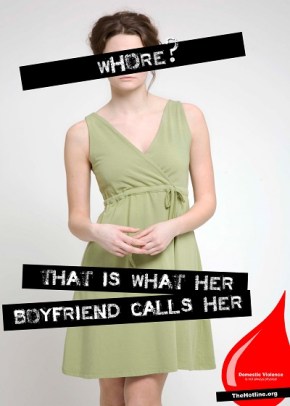
Money has steadily aggregated to representatives of feminist causes over the decades, and this money has been used to secure public opinion through “information campaigns.” Too, it has inspired grant allocations to agencies of the justice system amounting to billions under the feminist motivated Violence Against Women Act (VAWA). Federal grants are also issued to promote and fund social science that validates these expenditures and laws related to violence against women, including restraining order laws. Both money and this tailored research are used to influence police policy and condition judicial priorities.

Women, defensively, may deny that members of their sex instigate malicious prosecutions more often than men or to greater effect. Who lies and why doesn’t matter, though. Judges should be vigilant against false claims, which should be detected, dismissed, and punished. Judges aren’t vigilant, false claims aren’t detected, and their claimants aren’t sanctioned. Why?

Thanks to dogged and vehement feminist politicking for the past 30 years or more, standards for substantiating claims of abuse made by restraining order petitioners are none, and penalties for lying are none. That’s because (women, please note) if the law made the standards too demanding or it threatened penalties for iffy testimony—so the dated argument runs—abused women might be afraid to come forward. They would just “suffer in silence” instead.

To ensure abused women aren’t afraid to come forward—again, so the dated argument runs—allegations must be taken on faith, and judges must have complete latitude to rule as they “think best” to protect the interests of people who can’t protect themselves.

If all this wiggle room means some people (or a lot of people) get falsely implicated…so what?

Law follows politics, and the political fix has been in for a long time. It stays in, because the architecture of laws has been concrete-reinforced. Feminist advocates continue to “monitor public policy” and to maintain their painstakingly erected social webwork. They have the money to do it. Oppositional voices are neither bankrolled nor have any political cachet. They’re not just the underdogs; they’re the usual suspects.

The above makes the below possible (comment submitted to this blog a few days ago by “Rhonda Lynn”):

I’m going to court in a few hours. I haven’t slept or eaten, and I’m a wreck. My life is over. Today.

I fled a [domestic violence] situation in another state and moved back to Washington. I bounced around a bit and finally ended up renting a room. (I’m disabled, on Social Security.) Yes, Craigslist.

I felt I asked all the right questions: Are you married? Do you live on the property? Do you own the home? Who else lives there? Both [man and woman] were surprised to learn [I was disabled, because] the other tenants renting the room across from me were disabled, as well. The man of the [tenant] couple was deaf, and I know American Sign Language.

Upon moving in, I began noticing the lies being told. The disabled couple was made to turn over their food cards. They tried with me when I signed the month-to-month agreement. I, of course, declined.

I helped with the deaf man and his developmentally disabled woman, because the female “owner” (also a lie) was overwhelmed and claimed she was sick. I cooked and cleaned (28 loads of laundry, using the washer and dryer I brought from my previous residence). I paid for Thanksgiving dinner.

Then Hell came. A friend of the female claimed the “husband” had been coming on to her…long story. The next day, it was me! […] First she tells me to move out; then she’s my friend.

The exploitation of the couple continues. The sister of the deaf man calls me [and] then calls Adult Protective Services. I make a call as well. There is an active investigation.

Ready?

sign-languageThe police knock on my bedroom door and give me 10 minutes to get some clothes. The “husband-owner” filed a restraining order on me!

I had a couple stay overnight for a movie marathon the night before, so I had a bit of help. The female officer verified I had a lock for my room. She advised the petitioner no one was to enter my room. She had me turn over the house key. I was in shock, crying.

As we pull away, the “husband” sends me a voice recording…saying, “See…who got [who] out of whose house? I got you out of my house! Neener Neener.”

I called the police. No good. I am not the victim. I’m the perpetrator. While on the phone…two more [messages] telling me I’m not getting any more of my stuff back, can’t come back to the house…even with an officer. “You’re burnt bitch! If the police ask where’s your stuff, I’m gonna say I don’t know.”

Then, there’s the “order.” A Domestic Violence Protection Order!

The allegations, all false…and very damning: stealing his mail, opening it and not giving it to him, going in his wallet, taking his [Social Security] card and old i.d., shoving him into a wall, causing a bruise on his back, yelling at all hours of the day and night, causing such stress on the disabled couple that they can’t eat or sleep and have PTSD episodes, calling members of the house vulgar names, texting and calling everyone while they sleep, [threatening] to burn the house down, [warning] him not to sleep, because I’d kill him. [He alleges] he is in fear of his life, afraid to take a shower or come home.

Then, lastly, the night before (when I had company), [he says] I came at him with a kitchen knife as he was getting ready for work [and that] he tried to call the cops, and I took his cell phone away. Then gave it back that morning.

Oh, my lord!

They both went on my Facebook [page]. He called me a hooker, said I would sleep with any man, and called me a horrible name. I didn’t respond, of course. Then he said I do meth, [which] he knows because I lived with him and he cleaned my room and found pipes and bags. Then she responds and says…and rigs and baggies. Now we know [they say] why she cleaned, and it explains her treatment of us. He [wrote] in another post: “I just want everyone to know she does methamphetamines.” (He is in outpatient treatment.)

[…]

I call the police…to get my stuff. I left my daughter’s ashes and pictures.

They say, “How can you prove you live there? If he doesn’t say you live there, we won’t bust down the door.”

I’M GOING TO JUMP OFF A BRIDGE.
(BUT DON’T DRIVE AND NO BUS FARE)
PLEASE. HELP ME.
RHONDA

The reader may choose to indict the male accuser in Rhonda’s story instead of the apparatus he exploited because he could, or the reader may choose to indict the apparatus itself and those who inspired it, defend it, keep it well lubricated, profit from it, and convincingly deny it’s abused.

Neither position will help Rhonda, who may be broken forever (or until she finds a bridge), but one of them may eventually make it illegal for a life to be so viciously demeaned as hers has been.

Copyright © 2015 RestrainingOrderAbuse.com

“You have bullsh*t; we have research”: The National Coalition Against Domestic Violence v. Daddy Justice (Or, Why False Allegations Are a Serious Problem)

A correspondent, friend, and fellow blogger who’s been relentlessly attacked through the courts by a disturbed neighbor (over a period now spanning years) sent a link to the YouTube vid “The Grand Poobah” last week. It’s a 2011 “interview” between men’s rights activist Ben Vonderheide (a.k.a. “Daddy Justice”) and Rita Smith, former executive director of the National Coalition Against Domestic Violence (NCADV), an influential Colorado-based nonprofit.

(Note: The word in the video’s title should be spelled “poohbah,” after a comic opera character whose name was probably formed from the interjections pooh + bah. Mr. Vonderheide’s spelling it “poobah” might have been an accident—or it might have been on purpose.)

The setting of the interview, which would more aptly be called an exchange of words, isn’t clear, but it seems to be a post-conference mix-and-mingle. Mr. Vonderheide takes issue with the NCADV’s feminine bias and the propagandist tenor of the factsheets it publishes, which aren’t uncommonly cited by feminist advocates.

As the quotation in this post’s title suggests, the questions he poses to Ms. Smith aren’t favorably received. Those questions regard the NCADV’s disinclination to acknowledge maternal child abuse (Ms. Smith: “It’s not our focus of work”), as well as its denial that false accusations of domestic violence are a serious problem, false accusations that Mr. Vonderheide alleges are “promoted by [the NCADV’s] budget.”

Daddy Justice’s interview style (à la Michael Moore) is obtrusive—he’s plainly crashed the party—but while Mr. Vonderheide is necessarily assertive, the worst you could say of his questions is that they’re confrontational. They’re nevertheless called “abusive” and “aggressive,” and he’s prodded to leave.

The grudging answers his questions prompt before he’s rebuffed don’t provide much informational grist for the mill, but to his allegation that more than 80% of restraining orders are based on false accusations, Ms. Smith significantly counters that her facts say it’s only “2% of the time” (and she urges Mr. Vonderheide to “stop lying”). Later she revises her estimate of the number of false accusations from 2% to “2 to 5%,” dismissively, despite the fact that if, say, 2,000,000 restraining orders are petitioned a year (and the total may be much higher), the extra 3% translates to the invasion, disruption, and possible dismantling of 60,000 innocent defendants’ lives, besides those of their children and others peripheral to the mischief.

A mere 5% false allegation rate means the victimization of 100,000 (or many more) innocent people per year (again, not including ambient casualties). Anecdotal reports, of course—including from judges and attorneys—put the false allegation rate 6 to 18 times higher than 5% (30 to 90%). It just depends who you’re asking.

Even a ridiculously conservative false allegation rate like the posited 5% plainly recommends legislative reform, because there’s absolutely no accountability in the restraining order process. False accusers aren’t punished, and damages from false allegations aren’t remediable by lawsuit. Additional false claims can what’s more be lodged almost immediately by the same accusers using the same process. There’s no statutory ceiling on the number of orders a single complainant may apply for. (Some victims of procedural abuse report spending tens of thousands of dollars to fend off one petition only to throw up their hands—and in cases forfeit their custody entitlements—when a second comes down the pike a few months later. See here for an example.)

It should be appreciated, too, that any audit-derived estimate of the number of false allegations can only be based on allegations that are recorded as false (by “somebody”). No official false allegation rate accounts for the number of times false allegations succeed or the number of times cases based on them are simply “dismissed” without comment.

In other words, false allegations may well be rampant or “epidemic” (a word favored by anti-domestic-violence advocates), and there would be no record that says so.

The nyah-nyah from the title—“We have research; you have bullshit”—deserves reflection, also. (It doesn’t come from Ms. Smith, incidentally, but from an unidentified confederate who can’t resist a Parthian shot at Mr. Vonderheide before she and the “Grand Poobah” turn their backs to him). The “research” that advocacy groups posit is survey-based, that is, it amounts to responses to questionnaires that are administered to sample groups and then extrapolated to the population as a whole. Even this survey data we must take on faith.

Appreciate that conducting “research” of this sort depends on means, which depend on money, which is only allocated to groups like the NCADV. Consider:

The NCADV’s reported income for 2011 was $643,797, down about $70,000 from the previous year. Ms. Smith’s salary was $74,586.

Among the programs toward which the NCADV’s 2011 budget was dedicated were “General Program – provides information to educate and inform the general public about domestic violence” ($240,991), “Public Policy – works in collaboration with other national organizations to affect societal response to domestic violence through public education and coalition building, monitors federal legislation, and contacts legislators regarding domestic violence issues” ($88,808), “Membership – publishes a newsletter and provides networking opportunities for individuals and organizations interested in the work to empower battered women and their children” ($67,607), “Child custody – provides resources, referrals and support to advocates working with victims of domestic violence involved in family court cases with their abusers also provides resources to victims, attorney, and family members when family court issues are present” ($97,402).

In contrast to the social largesse enjoyed by groups like the NCADV, no money is allocated for the administration of surveys to determine, for example, incident rates of depression, drug or alcohol abuse, stress-related injuries, or suicide proximal to being falsely accused; no surveys appraise the resulting lost earnings and assets; and no surveys attempt to measure the hits taken by health insurance providers as a result. Prognosis of the long-term consequences to the welfare and life prospects of injured children is, moreover, impossible. Worse, it’s not even considered, which casts rather a long shadow on the purported “mission” of groups like the NCADV to protect kids.

Clearly, that motive is context-specific.

Daddy Justice makes up for the lack of information his “interview” questions elicit with quotations interposed between snippets of footage. Here are some of them:

  • “Everyone knows restraining orders…are granted to virtually all who apply.” […] “In many cases, allegations of abuse are used for tactical advantage” (Elaine Epstein, former president of the Massachusetts Bar Association).
  • “Restraining orders are now considered part of the ‘gamesmanship of divorce’” (Illinois Bar Journal, 2005).
  • “In nonreciprocally violent relationships, women were the perpetrators in more than 70% of the cases” (American Journal of Public Health, May 2007).
  • “Women were slightly more likely than men to use one or more acts of physical aggression and to use such acts more frequently” (Psychological Bulletin, 26, No. 5, pp. 651-680).
  • “Leading sociologists have repeatedly found that men and women commit violence at similar rates” (Law Professor Linda Kelly, 2003).
  • “More women than men engage in controlling behavior in their current marriages” (Violence and Victims, 22, Issue 4, 2007).
  • “Of all persons who suffer injuries from partner aggression, 38% are male” (Dr. John Archer, Psychological Bulletin).
  • “There is no doubt that this law [Ohio’s domestic violence statute] has been abused” (Judge Nadine Allen of Hamilton County, Ohio).
  • “Standards for proving abuse have been so relaxed that any man who stands accused is considered guilty” (Cheryl Hanna, William and Mary Law Review).
  • “Women are nine times more likely to report domestic violence than male victims” (National Family Violence Survey).
  • “85% of temporary restraining orders are filed against men” (Cathy Young, “Domestic Violence: An In-Depth Analysis,” 2005).
  • “Many judges view restraining orders as ‘a rubber-stamping exercise,’ and subsequently hearings are ‘usually a sham’” (Attorney Arnold Rutkin, Family Advocate, Winter 1996).
  • “The mere allegation of domestic violence may shift the burden of proof to the defendant” (Massachusetts Law Weekly, 1995).

Notable is that cited remarks from legal experts that categorically define the restraining order process as prejudiced, if not an outright abomination against rudimentary civil rights and principles of law, may be a decade or decades old. Rhetorical stances like the NCADV’s aren’t fooling anybody in the know, and they haven’t for a long time. But they continue to dominate political debate. They’re heeded because they’re supposed to be. Not coincidentally, women’s advocates hold the keys to the treasury.

The value of Mr. Vonderheide’s video, finally, isn’t in the information it educes or even the information it asserts but the psychological study it offers of the women behind the dogma and the sway they exercise on public perception. His questions, only impeachable as indelicate, inspire predictable reactions: antagonism, levity, or disdain.

According to tried and true method (a method both practiced and preached), the “self-reliant” feminist women who are the targets of Mr. Vonderheide’s questions register alarm. These deniers of false allegations and undue hysteria…call the police.

Copyright © 2015 RestrainingOrderAbuse.com
*Daddy Justice’s videos can be found here.

“Trapped”: Betty’s Story of Restraining Order Abuse

Betty Krachey says she only wishes she had superpowers. She has, nevertheless, been flexing her muscles pretty impressively for a former drugstore clerk.

Betty launched an e-petition not long ago to bring flaws in the administration of restraining orders and the need to hold false accusers accountable to the attention of lawmakers in her home state of Tennessee (and beyond). Betty emphasizes that restraining orders can be “taken out on innocent people based on false allegations so a vindictive person can gain control with the help of authorities.” She stresses, too, that “false accusers are being allowed to walk away and pay NO consequences for swearing to lies to get these orders.”

Betty’s charges shouldn’t be revelations; opponents of restraining order laws (and related laws inspired by violence against women) have been saying what Betty is for years. What makes her denunciations eye-opening is that they’re coming from an injured woman who refuses to take her licks and silently retreat into the shadows like she’s supposed to do. Besides that, the typical rebuttals to complaints like Betty’s, rebuttals that play to our sympathies for abused women, don’t apply.

Betty is an abused woman. She was nearly deprived of her home and consigned to the curb, for no reason, like yesterday’s trash (a situation others find themselves in every day). Betty’s story, as she tells it, corresponds moreover to those of women who are considered victims of emotional abuse (which state statutes may classify as “domestic violence”).

I used to be a very private person—till all this crap—and told very few people my business, so everyone thought everything was going good with me and [him]. They had no idea I was living with someone I felt trapped with. I could NEVER talk to him or even ask him a question without him blowing up. That’s not a very happy life to live with someone. Even though I never told others how bad things were at home, I NEVER made it a secret to [him] that I wanted to leave…! I never posted lies on Facebook or emailed my friends telling them lies about [him] like he did me to try to get people to feel sorry for me and think [he] was such a bad person. Now that I think about it, he’s always played the victim….

The counterclaim feminists inevitably reach for to bat away complaints of restraining order abuse like Betty has made is that invisible, voiceless legions of battered women never receive justice, so tough luck, Charlie Brown, if you’re not treated fairly. The argument appeals to pathos, but its influence on our laws and justice system is plainly corrupt. Remarking that there are starving children in India has never made and never will make broccoli taste like cheesecake. It’s not the place of our justice system to punish people for things they haven’t done, let alone to blame them for the imagined crimes of strangers.

The posited pains and privations of unnamed others don’t justify running an innocent person through the wringer, female or male. Publicly implicating people as batterers and creeps based on superficial claims scrawled on forms and mouthed in five-minute meetings with judges shouldn’t be possible in a developed society. On these grounds, citizens are cast out of their homes by agents of the state, as Betty almost was.

Our courts take no interest in the lives they invade and often derail or devastate. The people restraining order judges summarily condemn are just names on forms; judges may never even know what the owners of those names look like—forget about who they are.

Let’s meet one.

Betty’s story begins in 1992 when she moved from Florida to Tennessee with her boyfriend, and the two built a house and life together there.

The circumstances that led to Betty’s being falsely accused by her boyfriend decades later are cliché. He slimmed down in midlife, she says, and began “cheating on me with younger girls…. So he had to figure out a way to get my half of our house from me.”

A protection order fit the bill perfectly: no muss, no fuss, and no division of assets. The boyfriend would be granted sole entitlement to the house that Jack and Jill built. Jill, with a little shove, would tumble down the hill alone, and an empty bucket to collect handouts in is all she’d end up with.

His first plan was to bully and threaten me into signing over my half of the house by signing a quitclaim deed. He had told me he would give me $50K, which…I knew I’d never see, and he promised me this would be my best deal. And if I did not sign the house over to him, he let me know I would lose everything I had worked my ass off for. “You watch and see, I promise you that,” he would tell me over and over.

Betty says she was tempted to sign. One of her dearest companions, her Doberman Dragon, had died, and Betty reckoned she could provide for her remaining dog, Lacy, by herself. “One reason I stayed was for my dogs,” she admits. “I had been wanting to leave…for years.” She and her boyfriend had effectively separated, and Betty intuited her boyfriend “knew he wasn’t going to be able to trick me into staying and paying half the bills much longer,” and she planned to call it quits. But he beat her to the punch.

His next plan, with the advice from his awesome friend, was to get the police involved and then to file the order of protection on me to get me kicked out of the house! If it weren’t for my lawyer, I would have had to leave my home from Aug. 29th to the court date Sept. 12th! [He, the ex] knew and did NOT care one teeny tiny bit that I had NOWHERE TO GO! Plus I had Lacy to worry about. [He] had moved out of our house August 6th and wasn’t even living in the home at the time he did this. [He] has another house to live in that has everything he needs. I had NOTHING else and nowhere else to go!

Betty’s situation mirrors that of many others who are falsely accused by domestic partners. Those not so lucky to have (or to be able to afford) effective legal representation may find themselves abruptly homeless (besides jobless and penniless, in cases), sleeping in their cars, sheltering with strangers, or living on the street. These are people who the day before may have been living normal, comfortable middleclass or even upper-middleclass lives.

On our court date—Sept 12th—the order of protection was dropped. My lawyer told me I was right: “This is all about the house and YOUR money you have coming from your business you sold.” I knew it!! And [he, the ex] wanted ME to pay the court costs for this!

The best laid plans of lice and men go oft astray. Betty quips, “All I can say is [he] had a lot more to be concerned about than me causing him ‘bodily harm’!”

Betty’s been in touch with a Tennessee state representative who’s indicated to her that she has “a good chance at getting [the] law changed. But he said the soonest it will go into effect is July 2015, and he let me know that means it will NOT help me with what my ex did to me, because he filed his false report on me in August!”

Besides singlehandedly pressing for reform of one of the most intransigent legal mockeries ever conceived, she’s considering a lawsuit.

Happy New Year, Betty.

Copyright © 2015 RestrainingOrderAbuse.com
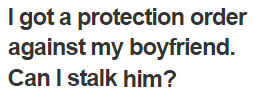
The Southern Poverty Law Center v. Betty Krachey: Why the Only Honest Voices in Discussions of Restraining Order and Related Procedural Abuses Are the Little Ones

This blog was inspired by firsthand experience with judicial iniquity.

Its author has never been accused of violence, doesn’t sanction violence except in self-defense or the defense of others, and has been a practicing vegetarian since adolescence. I have, what’s more, hazarded my life going to the aid of non-human animals. In one instance, I lost the use of my hand for a year; in another, I had various of my bones fractured or crushed, and that damage is permanent.

Although I’ve never been accused of violence (only its threat: “Will I be attacked?”), I know very well I might have been accused of violence, and I know with absolute certainty that the false accusation could have stuck—and easily—regardless of my ethical scruples and what my commitment to them has cost me.

Who people are, what they stand for, and what they have or haven’t done—these make no difference when they’re falsely fingered by a dedicated accuser who alleges abuse or fear.

This is wrong, categorically wrong, and the only arguments for maintenance of the status quo are ones that favor a particular interest group or political persuasion, which means those arguments contravene the rule of constitutional law.

Justice that isn’t equitable isn’t justice. Arguments for the perpetuation of the same ol’ same ol’, then, are nonstarters. Dogma continues to prevail, however, by distraction: “a majority of rapes go unreported,” “most battered women suffer in silence,” “domestic violence is epidemic” (men have it coming to them). Invocation of social ills that have no bearing on individual cases has determined public policy and conditioned judicial impulse.

Injustice, no surprise, arouses animosity; injustice that confounds lives, moreover, provokes rage, predictably and justly. This post looks at how that rage is severed from its roots—injustice—and held aloft like a monster’s decapitated head to be scorned and reviled.

I first learned of the Southern Poverty Law Center (SPLC) from a research paper published by Law Professor Kelly Behre this year that equates men’s rights activism with hatemongering. I later heard this position of the SPLC’s reiterated in an NPR piece about the first International Conference on Men’s Issues.

Injustice, it should be noted preliminarily, is of no lesser interest to women than to men. Both men and women are abused by laws and practices purportedly established to protect women, laws and practices that inform civil, criminal, and family court proceedings.

Groups like the SPLC, however, represent opposition to these laws and practices as originating strictly from MRAs, or men’s rights activists, whom they dismiss as senseless haters. This lumping is characteristic of the smoke-and-mirrors tactics favored by those allied to various women’s causes. They limn the divide as being between irrationally irate men and battered women’s advocates (or between “abusers” and “victims”).

They don’t necessarily deny there’s a middle ground; they just ignore it. Consequently, they situate themselves external to it. There are no women’s rights activists (“WRAs”?) who mediate between extremes. They’re one of the extremes.

I’m a free agent, and this blog isn’t associated with any group, though the above-mentioned law professor, Dr. Behre, identifies the blog in her paper as authored by an “FRG” (father’s rights group), based on my early on citing the speculative statistic that as many as 80% of restraining orders are said to be “unnecessary” or based on false claims, which may in fact be true even if Dr. Behre finds the estimate unscientific. (Survey statistics cited by women’s advocates and represented as fact are no more ascertainably conclusive; they’re only perceived as more “legitimate.”)

SAVE Services, one of the nonprofits to cite a 2008 West Virginia study from which the roughly 80% or 4-out-of-5 statistic is derived, is characterized by the SPLC and consequently Dr. Behre as being on a par with a “hate group,” like white supremacists. It isn’t, and the accusation is silly, besides nasty. This kind of facile association, though, has proven to be very effective at neutering opposing perspectives, even moderate and disciplined ones. Journalists, the propagators of information, may more readily credit a nonprofit like the SPLC, which identifies itself as a law center and has a longer and more illustrious history, than it may SAVE, which is also a nonprofit. The SPLC’s motto, “Fighting Hate • Teaching Tolerance • Seeking Justice,” could just as aptly be applied to SAVE’s basic endeavor.

On the left is a symbol for the Ku Klux Klan; on the right, the symbol for feminist solidarity. The images have common features, and their juxtaposition suggests the two groups are linked. This little gimmick exemplifies how guilt by association works.

The SPLC’s rhetorical strategy, an m.o. typical of those with the same political orientation, is as follows: (1) scour websites and forums in the “manosphere” for soundbites that include heated denunciations and misogynistic epithets, (2) assemble a catalog of websites and forums that espouse or can be said to sympathize with extremist convictions or positions, and (3) lump all websites and forums speaking to discrimination against men together and collectively label them misogynistic. Thus reports like these: “Misogyny: The Sites” and “Men’s Rights Movement Spreads False Claims about Women.”

Cherry-picked posts, positions, and quotations are highlighted; arguments are desiccated into ideological blurbs punctuated with indelicate words; and all voices are mashed up into a uniform, sinister hiss.

The SPLC’s explicit criticism may not be unwarranted, but coming as it does from a “law center” whose emblem is a set of balanced scales, that criticism is fairly reproached for its carelessness and chauvinism. There are no qualifications to suggest there’s any merit to the complaints that the SPLC criticizes.

The SPLC’s criticism, rather, invites its audience to conclude that complaints of feminist-motivated iniquities in the justice system are merely hate rhetoric, which makes the SPLC’s criticism a PC version of hate rhetoric. The bias is just reversed.

Complaints from the “[mad]manosphere” that are uncivil (or even rabid) aren’t necessarily invalid. The knee-jerk urge to denounce angry rhetoric betrays how conditioned we’ve been by the prevailing dogma. No one is outraged that people may be falsely implicated as stalkers, batterers, and child molesters in public trials. Nor is anyone outraged that the falsely accused may consequently be forbidden access to their children, jackbooted from their homes, denied employment, and left stranded and stigmatized. This isn’t considered abusive, let alone acknowledged for the social obscenity that it is. “Abusive” is when the falsely implicated who’ve been typified as brutes and sex offenders and who’ve been deprived of everything that meant anything to them complain about it.

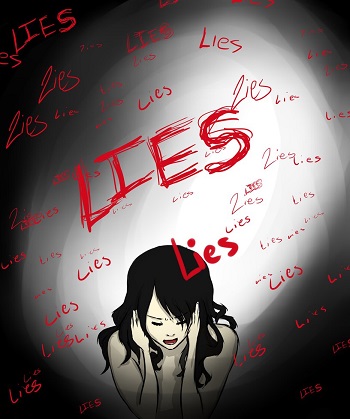

Impolitely. (What would Mrs. Grundy say?)

There’s no question the system is corrupt, and the SPLC doesn’t say it isn’t. It reinforces the corruption by caricaturing the opposition as a horde of frothing woman-haters.

Enter Betty Krachey, a Tennessee woman who knows court corruption intimately. Betty launched a website and e-petition this year to urge her state to prosecute false accusers after being issued an injunction that labeled her a domestic abuser and that she alleges was based on fraud and motivated by spite and greed. Ask her if she’s angry about that, and she’ll probably say you’re damn right. (Her life has nothing to do with whether “most battered women suffer in silence” or “a majority of rapes go unreported,” and those facts in no way justify her being railroaded and menaced by the state.)

I made this website to make people aware of Order of Protections & restraining orders being taken out on innocent people based on false allegations so a vindictive person can gain control with the help of authorities. The false accusers are being allowed to walk away and pay NO consequences for swearing to lies to get these orders!  […]

I know that, in my case, the judge didn’t know me. Even though I talked to the magistrate the day BEFORE the order of protection was taken out on me & I told him what I heard [he] had planned for me. They didn’t know that I might have superpowers where I could cause him bodily harm 4 1/2 miles away. SO they had no choice but to protect [him] from me. BUT when they found out this order of protection was based on lies that he swore to, and he used the county in a cunning and vindictive way to get me kicked out of the house – HE SHOULD HAVE HAD TO PAY SOME CONSEQUENCES INSTEAD OF BEING ALLOWED TO WALK AWAY LIKE NOTHING HAPPENED!!!!

Seems like a fair point, and it’s fair points like Betty’s that get talked around and over. There are no legal advocates with the SPLC’s clout looking out for people like Betty; they’re busy making claims like hers seem anomalous, trivial, or crackpot.

Copyright © 2014 RestrainingOrderAbuse.com

*Betty reports she’s been in conference with one of her state’s representatives and has been told she has “a good chance at getting this law changed,” albeit too belatedly to affect her own circumstances. Says Betty, “I still want the law changed to hold false accusers accountable!” Amen to that.

Why Women Who Are Falsely Implicated as Abusers Have No Defenders

Women who are ravaged by false allegations of domestic violence or “violence-related” offenses—whether in civil restraining order prosecutions, or in domestic violence or family court cases—are a minority among the targets of lies.

Hunt up comments by female victims on the e-petition “Stop False Allegations of Domestic Violence,” and there’s a good chance those comments will contain an emphatic line like “This happens to women, too.”

Men who’ve been falsely accused may be unaware that the community of the damned includes members of both sexes. The women who support those men—e.g., girlfriends, wives, sisters, or mothers—may also be unaware. Alternatively, their compassion may be numbed by the consciousness that restraining order, stalking, and domestic violence laws exist for women, or their compassion may be jaded by the conviction that when women are falsely accused of abuse, the implications aren’t as severe, which may be true.

This doesn’t mean, however, that the women who are falsely impugned feel any less anguished, betrayed, mortified, or indignant. Psychic pain is subjective, and the privations than ensue from false allegations of abuse—loss of access to children, property, home, employment, etc.—may be exactly the same, whether the accused is male or female.

What we call “society” doesn’t care to acknowledge that laws enacted to curb violence against women are ever abused to inflict harm (this “society” is really the people who mold public opinion, like government reps, journalists, and various talking heads on TV; society proper only knows what it’s told). Men who’ve complained of judicial crookedness and mistreatment for years or decades are still widely discounted, dismissed, or openly derogated in accordance with established dogma.

The phrase men’s rights continues to be framed with quotation marks (often contemptuously), and that includes in the mainstream press. Those who advocate for “men’s rights” may be called “rape deniers,” “anti-feminists,” or simply “misogynists.” Men’s rights activists have achieved some sympathetic traction, particularly recently, but popular admission that “women’s law” is easily and widely exploited by fraud is still a ways off.

Admitting, then, that women are destroyed by laws that are supposed to protect them is, for a host of reasons, taboo. Acknowledgment that the laws are doing the opposite of protecting women would mean their justification is false. It would besides implicate the system itself in the abuse of women, and be politically embarrassing and compromising,

If it were admitted, finally, that processes for women can be abused to falsely incriminate them, this question would inevitably follow: How much easier must it be for those processes to be abused to falsely incriminate men?

Feminists and feminist-oriented rights advocacy groups like the ACLU can’t afford to speak on behalf of female victims of procedural abuses, because that would be to call attention to the lax standards, inherent biases, and general corruptness of policies they’ve championed (and for which they congratulate themselves). It would be to discredit “all they’ve accomplished.” Criticizing victimized women would likewise be to their discredit. So they just avert their eyes.

Men who complain of procedural abuses are broadly lumped together and demonized as a group; women who complain of the same are exiled to their own private hells.

Copyright © 2014 RestrainingOrderAbuse.com

You Can’t Sue for Perjury: Why Targets of Restraining Order Fraud and Other Procedural Abuses Based on Lies Get Screwed and Stay Screwed

The postscript (P.S.) to a series of comments left on the blog this week by the stepmother of a man who was falsely accused of violence asks whether he could sue his ex-girlfriend for lying.

The details, as the stepmother reports them, are these:

  1. Man and woman, who aren’t married, were together for four years and have a one-year-old daughter.
  2. During the term of their relationship, no reports of any kind of domestic conflict were made to authorities.

  3. The woman has heart disease (diagnosed as “congestive heart failure”) and can only perform minimally stressful activities, so this had typified the couple’s daily life: The man “gets up [at] 5 a.m., feeds [the] daughter, changes [her] diaper, makes his lunch, and heads to work. [He] gets home around 4­–4:30, and she is still in bed [and the] baby is still in [the] same diaper from that morning. […] He cleans, cooks, [does the] dishes [and] laundry, bathes [the] child, and heads to bed—and [the woman] bitches ‘cause he rolls over and goes to sleep.”
  4. On or about December 13, 2014, the couple “got in an argument, and she moved out, taking [their] child with her. She then texted [the child’s father] saying she was taking [the] child and moving to Oregon and he [would] never see [his] daughter again.”
  5. The woman then returned home to retrieve her belongings, “and when she went downstairs, he went out [the] door with [the] child. She freaked out. [Two] days later she filed a protection order saying all these lies about him…and he had to give [the] daughter back.”
  6. The woman, with her dad’s help, then relocated to Oregon with the child.

Among the woman’s allegedly false statements, apparently made to the police before she prepared to abscond with the child, was that the man pushed her into a fish tank, which it’s reported she actually slammed with her fist in a fit of rage while the man’s back was turned. Since the woman’s knuckles were plainly lacerated from punching glass, no arrest ensued. According to the man’s stepmother, the woman lied similarly to procure a protection order a couple of days later.

The stepmom wants to know if her stepson can sue his girlfriend for lying under oath. The answer, which is no, exposes why lying to the court is so effective, besides being easy.

Quoting “The Rule against Civil Actions for Perjury in Administrative Agency Proceedings: A Hobgoblin of Little Minds” (University of Pennsylvania Law Review, 1983):

“No action lies to recover damages caused by perjury.” If A is injured by the false or misleading testimony of B in a judicial proceeding, A cannot maintain an action for damages against B; A can obtain relief only by a direct attack on the judgment. So it was at common law, and although some observers have called for its abandonment, courts today are unanimous in following that ancient rule.

Tennessean and fraud victim Betty Krachey has launched a petition to urge her state to punish lying.

Appreciate that a corollary of that “ancient rule” is that if someone who’s lied about in a judicial proceeding lapses into suicidal despondency and kills him- or herself, his or her loved ones have no legal recourse. If you publicly mislabel someone a stalker, child molester, or batterer, for instance, outside of court, and that person kills him- or herself, you can be sued. But if the same end results from false allegations you make in court, you get away scot free.

Perjury—that is, knowingly lying to the court about influential facts—is a “serious criminal offense,” as a law student from South Africa recently remarked in a comment about a case of restraining order fraud that emerged in her country’s popular press. In many if not most jurisdictions in the U.S., perjury is a felony.

Punishment for it, however, can only follow its prosecution by the district attorney’s office, which rarely initiates perjury proceedings and only does so in slam-dunk cases of prominent interest like misconduct by public officials. Private litigants can sue for damages caused by the commission of other crimes—murder, for example—and they can sue for slanders and libels made outside of court. They can’t, though, sue for damages caused by lies told in judicial proceedings, no matter how injurious those lies might be.

The reason why, basically, is that the system likes closure. Once it rules on something, it doesn’t want to think about it again.
Consider what would happen if Person A lied about Person B, and Person B were authorized to sue Person A for lying. This would open the door for Person A to turn around and claim Person B lied in the second proceeding and sue Person B back. Person B could then pursue another action that alleged Person A lied about Person B in the third proceeding, and on and on ad infinitum.

While this would force the court to pay more than a lick of attention to the facts and also motivate it to drop the hammer on liars, it’s messy and time-consuming. So it’s rejected in the name of economy—and damn the consequences to people who are lied about.

This policy is among the reasons why restraining orders should be repealed.

Temporary orders are issued upon a few minutes’ prejudicial deliberation (really none at all). A petitioner goes to the courthouse, fills out some paperwork, and has a chitty-chat. If the accused doesn’t appeal, the court’s entire application to the case will have been those few minutes (sandwiched between stifled yawns). Even when a defendant does appear in court to contest allegations against him or her, judicial “review” of the matter may be less than 30 minutes.

On the basis of this brief “review” (which is often merely theater), a person like the man in the story above can be branded a “domestic abuser,” have his or her name entered into state and national police databases (permanently), and be denied contact with his or her child (besides potentially being denied credit, leases, and jobs, and having to indefinitely endure the agony and humiliation of being re-judged for something s/he didn’t do). S/he can also be made to pay court costs for having his or her life torn apart by lies.

A person like him, who can be male or female, can attack the false judgment in a further appeal—provided s/he has the emotional and financial resource—but s/he can’t seek redress for fraudulent testimony given in evidence against him or her.

That would inconvenience the court.

Copyright © 2014 RestrainingOrderAbuse.com

The Politics of Feminism and Women’s Law: A Response to Zerlina Maxwell’s Editorial “No Matter What Jackie Said, We Should Generally Believe Rape Claims”

Implicit in the headline of this op-ed is that even “wrongly accused” men are “perps.”

The only complimentary thing this writer can find to say about attorney Zerlina Maxwell’s December 6 column in The Washington Post is—yeah, scratch that; it has no redeeming qualities.

The editorial is not only intellectually callow but morally vacuous. Even its research and computations are careless.

Ms. Maxwell’s piece concerns a story published last month in Rolling Stone Magazine about a purported gang rape at the University of Virginia. The story was swiftly lofted upon a current of hot air then failed to maintain elevation because of a number of holes.

By Ms. Maxwell’s pained logic, the story’s having nosedived is all the more reason why allegations of rape should be accepted wholesale.

Many people (not least U-Va. administrators) will be tempted to see this as a reminder that officials, reporters and the general public should hear both sides of the story and collect all the evidence before coming to a conclusion in rape cases. This is what we mean in America when we say someone is “innocent until proven guilty.” After all, look what happened to the Duke lacrosse players.

In important ways, this is wrong. We should believe, as a matter of default, what an accuser says.

Default means negligence, which Ms. Maxwell equates with propriety. According to feminist algebra, negligence = propriety is a balanced equation.

Note that Ms. Maxwell isn’t actually making an argument for policy reform. We already do, by default, believe what an accuser says, hence outraged and anguished accounts like the ones you’ll find here: “Stop False Allegations of Domestic Violence.”

Ms. Maxwell fails to appreciate that our crediting what a rape accuser says “as a matter of default” means the slope is greased all the way to the bottom. Accepting allegations of rape on faith means accepting on faith all allegations that relate to or imply violence.

And the grease flows sideways, also, not just top-down.

According to the same policy, women  too, are victimized by false allegations, false allegations made in criminal, civil, and family court (as well as to government agencies like Child Protective Services)—and the standard applied in non-criminal procedures is already much reduced from “innocent until proven guilty.” Women unjustly lose their good names, their livelihoods, their children, and their homes (and that’s just the abbreviated list). These are among the consequences of equating allegations with facts “as a matter of default.”

false-rape-letterMs. Maxwell concludes: “Ultimately, the costs of wrongly disbelieving a survivor far outweigh the costs of calling someone a rapist.”

She asserts that rape leaves a “lasting psychological wound” but that the fallout from being falsely accused of rape is minor and ephemeral. “The accused would have a rough period,” she allows. “He might be suspended from his job; friends might defriend him on Facebook.”

Haunting is not only that people like Ms. Maxwell can appeal to pathos to make their case or that they can make such an appeal despite demonstrating no faculty for empathy; haunting is that their appeals nevertheless succeed.

Ms. Maxwell says the “cost of disbelieving women…signals that women don’t matter and that they are disposable.” No, it signals that no one is any more disposable than anyone else.

Copyright © 2014 RestrainingOrderAbuse.com

Why It’s Valuable to Report Your Story of Restraining Order Abuse or Other Procedural Abuse on an E-Petition or Similar Medium

Government statistics used to train police officers and judges are derived significantly from surveys, as discussed in the previous post.

These surveys are represented as “science” but are in fact simply acts of collecting responses, responses that may be completely anecdotal (that is, unverified and most likely unverifiable). Interviewers ask questions, and volunteers answer. Some studies according to which policy is determined (for example, on college campuses) may not even be conducted person-to-person; they may be electronic.

Policy that indelibly impacts lives on a grand scale may be based, yes, on glorified questionnaires.

“Science” that influences research trends and legislation, and that consequently conditions police and judicial impulses, is derived by “randomly” eliciting responses from a sample population—and not a particularly large one at that.

When you hear a controversial statistic, the kind that appears in international headlines and in feminist blogs from one end of the Internet to the other, like one in five college women has been a victim of sexual assault (a statistic drawn from a Web survey administered at two American universities), that figure was based on survey data.

What is a petition?

It’s a survey (of personal experience and public sentiment).

Copyright © 2014 RestrainingOrderAbuse.com

Blinded by Science: Examining the Australian Government’s Sexual Assault Statistics to Expose How Such Science Is Derived, How It’s Applied, and Why It’s Not Really as Scientific as It’s Represented to Be

Here is the Australian government’s Institute of Family Studies’ sexual assault “Facts & Figures” page.

And here is the first thing it says: “Statistics carry significant power and persuasion.”

That’s putting it mildly. That power and that persuasion influence lives on a magnitude that no numbers could quantify. Appreciate that figures concerning sexual assault and how these figures are popularly exploited influence court rulings in all cases that touch on violence or the purported fear of it, including in civil and family court, cases based on allegations of harassment, stalking, child abuse, and/or domestic violence, among others.

You’ll encounter these statistics bruited ubiquitously on the Internet.

“Sexual assault statistics are based on two main types of data,” according to the Australian government website:

  • victimisation survey data—data collated from surveys conducted with individuals, asking them about their experiences of sexual assault victimisation, regardless of whether they have reported to police; and
  • administrative data—data extracted through the various systems that respond to sexual assault (e.g., police, courts, corrections or support services).

Important to note at the outset of this discussion is that statistics often quoted by advocates and commentators of one stripe or another (including journalists) may originate from survey responses, that is, from “intelligence” that may be unqualified by any corroborating investigation. Though this post looks at Australian statistics, figures cited as originating from the United States, for example, are derived the same way. When a statistic is phrased “[x number] of [men or women] report being the victim of [x],” that figure was derived from survey responses.

The Australian Institute of Family Studies draws its statistics from six national surveys. This number suggests scrupulous science, but no ascertainable accuracy can be ascribed to the raw data, which is anecdotal.

The 2012-13 Crime Victimisation Survey (CVS), for example, which is one of the six surveys from which the Australian government draws its statistics, is based on interview responses from one member (“selected at random”) of 30,749 “fully responding households,” that is, on the personal interpretations and alleged experiences of fewer than 31,000 people, a study sample that represents about a tenth of 1% of the Australian population. What percentage of this sample is male and what percentage female isn’t reported on the CVS webpage (though other surveys, like the Personal Safety Survey, do report gender-specific conclusions).

Survey-based statistics are among the sorts you’ll encounter broadly promulgated in feminist “fact sheets” and brochures—and consequently everywhere else.

Important to consider, furthermore, is that “administrative data” (police and court statistics), the second data set from which government figures are derived, may itself be influenced by the former sort of data. Survey responses, much touted, may exert either a direct influence on how officers of the law and courts are trained to respond to or interpret allegations, or they may exert a proximal influence by having inspired the direction of social science research that’s used for training. The former data, survey responses, may in other words determine the conclusions and actions of agents of the justice system to some degree, and possibly to a very considerable one.

“Statistics carry significant power and persuasion,” and neither police officers nor judges are any less susceptible to that power and persuasion than anyone else. In fact, they more than almost anyone else are required to absorb these statistics.

Granted, survey statistics are probably as comprehensive as it’s practical for them to be, and contrary statistics that these figures are rejoined with by advocates for disenfranchised groups like battered men may themselves be based on surveys of even smaller groups of people. All such studies are subject to sampling error, because there’s no practicable means to interview an entire population, and sampling error is hardly the only error inherent to such studies, which are based on reported facts that may be impossible to substantiate.

What must be appreciated in all of this is that what’s called “science” is far from certain and is no more verifiable or creditworthy than are responses to online petitions like this one: “Stop False Allegations of Domestic Violence.” Both types of data, that is, are anecdotal.

The significant difference is that respondents to petitions aren’t “randomly selected” or interviewed by trained questioners. There are no “controls.”

So-called controls, however, may themselves influence findings.

Government surveys are inherently biased insofar as their aim is to collect information according to specific questions. The questions determine the nature and bounds of the responses to them and are determined by designated topics of interest.

Petitions in contrast place no constraints on respondents’ comments—and indirectly garner uninhibited answers to questions like, “Have you or someone you know been the victim of fraudulent abuse of court or state process?”

They garner answers to questions, that is, that the government doesn’t care to ask.

Copyright © 2014 RestrainingOrderAbuse.com

How Dogma Is Preserved: A Feminist Law Professor Is Awarded a $500,000 Grant from Uncle Sam to Prove Claims of False Allegations in Family Court Are “Junk Science”

“Ten years ago, about one in 10 domestic violence arrests involved women as defendants. Now, it’s one in five in Michigan and Connecticut, one in four in Vermont and Colorado, and more than one in three in New Hampshire. Public officials are trying to figure out what’s going on. They are especially mystified because, according to [The New York Times], the trend ‘so diverges from the widely accepted estimate that 95 percent of batterers are men.’

“Interesting logic: first, a dogma contradicted by virtually all social science research [namely, 95% of batterers are men] becomes ‘widely accepted.’ Then, when it’s disproved by the facts, the response is to ask what’s wrong with the facts.”

—Cathy Young, “Female Aggression—Domestic Violence’s ‘Dirty Little Secret’” (1999)

What the quoted writer means is that when dogma becomes “widely accepted,” it stays “widely accepted.” Time has proven her right. Fifteen years later, that dogma—men are abusers; women are victims—still predominates.

It gets by with a little help from its friends.
Some months ago, a post on this blog responded to research conclusions published this year by Prof. Kelly Behre, director of the UC Davis Law School’s Family Protection and Legal Assistance Clinic.

Among those conclusions was that anecdotal reports of procedural abuses, false allegations, and judicial bias by what she calls FRGs (fathers’ rights groups) have no “legitimate” research studies to back them up and should therefore exert no influence on public policy. They should, according to the professor’s own research, be disregarded.

Last month, it was reported that a George Washington University law professor was awarded a $500,000 grant from the National Institute of Justice (i.e., taxpayers) to “conduct a study in which she hopes to show that family courts across the country have fallen into a pattern of awarding custody” of children to fathers who are “known abusers.”

The professor, Joan Meier, directs the university’s Domestic Violence Project. She’s also the “founder and legal director of the Domestic Violence Legal Empowerment and Appeals Project, a nonprofit that [helps] domestic violence survivors receive pro-bono [legal aid].” Her credentials, you’ll notice, are conspicuously similar to those of Prof. Behre, referenced above.

Consider why Prof. Meier was awarded the grant:

She said researchers can say anecdotally that courts have awarded custody to known abusers or fathers whose [partners or ex-partners] have warned could be abusive to children, but researchers and advocates’ sharing their experiences alone hasn’t yet led to change.

Now consider that fathers’ rights researchers and advocates’ sharing their experiences has also yet to lead to change, and appreciate that those researchers and advocates aren’t being cut half-million-dollar checks to compile research data. What they have to say doesn’t accord with the “widely accepted” dogma; it isn’t popular.

Because their anecdotal reports of false allegations, procedural abuses, and judicial bias don’t have any official research to validate them, they’re to be ignored.

Ignoring those reports, in fact, is essential for a hypothesis like Prof. Meier’s to be tenable. It depends on absolutely denying that those whom the professor calls “known abusers” could be men who’ve been falsely implicated.

Prof. Meier says she expects to use the $500,000 federal grant to conclusively expose gender bias in family court against women—and to do it using a study sample of “over 1,000 court cases from the past 15 years” (a study sample, in other words, of fewer than 2,000 cases).

For the professor’s hypothesis to be proven “true,” it just has to be shown that in a significant number of the “over 1,000 cases” reviewed, a father awarded custody of children had previously been accused of abuse.

The researchers hope to debunk “junk science” that mothers make false accusations of abuse to alienate fathers from their sons or daughters, a misconception that Meier said has put many children in danger.

Prof. Meier seems to fail to grasp that the complaint is that mothers successfully “make false accusations of abuse to alienate fathers from their sons and daughters.” Even if her study were to show that child custody is awarded to fathers who’ve been successfully accused of abuse, it wouldn’t necessarily prove that the complaint that false accusations are routine  is based on “junk science” (unless by that phrase she means science that hasn’t been government-funded and -audited).

Prof. Meier’s assertion that claims of false allegations are a “misconception,” what’s more, ignores that any number of attorneys who practice family law publicly corroborate that so-called misconception. Some indeed say false allegations to gain the advantage in custody battles are commonplace. These are the attorneys who actually practice in the trenches. Their reports, however, are once again only anecdotal.

Fathers and their advocates who claim false accusations are made don’t, of course, misconceive anything. They know what they know; they’ve lived it. The professor’s use of the word misconception is directed at the “people who count,” that is, the policy-makers. What she means is any credibility they might be disposed to show complainants of procedural abuse is based on a misconception. That misconception, apparently, is that men without law degrees could possibly be telling the truth.

The professor’s assertion that reports of false accusations are “junk science,” furthermore, would seem to advocate for good science, and there’s certainly nothing scientific about prejudicially dismissing those reports offhand. Studies like those proposed by Prof. Meier need to be counterbalanced by studies with opposing hypotheses—and they aren’t.

Meier and her team of legal and statistical experts will create a database of court opinions that she hopes will show a pattern that supports her hypothesis, and will then present it to activists, local courts, and organizations that train judges.

Preservation of dogma is a game of ring-around-a-rosy. Advocacy for what’s widely accepted to be true is lavishly funded, and the resultant “science” may then be used to “train” judges how to rule, further reinforcing the dogma.

(If the context of this policy were Russia instead of the United States, would training still be the word we used to mean influencing judges?)

This is how underhand gets the upper hand, and it’s remarkable how openly this kind of business is transacted. No one bats an eye, because it’s “official.”

Prof. Meier may have the best of intentions. The author of this post has never known anyone whom he would characterize as a domestic violence “survivor.” He has no doubt, however, that there are people who are daily subject to violent cruelty, and if he did know someone like that, he’d be grateful that there were people like Prof. Meier looking out for their interests.

Victims need advocates and defenders.

The reality is, though, that victims of domestic violence have quite an abundance of public and private sympathizers, while victims of abuse of civil and criminal processes legislated to protect battered women and children (including restraining orders) receive little public recognition at all. An agency that calls itself the “National Institute of Justice” shouldn’t play (or pay) favorites. Justice would, in fact, advocate that an equal payout be provided to researchers to study the frequency of fraudulent accusations, which can’t be determined from court rulings, because those rulings are influenced if not dictated by the prevailing dogma.

Hypotheses, it’s been amply observed, tend to incline researchers to find evidence of whatever it was they were looking for in the first place (this is called “confirmation bias” or “myside bias”).

Leora Rosen, a former senior social science analyst at the National Institute of Justice, said [Prof. Meier’s] study is unique because it is transparent about its lack of objectivity and looks at family court rather than criminal court cases. She has partnered with Meier for the study.

Copyright © 2014 RestrainingOrderAbuse.com

The Five Magic Words: What Do Restraining Order Defendants Mean when They Say They’ve Been Falsely Accused?

A presumption of people—including even law professors—is that when restraining order defendants say the accusations against them are false, they mean that specific allegations of fact made by their accusers are untrue.

This is a misunderstanding, and it’s a totally understandable one that accounts for the incredulity expressed by proponents of the battered women’s movement when they hear statistics propounded like 50 to 90% of restraining orders are based on “false accusations.” (A family court judge might say 30%. The jaded former director of a woman’s shelter might say 40 or 50%. A men’s rights activist might say 60 to 80%, and a family attorney might well agree.) There are no “official” statistics—and there can’t be, because no records of false accusations are kept, and false accusations, besides, are seldom called “false accusations” in court rulings. Figures put forward are always speculative.)

It must be appreciated that restraining order prosecutions aren’t criminal prosecutions. They don’t evolve from detailed allegations made to the police and vetted by public attorneys; they’re based on forms filled out in 10 or 15 minutes by private litigants who deliver their claims straight to a judge (who meets with them for about the time it takes to make a sandwich).

To falsely accuse someone of “domestic violence,” for example, may just mean putting a check mark in a box on such a form.

That’s the false accusation—and if a defendant doesn’t show up to court to challenge that check-marked accusation, s/he becomes, by default, a “domestic abuser” according to the various law enforcement and registry databases his or her name is entered into.

hey-prestoPeople on the outside of the restraining order process imagine that the phrase false accusations refers to elaborately contrived frame-ups. Frame-ups certainly occur, but they’re mostly improvised. We’re talking about processes that are mere minutes in duration (that includes the follow-up hearings that purport to give defendants the chance to refute the allegations against them).

The fact is when defendants say accusers lie, they may just mean those accusers uttered the five magic words: “I’m afraid for my life.”

The magic words, which may of course be untrue, aren’t even susceptible to contradiction. They can’t be refuted; what they represent is an alleged feeling, not a fact that can be disproved. You can’t even really call them an accusation.

Contrary to all things reasonable and sound, a restraining order may be issued on the basis of the five magic words alone.

Copyright © 2014 RestrainingOrderAbuse.com

A Story of Female Sterilization That Should Stress to Those Who’ve Been Violated by Fraudulent Abuse of Legal Process Why Reporting Judicial Tyranny and False Accusers Is by Itself Pointless (You Must Demand Change)

The point of sharing the explication below is to emphasize how forlorn prospective recourses for redressing rights violations stemming from false restraining order and similar prosecutions are. Accountability is zero, across the board.

If you’ve ever wondered why a judge may be censured for rude conduct but not for ignoring lies or misrepresenting evidence, here’s why.

Quoted from “The Plumb Line: So What Else is New?” (Murray N. Rothbard, Libertarian Review, 1978), reprinted on LewRockwell.com as “The Tyranny of the Bench”:

The United States Supreme Court ruled, in 1872, that judges were immune from any damage suits for any “judicial acts” that they had performed—regardless of how wrong, evil, or unconstitutional those acts may have been. When clothed in judicial authority, judges can do no wrong. Period. Recently a case of an errant judge has come up again—because his action as a judge was considered generally to be monstrous and illegal. In 1971, Mrs. Ora Spitler McFarlin petitioned Judge Harold D. Stump of the DeKalb County, Indiana, Circuit Court to engage in a covert, compulsory sterilization of her 15-year-old daughter, Linda Kay Spitler. Although Linda was promoted each year with her class, Mrs. McFarlin opined that she was “somewhat retarded” and had begun to stay out overnight with older youths. And we all know what that can lead to.

Judge Stump quickly signed the order, and the judge and mamma hustled Linda into a hospital, telling her it was for an appendicitis operation. Linda was then sterilized without her knowledge. Two years later, Linda married a Leo Sparkman and discovered that she had been sterilized without her knowledge. The Sparkmans proceeded to sue mamma, mamma’s attorney, the doctors, the hospital, and Judge Stump, alleging a half-dozen constitutional violations.

All of these people, in truth, had grossly violated Linda’s rights and aggressed against her. All should have been made to pay, and pay dearly, for their monstrous offense. But the federal district court ruled otherwise. First, it ruled that mamma, her lawyer, and the various members of the “healing professions” were all immune because everything they did had received the sanction of a certified judge. And second, Judge Stump was also absolutely immune, because he had acted in his capacity as a judge, even though, the district court acknowledged, he had had “an erroneous view of the law.” So, not only is a judge immune, but he can confer his immunity in a king-like fashion even onto lowly civilians who surround him.

The U.S. Court of Appeals, Seventh Circuit, unaccountably didn’t understand the program, and so it reversed the district court, claiming that Judge Stump had forfeited his immunity “because of his failure to comply with elementary principles of due process,” and had therefore in a sense “not acted within his jurisdiction.” To allow Stump’s action to stand, said the appeals court, would be to sanction “tyranny from the bench.”

Now this was pretty flimsy stuff, and besides it opened an entertaining wedge toward holding judges accountable to the law and to the protection of rights like everyone else. But this would have shaken the foundations of our monopoly archist legal system. And so the U.S. Supreme Court, on March 28, set the matter straight. In a 5–3 decision in this illuminating case of Stump v. Sparkman, Justice Byron R. (“Whizzer”) White, speaking for the majority, sternly reminded the appellate court of the meaning of the 1872 ruling:

A judge will not be deprived of immunity because the action he took was in error, was done maliciously, or was in excess of his authority. Rather, he will be subject to liability only when he has acted in the “clear absence of all jurisdiction.”

Justice White conceded that no state law or court ruling anywhere could be said to have authorized Judge Stump’s action; but the important point, he went on, is that there was no statute or ruling which prohibited such an action by the judge.

Those interested in reading more are urged to click the link to Mr. Rothbard’s article at the top of the post.

What all of this should make clear is that for redress of rights violations stemming from false allegations made in restraining order and related prosecutions to be possible, the laws themselves must be rectified—and legislative reform will only be urged when more people loudly demand it.

For rights abuses to be capable of remedy by process of law, they must be illegal, which means the processes that authorize those abuses must be revamped or repealed by lawmakers (your state representatives). So long as the standard applied to restraining orders is merely a discretionary one, judges can rule however they want (that’s the statutory latitude they’ve been given), and they’re accountable for those rulings to no one.

Copyright © 2014 RestrainingOrderAbuse.com

Beating up Disabled Girls: False Allegations and Judicial Dishonor

“There is no normal. The rational has been torn away from your ability to grasp it.”

Cartoonist Scott Stantis (on growing up in an abusive household)

This is the sentiment shared by everyone who’s been wrongly blamed—and abused and condemned for it.

Consider that current restraining order and domestic violence legislation and policy are defended as protecting battered women and children. Consider further that honor is not only represented as the guiding principle of judicial conduct but that it’s the title that judges are expected to ceremoniously be addressed by.

Now consider this appeal posted three weeks ago (September 30, 2014) to the e-petition “Stop False Allegations of Domestic Violence” by Phoenicia W. of Springfield, Missouri:

Hi im disabled 28 year old women. And just. Because. I was sick of being. Beat by my exboyfrend I kicked him out and he put fales charges on my cost me 10.000 dollars and I lost. Alot. How can his lies be taken. Off my record. Please. IV never. Even. Could. Hurt a fly please. I cry every. Nite. Help me.im incident I swere.

I’ve edited copy since I was teenager. Here’s what Phoenicia means:

Hi, I’m a disabled 28-year-old woman, and just because I was sick of being beaten by my ex-boyfriend [and] kicked him out…he put false charges on me that cost me $10,000—and I lost. A lot. How can his lies be taken off my record? Please. I’ve never even (and couldn’t) hurt a fly. Please. I cry every night. Help me. I’m innocent, I swear.

The gist of Mr. Stantis’s cartoon essay is that when you’re punished for something you didn’t do, and there’s no way to make sense of your situation or escape it, it “mangles the soul.”

My tidied version makes Phoenicia sound very able and together. Look again at the unedited script, though, which is a poem of pain.

Does it look and sound like it was authored by someone who could capably represent herself in court? For that matter, does it look and sound like it was authored by someone dangerous? Finally, how honorable is beating up (or beating down, if you prefer) a disabled girl and leaving her crying herself to sleep each night—a disabled girl, what’s more, who says she was beaten by the man who accused her of violence?

Feminists are urged to ask themselves which they think will have a more lasting consequence on this woman’s psyche: having been hit by an ex-boyfriend or living day and night with the court’s judgment? Which obviously haunts her? Which has healed, and which can’t heal? (When the court acts on lies by abusers, it compounds the abuse many times and makes it gnawing and constant: “There is no normal.” Ever. Again.)

You can’t relate pain like Phoenicia’s with a lurid picture of a black eye. Her pain and its source are invisible—and count on it that all traces of either have been carefully concealed beneath layers of judicial impression management.

If you’re not familiar with the phrase impression management, here’s an example: “She’ll be okay. She just ran into a door.”

Copyright © 2014 RestrainingOrderAbuse.com

Representatives of the Israeli Bar Association Report False Accusations of Domestic Violence Have “Reached Epidemic Proportions”

Unlike the American Bar Association, the Israeli Bar Association has a Committee on False Accusations and Parental Alienation. Also unlike its American counterpart, its representatives have chutzpah.

The lawyers who chair the Committee on False Accusations and Parental Alienation in the Tel Aviv district last month told the Israeli parliament (the Knesset) that false allegations of domestic violence are “a daily occurrence” (“Female Lawyers Decry False Accusations in Divorce”).

In fact, they reported (“with complete confidence”) that “false accusations of violence filed against spouses in divorce proceedings have reached epidemic proportions.”

Feminists don’t shout “shame!” at women who lie to the court; they shout “shame!” at women who report women lie to the court.

Advocates for women’s groups predictably countered with hollered scoldings and denials.

The chairperson of the Committee for Advancement of the Status of Women (which represents the interests of women’s groups) said her figures showed “the annual total of false accusations filed by women is about 11, and the number for men is similar.”

To this, one of the attorneys on the Committee on False Accusations and Parental Alienation answered she personally knew “more than 11 people who have suffered false accusations, and promised to bring the [Committee for Advancement of the Status of Women] more detailed information.”

(She might, too, have pointed out that more than 11 false accusations can be made by a single false accuser in a single false prosecution.)

Childish is what it’s tempting to comment about the faith of women’s advocates that false accusations filed by Israeli women each year are “about 11.” It’s also tempting to say the same of their need to assert that false accusations from men are equally low but about the same in number.

Criticizing feminists, however, never seems to inspire self-reflection.

Allowing for argument’s sake that the Israeli Bar Association is right that false allegations are a daily occurrence, a question Americans might ask themselves is this: Is the reason why the American Bar Association hasn’t reported the same thing that Israelis are bigger liars than we are, or is the reason that Israel’s legal critics are braver and more principled than ours?

Copyright © 2014 RestrainingOrderAbuse.com

BLACKMAIL: Using Restraining Orders to Extort and Punish

“A blackmailer could attempt to blackmail someone with a threat to accuse him falsely, but we should expect such cases to be rare because the victim has a good remedy: sue the blackmailer for defamation. Good but not perfect, because the blackmailer may not have the resources to pay a legal judgment. Criminalizing this form of blackmail can thus be viewed as backing up the law against defamation.”

—Judge Richard A. Posner, “Blackmail, Privacy, and Freedom of Contract

In theory, the judge is right that victims of false allegations have a “good remedy”; in practice, however, he’s mistaken.

That’s not because the judge doesn’t comprehend his subject (to the contrary, his explication is very adept); it’s because the judge only considers the “attempt to blackmail someone with a threat to accuse him falsely” as a tool to extort money.

Among human economic transactions, money isn’t the only sought-after commodity.

A perusal of the e-petition “Stop False Allegations of Domestic Violence” will garner the social scientist any number of anecdotal accounts of blackmailers’ threatening to make false allegations in order to bend people to their will. Here’s a recent example:

My husband filed false child abuse charges against me to obtain full custody of our children. I cannot count the number of times that he threatened to keep the children away from me. He said he would tell people I abused them. I am a victim of domestic violence, and this allegation has just allowed him to continue the abuse.

In this instance, a husband used threats of filing false allegations of child abuse to blackmail his wife to stay with him and keep quiet about his abuse of her (cf. Dr. Tara Palmatier’s “Presto, Change-o, DARVO: Deny, Attack, and Reverse Victim and Offender”). The brief account doesn’t explain why the husband made good on the threats. Maybe his wife wasn’t as compliant as he wanted—or maybe he met someone to replace her with, and she was just an albatross around his neck.

Women, of course, do the same to men, particularly to men who’ve indicated they want to break up (sometimes kids are used as leverage, sometimes not).

Here’s a recent comment on the blog from the mother of a blackmail victim of this type:

My son’s girlfriend…filed a domestic abuse CPO [civil protection order] against my son, again telling him that he shouldn’t have left her. He hasn’t been served yet—they keep missing him. She calls my son constantly, stringing him along with the idea that she “might” let it go. He’s taking her out to eat, giving her money, staying the night with her. Hoping that she’ll let it go. All that and yet two hearing dates for him have come and gone with her showing up at both his hearings asking for a continuance because he hasn’t been served.

For the uninitiated, appreciate that restraining orders alleging abuse are obtained at no cost—and in a few hours if not minutes. Getting one is cake. It costs an accuser absolutely nothing to file serial petitions, and there are no statutory limits on the number of times s/he can file (some people do this over and over for years). The commenter has herself also been repeatedly accused by the woman in her story (her son’s “former” girlfriend) of stalking the woman and causing her to fear “for her life.”

When the court date comes up, she doesn’t show, and the case is dismissed. She then goes and files a new CPO to keep the cycle going. I tried to get a CPO protection order against her, but the magistrate denied it.

This is a reality that the court is either blind to or finds it impolitic to acknowledge—and no wonder: millions of restraining orders are issued per annum, and owning that restraining orders are abused to blackmail and terrorize defendants would implicate the court as an accessory to extortion, defamation, harassment, fraud, etc.

The “remedy” proposed by the judge quoted in the epigraph, i.e., suing for defamation, is for the same reason a nonstarter. If the court entertained defamation suits brought by the victims of false restraining orders, it would have to acknowledge its own culpability. It would have to own, that is, that restraining orders are urgent and conveniently available tools of blackmail, harassment, and terrorism. It would also have to own that it’s easily duped. The court doesn’t like to admit that it makes mistakes, let alone that it’s gullible.

This writer has filed a defamation suit and has corresponded with others who’ve done the same. The court refuses to accept the claim that “testimony” can be “defamatory.” Litigants are batted away with invocations of “res judicata” (they’re told the false allegations are already “decided things” and can’t be revisited). Never mind that consequences of false testimony include defendants’ being entered into domestic violence registries and state and federal police databases, as well as being denied employment (and, for example, the right to attend their children’s school activities, coach or teach kids, etc.).

False restraining orders, in other words, not only defame but defame with the authority of the court behind them. The reputations of those accused aren’t merely “sullied”; defamatory allegations are credited as incontrovertible truths established in a court of law.

When the motive of blackmailers is to extort money, following through with the threat by exposing the person threatened means blackmailers don’t get what they want. When, however, the motive is to dominate another person, and false allegations of abuse are the threat, following through with the threat does enable blackmailers to get what they want: control.

That includes control of the truth. Some cases of blackmail this author has been informed of were instances of the parties accused knowing something about their accusers that their accusers didn’t want to get around (usually criminal activity). When the guilty parties no longer trusted that coercion would ensure that those who had the goods on them would keep quiet, they filed restraining orders against them alleging abuse, which instantly discredited anything the people they accused might disclose about their activities.

Some such activities reported to this writer have been domestic violence, immigration fraud (selling green cards), drug use, and tax evasion. All someone who’s obtained a restraining order has to say to authorities if their actions are reported is that the allegations were brought by a crank they “had to get a restraining order against.” Case closed.

Restraining orders are perfect tools of cover-up.

Contrary, then, to what the judge quoted in the epigraph concludes, people who blackmail others with threats of filing false allegations can not only make good on their threats with the expectation of impunity; they can conceal other crimes behind the shield of the court.

For blackmailers, it’s a win-win proposition.

Copyright © 2014 RestrainingOrderAbuse.com

Class Action Lawsuits: Suing Uncle Sam for Rights Violations Arising from Restraining Order and Domestic Violence Prosecutions

“I think action would be better than just mere words. How do you think same-sex marriages were passed? We all need to come together and file a class action lawsuit. These laws plainly violate our constitutional rights as U.S. citizens. There is no due process of law for these allegations, and the cause-and-effect deprives an individual of life, liberty, and property.”

—Michael K. from Alamogordo, New Mexico

The man makes a good point.

Cursory reading on class actions suggests, too, that a lawsuit like the one he proposes is feasible. According to Wikipedia, “Nationwide plaintiff classes are possible [if] such suits…have a commonality of issues across state lines.”

Controlling statutes and procedures concerning domestic violence and restraining order prosecutions, as well as “child welfare” interventions, vary state to state, but a “commonality of issues” vis-à-vis civil rights violations and unjust privations definitely does exist—and certainly class actions within states’ lines are at least as worthy of consideration.

Wikipedia again: “The procedure for filing a class action is to file suit with one or several named plaintiffs on behalf of a proposed class. The proposed class must consist of a group of individuals [who] have suffered a common injury or injuries.”

The most sympathetic candidates for a class action are probably those who’ve unjustly been deprived of property, employment, and/or access to children.

A recent NPR story reports that dozens of students who’ve been accused of rape are suing their universities. They allege they were denied due process and fair treatment by college investigative committees, that is, that they were “railroaded” (and publicly humiliated and reviled). The basis for a suit alleging civil rights violations, then, might also exist (that is, independent of claims of material privation). Certainly most or all restraining order defendants and many domestic violence defendants are “railroaded” and subjected to public shaming and social rejection unjustly.
How to Start a Class Action Lawsuit,” a primer authored by Linda Jo Martin, creator of FightCPS.com, explains the basics of the procedure. (Ms. Martin advocates for the filing of class actions against Child Protective Services in all 50 states.)

Getting a class action going of the sort this post concerns requires self-starters with good networking skills and a great deal of perseverance, because inducing people who’ve been abused by state process to come forward with complaints is tough. They’re scathed, distrustful, and afraid.

Names of willing participants have to be gathered and a law firm enlisted. Attorney fees aren’t a hindrance, because they’re collected from the reward. But a law firm would have to be confident of a win.

A firm that represent class actions is Lieff, Cabraser, Heimann, and Bernstein. Its website offer further information about class actions. Alternatively or additionally, see Stanford Law Professor Janet Cooper Alexander’s “An Introduction to Class Action Procedure in the United States.”

Undertaking a venture like coordinating a class action is beyond the resources of this writer, but anyone with the gumption to try and transform words into action is welcome to post a notice here.


Placing a notice on an e-petition like “Stop False Allegations of Domestic Violence” would be of limited value, because it would recede into the archives in a couple of days. Mining the petition for names, however, could be rewarding, because some respondents include their telephone numbers and email addresses along with their stories. Using Facebook and Twitter would be the most potentially profitable tacks.

The intrepid social activist would besides do well to contact the likes of A Voice for Men, and put out the word. Any group or hub that represents the interests of people with similar complaints should be notified.

Professors who’ve written about the particular rights abuses a class action would seek to redress, particularly law professors, might also be recruited to provide amicus briefs to the court (authoritative opinions that lend support).

Abuses of the sorts this blog and related sites concern have persisted without check for decades. Even prompts for others to take action are still just words.

Someone has to step forward and attempt to translate thought into action. Is that person you?

Copyright © 2014 RestrainingOrderAbuse.com

“Women scare the sh— out of me”: When Restraining Orders Are Petitioned by Female Stalkers against Men Who Treat Them Sensitively

On 15 March 2009 at 11.07pm: Hi there! How are you? I am lying in my bed and thinking…I miss you and miss having you in my life and I would love to have you back in it…. I do have a lot of issues, I know, and I suppose I am a difficult woman at times…. In the same breath, I could have made the biggest tit out of myself now, because you might have met someone else…. Deep down inside I hope you miss me as much as I miss you! […] I don’t want you to feel that I am pressurising you….

On 21 April 2009: Hallo Col, you must think I am crazy…. I just read the mail I sent you on Sunday and it was a bit intense…. It feels like my life is falling apart….

On 13 July, 2009: Col, I don’t understand why you don’t answer my emails. Have you thought about what I said? I really think we’d be great together.

Later that day [Colin] replies:  Hi Danielle, I feel we keep going over this. I think you keep misreading my friendship. I like you as a person but am just not interested in going out with you. Please just accept this as you are making things awkward. Colin.

On 18 July, 2009, [Danielle] writes: You are obviously very angry with me and have decided not to contact me at all. I, on the other hand, am not a person of a few words, as you very well know and have decided to mail you, because I know you won’t even pick up the phone if I try to call you. I should probably just let you be, but…I have gotten used to spending time with you…. You always say I am needy. Perhaps, but it is because I feel like the outsider in your life, the one you keep at a distance….

You’re probably thinking I’m some sort of psycho chick and that I keep contacting you in all sorts of ways, but…I do mean well…. Hope to hear from you soon, Danielle x.

—from “Trivial Pursuit” (Noseweek magazine)

One of the parties in this “correspondence” got a protection order against the other. Which do you imagine it was?

A female respondent to the blog brought my attention to the three-year-old story out of Cape Town, South Africa from which the epigraph is excerpted. It’s about a man who was served with a domestic violence restraining order (later revised to a stalking protection order) petitioned by a woman he’d threatened to “un-friend” on Facebook and with whom he’d never had a domestic relationship (he says they had fatefully “kissed once or twice” during a “brief fling”). The order was apparently the tag-team brainchild of this woman, who would be called a stalker according to even the most forgiving standards, and another woman, an attorney the man had dated for six months.


Harmless, right? Tee-hee.

The man agreed to speak with reporters about the business in 2011 because, he said, “I’ve exhausted every avenue to clear my name” (a sentiment that may sound familiar).

The seedy “girl plot” evolved on Facebook and is too long to include in its entirety. It’s impressively sick (and tragic).

The story is one this writer can relate to and synchs with any number of accounts that have been shared with him over the past three years. (Feminists who contend that opposition to restraining orders originates exclusively from fathers’ rights groups—or FRGs, as they call them—are decidedly wrong.)

The restraining order against the man in the story (Colin) was eventually dismissed. Here’s the upshot:

“At this stage, one side of me is relieved, as the stalker girl is gone, but another part of me feels aggrieved. Firstly, I had incurred unnecessary legal costs—I had stopped counting at R20,000. Secondly, I was furious that an unsubstantiated order had been brought against me by ‘a woman scorned’ who lied to the court, and thirdly, I could not understand why [my ex-girlfriend] had become involved. I could not think of a single thing I had done against her. The only thing I was guilty of was doing good things for her and her family. In return, she branded me with the stigma of a domestic violence charge which never goes away. People just think that you go around beating up women.”

Two weeks ago, [Colin] asked a woman out. “She had heard this story that I threaten women. Cape Town is a small place.”

He can’t imagine having a normal life and a normal relationship. “To be honest, women scare the shit out of me at the moment. I have no plans to date any women for the foreseeable future.”

Harmless, right? Tee-hee.

Copyright © 2014 RestrainingOrderAbuse.com

*The female judge in the matter, who was interviewed by the magazine that aired the story, is quoted as explaining, “We are all trained and experienced magistrates, but we do not know whether somebody is lying under oath.” What this means is judges just approve restraining orders on faith. Harmless, right? Tee-hee.

A Brief Look at Perjury Prosecutions: Who and What Counts and Who and What Doesn’t

Here are two recent headlines that caught my eye: “Former Judge Charged with Perjury for Allegedly ‘Fixing’ DUI Case” and “State [Senator] Resigns over Perjury Conviction.”
Here are the facts:

A former Pennsylvania judge is facing criminal charges for allegedly improperly dropping a DUI case brought against a prosecutor’s nephew.

And:

[A California state senator] submitted his resignation Monday after he was sentenced last week to three months in jail for lying about where he lived when he ran for office.

The judge charged with perjury was a 25-year veteran. His defense against accusations of ticket-fixing were determined “not credible” by a grand jury. The prosecutor whose nephew he’s alleged to have fixed the ticket for has since become a judge herself.

The senator, called a “career politician” by the judge who determined him no longer eligible to hold office, was suspended with pay (and jailed for three months). A petition has been filed by the Judicial Conduct Board of Pennsylvania against the judge who was charged with perjury seeking his suspension from “any future judicial assignments and to bar him from being granted senior status through the Administrative Office of Pennsylvania Courts.”

Recognize that in these rare instances when perjury statutes are enforced, the motive is political impression management (government face-saving). Everyday claimants who lie to judges are never charged at all, because the victims of their lies (moms, dads, retirees, veterans, engineers, stockbrokers, cops, therapists, teachers, etc.) don’t rate.

They’re nameless and isolated, so they don’t signify.

It’s worthy of remark that the above-referenced senator was reelected even after he was charged with defrauding the public by lying about his residency status. It didn’t affect anyone; no one cared. In contrast, lies that may trash citizen’s lives—for example, false allegations of abuse made on restraining orders or in domestic violence prosecutions—are never acknowledged by judges, let alone punished.

The justice system would seem to have a very arbitrary definition of what justice is—or a very convenient one.

It errs, besides, in believing that only the actions of judges and politicians like those cited in the stories that inspired this post “affect everyone.” The referenced judge and senator may have acted improperly, but their actions didn’t negatively impact anyone; they just made government look bad.

They tarnished its appearance of uprightness and propriety.

The court’s making the standard of justice no certain standard at all is what actually impacts everyone…and makes government look a whole lot worse in the eyes of a whole lot more people.

Copyright © 2014 RestrainingOrderAbuse.com