“A U.S. law professor, who will be speaking at the Commons, said the UK’s stance on false allegations [of rape] is more aggressive than in countries such as the United States, Canada, and Australia. Prof. Lisa Avalos, of the University of Arkansas, said false allegations in the U.S. were dealt with as a misdemeanour offence, not a felony—and most women were not jailed if found guilty.
“‘In the course of my research, I have not found any country that pursues these cases against women rape complainants in the way the UK does. The UK has an unusual approach, and I think their approach violates human rights,’ she said.”
—The Guardian (December 1, 2014)
This quotation about rape “complainants” is drawn from a story that appeared in The Guardian this week (“109 women prosecuted for false rape claims in five years, say campaigners”), a story that’s mirrored on a number of other sites, including Jezebel.com and Salon.com.
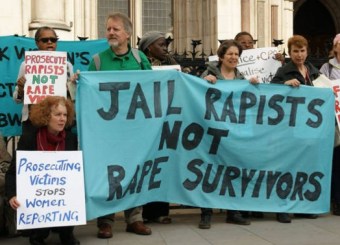
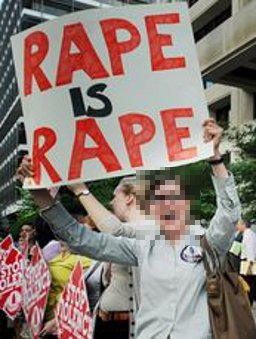
Picketers object to the prosecution of 109 British women in recent years for perverting the course of justice by falsely alleging rape. According to the protesters’ signs, all female accusers are “victims” and “rape survivors,” and the men they accuse are all “rapists” (ipso facto).
The story concerns outrage expressed by activist representatives of the charity Women Against Rape, or WAR, whose assertions require no elucidation; they’re clockwork.
Whether WAR’s outrage has merit is difficult to discern.
Obviously lost in the uproar, however, is what the (female) American law professor who’s quoted in the epigraph actually says, which is this: Falsely accusing someone of rape in the United States is merely a misdemeanor offense and one for which an accuser is rarely punished and may never be prosecuted at all.
This fact isn’t perceived as unfair by feminist activists—far from it. It’s touted, rather, as a reason why it’s a “human rights violation” for the United Kingdom to mete out sterner justice.
This writer, for one, would be more sympathetic to the denouncements of WAR if there were any headline-grabbing activist groups tabulating how many men are arrested and/or prosecuted each year for being falsely accused of rape.

In the fictional community of Stepford, all the women have been replaced by robots whose responses are programmed.
Even allowing that the 2 to 8% false allegation rate commonly cited by feminists were true (and it isn’t), the number of men falsely accused of rape is many times greater than the number of women prosecuted for false allegations, in the UK and everywhere else (for analysis of the rate of false allegations of rape, see Cathy Young’s 2014 Slate.com article, “Crying Rape: False rape accusations exist, and they are a serious problem,” and Emily Bazelon and Rachel Larimore’s 2009 piece, “How Often Do Women Falsely Cry Rape?” published in the same outlet).
Feminist outcry is reflexive, even arguably robotic, and invariably insensitive to male victimization. The argument that a majority of rapes goes unpunished in no way (logically, morally, or otherwise) excuses the unjust implication or punishment of even a single person, ever.
Besides being insensitive to male victimization, moreover, feminists evince no awareness that women, too, are victimized by their furor’s trickle-down effect. Feminists’ making an international case of the prosecution of 109 women works a very real influence on how rulings on charges “lesser” than rape are formed by the courts—charges made in restraining order, stalking, domestic violence, and related cases—and the defendants in these cases are far from exclusively men.
False allegations made against women in prosecutions involving or implying violence may only be a fraction of those made against men, but with those prosecutions’ numbering in the millions each year, that fraction is hardly inconsiderable and easily dwarfs a figure like 109. To posit, as activist groups like WAR tacitly do, that accusers’ allegations should be credited on faith means a lot of women (globally) will continue to be falsely implicated or punished based on judicial impulses that have been conditioned by feminist rhetoric. Much of the “social science” that’s used to “train” judges how to rule in prosecutions predicated on allegations of violence or the fear of violence is inspired by groups like WAR.
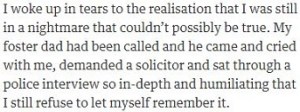 To illustrate how feminists’ gears turn (and why those gears need retooling), contemplate this letter printed in The Guardian recently that was composed by a 21-year-old man who was accused of rape as a boy: “A letter to…the girl who accused me of rape when I was 15.”
Now consider this steely response to it by Lucia Osborne-Crowley published almost simultaneously (buzz…whir…click) on WomensAgenda.com: “Why did the Guardian publish this letter about false rape accusations?”
Need any more really be said?
Copyright © 2014 RestrainingOrderAbuse.com

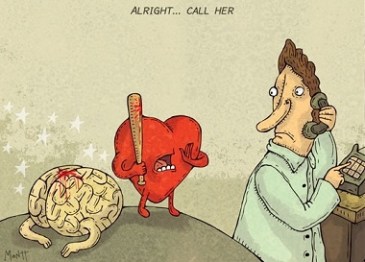 J, a single dad who lives in Texas with his two kids, submitted his story as a comment to the blog in September, prefacing it: “I am writing this to share [it] with the rest of my fellow male victims [who] fall in with the dreaded Crazy.”
 Because it was all complete bullsh*t.
 He gave me the number of an attorney friend who worked in Little Rock. Next thing I knew, I’m having to fax or email every record I kept that shows my whereabouts on that day: gas receipts, store receipts, etc. I had to get a list of movies that I watched from the video download company we use. Cell phone calls. Text messages. (By the way, they really do monitor those. They can pinpoint your exact location, but you have to send a written request.) All of this to prove I was not there. Once I gave that attorney everything, he told me he would go to court that day and ask for an extension of 60 days. And I would still have to show up in Arkansas. Sh*t!
 The day of the court hearing came. I drove out of state to be there. She actually showed in up in court that day. I suspect she didn’t expect I would show. The judge called out our docket. She sat on one side of the courtroom. My attorney and I sat on the other.
 Journalists who recognize the harm of facile or false allegations invariably focus on
  The implications of restraining orders, what’s more, are generic. There’s no specific charge associated with them. They’re catchalls that categorically imply everything sordid, violent, and creepy. They most urgently suggest stalking, violence, and sexual deviance.

 Some recent posts on this blog have touched on what might be called the five magic words, because their utterance may be all that’s required of a petitioner to obtain a restraining order. The five magic words are these: “I’m afraid for my life.”
 Gamesmanship in this arena is both bottom-up and top-down. Liars hustle judges…and judges hustle liars along.
 A presumption of people—including even
  People on the outside of the restraining order process imagine that the phrase false accusations refers to elaborately contrived frame-ups. Frame-ups certainly occur, but they’re mostly improvised. We’re talking about processes that are mere minutes in duration (that includes the follow-up hearings that purport to give defendants the chance to refute the allegations against them).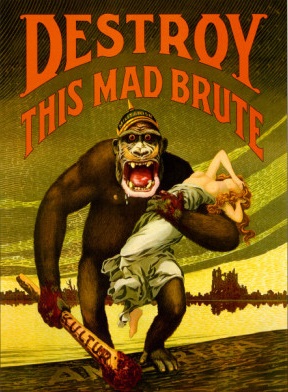
 People falsely alleged to be abusers on restraining order petitions, particularly men, are treated like brutes, sex offenders, and scum by officers of the court and its staff, besides by authorities and any number of others. Some report their own relatives remain suspicious—often based merely on finger-pointing that’s validated by some judge in a few-minute procedure (and that’s when relatives aren’t the ones making the false allegations).
 So…slanders and libels made by abuse of court process aren’t actionable, slanders and libels that completely sunder the lives of the wrongly accused, who can’t even get them expunged from their records to simply reset their fractured lives to zero.
 Buncombe County, North Carolina, where
  She says he’s “barked like a dog” at her, recruited “mentally challenged adults” to harass her while shopping, and mooned her friends. She says he’s cyberstalked her, too, besides hacking into her phone and computer.

 What people should find disturbing about these stories is how feminine false accusers think about lying, including lying about physical and sexual violence (or their threat). They think it’s no big deal—or they don’t think about it at all.
 Feminine and feminist psychology are due more scrutiny than they receive. I can’t count the number of times I’ve read even sympathetic reporters of false allegations say they recognize that the more urgent problem is (sexual) violence against women—a sentiment that, intentionally or not, motivates false allegations. False accusers aren’t just aided and abetted by this pronouncement of priority; they’re encouraged by it.
 “
“ A false restraining order litigant with a malicious yen may leave a courthouse shortly after entering it having gained sole entitlement to a residence, attendant properties, and children, possibly while displacing blame from him- or herself for misconduct, and having enjoyed the reward of an authority figure’s undivided attention won at the expense of his or her victim.
 The lawyers quoted by reporter, what’s more, refer to criminal cases in which sexual abuse is alleged and, consequently, in which the accused are afforded attorney representation.
 Faith in the conceit that restraining orders are minor impingements on defendants’ lives depends on accepting that being falsely, publically, and permanently labeled a stalker or batterer, for example, shouldn’t interfere with a person’s comfort, equanimity, or ability to realize his or her dreams. Such faith is founded, in other words, on the fantastical belief that wrongful vilification won’t exercise a detrimental influence on a person’s mental state, won’t affect his or her familial and social relationships, won’t negatively impact his or her employment and employability, etc.
 No argument here.
 to the procurement of restraining orders, which are presumed to be sought by those in need of protection.
 Such hearings are far more perfunctory than probative. Basically a judge is just looking for a few cue words to run with and may literally be satisfied by a plaintiff’s saying, “I’m afraid.” (Talk show host
 There was a
  The show is set in 1964, so we can pretend that we’re looking back at a distant, degenerate period in the past when heinous violations could occur right under everyone’s nose, and no one would lift a finger to intervene. The same political games masked as “conversion therapies” are indulged today, of course, only their abuses are subtler and directed at the psyche instead of being committed with canes, electrodes, tongs, and scalpels.
 Like the characters in American Horror Story: Asylum, many individuals who’ve visited this blog and I have told our tales repeatedly to figures in authority who’ve discounted or disregarded them, preferring instead to administer the mandated treatment.
 A recent respondent to this blog detailed his restraining order ordeal at the hands of a woman who he persuasively alleges is a
  TALKING BACK to restraining orders