A Response to Sandra Newman’s Claim That “False Rape Accusations Almost Never Have Serious Consequences”

“Critics argue that reports of rape should be treated with more caution, since men’s lives are so often ruined by women’s malicious lies.

“But my research—including academic studies, journalistic accounts, and cases recorded in the US National Registry of Exonerations—suggests that every part of this narrative is wrong.”

—Sandra Newman, Quartz (May 11, 2017)

The quoted article is titled, “What kind of person makes false rape accusations?” Its URL slug, in contrast, is “the-truth-about-false-rape-accusations.” Plain from article’s slant is that its author wasn’t motivated to discover what kind of monster makes false rape accusations but rather to vindicate her conviction that false rape accusations, and false accusations generally, aren’t significant.

Having grudgingly waded through slurries of feminist rhetoric over the past decade, I’m led to conclude that the failings of feminists’ reasoning owe less to a shortage of intellect than to a willful failure of imagination. Ms. Newman is a novelist, from whom we might have expected better, and I’m more than cynical enough to wonder whether her chilling position wasn’t motivated to improve sales of her books among frothy feminist bluestockings.

A person possessed of an egalitarian imagination who was tasked with the same brief Ms. Newman assigned herself would be moved to satisfy questions like these: What happens to someone who has been accused of rape, and how does it feel?

Such exercise of imagination used to characterize what we call journalism—never mind creative writing.

Rape is broadly defined as any sort of intimate physical violation involving “private parts.” Is it likely that a goodly number of people who are accused of rape are forced to submit to invasive physical “examinations” that in a different context would be called assault? The question is rhetorical. Merely being taken into custody may make such examinations compulsory.

Ms. Newman’s thesis is that “it’s exceedingly rare for a false rape allegation to end in prison time” so being falsely accused of rape “almost never ha[s] serious consequences.”

By the same logic, since victims of rape are never imprisoned, being raped never has serious consequences.

The chinks in her reasoning are saliently obscene.

Ms. Newman also conveniently ignores that being accused of rape (among other felony crimes) may begin with incarceration, months of it. The accused’s being granted bail and being able to pay it is hardly a given—though it may be among members of Ms. Newman’s social caste.

Notably, Ms. Newman, a Brit, doesn’t bother to address the question of effects of false accusation to anyone who has actually felt them but instead limits her “investigation” to “academic studies, journalistic accounts, and cases recorded in the US National Registry of Exonerations.”

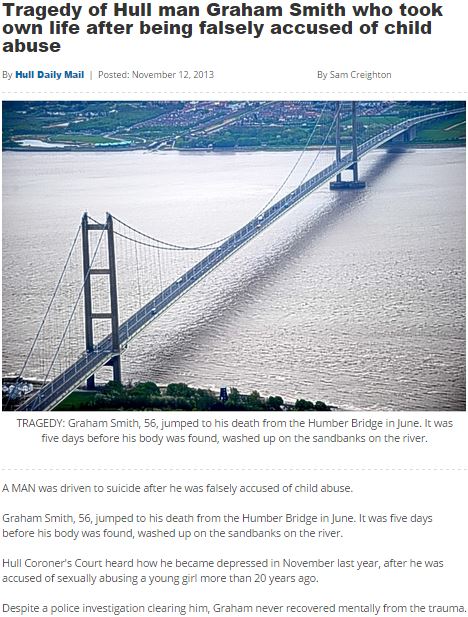
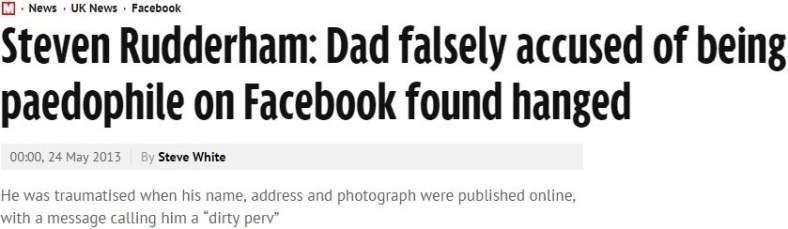
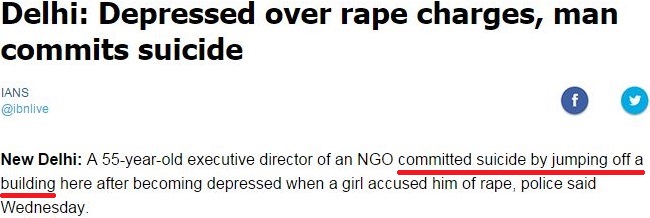
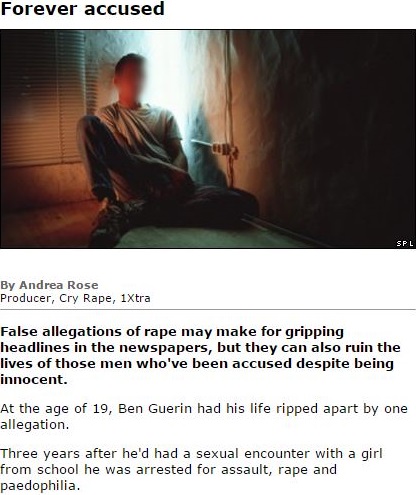
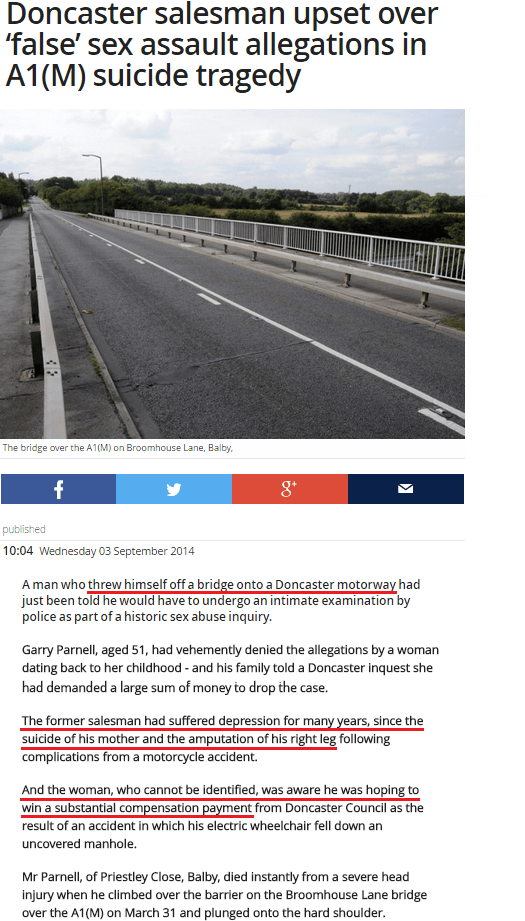
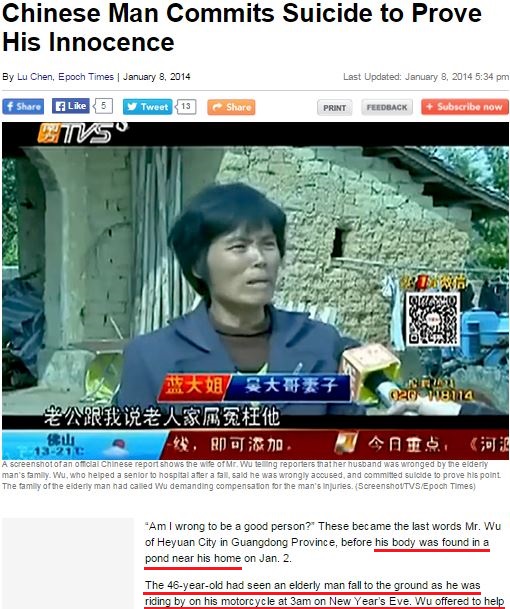
We’re to ignore, I guess, that she would hardly expect the effects of rape to be fully qualified by such sources. “Journalistic accounts” of false accusations of rape that this writer has digested have, besides, included such cases as these: a man falsely accused of rape, imprisoned, and then released only to learn his mother had committed suicide believing him to be a rapist; two women seducing a man and then accusing him of rape so their boyfriends didn’t learn what they’d got up to; women accusing men who spurned them or who disappointed expectations; a woman accusing a man of rape to have him murdered; men falsely accused of rape killing themselves. There is no dearth of “journalistic accounts” that contradict Ms. Newman’s assertion that being falsely accused is innocuous. See, for instance, Google.

Finally, Ms. Newman limits her contemplation to criminal cases. In this country, at least, home of the “National Registry of Exonerations,” rape accusations can also be brought in civil court, where they are adjudicated according to the very lowest standard of proof and can be credited by “default.” Faith in exonerations to provide a clear picture of the frequency of false accusation is faith in a golden calf. The conviction that only imprisonment is a “serious consequence” of being falsely accused, what’s more, is as execrable as the conviction that only rape victims who sustain permanent physical debility are worthy of sympathy.

Among a few others “types,” Ms. Newman fobs off instances of false accusation on the personality-disordered, whose prominent characterological trait is lack of empathy. Almost as defining is their resistance to self-criticism.

Copyright © 2017 RestrainingOrderAbuse.com

*This piece was originally titled: “Give Me Three Pieces of Information, and I Can Make Any Adult You Know a Rape Defendant for the Rest of His or Her Life: A Proposition Inspired by Feminist Writer Sandra Newman’s Claim that ‘False Rape Accusations Almost Never Have Serious Consequences.’” I decided, though, that articulating how I could do this might have motivated someone in earnest to apply the method—which is simple.
That They’re Made in Civil Court, Too: A Response to Megan McArdle’s “What We Don’t Know about False Claims of Rape”

“Could the number be between 3 and 8 percent? Absolutely. But it could be substantially higher than 8 percent; it could even be that 40 percent of rape accusations or more are false, though I’d bet against that. It’s possible that less than 3 percent of rape accusations are false, though again, I would offer good odds against that. The point is that we don’t know, and the groups that claim to know are wrong together.”

—Columnist Megan McArdle (June 4, 2015)

Megan McArdle is one of a handful of professional journalists (preeminent among them Cathy Young) who objectively negotiate the chasmal discrepancy between statistics that say false claims of rape are almost none and those that say they’re abundant.

In her Bloomberg View column “What We Don’t Know about False Claims of Rape,” Ms. McArdle surveys complications that foil attempts to arrive at a hard-and-fast figure. Issues like consent, culpability, what qualifies as rape and what doesn’t, and who gets to adjudicate and how—these muddy estimations that are already suspect, because purveyors and proponents of statistics are typically biased by one ideological or political perspective or another. They promote numbers that support their views; they opine.

This writer agrees with Ms. McArdle’s conclusions quoted above, and he finds especially agreeable her honest assessment of the ambiguities and her willingness to acknowledge them in the first place, because this willingness is rare.

False claims of rape made in civil court are not registered anywhere or by anyone.

I’m not a journalist; I’m an analyst. I don’t know what the truth is. I can criticize interpretations that betray flaws, but I don’t find anything in Ms. McArdle’s “findings” to fault. I do, though, detect a blind spot, and it’s a blind spot that’s universal.

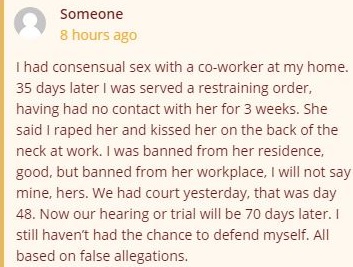
What no one appears to know about false claims of rape is that they can be made in civil court. There are no incidence rates for how often this occurs…and there can’t be. Civil rulings, e.g., in restraining order cases, are based on a “preponderance of the evidence” and not on the certainty of individual accusations. The dismissal of a restraining order petition that alleges rape is not recorded anywhere as a “false rape claim”—it’s just rejected—and a verdict in favor of a plaintiff who alleges rape signifies only that a judge was convinced that the heft of his or her claims, possibly numerous, more likely than not indicated a sound basis for the award of a restraining order—and it may not signify that. Orders are also granted if defendants simply default by not appearing to contest the accusations.

False rape claims in civil court may never be accompanied by criminal investigations nor ever conclusively adjudicated. They’re invisible. They are, however, made, and though they may be completely unsubstantiated, they exert a material influence on judicial rulings that have binding legal consequences, consequences that can be extreme.

My wife moved out of my Virginia home in June 2014, and then about a week later announced that she’d had a miscarriage. In August 2014, I got a visit from police detectives wanting to question me about a rape report she’d filed against me, but I declined to speak with them, and was never charged. Beginning in November 2014, she obtained three temporary restraining orders against me, and finally got a permanent restraining order imposed against me in Colorado in January 2015, based on a claim of domestic abuse, stalking, sexual assault, and physical assault. Not wanting to invest money and emotional energy in fighting it, and knowing it would be hard for me to successfully contest it, I didn’t show up to the hearing.

The man quoted above obtained a divorce from his wife, who he alleges had a history of mental illness, in April 2015. Two months later, he learned she had given birth to a daughter in February, who was “presumptively” his. His ex-wife had apparently lied about having a miscarriage.

The information that he was a father reached the man when he was told his ex-wife had killed herself following her commitment for “suicidal depression, and because someone had reported that she had been hearing voices telling her to hurt or kill the child.”

The man was also told there was a “dependency and neglect petition pending” against him for his abandonment of a child he hadn’t known existed.

In the petition, the county attorney notes, “Respondent […] and Father have a history of domestic violence that includes, but may not be limited to, the issuance of temporary restraining orders in cases […], and the issuance of a permanent restraining order in case […], which was entered by default on January 16, 2015, placing the welfare of the child at risk.” The Colorado Children’s Code says that the court shall consider a parent’s “History of violent behavior” in determining whether he’s an unfit parent.

The purported “history of domestic violence” was not established in court and was based solely on his late ex-wife’s restraining order allegations, which started five months after she had moved out, which were made in minutes in another state, which the man denies, and which he never traveled cross-country to attempt to controvert. He hadn’t known his (then) wife was pregnant with his child when her serial accusations to the court began and despaired of his chances of successfully challenging them. He had ignorantly opted to “move on.”

Now his daughter is in the custody of her maternal grandparents, and the likelihood of her father’s ever realizing a role in her life is scant.

This man’s case is highlighted because it was brought to my attention only last week and is still fresh in my mind. Instances of false claims of rape accompanying restraining order petitions, however—including claims against women—have been reported repeatedly here, in comments and in search terms that draw visitors to the blog.

Not even a tentative estimate could be formulated on how often false rape claims are asserted in civil court, but this source of false claims should at least be recognized as inclusive among the unnavigable uncertainties.

Copyright © 2015 RestrainingOrderAbuse.com

*An alternative means of falsely alleging rape in civil court is exemplified here. An extreme case of a fraudulent rape claim’s being alleged on a restraining order petition is here.

If It’s Okay to Tell the Falsely Accused How They Should Feel, Then It’s Cool to Tell Victims of Rape How They Should Feel, Right?

That’s a rhetorical question.

Plainly it’s not cool to tell victims of rape how they should feel, particularly if you’re not one yourself. I don’t say that because it’s un-PC to criticize rape victims; I say that because it’s wrong.

Yet goddamn if there’s no shortage of people who have no context to relate either to rape victims or victims of false accusations who presume to defend the former’s right to be basket cases and deny the latter any right to complain.

The previous post examined the vehement rhetoric of one of these self-appointed arbiters of anguish (whose argument seems to run: “I’ll tell you how you’re entitled to feel”).

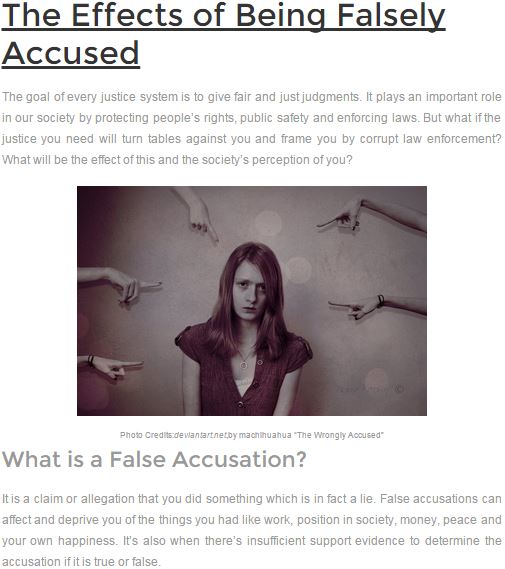
Pause here for a point of clarification: False accusations can be of a great many acts besides sexual assault, and the phrase false accusation in this post refers to any false accusation.

There’s nothing, of course, to reproach about someone’s sympathizing with victims of sexual assault, as the writer scrutinized in the last post does; it’s compassionate. Presuming to “relate” to the pain of women who’ve been raped, however, is presuming a lot.

Presuming to deny others’ pain, furthermore, because you believe you can quantify it or “imagine” what it “should” be like—that’s stepping way over the line.

Look at enough feminist rhetoric, though, and something becomes starkly clear: The basic contention is that “our” pain is worse than yours. (One gets the distinct impression that all feminist writers consider themselves rape victims by association or genital identification.)

I don’t discount rape victims’ torment, but I do believe this pain “rating scale” is due to be dispassionately tested.

The approach of those who presume to criticize complainants of false accusation is to reduce their trials to something like this: generally speaking, (1) you’re accused, and (2) maybe you lose some friends and your job. Also, (3) if you’re exonerated, you don’t have anything to bitch about, so shut up and go away.

Now here’s what you get when you apply to rape victims the same obscenely reductive analysis: generally speaking, (1) your body is penetrated without your consent or against your express objection, and (2) you’re possibly, if not probably, left with some tissue damage.

Both of these sketchy assessments are about equivalent in their insensitivity (and according to them, the privations of the falsely accused may well be more enduring than the injuries of the victim of rape).

So why is the former assessment popularly conceived to be “fair” while the latter would be denounced as “cruel”?

Is it because false accusation inflicts a psychic trauma and that rape has a physical component? I’ve been run down in the road by a 4 x 4 while on foot. Bones were splintered and crushed. I spent five days in an intensive care ward, and my skeleton and joints will never be the same. I almost lost an eye, and the hemorrhaging came with its own host of consequences. Entire swaths of my body were without sensation. Some months later, I had a cerebral episode and was aphasic for a day (I couldn’t remember, for example, the word October or repeat “no ifs, ands, or buts”). I’d wager the physical trauma I sustained exceeds that of an overwhelming majority of rape victims. Does that make me “more worthy” of sympathy?

Apples and oranges, right? Why? Because the affront to my body was impersonal.

It makes a difference, then, when our dignity and humanity are violated, and we’re treated with intimate disregard.

I don’t know what it is to be raped. I do know, though, what complainants of rape report, and reported sources of pain are shame, outrage, fear, betrayal, a lingering and possibly insurmountable distrust, and ambivalence about reporting the violation based on the expectation of suspicion and reproach from authorities (as well as others) and having to relive the horror, possibly without hope of realizing any form of justice.

gavels-gavelsI do know what it is to be falsely accused, and the sources of pain are the same, only the suspicion and reproach aren’t an “expectation.” When you’re the target of damning fingers, suspicion and reproach inevitably ensue; they’re a given.
There’s a misconception about accusation that isn’t really a misconception at all; it’s an empathic dereliction. Facile commentators say people are “accused” as if that’s all there is to it. (I’ve been falsely accused by the same person in multiple court procedures spanning seven years, and I’ve lived with the accusations daily for nine. A man I know has been summoned to court dozens of times; a woman I recently heard from, over 100 times—in both cases, by a single vexatious litigant.)

To be accused is to have the state knocking on your door. It’s to be sent menacing notices in the mail or to have them tacked to your residence (endure this long enough, and you stop looking in the mailbox or even answering the phone). It’s to be hauled into a police precinct—if not arrested and jailed—and to be subjected to invasive questioning, if not physically invasive, involuntary examinations. It’s to be treated with hostility and contempt, like a thing of disgust. It’s to become the fodder of gossip and the target of threats. Judgment is a palpable thing, and it’s far worse than a body blow (or even being steamrolled by an onrushing vehicle).

The outrage, moreover, of being blamed falsely isn’t something that can be “intuited.” Here’s how one woman I’ve corresponded with puts it, a woman who was accused by a man who had abused her both physically and otherwise (yes, sometimes the accuser simply reverses roles with his or her victim—and, yes, if you missed it in the parenthetical remark above, sometimes the falsely accused isn’t a man):

There is no “coming out the other side” of a public, on-the-legal-record character assassination. It gnaws at me on a near-daily basis like one of those worms that lives inside those Mexican jumping beans for sale to tourists on the counters of countless cheesy gift shops in Tijuana.

I have sort of moved on; I mean, what else can one do, particularly when one has young children? But the horror, outrage, shame, and, yes, fury engendered by being wrongly accused by a perpetrator, and then having that perpetrator be believed, chafes at me constantly. Some things born of irritation and pressure are ones of beauty, like a pearl, or a diamond, but not this. This is a stoma on one’s soul—it never heals, it’s always chapped and raw, and if you’re not careful, it can leak and soil everything around it.

Would a feminist sympathize with this person? Probably…grudgingly and without making a to-do about it.

Why? If the answer is because she’s a woman, then we’re getting somewhere. The blindness to the damages of legal abuse has a great deal to do with sex. Most of the vehement objectors to legal violations are men—they being the majority of the victims—and they’ve been demonized…because they’re men. This has led to the dim formulation that “falsely accused” equals “male” equals f* ’em.
Absurd, besides, is that arguments like those scrutinized in the last post on the one hand posit that men shouldn’t feel their own pain but on the other hand should show sympathy to women’s. Men are oxymoronically supposed to be stoic and insensitive, er, “empaths.”

Yeah, but not really. Really the conclusion is their pain doesn’t matter. It’s “insignificant” because (tum-tum-tum-TUMMM)…

To whom? Society? It certainly isn’t a bigger problem to its falsely accused constituents. This is a democracy, not an ant colony, and pain isn’t a competition or a zero-sum game. No one’s pain is more “valid” or “virtuous” than the next’s. What the sentiment in headlines like this really means is that the lives of the falsely accused are (politically) insignificant—and the sentiment is a sick one.

Abuse of people is abuse of people, and life-wrecking torment is life-wrecking torment.

Copyright © 2015 RestrainingOrderAbuse.com

*Though its psychic fallout may be indelible, rape ends. False accusation and legal abuse may be continually renewed. People report being in legal contests for years, even many, many years. They report running through tens or hundreds of thousands of dollars. They report being left penniless and in cases homeless. They report living “like a hamster.” They report being in therapy, on meds, and sometimes being unable to work even if their careers haven’t been ruined, and often they have been. They report losing their children, and they report losing the right to work with or be around children. Accusation isn’t an “inconvenience.”

Misperception of the Damages of False Accusation Isn’t a Girls-Only Fault

“What the fuck is wrong with these people? I keep seeing the same argument again and again and again and again—the idea that being accused of rape is not simply as bad as being raped but often worse. I honestly can’t believe how people can be so fucking dense so as to think this is true.

“Note that I am not saying that being falsely accused of rape is not bad and can utterly damage your life, but it just does not even compare to the experience of being raped. […]

“A person falsely accused of rape (and convicted, of course) may, at the worst case scenario, lose friends and family and have their career ruined, but given time they can find new friends who will believe them and repair their social circle, even while hindered by the state. Many times they even clear their names eventually (otherwise we wouldn’t have such a nice influx of False Rape Accusation news stories for the Men’s Right crowd to cheer around). But apparently for some, even the short-term damage of a false rape accusation that a male was eventually cleared from, compares to being actually raped.”

A Division by Zer0

No, the blog A Division by Zer0 isn’t authored by Zerlina Maxwell, the attorney and social critic who gained notoriety a few months ago for voicing identical sentiments in The Washington Post (and being widely panned for it).

The post the epigraph is drawn from was authored by a man. He doesn’t identify himself…and I don’t blame him.

The quoted post is emphatically titled, “For fuck’s sake, No! Being falsely accused of rape is not not NOT as bad as being actually raped!”

People’s gender and political allegiances don’t interest me. People are people, and to each his own. Ill-reasoning, however, offends me regardless of the contours of the body that emits it, especially when it’s emitted loudly. Ill-reasoning is particularly offensive when it mocks human suffering, as this man’s perspectives do.

His sympathy for victims of sexual violation would be commendable if only it weren’t countervailed by callousness.

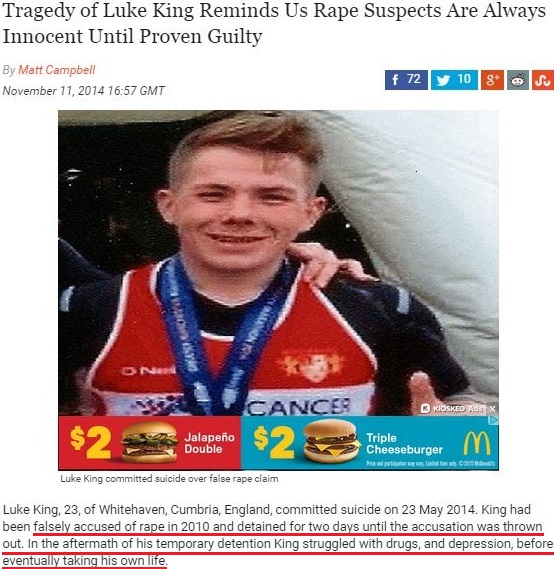
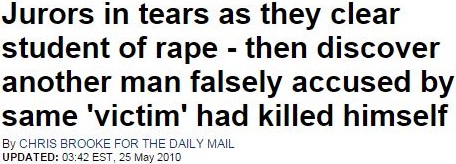
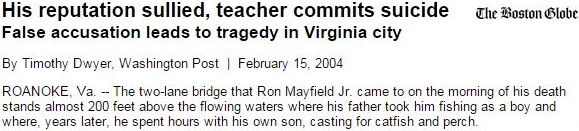
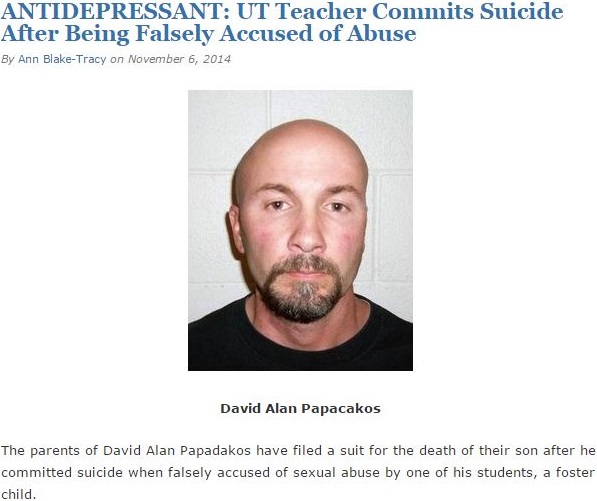
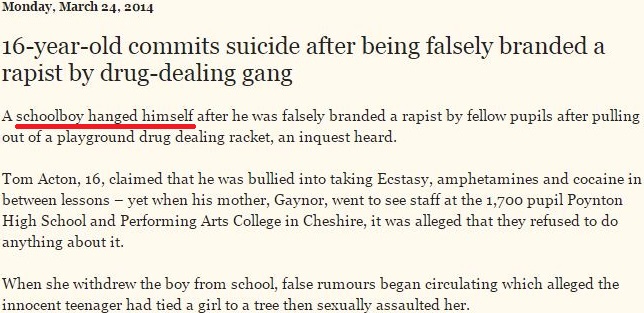
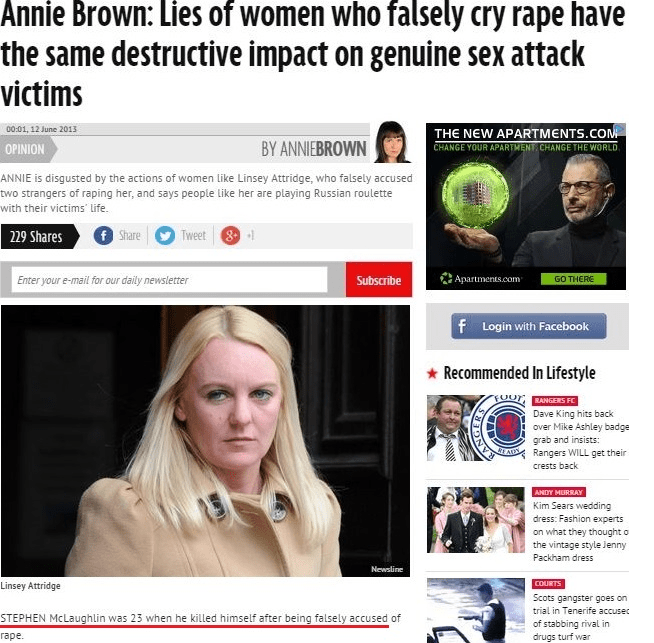
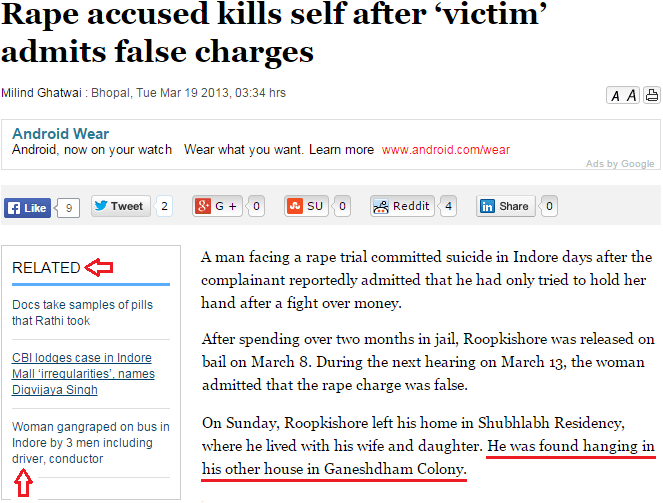
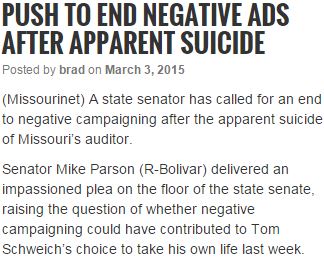
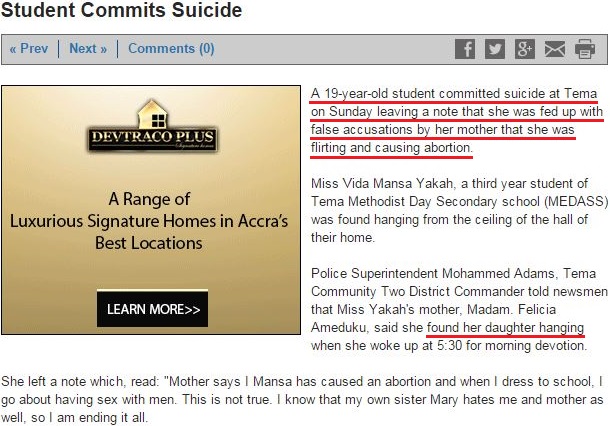
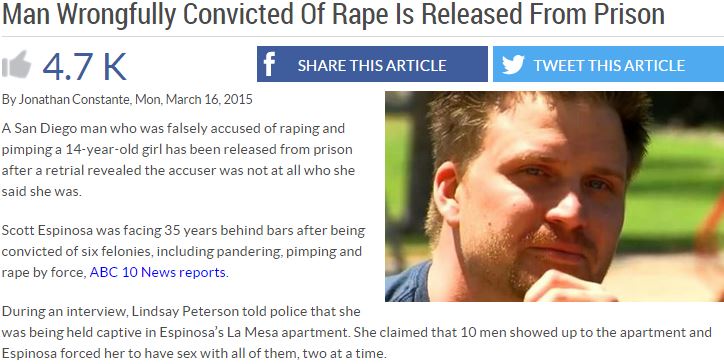
A recent post on the blog you’re reading highlighted the case of a young British man who was detained by authorities for two days, based on a false accusation of rape. Then the charges were thrown out, that is, they were almost immediately dismissed. He nevertheless killed himself after struggling with depression pursuant to the violation. He was 23. Another featured case concerned an adolescent who was falsely accused of rape by some hoodlums at school. He hanged himself. He was 16. A third was about a man who was falsely convicted for rape (and five other felonies) and served a year and a half of a 35-year sentence. He was exonerated when it was belatedly discovered that his “14-year-old” accuser was an adult in her 20s and that her identity wasn’t all she’d lied about. While the man was in prison, his mother committed suicide. She died believing her son was a pimp and a rapist.

Introducing cases of false accusation that have consequences of this magnitude is illustrative, but it shouldn’t be necessary. The author of A Division by Zer0, like most feminist writers, betrays he understands the aftermath of trauma very well.

Here’s the difference though, a rape victim most likely will never escape the damage of the event. Once the deed has been done, the scar will stay forever, no matter if the perpetrator is punished. You cannot undo the [violation]. You cannot restore the lost trust. You cannot wipe the memory triggers.

In a moment of dramatic irony, the writer acknowledges the root of his own indifference: “Much of it, I believe, comes from lack of empathy.”

The man behind A Division by Zer0 is a member of the “Men’s Rights crowd”—or more aptly the People’s Rights crowd. He just doesn’t know it.

Copyright © 2015 RestrainingOrderAbuse.com

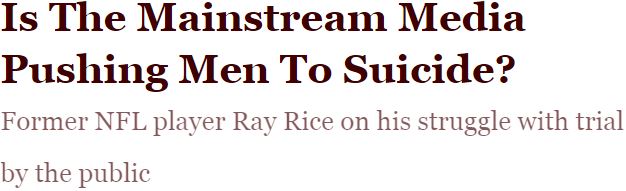
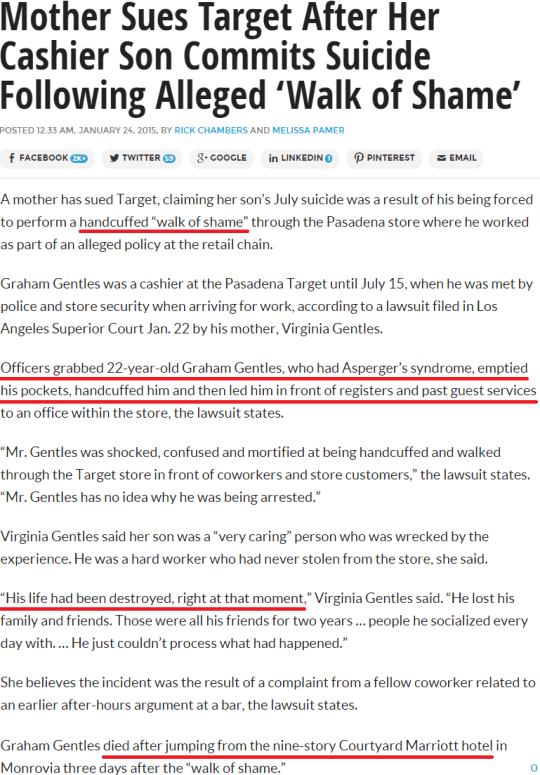
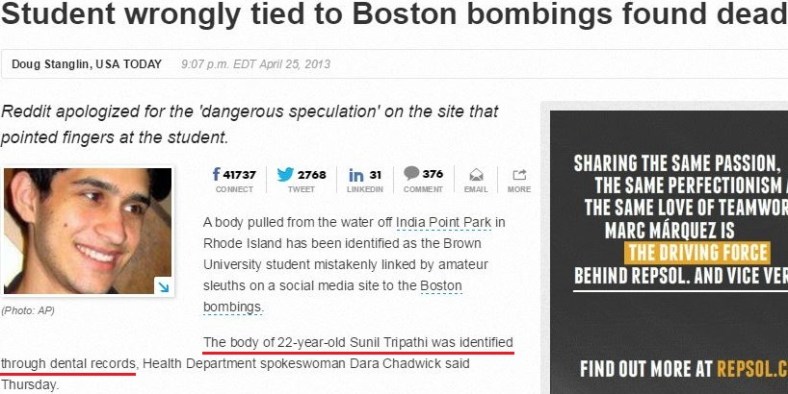
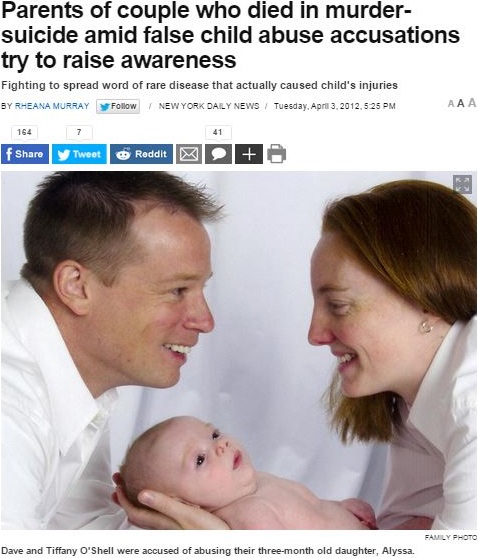
False Accusations and Suicide: Some Headlines about the Effects of Finger-Pointing and Legal Abuse (Culled for the Empathically Challenged)

Since the publication of this post, the one quoted above has been deleted.

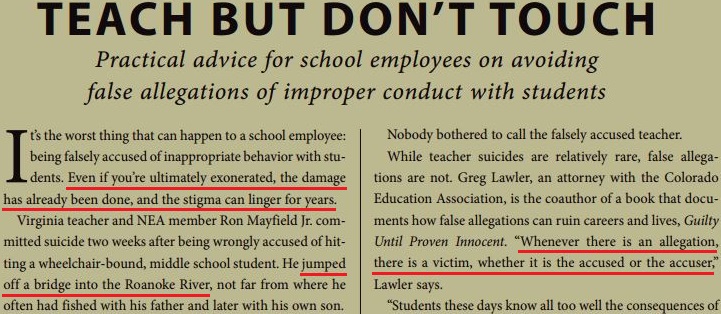
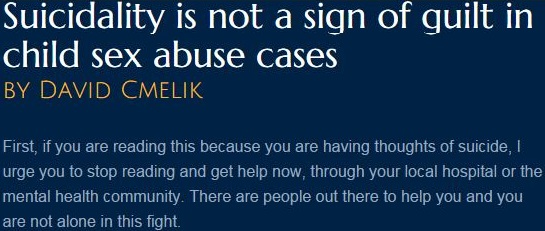
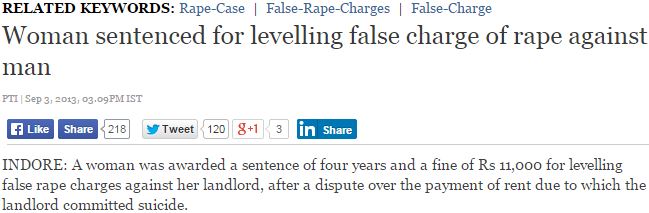
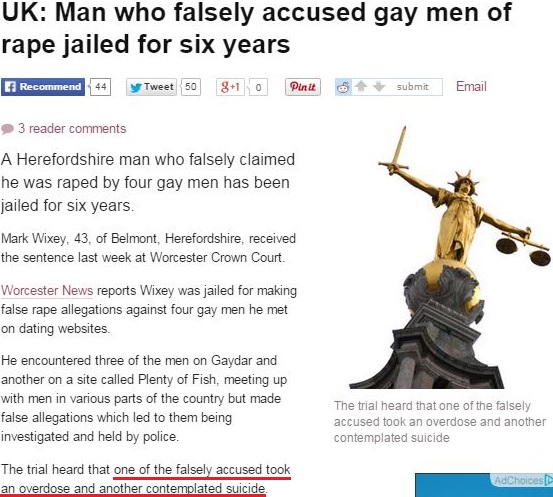
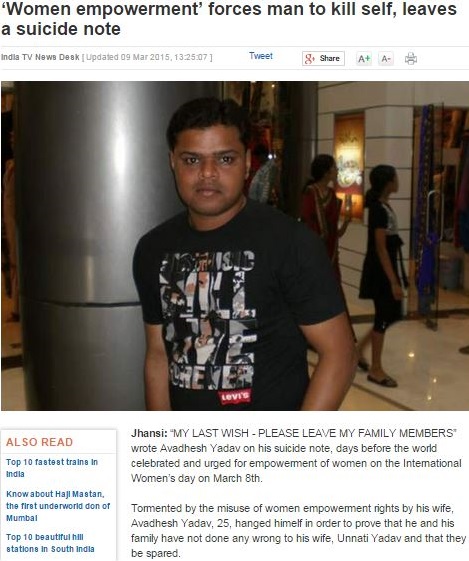
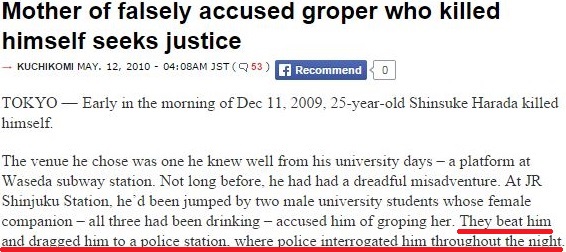
One of the stories highlighted below concerns a young man who was falsely labeled a rapist by some bullies at school. He hanged himself. He was 16. Another concerns a man who spent a year and a half in prison based on a false accusation of sexual assault (among other false accusations). While the man was behind bars, his mother killed herself, believing her son was a pimp and a rapist.

A word to the wise: Only ask a rhetorical question if you know the answer…and it favors your position.

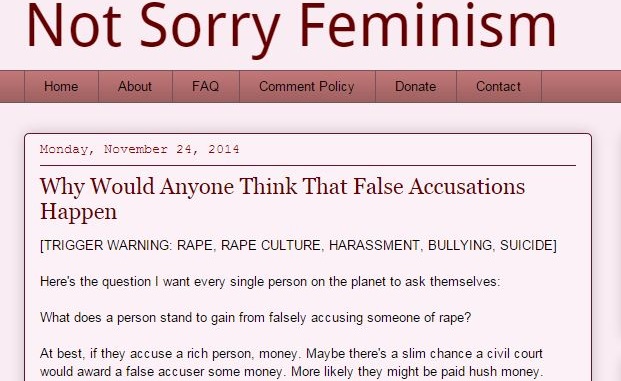
The question posed above by the zealous, young author of Not Sorry Feminism isn’t, of course, a question at all; it’s an indictment. She means how dare anyone think false accusations happen. What problematizes the writer’s rhetorical-question-cum-admonition is that it has a very obvious answer: The reason people think false accusations “happen” (so to speak) is that they do.

(It might alternatively be asserted that no one does believe false accusations “happen,” the same way no one believes rapes “happen.” Both are acts, and both have agents. If rape happens isn’t a construction a feminist could get behind, false accusations happen shouldn’t be, either. You’re a proponent of accountability, or you’re not.)

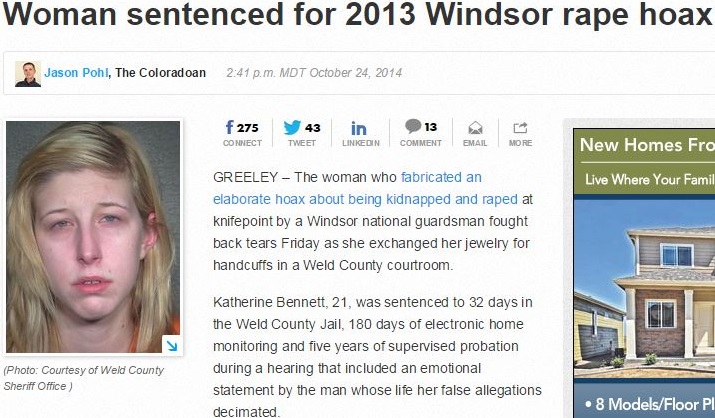
Worse than her question’s being problematic, because answerable, is that its answer isn’t one the writer wants to hear. Motives for false accusations, including of rape, are greed, malice, bullying, vengeance, jealousy, possessiveness, attention-seeking, mental illness, and cover-up, to name a few. They’re ugly, often petty, always destructive…and they can kill.

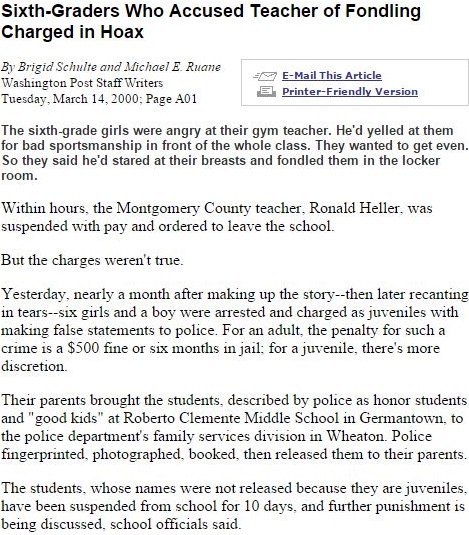
This post surveys examples of false allegations or deadly allegations or false and deadly allegations drawn from news stories. Here’s one such:

Unlike most of the rest, the first story glossed in this hastily cobbled digital scrapbook doesn’t include a suicide or references to suicide. It’s nevertheless a good starting point, because it’s old news.

The article’s from 15 years ago. Fifteen. Significantly, though, no half-hearted sleuth would find it a challenge today to turn up commentaries on the Internet, mostly from feminist writers like the one who introduces this post, that either (1) deny such a thing ever happens or (2) deny it’s a big deal when it does happen—and deny it’s a sign that a culture of false accusation exists and has for some time. (A story so uncannily similar as to be almost identical can be found here. It appeared in The Huffington Post less than 24 months ago.)

Consider: Where would six elementary school girls and a boy get the idea of framing their gym teacher as a molester, and where would they get the impression this conduct was okay (or “cool”) or that they’d get away with it and not face dire consequences? Should we believe the notion had no cultural influences and was purely a product of these honors students’ collective wicked imagination?

For accusing their teacher of groping them, the kids were suspended for 10 days. It’s likely the most traumatic part of their punishment was being detained by police and “fingerprinted, photographed, [and] booked.” Keep this thought in mind.

Keep this quotation in mind, too: “‘When they made the charge, that’s about 80 percent of the damage to your reputation right there,’ [attorney Paul F.] Kemp said. ‘Because even if you’re found innocent, people will assume you got off on a technicality. Or that there’s something there when there’s not.’”

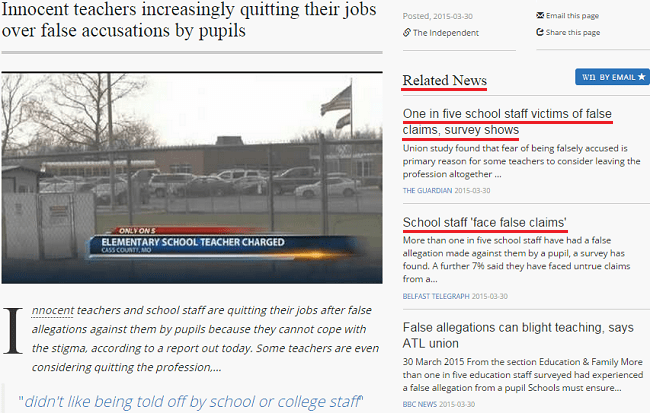
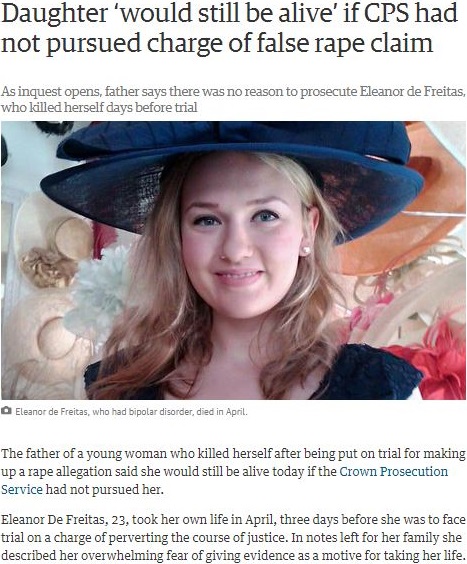
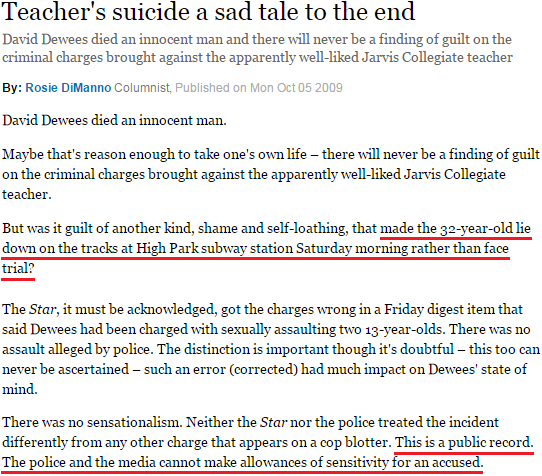
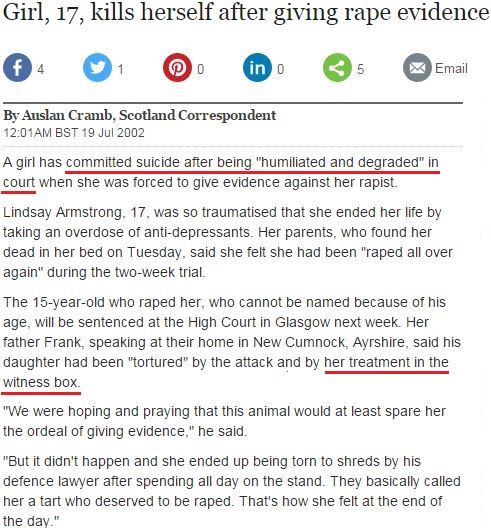
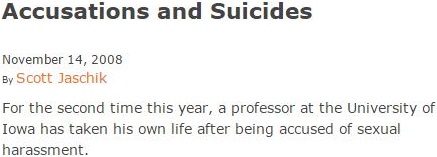
Editorial intrusions end here; the remainder of this post is a series of Internet clippings (linked to the “complete stories”) from which readers may draw their own conclusions about the motives and effects of accusation, bullying, and legal abuse. The author of this post would only point out before absenting himself that an accusation that may induce someone to kill him- or herself need not be of rape and that one of the suicides chronicled below is of a woman who faced being tried for falsely alleging she was sexually assaulted (“In notes left for her family, she described her overwhelming fear of giving evidence…”).

The common denominator is accusation and public scrutiny and judgment, not being accused of a particular act, per se. Zerlina Maxwell and her ilk are categorically wrong.

fale_accusations_destroy

nancy_grace_suit

dad_falsely_accused

murder_suicide

jurors_in_tears_full

reputation_sullied_full

suicidality

forever_accused

Sheffield_hairdresser

Chinese_man_commits_suicide

Copyright © 2015 RestrainingOrderAbuse.com