What Massachusetts Law Firm Dane Shulman Associates Says about Restraining Order Abuse and Divorce

Below is Massachusetts law firm Dane Shulman Associates writing about the game of false accusation. Lawyers know this happens. They know it very well.

Various feminist advocates doggedly assert that restraining order abuse, particularly to gain leverage in family court, is insignificant—or worse, that claims of it are merely men’s rights propaganda—and such assertions are made even by professors of law. Practitioners of law (the lawyers in the trenches, not the ivory tower) report otherwise.

Restraining Order Abuse in Divorce Cases” (emphases added):

Unfortunately, some people are abusing Massachusetts’ restraining order laws and using them as a divorce tactic. An individual involved in divorce proceedings may file a temporary restraining order against [his or her] spouse, alleging abuse of him or [her] or of the couple’s children. This would prevent the alleged abuser from having contact with his or her children during the 10-day temporary order, and if the allegations stick, the restraining order would last up to a year after the accusations were made. Often, such allegations are false, and only a way to put a wrench in the divorce proceedings and for the accusing spouse to gain custody of the children involved.

To prevent the restraining order from being extended, it is imperative that the alleged abuser present evidence [in] the second hearing that the allegations made against him or her are false. This is the first and only time an alleged abuser can present his or her case. If he or she fails to appear, chances are that the restraining order will be extended, and the accusing spouse will gain custody of the children.

A restraining order can have disastrous effects on the alleged abuser. The order is put on his or her criminal record, and any violation of the order results in criminal charges. The alleged abuser is also listed in the statewide Domestic Violence Registry, a record that never goes away. All of these actions greatly impact an alleged abuser’s ability to secure new employment, especially jobs for the government or jobs that involve working with children.

Massachusetts’ courts issue restraining orders to protect victims, not so the orders can be used as frivolous tactics to gain the upper hand in a divorce or a child custody matter. Restraining orders have serious consequences for the alleged abuser, and also for the relationship between the alleged abuser and his or her children, since the order could put strain on the parent-child relationship. A restraining order is something no one should consider obtaining without a serious, truthful cause.

Copyright © 2018 RestrainingOrderAbuse.com

*One of the most outspoken critics of restraining orders, attorney Gregory Hession, also practices in Massachusetts.

WTF Is Wrong with Restraining Orders and the People Who Administer Them?

There are a lot of things about restraining order laws and policies that elicit (and deserve) this reaction: “What the f—?

Defendants’ due process rights are suspended; orders are issued without defendants’ even knowing it, let alone being permitted to respond before possibly being forcibly evicted from their homes; testimony from accusers is accepted at face value (and may even be given under an assumed name); citizens may be accused by strangers who live in different states from them; judges have been conditioned to be suspect of the accused and trusting of accusers; the evidentiary standard applied to allegations that are typically of criminal acts is the lowest civil standard; the fundamental right to cross-examine accusers and other witnesses is often short-circuited and may be outright denied; false accusations aren’t sanctioned (or ever called “false”) and the falsely accused can’t sue for perjury; hearings to finalize orders may begin and end in mere minutes; viable grounds for appeal to a higher court are precious few, and false accusation isn’t among them; even if restraining orders are dismissed, they’re preserved in the public record and cannot be expunged…. I could go on.

A different inspiration for “WTF” is indiscrimination by officers of the court.

There is room for the inclusion of basic intuition and eyeball evidence in judicial decisions. Yet I couldn’t tell you how many times a woman has complained on this site of being falsely accused of abuse by a man who was twice her size (and who was violent to her). Sure, there are men who are harassed and violently abused by women. There absolutely are. But often the same men who are reluctant to defend themselves are reluctant to take their complaints to the court, because that, too, would be “ungentlemanly” or “unchivalrous” (besides humiliating). When a large, confident man accuses a woman half his size of vague, wishy-washy, or sketchy abuses, and especially when ulterior motives like custody of the kids and/or possession of a shared residence lurk in the background, a degree of suspicion is warranted.

monstrousSimilarly, if a woman accusing a man of stalking looks like someone whose best opportunity for attention is accusing a man of stalking, a little ding! should sound in the minds of the people vetting the claim. There are women who are “to die for” (hubba-hubba), and there are women who are “to croak for” (ribbet). How about some discernment?

It may be politically incorrect to judge according to surfaces—hell, it may be unethical—but the whole process is guided by superficialities like, for example, sex: The number of orders issued against men is grossly disproportionate to the number issued against women. So what does ethics have to do with anything? Testimony by the accused is routinely rejected on no more evident basis than that it’s testimony from people who’ve been prejudged to be “abusers” (whose accusers, incidentally, are automatically called “victims”). So the “ethical scruples” argument is DOA.

I’ve heard from a vegetarian single mom, disabled women (here is post based on a petition respondent’s report), and men who’ve been violently abused and shamed by their wives only to be falsely accused of violence. I’ve heard from a little league umpire who was just doing his job. The number of accounts I’ve heard from lucid, articulate, educated men who’ve been casually accused of abuse, including violence to children, is obscene. Here is one such by a man who was falsely accused of burning and kidnapping his son.

Some respondents to this blog have been women in their seventh and eighth decades of life who were accused by “fearful” complainants who didn’t share a household with them and could outrun them on one leg. One says she’s consequently suffered PTSD and has been afraid to leave her house. The only just accusations against women this age I’ve heard about have come after the women accused first—and falsely and repeatedly. One female respondent in her 60s, living alone—the model of feminist self-sufficiency—was driven from her home by persistent accusations from a cranky (female) neighbor to everyone from the police, the court, and PETA. I haven’t heard from her since.

A retired man I communicate with regularly is in his 70s and has a crippled spine and three toy poodles. No slight to his virility is intended but…three toy poodles. He was accused relentlessly by his (yep, cranky female) neighbor (who’s hardly among the hubba-hubba demographic) of stalking, cyber-stalking, harassment, and various “threats” (like inciting invisible hound dogs to bay at her) until years later he finally inspired a judge to chew her a new one. By that time, he’d been jailed and had a cop point her sidearm at him through the front door of his house. His mugshot is on the Internet, and public records nominating him a menace number in the dozens. He’ll have to live with the onus of this sh— for the rest of his life (which will probably be shorter than it might otherwise have been).

W-T-F.

Copyright © 2016 RestrainingOrderAbuse.com

*The writer of this post is a lifelong vegetarian who had been a practicing kids’ poet when he was first accused 10 years ago by a woman he encountered around his house with a band of her girlfriends. I’ve been in and out of court several times (and for half a year at a time…each time) over the intervening period. Today I face criminal allegations brought by one of the girlfriends—who also petitioned an ex parte court injunction against me in December. Because she could. I haven’t communicated with her in years, but she told police I’ve “stalked” her since 2005. I’m right now learning how to make audio files of voicemails she left me after writing to me in 2012, inviting me to join her for coffee, hugging me, and telling me how sorry she was about the earlier rounds of lies to the court.

What False Accusation and Rape Have in Common

Rape is a crime that has become a totem for many. Its invocation impoverishes all other violations of significance and accordingly authorizes violations that would not otherwise be tolerated, like lying about abuse to authorities and the courts. That rape occurs and that it’s an ineffably vicious act aren’t questions but facts. They are urgent facts, but their denial of other urgent facts is wrong. Those who zealously defend the criminal primacy of violence against women, to the exclusion of all other considerations, eagerly discover callousness in any who question the consequences of unchecked violence rhetoric, and the selfsame “advocates of sensitivity” dictate how victims of false accusation are “allowed” to feel.

wrong_fish

These fish, caught in nets intended to trap shrimp, are called “bycatch.” For every shrimp that’s caught, there are as many as 20 casualties. The unintended victims are not released; they’re left to suffocate and rot (in the interest of economy).

There’s a reflex that’s triggered in a lot of people’s minds when you juxtapose the word rape with the phrase false accusation. The reason is basic.

Violence rhetoric has spawned laws that are like fishing nets: They snare anything that blunders into them, whether it’s what they were meant to catch or not. The intended and unintended targets of those laws are clubbed and gutted with the same zealous vigor and dispassion, and this conditions people who are railroaded through the system and stripped of everything on false, skewed, or exaggerated grounds to hate.

These people are predominately men, and they know they have decades of rampant violence rhetoric to thank for their loss of home, family, livelihood, and dignity. What’s more, civil complaints of legal abuses garner no attention except ridicule—and that, typically, from feminist quarters, which are also the source of the violence rhetoric that has engendered restraining order, domestic violence, family court, and child protection laws and policies that are billowy, careless, hyper-reactive, and easily exploited by the unscrupulous (and to dire effect).

This spurs aggressive counter-rhetoric, which is conveniently labeledmisogyny” and “rape denial,” particularly by the liberally biased, who accordingly react hysterically if rape and false accusation are compared. If you’re among those who decry “misogyny” and “rape denial,” look up the word etiology.

I’m not a misogynist, a rape-denier, or a liberal; I’m an analyst with no doctrinal loyalties. Rape and false accusation are not dissimilar, and I’ll tell you why.

  1. Most victims of false accusation, like most rape victims, are known to their attackers, often intimately; so the act of false accusation, like the act of rape, is a particularly treacherous and personal assault.
  2. Victims of false accusation, like victims of rape, are objectified; they’re denied their personhood and typecast according to a set of representations.
  3. The false accuser, like the rapist, is guided by the will to dominate and subjugate; his or her motive is control (as is the court’s).
  4. The falsely accused, like the rape victim, is denied his or her personal agency: S/he’s held down and forced to tolerate what’s inflicted upon him or her under threat of receiving worse.
  5. The falsely accused, like the rape victim, consequently suffers distrust, insecurity, and the mental trauma (PTSD) that comes of having it confirmed that s/he has no control over his or her circumstances.
  6. Like rapists, false accusers violate people because they can.
  7. Finally, like rape victims, the falsely accused enjoy no expectation of justice.

How false accusation and rape differ is that the false accuser uses a proxy terrorist (the awesome power of the state), his or her crime is public (with all the humiliation that implies), its toll may be extravagant (the victim may be left with nothing), and besides enjoying no expectation of justice, the falsely accused enjoys no expectation of recognition or sympathy, either (and may be harried relentlessly and then expunged).

Copyright © 2015 RestrainingOrderAbuse.com

*Yes, false accusation is bloodless (discounting suicides and the rare murder), but so, too, can what we call “rape” be bloodless. If the significant distinction between rape and false accusation is that victims of the former are predominately female and victims of the latter predominately male, then we’re overdue for a reevaluation of what we call “equality” and “equity,” both of which are feminist watchwords.

Court-Abetted Trespassing, Burglary, Larceny, and Embezzlement:  A Terminally Ill Man’s Story of Restraining Order Abuse

“I know the purpose of the site is to decry the injustice of being falsely accused. Just have some sense of proportion, please. It’s terrible to be falsely accused. It can have many horrible consequences. It’s still light years away from being raped.”

—Comment submitted Friday

I believe the man who gives the account that follows would agree with the commenter quoted above. The blog’s author, however, rejects the commenter’s absolutist stance, because the categorical privilege granted to female claimants of violence is what enables wanton violations like the one detailed below, a violation that is denied its due by a dismissive word like “terrible.” The man whose story ensues is living what may be his final days in penury, alone in an empty house. The responses he’s received from the court, from the police, and from attorneys have been conditioned by the conviction expressed above, namely, that psychological violation and vicious privation are “light years away” from physical violation.

The man has, in short, been stripped of everything based on a false allegation of violence, and he’s been told, “That’s tough.” Because of the prejudicial nature of the court order that was fraudulently obtained against him, his bank has refused his request for reimbursement of his savings. Although he was fully exonerated, he has no credibility and no recourse except to quietly die.

William Batson, who says he has been informed by his doctors that he may have only months to live, was barred from his home and then robbed of all of his money and personal property consequent to the issuance of an ex parte restraining order against him petitioned by a person he had never met who represented him to be a batterer.

All the court required to legally authorize the theft of all he owned was a fake narrative of violence.

William’s story (edited for readability):

The difference between other crimes that people are falsely accused of and false DV [domestic violence] accusations is this: All of your rights—to be heard, to face your accuser, and others—are completely circumvented, and the mob that is Rome will get its loaf of bread and its quart of blood whether it’s right or wrong.

I never even met the person who accused me. My DV charge had a special attachment: ex parte election order with all property and financials given to the accuser instantly with nothing more than an accusation.

By the time I made bond, I was not allowed in my own home. I finally convinced the magistrate with witnesses that I lived alone, etc., and upon entry into my home 15 days later all the contents were gone, all bank accounts were drained, and $13,800-plus in forged checks is still owed.

I got an immediate dismissal with prejudice from the court and a too-bad and angry attitude from law enforcement. They helped this person rob me. I can’t sue the police, and no lawyer will even get near it. Before, I had a 814 credit score, $49,000-plus in possessions, $25,000-plus in savings and checking, and they would not even write a letter to the bank so I could get the money returned.

[…]

I will never recover financially or physically. I had cancer that was in a nine-year remission. The last time I bothered to listen, I was told I was stage four and might make it to Christmas. I’m not bitter, and I wish no ill upon any. There was a reason our country was founded and its constitution was written the way they were. This is merely one example of why. There will always be someone who changes something for a stated good cause merely to devour others with its use.

Amen, good luck, and I wish you all well.

Copyright © 2015 RestrainingOrderAbuse.com

More on False Accusation Culture: A Memoir That Exemplifies how False Accusations Are Motivated by “Mass Panic”

Meredith Maran, in writing about falsely accusing her father of molesting her, has been lauded for her bravery, compassion, and honesty by no lesser literary lights than Anne Lamott, Elizabeth Loftus, and Michael Chabon. One must wonder, however, whether a memoir by her father about the torment of being falsely accused and alienated from his grandchildren, particularly if Ms. Maran had maintained her story of abuse, would have received the same sympathetic interest, never mind the same critical acclaim.

Thanks to how Google News is prioritizing its returns for the search term “false accusations,” I came across a Salon.com interview the other day (published in 2010) that speaks significantly to how false claims of abuse, even “false memories” of abuse, can be socially coerced. What it relates exemplifies why how we talk about violence is a very big deal.

More than 20 years ago, Meredith Maran falsely accused her father of molestation. That she came to believe such a thing was possible reveals what can happen when personal turmoil meets a powerful social movement. In her book My Lie: A True Story of False Memory (the introduction of which is excerpted on Salon), Maran recounts the 1980s feminist-inspired campaign to expose molestation, which hit feverish levels in 1988 with the book The Courage to Heal. As an early reporter on the story, Maran observed family therapy sessions, interviewed molesters, and steeped herself in cases where abuse clearly took place. Meanwhile, she divorced her husband and fell in love with a woman who was also an incest survivor. Maran began having nightmares about her own molestation and soon what had been a contentious relationship with her father turned into accusations of unspeakable crimes. Eventually, she came to realize the truth. She was the person who had done wrong.

Toward the end of her memoir, her father asks her, “What I really want to know is how the hell you could have thought that of me.”

Ms. Maran tells Salon reporter Michael Humphrey that she was a thrall of “mass hysteria” (of “mind control” or “brainwashing”).

I was working as a feminist journalist, writing exposés of child sexual abuse, trying to convince the world that incest was more than a one-in-a-million occurrence. In the process, I convinced myself that my father had molested me. After five years of incest nightmares and incest workshops and incest therapy, I accused my father, estranging myself and my sons from him for the next eight years.

In the early 1990s the culture flipped, and so did I. Across the country, falsely accused fathers were suing their daughters’ incest therapists. Falsely accused molesters were being freed from jail—and I realized that my accusation was false. I was one of the lucky ones. My father was still alive, and he forgave me.

The early ’90s, coincidentally, was when restraining orders entered full swing, and the Violence Against Women Act emerged—and allegations of “epidemic violence,” largely from feminist quarters, have never broken stride since.

Ms. Maran’s memoir presents a case study in the coercive effects of rhetoric, especially when it’s backed by widely embraced “social science.”

In 2007, I was out for a walk with someone I wasn’t even that close to. She asked me if I’d ever done anything I was ashamed of and had never forgiven myself for. And without hesitation I said, yeah, when I was in my 30s I accused my father of molesting me, and then I realized it wasn’t true. She stopped walking and stood still, just staring at me and she said, “The same exact thing happened to me.” When I came home from that hike I started calling people I had known back then and speaking to some of the therapists I had seen during that period. With the exception of my ex-lover, every other person I talked to who had accused her father in the ’80s and early ’90s now believed she had been wrong.

[…]

It really shocked me, I must say, to see how much influence the external had on the internal. That the most intimate emotions and relationships can be so affected by the dominant paradigm.

Today’s “dominant paradigm” (a.k.a. dogma) is that accusers who allege abuse are telling it straight, especially if the accusers are female and they’re alleging violence. Conscientious voices continue to meet with vehement hostility, even for making the mild (and very reasonable) suggestion that allegations shouldn’t be treated as facts.

[T]he statement of accusation is all it takes to put the wheels in motion. Either legally or in your family. One thing I’ve learned is the relevance of the phrase “the perfect storm.” Not only for me, but for a lot of women I know who made these false accusations, it was very much a social phenomenon. Metaphorically, everything we were saying was true. But there was a confusion between a metaphor and a fact. And it was a highly relevant difference.

Put plainly, the difference Ms. Maran remarks is between real and fictional—a “highly relevant difference” indeed. So much of the rhetoric that continues to exert a governing influence on social perspectives mirrors what we “want to think” or what we’ve been motivated or conditioned to think (what it’s “right” or politically correct to think). There’s a broad and vocal contingent of “true believers” who are deeply invested in the notion that “violence is epidemic” and that “victim’s” needs should preempt all other concerns, including justice and the false implication of the innocent.

Mr. Humphrey’s interview with Ms. Maran ends on a chilling statement that’s worthy of reflection, coming as it does from a woman who’s written a book acknowledging that people may be led to falsely accuse and that she herself was “brainwashed” into doing so.

In the middle of the book, while you are still deeply in the mind-set of being molested, there’s a notion you agree with that if one innocent man goes to prison, but it stops a hundred molesters, it’s worth it. Do you still agree with that notion?

I’m fairly close to a man still in prison, and really believe he is innocent. I know how he’s suffered. I know he’s 80 years old and in ill health. He’s spent 20 years in prison, for no reason. If every elementary school child is now taught how to protect themselves from sexual abuse—and even more to the point, some father or preschool teacher who feels the urge to molest a child will be inhibited from doing so because they think there are guys still in jail for doing that—but innocent people are in prison, do I have to make that choice? It is a Sophie’s choice kind of thing. Would I allow an innocent man to sit in prison if it meant keeping children safe?

So would you make that choice?

I think so.

In closing, appreciate these facts: (1) A false accuser isn’t pilloried but praised for “bravely” admitting the truth years later, years during which someone else—may we also say “bravely”?—lived with the isolating stigma of her accusations; and (2) the same false accuser who “saw the light” nevertheless opines that other people’s lives are arbitrarily expendable for a virtuous cause.

If these compound horrors weren’t bad enough, the view the memoirist expresses is generally shared and, for all intents and purposes, held by our own “justice system” (consequently).

The question the interviewer poses isn’t a “Sophie’s choice.” The character in William Styron’s novel is forced by a Nazi soldier to choose which of her children should be allowed to live. The choice wasn’t a moral one. Opting to punish people for crimes they haven’t committed to make “object lessons” of them against their will decidedly is.

Whether it’s “worth it” to expediently destroy some other person’s life for the betterment of society isn’t a decision anyone gets to make but the owner of that life—and how dare anyone presume otherwise.

Copyright © 2015 RestrainingOrderAbuse.com

*The definition of expedient in my dictionary (World Book) includes this model sentence: “No honest judge would make a decision that was expedient rather than fair and just.”

Even when They’re Right, They’re Wrong: A Female Author Agrees Domestic Violence Laws Are Exploited to “Set Up” Partners but Puts the Blame Squarely on Men

Since the publication of this post, the website it quotes has been deleted.


“Victims of these increasingly common set-ups face criminal charges alongside their emotionally depleting divorce and custody cases, which are, of course, by now stacked against them.”

—Former crime reporter Janie McQueen

The quotation above comes from the author of the book, Hanging on by My Fingernails: Surviving the New Divorce Gamesmanship, and How a Scratch Can Land You in Jail.

Perhaps you’re thinking: I can so identify with that—and perhaps you can identify with it. If you’re not a woman, though, you’re not supposed to. So stop it.

Yep, a female author (and journalist) acknowledges that lying to the court to gain the upper hand in divorce and custody cases occurs. In fact, she says it’s “increasingly common.” According to her, though, the culprits are violent men.

Ms. McQueen apparently aspires to upset the dogma while still keeping the faith: The system is abused, she emphasizes, but women are the victims, and men are the victimizers.

Evident without benefit of having read her book is that because Ms. McQueen alleges she was framed (and probably quotes other women who allege they were framed), “set-ups” of this sort are asserted to be “increasingly common.” They probably are—they’re reported here routinely—but never mind, apparently, that Ms. McQueen’s contention is exactly what men have been saying for, um, decades. Whether frame-ups are “increasingly” common or not, they are common, and they have been for a long time (and thanks to rhetoric that insists women are incapable of lying maliciously, the likelihood of their becoming increasingly “increasingly common” is strong).

Since I haven’t read Ms. McQueen’s book, fairness requires that I acknowledge her position may not be as chauvinistic as it sounds. Also, the book has apparently been in print for three years, and I just heard about it Monday, so I’d venture to guess that it hasn’t exerted a great deal of populist influence. For an audience sympathetic to feminism to concede that false allegations from men are rampant would be to invite speculation on how rampant false allegations from women are.

That, as they say, ain’t gonna happen.

I learned of Ms. McQueen’s book in an online column in Forbes by Jeff Landers, a “certified divorce financial analyst” and the founder of Bedrock Divorce Advisors, LLC, a “divorce financial advisory firm that works exclusively with women.” Mr. Landers is also the author of multiple books directed to a strictly female audience.

His representation of Ms. McQueen’s book, then, may be skewed to his marketing demographic. I can’t say. This, however, is a passage from Ms. McQueen’s book quoted in Mr. Landers’s column “How Some Men Are Upending Domestic Violence Laws to Scam an Advantage in Divorce” (the passage is from the book’s forward, which is penned by Chicago criminal defense attorney Tamara N. Holder):

Unfortunately, many abusive men have learned to reshape domestic violence laws into another weapon of abuse. They are turning police and court protections upside down: The abusers themselves call 9-1-1; they have the women arrested for domestic violence; and then they do everything they can to try to have the women prosecuted and sentenced. In this way, the true victim is painted as the abuser.

There is a deeper motivation in using this ploy; to show a pattern of “violent conduct” on the woman’s part so that the abuser can use it as evidence against her in a divorce or child custody battle. And this form of abuse is permanent. A bruise heals after a few days, but a conviction for a violent crime mars her record forever.

The set-up: A couple has a fight. Either the wife calls 9-1-1 in a desperate plea for police intervention, or the husband makes the call first in a preemptive attack. When the police arrive, the woman is visibly upset. The man, on the other hand, is extremely calm as he switches off his anger. The husband tells the police that his wife is delusional, crazy, and violent. Depending on how convincing the man’s story is to the police officer, and the state’s law on domestic violence, either both people are arrested or the woman is arrested.

In the case of a dual arrest, which some states discourage, the woman often tells prosecutors she doesn’t want to testify against her husband, so the case is dismissed. Meanwhile, the husband is determined that she be prosecuted. Instead of the prosecutors looking into the history of the relationship before proceeding with the criminal case, they move full speed ahead. The wife is usually cut off from her husband’s financial support so she cannot pay for defense against him. As a result, she is forced to take a plea to the charges because she cannot afford to defend herself. She fears taking the case to trial, losing, and going to jail.

Conclusory remarks will be brief. First, bravo to Ms. Holder (and Ms. McQueen) for a detailed articulation of a serious problem, one that founders lives. What’s described above certainly happens; don’t doubt it for a moment. Second, though, what impassioned subdual of the imagination is required for an intelligent person to believe this only happens to women? C’mon. (Not only does the same thing happen to men, but the presence of children in the relationship isn’t a necessary motivation.) Finally, mark this statement well: “And this form of abuse is permanent. A bruise heals after a few days, but a conviction for a violent crime mars [a] record forever.”

Copyright © 2015 RestrainingOrderAbuse.com

If You’re Silent, You’re Guilty: Take a Page from the Feminist Playbook and Register Your Complaint

It was impressed upon me by a new mentor—who possesses a much more practical mind than mine—that I don’t want to still be writing about this stuff when I’m old and gray (and that, besides, if I keep trying to “make a difference” by myself, “old and gray” will be just around the corner).

What these statistics reflect is that (1) confusion about restraining orders, if not fraudulent abuse of restraining orders, is epidemic; and (2) complainants of procedural abuses are intimidated into silence. No one wants to own humiliating or demonizing accusations against him or her, even if they’re false. This is, perhaps ironically, why fraudulent abuse of process continues unabated: Too few people talk back, so no one in a position to reform the status quo realizes there’s a problem in need of urgent remedy.

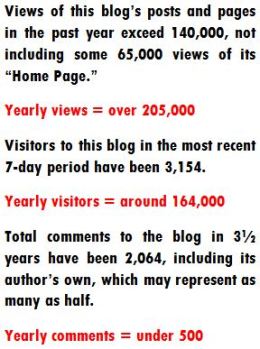
In the week leading up to Friday the 13th, 2015, WordPress reports that over 3,000 people visited this site (a few of them probably the same people on different days, but nevertheless…). Of that 3,000-plus, maybe 20 left comments or responded to petitions this site links to.

Maybe.

To one of the people who did submit a comment, a woman who was charged with assaulting her husband because she inadvertently scratched his arm while she was appealing to him to be nicer to her (during a verbal attack), I remarked that more people need to speak up about what they’ve been put through.

This woman, Izabella, has a restraining order against her, based on “all sorts of allegations,” that she reports her husband got to dominate and control her (to bully her, plain and simple). She says he’s never been an “involved dad” but uses their children now to “blackmail” her, because she had the temerity to “stand up to him.” The kids are pawns in a petty power game.

This is the kind of thing feminists deny happens (and adamantly deny happens to men). They insist restraining orders are there to protect women like Izabella.

Feminists are often wrong but never uncertain.

Their rigid advocacy is actually what makes scenarios like this possible, and for that reason, among others, I seldom find cause to sing their praises (though I’m not closed to the idea). One of their constant refrains, however, that victims will only speak up if they feel confident they’ll be believed, is right (and it’s why restraining orders exist to begin with).

Victims of procedural abuses need to speak up so that others will.

Respondents to this blog don’t need to identify themselves; they don’t even have to provide their email addresses if they don’t want to, though that information isn’t made public and allows them to be notified of others’ responses to their comments. It also lets them have dialogues among themselves.

Provided everyone plays nice, this writer is glad to take a backseat. (He’s been informed that nothing anyone else says is his responsibility, anyway.)

“Outing” yourself isn’t necessary, per se, to motivate change. But the public only understands what it sees and hears. If it sees and hears nothing, then that’s exactly what it will understand.

Copyright © 2015 RestrainingOrderAbuse.com

Not All Feminists Are Women, but All Feminists Are Responsible for Why False Accusations Are Rampant and Why They Work

Feminist lobbying is to blame for the injustice of restraining order and related laws and policies. There are no ifs, ands, or buts about it.

False accusations shouldn’t work, but they do—commonly, and not uncommonly to devastating effect.

That’s thanks to feminist crusaders, who may or may not represent Women, and who may or may not be women. This clarification isn’t intended for men who’ve been abused by court process; they don’t have any problem criticizing feminists, whatever form they come in.

Women, however, do—even women who’ve been abused by court process themselves. The clarification is for them.

Consider:

(1994) “Hi, Senator. This is Polly Wannacracker of COMA, the Consortium Opposing Male Aggression. I’m calling to share some startling statistics about violence, violence, and more violence. May I forward our research findings to your office?”

(1998) “Hi, Senator. This is Polly Wannacracker of COMA, the Consortium Opposing Male Aggression. I’m calling to share some more startling statistics about violence, violence, and more violence—also to tell you about the exciting progress we’ve made toward alerting the public to  the horrors of domestic abuse. Of course, nothing is ever enough when the stakes are this high!”

(2005) “Hi, Senator. This is Polly Wannacracker of COMA, the Consortium Opposing Male Aggression. How are you? How’s your wife? Oh, Bob, you kidder! We’ve so appreciated the support you’ve shown our cause over the years. Ha, you know me too well! Yes, I was of course calling to share some further startling statistics about violence, which, as you know, is epidemic, epidemic, epidemic….”

The allegory may be corny, but you get the point. This is how legislation is prompted, and support for it solidified and maintained. Names change; the message doesn’t.
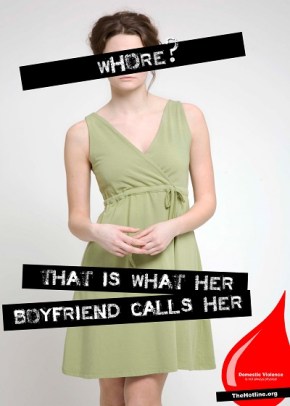
Money has steadily aggregated to representatives of feminist causes over the decades, and this money has been used to secure public opinion through “information campaigns.” Too, it has inspired grant allocations to agencies of the justice system amounting to billions under the feminist motivated Violence Against Women Act (VAWA). Federal grants are also issued to promote and fund social science that validates these expenditures and laws related to violence against women, including restraining order laws. Both money and this tailored research are used to influence police policy and condition judicial priorities.

Women, defensively, may deny that members of their sex instigate malicious prosecutions more often than men or to greater effect. Who lies and why doesn’t matter, though. Judges should be vigilant against false claims, which should be detected, dismissed, and punished. Judges aren’t vigilant, false claims aren’t detected, and their claimants aren’t sanctioned. Why?

Thanks to dogged and vehement feminist politicking for the past 30 years or more, standards for substantiating claims of abuse made by restraining order petitioners are none, and penalties for lying are none. That’s because (women, please note) if the law made the standards too demanding or it threatened penalties for iffy testimony—so the dated argument runs—abused women might be afraid to come forward. They would just “suffer in silence” instead.

To ensure abused women aren’t afraid to come forward—again, so the dated argument runs—allegations must be taken on faith, and judges must have complete latitude to rule as they “think best” to protect the interests of people who can’t protect themselves.

If all this wiggle room means some people (or a lot of people) get falsely implicated…so what?

Law follows politics, and the political fix has been in for a long time. It stays in, because the architecture of laws has been concrete-reinforced. Feminist advocates continue to “monitor public policy” and to maintain their painstakingly erected social webwork. They have the money to do it. Oppositional voices are neither bankrolled nor have any political cachet. They’re not just the underdogs; they’re the usual suspects.

The above makes the below possible (comment submitted to this blog a few days ago by “Rhonda Lynn”):

I’m going to court in a few hours. I haven’t slept or eaten, and I’m a wreck. My life is over. Today.

I fled a [domestic violence] situation in another state and moved back to Washington. I bounced around a bit and finally ended up renting a room. (I’m disabled, on Social Security.) Yes, Craigslist.

I felt I asked all the right questions: Are you married? Do you live on the property? Do you own the home? Who else lives there? Both [man and woman] were surprised to learn [I was disabled, because] the other tenants renting the room across from me were disabled, as well. The man of the [tenant] couple was deaf, and I know American Sign Language.

Upon moving in, I began noticing the lies being told. The disabled couple was made to turn over their food cards. They tried with me when I signed the month-to-month agreement. I, of course, declined.

I helped with the deaf man and his developmentally disabled woman, because the female “owner” (also a lie) was overwhelmed and claimed she was sick. I cooked and cleaned (28 loads of laundry, using the washer and dryer I brought from my previous residence). I paid for Thanksgiving dinner.

Then Hell came. A friend of the female claimed the “husband” had been coming on to her…long story. The next day, it was me! […] First she tells me to move out; then she’s my friend.

The exploitation of the couple continues. The sister of the deaf man calls me [and] then calls Adult Protective Services. I make a call as well. There is an active investigation.

Ready?

sign-languageThe police knock on my bedroom door and give me 10 minutes to get some clothes. The “husband-owner” filed a restraining order on me!

I had a couple stay overnight for a movie marathon the night before, so I had a bit of help. The female officer verified I had a lock for my room. She advised the petitioner no one was to enter my room. She had me turn over the house key. I was in shock, crying.

As we pull away, the “husband” sends me a voice recording…saying, “See…who got [who] out of whose house? I got you out of my house! Neener Neener.”

I called the police. No good. I am not the victim. I’m the perpetrator. While on the phone…two more [messages] telling me I’m not getting any more of my stuff back, can’t come back to the house…even with an officer. “You’re burnt bitch! If the police ask where’s your stuff, I’m gonna say I don’t know.”

Then, there’s the “order.” A Domestic Violence Protection Order!

The allegations, all false…and very damning: stealing his mail, opening it and not giving it to him, going in his wallet, taking his [Social Security] card and old i.d., shoving him into a wall, causing a bruise on his back, yelling at all hours of the day and night, causing such stress on the disabled couple that they can’t eat or sleep and have PTSD episodes, calling members of the house vulgar names, texting and calling everyone while they sleep, [threatening] to burn the house down, [warning] him not to sleep, because I’d kill him. [He alleges] he is in fear of his life, afraid to take a shower or come home.

Then, lastly, the night before (when I had company), [he says] I came at him with a kitchen knife as he was getting ready for work [and that] he tried to call the cops, and I took his cell phone away. Then gave it back that morning.

Oh, my lord!

They both went on my Facebook [page]. He called me a hooker, said I would sleep with any man, and called me a horrible name. I didn’t respond, of course. Then he said I do meth, [which] he knows because I lived with him and he cleaned my room and found pipes and bags. Then she responds and says…and rigs and baggies. Now we know [they say] why she cleaned, and it explains her treatment of us. He [wrote] in another post: “I just want everyone to know she does methamphetamines.” (He is in outpatient treatment.)

[…]

I call the police…to get my stuff. I left my daughter’s ashes and pictures.

They say, “How can you prove you live there? If he doesn’t say you live there, we won’t bust down the door.”

I’M GOING TO JUMP OFF A BRIDGE.
(BUT DON’T DRIVE AND NO BUS FARE)
PLEASE. HELP ME.
RHONDA

The reader may choose to indict the male accuser in Rhonda’s story instead of the apparatus he exploited because he could, or the reader may choose to indict the apparatus itself and those who inspired it, defend it, keep it well lubricated, profit from it, and convincingly deny it’s abused.

Neither position will help Rhonda, who may be broken forever (or until she finds a bridge), but one of them may eventually make it illegal for a life to be so viciously demeaned as hers has been.

Copyright © 2015 RestrainingOrderAbuse.com
“You have bullsh*t; we have research”: The National Coalition Against Domestic Violence v. Daddy Justice (Or, Why False Allegations Are a Serious Problem)

A correspondent, friend, and fellow blogger who’s been relentlessly attacked through the courts by a disturbed neighbor (over a period now spanning years) sent a link to the YouTube vid “The Grand Poobah” last week. It’s a 2011 “interview” between men’s rights activist Ben Vonderheide (a.k.a. “Daddy Justice”) and Rita Smith, former executive director of the National Coalition Against Domestic Violence (NCADV), an influential Colorado-based nonprofit.

(Note: The word in the video’s title should be spelled “poohbah,” after a comic opera character whose name was probably formed from the interjections pooh + bah. Mr. Vonderheide’s spelling it “poobah” might have been an accident—or it might have been on purpose.)

The setting of the interview, which would more aptly be called an exchange of words, isn’t clear, but it seems to be a post-conference mix-and-mingle. Mr. Vonderheide takes issue with the NCADV’s feminine bias and the propagandist tenor of the factsheets it publishes, which aren’t uncommonly cited by feminist advocates.

As the quotation in this post’s title suggests, the questions he poses to Ms. Smith aren’t favorably received. Those questions regard the NCADV’s disinclination to acknowledge maternal child abuse (Ms. Smith: “It’s not our focus of work”), as well as its denial that false accusations of domestic violence are a serious problem, false accusations that Mr. Vonderheide alleges are “promoted by [the NCADV’s] budget.”

Daddy Justice’s interview style (à la Michael Moore) is obtrusive—he’s plainly crashed the party—but while Mr. Vonderheide is necessarily assertive, the worst you could say of his questions is that they’re confrontational. They’re nevertheless called “abusive” and “aggressive,” and he’s prodded to leave.

The grudging answers his questions prompt before he’s rebuffed don’t provide much informational grist for the mill, but to his allegation that more than 80% of restraining orders are based on false accusations, Ms. Smith significantly counters that her facts say it’s only “2% of the time” (and she urges Mr. Vonderheide to “stop lying”). Later she revises her estimate of the number of false accusations from 2% to “2 to 5%,” dismissively, despite the fact that if, say, 2,000,000 restraining orders are petitioned a year (and the total may be much higher), the extra 3% translates to the invasion, disruption, and possible dismantling of 60,000 innocent defendants’ lives, besides those of their children and others peripheral to the mischief.

A mere 5% false allegation rate means the victimization of 100,000 (or many more) innocent people per year (again, not including ambient casualties). Anecdotal reports, of course—including from judges and attorneys—put the false allegation rate 6 to 18 times higher than 5% (30 to 90%). It just depends who you’re asking.

Even a ridiculously conservative false allegation rate like the posited 5% plainly recommends legislative reform, because there’s absolutely no accountability in the restraining order process. False accusers aren’t punished, and damages from false allegations aren’t remediable by lawsuit. Additional false claims can what’s more be lodged almost immediately by the same accusers using the same process. There’s no statutory ceiling on the number of orders a single complainant may apply for. (Some victims of procedural abuse report spending tens of thousands of dollars to fend off one petition only to throw up their hands—and in cases forfeit their custody entitlements—when a second comes down the pike a few months later. See here for an example.)

It should be appreciated, too, that any audit-derived estimate of the number of false allegations can only be based on allegations that are recorded as false (by “somebody”). No official false allegation rate accounts for the number of times false allegations succeed or the number of times cases based on them are simply “dismissed” without comment.

In other words, false allegations may well be rampant or “epidemic” (a word favored by anti-domestic-violence advocates), and there would be no record that says so.

The nyah-nyah from the title—“We have research; you have bullshit”—deserves reflection, also. (It doesn’t come from Ms. Smith, incidentally, but from an unidentified confederate who can’t resist a Parthian shot at Mr. Vonderheide before she and the “Grand Poobah” turn their backs to him). The “research” that advocacy groups posit is survey-based, that is, it amounts to responses to questionnaires that are administered to sample groups and then extrapolated to the population as a whole. Even this survey data we must take on faith.

Appreciate that conducting “research” of this sort depends on means, which depend on money, which is only allocated to groups like the NCADV. Consider:

The NCADV’s reported income for 2011 was $643,797, down about $70,000 from the previous year. Ms. Smith’s salary was $74,586.

Among the programs toward which the NCADV’s 2011 budget was dedicated were “General Program – provides information to educate and inform the general public about domestic violence” ($240,991), “Public Policy – works in collaboration with other national organizations to affect societal response to domestic violence through public education and coalition building, monitors federal legislation, and contacts legislators regarding domestic violence issues” ($88,808), “Membership – publishes a newsletter and provides networking opportunities for individuals and organizations interested in the work to empower battered women and their children” ($67,607), “Child custody – provides resources, referrals and support to advocates working with victims of domestic violence involved in family court cases with their abusers also provides resources to victims, attorney, and family members when family court issues are present” ($97,402).

In contrast to the social largesse enjoyed by groups like the NCADV, no money is allocated for the administration of surveys to determine, for example, incident rates of depression, drug or alcohol abuse, stress-related injuries, or suicide proximal to being falsely accused; no surveys appraise the resulting lost earnings and assets; and no surveys attempt to measure the hits taken by health insurance providers as a result. Prognosis of the long-term consequences to the welfare and life prospects of injured children is, moreover, impossible. Worse, it’s not even considered, which casts rather a long shadow on the purported “mission” of groups like the NCADV to protect kids.

Clearly, that motive is context-specific.

Daddy Justice makes up for the lack of information his “interview” questions elicit with quotations interposed between snippets of footage. Here are some of them:

  • “Everyone knows restraining orders…are granted to virtually all who apply.” […] “In many cases, allegations of abuse are used for tactical advantage” (Elaine Epstein, former president of the Massachusetts Bar Association).
  • “Restraining orders are now considered part of the ‘gamesmanship of divorce’” (Illinois Bar Journal, 2005).
  • “In nonreciprocally violent relationships, women were the perpetrators in more than 70% of the cases” (American Journal of Public Health, May 2007).
  • “Women were slightly more likely than men to use one or more acts of physical aggression and to use such acts more frequently” (Psychological Bulletin, 26, No. 5, pp. 651-680).
  • “Leading sociologists have repeatedly found that men and women commit violence at similar rates” (Law Professor Linda Kelly, 2003).
  • “More women than men engage in controlling behavior in their current marriages” (Violence and Victims, 22, Issue 4, 2007).
  • “Of all persons who suffer injuries from partner aggression, 38% are male” (Dr. John Archer, Psychological Bulletin).
  • “There is no doubt that this law [Ohio’s domestic violence statute] has been abused” (Judge Nadine Allen of Hamilton County, Ohio).
  • “Standards for proving abuse have been so relaxed that any man who stands accused is considered guilty” (Cheryl Hanna, William and Mary Law Review).
  • “Women are nine times more likely to report domestic violence than male victims” (National Family Violence Survey).
  • “85% of temporary restraining orders are filed against men” (Cathy Young, “Domestic Violence: An In-Depth Analysis,” 2005).
  • “Many judges view restraining orders as ‘a rubber-stamping exercise,’ and subsequently hearings are ‘usually a sham’” (Attorney Arnold Rutkin, Family Advocate, Winter 1996).
  • “The mere allegation of domestic violence may shift the burden of proof to the defendant” (Massachusetts Law Weekly, 1995).

Notable is that cited remarks from legal experts that categorically define the restraining order process as prejudiced, if not an outright abomination against rudimentary civil rights and principles of law, may be a decade or decades old. Rhetorical stances like the NCADV’s aren’t fooling anybody in the know, and they haven’t for a long time. But they continue to dominate political debate. They’re heeded because they’re supposed to be. Not coincidentally, women’s advocates hold the keys to the treasury.

The value of Mr. Vonderheide’s video, finally, isn’t in the information it educes or even the information it asserts but the psychological study it offers of the women behind the dogma and the sway they exercise on public perception. His questions, only impeachable as indelicate, inspire predictable reactions: antagonism, levity, or disdain.

According to tried and true method (a method both practiced and preached), the “self-reliant” feminist women who are the targets of Mr. Vonderheide’s questions register alarm. These deniers of false allegations and undue hysteria…call the police.

Copyright © 2015 RestrainingOrderAbuse.com

*Daddy Justice’s videos can be found here.

The Southern Poverty Law Center v. Betty Krachey: Why the Only Honest Voices in Discussions of Restraining Order and Related Procedural Abuses Are the Little Ones

This blog was inspired by firsthand experience with judicial iniquity.

Its author has never been accused of violence, doesn’t sanction violence except in self-defense or the defense of others, and has been a practicing vegetarian since adolescence. I have, what’s more, hazarded my life going to the aid of non-human animals. In one instance, I lost the use of my hand for a year; in another, I had various of my bones fractured or crushed, and that damage is permanent.

Although I’ve never been accused of violence (only its threat: “Will I be attacked?”), I know very well I might have been accused of violence, and I know with absolute certainty that the false accusation could have stuck—and easily—regardless of my ethical scruples and what my commitment to them has cost me.

Who people are, what they stand for, and what they have or haven’t done—these make no difference when they’re falsely fingered by a dedicated accuser who alleges abuse or fear.

This is wrong, categorically wrong, and the only arguments for maintenance of the status quo are ones that favor a particular interest group or political persuasion, which means those arguments contravene the rule of constitutional law.

Justice that isn’t equitable isn’t justice. Arguments for the perpetuation of the same ol’ same ol’, then, are nonstarters. Dogma continues to prevail, however, by distraction: “a majority of rapes go unreported,” “most battered women suffer in silence,” “domestic violence is epidemic” (men have it coming to them). Invocation of social ills that have no bearing on individual cases has determined public policy and conditioned judicial impulse.

Injustice, no surprise, arouses animosity; injustice that confounds lives, moreover, provokes rage, predictably and justly. This post looks at how that rage is severed from its roots—injustice—and held aloft like a monster’s decapitated head to be scorned and reviled.

I first learned of the Southern Poverty Law Center (SPLC) from a research paper published by Law Professor Kelly Behre this year that equates men’s rights activism with hatemongering. I later heard this position of the SPLC’s reiterated in an NPR piece about the first International Conference on Men’s Issues.

Injustice, it should be noted preliminarily, is of no lesser interest to women than to men. Both men and women are abused by laws and practices purportedly established to protect women, laws and practices that inform civil, criminal, and family court proceedings.

Groups like the SPLC, however, represent opposition to these laws and practices as originating strictly from MRAs, or men’s rights activists, whom they dismiss as senseless haters. This lumping is characteristic of the smoke-and-mirrors tactics favored by those allied to various women’s causes. They limn the divide as being between irrationally irate men and battered women’s advocates (or between “abusers” and “victims”).

They don’t necessarily deny there’s a middle ground; they just ignore it. Consequently, they situate themselves external to it. There are no women’s rights activists (“WRAs”?) who mediate between extremes. They’re one of the extremes.

I’m a free agent, and this blog isn’t associated with any group, though the above-mentioned law professor, Dr. Behre, identifies the blog in her paper as authored by an “FRG” (father’s rights group), based on my early on citing the speculative statistic that as many as 80% of restraining orders are said to be “unnecessary” or based on false claims, which may in fact be true even if Dr. Behre finds the estimate unscientific. (Survey statistics cited by women’s advocates and represented as fact are no more ascertainably conclusive; they’re only perceived as more “legitimate.”)

SAVE Services, one of the nonprofits to cite a 2008 West Virginia study from which the roughly 80% or 4-out-of-5 statistic is derived, is characterized by the SPLC and consequently Dr. Behre as being on a par with a “hate group,” like white supremacists. It isn’t, and the accusation is silly, besides nasty. This kind of facile association, though, has proven to be very effective at neutering opposing perspectives, even moderate and disciplined ones. Journalists, the propagators of information, may more readily credit a nonprofit like the SPLC, which identifies itself as a law center and has a longer and more illustrious history, than it may SAVE, which is also a nonprofit. The SPLC’s motto, “Fighting Hate • Teaching Tolerance • Seeking Justice,” could just as aptly be applied to SAVE’s basic endeavor.

On the left is a symbol for the Ku Klux Klan; on the right, the symbol for feminist solidarity. The images have common features, and their juxtaposition suggests the two groups are linked. This little gimmick exemplifies how guilt by association works.

The SPLC’s rhetorical strategy, an m.o. typical of those with the same political orientation, is as follows: (1) scour websites and forums in the “manosphere” for soundbites that include heated denunciations and misogynistic epithets, (2) assemble a catalog of websites and forums that espouse or can be said to sympathize with extremist convictions or positions, and (3) lump all websites and forums speaking to discrimination against men together and collectively label them misogynistic. Thus reports like these: “Misogyny: The Sites” and “Men’s Rights Movement Spreads False Claims about Women.”

Cherry-picked posts, positions, and quotations are highlighted; arguments are desiccated into ideological blurbs punctuated with indelicate words; and all voices are mashed up into a uniform, sinister hiss.

The SPLC’s explicit criticism may not be unwarranted, but coming as it does from a “law center” whose emblem is a set of balanced scales, that criticism is fairly reproached for its carelessness and chauvinism. There are no qualifications to suggest there’s any merit to the complaints that the SPLC criticizes.

The SPLC’s criticism, rather, invites its audience to conclude that complaints of feminist-motivated iniquities in the justice system are merely hate rhetoric, which makes the SPLC’s criticism a PC version of hate rhetoric. The bias is just reversed.

Complaints from the “[mad]manosphere” that are uncivil (or even rabid) aren’t necessarily invalid. The knee-jerk urge to denounce angry rhetoric betrays how conditioned we’ve been by the prevailing dogma. No one is outraged that people may be falsely implicated as stalkers, batterers, and child molesters in public trials. Nor is anyone outraged that the falsely accused may consequently be forbidden access to their children, jackbooted from their homes, denied employment, and left stranded and stigmatized. This isn’t considered abusive, let alone acknowledged for the social obscenity that it is. “Abusive” is when the falsely implicated who’ve been typified as brutes and sex offenders and who’ve been deprived of everything that meant anything to them complain about it.


Impolitely. (What would Mrs. Grundy say?)

There’s no question the system is corrupt, and the SPLC doesn’t say it isn’t. It reinforces the corruption by caricaturing the opposition as a horde of frothing woman-haters.

Enter Betty Krachey, a Tennessee woman who knows court corruption intimately. Betty launched a website and e-petition this year to urge her state to prosecute false accusers after being issued an injunction that labeled her a domestic abuser and that she alleges was based on fraud and motivated by spite and greed. Ask her if she’s angry about that, and she’ll probably say you’re damn right. (Her life has nothing to do with whether “most battered women suffer in silence” or “a majority of rapes go unreported,” and those facts in no way justify her being railroaded and menaced by the state.)

I made this website to make people aware of Order of Protections & restraining orders being taken out on innocent people based on false allegations so a vindictive person can gain control with the help of authorities. The false accusers are being allowed to walk away and pay NO consequences for swearing to lies to get these orders!  […]

I know that, in my case, the judge didn’t know me. Even though I talked to the magistrate the day BEFORE the order of protection was taken out on me & I told him what I heard [he] had planned for me. They didn’t know that I might have superpowers where I could cause him bodily harm 4 1/2 miles away. SO they had no choice but to protect [him] from me. BUT when they found out this order of protection was based on lies that he swore to, and he used the county in a cunning and vindictive way to get me kicked out of the house – HE SHOULD HAVE HAD TO PAY SOME CONSEQUENCES INSTEAD OF BEING ALLOWED TO WALK AWAY LIKE NOTHING HAPPENED!!!!

Seems like a fair point, and it’s fair points like Betty’s that get talked around and over. There are no legal advocates with the SPLC’s clout looking out for people like Betty; they’re busy making claims like hers seem anomalous, trivial, or crackpot.

Copyright © 2014 RestrainingOrderAbuse.com

*Betty reports she’s been in conference with one of her state’s representatives and has been told she has “a good chance at getting this law changed,” albeit too belatedly to affect her own circumstances. Says Betty, “I still want the law changed to hold false accusers accountable!” Amen to that.

Why Women Who Are Falsely Implicated as Abusers Have No Defenders

Women who are ravaged by false allegations of domestic violence or “violence-related” offenses—whether in civil restraining order prosecutions, or in domestic violence or family court cases—are a minority among the targets of lies.

Hunt up comments by female victims on the e-petition “Stop False Allegations of Domestic Violence,” and there’s a good chance those comments will contain an emphatic line like “This happens to women, too.”

Men who’ve been falsely accused may be unaware that the community of the damned includes members of both sexes. The women who support those men—e.g., girlfriends, wives, sisters, or mothers—may also be unaware. Alternatively, their compassion may be numbed by the consciousness that restraining order, stalking, and domestic violence laws exist for women, or their compassion may be jaded by the conviction that when women are falsely accused of abuse, the implications aren’t as severe, which may be true.

This doesn’t mean, however, that the women who are falsely impugned feel any less anguished, betrayed, mortified, or indignant. Psychic pain is subjective, and the privations than ensue from false allegations of abuse—loss of access to children, property, home, employment, etc.—may be exactly the same, whether the accused is male or female.

What we call “society” doesn’t care to acknowledge that laws enacted to curb violence against women are ever abused to inflict harm (this “society” is really the people who mold public opinion, like government reps, journalists, and various talking heads on TV; society proper only knows what it’s told). Men who’ve complained of judicial crookedness and mistreatment for years or decades are still widely discounted, dismissed, or openly derogated in accordance with established dogma.

The phrase men’s rights continues to be framed with quotation marks (often contemptuously), and that includes in the mainstream press. Those who advocate for “men’s rights” may be called “rape deniers,” “anti-feminists,” or simply “misogynists.” Men’s rights activists have achieved some sympathetic traction, particularly recently, but popular admission that “women’s law” is easily and widely exploited by fraud is still a ways off.

Admitting, then, that women are destroyed by laws that are supposed to protect them is, for a host of reasons, taboo. Acknowledgment that the laws are doing the opposite of protecting women would mean their justification is false. It would besides implicate the system itself in the abuse of women, and be politically embarrassing and compromising,

If it were admitted, finally, that processes for women can be abused to falsely incriminate them, this question would inevitably follow: How much easier must it be for those processes to be abused to falsely incriminate men?

Feminists and feminist-oriented rights advocacy groups like the ACLU can’t afford to speak on behalf of female victims of procedural abuses, because that would be to call attention to the lax standards, inherent biases, and general corruptness of policies they’ve championed (and for which they congratulate themselves). It would be to discredit “all they’ve accomplished.” Criticizing victimized women would likewise be to their discredit. So they just avert their eyes.

Men who complain of procedural abuses are broadly lumped together and demonized as a group; women who complain of the same are exiled to their own private hells.

Copyright © 2014 RestrainingOrderAbuse.com

Representatives of the Israeli Bar Association Report False Accusations of Domestic Violence Have “Reached Epidemic Proportions”

Unlike the American Bar Association, the Israeli Bar Association has a Committee on False Accusations and Parental Alienation. Also unlike its American counterpart, its representatives have chutzpah.

The lawyers who chair the Committee on False Accusations and Parental Alienation in the Tel Aviv district last month told the Israeli parliament (the Knesset) that false allegations of domestic violence are “a daily occurrence” (“Female Lawyers Decry False Accusations in Divorce”).

In fact, they reported (“with complete confidence”) that “false accusations of violence filed against spouses in divorce proceedings have reached epidemic proportions.”

Feminists don’t shout “shame!” at women who lie to the court; they shout “shame!” at women who report women lie to the court.

Advocates for women’s groups predictably countered with hollered scoldings and denials.

The chairperson of the Committee for Advancement of the Status of Women (which represents the interests of women’s groups) said her figures showed “the annual total of false accusations filed by women is about 11, and the number for men is similar.”

To this, one of the attorneys on the Committee on False Accusations and Parental Alienation answered she personally knew “more than 11 people who have suffered false accusations, and promised to bring the [Committee for Advancement of the Status of Women] more detailed information.”

(She might, too, have pointed out that more than 11 false accusations can be made by a single false accuser in a single false prosecution.)

Childish is what it’s tempting to comment about the faith of women’s advocates that false accusations filed by Israeli women each year are “about 11.” It’s also tempting to say the same of their need to assert that false accusations from men are equally low but about the same in number.

Criticizing feminists, however, never seems to inspire self-reflection.

Allowing for argument’s sake that the Israeli Bar Association is right that false allegations are a daily occurrence, a question Americans might ask themselves is this: Is the reason why the American Bar Association hasn’t reported the same thing that Israelis are bigger liars than we are, or is the reason that Israel’s legal critics are braver and more principled than ours?

Copyright © 2014 RestrainingOrderAbuse.com