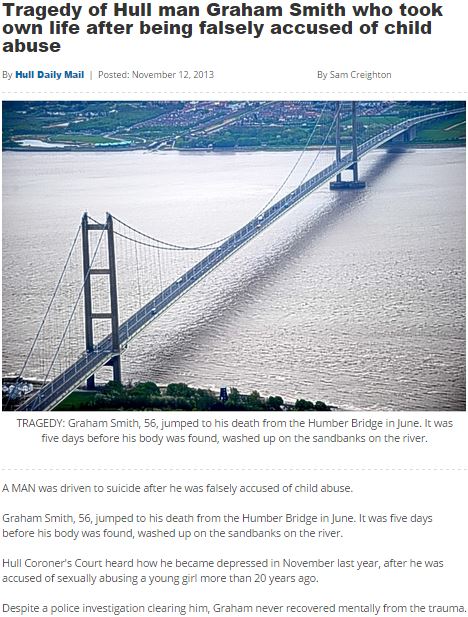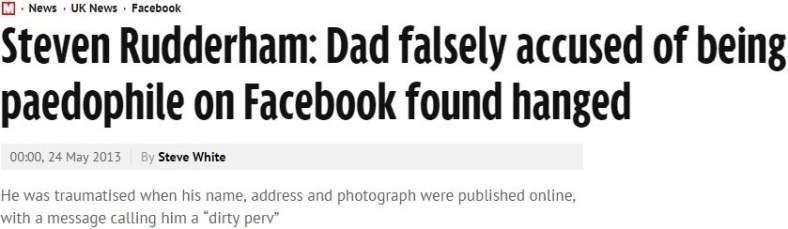
False Accusations and Suicide: Some Headlines about the Effects of Finger-Pointing and Legal Abuse (Culled for the Empathically Challenged)

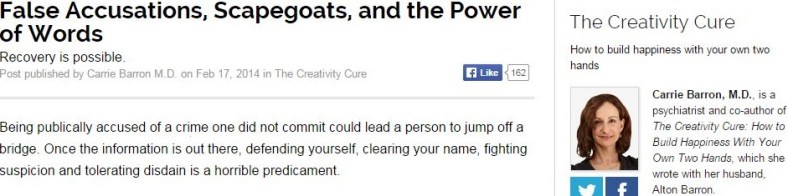
Since the publication of this post, the one quoted above has been deleted.

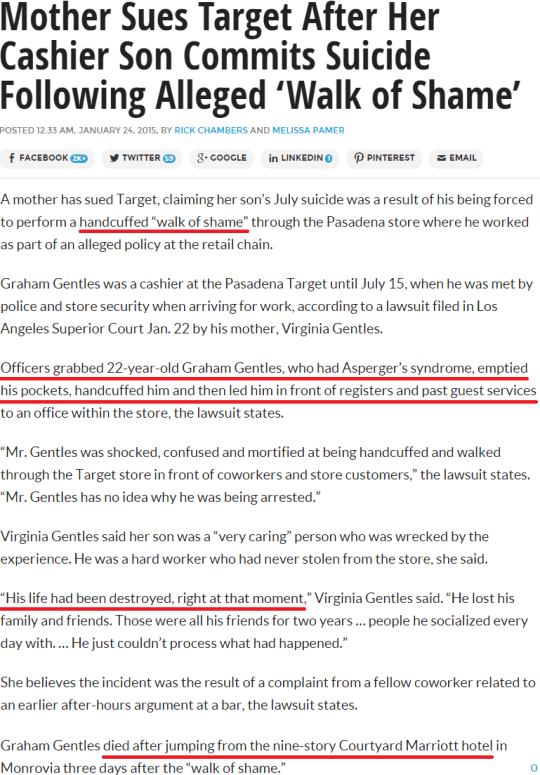
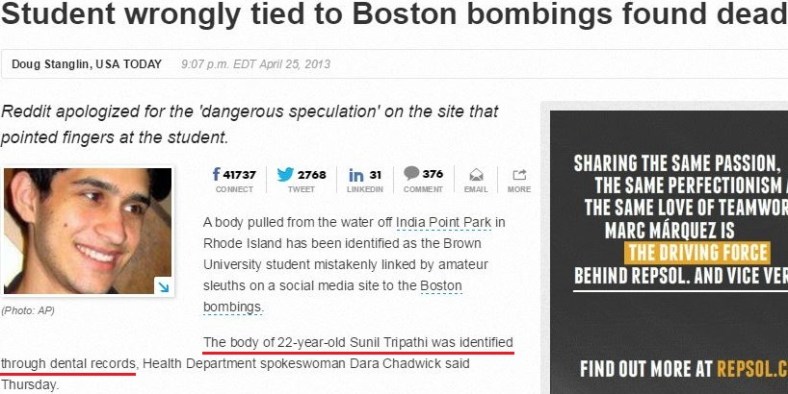
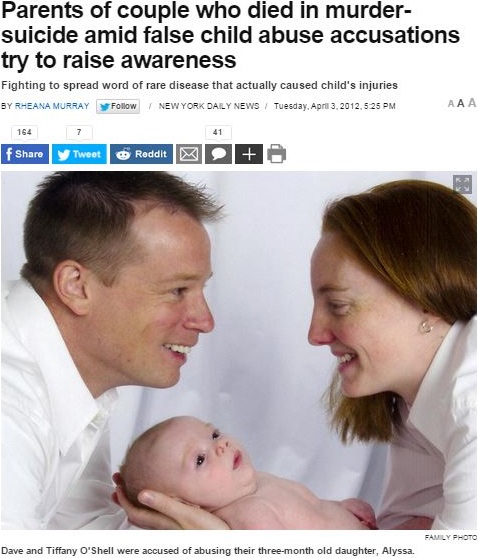
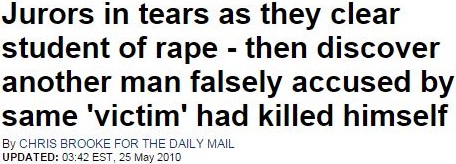
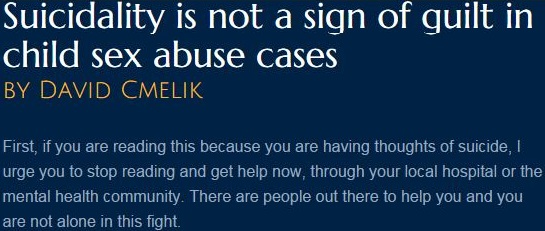
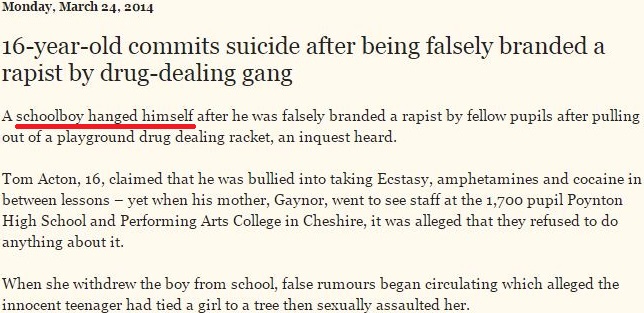
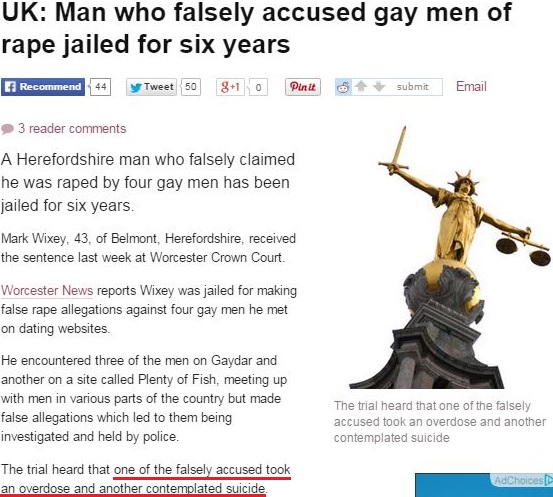
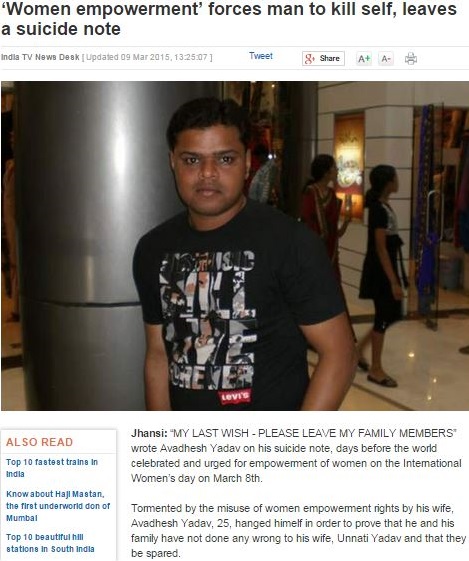
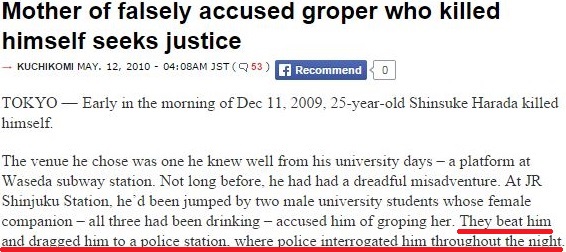
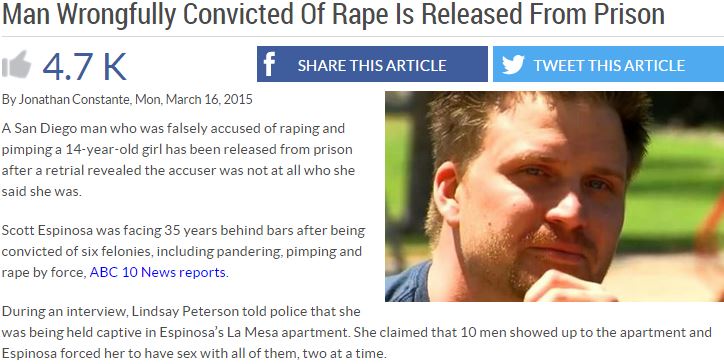
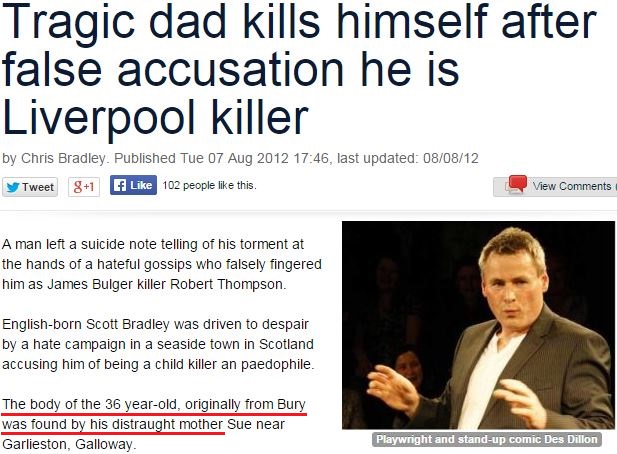
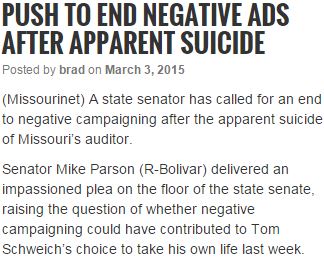
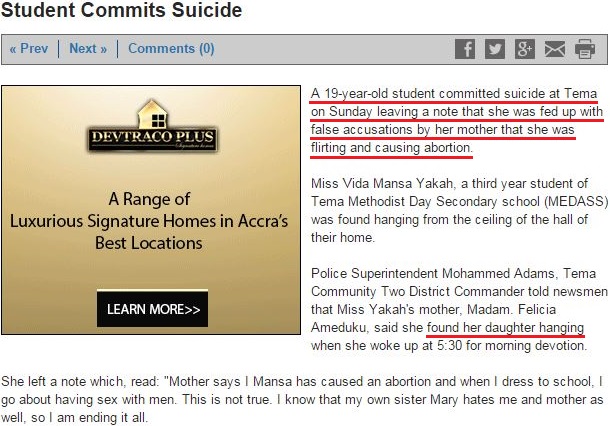
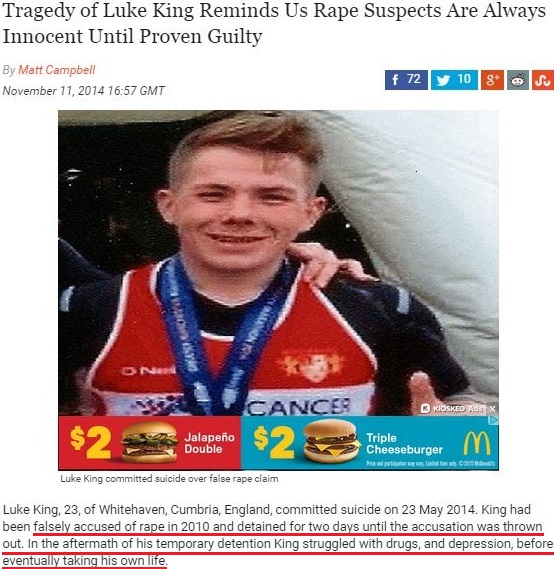
One of the stories highlighted below concerns a young man who was falsely labeled a rapist by some bullies at school. He hanged himself. He was 16. Another concerns a man who spent a year and a half in prison based on a false accusation of sexual assault (among other false accusations). While the man was behind bars, his mother killed herself, believing her son was a pimp and a rapist.

A word to the wise: Only ask a rhetorical question if you know the answer…and it favors your position.

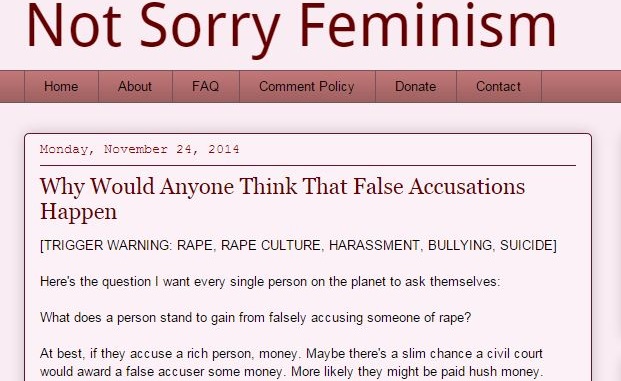
The question posed above by the zealous, young author of Not Sorry Feminism isn’t, of course, a question at all; it’s an indictment. She means how dare anyone think false accusations happen. What problematizes the writer’s rhetorical-question-cum-admonition is that it has a very obvious answer: The reason people think false accusations “happen” (so to speak) is that they do.

(It might alternatively be asserted that no one does believe false accusations “happen,” the same way no one believes rapes “happen.” Both are acts, and both have agents. If rape happens isn’t a construction a feminist could get behind, false accusations happen shouldn’t be, either. You’re a proponent of accountability, or you’re not.)

Worse than her question’s being problematic, because answerable, is that its answer isn’t one the writer wants to hear. Motives for false accusations, including of rape, are greed, malice, bullying, vengeance, jealousy, possessiveness, attention-seeking, mental illness, and cover-up, to name a few. They’re ugly, often petty, always destructive…and they can kill.

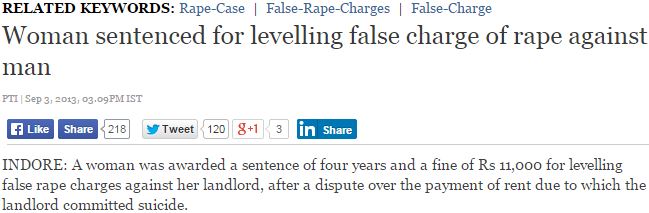
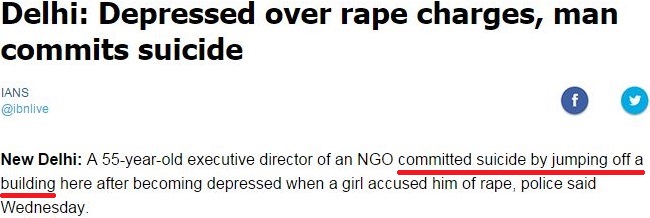
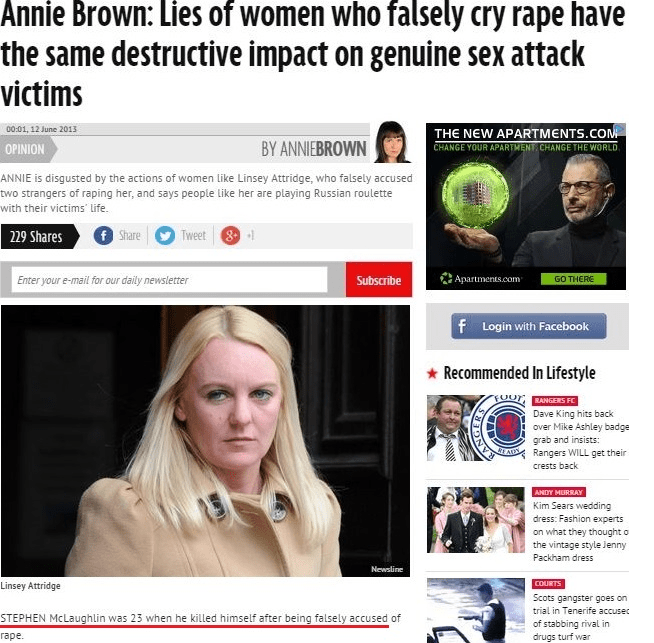
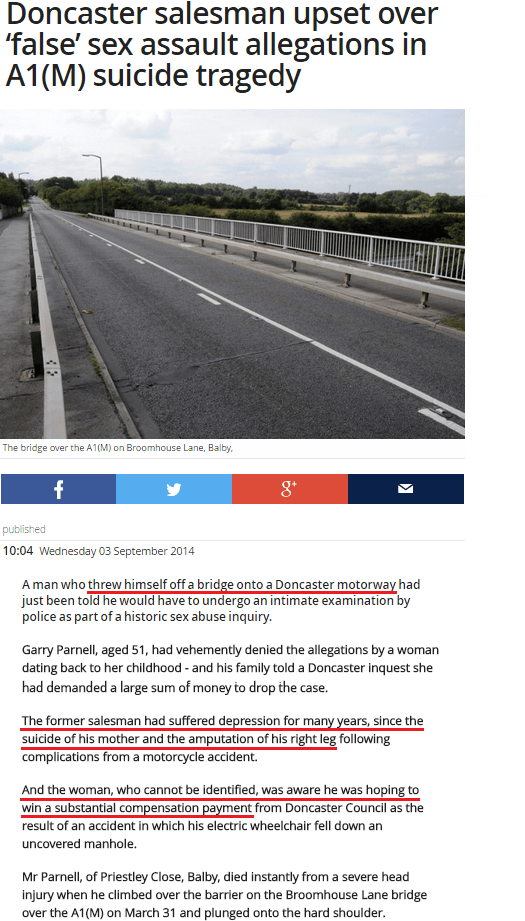
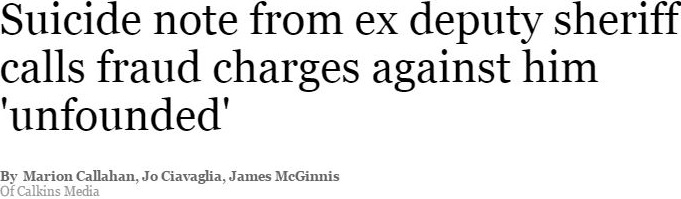
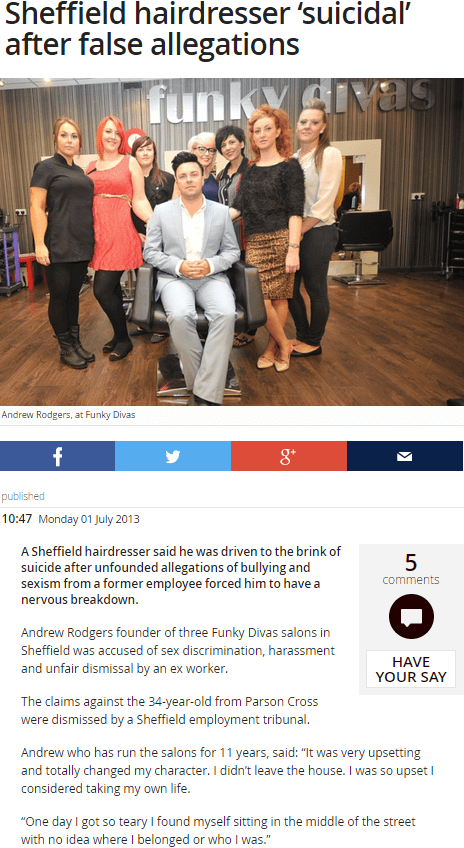
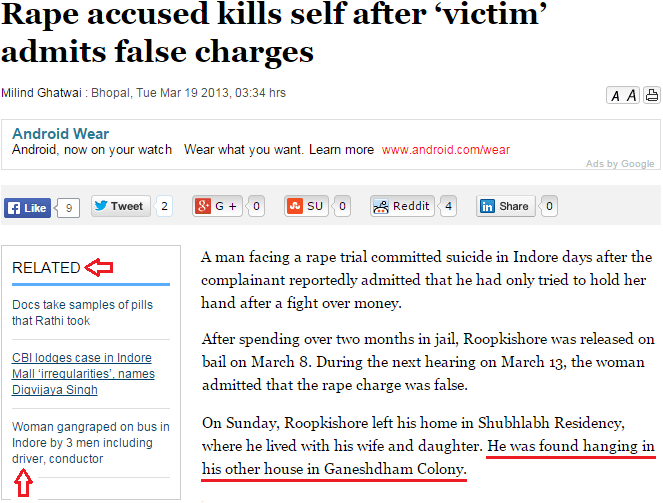
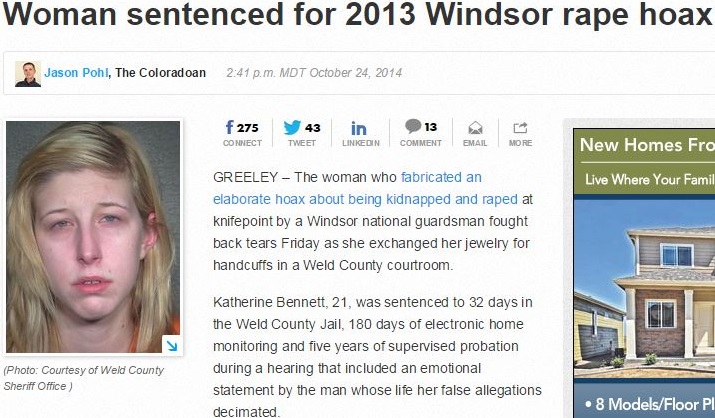
This post surveys examples of false allegations or deadly allegations or false and deadly allegations drawn from news stories. Here’s one such:
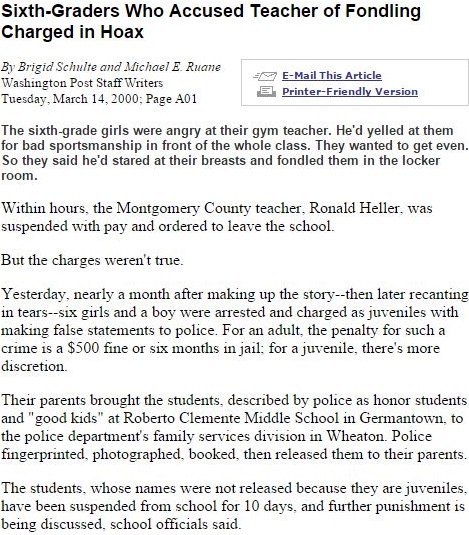
Unlike most of the rest, the first story glossed in this hastily cobbled digital scrapbook doesn’t include a suicide or references to suicide. It’s nevertheless a good starting point, because it’s old news.

The article’s from 15 years ago. Fifteen. Significantly, though, no half-hearted sleuth would find it a challenge today to turn up commentaries on the Internet, mostly from feminist writers like the one who introduces this post, that either (1) deny such a thing ever happens or (2) deny it’s a big deal when it does happen—and deny it’s a sign that a culture of false accusation exists and has for some time. (A story so uncannily similar as to be almost identical can be found here. It appeared in The Huffington Post less than 24 months ago.)

Consider: Where would six elementary school girls and a boy get the idea of framing their gym teacher as a molester, and where would they get the impression this conduct was okay (or “cool”) or that they’d get away with it and not face dire consequences? Should we believe the notion had no cultural influences and was purely a product of these honors students’ collective wicked imagination?

For accusing their teacher of groping them, the kids were suspended for 10 days. It’s likely the most traumatic part of their punishment was being detained by police and “fingerprinted, photographed, [and] booked.” Keep this thought in mind.

Keep this quotation in mind, too: “‘When they made the charge, that’s about 80 percent of the damage to your reputation right there,’ [attorney Paul F.] Kemp said. ‘Because even if you’re found innocent, people will assume you got off on a technicality. Or that there’s something there when there’s not.’”

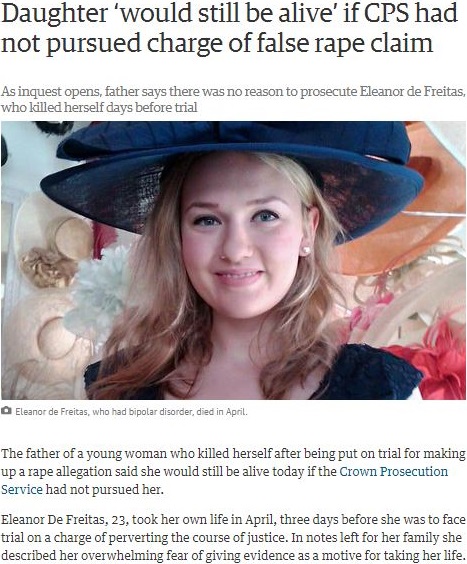
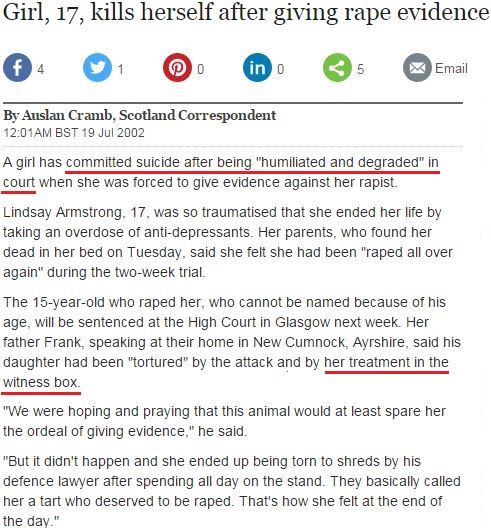
Editorial intrusions end here; the remainder of this post is a series of Internet clippings (linked to the “complete stories”) from which readers may draw their own conclusions about the motives and effects of accusation, bullying, and legal abuse. The author of this post would only point out before absenting himself that an accusation that may induce someone to kill him- or herself need not be of rape and that one of the suicides chronicled below is of a woman who faced being tried for falsely alleging she was sexually assaulted (“In notes left for her family, she described her overwhelming fear of giving evidence…”).

The common denominator is accusation and public scrutiny and judgment, not being accused of a particular act, per se. Zerlina Maxwell and her ilk are categorically wrong.
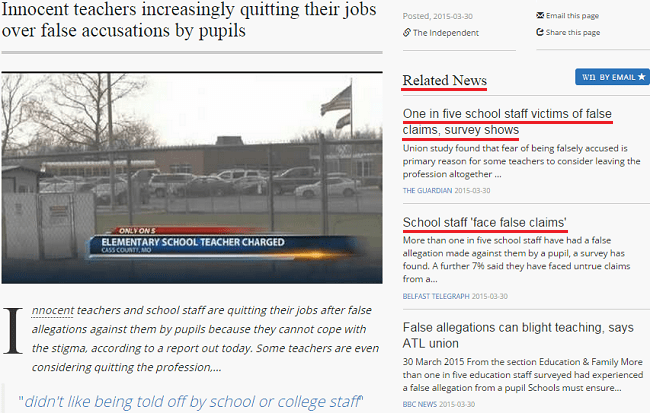
fale_accusations_destroy

nancy_grace_suit

dad_falsely_accused

murder_suicide

jurors_in_tears_full

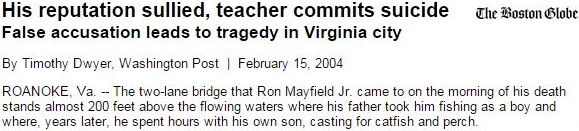
reputation_sullied_full

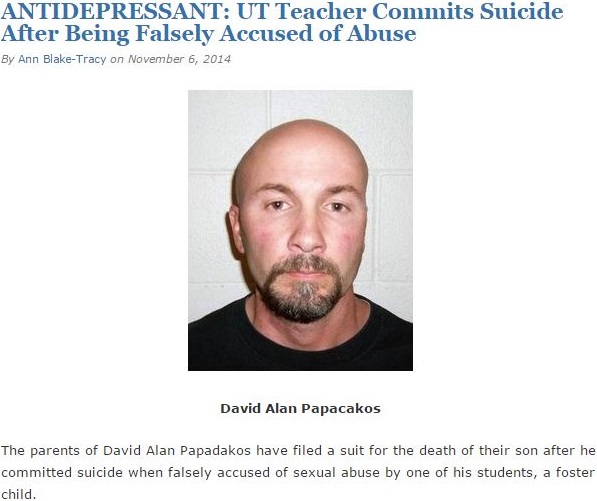
suicidality

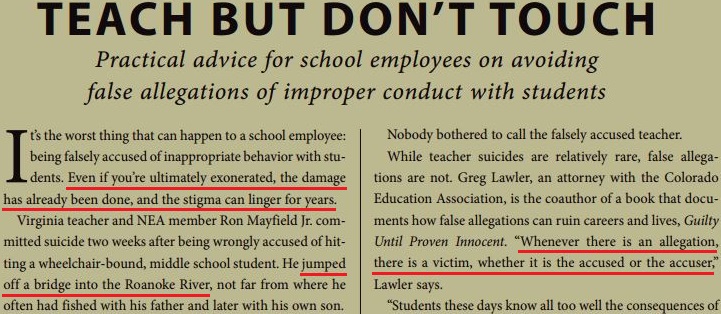
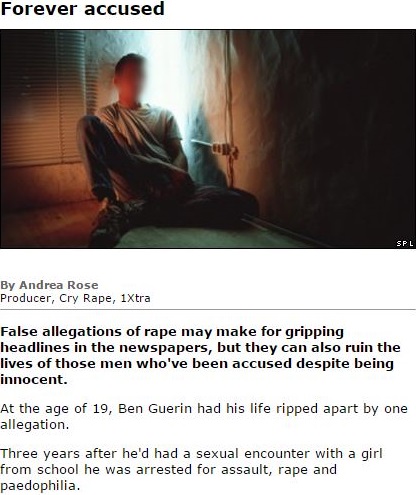
forever_accused

Sheffield_hairdresser

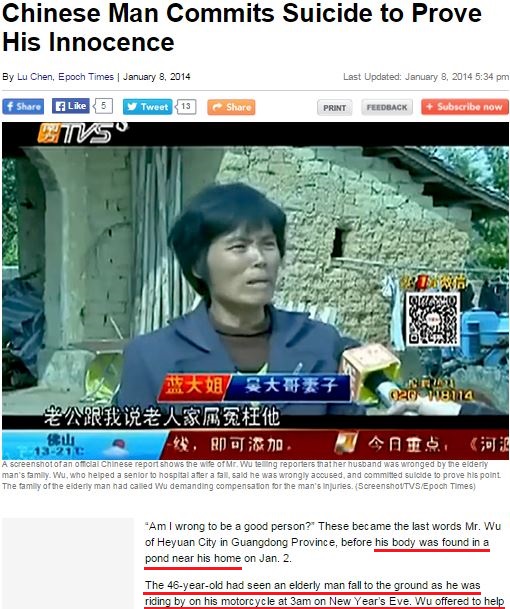
Chinese_man_commits_suicide

Copyright © 2015 RestrainingOrderAbuse.com

“She Said That I Had Been Burning Him Intentionally and That I Had Kidnapped Him”: Aaron’s Story of Restraining Order Abuse

The account below was recently submitted as a comment to BuncyBlawg.com, a site I’ve mentioned in several recent posts. Its administrator, Larry Smith, a former attorney, has been waging a one-man war on corruption excited by his relentless persecution through and by the legal system since 2011.
Aaron’s story is one of a spiteful ex-partner whose false allegations orbit popular themes: fear, emotional torment, stalking, and other (unprovable) crimes and misdemeanors that become more sensational and incriminating over time.

What makes Aaron’s story exceptional is that it has a reasonably happy ending, because the court saw through the lies.

In Aaron’s own words (lightly edited):

In my accuser’s affidavit, she repeatedly used “deathly afraid” and spoke of the medications she was on due to three years of stalking by me, vicious verbal abuse of herself and her family by me, and my stalking her where she works, shops, and lives. She claimed to have video surveillance of me following her into a grocery store. She even claimed to have a police report where I was “caught” sitting behind her home at 10 at night, etc.

She was granted an ex parte restraining order lasting two years.

Of course, none of it was true, none of her evidence existed, and the family that I had supposedly verbally abused didn’t even come to court. There was no police report, nor was there a surveillance video, because I didn’t have time to subpoena it; and had she brought the video, it would’ve shown her following me into the store she knew I was going to be at because I told her I was going to get groceries there at an exchange of our son. Had this video been brought to court, it would’ve conflicted with her affidavit.

On top of all of that, I brought in three copies of 40 pages that had every text message we had sent to each other for the previous two years in chronological conversation format. In these texts, two months prior she was inviting me into her home for “dessert” and asking to borrow money from me. Six months prior, she offered to loan or sell me her other car because I was having mechanical problems with my Jeep. These and other very common things. The texts also contained many instances of very immature ranting and attempts to create animosity and intensify disagreements into arguments, which I never fell for and always just said what needed to be said for our son’s sake. I never cursed or belittled her, though to someone like this the truth hurts.

After several hours, the judge shut the whole thing down, dismissed the order, and gave her a stern lecture. All this and no charge of perjury against her! One week later, she was granted an ex parte OFP on behalf of our then three-year-old son by a different judge in the same county! Same style of affidavit.

She said that I had been burning him intentionally and that I had kidnapped him.

He did have a burn about half the size of a pea on his finger, because he had touched a hot pot on the stove. I didn’t kidnap our son. She didn’t show up to pick him up! Since she was issued an OFP on behalf of our son, she was then afforded the services of a battered women’s and children’s center. She signed me up for psych evals and supervised visitation only with our son. Her instructions to law enforcement in her application were to arrest me for kidnapping and return her son to her.

Once again I proved the entire thing to be a lie. It was dismissed entirely. STILL NO CHARGES FILED AGAINST HER FOR PERJURY! Just stern words from a judge toward her and even a bit directed my way in that the two of us needed “to learn each other’s triggers and steer clear of conflict that needed to be sorted out by the courts”! I had to share custody with her for two more years and attempt to co-parent with her.

Our son is six now, and he lives with me and goes to her every other weekend. I had to use kindergarten as a guise to change our custody agreement. Although I am very thankful the courts named my home as our son’s primary residence, the court’s impotence to prosecute liars and the horrifying parenting that has to take place before they’ll change rights are despicable! I do think it is far worse to be a self-consumed person than to be a target of one, though. Karma is on our side.

This blog definitely gave me great insight into other people’s struggles outside of my own and opened my eyes to some of the types of people who abuse the system. I never could’ve imagined how easy and common it is until it happened.

Copyright © 2015 RestrainingOrderAbuse.com

If You’re Silent, You’re Guilty: Take a Page from the Feminist Playbook and Register Your Complaint

It was impressed upon me by a new mentor—who possesses a much more practical mind than mine—that I don’t want to still be writing about this stuff when I’m old and gray (and that, besides, if I keep trying to “make a difference” by myself, “old and gray” will be just around the corner).

What these statistics reflect is that (1) confusion about restraining orders, if not fraudulent abuse of restraining orders, is epidemic; and (2) complainants of procedural abuses are intimidated into silence. No one wants to own humiliating or demonizing accusations against him or her, even if they’re false. This is, perhaps ironically, why fraudulent abuse of process continues unabated: Too few people talk back, so no one in a position to reform the status quo realizes there’s a problem in need of urgent remedy.

In the week leading up to Friday the 13th, 2015, WordPress reports that over 3,000 people visited this site (a few of them probably the same people on different days, but nevertheless…). Of that 3,000-plus, maybe 20 left comments or responded to petitions this site links to.

Maybe.

To one of the people who did submit a comment, a woman who was charged with assaulting her husband because she inadvertently scratched his arm while she was appealing to him to be nicer to her (during a verbal attack), I remarked that more people need to speak up about what they’ve been put through.

This woman, Izabella, has a restraining order against her, based on “all sorts of allegations,” that she reports her husband got to dominate and control her (to bully her, plain and simple). She says he’s never been an “involved dad” but uses their children now to “blackmail” her, because she had the temerity to “stand up to him.” The kids are pawns in a petty power game.

This is the kind of thing feminists deny happens (and adamantly deny happens to men). They insist restraining orders are there to protect women like Izabella.

Feminists are often wrong but never uncertain.

Their rigid advocacy is actually what makes scenarios like this possible, and for that reason, among others, I seldom find cause to sing their praises (though I’m not closed to the idea). One of their constant refrains, however, that victims will only speak up if they feel confident they’ll be believed, is right (and it’s why restraining orders exist to begin with).

Victims of procedural abuses need to speak up so that others will.

Respondents to this blog don’t need to identify themselves; they don’t even have to provide their email addresses if they don’t want to, though that information isn’t made public and allows them to be notified of others’ responses to their comments. It also lets them have dialogues among themselves.

Provided everyone plays nice, this writer is glad to take a backseat. (He’s been informed that nothing anyone else says is his responsibility, anyway.)

“Outing” yourself isn’t necessary, per se, to motivate change. But the public only understands what it sees and hears. If it sees and hears nothing, then that’s exactly what it will understand.

Copyright © 2015 RestrainingOrderAbuse.com