 A theme that emerges upon consideration of restraining order abuse is lack of empathy—from impulsive or false accusers and from those who abet them. Plaintiffs who act either spitefully or viciously seldom appreciate the ramifications of their actions. They may possess what we call a normal conscience but either don’t think or, in the heat of the moment, don’t care.
The horror is that this same indifference extends not only to authorities and officers of the court but to feminist advocates for restraining orders and the public at large, who are persuaded that the gravity of violence against women trivializes all other considerations. Their indifference may in fact be unconsciousness, but when people’s livelihoods and lives are at stake, unconsciousness is no more pardonable.
 It’s ironic that the focus of those who should be most sensitized to injustice is so narrow. Ironic, moreover, is that “emotional abuse” is frequently a component of state definitions of domestic violence. The state recognizes the harm of emotional violence done in the home but conveniently regards the same conduct as harmless when it uses the state as its instrument.
From “Are You a Victim of Emotional Abuse?” by Cathy Meyer:
Emotional abuse is used to control, degrade, humiliate, and punish a spouse. While emotional abuse differs from physical abuse, the end result is the same….
Note the writer’s conclusion that emotional abuse is equivalent to violence in its effects.
Her orientation, of course, is toward victims of domestic violence, but her judgment is just as applicable to false allegations, whose intent is to “control, degrade, humiliate, and punish.”
Plainly the motive of most reasonable feminist arguments and appeals, at least as that motive is understood by those making them, is to induce empathic understanding. They want people to care.
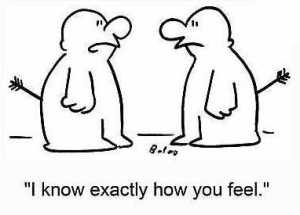 Here’s yet another irony. Too often the perspectives of those who decry injustices are partisan. Feminists themselves are liable to see only one side.
“But my side’s more important” isn’t a rebuttal but a confirmation of chauvinism.
In the explication quoted above, the writer compares the conduct of emotional abusers to that of prison guards toward prisoners of war, who use psychological torment to achieve compliance from their wards. Consider that victims of false allegations may literally be imprisoned.
Consider further some of the tactics that Ms. Meyer identifies as emotionally abusive:
- Isolating a spouse from friends and family.
- Discourag[ing] any independent activities such as work; taking classes or activities with friends.
- If the spouse does not give into the control, they are threatened, harassed, punished, and intimidated by the abuser.
- Us[ing] the children to gain control by undermining the other parent’s authority or threatening to leave and take the children.
- Control[ling] all the financial decisions, refus[ing] to listen to their partner’s opinion, withhold[ing] important financial information and mak[ing] their spouse live on limited resources.
- Mak[ing] all major decisions such as where to live, how to furnish the home, and what type of automobile to drive.
 Now consider the motives of false allegations and their certain and potential effects: isolation, termination of employment and impediment to or negation of employability, inaccessibility to children (who are used as leverage), and being forced to live on limited means (while possibly being required under threat of punishment to provide spousal and child support) and perhaps being left with no home to furnish or automobile to drive at all.
The correspondence is obvious…if you’re looking for it. Opponents of emotional abuse need to recognize it in all of its manifestations, because the expectation of empathy is only justified if it’s reciprocated.
Copyright © 2014 RestrainingOrderAbuse.com
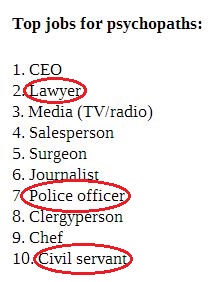 The reason I’m revisiting Dr. Dutton’s book in this post is that several of the jobs it identifies as most likely to draw psychopaths are ones in the legal profession and government.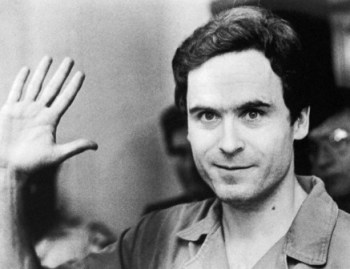
 TALKING BACK to restraining orders